behemoth bones
bleached white
African sun
grave yard for giants
some shot
others died a natural death
the living caress
bones with trunks
six thousand nerves
sensitive, searching
for answers
behemoth bones
bleached white
African sun
grave yard for giants
some shot
others died a natural death
the living caress
bones with trunks
six thousand nerves
sensitive, searching
for answers
When I read this post, I kept think the other times in life when people as he puts it, “take the knee”: when men propose, when people pray. No one see those as signs of disrespect or do they? For all those who think it is disrespectful, try reading every verse of the national anthem. Hint: the author was a pro-slavery slave owner.
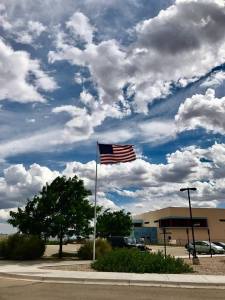 Institute of American Indian Arts (Photo compliments of Moni)
Not everyone really appreciates just how powerful the ritual of standing for the National Anthem really can be. I got a real sense of this when I was 14. My Jr. rifle team won the Wyoming-state BB-Gun finals, which earned our way to the International BB-Gun Championship in Bowling Green, Kentucky. …on July 4th. As the child of a career military officer, I was always happy to stand for the Star-Spangled Banner or to recite the Pledge of Allegiance, but standing there during the final ceremonies, the whole thing took on a whole new layer of meaning for me. That time, I had my heart in my throat. That time, the whole ritual moved me nearly to tears. I loved my country so much, and at that moment, putting my hand over my heart for that beautiful song was absolutely the…
View original post 1,498 more words
Saturday, February 18, 2017
I watched movers box up a life today, a life I thought left me thirty some years ago. I was wrong.
When our daughter and I cleaned out the refrigerator, we found a large pot filled with egusi stew, remnants of the last meal he cooked. I took the footlong, hand carved, wooden spoon, scraped the dry bits clinging to the sides of the silver pot. Scrubbing it clean, smells of memory flooded my nostrils–cayenne, bitter leaves. It took me ten minutes, ten memory laden minutes. Even after scrubbed and dried, the pot’s cayenne smell filled my nostrils, the distinct smell of West African food.
I watched movers box up a life today, a life I thought left me thirty some years ago. I was wrong.
Our daughter and I found papers and photos, items her father kept all these years, detailed memories of our life together. I could barely look at them, throat constricting, tears welling in the eyes of this woman who never cries. Our daughter, dismayed, told me to go outside. I walked down the quiet street, brown leaves scattered from autumn, unraked, a strange street both urban and rural inside a city of nearly half a million residents. Is this where he walked, attempting to improve his health? Was I walking in his footsteps?
I watched movers box up a life today, a life I thought left me thirty some years ago. I was wrong.
Two weeks ago today, the sickening news came: my daughter’s father, my ex-husband, suffered a massive heart attack while working. Rushed to the hospital, resuscitated, then open heart surgery. He never regained consciousness, not yet. He lies there, part of his brain not working, tube-fed, not breathing on his own.
She drove all night, six hours to get there. She thought they had taken her to the wrong room, unrecognizable. Last week end, I drove with her. Except for his hands, I would not have recognized him myself, so thin, so aged. How could someone change that much in the ten years since I had last seen him? She went back again late this week, returned late last night. Moved to a longterm care facility, he remains the same except he no longer even opens his eyes, no more staring into the void.
I feel frozen. This morning I delivered my grandson to my daughter–he stayed with me this trip. Checking on her father’s apartment, my daughter found his photos, some from when we were young. She showed a few to me. I stared, shocked, dismayed. My today’s to-do list just sits here. I force myself to work at it bit by bit, write two peer review assignments for a class I am taking–I do not want to disappoint, vacuum and dust one room at a time, tell myself I need to go out on this 20 degrees warmer than normal day and garden, write this blog post. I feel frozen.
He had plans neither she nor I knew about, plans to perhaps make him happier, return to the land of his birth. Will some miracle occur, will he awaken, recover? Is there some appropriate time for which we wait?
I feel frozen. When will I thaw?
Today, I planned to write my own blog post this evening after work. Just before I read this post, I mulled over topics, whether I wanted to share a recipe or write about so many disturbing as well as inspiring events I experienced or watched in the past week. Then today a student in one of my classes loudly questioned whether the Holocaust even occurred. This was followed by another student announcing that Jews are not people. As I read through my emails, this blog post appeared. It seemed especially telling given that experience. I refuse to tolerate comments that denigrate the religion, race, ethnicity, gender, sexual preference of anyone.
Myself, I saw the numb pools amidst the shadows; myself, the wan gods and night in very truth. My frozen blood stood still and clogged my veins. Forth leaped a savage cohort… Then grim Erinys (Vengeance) shrieked, and blind Furor (Fury), and Horror (Phrike), and all the forms which spawn and lurk amidst the eternal shades.
Seneca, Oedipus (trans. Frank Justus Miller)
Horror is not a cognitive but a physiological or affective extra-discursive state of being. Not unlike the state of, say, feeling nausea, horror is a state of being, whose manifestation, based on the etymologies of the Greek φρiκη [phrike] and the Latin horror, may be described, as Adriana Cavarero writes, as “a state of paralysis, reinforced by the feeling of growing stiff on the part of someone who is freezing,” and further, through her mythological reference to the prototypical figure of horror, Medusa, as a state of “petrification”…
View original post 1,420 more words
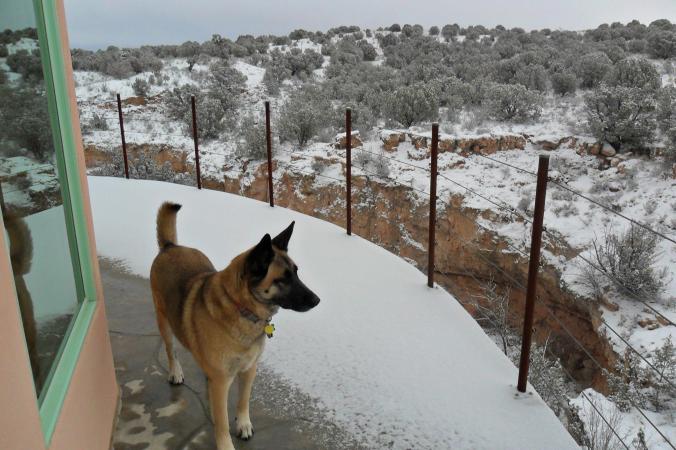
The crematorium handed me the 6″ by 4 ” dark brown wooden box. I knew it would be heavy; Isabella was an eighty pound wolf dog. I thought I was prepared.
Driving home, memories:
March 2006, daughter calls; two year old grandson wants a beta. I drive to PetSmart. Daughter tells me I must see these unusual, incredible seven-week-old puppies. Alert brown eyes look at me. Too big, black ears wiggle. The label says wolf, German Shepard, Blue Heeler. The two remaining puppies look like light colored German Shepherds or Belgium Malinois. I had not planned to get a dog, not yet.
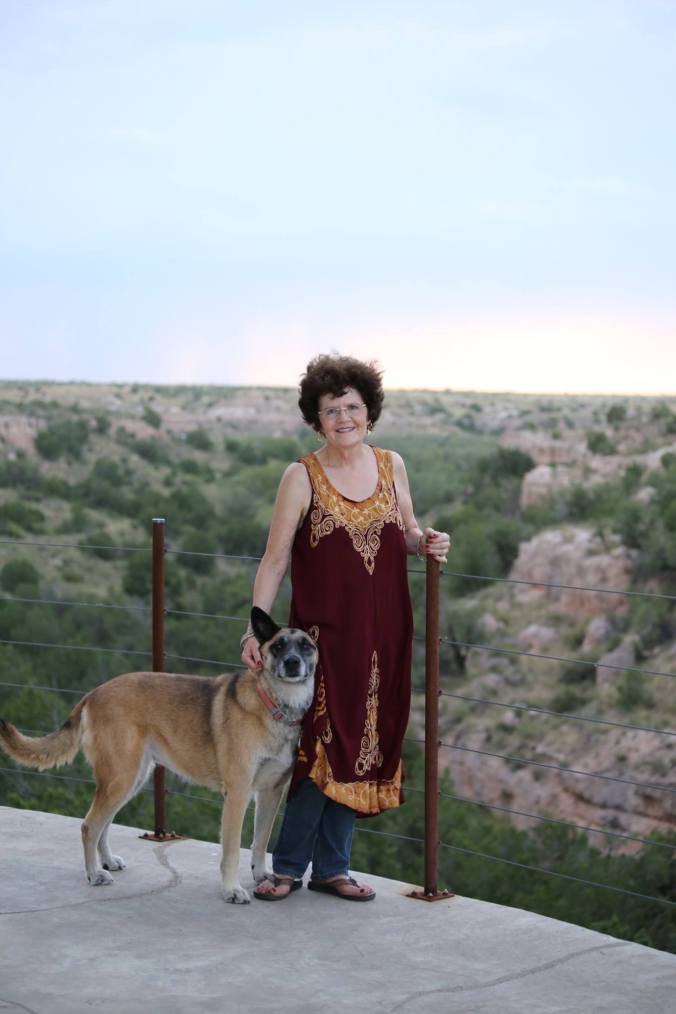
Two years later I move into my new house: canyon edge, horses, bobcats, coyotes, foxes, road runners, mockingbirds, rattlesnakes. Isabella guards her property, sits on the patio where she can check for invaders. She rarely barks, growls. When she does, high alert–I check. Neighbor dogs, coyotes, foxes, chased off–not bobcats. She watches them.
I remember the day she dismembered a skunk, drug the carcass everywhere. After eleven baths at PetSmart, the skunk smell remained. The one day she growled, I shocked, investigated–a man walking down the arroyo toward the house. Growls became increasingly loud. Out on the patio, she stands, the man sees her, turns and runs. I feel safe, Isabella guarding, telling me if something unusual occurs. She’s mixed breed; I think she’ll live long.
Every morning, evening, she completes horse chores with me, chases bunnies, roadrunners. Two months ago, I, mesmerized, watch her catch, gobble two half-grown bunnies in less than one minute–nothing left. Mixed breed; I think she’ll live long.
Friday morning she helps me with chores, chases bunnies. Friday afternoon she can hardly move. At the vet, blood work like a four year old; x-ray shows a little something wrong. They give her two shots, schedule an ultra-sound for Saturday morning at another vet’s. Meds working, Saturday morning she’s her usual lively self, eager to travel in the truck, nose wet and cold.
Ultrasound vet tells me there’s little hope. Shocked, I stand there. “If she were your dog, what would you do?”
“Put her to sleep. She’s not in pain. She has a tumor the size of your small fist on her intestines–might be cancer, hard to operate.”
I look at the vet, frozen.
At 8:00 Wednesday evening, I open the box, take out the bag of Isabella’s steel grey ashes, walk out to her patio spot, the place where she guarded her kingdom, toss a handful of ashes into the wind, watch them float and scatter down into the canyon, tears tracking down my face. I close the bag, walk to the place where our long yearling colt, Star, is buried, dig an eight inch hole, bury another handful of ashes. I take the one tablespoon of ashes left back to the house, put them back in the black velvet bag and into the box with the card with her paw print, the crematorium certificate, the sympathy card signed by all the employees where they euthanized her, place it on top of a stack of old magazines in the Chinese cabinet.
At bedtime, I forget, go to call her in. This morning I find her hairs–she shed so much, wolf undercoat. Evidence of her presence permeates.
It will never end.
A powerful story of the power of woman and in this case of “right”.
 Photo credit: The New York Times
Mahasveta Devi died last month at the age of 90 in Kolkata, India. A widely acclaimed Bengali writer, she identified as an activist first, clearly evident in her meticulously researched “fiction.” Most of her stories champion the cause of those living on the margins of society, particularly the Adivasis or original inhabitants of India; poor, unemployed and itinerant, they traditionally subsisted off the land, and continue to struggle against exploitative upper caste landowners.
I cannot claim to be an expert on Devi or her activism, but there is a story I read a few years ago, which never fails to haunt me, whether because of the rawness with which she describes the harsh reality faced by tribal people or because of what can be seen as the violent but ultimate triumph of its female protagonist, I cannot tell. Perhaps because of both, or because…
View original post 1,120 more words
Her mind wanders in the soot filled
dreams when she was eighteen and lost,
tried to commit suicide her first year in
college. Far from home with a homesick
roommate and people who ate this slimy
looking white stuff –grits–she’d never
heard of or seen. Crazy people who
thought black peoples’–they called them
colored–only use was playing loud
music to dance to. Who could adjust to
these southern belles riding horse to
hounds, dancing to music they couldn’t
touch with people they could never love.
In isolation she played piano for hours,
wrote depressing stories no one could read
and swallowed a bottle of bitter. Changed
her mind, vomited in the infirmary, made
volcanoes in chemistry class, flew around
Washington, D.C. during Kennedy’s
funeral to avoid her own.
Tonight the program Nature on PBS asked questions about animal intelligence as compared to humans. This list portrays some of the things I learned, some new, some I remembered from past readings or other Nature programs:
-A few other animals besides humans recognize themselves in a mirror. This list includes elephants, dolphins, and chimps. Actually, humans do not demonstrate this ability until they are about 18 months old.
-Only a few species studied demonstrate a sense of social justice. If they think they are being treated unfairly, they get mad and sometimes have a little fit. This includes monkeys and dogs.
-Only one species studied demonstrated overt altruistic behavior and a sense of social justice toward others, the bonobo. Of course, others may but have not been studied yet. Notably this is the same species that resolves social tension and conflict with sex rather than fighting.
-Humans grieve. Many other mammals grieve immediately after the deaf of a loved one, e.g. their own young offspring, but few recognize the bones of long deceased members of their species. The exception is elephants. Elephants not only recognize the bones of other elephants, they frequently nuzzle them with their trunks and stay with them a while.
-Dolphins may seek out help when they need help. The program showed a diver who was not looking for dolphins at all. A dolphin who had a fish line and hook stuck in his side approached the diver and managed to stay very still while the diver removed the hook. This took nearly ten minutes. Of course, no one knows whether the dolphin was actually seeking help or simply stayed still when help was available.
-Chimps possess another behavior similar to humans, the ability to purposefully deceive. A less dominant chimp was shown where a banana was hidden from a window outside an enclosure. She and a more dominant female chimp were released into the enclosure at the same time. The first chimp did not rush to the food. Oh,no. She waited and watched, played it cool, and when the other chimp wandered off to the other side, ran and ate the banana.
It is difficult to get inside of the mind of other animals. Anyone who has pets thinks they are smart or at least dogs and cats seem to demonstrate considerable intelligence. Horses do as well. And yes, I have seen horses grieve. When one of my horses died in a terrible and rather bizarre accident a few years ago, the other horses stood for hours in the place where the deceased horse had died. They did not even leave to eat their alfalfa, a food they loved and always ran to.
I even think animals, in particular mammals, know when they are headed to slaughter. I think those who kill them know this but to admit it would be too painful. They certainly know the smell of blood. It incites terror. Certainly animals can suffer at the hands of cruel humans. Do animals besides us deliberately hurt others for the sheer, sick pleasure of it? If there is a study regarding this topic, I have yet to see it. I wonder.
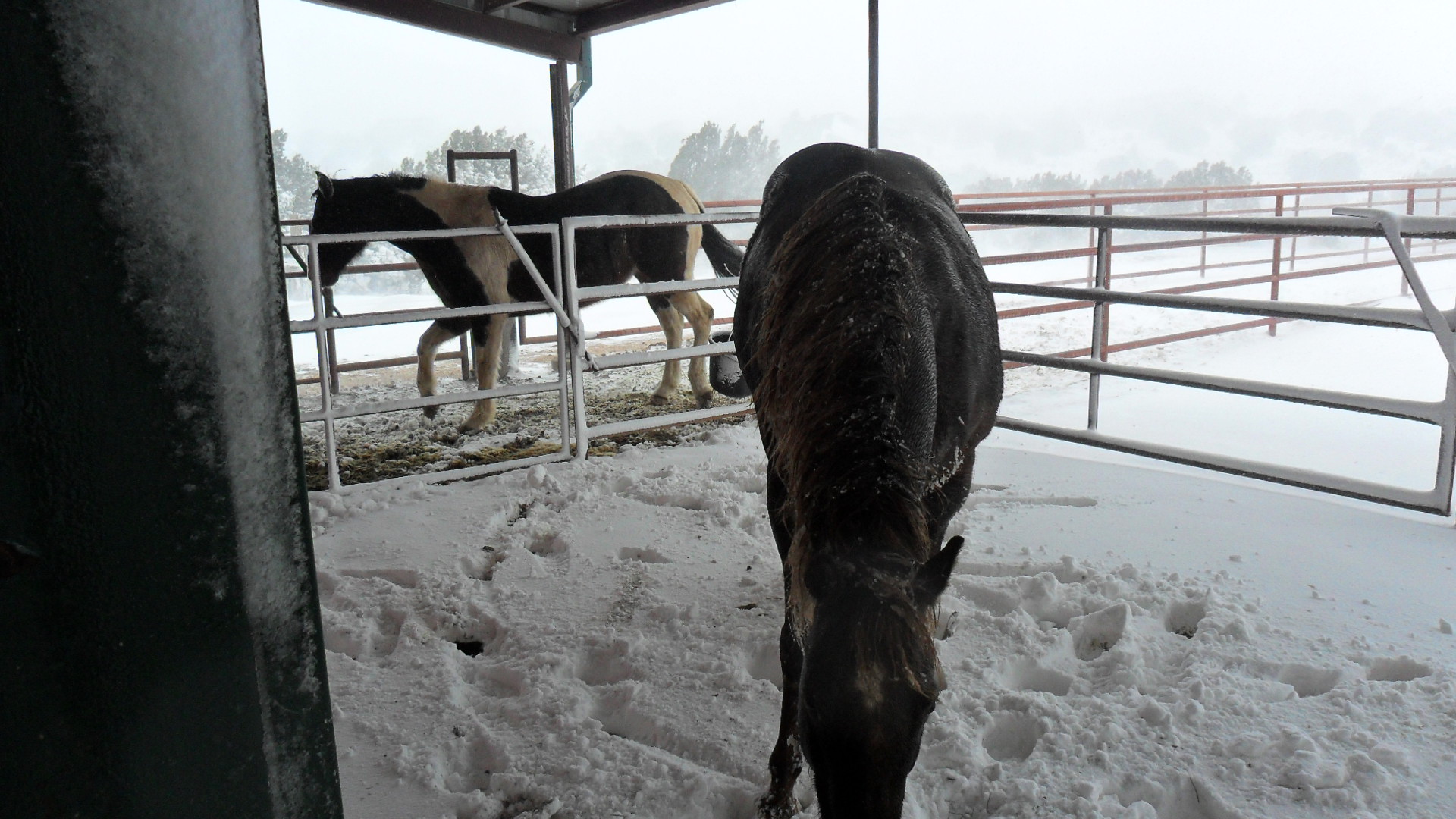
Wednesday, I topped the little rise down the
long drive to my house.
Cool’s down, lying down,
not like a happy horse,
soaking up the afternoon sun.
Down!!
Still dressed for work, I
rush, make him get up.
Instantly, I know, colic,
sadly go to the house,
change into jeans,
call the vet–he’s an
hour a way,
quirt banamine down Cool’s throat-
can’t hit his neck vein.
We walk and walk and walk,
waiting for the vet.
Cool’s hurting, distressed,
kicks my arm.
Vet and I load him in the
borrowed trailer as he
wobbles, half drugged.
Two giant bags drain into
his neck vein.
Vet listens, takes tests.
Result should read 2;
it reads 10.
In spite of hopeless odds,
the vet and staff work and
watch all night.
At 2:30 in the afternoon
a message on my cell phone:
Cool’s buried in the pasture with Miracle.
They’ve taken care of everything.
Stunned, trying not to cry at work.
Cool was fine when I left
Wednesday morning,
running the night before.
Stunned, remembering him as a baby,
the picture perfect paint.
Stunned, remembering how I
loved to watch him run,
head and tail up,
floating fast, joyous.
It’s Sunday now.
I walk out on my bedroom patio,
look up to his corral.
He always called to me, always.
Today, all I hear is the sound of silence.

Travel the World 4 Less
A Glimpse into My Life & Passions
Ceto-Magoism, the Whale-guided Way of WE in S/HE
Exploring the F-word in religion at the intersection of scholarship, activism, and community.
ANCESTRAL FOOD. HERBAL WISDOM. MAGICAL COOKERY. SEASONAL CELEBRATION.
inesemjphotography
politics, engineering, parenting, relevant things over coffee.
Food is the best expression of every emotion. Explore through my reviews, recipes, events and more.
Smile! A Site for Friends Wherever You Are!
inspiring personal growth through poetry and writing
Combining atheism with whimsy. This is a Fair and Balanced blog based on opinion unencumbered by fact.
Odds and ends ~ My Life
Original poetry, commentary, and fiction. All copyrights reserved.
bripike@gmail.com
A wildlife filmmaker in Africa
A Geeky Feminist's Musings On Pop Culture
"5 minute walks"


 writingontherim