Driving on Your Own in Costa Rica–Hotel Playa Negra


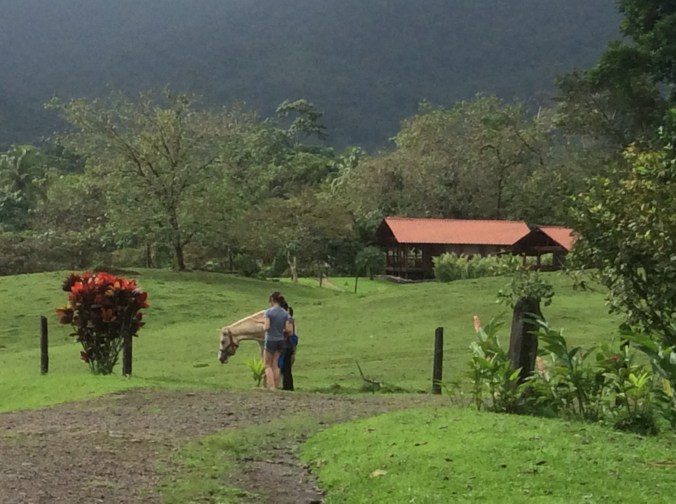
On March 17, I related the story of having to leave the first hotel in this area after dark with nowhere to go–see first post on driving on your own.  It was not until I awakened the next morning, dressed, and went in search of coffee, that I realized just how lucky we were.  I left my daughter and grandson asleep and ventured toward the restaurant indicated by a small sign.  I had not walked far when this scene greeted my eyes.

IMG_2068

Horses right by the beach.  Perhaps these were the horses one could ride–I had just seen a sign indicating horse back riding was available.  Then I walked a bit further and these scenes welcomed me.

IMG_2069

IMG_2070

IMG_2071

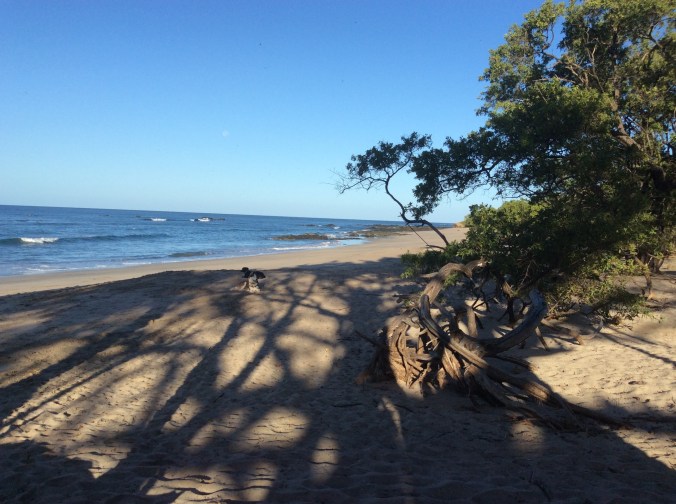
Except for the two dogs you can see here, no one was at the beach.  The tranquility amazed me.

IMG_2072

I walked back inside the restaurant–here I am standing at its edging looking toward the beach–ordered cafe con leche and luxuriated in our incredibly good karma.  This place exceeded all expectations considering our experience the previous night.

IMG_2074

This photo was taken from the beach looking back at the restaurant.  Except in colder areas like San Jose and Monteverde, I never saw or ate in any enclosed restaurants.  Even the fanciest are open air like this one.  Hotel Playa Negra is the only hotel near Playa Negra next to the beach.  It is a quiet, peaceful place with yoga, horse back riding, surf boarding lessons–the surf here is for beginners.  The restaurant serves a wide variety of food, but since I especially like the typical cuisine, it seemed perfect–more gallo pinto, platanos fritos, cafe con leche.


Driving on Your Own in Costa Rica


We left Rio Perdido with several of our fellow tour travelers, were dropped off at the Liberia airport, went down the road, and picked up our rental vehicle, a brand new roomy SUV. We stopped at an outdoor restaurant–in most of Costa Rica the restaurants are outdoors with only a roof. Much to my delight they had my favorite Costa Rican beverage, cas, which seems to be served randomly here and there. I love the stuff–pale green, neither sweet nor sour, a type of guava.

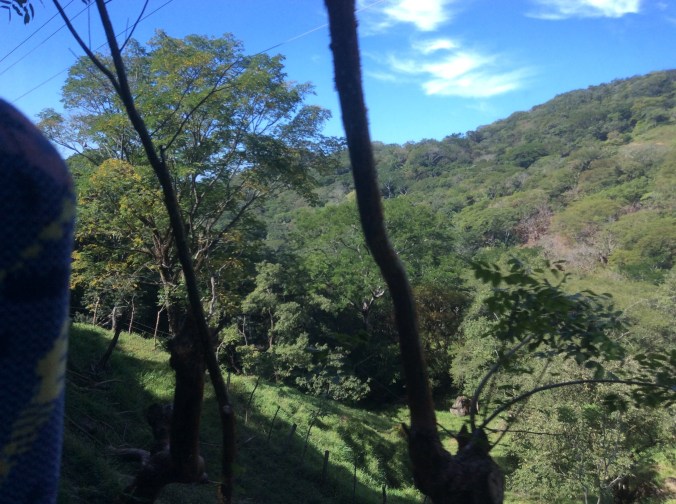
We headed down Highway 21 toward Santa Cruz. This is cattle and sugar cane country with miles of lush green pastures along the way.
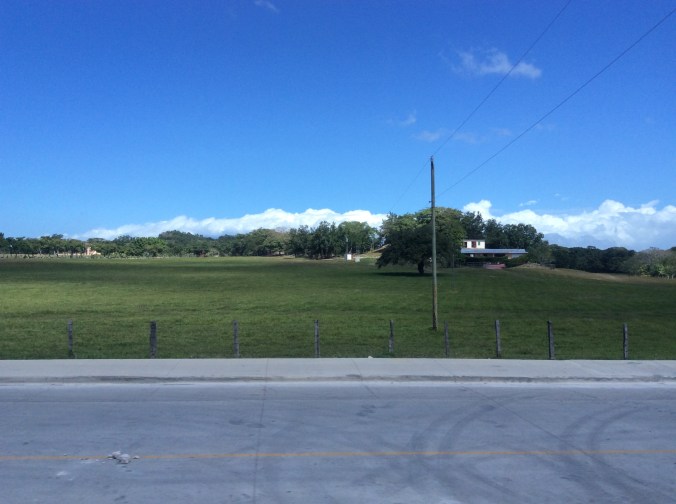
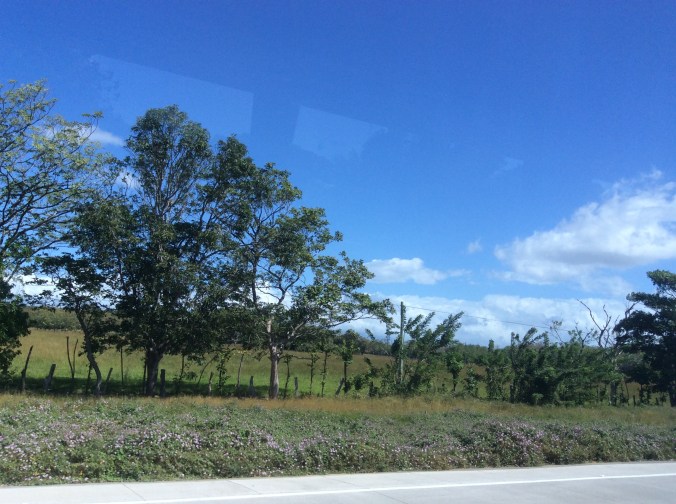
IMG_2059

IMG_2061

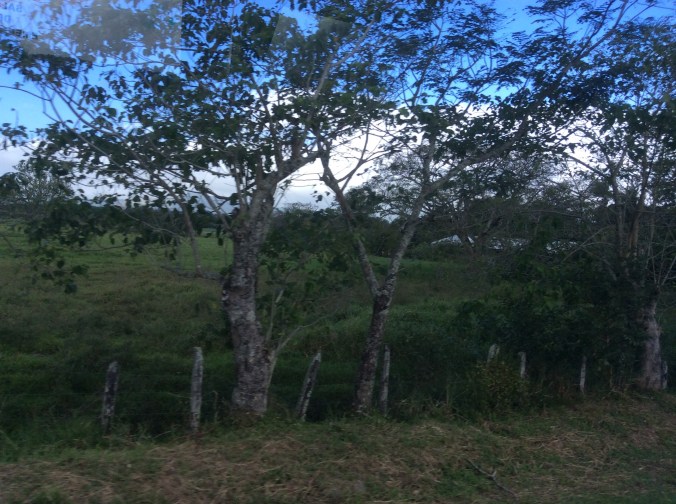
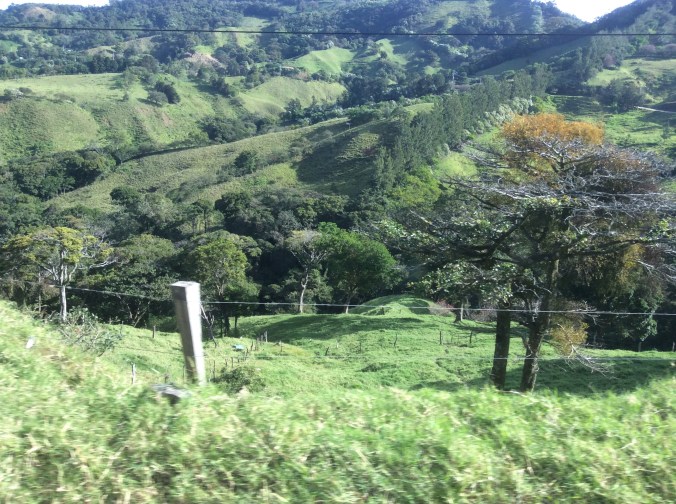
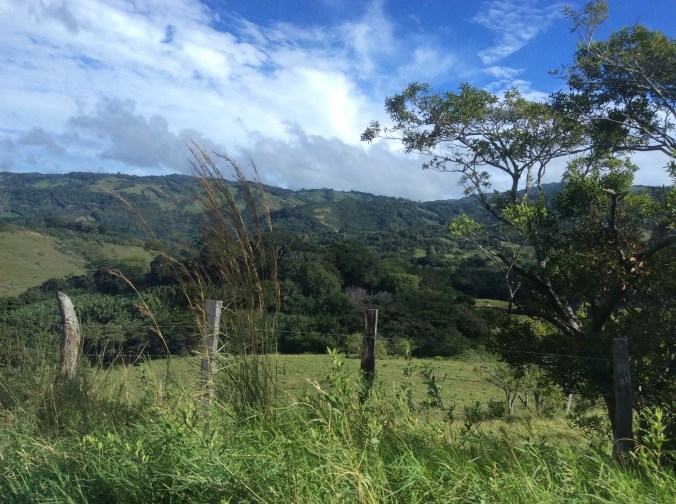
Throughout the countryside living fences delineate one pasture or field from another.  Initially, when first built, they look like any other fence posts.  The difference is this:  they grow into trees.

IMG_2062

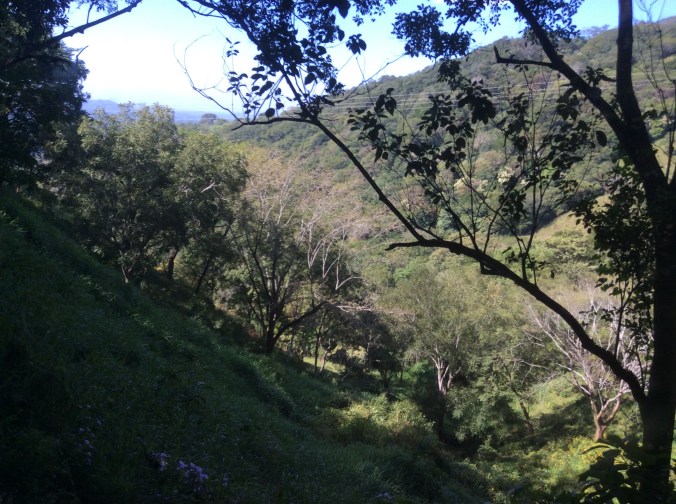
Looking at these photos, it seems hard to believe that we were there in the dry season.  Costa Rica is easy driving with good highways, speed limits, and very little of the mad, crazy driving one experiences in many countries.
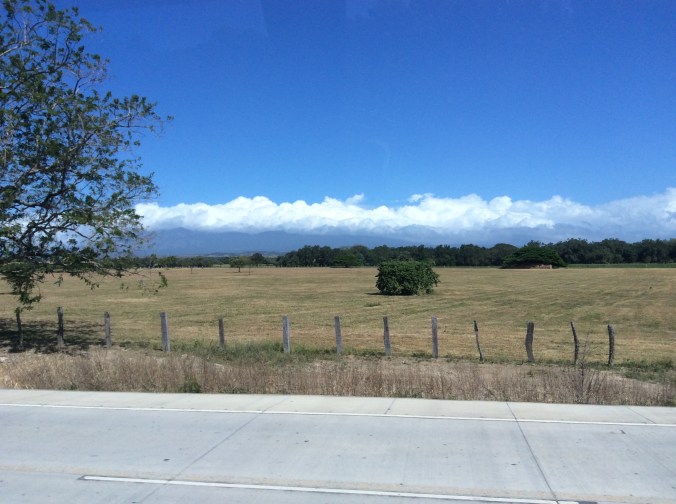
IMG_2064

Even this far from the mountains, look to the east, and there they are under a canopy of clouds.  After arriving in Santa Cruz, we turned off onto a smaller highway (160) headed toward the tiny town of Paraiso where we had a near hotel disaster.  In September, I booked a hotel farther south on the Pacific Coast only to be notified one month before leaving that a mistake had been made and they had no room available.  Desperately I searched and searched and found one near Playa Negra.  Online it looked ok, not luxurious but ok.

IMG_2065

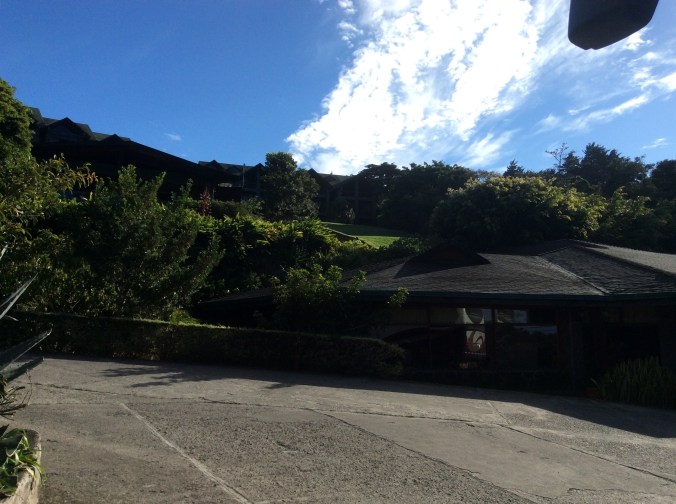
It even looked nice from the outside as you can see above.  Since there was no restaurant onsite, we headed out for dinner.  We had already passed through the little town and had seen several places.

IMG_2067

Here we ate some of the best pizza I have ever eaten.  When the waiter asked where we were staying, we told him.  At the time we never thought too much about his rather gloomy, “Oh!”

We went to the tiny local grocery down the road and bought food, shampoo, coffee, enough to tide us over for three days, and returned to our room.  The owners, a French couple, initially seemed ok.  Certainly, the woman did.  She had successfully started the air conditioner, welcomed us, was friendly.  His English was questionable, we do not speak French, and he refused to speak Spanish.  Unfortunately upon our return, the air conditioner no longer worked, there were no windows on one side for a breeze, and little ants were biting quite actively.  I went to talk to the couple.  He was not only uncooperative but eventually started screaming at my daughter, “Get out, just leave!” over and over and over.  He refunded my money; we left.

Here we were in the dark with nowhere to go.  I had visions of spending the night in the SUV, thinking at least we have a really nice vehicle to sleep in if we have to.  My daughter kept saying we would find something.  She had noticed a place down the road.  I kept thinking there would be no place because this is top tourist season.  We headed down the unpaved road, drove down a drive that indicated a hotel, and stopped by the reception area.  I went in but no one was there.  When I walked back out, my daughter noticed a young man walking up the drive.  Thankfully, I know enough Spanish to explain to him what we needed–he did not speak English.  I could not believe the good news:  they had a room for two nights (we needed three, but at that point who cared).  His key to the room did not work, he called the manager who appeared, let us in the room, and actually told me not to worry, I could pay the next morning.  It was the largest, nicest room of the entire trip.  Just wait for the next post to see how incredibly beautiful this place truly is–talk about luck, good karma…


Costa Rican Adventure–Rio Perdido


Rio Perdido is both the name of a hotel and a river.  We stayed several days here in the middle of a reserve in the dry tropical forest (definitely not a rain forest) about 1 1/2 hours from Liberia.  The hotel gets all its electricity from the Miravalles Geothermal Power Plant which we actually passed on our way to the cacao plantation (see the last two Costa Rican posts).  They use their own water and do not chlorinate it.  The name comes from a river which flows through the reserve.  Their goal includes protection of the forest and sustainability.

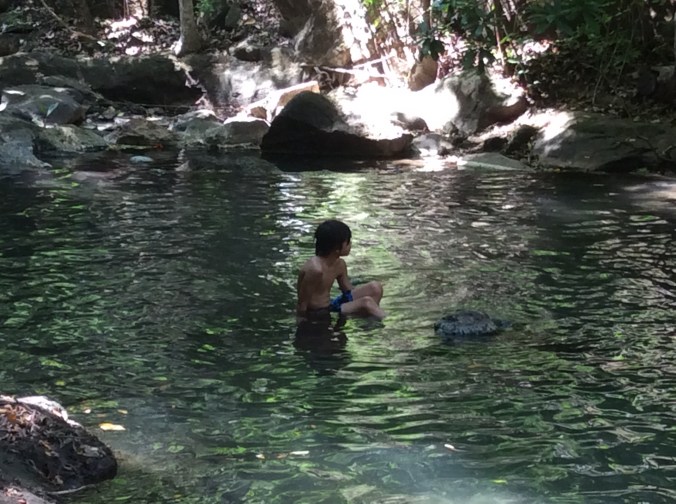
Rio Perdido itself is a hot springs river.

IMG_2043

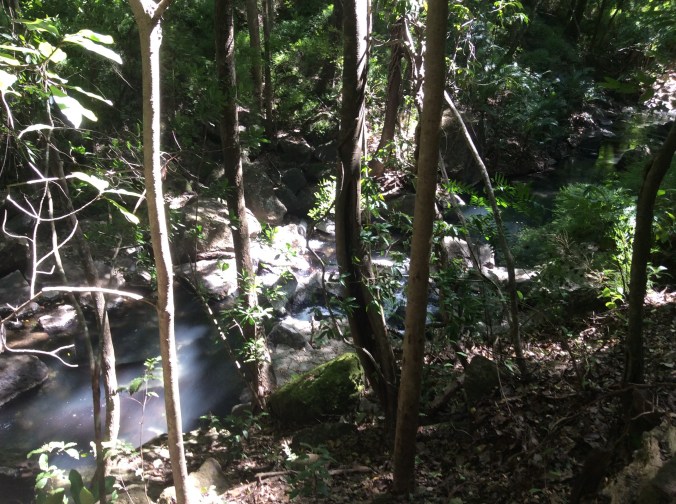
We hiked up and down small cliffs on the river sides to get here.

IMG_2047

IMG_2048

IMG_2049

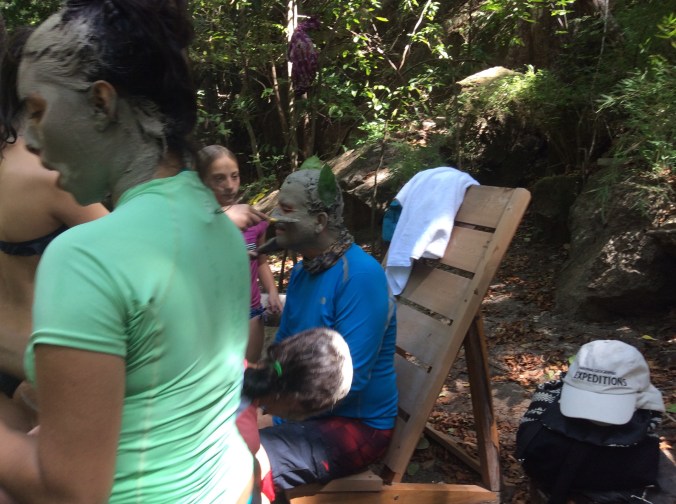
This river is famous for its volcanic mud.  To obtain its benefits those who wanted dug the mud from the bottom of the river and painted it on faces, arms, etc. with the provided brushes.  Here one of the group paints mud on the guide’s face and neck.  Some attached leaves above their ears.

IMG_2050

I wandered on another path down river to watch for wildlife and take photos.

IMG_2052

IMG_2053

IMG_2055

IMG_2057

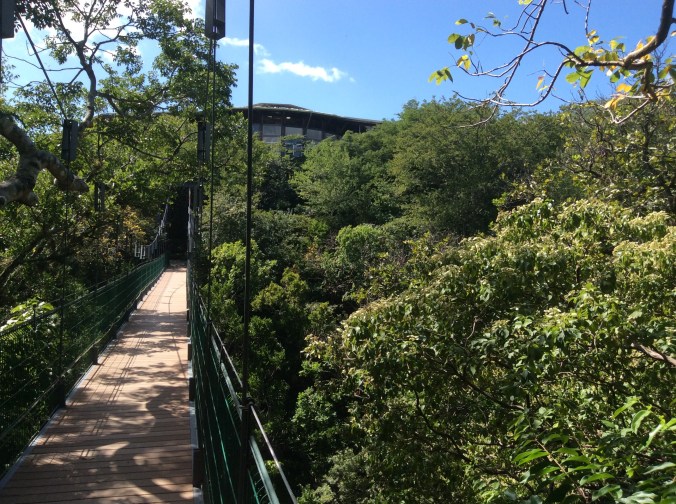
The reserve contains numerous hiking and bike trails some of which are as long as six or more miles.  This bridge crosses the river and leads to several hiking trails.  The main building in the background houses a reception area, restaurant, bar, spa and gift shop with three swimming pools.  They provide bicycles for those who want to try the trails, some of which are quite long and difficult. Rooms are separate cabins scattered throughout the forest. A shuttle provides transportation from cabins to the main area for those who choose not to walk.  The staff is welcoming, chatty, and creative.  When the staff cleaned our room, made beds, etc, we came back to find my grandson’s stuffed sloth sitting on his pillow, reading a book.  For those who want to relax, escape the world, this provides a perfect place.


Costa Rica Adventure, Day Five–Hidden Treasures in the Rainforest


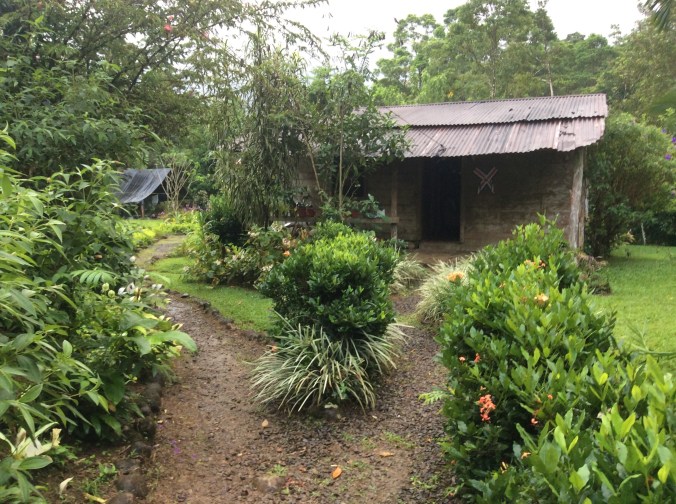
After we left the little village of Colonia Liberatad, we headed down another unpaved road to a tiny little building in a large garden for coffee and dessert.  Costa Rica is heaven for flower and plant lovers, a true botanists’ paradise.

IMG_2035

A pebbled path led from the road to the “restaurant”.  No one rushed; we were too enthralled with the flowers, the humidity, the total intenseness of the surroundings and atmosphere.

IMG_2036

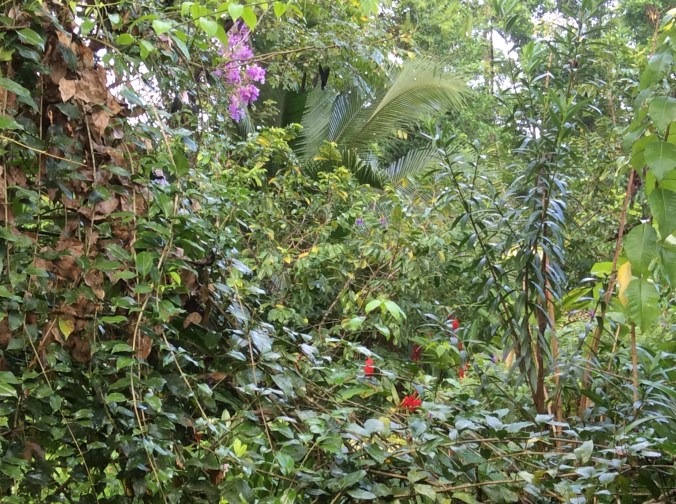
Although I have been to Costa Rica twice now, ten days each time, and love flowers, still I can only recall the names of a few.

IMG_2037

Hundreds, sometimes, thousands, of species reside within only a few square yards.

IMG_2038

IMG_2039

IMG_2040

Everyone stopped along the way to look.  Some of the children wanted to hunt for reptiles. They were warned because the deadly fear-de-lance lives here.  A few assured everyone they knew exactly what they look like.  Knowing them, it was probably true.

IMG_2041

A wood building is a rare sight anywhere I have been there–too much rain.  All roofs are either metal or tile for the same reason.  Other types of roofing rot.  Some have totally given up trying to add color because it disappears quickly apparently.  This area of Costa Rica on the Caribbean side of the mountains receives rain daily.  It rained off and on all day.

I have no idea the name of the dessert they served us with coffee.  It resembled Indian Fry Bread (from New Mexico and Arizona–I love the stuff), super crispy, soaked in honey.

IMG_2042

The road just outside this hidden gem.

Costa Rica Adventure, Day Five-Part Three, Colonia Libertad


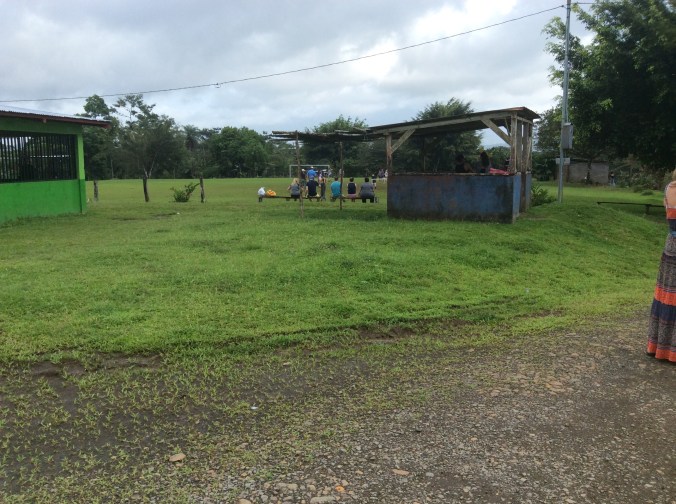
The small village of Colonia Libertad, a short distance down the road from La Anita Rain Forest Ranch, contains a small Catholic Church where I watched an early afternoon Christmas Eve ceremony and held a toddler dressed in her Christmas finery.  Meanwhile a short distance away my grandson, other tourist children, and locals played soccer in this field.

IMG_2029

It alternated between dark and rainy and periods when the clouds zoomed away and everything lightened up a bit. When the game ended, everyone was a muddy mess.

IMG_2031

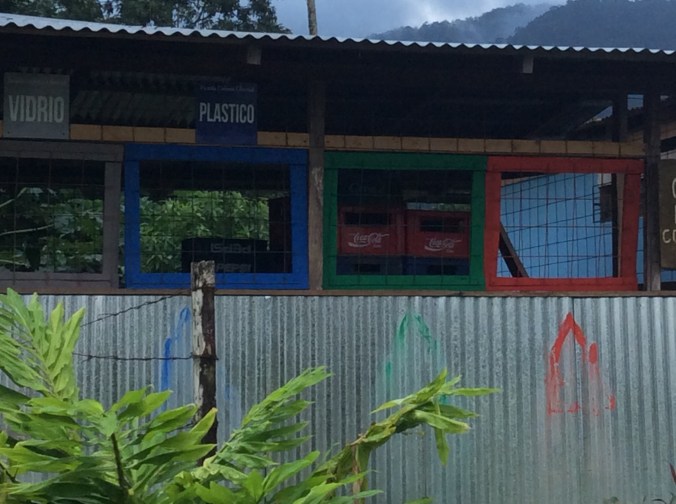
The village contains the small church, this soccer field, a school–in green on the left, and a recycling center.

IMG_2030

They recycle nearly everything.  You can see the sign for plastic above.  I could hardly believe it.  Here I am in the middle of nowhere in Costa Rica and they recycle; yet where I live in the Panhandle of Texas, recycling remains extremely limited.

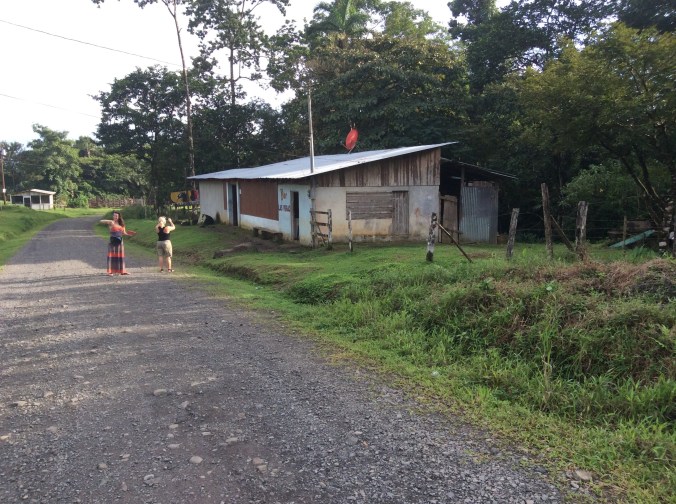
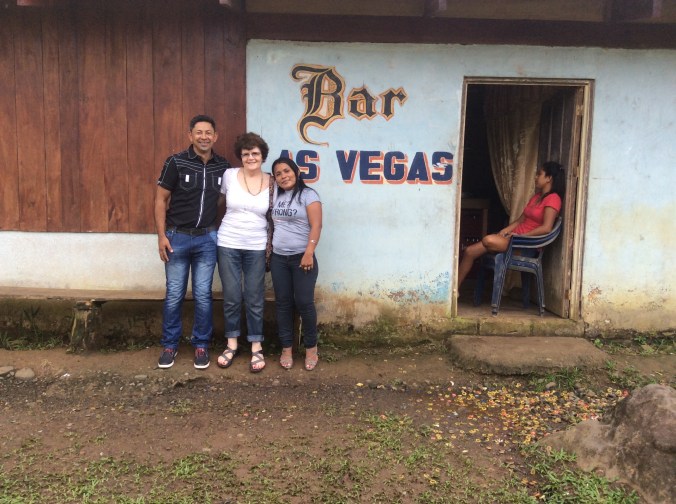
Several of us walked down the road from the soccer field and found the neighborhood bar. A local couple joined us.

IMG_2032

To the right, behind the bar, a stream ran rapidly along.  The local couple happily posed.

IMG_2034

Besides these buildings and the soccer field, we visited a shop where local women make and sell necklaces, bracelets, and earrings to supplement their less than lavish income.  Many of the people in the town work for La Anita Rain Forest Ranch.


Costa Rica Adventure, Day Five–Part Two: Santa Anita Rainforest Ranch


After visiting the Tony’s gallery, we headed north on mostly non-paved, narrow roads.  The clouds increased; the landscape became greener if that is possible.  We crossed to the Caribbean side near the Nicaraguan border.

IMG_2001

IMG_2007

IMG_2008

IMG_2014

The previous photos were taken from the bus window on the way to La Anita which is located more or less just above where the a is located in the word Cordillera at the top of the map.  It lies near Rincon de la Vieja National Park (Volcano Vieja) past Volcano Miravalles–the volcano covered in clouds in the previous Costa Rica post.

IMG_2010

As soon as we arrived, we came to the veranda of the building where they process cacao.  This view overlooks the road in and a small pond.

IMG_2012

Ginger plants in front of the pond, bouquets of ginger flowers, and rain clouds greeted us.

IMG_2011

I had no idea that the ginger roots we eat come from plants that look like this.  We later ate lunch in the building in the distance.  First, seated on picnic tables on the veranda, we drank pure chocolate grown on the ranch and coffee grown on another property at higher altitudes.  Cacao requires lots of rain and tropical heat.  This coffee is shade grown at much higher altitudes, e.g. 1500-2000 meters, by 700 families who belong to the cooperative which produces the coffee.  The coffee from here (Finca la Anita, Costa Rican Dota Mountain Coffee) requires much less sugar even for those who love lots of sugar in their coffee.

The couple who own and run La Anita primarily grow organic cacao.  Originally, they sold what they grew and did not process it there.  They decided to accomplish what they wanted, to grow and sell the most sustainable quality chocolate in the world, they would have to control the entire process themselves.  One of their specialties is a healthy replacement for Nutella, La Anita Chocolate Spread.  We bought four little containers and carried them around the rest of the trip.  Rather than spreading it on something, I keep it in the refrigerator and spoon out a tiny sco0p when I want a super treat.


IMG_2015

Nearly constant rain and heat produce a botanical heaven.

IMG_2016

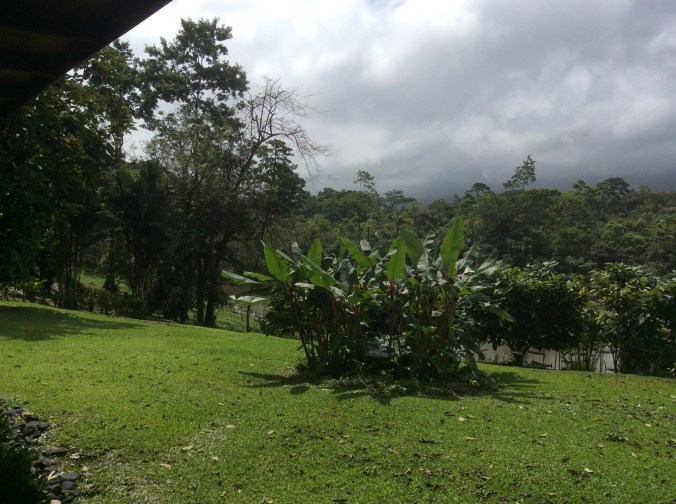
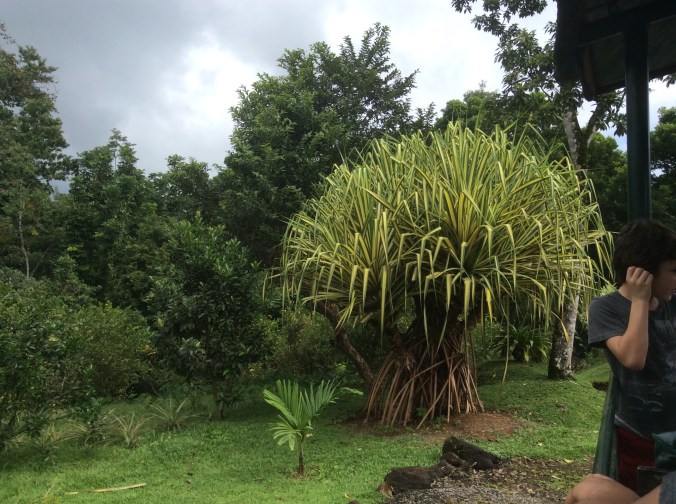
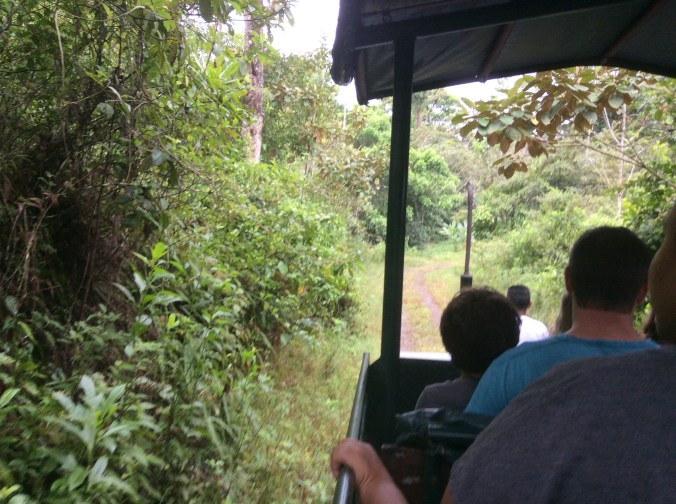
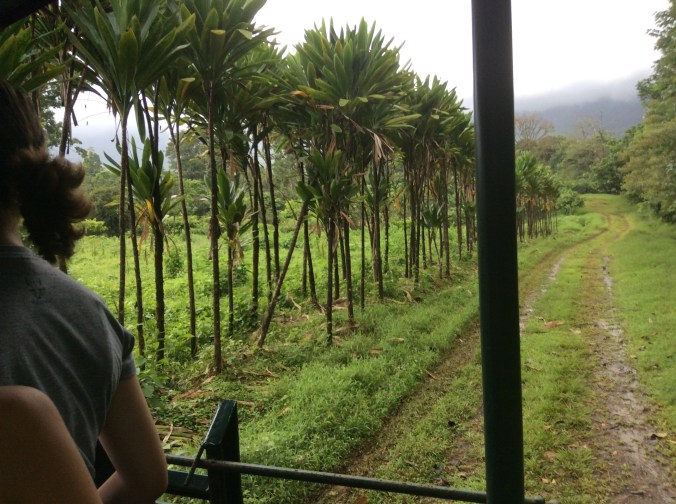
A tractor pulled wagon took us through the lushness to the area with the cacao trees grow.

IMG_2017

IMG_2018

We finally arrived where the cacao grows.

IMG_2019

In addition to cacao, they grow other crops because cacao takes a long time to grow and the chocolate market worldwide is very unstable.

IMG_2020

Open up cacao and you find all this fuzzy stuff inside.  Yes, it is actually tasty.  Like with coffee, you eat–actually mostly just suck on it–the outside.  The bean is the seed inside.

IMG_2021

If you want to walk around here, sandals are not a good idea–too many snakes, many of which are poisonous like the fer-de-lance.  Yes, they live here.  Like where I live, this requires looking at the ground and paying attention where you are walking. This is the owner.  The name La Anita comes from his wife.IMG_2023

IMG_2024

The view of the lake from the building where we ate lunch.

IMG_2025

This is the hearts of palm plant which shortly after this photo was taken became the main ingredient of ceviche of hearts of palm which we ate for lunch.

IMG_2026

Making ceviche of hearts of palm in the white square bowl.

IMG_2028

After lunch I walked down the road to the pasture with the horses.  In the background are cabins they rent.  From here the traveler can tour several national parks including Rincon de la Vieja National Park which is quite close.

This is one of the rainiest parts of Costa Rica, located on the northern Caribbean side.  It rained several times while we were here.  The rain stops for a while, a downpours arrives, it stops.  This process continually repeats.


Costa Rica Adventure, Day Five-Part One


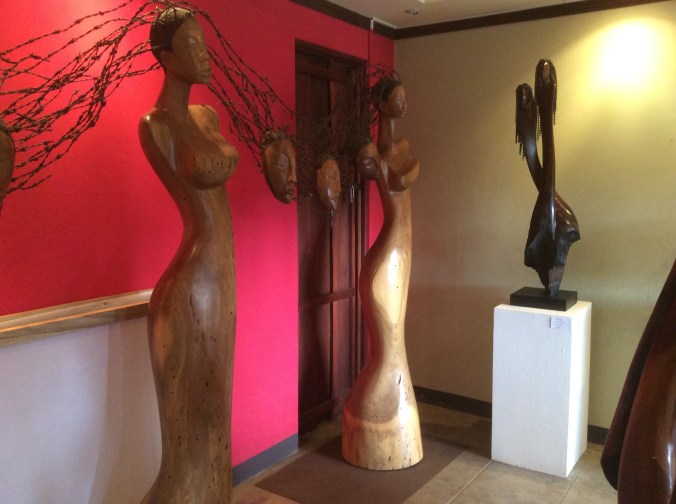
After spending our first leisurely late afternoon and evening at Rio Perdido, we arose early the next morning heading to a farm near the Nicaraguan border.  On our way, about 3/4 to one hour from Rio Perdido, we stopped at the studio of the sculptor Tony Jimenez.  Apparently, Tony loves–perhaps an understatement-the female form.  With few exceptions, he carves women, mostly giant women, in wood.

IMG_2003

He sells smaller statues, even as small as eight inches high, but refuses to sign them partly because they are made from less substantial wood.  I bought one about a foot high.  Later, in another part of Costa Rica I saw some very similar to mine.  When I asked if Tony made them, I was told his cousin was the sculptor.

IMG_2004

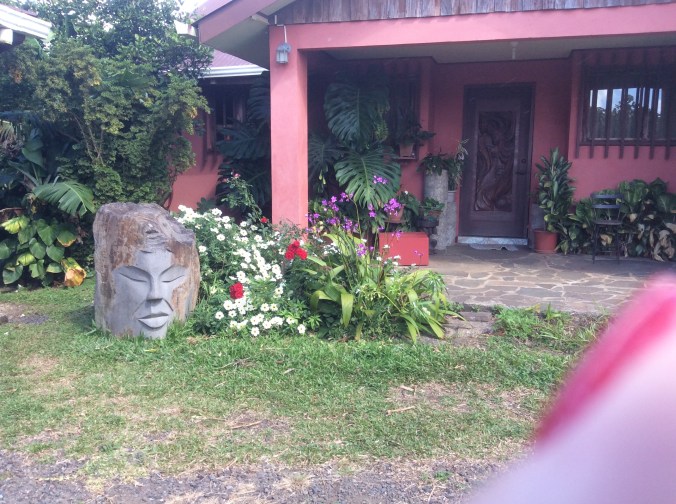
Although Tony sells sculpture, his front door fascinated me even more.  It, too, is carved, a frieze.  Even the crossbars on his windows are carved.

IMG_2005

We drove along the west side of a volcano for hours.  Because of clouds, wind, and weather from the Caribbean, even though we were on the Pacific side, we never saw the top of the volcano.  It remained misty and rainy most of the morning as we crossed from the Pacific to the Caribbean side.

IMG_2002

I do not recall anyone mentioning the name of this volcano.  Given where we were headed, it would appear to be Volcano Miravalles.


Costa Rica Adventure, Day Four-Part Three


Yes, Part Two of Day Four is missing–it will show up later.  After floating down Rio Tenorio (the missing photos) and eating lunch by another river just off the Pan American Highway, we went a short distance off the Pan American highway to Las Pumas, a wildlife rescue center.  This photo was taken on the way–a very common sight in this area, grazing cattle.

IMG_1992

The center rescues various animals but mostly wild cats, including puma, jaguar, ocelot, jaguarundi–a long bodied, grey cat with short legs and a tiny head, margay, and tigrillo which is the size of a house cat.  Their goal is to eventually release the animals back into the wild.  However, the only place open to visitors is an area where none of the animals can be released back into the wild.

I mostly photographed the pumas–one of my obsessions.

IMG_1996

See if you can find the puma.

IMG_1997

Now you can.  He kept moving.

IMG_1998

Most of their stories went like this:  mom was killed or caught by a rancher for stealing livestock; baby was found and rescued and had become too familiar with people to release.  Another common story dealt with injuries where the animal had been caught in a trap and suffered too much of an injury to ever be self sufficient in the wild.  The smaller cats knew how to either hide themselves or hunker down where it was too dark for a good photo.  In the largest enclosure a jaguar lay right next to the fence.  Once he had been returned to the wild without success.  He did not seem particularly pleased with all us humans so close.  He arose, suddenly turned his butt toward the fence, and sprayed.  One unfortunate (or fortunate if she wanted a good story) girl was the recipient.  She took it well.  How often does one get sprayed by a jaguar!

Eventually, after twisting and turning on various unpaved roads through the dry tropical forest (a totally different type of forest than one usually thinks of when hearing the word tropical), we arrived at Rio Perdido early enough for some relaxation, a bit of exploring, and swimming.


Costa Rica Adventure, Day Four–Part One


People love food.  One of the fun things about travel is exploring the food.  My two favorite, traditional Costa Rican foods are gallo pinto and platanos fritos.  Fruit shows up everywhere too.

IMG_1954

Breakfast at El Establo just before heading down the mountain to the Pan American Highway on the way to Rio Tenorio.  The plate in the background contains gallo pinto and platanos fritos.  I have made gallo pinto three times since I returned.  See recipe at end of post.

IMG_1955

The final view of El Establo as we drove away.

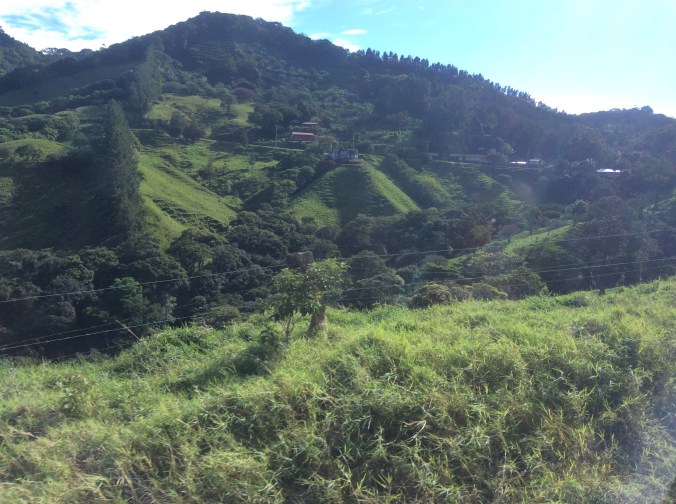
The following photos were all taken riding along the highway, dropping altitude dramatically all the way from Monteverde to the Pan American Highway.  The beauty one passes going to and from Monteverde remains unrivaled anywhere–miles of green vistas, colorful mountain homes, cattle grazing.

IMG_1957


IMG_1958

IMG_1959

IMG_1960

IMG_1961

Typical country houses along the side of the road painted colorful hues.  Even here the houses have electricity and running water. Most of the way the road was gravel.  In spite of all the green in these photos, this is the dry side of the mountains, the Pacific side.

IMG_1962 (1)

IMG_1963 (1)

IMG_1964

IMG_1965

IMG_1966

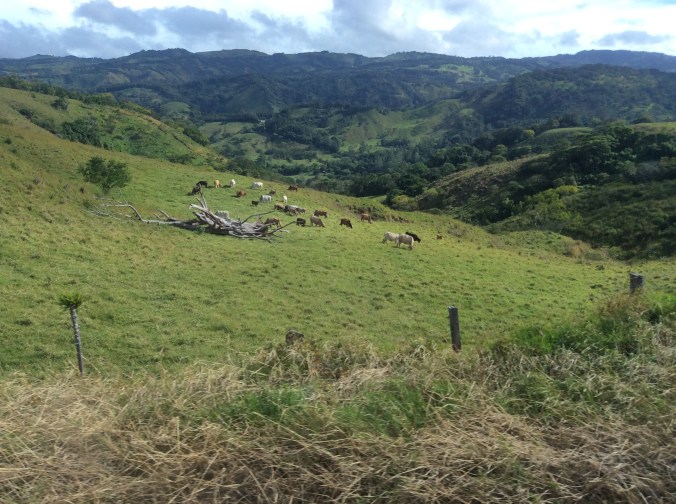
A lot of Costa Rica is cattle country.  In the lowlands all the cattle have Brahma blood in evidence.  In the high country it varies.  Frequently, they look exactly like the common dairy cattle in the United States.

IMG_1971

IMG_1975

IMG_1977

IMG_1979

The farther we drove down the mountain, the drier the foliage and grasses became. Finally, we arrived at a paved road and a town.

IMG_1980

IMG_1982

Most places, even small towns, in Costa Rica are clean.  People take pride in the appearance of their houses no matter how small. Flowers bloom brilliantly throughout the country.

IMG_1983

Streams run everywhere even through towns.

IMG_1989

Finally, we headed north on the Pan American Highway.  In all of Costa Rica living fences surround fields.  In this area it appeared the major commercial endeavor is cattle, all distinctively Brahma or at least part Brahma.

IMG_1990

Looking at these photos it seems hard to believe this is the dry season.  We saw large irrigation ditches bringing water all the way from Arenal, a huge lake on the other side of the mountains, a place I visited on my previous trip.

Recipe for gallo pinto:

Enough vegetable oil to lightly cover bottom of a skillet

1 1/2 cups day old, cooked  rice

1 cup day old, cooked, black beans

1 medium onion, finely diced

1 small, sweet red pepper, finely diced

2 Tbls. chopped cilantro (optional)

2 Tbls. salsa (optional)

Add chopped vegetables to the skillet.  Saute until onions are clear.  Then add the beans and salsa.  Finally, add the rice and heat through while stirring constantly.  The mixture should be moist but not wet.  There should be enough juice from the beans to color the rice.  Experiment to see what you prefer.  I use garlic instead of onion and poblano peppers instead of the red.


Costa Rica Adventure, Day Three–Part Two


After the six mile hike through the Cloud Forest and visiting the hummingbirds, we arrived a bit messy and muddy at a local Italian restaurant which surprisingly served some of the best Italian food I have eaten anywhere.  After this leisurely lunch we headed back to hotel to ready ourselves for the afternoon activities.  Some chose zip lining while the rest of us headed to a local organic coffee farm or remained at the hotel.  For me it was no choice really; I love coffee.

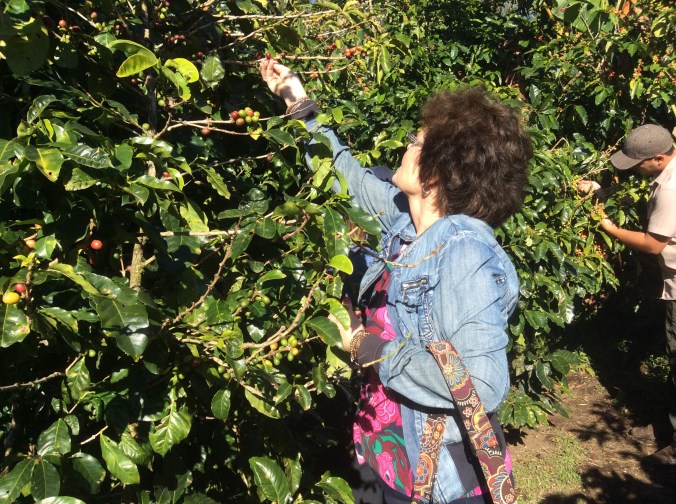
Our guide at the farm had to be one of the most entertaining guides I have experienced anywhere in the world.  He was not only informative but also extremely witty; we chuckled all the way.  After a brief introduction we headed to the coffee plants, tasted raw coffee fruit, and picked coffee.

IMG_1943

Here I am picking coffee as instructed–only the ripe, red berries.

IMG_1946

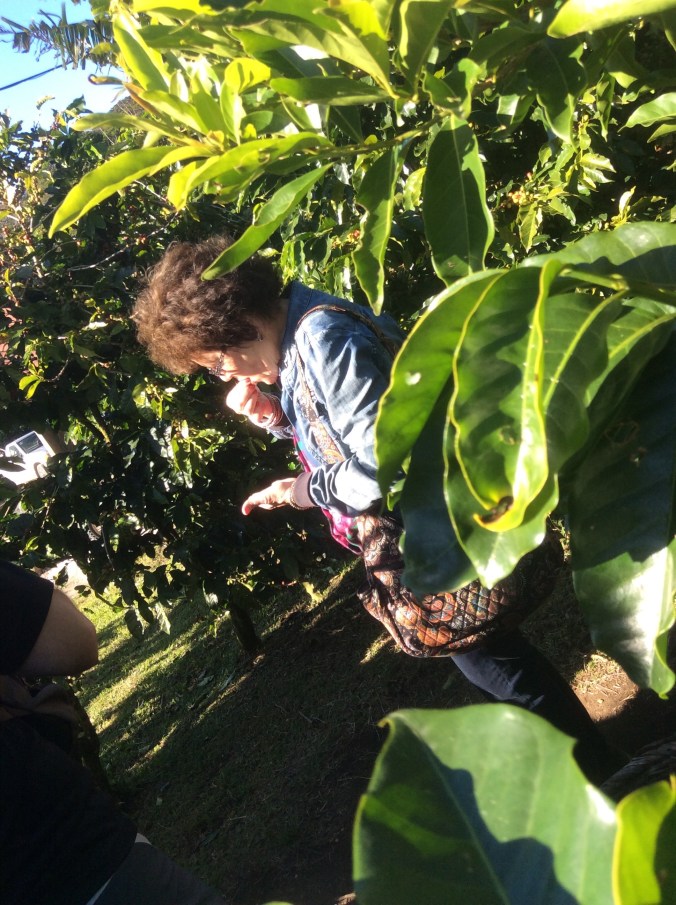
He also instructed us to taste them.  They were surprisingly sweet.

IMG_1947

Here is the basket where we all put the berries we picked.  Then we headed to the processing area.

IMG_1951

First he showed us the old way, how they used to get the fruit on the outside off with only the seeds, the beans left to dry.

IMG_1952 (1)

For good coffee, they spread the beans out and sun dry them.  The roof here shelters them but allows natural drying. These beans have just begun the drying process.  When they are ready, they are a darker, more golden color.

IMG_1953

The next part of the tour involved chocolate.  Here he is hand grinding chocolate into relatively fine pieces.  Yes, in a mortar.  He added a little hot water and raw cane sugar, whisked it around, and gave us all a little cup.  Luckily, it was not a big crowd so most of us received seconds.  When I run out of the chocolate I have here at home, I will consider doing it this way myself.  The difference in taste from this and that which we get ready mixed here in the US is remarkable.

They had sugar cane growing here but only ornamentally.  Sugar cane requires heat.  We were too high in the mountains; it was too cold to produce cane for sugar.  Later, near the coast in Guanacaste, we saw mile after mile of commercially grown sugar cane.  He had some and gave us all a taste.  Yes, we sucked on pieces of sugar cane.  I expected to dislike it, to find it excessively sweet.  Actually, it seemed only mildly sweet and quite tasty.

It was a full day.  We returned to the hotel rather late and experienced an even later dinner at the Tree House, a restaurant in Monteverde built around a large tree.  The live band played a lot of reggae music.  Many of the residents of the east coast of Costa Rica are the descendants of Jamaicans who came many, many years ago to help build the railroad.

The last time I visited Monteverde we had time to wander around the town, shop, and eat ice cream.  I sorely missed not having the time to hang out there a bit and especially eat the ice cream.  Both the cheese and ice cream in Monteverde are, well, yummy and different.  I also missed going to the club next to the Tree House where you find people of all ages hanging out and dancing.  Maybe next time.