A Week of Gratitude (cont.)


Each day I made a list of things for which I feel grateful, sometimes more, sometimes less.  Tuesday’s list includes:

-Endless sunsets streaked with orange, vermillion, purple, lavender and colors with no name.

-An ability to sing the world’s greatest chorale music with a group of experienced singers who even occasionally sings with the symphony.

Wednesday’s list includes:

-Books I love.  My favorite is “Storyteller” by Leslie Marmon Silko.  I must have read her story “Yellow Woman” at least 50 times.

-The ability to write myself.  I entered a flash memoir contest on Wednesday.

Today’s list includes:

-A short but fun experience with my grandson whom I picked up at school.  He told me all about what he is learning in science class–he is in seventh grade.  We discussed genetics and Punnett Squares.  I recently explained them to some high school biology students.

-Driving my tractor, grading the steep drive down to my cliffside house.  I grew up on a farm and love driving the tractor.

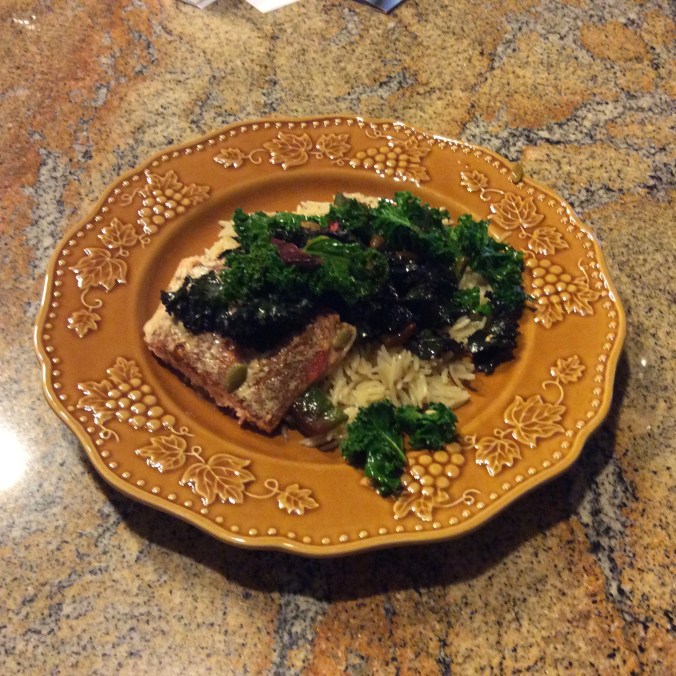
-Cooking dinner.  Here’s the recipe:

Fillet of salmon–keta

4-5 garlic cloves, coarsely chopped

1 poblano pepper, seeded and coarsely chopped

1/2 medium beetroot, thinly sliced and then diced

Bebere to taste or other spice if you do not have this

Several bunches kale, spine removed, and coarsely chopped.  I used two kinds–one green and one purple.

Saute the garlic and beetroot in olive oil until nearly cooked.  Add the poblano pepper and salmon.  Sprinkle a coating of bebere to cover the salmon.  Saute until salmon is nearly done and pepper is cooked but still bright green.  Add kale, occasionally stir, and saute until kale is slightly wilted. Serve over rice.  I used basmati from Pakistan.

Note:  bebere is a spice from Ethiopia.  I use homemade from my Ethiopian friends who have it special made.  Her blend is complex but not very hot.  Some commercial blends are mostly hot.
img_2505

Overweight and Poorer


Today I planned to post a lovely poem.  However, I was so engrossed by an article on the Internet that I decided to discuss that topic instead.  Why are so many people in this country overweight?  Why do people complain about being poorer?

The article in question, which I could not download and post here, claims that the biggest item on which people in the United States overspend is eating out at restaurants.  It is also a major cause of obesity.  On average when a person eats in a restaurant they eat 200 calories more than if he or she ate at home.  If that person eats out three times a week, that adds up to more than 30,000 extra calories a year.  Even if he or she eats fast food, which probably adds even more calories, the extra expenditure at even a low 8.00 per meal, would  add to nearly 1300 dollars per year.  If it is a family, multiply that by the  number of people in the family.  For 8 dollars, they could go to the grocery here in Texas and buy a delicious already roasted chicken that would feed at least four.

Personally, I find few restaurants that can actually create a meal better than one I can cook myself.  Others say who wants to cook for oneself.  I live alone and I cook for myself all but a couple of times a month.  Being a bit of a health nut and not much of a meat eater (I eat quite a lot of fish, usually cod or salmon), that 8 dollars would turn into much bigger amounts.  Plus I do not want to waste the time eating out.  I can create a much healthier meal, cheaper, quicker at home.  Restaurant food tends to be much saltier with fewer herbs and spices than I prefer as well.

I am curious to find out why others eat out all the time.  It mystifies me.


PS.  Curious as to what sorts of foods I create, what spices I use?  I have posted lots of recipes here on my blog.  Take a look.


IMG_1430


SAM_1568

Blue Apron: Is It Worth a Try


My daughter gets it off and on–yes, you can cancel weeks when you do not want what they have, etc.  Although I cook yummy, nutritious meals for myself, I realized I was in a food rut of sorts and decided it might be worth a try to explore new food horizons.  To date, I have made two of week one recipes, Crispy Catfish and Five-Spice Chicken.

Crispy Catfish??  Boring?? The title seems quite inaccurate to me.  No deep frying, nothing like that.  Unusual, yes!  Besides cat fish, it includes kale, semi-pearled farro, Thomcord grapes ( I know, I never heard of them before either), rosemary, along with some more ordinary ingredients.  Catfish is not my favorite fish but ok.  Would I have ever gone out and bought farro?  Probably not.  Would I ever have thought to cook grapes to put over fish?  No.  The recipe calls for cooking the farro, sautéing the kale with garlic, then mixing the two together.  Rosemary and chopped almonds sautéed together with the grapes made an incredibly savory-sweet relish.  I had some left over so later cooked a cod loin and served the relish and faro/kale salad with it.  I will definitely saute rosemary, almonds, and grapes together again.

Tonight I made the Five-Spice Chicken.  I remain uncertain as to whether I have seen cremini mushrooms in the stores here.  The ingredients included those, baby fennel, collard greens, Chinese five-spice powder, hoisin sauce, ginger, sesame oil, soy sauce, and vermicelli rice noodles.  The only thing not included I had to also use was olive oil which I buy in the largest containers because I love the stuff. Would I ever have made this dish without Blue Apron?  Probably not.  It was delicious and since I cook for one and everything comes for two or, if you choose, a family, I have leftovers for later in the week.

What is the down side?  You may not like all the combinations provided for a certain week so you cancel.  I am quite concerned about the packaging and how to recycle all this stuff.  Their website says everything is made to recycle.  However, to do that you have to live where recycling is available.  I do not except for the box.  The recipes are detailed but not all that speedy so it does take more time than I normally take to cook.

Will I try this again?  Yes, when I like all the combinations in a week.  I still have to try the vegetarian option for this week, a Thai curry.  What showed up with that?  A very lovely looking little squash I never heard of before.  You can choose various options including vegetarian.  What will I repeat?  While I might not be able to find this special kind of grape, I will saute grapes with rosemary and almonds again.  I will use collard greens and fennel more often.

The Fly, Wine, and Fennel


I look .

The fly floats in my glass of Seven Deadly Zins,

full to two golden flowers half way up the rim.

What kind of flowers?

I look.

Unsure, I watch the fly struggle, floundering around

in the deep red, the color that turns tongues

purple drunk.

I look.

Dead.  It floats.

Not poor, frugal.  I debate.

Should I throw the wine out?  Drink it?

I take the silver teaspoon–from the six piece

set Father gave Mother in 1946 on their

first anniversary–dip it in the dark, remove

fly, throw it down the antique copper sink drain.

I pick up the glass.

I look,

swirl the wine around in the bowl, take a sip.

Surely 15 percent alcohol kills germs.


img_2384


It was past seven, time to fix dinner.  Since I live a lone, I often fix dinner for two, save half, and have dinner ready for a hectic evening after work.  Just warm in the microwave.

Cod with Fennel, Mint, and Lemon

Two cod loins–one if extra large

1 heaping tablespoon chopped garlic

Olive oil

1/2 to 1 cup finely sliced small carrots

1/2 large poblano pepper, seeded and coarsely chopped

several cauliflower florets thinly sliced

crushed dried mint

essential oil of lemon and fennel (if you do not use essential oils,

you can use 1 tsp. ground fennel and lemon juice to taste)


Pour enough olive oil in a ten inch skillet to totally cover the bottom.  Saute garlic and carrots in the olive oil until carrots are almost tender.  Sprinkle a small handful of mint over the garlic and carrot mixture.  Add cauliflower and poblano pepper.  When poblano peppers are about to change color, add the cod.  Sprinkle drops of lemon and fennel essential oil over the cod–or the ground fennel and lemon juice.  Cook until the cod flakes.    Serve over rice.  I use basmati.


Don’t eat This or Else…


This title showed up as an article in my latest “Yoga Journal”.  We hear warnings all the time about various foods so much so that sometimes I wonder just what I should eat.  The article details research on three foods which may be dangerous to ingest.

The first one is rice which really frightened me at first because I really, really like rice and eat it multiple times a week.  The problem with rice is arsenic, yes, arsenic.  Everyone knows that arsenic is not good.  Due to arsenic containing herbicides and pesticides, harmful levels have been found in rice.  Why?  Rice grows in water and therefore absorbs ten times more arsenic than other grains.  This not only means humans need to be careful about eating rice but also other products such as brown rice syrup found in infant food and energy bars.  Is organic safer?  No.  And forget eating brown rice because it contains 80 per cent more arsenic than white rice.  These rice warnings also apply to products made from rice including crackers, pasta, cereal, even rice milk.

Does this mean eliminate all rice?  Not necessarily.  Some rice has much less arsenic than others.  The safest rice from the arsenic standpoint is white basmati from India, Pakistan, and California.  Lundberg is one company that tests for arsenic so their rice should be safe as well.  Rinsing rice thoroughly helps.  You can also cook it in extra water and drain like you would pasta.  Boiling leaches out the arsenic.

The verdict is still out regarding GMOs.  Some countries have banned GMO foods totally.  According to the article in “Yoga Journal”, the only GMO crops commercially grown here currently are soybeans, corn, canola, cotton, alfalfa, sugar beets, papaya and some summer squash.  The FDA has approved an apple that does not turn brown and a potato that produces less carcinogenic compounds when cooked at high temperatures.  If you want to avoid GMO, look at the list above.  Some farmers are growing non-GMO soybeans.  However, they usually go to foreign markets which do not want GMO products, e.g. China.

For me, the worst on the list, carrageenan, remains the most hidden because most people do not even know they are eating it.  Where is it?  In ice cream, yogurt, nut milk, canned whipped cream, cottage cheese, salad dressing.  Why care?  New evidence indicates it may cause all sorts of health problems from gastro-intestinal inflammation to cancer and diabetes.  The only way you will know if this is in a food product is to carefully read the label.  Some zero fat yogurt contain it and some do not.  Silk brand nut milk does not contain it whereas several other popular brands do, e.g the ones that are not in the refrigerated section at the grocery. Some companies are fazing it out of all their products; this includes Horizon and Silk.

The only way to eat for good health and be safe it seems is to keep up on the latest research and read the labels.  Know what you are eating.  Bon appetit.

IMG_1430

Note:  the rice used here is basmati from Pakistan.

My Ideal Audience


The fourth assignment in my newest experiment, Word Press’ Blogging 101 class, is to write a post for my ideal audience. My immediate reaction was, “There is no such person; I do not have an ideal audience.”  I might be able to come up with three or four persons, some of whom might like the recipes, others might enjoy the travel posts, and another group might react to comments on the environment, international politics, and sundry controversial topics.  Finally, a few, perhaps more, might relish the occasional poetry pieces.  After all, my haiku posts attained more readers than I ever expected.  The challenge then might be to write a post combining several of these but how?  Here we go on another adventure.

My idea reader would enjoy literature, especially the serious and more especially literature from other countries and cultures, like to eat hot foot from diverse cultures, travel to other places besides here and Europe, care about the environment, follow international politics, and, even though not previously mentioned, like horses, prefer the country to the city, and enjoy a wide variety of music.  Do such individuals exist?  Where are they and how do I find them?

Here is my first attempt at covering at least two of these topics:

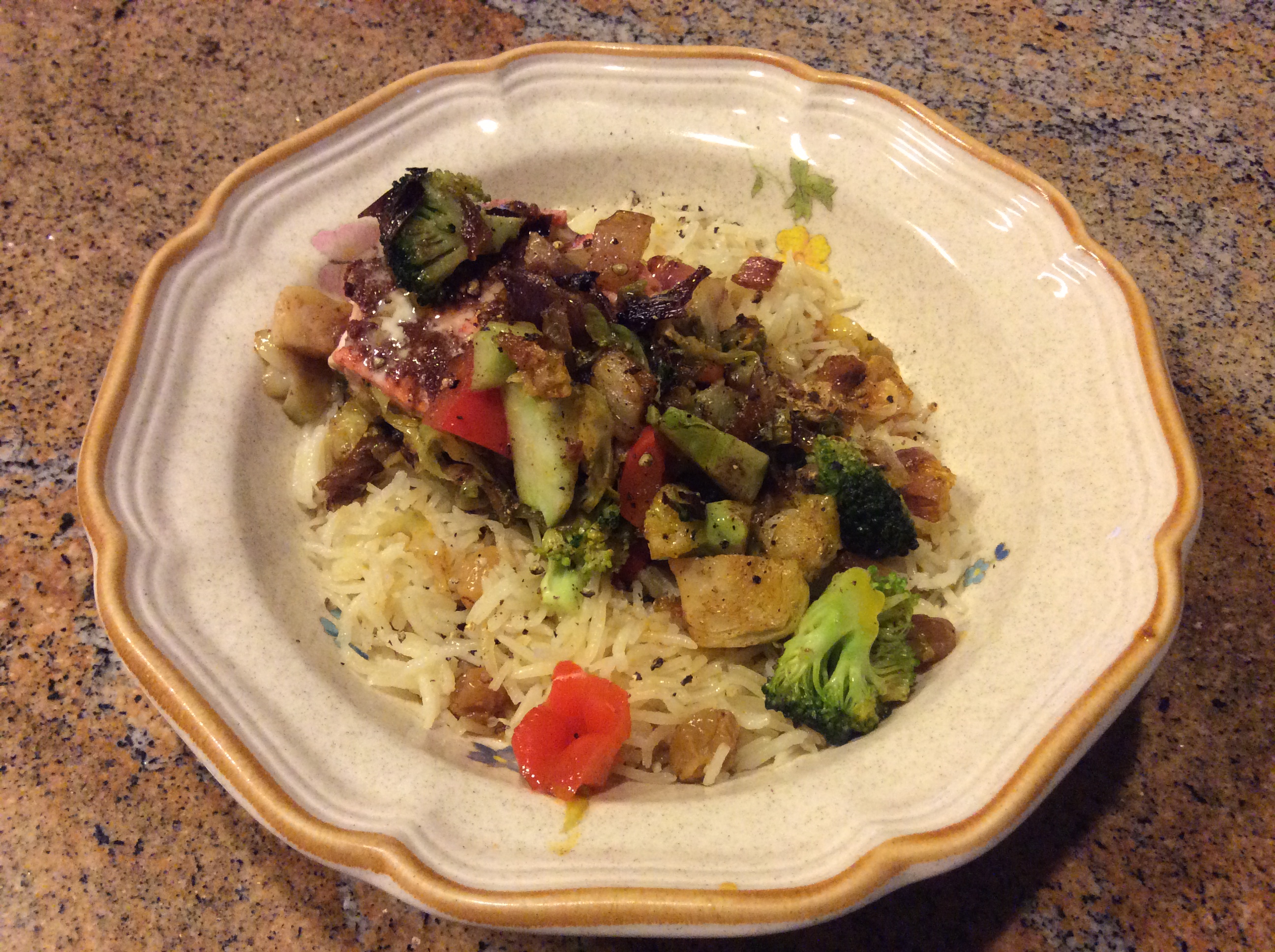
Last summer, as former followers know, I traveled with friends to Ethiopia for three weeks via Dubai.  Because I love the stuff, I brought back an entire kilo of berbere.  Mine follows the special recipe of my Ethiopian friend’s mother.  She had it made special just so we could bring it home.  Actually there were three kilos in my bag but only one for me.  My new favorite salmon recipe involves the use of berbere.  Unlike some, hers is more rich and spicy rather than really hot.  This will serve one to two, just increase the amount of all the ingredients to suit the number of people you plan to feed.

1-2 portions wild sockeye salmon–you could use any type of course

4 medium to large brussel sprouts, coarsely chopped

1/2 purple onion chopped coarsely

Several broccoli florets

1/2 ripe bell pepper, seeded and chopped

Olive oil

Berbere

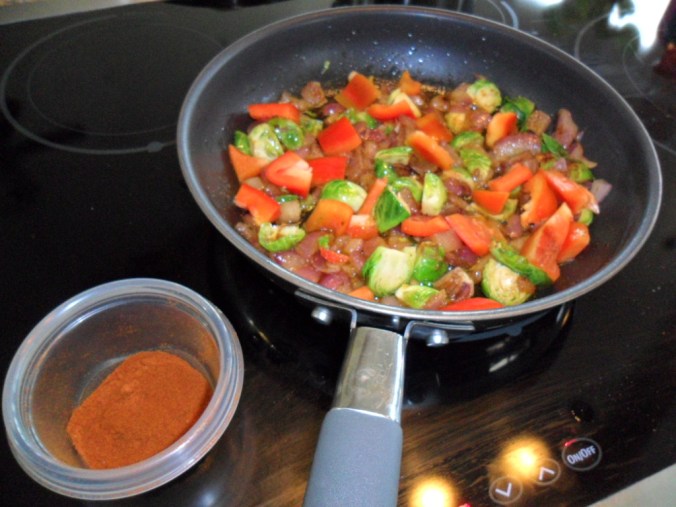
Cover the bottom of a skillet with olive oil.  Add onions and sauté until translucent.  Add the brussel sprouts and sauté until nearly tender.  Add the peppers and broccoli.  Sprinkle a light layer of berbere over all the vegetables as you cook them.  Stir occasionally.  Add the salmon, skin side down.  Sprinkle berbere over the salmon so the salmon is covered but only lightly.  You can add more to taste.  Continue cooking until the salmon flakes.

I serve this with rice.  The rice in the photo is basmati.  See previous posts for the special way I cook rice.  Sometimes I vary the vegetables using poblano peppers, carrots, Swiss chard–whatever I happen to have or feel like eating at the moment.  Pick what you like.

IMG_1430

This, honestly, is nothing like real Ethiopian food in part because I do not have teff and do not know how to make injera.  The photo below shows me and friends in a restaurant in Gonder, Ethiopia, in my idea of food heaven.

IMG_0757

Rye Bread with Cardamon and Golden Raisins


Every year for so many years I fail to recall, I have made this bread during the holiday season.  Why then, I have no idea because the bread is not just for winter or anything in particular.  It makes three loaves and a good present; maybe that was the original reason.  It also takes more time than ordinary bread; I usually have time off during this season.

2 packages yeast

1/2 cup warm water

1 1/2 cups light cream or evaporated milk

2 cups unsifted, unbleached flour

3 eggs

2/3 cup sugar

1 cup butter, melted and cooled

2 tsp. fresh ground cardamon

1 cup golden raisins

1 cup milk

2 cups rye flour

1 cup whole wheat flour

3 – 3 1/2 cups unbleached flour

In a large bowl dissolve yeast in water. Stir in the cream or evaporated milk.  Add the 2 cups flour; beat until smooth.  Cover and let rise in a warm place until doubled.  Stir in the eggs, sugar, butter, golden raisins, and cardamon.  Beat until smooth.  Add the milk and rye flour and stir until combined.  At this point using a dough hook makes it easier.  Add the whole wheat flour and enough of the unbleached flour to make a stiff dough.  Sprinkle remaining flour onto a board or granite counter top.  Knead until smooth.  Oil a large bowl, place dough in bowl and turn to grease both sides.  Let rise until doubled.  Punch down and work into a smooth ball.  Divide into three equal portions.  Place in three pans of your choosing (I use one regular loaf pan and two cake pans).  After dough has risen to double in size, bake in a 350 degree oven.  While loaves are still hot, brush with butter.  Allow loaves to cool before removing from the pans.

This bread is especially good with Swiss cheese or other similar cheeses and makes a tasty left over turkey sandwich.


My Mom’s Pumpkin Bread


A couple of days ago, after writing what I think will be my next to last Ethiopian Adventure blog post, I decided to get in the holiday spirit and bake.  For years, each year about this time, I make the pumpkin bread recipe written in my mom’s (Barbara Lewis Duke Lightle) hand writing, a recipe she gave me decades ago.  The recipe card looks a bit worn, but the results are as yummy as ever. Sift together 3 cups flour, 1 tsp. cinnamon, 1 tsp. nutmeg, 1 tsp. baking powder, 1/2 tsp. cloves, and 1/2 tsp allspice.  In  a large electric mixer bowl combine 1 cup cooking oil, 3 cups sugar (this is the original she used; however, I only use 2 1/3 cups sugar), and 3 eggs.  Beat well.  Add one small can pumpkin, 1 tsp. baking soda,  and 1 tsp. vanilla.  Mix well.  Finally, slowly add the flour mixture.  Pour into three well greased and floured coffee cans–each 1/2 full.  Bake at 350 degrees for 45 min. to one hour.  Her original recipe calls for adding 2/3 cup walnuts or pecans.  I want to have three kinds of bread so I pour 1/3 into the first can with nothing added, then I add nuts to the rest and pour 1/2 of that into the second can.  Finally, I add 1/2 cup golden raisins and pour the remainder into the last can.  Cool thoroughly before removing from the cans.  It helps to loosen the sides with a knife. Enjoy, share.

Talapia with Beets, Red Peppers, Swiss Chard and Bebere


This recipe makes good sized portions for two people.

2 talapia filets

1/2 red onion, coarsely chopped

1 red bell pepper chopped into bite sized pieces

1 medium sized beet, thinly sliced

2 handfuls Swiss chard–if large pieces, take a knife and separate the middle spine from the leaf part

Chop the spines and add to the onion

Olive oil

Cover the bottom of a large skillet with olive oil.  Add the onions, chopped Swiss chard spines, and beets–I cut the beet slices in half.  Saute until the onions are somewhat caramelized and the beets almost tender.  Add the peppers and 1-2 tablespoons bebere or to taste.  When the peppers are half done, add the filets.  Sprinkle extra bebere over the filets.  When they are almost tender, add the Swiss chard and sauté until the Swiss chard wilts.  Serve over rice.

Note:  I grow my own Swiss chard in a large pot in the house.  This enables be to have my own supply.  However, the leaves are tiny compared to the large leaves in the market, making it unnecessary to cut the green leafy part away from the center spine.  Bebere is an Ethiopian spice which is slightly hot; it has a wonderful, unique flavor. You can use whatever spices you prefer.

1501692_10202308519748276_7838086885092813556_n

My Ethiopian Adventure–on the Road to Lalibela, Part One


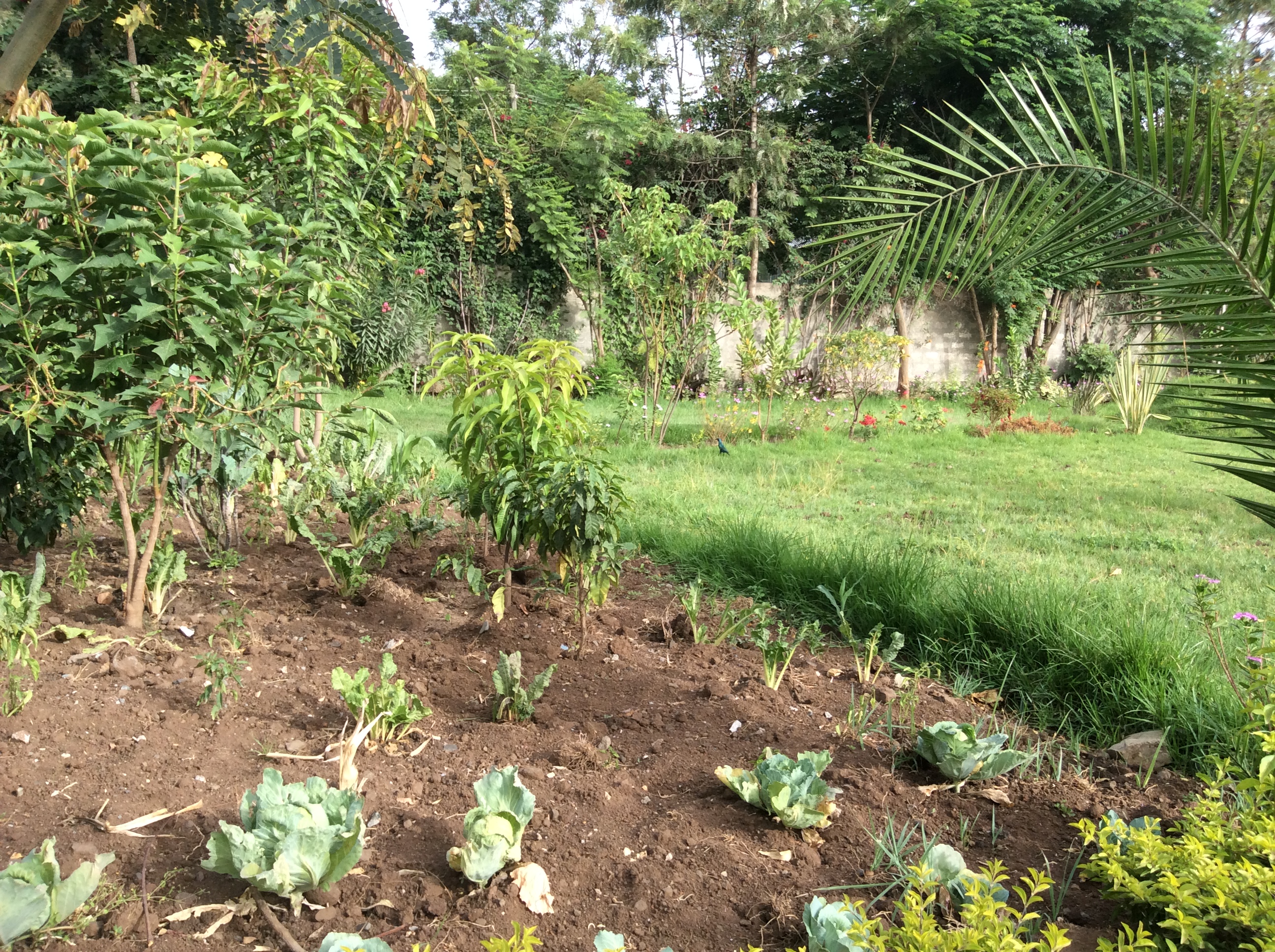
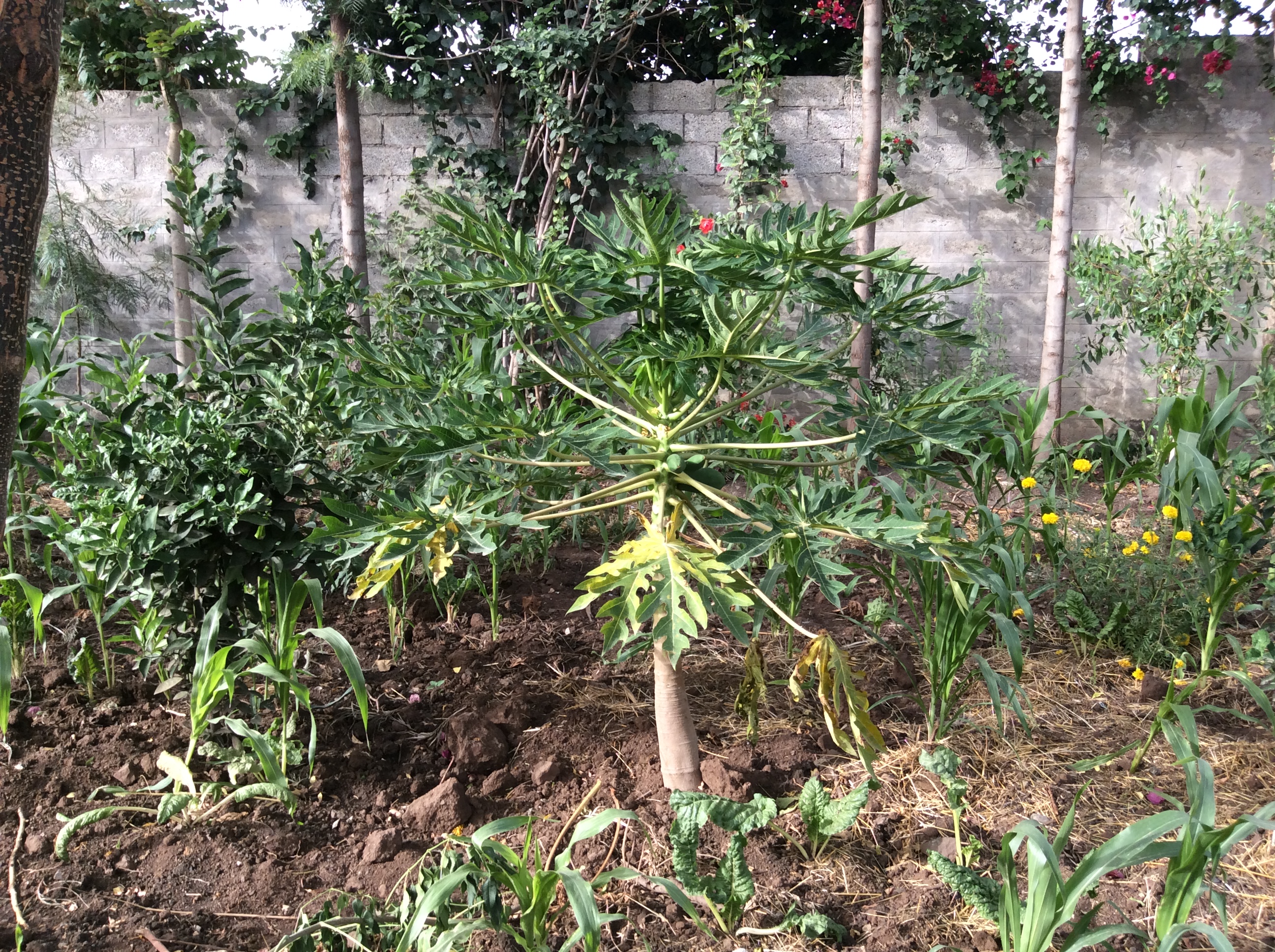
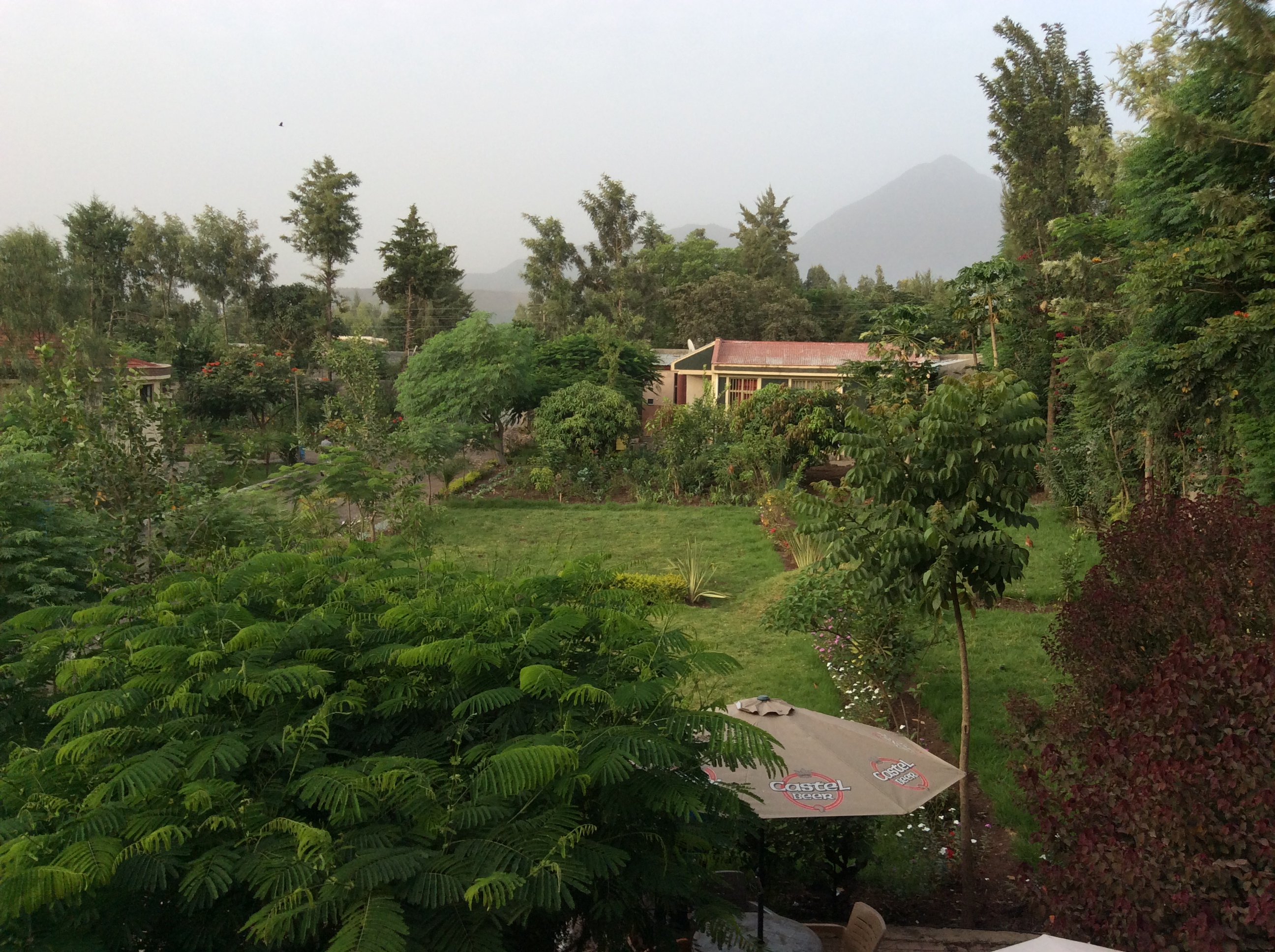
Although the Sunny Side Hotel’s rooms in Kombolcha seem elemental to say the least, the food there is some of the best I had in Ethiopia.  One of the reasons for this may be their extensive gardens which not only hold flowers, but vegetables and fruit trees.

IMG_0292

IMG_0294

That’s a papaya in the middle.

IMG_0296

IMG_0290

Dinner consisted of fresh talapia–Lake Tana is full of talapia and is a common item on menus, perfectly grilled, julienned vegetables sautéed in sunflower oil and seasoned with a sprig of rosemary.  The next morning we headed for Lalibela.  The first larger city through which we drove is Dese.  As in most Ethiopian cities, new construction could be seen everywhere.  They do not use steel for scaffolding.  They use eucalyptus as in this building.

IMG_0307

IMG_0305

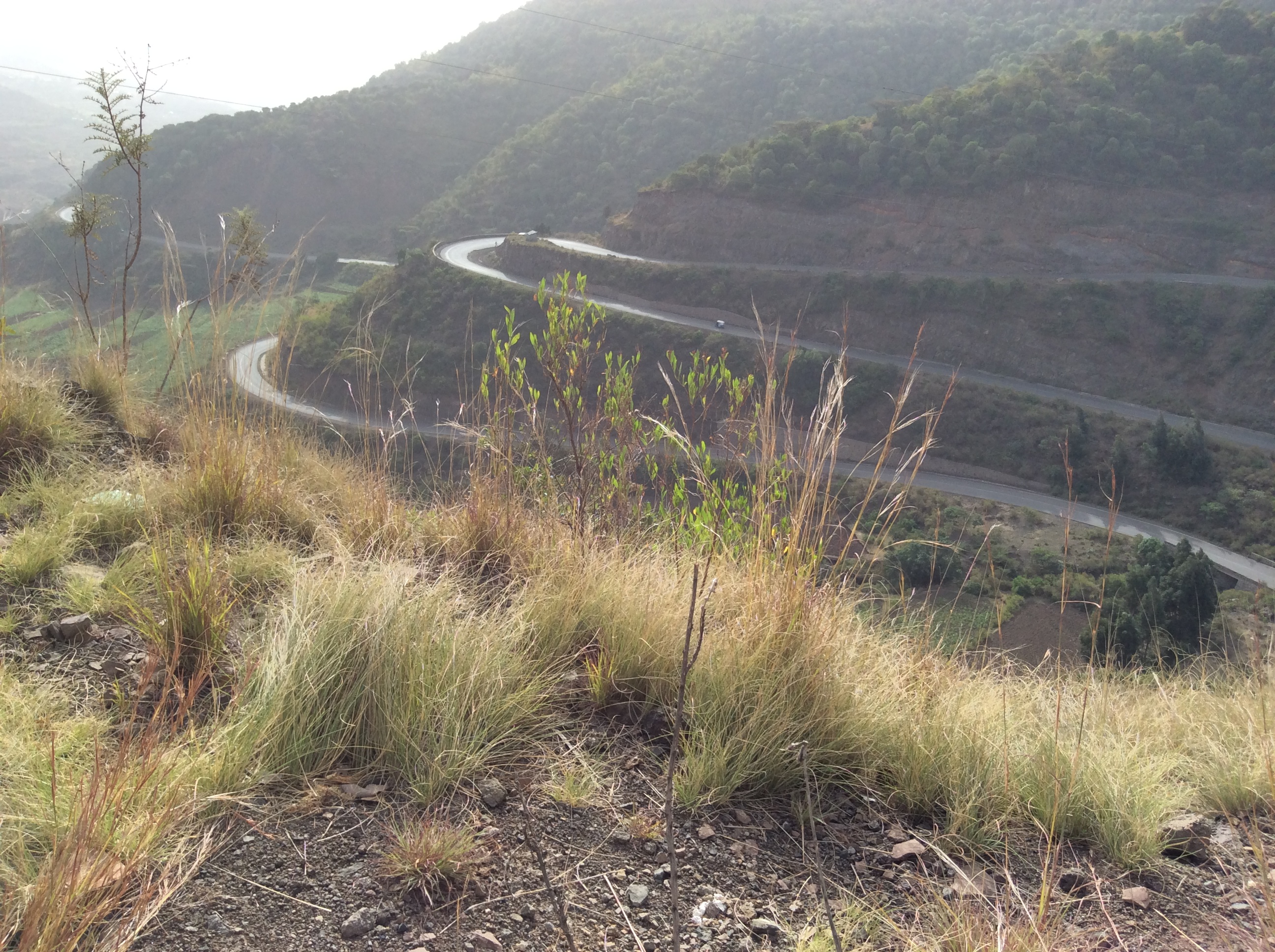
We continually climbed switched back roads.  Usually, terraced fields lay as far as we could see on the mountainsides.

IMG_0303

IMG_0301

IMG_0311

Not too far from Dese, we came to the smaller town of Hayk.  Hayk is the Amharic word for lake.  The town is named after this nearby lake.

image

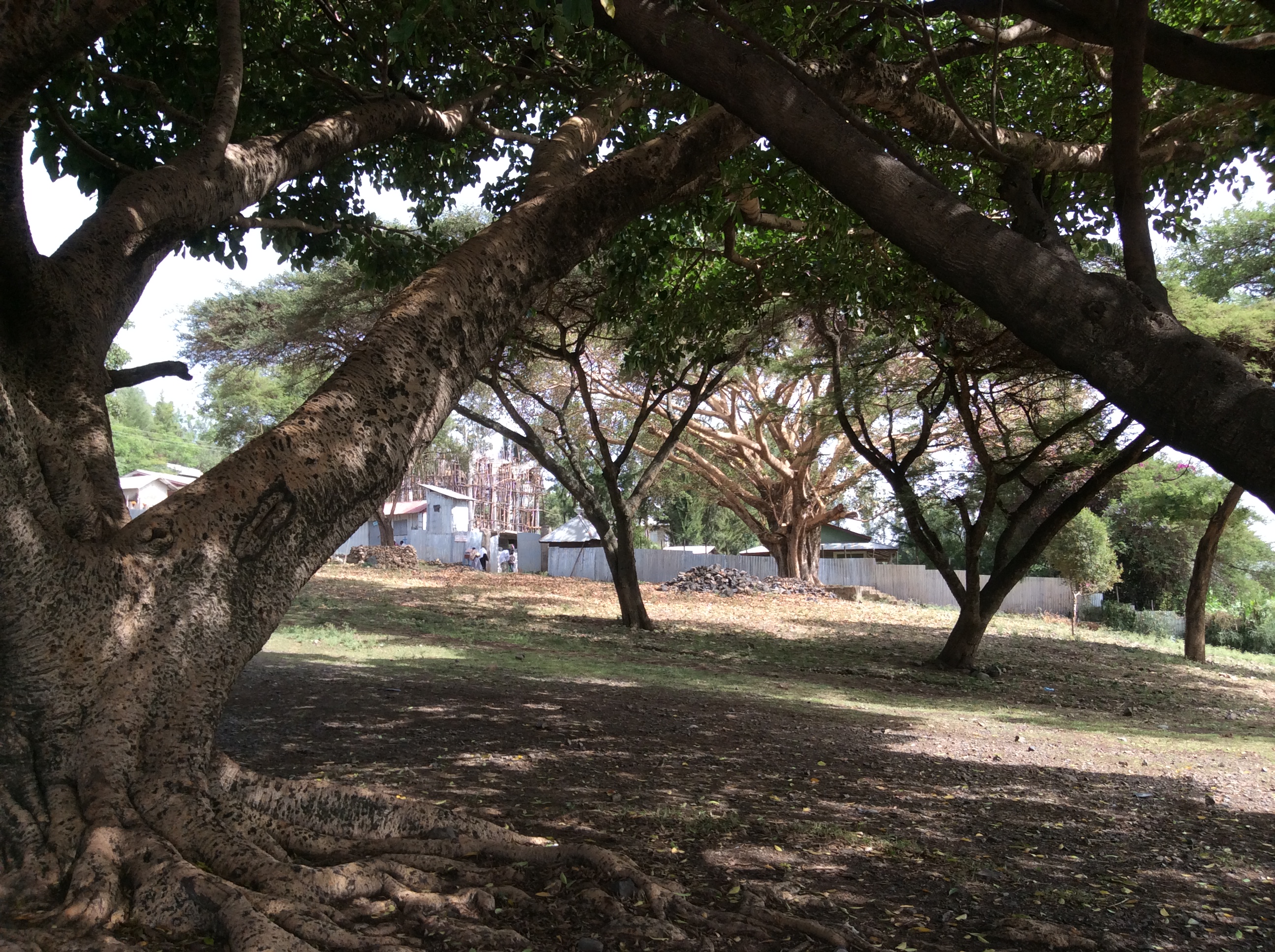
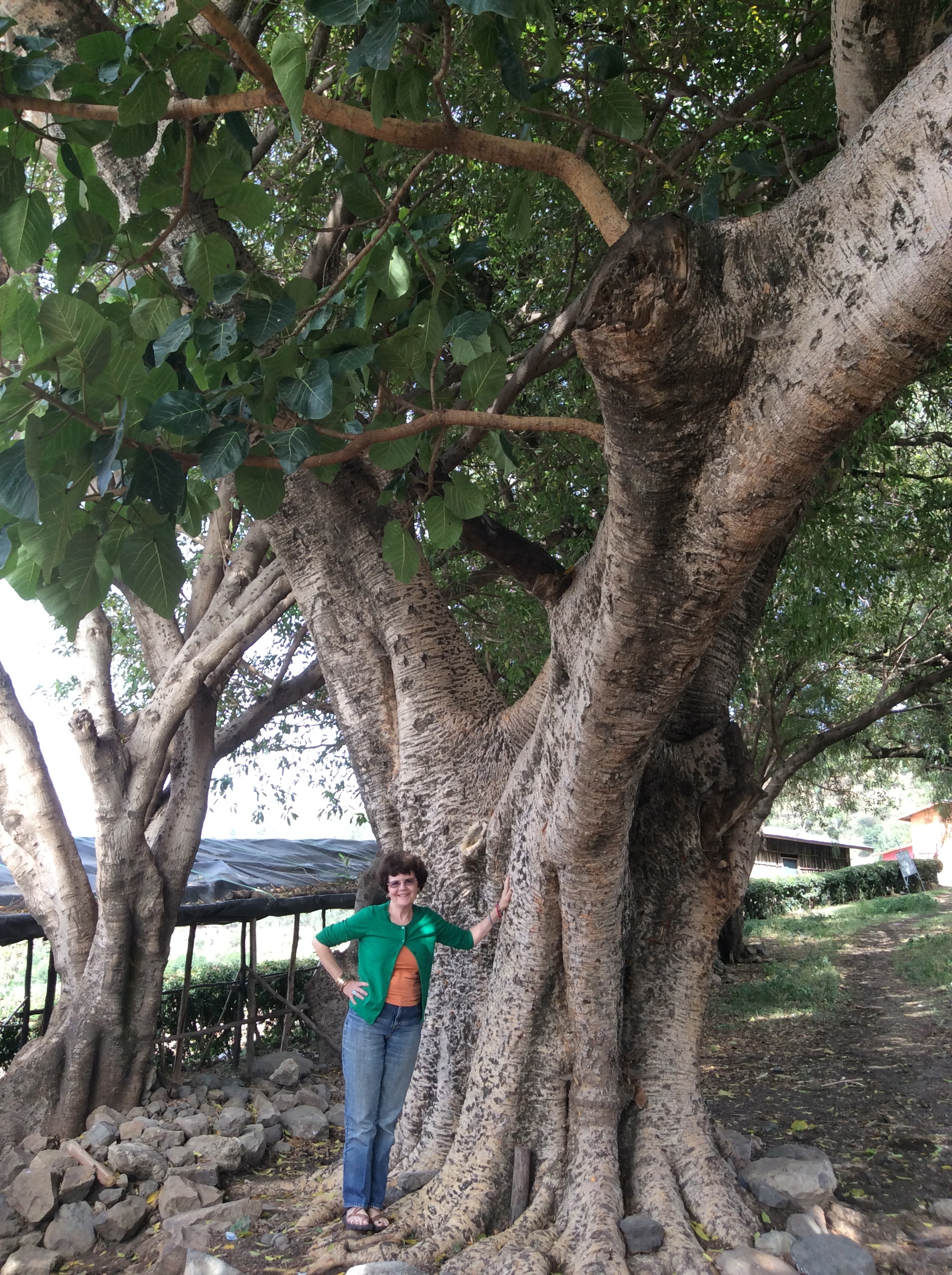
Seven species of acacia grow in Ethiopia.  These, higher in the mountains, appear considerably more lush than those farther south in semi arid places. You cannot swim in this lake because, like many bodies of water in Africa, the schistosomiasis parasite lives here.  There is a cure, but not very pleasant.  Huge fig trees and acacias provide a setting like one sees in movies.

IMG_0316

IMG_0317

IMG_0319

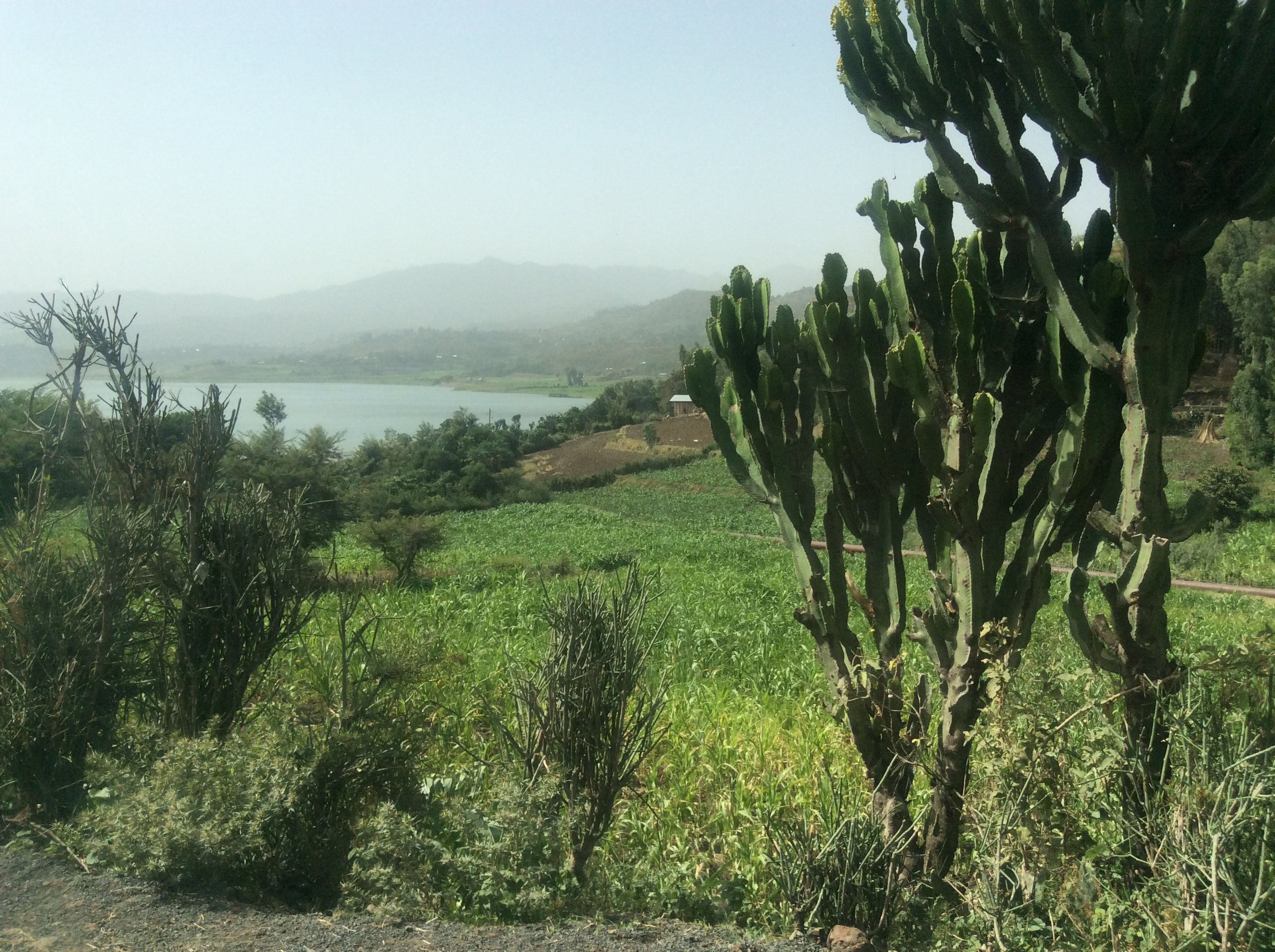
This monastery resides on a small peninsula that juts out into the lake.  The sign says no women allowed.  Foreign male visitors may enter for a fee–locals free. Lush fields surround the lake.

IMG_0314

IMG_0322

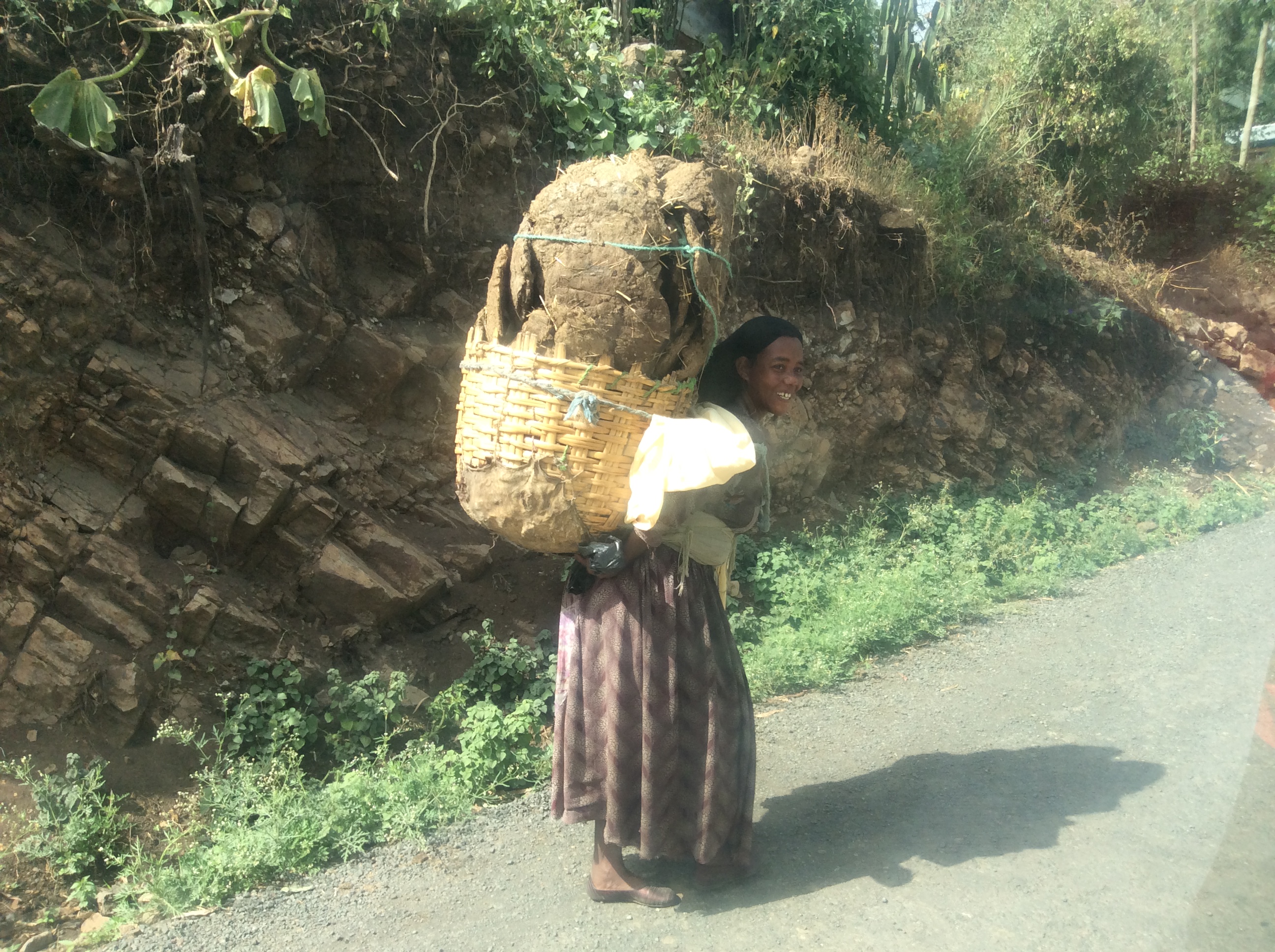
Yes, that is cactus on the right–not exactly a place I expected to see cactus.  On the road out of the lake, we saw this girl walking and asked to take her photo.  She is carrying dried dung.  Houses are first framed in eucalyptus and then plastered with a mixture of dung and mud or just mud.  Sometimes they are left the natural dark brown color.  Some home owners prefer to paint them bright colors.

IMG_0324

IMG_0331

This is a typical house in most areas left unpainted with a metal roof.  Everywhere people worked the fields the “old” way with a beautiful result.

IMG_0327

IMG_0328

We passed villages and towns of all sizes.

IMG_0330

And always children as well as adults drove animals along the road.

IMG_0335

IMG_0336

IMG_0343

Eighty languages are spoken in Ethiopia.  Some, like Amharic and Oromo, are spoken my millions, others by only a particular small tribe. Everywhere we went people knew Amharic, an Afro-Asian, Semitic language (like Arabic and Hebrew) which originates in the ancient language of Geez, a language now only used as the sacred language of the Ethiopian Orthodox Church.  English is taught in elementary school, which is compulsory through the eighth grade.  Because of too many students and too few schools and teachers, especially in rural areas, school is half a day.  One group goes in the morning and another in the afternoon.