Book 46 for 2024: “What Happened to Ruthy Ramirez”, Claire Jiménez


The Puerto Rican Ramirez family lives on Staten Island. The book begins years after one of the three daughters, Ruthy, disappears at the age of 13 while on her way home after her school track practice. Twelve years later while watching TV, Jessica, the oldest daughter, sees someone on a reality show who looks like Ruthy. The woman on the TV has red hair like Ruthy and the same birthmark mole. Jessica tells her younger sister, Nina. They concoct a plot to go to the reality show site and bring Ruthy (if she is really Ruthy) home. They avoid telling their mother, Delores, who has never ceased struggling over Ruthy’s disappearance. Delores discovers their plot and insists on not only joining them, but also bringing her older Pentecostal friend who frequently falls into spiritual spells on the floor at church. Eventually, they all head to Boston where the show is located and all kinds of turmoil occurs.

The novel is told from the viewpoint of each sister and their mother, providing endless details about their Puerto Rican culture, their jobs, their views, and how they feel about each other, all done with dialogue. Sometimes it is loving, sometimes snarky as it deals with their experiences with racism, sexism, family secrets, and violence. As a reader, I, too, wanted to know what happened to Ruthy. Definitely worth the read.

Book 44 for 2024: “Framed: Astonishing True Stories of Wrongful Convictions,” John Grisham and Jim McCloskey


Without doubt this ranks among the most horrifying books I have ever read. Every life story (there are ten) discussed in detail illustrates failures in the US justice system:

–inept police, sheriff departments, and judges

–judicial corruption

-criminals paid to give false testimony in return for lower sentences or pay

-sheriff departments, police, and judges unwilling to admit they made a mistake when evidence clearly indicates they are in error

-racism

In one case ten years ago, an innocent person in Texas was actually put to death. The governor refused to acknowledge the evidence given to him that proved the person was innocent. The majority of the cases discussed in this book occurred in Texas although this sort of thing occurs throughout the country.

Note: One of the authors, Jim McCloskey, founded Centurion Ministries, the first organization in the world focused on freeing those wrongfully convicted. The state with the most exonerated individuals is Texas.

Book 42 for 2024: “These Is My Words: The Diary of Sarah Agnes Prine, 1881-1901, Arizona Territories


This fictional work is based on the life of the author’s great grandmother. Written as a diary with specific dates, the narrator is not yet a teen when the novel starts. Her parents are wanderers, always looking for a better, new place. Sarah’s character is that of a tough, pioneer girl and then a woman. She can ride horses, shoot to kill, manage a ranch, do whatever it takes to survive. Much of it includes a rather accurate portrayal of life in Arizonan territories as well as Texas at the time including the prejudices of many of the white inhabitants toward the Spanish speaking people already there, fights with Apaches, and the hunt for Geronimo. It is not just the story of her own life, including her relationship with the Army Captain whose job initially is to protect a wagon train, but also portrays other people living in the Southwest during that time period.

I read this as part of a book club. Reactions to the book varied widely from those of us who thoroughly enjoyed the book to at least one person who insisted it is poorly written and viewed it as a romance novel. The rest of us did not. She used an audio book edition. After her descriptions, it appears the audio book does not correctly follow the book itself and is poorly done which may have contributed to her view of this work. I borrowed this novel from the public library and it was obviously well read because it was not in the best condition.

El Barrio Bonito


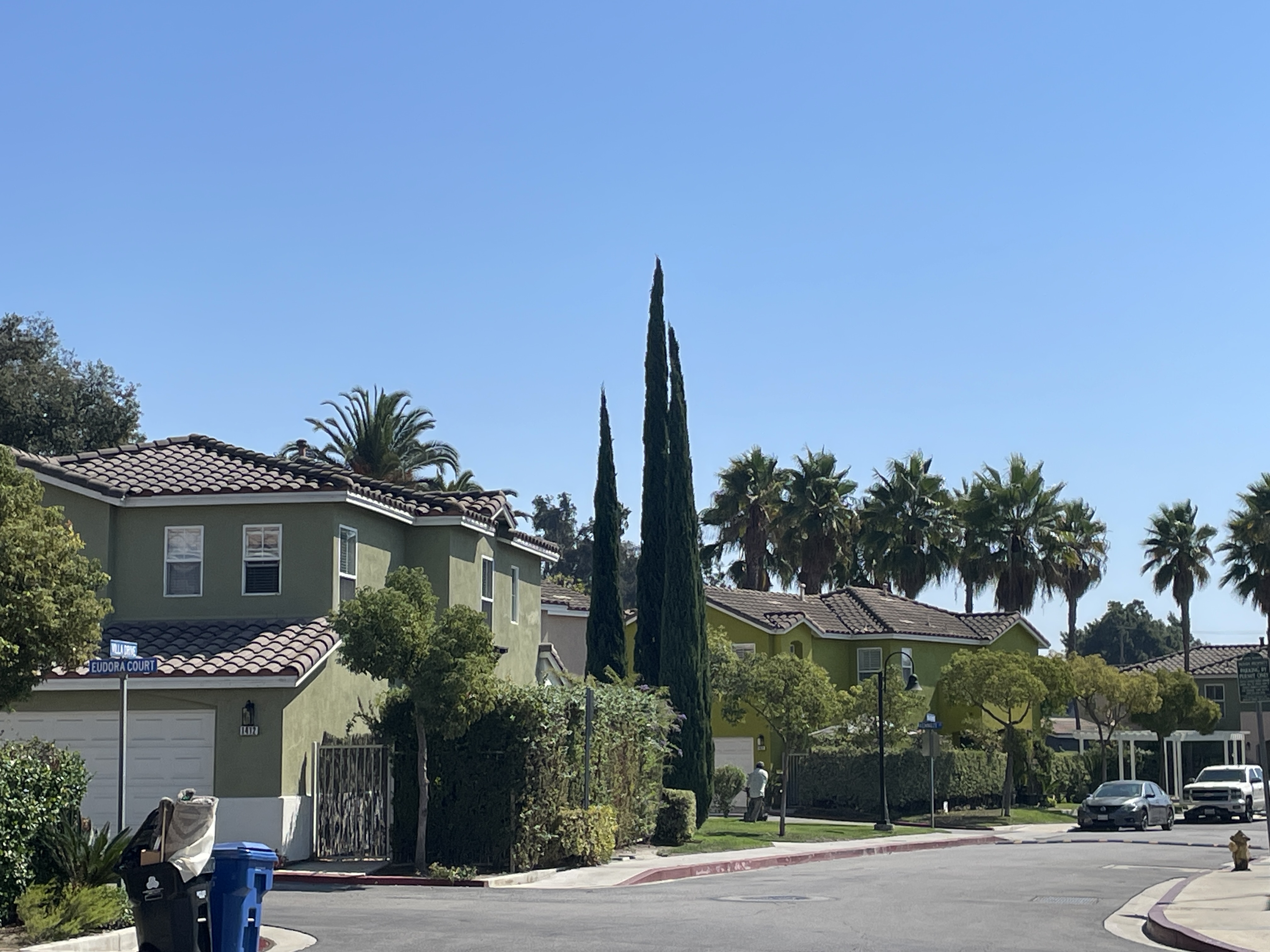
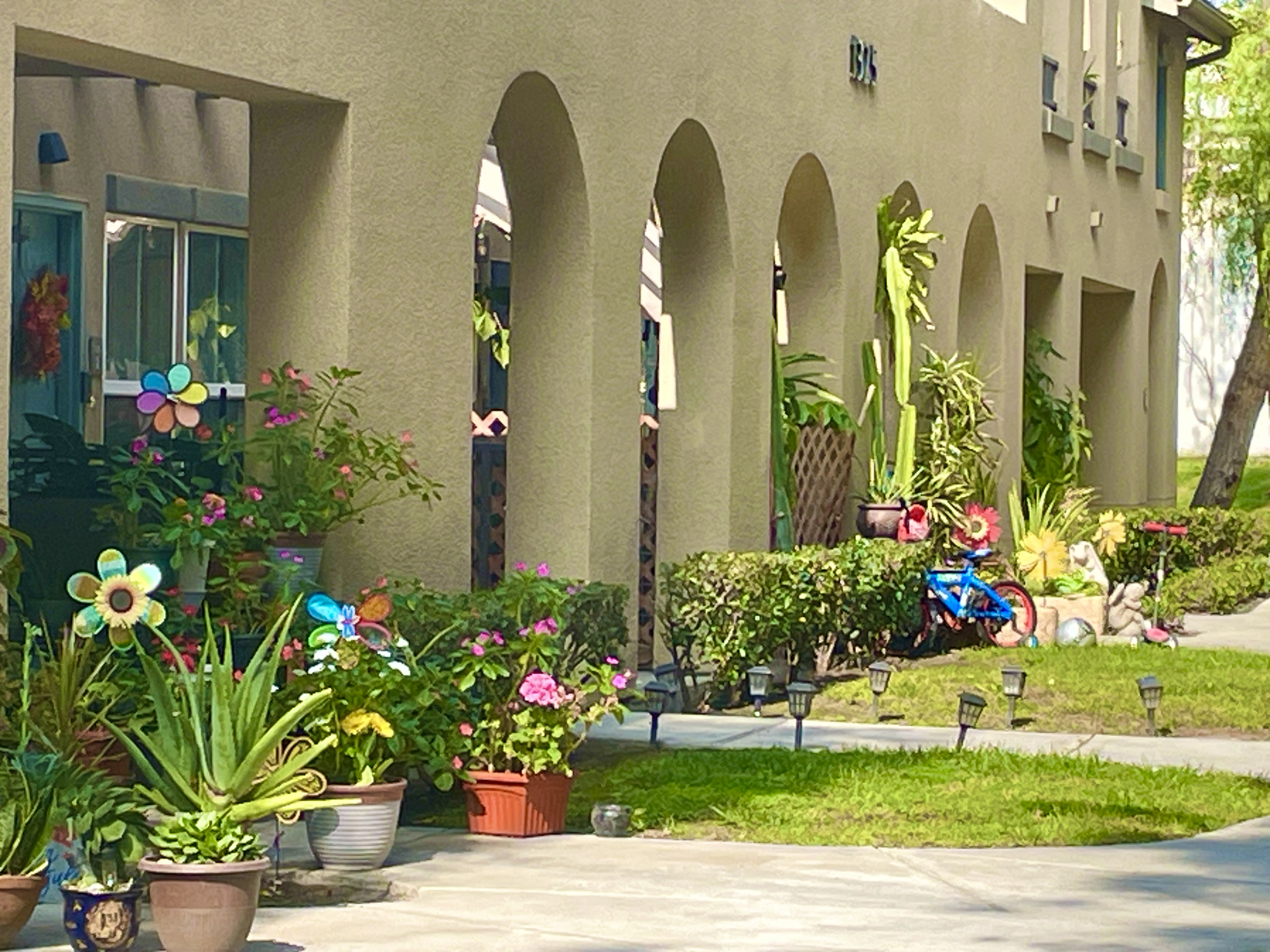
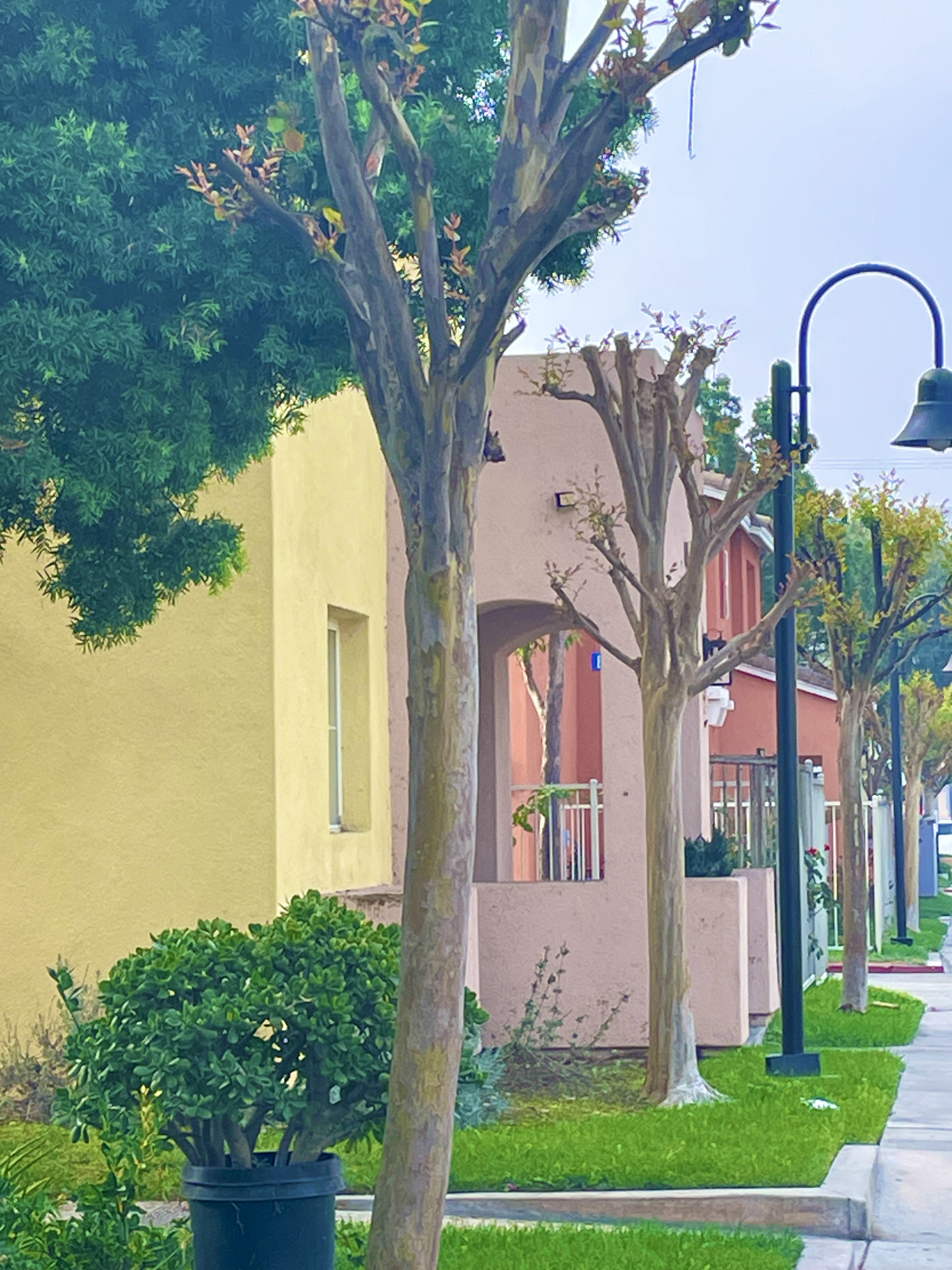
Every week I go to Mendez High School in Boyle Hts., CA. Between meetings with my students, I take a walk in one of my favorite neighborhoods. Frequently when a person mentions low income housing, a negative image comes to their minds. Wrong. The neighborhood where I walk is beautiful, lovely places full of flowers. In one area the buildings are painted in joyous colors that make me smile every time I walk there. Here are photos for you to see for yourself.

Downtown LA in the background.

Book 40 for 2024: “If We Are Brave: Essays from Black Americana”, Theodore R. Johnson


Johnson, a columnist for The Washington Post, notes that the US was founded on a set of ideals but for much of its history agreement on what those are ideals are has not existed. What are these ideals, who are they for? Today there is little agreement on much of this. There seems to be a lack of a common vision on what a democratic system is and should be and for whom. The essays in this book address these questions both today and from the origins of the country when only white men who owned land could vote. This book also discusses how different races in the country and the changing predominance of cultures affects the ideals people hold and the kind of country they envision for themselves.

As a Black man who is a retired Navy Commander, he also discusses his own experience, extensive research, and personal views. This short book is an excellent primer on how different races and cultures experience living in this country and their varying visions of the meaning of democracy.

Book 39 for 2024: “The Return”, Hisham Matar


This book won the Pulitzer Prize in 2016. The subtitle, “Fathers, Sons, And The Land In Between” indicates a bit of the subject matter–how sons and fathers relate, but in this case it is a tale of horrible grief and suffering when Matar’s father is arrested and imprisoned in the notorious prison of Qaddafi in Libya. For decades Matar tried to find out what happened to his father. There is no record of his death and no one knows what happened to his body. The book details the lives of his family and their search for news of, hopes he might be alive, and what happened to Matar’s father. To this day no one knows. In 2012, 22 years after his father’s kidnapping when Matar was 19, he returned to Libya to try to learn more, met with uncles who had also been imprisoned, some for 20 years. This is the tale of his family’s suffering and hope. It also relates in detail the horrors of Qaddafi’s reign, what happened to many in his most notorious prison, and the resilience of so many who managed to survive, including close relatives of the author.

Note: After Qaddafi fell, there was hope for a new, unified government. However, as of the present, Libya is ruled by two rival administrations and is a divided country.

Book 37 for 2024: “Follow the Science: How Big Pharma Misleads, Obscures, and Prevails”, Sharyl Atkinson


The title tells it all. The author is an investigative journalist. The book is filled with details of varying science reports and studies. A lot of what she quotes is the opposite of the official narrative and science for vaccines in particular, especially those related to childhood vaccinations and Covid vaccines. Technically, both flu and Covid shots are not vaccines in that they do not keep the recipient from getting the disease in all cases like the vaccines for smallpox, measles, and polio do. This does matter in considering whether individuals should get the shots. She also discusses general public immunity in regard to flu and Covid, especially the latter. She also questions the claims that childhood vaccines as they are currently given never cause autism and whether some children are susceptible to extremely negative reactions to these vaccines when the majority of children are not. The main claim is that the giant pharmaceutical companies have enormous power to control the narrative about medications they produce, have huge influence with elected officials of both parties, and will do whatever it takes to make a profit on the drugs they manufacture.

Book 36 for 2024: “The Storyteller of Marrakesh”, Joydeep Roy-Bhattacharya


A striking, foreign, young couple appear one evening in the Jeema of Marrakesh. The woman’s incredible beauty fascinates the observers. Suddenly, they disappear. Hassan, a traditional storyteller, invites those who observed the couple to tell what they saw and knew on that night as he presents his own stories to the crowd at the Jeema. His brother, Mustafa, has confessed to the crime of their disappearance, telling everyone he loved the woman whom he hardly knew. He is imprisoned for their disappearance. However, nearly everyone acknowledges that he had nothing to do with it. This novel presents all the different views of the couple, their disappearance, and what it means. Often observer stories contradict each other, raising the questions of what is truth, whose truth is factual, how can we know what is true and how do we define love. Hassan is determined in his quest which takes the reader through all these stories, Hassan and Mustafa’s childhood, the mysteries of the Sahara, and much more.

Book 34 for 2024: “The White Mosque”, Sofia Samatar


This memoir tells the tale of an unusual tour for a specific purpose, to follow the path of Mennonites who left Europe to escape conscription into the army since the Mennonites are pacifists. The author’s own life is unusual. Her mother was a Swiss Mennonite missionary to Somalia. Her Muslim Somali father taught the Mennonite missionaries Swahili. The two met and married. Samatar grew up and lives as a Mennonite. She teaches African and Arabic literature at James Madison Un. She is most famous for her fantasy novels and short stories which is how I discovered her writing.

In the late 19th century a group of German speaking Mennonites left Russia for Central Asia where their leader believed Christ would return. They suffered many hardships, rejection, abuse, but finally found a place that welcomed them in the Muslim Khanate of Khiva in what is now Uzbekistan. There they built a white church which the locals called Ak Metchet, the White Mosque. Their village lasted 50 years.

If you go online, you can find tours today that follow the route of these Mennonite travelers, trace their route. This book details Samatar’s experiences on the tour, the tour guides, the food, the architecture, the culture and the history: a 15th century astronomer king, the first Uzbek photographer, Mennonite martyrs. She also discusses her own unique upbringing, local beliefs and culture, how people develop their own personal identity, and the surprising interconnections people sometimes discover.

Book 33 for 2024: “Three Daughters of Eve”, Elif Shafak


Shafak is a popular Turkish writer. One of my all time favorite books is her novel about the life of Rumi.

“Three Daughters of Eve” takes place one evening in Istanbul in 2016. Peri, one of the daughters from the title, is on her way to a fancy party when a thief snatches her purse out of the back seat of her car which is stalled in traffic. She parks the car and chases him through back alleys. As she fights him for her purse, an old photo falls to the ground. It portrays three young women and their university professor. This photo jars her mind, takes her back to her time at Oxford University when she was a student there in 2000-2002, her childhood in Istanbul in the 1980s and 90s, and her life. She thinks back to her life with her two friends, Shirin, an adventurous Iranian young woman, and Mona, a devout Egyptian Muslim who word a headscarf out of choice. And then there is the famous professor Azur, whose class on God either makes students hate or love him and the scandal that caused Peri to return to Istanbul.

Until her daughter, who was in the car and eventually chases her mother down in the alley, sees the photo, no one, except her husband, seems to have known Peri even went to Oxford. Her daughter mentions it at the party while everyone is arguing about East and West and politics and who has the most money and how they acquired it. Peri tries to deflect questions, changes the subject, and keeps remembering her past: her parents, a father quite irreligious, her mother a devout Muslim, their endless arguments and hostility, her brothers, her childhood and her stint at Oxford.

Through the story of Peri’s life, this novel explores personal identity, East-West history and politics, the meaning of marriage and friendship.