Costa Rican Adventure, Day Two–Part One


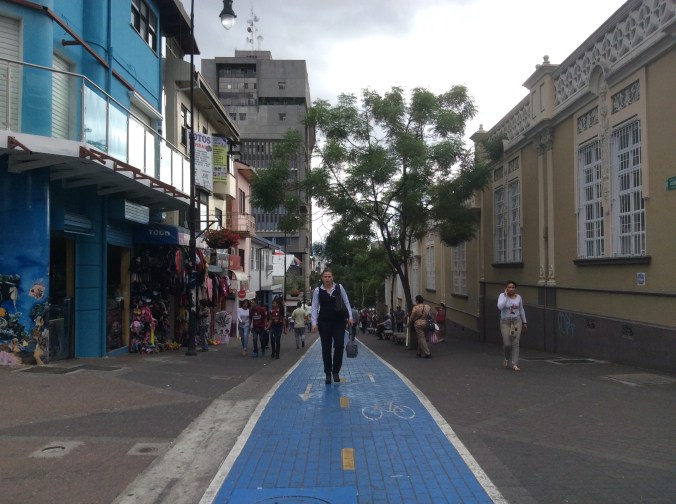
After a buffet breakfast of traditional foods, e.g. gallo pinto and plantanos fritos–my favorites, we headed to the central part of San Jose which is only foot traffic, no vehicles.

IMG_1912

We strolled to El Mercado where my grandson bought a stuffed sloth–I love bargaining so we got it for a good price.  My only disappointment was the rush so we could see everything–the disadvantage of being on a tour. Eventually, we ended up at the National Theatre.

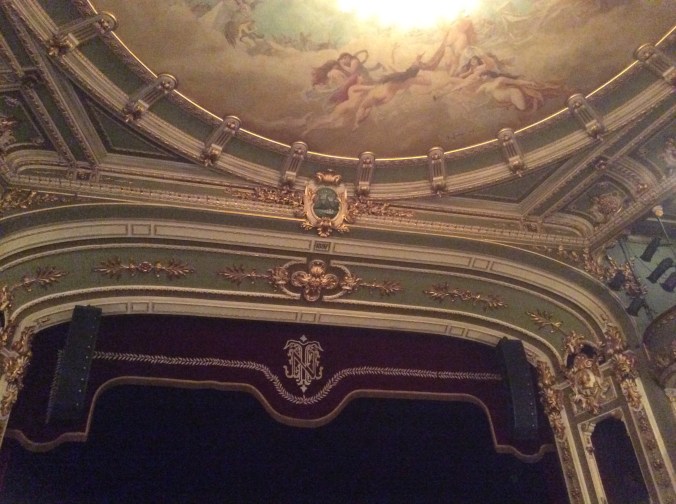
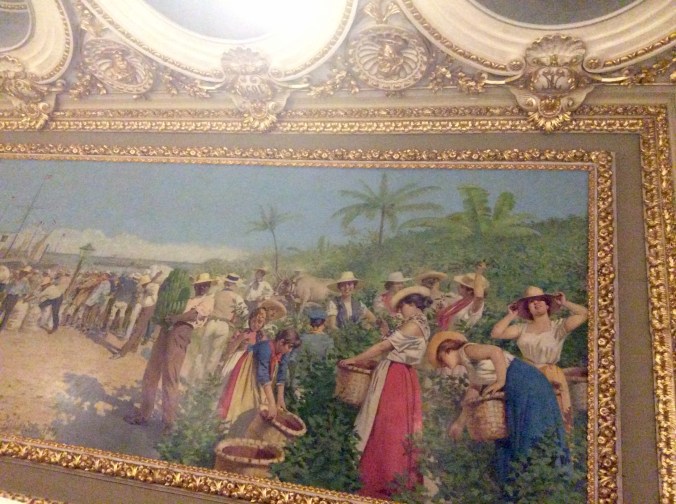
Located in the central section of San Jose, it is considered the finest historical building in the capital and remains relatively unchanged since it was built in 1897–it opened on Oct. 21 of that year.  Most of its opulent furnishing were imported from Europe.  At the time of its opening fewer than 20,000 people inhabited San Jose.  It was financed via a coffee tax which was then and still is the major export and cash crop.

This theatre remains in use today and houses a small, cosy restaurant next to the main lobby.  We ate our first Tico lunch there.

IMG_1913

This and the following photos were taken in the lobby of this theatre.

IMG_1914

IMG_1915

IMG_1916

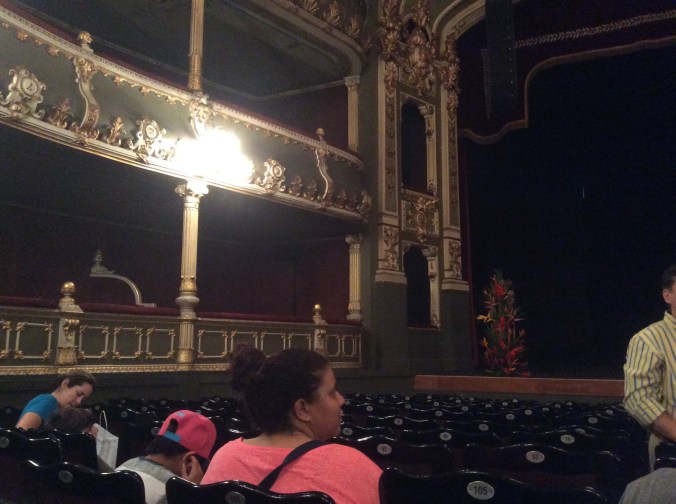
I took this and the following photo while seated in the main seating area looking up to the ornate ceiling.  Originally, the theatre was designed for multipurpose use so the main floor has seating than can be removed and the floor risen to the level of the stage and consequently transformed into a dance floor.  Rarely is this aspect used today.

IMG_1918

We left this area and climbed the stairs to the balcony where the president and cabinet still sit for performances.  Neither the president nor any of the cabinet have body guards.  We were reminded that in 1948, the country disbanded its army and still has no military. The following two photos were taken from the stairwell.

IMG_1919

IMG_1920

IMG_1921

This area is a large reception room across from the balcony level.  The incredibly intricate parquet floor has been covered by carpet for protection  so you can see only portions of it as you walk around.

We also visited what is know as the Gold Museum, my favorite.  It houses a huge collection of pre-Columbian gold artifacts and other antiquities. No cameras, purses, backpacks, iPads, nothing can be taken in so no photos.  It is literally underground.  Visitors are directed to lockers in which to put all these belongings, lock them, take the key with you as you browse the incredible collection.  There is an excellent gift shop where you can purchase copies of these artifacts, painted wood jaguar heads, and other handcrafts.  This is not our typical, touristy gift job.  As a result I now own four jaguars, three heads (two from Mexico and the one I bought here) and an entire jaguar from Mexico for a total of four.


Happy Birthday to Suzanne Gelber Rinaldo


Suzy and I met as freshmen at Grinnell College in Iowa.  She was from a suburb of Cleveland and I from a farm in Northwest Missouri.  We decided we wanted to be roommates the following year.  We remain friends still after all these years even though we usually live far apart except for a brief time when we both lived in Rhode Island.  She married David Rinaldo, who attended Grinnell with us.  At least once a year one of us goes to see the other.  We seem able to pick up conversations as if we had just talked a few hours before.  Last year my daughter, grandson, and I drove to California and spent five days with them.  This year they will come to see me.  We remain the perfect example of that trite phrase, best friends forever, BFF.  On the left side of my fireplace a tiny painting she gave me when we were in college still hangs.  I wrote this poem about it last year.


The Gift


On the wall for forty years,

a copy of some famous painting:

almost everything a strange dark

shade of blue, a blue not quite

blue, the merest hint of green,

antique cupboard, curved table

base, ladder back chair, window

frame, even the tree outside.


The only exceptions:

white table cloth,

newspaper in the lady’s hands,

her pale pink floral dress with tiny

darker pink flowers,

large copper antique teapot

in the cupboard, the black and copper

pots on top.  Her teacup, saucer, plate

of toast, white and blue, an old Danish pattern.


I’ve kept the gift,

hung on too many walls to count.

My college roommate, the giver, said,

This reminds me of you.

I look at it, all these years

have wondered why.

We’re still friends.

I’ve never asked.


SAM_1572

Myanmar Then and Now-Part One


More than twenty years ago, I went to Myanmar when it was still called Burma.  I flew there from Katmandu.  Compared to the cool, crystalline mountain air of Nepal, the hot, moist, Burmese air felt stifling, thick.  Day one, we left the Inya Lake Hotel and traveled to downtown Yangon to purchase tickets to Pagan.  We never left Yangon because the first of many revolts against the military government started.  Everyone strongly opposed going there by the night train and the last plane headed that way had been shot down.  Personally, I was willing to take the risk but could find no one else willing to go with me.  Everyone was under a 6 pm to 6 am curfew.  Unexpectedly, hundreds of hotel guests were confined to the hotel and its grounds, thankfully rather expansive.  This unusual circumstances provided unexpected opportunities.   To accommodate feeding everyone dinner, the hotel staff asked guests to share tables.  I shared a table with a man from South Korea there to build a sport shoe factory, two women from Germany headed to a medication retreat, and a gentleman with an English accent.  We shared life stories except the “Englishman”.  His sharing seemed a little “off”.  Later, when the rest of us chatted and put together what little he shared, we decided perhaps he was an arms dealer.  One evening guests experienced the privilege of watching the guests for an elaborate Burmese wedding, complete with traditional wedding clothing.

Although clean and orderly, this “one of the best hotels in Burma” looked more like photos of Russian army barracks than the hotels to which most of the guests were accustomed and absolutely nothing like anything else near Yangon.  Few cars roamed the streets.  The most common vehicles were small pickup trucks in which the bed had been transformed into an open air van complete with seats and a cloth roof.  The populace exuded an air of dejection.  Those who bothered to save money saw it devalued to nearly nothing.  The once elegant, ornate buildings showed signs of disrepair and decay.  A country which was once the world’s largest exporter of rice was rationing it as well as gasoline.

Unless you sleep twelve hours a day, curfews present challenges.  What do you do with yourself for all those evening hours after 6 pm hits besides eat a leisurely dinner.  I walked the glorious hotel gardens repeatedly and became acquainted with the hotel gardener who spoke perfect English and whose father had attended Columbia University.  His roses were as tall as I am.  He asked me repeatedly, ” How does my garden measure up to modern standards?”  When I offered tp send him horticulture magazines, he told me they would be confiscated as evil, foreign influences.  Paddle boats lined the lake’s edges.  Guests could use them free but  guests were told not to go far out because we might get shot at.  The luxurious villas of the ruling military elite lay readily visible on the distant opposite shoreline.

During the day, everyone rushed out to make the most possible out of the 12 free hours.  Mainly, I recall an overwhelming sense of gold, glitter, and glass tiles reflecting the tropical light.  At first, it induced a feeling of slight nausea, so much sensory input I felt slightly sick.  But I adjusted.  As if scattered, glittery golden temples were not enough, there rose the Shwedagon Pagoda, 99 meters covered in gold, real gold.  I spent an entire day there, wandering its environs and still missed some of it. Saffron clad monks, vendors selling “sacred” items and snacks, nearly a city within itself,  old, originally  built in 1372 and 344 feet high, repeatedly rebuilt after earthquakes and foreign raids.  Impressive is an understatement.

If Burmese history and culture interest you, I recommend three fascinating novels:

To Save Fish From Drowning by Amy Tan

The Piano Tuner by Daniel Mason

The Glass Palace by Amitov Ghosh

All three focus on one or more of the ethnic groups that inhabit Myanmar and on their relationships with each other.  The latter two are historical novels and in particular Ghosh’s book provides a fascinating history of that part of Asia.


Sacred Corn


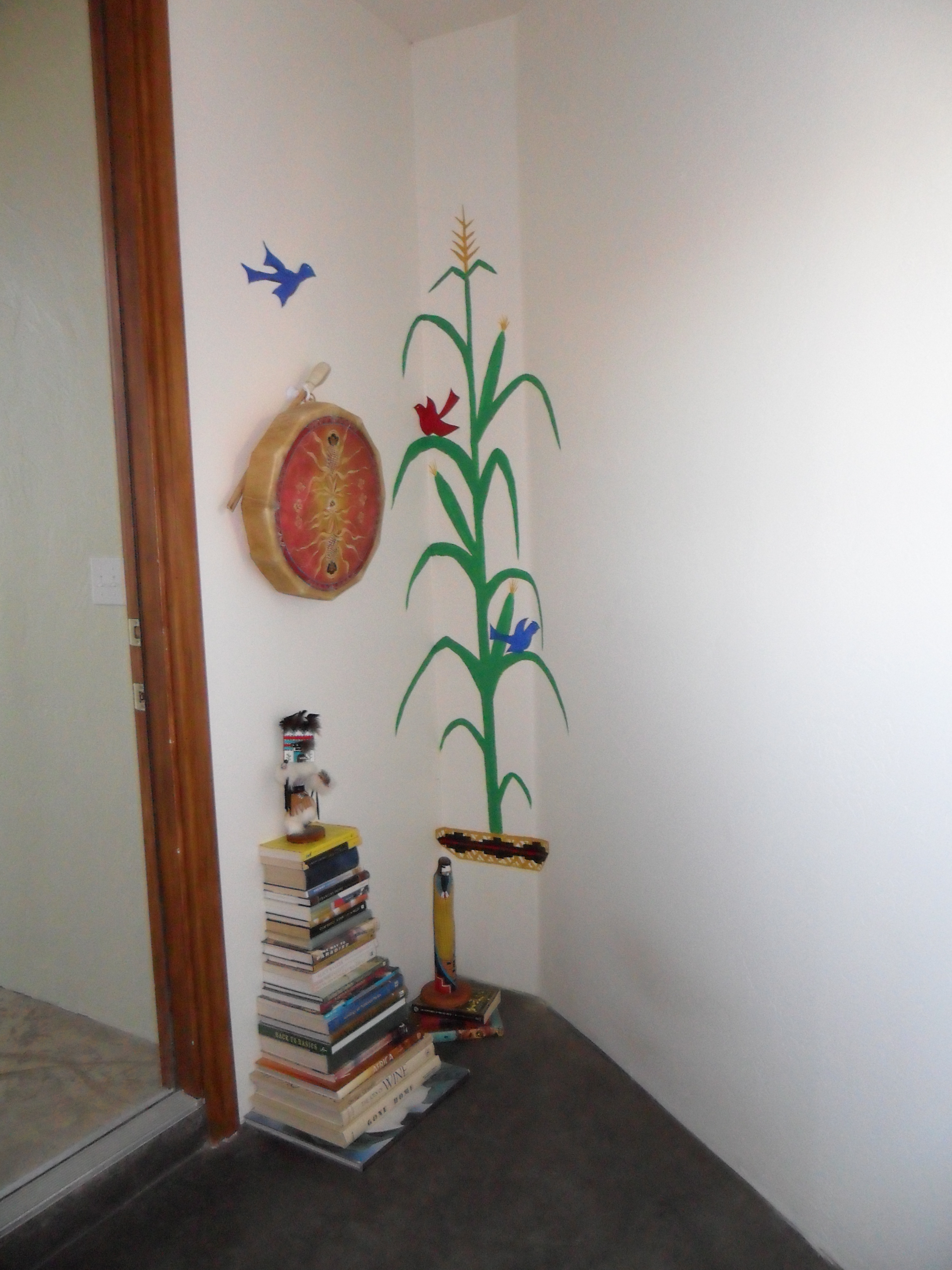
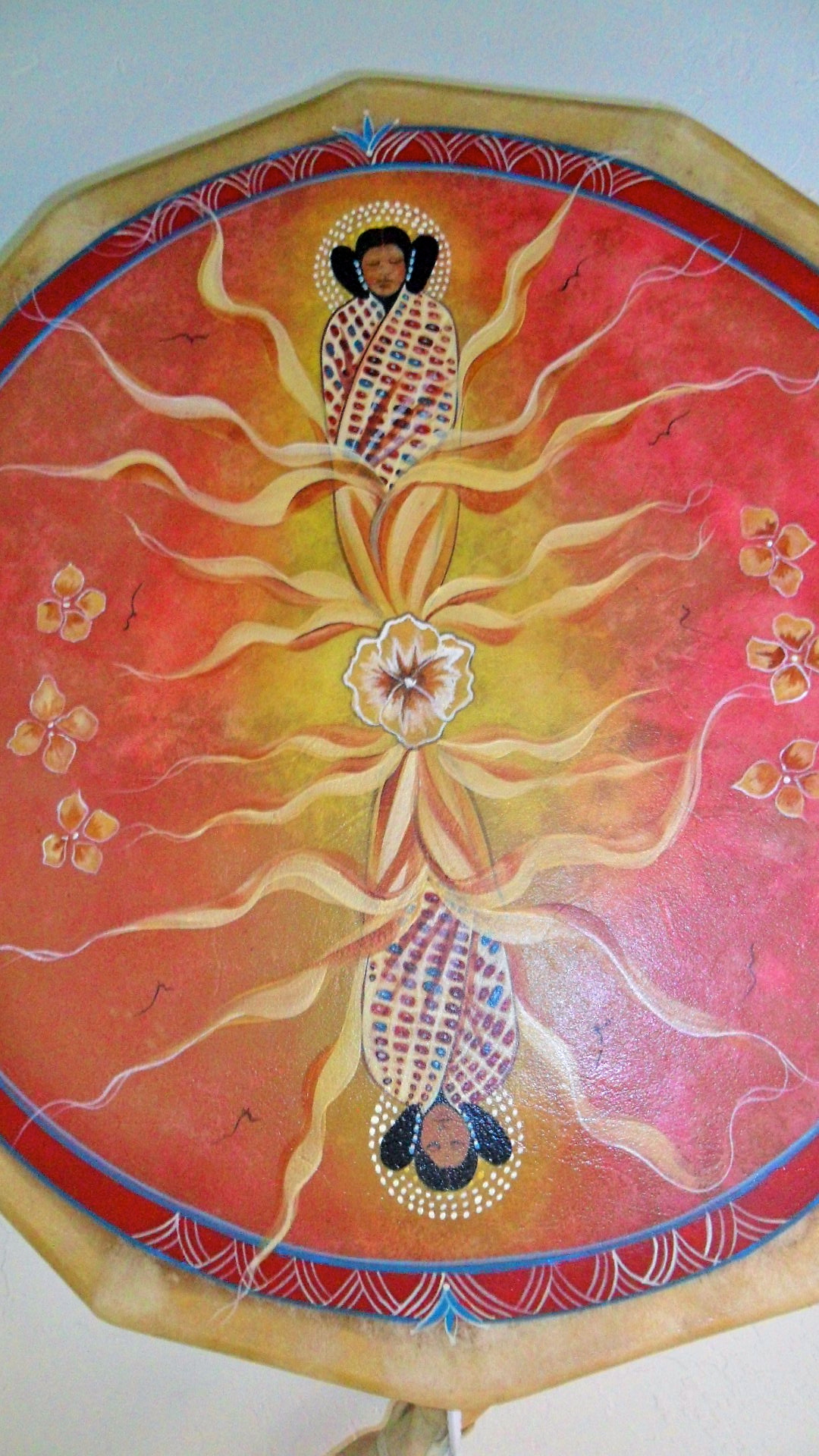
SAM_0035   In the summer on hot, humid nights, you can hear the corn grow.  My great grandfather, my grandfather, and my father grew corn.  I grow corn in that same rich loess soil of Northwestern Missouri.  Soil laid down by Ice Age glaciers thousands of year ago.  Only on a few hill tops, here and there, will you find non glacial soil. Repeatedly, daily, I walk by the sacred corn plant of life painted on my hall corner.  This sacred corn corner houses three corn maiden kachinas and a drum decorated with corn maidens.  I give thanks to corn for my house and the life I lead.

Corn Song

I sing the song of ancients:

pueblo peoples,

Anazazi, Hopi, Zuni.

I sing the song of an America long gone.

Maya, Aztec, Tolmec.

I sing the song of life:  colors of the rainbow

golden, red, white, blue.

I sing the song of now:  thick, endless

identical rows.

Pioneer, Monsanto,

anhydrous ammonia,

atrazine.

I sing the song of hope and joy:

an ancient reclaiming,

a klaidescope of colors,

butterflies and fireflies.

I sing the eternal human song.

SAM_0913

SAM_1489

This is a Navaho kachina.  Kachina are actually Hopi, but Navaho artists now make kachinas as well.  The first corn maiden kachina I bought.

SAM_1490

Spotted corn kachinas, on the left, are unusual.  It took me years to find one.  The kachina on the right was created by R Pino, who is both Hopi and Navaho.

SAM_1491

Every year Pendleton runs an art contest among Native American students.  The winner’s art work is transformed into saddle blankets.  This design, created by Mary Beth Jiron, is the latest in this Student Series. There are three corn  maidens  on each side of the blanket, representing the different varieties of corn grown by native peoples, yellow, red, blue, white, black, and spotted.

Day Trip to Lake Marvin and Canadian, Texas–Part Two


After eating lunch at the elementary school, two of us decided to go to the museum for which Canadian is famous, The Citadel.  Originally a Baptist Church, it lay in total disrepair until Dr. Abraham and his wife bought it, totally restored and converted it into their residence.  They gave it to the town as a museum and moved into another Victorian house which they totally restored.  The location of The Citadel currently contains the house, a gift shop, and another building which houses an art gallery.  First, you go to the gift shop to purchase tickets.  On this particular Fall Festival weekend, the Abrahams also open their actual residence to the public and take you on a personal tour themselves if you so desire.  Given my limited time, I purchased a ticket only for The Citadel.

SAM_1348

This door is one of the first things you will see if you walk to the entry gates from the south of the house.  Everything remains elegant, ornate and in a style one does not often see in this part of the United States.  Canadian is an exception; fancy, old houses are everywhere.
SAM_1350

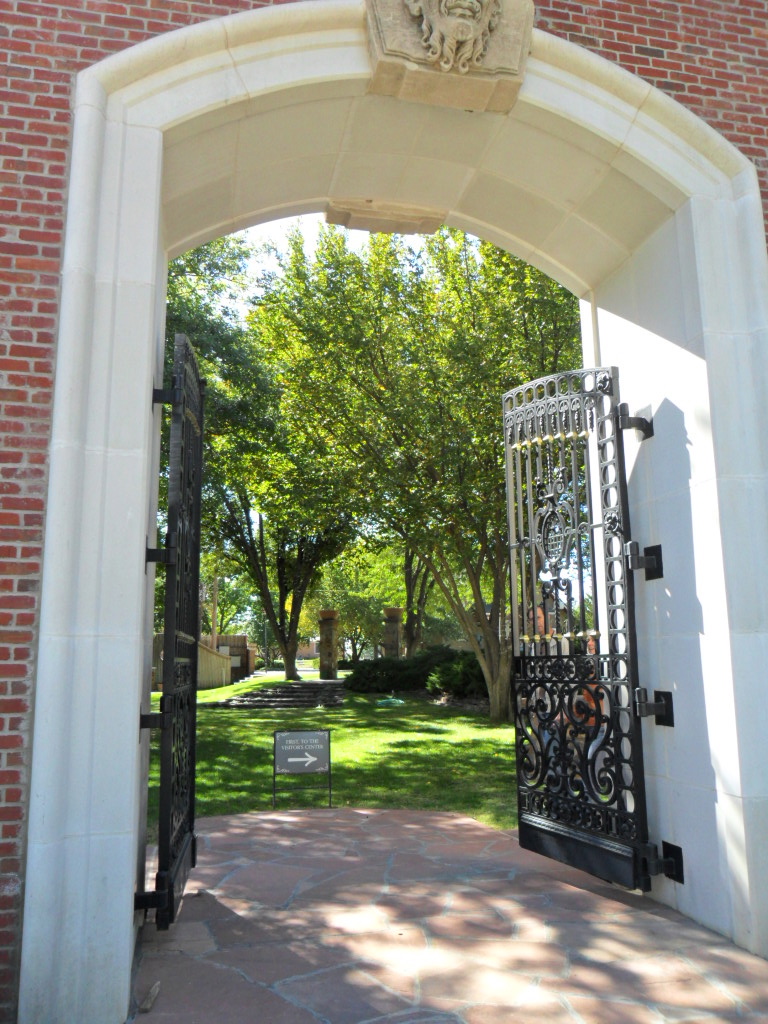
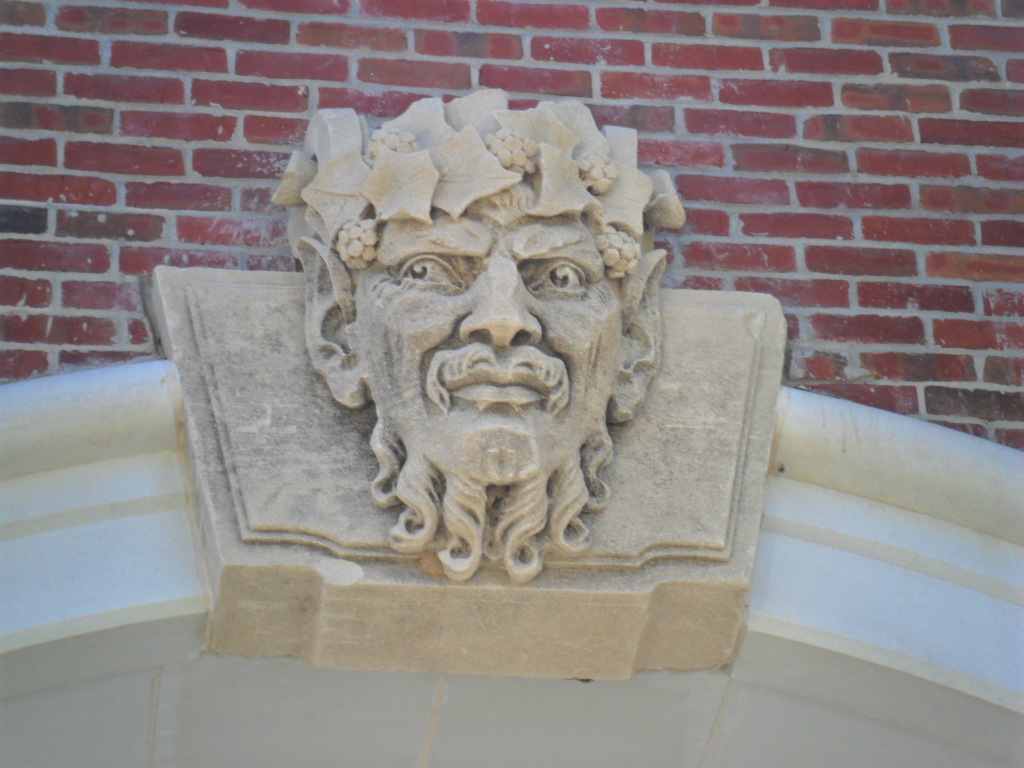
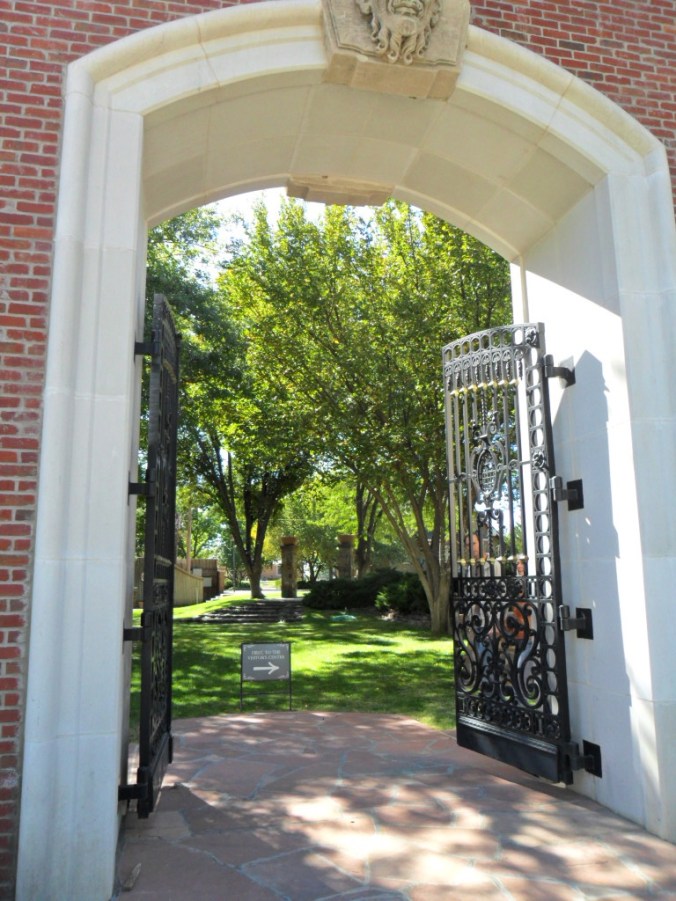
The entry gate, looking across the lawn, provides a view of the property from front to back. Below is the face above the gate.

SAM_1351

SAM_1353

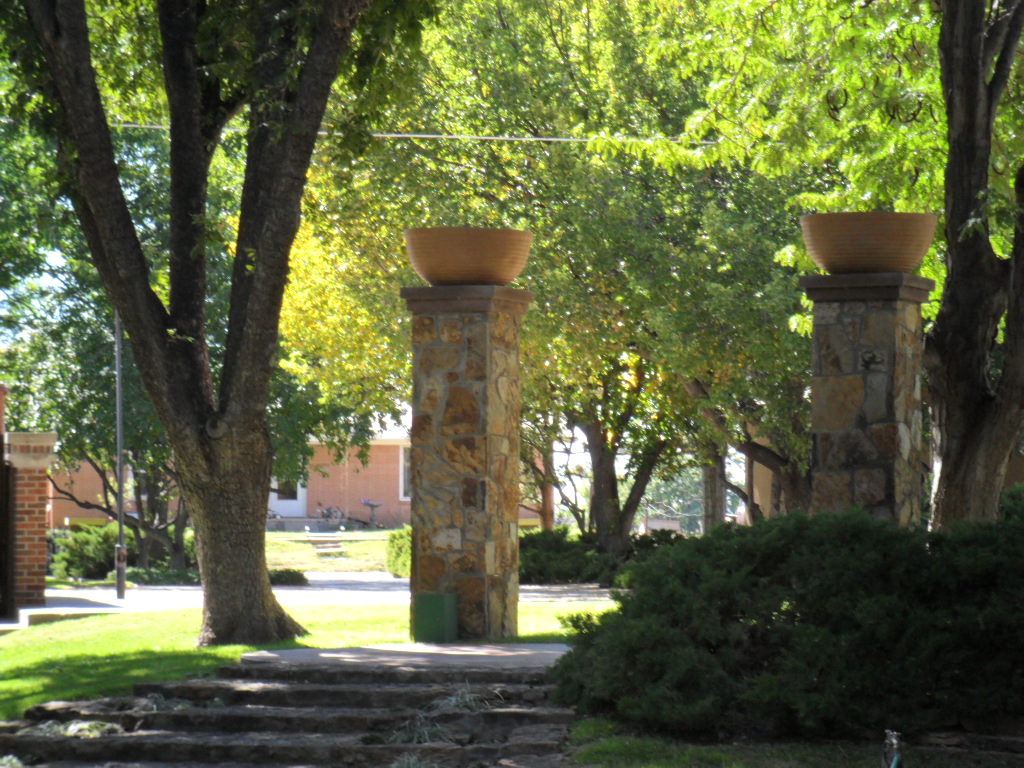
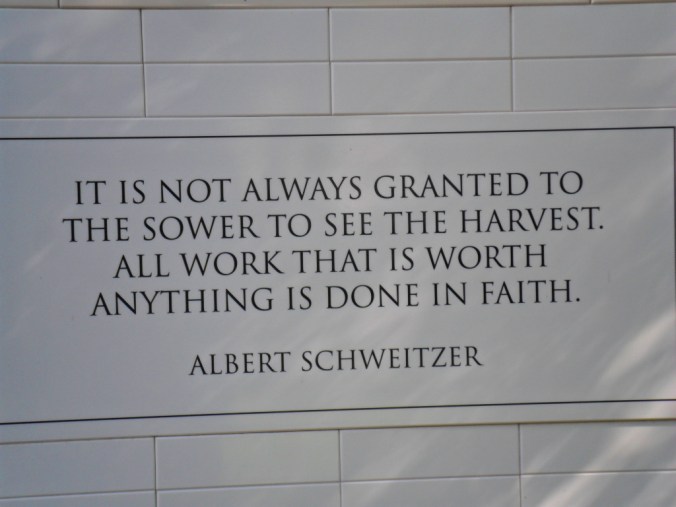
These columns stand one block back from the entry gate.  The property equals one square block.  This quotation is inside the entry gate to the left.
SAM_1352

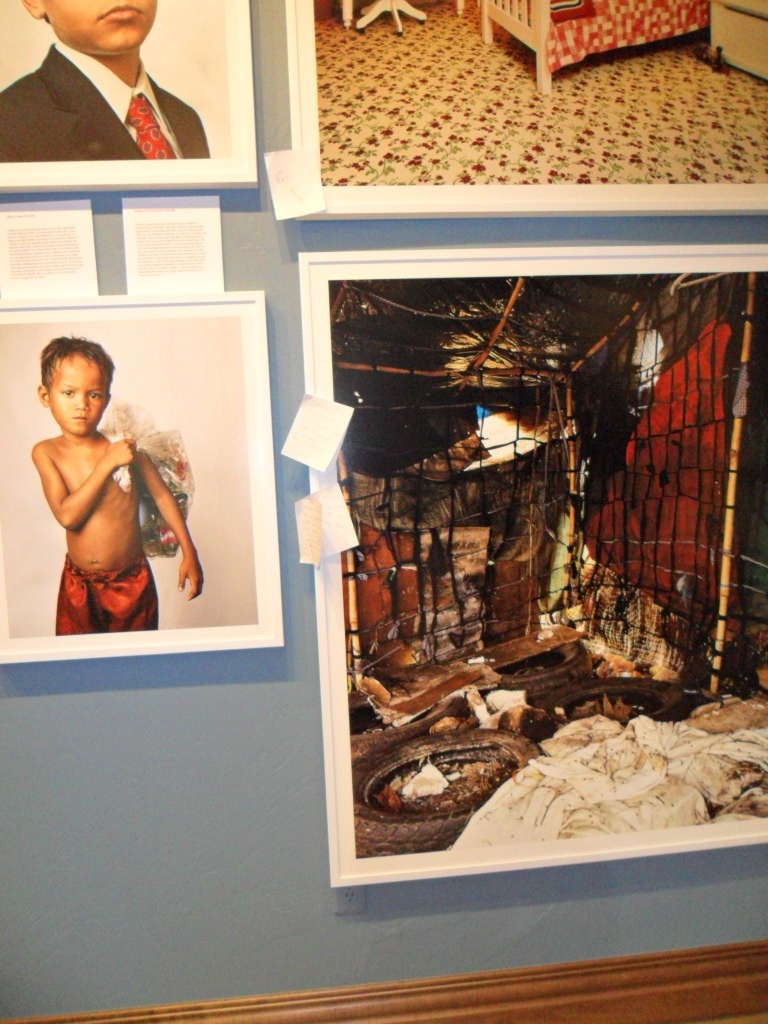
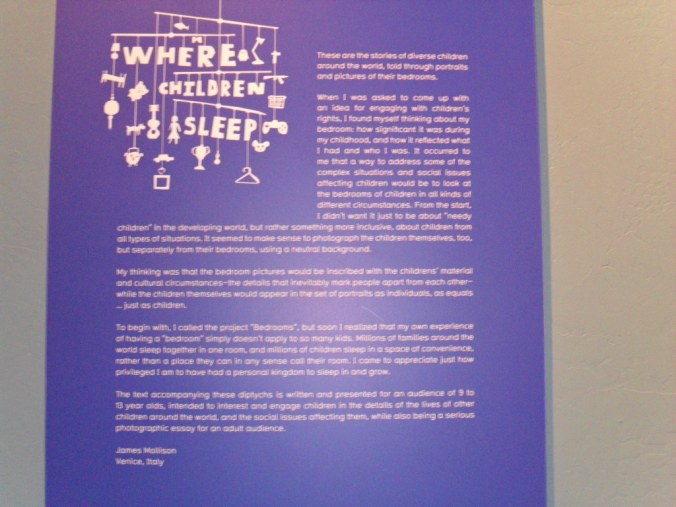
After buying my ticket at the gift shop, I headed to the museum and found the current show astonishing, impressive, and frequently hauntingly sad.  The entire gallery houses the photography of one person, James Mollison.  This young man decided to go to various countries taking photos of children and their bedrooms.  The complete collection was available for purchase in a book with details about the author’s interviews with all the children he photographed.  I bought one for my grandson.
SAM_1361

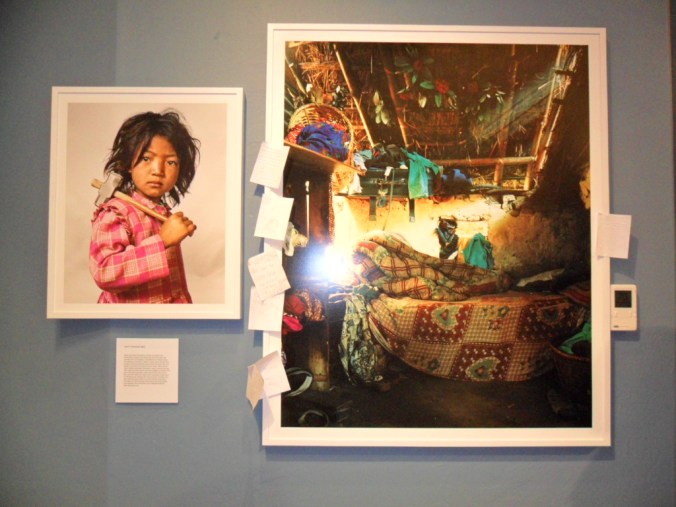
Although some of the photos showed children with beautiful bedrooms, living in relative ease and occasional opulence, most of the children lived in squalor or had no place to live at all except the street.  The boy below lives in Nepal. His entire family live in this room.
SAM_1354

SAM_1356

The boy above lives in Cambodia.  They live in a shack above a river. When it rains a lot or flooding occurs, they have no place to go and everything floods.  The river provides water, food, washing, everything.

SAM_1358

This boy in Brazil lives and sleeps on the street.  If he is lucky, he finds a sofa outside on which to sleep.  To eat, he has to steal.

SAM_1359

Living in Italy remains anything but easy if you are Roma.  Although he has a family, they have no place to live so sleep on this mattress outside, the entire family.  Harassment necessitates frequent moving.  They live in a constant state of fear and desperation.

SAM_1360

From a tribe in the Amazon, this youngster actually lives with family and they do have a place to live.  However, modernization and the drive to harvest the various natural resources there threaten their traditional life and homeland.

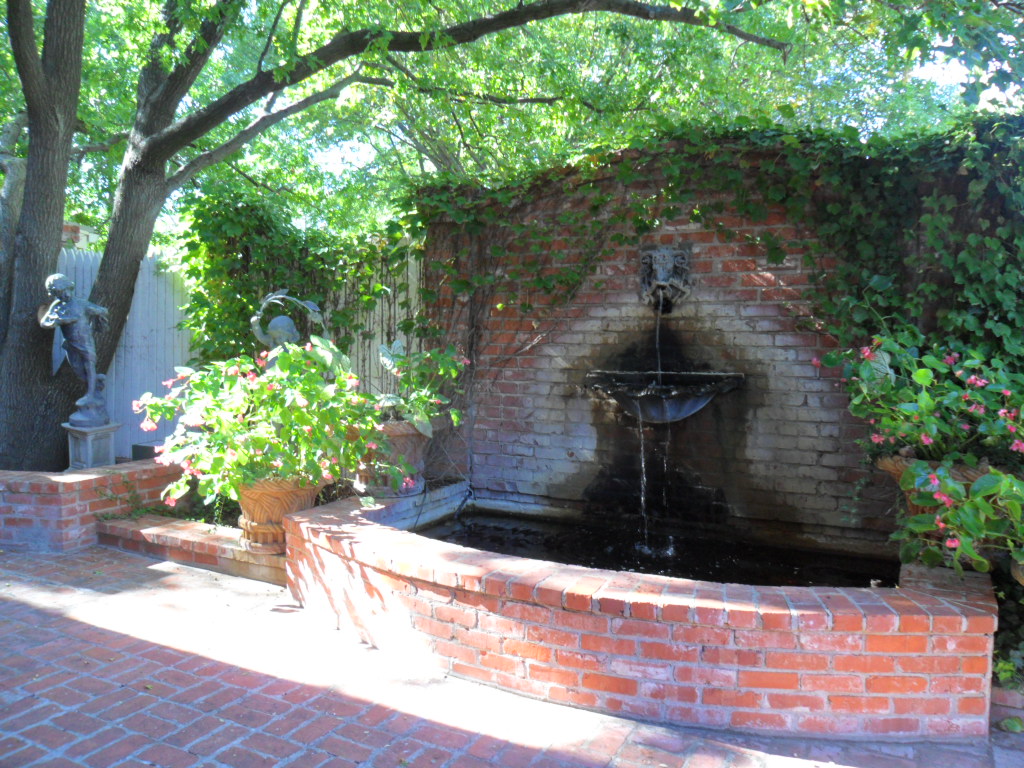
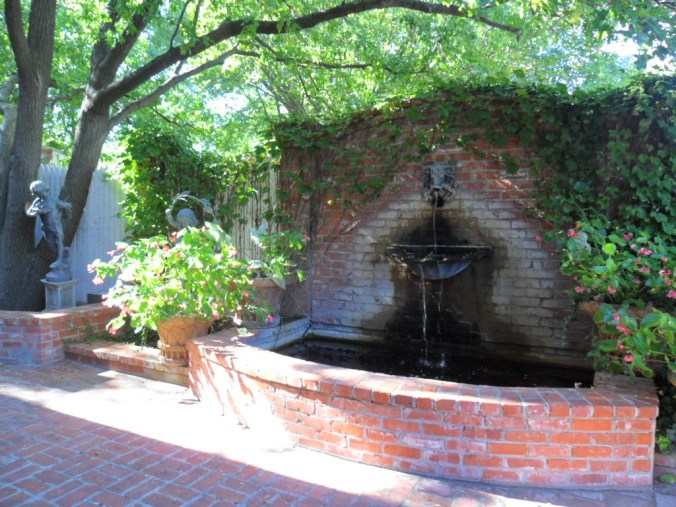
After leaving the art gallery I headed across the lawn to the house, taking photos along the way.  This fountain is in a small side yard, just inside the gate.
SAM_1363

SAM_1365

Once in the house, you can take photos but unfortunately with no flash.  Without a fancy camera, I gave up the idea of photography while in the house and just enjoyed the beauty of the art, the furniture, the exquisite rugs, one of which especially caught my eye.  I love rugs and own a few from Iran, Afghanistan, Egypt, and a couple of Zapotec runners.  I am especially fond of rugs from the Middle East and know a little about them,  sometimes roaming  around rug shops for the joy of rug viewing somewhat like going to a museum to look at the art.  However, never have I seen a rug anything like the one that lay before me.  Entranced, I stared in awe.  First, the rug was huge; it filled the entire master suite.  In the center a shepherd and sheep stood with lions, deer, and various other animals around the border.  I found one of the ladies helping with tours; she knew nothing about the rug and sent me to the lady in the gift shop.  She didn’t either and told me to go down the street five blocks to where Dr. Abraham currently lives and ask him.  I informed her that I did not have a ticket to tour there and tour time was running out.  She told me to go anyway.

Mrs. Abraham provided a warm greeting. I explained I was ticketless and had only come to find out about the rug.  She told me an identical rug had been in the house where her husband grew up. However, the rug at The Citadel was not that rug.  Dr. Abraham’s brother  inherited the original rug when their father died.  She indicated they had bought the rug at an auction.  For more specifics, she instructed me to find Dr. Abraham in the kitchen.  When I found him, he was explaining to others about the tiles. I waited. He seemed delighted with my interest in the rug and told me about it.  His family was originally from Lebanon.  An identical rug was, indeed, in the house where he grew up.  In fact, he and his siblings used the rug for games they invented, hopping around from animal to animal. By the time his father died, the rug had become quite worn from all this use and his brother did inherit it.  Dr. Abraham loved the rug and was delighted when someone told him that they thought a similar, if not identical, rug was to be auctioned off in New Orleans. He went to the auction and purchased the rug which is in much better condition than the one from his childhood. He told me he knew little about rugs, but was quite sure he had been told it was from Damascus.  Since the trip to Canadian, I researched rugs a bit,but cannot find the origin of this rug.  I intend to keep trying.

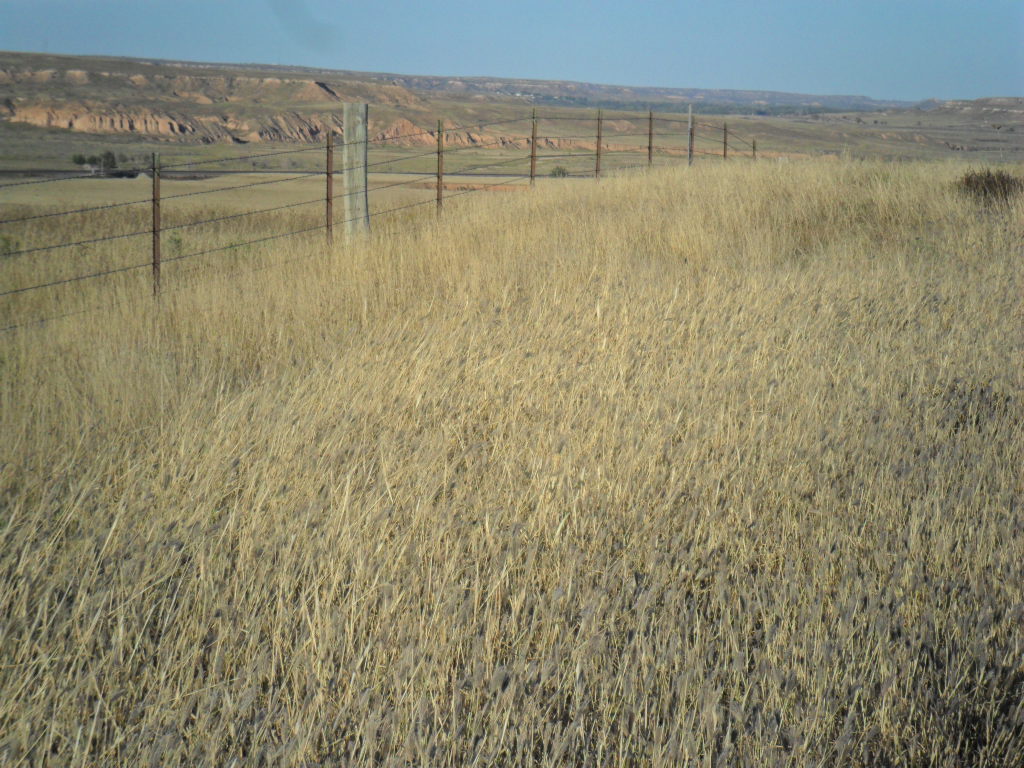
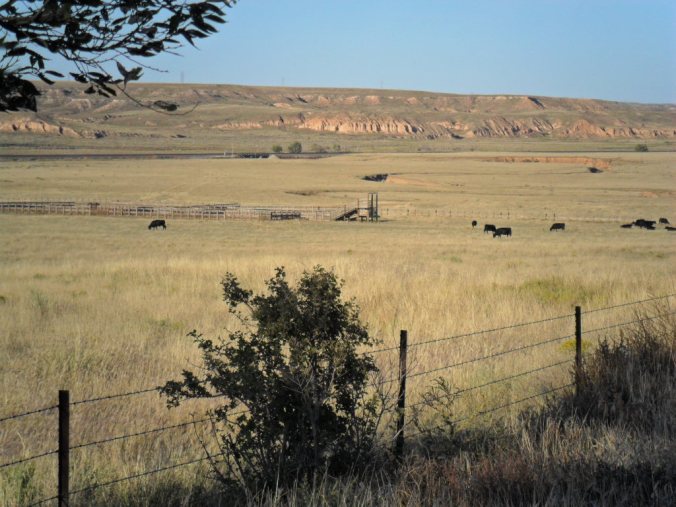
All this exploration with the rug caused me to leave Canadian considerably later than planned. The drive from Canadian to Miami, Texas, provides somewhat dramatic scenery typical of much of the west with an occasional richness of trees and green quite unexpected and delightful.  The following photographs were taken during this drive.

SAM_1366

The Canadian River with the bluffs on the other side.
SAM_1367

SAM_1368

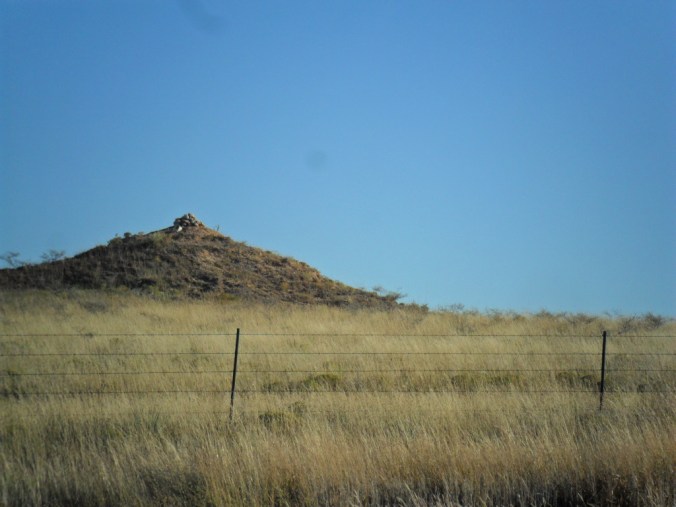
It appeared as if someone had built a cairn at the summit of this odd little hill.  In the middle of nowhere, who could I ask.

SAM_1370

The Gift


On the wall for forty years,

a copy of some famous painting.

Almost everything a strange dark

shade of blue, a blue not quite

blue, the merest hint of green:

antique cupboard, curved table

base, ladder back chair, window

frame, even the tree outside.

The only exceptions:

white table cloth,

newspaper in the lady’s hands,

her pale pink floral dress with tiny

darker pink flowers,

large copper antique teapot

in the cupboard, the black and copper

pots on top.  Her teacup, saucer, plate

of toast, white and blue, an old Danish pattern.

I’ve kept this gift,

hung on too many walls to count.

My college roommate, the giver, said,

“This reminds me of you.”

I look at it; all these years

have wondered why.

We’re still friends.

I’ve never asked.