Adventures in Argentina-Buenos Aires Neighborhoods


Buenos Aires has many neighborhoods, areas with sometimes distinct character.  Our hotel in San Telmo made it easy to see a lot of the city by walking.  Other areas we strolled through include Centro and Recoleta. In the three days we stayed there, we walked 35 miles according to my Fitbit.

IMG_2962

This Starbucks was exactly one block from our hotel.  We went there the first morning for the typical Argentinian breakfast:  coffee and a biscuit (not like the ones here) or a small croissant with some sweet glaze on top.  Starbucks can be found throughout the city.

IMG_2967

Everywhere you see beautiful parks and people use them for strolling, dog walking, jogging, relaxing, picnicking, hanging out–you name it.  Plus the trees–on all major streets, on side streets, everywhere.  Of course, it was the end of summer.  Perhaps parks receive less use in winter.

IMG_2965

Even on main thorough fares, like this one which is claimed to be the longest street in the world, trees reside on the sides, in the middle, everywhere.
IMG_2959

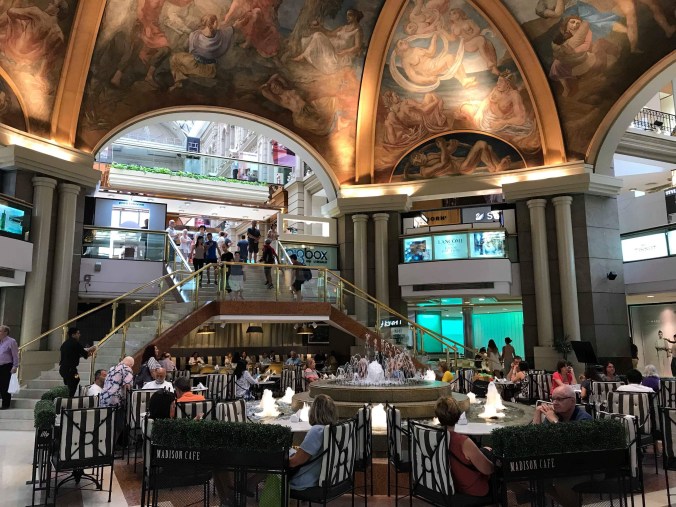
This is a mall, seriously.  We ate a delicious lunch here one day and came back the next day for a drink.  I had coffee; Gaston had a green drink with mint and ginger which was refreshing and delicious.  The ceiling is well–take a look!

IMG_2938

Hard to believe this is a mall.

One day we took the train to its end at the train station. The recently restored train station contains the fanciest Starbucks ever with incredible murals.

IMG_2987

The ceiling is beautiful too.

IMG_2985

From this station it is possible to take a train to various parts of the city but also trains go from here way out into the suburbs.  Reminded me of the subway and train system in New York City and its suburbs where I once lived.

IMG_2978

San Martin, the hero who freed southern South America from Spain, crossed the Andes with mules, not horses–Hugo, Gaston’s dad, gave me lots of history lessons.  However, when I saw this statue, I did not know all the history yet.  This park, filled with huge trees, borders several streets where, like much of Buenos Aires, modern and antique coexist.

IMG_2977

IMG_2982

Suddenly we notice men on horseback riding out of a military area next to San Martin Park.  We rushed across the park to watch, hoping they would ride around the park.  They did not; they headed down a street.

IMG_2973

We never discovered the purpose of this little parade of military personnel on horseback.

IMG_2984

The buildings around the park provide a perfect example of the traditional, the centuries old beside the modern.  The traditional building in the middle houses very exclusive apartments.

IMG_2983

The opposite side of the park from the statue of San Martin overlooks the English Tower, given to Argentina by the English before the little war over the Falkland Islands which both countries claimed.  The English won.

A friend told me to take tea at the Alvear Palace Hotel so we headed to Recoleta area.  We strolled around, did not take tea, but we did have lunch in one of the small restaurants inside the hotel area.

IMG_2989

Next to this restaurant resides a tea store, Tealosophy,  where they sell nothing but tea.  I quit counting at fifty different blends.  In Argentina International Women’s Day was highly celebrated. This tea shop created a special blend just for that event, Mujeres Power.  I bought some; it smells heavenly but have not tried it yet.

We walked down to another park near the famous cemetery where all the national heroes and important people have been buried for centuries.  Nearby we saw the largest tree I have ever seen.

IMG_2990

The branches, which were impossible to photo in one picture, extend far and are so heavy they are supported by cement or metal columns.
IMG_2993

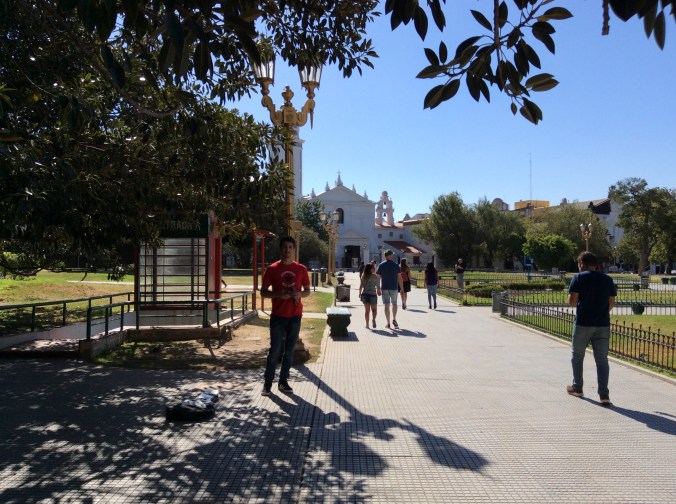
The tree is to the left in this photo.  The walk leads to a monastery and the cemetery.

IMG_2994

The cemetery was full of people.

IMG_2995

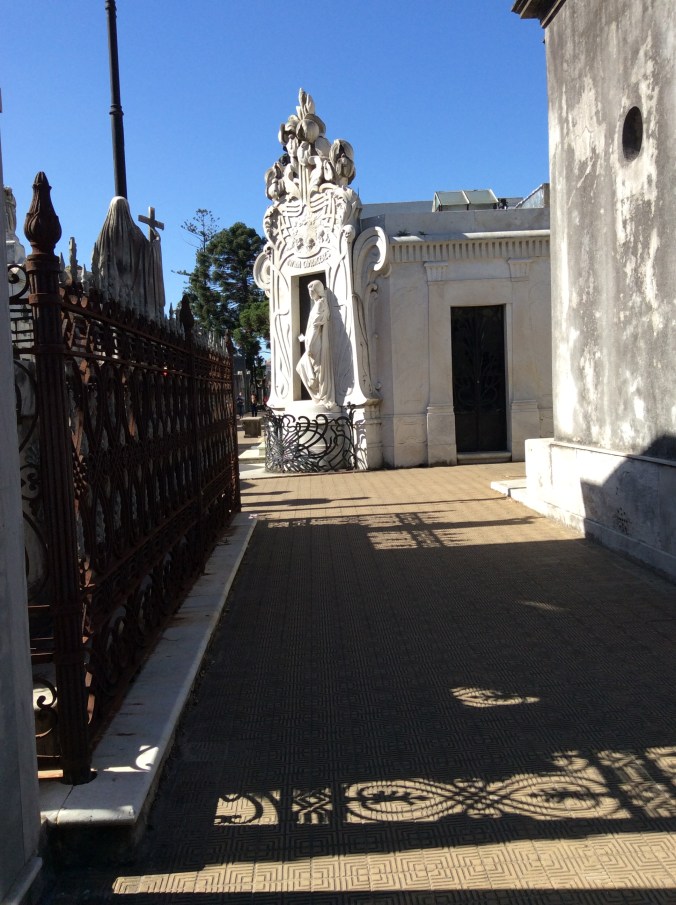
The artwork here speaks for itself.

IMG_2996

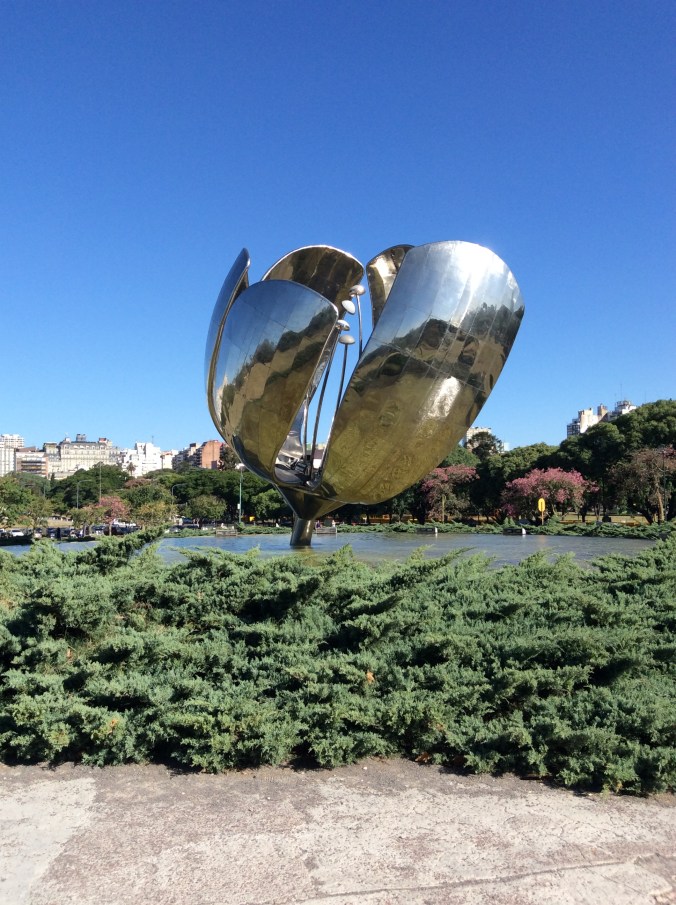
As we walked back we circled this famous piece–a tulip that opens and closes.
IMG_2998

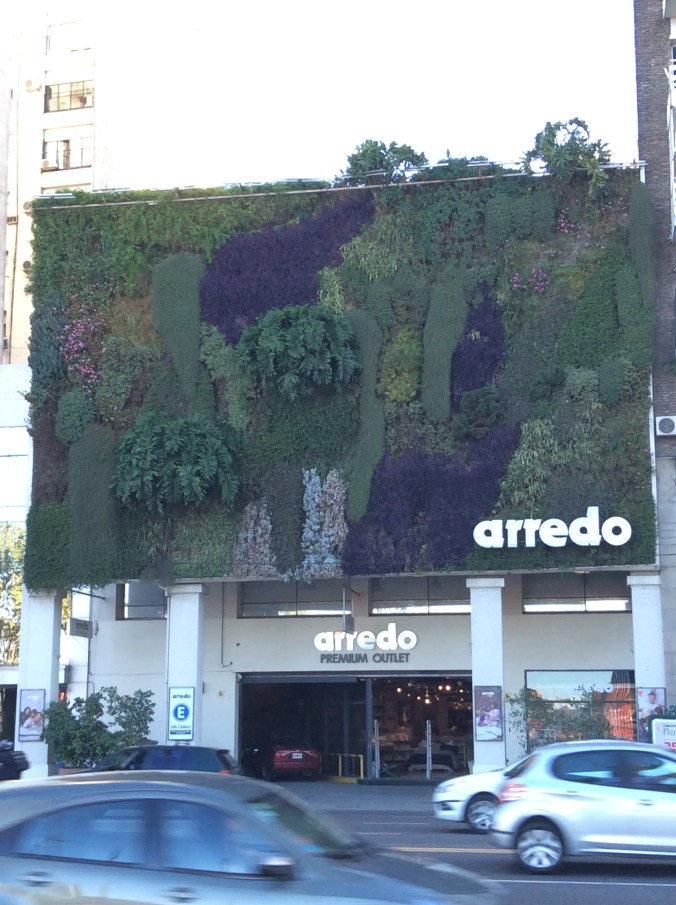
Then farther down the street which is close to the port–we could hear ship sounds, etc.–we saw this living wall.
IMG_3001

Yes, this wall is made of living plants.  I could not help but stop and stare.

IMG_E2972

The building which holds their equivalent of the US Congress.  I continue to wonder how I managed to walk past the Pink House–like US White House–several times and never take a photo.  Perhaps I was distracted by the protesters.  Argentina is used to protests which appear to be legally protected.  In the one we saw one evening, the protestors carried banners of Che Guevara.
IMG_2937

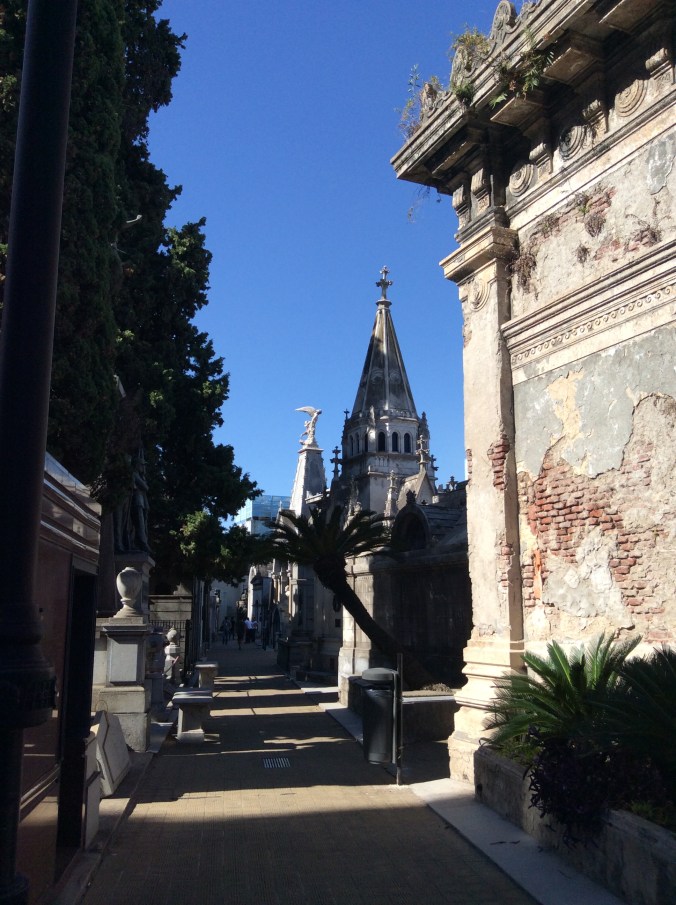
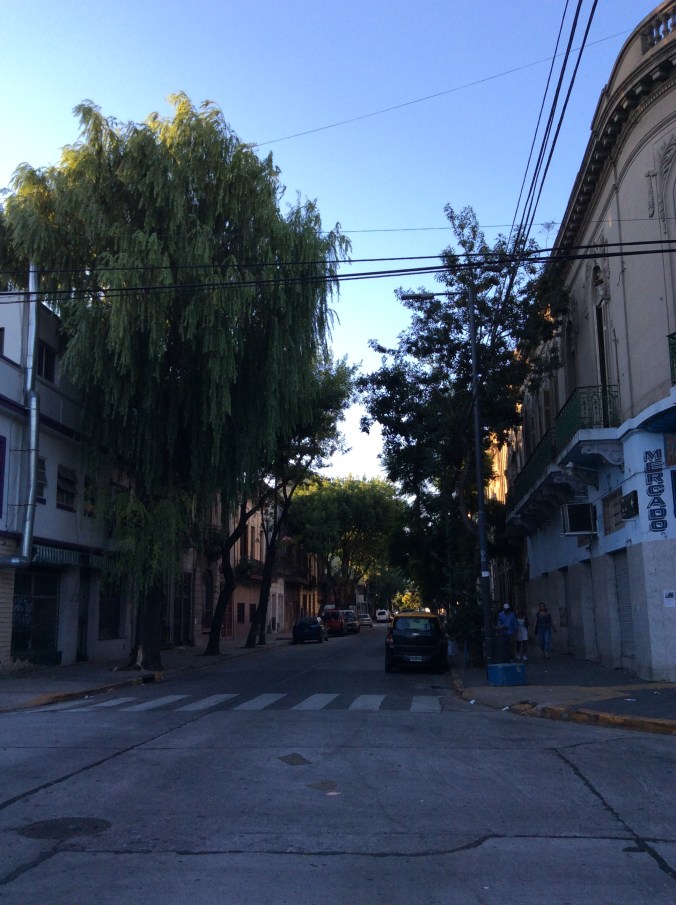
And finally some typical views, this one along a side street.

IMG_2966


Adventures in Argentina– Teatro Colon


IMG_2950

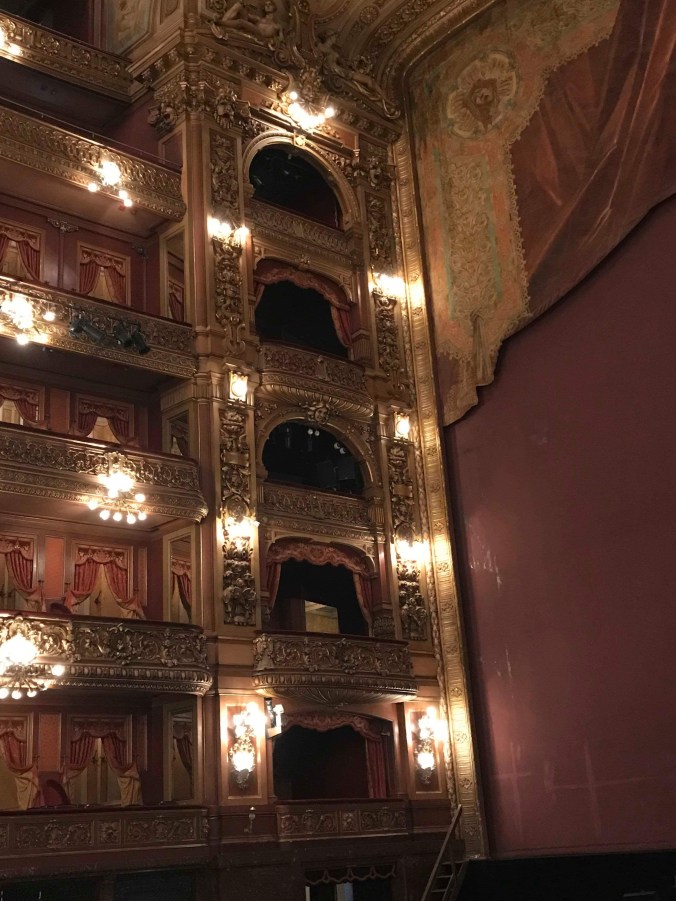
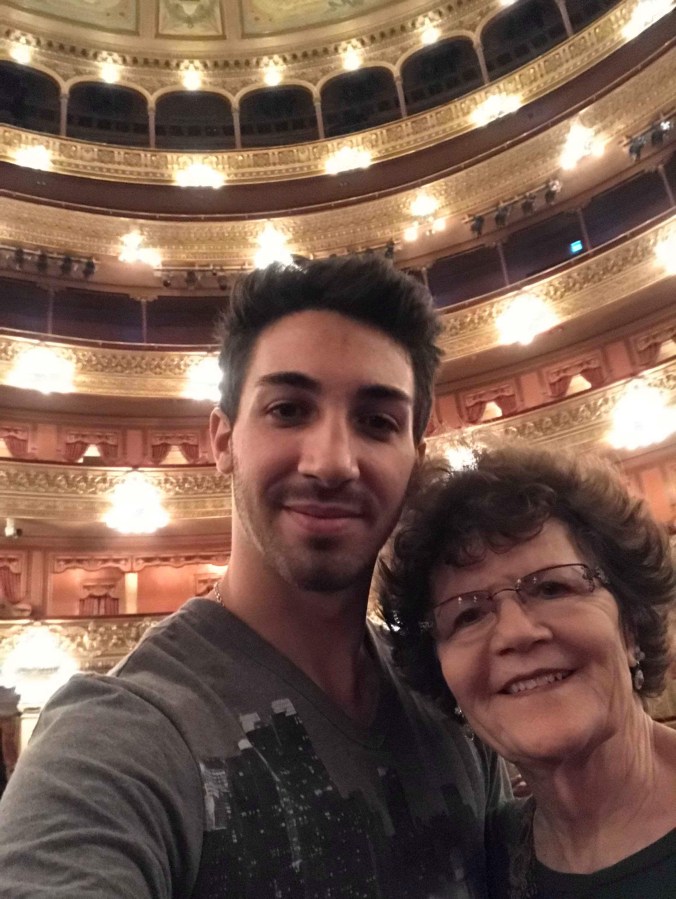
Teatro Colon, considered one of the world’s great theaters, began on May 25, 1908, with a performance of Verdi’s Aida.  This theatre replaced the original theatre which began operation in 1857.  Teatro Colon’s construction took twenty years even though its original cornerstone was laid in 1890.  The original architect, Francesco Tamburini, died in 1891.  His partner took over but also died.  The final architect, Jules Dormal, completed the theatre.

IMG_2943

IMG_2957

IMG_2951

Theater Colon is huge–originally 8,202 square meters, 3,196 of which is underground. Later 12,000 more meters were added.  The total floor space equals 58,000 square meters.  The design includes French and Italian styles, and includes dressing and practice rooms, rooms to design sets and create scenery, etc.–this part of the theatre is underground.  Everything used in the productions here are created on site.

IMG_2945

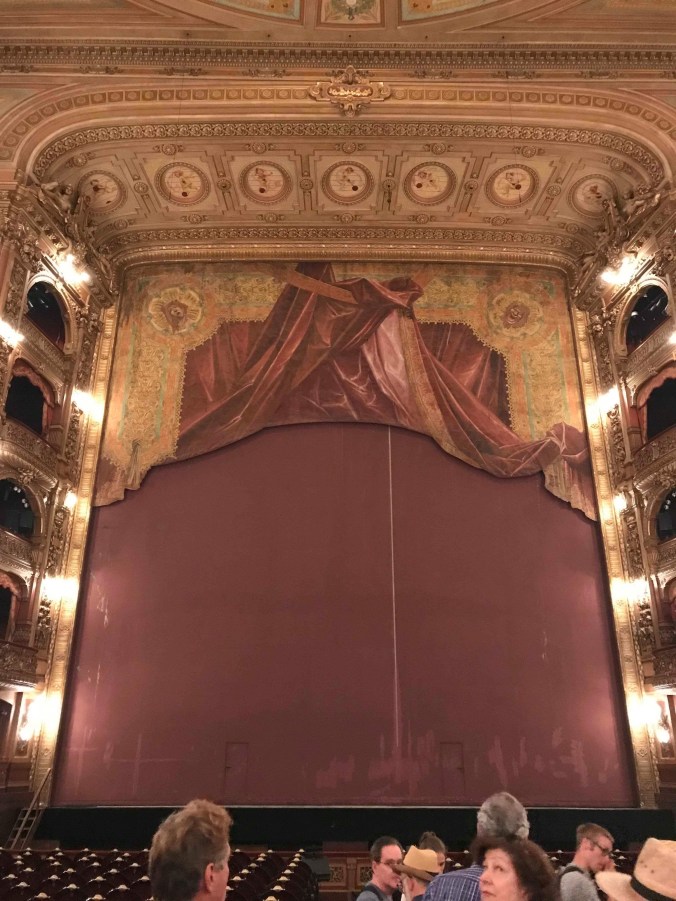
This is the curtain area.  The actual curtain used during performances remains behind what you see here.

IMG_2942

IMG_2955

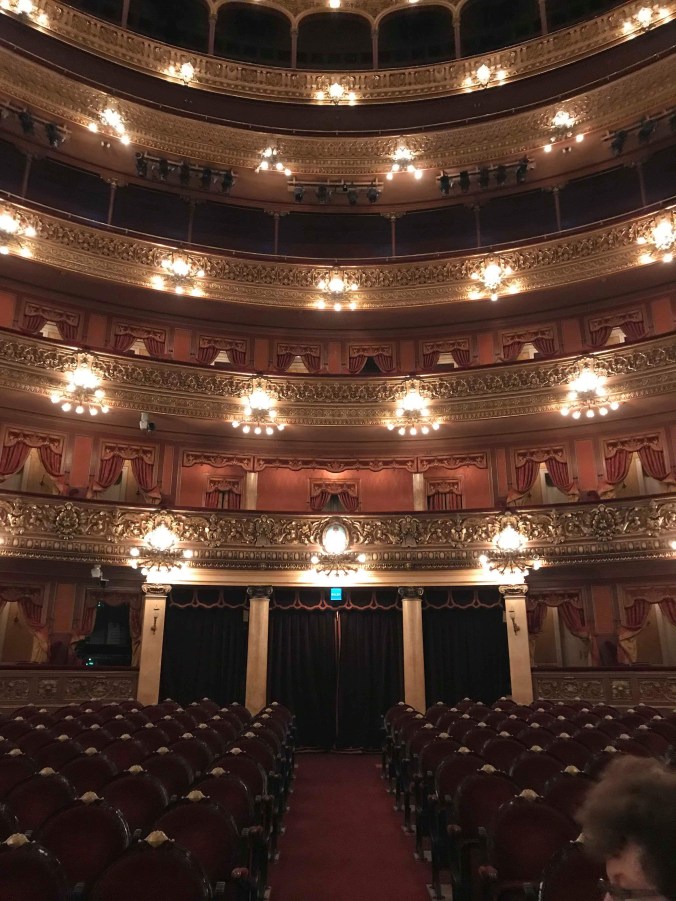
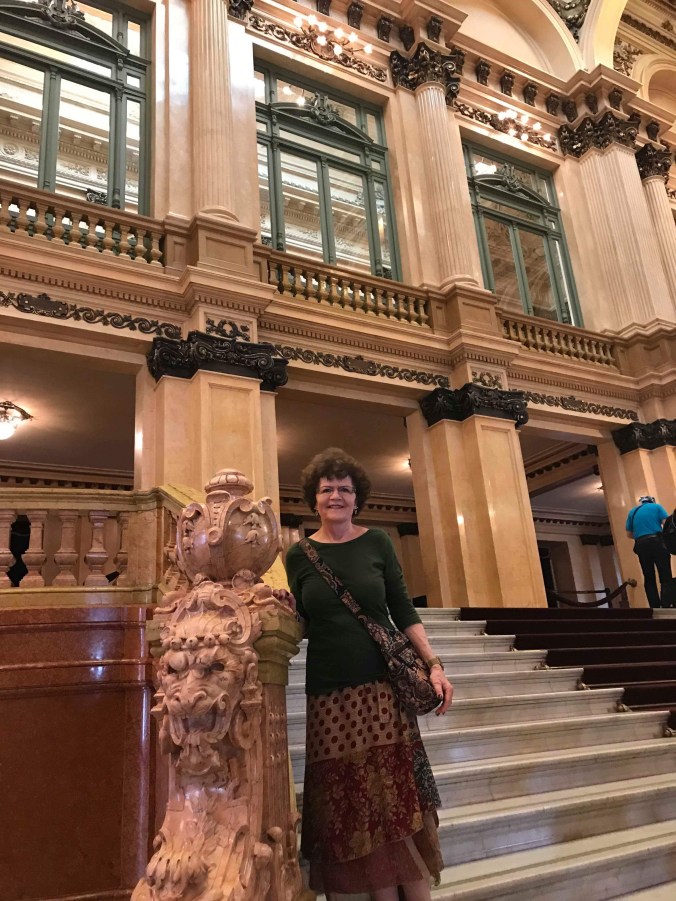
Marble, gold, other precious stones and metals are everywhere.

IMG_2953

Due to design, its acoustics are known worldwide as one of the best.  Every famous opera singer you have ever heard of performed here.  This holds true for ballet dancers and orchestras as well.

Currently, the theatre provides a venue for operas, symphonies, ballet, choral music, and contemporary dance among other artistic endeavors. During this March alone, fifteen  different performances of varying types occurred here. When we arrived the lines were long, some for buying tickets for performances, others for tours.

IMG_2954

IMG_2963

IMG_2939


Crashes and Creativity


Where have I been lately?  Haggling with two insurances companies.  Sixteen days ago, a woman ran a Stop Sign in a residential area while I was taking my grandson to middle school.  She immediately admitted it, the fire trucks were there within minutes (liquid and steam were spewing out of my car); the police showed up shortly as well.  About the time they arrived, a man ran the same sign and the police had to chase him down the street.  Makes one wonder what people are thinking, doing?  Texting perhaps.  Luckily, neither of us were hurt except grandson got a bruise from the seat belt and his glasses flew off.  He actually stepped out of the car and walked to school.
Kudos to my insurance agent, Lacie White of Farmers in Canyon, Texas.  I have never had an accident since I arrived in Texas 26 1/2 years ago so I called her.  She actually drove to the accident site, called the woman’s insurance company, etc.  Then she not only took me to the rental car place, but also to my daughter’s so I could unload luggage and such because we were planning to go to Dallas a few hours later.

The woman who caused the disaster received a citation.  Yesterday, I received a letter from her insurance company, Travelers, saying she might not be at fault.  Really?  She also did not have sufficient insurance to cover the value of my nearly new car, a 2017 which I bought last July.  Now I am haggling with my insurance company over its value.  This all has taken an inordinate amount of my time and energy.  Meanwhile, I have to find another car.

On the bright side, my grandson and I are fine.  I can still go to work, feed horses, and do what I always do.  However, it has delayed creativity, e.g. writing blog posts, working on my next book–already started, and starting my new handiwork project.  My last crochet project is illustrated below.  It is the blanket I made for my grandson.  For those who crochet, here is how I make it.

It is rather a creative, make it up as you go blanket, using some of his favorite colors, black, red, with a bit of grey for contrast.  As you can see I alternated colors to make each stand out.  The stitches used include single, half-double, and double crochet, made into different patterns such as shells, and a pattern where I alternated double and single crochet stitches.  My original inspiration came from patterns I found on Pinterest using many, many colors which I knew he would not like.  The beginning chain was multiples of four. The only downside of this type of pattern of alternating types of stitches is that the edges do not come out totally even and in the end I had to create a border around all four sides.  Probably blocking it would have also helped, but he wanted his blanket right after I finished it so I did not block it.  Ready to start my next project which I think will be making a sweater out of black and white granny squares, with maybe a bit of grey or red thrown in, colors left over from his blanket.


IMG_2914


Jen Payne’s New Book


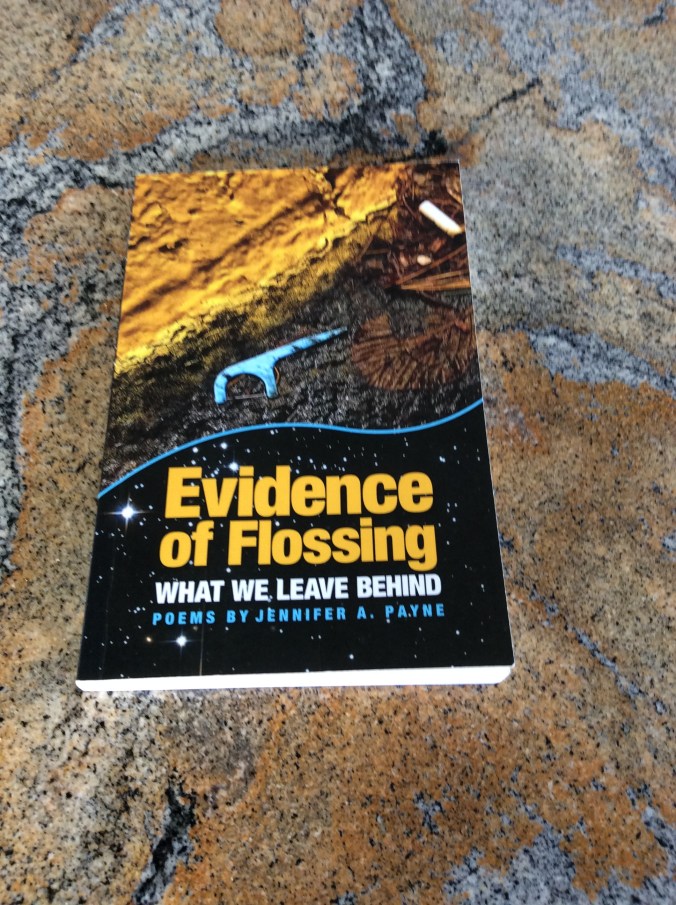
Evidence of Flossing, WHAT WE LEAVE BEHIND provides an unexpected metaphor for individual life, culture, and so much more. Nearly all the poems are accompanied with a photograph, often of trash in which lays a dental flosser (yes, one of those instruments with which you floss your teeth) with date and location.  Flossing is supposed to prevent anything from being left behind.  Hence, the title brings up an unusual play on words.

The first section Damage contains more than 20 poems which are a lament about much of modern life–mass shootings, the demise of wildlife, unpleasant changes.  One poem asks the question:  “Would God floss?”  In the second section, Contact, the poems focus on the natural world, walks in the city, the woods, beaches.  The third section, Connection, emphasizes the interconnectedness of everything, especially the relationships between humans and animals and nature.  There are poems about frogs, storms, birds.  One called Evidence of Fairies makes the reader feel the magic of old growth forests with moss and ancient trees.  In the footnote to another poem she discusses the fact that wolf spiders actually create songs to lure lovers. Then, toward the end, the Alice poems appear,  Alice as in “Alice in Wonderland”.  In my favorite poem Payne relates her encounter with a stranger picking oyster mushrooms near a path in the woods.

After reading the poems and comments in this book, I will never view flossing the same way again.  Will I find dental flossers now, something I never even previously thought about?  I use those long strings of floss not flossers.  Apparently the poems and flosser photos affected enough people that some sent Payne photos of flossers they saw here and there on the ground, some of which she has included in the book.

Even if I find no flossers, now I will certainly give a lot more thought to what I and others leave behind.


IMG_2901


About the author:  Jennifer Payne is the owner of Words by Jen, a graphic design and creative services company in Connecticut. She belongs to the Arts Council of Greater New Haven as well as several other arts and poetry organizations.  Her work has been featured in various publications, including The Aurorean, Six Sentences, and the Story Circle Network.  You can read some of her writing on her blog Random Acts of Writing.


In the footprints of Machig Lapdron by Mary Sharratt


Reblogged because I found this to be a fascinating adventure plus love the art.

Mary Sharratt's avatarFeminism and Religion

Machig Labdrön with PadampasangyeMachig Lapdron, female Tantric Buddhist mystic and lineage founder

I’ve just returned from an illuminating trip to Bhutan, high in the Himalayas. Bhutan is a Buddhist kingdom and the world’s youngest democracy.

On our last full day in this enchanting land, my husband and I drove with our guide over the nearly 4000 meter pass of Chelela and into the Haa Valley which doesn’t see that many tourists. Our goal was the Hermitage of Juneydrak, where Machig Lapdron (1055-1145 CE), the famous female Tantric mystic, master, and lineage founder, once meditated.

View original post 910 more words

Star Tree – Star Goddess by Judith Shaw


See the paintings. With deforestation affecting so much of the world, the idea of trees as sacred is especially appealing and meaningful.

Judith Shaw's avatarFeminism and Religion

judith shaw photo

In a world where humans were small and nature was big, surrounded by forests of trees of immense size and stature, it’s not surprising that the ancient Celts came to hold trees as sacred. Like many others, the Celts revered the World Tree or the Tree of Life as the mythic bridge between heaven and earth. The roots reach down and ground with the Earth while the branches spread their canopy up to the heavens.

View original post 745 more words

San Jose, Costa Rica


Two friends are headed to Costa Rica this summer.  While they will join a tour, they have a couple of days in San Jose before the tour begins.  I promised them I would suggest a few places they might enjoy, El Mercado, the downtown market,  the National Theatre, and the precolonial museum which is full of pre-Columbian gold and other ancient artifacts.  It remains my favorite but security there is tight.  To get in, you must surrender just about everything but your clothes.  You get a locker in which to place your valuables; the key to the locker is about all you can take with you.  As a consequence, no photos.  They do have a gift shop with quality items of all sorts including copies of many of the artifacts and jewelry.

Much of the downtown area is foot traffic only.  Vendors sell various goods on the street, you can wander El Mercado, in which various stalls for goods and food are located, and tour the National Theatre.  Inside the National Theatre next to the main lobby area is a lovely little restaurant, the perfect place for lunch.  The following are photos I took  in the National Theatre about one and one-half years ago.

IMG_1915

IMG_1914

IMG_1921

IMG_1919

IMG_1911

The first photo below is the highway from the airport into San Jose and the second shows a typical downtown pedestrian only area.

IMG_1904

IMG_1912

I have been to Costa Rica in what in the US is summer and also at Christmastime.  Summer here is their rainy season so if you go then, be prepared for rain, sometimes a lot of it.  It is sort of a joke that on the east side of the main mountain chain, it is always the rainy season.  However, I have been there when it did not rain.  Take a sturdy, easy to lug around slicker with a hood because sooner or later it will rain.

The huge advantages of going this time of year are a lot fewer tourists and it is considerably cheaper.


Spring Break Adventure–5


On the fourth day of the adventure we went to Marfa, Texas.  My friends from college, David and Suzy, had booked a tour of the Chinati Foundation.  No photos of that because none allowed.  This foundation is the dream of its founder, Donald Judd.  His art and almost all the rest of the art housed here is not for display in houses.  All but a few consist of grand studies of space and light. An abandoned, refurbished military base, purchased by Judd, houses most of the exhibits.  Judd’s main interest it seems relates to the relationship between light and space.  First, the tour guide takes you to a couple of large buildings where the only changes made were to install new windows and a ceiling.  These buildings house Judd’s large, polished, stainless steel rectangular boxes.  While this may sound boring, I assure you it is not.  Light reflects off these boxes, makes shadows, etc. in all sorts of ways and the entire effect changes with the angles of the sunlight.

Another quite astonishing display can be seen in a series of U-shaped buildings, painted and repaired, in which eight foot long fluorescent light tubes in four colors, pink, green, yellow, and blue, have been installed in the corners of the U.  Depending on where a person stands, other colors appear, not just the four mentioned.  It became apparent to me that the artist, Dan Flavin, knew every scientific detail of the color spectrum and its effects on the human eye and brain.

I also enjoyed a smaller display by artist and poet, Carl Andre.  Even though his fame rests in sculpture, it is mainly his poetry displayed here.  I wanted to read all of it but everyone else went on so I quit.

There are other exhibits, including a lot of smashed and welded vehicles which I liked the least.  The final exhibit displays giant fabric sheets in black and white in a building specially designed by the artist, Robert Irwin.  If you think this sounds boring, take a trip there and look for yourself.  I assure you it is not.  Irwin actually worked on the exhibit himself at the age of 88.  He lives on now at 89.

IMG_2603

The only photos I managed in the area show the Marfa Courthouse which is, believe it or not, even a brighter pink than this photo and a photo from the vehicle window on the highway to Alpine. The second photo shows a mesa we managed to view on one day or another from nearly all sides.  It looms large in the middle of flat land. Here one of the endless trains slides by.

IMG_2604

On our last day we decided to drive to Presidio and take the river road which goes through Rio Grande Ranch State Park. While the road goes either along or down to the river in a few places (for people to put some sort of water craft into the river or to camp), most of it is way above the river on cliffs.  This landscape is not for the faint of heart.

IMG_2605

US on the right and Mexico on the left.  The fields and pasture in the distance are in Mexico.

IMG_2606

Looking into Mexico.

IMG_2607

IMG_2609

IMG_2611

Unusual rock formations near one of the small drives down to a campground by the river.

IMG_2613

IMG_2617

Cliffs in Mexico.

IMG_2619

Apparently, in my efforts not to fall in the river while taking this, my finger got in the way.

IMG_2620

IMG_2621

Yes, the river is down there between those cliffs.

IMG_2622

IMG_2623

In case you wonder why the Rio Grande seems so small here, consider that by the time it gets here, 95% of the water has been removed for irrigation and other purposes.

IMG_2624

We drove back through Terlingua to Alpine.  Not much exists in Terlingua except a rather pathetic supposed ghost town area.  The river road is not conducive to speed; we were hungry and stopped for a very late lunch.  It was St. Patrick’s Day and many of the clientele had a good start on the festivities.  On Saturday I learned that Terlingua is a famous biker town.  However, apparently not that day.