Jen Payne’s New Book


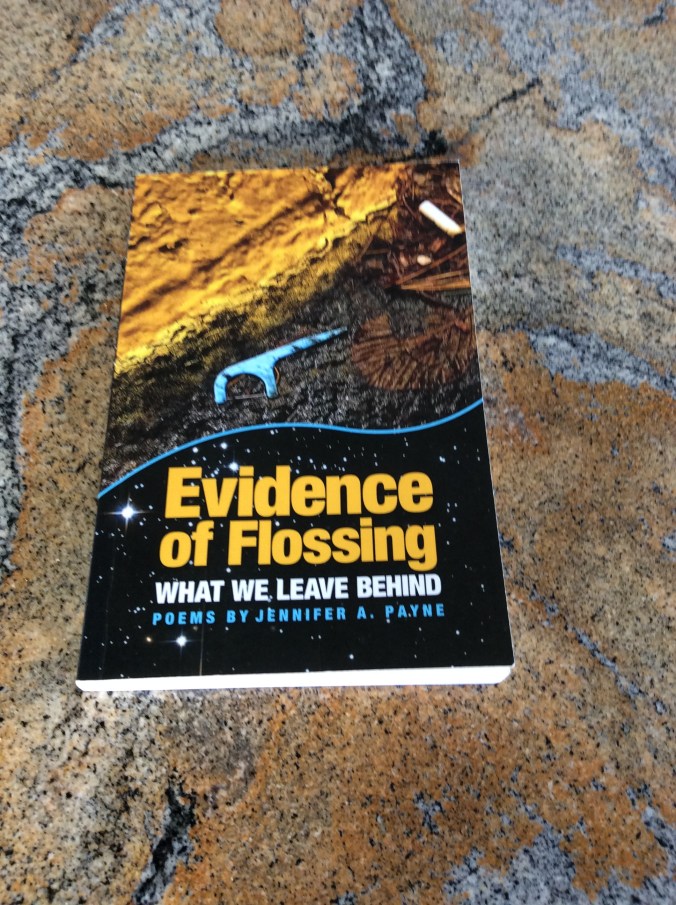
Evidence of Flossing, WHAT WE LEAVE BEHIND provides an unexpected metaphor for individual life, culture, and so much more. Nearly all the poems are accompanied with a photograph, often of trash in which lays a dental flosser (yes, one of those instruments with which you floss your teeth) with date and location.  Flossing is supposed to prevent anything from being left behind.  Hence, the title brings up an unusual play on words.

The first section Damage contains more than 20 poems which are a lament about much of modern life–mass shootings, the demise of wildlife, unpleasant changes.  One poem asks the question:  “Would God floss?”  In the second section, Contact, the poems focus on the natural world, walks in the city, the woods, beaches.  The third section, Connection, emphasizes the interconnectedness of everything, especially the relationships between humans and animals and nature.  There are poems about frogs, storms, birds.  One called Evidence of Fairies makes the reader feel the magic of old growth forests with moss and ancient trees.  In the footnote to another poem she discusses the fact that wolf spiders actually create songs to lure lovers. Then, toward the end, the Alice poems appear,  Alice as in “Alice in Wonderland”.  In my favorite poem Payne relates her encounter with a stranger picking oyster mushrooms near a path in the woods.

After reading the poems and comments in this book, I will never view flossing the same way again.  Will I find dental flossers now, something I never even previously thought about?  I use those long strings of floss not flossers.  Apparently the poems and flosser photos affected enough people that some sent Payne photos of flossers they saw here and there on the ground, some of which she has included in the book.

Even if I find no flossers, now I will certainly give a lot more thought to what I and others leave behind.


IMG_2901


About the author:  Jennifer Payne is the owner of Words by Jen, a graphic design and creative services company in Connecticut. She belongs to the Arts Council of Greater New Haven as well as several other arts and poetry organizations.  Her work has been featured in various publications, including The Aurorean, Six Sentences, and the Story Circle Network.  You can read some of her writing on her blog Random Acts of Writing.


In the footprints of Machig Lapdron by Mary Sharratt


Reblogged because I found this to be a fascinating adventure plus love the art.

Mary Sharratt's avatarFeminism and Religion

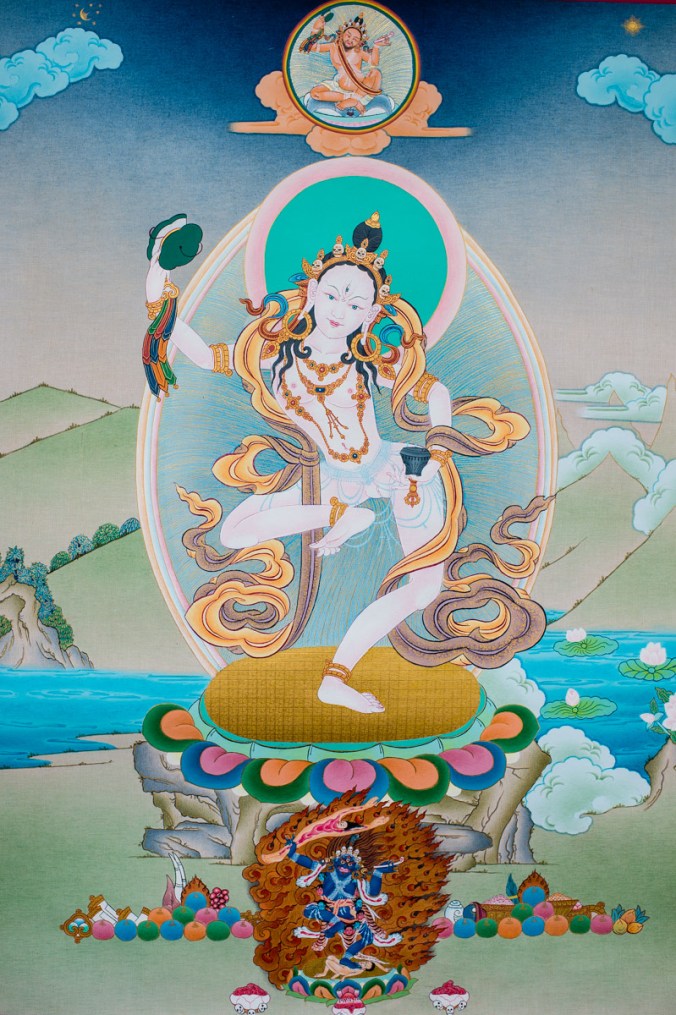
Machig Labdrön with PadampasangyeMachig Lapdron, female Tantric Buddhist mystic and lineage founder

I’ve just returned from an illuminating trip to Bhutan, high in the Himalayas. Bhutan is a Buddhist kingdom and the world’s youngest democracy.

On our last full day in this enchanting land, my husband and I drove with our guide over the nearly 4000 meter pass of Chelela and into the Haa Valley which doesn’t see that many tourists. Our goal was the Hermitage of Juneydrak, where Machig Lapdron (1055-1145 CE), the famous female Tantric mystic, master, and lineage founder, once meditated.

View original post 910 more words

Star Tree – Star Goddess by Judith Shaw


See the paintings. With deforestation affecting so much of the world, the idea of trees as sacred is especially appealing and meaningful.

Judith Shaw's avatarFeminism and Religion

judith shaw photo

In a world where humans were small and nature was big, surrounded by forests of trees of immense size and stature, it’s not surprising that the ancient Celts came to hold trees as sacred. Like many others, the Celts revered the World Tree or the Tree of Life as the mythic bridge between heaven and earth. The roots reach down and ground with the Earth while the branches spread their canopy up to the heavens.

View original post 745 more words

San Jose, Costa Rica


Two friends are headed to Costa Rica this summer.  While they will join a tour, they have a couple of days in San Jose before the tour begins.  I promised them I would suggest a few places they might enjoy, El Mercado, the downtown market,  the National Theatre, and the precolonial museum which is full of pre-Columbian gold and other ancient artifacts.  It remains my favorite but security there is tight.  To get in, you must surrender just about everything but your clothes.  You get a locker in which to place your valuables; the key to the locker is about all you can take with you.  As a consequence, no photos.  They do have a gift shop with quality items of all sorts including copies of many of the artifacts and jewelry.

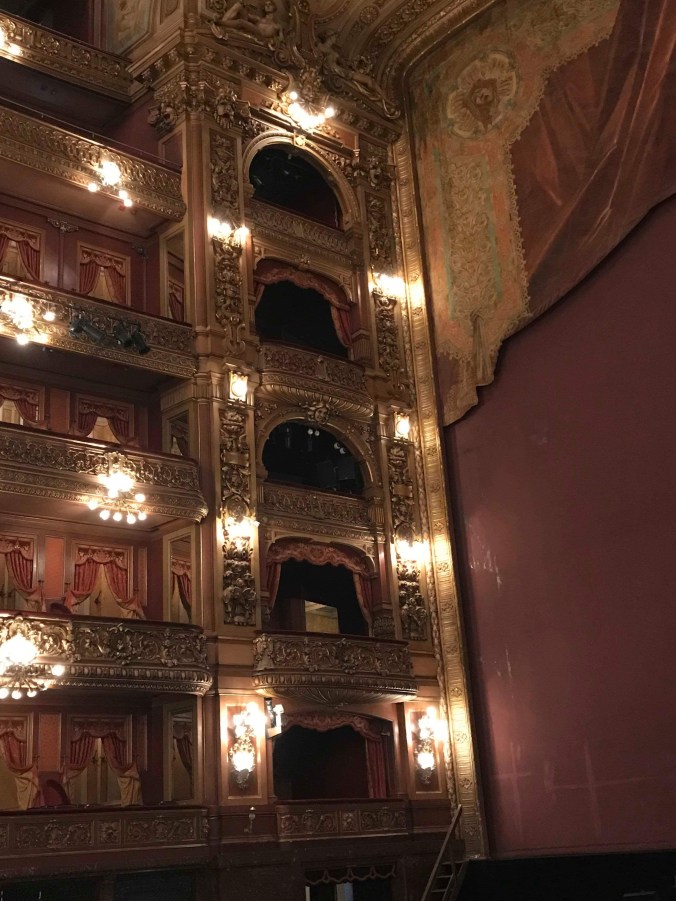
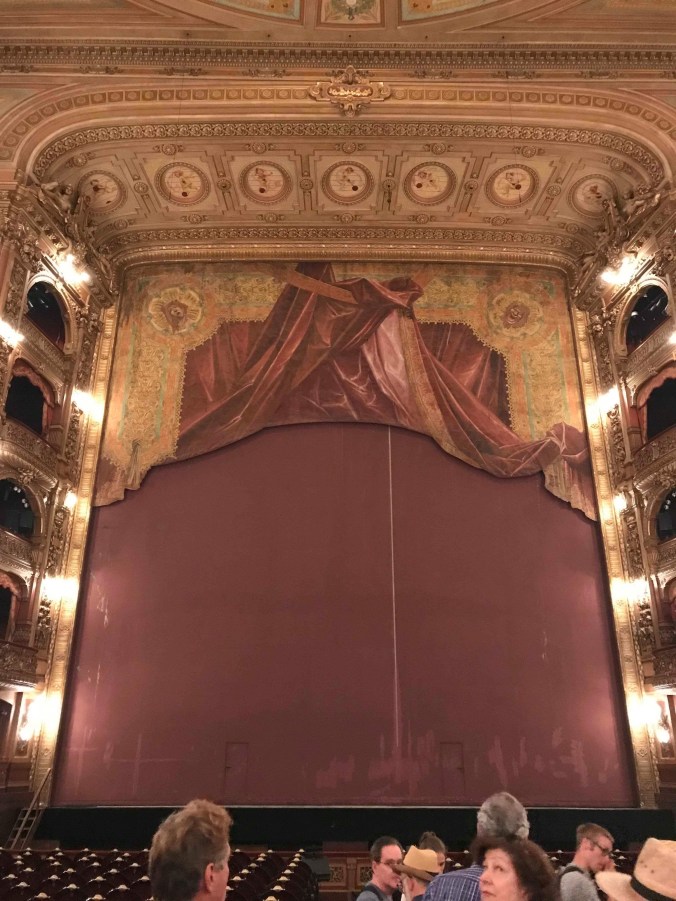
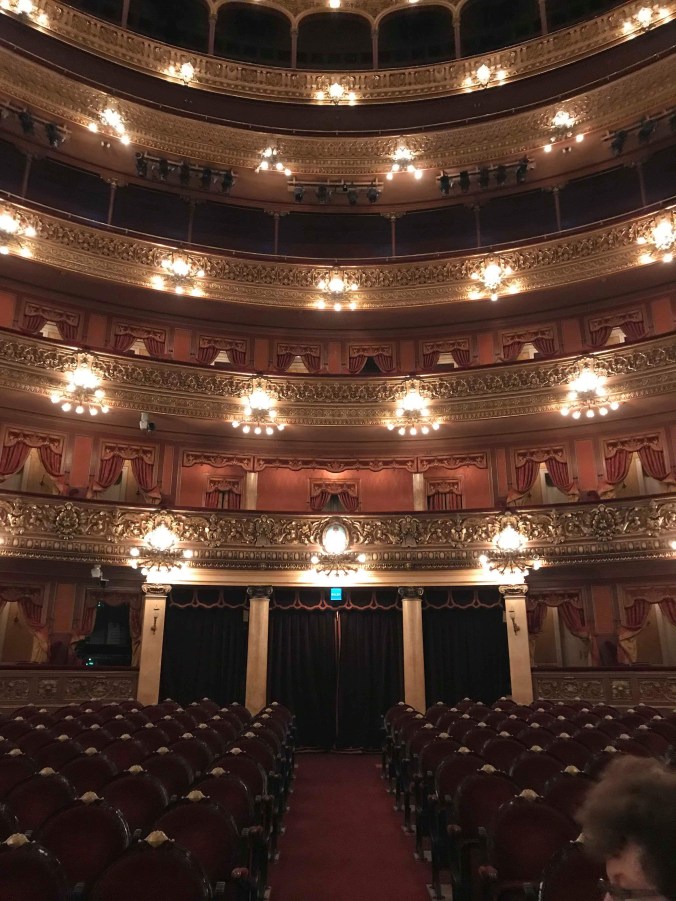
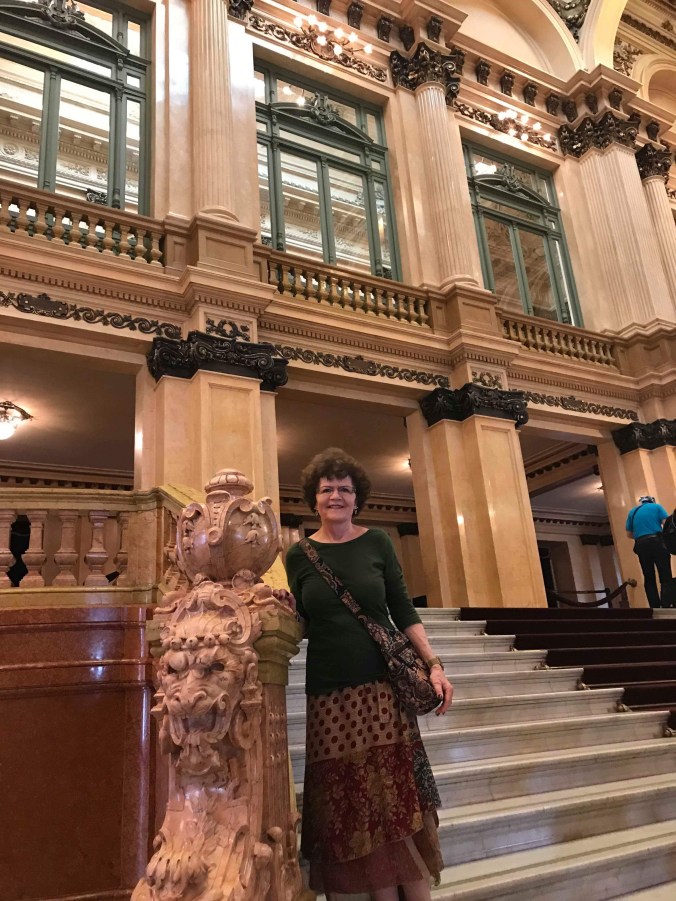
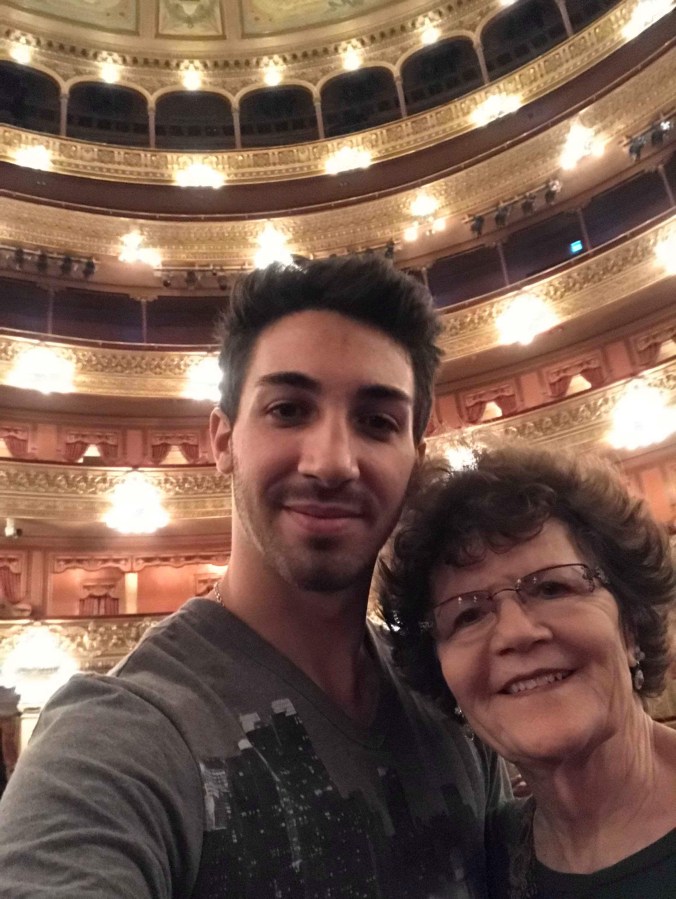
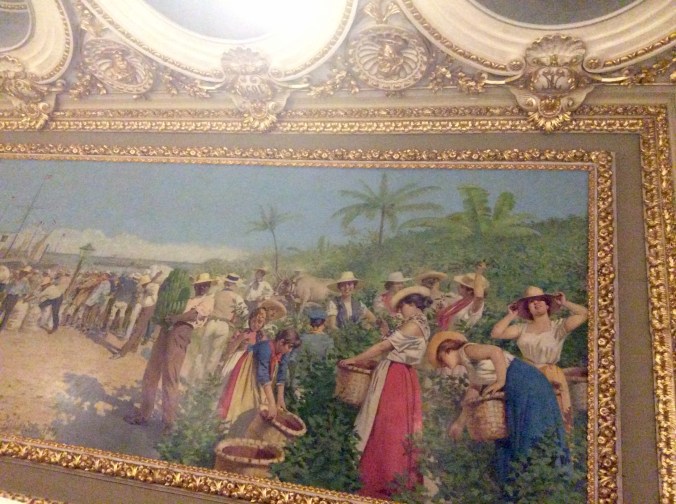
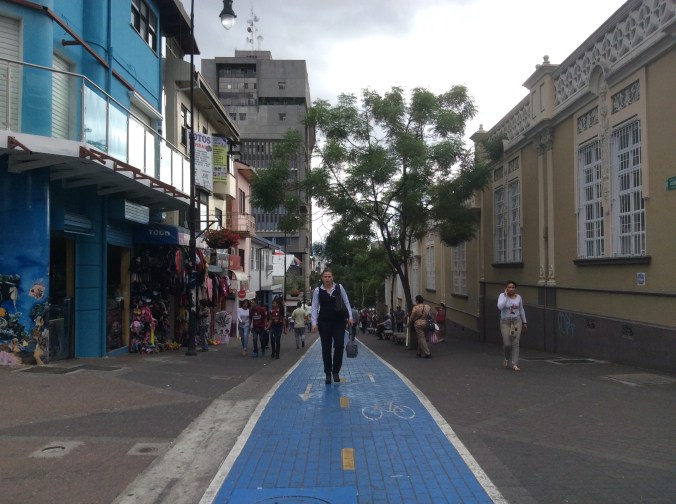
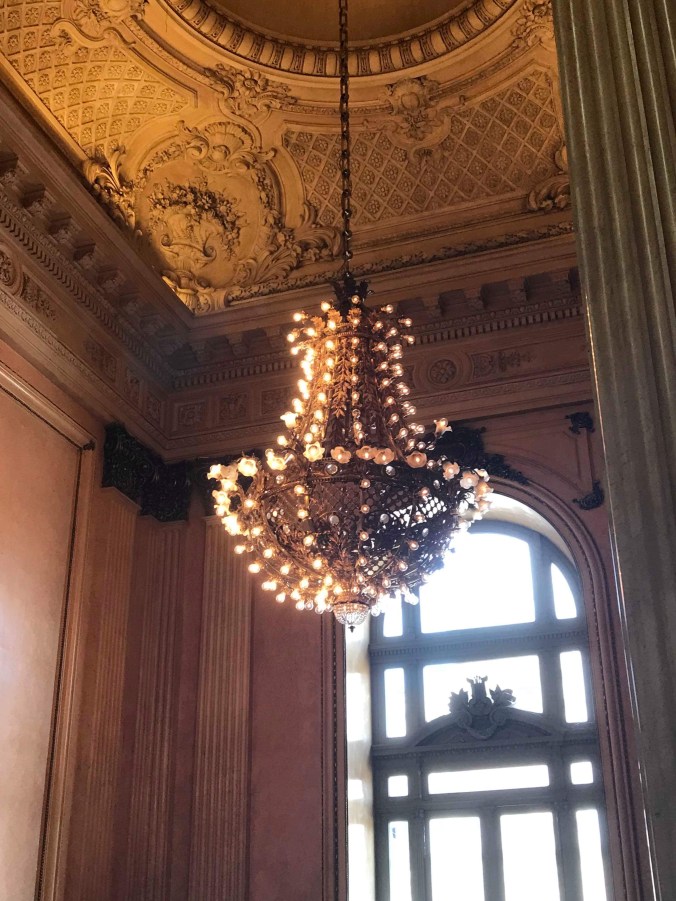
Much of the downtown area is foot traffic only.  Vendors sell various goods on the street, you can wander El Mercado, in which various stalls for goods and food are located, and tour the National Theatre.  Inside the National Theatre next to the main lobby area is a lovely little restaurant, the perfect place for lunch.  The following are photos I took  in the National Theatre about one and one-half years ago.

IMG_1915

IMG_1914

IMG_1921

IMG_1919

IMG_1911

The first photo below is the highway from the airport into San Jose and the second shows a typical downtown pedestrian only area.

IMG_1904

IMG_1912

I have been to Costa Rica in what in the US is summer and also at Christmastime.  Summer here is their rainy season so if you go then, be prepared for rain, sometimes a lot of it.  It is sort of a joke that on the east side of the main mountain chain, it is always the rainy season.  However, I have been there when it did not rain.  Take a sturdy, easy to lug around slicker with a hood because sooner or later it will rain.

The huge advantages of going this time of year are a lot fewer tourists and it is considerably cheaper.


Spring Break Adventure–5


On the fourth day of the adventure we went to Marfa, Texas.  My friends from college, David and Suzy, had booked a tour of the Chinati Foundation.  No photos of that because none allowed.  This foundation is the dream of its founder, Donald Judd.  His art and almost all the rest of the art housed here is not for display in houses.  All but a few consist of grand studies of space and light. An abandoned, refurbished military base, purchased by Judd, houses most of the exhibits.  Judd’s main interest it seems relates to the relationship between light and space.  First, the tour guide takes you to a couple of large buildings where the only changes made were to install new windows and a ceiling.  These buildings house Judd’s large, polished, stainless steel rectangular boxes.  While this may sound boring, I assure you it is not.  Light reflects off these boxes, makes shadows, etc. in all sorts of ways and the entire effect changes with the angles of the sunlight.

Another quite astonishing display can be seen in a series of U-shaped buildings, painted and repaired, in which eight foot long fluorescent light tubes in four colors, pink, green, yellow, and blue, have been installed in the corners of the U.  Depending on where a person stands, other colors appear, not just the four mentioned.  It became apparent to me that the artist, Dan Flavin, knew every scientific detail of the color spectrum and its effects on the human eye and brain.

I also enjoyed a smaller display by artist and poet, Carl Andre.  Even though his fame rests in sculpture, it is mainly his poetry displayed here.  I wanted to read all of it but everyone else went on so I quit.

There are other exhibits, including a lot of smashed and welded vehicles which I liked the least.  The final exhibit displays giant fabric sheets in black and white in a building specially designed by the artist, Robert Irwin.  If you think this sounds boring, take a trip there and look for yourself.  I assure you it is not.  Irwin actually worked on the exhibit himself at the age of 88.  He lives on now at 89.

IMG_2603

The only photos I managed in the area show the Marfa Courthouse which is, believe it or not, even a brighter pink than this photo and a photo from the vehicle window on the highway to Alpine. The second photo shows a mesa we managed to view on one day or another from nearly all sides.  It looms large in the middle of flat land. Here one of the endless trains slides by.
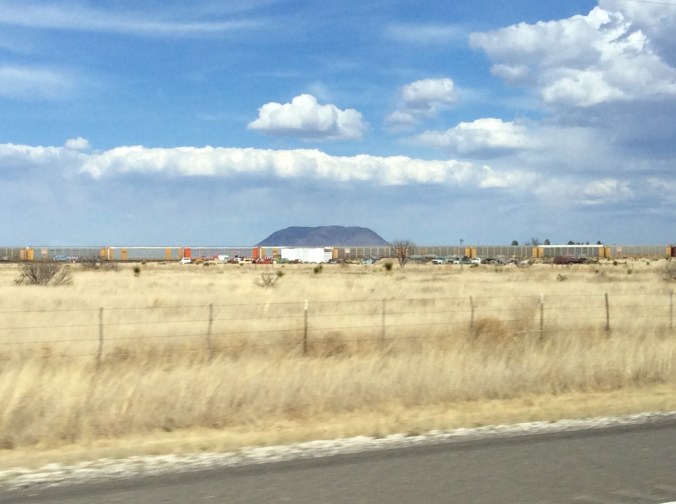
IMG_2604

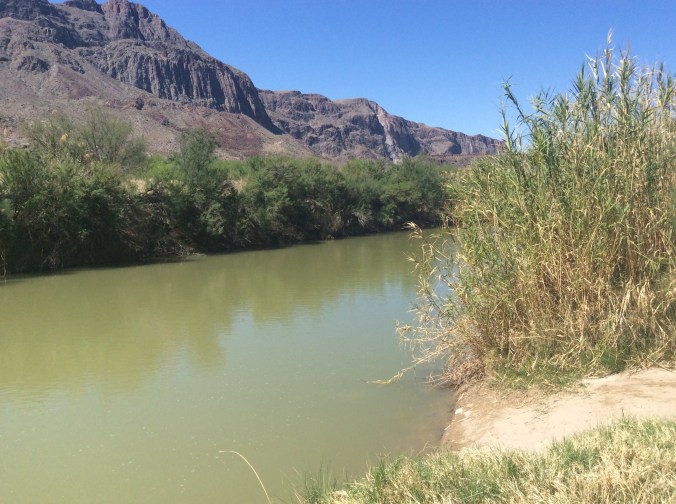
On our last day we decided to drive to Presidio and take the river road which goes through Rio Grande Ranch State Park. While the road goes either along or down to the river in a few places (for people to put some sort of water craft into the river or to camp), most of it is way above the river on cliffs.  This landscape is not for the faint of heart.

IMG_2605

US on the right and Mexico on the left.  The fields and pasture in the distance are in Mexico.

IMG_2606

Looking into Mexico.

IMG_2607

IMG_2609

IMG_2611

Unusual rock formations near one of the small drives down to a campground by the river.

IMG_2613

IMG_2617

Cliffs in Mexico.

IMG_2619

Apparently, in my efforts not to fall in the river while taking this, my finger got in the way.

IMG_2620

IMG_2621

Yes, the river is down there between those cliffs.

IMG_2622

IMG_2623

In case you wonder why the Rio Grande seems so small here, consider that by the time it gets here, 95% of the water has been removed for irrigation and other purposes.

IMG_2624

We drove back through Terlingua to Alpine.  Not much exists in Terlingua except a rather pathetic supposed ghost town area.  The river road is not conducive to speed; we were hungry and stopped for a very late lunch.  It was St. Patrick’s Day and many of the clientele had a good start on the festivities.  On Saturday I learned that Terlingua is a famous biker town.  However, apparently not that day.
Costa Rica Adventure, Day Five-Part One


After spending our first leisurely late afternoon and evening at Rio Perdido, we arose early the next morning heading to a farm near the Nicaraguan border.  On our way, about 3/4 to one hour from Rio Perdido, we stopped at the studio of the sculptor Tony Jimenez.  Apparently, Tony loves–perhaps an understatement-the female form.  With few exceptions, he carves women, mostly giant women, in wood.

IMG_2003

He sells smaller statues, even as small as eight inches high, but refuses to sign them partly because they are made from less substantial wood.  I bought one about a foot high.  Later, in another part of Costa Rica I saw some very similar to mine.  When I asked if Tony made them, I was told his cousin was the sculptor.

IMG_2004

Although Tony sells sculpture, his front door fascinated me even more.  It, too, is carved, a frieze.  Even the crossbars on his windows are carved.

IMG_2005

We drove along the west side of a volcano for hours.  Because of clouds, wind, and weather from the Caribbean, even though we were on the Pacific side, we never saw the top of the volcano.  It remained misty and rainy most of the morning as we crossed from the Pacific to the Caribbean side.

IMG_2002

I do not recall anyone mentioning the name of this volcano.  Given where we were headed, it would appear to be Volcano Miravalles.


Costa Rica Adventure, Day Four-Part Three


Yes, Part Two of Day Four is missing–it will show up later.  After floating down Rio Tenorio (the missing photos) and eating lunch by another river just off the Pan American Highway, we went a short distance off the Pan American highway to Las Pumas, a wildlife rescue center.  This photo was taken on the way–a very common sight in this area, grazing cattle.

IMG_1992

The center rescues various animals but mostly wild cats, including puma, jaguar, ocelot, jaguarundi–a long bodied, grey cat with short legs and a tiny head, margay, and tigrillo which is the size of a house cat.  Their goal is to eventually release the animals back into the wild.  However, the only place open to visitors is an area where none of the animals can be released back into the wild.

I mostly photographed the pumas–one of my obsessions.

IMG_1996

See if you can find the puma.

IMG_1997

Now you can.  He kept moving.

IMG_1998

Most of their stories went like this:  mom was killed or caught by a rancher for stealing livestock; baby was found and rescued and had become too familiar with people to release.  Another common story dealt with injuries where the animal had been caught in a trap and suffered too much of an injury to ever be self sufficient in the wild.  The smaller cats knew how to either hide themselves or hunker down where it was too dark for a good photo.  In the largest enclosure a jaguar lay right next to the fence.  Once he had been returned to the wild without success.  He did not seem particularly pleased with all us humans so close.  He arose, suddenly turned his butt toward the fence, and sprayed.  One unfortunate (or fortunate if she wanted a good story) girl was the recipient.  She took it well.  How often does one get sprayed by a jaguar!

Eventually, after twisting and turning on various unpaved roads through the dry tropical forest (a totally different type of forest than one usually thinks of when hearing the word tropical), we arrived at Rio Perdido early enough for some relaxation, a bit of exploring, and swimming.