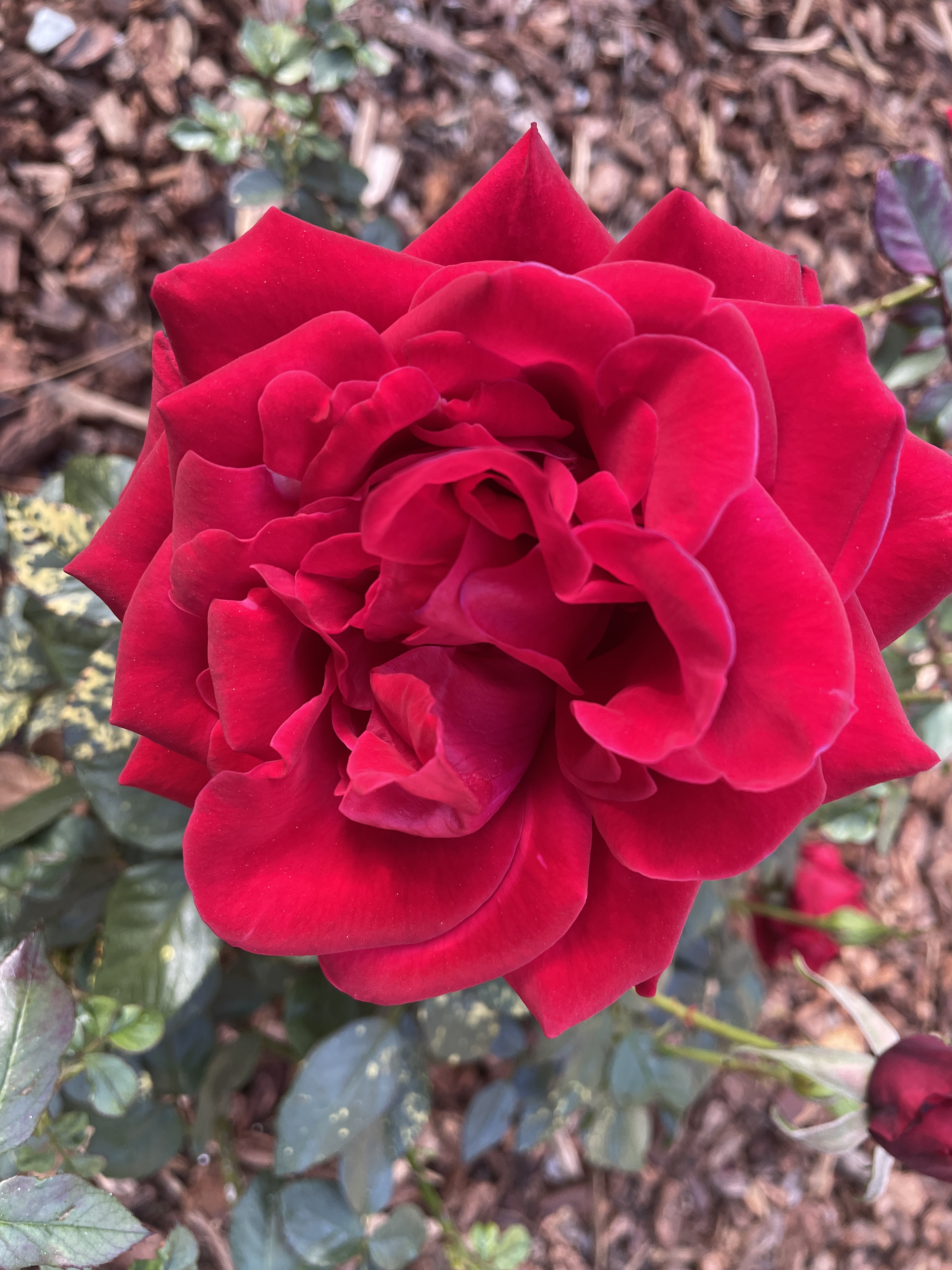
Ovid


This is poem two for National Poetry Month. A friend wrote a poem following the prompt to write a poem about a book the writer has not read for a long time. She wrote about The Scarlet Letter. My poem is about the book, An Imaginary Life.

The Roman Emperor Augustus saw Ovid’s poetry as subversive,

a power threat. He exiled Ovid to a remote corner of the Empire,

somewhere over by the Black Sea, the Carpathian Mountains,

among the destitute, the superstitious, people who did even know

how to read or write. They believed in witches, feared ghosts, saw

evil in everything and everyone different. Different equaled

death.

Paid to host Ovid, the village leader teaches him to ride horses

bareback, hunt, become stronger. Ovid transforms from a weak

revolutionary who hates this place to one who sees the barren

beauty, wanders in the forests, plants a wildflower garden,

survives.

While hunting, they see barefoot tracks in snow, tracks

of a feral child, a boy. Ovid fears for him, finds him,

rescues him. An accident occurs. The villagers blame

the boy, want to kill him. He and Ovid escape,

wander far into the northern wilds, into

infinity.

Book 11, 2024: ” Frida’s Fiestas: Recipes and Reminiscences of Life with Frida Kahlo”


The author of this book, Guadelupe Rivera, is the daughter of Diego Rivera by the woman to whom he was married before he married Frida. Diego went on a trip to Russia and his then wife, the author’s mother, became attached to her previous boyfriend, the poet Jorge Cuesta. She and Diego divorced and then he married Frida. Eventually, the two couples became friendly and at one point they all lived in the same house.

Thirteen years after Diego married Frida, the author moved in with them. This book details her life living with Frida and her father, how Frida learned to cook, how she decorated the Blue House in Coyoacan, the fiestas, the food, the adventures. The book includes photos and recipes of Frida and Diego’s favorite foods, photos of the house, and places the author visited with Frida. It is also a story of many of Mexico’s famous people at the time.

I own several books about Frida but this one is the most revealing and intimate in many ways. If you like Mexican food and find the life and art of Frida and Diego of interest, read this book.

Note: It was also written by the journalist Pierre Marie-Colle with photos by Ignacio Urquiza.

A Book a Week-43: “Desertion”, Abdulrazak Gurnah


Gurnah, a native of Zanzibar, won the Nobel Prize for Literature in 2021. This is the second of his novels I have read. Both deal with colonial Africa and the effects of colonialism on both individuals and countries, especially in East Africa.

In 1899, a British man, Pearce, stumbles out of the desert and collapses near the shop of a local businessman, Hassanali. His sister, Rehana, saves Pearce. This sparks a love affair, the results of which have long lasting effects on several families, not only for Pearce and Rehana, but for lovers and individual family members two generations later.

It is also a tale of governments immediately after independence and their failures. Additionally, it addresses “forbidden” love and its effects on those who genuinely love each other but cannot pursue their love. The effects are not only immediate but long lasting, affecting others not just the two lovers.

Mother’s Roses


roses, lush

pink, red, coral

roses floating in crystal bowls

remind me of my mother

her rose garden by the barn

summer roses on her kitchen table

One Book a Week-26: “Holding Fire: A Reckoning With The American West”, Bryce Andrews


If you LOVE the West, but sometimes struggle with its violent history, this is the memoir for you. Here is a quote from page 178: “I’m embarrassed at how long it has taken me to notice that a rancher’s view of the natural world is blindered in comparison to the hunter’s perspective; that driving livestock from one field to another is nothing like stalking free-ranging herds; that finding, gathering, and preparing a hundred different wild plants bears no resemblance to growing alfalfa or oats…”

Andrews also discusses the difference between sustainability and reciprocity. Before reading the book, I had never thought about this. He notes that sustainability is taking without damaging. Reciprocity entails giving back, e.g. nature, asking, “What can I give back? What can I do to take care of this place that feeds and shelters me?” This is quite different from “How much can I sustainably take?”

Andrews grew up in the West. However, after cowboying on several ranches in Montana, hunting annually, and later inheriting his grandfather’s Smith and Wesson revolver, he begins to question the gun violence and destructiveness of Western culture. This book details his journey. He continues to live on a farm in the Montana mountains, slowly transforming the land to make it profitable but also a place for nature, for wildlife to prosper.

One Book a Week-14: Trust, Hernan Diaz


The first half annoyed me. I kept asking, “What? Why? What is wrong with these greedy, despicable people?” I almost quit reading it (I never quit reading a book) but plunged on. Then, about halfway through “A Memoir, Remembered” section entranced me. Aha. Now I “get” it. I became so engaged I read the last half almost straight through without stopping.

The title should be Truth. This novel deftly explores these questions:

-What is true?

-Whose truth is true?

It does this via competing narratives involved with financial markets, how investors have and can manipulate the stock market, and relationships. It also quietly addresses the issue of how men take credit for the acumen of the women with whom they are involved and the destructive power of wealth and influence.

One Book a Week-11: The Vanishing Half, Brit Bennett


This unusual novel features identical twin sisters, inseparable as children, living in a small town in rural Louisiana. The town’s founder, a light skinned Black man, insisted on maintaining a certain character for the town–only light skinned Black people should live there. At sixteen the sisters run away to New Orleans where they ultimately choose diametrically opposed lives, one passing as white, marrying a wealthy white man who knows nothing of her true past. In spite of the deception and lies, years later their lives become intertwined in unexpected ways. The novel not only addresses themes of race but also sexual identity and who we are as individuals and a country.

One Book a Week-7: “Memorial Drive, A Daughter’s Memoir” by Natasha Trethewey


Published in 2020, and a must read for anyone who cares about abused women, their rights, and how law enforcement often fails them, this book by Trethewey, 2007 Pulitzer Poetry Price winner for “Native Guard”, voices her struggle to deal with her mother’s untimely death. When Trethewey was nineteen and in college, her mother was shot and killed by her step-father after the police officer assigned to protect her mother left his post early. Additionally, the memoir details the effects of the racism she experienced as the child of a white father and black mother (married when it was illegal where they lived) in Mississippi and later in Atlanta in the 1970s and 80s before her mother’s murder in 1985. The book gets its title from the street on which her mother lived when she was murdered. Through this memoir Trethewey discusses how her parent’s divorce, her mother’s remarriage to an angry, abusive man, and her mother’s murder has informed her life and affected the enduring love she holds for her mother.

One Book a Week-5: The Importance of Paris by Cynthia F. Davidson


This memoir take place when the author decides to move to Paris in order to address certain “issues” related to her childhood and young adult years. She grew up in Saudi Arabia before the oil boom and went to high school and lived in Beirut when it was considered one of the best cities in the world. She had to leave when Lebanon became war torn, her dad was kidnapped, and her sister shot. Her return to the US proved traumatizing even though she is not genetically of Middle Eastern descent. Paris was filled with Lebanese refugees so she moves there in an attempt to understand what happened to her beloved Lebanon and why.

This is not an ordinary memoir. I could not stop reading it; I wanted to know what happens next and why. It includes a graphic honesty not found in most memoirs I’ve read. In addition, it contains political and historical explanations for the events that transpired during the time period of the book.

Want to learn more about the background to current events in the Middle East? Want to read about a remarkable life? Then read this memoir.

Student Poems–One


After reading nature poems by Denise Levertov and Wendell Berry, the students wrote their own nature poems.  Ten wanted me to post their poems on my blog,  As as consequence, I will post two student poems each day.  Here is the first set.


In late fall evening

There are leaves falling

and they are crunching

under your feet

as the birds fight

for the tree with the

most leaves My family

watches football in

the warm cozy house

of ours.


Trey Matthews.


Nature is beautiful

and helps you see,

the wild is suitable

for you and me.

Nature helps you grow

in strength and mindset,

and helps you realize

your true assets.

Look around and see

the beautiful world God made for me.


Bailee McAlister


IMG_3641