reading,
listening to birds
the gurgling of water,
looking up to watch
four hummingbirds challenge
each other at the feeder, and
I notice I’m surrounded by flowers
and the scent of orange blossoms.

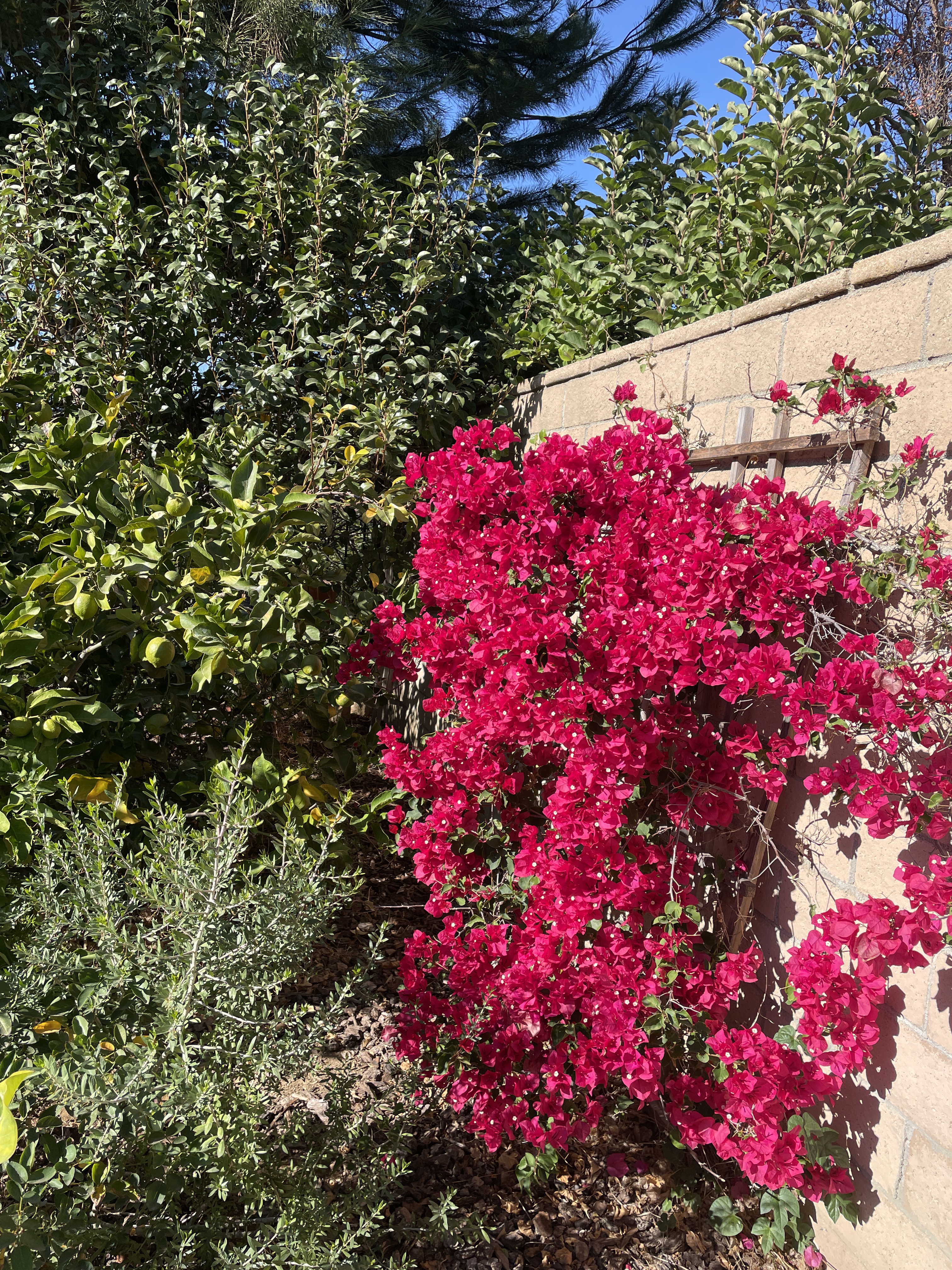

reading,
listening to birds
the gurgling of water,
looking up to watch
four hummingbirds challenge
each other at the feeder, and
I notice I’m surrounded by flowers
and the scent of orange blossoms.
I only acquired this book because the author of “Delights”, Ross Gay, recommended it as one of his favorite books. I almost quit reading it but kept going because I wondered why he loved this book. Perhaps if you watch a lot of movies (I am not a movie person), it would be better because Shields critiques a lot of movies, almost none of which I had ever even heard of. He also seems to prefer non-fiction and critiques a lot of non-fiction essay writers. To be honest even though I read hundreds of books, most of the books he mentions I have never read. His taste apparently differs greatly from mine. I have read Joan Didion, John Cheever, Gertrude Stein, Yeats, as he has and I do agree with him about the essay, “Killing an Elephant”. In this essay George Orwell describes a horrible event he experienced as a young man while working for the British in Burma (now Myanmar). I agree with Shields that this essay describes better the horrors of colonialism and racism better than most books written on those subjects.
What bothers me about this work by Shields is the relentless negativity. I consider myself to be a rather realistic person, often perhaps too blunt for my own good. Nevertheless, I do not view my life or that of others as nearly as hopeless and lonely as Shields seems to view it. Here is a quote from near the end of the book:
“I believe in art as pathology lab, landfill, recycling station, death sentence, aborted suicide note, lunge at redemption. Your art is most alive and dangerous when you use it against yourself. That’s why I pick at my scabs” and four pages later at the end: “I wanted literature to assuage human loneliness, but nothing can assuage human loneliness. Literature doesn’t lie about this–which is what makes it essential.” I know lots of folks talk about the plague of loneliness permeating society these days. He focuses on this relentlessly for 207 pages. Do most people feel this awful a lot of the time? Am I naive? How did I escape it?

These are the first two books of his long career as a writer. Although the cover calls them novels, they are short and what I would call novellas. The most fascinating thing in this publication of the two novels together is his introduction which he wrote in 2014 and where he explains how he unexpectedly became a writer. He begins by explaining that most people in Japanese society follow a certain path–“graduate from school, then find work, then, after sometime has passed, get married.” He did not follow that path: he married, then found work, and finally graduated. He did not want to work for a company; the idea turned him off completely so he decided to open a business, a coffee shop where people could come, hangout, drink coffee, and listen to jazz. He and his wife did not have much money but did manage to put enough together and opened a small coffee shop in 1974. He brought his old piano from his parents’ house to the coffee shop and convinced young jazz musicians to play there for small amounts of money. Some went on to become famous musicians. He and his wife came across some money lying in the street and instead of turning it in to the police used it to pay debts. He spent his twenties running this shop, listening to the music there, making sandwiches, mixing cocktails, typical small restaurant stuff.
He also liked baseball and often went to see his favorite team which he admits was usually not very good and rarely won. Just when the team had a turn of events and seemed to be winning, he suddenly had this thought rush through his mind: “I think I can write a novel.” He claims he still can recall that exact moment and sensation. After the end of the game, he took the train to a store and bought a “sheaf of writing paper and a fountain pen.” Each night after he arrived home from the coffee shop, he went to work writing. It took him six months and a lot of work to write “Hear the Wind Sing”. He admits he had no clue how to write a novel, especially since his favorite novels were 19th century Russian novels and US detective stories. He struggled and almost gave up. He decided to try a new tactic and wrote it in English then translated it into Japanese. He says his English was very simple so that is how he wrote. He decided to submit it to a literary journal, not expecting much. He was shocked when he received a call that his novel had been short-listed for a new writers’ prize. This was a year after his attendance at the baseball game and he had just turned thirty. He had almost forgotten about even submitting the novel. An incident with an injured bird suddenly caused him to think that he was going to win the prize and go on to become a novelist. He wrote “Pinball, 1973” as a sequel. Shortly after, he decided to become a full-time writer and sold the business.
Reading this introduction enlightened me about some of his other works and certain repeating themes and especially settings. In all his novels I have read, music and coffee shops play a role. His novels have characters who know a lot about music; now I know how and why.
Categorized as science fiction, this novel relates a story so possible, it no longer seems like science fiction. Because it is so possible, I found it one of the most disturbing stories I have ever read. The first person narrator relates her personal story, the story of two of her best friends, and that of several other students at the boarding school where they have lived all their lives until they turn 16. Her feelings, her relationships with the other students and with the guardians who run the school are described in great detail and always from her point of view. At the age of 16, they are all sent to various places called Cottages where they experience their first interactions with anything beyond the perimeter of the boarding school where they have always lived and begin the training for the rest of their lives.
As I read this novel, I kept thinking of Epstein and his international ring which seemed to be out of the public eye until recently. If he could do this for decades without the general public knowing, I kept wondering if something like what occurs in this novel is actually occurring internationally and we just do not know it. I do know there is a black market for what occurs in the novel and that little to nothing is done about it. And given how little reaction officially overall has occurred regarding the Epstein files, would the general public accept what occurs in this novel if they felt it would benefit them personally. I do not want to say too much because it might ruin the novel for those who might want to read it and find out.
As I mentioned in a previous post, his books on delights were mentioned to me by two different people in two totally different settings so I decided to stay sane in all the seriousness of my life, reading something lighter might be a good thing to do. I guess I was thinking delights like flowers, food, etc. but this is more like a series of short essays about life all written in the span of one year–his gardening, experiences strolling around his neighborhood and favorite coffee shops, food, his parents, his wife, some personal history, his experience as a college professor, children. However, he also addresses serious issues–his meeting a homeless veteran just out from a stint in a mental facility and how he was compelled to help out after first driving off, racism he has experienced, his issues with the government and social media, family death, and life in general. And above all, what it means to him to identify as a poet.
As a person who works with high school students mostly non-white, many of whom have family members who are undocumented, I worry and need to find daily delights to stay sane. I decided to make a list of some of the past week’s delights:
-afternoons 70 degrees, sunny, no wind
-hummingbirds sipping nectar from both flowers and the two feeders
-singing a song the lyrics of which come from a poem by Langston Hughes where he dreams a world with no racism
-sitting on the back patio, listening to birdsong while I read a book about delights
-learning that all the rains have eliminated drought in California
-appreciating all the colors of the flowers blooming in my yard

Neftali Ricardo Reyes Basoalto, a country boy who grew up in a remote, rainy, forested area in southern Chile, an area called Araucania, an indigenous name, became Pablo Neruda, a name he created so he could publish poetry without his father’s knowledge. His father and mother, who died less than a month after his birth, originally came from the wine country of central Chile. His father became a conductor for a ballast train in this southern region. His descriptions of his childhood are of a shy boy who loved nature in all its forms and books. Later, he wrote letters to girls for his friends. Yet, he says he wrote his first poem when he had barely learned to read. Overcome with emotion, he wrote a poem to his stepmother, the only mother he knew. When he showed it to his father, his father asked to know what he had copied it from.
Later, he moves to Santiago to attend university, always poor, always wearing black, always carrying books. He joins a Student Federation and becomes acquainted with other young poets. He writes, “I saw a refuge in poetry with the intensity of someone timid.” After he struggled paying for the printing of his first book, he wrote, “…the writer’s task…must be a personal effort for the benefit of all.”
He wins a literary prize at school, his books are popular, and he finds himself acquiring a job at a Chilean consul in Rangoon but to get there he and a friend end up in France and Portugal, then Japan, then Singapore, before finally arriving at his destination. Thus, began his life as a consul official in places all over the world, including Spain just before and at the beginning of Franco’s rise to power.
After witnessing so much poverty, so many conflicts benefiting the rich, he becomes an avid supporter of the Chilean Communist Party–a form of communism unlike what most think of when they think of communism. The communism he and his friends support includes working on behalf of the poor, the common laborer, the disenfranchised against the wealthy elite who controlled most Latin American countries during his lifetime and in many cases still do.
He states, “I want to live in a world where beings are only human with no other title but that, without worrying their heads about rules, a word, a label…I want the great majority, the only majority, everyone, to be able to speak out, read, listen, thrive…I have taken a road because I believe that road leads us all to a lasting brotherhood…an inexhaustible goodness…”
Later, he chose to live at Isla Negra, a sort of hideout especially in winter where he could write. Then he returned to Chile. He helped his friend Salvatore Allende campaign for the presidency of Chile. After Allende became president, he appointed Neruda to be ambassador to France. In 1971, Neruda won the Nobel Prize. In 1972, the US blockaded Chile and Neruda returned and completed the final edit of his memoirs. He was welcomed back with a ceremony at the National Stadium in Santiago with a huge crowd in attendance. In 1973, a military coup, supported by the US, overturned the government and assassinated Allende. Less than one month later, Neruda died. Shortly thereafter, news spread worldwide that his two houses in different parts of Chile had been ransacked and vandalized by the new government and its forces.
Last week a writer friend commented on the notion that writers are known for wearing turtlenecks. That’s news to me even though I am a writer and I wear turtlenecks plus multiple layers. I’m cold. I’m cold at least half of the year even here in Southern California. This comment caused me to count mine. It seems I own 25 turtlenecks–white, off-white, various shades of beige and brown but none dark, several black, two red, two orange, two coral one of which one is darker than the other, two striped (one black and white, one tan and creme), deep green, two hot pink, and one sheer in shades of black and brown and creme and a sort of burgundy color. Another is a color I am not even sure how to describe which I will call pale peach. Since I’ve been the same size for decades, I am guessing some of these border on the ancient but not worn out. I never dry them in the dryer. Drying clothes in the dryer wears them out faster and changes their color.
About one-third of the way through his “Memoirs”, Pablo Neruda talks about a poet friend of his in Spain who wore turtlenecks which Neruda claims was a huge no-no at the time. What does he say poets should wear? Black from head to toe. He had been wearing black practically since birth. His mother died from tuberculosis a month after he was born. Perhaps the endless rain and endless mud he describes in the area of southern Chile where he grew up made wearing black the most practical color. Doubtless the poverty he witnessed as a young man working as a poor employee of tiny Chilean consulates in places like Ceylon (now SriLanka), Indonesia, and India did not inspire him to wear colorful clothes. Then not long after he arrives in Spain, Franco comes to power and one of his best friends, Federico Garcia Lorca is assassinated. As for me, when I am not wearing colorful clothes, I wear black, not due to rain or mud or sadness. The reason I am drawn to black mystifies me–another thing to ponder.

Not sure this qualifies as a turtleneck but it comes close.
Recently, at a party I attended, someone claimed young people these days are lazy, don’t want to work, feel entitled. Sometimes I can keep my mouth shut, just listen, and disagree inside. Not this time. When I hear comments like this about young people, comments with which I vehemently disagree whether it is in person or on social media, I feel compelled to speak up.
During at least half the year, I spend one day a week at an inner city high school. Granted the students I work with are high achieving, students who are the opposite of lazy, some almost to the extreme. When I mentioned this, the person said, “Well this is because they are recent immigrants.” In most of these cases at this school, that is true. Then I explained that I had taught more than 20 years at two Title I high schools where nearly no one was a recent immigrant. Of course, like throughout history, there are some lazy young people. That, however, does not describe the majority. I’ve had homeless students who took the hardest dual credit classes and prevailed. I’ve had students who spent extra time at school because it was safer than being home. I’ve had students whose parents were in jail or drug addicts but still made it to school, did the required work, and graduated. I’ve had students struggling with mental health issues but no matter what managed to do the work required.
Reasons to be lazy abound. Reasons to feel hopeless about the future abound. Look at the present economy, look at the wage cap between the rich and poor, look at how many struggle to find a decent job. Young people are aware of all this, acutely aware. Yet most do the work required and press on no matter what.
I applaud them!
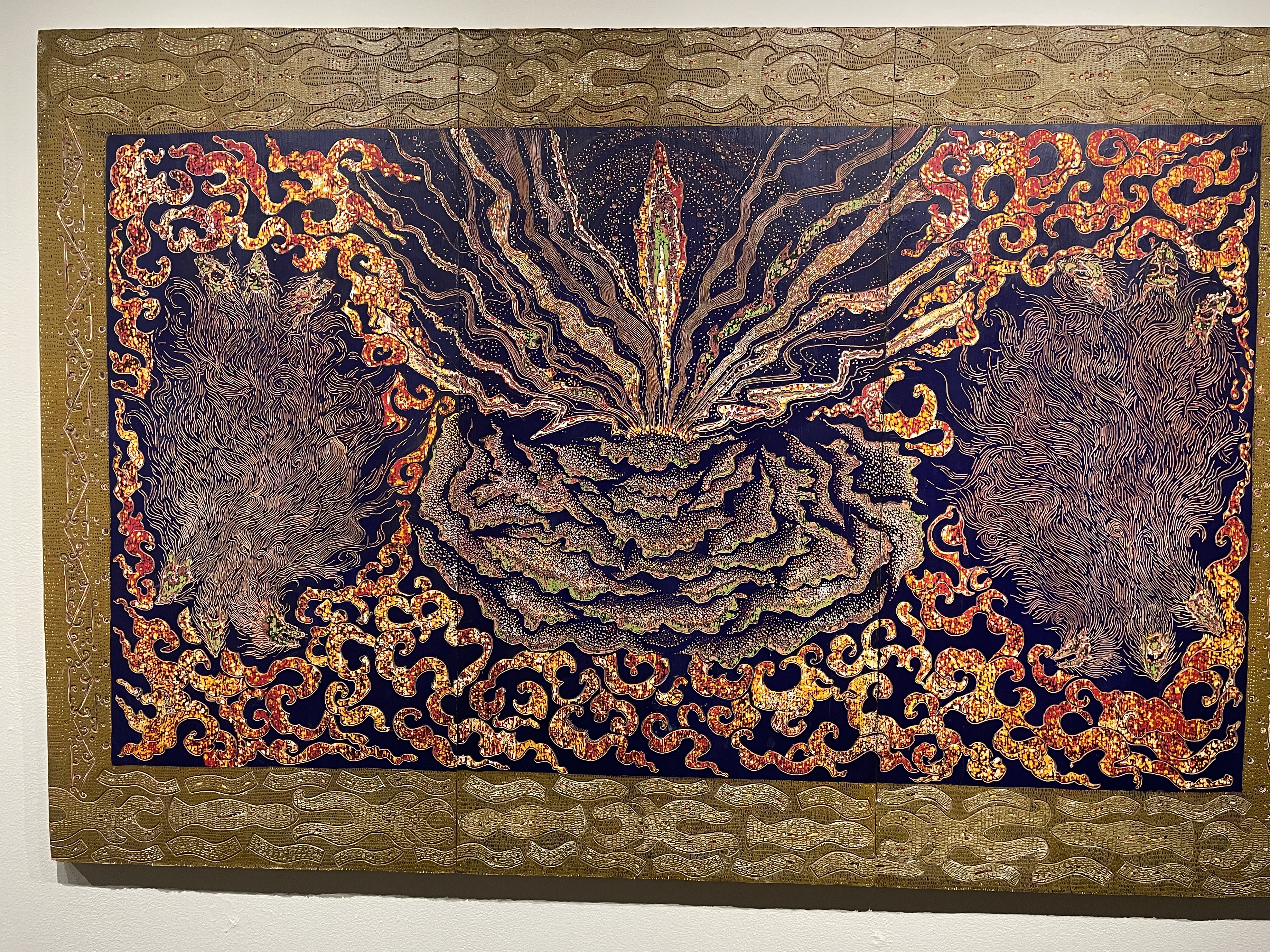
A young woman, Alexandra, travels to Sofia, Bulgaria, for a job as an English teacher in part to help her recover from the strange disappearance (and probably death) of her brother. She has barely arrived when she helps an elderly couple and the man with them. By accident she ends up with an urn of ashes in a bag when her luggage and theirs gets a bit mixed up. The ashes are inside an ornately and unusually carved box with the name Stoyan Lazarov engraved on it. She sets out to find them with the help of a young cab driver.
As they set out on this journey, they discover they are being followed but have no idea why. The cab driver whom she calls Bobby has keen observation skills which mystify her at first. They find part of the family and then unfortunate things occur to many they meet who are relatives or are connected to the man whose name is on the box. Without initially realizing it, they become involved in Bulgarian politics and political corruption as they try to unravel the story of the box and the man whose ashes it contains.
As I read this novel, which is both a lesson on the horrible Soviet occupation of Bulgaria and human determination and resilience, I became entranced with the history and culture of Bulgaria. If you want a glimpse into another culture and its history and the beauty of the Bulgarian landscape, I highly recommend this book. It is also a mystery story that keeps the reader going.
The author also wrote an earlier book called “The Historian” which is a novel about the history of Vlad the Impaler who is the real person behind the Dracula stories. I plan to read that novel as well.
Travel the World 4 Less
A Glimpse into My Life & Passions
Ceto-Magoism, the Whale-guided Way of WE in S/HE
Exploring the F-word in religion at the intersection of scholarship, activism, and community.
ANCESTRAL FOOD. HERBAL WISDOM. MAGICAL COOKERY. SEASONAL CELEBRATION.
inesemjphotography
politics, engineering, parenting, relevant things over coffee.
Food is the best expression of every emotion. Explore through my reviews, recipes, events and more.
Smile! A Site for Friends Wherever You Are!
inspiring personal growth through poetry and writing
Combining atheism with whimsy. This is a Fair and Balanced blog based on opinion unencumbered by fact.
Odds and ends ~ My Life
Original poetry, commentary, and fiction. All copyrights reserved.
bripike@gmail.com
A wildlife filmmaker in Africa
A Geeky Feminist's Musings On Pop Culture
"5 minute walks"
 writingontherim