Ethiopian Journey, Dubai


If you have a long enough layover in Dubai, they put you up in their Emirates hotel and feed you in the cafeteria free.  The hotel is nice, the food excellent–quite a nice perk.  From the hotel it is easy to walk to several places as well as take a van tour around the city.  We did both.

IMG_0167

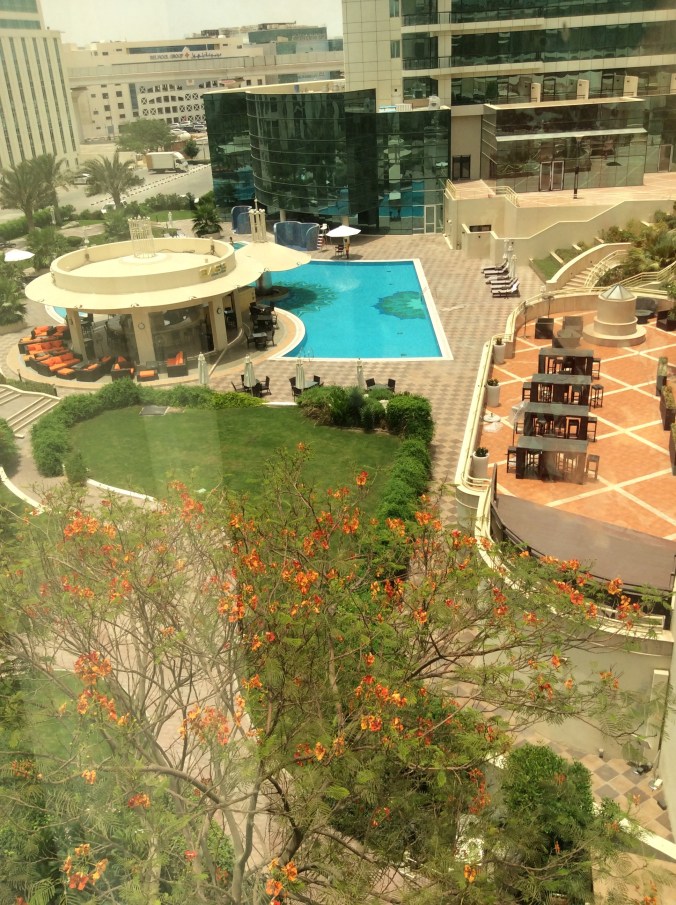
The view from my room.  The pool has a swim up bar but it is not open during Ramadan which was occurring two years ago when we were there.  Alcohol is available in some restaurants and bars but you must imbibe inside.

IMG_0169

One of the first places we visited on the tour was this mosque, designed to look like the famous mosque in Istanbul.  The following photos are of typical houses near the mosque.

IMG_0170

IMG_0171

IMG_0172

IMG_0180

Then we arrived at the beachfront of the Persian Gulf.  The water is warm, like lukewarm soup.  In the background two of the most expensive hotels in the world tower above the water.

IMG_0184

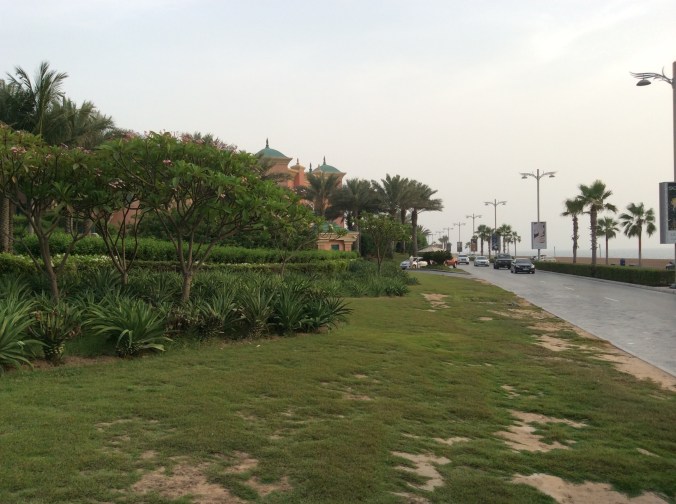
The street goes along the waterfront with luxury hotels on the left.  Many of these areas are fill–manmade peninsulas.

IMG_0185

You can visit the sister hotel in the Bahamas.

IMG_0189

Because of the fill, the fake peninsulas, it is easy to get a bit disoriented.  Plus during the summer there is so much haze, it is rather difficult to determine directions.

IMG_0190

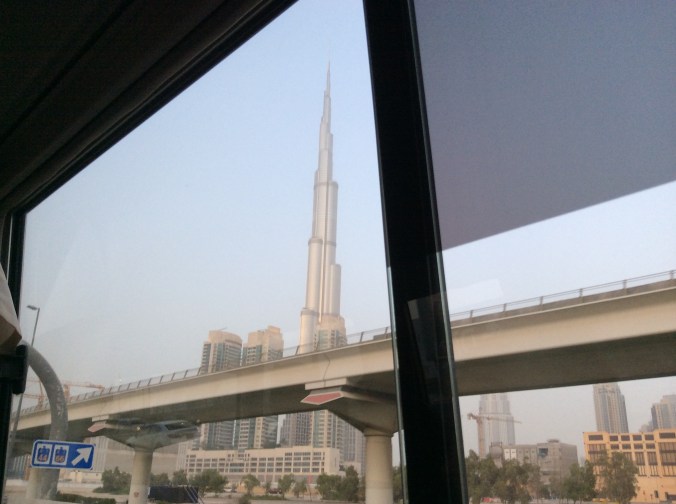
The tallest building in the world.

IMG_0191

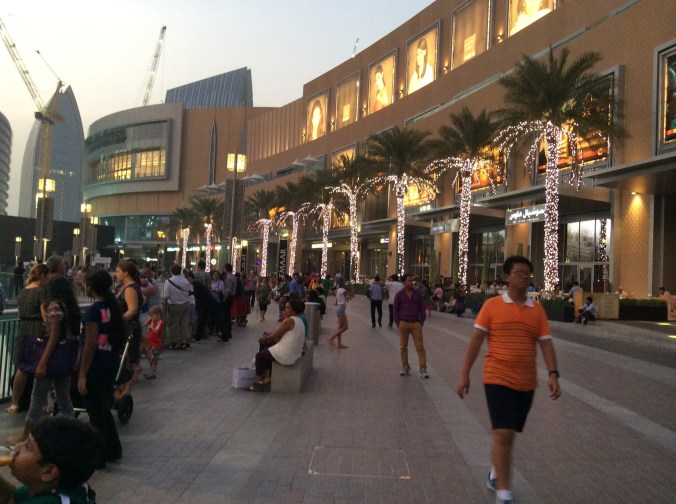
After visiting several smaller shopping areas, we arrived here, the famous Dubai mall.  This is the largest aquarium in a mall in the world. Here you see people from everywhere in the world dressed in every way imaginable.

IMG_0192

A children’s store across from the aquarium contained this lollipop tree with giant lollipops.

IMG_0194

In spite of high heat–it was 108 when we arrived–no wind and high humidity (yes, because on the Gulf, even though it is desert, the humidity is stifling), many people were outside awaiting the fountain show.

IMG_0198

One part of the skyline reflected in the lake.  The fountain show, synchronized with music, is worth the wait even in the heat.

IMG_0202

On to the gold and silver souk.

IMG_0203

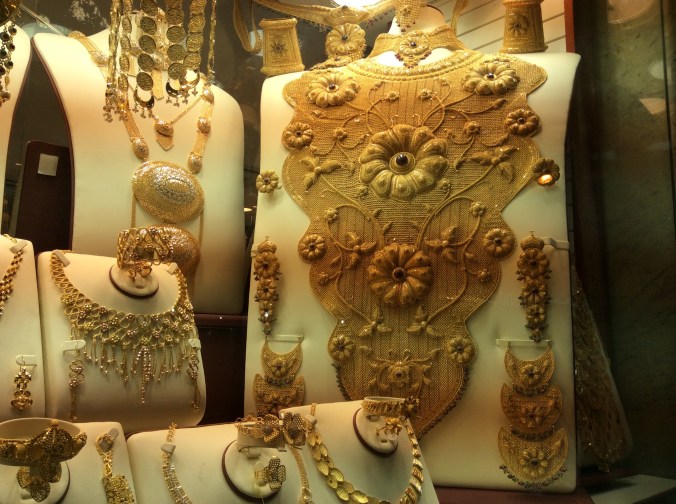
Gold and silver are sold by weight.  You can also buy gold in shops at the airport; however, nothing quite has heavy and exotic as some of this.

IMG_0204

We did actually shop in the food shops and bought nuts covered in various spices to take along for snacks.

IMG_0205

Ethiopian Journey–The Beginning


Two years ago today, two friends and I flew from here to Dallas to Dubai.  The final destination:  Ethiopia, where I spent nearly three weeks with them and my friends’s family plus a road trip through the north.  Ethiopia was nothing like what one sees in the news, in famine photographs, nothing like the image most people in the USA have of it.  My main goal when I returned home was to show people photos and inform them what it really looks like, how incredibly beautiful it is there.  This mission continues two years hence.  For the next several weeks I plan to relive this journey and share it on my blog here.

It is a short trip from Amarillo to Dallas via air.  In order to carry the baggage allowed on Emirate Airlines, we first flew via Southwest to Love Field, then took a taxi to Dallas International.  If you plan to fly long distances, I highly recommend Emirates Airlines.  Compared with all the others I have experienced even coach class is wonderful:  bigger seat room, more than a hundred movies to watch, good food, an area where you can help yourself to fruit and snacks, unlimited wine and beer, and an international group of flight attendants.

From Dallas to Dubai is fifteen hours of flying.

IMG_0155

IMG_0163

People wonder why they fly over Greenland, Iceland, northern Europe to get to Dubai.  Do not look at a flat map.  Get a globe and trace the route.  It is the shortest way to go.  Dubai is not like many think here.  No, I did not see endless lines of Lamborghinis and Ferraris.  In fact, I do not recall seeing any at all.  Tomorrow, photos of Dubai before heading on to Addis.

Costa Rica Adventure, Day Three–Part One


After lunch at the National Theatre we headed to Monteverde, a small town with only one unpaved road in and out.  One big change since I was there three years ago is the road.  It has been widened considerably and apparently plans to pave it are in the works.  The original reason for not paving was to prevent hoards of tourists from invading.  Apparently, that failed; tourists came anyway.

This town’s origination grew out of Costa Rica’s decision to disband its military in 1948, a practice which continues today.  Quakers from Canada moved here for that reason and created Monteverde, now famous for its cheese and, of course, the nearby Cloud Forest.  The hotel, where I have now stayed twice, El Establo, is owned in part by Quakers and serves a favorite of mine, fried cheese.

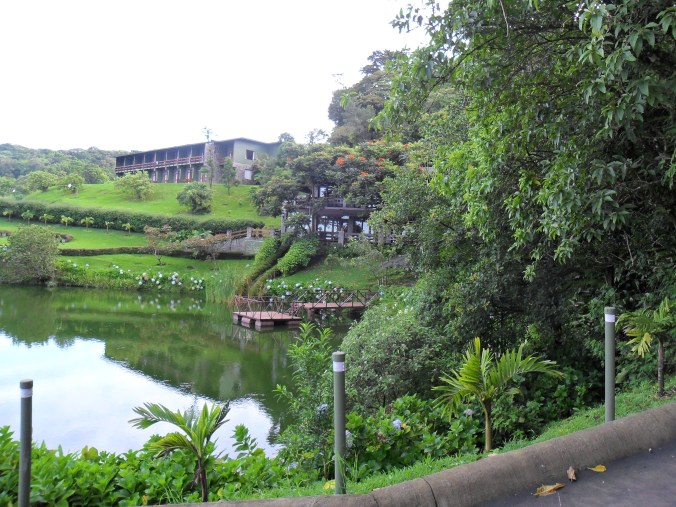
SAM_0640

Nine buildings up and down the mountain house rooms.  Previously, I stayed in one of the lower buildings; this time we were near the top way above this lake.

SAM_0641

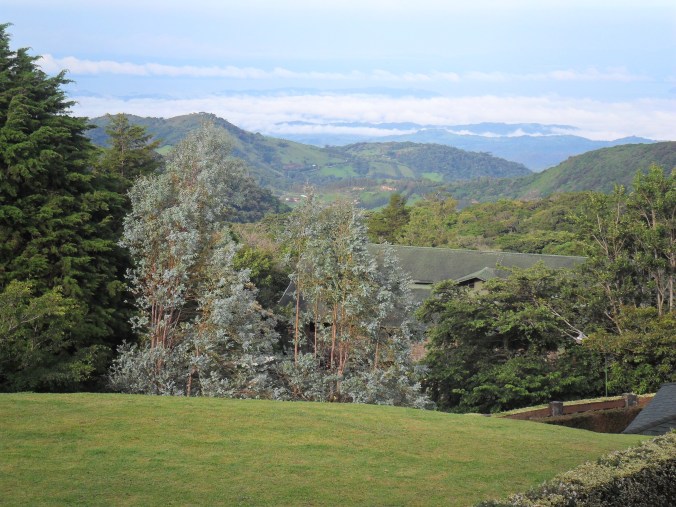
The views from all the rooms provide a vista all the way to Nocoya Bay.  After we put luggage in our rooms, we headed out for a night walk in the forest, the reason we had been instructed to bring flashlights on the tour.  We saw spiders, birds sleeping, a mouse, all sorts of insects, but nothing too exciting.  Probably some of the group members were too scared and too noisy.

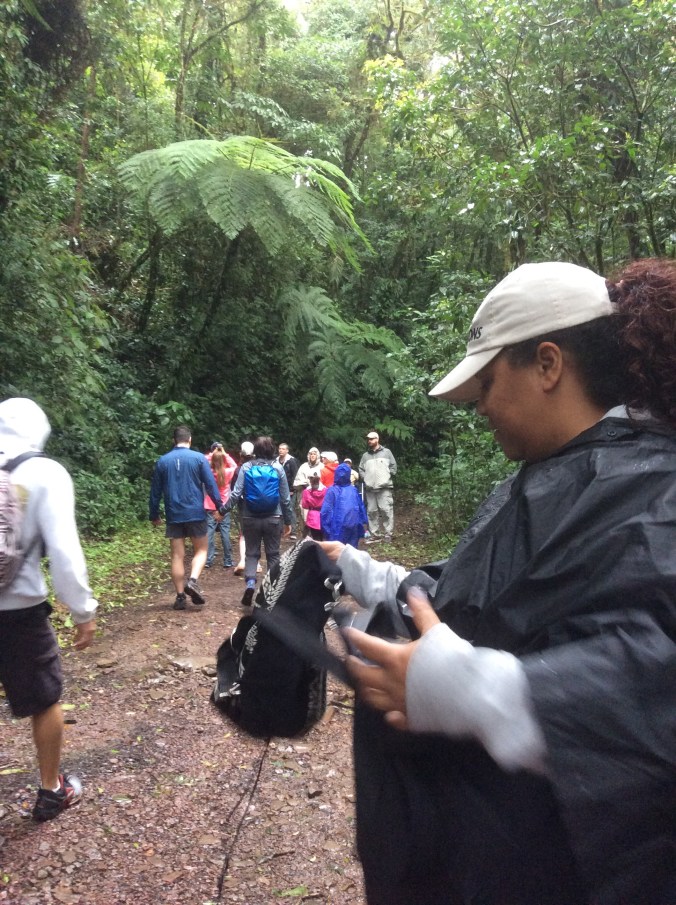
The next day breakfast occurred at 7 just before we took off for the Cloud Forest and a hike to the Continental Divide–all six miles or so.  I had hiked here before but on a different trail and in a huge downpour.  Luckily, it rained only a little.  However, if you are in the clouds, you get wet.

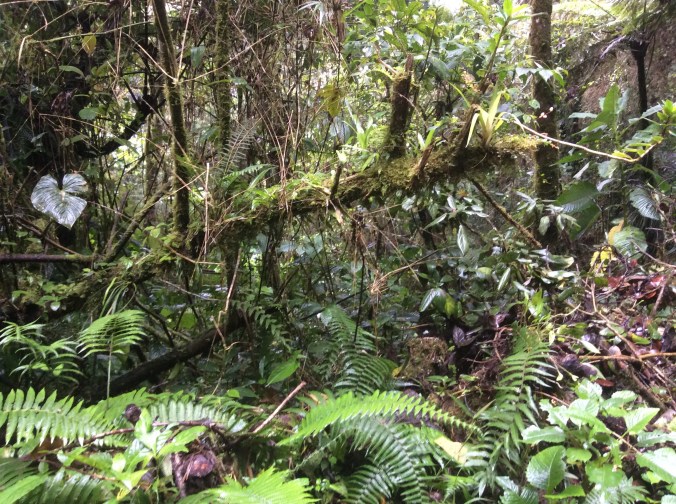
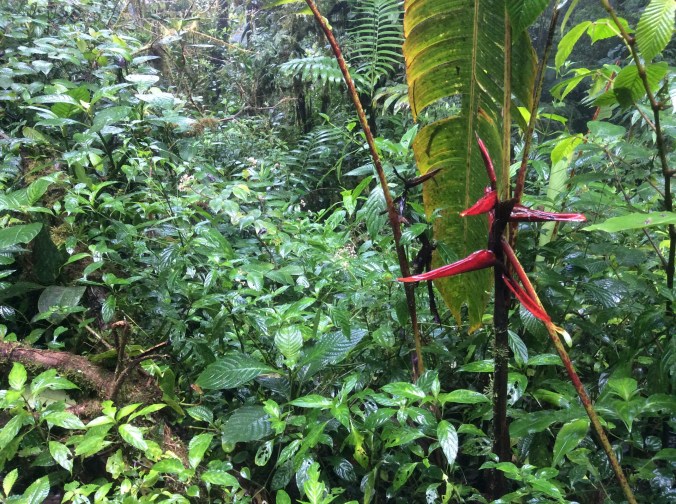
Lush does not even begin to describe the Cloud Forest, a huge reserve with numerous indigenous species of everything from hummingbirds to insects to all sort of plants that exist nowhere else on earth.

IMG_1923

Every tree, branch, every living things is covered with other living things.  This must be botanist heaven.

IMG_1924

IMG_1926

Looking up into the branches of a tree fern.  Yes, that is a fern. So much to see, it is hard to keep up with the guide, a native Quaker whose father was one of the founders of Monteverde.

IMG_1929

IMG_1927

It is difficult to know what photos to take; everything holds some kind of fascination and lots of beauty.

IMG_1931

Another tree fern right by the trail.

IMG_1934

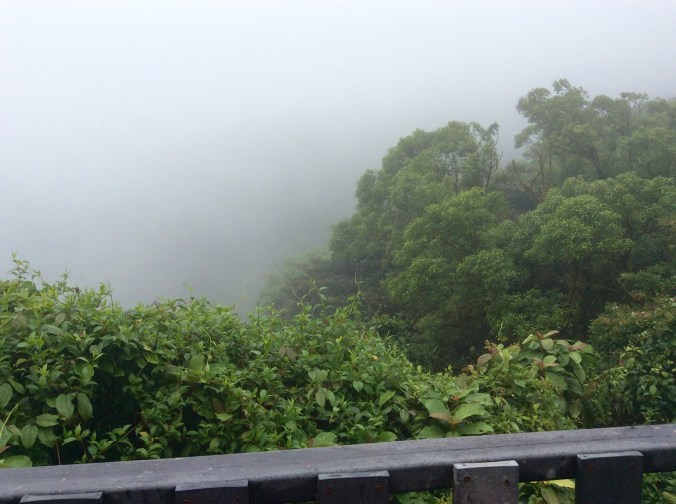
In the clouds at the Continental Divide it’s incredibly windy yet the clouds stay and you get wetter and wetter even though it is not raining.  Water dripped off my slicker, the trail oozed mud and water, it was hard to keep my footing on slopes.

IMG_1935

IMG_1936

On the way back we crossed several streams.  Everywhere in Costa Rica signs in both Spanish and English instruct people to save water.  They made me chuckle.  Streams run everywhere in much of the country, especially on the Caribbean side.  Here I live in a semi-arid environment where I see wasted water running down streets in town and in Costa Rica they conserve water and recycle things I did not even know were recyclable.  Hotels provide recycling bins and some even turn off lights automatically when you are not in the room.

IMG_1937

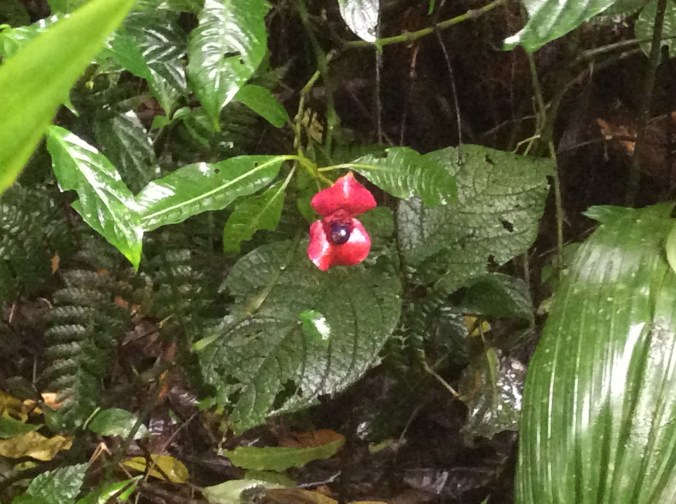
The name for this flower translates from Spanish as hot lips.

IMG_1938

This looks like a tree but it is not.  A giant, parasitic fig plant surrounded the tree, eventually killed it, and this is the result.

After we finished the hike, we walked over to a shop that feeds hummingbirds, hundreds of species of which live in Costa Rica, many only in the Cloud Forest. Took a video of them, but it refuses to upload here.  Some were incredibly iridescent and much larger than any I had ever previously seen.


My Ethiopian Adventure–On the Road to Lalibela, Part Two


My Ethiopian Adventure–On the Road to Lalibela, Part Two.

To continue my revisiting the Ethiopian trip from last July, I am reblogging this section, day two on the road to Lalibela.  This photo shows the interior of a small farmhouse we visited. Click the green title to see the rest of the photos.

A farm house near the road.

20 Reasons why Slovenia must be on your travel wishlist for 2015


20 Reasons why Slovenia must be on your travel wishlist for 2015.  I do not usually share a lot of posts, but this one from a blogging friend is a must share.  It includes such incredibly beautiful photos–for all of you out there who like travel.

My Ideal Audience


The fourth assignment in my newest experiment, Word Press’ Blogging 101 class, is to write a post for my ideal audience. My immediate reaction was, “There is no such person; I do not have an ideal audience.”  I might be able to come up with three or four persons, some of whom might like the recipes, others might enjoy the travel posts, and another group might react to comments on the environment, international politics, and sundry controversial topics.  Finally, a few, perhaps more, might relish the occasional poetry pieces.  After all, my haiku posts attained more readers than I ever expected.  The challenge then might be to write a post combining several of these but how?  Here we go on another adventure.

My idea reader would enjoy literature, especially the serious and more especially literature from other countries and cultures, like to eat hot foot from diverse cultures, travel to other places besides here and Europe, care about the environment, follow international politics, and, even though not previously mentioned, like horses, prefer the country to the city, and enjoy a wide variety of music.  Do such individuals exist?  Where are they and how do I find them?

Here is my first attempt at covering at least two of these topics:

Last summer, as former followers know, I traveled with friends to Ethiopia for three weeks via Dubai.  Because I love the stuff, I brought back an entire kilo of berbere.  Mine follows the special recipe of my Ethiopian friend’s mother.  She had it made special just so we could bring it home.  Actually there were three kilos in my bag but only one for me.  My new favorite salmon recipe involves the use of berbere.  Unlike some, hers is more rich and spicy rather than really hot.  This will serve one to two, just increase the amount of all the ingredients to suit the number of people you plan to feed.

1-2 portions wild sockeye salmon–you could use any type of course

4 medium to large brussel sprouts, coarsely chopped

1/2 purple onion chopped coarsely

Several broccoli florets

1/2 ripe bell pepper, seeded and chopped

Olive oil

Berbere

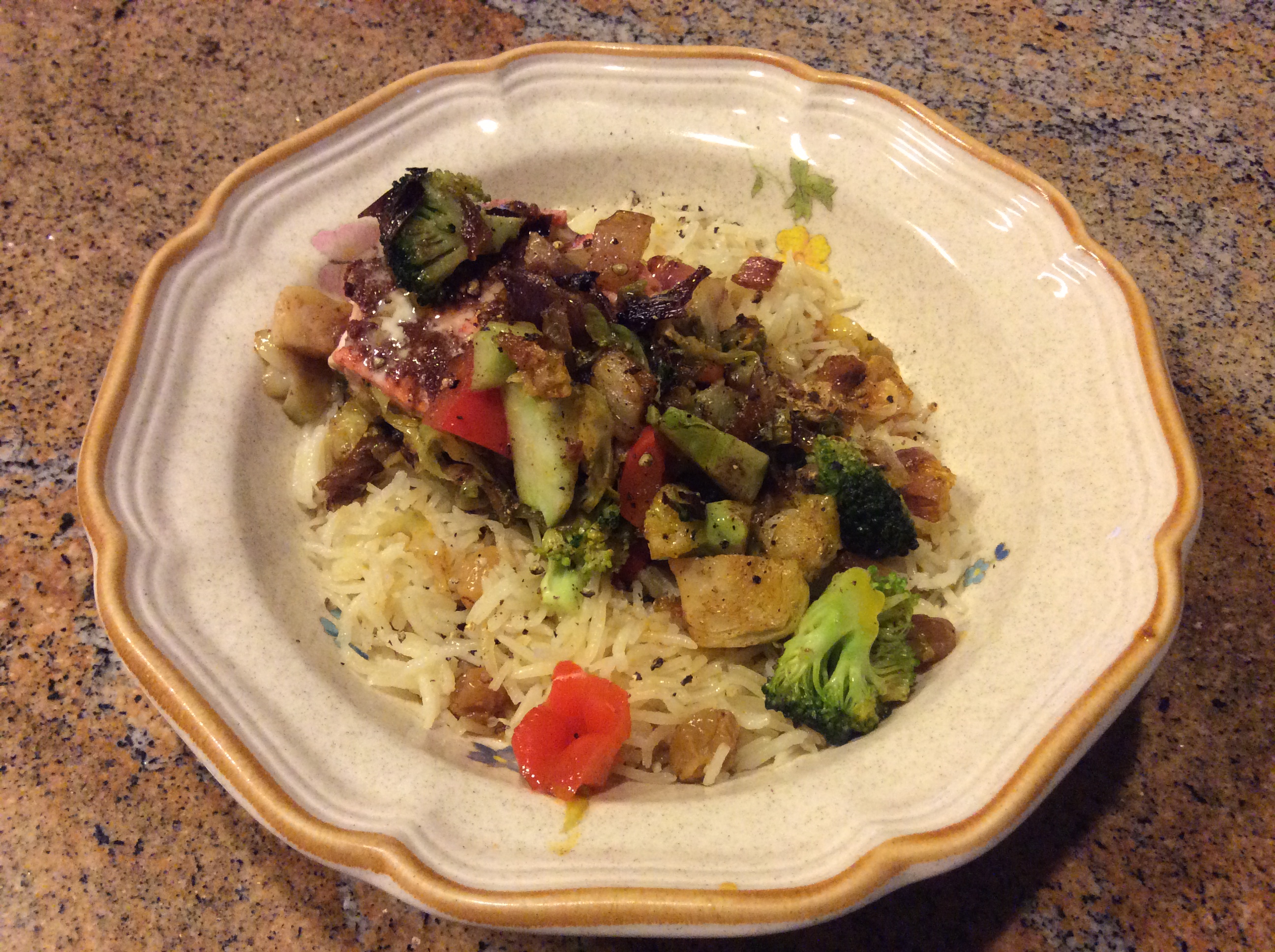
Cover the bottom of a skillet with olive oil.  Add onions and sauté until translucent.  Add the brussel sprouts and sauté until nearly tender.  Add the peppers and broccoli.  Sprinkle a light layer of berbere over all the vegetables as you cook them.  Stir occasionally.  Add the salmon, skin side down.  Sprinkle berbere over the salmon so the salmon is covered but only lightly.  You can add more to taste.  Continue cooking until the salmon flakes.

I serve this with rice.  The rice in the photo is basmati.  See previous posts for the special way I cook rice.  Sometimes I vary the vegetables using poblano peppers, carrots, Swiss chard–whatever I happen to have or feel like eating at the moment.  Pick what you like.

IMG_1430

This, honestly, is nothing like real Ethiopian food in part because I do not have teff and do not know how to make injera.  The photo below shows me and friends in a restaurant in Gonder, Ethiopia, in my idea of food heaven.

IMG_0757

My Ethiopian Adventure–from Addis to Kombolcha


Saying goodbye to Addis at 8 in the morning, we headed northeast and later north toward Kombolcha–spelling differs, depending on whose map you view.  The official Ethiopian map spells the town as Kombolch.  Addis is high, the second highest capital in the world.  We drove northeast all morning across rivers and through green fields.
IMG_0246

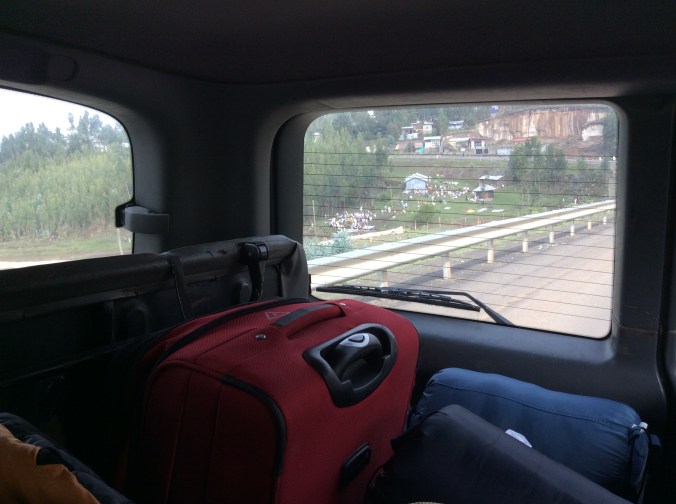
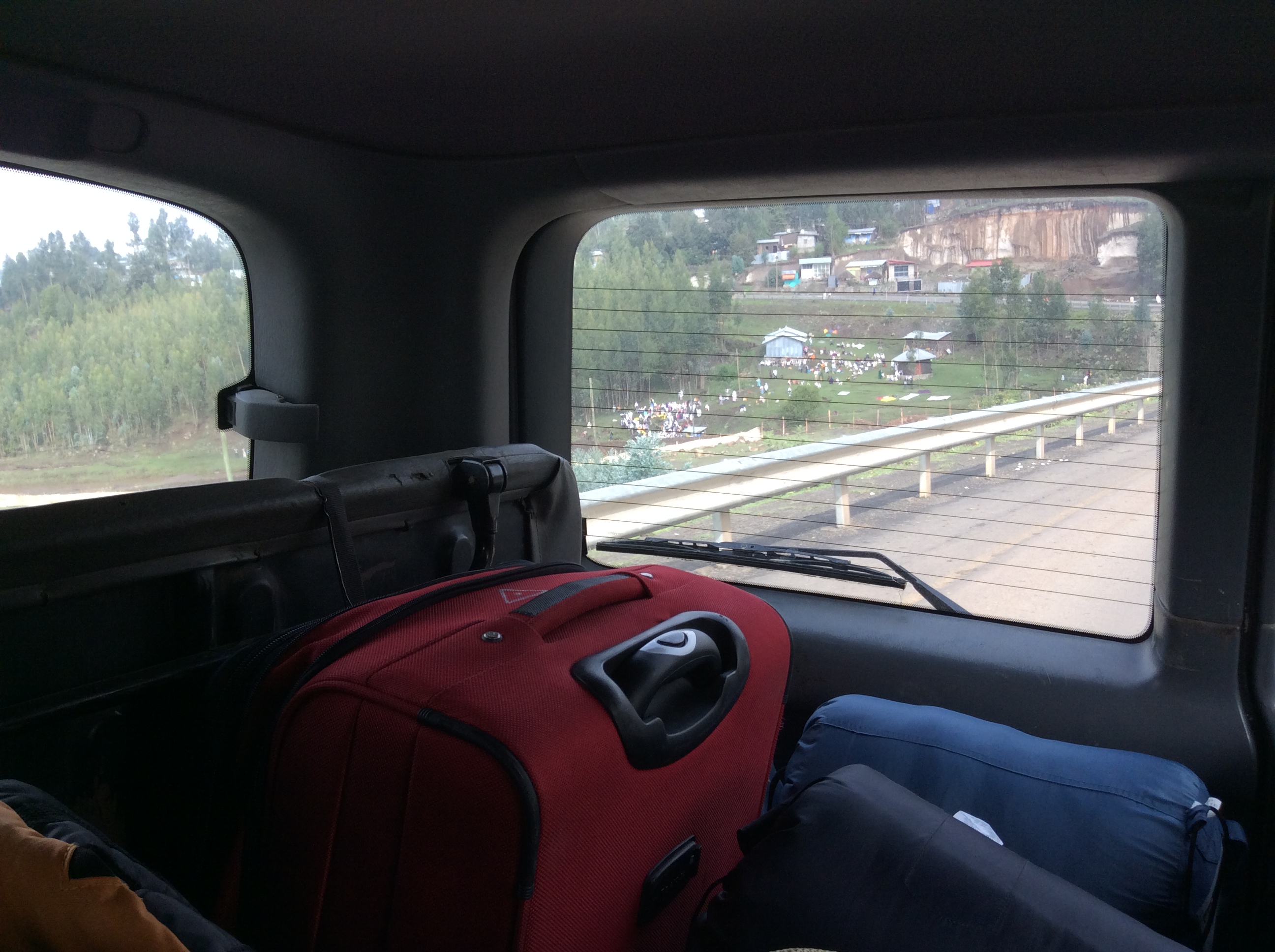
Not far outside Addis we saw this scene, a river with many people near it.  Our driver, Alemu explained this river contains holy, healing water and all those people you see through the window are pilgrims coming to be blessed by the resident priest and hopefully healed by the river waters.

IMG_0249

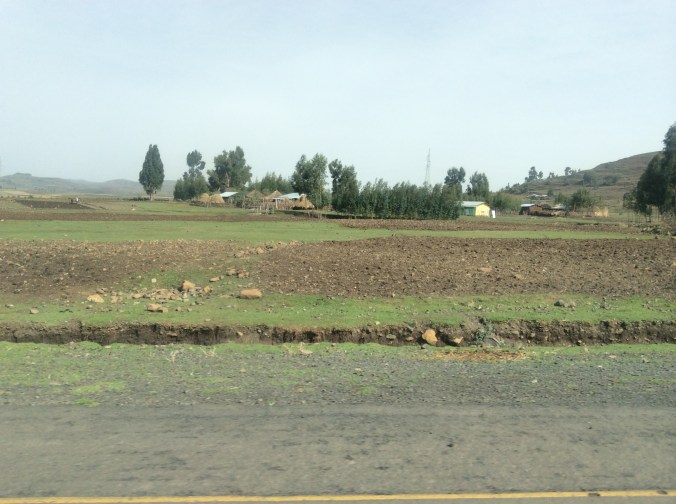
Who would know this is Ethiopia if no one told you? Not what I expected at all honestly.

IMG_0248

IMG_0250

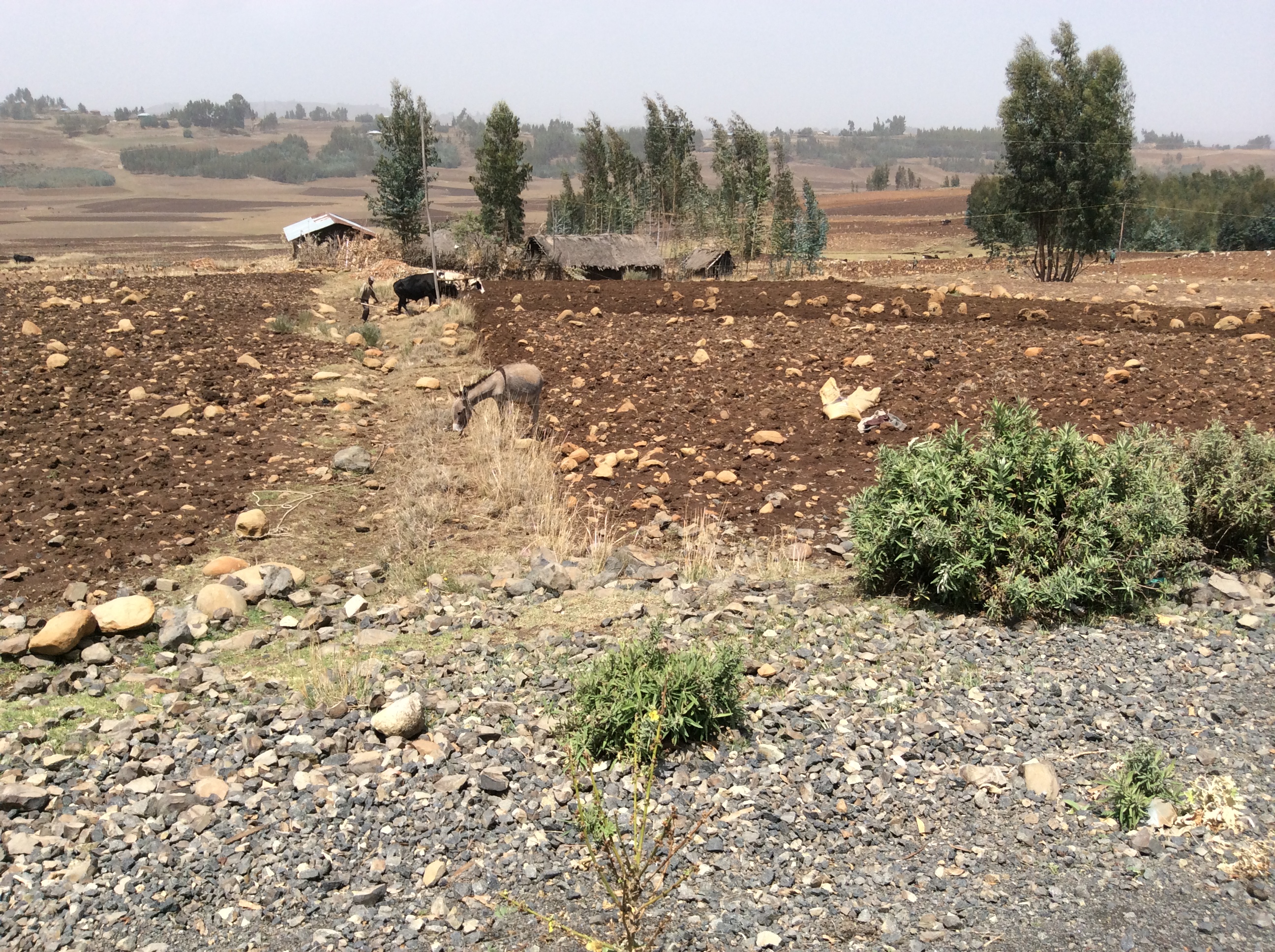
Most of the farmland is very rocky.  Farmers gather rocks, in some places make fences out of them or just pile them up.  Even with these efforts fields remain full of rocks.

IMG_0251

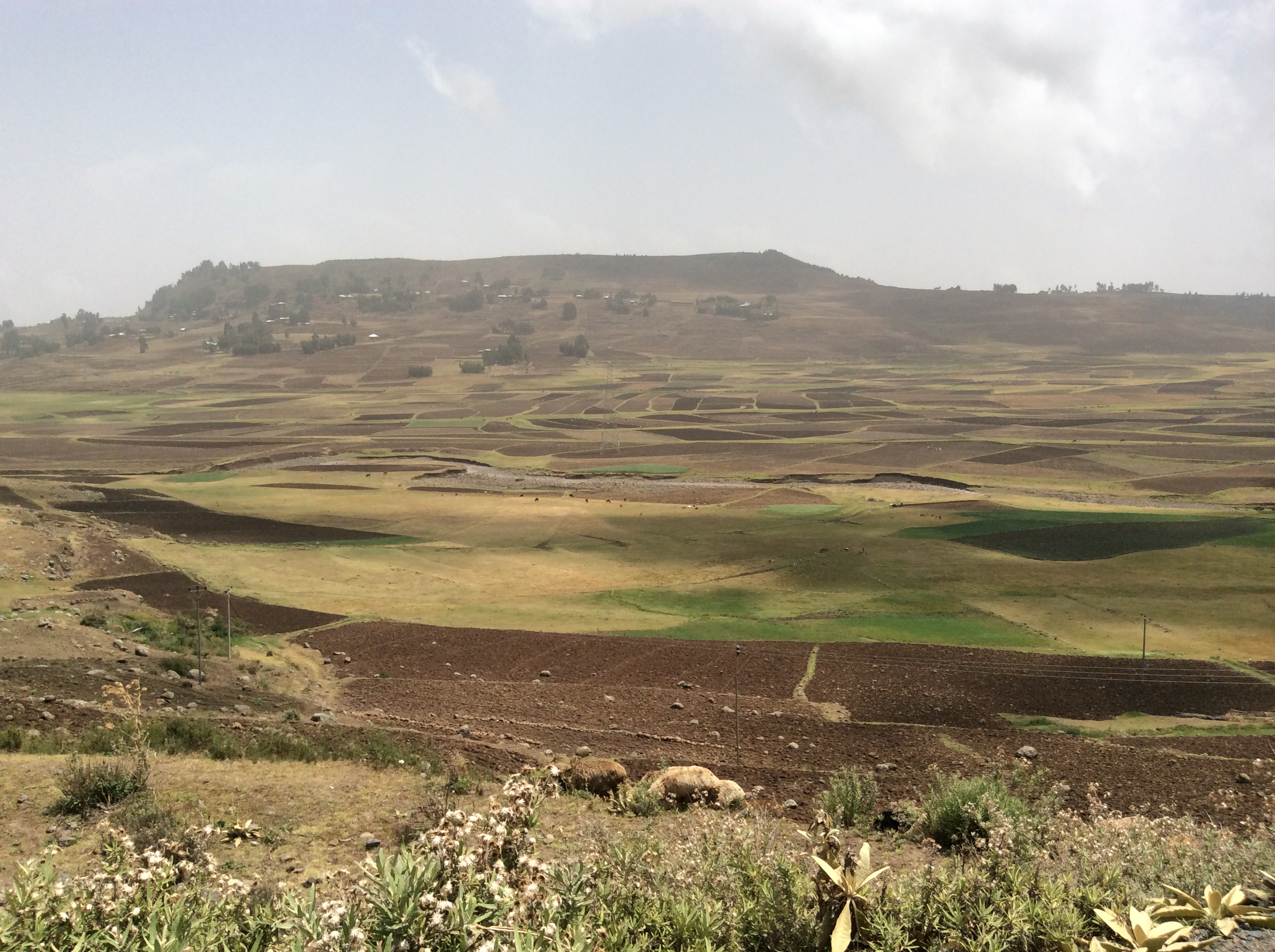
We drove for hours through this type of farmland.
IMG_0257

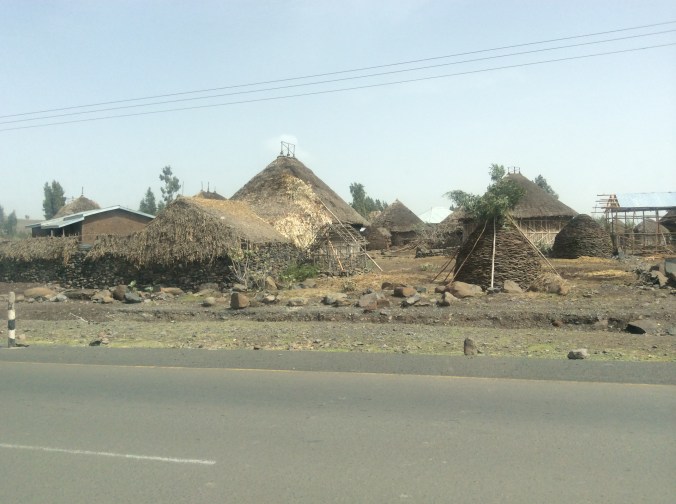
This is a typical country village which appeared off and on continuously along the highway.  Traditional buildings are usually round with thatched roofs.  More and more people have begun to use metal roofs which forces the building shape to rectangular rather than round.  We heard a story about a thatched roof house that caught on fire.  Nothing but the thatch burned because underneath the thatch was a meter of mud.

IMG_0258

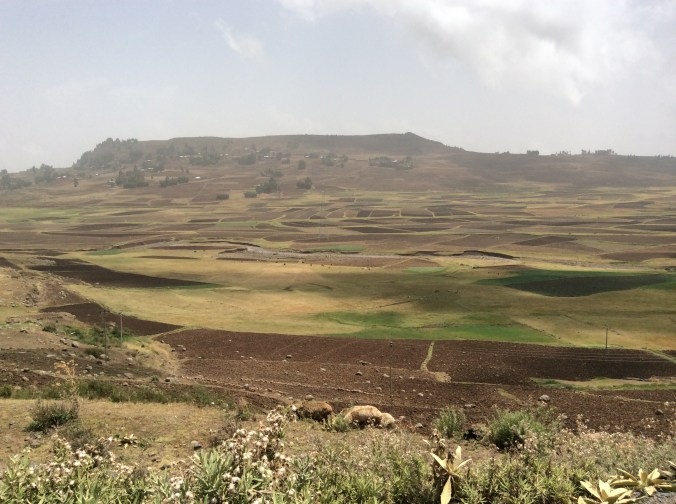
Most Ethiopian farming is done the old way:  either horses or cattle pull the plow with a man guiding it usually through a lot of rocks.  I commented about seeing no tractors so then every time we saw one everyone shouted, “Juliana, there’s a tractor.”  I think I saw only five of them in ten days and only one was actually working in a field.  It became obvious rather quickly how totally impractical a tractor and its equipment would be in much of the farmland:  too many rocks and as you will soon see, too steep.  The tractor would fall over.
IMG_0261

Eventually we started climbing higher and higher.  To the left was one of Ethiopia’s high peaks near or over 4000 meters–13 to 14 thousand feet.

IMG_0262

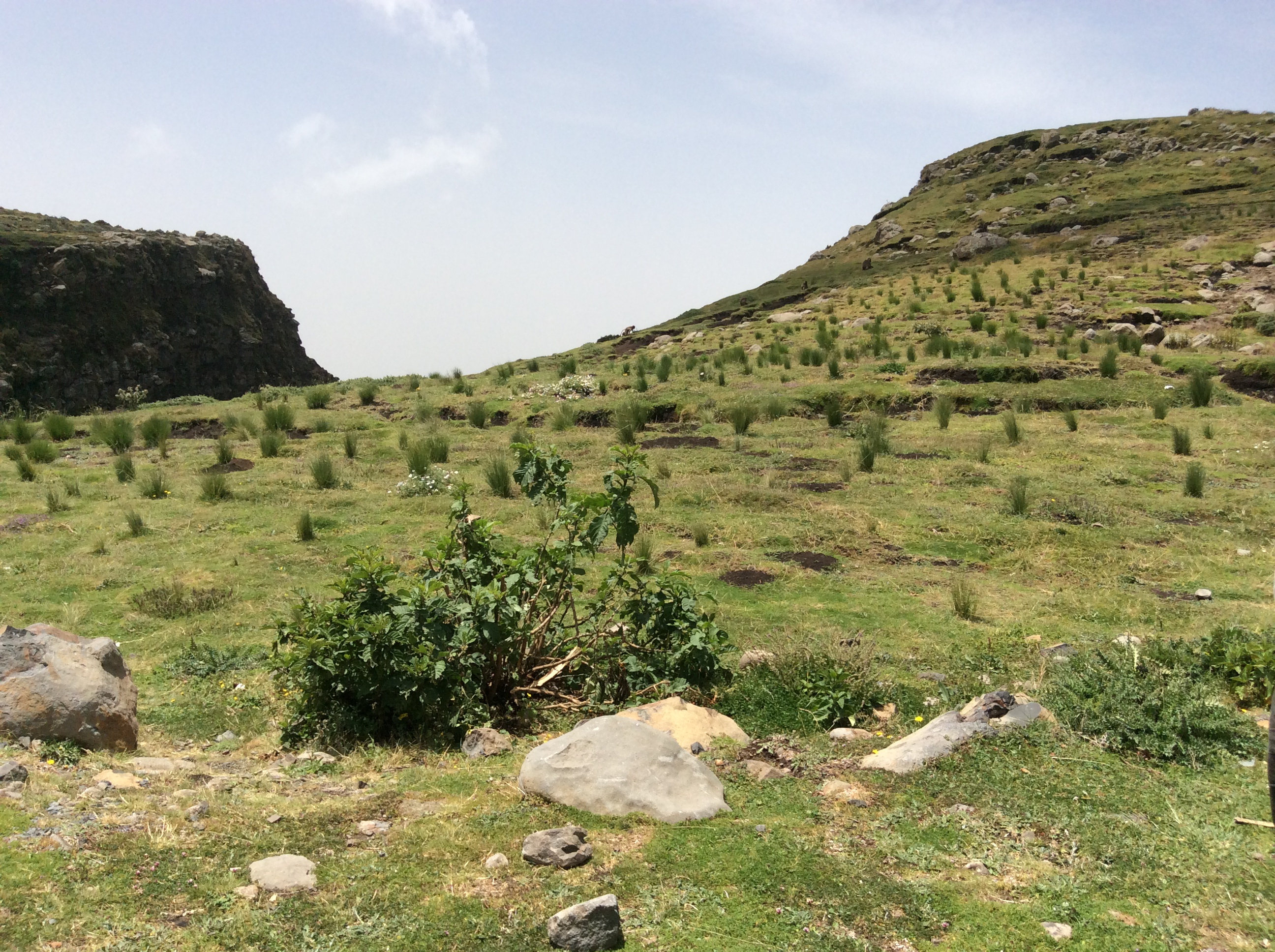
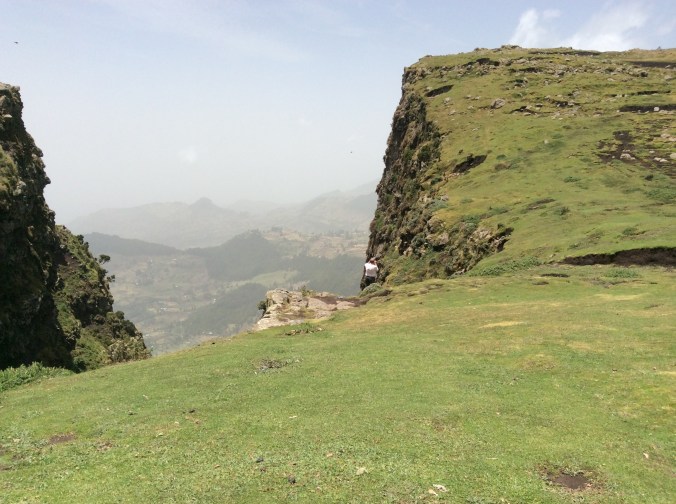
And then, there it was, Menelik’s Window.  This was the first area we saw with numerous gelada baboons.  However, these ran away unlike the ones later in Simien National Park.
IMG_0266

That’s Dino down on the edge.  At this point in the trip, I was still quite horrified by all the steep cliffs and stayed way back.  He was trying to get a good photo of the baboons.  Menelik II, the last Ethiopia leader to be able to claim himself as a direct male descendant of King Solomon, found this place special, a view into the real Ethiopia across miles of mountains. He is known for defeating the Italian invaders, expanding the kingdom, and especially for modernizing Ethiopia.
IMG_0267

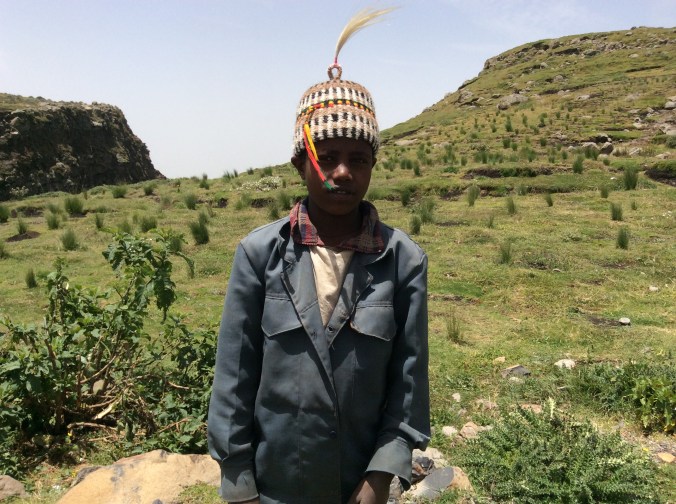
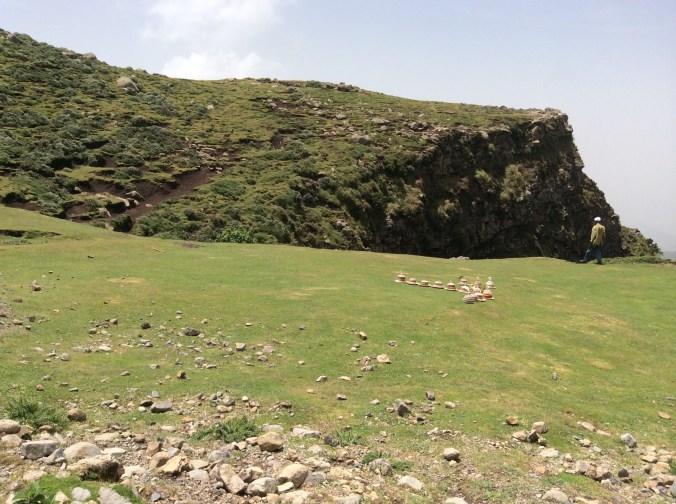
My grandson now owns this hat.  This boy and his friends spend their days chasing the baboons away from the tufts of grass, which their families use to make the thatched roofs, and making hats for sale.
IMG_0264

You can see the selection of different styles of hats on display on the grass.  On the mountainside in the back lots of herbs grew, including thyme.  The boys also sold packets of herbs they had gathered and dried.
IMG_0268

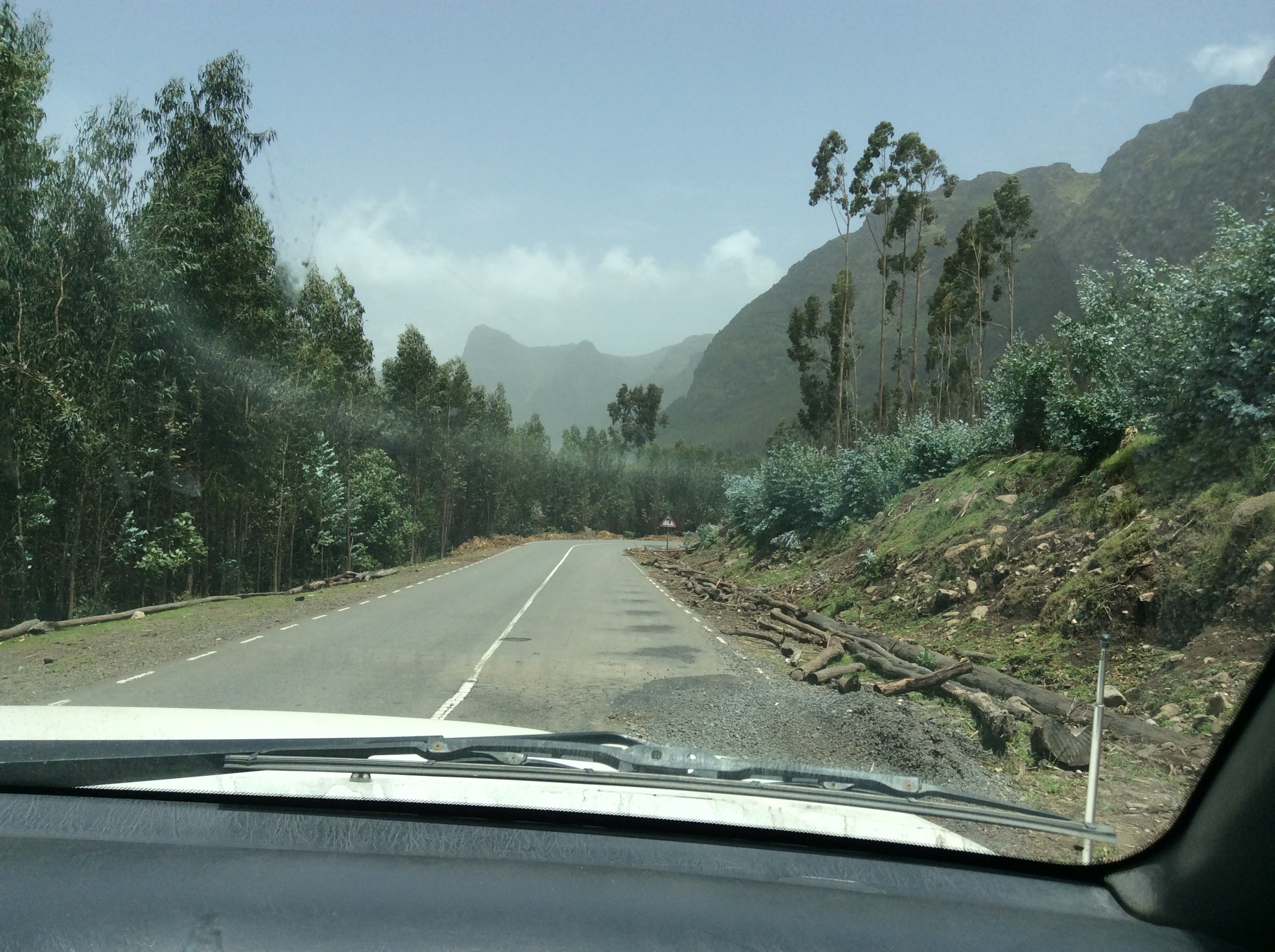
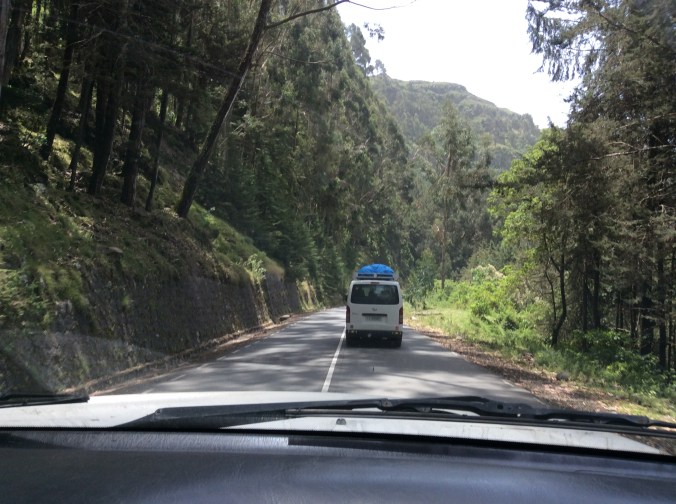
We dropped down on a winding mountain road through eucalyptus forests.  Eucalyptus is not native to Ethiopia, but grows everywhere there.  It is used as a basic material for building their houses, for scaffolding to build tall city buildings, for just about everything.  Several different species grew along the road.

IMG_0271

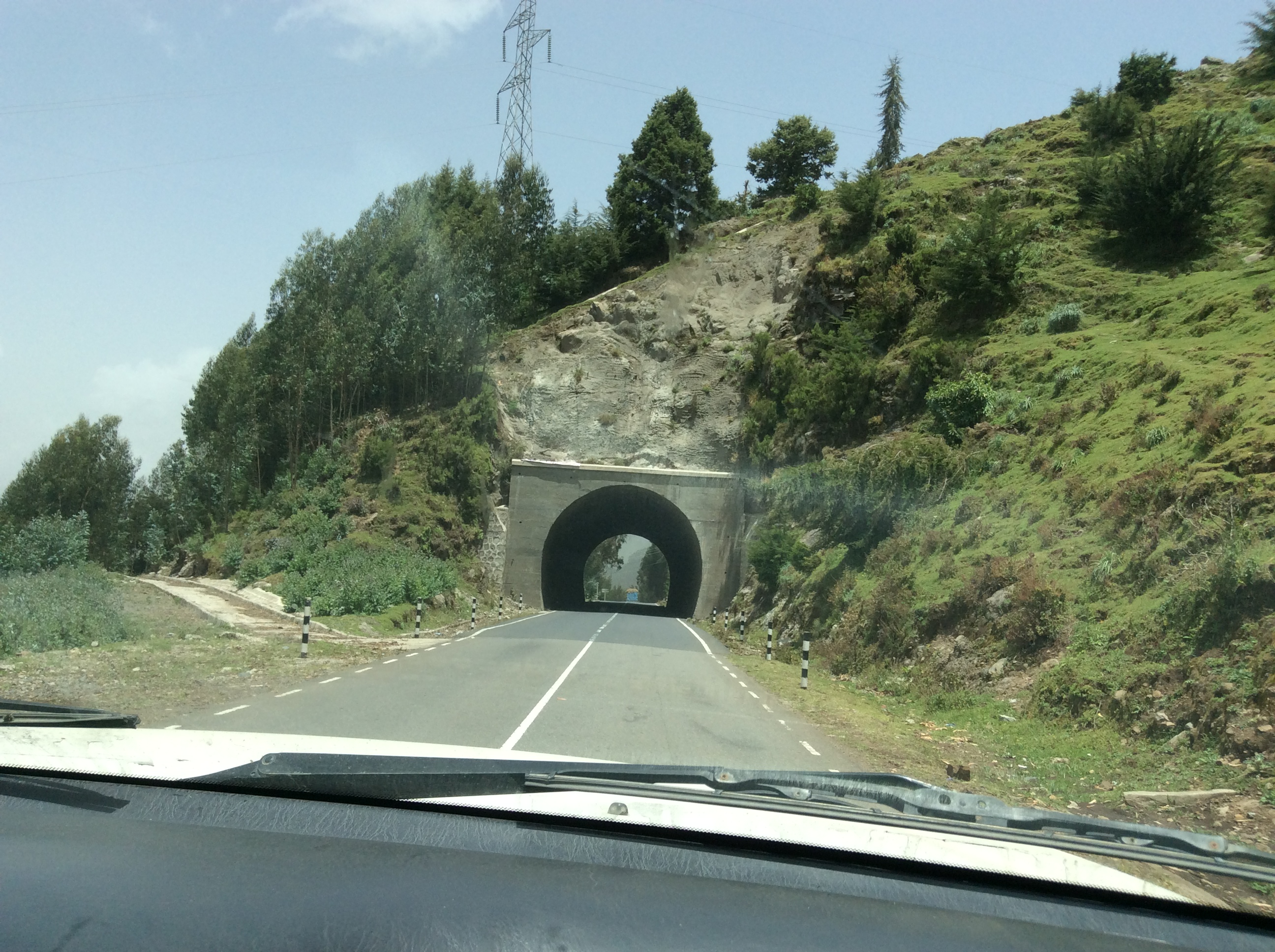
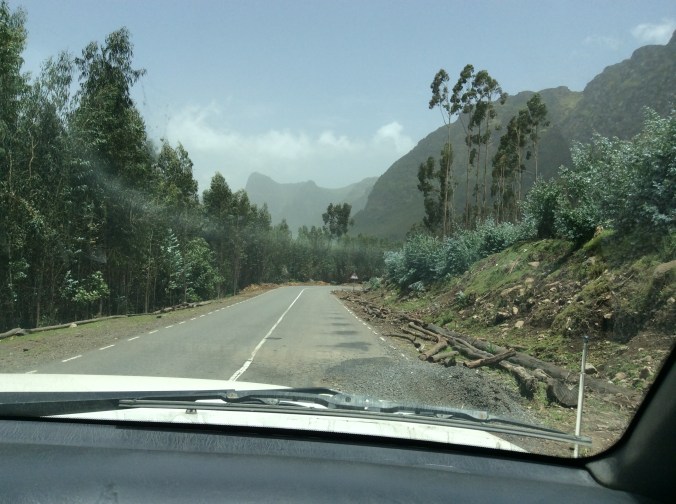
Ethiopia’s main highways are excellent.  Many were built years ago by the Italians, more recent ones by the Chinese.  Ethiopians make jokes about how long the Chinese roads might last.
IMG_0272

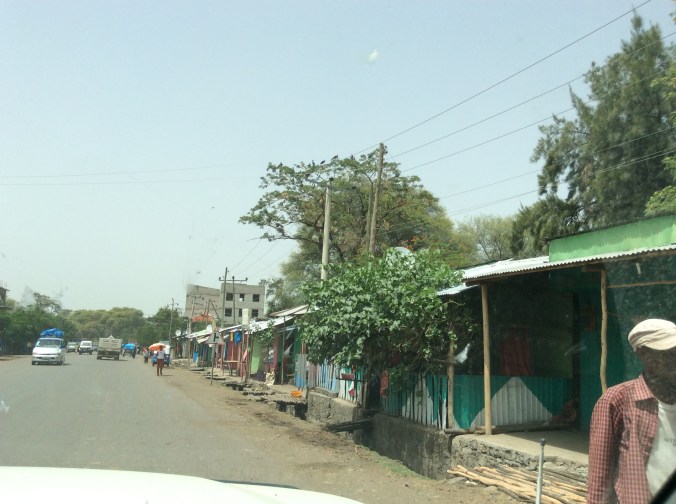
Eventually, we dropped down out of the mountains into an area that was much drier.
IMG_0276

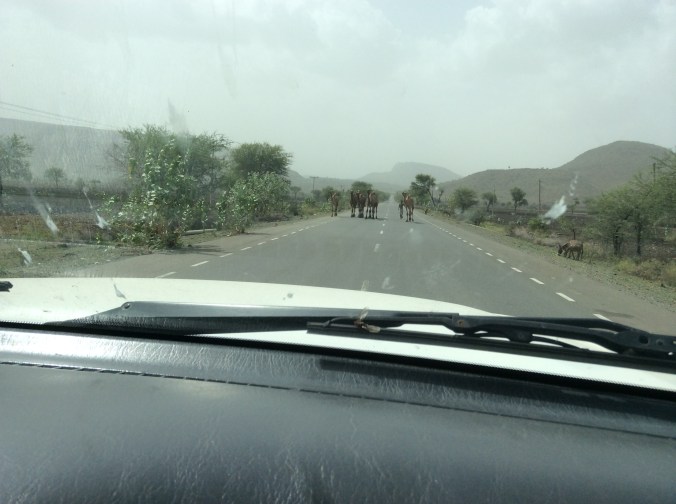
A typical town with all sorts of shops right along the road.  When driving in Ethiopia, dodging people, cattle, camels, horses, burros, and goats is the norm. Everything it seems likes these good roads.
IMG_0279

A boy driving camels down the highway.  Loose animals, like the burro on the right, roam seemingly unattended.  I saw few fences.

IMG_0280

In the small towns in this semi arid area, we saw several totally veiled women, faces covered totally except for their eyes.  Alemu informed us that this was a new thing, not seen until the last few years.  He seemed to think it had become fashionable to copy Saudi women.
IMG_0281

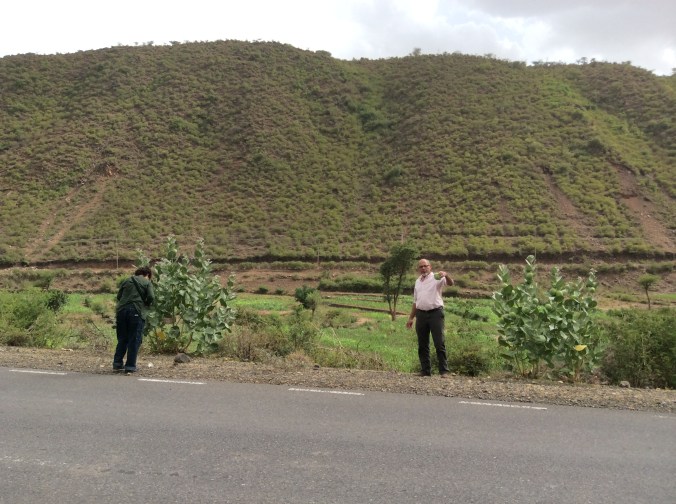
We stopped to look at certain plants beside the road.

IMG_0282

Dino recalled playing with these pretty green balls as a child with this forewarning,  “Do not eat them, do not touch your eyes or you will go blind.”  They are called the Apples of Sodom.

IMG_0284

At this juncture near the beginning of this adventure, I had not yet realized how everything in Ethiopia possesses symbolic meaning.

IMG_0285

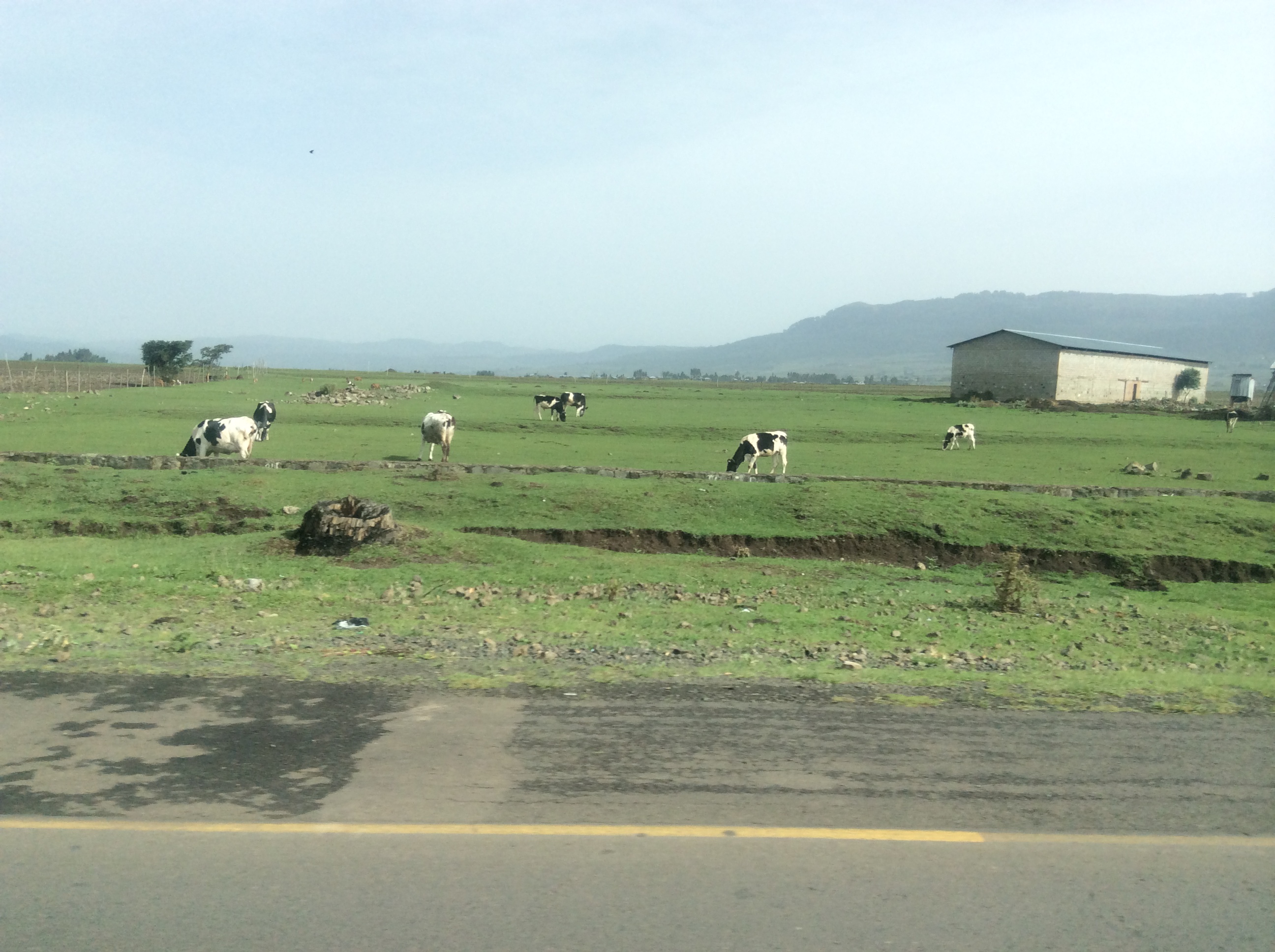
We drove along this immense, lush valley for miles.  Alemu said this huge herd of cattle belonged to a semi nomadic group who brought their cattle here during the rainy season to graze and fatten.  A bit farther down the road the land belonged to one of the richest men in Ethiopia, indeed the world, Al Amoudi.  It was the only place where I saw a tractor actually used in a field.

IMG_0288

Arriving in Kombolcha, we saw this new college in the process of creation.  This became a common sight–new buildings, new schools, construction everywhere.

IMG_0289

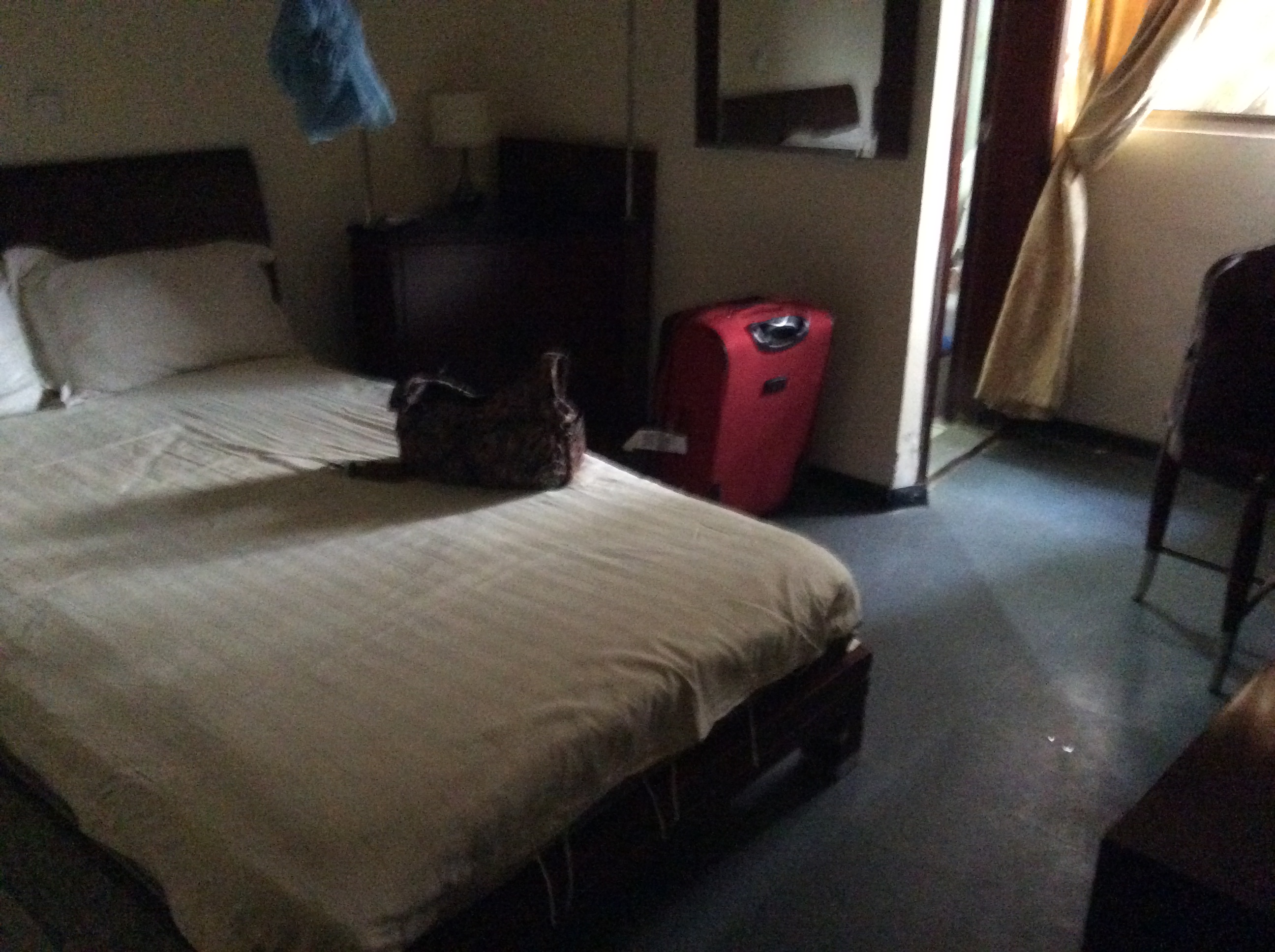
My first hotel room in Ethiopia at the Sunny Side Hotel in Kombolcha complete with mosquito netting–the blue blob above the bed.  At least it had a shower and toilet.  Many places use the style of accommodations one finds in a lot of Asia.  Forget toilets as you know them–just a tiled area with a hole in the ground and the ever present water with which to wash.  We carried our own toilet paper just in case.  However, many places had both so customers could choose.
Ethiopia–1


I landed here five days ago.  What an amazing country–so ancient and so modern simultaneously.  In two days we drove from Addisimage image Lalibela, the place where 12 churches were hewn out of solid basalt centuries ago.  After climbing up and down step cliffs to enter the churches today, I feel exhausted so will post a variety of photos.  My ultimate plan is to provide details of the trip when I return to the US.

imageimageimageimage

image

Wine tasting and book signing


This day has been so full of events and planning that I almost forgot to blog.  First, I made a quick trip to town to accomplish some necessary tasks before my big trip to Ethiopia starts in two weeks.  In fact, two weeks from this moment I will be on Emirate Airlines flying for 14 hours and 45 minutes to Dubai.  With a long layover there, we get a hotel room and a tour.  Then on to Ethiopia for two and one half weeks.  Since only wifi is available there and only in a few places, you will hear from me but not all that often.

I bought an iPAD mini to take photos (in addition to a camera) and keep a log of my daily adventures–maybe I will turn it into some sort of small travel book or my friends with whom I am going and I will make a book.  When I returned home, I tried to figure out some things on the mini myself, but alas, it is not the same at all as this iMAC.  Finally, I gave up and called my ten year old grandson (he has a mini).  Of course, he knew exactly what to do and walked me through everything.

About that time the wine guy at Market Street showed up with this huge cooker–it is really large, bigger than my Mini Cooper.  Tomorrow night they will have a wine tasting at my house, but with a different twist.  Market Street is providing the food:  hamburgers, hotdogs, brats, and all the trimmings.  My garage has boxes of buns, chips, and I am not sure what all stacked up.  In  my great room boxes containing 100 wine glasses are stacked.   The guests are supposed to bring their favorite bottle of wine to share.  I have told several friends to not bother because I have about five bottles of white wine I want to get rid of–I am not a white wine drinker.  We expect approximately 100 they told me.  They predict thunderstorms.  I am hoping the storms, if they come, hold off of until late.  Here on the canyon edge storms provide incredible drama including waterfalls.  And mud.

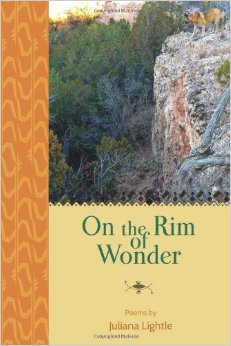
While in town, I stopped by Hastings, a chain that sells books, movies, CDs, that sort of thing.  This Saturday, the 21st at 3, they are hosting a book signing for me for my new book On the Rim of Wonder.  We have everything all set and ready to go.  They already have fliers posted, gave me one to display during the wine tasting and said I could bring chocolate brownies to share with buyers.  Yesterday, I was in a minor panic because they had spelled my name incorrectly on the flier.  Kudos to Crystal at Hastings, she got it fixed quickly.

Now I am going to vacuum even if it is ten at night.


51yW0RGMMvL._SY344_BO1,204,203,200_

Volunteering at Palo Duro Canyon


424908_2650517636082_1731467384_n

In front of the Visitor’s Center with Eduardo and Gaston, exchange students who lived with me several years ago.


Occasionally, I volunteer in the gift shop at Palo Duro Canyon, the second largest canyon in the United States.  If  individuals drove through Amarillo on I-40 through the endless flat prairie land and never ventured far, they would not even be able to dream up this canyon only twenty miles away.  To get there, you have to drive through more flat land, covered in wheat pasture, corn, milo, and the few remaining pastures of native grass.  You can see for miles; you can even see the taller buildings in Amarillo which are not all that tall.  Then, unexpectedly the land opens up, cliffs appear.  The first time you see it, you feel astonishment.  Nothing you see on the way there prepares you.  Years ago Battelle Memorial Institute sent me on a business trip to Amarillo.  People told me I should go see the big canyon.  I laughed to myself, thinking they must be just talking about a large arroyo.  When I finally did drive down, my mouth gaped in shock.  How could this be?

Palo Duro Canyon is still being created by water erosion.  The Prairie Dog Town Fork of the Red River (no I did not make this name up) runs through it.  Barely a running stream now with the drought, when a big summer thunderstorm blasts it fury, this river can rise ten feet almost immediately.  When it does this, campers remain stranded inside the park until the river calms down because to get into the park, depending how far in you go,  you have to literally cross the river repeatedly.  Because of this, they have decided to build bridges across the five water crossings.  Some of us who love driving through the water find this innovation unacceptable.

Today, I volunteered from 1-5.  People came in from Indiana, Minnesota, Ecuador, south Florida–on a trip to Californian and back, Ohio, Germany–a young woman working as a nanny here.  Usually, I meet even more people from other countries, especially European countries.  When I ask the Germans in particular how they know about this place, they tell me Palo Duro Canyon and its history is featured on the Internet there.  Here come all these people from far away and I have students who live a mere 25 miles away and have never seen it.  The family from Indiana came because their daughter wants to attend West Texas A & M University in Canyon, Texas–named after the canyon of course.  She told me she wants to bring her horse and WT is one of the few universities in the country where you can major in agriculture and participate in an extensive horse program.  She exuded excitement and enthusiasm.
In the midst of chatting with all these visitors, I noticed the unusual behavior of one woman in particular.  She had medium grey hair pulled back in a ponytail with hair a lighter shade of grey framing her face. All her clothes were dark grey.  She walked to the book area–we sell a lot of books, and started flipping slowly through several of them.  She picked them up as if they were delicate flowers or fragile glass.  She held them as if she thought they might break if she held them tight.  When she put one up to look at another, it appeared as if she barely touched them.   She never smiled, just looked and looked and looked.  She did not buy a book.