Book 33 for 2025: “Landscapes”, Christine Lai


The novel fascinated me in so many ways, the style of writing, the subject matter, what I learned about some famous paintings and especially Turner. I will never see works by Turner in the same way as I previously did. Before mostly I noticed the colors, the translucence. I totally missed the details and the violence nearly hidden.

The novel takes place after an ecological collapse in England where first violent floods occurred followed by a devastating drought. Now it has not rained in three years and Penelope, the main character, spends most of her time working as an archivist for the notable collection at a soon to be demolished estate in the English countryside. She has lived here for two decades with her current partner, Aidan, who owns the estate. The disasters have nearly destroyed the once magnificent mansion. Now Penelope and Aidan allow refugees from the disasters to live there with them as they transition to new places and housing until the new buyers demolish the place.

Most of the novel is Penelope’s diary, what she writes about her life present and past. In the midst of this her archivist notes appear as well as descriptions of famous paintings, most of which show women being brutalized in one way or another, e.g. The Abduction of the Sabine Women, 1633-34, Nicholas Poussin. Later in the novel there are segments from the viewpoint of Aidan’s brother, Julian, who previously owned the estate and with whom Penelope experienced a violent and disastrous relationship.

This is a tale of survival, redemption, memory, and art as a means of renewal. I liked this novel so much that I spent time looking up the art the protagonist describes, researching Turner, writing down passages, etc.

Book Three for 2025: “”A Psalm for the Wild-Built”, Becky Chambers


This book is part of a group read at the church where I sing. Classified as science fiction because it occurs in a society on the moon of a different planet far into the future, it is the cheeriest science fiction I have ever read. One of the main characters, Sibling Dex, is a tea monk who travels from town to town, village to village, dispensing the right herbal tea and “advice” to the people who come to see him. He becomes frustrated and bored with this life and decides to head out into the countryside, out into the untouched nature where all the old roads are overgrown or now non-existent.

Due to past experiences, these humans have freed all the robots after they became sentient, and they have an agreement as to where each lives. In addition, humans have decided to live very differently, leave a lot of nature to nature and so live only in certain areas, in bigger towns and small villages with some nature here and there, but most of nature is now untouched and left to do whatever nature does.

Dex heads out in his tea house wagon which he pedals to generate electricity. It is self containing and he has everything he needs for at least two weeks. At one campsite not too far into the wilderness, a robot named Mosscap appears. Mosscap has volunteered to go into human territory per the ancient agreement between humans and robots and learn about humans. Dex finds this a mixture of frightening, intriguing, and confusing. Yet he agrees to allow Mosscap to accompany him on his adventure. The rest of the book is about what they discover, what they learn from each other, and the future they plan.

Prophetic Passages from Octavia Butler


In my last blog post about reading, I promised to address the prophecies of Octavia Butler in my next post. The best way is to quote some passages from Parable of the Talents which was published in 1998. This book is the sequel to Parable of the Sowers. In that book the main character creates a new religion with CHANGE as a major focus. In fact, one of the main tenants of that religion forms the words on Octavia Butler’s tombstone which I quoted in an earlier post. Here are some passages from Parable of the Talents:

I couldn’t help wondering, though, whether these people with their crosses, had some connection with my current least favorite presidential candidate, Texas Senator Andrew Steele Jarrett. It sounds like the sort of thing his people might do—a revival of some nasty out of the past….So now we have another group that uses crosses and slaughters people. Jarrett’s people could be behind it. He insists on being a throwback to some earlier ‘simpler’ time. Now does not suit him. Religious tolerance does not suit him. He wants to take us back to some magical time when everyone believed in the same God, worshipped Him in the same way, and understood that their safety in the universe depended on completing the same religious rituals and stomping anyone who is different.

Jarrett’s supporters have been known to burn people at the stake for being witches….a Moslem, a Jew, a Hindu, a Buddhist, or in some parts of the country, a Mormon, a Jehovah’s Witness, or even a Catholic. A witch may also be an atheist or an eccentric…anyone who does not fit into Jarrett’s version of Christianity. He condemns the burnings but in very mild language.

He has a simple answer: ‘Join us! Our doors are open to every nationality, every race.! Leave your sinful past behind, and become one of us. Help us make American great again.”

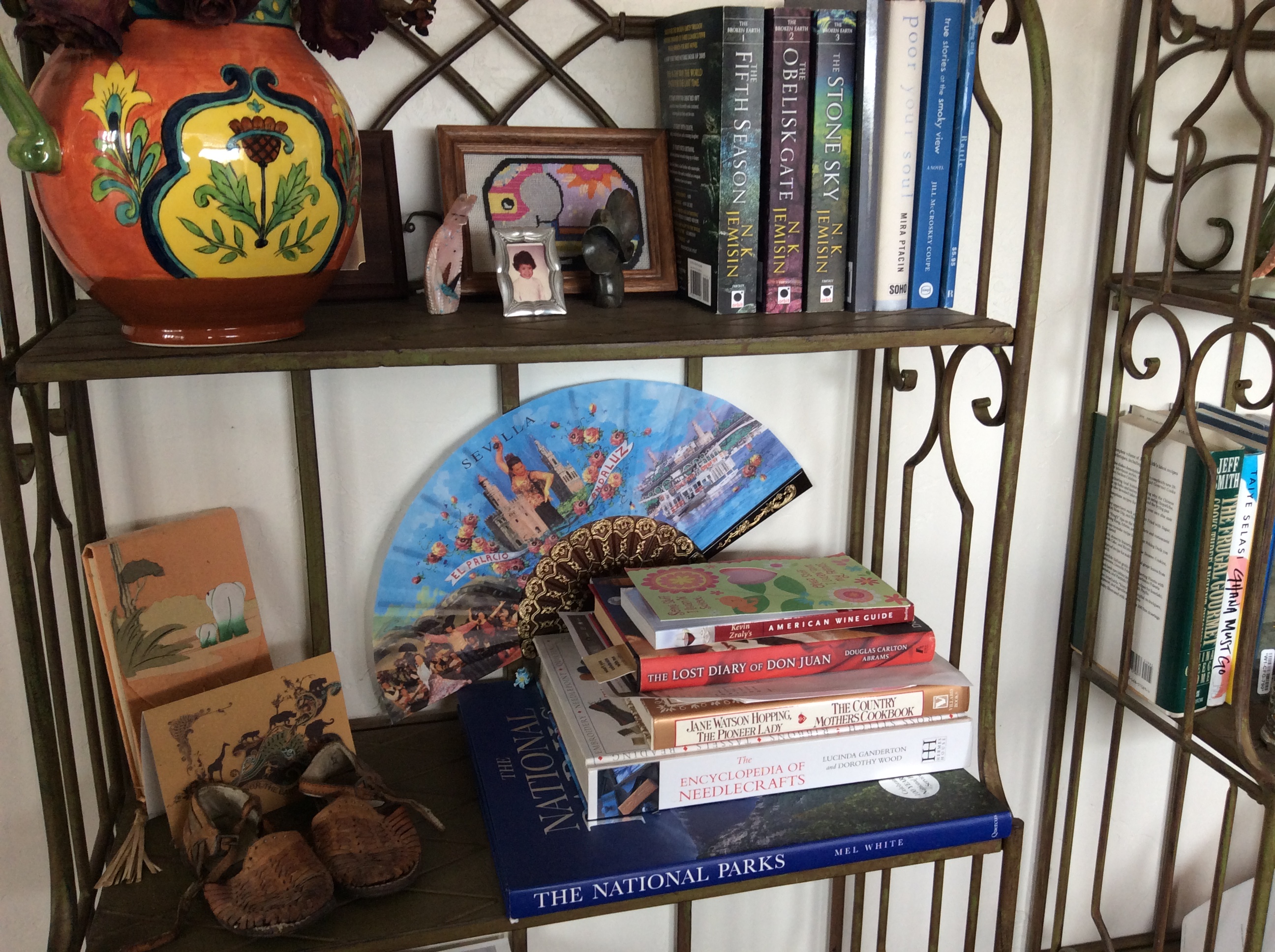
Note: If you are interested in Octavia Butler books, the stack at the right bottom of the photo are mostly her books. Some are series and need to be read in a certain order.

One Book a Week-1


After finishing Tolstoy and the Purple Chair, by Nina Sankovitch, who sets out to read a book each day for a year in order to alleviate her grief over her sister’s death, I decided to commit to reading a minimum of one book a week for a year. As of today, I have already read three, the first of which was The Sea of Tranquility by Emily St. John Mandel. Previously I had read my last Octavia Butler novel, Parable of the Talents in which the main character creates a religion with the ultimate goal of establishing human colonies in “the stars”. Then I discover that the title of The Sea of Tranquility refers to a specific area of the Moon where in this book there are two human colonies. Additionally, there are other colonies, the Far Colonies. Their specific location is never cited.

What is the likelihood that I would pick up a book at the library where the goal of the main character in the last book I read is fulfilled in the second book? Coincidence? Serendipity?

And, by the way, a pandemic occurs in both novels. Butler’s book, written in the 1990s, contains a number of prophetic statements and events which sound like today’s news. More about that in the next post.

Reading Octavia Butler-1


In a recent post I mentioned walking in her footsteps. This is the rainy season so we have not been able to go on that walk yet.. However, this morning I finished reading the last novel of hers that I had not read–Parable of the Talents. It is the sequel to Parable of the Sower. Now I have read all of them. She is buried at Mountain View Cemetery in Altadena, CA, Eagles View Lot 4517. The inscription on her gravestone is the theme of both the books above:

All that you touch You Change.

All that you Change Changes you.

The only lasting truth is Change.

God

Is Change.

Octavia Butler’s Pasadena–Part One


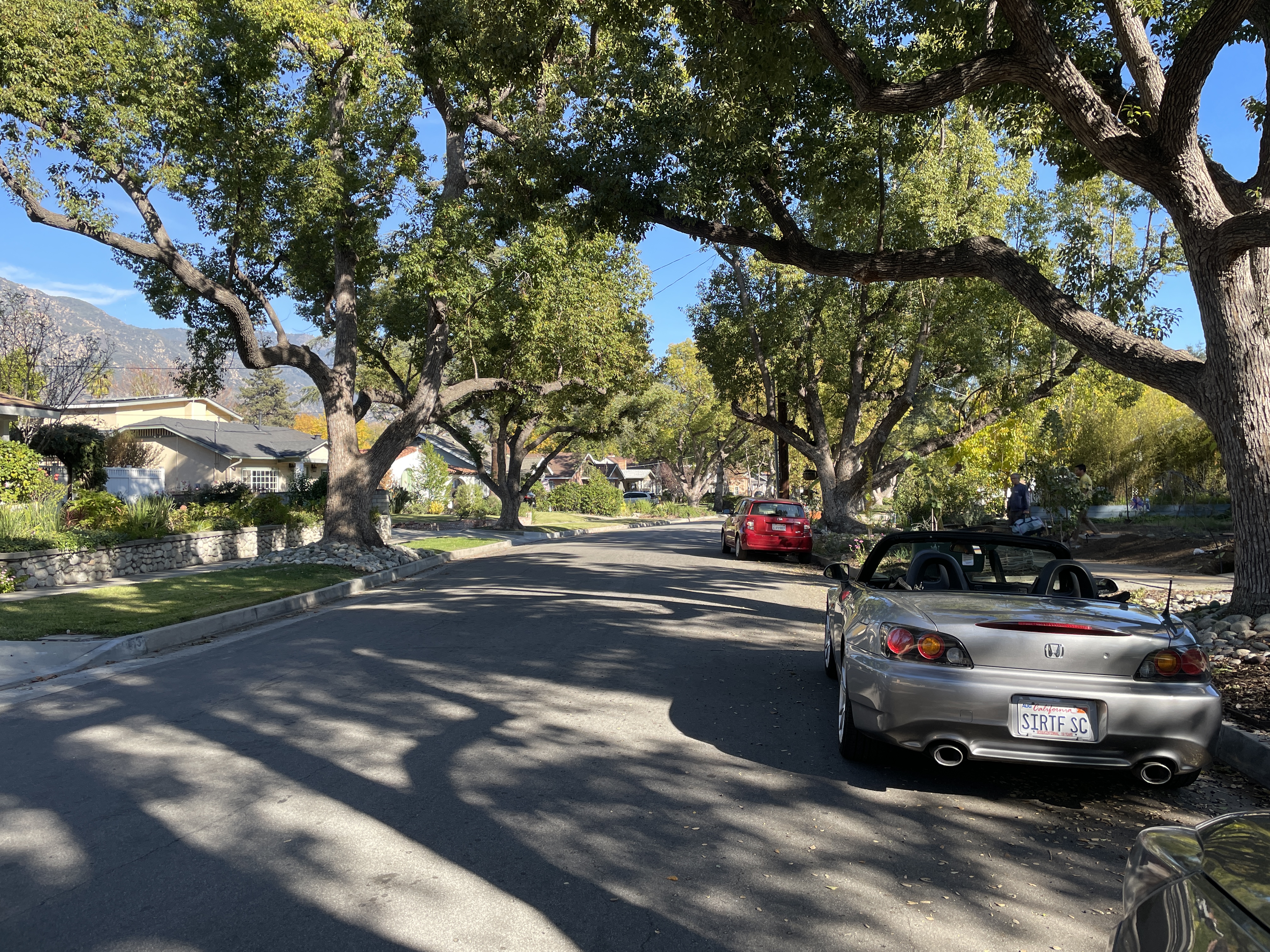
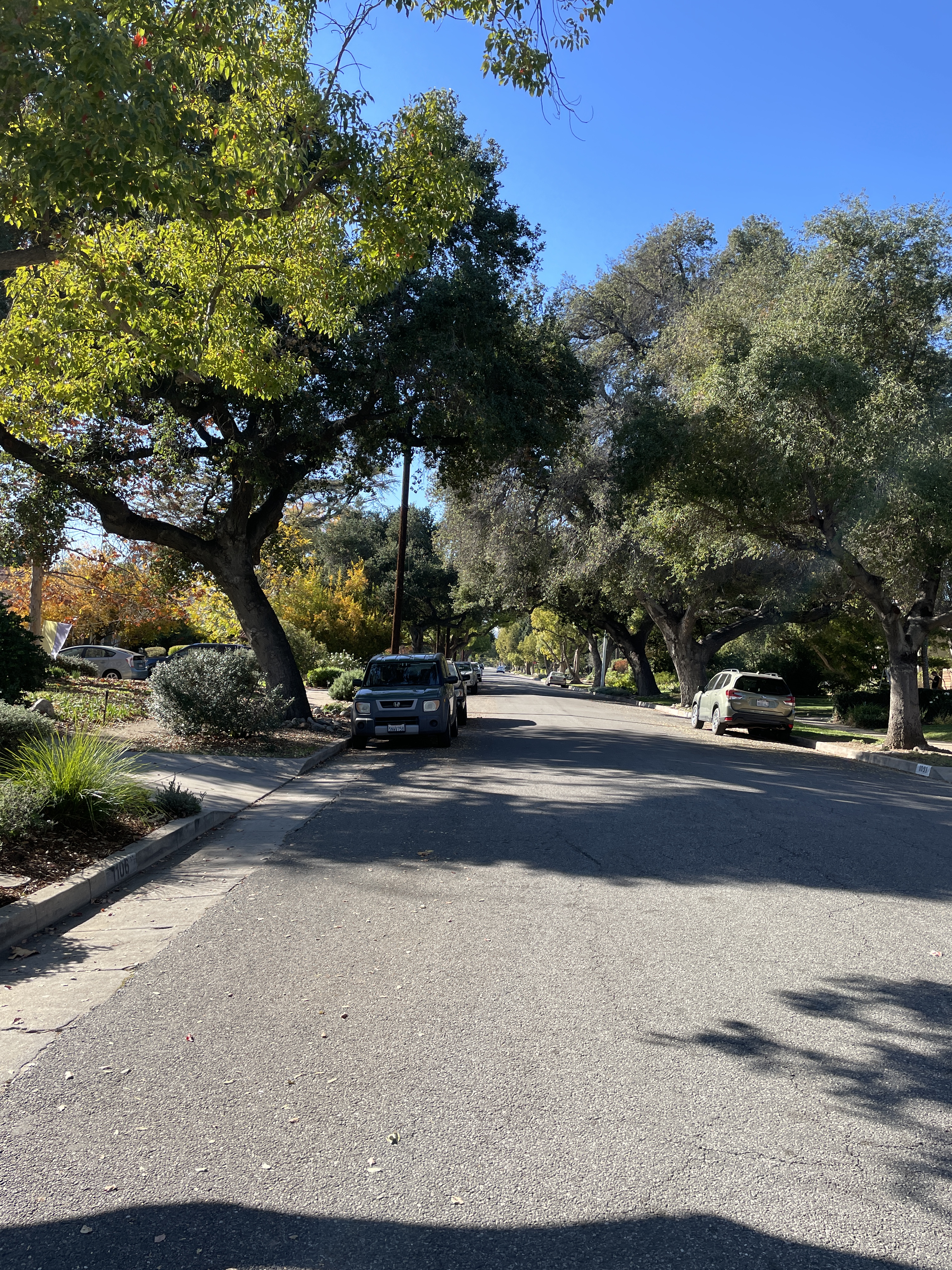
As part of a bookclub I co-host, we read Octavia Butler’s novel Kindred, a science fiction story which takes places in California and in the Old South. Since many of the bookclub members live in or near Pasadena, we decided we would do “Experience Butler’s Pasadena on Foot”, a walking loop of about 2.5 miles. We had planned to take the walk earlier in December but were rained out. We will reschedule early next year. I decided to do a dry run in November and took these photos along one of the streets where she often walked.

Butler lived most of her life in Pasadena but never owned a car. She either walked or took public transportation.

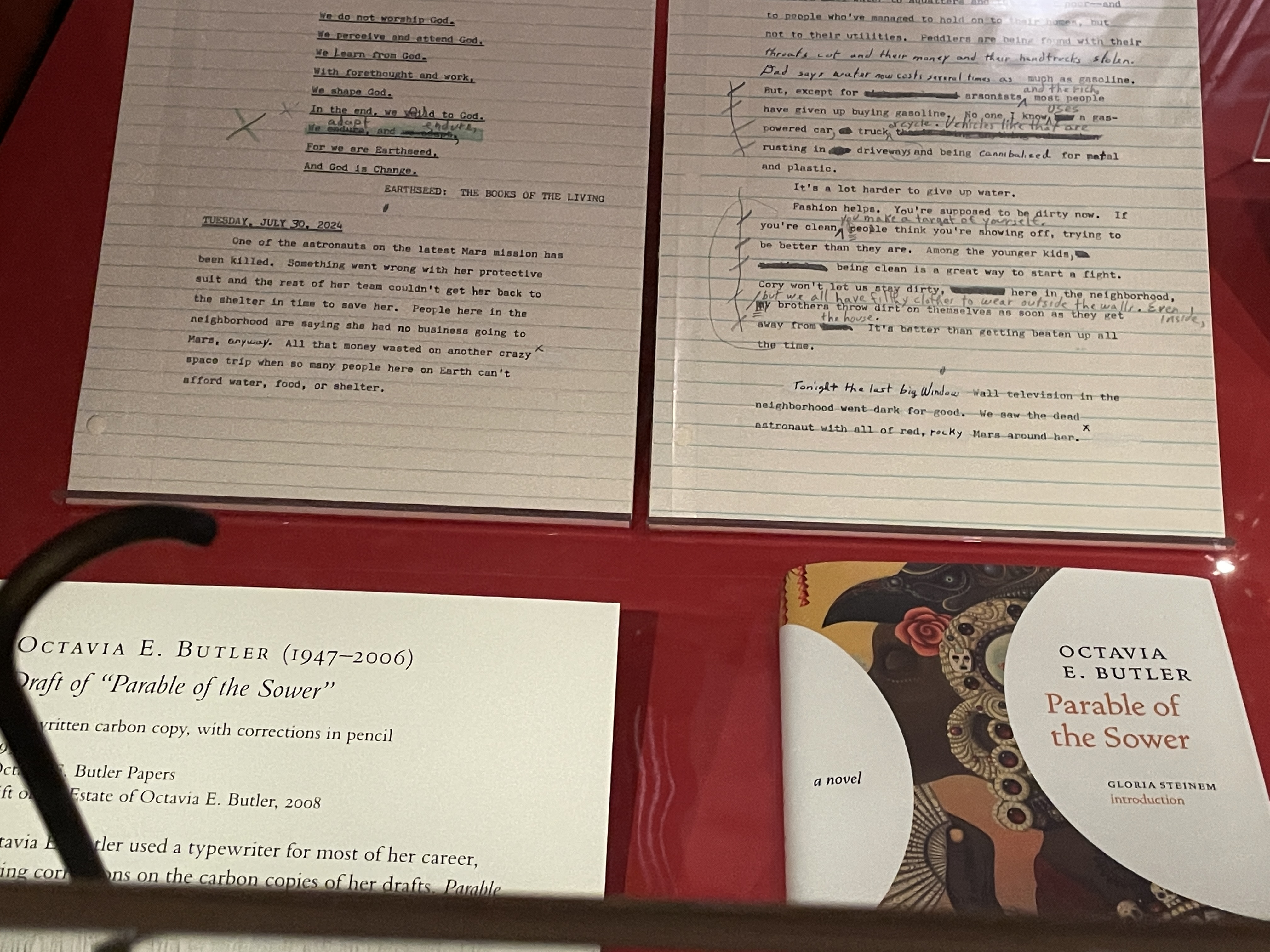
For those unfamiliar with her, she became famous as the first African American to win multiple Hugo and other science fiction awards. Born in 1947, she died in 2006, and is buried in a cemetery in Altadena, CA, just north of Pasadena. Many of her manuscripts are on display at The Huntington Library.

The last Octavia Butler book I read is the one illustrated in this photo taken at The Huntington Library. I am currently reading the sequel, Parable of the Talents. When I finish that one, I will have read all of her novels. She is one of my favorite authors.

Summer Reading


IMG_3957Last year I joined Now Read This, the online bookclub sponsored by PBS and The New York Times.  Why did I join?  To expand my exposure to books I might not otherwise read, to learn, to explore, to interact with others reading the same books.

I rarely read fantasy or science fiction.  This summer has become an exception.  The June choice, The Fifth Season by Jemisin, won the Hugo in 2016.  The other two books in the trilogy won in 2017 and 2018.  I wanted to know what happened to the characters so I read them all.  The spine says Fantasy.  I think they are more science fiction.  Even people who claimed they did not like either fantasy or science fiction became like me and read them all.  This series tells a futuristic tale extremely applicable to events, both social and political, in the world today, how prejudice kills both overtly and covertly,  how fear of those who are different affect everyone, what it costs to live in a world where certain attitudes exist.

It took me two days to finish the July title even with chores, touchup house painting, all the things teachers attempt to do during summer break.  Although I had previously read at least three books by Luis Alberto Urrea, I had not read this one, The House of Broken Angels about a family who lives back and forth across the border–San Diego and Tijuana.  It is a tragic-comedy about the endurance, hopes, dreams, cooking, living of several generations.  His non-fiction book, The Devil’s Highway, is a must read for those who want to understand what occurs along the US-Mexico borderlands.

In the midst of all this, I went back and reread Ursula LeGuin’s The Left Hand of Darkness.  Wow, no wonder it caused a stir when it was published in the 1960s: a whole country where everyone switches back and forth between male and female and those who cannot do this are considered perverts.  Additionally, the main character is described as having very dark brown skin and those who do not behave exactly as they should or politically protest are sent off to a stark camp where they work in excessive cold and eventually die.

Then I read an article about Toni Morrison and authors who do not write for people based on a certain audience, e.g. black, white.  They write about what they know, what they feel, for a different purpose. One book listed was Children of Blood and Bone by Tomi Adeyemi, a fantasy, all of which takes place in what we now think of as Nigeria. It has not one single white character in it.  I kept thinking, wow.  I read a lot of literature from Africa, Middle East, and Latin America.  Most of the time, for better or worse, characters from other cultures show up, usually European and usually for the worse.  Not in this one.  If you go to a book store looking for it, look in Young Adult.  Jemisin’s can be found in Adult Science Fiction/Fantasy.  When I mentioned to someone I could not tell why some are categorized one way and some another, I was told there is less graphic sex in YA.  Really?  I cannot tell the difference.

Next on my list?  I annually act as a judge in a literary contest.  Three novels arrived in yesterday’s mail.  Guess I need to get busy.