religion
My Ethiopian Adventure–Lalibela, the Churches, Part Three
After we left the first group of churches, we had to walk to reach the one that is probably the most photographed.

Like all these churches, this one, Bet Emanuel, was carved and dug out of solid rock and is built so that the top is level with the slope of the land. Thus, it is purposefully nearly invisible unless you are quite close to it. To get to the bottom and go inside you have to climb down rather steep steps. Built in the Auxumite style (Auxum was the original “capital” of the Ethiopian Orthodox Church), some art historians consider it to be the most impressive church in Lalibela. It is 18 meters by 18 by 12 (58.5 feet by 58.5 by 39).

The guide explained that because this church is of harder stone, it has no protective cover like some of the first churches we entered.

Like the first group of churches, this one also has a drainage trench around it.
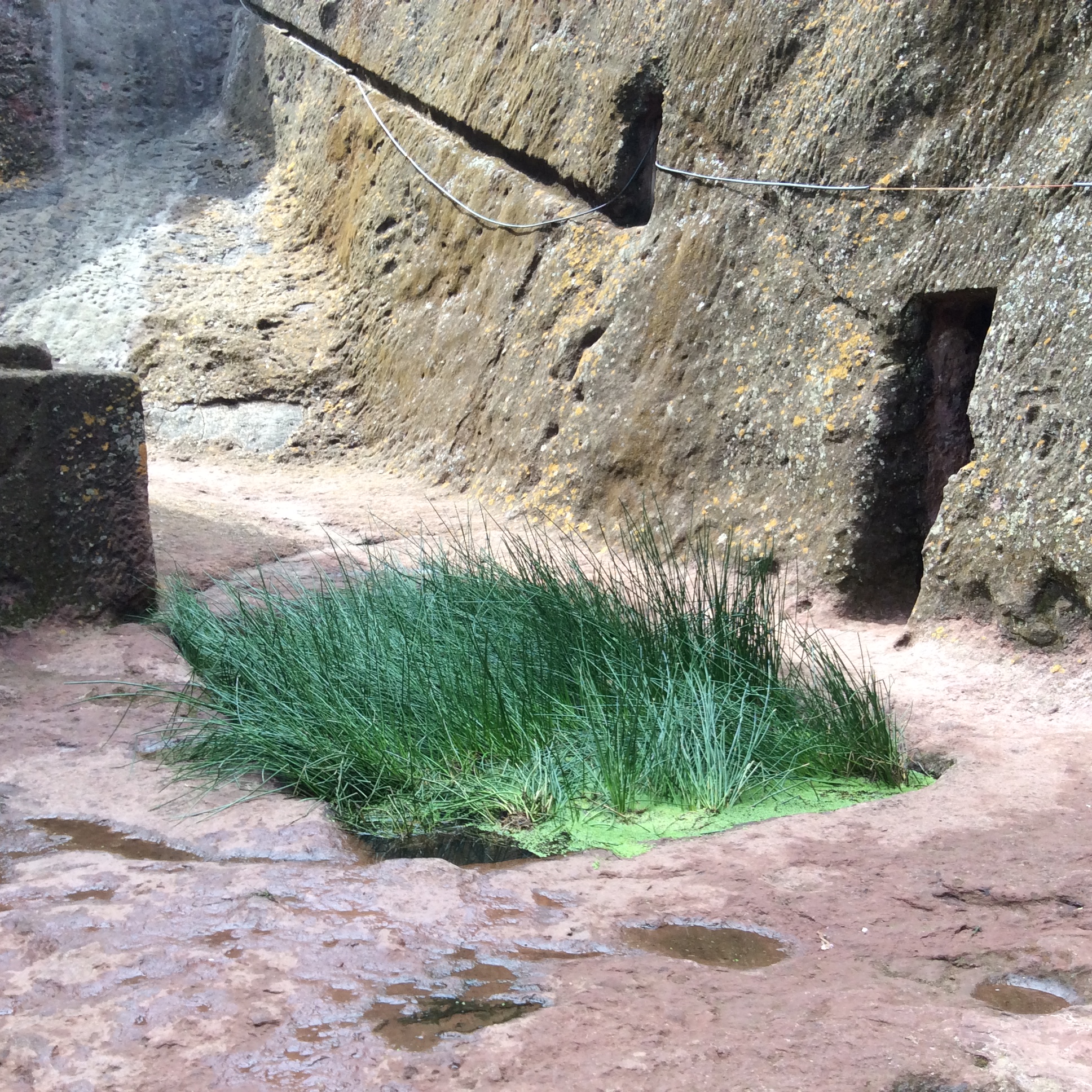
A pool of holy water–I saw a boy go up to one of the pools and fill a bottle with water.
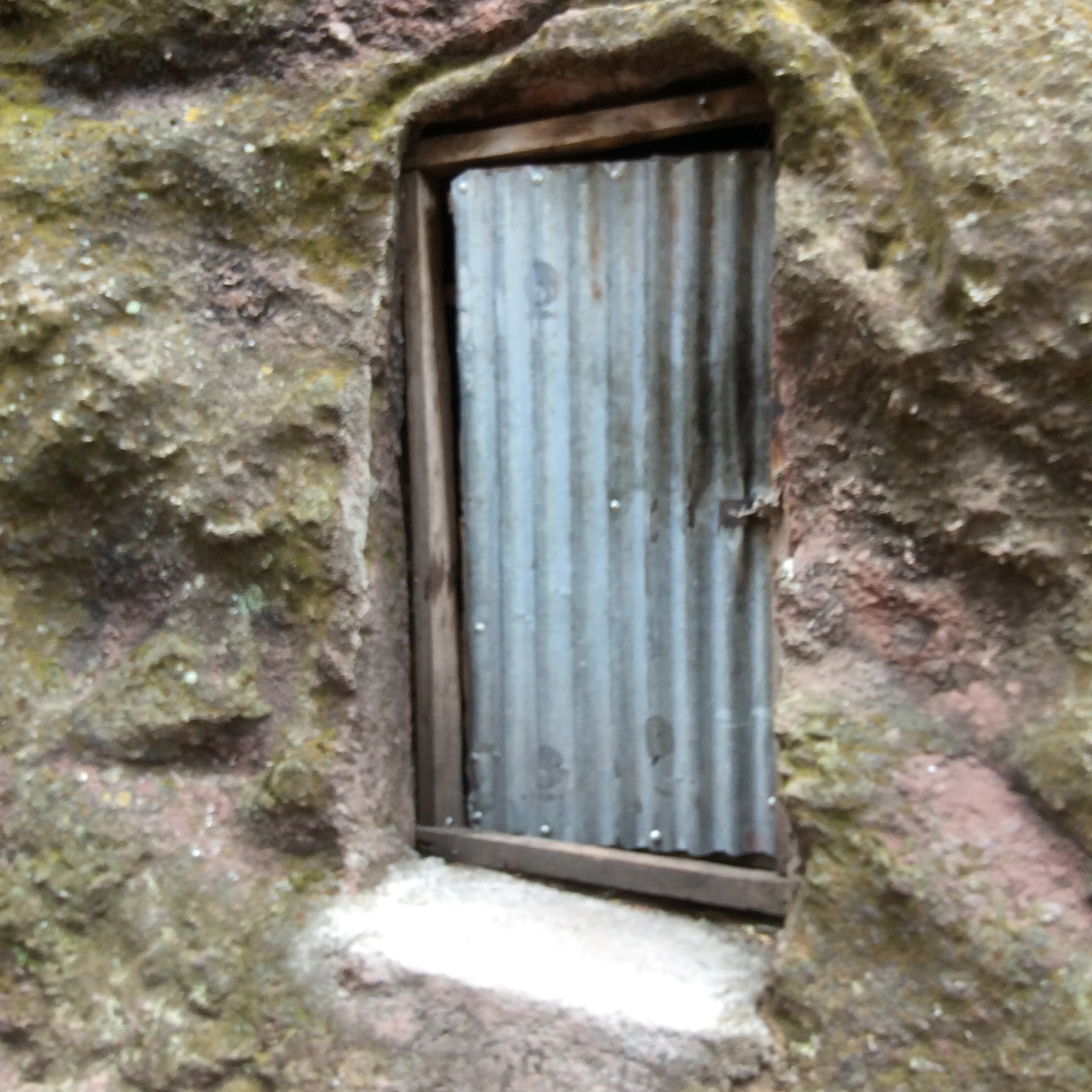
A holy space where only priests can enter. Every church has a copy of the Ark of the Covenant and a symbolic Bethlehem.

Saint George and the Dragon appear everywhere. Saint George is the national saint of Ethiopia. There is even St. George beer.

In this second group of buildings, two were definitely designed as churches. However, even though others are currently used as churches, there is some question as to whether that was their original purpose. The guide told us that one building is believed to have been the residence of King Lalibela and his family. Unlike most of the other buildings, its layout does not appear to have been designed as a church. It also does not contain the usual paintings and artwork.

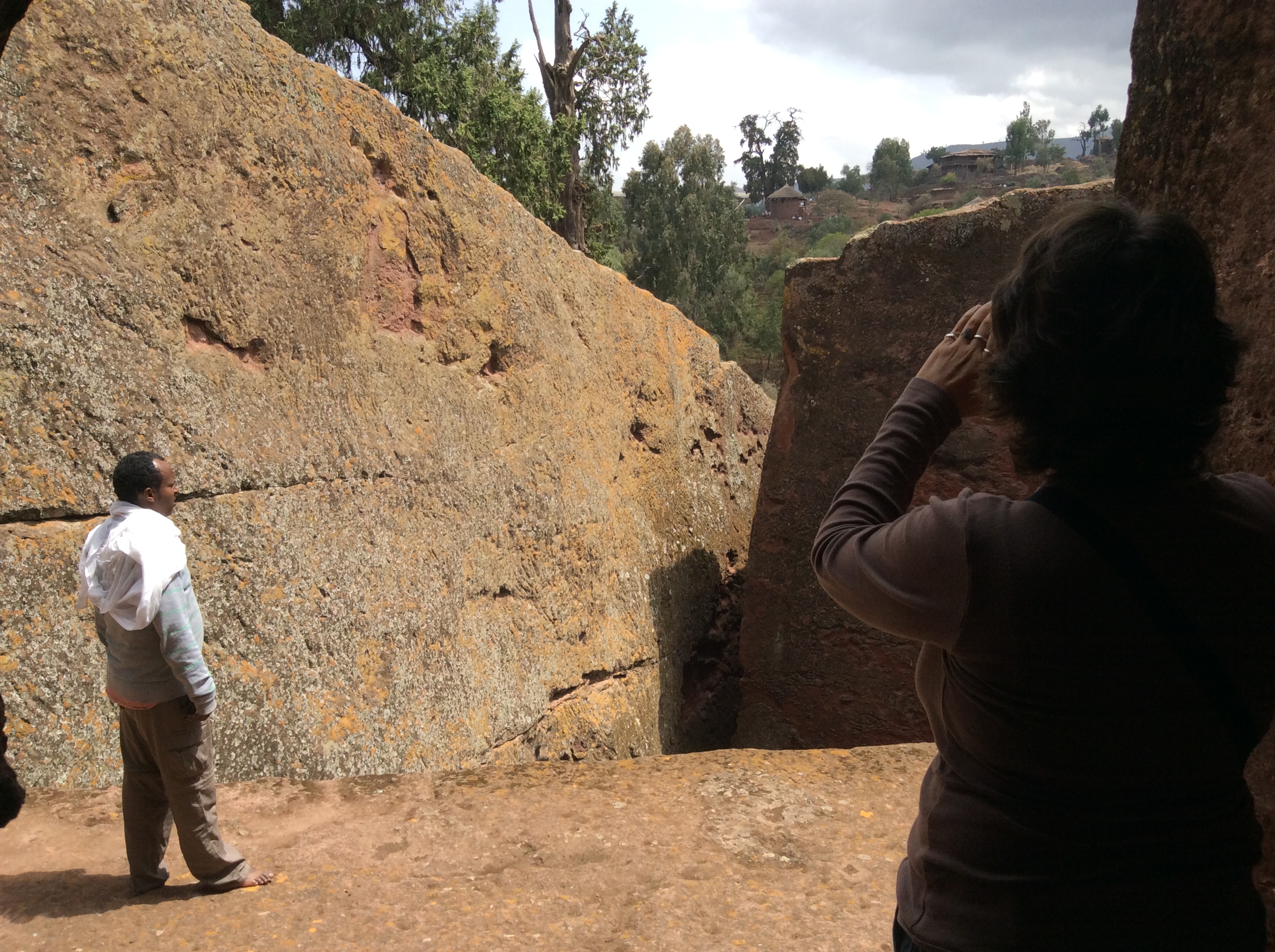
Another sacred space. Before we could go on to see the other churches in this group, we had to climb out and walk by the River Jordan.
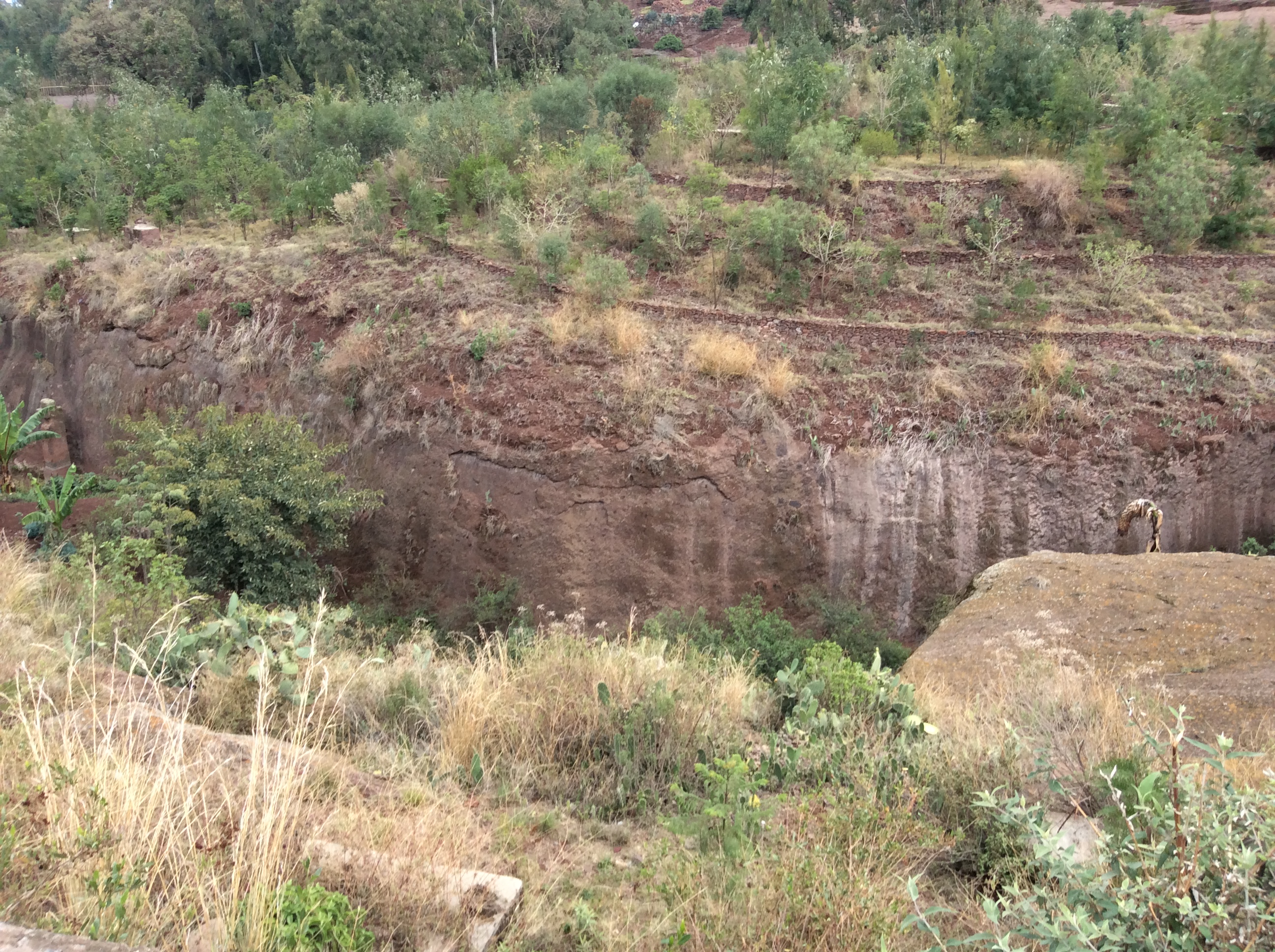
All the trenches that drain water from the churches during the rainy season flow into this River Jordan. The design of the churches, the symbolism, this River Jordan, everything was designed to duplicate to the extent possible he Holy Land, to create another Holy Land in the highlands of Ethiopia, a new Jerusalem.

The road by the River Jordan. Until recently people lived in the traditional houses you see on the right. In front of one we saw a group of young men being trained as priests.

The land near the churches looks just like anywhere. You cannot see the churches until you are really close to them. We were told they were built this way intentionally to protect them from invaders who had destroyed earlier visible churches.

On both sides of the River Jordan are cemeteries. The dead from the tombs in the walls opposite the churches (see Part I and II) were moved here.

Unlike the first group of churches shown in Part I, not all the churches in the second group are connected by trenches or so close together.To see some of them you have to climb in and out from one to another.

The guide took this photo. Why am I wearing my socks over my jeans? Fleas. It is common knowledge that the carpets and bamboo mats on the floors of the churches contain lots of fleas. We were told to tuck our jeans inside our socks and spray everything below our knees with insect spray.


Between this latter group of churches, there are some passageways so you do not always have to climb in and out. There is a third type of church in this area, churches built in caves, one of which is 40 kilometers from Lalibela. Churches such as these exist nowhere else in the world. The only way in and out of Lalibela is that steep road below my hotel room.
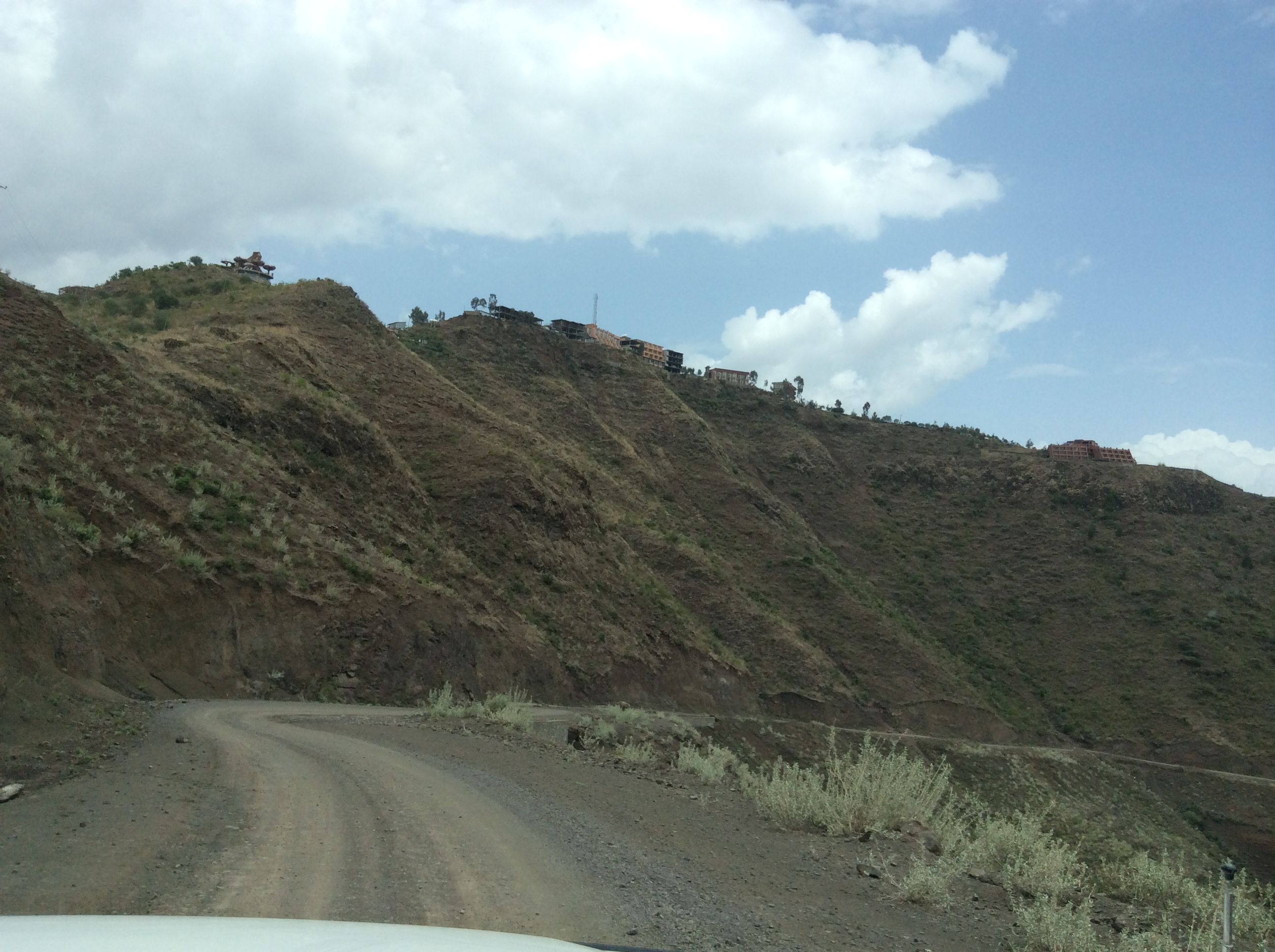
It was drier around Lalibela because the rains were late. We headed to the cave church of Yemrehanna Krestos for the afternoon.
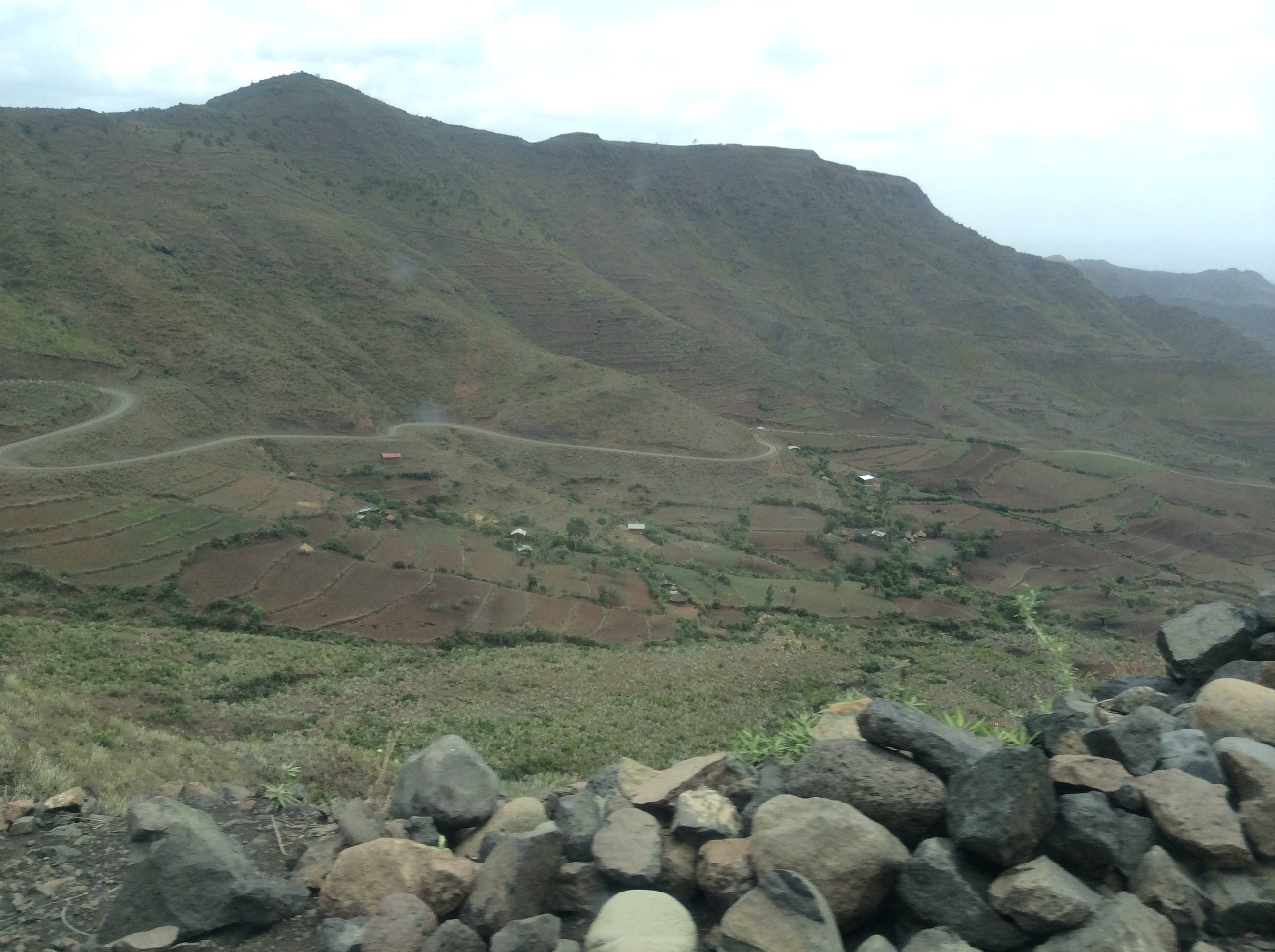

One disadvantage of traveling to Ethiopia this time of year, especially in the north, is the weather, cold and rainy. On the positive side, often we were the only tourists.

The climb up to the church was long and a bit steep but with good steps and handrails. Rain had made the stones a bit slippery. The churches have served an unintentional good in that around most churches in the country the original forest is left to hide the church. This was one of a few places where we could see what the land looked like before deforestation and before invasive species were brought in from elsewhere.
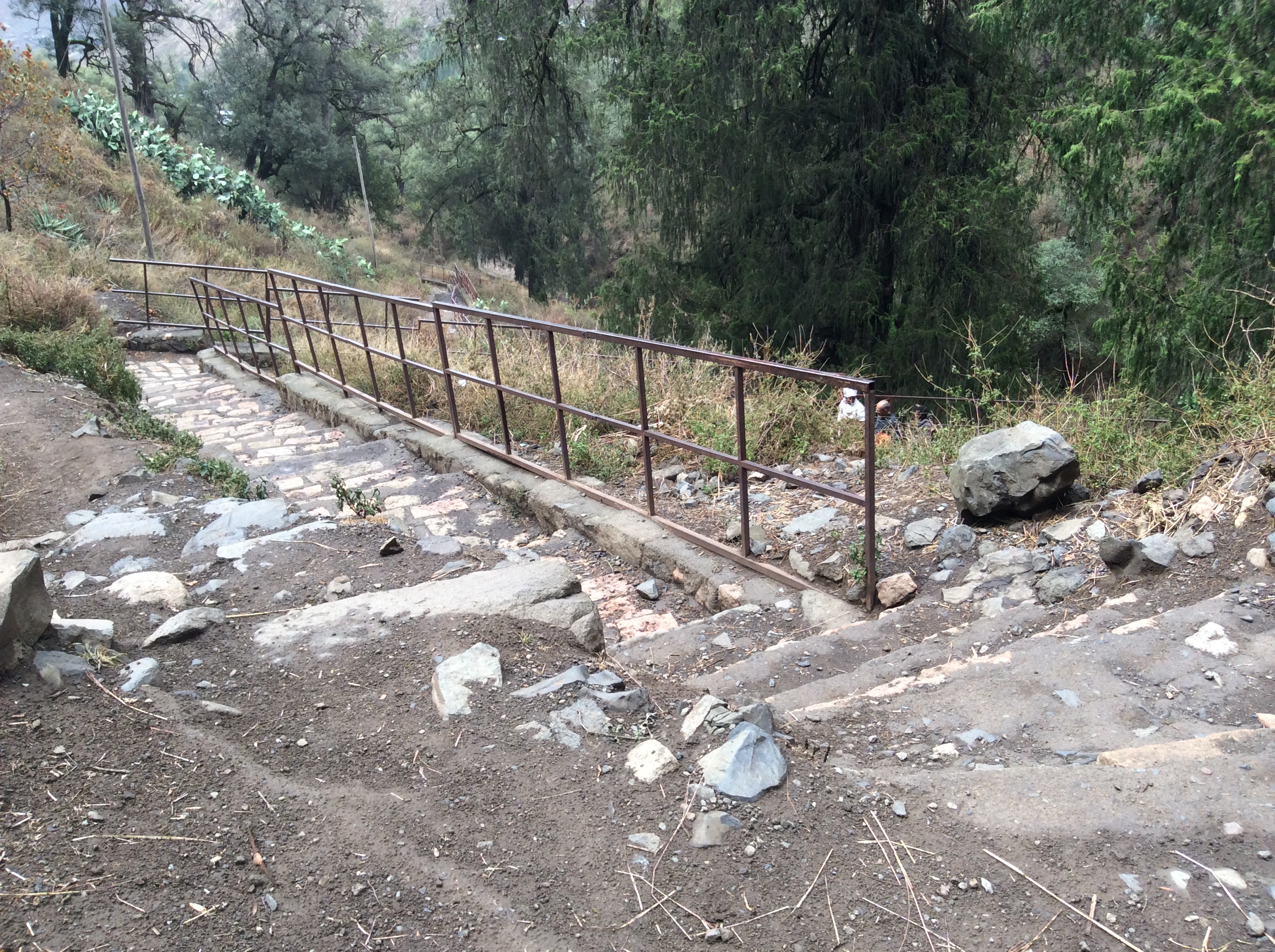
The guide who took us through the churches in Lalibela came with us here. I walked with him and Dino and Zuriash walked with the priest who did not speak English.

This is what you see when you first arrive at the top. Like in all the churches, you have to take your shoes off.
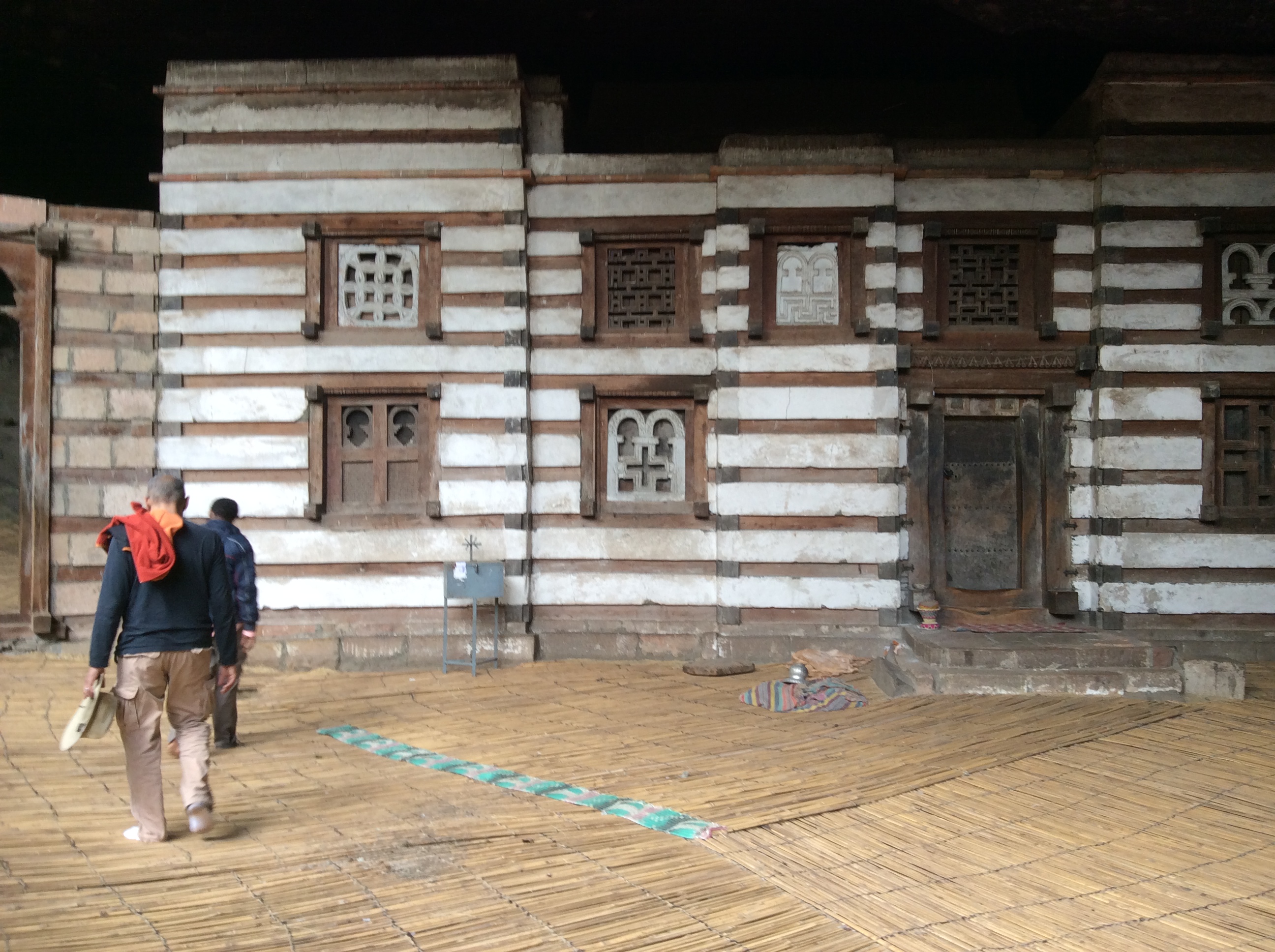
An entire church resides inside the cave. We were told that the white marble and wood were brought from Egypt by elephants. The church dates to the 11th century.

The cave is big with lots of space around the church.


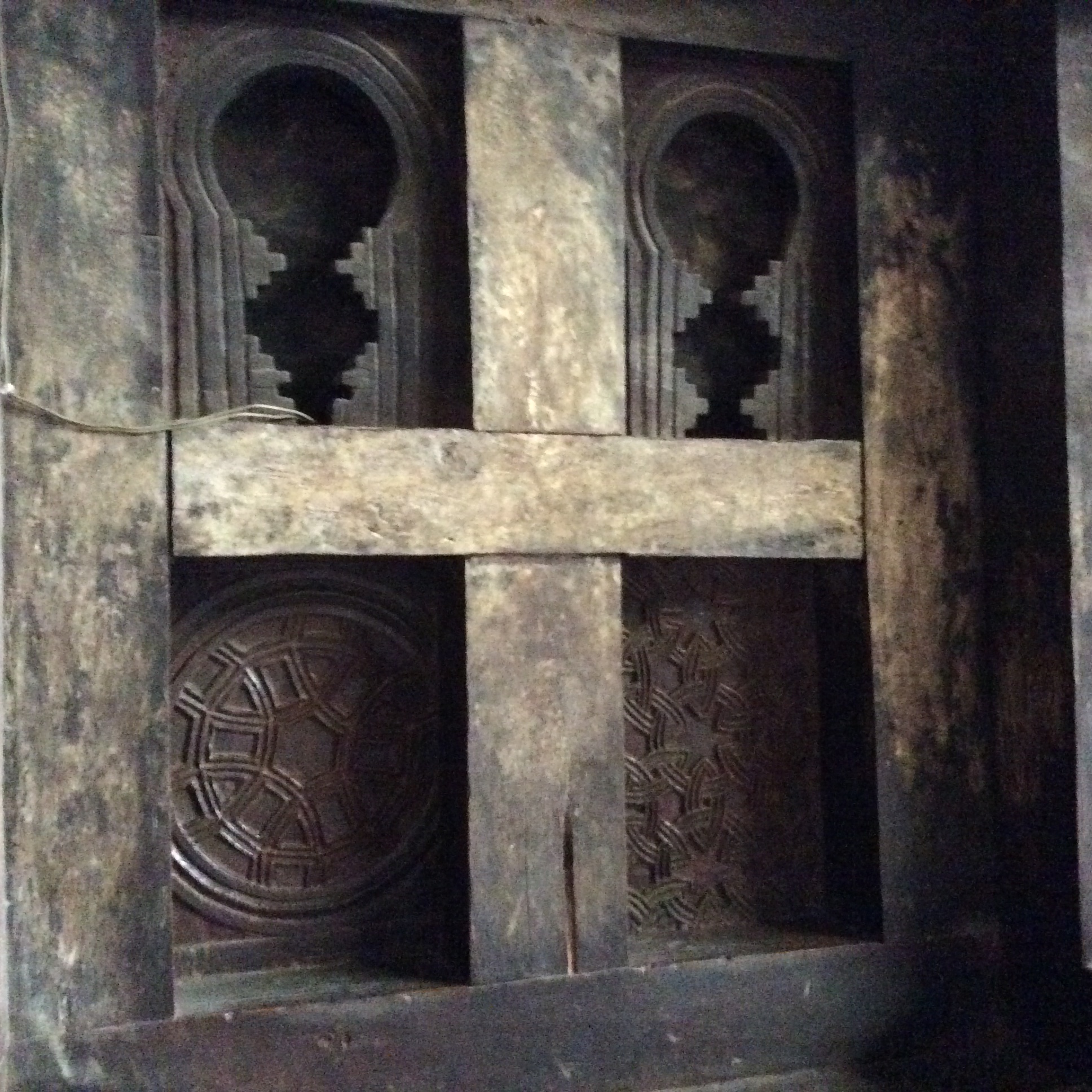
The decor and carvings inside the church are very detailed and elaborate. Services are held here weekly and at certain times of the year many pilgrims journey here some walking for many miles.

The priest who resides in the village. This is “his” church.

Behind this fence at the back of the cave lay the bones of pilgrims who died here.

The Ethiopians believe that one of the Three Wise Men came from Ethiopia.

The tomb of Yemrehanna Krestos resides behind the church inside the cave.

The road to this church is relatively new. Before pilgrims had to either walk or ride a horse or donkey to get here. The road continues above the village, but we turned around and headed back to Lalibela.
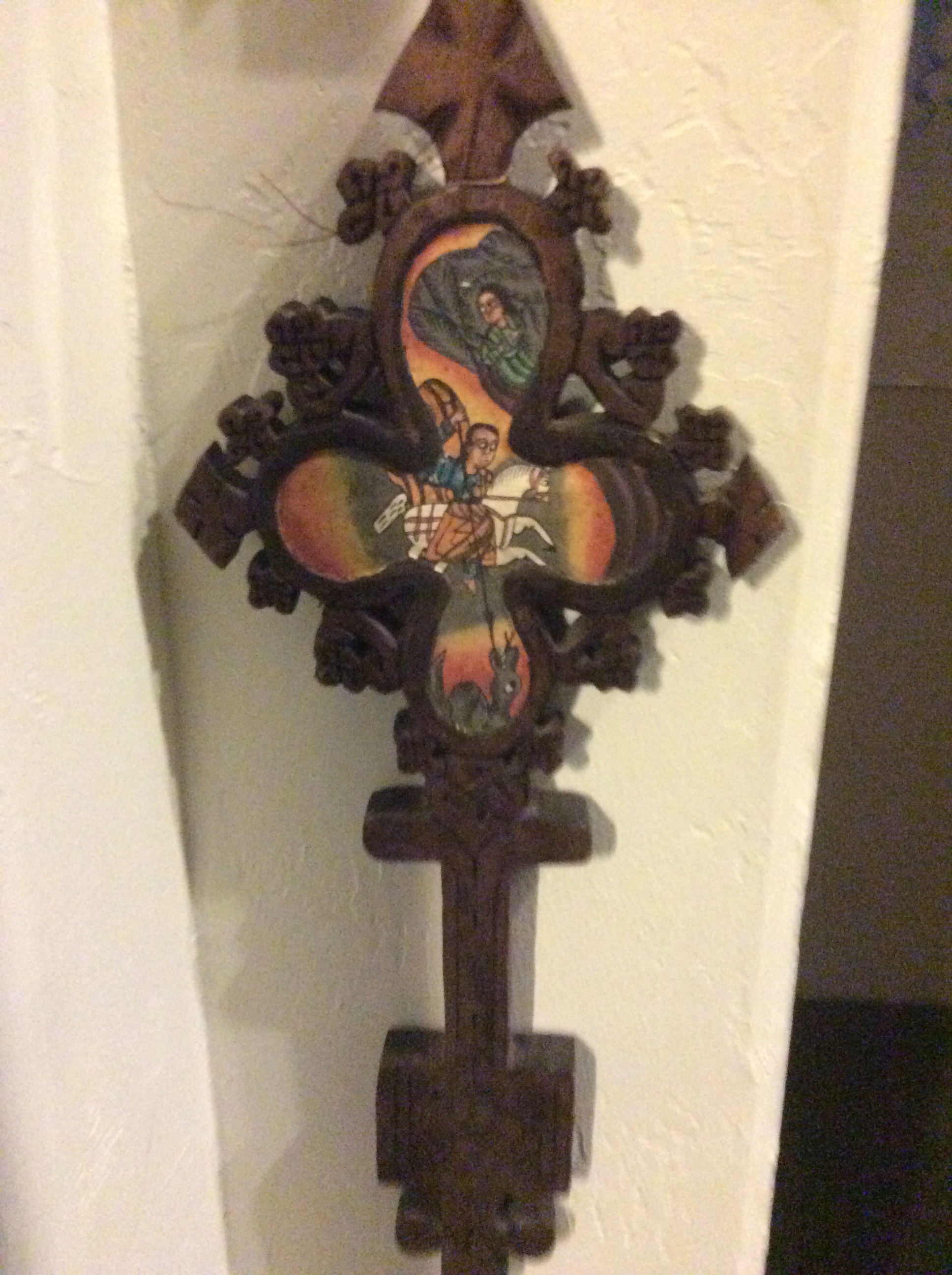
There were two shops in the village that sold sacred objects and souvenirs. I bought this cross which has St. George and the Dragon on one side and the Virgin Mary and baby Jesus on the other. Mary is exceedingly important in the Ethiopian Orthodox Church.

I like to bargain and generally did quite well with it when purchasing various items. However, the man in this shop for this particular item refused to come down. I really wanted it because it seemed quite unique so bought it at his price. Nowhere else did I have to do that.
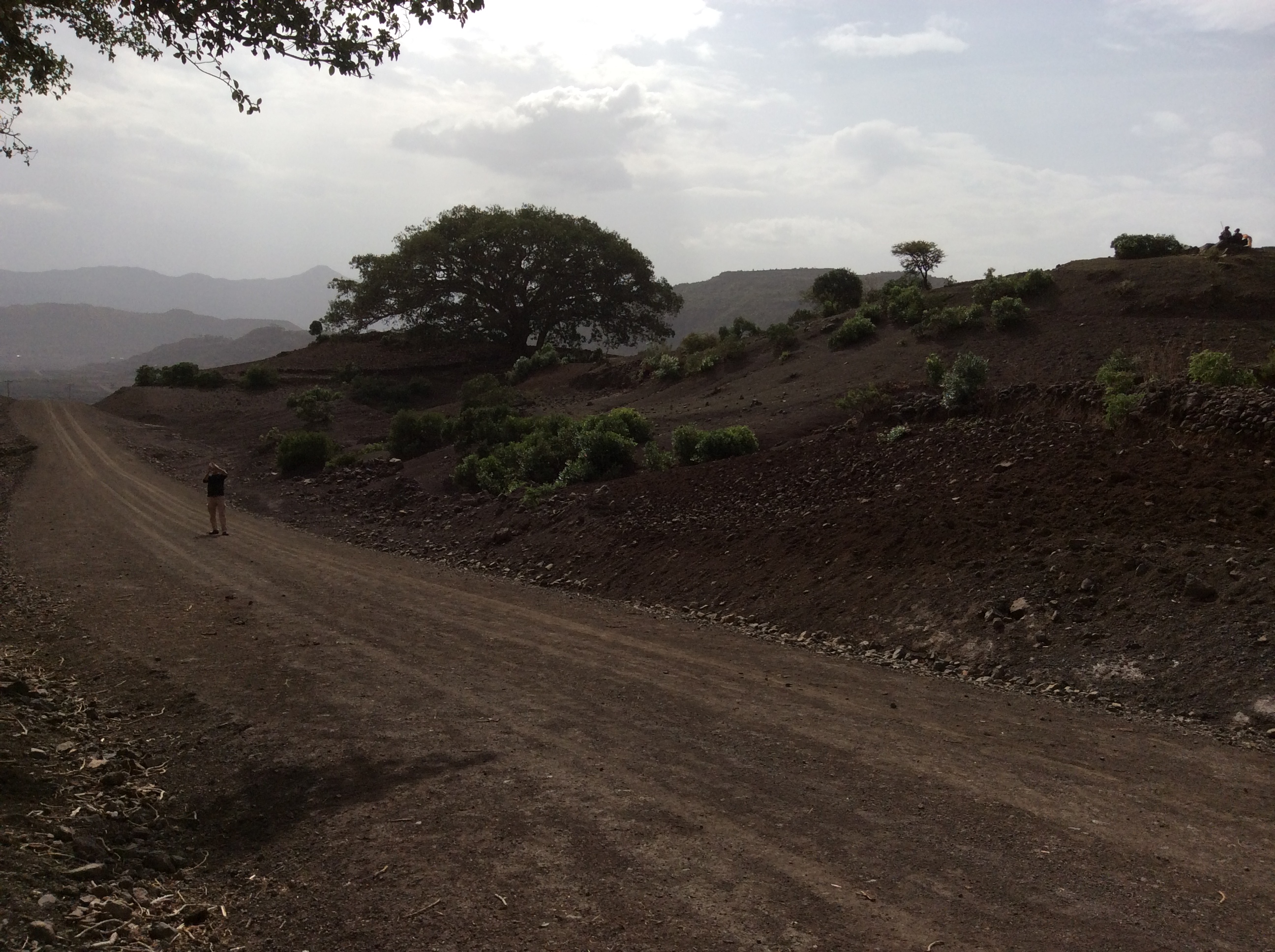
On the road back to Lalibela we decided to stop and admire a couple of huge fig trees.

The Story Circle Network Conference and My Commitment: This Is What I Know
 When I first started blogging more than two years ago, I committed to blogging once a week. That I managed for a year or so and then since that time, it became more sporadic. Full time job, writing poems for my book, visitors, mini vacations, all sorts of stuff got in the way. Really, I let it lapse, but refused to give up. Last Thursday, I drove to Austin with my daughter and grandson for the biannual Story Circle Network Conference. The plan: while I conferred, they played. The Story Circle Network is an organization for women which encourages women to write, to tell their stories, to share these stories, and when possible and desired, publish those stories in various forms from memoir to poetry. This was my second time to attend and my first time to attend as a new board member. A former mentor/teacher of mine, Len Leatherwood, facilitated a workshop entitled “Transforming Your Writing Life in Just 20 Minutes a Day”, the last workshop I attended. She blogs everyday. I follow her blog. No matter what, she sits down and writes 20 minutes minimum a day separate from the writing she does with her students–she teaches writing privately in southern CA. One of her recent blogs has been accepted for publication–a piece of flash fiction. She nearly begged us to commit to this kind of writing practice. Previously, I had refused, flat out refused, partly thinking that if I tried it, more than half the resulting writing would be crap. Nevertheless, she and her workshop convinced me that at least for one month I must try this. Now all of you following my blog will be inundated with daily blog posts. I am filled with curiosity as to how people will respond. Maybe it will be like my Facebook posts–yes, I am an almost addict–the posts I consider most meaningful for the universe at large are the ones people ignore and the ones I consider personal trivia receive the most response. Maybe I will track what appeals to my readers. Some I won’t know because with blogging I share to Facebook and to a couple of professional networks, I have no clue who read what. Once I received an email regarding a poem I posted. Although it never showed up as a like, the lady actually told me she read my poem in church! Who would have guessed. I forgot to time myself so have no idea how long I have been here writing.
Here I am writing about why I am writing. On the stove I smell Jasmine rice cooking. I love Jasmine rice from Thailand. I am a very picky rice eater and prefer to mix equally white Jasmine rice with black and red. For one thing, it looks lovely when done–a sort of dark reddish purple. Since I sautéd chopped garlic in olive oil, then added the rice and sautéd for about 15 more seconds, then added water and some broth just before I started writing this, the smell of Jasmine rice fills the house. I piled a bunch of paper towels on the top before I put on the lid or you can use some cloth towel–a habit I picked up from my Iranian ex-husband. Iranians really know how to cook rice. I am also drinking a glass of Cupcake Shiraz which I bought on the way home from work. And yes, Shiraz is also the name of a city in Iran where they actually grow grapes or at least used to. But of course, drinking wine is no longer acceptable in Iran or at least not publicly. Good Muslims do not drink at all.
I did write something worthwhile while in this workshop and will share–doing this last because it won’t count as my daily writing since I wrote it yesterday.
This Is What I Know
My parents loved me, really loved me.
My mom was proud of my accomplishments.
Dad gave me a love of books, intellectual curiosity, and a
sense of wonder.
Mom gave me a love of music, beauty, and cooking.
Happiness is a choice.
I do not believe in luck. You make your own luck.
Life is an exciting adventure.
Horses give me joy.
Singing gives me joy.
Dancing gives me joy even if I rarely have the opportunity.
Family relationships can be distressingly complicated.
I am proud of my children and their accomplishments.
Religion matters much less to me than 99 per cent of the people I know.
Ethnic and religious prejudice distress me and I do not
understand those kinds of attitudes.
I am a good writer.
I want to make a real difference in the world.
I am happy 99 percent of the time.
Blessings flood my life.
My close friends and children and grandson are more
important to me than they know.
Writing has enriched my life.
I have few regrets:
One I have rectified;
the other I cannot–
my dad is dead.
Women-2
Why
and
What
draws me
to witches
herbal secrets
moonlight
ancient ruins
archaic codes.
It is the goddess blood I carry,
remembrance of a past
when women ruled
when peace reigned
and
All were healed.
 writingontherim