A short, honest, realistic view of life, this book by Strout, written from the viewpoint of Lucy
Barton, continues the story started in her book, “Oh, William”, where Lucy and her ex, William, go to Maine to seek out his long lost sister whom he did not know existed until he took a DNA test. Once again they head to Maine, but for a much more stressful reason, the Covid pandemic. They both live separately in NYC where Covid hit early and hard. After accurately assessing the danger, William finds a large, old house to rent on the Maine coast and convinces Lucy to go with him there to save their lives. He convinces one daughter to leave NYC but the other insists on staying.
The book addresses the issues of isolation brought on by the pandemic and how people deal with stress and isolation differently and with the difficulties which arise when once close families can no longer see each other. It also shows that isolation can bring the positives that can be found in a more quiet life. Strout’s uniquely simple style emphasizes the emotions and stresses as well as the joys life can bring to all of us.

 This is he house where I grew up north of Fillmore, Missouri. My dad lived here in this house from 10 year old to 90. He died in the month after his 90th birthday. The house stands on the land my great grandfather established after he arrived from Switzerland in the mid 1800s.
 This is the only building left at the site of my grandparents original house and barns. It is an old carriage house. In this photo my daughter and grandson are taking a look. One of the original stained glass transome windows from the house hangs in my own house. My grandparents were Lilliebelle Werth and Pleasant Lightle.
 When I was a child, this was once a chicken house but mostly the farrowing house for our registered Hampshire hogs. Later I learned that when first built during Prohibition, Dad held dances here which the sheriff checked to make sure there was no alcohol.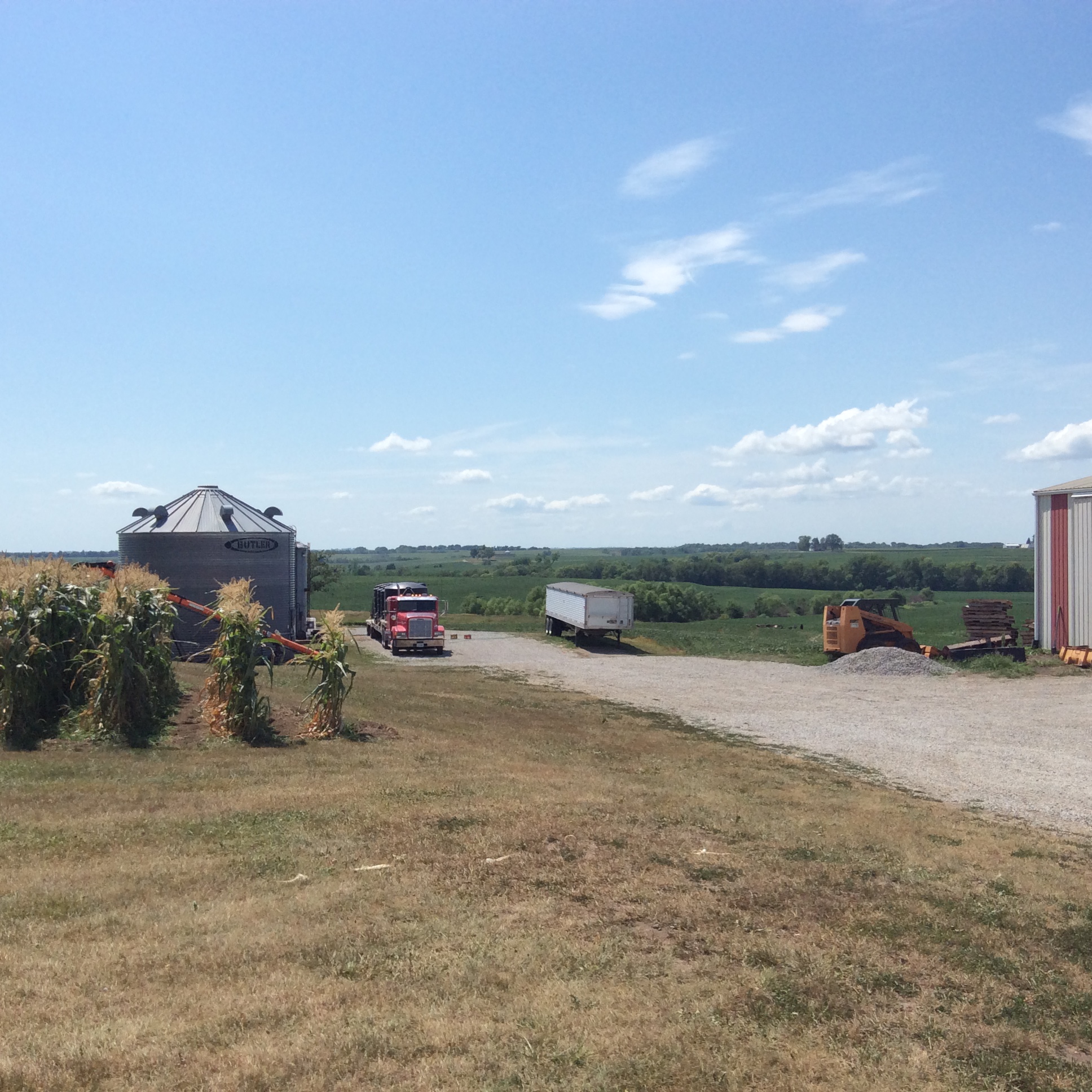

 writingontherim