Peruano Bean Dish


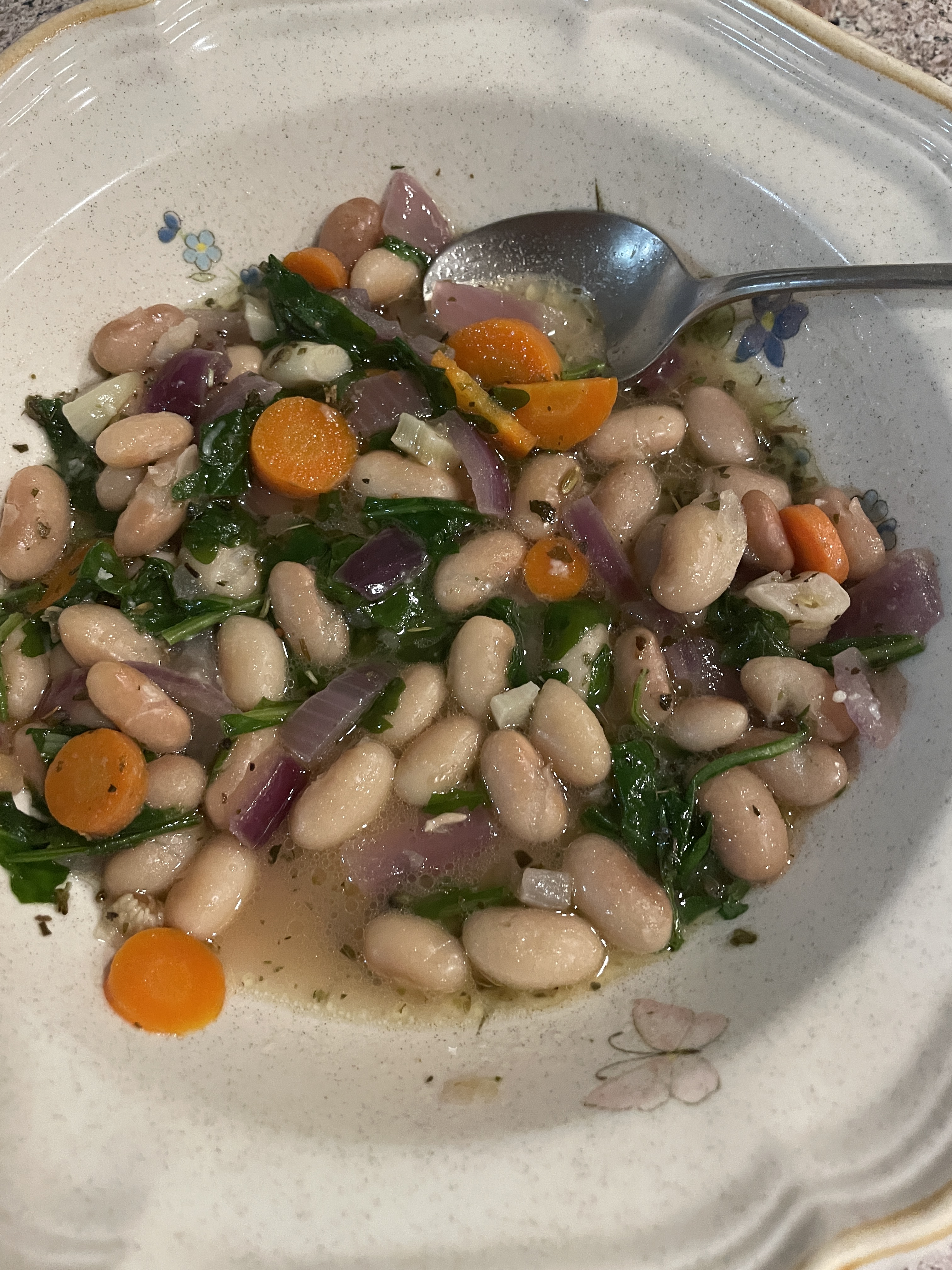
1/2 cup peruano beans, cooked

1/2 purple onion, coarsely chopped

1 6″ carrot, cut into coins

3 garlic cloves, coarsely chopped

1 large handful of arugula, chopped

Herbes de provence to taste

To prepare the beans, place dry beans in sauce pan covered with water and bring to boil. Turn off heat and soak for one hour, drain, and recover with fresh water. Cook until done. These beans cook rather quickly so do not over cook. You can add ground onion or garlic powder as they cook if you so desire.

Saute onion, garlic, and carrots in olive oil until tender. Add beans and herbes de provence. Once combined, add arugula and cook only until wilted.

Note: If you leave enough broth with the beans as you cook, you will have soup. Want less broth, cook down liquid until desired amount. Peruano beans nearly double in size from dry to cooked.

Carrot Cake Bars


These are easy to make and about as nutritious as a cake like treat can be. I used regular flour but might try almond flour next time.

3 cups lightly packed shredded carrots

1 heaping cup coarsely chopped walnuts

1 Tb. grated ginger or more to taste

2/3 cup light brown sugar

1 tsp BP

1 tsp baking soda

2 eggs

1 tsp vanilla extract

1 tsp ground cinnamon

1/2 tsp ground nutmeg

2/3 cup avocado oil

1 cup unbleached flour

Grease an 8 inch square pan ( I used glass). Put the oil, sugar, eggs, vanilla, and spices in mixing bowl and combine. Add ginger, BP, and baking soda. Add carrots and walnuts. Stir to combine. Finally, add the flour and stir. Pour into the baking pan. Use spatula to level because mixture will be thick. Bake at 335 for 45 minutes or until a toothpick inserted in middle comes out clean. Remove from oven and cool before cutting into bars.

Book 37 for 2025: “Black Sea: Dispatches and Recipes”, Caroline Eden


This is a sort of travelogue, memoir, and recipe book. The author begins in Odessa and travels south from there to the port of Constanza in Romania as well as various other seaside towns in Bulgaria, then to Istanbul. After spending more time there she heads east to all the ports and some inland cities near
Turkey’s Black Sea coast.

I hope to learn new information and become a little more enlightened when I read–especially when reading non-fiction. This book did not disappoint. Here are a few of the things I learned:

-Odessa is a very old and once a very international city. At one point it had the second largest Jewish population in Europe. Now only about 1/3 of the residents are Jewish. Many of the restaurants serve traditional Jewish food even if not Jewish. Once in the past, Mark Twain visited there and made it famous for its ice cream.

-In Constanza, Romania, she witnessed a huge Navy Day celebration with booming gun salutes. Once upon a time, this city was famous for its Casino which now is just a glorious ruin. Here a breakfast mainstay is polenta with a mushroom topping. The author apparently liked the food because this section contains more recipes.

-Varna is the main seaport city in Bulgaria. The author’s main quest here was to see the gold, yes, gold. Once upon a time, this city was a major Roman port. Now the Museum of Archeology houses a spectacular collection of ancient gold. “Breastplates, bracelets, burial gifts, regal-looking head pieces, figurines, and pendants–all gold–shone for attention. The silent Midas room was deafening, ringing out with finery, treasure and opulence. And the loudest, biggest treasure of all, was the smallest. Tiny pendant earrings, almost inconceivably old, dating back 6000 years….these earring are the oldest ‘worked gold’ in the world. They belonged to the first known culture to craft golden artifacts, and they lived here, on Bulgaria’s section of the Black Sea in what some archeologists consider the oldest prehistoric town. But it was not gold that made this area wealthy; it was salt which was mined nearby. The world salary comes from the Latin word ‘salarium’–a Roman soldier’s stipend to buy salt.

-She goes to Istanbul and then on to Turkey’s Black Sea towns, Amasra, several a bit inland, Sinop, Trabzon, and Rize. Sinop has a particularly good harbor. There is a saying that the Black Sea has three safe harbors, July, August, and Sinop. This is in an area often targeted by Cossacks who crossed the Black Sea to raid these more prosperous areas. The town also houses an infamous prison where Russian convicts taught Turkish cellmates how to make model ships for which the town is now famous.-More than 3/4 of the world’s hazelnuts are grown in this area of Turkey. However, that did surprise me as much as the tea, yes, tea. When I think of Turkey, I think of that thick, strong Turkish coffee. However, Turkey is the fifth largest grower and exporter of tea in the world. The tea grows in the fog and mist on steep slopes that end at the sea. Several photos in the book illustrate the lush green mountains covered in tea bushes.

-When I think of Hagia Sophia, I think of the spectacular building in Istanbul, the one that has withstood invasions and earthquakes. But there is another one. On the western edges of the city of Trabzon, there is a smaller, more tranquil Hagia Sophia, one of the Black Sea area’s most spectacular monuments. It was built as a church in the 13th century, converted to a mosque, then to a cholera hospital, then a museum and finally back to a mosque in 2013. The ceiling and walls are covered with frescoes that for a long time no one knew existed until they were restored.

In addition to all the tales of her adventures and the ordinary people she meets, the book is filled with recipes that are specialties of the areas she visited. I’ve taken some ideas from several to experiment with new dishes like combining Swiss chard and sultanas (golden raisins) with chopped onions and garlic sautéed in olive oil and served over Basmati rice.

Vegetarian Plov with Greens


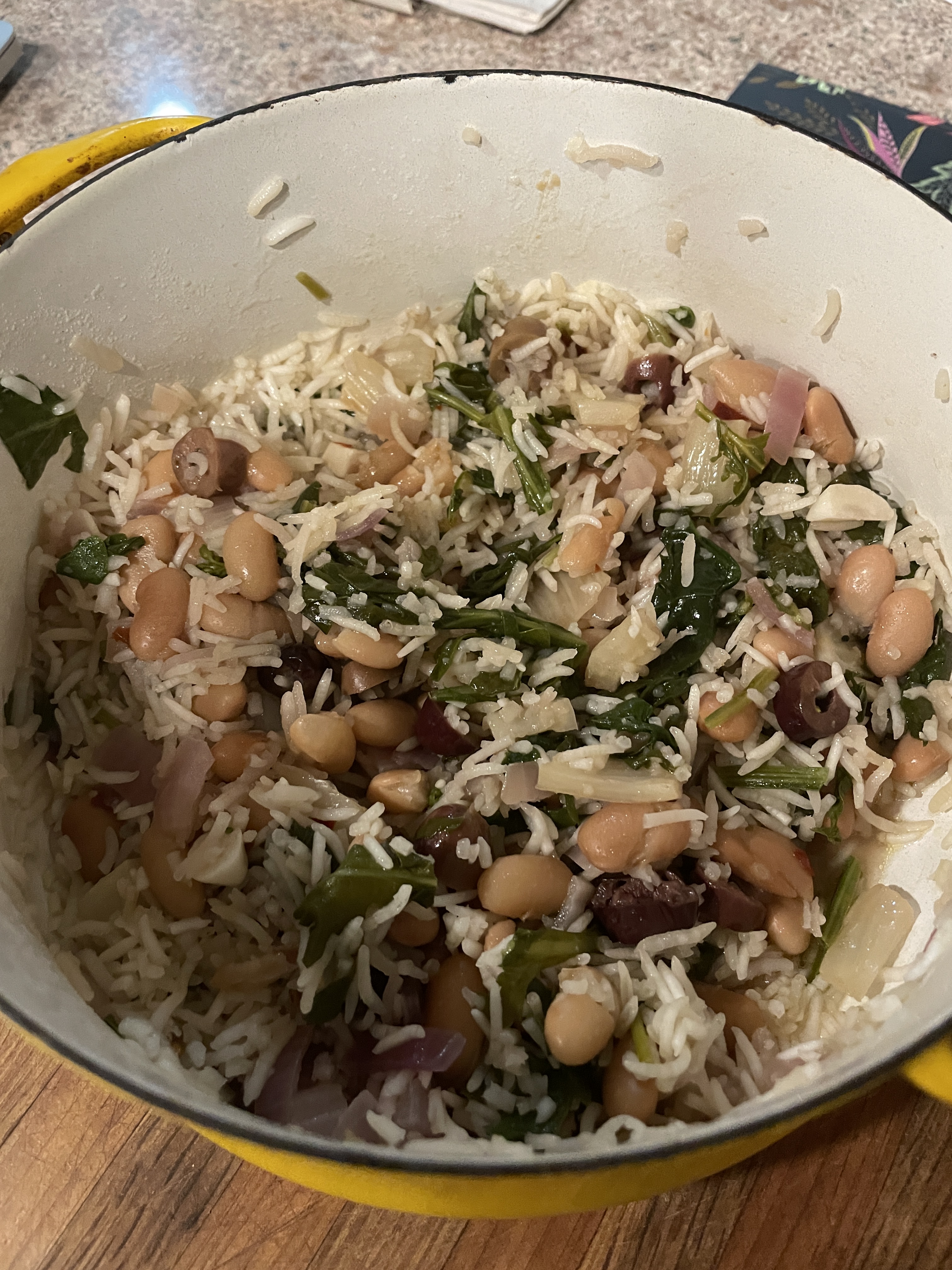
Plov is a common dish throughout Central Asia and is the national dish of Uzbekistan. All plov contains rice and usually meat like lamb or beef. Here is a vegetarian version. I found a vegetarian recipe and modified it using the ingredients I already had. The original recipe used chickpeas but I had already cooked Peruano beans so used them.

1/2 large purple onion, coarsely chopped

1/2 fennel bulb, coarsely chopped

3 cloves garlic, chopped

1/4 cup kalamata olives, chopped

1 drop coriander essential oil

1 drop cumin essential oil

1 drop cilantro essential oil

Chili flakes (optional and amount to taste)

1 cup cooked Peruano beans

2 cups greens (I used spinach and arugula), coarsely chopped

1 heaping half cup of basmati rice, rinsed

butter or olive oil for sautéing

Heat the oil or butter in a heavy casserole dish. Add onions, garlic, and fennel. Saute until tender. Stir in the spices. Scatter the beans and olives on top of the onion mixture. Do not stir! Add about 1/4 to 1/3 cup water. Layer the greens on top of the beans and olives. Flatten the greens with a spoon. Do not stir! Let greens wilt then layer the drained rice on top. Pour in enough boiling water to just cover the rice. Cook on high heat until the liquid has boiled off. Poke holes in the rice to allow steam to escape. Cover pan with lid and turn off heat but leave pan on the burner. Let the rice steam for 20-30 minutes.

To serve, stir the contents and serve in large bowls. You can add extra fresh herbs and lemon if desired. I just served as is and found it delicious. You do not have to use essential oil but can use ground herbs or fresh. If using essential oil, use a safe brand for cooking. I used Edens Garden but have used others, e.g. Doterra.

Book 34 for 2025: “Samarkand”, Caroline Eden and Eleanor Ford


I enjoyed the previous book by Caroline Eden so much I searched for this one. I doubt I will ever make it to Samarkand or Tashkent, places sort of on my bucket list, so what I do is read everything I find about these fabled cities on the Silk Road. The sub-title of this one is “Recipes and Stories From Central Asia and The Caucasus”. It starts with Samarkand and the story of Tamerlane, the legendary hero who conquered a lot of this area and a large portion of surrounding areas in 1370. He was a military genius who loved chess and made up his own chess game with twice the number of pieces.

What foods show up in both the stories and recipes? Beets, fruit–dried and fresh for which the area is famous, tomatoes, cucumber, pomegranates, cabbage, lentils, rice, lamb and mutton, and all sorts of kebabs and flatbreads. I learned there is a huge beach on Lake Issyk-Kul in Kyrgyzstan. It is one of the world’s largest alpine lakes and in summer people from Russia and all over Central Asia flock to its shores. People who own guest houses there make all their money for the entire year in the brief summer between mid-July and mid-August.

In the remote mountains of Azerbaijan lies the small town of Gyrmyzy Gasaba above the Qudiyaleay River, a town where all the people are Jewish. Even though Azerbaijan is a predominantly Shia Muslim country, the people in this town have peacefully lived here for hundreds of years. This town is considered the last surviving pre-Holocaust Jewish town untouched by WWII.

If you are a lover of apples, then consider this country, Kazakhstan, the place where apples originated. All apples in the world today come from the original apples here. The name of the largest city, Almaty, whose older name was Alma-Ata means fatherland of apples. In Ile-Altalan National Park on the northern slopes of the Tien Shan mountain chain thousands of acres of wild apples flourish.

Even though this book was published less than ten years ago in 2016, a lot of people must have been interested in reading the stories and recipes because the copy the library found for me is not in the best condition. Before I return it, I will copy some of the recipes to try.

Black Bean and Corn Chili


Some probably would not call this a real chili. Nevertheless, it is healthy and vegan unless you garnish it with shredded cheese.

1 cup chopped purple onion

3 garlic cloves, coarsely chopped

Olive oil

2 cups black beans–either use canned or cook your own. I prefer to cook my own.

I can corn, drained

1/2 red bell pepper, seeded and chopped

1 cup canned salsa–I used one that was fine and medium heat. Add more depending on your preferred texture for chili.

1-2 Tablespoons berbere or chili powder. I used berbere.

Saute the onion and garlic in olive oil. Add bell peppers and saute until tender. Add the black beans and corn. Stir and add salsa and spices. Heat through and serve with condiments and shredded cheese of your choice.

Book 11, 2024: ” Frida’s Fiestas: Recipes and Reminiscences of Life with Frida Kahlo”


The author of this book, Guadelupe Rivera, is the daughter of Diego Rivera by the woman to whom he was married before he married Frida. Diego went on a trip to Russia and his then wife, the author’s mother, became attached to her previous boyfriend, the poet Jorge Cuesta. She and Diego divorced and then he married Frida. Eventually, the two couples became friendly and at one point they all lived in the same house.

Thirteen years after Diego married Frida, the author moved in with them. This book details her life living with Frida and her father, how Frida learned to cook, how she decorated the Blue House in Coyoacan, the fiestas, the food, the adventures. The book includes photos and recipes of Frida and Diego’s favorite foods, photos of the house, and places the author visited with Frida. It is also a story of many of Mexico’s famous people at the time.

I own several books about Frida but this one is the most revealing and intimate in many ways. If you like Mexican food and find the life and art of Frida and Diego of interest, read this book.

Note: It was also written by the journalist Pierre Marie-Colle with photos by Ignacio Urquiza.

Pasta With Beet Sauce


1 medium sized beet cut into pieces and steamed until tender

4 gloves garlic, chopped

1/2 medium sized onion, chopped

2-3 drops basil essential oil or use 1/4 cup leaves

Milk or cream–use plant based milk to make vegan

Saute onion and garlic until tender in enough olive oil to cover bottom of pan. Drain the beets and put into blender, add the sautéed onions and garlic, add basil. Add enough cream or milk to make a thick sauce–put in a little at first, blend, and then adjust to make a thick sauce. Pour back into skillet, and add cooked pasta of your choice. I used gigli from Italy. Stir until well mixed or pour the sauce on top of the pasta when you serve it. I topped with grated asiago cheese.

Persian Rice with Chicken and Saffron


Per request from a friend who actually has recently harvested saffron and wanted recipes. No photos because I have not made this recently.

2 cups rice

4 cups water or enough to allow the rice to roll around freely in a large pot

salt to taste

1 large flour tortilla or chapati or a similar sort of flat bread

melted butter

onion and chicken breast

saffron

Rinse the rice until the water runs clear. Add rice to boiling water and boil until the rice grains easily break between your thumb and forefinger but not done. Rice should still be firm. Drain the rice in a colander. While rice is boiling, saute one finely chopped, medium sized onion in oil or butter. Add one large diced chicken breast to the onion and saute until tender. Do not overcook the chicken. After rice is drained, add the onion and chicken mixture to the rice. In the bottom of a large pot pour enough oil or butter to cover the bottom and place the tortilla/chapati on top of the oil. Scoop the rice and chicken mixture onto the tortilla forming a cone. Do not let the rice touch the sides of the pot. With the handle of a wooden spoon, punch several holes through the rice mixture all the way down to the tortilla/chapati. Add strands of saffron to the melted butter and pour over the rice cone. Place several layers of paper towels or a thick tea towel over the pot. Place lid firmly on top. Cook at medium low heat for 30 to 40 minutes. To test, place a small amount of water on your index finger and touch side of the pot. If it sizzles, the rice mixture is done. Turn onto a platter and serve. You will have this heavenly crunchy rice and tortilla/chapati mixture at the bottom of the pot. Serve with the rest of the rice and chicken mixture.

You must use long grain rice like Basmati for this dish. Do not use short grain or Jasmine rice. The goal is to have every rice grain totally separate when the dish is done.

Quick and Healthy Vegetarian Dinner


This evening I needed to make something quick, easy and healthy with ingredients I had in the house. I covered the bottom of a skillet with olive oil, added some chopped onions and sweet potato. When they were tender, I added chopped red bell peppers, poblano peppers, and arugula. When the arugula was wilted, I added walnuts and great northern beans and basil essential oil. I served this over farro.

I never cook farro like the directions on the package. I find the result boring. Here is my method. Cover the bottom of a saucepan with avocado oil. Saute one cup of farro in the oil for a couple of minutes at high heat. Add three cups of water and some roasted garlic bouillon. Turn down to a lower heat so that it is boiling slowly. Cook for about 1/2 hour. Add more water if needed. I always cook it down so I do not have to pour off any of the broth.