One Book a Week-29: “We Are Not Like Them”, Christine Pride and Jo Piazza


A heart wrenching Prologue begins this contemporary novel about race, family, and friendship. Two children, one white (Jen) and one black (Riley), became best friends in kindergarten. Their close friendship endures to adulthood and through distance. Finally, once again in the same city, their bond is tested when Jen’s husband, a police officer, shoots an unarmed 14 year old black boy. Riley, a TV reporter, is assigned to interview the boy’s mother.

Their story, told from the viewpoints of both women, covers the effects of such a tragedy on family and fellow police officers and the community, illustrates the trauma of current events, and demonstrates how such a disaster tests all involved.

Book a Week-21: “Boy, Snow, Bird”, Helen Oyeyemi


A unique and sometimes frightening story with a surprising ending, this is another tale of the lengths to which people of color will go to pass for white to gain the benefits of whiteness. For one New England family this has succeeded quite well by sending a too dark daughter back South to live with relatives and never allowing her to come to the town where the rest of the family lives. It fails when a too dark child is born and the parents keep her with them. It is also a tale of gender identity and how rape and abuse can destroy and deform and of resilience in the face of endless obstacles. This is not an ordinary novel.

One Book a Week-16, “The Promise”, Damon Galgut


Winner of the 2021 Booker Prize, this novel illustrates the dismal consequences of colonialism and racism. South Africa before and after apartheid comes alive in this story about an Afrikaner family whose matriarch dies young enough to leave her husband with three children, only one of whom is old enough to be on his own. In her dying, she returns to her Jewish roots much to the horror of her husband and many others. Her youngest daughter overhears her dying wish which her husband promises to fulfill even though he has no intention of doing so. This remains an underlying thread, the promise which this daughter never forgets.

The difficult, often prejudiced and unequal, relations between the races underpins the actions of most of the characters, leading a few to greater humanity and kindness, but most into lives of loss, disappointment, and anger.

One Book a Week-11: The Vanishing Half, Brit Bennett


This unusual novel features identical twin sisters, inseparable as children, living in a small town in rural Louisiana. The town’s founder, a light skinned Black man, insisted on maintaining a certain character for the town–only light skinned Black people should live there. At sixteen the sisters run away to New Orleans where they ultimately choose diametrically opposed lives, one passing as white, marrying a wealthy white man who knows nothing of her true past. In spite of the deception and lies, years later their lives become intertwined in unexpected ways. The novel not only addresses themes of race but also sexual identity and who we are as individuals and a country.

Taking a Knee?


When I read this post, I kept think the other times in life when people as he puts it, “take the knee”: when men propose, when people pray. No one see those as signs of disrespect or do they? For all those who think it is disrespectful, try reading every verse of the national anthem. Hint: the author was a pro-slavery slave owner.

danielwalldammit's avatarnorthierthanthou

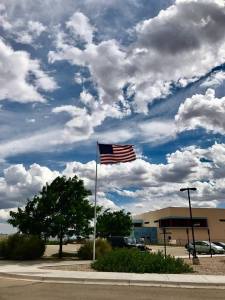
Institute of American Indian Arts (Photo compliments of Moni)

Not everyone really appreciates just how powerful the ritual of standing for the National Anthem really can be. I got a real sense of this when I was 14. My Jr. rifle team won the Wyoming-state BB-Gun finals, which earned our way to the International BB-Gun Championship in Bowling Green, Kentucky. …on July 4th. As the child of a career military officer, I was always happy to stand for the Star-Spangled Banner or to recite the Pledge of Allegiance, but standing there during the final ceremonies, the whole thing took on a whole new layer of meaning for me. That time, I had my heart in my throat. That time, the whole ritual moved me nearly to tears. I loved my country so much, and at that moment, putting my hand over my heart for that beautiful song was absolutely the…

View original post 1,498 more words

Blood Quantum


This poem is dedicated to Sherman Alexie whose poem, “13/16” begins with:

“I cut my self into sixteen equal pieces…”

My grandson cuts himself into 16 equal pieces:

4/16 Urhobo from Africa

4/16 Spanish from Spain

4/16 other European—two Swiss

German great great-grandfathers

(Werth and Kaiser), Irish, English

and who knows what

3/16 Mexican—whatever  mixtures that may be

1/16 Navaho


Who am I?  What am I?

Who are you? What are you?

Do we really know?

Who sets the rules?

-white men

-black

-Indian

-Native American

-Irish

-English

-German

from where and for whom?

He looks Navaho:

-blue black straight hair,

-pale brown skin,

-obsidian eyes.

One four year old girl asks him,

“Are you an American Indian?”

His six your old self says nothing.

She repeats,

“Are you an American Indian?”

He says, “It’s complicated.

The Navaho won’t claim him, too little blood.

He needs ¼ , not 1/16.

Caddo and Fort Sill Apache allow 1/16, not Navahos.

¼ blood is for

-Sioux

-Cheyenne

-Kiowa

-Navaho

1/8 works for Comanche and Pawnee.

Some Cherokees only want a Cherokee ancestor.


But he is none of those.

Is he Navaho?

Is he white?

The Old South goes by the one drop rule:

one drop of Negro…

Is a person with 99/100 percent white

and 1/100 black , black?

Who says?

Kids at school ask, What are you?”

He tells them.

They say, “You’re lying!”


I only know specifically about two ancestors,

the Swiss Germans.

Another great grandfather disappeared during the Civil War.

I don’t even know his name.

Who am I?

Who are you?

I think I’ll get a DNA test.

Then I’ll know how many pieces I need to cut myself into.