Book 50 for 2025: “The Well of Loneliness”, Radclyffe Hall


Published in the US in 1928, banned in England, this is the first, well known lesbian novel and without doubt one of the saddest books I have ever read. Hall was already an award winning and popular novelist when she decided to write this novel. The main character, Stephen Gordon, was born to upper class English parents. Her parents had hoped for a boy and chosen the name Stephen. When she was born a girl, they decided to call her Stephen anyway. From an early age, she was different and preferred to ride horses and do outside activities with her father who adored her rather than wear frilly dresses and do the activities common for English girls at the time. Her mother found all this off putting and never showed any love or nurturing toward her. Later in life, after an unpleasant incident with a young woman who uses Stephen as a distraction from her boring life, Stephen’s mother throws her out of the family home and she moves to London where she writes a highly successful novel.

During WWI, they are desperate for ambulance drivers and Stephen is assigned to an all female ambulance regiment in France. There she meets another young woman who becomes her lover.

An English friend, a successful playwright, convinces Stephen to move to Paris where there are no laws against homosexuality and where there is a large community of similar people, many of whom are highly successful in their careers. She and her lover live there for many years, and Stephen successfully continues her career as a writer. Then an old friend from her childhood shows up and everything changes.

An Abecedarian Poem for Juneteenth


All slaves did not know freedom

because the powers in Texas

could not, or more likely,

did not want them to know.

Eventually, three years after Emancipation,

freedom came to Texas, June 19,1865, in

Galveston when General Grange proclaimed

henceforth enslaved people could not be

illegally held as property so Texas

joined the nation acknowledging that

keeping slaves was illegal.

Long held in bondage in Texas

many formerly enslaved rejoiced,

now looking forward to a better future.

Opposition arose almost immediately.

People did not want non-whites to hold power,

quickly responded by making new laws

requiring the formerly enslaved to

stay quietly in their homes.

They were informed no public gatherings allowed

under threat of arrest.

Void of the choices, they were forced to

work for low wages.

Xenophobia continues to reign,

youth taught Emancipation but not this.

Zany as it seems, 159 years later, prejudice continues.

One Book a Week-47: “A Pipe for February”, Charles H. Red Corn


If you have read “Killers of the Flower Moon” and/or seen the movie, this is a must read. Published in 2002, this Osage novel details the daily life of John Grayeagle from his viewpoint. A young, oil wealthy Osage man at the time he tells his story, John was raised by his grandfather because his parents, like many other Osage, were killed under strange circumstances, in his parents’ case an odd car wreck. He is the cousin of Molly, a main character in “Killers of the Flower Moon”. Although he received a college education, spent months traveling in Europe, lives in an elegant house, and drives an expensive car, he still follows many of the Osage traditions, which he details as he talks about his life throughout the novel. The novel describes the murders (which officials usually claimed were accidents or suicides) from the Osage point of view. They knew something was going wrong but were having difficulty determining what they could do about it. They were suspicious of the guardians assigned them by the US government who thought they were too stupid to manage their oil wealth, yet were often stymied when they tried to gain control of their own affairs. This is their story.

The author, who died in 2017, was a prominent member of the Osage Nation, a member of the Peace Clan as is the novel’s main character. The novel’s Foreward is written by Martin Scorsese, who cowrote the screenplay for “Killers of the Flower Moon” and coproduced and directed the movie.

One Book a Week-45: “The Bluest Eye”, Toni Morrison


“The Bluest Eye” is one of the most banned books in the US. Even here in California, some in my local school district tried to get it removed from the high school library. One school board member told me it had been on the shelves since it was first published and no one cared until this year. Why the controversy about this book?

Yes, there is incest and sexual assault, but this occurs near the end. My guess is that what really disturbs some is the stark details and honesty about how people treat each other, the brutality of racism and poverty, and even among people of the same race, the cruelty of discrimination based on how people look, their level of education, their origins. The main character is poor, unattractive, and unpopular. She comes to believe that if she just had blue eyes, all her problems would disappear. She even goes to a charlatan preacher whom she believes can make her eyes blue because others have told her he creates miracles.

The relentless truths detailed in this novel create a hard look at the effects of poverty and racism.

The White Supremacist History of Tear Gas


One hundred years ago, a racist US General, Amos Fries, transformed tear gas from a wartime chemical into use against protestors. He loved war gases and saw them as the ultimate in US technology.  He advocated the use of tear gas against any form of civil disorder.  As head of US Chemical Warfare Services, he pedaled his favorite gas to private security firms, police departments, and the National Guard.  According to him, tear gas in the hands of the “White man can quell any uprising.”  He went on to talk about how White men are set apart from the Negro, Gurkha, and the Moroccan. In his effects were letters from the women of the Ku Klux Klan praising his efforts.

Today the tear gas he loved is used all over the world by tyrannical governments to control their people.

Reflections on Independence Day


IMG_3636

When I was a child, we lived on a farm where it rains around 40 inches annually.  On the Fourth of July, Dad always shot off a few Roman candles, and we had small firecrackers and sparklers, nothing fancy, just fun.  Even then I knew about the Declaration of Independence, revered its message.  Still do.

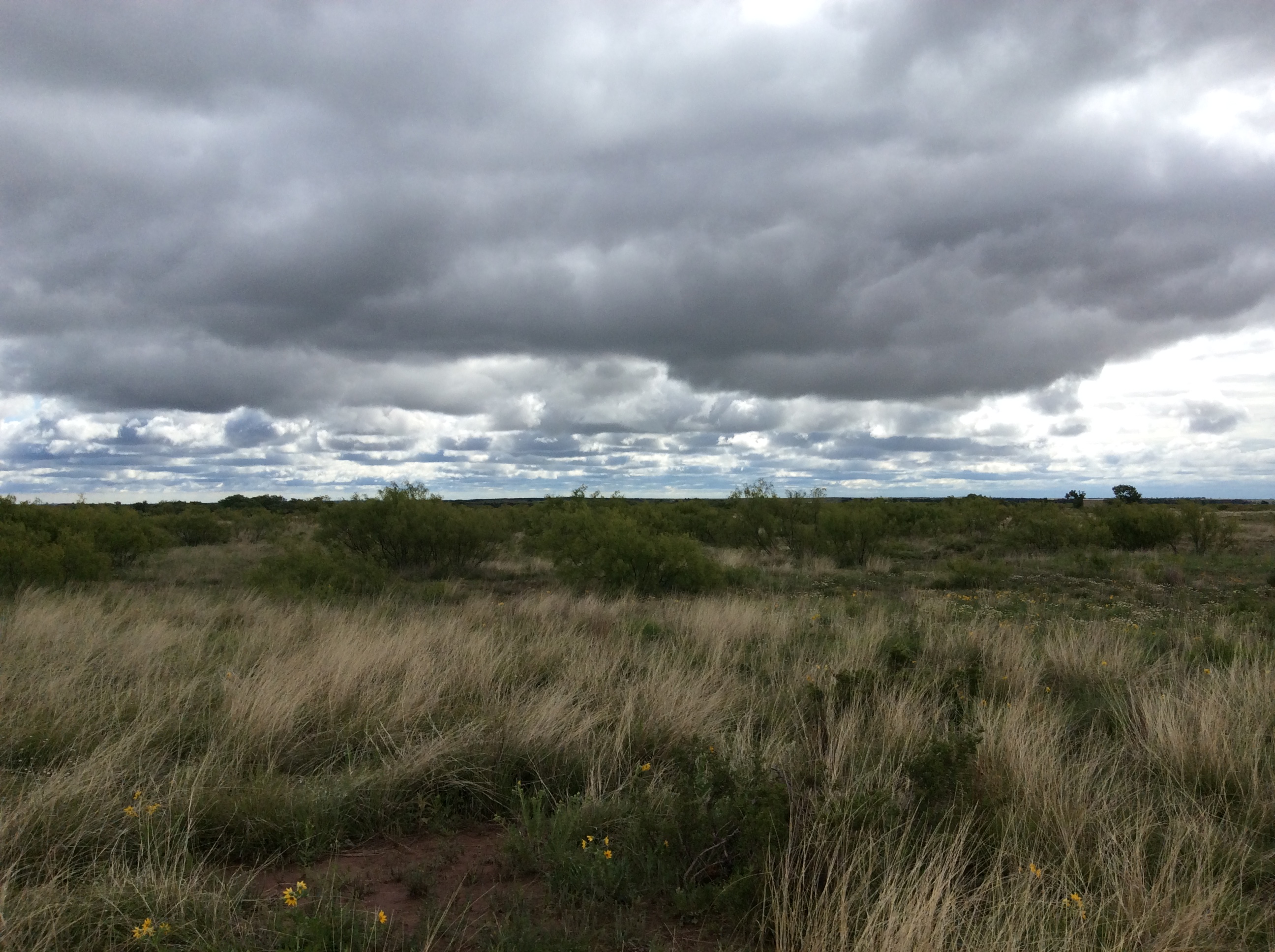
Now I live where it is hot and dry.  The neighbor’s fireworks display rivaled those found in cities–beautiful but dangerous in brown grass country.  I wonder if they give any thought to the history, to why anyone celebrates this day.

For the first time in the decades of my life, I did not celebrate Independence Day.  Why?

Born decades ago, I originally went to college in Virginia where I experienced the shock of real segregation; I had not grown up where it was like that. I was horrified, lasted only one semester, then transferred.  Later I attended a college which shut down in protest over the Viet Nam War, I supported The Civil Rights Movement, I helped create one of the first intercollegiate groups to advocate for abused women, and with an ethnically diverse group I taught diversity classes for teachers.

Now in 2020, I feel that even with all that hard, determined work, progress has been too limited.  It is as if I have been transported back to 40 years ago.  People need to learn from the history most do not even know:

-Cotton Mather, the leading intellectual and Puritan minister in the colonial era, actually helped butcher King Phillip (Metacomet) like an animal.  What did he do to deserve this?  He tried to save his Native people.  Cotton Mather later writes about tearing Metacomet’s jaw from his skull.

-In 1676, when poor whites joined enslaved Africans to rebel for a better life and decent living conditions, fighting for justice against the wealthy planters, those rich planters realized they had to get poor whites to hate Blacks.  They took land owned by Blacks and gave it to poor white people and then paid them to hunt down and abuse, even kill, people of African descent.

-Later, the same Cotton Mather mentioned above, learned from his slave that in Africa, Africans had been taking pus from a smallpox infected person and inoculating others with it to prevent smallpox from spreading.  He refused to believe any African  could be so smart even though he inoculated himself and his family after learning this.  Later, he wrote this about his African slave who had told him the story that may have saved his life: “…brokenly and blunderingly and like Idiots they tell the Story.”

-Of course, we all know that the intellectual giant, Thomas Jefferson, held the deed to the woman who would later bear him numerous children while he proclaimed those famous words that all people are created equal.

The history of racial and ethnic hatred goes back to the inception of this country.  It continues to poison progress and hope.  It never seems to end.  I am tired of it.  Enough is enough.


Quote for the day


Sadly, this quote seems appropriate given the events in Virginia.  I had hoped we were beyond this but apparently not.


“If you can convince the lowest white man he’s better than the best colored man, he won’t notice you picking his pockets.  Hell, give him somebody to look down on, and he’ll empty his pockets for you”.  Lyndon Johnson, 1970.

Meeting Phrike: Feminist Theology and the Experience of Horror by Jill Hammer


Today, I planned to write my own blog post this evening after work. Just before I read this post, I mulled over topics, whether I wanted to share a recipe or write about so many disturbing as well as inspiring events I experienced or watched in the past week. Then today a student in one of my classes loudly questioned whether the Holocaust even occurred. This was followed by another student announcing that Jews are not people. As I read through my emails, this blog post appeared. It seemed especially telling given that experience. I refuse to tolerate comments that denigrate the religion, race, ethnicity, gender, sexual preference of anyone.

Jill Hammer's avatarFeminism and Religion

Myself, I saw the numb pools amidst the shadows; myself, the wan gods and night in very truth.  My frozen blood stood still and clogged my veins.  Forth leaped a savage cohort… Then grim Erinys (Vengeance) shrieked, and blind Furor (Fury), and Horror (Phrike), and all the forms which spawn and lurk amidst the eternal shades.

Seneca, Oedipus (trans. Frank Justus Miller)

Horror is not a cognitive but a physiological or affective extra-discursive state of being. Not unlike the state of, say, feeling nausea, horror is a state of being, whose manifestation, based on the etymologies of the Greek φρiκη [phrike] and the Latin horror, may be described, as Adriana Cavarero writes, as “a state of paralysis, reinforced by the feeling of growing stiff on the part of someone who is freezing,” and further, through her mythological reference to the prototypical figure of horror, Medusa, as a state of “petrification”…

View original post 1,420 more words

White Privilege: Confessions of a Poor White Girl by Cynthia Garrity-Bond


Worth the read. I am a white mother with a 1/2 Nigerian daughter who is not very dark and who many think is Polynesian because of the way she looks. My grandson’s father is Mexican and Spanish. My grandson also is part Nigerian, Swiss German (from me), a little of other European, and Navaho. He has straight black hair, light skin, and obsidian eyes. When people ask what he is and he answers, they often think he is lying.  I did not grow up in poverty. My daughter is educated. She has a Masters Degree in Nursing and I have a Ph.D. Nevertheless, she has experienced discrimination and people have made comments to me such as, “Your daughter is really doing well for a Black girl”. Seriously!! In this country both class and race matter and get intertwined in all sorts of complex ways. No one says to an educated white woman with a good job, “You are really doing well for a white girl.”

Cynthia Garrity-Bond's avatarFeminism and Religion

cynthia garrity bondRecently FAR contributor Sara Frykenberg posted an article to Facebook that caused me to think again about the now-famous essay by Peggy McIntosh, “White Privilege: Unpacking the Invisible Knapsack.” In “Explaining White Privilege to a Broke White Person,” Gina Crosley-Corcoran does an excellent job of including issues of class, meaning poverty, into the discourse about race and privilege using the theory of intersectionality.  If I am honest, the tensions between race and poverty have made the owning my white privilege challenging.

Like Crosley-Corcoran, I was raised in poverty. After my parents divorced in the early 1960s, our fall into poverty was pronounced.  My mother liked to move, so much so that I attended no less than 15 different schools before high school.  We lived in one house for two years without hot water. I learned early on the stigma of poverty, when even a Catholic school uniform could not…

View original post 818 more words