A Surprising Find at the Library


Two days ago I drove to the local library to return “The Historian” and inquire about a book an acquaintance had recommended. The library houses a used book section at its front hall entrance. I usually only glance at it because mostly it contains books in which I have zero interest. I glanced once again. There in nonfiction I saw NERUDA painted in big, bold bright colors-blue, red, green, purple–across the top half of a book cover. Just below this was a parade of flowers marching across the middle of the cover in the same bold, bright colors. Finally, at the bottom painted in bright red on a black background in capital letters it read, “MEMOIRS.” Inside the O is printed in the same red these words,”confieso que he vivido.” I snatched it up. The little sign said 25 cents. Although I’ve read Neruda poems mostly translated into English, I had no idea he had written anything about his own life. I knew I had to read this. I knew some things about his fascinating life. I wanted to know more. I dug around in my wallet, found a quarter, and deposited in the little brown box one of the librarians had indicated.

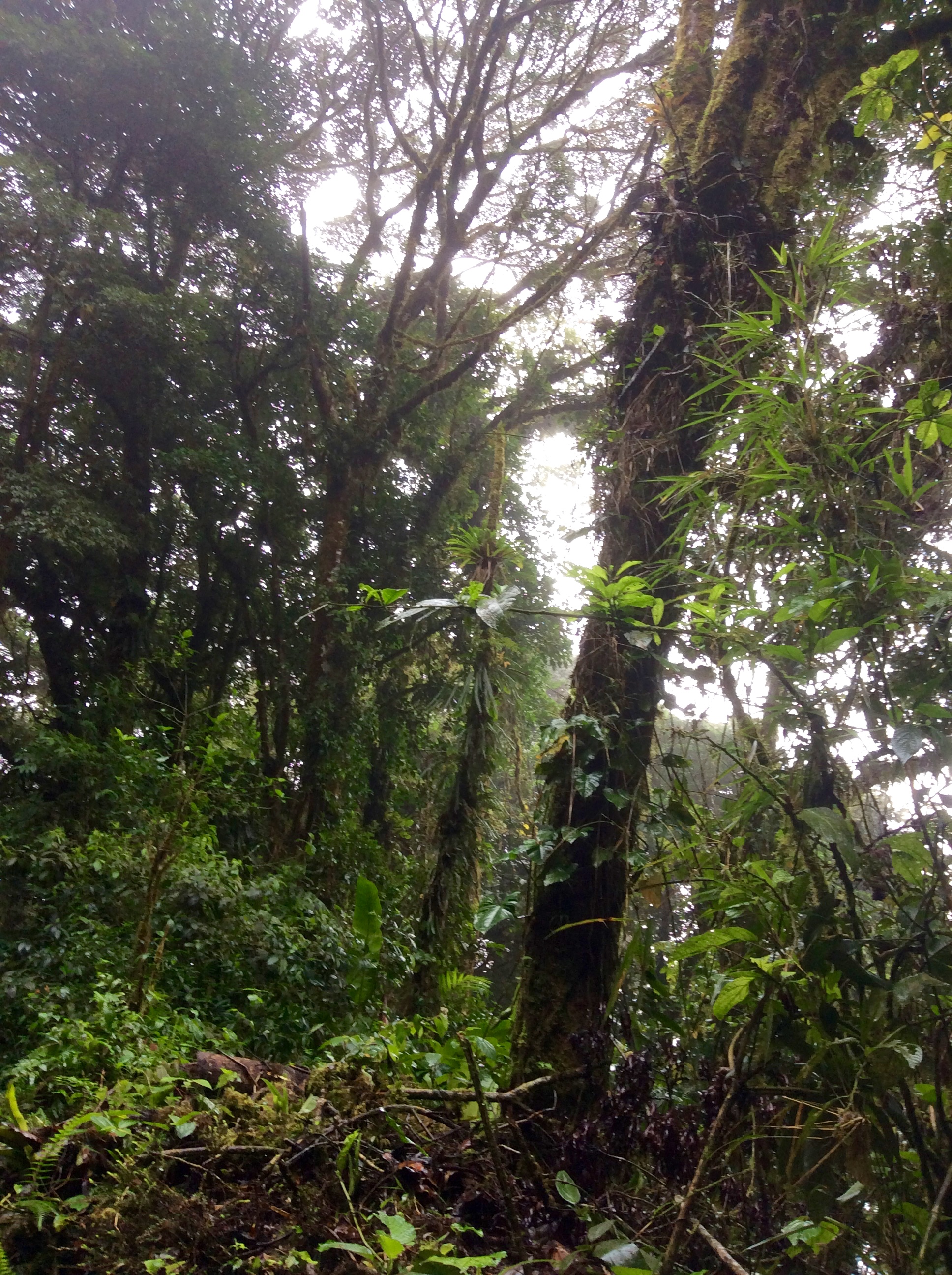
Later at home, I read the beginning, his brief introduction, explaining there are gaps here and there. He also explains, “What the memoir writer remembers is not the same as what the poet remembers.” He goes on to explain this. I will need to contemplate this more. Then in the beginning of the first chapter, “The Country Boy”, he describes “The Chilean Forest”. It starts, “Under the volcanoes, beside the snow-capped mountains, among the huge lakes, the fragrant, the silent, the tangled Chilean forest…” What continues is a prose poem describing this forest with intense sensory detail so clear the reader can see the details, the mystery, the lushness. He ends with this poem with the words, “Anyone who hasn’t been in the Chilean forest does not know this planet. I have come out of this landscape, that mud, that silence to roam, to go singing through the world.” Reading this beginning instantly linked me to his poetry I had read, to its sensory detail, to its lyricism.

They say we are all products of the environment in which we grew up whether we like it or not. Reading this is making me view this truism in a new light.

Book Six for 2024: “Look At The Lights, My Love”, Annie Ernaux


Who would have thought a person could write an entire book about a hyper market? I never heard of Auchan until I read this book. For those not in the know, located in France, it is described as a hyper-market on search engines. From Ernaux’s description and those on the Internet, I think there is nothing like it in the US. The author refers to it as a Supermarket, but it is nothing like what we call a supermarket here. It is a superstore, somewhat like the big box stores here but much more. It sells food, clothes, books, you name it, but not like Target or Costco. The bookstore is a separate area, as are many other little shops within the giant store, e.g the fishmonger. It is three stories, open 24/7, and according to the Internet, works toward being something for everyone while caring about the environment and such. The employees wear a uniform so in that regard they all look the same. The store attends to the needs of all the various religions of the people of France, Muslims, Jews, Christians, everyone. This is especially true when it comes to food. During certain holidays, the preferred food for that religious holiday becomes available.

Ernaux decides to go shopping there in 2012 and 2013 over a span of a year. She deliberately goes at different times of day to see if there are differences. There are. Certain groups of people shop early in the morning–like older people. Young singles go later, mom’s with children at a different time. When there is a no school day, gangs of teen girls show up to hang out and shop. When the weather is bad, people go there to escape. Once in a while someone recognizes her, tells her they love her writing, and they have a conversation. At the first floor entry where there are places to sit, she notices that older North African men seem to like to hang out there and watch the passerby’s.

She notices that while a person can shop in a sort of anonymity that is impossible while standing in the checkout line. Here your eating habits, what method you choose to pay, whether you have elderly people at home or babies or children are all on full display laying there on the conveyor belt for all to see. If you have to ask for help with the money, it exposes you as a foreigner. Yet people pretend they do not notice or care–perhaps they do not.

I occasionally go to Target, never to Walmart or Costco. Nevertheless, reading this book has made me notice things I never noticed before, and normally I am quite observant. Now even when I go to smaller grocery stores, I notice who is there, what they are buying. Sometimes people will ask me a question about something in the store. At places near my house, I sometimes see people I know and chat.

A Book a Week-43: “Desertion”, Abdulrazak Gurnah


Gurnah, a native of Zanzibar, won the Nobel Prize for Literature in 2021. This is the second of his novels I have read. Both deal with colonial Africa and the effects of colonialism on both individuals and countries, especially in East Africa.

In 1899, a British man, Pearce, stumbles out of the desert and collapses near the shop of a local businessman, Hassanali. His sister, Rehana, saves Pearce. This sparks a love affair, the results of which have long lasting effects on several families, not only for Pearce and Rehana, but for lovers and individual family members two generations later.

It is also a tale of governments immediately after independence and their failures. Additionally, it addresses “forbidden” love and its effects on those who genuinely love each other but cannot pursue their love. The effects are not only immediate but long lasting, affecting others not just the two lovers.

One Book a Week-9: “Flights”, Olga Tokarczuk


How to describe this unusual novel? Here’s a possible list:

-No over all plot.

-Several stories about individuals scattered throughout, e.g. read about a person and event, then many pages later back to that person and the consequences of the event(s).

-Short philosophical musings/vignettes interspersed here and there. One reviewer counted 116.

-One common theme relates to the title, Flights, in that in most of the “stories” people are traveling or have traveled on quests for “meaning” or escape from a cumbersome reality.

I learned the following from reading this book:

-Per his request Chopin’s heart was taken from his body. His body was buried in Paris but his sister secretly transported his heart in a jar of special preservation liquid back to Poland, the land of his birth.

-A Dutch anatomist discovered the Achilles tendon after dissecting his own amputated leg.

-Plastination is the method used in anatomy to preserve bodies and body parts. Several characters in the book make their living or are obsessed with this process.

This is not a book for those who prefer relaxing reading or for the “faint of heart”.

Note: The author won the Nobel Prize in literature in 2018. This book won the Mann Booker for translated literature from all over earth in 2018. I plan to read another of her books–have now read two of them–but since the other one in English is 1000 pages long rather guess it might take more than a week for me to read it. This is actually the 11th book I have read to date in 2023 but did not start blogging about them so two are missing in the blog posts,