Ethiopian Journey–From Addis Ababa to Debre Birhan


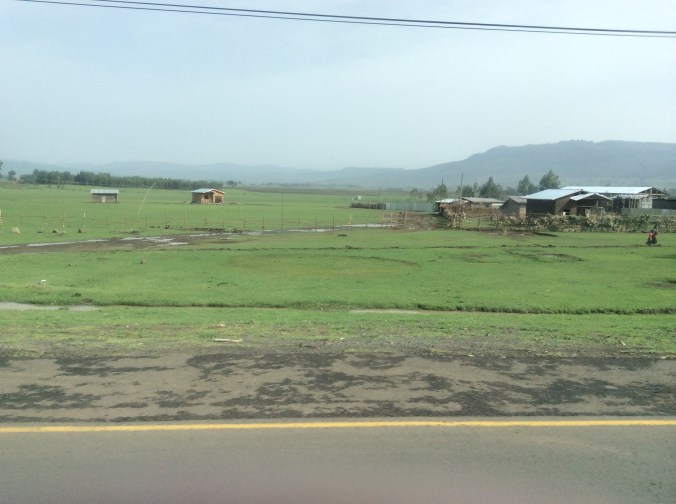
Addis is the second highest capital in the world.  Only La Paz, Bolivia, is higher.  To a large extent, altitude determines climate in Ethiopia.  Addis and the surrounding area, much of which is high altitude farmland, receives a lot of rain this time of year and looks totally unlike what a lot of people think of when they hear the word Ethiopia–not desert but rather miles and miles of green.
IMG_0248

IMG_0249

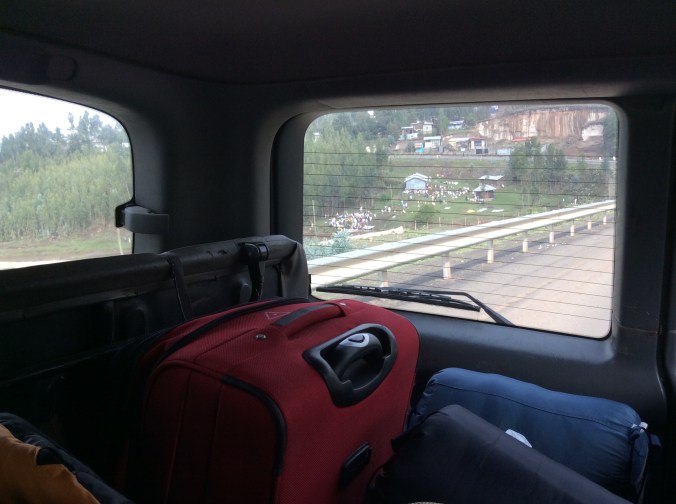
We had not driven far from Addis when we crossed a river, an area of which is considered healing.  Many people had come for priests to bless them and to experience the healing power of the water.
IMG_0246

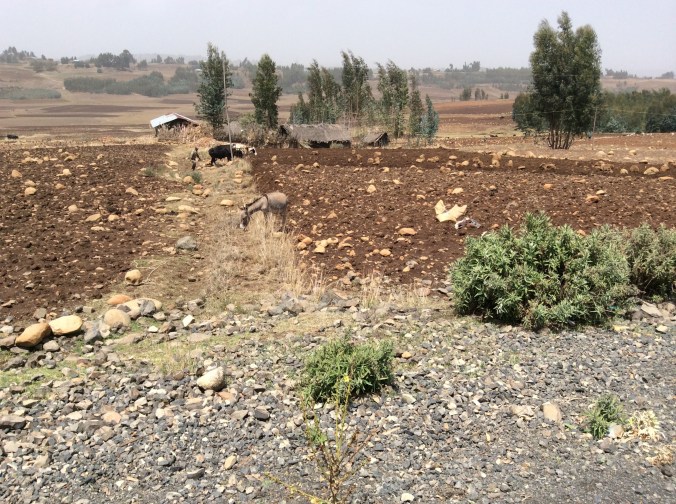
I saw only three tractors in ten days of criss crossing farmland.  Why so few?  One reason is rocks.  Many of the fields remain rather full of rocks in spite of many having been removed.
IMG_0258

Therefore, they farm the “old fashioned” way; horses or cattle pulling plows with a human behind.
IMG_0251

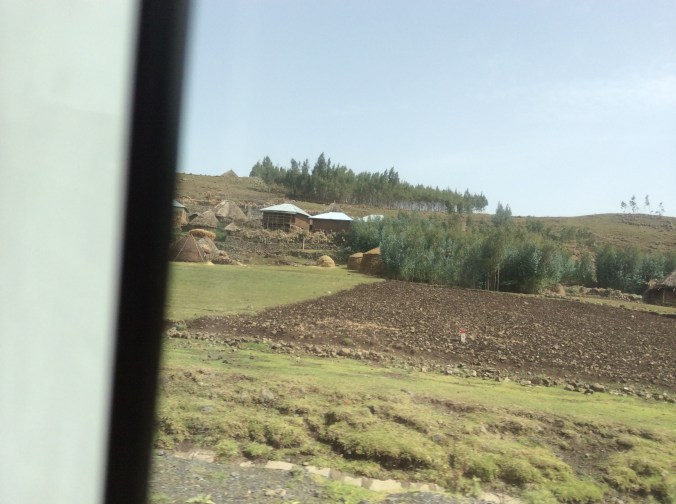
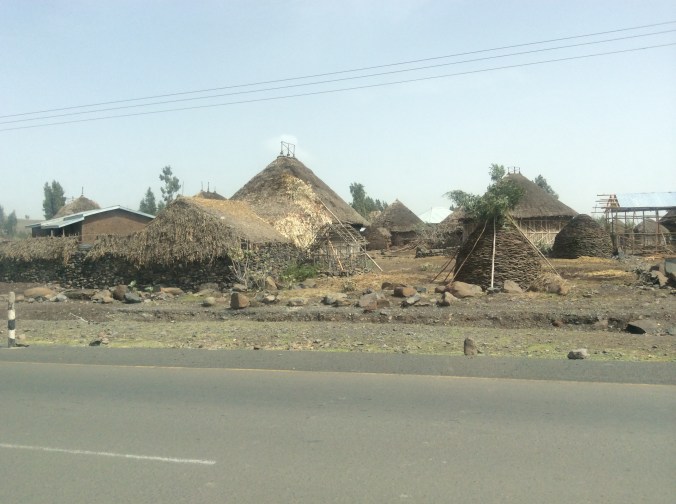
Houses in the villages in the farming areas demonstrate old ways alongside new.
IMG_0257

IMG_0259

Winnowing the way we did in the USA a century ago.

IMG_0253

IMG_0261

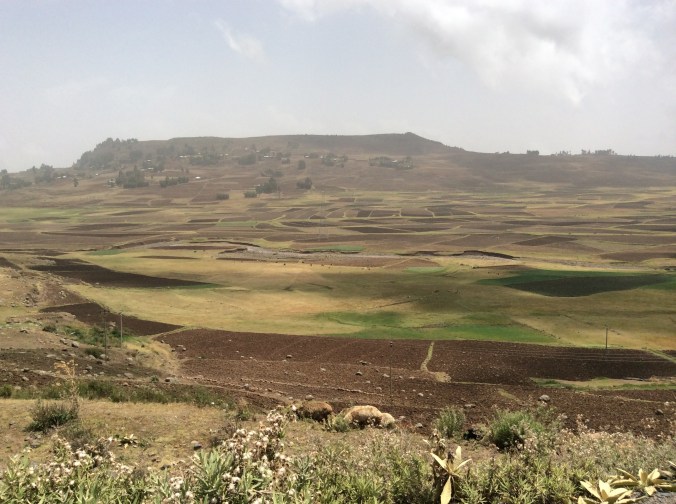
Much of the farmland is a picturesque patchwork quilt of browns and greens.
IMG_0266

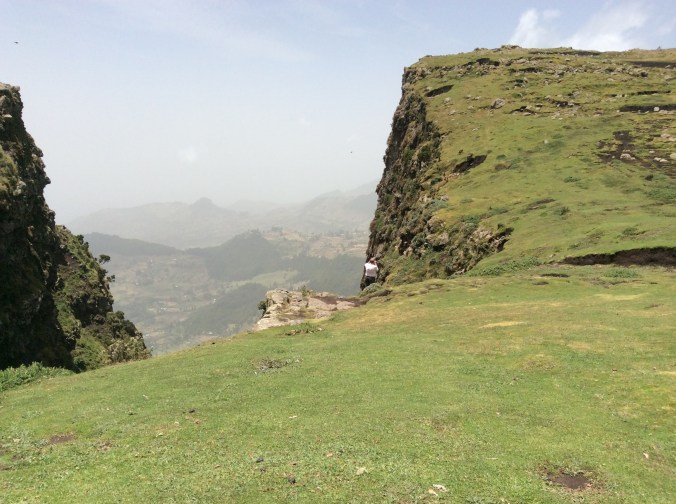
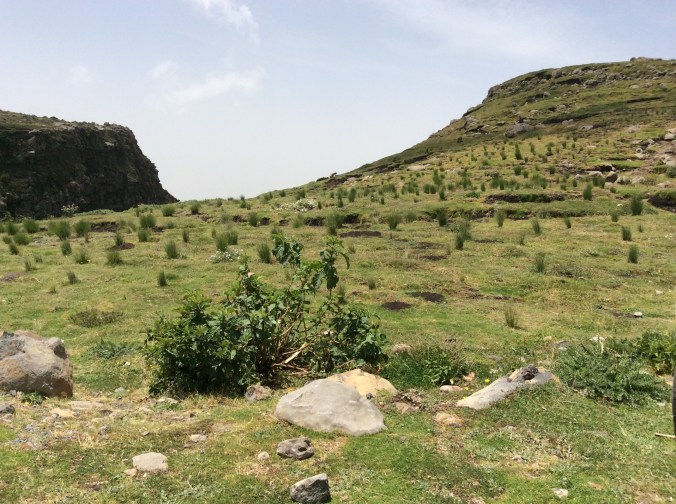
Before dropping down to lower country, we drove by Menelik’s Window.   The drop off here is steep and far.  I did not go near it–I had not yet become used to the endless drop-offs or even realized that I would need to do so.  This is one of four places in Ethiopian where you can see gelada baboons.  They are extinct elsewhere. Menelik was an Ethiopian emperor.  This “window” allows one to look from the high country for miles and miles to the landscape beyond.
IMG_0262

The large tufts of grass provide food for the gelada which are grass eating herbivores, the last of the grass eating primates.  All others are extinct.  This same grass is used by the locals for roofing material so boys stay in these areas all day chasing off the baboons.

IMG_0264

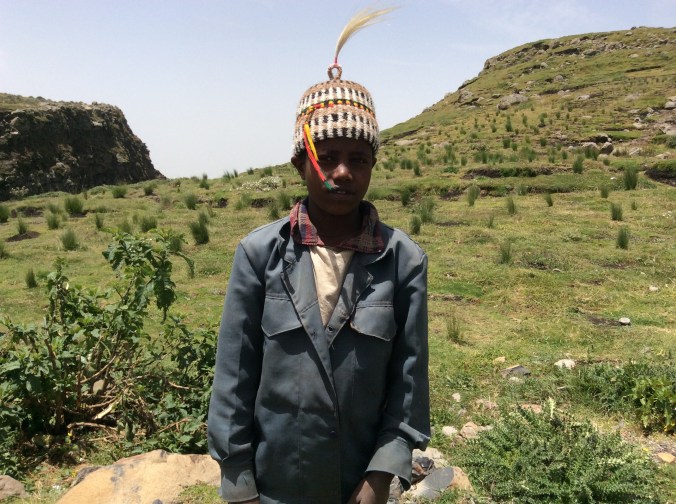
To keep themselves busy they weave woolen baskets and hats to sell which they display in the grass.
IMG_0267

This ten year old boy happily donned the hat he had made.  I bought it for my grandson who was the same age when I took the trip.

IMG_0268

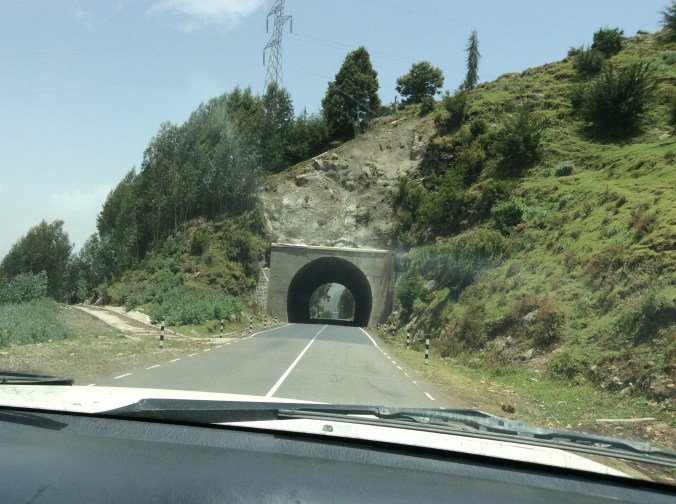
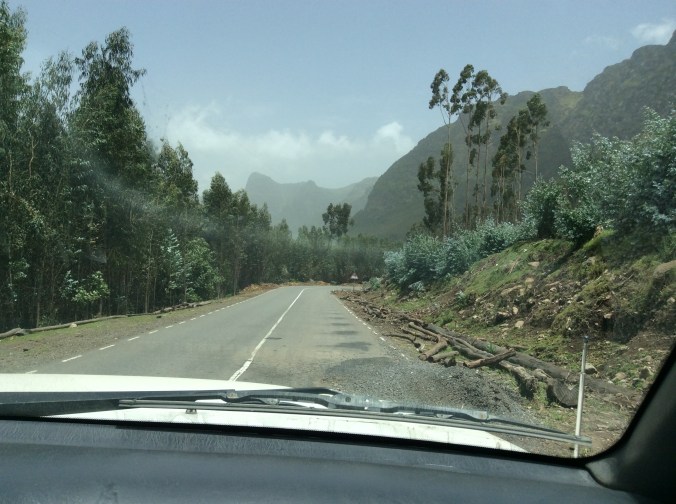
Except for the different vegetation, driving down the mountain looked a lot like driving through Colorado.
IMG_0271

IMG_0272

IMG_0276

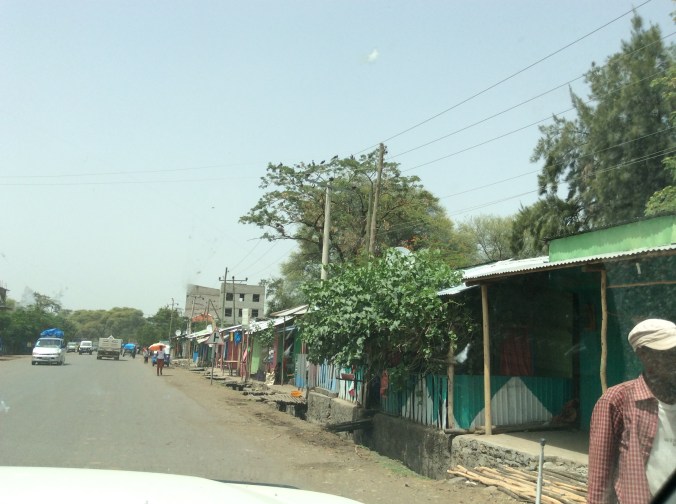
Down from the mountain the landscape appears quite different and considerably drier.  We drove through several smaller towns on our way to Debre Birhan where we stayed the first night.
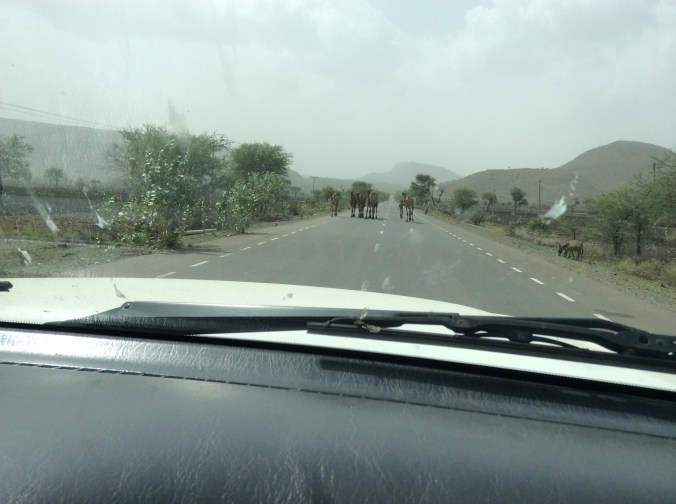
IMG_0279

Driving in Ethiopia requires navigating around animals.  Everyone drives their cattle, camels, horses, all livestock down the road whenever possible.  The roads are generally very good.  Many, built by the Italians, have stood the test of decades.

IMG_0282

Along the road we saw many of these “apples”.  My friend told us how they played with them as a child.  However, the adults all warned the children not to touch their eyes when they did–it will make you blind.  They are called Apples of Sodom–so many things in Ethiopia have symbolic meaning.

IMG_0283

These fruit could be seen all along the road and even on the road.  After driving through this drier area we rose above a huge valley with miles and miles of grass.

IMG_0285

A semi-nomadic group brings their immense herds of cattle here in the rainy season to graze.  When we drove further on above the valley, I saw the first tractor working a field as big as this grazing land.


Bones


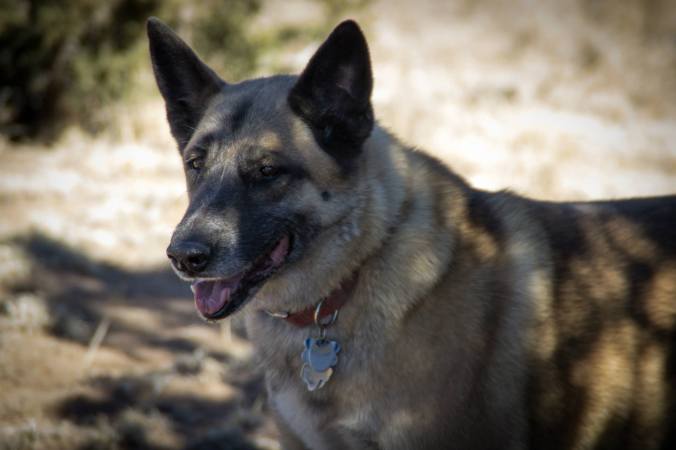
Isabella


The bone is big, more than eighteen inches long.  Isabella–

wolf, German shepherd, blue heeler, 80 pounds, lies in cool,

emerald, native grass, gnawing.  What kind is it?  From where?

Half hour hiking cross canyon, through junipers, tall grass, searching.

Nothing.

One week later, while driving through the gate, I see the neighbor’s

black lab gnawing on identical bone.  Surprised, puzzled, I wonder

if it’s the same bone.  After running the eighth mile back to my house,

I find the old bone, three pieces scattered in the grass.  Not the same.

Neighbor tells me he hiked, searched.

Nothing.


no dead animal smell

meat scraps stuck to bone

we will never know


Sacred


Warm summer raindrops on my face

Crimson cardinal drinking in blue birdbath

Feather grass waving in the wind

Last lavender and white iris before first frost

Cups of coffee from Chiapas at 6 in the morning

The sunning rattlesnake lying by my feet

Horses running wild and free

Facebook messages from friends far away

Waterfall’s roar after the thunderstorm

Night songs–coyote, cricket, nighthawk, frogs, hoot owl

Life

Sunday Sunrise ©Dawn Wink


First Flowers on the Rim of Wonder


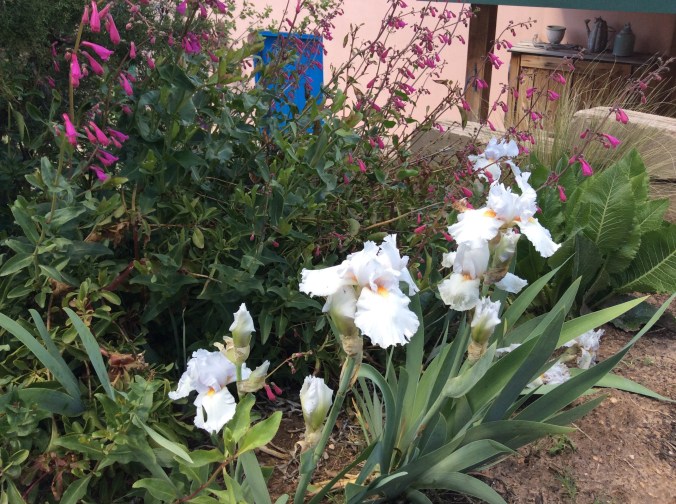
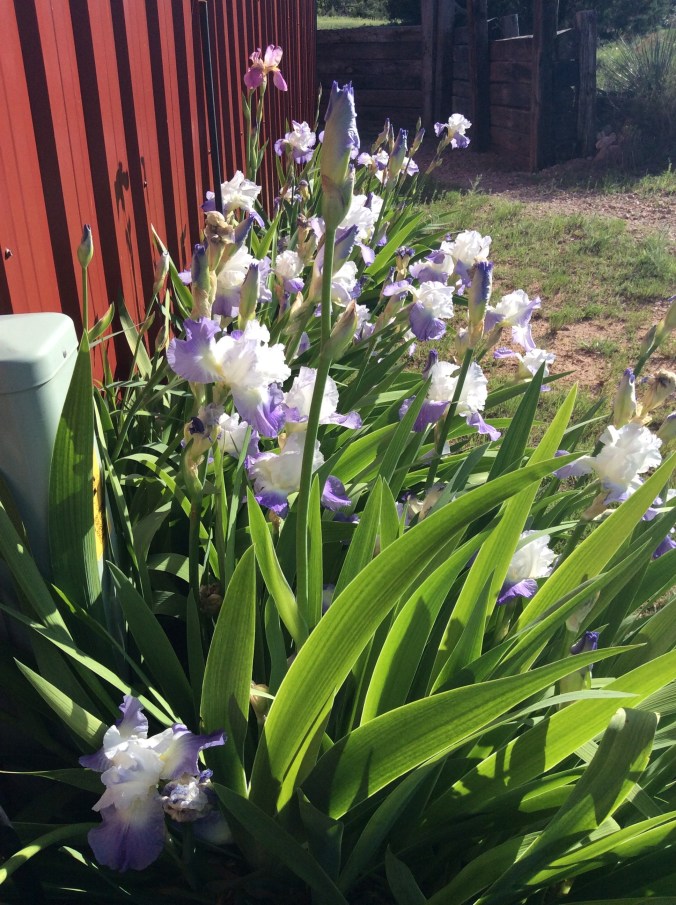
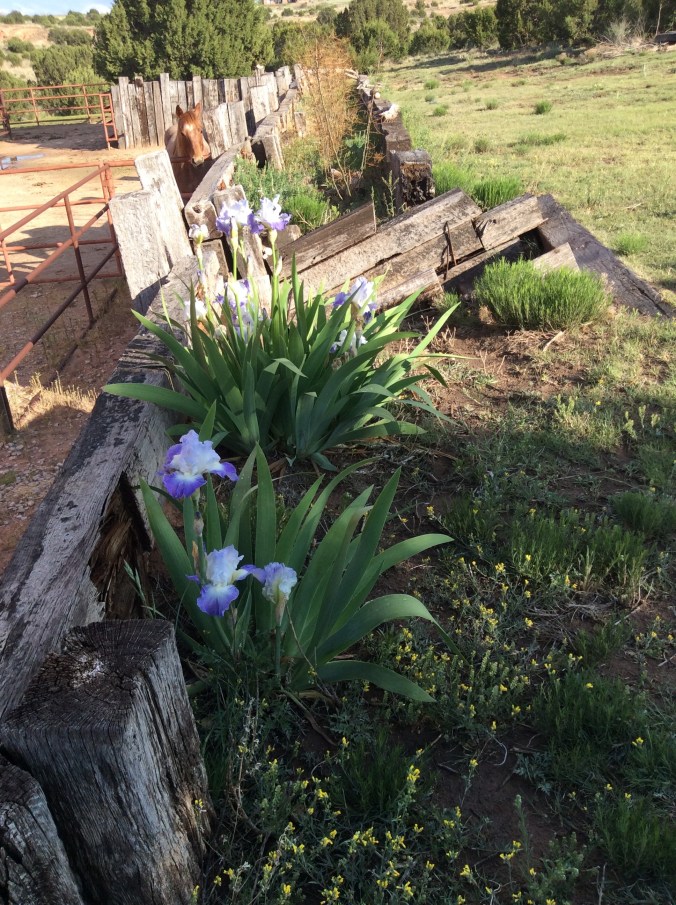
Spring comes several weeks later in the country compared to town.  The recent rains caused a sudden rush of beauty for wild flowers and iris which grow here almost as readily as the wild, native plants.  They seem to appreciate this high, semi-arid country.

IMG_2169

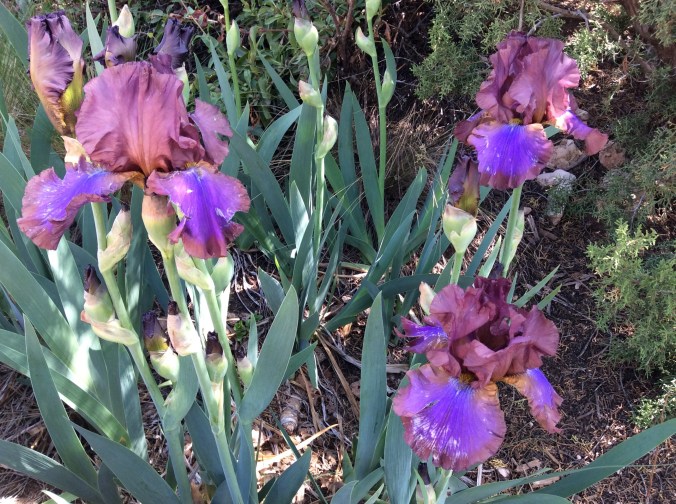
These iris thrive in spite of native, caliche soil, no extra water, nothing.  About 1 1/2 years ago, I simply planted them without soil amendment or fertilizer.  These are rebloomers.  They will bloom again in autumn.

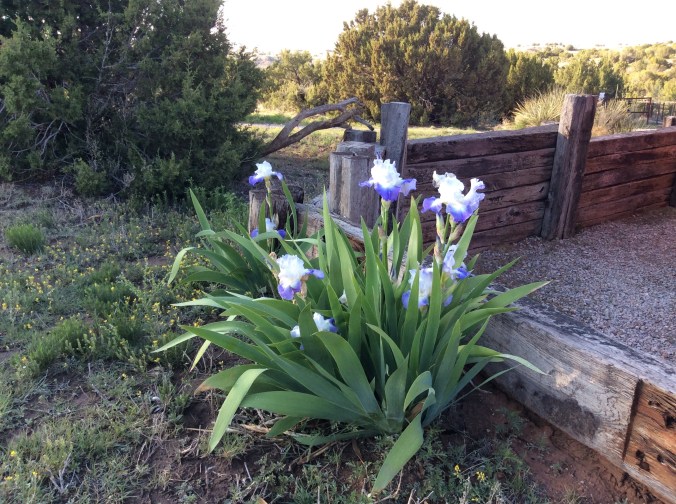
IMG_2178

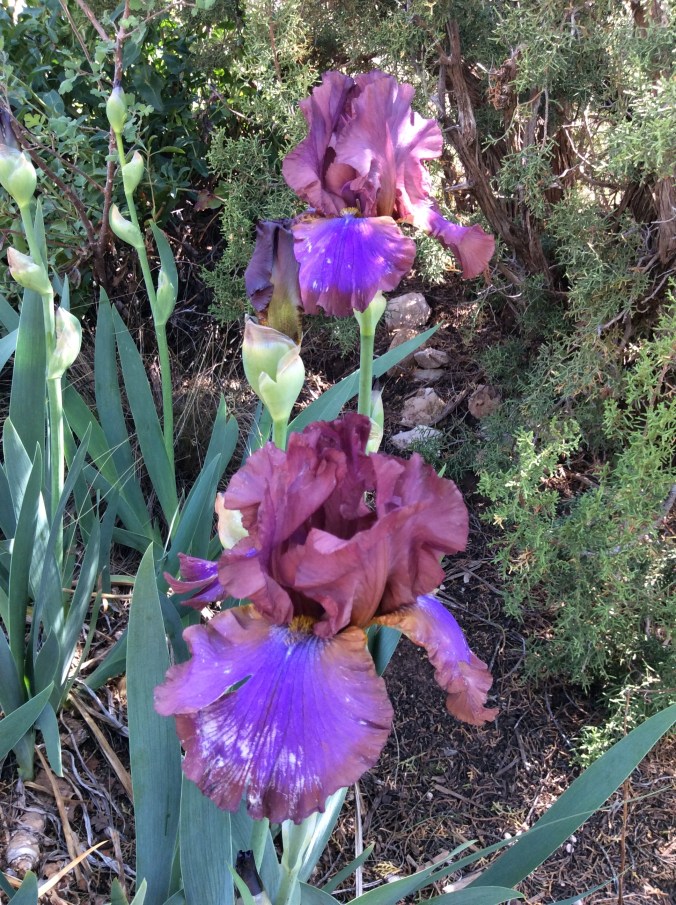
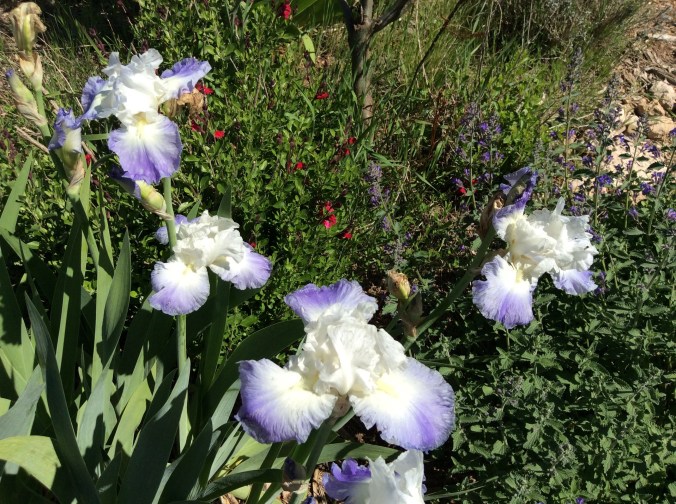
These I planted along side the barn.  Once again no soil amendment, nothing extra.  However, they receive extra water from rain running off the barn roof.

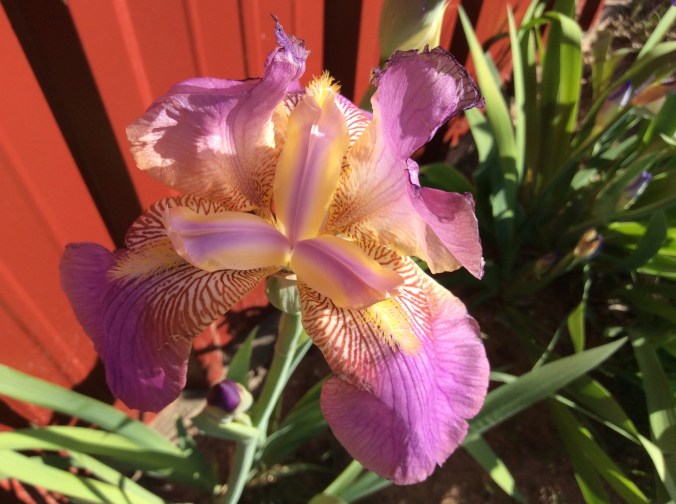
Notice, the tallest one.  I did not even know I had one that color until it bloomed.

IMG_2180

Here it is up close.  Now for the wild flowers I found just strolling around after letting my horse out to graze.

IMG_2168

After looking through a couple of native plant books, I gave up on identifying this one.  If someone who reads this knows, please tell me what it is.  I have also heard there is an app for my iPAD that identifies plants.  I have yet to find it.

IMG_2171

This grows by the retaining wall near the barn.  Although the flowers look like guara, the rest of the plant does not.  What is it?

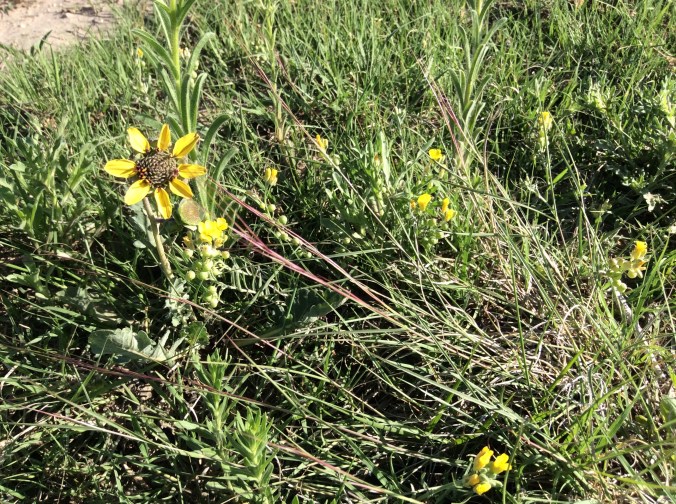
IMG_2174

Chocolate flowers were in full bloom a few days ago.  Here is one still blooming with a few scrambled eggs (yes, the common name for the smaller flowers) here and there.

IMG_2175

These carpet large portions of the pasture.  Guessing they are some type of wild onion but not certain.

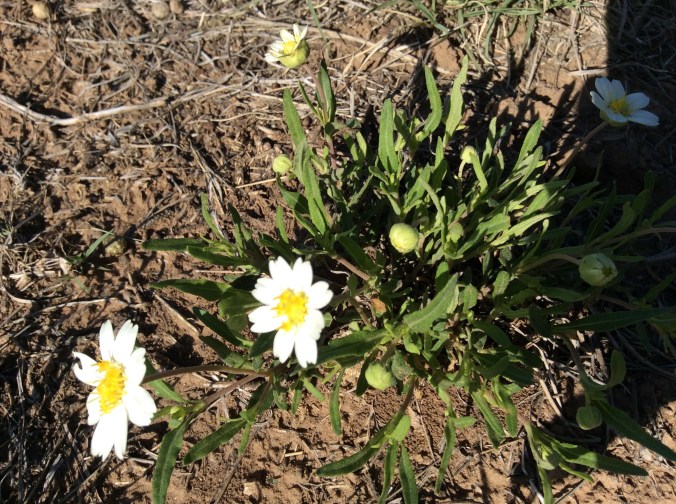
IMG_2176

The blackfoot daisies are just beginning to bloom.  They will cheer up the landscape all summer and into the fall.

As more flowers bloom, I will add photos of flowers living here on the rim of wonder.


First Iris


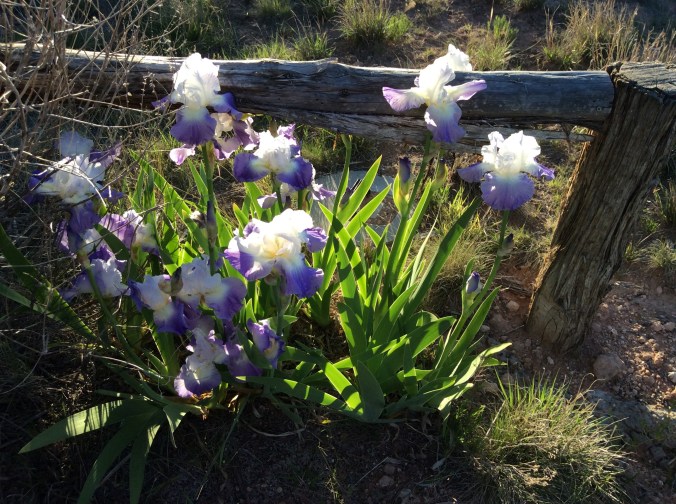
IMG_2165


First spring iris

early evening light glows

soft wind whispers


IMG_2167


Note:  for those interested in growing iris, these rebloom.  They will bloom at a minimum again in the autumn.  They are so prolific, that I separate them annually and throw them everywhere I have a blank space like here near the barn.  They will bloom for at least a month.


79-Year-Old Bird Watcher Takes Down Oregon Militant With Old High School Wrestling Move


For those of you who have been following the illegal occupation of the refuge in Oregon, this is perfect. Whenever I see how they treat those who disagree with them, how they violate the rights of the rest of us who pay taxes that fund those lands, how they violate and destroy American Indian sites and artifacts, I become increasingly dismayed, well, actually angry. Perhaps all the birdwatchers in the country should show up there. Would they shoot them? Oh, I forget, most people, unlike the occupiers, actually have to work.

Unknown's avatarWolves of Douglas County Wisconsin Film Company

Source: The LapineJANUARY 10, 2016

BURNS, OREGON — Grandfather of four Robert Saunders says he was just out to check on some young burrowing owls at the crack of dawn this morning when he was confronted by a “red-faced pudgy man with a big gun”.
And things got physical when Saunders refused the barked orders to halt and identify himself.
But it wasn’t the retired teacher who ended up on the ground.


Well heck, one second he was warming his hands by this kind of puny little fire and the next second he was running at me and shouting to get down on the ground,” Saunders told reporters gathered nearthe Malheur National Wildlife Refuge.

“Made me mad really. It’s public property and here this guy is acting all big and tough and pushy.”
“I don’t swear much at all but I told him to screw right off and…

View original post 287 more words