Jen Payne’s New Book


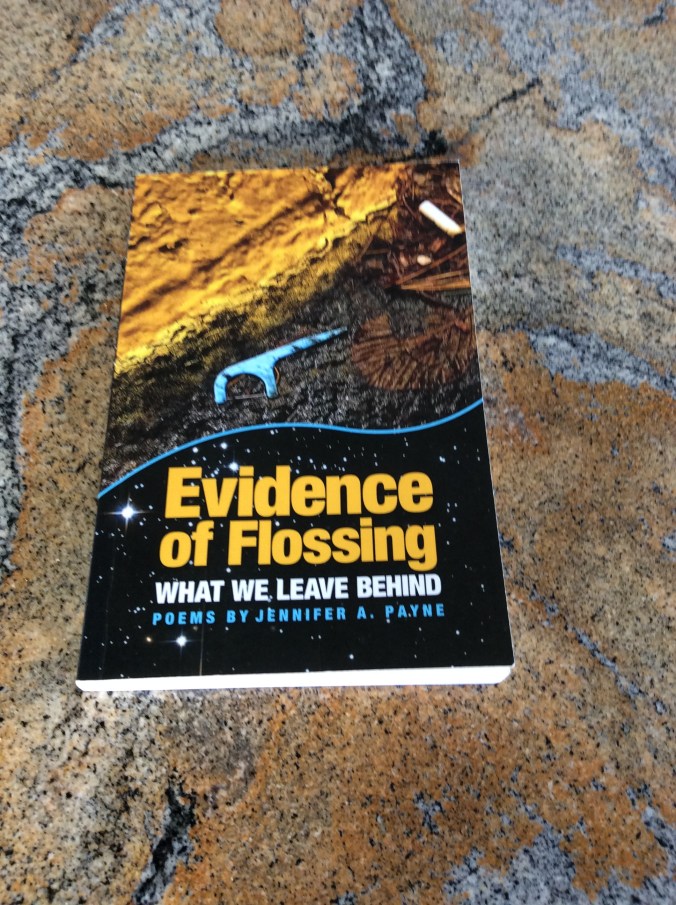
Evidence of Flossing, WHAT WE LEAVE BEHIND provides an unexpected metaphor for individual life, culture, and so much more. Nearly all the poems are accompanied with a photograph, often of trash in which lays a dental flosser (yes, one of those instruments with which you floss your teeth) with date and location.  Flossing is supposed to prevent anything from being left behind.  Hence, the title brings up an unusual play on words.

The first section Damage contains more than 20 poems which are a lament about much of modern life–mass shootings, the demise of wildlife, unpleasant changes.  One poem asks the question:  “Would God floss?”  In the second section, Contact, the poems focus on the natural world, walks in the city, the woods, beaches.  The third section, Connection, emphasizes the interconnectedness of everything, especially the relationships between humans and animals and nature.  There are poems about frogs, storms, birds.  One called Evidence of Fairies makes the reader feel the magic of old growth forests with moss and ancient trees.  In the footnote to another poem she discusses the fact that wolf spiders actually create songs to lure lovers. Then, toward the end, the Alice poems appear,  Alice as in “Alice in Wonderland”.  In my favorite poem Payne relates her encounter with a stranger picking oyster mushrooms near a path in the woods.

After reading the poems and comments in this book, I will never view flossing the same way again.  Will I find dental flossers now, something I never even previously thought about?  I use those long strings of floss not flossers.  Apparently the poems and flosser photos affected enough people that some sent Payne photos of flossers they saw here and there on the ground, some of which she has included in the book.

Even if I find no flossers, now I will certainly give a lot more thought to what I and others leave behind.
 

IMG_2901


About the author:  Jennifer Payne is the owner of Words by Jen, a graphic design and creative services company in Connecticut. She belongs to the Arts Council of Greater New Haven as well as several other arts and poetry organizations.  Her work has been featured in various publications, including The Aurorean, Six Sentences, and the Story Circle Network.  You can read some of her writing on her blog Random Acts of Writing.


Grief


behemoth bones

bleached white

African sun


grave yard for giants

some shot

others died a natural death


the living caress

bones with trunks

six thousand nerves


sensitive, searching

for answers


Sunday Poem–Rain


It’s raining! It’s raining!

It has not rained in more than a month.

I run out the door,

spreading my arms skyward.

I laugh out loud, dancing in the rain.

A smile smears joyfully across my face.

I run across the patio,

rain drops pelleting my face, my arms.

I laugh out loud, dancing in the rain.

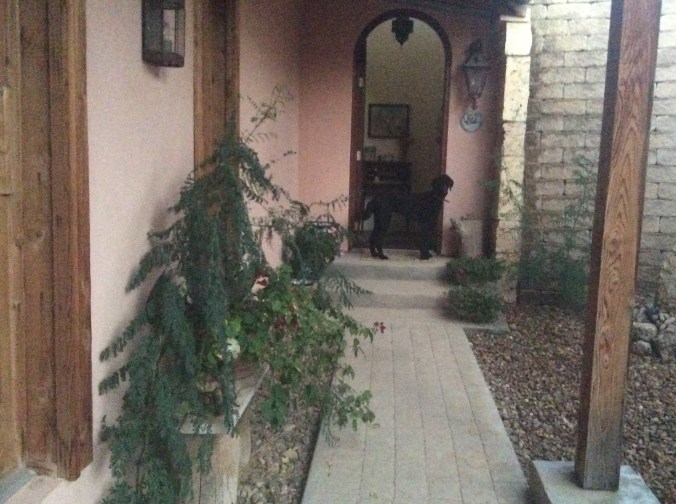
My dog stands, rivulets of rain running off her.

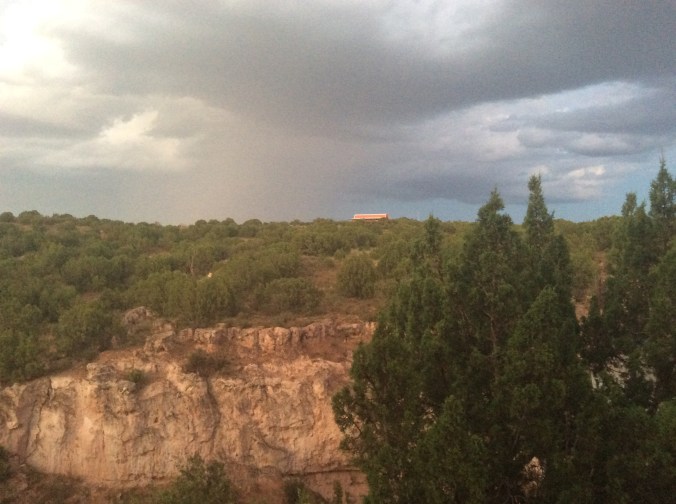
Lightning explodes, thunder booms bass,

the steel roof plays staccato music.

I laugh out loud, dancing in the rain.

IMG_1578

From my book “On the Rim of Wonder”.  This poem holds true today.  After a summer with lots of rain, it quit.  It is very dry with a high danger of wildfires now that the summer vegetation has dried, perfect fuel.


Dear Monarch Butterfly


IMG_2874

Saturday I discovered your chrysalis underneath the top of a disintegrating cable spool by the red and green barn.  At first I remained uncertain about you.  Were you really a monarch?

Then I thought, “This is too late; you won’t survive,”

I checked the weather. There is hope.  No freeze until late Thursday night.

By Monday evening your chrysalis had turned a dark green transparency; I could see hints of your wings inside.

When I looked Tuesday after horse feeding, you were out, unmoving, wings folded, your chrysalis a hollow shell.

I checked you twice last evening.  Still by your chrysalis, opening and closing your wings.

Becoming really worried, knowing a cold front was coming, I puzzled what to do, keep you inside the barn, leave barn doors open, what?

This morning you had moved to the edge of the spool top.  Today’s wind and warmth might inspire you to take your journey south; I could only hope, placed you where you could fly away easily.

When I fed the horses at five today, you were gone.

Relieved, I wish you a safe journey to Michoacan.


Walking Among the Flowers


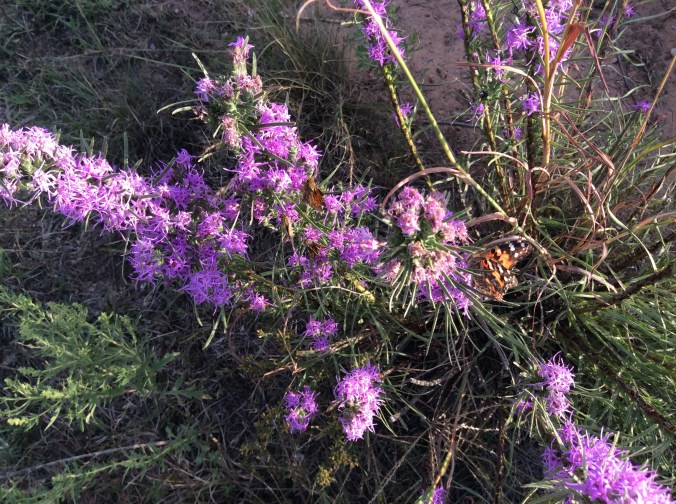
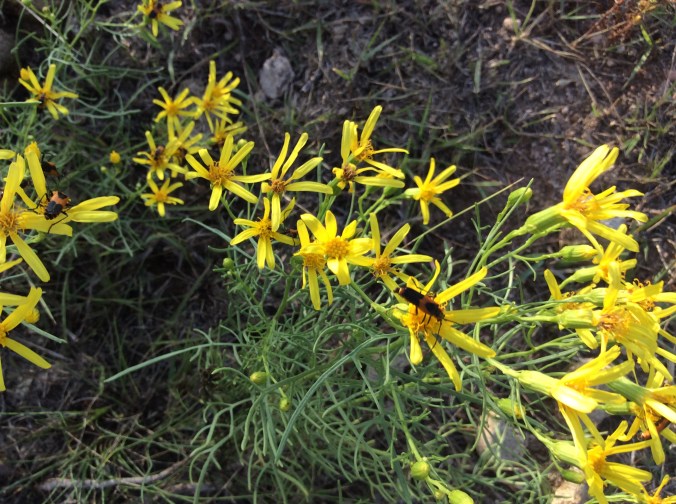
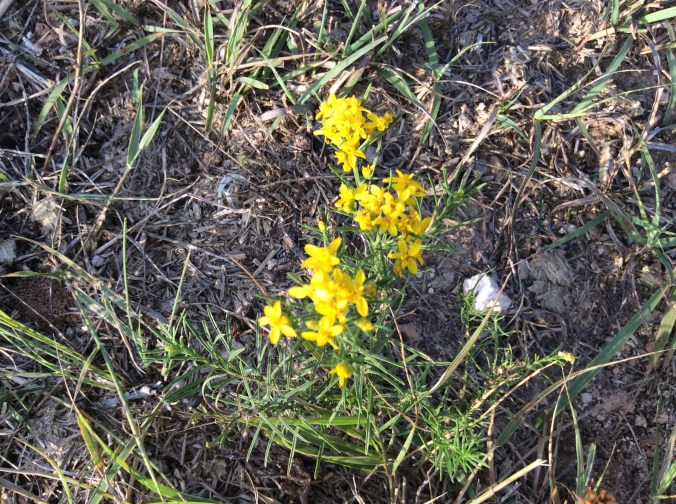
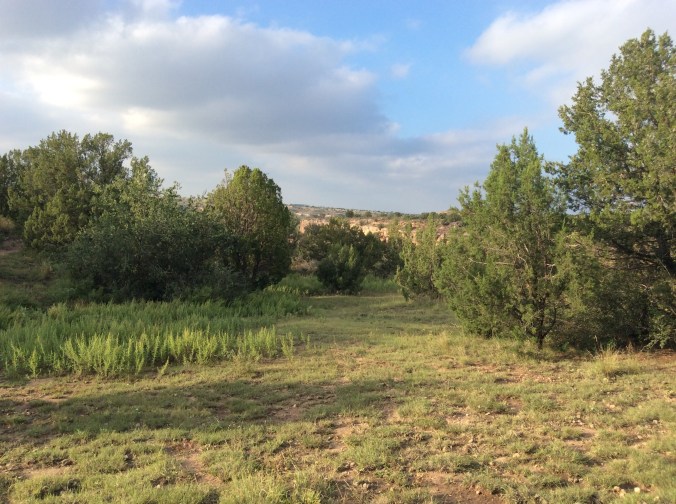
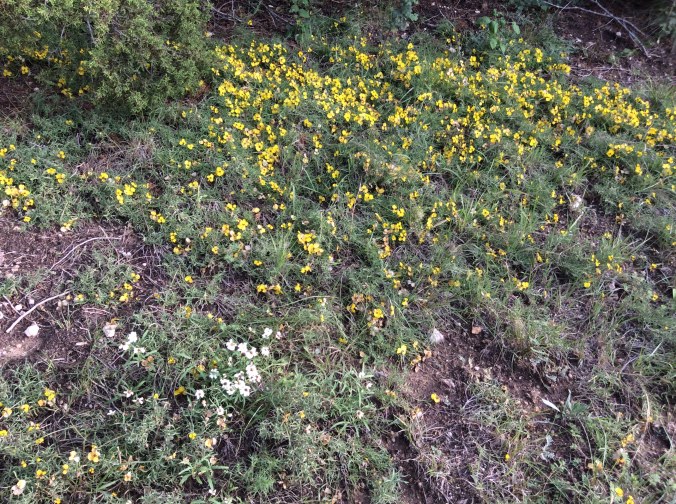
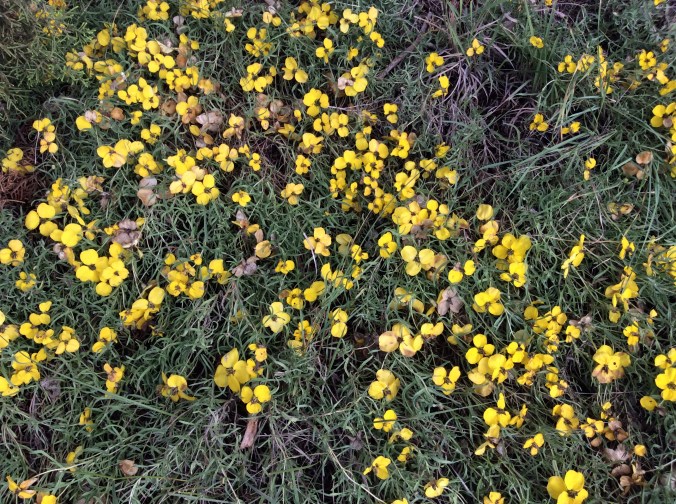
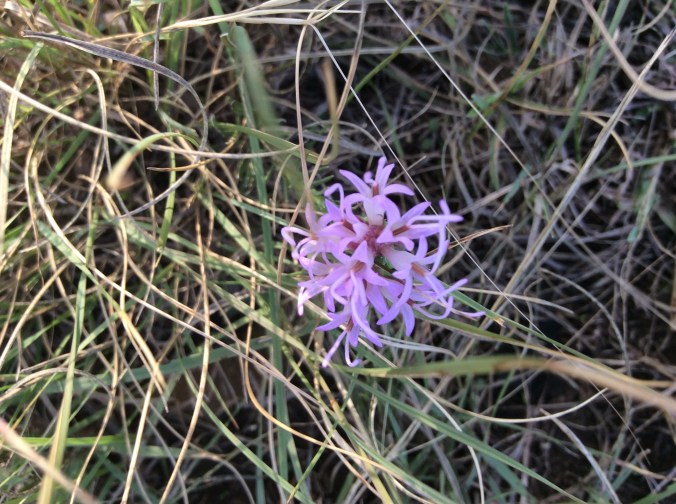
After feeding the horses, completing chores, a late afternoon walk to look for the last of the wild flowers took my fancy.  Here in the canyon country of the Panhandle of Texas, the majority of wildflowers are three colors:  yellow, white, purple.

IMG_2856

Butterflies feeding in the gay feather.

IMG_2857

At first I thought this might be bitterweed but now, not sure.

IMG_2858

Although this one and the last one may resemble each other, they are different.

IMG_2859

Looked up, the sun decided to shine–at my place four inches of rain in the last week and more than seven inches ahead of normal.

IMG_2860

Black foot daisies and prairie zinnias bloom from early spring almost until frost.

IMG_2861

IMG_2862

Athena among the flowers.

IMG_2863

Prickly pear can grow almost anywhere.

IMG_2864

I almost missed this one hidden among the grass.

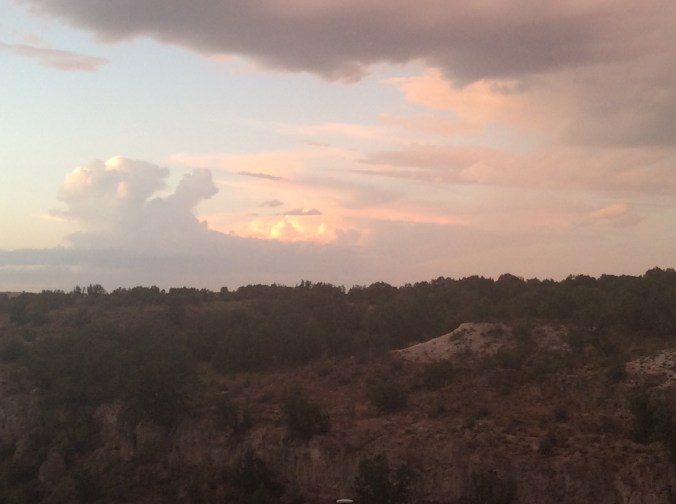
September 30–Morning


Silence sits

like a wet, grey rag

no bird song

no insects or frogs singing

junipers unmoving

yesterdays footprints

impressions in adobe mud

Silence sits

like a wet, grey rag


IMG_1591


ACoE Invades South Texas


No regard for precious wildlife, no regard for property rights, no regard for anything.

Jude Lieber's avatarJude Lieber

Photo caption: Snapshot from one of my trips to the Rio Grande — Big Bend National Park hot springs with with wild mustangs on the Mexican bank.

We knew this was coming, but it doesn’t make it any easier. Trespassing on private soil, our own Army Corps of Engineers (ACoE) have begun clearing areas for the border wall. Rather than steal land legally through eminent domain, they have arrived without permission or notification. Instead of cutting through ranchland, they have begun where it will hurt the most — nature preserves. The first location to fall beneath the saw, machete, and blade is a strip through the National Butterfly Center. Scientists had purchased the area from farmers and restored it with plant species vital to the survival of the threatened monarch butterfly. Now, only brown stubble remains. The wall will block the migration of thousands of land-based animals, cutting their territory…

View original post 369 more words