The Dates You Never Heard Of


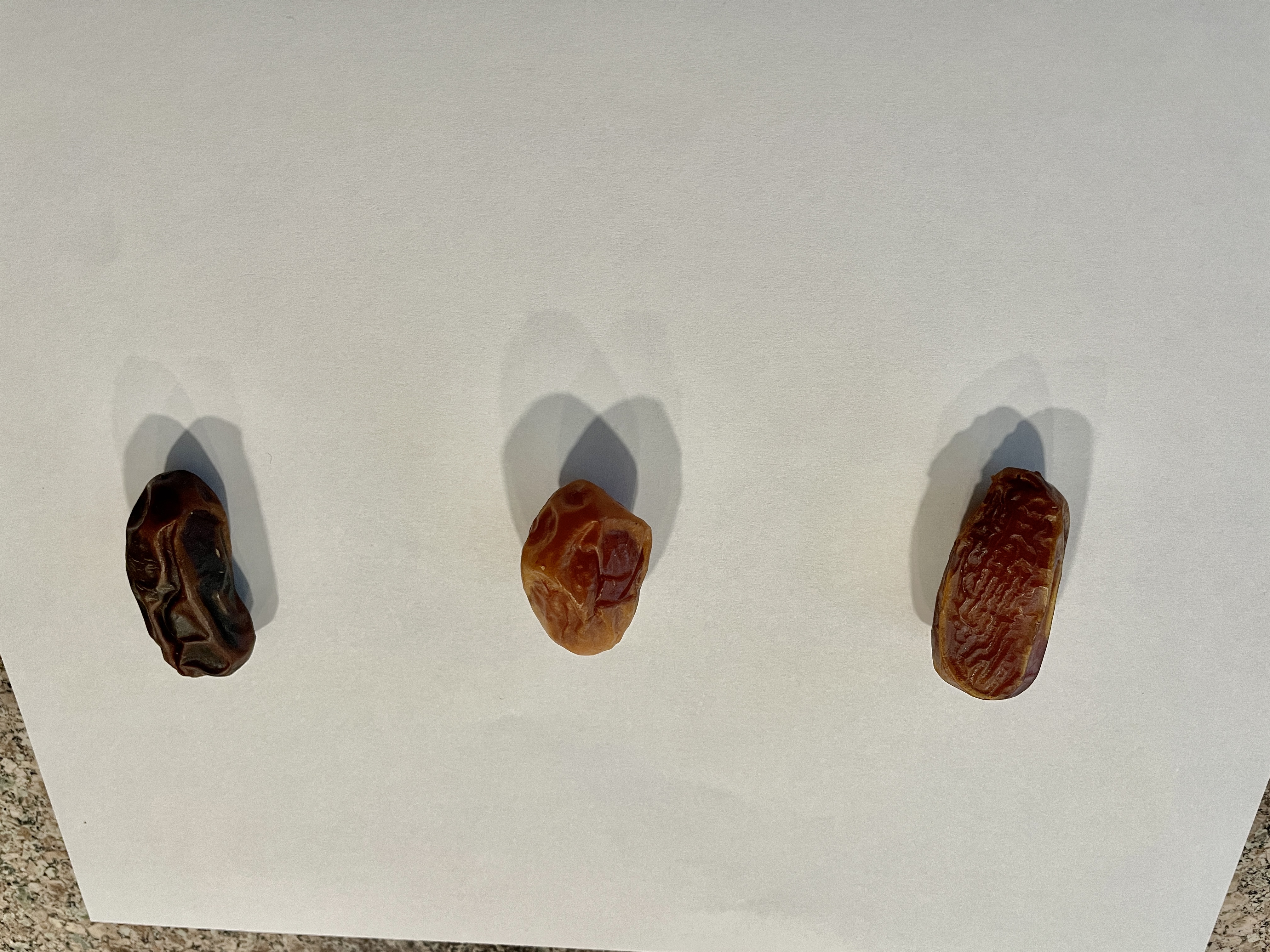
After reading about the nutritional value of dates for the brain, I headed to the nearby farmer’s market where they sell everything you can imagine from the Middle East as well as other international foods. At the dried fruit section, I studied the different kinds of dates. Medjool and deglet were familiar. Then I saw a box with three kinds of dates I had never heard of: piarom, zahedi, rabbi. They even looked a bit different. Tired of the same ole stuff to eat, I bought the box then went home and decided to research the origin and characteristics of each one.

Unlike medjool dates which are considered wet, these three are considered semi-dry. The piarom are grown primarily in southern Iran. Some depending on exact origin and harvest are one of the most expensive dates in the world. They are longer and thinner and a dark chocolate color so often referred to as chocolate dates due to both color and flavor. Another common name for them is maryami. The pits are smaller and so there is more flesh per date. They contain less sugar (lower glycemic) than the wet dates like medjool.

Zahedi dates even look really different. They are shorter, a bit fatter, and golden colored. The pit is easier to remove than most dates too. They have less sugar content than most other dates and therefore can be eaten in moderation by diabetics. They are primarily grown in Iraq and Iran but some are grown in certain areas of North Africa and Asia.

Although the majority of rabbi dates are grown in Pakistan, their origin is Iran. They too contain less sugar than wet dates like medjool. They are reddish brown and usually a bit fatter than piarom dates. Their flavor depends on the soil and the weather conditions under which they are grown. Generally their flavor tends to be caramel-like and nutty.

Like most dates, these support gut health and provide electrolyte balance due to high levels of potassium and magnesium. One big advantage is their lower sugar levels. In addition to the above, like all dates they contain high levels of polyphenols. I will buy them again.

On the left is piarom, then zahedi, and finally rabbi. Some of the zahedi are very light colored.

Book Seven for 2024: “After Eden, A Short History of the World”, John Charles Chasteen


Want to learn a lot in less than 400 pages? Read this book. Published this year, it is the most recent book by a prominent Latin American scholar and historian. After humans learned agriculture and built cities, most of the population of the world became increasingly patriarchal and warlike. The divide between rich and poor increased. Egalitarian foragers and wandering hunters existed only in more remote areas. A few still exist in those remote and less modern corners of the world, often places where few others want to even go. This quote says a lot about the current state of affairs:

“Our civilization has thousands of years practice making war. We have almost NO practice making global peace, but without it we are doomed. Today’s pervasive nationalism and rearmament is unlikely to help us make global peace.”

And a page later:

“Only a true unanimous global effort has any chance to preserve our common home.”

He notes that saving Earth will take huge social transformations, including curbing the excessive consumer capitalism that currently pervades plus overcoming a world wide history where half of humanity mistreated the other half, a practice that still continues.

One Book a Week-5: The Importance of Paris by Cynthia F. Davidson


This memoir take place when the author decides to move to Paris in order to address certain “issues” related to her childhood and young adult years. She grew up in Saudi Arabia before the oil boom and went to high school and lived in Beirut when it was considered one of the best cities in the world. She had to leave when Lebanon became war torn, her dad was kidnapped, and her sister shot. Her return to the US proved traumatizing even though she is not genetically of Middle Eastern descent. Paris was filled with Lebanese refugees so she moves there in an attempt to understand what happened to her beloved Lebanon and why.

This is not an ordinary memoir. I could not stop reading it; I wanted to know what happens next and why. It includes a graphic honesty not found in most memoirs I’ve read. In addition, it contains political and historical explanations for the events that transpired during the time period of the book.

Want to learn more about the background to current events in the Middle East? Want to read about a remarkable life? Then read this memoir.