Book 26 for 2026: “The Loneliness of Sonia and Sunny”, Kiran Desai


By an author whose previous novel won the Booker Prize, this novel was long listed for the most recent Booker Prize. Although 670 pages long, it did not take me as long as I expected to read this because I found I kept going because I wanted to know what was going to occur. It is the tale of two families and two young people, both of whom have studied and lived in the United States. The background city for both families is the Indian city of Allahabad. The two, retired, family patriarchs get together frequently to play chess even though their families are sometimes rivals for status and influence.. The two do not live far apart and all the older family members know each other, including those who have moved away to Delhi and other places. The youngest members do not know each other and accidentally meet on an overnight train. At that point they do not know that their two grandparents had tried to match make them in an arranged marriage. Later, this becomes an embarrassment.

Sonia wants to become a novelist and is attending college at a small liberal arts college in New England where she becomes involved with a famous but cruel artist who becomes obsessed with her and whose influence she has become unable to escape, initially literally and later psychologically. Sunny lives and wants to stay in NYC to escape the overbearing influence of his mother and the violence between her and the two brothers of her deceased husband.

Not wanting to reveal all the complexities of the lives of these two young people who come to love each other but whose lives keep tearing them apart and the challenges they face as they try to make sense of their lives, I will simply say this is a novel I recommend. The reader learns a lot of about Indian culture and its variances, about the huge differences among different parts of India, e.g. Goa and Delhi, but also how universal family and personal struggles really are.

Book 43 for 2025: “Salt Bones”, Jennifer Givhan


This novel surprised me by being a page turner. Once I read through the first couple of chapters, I had to keep going. In Southern California the Salton Sea, once much larger and the home of a thriving resort, now has shrunk and only a few people live there. Not far away lies the Imperial Valley, one of the largest agricultural regions in the US which is close to the Mexican border. This is the setting of the story of the little town of El Valle, the surrounding areas, and the tale of two families, one rich, white landowners, the other Mexican-indigenous. Mal, one of the main characters, has always lived on El Valle, worked hard, tried to forget the disappearance of her sister, and raised two daughters alone. Another local girl goes missing, then a week later her youngest daughter also goes missing. Frantic, she searches for answers, wonders if there is a link, and keeps dreaming of the local, indigenous legend of the horse headed woman, El Siguanaba. Meanwhile readers learn about the long friendship and affair between Mal’s oldest daughter, Griselda, and the son of the valley’s largest, white landowner, Mal’s difficult, disabled mother, her father, and brother’s, one of whom is running for office after going to Stanford, and the youngest brother, Benny, who is now a detective. Not only does this work of fiction combine Latinx and indigenous cultures, it also addresses environmental collapse, family secrets, and the complex relationships between mothers and daughters.

Catrinas


In 1913, Mexican print maker Jose Guadalupe Posada sketched the original Catrina, an elegant, upper class skeleton woman in a ball gown to symbolize the emptiness of the upper classes.  Subsequently, Catrinas have come to be a part of El Dia de los Muertos, Day of the Dead.  None of this has anything to do with Halloween, absolutely nothing.  People sometimes associate the two erroneously, but only because of the dates when they occur.

This evening I was privileged to be one of the judges of a Catrina contest.  Before the contest occurred, the evening began with some traditional Mexican dancing.

img_2395


img_2400

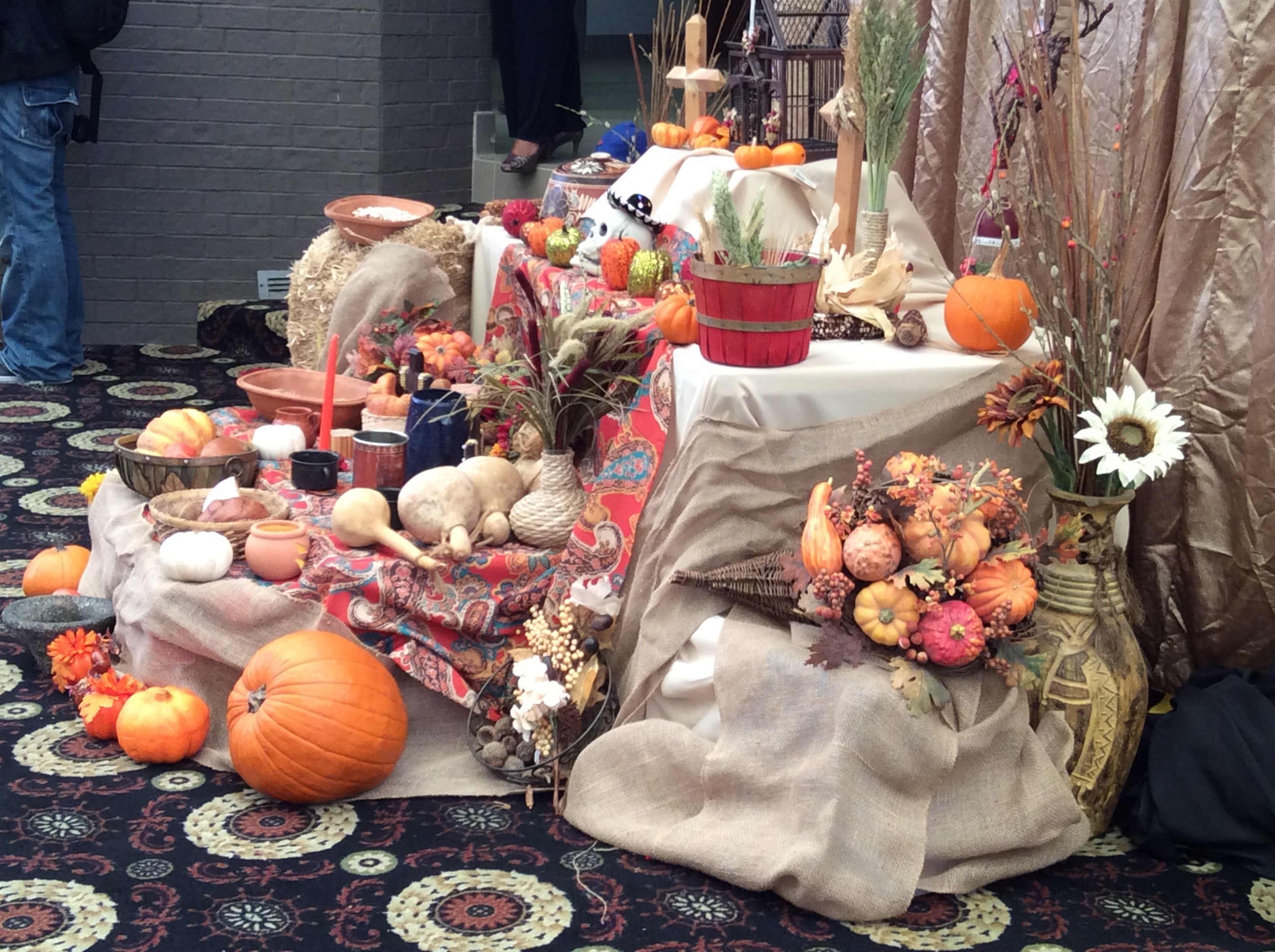
There were also several traditional El Dia de los Muertos  family displays to honor deceased ancestors.  The following was the most elaborate.

img_2399

Finally, the Cartrinas were ready.  Ten young women competed.  The following photo shows the top three, judged for originality, costume, and makeup.

img_2406

The young woman on the left never smiled.  The top makeup impressed everyone.  The skeletal bones you see on the young woman on the right were all painted on and a backbone, etc. was painted on her back as well.  The young lady in the center won the costume portion–a bride in a black veil, elegant, empty.