Book 32 for 2025: “My Name Is Emilia del Valle”, Isabel Allende


The last two books of hers that I read were set in the more recent times when Salvador Allende and later Pinochet were presidents of Chile. This one dates back to the 1800s and the Chilean Civil War. In 1866 a nun of Irish descent living in San Francisco has a passionate affair with a Chilean aristocrat and becomes pregnant. He abandons her; their daughter becomes the woman in the title of this novel. She is raised by a loving step father, an intellectual teacher from whom she learns to be independent and defy societal norms. At a young age she becomes the writer of short pulp fiction novels using a fake male name. The income from these helps her family live a reasonably good life.

Bored with writing these lucrative little books, she convinces a San Francisco newspaper to hire her as a journalist where she works along with a more seasoned journalist, Eric Whelan. Eventually, the two are sent to Chile to cover the civil war and violence occurring there. She sees this as not only an opportunity to satisfy her adventurous spirit but also an opportunity to find her biological father. She encounters dangers, almost gets killed, and sets off to find herself in the far southern reaches of the Chilean wilderness, learning from the indigenous people who live there how to survive in remote mountains.

Note: One of the places she goes was nearly impossible for non indigenous people to find during the 1800s and many never made it. Today, it is a popular area for hiking, camping, and exploring nature.

Book 31 for 2025: “Cold Kitchen: A Year of Culinary Journeys”, Caroline Eden


What a delightful, entertaining book! The title refers to her basement kitchen in Edinburgh, Scotland, where she lives when she is not wandering the globe. Each chapter highlights a certain place in her travels, in this case Ukraine, various countries in Central Asia, e.g. Uzbekistan, Russia, and the city of Istanbul, which she says is one of her favorite cities to visit especially in winter when tourists are gone. In one chapter, “Russian Railway Pies”, she and her husband ride the train from Moscow to the eastern shore of Russia–the Trans Siberian Railway journey. They did this in winter when the temperature in some places they stopped were as low as 50 below zero.

Each chapter contains her experiences in an individual country or city. She describes the places in detail, the people she meets, the food she eats. She also relates her feelings regarding these places, many of which she had previously visited, how they have changed over the years for better or worse–worse in the case of Russia, what they mean to her. In each chapter she always goes back to her kitchen, her dog, hiking the Scottish highlands, and her cooking, usually a recipe where she is trying to re-create a food she ate in one of these places she loves.

This is her most recent book, published in 2024. She also has a series of books about particular places where the entire book is dedicated to that particular place. Mostly, she has travelled in Central Asia, Russian, the Balkans, Turkey. I enjoyed this book so much, I plan to read another one about her other adventures. She is not just on these adventures for fun but also as a career so she knows many journalists, diplomats, officials in these places.

Book 21 for 2025: “A Trip of One’s Own: Hope, Heartbreak, and Why Traveling Solo Could Change Your Life”, Kate Wills


This book was not quite what I expected. It is somewhat memoir in that she talks about her career as a journalist accompanied by photographers and such which is not really on your own, about her marriage and divorce, the new guy, and actually traveling on her own. However, a large part of it, which is quite fascinating, is the history of the solo women travelers in history starting with the nun Egeria, who wrote about her own travels throughout the Middle East in the years AD 381-384. Centuries later the book, “Itinerarium Eerie”, provides the details of her journeys and her “boundless curiosity”.

The book provides details of the adventures of many women who traveled solo: Emily Hahn, Nellie Bly, Martha Gellhorn–once married to Hemingway, Annie Londenberry, Gertrude Bell–the first woman to ride by camel across the Empty Quarter in Saudi Arabia, Helena Swanwick, Ethel Smyth, Jean Baret–the first woman to circumvent the globe, Isabelle Eberhardt, Elspeth Beard. I realized in reading this I had actually read about one of these women, Sarah Hobson, who rode all over Persia (Iran) on horseback disguised as a man and have read several books about Gertrude Bell. In the 1700s, Jeanne Barat sailed around the world on a scientific expedition disguised as a man. In 1983, Elspeth Beard circumvented the globe on a motorcycle to heal the trauma she had suffered. Others rode bicycles, some used various forms of navigation, but all defied the norms of their time. Many encountered all sort of dangers and nearly died.

Yes, the book does give women advice on how to travel safely alone, what to pack, etc. And toward the end she tells the reader how to find adventures nearby in the countryside or streets where you live, how to open the eyes and ears, all the senses, and notice your surroundings in new ways.

Book 20 for 2025: “The Color of Water: A Black Man’s Tribute to His White Mother”, James McBride


I will confess that I read this book before when it first came out decades ago. This past week, I reread it because several women on the street where I live decided to start a book club and this is our first book. McBride’s mother was a remarkable woman who grew up under horrible conditions in the South. Her father, an orthodox rabbi, did not love his crippled wife and made everyone work hard. He was more obsessed with money than religion. Jews were not very welcome where they lived and McBride’s mother found more acceptance and understanding among their Black neighbors. She escapes to NYC, meets and marries a Black, Christian man, converts, and they start a church together. He dies suddenly; she is left with their many children and works hard to make sure her children are successful, sending them off to schools where they are often the only children of color. Then she marries another man and has more children so there are 12 children. This remarkable woman makes sure all of her children go to good schools, go to college, and become successful while she works at what most would consider menial jobs. In this book McBride details not only his own growing up but also the history of his mother and his siblings. It is a remarkable tale of one woman’s determination to keep going, educate her children, and never give up no matter the circumstances.

April Is Poetry Month–3 poems for the first three days


I am a bit behind so decided to share three poems I wrote more than ten years ago about my favorite animal obsession, pumas. These poems were first published in my poetry memoir, On the Rim of Wonder, which is available on Amazon and Barnes and Noble.

I

My neighbor walked out her door

found a puma lying in the lawn.

Puma rose, stretched, disappeared.

At night when I open my gate

I wonder if she lurks

behind the cedar trees,

Pounce ready.

My daughter dreams puma dreams:

a puma chases her up a tree.

There are no trees here big enough to climb.

A Zuni puma fetish guards my sleep.

I run with puma

Night wild

Free.

I scream and howl

Moonstruck

Bloodborn.

I hike the canyon,

stroll around my house,

look for puma tracks.

I see none.

I would rather die by puma

than in a car wreck.

II

I watch for eyes, blue changing to amber and back.

I put my palm, fingers stretched to measure, into the footprint.

Too small, bobcat.

No puma.

My thin body squeezes between the rocks,

climbing quietly down the cliff.

Watching, listening, searching.

No puma.

Pale amber rushes across my vision line.

My heart quakes.

I watch; I wait.

It is Isabella, a golden whir chasing rabbits.

No puma.

At sunrise, I walk the rim,

watching.

At sunset, I walk the rim,

waiting.

At night, I walk the rim,

dreaming.

No puma, not yet.

III

I want

to walk

with you

in my dreams

scream your screams

feel your blood

rushing

your heartbeat

mine

soft golden fur

wound in my hair

your amber eyes

glowing

through my brown

death defying

together walking

moonlit

wild

free

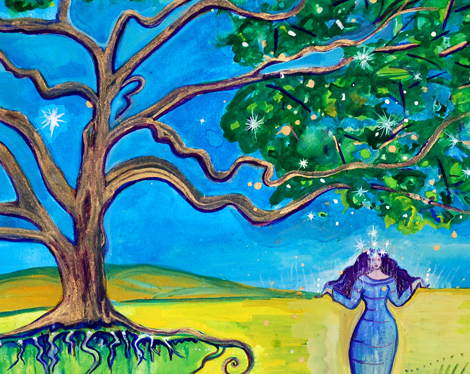
Note: My puma obsession continues. This painting and several others of pumas hang in my house. I now have two puma Zuni fetishes. I hike in the mountains hoping to see one in the wild.

Book Ten for 2025: “Four Seasons in Rome”, Anthony Doerr


If you have ever felt enchanted by a trip to Rome, you will find this memoir delightful and informative. It made me want to return just to stay a while, wander around, visit the more obscure places Doerr describes, people watch, eat, and drink local wine.

In 2007, Anthony Doerr, the 2015 Pulitzer Price Winner, won the Rome Prize to become a fellow at the American Academy in Rome. He and his wife, Shauna, moved to Rome with their newborn twins, Owen and Henry. This memoir memorializes the four seasons they spent living there. They learn to care for babies; wander throughout Rome visiting tourist sites, local restaurants, the butcher, the baker, the toy store; learn enough Italian to acknowledge all the Italians who stop to admire the babies; and attend the vigil for the dying Pope John Paul II.

While there intending to write his later novel (the one that eventually won the Pulitzer) and failing to do so, he does manage to write a short story which I have read in one of his collections and to read everything by Pliny the Elder. His discussions about his readings makes me want to read some of Pliny the Elder myself. As in his short stories and novels, Doerr’s descriptions, language, and observations delight and enchant. This is a wondrous book about one of the world’s oldest and most fascinating cities which he calls, “a Metropolitan Museum of Art the size of Manhattan with no roof, no display cases…

Two Poems for International Women’s Day


I.

Why

and

What

draws me

to

witches

herbal secrets

moonlight

night riding

ancient ruins

and

archaic codes.

It is the Goddess blood I carry,

remembrance of a past

when women ruled

when peace reigned

and ALL were healed.

II.

Woman, wondrous, wild

daughter of the moon,

mysterious, magnificent

fierce secret keeper

guardian of the universal key.

Note: These poems were originally published in my book of poetry, “On the Rim of Wonder”, available online at Barnes and Noble and Amazon.

Book 39 for 2024: “The Return”, Hisham Matar


This book won the Pulitzer Prize in 2016. The subtitle, “Fathers, Sons, And The Land In Between” indicates a bit of the subject matter–how sons and fathers relate, but in this case it is a tale of horrible grief and suffering when Matar’s father is arrested and imprisoned in the notorious prison of Qaddafi in Libya. For decades Matar tried to find out what happened to his father. There is no record of his death and no one knows what happened to his body. The book details the lives of his family and their search for news of, hopes he might be alive, and what happened to Matar’s father. To this day no one knows. In 2012, 22 years after his father’s kidnapping when Matar was 19, he returned to Libya to try to learn more, met with uncles who had also been imprisoned, some for 20 years. This is the tale of his family’s suffering and hope. It also relates in detail the horrors of Qaddafi’s reign, what happened to many in his most notorious prison, and the resilience of so many who managed to survive, including close relatives of the author.

Note: After Qaddafi fell, there was hope for a new, unified government. However, as of the present, Libya is ruled by two rival administrations and is a divided country.

Book 35 for 2024: “Woman of Interest: A Memoir”, Tracy O’Neill


In 2020, the author, Korean, adopted as a child, nearly 30, decides she needs to find her biological mother before her mother dies. Finding few leads, clues, she hires a private detective who disappears. Then she takes the task of investigating on her own. This book details her investigation, her long relationship with a Serbian furniture mover, life with the parents who adopted her, and her career as a writer, plus going to South Korea to meet her biological family.

Her writing style is a bit different and somewhat rambling. However, for those who have experienced the same sort of search, this book provides details on how to go about finding “the lost”.

Book 34 for 2024: “The White Mosque”, Sofia Samatar


This memoir tells the tale of an unusual tour for a specific purpose, to follow the path of Mennonites who left Europe to escape conscription into the army since the Mennonites are pacifists. The author’s own life is unusual. Her mother was a Swiss Mennonite missionary to Somalia. Her Muslim Somali father taught the Mennonite missionaries Swahili. The two met and married. Samatar grew up and lives as a Mennonite. She teaches African and Arabic literature at James Madison Un. She is most famous for her fantasy novels and short stories which is how I discovered her writing.

In the late 19th century a group of German speaking Mennonites left Russia for Central Asia where their leader believed Christ would return. They suffered many hardships, rejection, abuse, but finally found a place that welcomed them in the Muslim Khanate of Khiva in what is now Uzbekistan. There they built a white church which the locals called Ak Metchet, the White Mosque. Their village lasted 50 years.

If you go online, you can find tours today that follow the route of these Mennonite travelers, trace their route. This book details Samatar’s experiences on the tour, the tour guides, the food, the architecture, the culture and the history: a 15th century astronomer king, the first Uzbek photographer, Mennonite martyrs. She also discusses her own unique upbringing, local beliefs and culture, how people develop their own personal identity, and the surprising interconnections people sometimes discover.