Book 19 for 2024: “Unearthing”, Kyo Maclear


Several months after Maclear’s father (who was a famous journalist) dies, she decides to take a DNA test to find out more about her family health and personality history, mainly because of the stories about a particular grandmother. She wonders if certain traits she and her sons have might possibly be inherited. The results of the test are a shock. Her father, the father she adored, who raised her and adored her, is not her biological father. At first, she thinks perhaps it was a sperm donor, but then she discovers this is not the case. Through the DNA test and her detective work, she finds two biological half-brothers (she was an only child before this discovery) who are willing to communicate with her, send her photos, etc. She tries relentlessly to acquire more information from her mother, who is often unforthcoming or tells her contradictory information. Then her mother gets dementia.

This is also a story of plants, of gardening. Both she and her mother are amateur botanists and expert gardeners. When nothing else works in their mother-daughter relationship, their love of plants and gardening holds them together. Even with dementia, her mother knows plants. Their other joint endeavor is ink drawings and love of art.

Additionally, this is the story of family, family secrets, inter-racial marriage, and challenging relationships. Kyo’s mother is Japanese living originally in England and later in Canada who often struggled with her status as a Japanese immigrant. Her “real” father, the one who raised her, was of British and Irish descent; her biological father was a Jewish formula one race car driver.

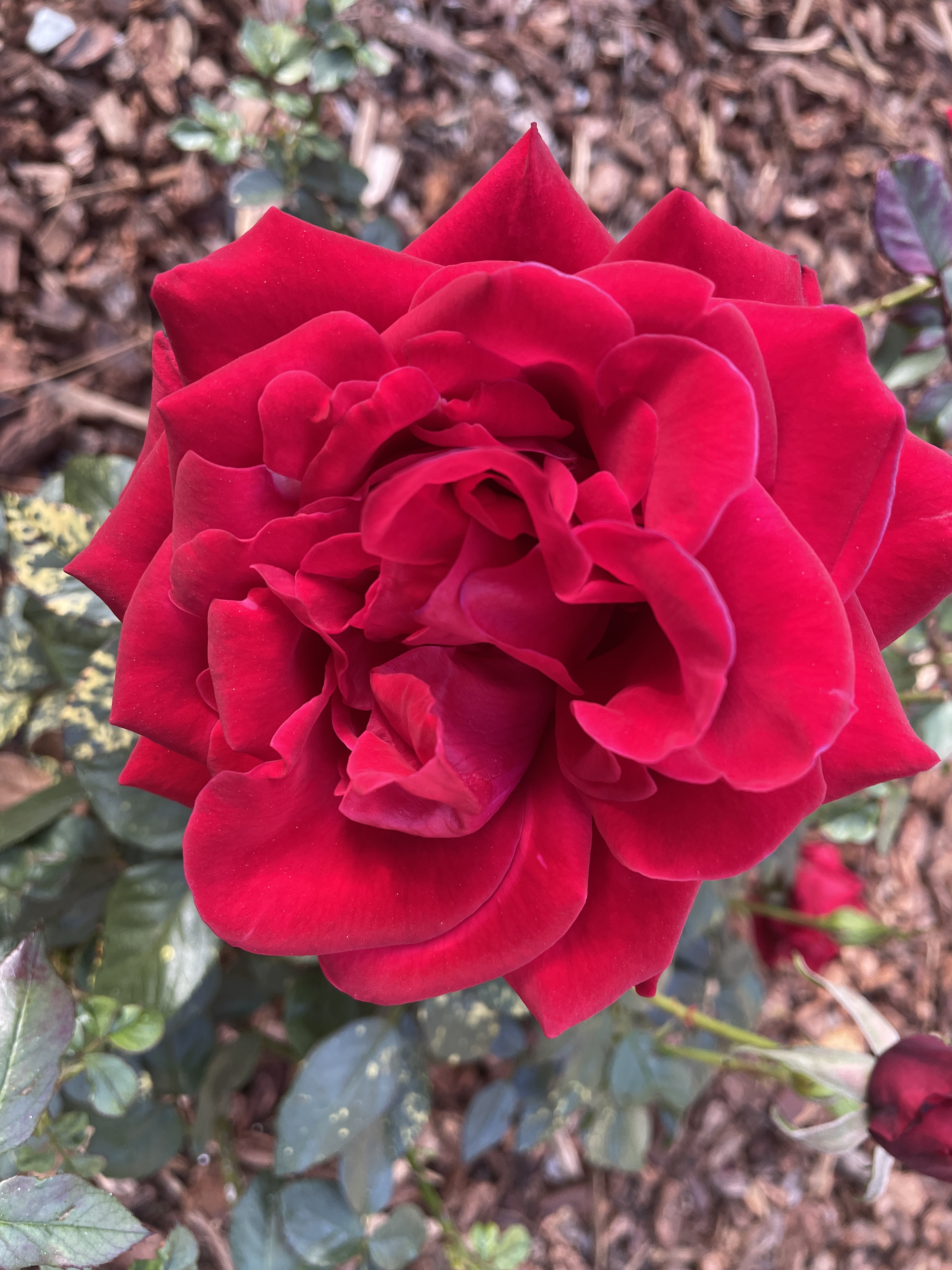
Red Roses


He’s very good at wooing:

gifts–chocolate cherries,

red roses, delicate lingerie,

I love you.

He wears his mask well,

keeps calm, a handsome spider,

weaving a silken web.

She laughs, tells her friends

just how very special she’s

sure he is.

He wears this mask for months,

finds them the perfect apartment,

swimming pool, gym, marble,

granite, luxury appliances.

She’s sure he loves her:

the gifts, the perfect apartment,

fancy restaurants, luxury weekends.

She’s late, heavy traffic, an

emergency at work. He

screams, wants to know

why; no explanation matters.

He hits her for the first time, her

torso, knocks her down.

Tomorrow 24 red roses

arrive at work. He begs

forgiveness. She’s sure

he’s sorry; it won’t happen

again.

Two months later, she’s

late again. Real reasons he

does not want to hear. He

screams, he hits, he knocks

her down.

She dreads red roses.

Note: This is part of my writing a poem per day for National Poetry Month. Regarding this poem, 34% of female homicides are women who have been killed by intimate male partners. Often when women kill a man attacking them, they are convicted of murder even when trying to defend themselves.

Nostalgia


Today is the first day of National Poetry Month. I am committing myself to write a poem a day. Here is the first one for the month.

Easter yesterday made me sad,

remembering children, grandson,

egg dying, egg hunting, family

together, laughter, joy.

Found photos of my family,

I, a child, dressed in Easter finery,

a family tradition. Dad bought us

corsages to wear every Easter,

pretty dresses in spring colors–

my favorite a pink dress trimmed

in scarlet, a unique combination

explained why I liked it so much,

felt special wearing it.

Today I wear pink and orange

together, admire the deep purple

and red bougainvillea, scarlet rosebuds,

snowy freeway daisies,

shining in the sun and wonder

will I live long enough to teach

a great grandchild to color

Easter eggs.

Books 3-5 for 2024: “Happening”, “The Young Man”, “Simple Passion”, Annie Ernaux


In the last few days, I’ve read three books by Annie Ernaux who won the Nobel Prize for literature in 2022. Although she is a major writer in France, I had never previously heard of her. Since the local library possessed none of her books, I drove to Claremont and checked out all of her books that were available. The publication dates range from 1974 to 2022.

Most of her books defy categorization. The librarian helped me find them because some were in fiction and some nonfiction. From just reading them, it is impossible to determine whether what I’m reading is real or imaginary or a combination. She writes about women’s lives mostly and issues that only women experience.

“The Young Man”, copyright 2022, tells a detailed account of a love affair between a young male student and a 50 something woman, thirty years older than he. They meet on weekends often at his apartment, make fervent love, visit sidewalk cafes, wander. The narrator notes that people sometimes look askance at them in a way they never view an older man and a younger woman. She finds love making helps her write, “Often I have made love to force myself to write.” At the end of the book are photos of Ernaux over the years (she was born in 1940) and a detailed biography.

Next I read “The Happening”, (2001) a detailed account of a young female student seeking an abortion when it was illegal in France. She manages to hide her state from most people including her parents. She finally finds an elderly nurse, but later experiences complications and ends up in the hospital where a young doctor, who thinks she is just some poor woman off the street, treats her badly. When he discovers she is a university student, he finds her and apologizes. It seems mistreating the poor is okay but not someone from his own class status.

Then I read “Simple Passion” (1991), a short (64 pages) detailed account an illicit love affair between a young, married man from Eastern Europe and the narrator. The telling part of this story is the narrator’s (the author?) obsession with this man she calls A. She waits for his calls 24/7. She thinks about him every waking moment and dreams about him at night. I kept thinking of myself and many women I know who have become obsessed with some man to their own detriment.

A a writer, I find her work totally fascinating in its extreme courage. She writes in detail about experiences few would dare to even talk about, but many experience and keep silent. Much of it is autobiographical, an even great demonstration of bravery. Who dares tell the truth of many of our own experiences? Very few of us.

One Book a Week-54: “On A Night Of A Thousand Stars”, Andrea Yaryura Clark


For decades I have been a bit obsessed with Argentina and its history. When the horrible events described in this recent novel occurred during the military dictatorship in the 1970s, I closely watched news and read books about it. Later, I hosted an exchange student from Argentina and visited him and his family. Therefore, when I saw this novel on the new books shelf of the local library, I checked it out.

At a polo match in New York, a wealthy Argentinian diplomat and his wife and daughter meet a woman from his college days. She says things about him and his past that upset him and cause his daughter, Paloma, to wonder about her dad’s past, about which she knows little. When they go to Argentina on a trip related to his diplomatic duties, Paloma decides to investigate. She meets a local university student whose parents had disappeared (as thousands did) during the military dictatorship. He is part of an activist group searching into the disappearance of close family members during the dictatorship. He decides to help her with her research into her dad’s past. This creates a chain of events that upsets everything she knows and endangers her life.

If you want to read a heartbreaking love story, learn more about a brutal period in Argentinian history and some Argentinian customs and lore, this is the book for you. I went back and reread some of it twice.

A Book a Week-43: “Desertion”, Abdulrazak Gurnah


Gurnah, a native of Zanzibar, won the Nobel Prize for Literature in 2021. This is the second of his novels I have read. Both deal with colonial Africa and the effects of colonialism on both individuals and countries, especially in East Africa.

In 1899, a British man, Pearce, stumbles out of the desert and collapses near the shop of a local businessman, Hassanali. His sister, Rehana, saves Pearce. This sparks a love affair, the results of which have long lasting effects on several families, not only for Pearce and Rehana, but for lovers and individual family members two generations later.

It is also a tale of governments immediately after independence and their failures. Additionally, it addresses “forbidden” love and its effects on those who genuinely love each other but cannot pursue their love. The effects are not only immediate but long lasting, affecting others not just the two lovers.

One Book a Week, 36-39: See notes below plus “Mrs. Caliban”, Rachel Ingalls


“Mrs. Caliban”, once called “The Perfect Novel” by the New York Times, was a book ahead of its time. A sort of magical realism story, its message remains relevant over the decades. Mrs. Caliban’s husband just lives with her and only returns home to eat, and after going out for the evening, to sleep. He’s polite and indifferent. One day a green, sort of humanlike, highly intelligent monster shows up. He is hiding from the authorities who found him and experimented on him. She listens to his relating the horrible things done to him and hides him in the guest room where her husband never goes. He transforms her life. In the meantime, she goes to visit a close friend and listens to the friend’s stories of multiple simultaneous affairs she is having with multiple men friends. They give each other advice, exchange stories about various people they know. Mrs. Caliban tells no one about her house guest. Then a shocking accident and astonishing information she never guessed occur.

This short novel reveals so much about life, human behavior, and the status of men and women. I highly recommend it.

Note: The other three books I read for a project and cannot discuss them at this time.

One Book a Week-30: “Deacon King Kong”, James McBride


It takes genius to write a novel about serious topics, e.g. racism, poverty, addiction, drug dealing, crime, which is also very funny. This is the first book I’ve read this year where I found myself frequently laughing out loud. In the projects of South Brooklyn in 1969, an elderly church deacon shoots a young drug dealer, who is also a star local baseball pitcher. Thus begins a saga about the Black and Hispanic residents who live there, the cops who patrol the area, the Italian mobsters who control the docks, and the church where the shooter is a deacon. The “New York Times” listed this as one of the ten best books of 2020. Indeed it is. This is the third book I have read by this author, and I will soon progress to another one.

One Book a Week-29: “We Are Not Like Them”, Christine Pride and Jo Piazza


A heart wrenching Prologue begins this contemporary novel about race, family, and friendship. Two children, one white (Jen) and one black (Riley), became best friends in kindergarten. Their close friendship endures to adulthood and through distance. Finally, once again in the same city, their bond is tested when Jen’s husband, a police officer, shoots an unarmed 14 year old black boy. Riley, a TV reporter, is assigned to interview the boy’s mother.

Their story, told from the viewpoints of both women, covers the effects of such a tragedy on family and fellow police officers and the community, illustrates the trauma of current events, and demonstrates how such a disaster tests all involved.

One Book A Week-27: “Lucy By The Sea”, Elizabeth Strout


A short, honest, realistic view of life, this book by Strout, written from the viewpoint of Lucy
Barton, continues the story started in her book, “Oh, William”, where Lucy and her ex, William, go to Maine to seek out his long lost sister whom he did not know existed until he took a DNA test. Once again they head to Maine, but for a much more stressful reason, the Covid pandemic. They both live separately in NYC where Covid hit early and hard. After accurately assessing the danger, William finds a large, old house to rent on the Maine coast and convinces Lucy to go with him there to save their lives. He convinces one daughter to leave NYC but the other insists on staying.

The book addresses the issues of isolation brought on by the pandemic and how people deal with stress and isolation differently and with the difficulties which arise when once close families can no longer see each other. It also shows that isolation can bring the positives that can be found in a more quiet life. Strout’s uniquely simple style emphasizes the emotions and stresses as well as the joys life can bring to all of us.