Book 21 for 2026: “Hurricane Season”, Fernanda Melchor


The inside of the front cover informs the potential reader that this is a novel about a world steeped in mythology and violence, set in a small town in rural southeastern Mexico. The violence part is extreme, the kind of violence that only sometimes pervades a lot of small, rural, poverty ridden towns everywhere in the world. Written in a style reminiscent of Faulkner (I read a translation from the Spanish), each chapter tells the main story from a different perspective, the story leading up to and the death of the Witch who is found floating in the water of a canal. She is called the Witch but no one for sure seems to know her gender, where she attained the money to build such a huge house, and how she manages to entertain with lavish abandon. People both avoid her and are drawn to her.

There is the grandmother who thinks her wayward grandson can do no wrong while blaming her daughter ( the child’s mother) for everything and anything, there is his friend whom he both loves and hates, their is the poor girl he aids and loves who has been groomed and impregnated by her stepfather and has run away because of it, the engineer who loves boys and men, the woman who makes her living as a fancy prostitute to support her disabled husband and on and on it goes–people harming each other out of anger and frustration with their dire circumstances. For some of the characters, the writing is first person so the reader learns the interworkings of those mentally harmed by their life’s poverty and environment from which there appears to be no escape.

This is not a novel for the faint of heart.

Book 20 for 2026: “Ransom”, David Malouf


When I was in the eighth grade, I asked my parents for two books for Christmas, “The Iliad” and “The Odyssey”. I am sure even then there was a more modern version but they chose Dryden’s translation which was basically 17th century British. It took me a while, but I read them both even though I often had to resort to using the dictionary to learn all the words I had never seen before. My favorite then and now is “The Iliad”, the story of Achilles and the Trojan War. Since then, I have read more books than I can count about Achilles and the war, including this one and three recently by Pat Barker, which I wrote about on this blog.

David Malouf focuses on two characters, Achilles and Priam and one singular event, Priam’s decision to disguise himself as an ordinary person, hire an ordinary man with an ordinary cart, and go to the Greek camp and beg Achilles for Hector’s body. The only other main character in the book is the cart driver who likes to talk and share. From him Priam sees another view of life and experiences some new simple things, like cooling your feet in a stream, eating ordinary food. Priam suddenly realizes he has missed much of life’s meaning since, as king, he has been shielded from the lives of most people. The book includes Priam’s thoughts, those of the cart driver, and Achilles’. This is not an action thriller novel. It is the story of three people and their thoughts and reactions to this one event.

Book 19 for 2026: “An Unnecessary Woman”, Rabih Alameddine


Aaliya Saleh, 72, lives alone in an apartment in Beirut. Her obsession is reading books and translating books into Arabic. Every January she starts a new translation. Upon completion, she stores the translation in a box and puts it in the spare bedroom. No one ever sees them or reads them. Her family members envy her large apartment because she is divorced and has no children–her brothers think they should have it because they are married and have children. Her mother is a difficult woman and has become stricken with mild dementia. Written in first person, Aaliya relates her life as she sees it. Her impotent husband walks out and she is fine with this because he is a difficult person. Living alone she is able to defy norms and customs and lives as she chooses, a reclusive life for the most part except for her decades long job running a small bookstore. During her telling in the novel she is now retired with some relatively minor aches and pains. She has managed to live as she chooses in spite of the Civil War, repeated bombing by the Israelis, and other difficulties. Toward the end, an unthinkable disaster occurs that threatens what she views as her life’s purpose.

This character’s prodigious reading and knowledge of literature and authors inspired me to look up authors I had not read, learn more about them, and go to the bookstore and library in search of some of the books she discusses in the novel. It also made me think more about how societies see women as unnecessary (or worse) if they fail to comply with societal norms. This novel’s setting may be Beirut, but it could be anywhere in the world in terms of the price women often pay when they defy cultural norms and live as they choose.

Delights – 5


reading,

listening to birds

the gurgling of water,

looking up to watch

four hummingbirds challenge

each other at the feeder, and

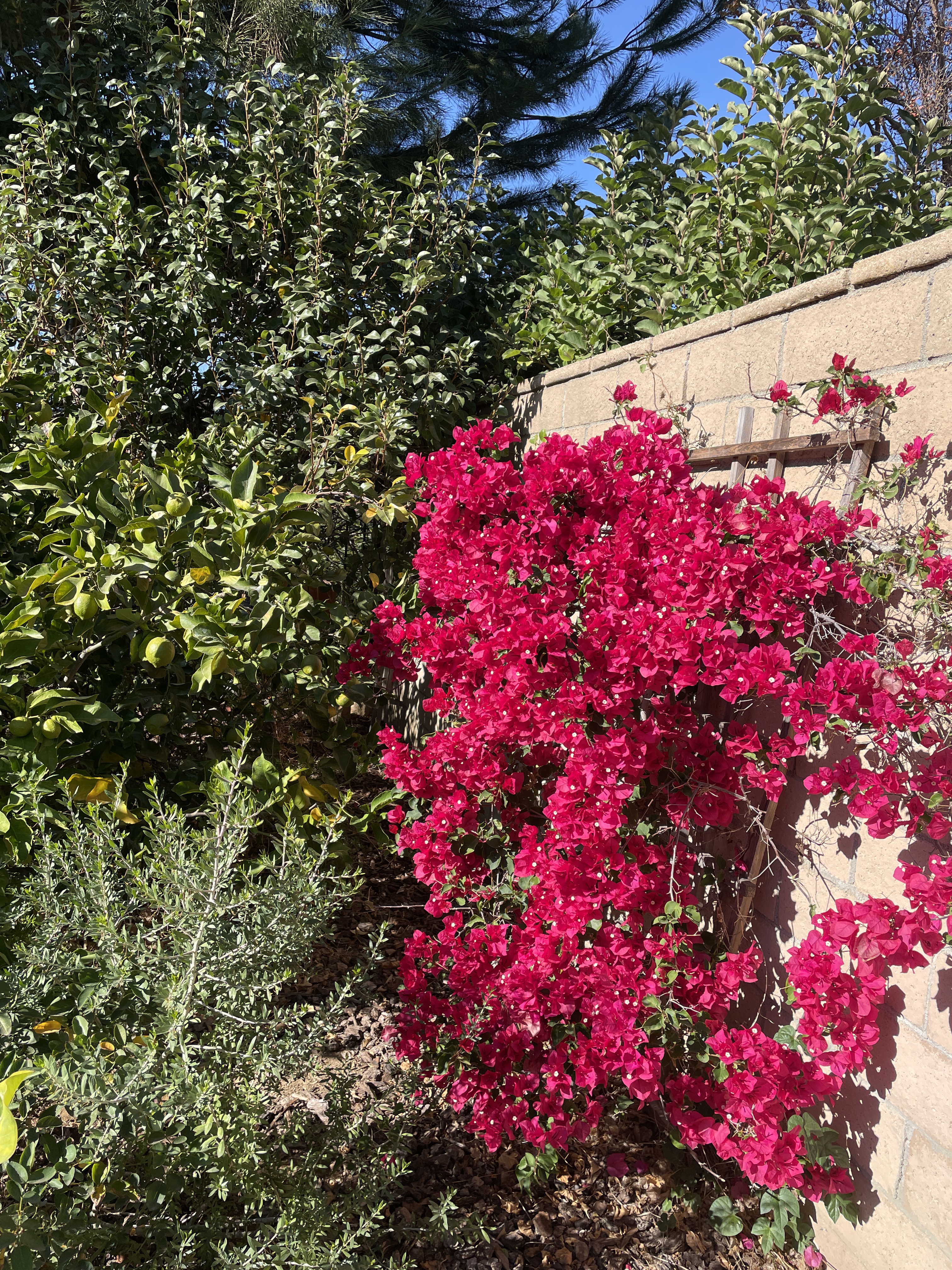
I notice I’m surrounded by flowers

and the scent of orange blossoms.

Book Six for 2026: “THE BOOK OF (MORE) DELIGHTS,” Ross Gay


As I mentioned in a previous post, his books on delights were mentioned to me by two different people in two totally different settings so I decided to stay sane in all the seriousness of my life, reading something lighter might be a good thing to do. I guess I was thinking delights like flowers, food, etc. but this is more like a series of short essays about life all written in the span of one year–his gardening, experiences strolling around his neighborhood and favorite coffee shops, food, his parents, his wife, some personal history, his experience as a college professor, children. However, he also addresses serious issues–his meeting a homeless veteran just out from a stint in a mental facility and how he was compelled to help out after first driving off, racism he has experienced, his issues with the government and social media, family death, and life in general. And above all, what it means to him to identify as a poet.

Delights–2


As a person who works with high school students mostly non-white, many of whom have family members who are undocumented, I worry and need to find daily delights to stay sane. I decided to make a list of some of the past week’s delights:

-afternoons 70 degrees, sunny, no wind

-hummingbirds sipping nectar from both flowers and the two feeders

-singing a song the lyrics of which come from a poem by Langston Hughes where he dreams a world with no racism

-sitting on the back patio, listening to birdsong while I read a book about delights

-learning that all the rains have eliminated drought in California

-appreciating all the colors of the flowers blooming in my yard

In Defense of Young People


Recently, at a party I attended, someone claimed young people these days are lazy, don’t want to work, feel entitled. Sometimes I can keep my mouth shut, just listen, and disagree inside. Not this time. When I hear comments like this about young people, comments with which I vehemently disagree whether it is in person or on social media, I feel compelled to speak up.

During at least half the year, I spend one day a week at an inner city high school. Granted the students I work with are high achieving, students who are the opposite of lazy, some almost to the extreme. When I mentioned this, the person said, “Well this is because they are recent immigrants.” In most of these cases at this school, that is true. Then I explained that I had taught more than 20 years at two Title I high schools where nearly no one was a recent immigrant. Of course, like throughout history, there are some lazy young people. That, however, does not describe the majority. I’ve had homeless students who took the hardest dual credit classes and prevailed. I’ve had students who spent extra time at school because it was safer than being home. I’ve had students whose parents were in jail or drug addicts but still made it to school, did the required work, and graduated. I’ve had students struggling with mental health issues but no matter what managed to do the work required.

Reasons to be lazy abound. Reasons to feel hopeless about the future abound. Look at the present economy, look at the wage cap between the rich and poor, look at how many struggle to find a decent job. Young people are aware of all this, acutely aware. Yet most do the work required and press on no matter what.

I applaud them!

New Year’s Wishes


In a hurting, damaged world

where greed and hatred often reign

I wish for

the beauty of flowers to flow into hearts

kindness toward those different from self

to permeate hearts and mines

the light of joy create compassion

toward each other

the knowledge that we are all one race,

one people flow through humanity

Hold friends and family close

Smile, greet strangers

Release hatred, anger into air

Promise yourself to love more,

let others be themselves,

be grateful, find joy

Book 44 for 2025: “Kafka on the Shore”, Haruki Murakami


This is my first Murakami novel; it will not be my last. It’s fascinating and profound. A 15 year old boy, Kafka, runs away from home. His mother and older sister disappeared when he was four. He does not remember them. His father, a famous sculptor, ignores him. Although they live in the same house, they rarely see each other. After running away, he finds a private (but open to the public) library in another city and is taken in by the two people in charge of the library.

Nakata, another main character who is an elderly man, is not very bright due to a bizarre event that sent him to the hospital in a coma when he was a child. He talks to cats and makes fish and eel fall from the sky like rain. He becomes friends with another principal character, a young truck driver, who helps him out because Nakata reminds him of his grandfather.

The novel portrays the lives of these characters through their actions, dreams, and fantastical events. The unreal becomes real and people learn about their true selves through these events.

Book 42 for 2025: “Hope In A Time of Dying”, Len Leatherwood


This autobiographical novel was written by a good friend of mine whose own family experienced some of the horrors of the AIDS epidemic in the 1990s. The main character, Hope Winterfield, and her husband make their living as antique dealers in Texas when her elder brother, Robert, a doctor with HIV, convinces them to move with their three daughters to the LA area to help him out. Because their antique business is not doing well and she wants to help her brother, they move, thinking that if it does not work out, they can move back to Texas.

Robert has an ex, Anthony, who is also his business partner, who hates Robert’s new love, the charming, handsome, younger man, Cody. Hope takes the job Robert has offered her, only to discover the dynamics surrounding the job, her brother, friends she has known for years, and many others are nearly overwhelming and that quite often nothing is as it seems. Added to all this is Hope’s difficult mother who often denies the realities of her own life. This is the tale of a family and complicated family dynamics where the main characters have to decide what it most important in life and what they should value the most and fight for.