reading,
listening to birds
the gurgling of water,
looking up to watch
four hummingbirds challenge
each other at the feeder, and
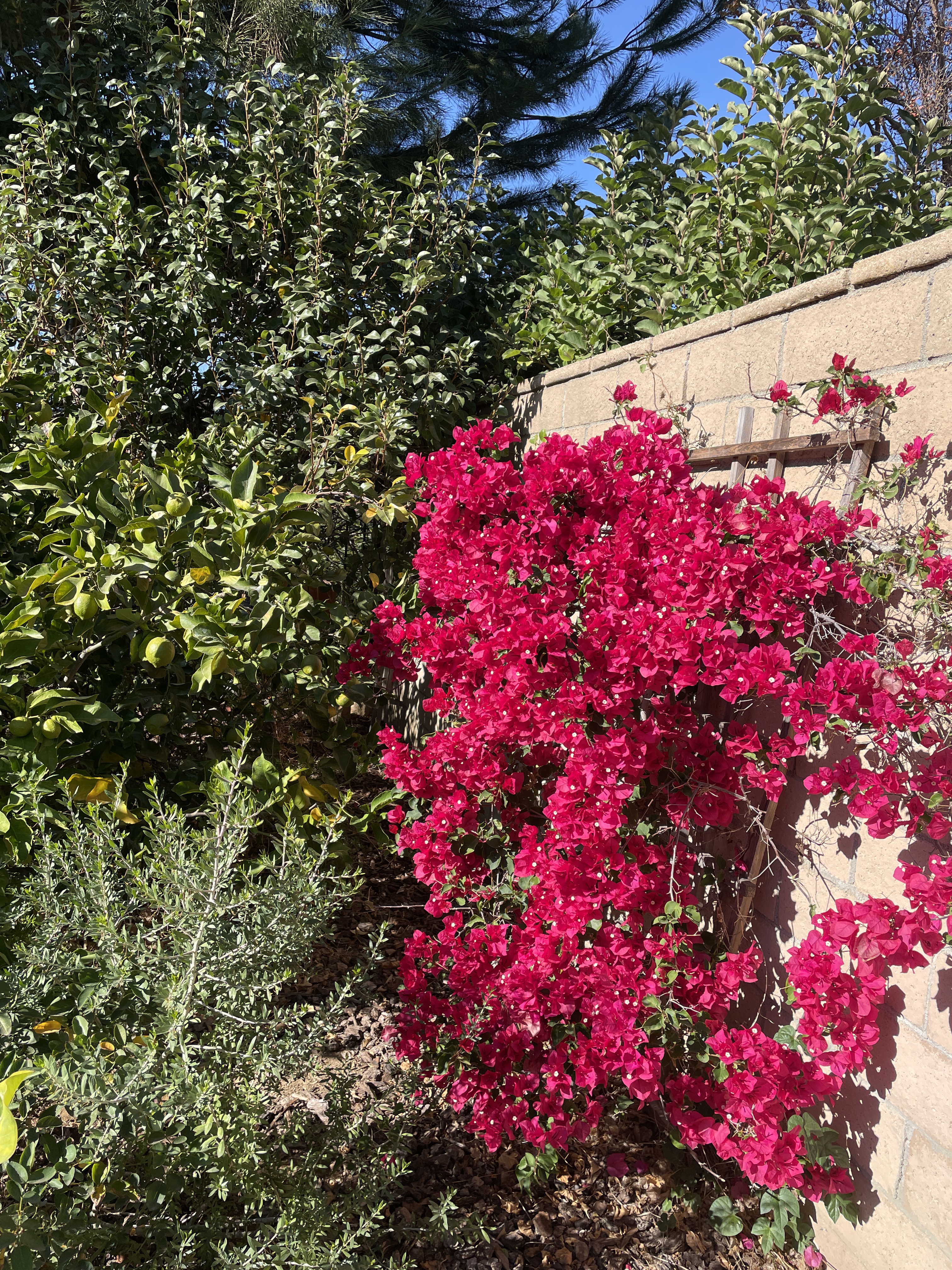
I notice I’m surrounded by flowers
and the scent of orange blossoms.


reading,
listening to birds
the gurgling of water,
looking up to watch
four hummingbirds challenge
each other at the feeder, and
I notice I’m surrounded by flowers
and the scent of orange blossoms.
As I mentioned in a previous post, his books on delights were mentioned to me by two different people in two totally different settings so I decided to stay sane in all the seriousness of my life, reading something lighter might be a good thing to do. I guess I was thinking delights like flowers, food, etc. but this is more like a series of short essays about life all written in the span of one year–his gardening, experiences strolling around his neighborhood and favorite coffee shops, food, his parents, his wife, some personal history, his experience as a college professor, children. However, he also addresses serious issues–his meeting a homeless veteran just out from a stint in a mental facility and how he was compelled to help out after first driving off, racism he has experienced, his issues with the government and social media, family death, and life in general. And above all, what it means to him to identify as a poet.

As a person who works with high school students mostly non-white, many of whom have family members who are undocumented, I worry and need to find daily delights to stay sane. I decided to make a list of some of the past week’s delights:
-afternoons 70 degrees, sunny, no wind
-hummingbirds sipping nectar from both flowers and the two feeders
-singing a song the lyrics of which come from a poem by Langston Hughes where he dreams a world with no racism
-sitting on the back patio, listening to birdsong while I read a book about delights
-learning that all the rains have eliminated drought in California
-appreciating all the colors of the flowers blooming in my yard

Recently, at a party I attended, someone claimed young people these days are lazy, don’t want to work, feel entitled. Sometimes I can keep my mouth shut, just listen, and disagree inside. Not this time. When I hear comments like this about young people, comments with which I vehemently disagree whether it is in person or on social media, I feel compelled to speak up.
During at least half the year, I spend one day a week at an inner city high school. Granted the students I work with are high achieving, students who are the opposite of lazy, some almost to the extreme. When I mentioned this, the person said, “Well this is because they are recent immigrants.” In most of these cases at this school, that is true. Then I explained that I had taught more than 20 years at two Title I high schools where nearly no one was a recent immigrant. Of course, like throughout history, there are some lazy young people. That, however, does not describe the majority. I’ve had homeless students who took the hardest dual credit classes and prevailed. I’ve had students who spent extra time at school because it was safer than being home. I’ve had students whose parents were in jail or drug addicts but still made it to school, did the required work, and graduated. I’ve had students struggling with mental health issues but no matter what managed to do the work required.
Reasons to be lazy abound. Reasons to feel hopeless about the future abound. Look at the present economy, look at the wage cap between the rich and poor, look at how many struggle to find a decent job. Young people are aware of all this, acutely aware. Yet most do the work required and press on no matter what.
I applaud them!
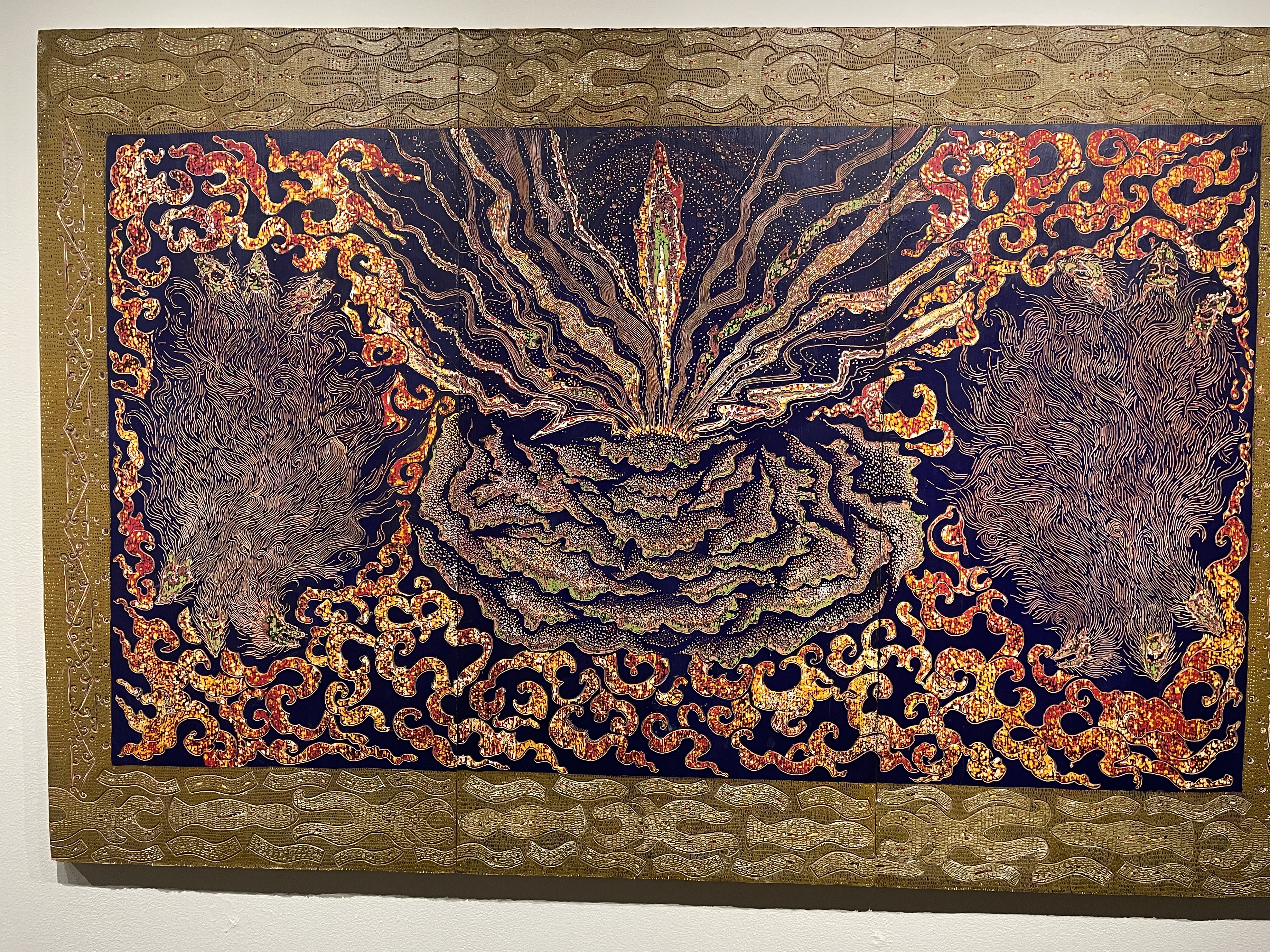
In a hurting, damaged world
where greed and hatred often reign
I wish for
the beauty of flowers to flow into hearts
kindness toward those different from self
to permeate hearts and mines
the light of joy create compassion
toward each other
the knowledge that we are all one race,
one people flow through humanity
Hold friends and family close
Smile, greet strangers
Release hatred, anger into air
Promise yourself to love more,
let others be themselves,
be grateful, find joy
This is my first Murakami novel; it will not be my last. It’s fascinating and profound. A 15 year old boy, Kafka, runs away from home. His mother and older sister disappeared when he was four. He does not remember them. His father, a famous sculptor, ignores him. Although they live in the same house, they rarely see each other. After running away, he finds a private (but open to the public) library in another city and is taken in by the two people in charge of the library.
Nakata, another main character who is an elderly man, is not very bright due to a bizarre event that sent him to the hospital in a coma when he was a child. He talks to cats and makes fish and eel fall from the sky like rain. He becomes friends with another principal character, a young truck driver, who helps him out because Nakata reminds him of his grandfather.
The novel portrays the lives of these characters through their actions, dreams, and fantastical events. The unreal becomes real and people learn about their true selves through these events.

This autobiographical novel was written by a good friend of mine whose own family experienced some of the horrors of the AIDS epidemic in the 1990s. The main character, Hope Winterfield, and her husband make their living as antique dealers in Texas when her elder brother, Robert, a doctor with HIV, convinces them to move with their three daughters to the LA area to help him out. Because their antique business is not doing well and she wants to help her brother, they move, thinking that if it does not work out, they can move back to Texas.
Robert has an ex, Anthony, who is also his business partner, who hates Robert’s new love, the charming, handsome, younger man, Cody. Hope takes the job Robert has offered her, only to discover the dynamics surrounding the job, her brother, friends she has known for years, and many others are nearly overwhelming and that quite often nothing is as it seems. Added to all this is Hope’s difficult mother who often denies the realities of her own life. This is the tale of a family and complicated family dynamics where the main characters have to decide what it most important in life and what they should value the most and fight for.
Rather than summarize or evaluate, I am going to provide some quotes from the book. I will say that if you want to understand the current state of affairs in the United States of America, this book provides excellent insights based on history.
From the Introduction:
“America began with a great paradox: the same men who came up with the radical idea of constructing a nation on the principle of equality also owned slaves, thought Indians were savages, and considered women inferior…it was a key figure of the new democratic republic…the ringing phrase ‘all men are created equal’ did not actually include everyone. In 1776, it seemed self-evident to leaders that not every person living in the British colonies were capable or worthy of self determination. In their mind, women, slaves, Indians, and paupers depended on the guidance of men like themselves…So long as these lesser people played no role in the body politic, everyone within it would be equal. The principle of equality depended on inequality. That central paradox–that freedom depended on racial, gender, and class inequality–shaped American history as the cultural, religious, and social patterns of the new nation grew around it.”
From The Triumph of Equality:
“The accomplishment of white male equality under the law was extraordinary…They argued that their new system made their new nation different from the Old World, which was split between a corrupt aristocracy and the lazy poor.”
“On March 4, 1858, prominent South Carolina slaveholder James Henry Hammond gave a speech in the Senate–to which he had been elected the year before despite the fact that he admitted two years earlier he had sexually assaulted his four young nieces…The greatest strength of the South was not its economy…but rather ‘the harmony of her political and social institutions.’ Every society had ‘a class to do the menial duties, to perform the drudgery of life’…the people who make up the ‘mudsill of society supporting that other class that leads progress, civilization, and refinement.’ The men in the latter group are wealthy and well connected…In the South whites had made an ‘inferior race into mudsills, dull but loyal people who are content to have their labor directed by their betters.”
“Now a national figure, Lincoln articulated a democratic vision for America, one that refuted the mudsill version of Senator Hammond…he explained that Hammond’s theory divided the world into permanent castes: capitalists driving the economy and workers stuck at the bottom.”
The West:
The last stand of the Alamo became the foundational event for western American history, offering a vision of self-sacrifice and heroism. It prompted the formation of the Republic of Texas, and inspired Texans under Sam Houston to defeat Santa Anna’s troops…In the retelling of what happened at the Alamo, what got lost was the reality that the defenders were rebelling against the Mexican government in Mexican territory, and that they were fighting to defend the right to enslave people. The myth also ignored the fact that many of the defenders were Mexican opponents of Santa Ana, and that some of the defenders–including Davy Crockett–surrendered.”
Cowboy Reconstruction:
After Lincoln’s death, Johnson wanted no part of Lincoln’s and the “Union’s democratic vision. To rebuild the South, Johnson turned not to the Army, or to the ex-slaves who had supported the Union, but to former Confederates. He offered pardons to all but 1500 Confederate leaders…states codified the racial violence that swept across the South in the summer of 1865. As employers cheated workers out of wages, gangs beat and raped African Americans into submissive behavior, and whites attacked their black neighbors, southern state legislatures created the Black Codes.”
The West and The South Join Forces:
“The resurgence of the South’s ideology came from the nation’s new bloc: the western states. Easterners had made the mistake of thinking the westerners would join their coalition, only to discover that due to their peculiar history and extractive economy , westerners had more in common with white antebellum southerners than with easterners. By the 1890s a few wealthy men dominated western society. Poor white men had little opportunity. people of color and women even less, and leaders worked to keep it that way. Still, as in the East before the Civil War, the myth of the individualist convinced Americans that the west was the land of opportunity…Theodore Roosevelt’s war record took the western ideal and put it on the national stage. By the end of the century, Americans embraced the cowboy image and vowed to spread it across the globe, putting into law that some people are better than others. Once again freedom was hierarchical.
“In the early part of the twentieth century, southern towns began to erect statues of Confederates, making them into western style heroes and individualists. The rewriting of the past created momentum for women’s suffrage…Rebecca Latimer Felton was a reformer who wanted educational and prison reform as well as women’s suffrage. She was also in favor of lynching her black neighbors who wanted equal rights…The Ku Klux Klan reformed and rebounded in the 1920s…Meanwhile in the West, immigrants and Indians were falling victim to a legal system that established castes. In Texas, officials were hardening a racial system that classified migrants across the Mexican border by race. In Arizona, a state law singled out ‘treason against the state’ as punishable by death aimed at Apache and Navahos who might fight the legal system ensnaring them. In Oklahoma…corrupt legislators arranged affairs to steal valuable land from Indians.
This latest Strout novel takes the reader back to Crosby, Maine, the site of most of her other novels. The same cast of characters appear, Olive, the Burgess boys, Lucy, William, Margaret, and all the others. This one, however, has a new twist, a heinous murder occurs. The most obvious suspect is the victim’s reclusive son who lived with her. Bob Burgess is hired as his lawyer. Lucy starts visiting Olive and they tell each other stories about people they have known , what Lucy calls “unrecorded lives”. Meanwhile, Lucy keeps asking, “What does anyone’s life mean?” Lucy and Bob take walks every week, spending the time talking about all the things they feel they cannot talk about with anyone else. William becomes more obsessed with the parasites he is studying and never quits talking about them.
This, like all of Strout’s novels, focuses on relationships, the good and the bad, and how they sustain us, sometimes transform our lives, sometimes nearly ruin us. Although, readers do not have to read her novels in sequence and this one could be read alone, I think it would make more sense to the reader to at least read three others first: “Olive Kitteridge”, “The Burgess Boys”, and “Oh, William”.
Strout has a unique, easy to read style, that is both simple and profound. She talks about people as they are with empathy and concern. She talks about the many forms of love–“…it is always love. If it is love, then it is love.”
Last year I read her novel “Gilead” which takes place in fictional, small, Iowa town in which the main character is the father of the main character in this novel, “Jack”. John Ames Boughton, Jack, is the wayward son of a Presbyterian minister. Previously, he has been wrongly imprisoned for a theft he did not commit. He loves literature, especially poetry. He lives off of odd jobs, drinks too much, smokes, and is somewhat of a lost soul who continuously philosophizes about live, religion, and societal rules. One day he sees a woman walking in the rain. When she drops her bundles on the sidewalk, he helps her. She thinks he is a preacher because of the way he is dressed and invites him in for tea. She is Della Miles, a teacher and the daughter of a Black Methodist minister. This is the story of interracial love when it was still illegal in the US, the lengths they go to resist and hide it, and the reactions of her family. Reading this, one realizes how it was not that long ago that most of the US was not only segregated, but sometimes even talking to someone on the sidewalk from another race could get a person into trouble with the police.
Travel the World 4 Less
A Glimpse into My Life & Passions
Ceto-Magoism, the Whale-guided Way of WE in S/HE
Exploring the F-word in religion at the intersection of scholarship, activism, and community.
ANCESTRAL FOOD. HERBAL WISDOM. MAGICAL COOKERY. SEASONAL CELEBRATION.
inesemjphotography
politics, engineering, parenting, relevant things over coffee.
Food is the best expression of every emotion. Explore through my reviews, recipes, events and more.
Smile! A Site for Friends Wherever You Are!
inspiring personal growth through poetry and writing
Combining atheism with whimsy. This is a Fair and Balanced blog based on opinion unencumbered by fact.
Odds and ends ~ My Life
Original poetry, commentary, and fiction. All copyrights reserved.
bripike@gmail.com
A wildlife filmmaker in Africa
A Geeky Feminist's Musings On Pop Culture
"5 minute walks"
 writingontherim