Although technically not a sequel, “Violeta” seems to be a sort of sequel to “A Long Petal of the Sea”. If you are interested in Chilean history just before, during, and after the demise of Chilean president Salvador Allende and the horrors of Pinochet’s rule which the CIA helped to implement, this novel is for you.
This is the story of one woman, Violeta, told from her viewpoint via a long memoir written for and to her grandson. She begins life as the youngest child of a wealthy businessman whose poor and risky decisions lead to the family’s downfall, forcing them to escape to the remote, far southern regions of the country. It is the tale of a strong, passionate, determined woman who lived a lifestyle far ahead of her time, other family members, the far right Hitler sympathizing German farmers who immigrated to the far south, and others she knew including a renegade pilot who flew contraband and “prisoners” for various nefarious groups. Although not a murder mystery or a work of fiction that could be called adventurous, the story of Violeta’s life is so fascinating that I kept wanting to read on and on.
Imagine a society where everyone has shelter and love.
My 15th book of the year was “Imagination, A Manifesto”, Ruha Benjamin. After going over the history of racism, poverty, and misogyny in the US, the author, a professor at Princeton, details various ways individuals and groups can imagine and act toward creating a better world for all. She delineates the endless obstacles to attaining this better world but claims through collectively imagining detailed ways the world can be better, people can work together to attain such a world. She admits individuals rarely have the power to do this alone but working with others, we can make dramatic differences, but first we have to imagine what this better world will look like. We now are prisoners of hierarchies, exploitation, and frequent violence, but it does not have to be this way. The Appendix includes Discussion Prompts, Project Based Prompts, and Speculative Prompts to help readers get started imagining differently. She quotes Toni Morrison–“Dream a little before you think.”
Shafak is a popular Turkish writer. One of my all time favorite books is her novel about the life of Rumi.
“Three Daughters of Eve” takes place one evening in Istanbul in 2016. Peri, one of the daughters from the title, is on her way to a fancy party when a thief snatches her purse out of the back seat of her car which is stalled in traffic. She parks the car and chases him through back alleys. As she fights him for her purse, an old photo falls to the ground. It portrays three young women and their university professor. This photo jars her mind, takes her back to her time at Oxford University when she was a student there in 2000-2002, her childhood in Istanbul in the 1980s and 90s, and her life. She thinks back to her life with her two friends, Shirin, an adventurous Iranian young woman, and Mona, a devout Egyptian Muslim who word a headscarf out of choice. And then there is the famous professor Azur, whose class on God either makes students hate or love him and the scandal that caused Peri to return to Istanbul.
Until her daughter, who was in the car and eventually chases her mother down in the alley, sees the photo, no one, except her husband, seems to have known Peri even went to Oxford. Her daughter mentions it at the party while everyone is arguing about East and West and politics and who has the most money and how they acquired it. Peri tries to deflect questions, changes the subject, and keeps remembering her past: her parents, a father quite irreligious, her mother a devout Muslim, their endless arguments and hostility, her brothers, her childhood and her stint at Oxford.
Through the story of Peri’s life, this novel explores personal identity, East-West history and politics, the meaning of marriage and friendship.
The main character, Nayan Olak, is a Sikh whose parents immigrated to England. He has worked decades first on a factory floor and then later risen through the ranks of his union. Encouraged by others, he decides to run for head of the union when suddenly a young woman of the same ethnicity decides to run against him. She will do anything to beat him including using an unfortunate argument between them to accuse him of all sorts of misdeeds.
In the meantime, a woman, Helen, who left town under mysterious circumstances years ago shows up with her young adult son who is recovering from the aftermath of another unfortunate misunderstanding. Helen works for home health but refuses to take care of Nayan’s dementia ridden father. He cannot figure out why since she willingly takes care of others. He becomes obsessed with her, helps her son who becomes a sort of substitute for Nayan’s son who was killed along with Nayan’s mother in a fire many years previously. The police never determined who started the fire even though they knew it was arson.
Tragedies ensue as this story about race, misunderstandings, secrets, and relationships progresses. It also demonstrates the power, for better or worse, of misunderstood words and actions.
Starting with ancient Egypt and later with the ancient Greeks and Romans and ending in current times, this highly researched book (there are 15 pages of Bibliography) details millennia of lies told about and attacks against women in power. Ridiculous things have been attributed to women, powers that no human has, in order to control them. Here is an example: Pliny the Elder (23-79 CE) wrote that menstruating women caused hailstorms, lightning, and whirlwinds. And worse yet, demons come from this blood (various medieval medical authorities) and it can shrivel the penis.
Then there is the whole thing about raging hormones. The word hysteria, which supposedly is an ailment of women, comes from the Greek word for uterus. During the 2020 presidential campaign, Marco Rubio, currently a possible candidate for vice president, tweeted a photo of ten missiles exploding and asked if you want a woman a heartbeat away from the presidency.
During the Middle Ages millions of women were put to death in various horrible manners after being accused of witchcraft. Even in current times various male political candidates and media announcers (a Newsmax journalist, Zinke of Montana, Ben Carson, Chris Matthews–list is almost endless) have called powerful political women witches. The victims of these pejorative rantings even include Margaret Thatcher when she held office.
Marie Antoinette never said, “Let them eat cake”. Various forms of this phrase had been around for over one hundred years. Ann Boleyn originally wanted to marry the love of her life who also wanted to marry her but the powers at the time, including Henry VIII, forbade this. Many of the ridiculous stories about Cleopatra can be easily disproven, e.g her being so rich she dissolved a giant pearl in vinegar to prove her wealth. Unless powered, pearls do not dissolve in vinegar. Catherine de Medici was attacked as some sort of sex pervert when she was 42, obese, and anything but a sexy seductress.
The documented lives of many powerful women for the last three thousand years contains endless abuse of all sorts. How is this possible? Because there is an informal Misogynist Handbook that has been used for millennia to control women. The above is only a smattering of what you will learn about this Handbook if you read this book. In the last chapter, the author does provide recommendations for overcoming this abuse of women. However, she also notes currently there is a “furious backlash against this long-delayed crawl toward justice, resulting in the increasing viciousness of sexist tweets and memes, more violent threats, more savage abuse.”
This book raises these questions: Can women gain true safety and equality without violence? Can we end misogyny without fighting back?
The book details the stories of three women, one from Alabama, a woman from northern India, and a Kurdish fighter in northern Syria. All use a form of violence to overcome abuse and mistreatment they have experienced and see other women experiencing. The author personally interviewed all of these women and others close to them and visited them repeatedly.
The first is Brittany Smith, who shot the man who had raped her and was trying to kill her brother. Her story details how Stand Your Ground laws work for men, but often fail for women, especially in areas of the US South where men are protected by their beliefs in a male Code of Honor.
The second is the story of Angoori Dahariya, a Dalit woman, from Uttar Pradesh, India. Fed up, she creates a group called the Green Gang (they wear green saris) dedicated to defending poor, under caste, female victims of abuse. Note: Dalit refers to the lowest caste.
The third is the story of Cicek Mustafa Zibo, a Kurdish fighter in the female militia that fought ISIS in northern Syria. She and many others follow the teachings of Ocalan, a Kurdish leader imprisoned by the Turks for leading the Kurdish militia who for years have fought the Turks for independence. He teaches equality between men and women and women’s rights, which is anti the general cultural beliefs in this area of the world. Note: Ocalan is labeled a terrorist by many.
As a woman whose view of most women in the Bible remains nuanced, I could not resist a purchase when I saw this on the shelf at a bookstore. For centuries, she’s been vilified as a harlot, a temptress, both descriptors seen as negative by many societies even in these freer, modern times.
This novel by Megan Barnard is first person Jezebel, beginning with what she has been told about her birth and family. Then she describes her luxurious upbringing in Tyre, her forced marriage to Ahab while Ahab’s father is still alive and king of Israel. She begs her father not to force her to marry Ahab. Her father wants an alliance with Israel, which at that time was considerably less wealthy, quite backward, and more warlike than Tyre. She and Ahab have never even met when she arrives as a teenager to be his wife. To make it more difficult initially Ahab mostly ignores her, preferring other women in the harem. One issue is their differences in religion, she being a follower of Astarte while he and Israel are followers of Yaweh. She is used to religious tolerance, thinks people should be free to follow whatever religion works for them. The Israelis go to war over religion, demand adherence to their god.
Throughout she laments the plight of women, their lack of power and self determination. She notes that only prominent men are remembered, written about, not women regardless of their status, intellect, and influence. She remains steadfast in her determination to be remembered, to be written about even to the point where she engages in devious and sometimes cruel behavior to accomplish her goals. I find it noteworthy how effective this turned out to be; she is remembered, immortal, whereas kinder, gentler women are mostly forgotten.
“Mrs. Caliban”, once called “The Perfect Novel” by the New York Times, was a book ahead of its time. A sort of magical realism story, its message remains relevant over the decades. Mrs. Caliban’s husband just lives with her and only returns home to eat, and after going out for the evening, to sleep. He’s polite and indifferent. One day a green, sort of humanlike, highly intelligent monster shows up. He is hiding from the authorities who found him and experimented on him. She listens to his relating the horrible things done to him and hides him in the guest room where her husband never goes. He transforms her life. In the meantime, she goes to visit a close friend and listens to the friend’s stories of multiple simultaneous affairs she is having with multiple men friends. They give each other advice, exchange stories about various people they know. Mrs. Caliban tells no one about her house guest. Then a shocking accident and astonishing information she never guessed occur.
This short novel reveals so much about life, human behavior, and the status of men and women. I highly recommend it.
Note: The other three books I read for a project and cannot discuss them at this time.
Machig Lapdron, female Tantric Buddhist mystic and lineage founder
I’ve just returned from an illuminating trip to Bhutan, high in the Himalayas. Bhutan is a Buddhist kingdom and the world’s youngest democracy.
On our last full day in this enchanting land, my husband and I drove with our guide over the nearly 4000 meter pass of Chelela and into the Haa Valley which doesn’t see that many tourists. Our goal was the Hermitage of Juneydrak, where Machig Lapdron (1055-1145 CE), the famous female Tantric mystic, master, and lineage founder, once meditated.

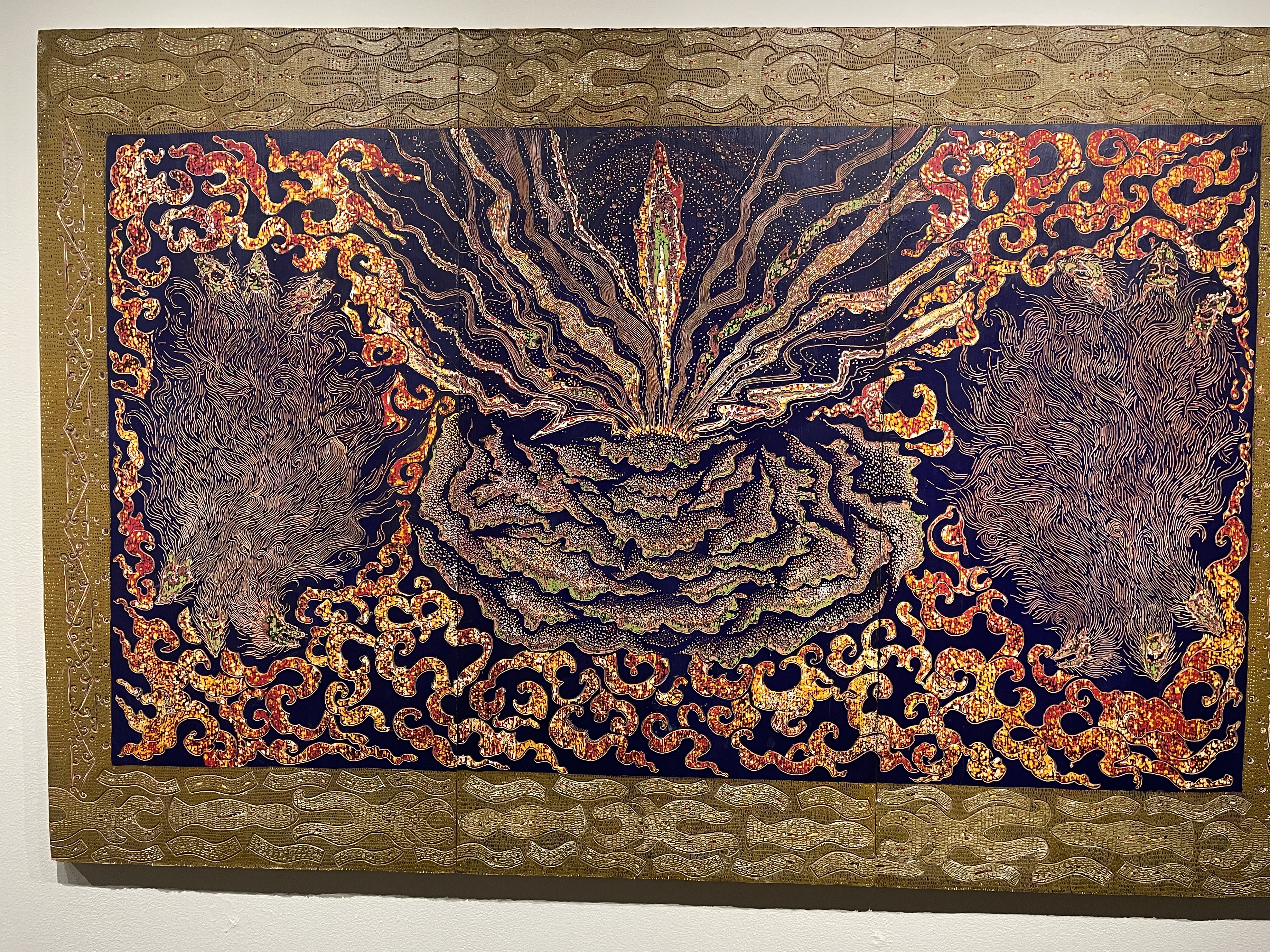


 Machig Lapdron, female Tantric Buddhist mystic and lineage founder
 writingontherim