Book 14 for 2025: “About Grace”, Anthony Doerr


This is one of the most heart wrenching books I have ever read. As a child, the main character, David Winkler, discovers he possesses the ability of premonition via dreams that come true. Only his mother understands him; unfortunately she dies while he is still young, leaving him with father who is only physically there. He becomes an hydrologist, specializing in the structure of snowflakes, leading a rather lonely life as a weatherman in Alaska. While at the grocery store, he meets a woman. He knows what she is going to do before she does it. Eventually, they develop a relationship. The remainder of the novel details the consequences of their relationship and their having a child, Grace. David dreams that he will not be able to save Grace from flood waters, his wife thinks he is crazy, and then to avoid what he perceives will be Grace’s fate if he stays, he disappears. Eventually, he arrives hungry and destitute on a Caribbean island where he is taken in by a kind family who have escaped imprisonment in Chili during the military dictatorship there. He agonizes over whether his running away saved Grace and is unable to find out what happened to her. Eventually he saves up enough money to search even though he has no idea where she might be or how she will react of he finds her alive. Will her mother forgive him, will Grace if he finds her? He is driven to find out no matter the consequences.

This novel’s main themes include love, longing, forgiveness, the meaning of friendship, and the human search for grace.

Note: I have now read everything published by Anthony Doerr. His works contain beautiful prose and detailed descriptions. One of the most impressive things about his work is the amount of research required to write in such great detail about so many subjects, e.g. structure of snow flakes, the anatomy of different types of shells, the history of the city now called Istanbul and its ancient neighborhoods.

Book 12 for 2025: “Girls of Riyadh”, Rajaa Alsanea


I was not looking for this, but rather accidentally found it while strolling through the stacks at the local library. What an informative and entertaining book. When it was first published in Lebanon in 2005, it sort of shocked the Arab world causing public debates about the subject matter and story both pro and con. The novel centers on the lives of four upper class Saudi young women who have known each other for years and are friends. Because the book openly discusses the difficulties young educated Saudi women have pursuing education and careers while also trying to find suitable men to marry, the religious conservatives found the novel blasphemous and wanted it banned. Others said it disrespected Saudi women. Black market copies showed up everywhere and the author became an overnight sensation.

The book focuses on the difficulties these women experience as they navigate the modern world while still living in a society founded in very conservative patriarchal cultural conditions. They want to believe in love and hope they will find someone to marry they also love. However, traditions get in the way of this goal more often than not. Some of them find someone they love and who loves them but families forbid it–the person is not high enough status or has been divorced, or…the barriers seem endless, focused on family connections. Love is considered a frivolous, unhealthy distraction.

Contrary to what I believed before reading this, most of these higher class Saudi young women are going to college, often in subjects like medicine and dentistry, and plan to pursue careers in their fields. Many have travelled to Europe where they are freer to roam, not dress conservatively, etc. Yet they return home because of close family ties and love of country. Several of the fathers in this novel are considerably more liberal than the girls’ mothers. Like any society the view of progress and tradition vary greatly by family and individual.

Because as a reader you get to “know” these young women, I found myself reading nonstop because I really wanted to know what was going to happen, whether any of them would be allowed to marry someone they loved or would be heartbroken and forced into unwanted situations. The latter never occurred thankfully. None were forced to marry someone they disliked. It is a great read for those who are curious about other cultures and how women navigate their lives in a place dramatically different from what is more common in Europe and the US.

Book 11, 2024: ” Frida’s Fiestas: Recipes and Reminiscences of Life with Frida Kahlo”


The author of this book, Guadelupe Rivera, is the daughter of Diego Rivera by the woman to whom he was married before he married Frida. Diego went on a trip to Russia and his then wife, the author’s mother, became attached to her previous boyfriend, the poet Jorge Cuesta. She and Diego divorced and then he married Frida. Eventually, the two couples became friendly and at one point they all lived in the same house.

Thirteen years after Diego married Frida, the author moved in with them. This book details her life living with Frida and her father, how Frida learned to cook, how she decorated the Blue House in Coyoacan, the fiestas, the food, the adventures. The book includes photos and recipes of Frida and Diego’s favorite foods, photos of the house, and places the author visited with Frida. It is also a story of many of Mexico’s famous people at the time.

I own several books about Frida but this one is the most revealing and intimate in many ways. If you like Mexican food and find the life and art of Frida and Diego of interest, read this book.

Note: It was also written by the journalist Pierre Marie-Colle with photos by Ignacio Urquiza.

One Book A Week-25: “The Daughters of Madurai”, Rajasree Variyar


The first sentence of the book reads: “A girl is a burden. A girl is a curse.”

In India in early 1990s, Janani lives with her abusive mother-in-law and an alcoholic husband who is often absent, chauffeuring people here and there. Although she is allowed to keep daughter number one, the fate of the next daughters is death. She, who is Tamil lower caste, is lucky enough to work for the same higher caste family for whom her mother worked and with whom she spent most of her childhood. They treat her much better than her husband and mother-in-law who hate her for not bearing a boy baby.

The book goes back and forth between this time period and 2019 Australia where the fate of Indian girls and women is far different. The family returns to India for the funeral when the family patriarch dies. Those who know little about their family history learn some shocking revelations.

In the Afterward, the author discusses female infanticide. Although many educated families oppose it and national laws prohibit the practice, it remains so common in parts of rural India that in those places there is a shortage of women for marriage. As a consequence, men resort to kidnapping women from other areas.

I thought it would take me a while to read this 326 page novel. However, I became so engrossed, I finished it in two days while also engaging in several other activities.

Pie: A Story of Mothers and Daughters


My mother usually viewed the world from a black and white perspective.  She had a lot of guidelines for how to live a productive and “good” life.   Neighbors and friends saw her as a “good” woman who cared for and did “good” in the rural community in which we lived.  Above all she was a good cook!!

I rarely think about her “rules” for life.  Suddenly I realize I actually “follow” a substantial number of these rules and have passed many on to my own daughter:

This is how you make butter with an electric mixer.

This is how you make a cake:

-grease and flour the cake pan(s)

-cut our circles of waxed paper to put on top of the greased and floured surface–you

do not want the cake to stick

-sift the flour

-soften the butter

-mix the ingredients in exactly this order.

This is what you wear.  You want to look presentable!!

-clean underwear in case you are in a car wreck

-matched clothes

-polished shoes

-purse and shoes that match

-no white anything before May 1 or after September 1.

This is how you present yourself to the world:

-well groomed

-clean fingernails

-self assured

-nice, but not too nice

-polite

-brushed teeth

-lotioned body

-clean hair.

This is how you wash your clothes:

-separate whites and colored items–you want the whites to stay white.

This is how you ride your pony:

-keep your heels down

-don’t lean too far back.

This is how you neck rein.

This is how you hold the reins.

This is how you get your pony to trot.

This is how you get your pony to canter.

This is how you get your pony to stop.

This is how you clean the house:

-vacuum first, dust second

-if you don’t do it right the first time, you will have to do it over.

This is how you work:

-hard

-persistent–never ever give up

-smart.

This is how you breathe to sing

This is how you practice well.

My mom could barely sew and only could play the piano by ear–two lifelong regrets.  I had to learn these things no matter what.  I do not like to sew much, but still play the piano and I love, love, love to sing!

She could cook, especially pie.  Her crusts were tasty works of art.  At potlucks people would get her pie first to make sure they got some.  At potlucks now, people get my pie first to make sure they get some.  My daughter does not even eat pie, but people love her pie and get a piece to make sure they get some.

Raisin Walnut Pie

This is not my mother’s recipe.  She mostly made black raspberry and other fruit pies and coconut chiffon pies.  This is the pie I make every time there is a potluck.  If I do not make it, people ask me about it so I gave up and just usually bring this pie.

3 eggs

3/4 cup corn syrup

1/2 cup brown sugar

1/4 cup butter or margarine, melted

1 tsp. vanilla

3/4 cup raisins, golden or dark

3/4 cup walnuts, broken

1 unbaked pie shell

Stir corn syrup and brown sugar into melted butter.  Beat eggs slightly and stir into the butter/sugar mixture.  Add vanilla.  Mix raisins and walnuts and sprinkle into the pie shell.  Pour the butter/sugar mixture over the walnuts and raisins.  Bake at 350 degrees for 45 minutes or until pie crust is golden and mixture is set.  Cool.

If you goof and do not have vanilla, stir in 1 tsp. of cinnamon instead.

Enjoy!!

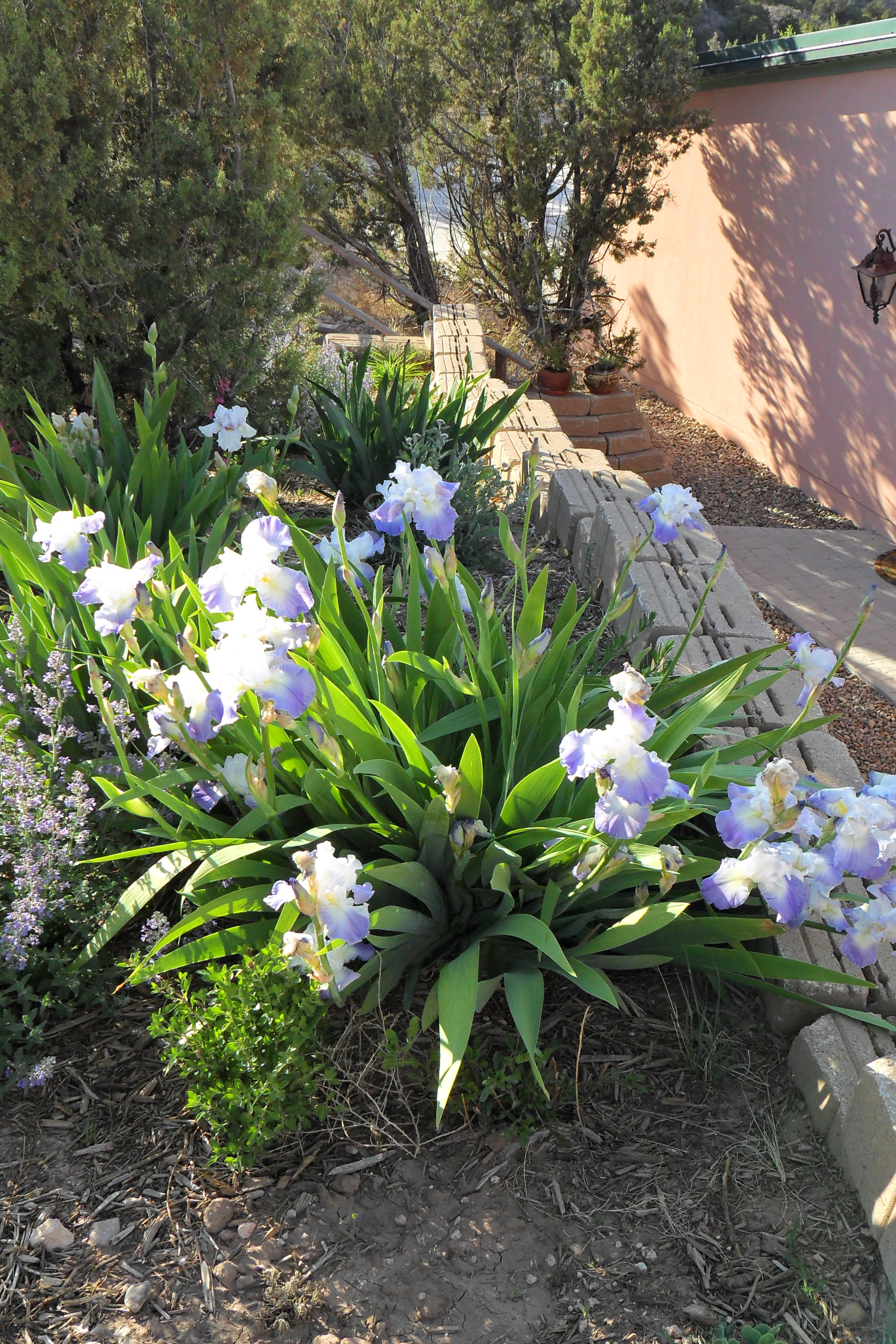
The Journey versus the Destination


Until yesterday, I always thought I was a destination person.  Set goals, act, get it all done quickly and efficiently, achieve!!  Suddenly, while driving home from Austin, realization struck in  the form  of wild flowers.  Traveling to Austin, I oohed and awed so much over the blue bonnets, daisies, gaillardia, and others I did not recognize that my daughter finally exclaimed, “Mom, you have said that over and over, really!”  I asked, “Don’t you think they are beautiful?!”  I could hardly believe her response, “Yes, but they’re just flowers,”  Just flowers!!!!  I wanted to stop and look closely at them, to take photos, to touch them.  Instead I said to myself, “You can do that on then way home.” But I didn’t. From Austin to Marble Falls, the road was too winding with no adequate place to stop.  Besides my daughter slept blissfully beside me on the passenger side; I didn’t want to awaken her.  Furthermore, she had previously emphasized the point that we needed to get home buy a certain tine.  Tomorrow, my grandson had school and I had to go to work.  It was a nine hour drive. For hours from just east of Llano past San Angelo, I kept thinking I’d stop.  The flower species and colors changed.  I saw other people stopped, taking photos and touching the flowers.  As I drove it hit me:  my personally preferred form of travel involves wandering.  Yes, I know the destination, but I want to see the places, the people along the way, to stop, to explore what holds my interests.  It is the journey, the process, that truly enthralls me.  This is the reason, too, why without a lot of thought, I chose one route to Austin and another back.  Curiosity, a love of differences, of change, of variety. I never stopped. I kept driving until my daughter awakened just before Sterling City and we switched drivers.  By then the flowers were fewer and farther between. And it hit me that this too was my father’s preferred form of travel.  He lived on the same farm for 90 years and in the same house for 80, but he loved trips.  Every year we took at least one.  We always had a destination, well, sort of, but we stopped whenever and wherever we found something fascinating and wonderful.  As he would have put it, “You never know.  You might find something in an expected place and want to stay there longer.” Since I took no photos on this trip, I decided to share photos of the flowers I found blooming in my xeroscape garden at home when I arrived.  Yes, they are lovely and I love them, but I will wonder for weeks what I missed along the road.