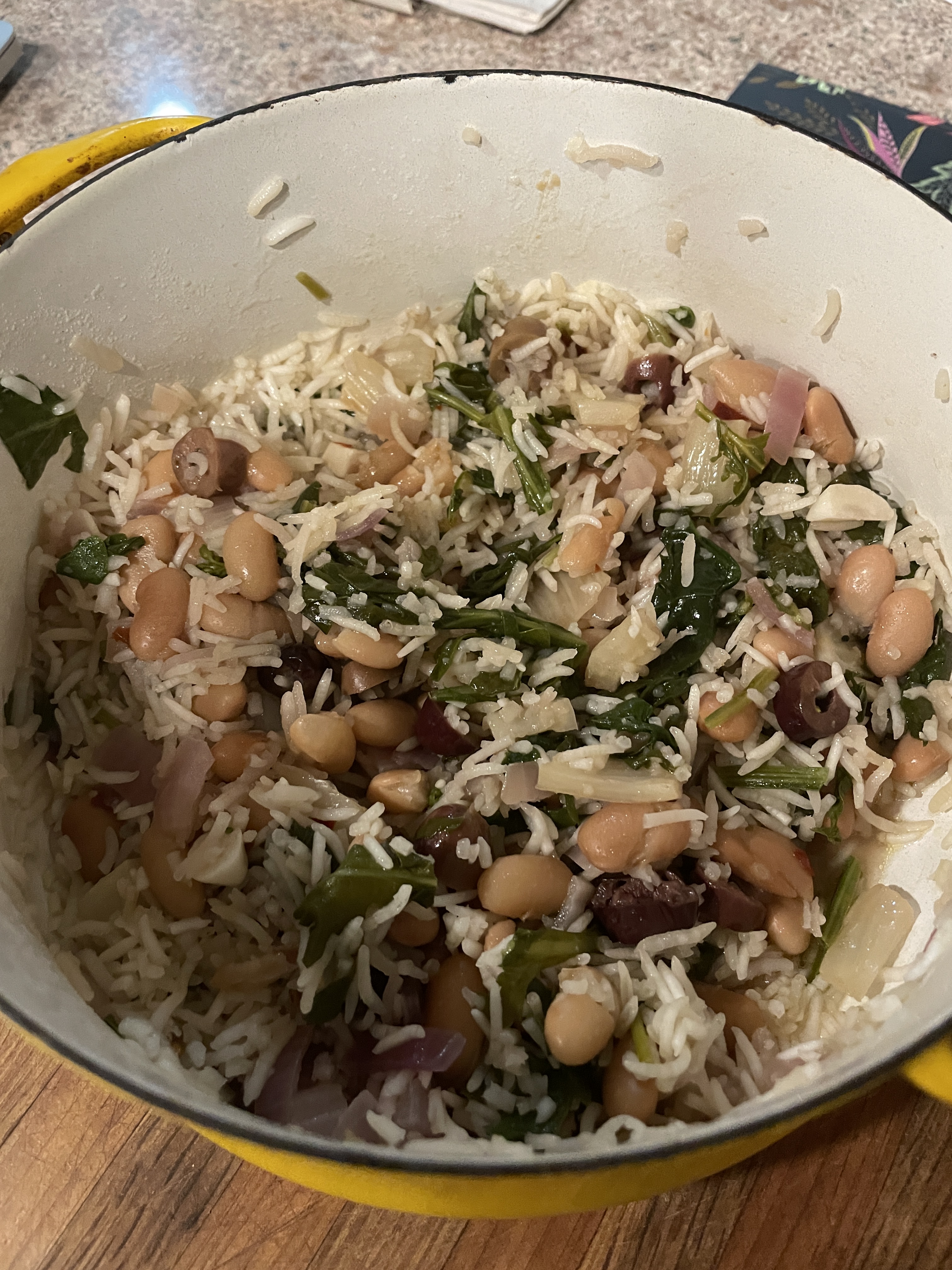
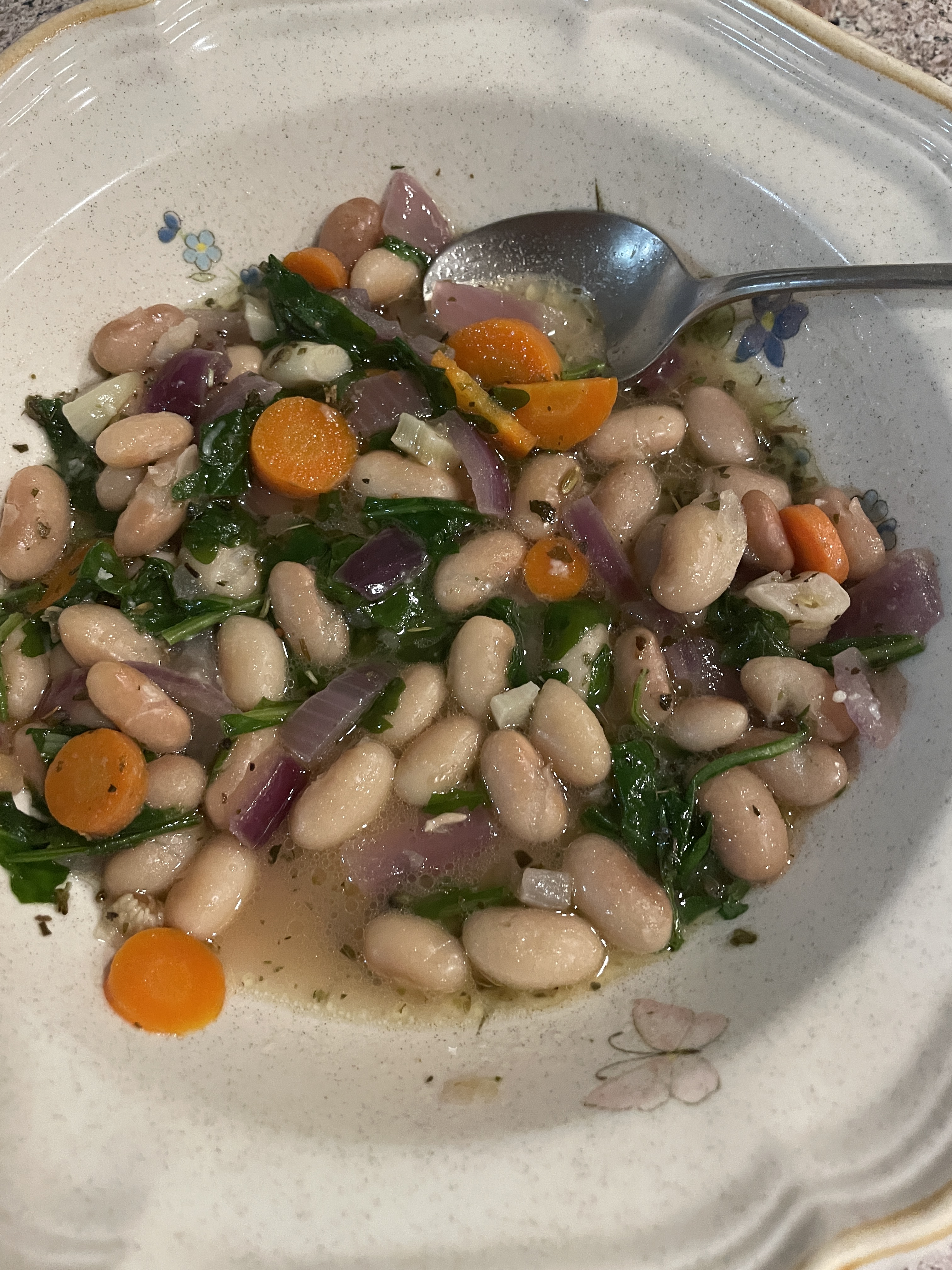
Vegetarian Plov with Greens


Plov is a common dish throughout Central Asia and is the national dish of Uzbekistan. All plov contains rice and usually meat like lamb or beef. Here is a vegetarian version. I found a vegetarian recipe and modified it using the ingredients I already had. The original recipe used chickpeas but I had already cooked Peruano beans so used them.

1/2 large purple onion, coarsely chopped

1/2 fennel bulb, coarsely chopped

3 cloves garlic, chopped

1/4 cup kalamata olives, chopped

1 drop coriander essential oil

1 drop cumin essential oil

1 drop cilantro essential oil

Chili flakes (optional and amount to taste)

1 cup cooked Peruano beans

2 cups greens (I used spinach and arugula), coarsely chopped

1 heaping half cup of basmati rice, rinsed

butter or olive oil for sautéing

Heat the oil or butter in a heavy casserole dish. Add onions, garlic, and fennel. Saute until tender. Stir in the spices. Scatter the beans and olives on top of the onion mixture. Do not stir! Add about 1/4 to 1/3 cup water. Layer the greens on top of the beans and olives. Flatten the greens with a spoon. Do not stir! Let greens wilt then layer the drained rice on top. Pour in enough boiling water to just cover the rice. Cook on high heat until the liquid has boiled off. Poke holes in the rice to allow steam to escape. Cover pan with lid and turn off heat but leave pan on the burner. Let the rice steam for 20-30 minutes.

To serve, stir the contents and serve in large bowls. You can add extra fresh herbs and lemon if desired. I just served as is and found it delicious. You do not have to use essential oil but can use ground herbs or fresh. If using essential oil, use a safe brand for cooking. I used Edens Garden but have used others, e.g. Doterra.

Book 31 for 2025: “Cold Kitchen: A Year of Culinary Journeys”, Caroline Eden


What a delightful, entertaining book! The title refers to her basement kitchen in Edinburgh, Scotland, where she lives when she is not wandering the globe. Each chapter highlights a certain place in her travels, in this case Ukraine, various countries in Central Asia, e.g. Uzbekistan, Russia, and the city of Istanbul, which she says is one of her favorite cities to visit especially in winter when tourists are gone. In one chapter, “Russian Railway Pies”, she and her husband ride the train from Moscow to the eastern shore of Russia–the Trans Siberian Railway journey. They did this in winter when the temperature in some places they stopped were as low as 50 below zero.

Each chapter contains her experiences in an individual country or city. She describes the places in detail, the people she meets, the food she eats. She also relates her feelings regarding these places, many of which she had previously visited, how they have changed over the years for better or worse–worse in the case of Russia, what they mean to her. In each chapter she always goes back to her kitchen, her dog, hiking the Scottish highlands, and her cooking, usually a recipe where she is trying to re-create a food she ate in one of these places she loves.

This is her most recent book, published in 2024. She also has a series of books about particular places where the entire book is dedicated to that particular place. Mostly, she has travelled in Central Asia, Russian, the Balkans, Turkey. I enjoyed this book so much, I plan to read another one about her other adventures. She is not just on these adventures for fun but also as a career so she knows many journalists, diplomats, officials in these places.

Moving 3–More Cooking with Paneer


As I mentioned in the previous post, I am left with one wok and one skillet. The wok seems to work better than the skillet for the sort of dishes I have been making. My previous Cooking with Paneer has been one of my most popular posts. Here is another edition of Cooking with Paneer.

For those who did not read the previous Cooking with Paneer post, paneer is a traditionally East Indian white cheese that does not melt when heated. It is a good source of protein for a vegetarian dish. I use it when a dish calls for tofu because I prefer it to tofu.

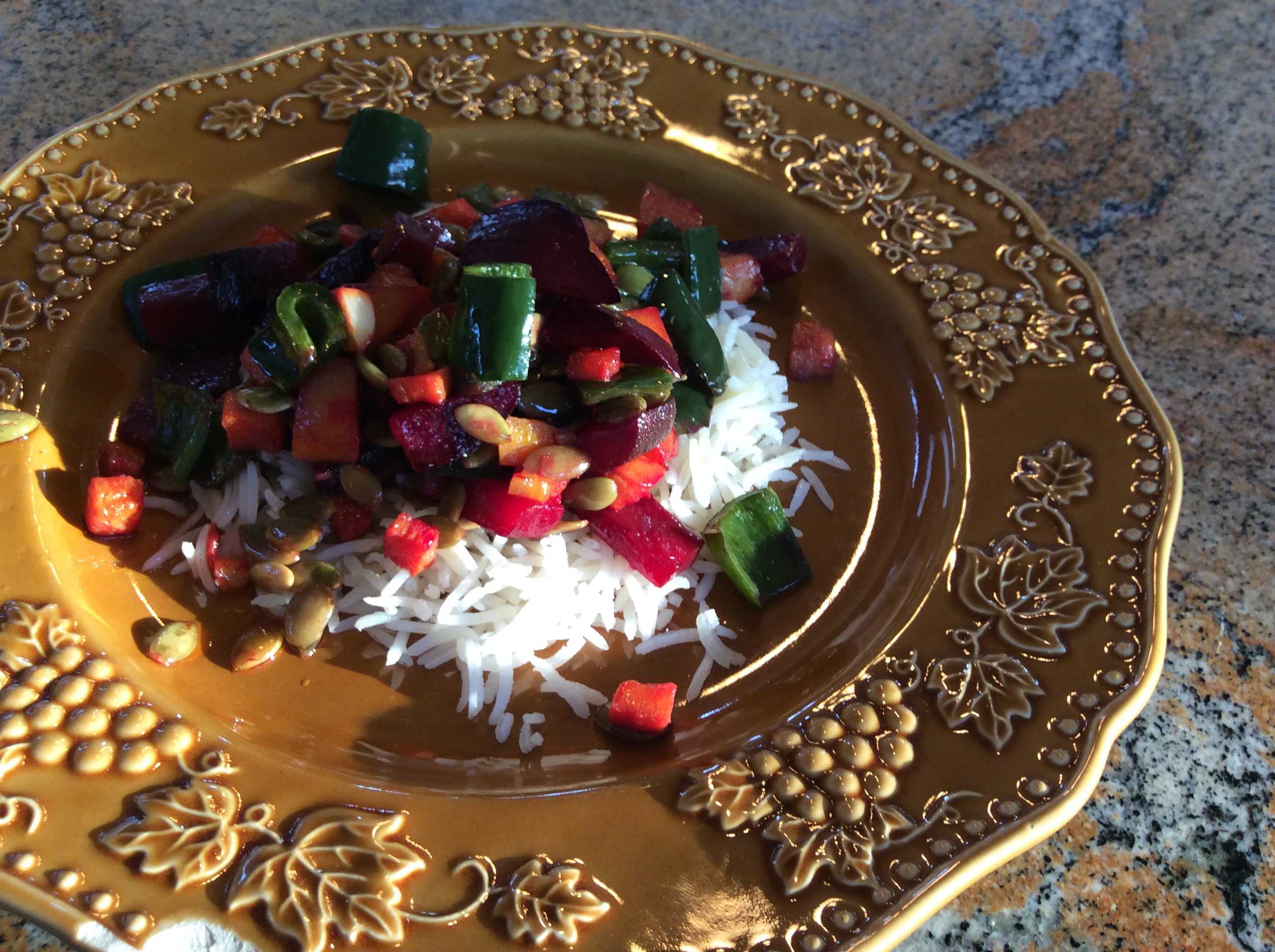
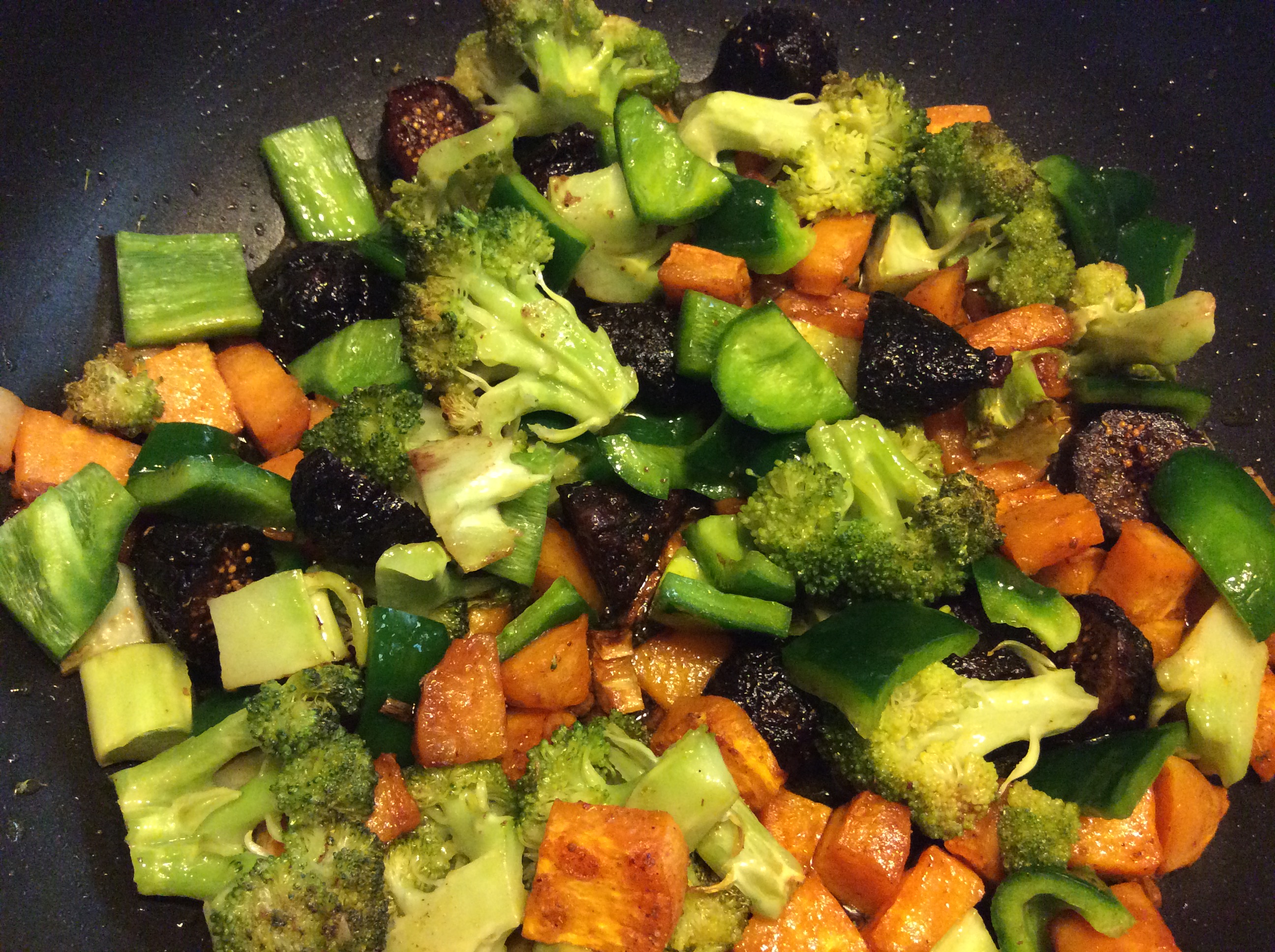
Here is a photo of my latest paneer dish.

The paneer in this photo is the white cubes. I sautéed chopped garlic, chopped onions, and purple potatoes in olive oil. Add whatever spices you prefer. Sometimes I use basil essential oil, sometimes the Ethiopian spice berbere. When these were tender, I added the broccoli and coarsely chopped poblano peppers. Saute just until these vegetables are tender but still bight green. Finally, add the paneer and saute just long enough so the paneer is heated through. Serve over rice or farro.

By the way, I did try the rice in a bag since I did not have a normal saucepan. I do not recommend it unless you are desperate for rice. It is extremely bland and boring.

Wandering the World–Food


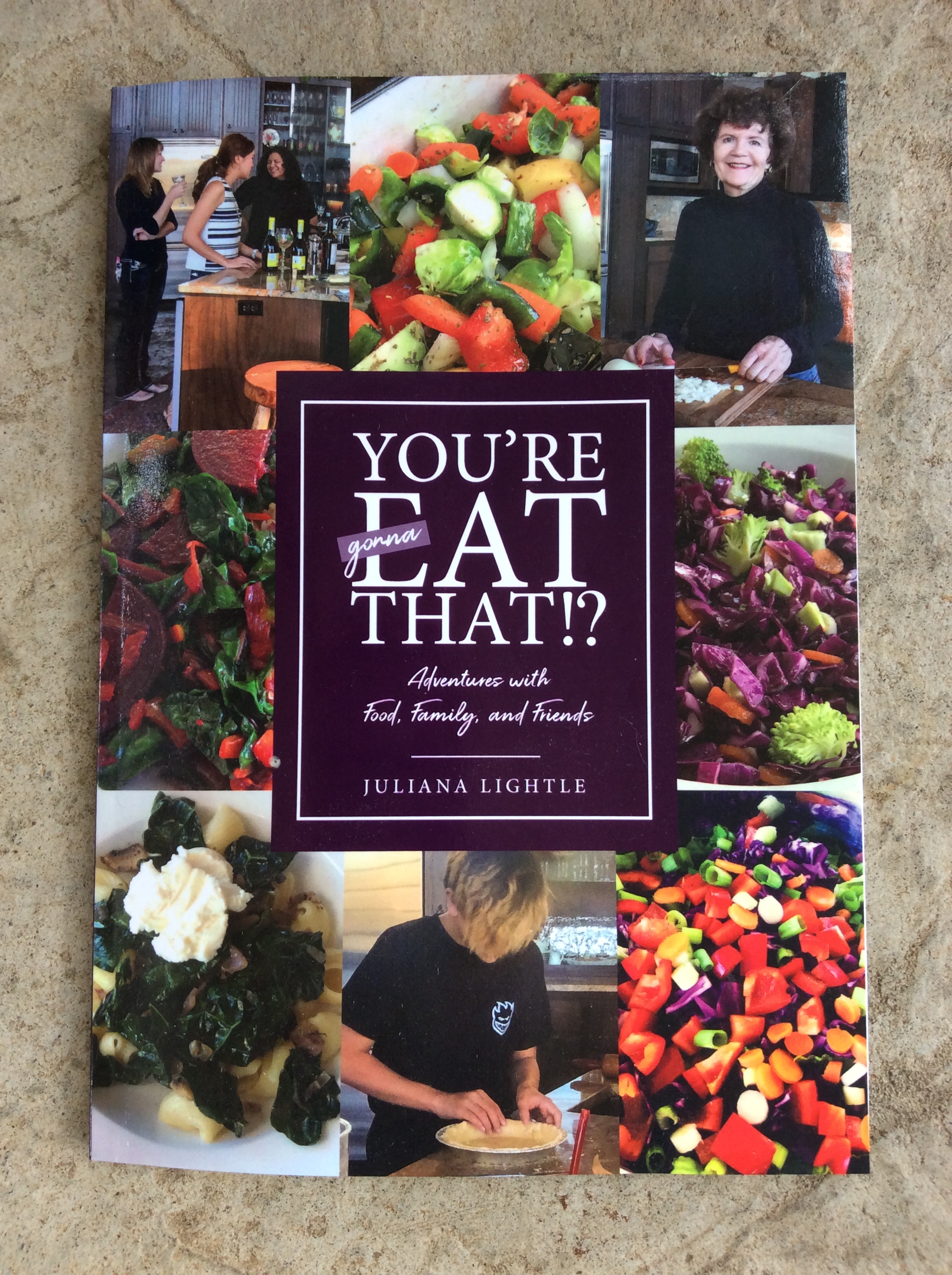
My travels have not only enlightened me personally, but also enabled me to create recipes from my food adventures around the world. Due to the recommendations of friends and family worldwide, I created a cookbook/memoir with stories and recipes. Len Leatherwood, new President of the Story Circle Network, says, “This is a cookbook after my own heart, filled with a wide range of healthy recipes from several cultures that will add flavor, color, and variety to any table.” Jennifer Archer, award winning writer and editor elaborated further, “A feast for the senses…combines colorful stories, poems, and mouth-watering recipes that inspire readers to experience new places, new tastes…from Asia, Africa, Latin America, Scandinavia, and America.”

This would make a great Christmas present for foodies and people who want worldwide food adventures. It can be ordered online from: http://www.dreamcatcherbooks.com and go to Angel Books.

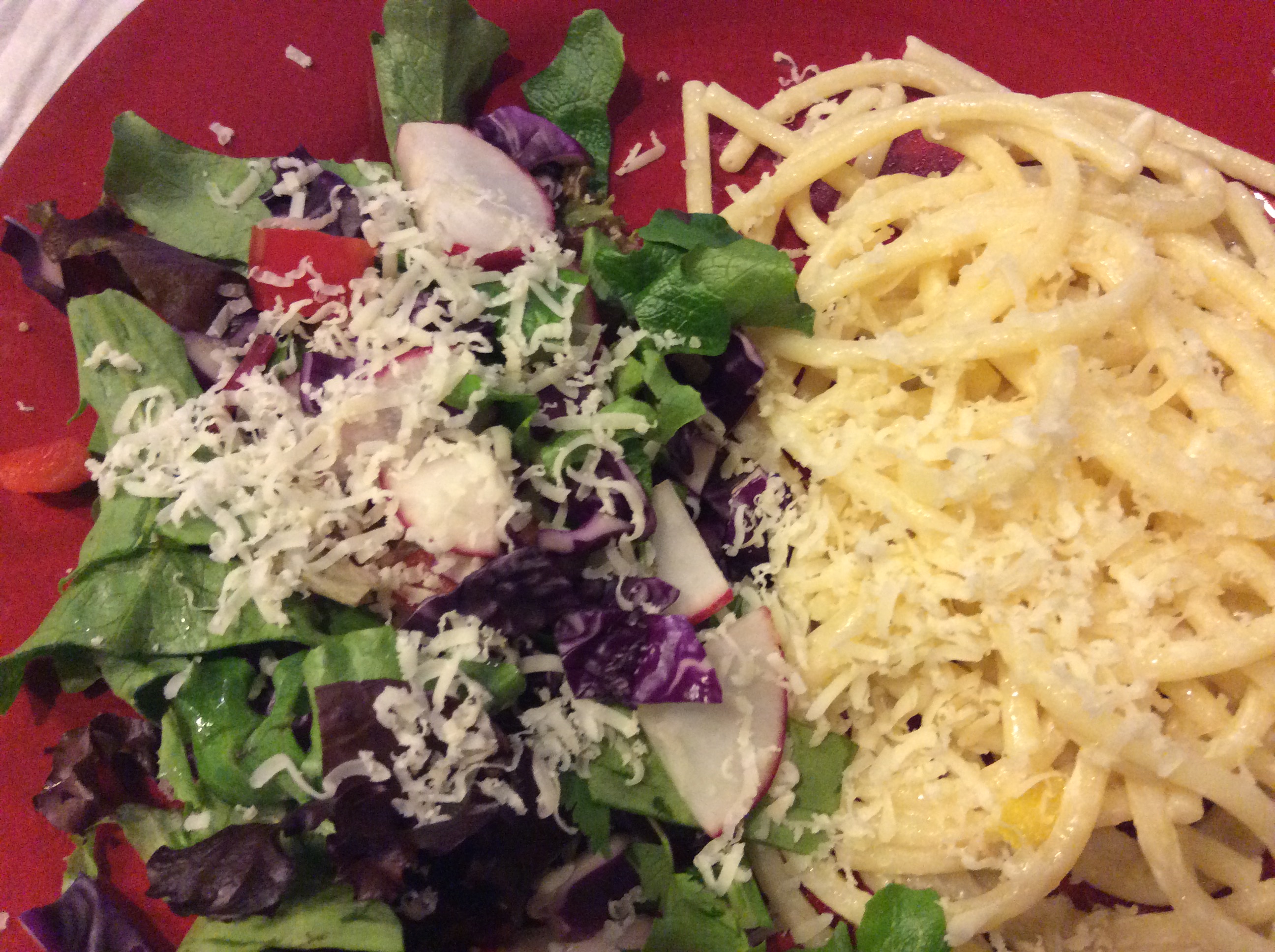
Recipes for the food in the photos above are included in the book. More food photos follow:

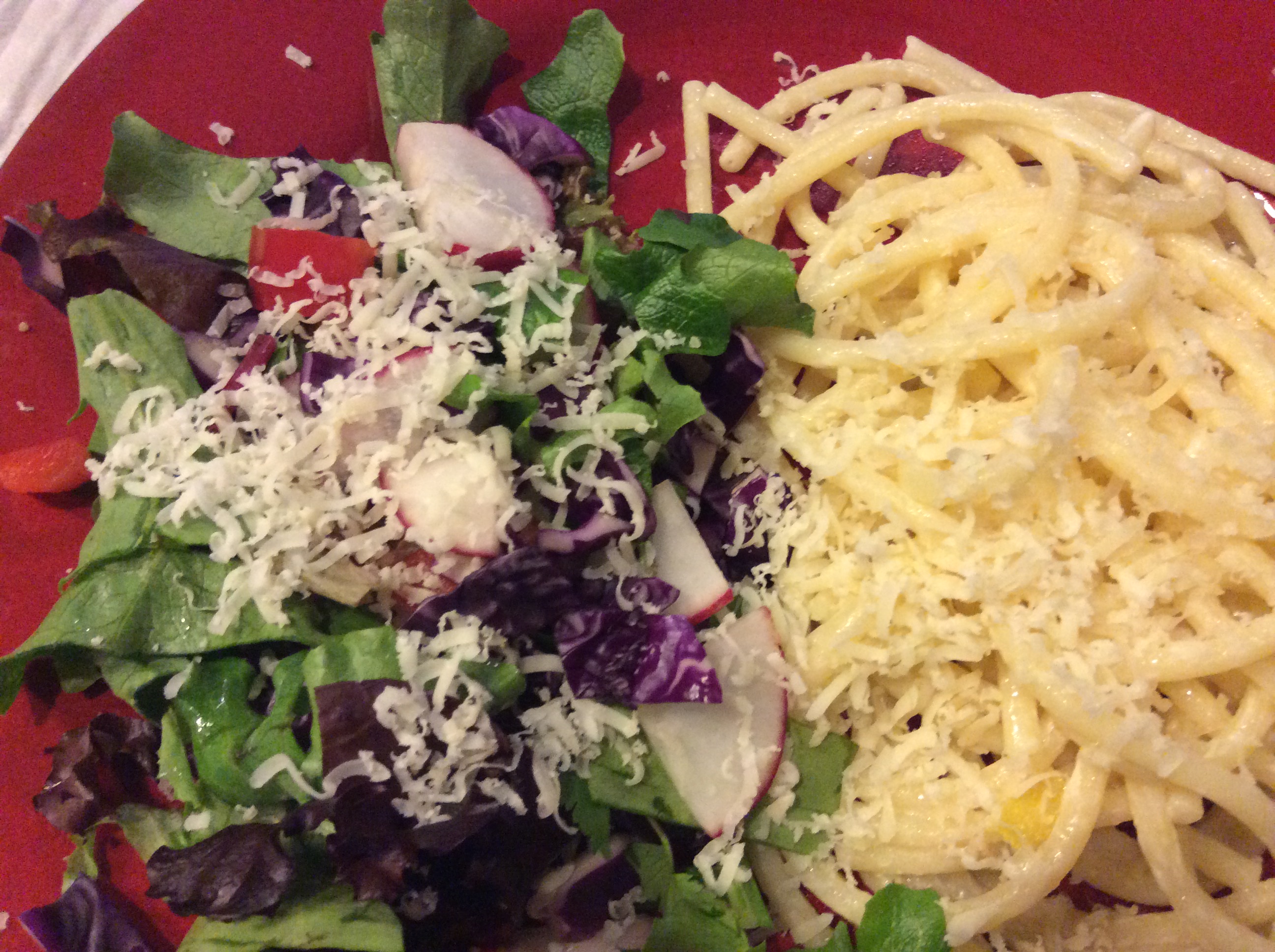
Lemon pasta with mixed salad topped with grated asiago cheese.

Many of the recipes feature berbere, a spice used in Ethiopian cooking. The book also includes four different recipes for salmon and many vegetarian and vegan recipes using spices from around the world.

An Easy Healthy Dinner


IMG_4729

I wanted to try something slightly different but easy for dinner:

Several garlic cloves, coarsely chopped

1/2 large sweet potato, peeled and cut into cubes

I large poblano pepper, seeded and chopped

7-8 dried mission figs, cut in half

Saute the garlic, sweet potato, and figs in olive oil.  When garlic is slightly carmelized and sweet potatoes are soft, add the broccoli and poblano peppers. Saute until tender but still bright green.  Add your choice of spices.  Tonight I added garam masala and berbere.  Just before serving add 1 cup garbanzo beans (I added them after I took the photo above).  Cook just until beans are warm.  Do not over cook.

This can be served over rice or farro.  This evening I cooked farro.  I do not follow directions on the package.  To add flavor, saute the farro for a minute in avocado oil, add the water — 1 cup farro to 4 cups water.  When it starts to boil, add bouillon of your choice, stir thoroughly, and continue cooking per package directions.

For more recipes like this, see my new memoir/cookbook:  You’re Gonna Eat That!? Adventures with Food, Family, and Friends, at  www.dreamcatcherbooks.com. Angel Editions.


You’re Gonna Eat That!? Adventures with Food, Family, and Friends


This is my new book, published last month.  It is filled with stories, poems, and recipes–healthy food for vegans, vegetarians, pescatarians, and meat eaters with photos and detailed instructions. Currently, it can be purchased at Burrowing Owl bookstores in Canyon and Amarillo, Texas, and online at http://www.dreamcatcherbooks.com, Angel editions.

IMG_4660

What’s For Dinner


Thinking up new, healthy, creative dinners sometimes poses a challenge.  Last night I stood in the pantry door, looked around, went to the refrigerator to see what I already had available.  Although the vegetable combination is not unusual for me, I decided to use farro instead of pasta or rice.  Farro, a staple in ancient Rome,  has been called “the mother of all wheat”. I buy pearled, organic farro. It is chewy, a good source of fiber, and high in protein.  I do not follow the directions on the bag. Here is how I cook farro for two servings:

1 cup farro

3 cups water

1 Tsp. Better Than Bouillon

Avocado oil

Cover the bottom of a sauce pan with the oil, pour in the farro.  Turn heat on high, constantly stirring, saute the farro in the oil for a couple of minutes, then pour in the water.  Add the bouillon and stir thoroughly.  Turn the heat down but keep the farro boiling.  Do not cover.  Stir at regular intervals.  Do not let it go dry.  It should take about 1/2 hour for the farro to become tender.  Test and if needed, add more water.  Cook until the water is absorbed and farro is tender.


Last night’s vegetable sauce:

Cover the bottom of a pan with olive oil.  Add five cloves garlic, coarsely chopped and one medium sized beet, cut into medium sized pieces.  Saute until tender.  Add five to six sliced Brussels sprouts.  When Brussels sprouts are partially cooked, add one large poblano pepper, coarsely chopped, seeds removed.  Saute until pepper is tender but still bright green. Last night I used berbere, an Ethiopian spice, to jazz up the sauce.  Sometimes I use basil or other Italian spices.  I vary the vegetables, sometimes using sliced carrots, broccoli, kale.  Be creative.  Use vegetables you like.  If you want something non vegetarian, add chopped chicken or cod loins.

IMG_4691

Above is a photo of the cooked vegetables ready to serve.

IMG_4692

The vegetables served over the farro.  If you are not vegan, you can grate asiago or parmesan cheese over the top.
 

Italy–Spaghetti with Lemon Cream Sauce


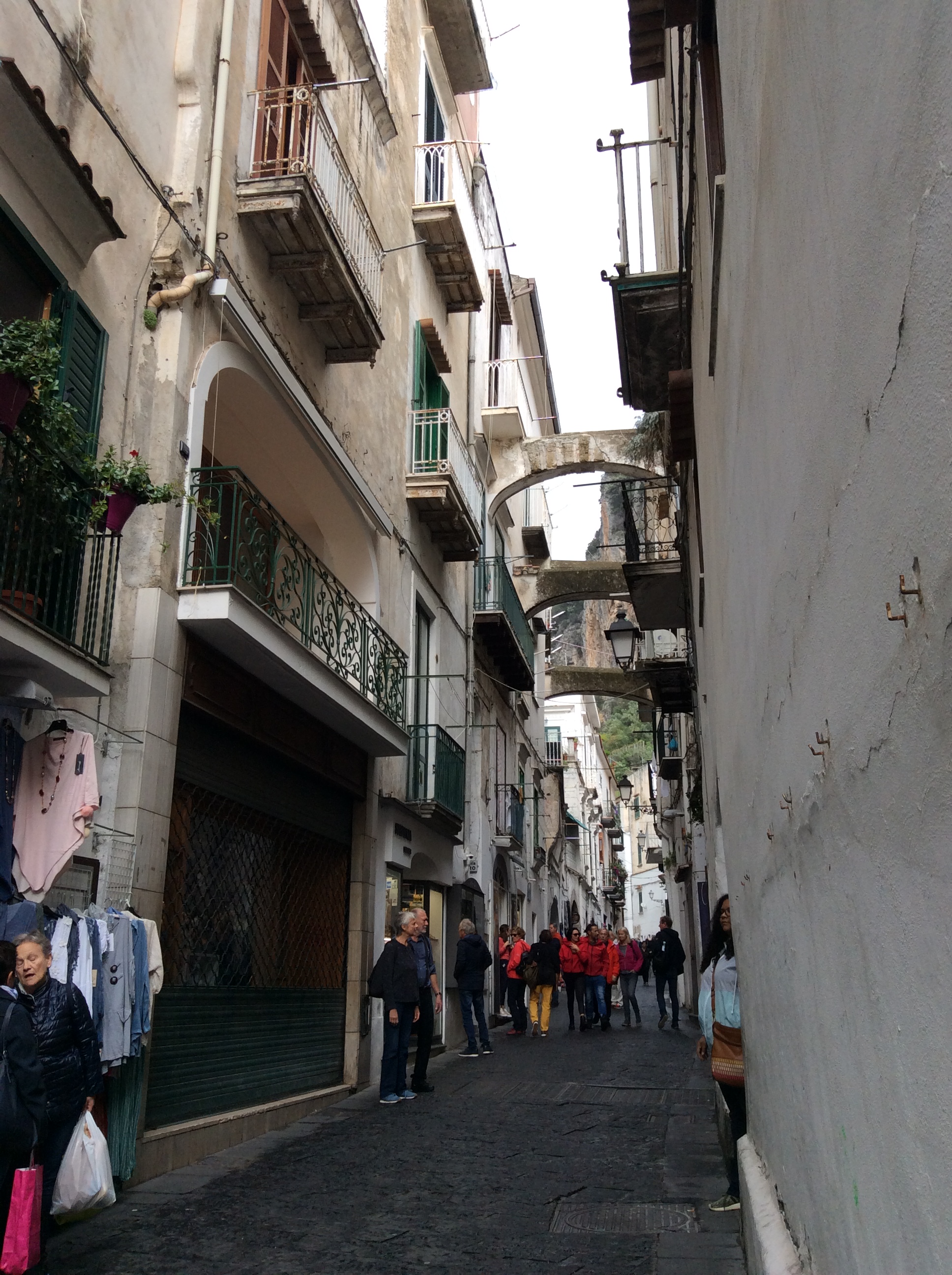
My favorite pasta dish in Italy was like none other I have eaten anywhere.  The first time–and the best dish–was in a little restaurant along the side of a narrow street in Amalfi.  The Amalfi Coast is famous for its lemons and where they create the best limoncello.  Therefore, it is not surprising that they created a pasta dish featuring lemons.  When I returned home, I experimented to recreate it.  First, the spaghetti–yes, they called it spaghetti–was considerably thicker than spaghetti in the US.  I guess it was homemade.  I did find a reasonable substitute here, bucatini from Italy.

Here is my recipe for two people:

1/2 lb. bucatini made from durum wheat semolina

1 lemon

heavy cream or half and half

lemon essential oil

butter

Cook the pasta as directed on the package.  While the pasta is cooking, using a potato peeler, peel strips from the rind of the lemon and cut into small pieces. If not using lemon essential oil, juice the lemon.  After the pasta is cooked and drained, place back in the pot with a couple tablespoons of butter and stir until butter is melted.  Add the lemon rind and lemon juice or essential oil to taste.  Add the cream carefully–just enough to make a little sauce.  Serve and grate parmesan or asiago cheese on the top.

Serve with a nice green salad.

IMG_4546

IMG_4131

Farther up this street just below the school, we found the restaurant where I ate the spaghetti with this sauce.


Stuffed Acorn Squash


Winter squash, butternut and acorn, are two vegetables I like and think are under used.  Because I became tired of peeling butternut, I decided to invent something for acorn squash.  Much to my surprise, it is now one of Martina’s favorite foods.  She has even sent photos to her mother in Italy to see if the squash is sold there so her family can try it.  The following recipe is for two. Obviously, just buy more squash and fill if you want to make it for more people.  This is a perfect recipe for vegetarians because no meat or fish is used.


1 acorn squash, cut in half, seeds removed

1/2 medium onion, finely chopped

Olive oil

1/2 to 1 teaspoon honey for each half

Pepitas or any chopped nut of your choice

Saute the finely chopped onion in olive oil until translucent.  Stir in approximately one handful of seeds or nuts.  Rub olive oil in the bottom of a small baking dish or pan and cover the flesh of the squash with a thin layer of olive oil.  Place squash in the pan, fill deseeded center with the onion mixture.  Place honey on top of this mixture.  Bake in a 400 degree oven for 30-45 minutes, depending on the size of the squash halves.

For a totally vegetarian meal, serve with salad.

20190124_200840

If you want to add more protein to the meal, add black or garbanzo beans to the salad.  Sometimes we also add chopped hard boiled eggs and feta cheese.


September 1, on the Rim of Wonder


Sunrise

Dappled clouds

Owl hooting

Wren climbing

IMG_3489

IMG_3486

IMG_3487

Later, I graded papers and watched part of John McCain’s funeral, some of which almost brought me to tears.  I often disagreed with him but never did I question his passionate love of country, his courage, his willingness to buck the norm, to defy convention when he thought it was the right thing to do.  I think he and I shared certain values on which this country is based even if the country as a whole rarely lives up to them.  These include the conviction that all people are equal, that everyone deserves justice, and each person carries the right to find his or her own share of happiness without judgment and condemnation from others who may think differently.

Later, while working on the latest book I am writing, I found handwritten recipes written by my grandmother, my mother’s mother, Nellie Narcissus Duke (Kaiser),whose father came here from Switzerland as a child.  One, for dumplings, remains readable.  The other written in pencil on the front and back of thin paper is fragile.  It is for Strawberry Shortcake.  If Grandmother Duke ever made dumplings, I do not remember it.  Mother did–chicken and dumplings.  I wonder if she used this recipe.  I do remember conversations about the shortcake because Dad did not like strawberry shortcake even though he liked strawberries.  I took photos of these two recipes written decades ago in my grandmother’s handwriting.

IMG_3492IMG_3493

IMG_3494