As a person who diligently never fails to finish a book I start, it is difficult to admit that I have finally failed to finish a book. I made it to Book Five and quit. Having already happily read two of this author’s other books, this failure comes as a surprise.
In this fantasy novel, the narrator’s quest to find the body of an illiterate girl from his own country (he has wandered far in search) whose ghost haunts his dreams became less and less appealing. Not sure why because I generally like fantasy novels. This novel does raise some interesting questions:
-Are burial/cremation practices so sacred that one must follow what is considered sacred in one’s culture or risk exile?
A striking, foreign, young couple appear one evening in the Jeema of Marrakesh. The woman’s incredible beauty fascinates the observers. Suddenly, they disappear. Hassan, a traditional storyteller, invites those who observed the couple to tell what they saw and knew on that night as he presents his own stories to the crowd at the Jeema. His brother, Mustafa, has confessed to the crime of their disappearance, telling everyone he loved the woman whom he hardly knew. He is imprisoned for their disappearance. However, nearly everyone acknowledges that he had nothing to do with it. This novel presents all the different views of the couple, their disappearance, and what it means. Often observer stories contradict each other, raising the questions of what is truth, whose truth is factual, how can we know what is true and how do we define love. Hassan is determined in his quest which takes the reader through all these stories, Hassan and Mustafa’s childhood, the mysteries of the Sahara, and much more.
Rio, a young Black woman, and her husband, Gibraltar, academics living in Boston, become concerned and disillusioned with their current lives. She finds an abandoned restaurant on top of a hill in western Massachusetts. Heartbroken after the death of her newborn, she is determined to create a safe, new, underground society beneath the restaurant. She finds a benefactor and her dream begins to take place. Via word of mouth, others hear about this safe place for the “lost” and disillusioned and head there. These include two homeless men from Chicago, a successful, young journalist, and a former soccer player.
Can such a society work? What happens if they run out of money? Regardless, can the care individuals have for each other save them?
Note: Depending on what kind of novels you prefer, this may or may not be a book for you. Several of the characters have serious mental issues, some think it is ok to resort to violence to save what they believe in and find ways to justify their actions, some seem very, very “lost”.
After winning the Pulitzer for her previous book, “Olive Kitteridge”, Strout continues her stories about people and families from a small town in Maine, the town of Shirley Falls. “The Burgess Boys” focuses on one family, the Burgesses. A freak accident which occurred when the children were under the age of ten has affected all their lives in one form or another. The boys, Jim and Bob–both lawyers, escaped to NYC as quickly as they could. Only their sister remained behind in Shirley Falls in the old family home which has become a rather dark and dismal place. Jim, a hyper successful, high powered attorney, has demeaned his younger brother Bob, a Legal Aid attorney, all their lives. The lifelong family dynamic is totally upended when the sister, Susan, calls them back for a family emergency after her teenage son commits a stupid, heinous act and gets himself in serious legal trouble.
Strout possesses a simple, straight forward, unique style of writing that seems perfect for telling family stories, illuminating human personal struggles, and illustrating the good and bad of modern life. If you have not read any of her work before, I suggest looking at the publication dates and reading them in order. The same characters keep reappearing and you learn about their lives as you go from book to book.
Written in an unusual style, the narrator, the main character, tells his story to an American visiting Pakistan. While they are sitting eating dinner and later walk to a hotel, the narrator relates his life as an immigrant who found US life too shallow, too focused on profit. The narrator, a young, Pakistani man with an Ivy League degree, attains the heights of success in the US, working in a highly desirable career position where he is the star. After 9/11 occurs, he questions who he is, what working in this sought after career means, whether it is even ethical to work in a position for a firm whose job it is to investigate companies, their profits, and ruin the lives of the people who work there. He is sent to Chile to investigate a literary firm, meets the manager who takes him under his wing and helps him look at what he is doing in a totally different light. Is money everything? Do the lives of ordinary workers matter? In addition, it is a love story. He meets a beautiful, young, wealthy, US woman, they develop a close friendship, and he discovers she is not mentally stable and does everything he can to help her.
While on the surface this appears to be a story of a young immigrant who does not ultimately fit in with US life, it is much more. It raises the questions of the definition of success, of what love is, of profit over humanity.
If you LOVE the West, but sometimes struggle with its violent history, this is the memoir for you. Here is a quote from page 178: “I’m embarrassed at how long it has taken me to notice that a rancher’s view of the natural world is blindered in comparison to the hunter’s perspective; that driving livestock from one field to another is nothing like stalking free-ranging herds; that finding, gathering, and preparing a hundred different wild plants bears no resemblance to growing alfalfa or oats…”
Andrews also discusses the difference between sustainability and reciprocity. Before reading the book, I had never thought about this. He notes that sustainability is taking without damaging. Reciprocity entails giving back, e.g. nature, asking, “What can I give back? What can I do to take care of this place that feeds and shelters me?” This is quite different from “How much can I sustainably take?”
Andrews grew up in the West. However, after cowboying on several ranches in Montana, hunting annually, and later inheriting his grandfather’s Smith and Wesson revolver, he begins to question the gun violence and destructiveness of Western culture. This book details his journey. He continues to live on a farm in the Montana mountains, slowly transforming the land to make it profitable but also a place for nature, for wildlife to prosper.
The subtitle of this book is “How Every Brain Is Different and How to Understand Yours”. Prat explains in detail and with humor how every brain is different. Little quizzes and tests help readers explore their own brains. The results of most of the quizzes did not surprise me except possibly one. I do not think I am as extraverted as the test indicates. You can find some of the tests and quizzes on her website, CHANTELPRAT.COM–without reading the book.
Research details how brains differ and how this difference controls individual behavior. Two people faced with the same potentially threatening situation react differently because their brains differ. Although many of these differences are genetic, brain research also suggests that the ability to understand others and comprehend social cues is learned. For better or worse, brain research also reveals that people with brains that work in a similar way are more likely to spend time together. However, people can learn to understand others whose brains are quite different. She calls this mind modeling (reverse engineering the minds of others)–sort of like what is commonly called walking in another person’s shoes. Being able to “read” correctly another person’s nonverbal cues helps with this and it can be learned. So the next time you find someone behaving in what you consider an idiotic manner, try thinking this: they have a different brain shaped by their own unique genetics and experiences. This might help me at least come to some understanding of behavior and views I consider intolerable.
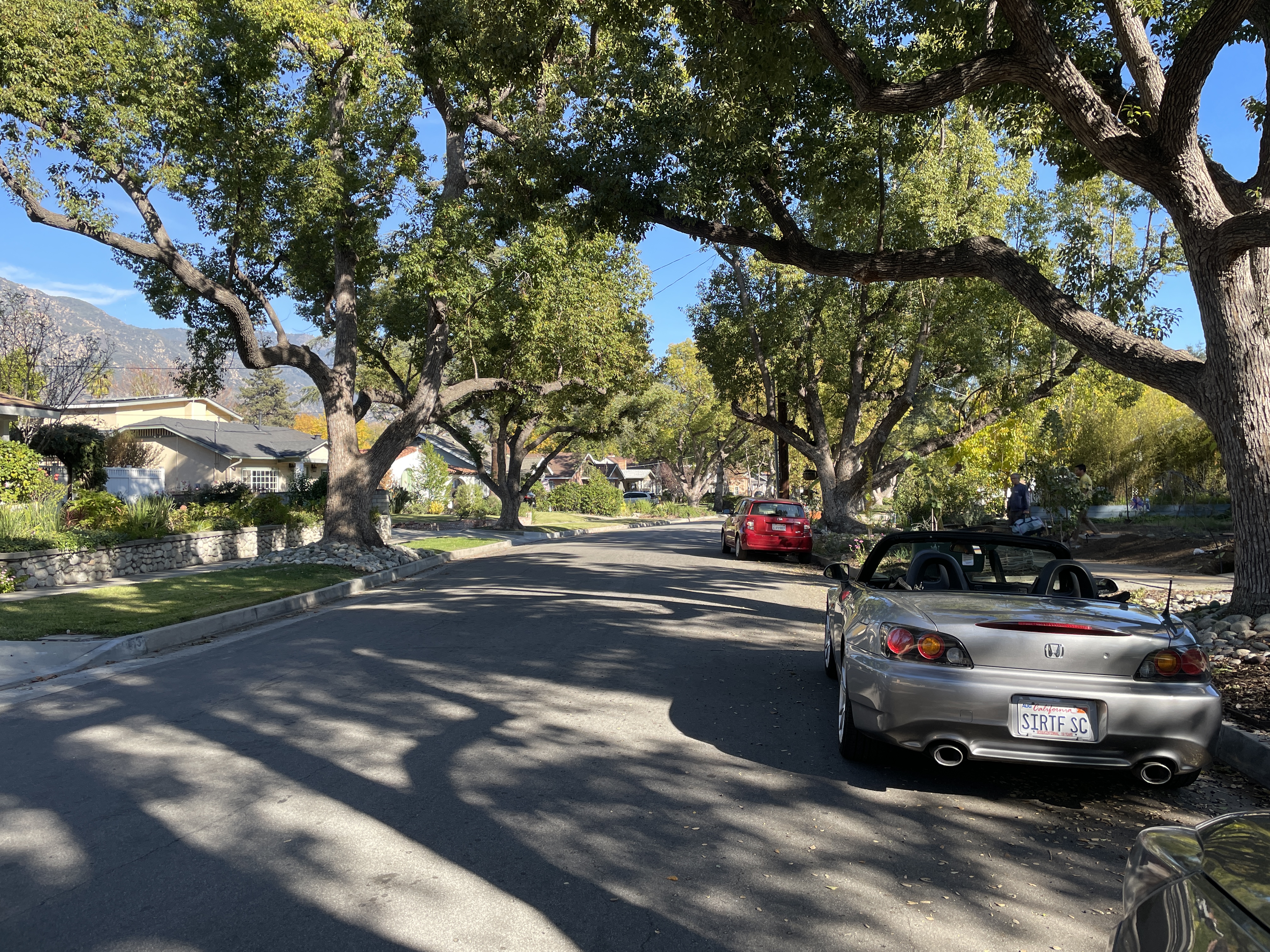
In a recent post I mentioned walking in her footsteps. This is the rainy season so we have not been able to go on that walk yet.. However, this morning I finished reading the last novel of hers that I had not read–Parable of the Talents. It is the sequel to Parable of the Sower. Now I have read all of them. She is buried at Mountain View Cemetery in Altadena, CA, Eagles View Lot 4517. The inscription on her gravestone is the theme of both the books above:
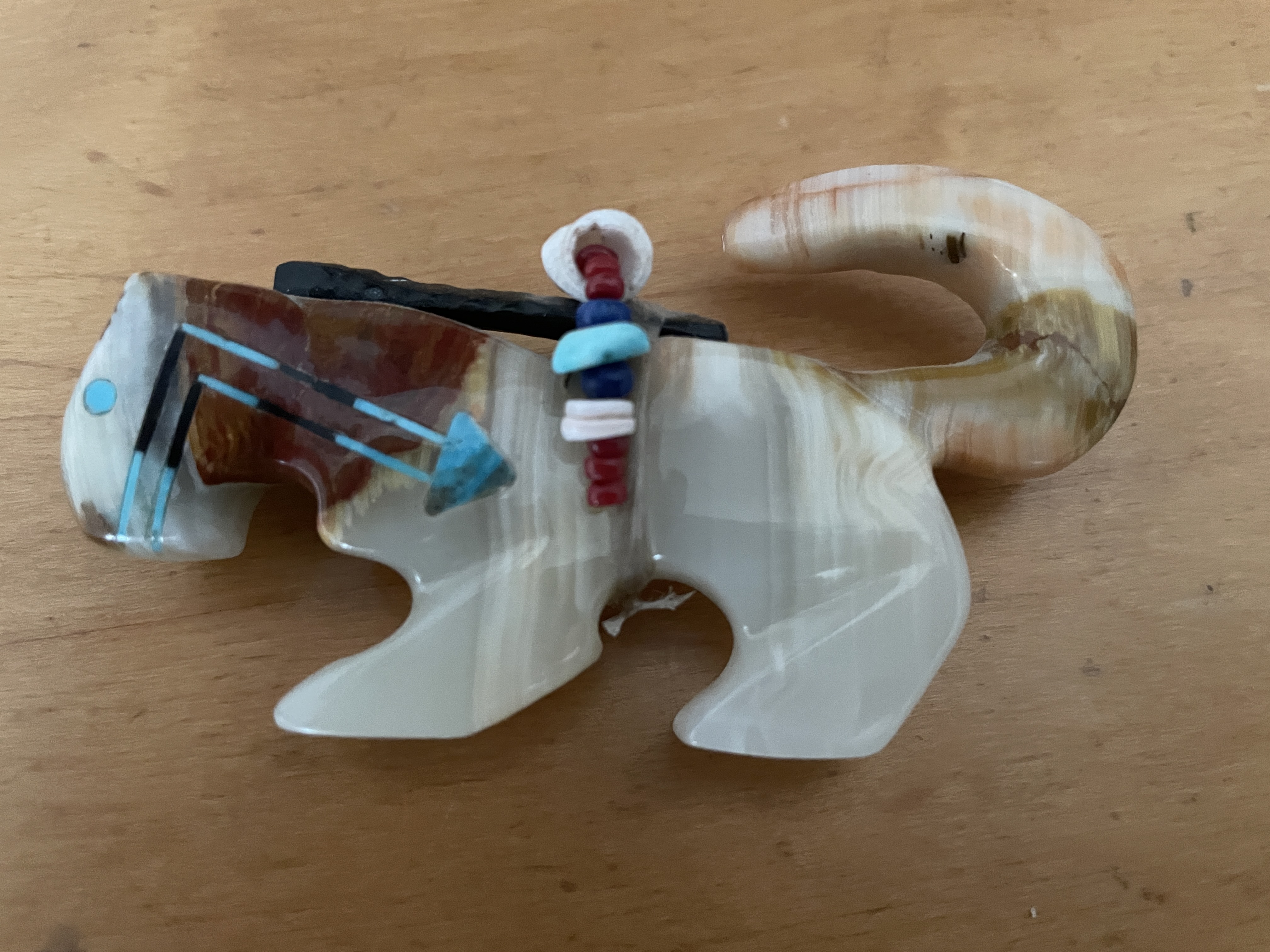
Years ago while visiting Albuquerque or Santa Fe, I acquired a Zuni puma fetish. It is the only fetish I own. I bought it because it is a puma, the Directional Guardian and prey god of the North, representing independence, personal power, intensity, and loyalty, carried by travelers to protect their journey. It resides on a dresser in my bedroom, watching over me, protecting my life journey.
As I mentioned in a previous post, my puma obsession extends to researching them and writing poems about them. The following poem was originally published in my book, “On the Rim of Wonder”.