reading,
listening to birds
the gurgling of water,
looking up to watch
four hummingbirds challenge
each other at the feeder, and
I notice I’m surrounded by flowers
and the scent of orange blossoms.


reading,
listening to birds
the gurgling of water,
looking up to watch
four hummingbirds challenge
each other at the feeder, and
I notice I’m surrounded by flowers
and the scent of orange blossoms.
This recently published book is one of the latest in a bookclub to which my grandson belongs. Although an historical novel based on the reporting of an actual event in 1701, much of it applies to today’s world. In 1701, Dr. John Friend reported to the the Royal Society of England about a “rumuor spread” which discussed a report that young girls in the Oxfordshire country side had “been seized with frequent barking in the manner of dogs.”
Five sisters live with their grandfather on an affluent farm in the country. Due to the recent death of their grandmother, they go around dressed in black as was the custom. Because they stay to themselves a lot, roam freer than most girls, they are often looked upon with suspicion by the villagers. One man, who ferries everyone to and fro over the nearby river, has issues with women and loathes these girls because he thinks they are too independent and views them as defiant and thinks they ridicule him because they do not chat with him when they use the ferry. He also has a severe drinking problem and spends all of his free time in the village pub. He is about to be married to a local woman but has severe anxiety over this because he thinks his new wife might try to boss him around.
Most of the men in the village spend their evenings drinking in the pub and often resort of fights and various forms of violence when issues arise. They see this as manly behavior. They view with suspicion any man who does not behave as they do. The woman, Temperance, who serves them hates alcohol and goes so far as to wear leather gloves so the alcohol will not touch her hands. She is one of few in the village who does not believe in rumors and supports rational behavior.
Everything goes awry when during a severe drought, the river dries up, the heat overcomes everyone, and Pete, the ferryman, insists he has seen the five sisters bark and turn into dogs and incites fear in many in the village. It seems to matter little that the two young men who work for the girls’ grandfather, proclaim that the girls are perfectly normal and none of this is true.
This novel raises various issues that continue as issues hundreds of years after the above incident:
-What does it take to make a man? What characteristics define real manhood? Is manhood defined by violence or kindness and compassion?
-How much freedom is okay for women? How much independence and who determines this?
-When is drinking ok and how much? Should people stop people who become violent when drunk?
-What happens to a neighborhood, a society, when people start to believe all sorts of stuff that is not true? Can it be stopped and how?

A garden of delights
my my new goal.
Why do I/we need
such a garden?
Sanity, yours and mine.
Genocide in Gaza, Sudan,
eastern Congo, probably
even in other places where
there’s no news.
Poverty here in the richest
nation on Earth.
Poverty my neighbor seems
shocked when I tell her.
People living in condemned
trailers, no heat, no water–
It’s freezing inside.
People surviving, barely.
Malnourished children, big
hungry eyes, staring.
A garden of delights
my new goal.
Why do I/we need
such a garden?
Masked men and some women
attacking people in the streets,
in their homes,
knocking down doors.
smashing windows.
You’d think I’m describing
Russia, Nazi Germany
but no, I’m describing
happenings in my own
county and
across the US.
A garden of delights
my new goal.
Sanity = Delights
I look out my window
purple mountains loom
in crystalline air.
Recent rains create
emerald hills,
blooming freeway daisies,
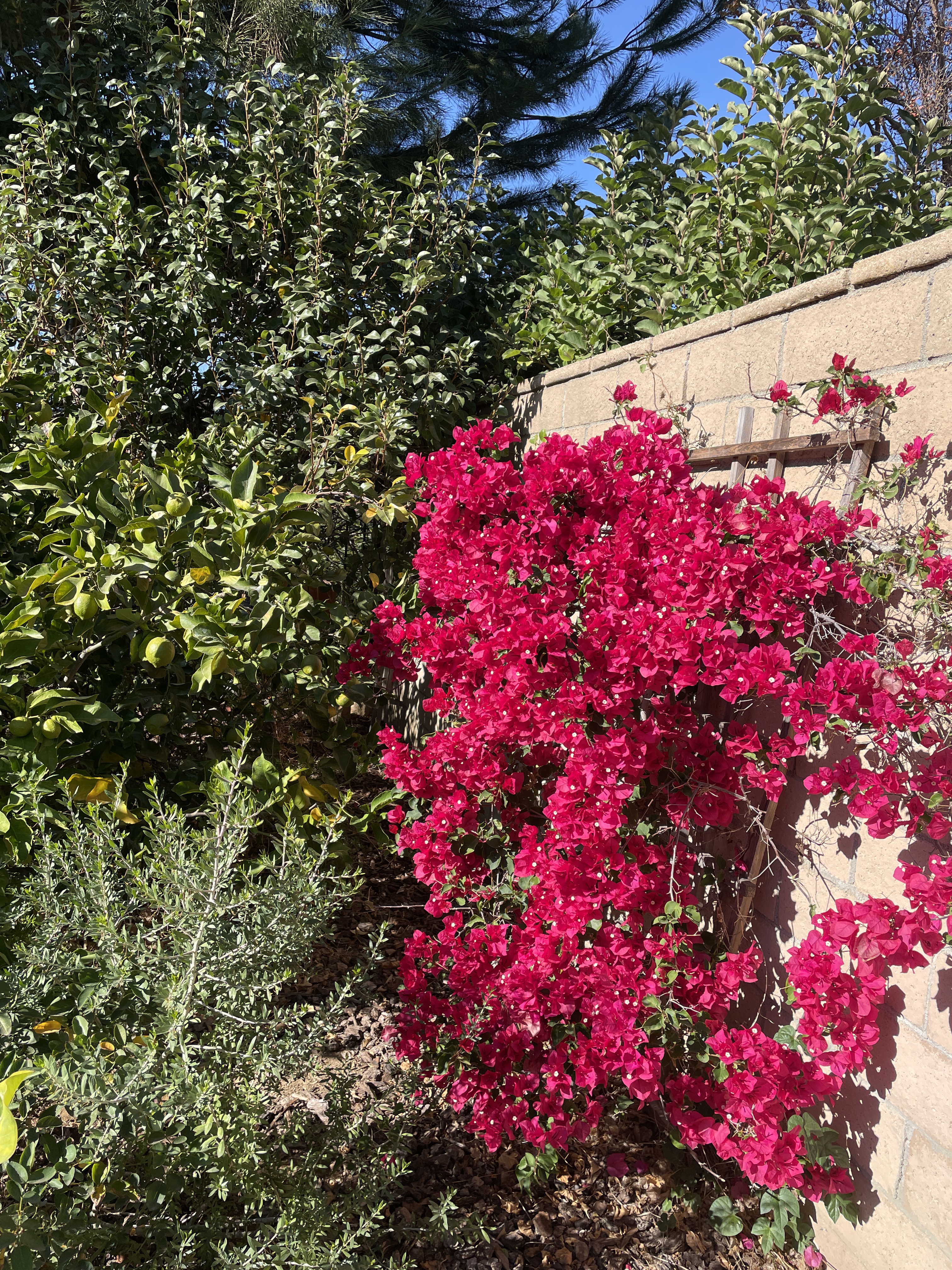
roses in my garden,
pink, sunset colors, snow.
Bougainvillea the color of blood
climbs my garden wall.
The turquoise fountain gurgles.
Photo of daughter and grandson
make me smile.
Symbols, sacred corn grace
walls and make me
remember cornfields in summer
when on a hot day
I could hear corn grow.
Three different pine trees whisper,
the Soleri bell rings in wind.
Ah, yes, I live in a garden,
a garden of delights.
And I remain sane
for at least one
more day.

Joan, the main character, is an astronomer obsessed with the stars since childhood. She is content with her life as a physics professor until she sees an ad seeking the first women scientists to join NASA’s space program. While her initial attempt fails, she applies again and succeeds.
In the summer of 1980, she begins her astronaut training at Houston’s Johnson Space Center, along with other trainees, including some from the military and others chosen because of their specialist expertise. She is one of those. Some of the top military pilots are nice and some like to make jokes at the expense of women. The women know they won’t all be chosen to go to space. As a consequence one woman in particular becomes excessively competitive. Others help each other and hang out together.
The novel details the rigor of astronaut training both mentally and physically, how trainees behave under stress, and how all the stress makes some people nicer and others increasingly rude. In the midst of all this Joan continues to care for her beloved niece and discovers a love she never dreamed of in her wildest dreams.
This is my first Murakami novel; it will not be my last. It’s fascinating and profound. A 15 year old boy, Kafka, runs away from home. His mother and older sister disappeared when he was four. He does not remember them. His father, a famous sculptor, ignores him. Although they live in the same house, they rarely see each other. After running away, he finds a private (but open to the public) library in another city and is taken in by the two people in charge of the library.
Nakata, another main character who is an elderly man, is not very bright due to a bizarre event that sent him to the hospital in a coma when he was a child. He talks to cats and makes fish and eel fall from the sky like rain. He becomes friends with another principal character, a young truck driver, who helps him out because Nakata reminds him of his grandfather.
The novel portrays the lives of these characters through their actions, dreams, and fantastical events. The unreal becomes real and people learn about their true selves through these events.

Translated from French and written by a Senegalese author, this novel takes place during the time of colonialism and the slave trade. In Paris of 1806, a famous botanist, Michel Adanson, is dying. He never has finished the botanical work to which he dedicated his life, and as he lays dying, his last words are the woman’s name “Maram”.
His daughter finds an unpublished memoir hidden in a cabinet. It is the story of his younger life, what happened to him in Africa, all addressed to his daughter so she can understand his story and the meaning of his last word. It is a tale both strange and sad, filled with healers and magic and tragedy. Maram, a fabled revenant, a woman of noble birth from the kingdom of Waalo, was captured and sold into slavery but managed to escape. While working on his quest to find new plants, Adanson hears about this woman and becomes obsessed with finding her. His guide, Ndiak, the son of a chief, accompanies him everywhere and they become friends. This is a story of adventure, romance, and the horrors and cruelty of the slave trade.
Note: The author won the International Booker Prize for his other novel, “At Night All Blood Is Black”. Readers of this will miss several books I am reading because I am a judge for a literary context and cannot discuss what I am reading for the next several weeks.
“What’s an army anywhere but a bunch of state-sanctioned mass shooters funded by our tax dollars. Do the deed as a civilian and you get the chair, do it as a soldier and they’ll pin some tinfoil your chest.”
“To be alive and try to be a decent person, and not turn it into anything big and grand, that’s the hardest thing of all. You think president is hard? Ha. Don’t you see that every president becomes a millionaire after he leaves office? If you can be a nobody, and stand on your own two feet for as long as I have, that’s enough…People don’t know what’s enough. That’s their problem. They think they suffer, but they’re really just bored. They don’t eat enough carrots.”
In a rather ordinary, small, dismal Connecticut town an elderly woman, suffering from dementia, saves a 19 year old boy from committing suicide. She takes him in and this act of kindness transforms both their lives in unexpected ways. While taking care of her, he also finds a job at a local fast food restaurant where his cousin works as well as several others whom many would consider lesser people. They help each other, form tight bonds, and develop unlikely friendships that reveal how caring and empathy can make all the difference in people’s lives.
This novel is touching, sad, and joyful all at once. These are poor ordinary people trying to survive the best way they know how. For many readers it will be a glimpse into the way many people in this country (and, indeed, the world) actually live–poor, struggling to survive, but also kind and caring.
While reading the novel “Landscapes” this afternoon, this passage struck me: a man, recently blind, explains, “I rely on my other senses. I get by. But in another way I’m not sure I ever knew where I was headed, not even when I had eyesight, you know what I mean? I doubt anyone really knows where they’re going. But you walk ahead anyways, no?”
This caused me to reflect on a video I saw earlier in the day at Mendez High School where I work for College Match LA. The purpose of the video was to help students address what they will write about in their college essays, how they will write about themselves. It’s called “Essence Objects”. The task is to think about various objects you would put in a box, objects that represent how you see certain things or people, how you think. Here are some examples:
The list goes on and on, thought provoking questions. I don’t have to write a college essay but I’m going to go over the whole list and think and think and think.
Note: I picked this photo because the objects that make me think of my mother are roses. She had a rose garden in front of the barn on our Missouri farm. All summer when the roses were blooming, she floated roses in a glass bowl on the kitchen table where we ate.
Last year I read her novel “Gilead” which takes place in fictional, small, Iowa town in which the main character is the father of the main character in this novel, “Jack”. John Ames Boughton, Jack, is the wayward son of a Presbyterian minister. Previously, he has been wrongly imprisoned for a theft he did not commit. He loves literature, especially poetry. He lives off of odd jobs, drinks too much, smokes, and is somewhat of a lost soul who continuously philosophizes about live, religion, and societal rules. One day he sees a woman walking in the rain. When she drops her bundles on the sidewalk, he helps her. She thinks he is a preacher because of the way he is dressed and invites him in for tea. She is Della Miles, a teacher and the daughter of a Black Methodist minister. This is the story of interracial love when it was still illegal in the US, the lengths they go to resist and hide it, and the reactions of her family. Reading this, one realizes how it was not that long ago that most of the US was not only segregated, but sometimes even talking to someone on the sidewalk from another race could get a person into trouble with the police.
Imagine a world full of roses.


Travel the World 4 Less
A Glimpse into My Life & Passions
Ceto-Magoism, the Whale-guided Way of WE in S/HE
Exploring the F-word in religion at the intersection of scholarship, activism, and community.
ANCESTRAL FOOD. HERBAL WISDOM. MAGICAL COOKERY. SEASONAL CELEBRATION.
inesemjphotography
politics, engineering, parenting, relevant things over coffee.
Food is the best expression of every emotion. Explore through my reviews, recipes, events and more.
Smile! A Site for Friends Wherever You Are!
inspiring personal growth through poetry and writing
Combining atheism with whimsy. This is a Fair and Balanced blog based on opinion unencumbered by fact.
Odds and ends ~ My Life
Original poetry, commentary, and fiction. All copyrights reserved.
bripike@gmail.com
A wildlife filmmaker in Africa
A Geeky Feminist's Musings On Pop Culture
"5 minute walks"
 writingontherim