Although I had heard about, read articles, seen photos and documentaries, nothing prepared me for its size, grandeur, and wealth.
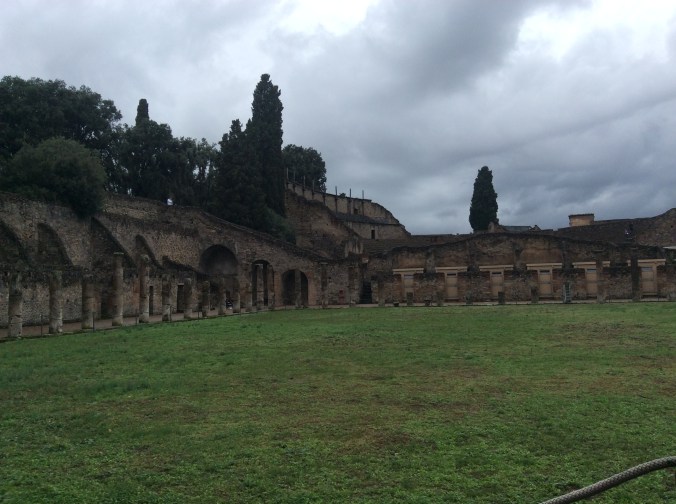
To get here you have to climb up a hill. This is where the gladiators lived and trained.


The doors are copies, the rest not. Gladiators lived in the rooms behind the doors and exercised and practiced in the green area shown in the previous two photos.

This is the tiny amphitheater which holds about 1000 persons. Occasionally, performances, e.g. concerts, are still held here.
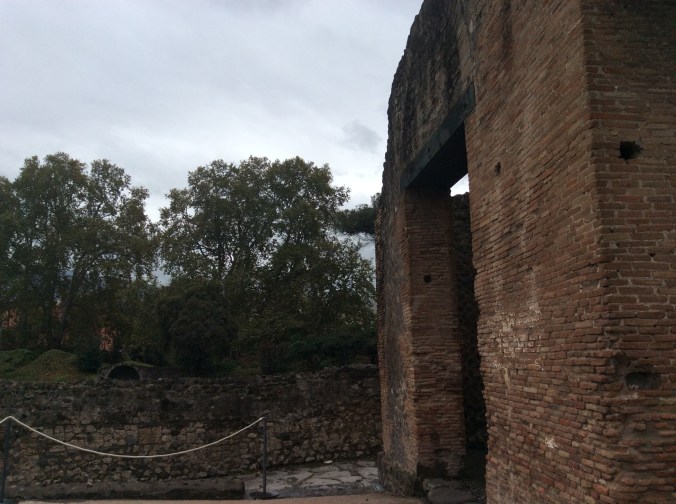
An we walked around, I took pictures of the various buildings, streets, walls.

Looking back toward the small amphitheater.
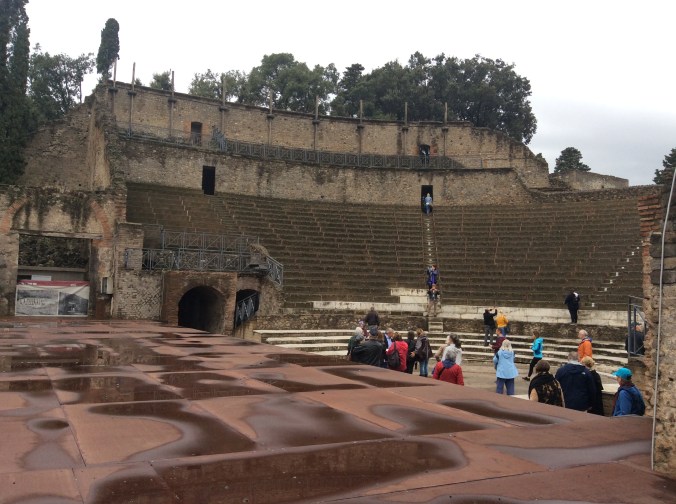
This is the large amphitheater which holds 5000. Just like in theaters now, the seats vary in size, view, etc. so that the where you get to sit depends on who you are and how much you have to spend.

Looking toward what remains of the stage and area behind the stage.
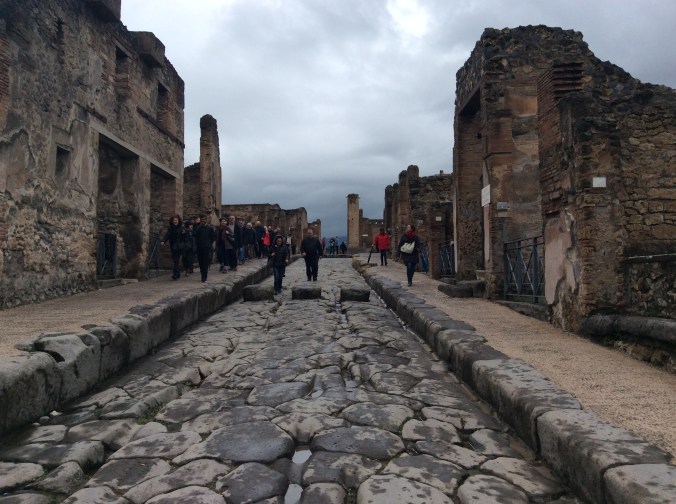
Streets were laid out in a grid at right angles to each other. This is a typical street with sidewalks on each side. Notice the large stones in the middle. At times with excessive rain, the streets would flood. The large stones allowed people to cross without getting their feet wet. The spaces in the middle were designed so carts could pass through. Along the sides are spaces for shops.


The wealthy in Pompeii lived in very large, elegant houses, with water collection systems, heated and running water. This is the entry to one such house.
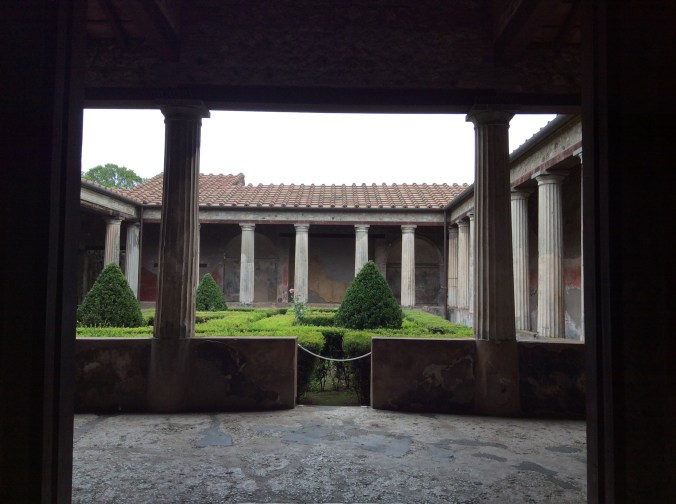
The courtyard at the same house.

What remain of the frescoes there. Considering this was buried for nearly 2000 years…
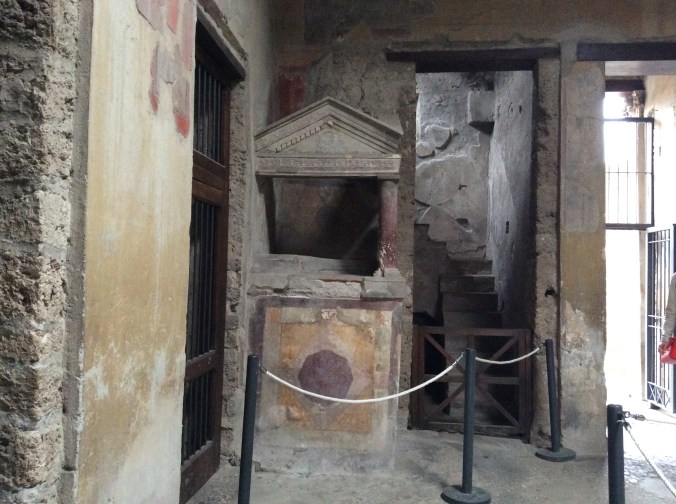


Part of the dining room. There, like in Rome, people reclined while eating.

We moved on to another house.

More frescoes. Most of them tell a well known story.


When they excavated this second house, they found this table with three legs–common then apparently. This is not a new table, it is one from Pompeii found in this house.
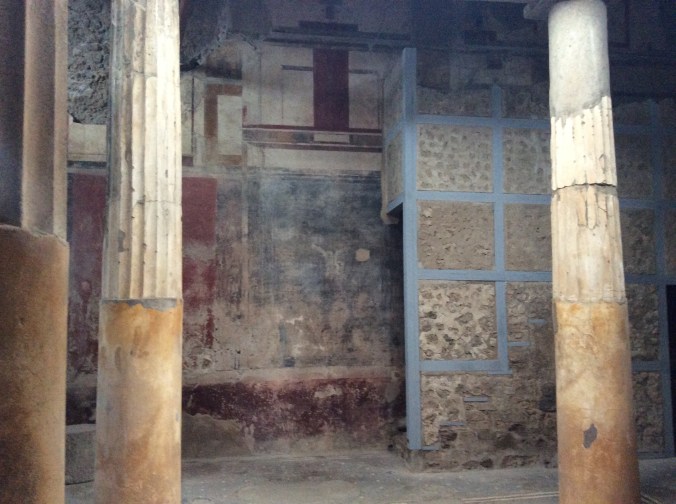
Decorated walls in this second house.
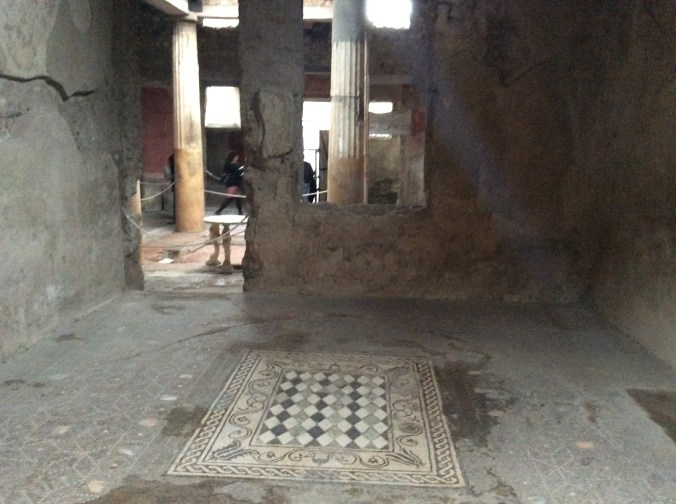
An original floor in the same house.

A place where someone had a shop with items for sale.

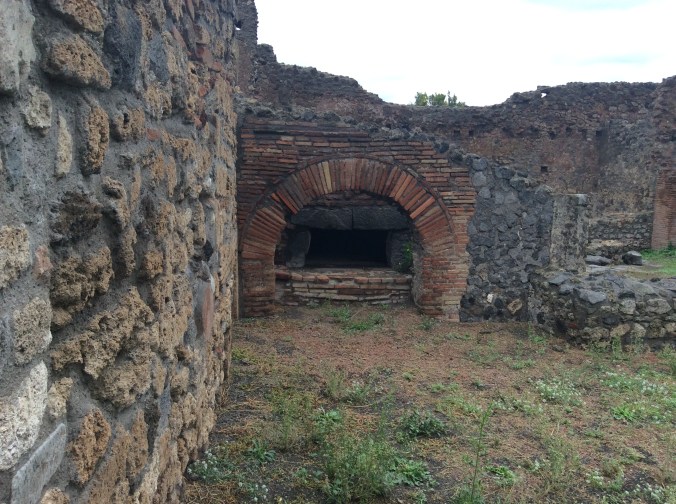
We also visited the bathhouse area where there would be separate bathhouses for men and women, exercise rooms, hot water, steam, just like today.

Although the walls, floors, streets and sidewalks are as they were before the volcanic eruption, in some places they have restored roofs to look like what they would have looked like then.


They knew that domed structures are more stable.
Next we walked to the brothel. Many of the sexually graphic frescoes remain. They illustrate different positions. I might also add that both stone and painted penises are everywhere in Pompeii. Why? They were the symbol of a good life, of prosperity, of fertility, of joy, of, well, everything good. I took some photos of the frescoes at the brothel but do not want to get thrown off my blogging site so will not put them here.
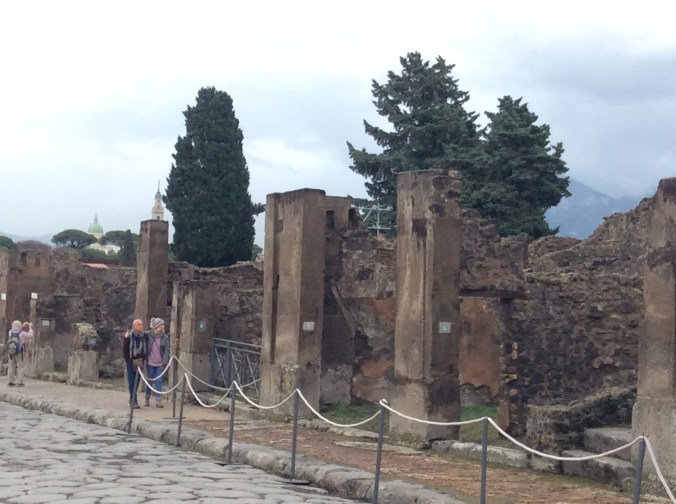
Another typical street headed toward the giant city square.

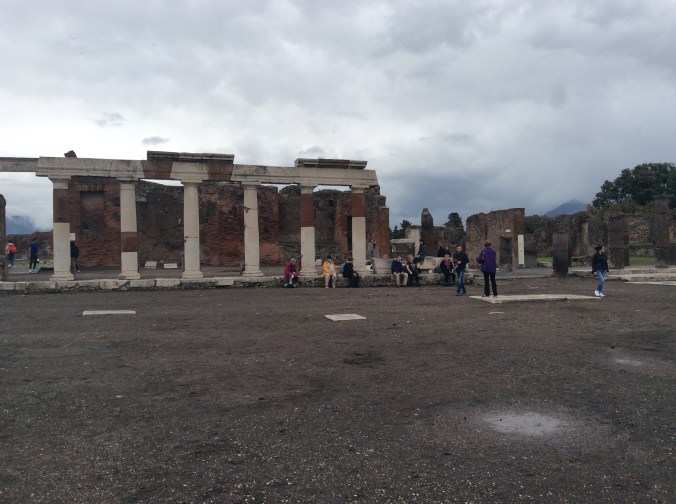
Standing in the middle, looking toward one direction. I was astonished at the size of this place. We went a good time of the year–the off season. The guide told us that in high season there are so many people here, it is difficult to move through them at times.

Looking the other direction with Mount Vesuvius in the background. Before the eruption this volcano was just a tall mountain or so the people there thought. Then it was approximately 10,000 feet. The eruption made it fall into itself and decrease by about 6000 feet.

More photos of the square.
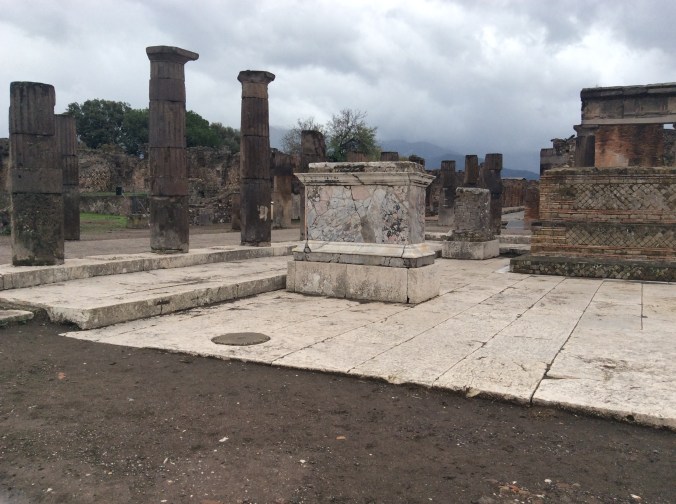
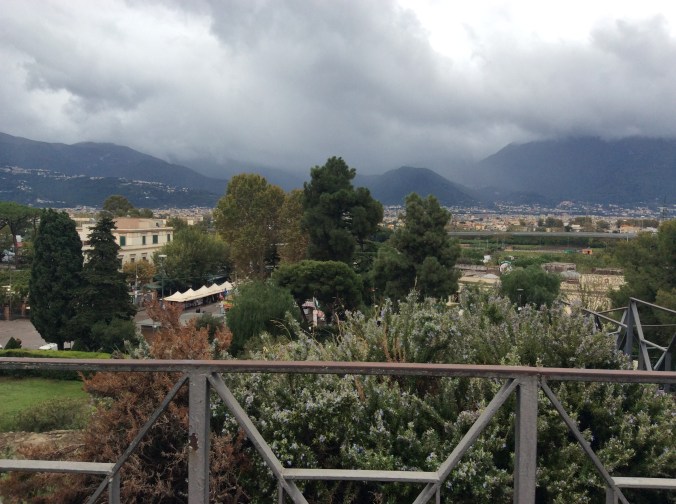
The countryside near Pompeii is lush green. 
The view walking down the steps leaving Pompeii.


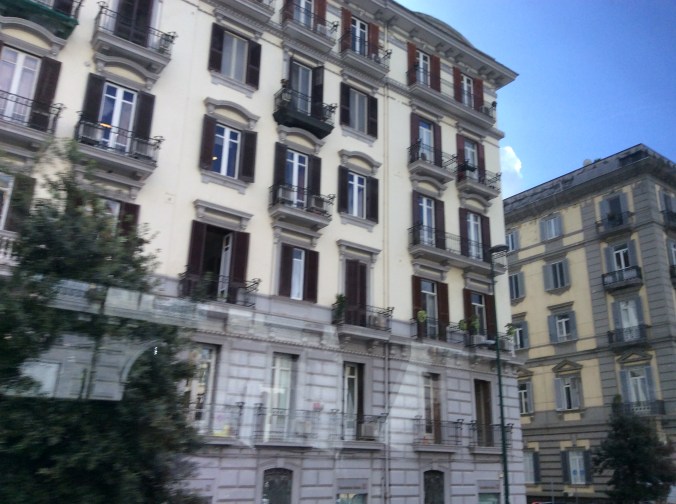
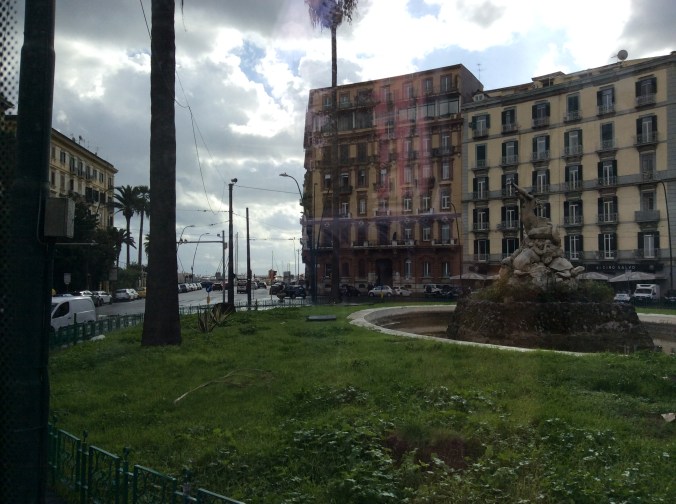
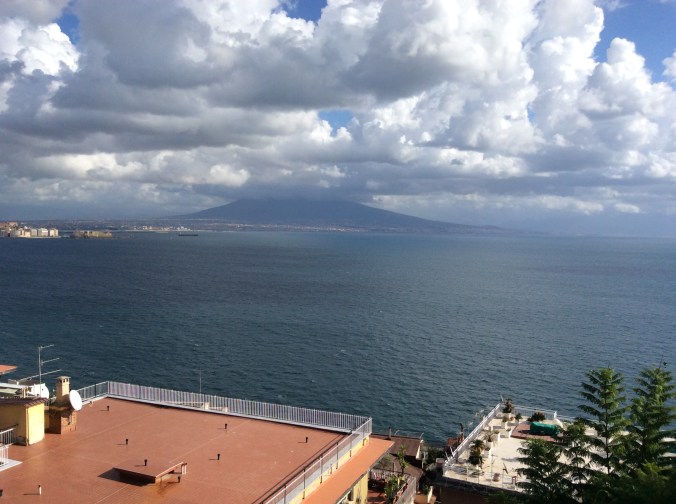
 Then we drove up higher and higher into another part of Naples. You can see Mt. Vesuvius in the background.





 As we left, I noticed the bay was filled with tiny sailboats. It was very windy and I thought they were very brave. Later, I learned that these tiny boats are training boats, the ones you use when you are first learning to sail. It looks daunting to me. I have only sailed on boats much bigger.













 writingontherim