Two Poems for International Women’s Day


I.

Why

and

What

draws me

to

witches

herbal secrets

moonlight

night riding

ancient ruins

and

archaic codes.

It is the Goddess blood I carry,

remembrance of a past

when women ruled

when peace reigned

and ALL were healed.

II.

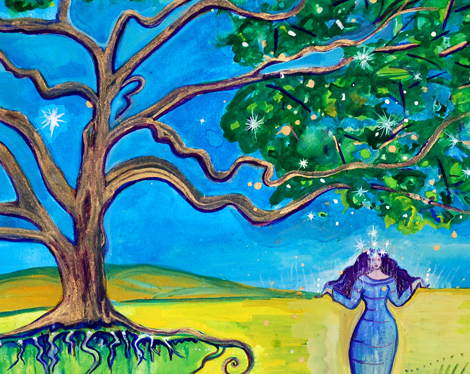
Woman, wondrous, wild

daughter of the moon,

mysterious, magnificent

fierce secret keeper

guardian of the universal key.

Note: These poems were originally published in my book of poetry, “On the Rim of Wonder”, available online at Barnes and Noble and Amazon.

Visiting Chaco Canyon


Several weeks ago, I spent a day wandering around the ancient sites where native peoples gathered over a thousand years ago.

This explains the extensive influence this place, located in the northwestern New Mexico desert, held for people from as far away as Central America. To reach this park, you have to drive on a dirt/gravel, rough road for more than 25 miles north of Crownpoint, NM. It is definitely worth the effort. However, it is impassable in rainy or snowy weather. The rangers who care for the park live there.

One of the first things you see as you get closer to the park is this rock tower, Fajada Butte.

Archeologists climbed to the top and discovered petroglyphs, “Sun Daggers”. Created between rock slabs, they align with each solstice and equinox and at these events the light projects to other sites, e.g. Pueblo Bonito. Other petroglyphs on a section of the canyon wall represent a supernova that occurred in 1054 CE.

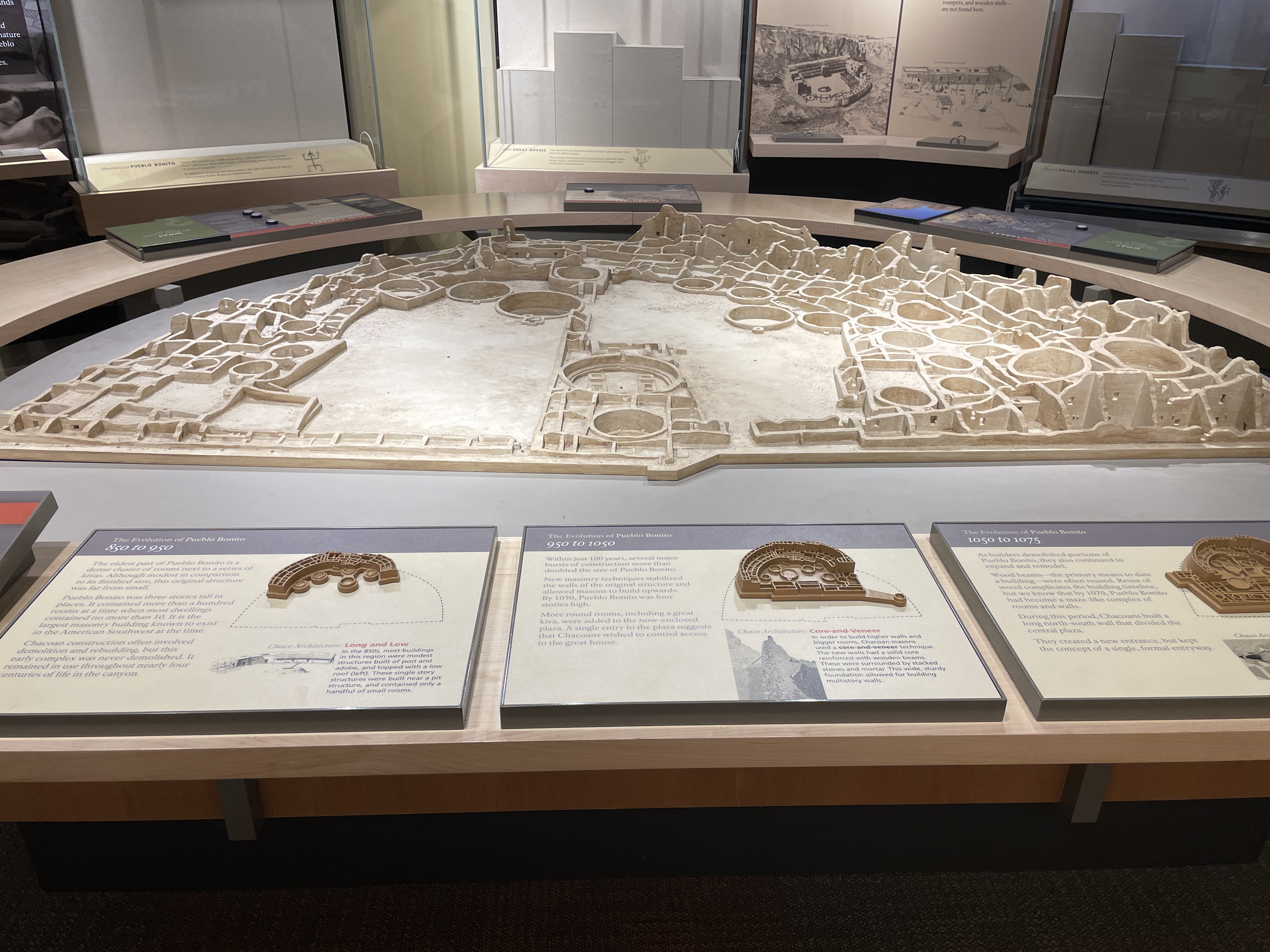
The following depicts an overview of the site as it would have been in the past. In the 1940s part of the wall of rock behind the site collapsed onto it and destroyed some of the buildings.

Here is how it looks today. Many of the doors and windows align with astronomical events, e.g. solstices, the two equinox, and astronomical events that occur only every 17 years.

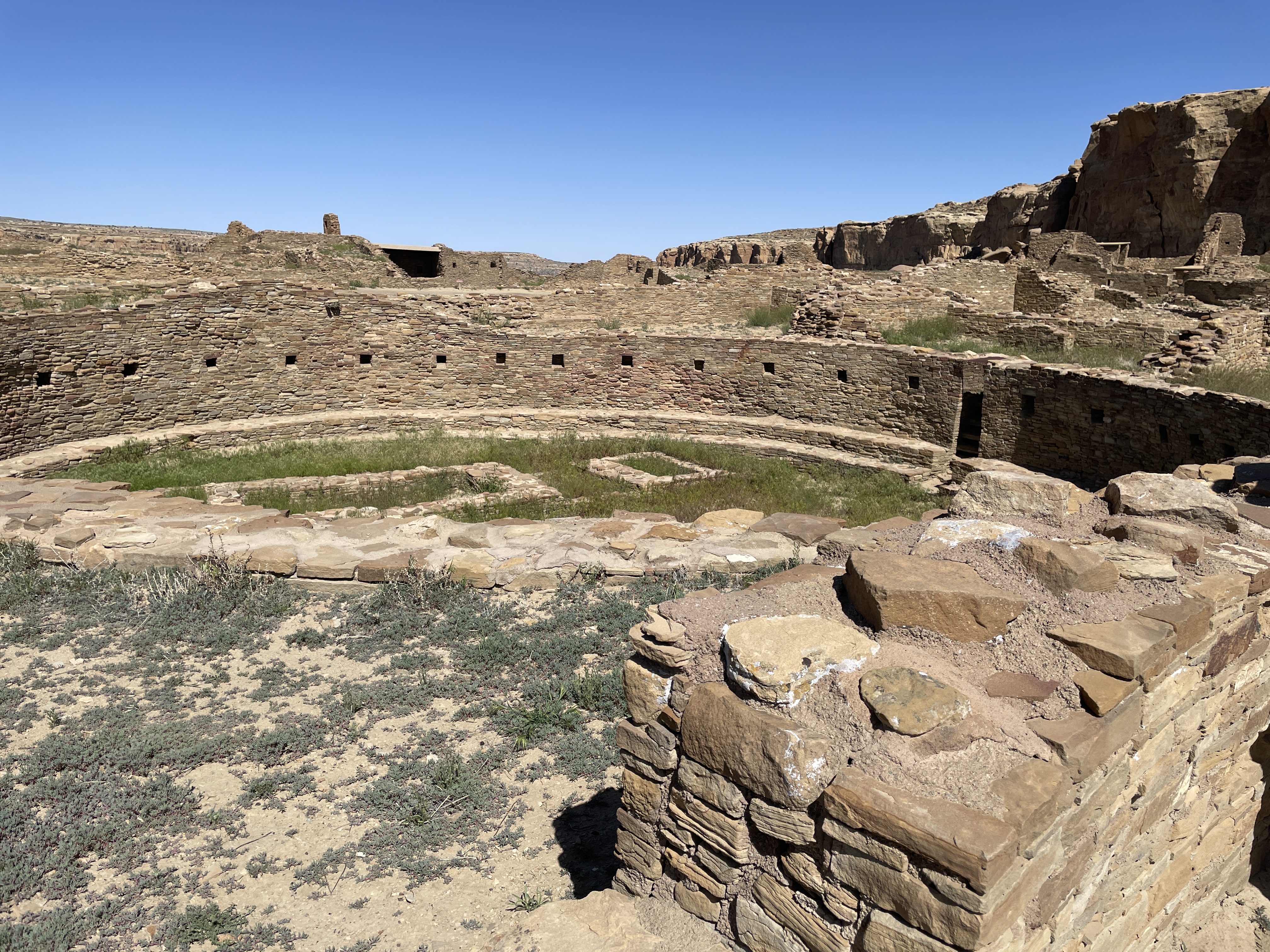
All sites here contain many kivas, many of which are very large. It is speculated that these were used for various sorts of ceremonies, including religious events.

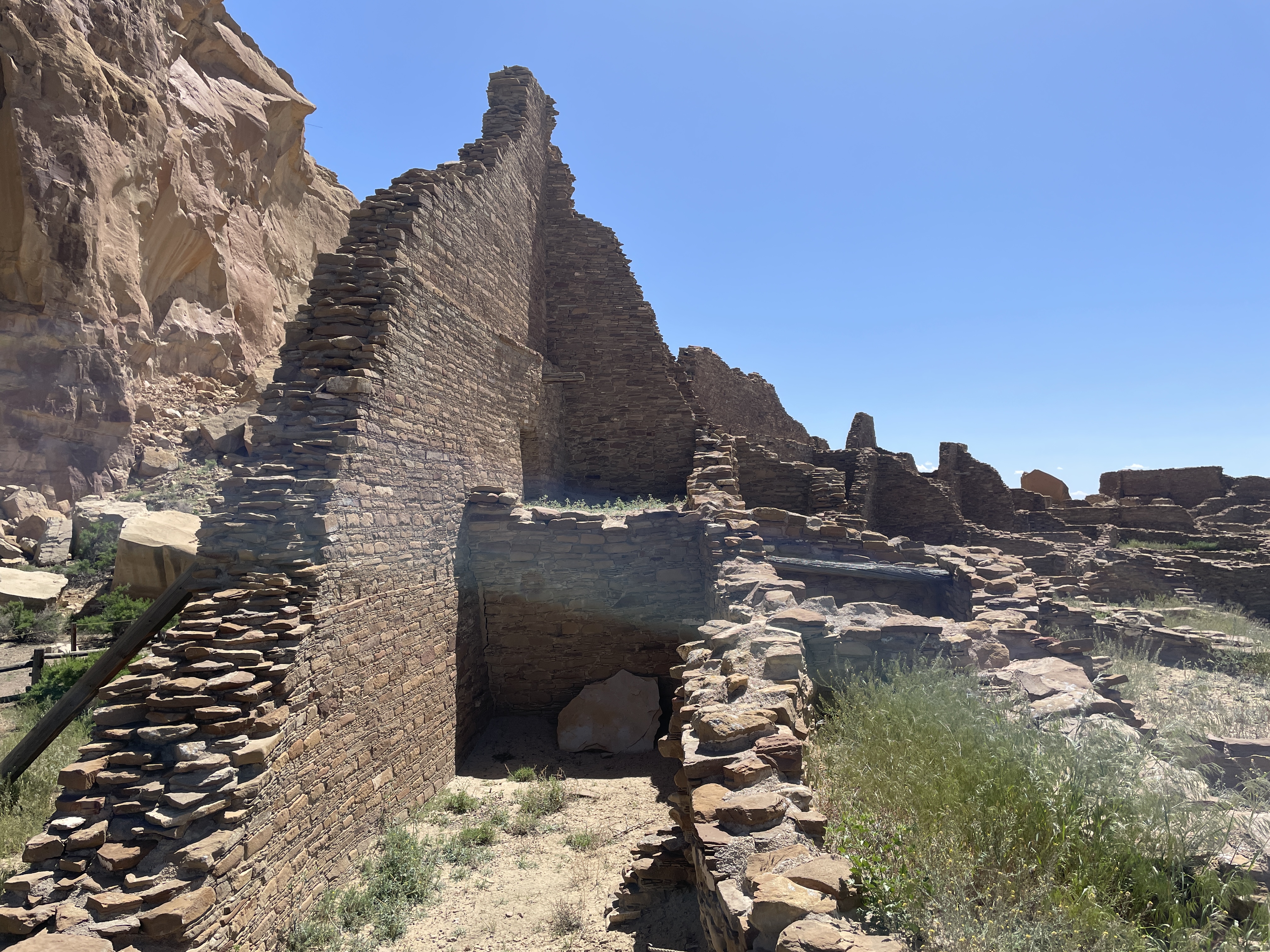
In this view you can see how the rocks that fell from the cliff have destroyed parts of the structures.

Many of the buildings were several stories high. In their heyday, they did not look like this. They were covered with something like stucco and painted white. What an impressive site they must have been–large white structures in the middle of the brown desert. Archeologists think few people lived here. It was a place for gathering, for ceremonies, for trade, for people from long distances to meet.

Across from Pueblo Bonito is the largest kiva found in the area.

Behind the bars on the far side of the photo is an area that was used for ceremonial dancers to don their costumes. At the bottom you can see a depression with a small door. Before centuries of sand filled it in, this place would have be large enough for the ceremonial dancers to enter through it.

If you follow a trail along the cliff from Pueblo Bonito, you will find another area built at different times hundreds of years ago.

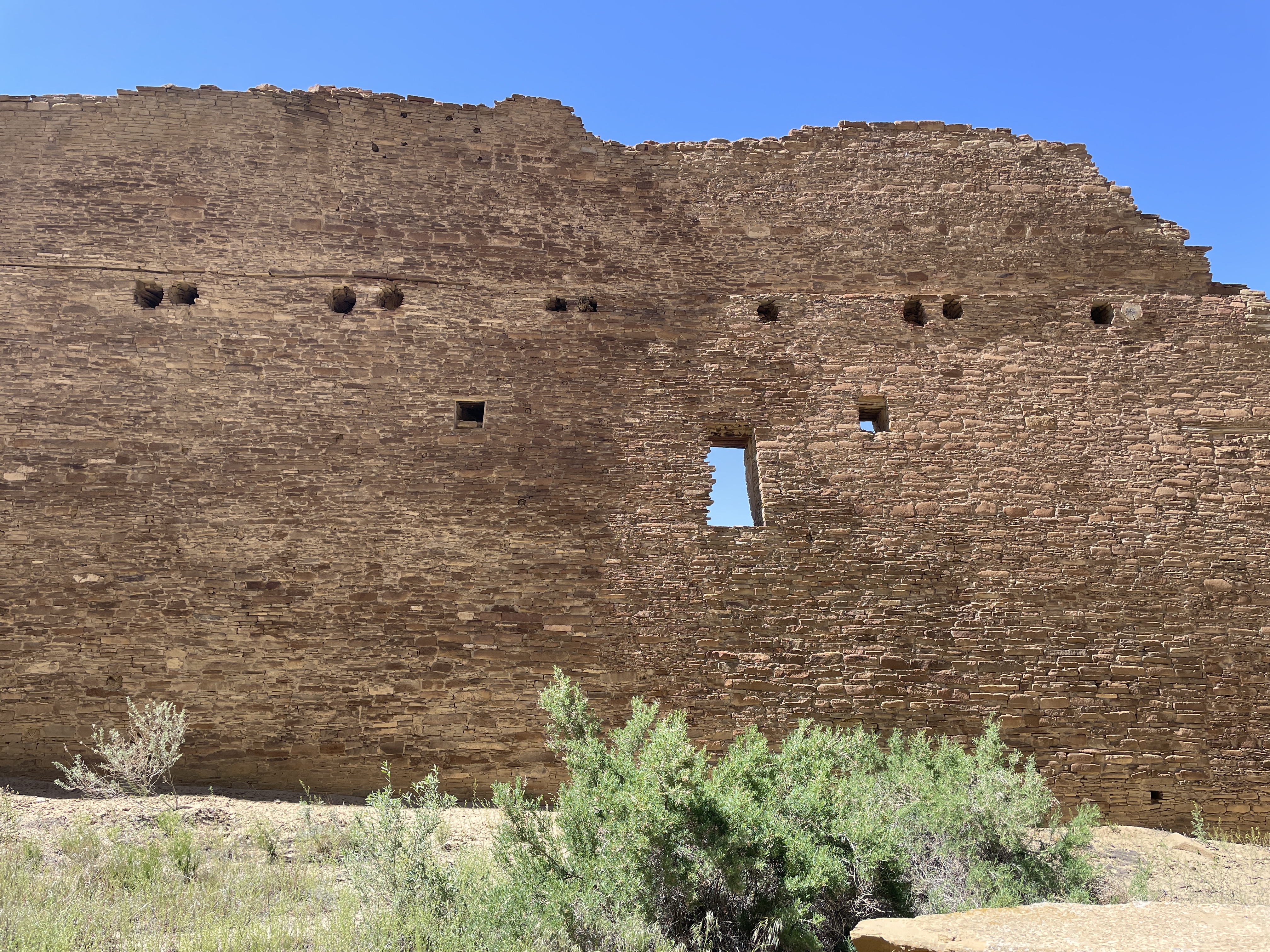
Another large kiva and many smaller ones are located at this site, including this famous long wall built at two different times.

The following shows where at some point the wall stopped, then later it was continued using somewhat different building material and techniques.

The top photo is considered the newer part of the wall.

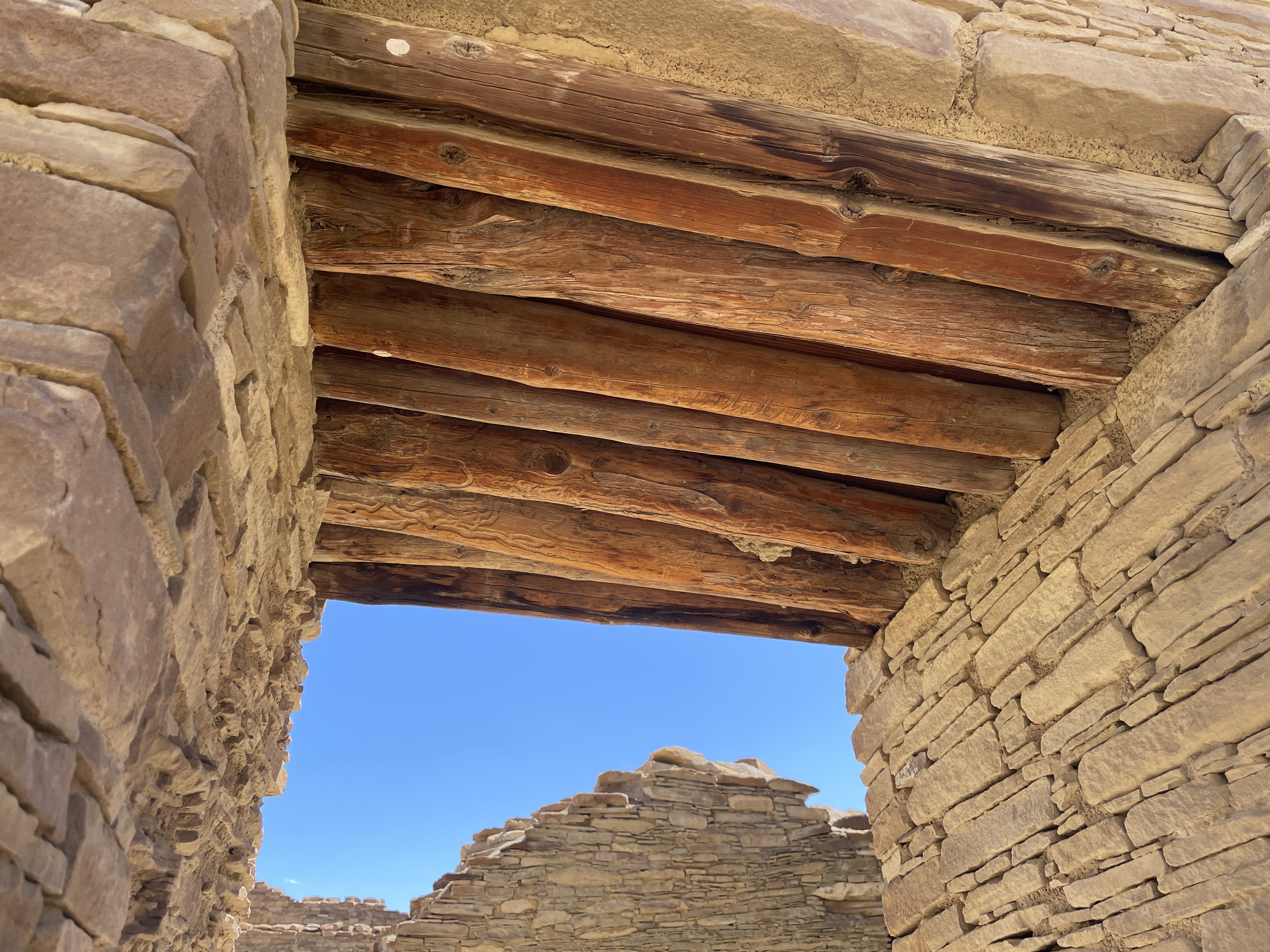
The wood used for tops of windows and doors was brought from forests hundreds of miles away. The desert air has enable it to be preserved.

When you walk the trails, you see wild flowers and native plants. This is desert rhubarb and it is edible.

While these are photos of the more impressive structures at Chaco Canyon, more than two hundred ceremonial and meeting sites can be found in this area of NM and AZ.

Italy–Pompeii


Although I had heard about, read articles, seen photos and documentaries, nothing prepared me for its size, grandeur, and wealth.
IMG_4155

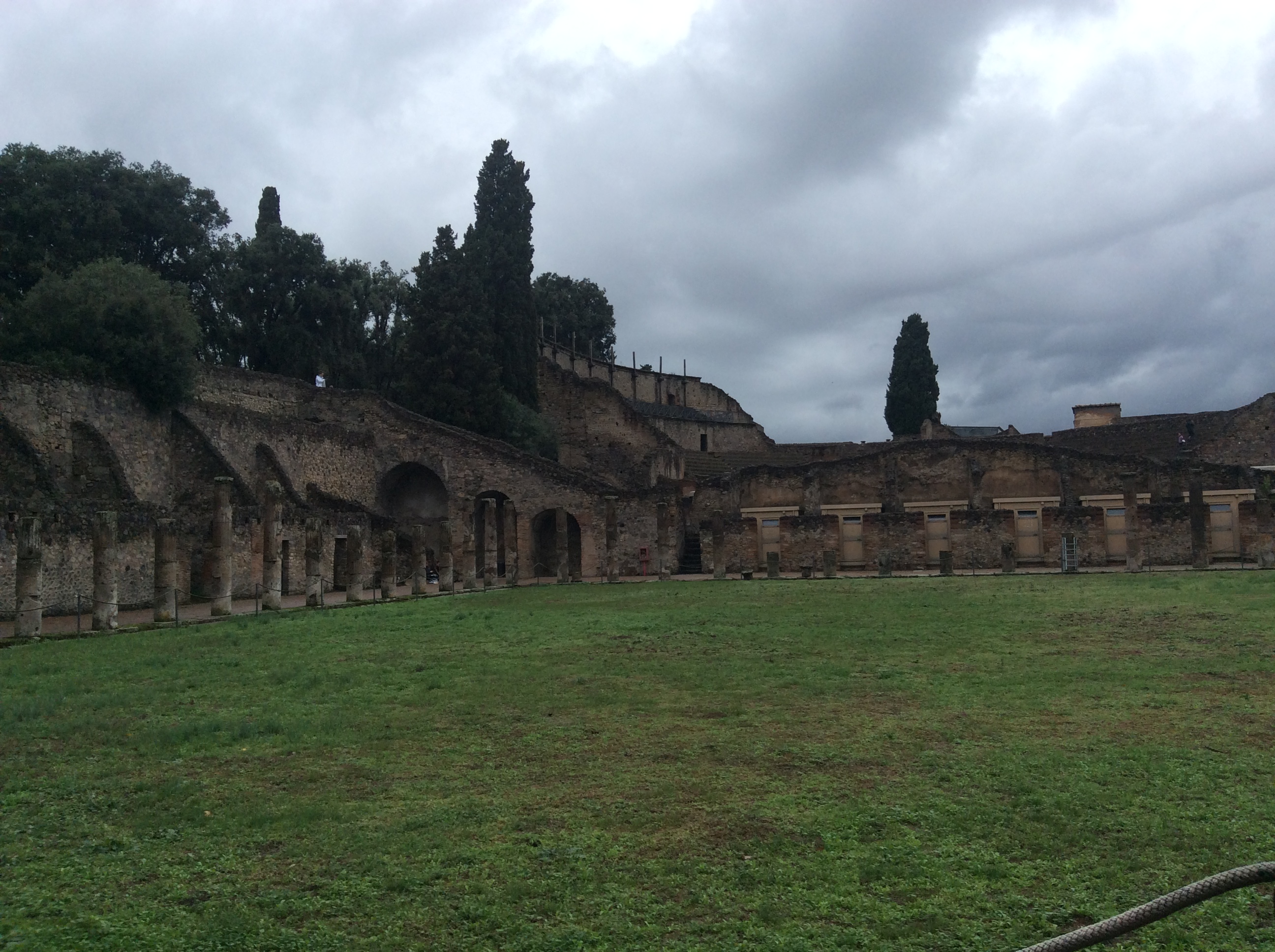
To get here you have to climb up a hill.  This is where the gladiators lived and trained.

IMG_4156

IMG_4157

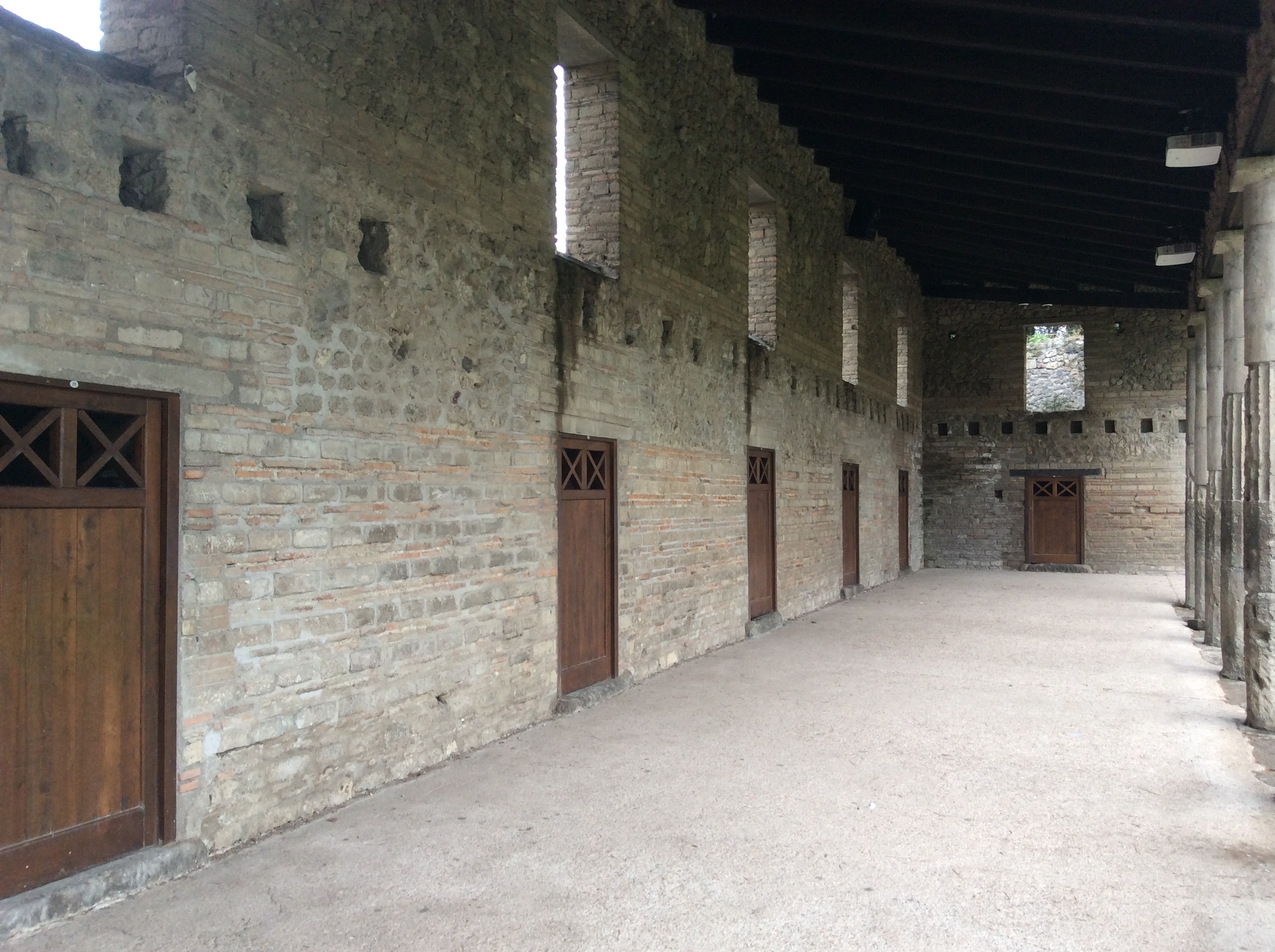
The doors are copies, the rest not.  Gladiators lived in the rooms behind the doors and exercised and practiced in the green area shown in the previous two photos.
IMG_4158

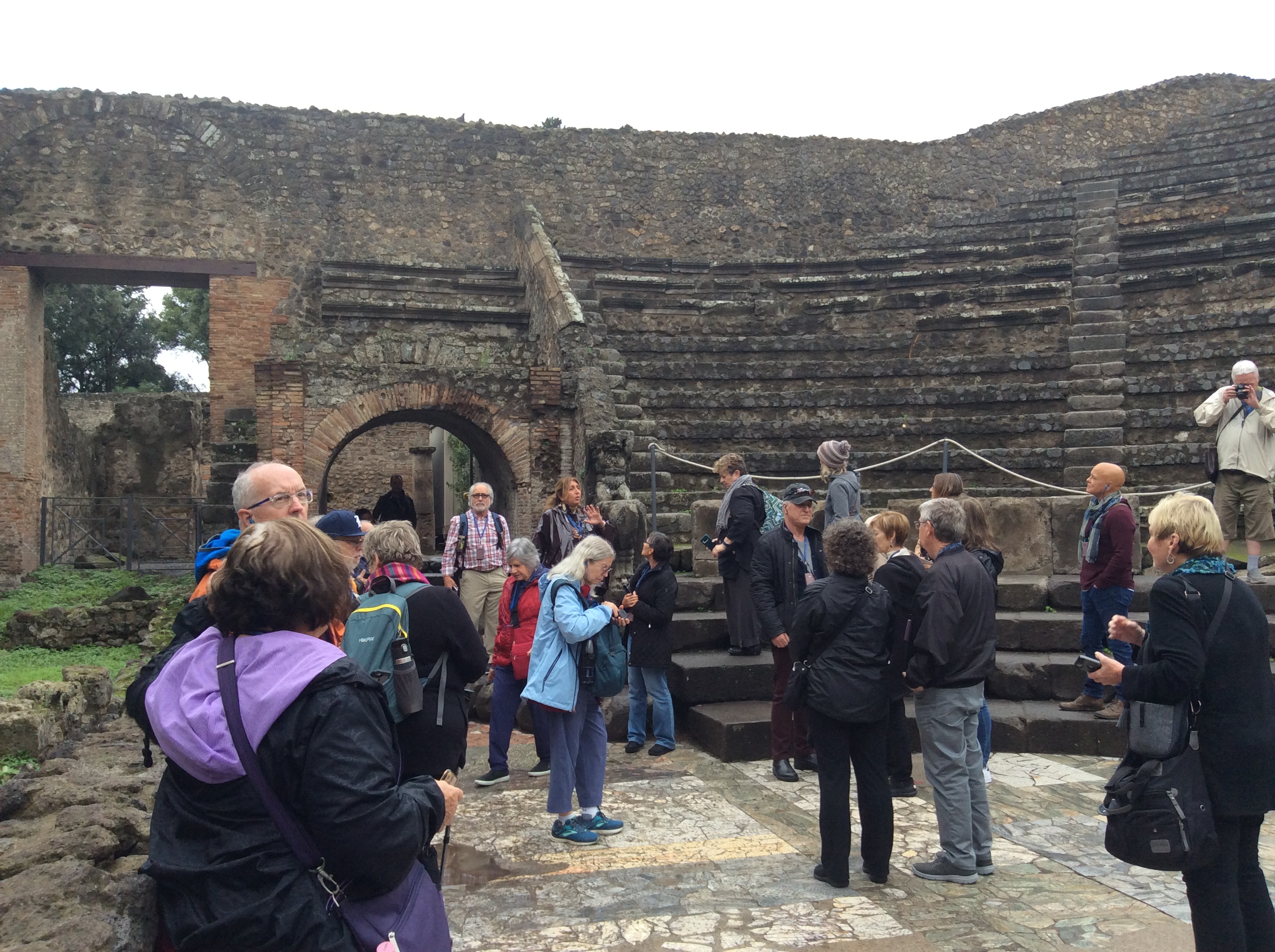
This is the tiny amphitheater which holds about 1000 persons. Occasionally, performances, e.g. concerts, are still held here.

IMG_4159

An we walked around, I took pictures of the various buildings, streets, walls.

IMG_4160

Looking back toward the small amphitheater.
IMG_4161

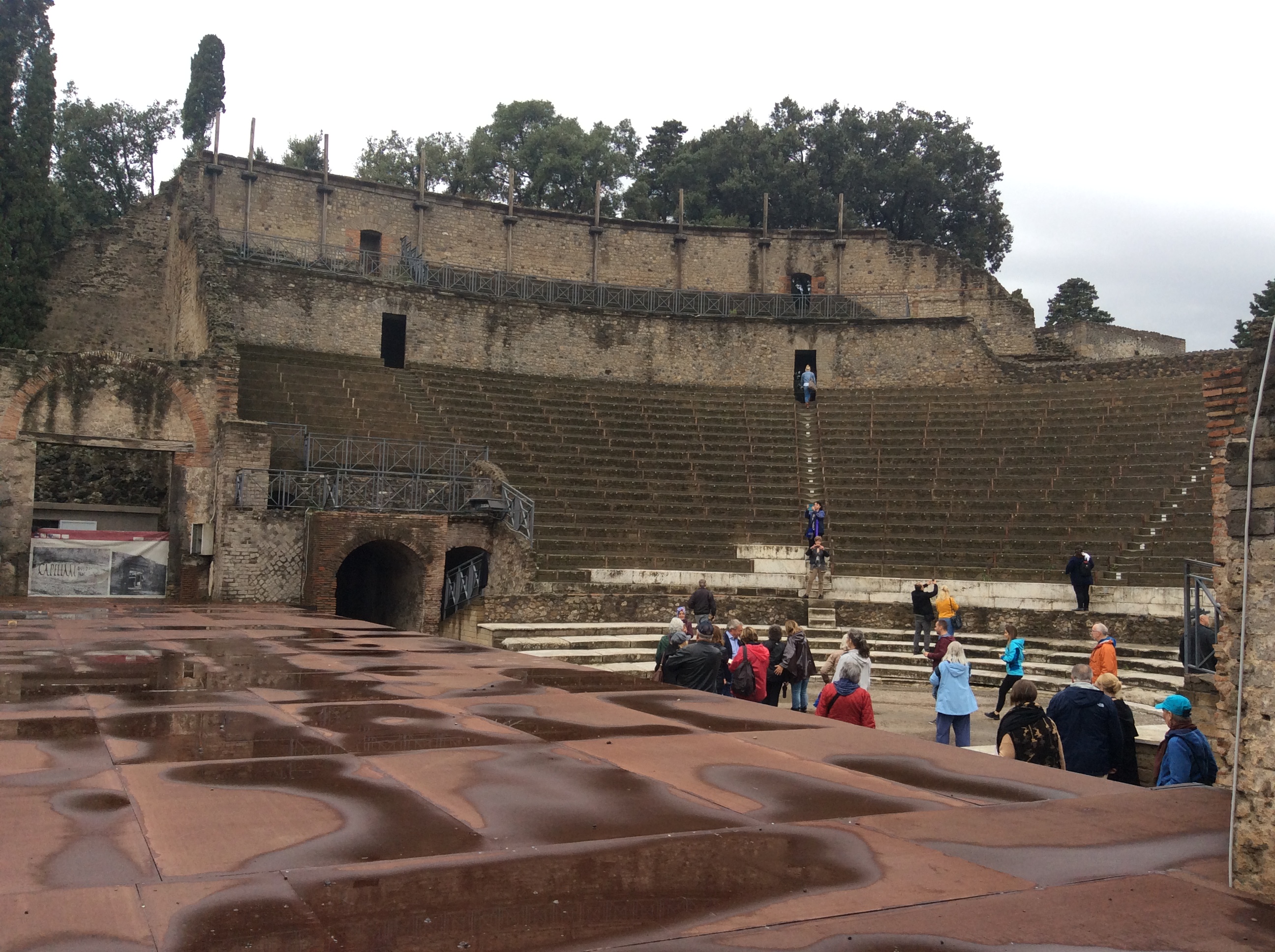
This is the large amphitheater which holds 5000.  Just like in theaters now, the seats vary in size, view, etc. so that the where you get to sit depends on who you are and how much you have to spend.

IMG_4162

Looking toward what remains of the stage and area behind the stage.

IMG_4164

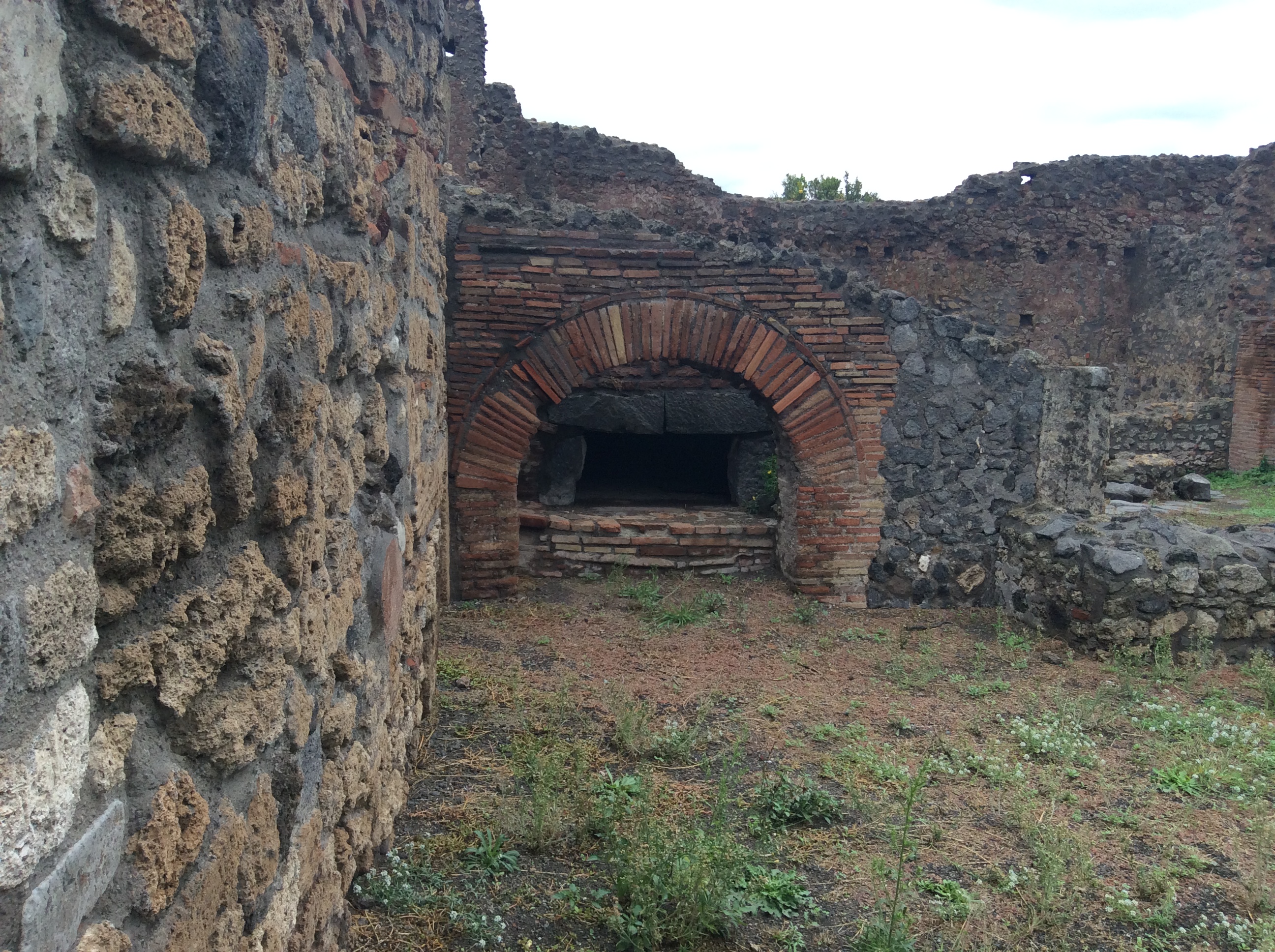
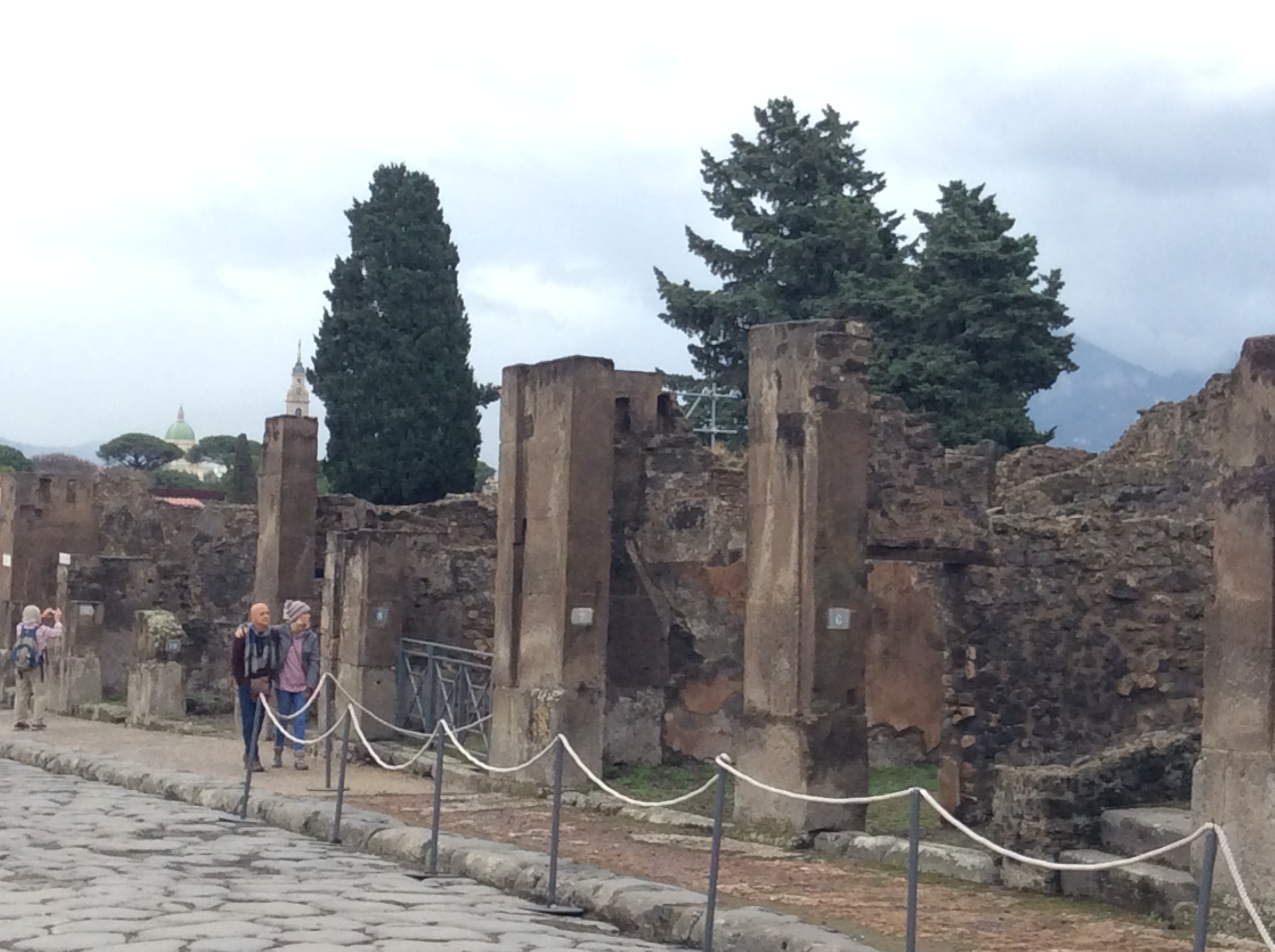
Streets were laid out in a grid at right angles to each other.  This is a typical street with sidewalks on each side.  Notice the large stones in the middle.  At times with excessive rain, the streets would flood.  The large stones allowed people to cross without getting their feet wet.  The spaces in the middle were designed so carts could pass through.  Along the sides are spaces for shops.

IMG_4165

IMG_4167

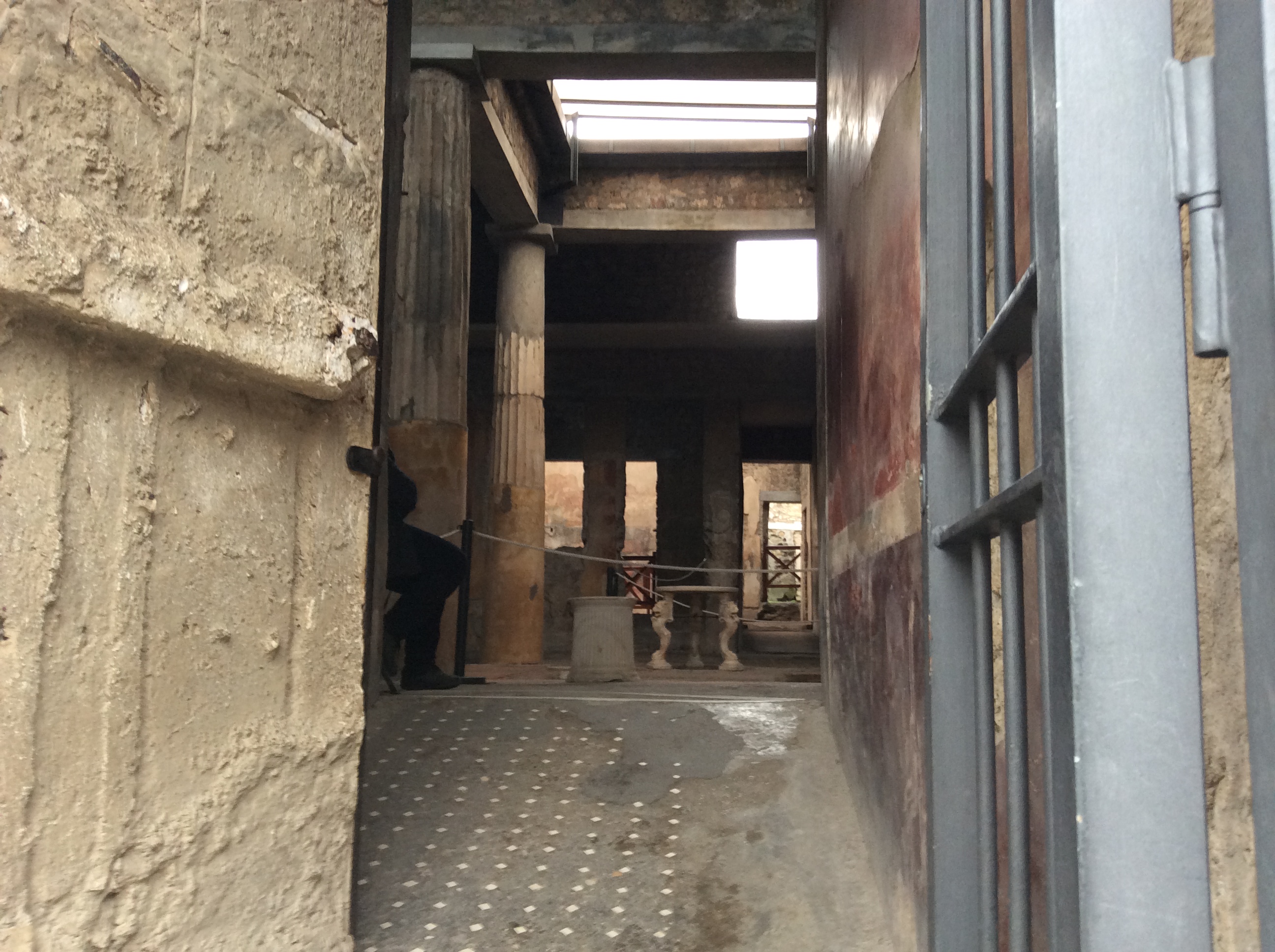
The wealthy in Pompeii lived in very large, elegant houses, with water collection systems, heated and running water.  This is the entry to one such house.

IMG_4168

The courtyard at the same house.

IMG_4169

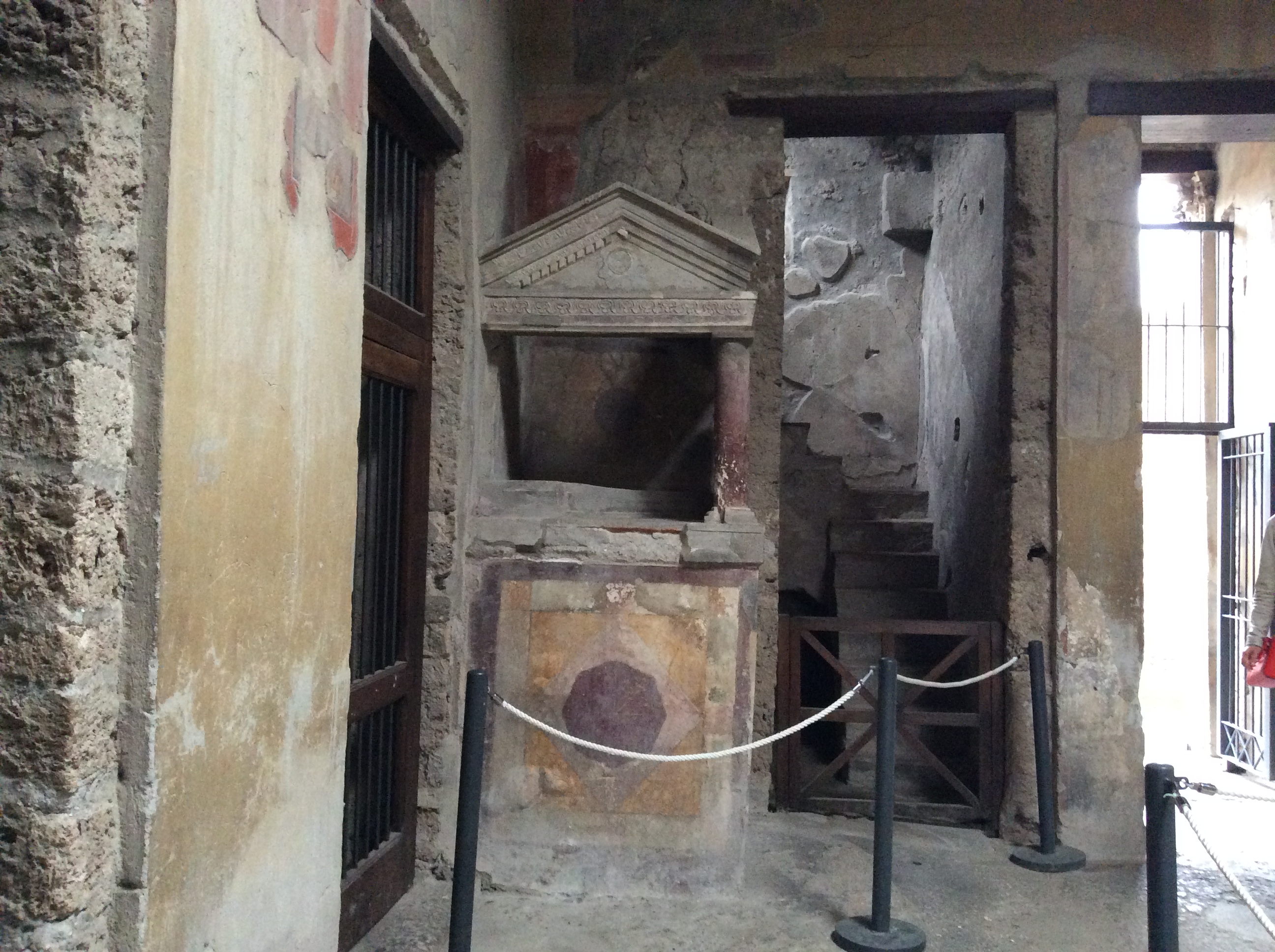
What remain of the frescoes there.  Considering this was buried for nearly 2000 years…
IMG_4170

IMG_4171

IMG_4172

Part of the dining room.  There, like in Rome, people reclined while eating.

IMG_4173

We moved on to another house.

IMG_4174

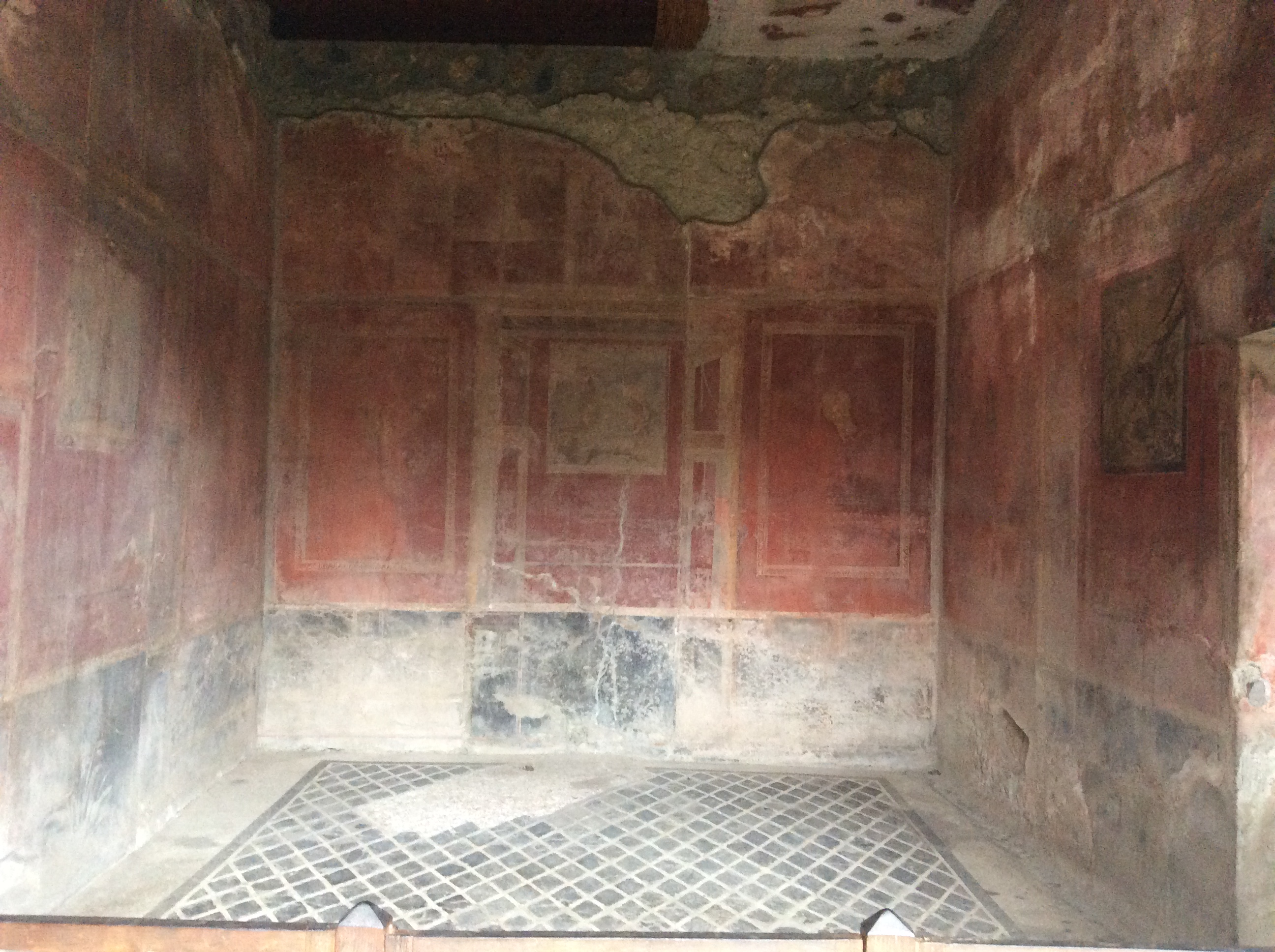
More frescoes.  Most of them tell a well known story.

IMG_4175

IMG_4176

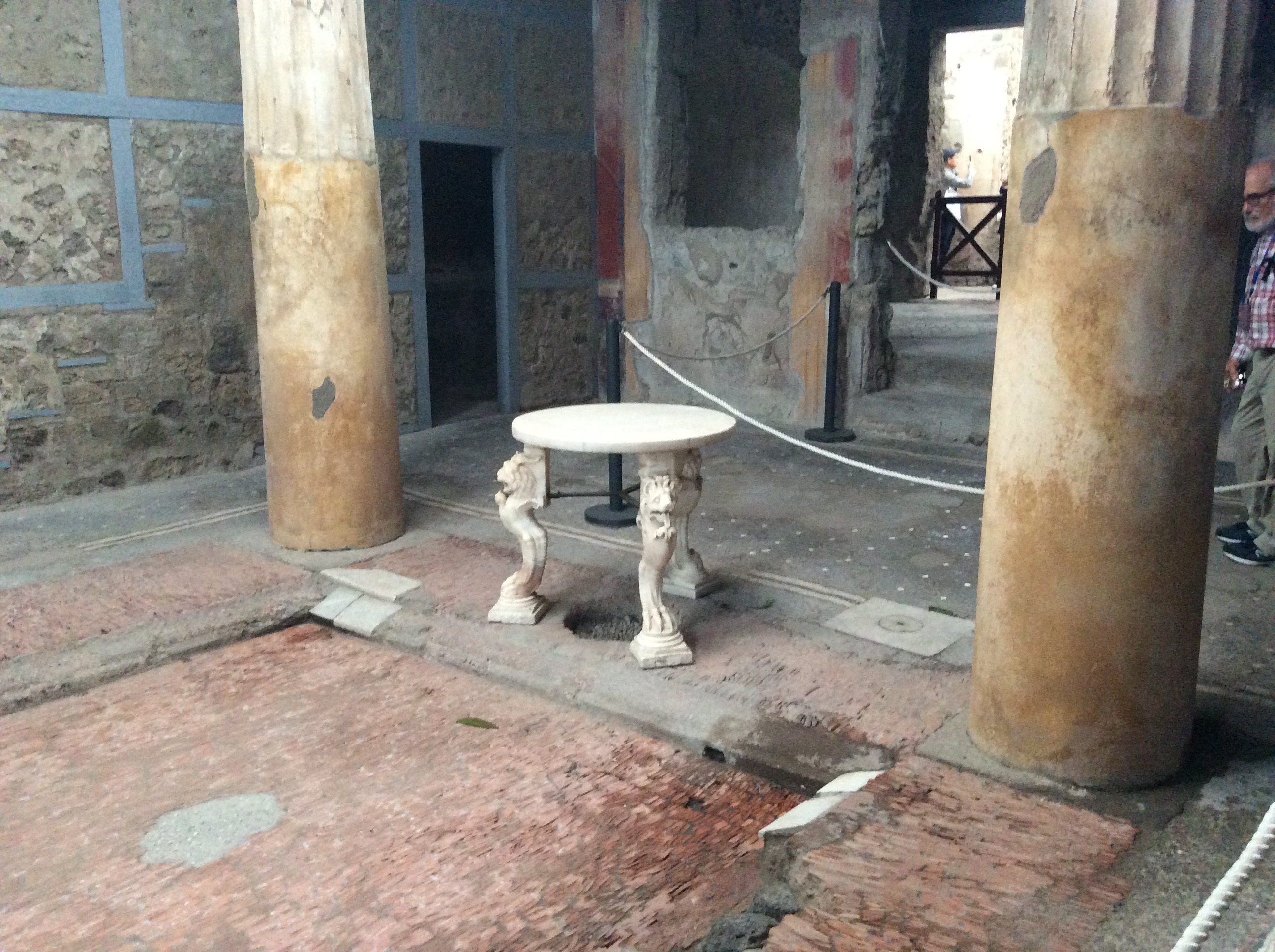
When they excavated this second house, they found this table with three legs–common then apparently.  This is not a new table, it is one from Pompeii found in this house.

IMG_4177

Decorated walls in this second house.

IMG_4178

An original floor in the same house.

IMG_4180

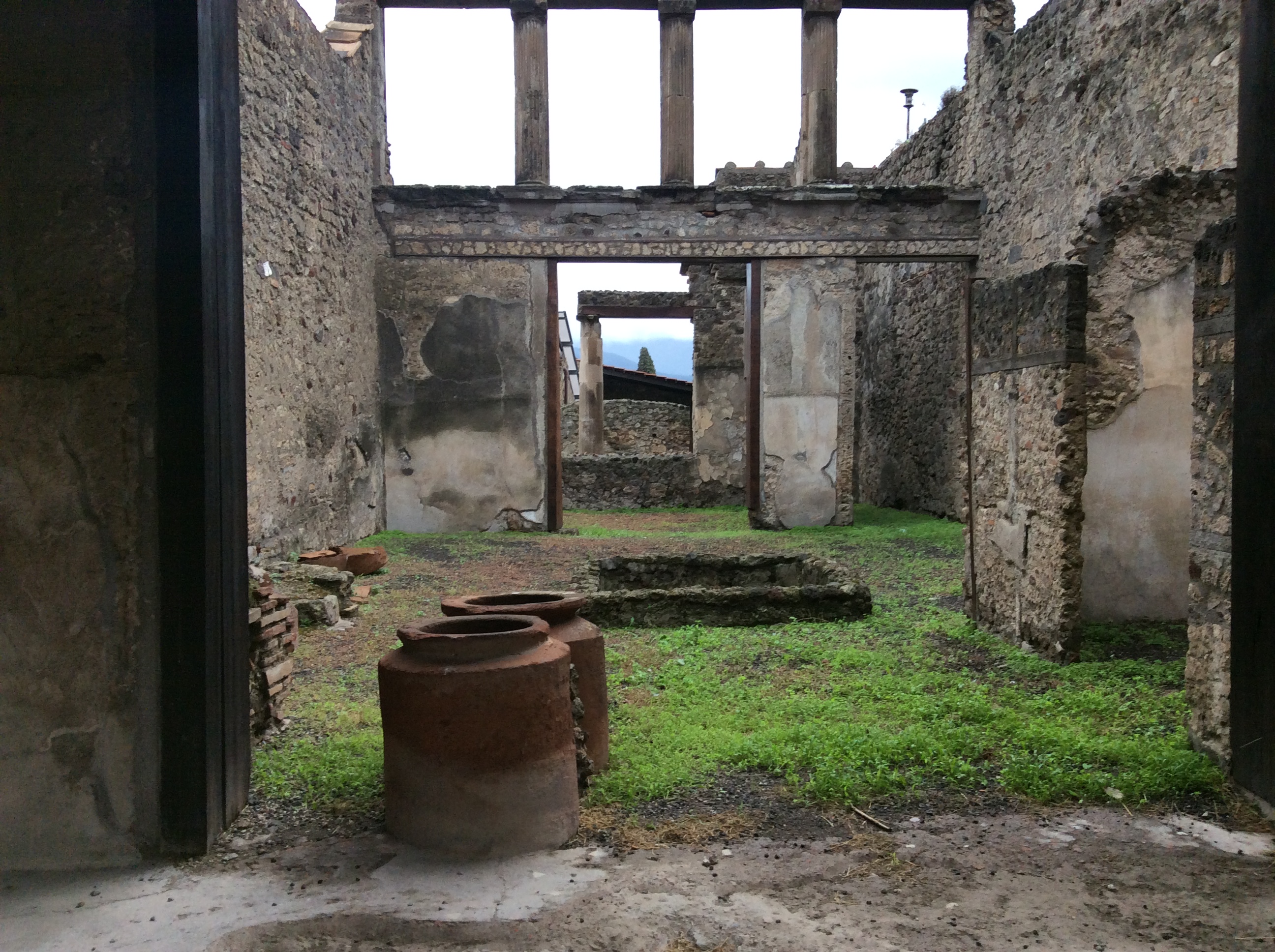
A place where someone had a shop with items for sale.
IMG_4181

IMG_4291

We also visited the bathhouse area where there would be separate bathhouses for men and women, exercise rooms, hot water, steam, just like today.

IMG_4302

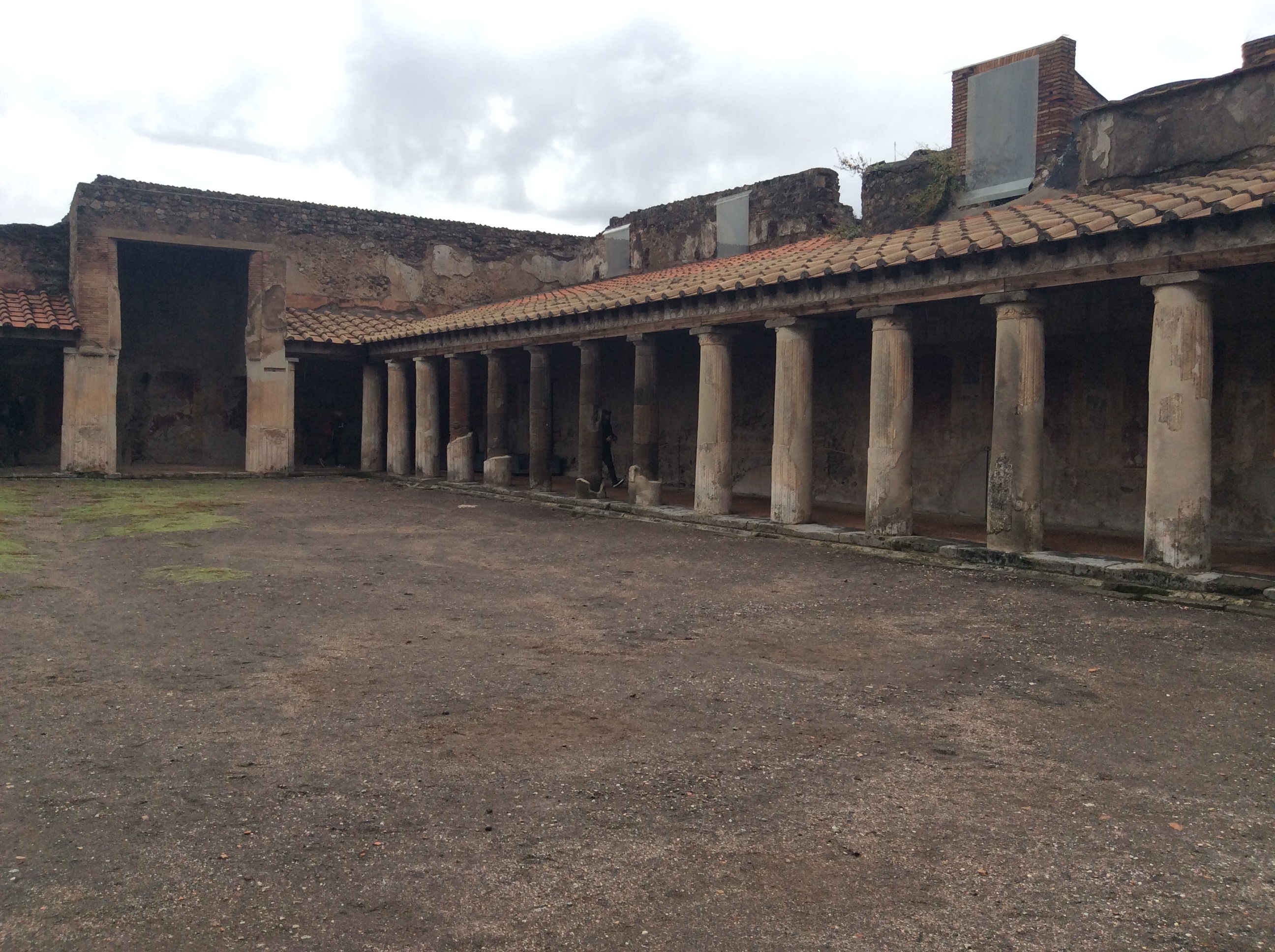
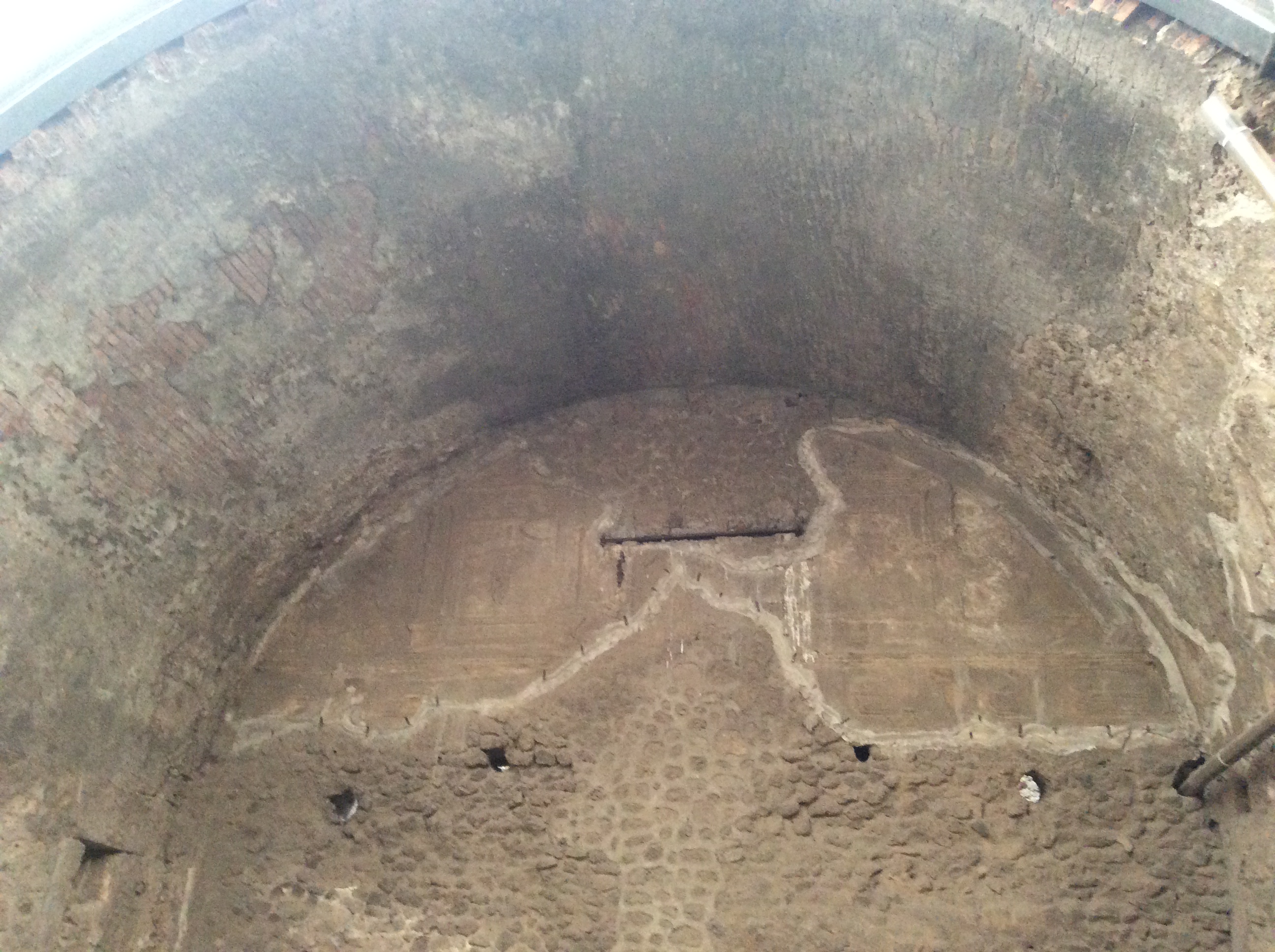
Although the walls, floors, streets and sidewalks are as they were before the volcanic eruption, in some places they have restored roofs to look like what they would have looked like then.
IMG_4303

IMG_4344

They knew that domed structures are more stable.

Next we walked to the brothel.  Many of the sexually graphic frescoes remain.  They illustrate different positions.  I might also add that both stone and painted penises are everywhere in Pompeii.  Why?  They were the symbol of a good life, of prosperity, of fertility, of joy, of, well, everything good. I took some photos of the frescoes at the brothel but do not want to get thrown off my blogging site so will not put them here.
IMG_4348

Another typical street headed toward the giant city square.

IMG_4368

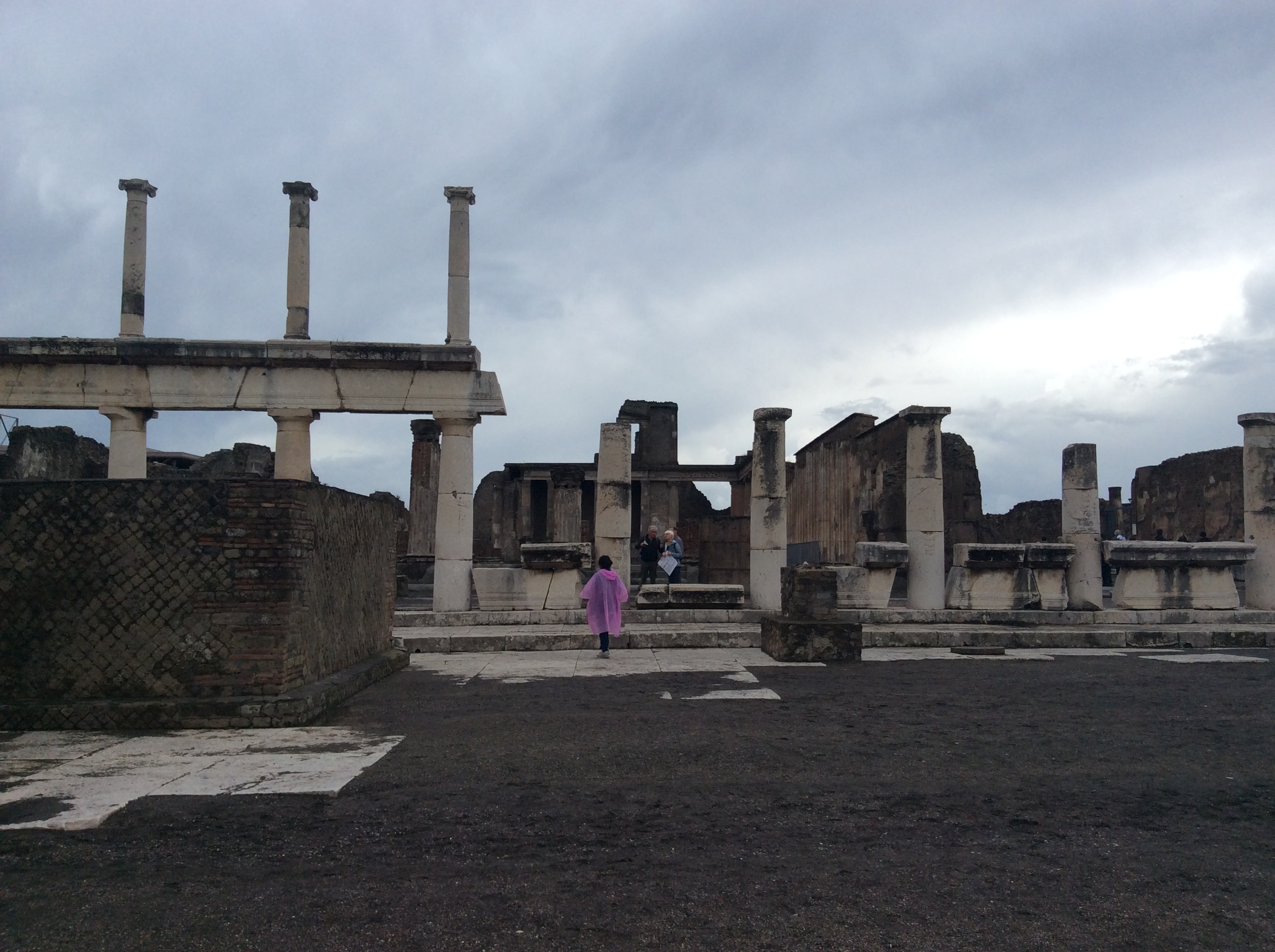
Standing in the middle, looking toward one direction.  I was astonished at the size of this place.  We went a good time of the year–the off season.  The guide told us that in high season there are so many people here, it is difficult to move through them at times.

IMG_4370

Looking the other direction with Mount Vesuvius in the background. Before the eruption this volcano was just a tall mountain or so the people there thought.  Then it was approximately 10,000 feet.  The eruption made it fall into itself and decrease by about 6000 feet.
IMG_4371

More photos of the square.

IMG_4372

IMG_4373

IMG_4375

The countryside near Pompeii is lush green. IMG_4454
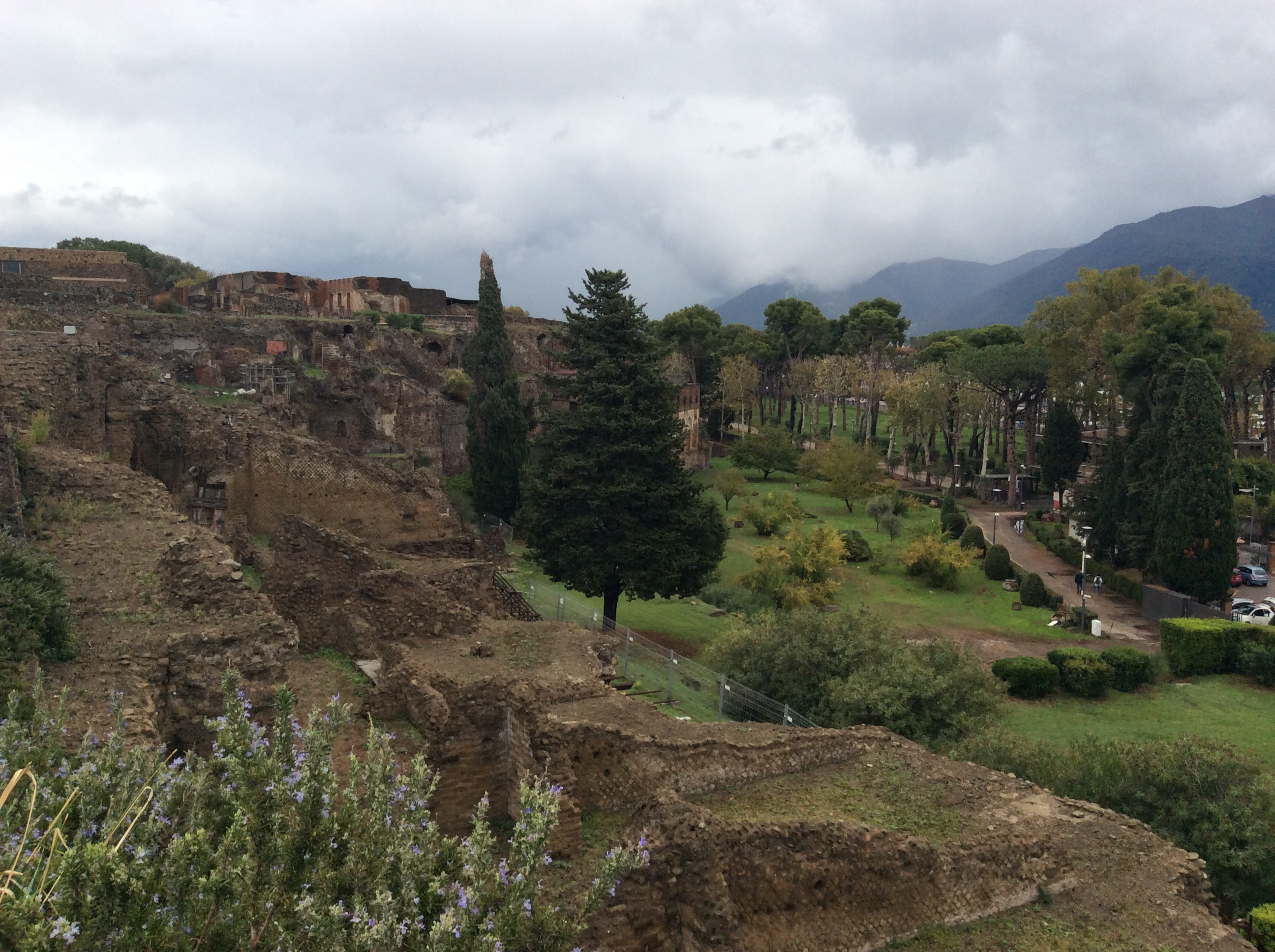
The view walking down the steps leaving Pompeii.


Religion and Politics


The two things some of us were taught never to discuss in social situations.  Reading The Silk Roads, A New History of the World, simply reaffirms why those who wrote the United States Constitution insisted on separating religion and politics.  Mixing the two leads to tyranny, war, misunderstanding, and a host of other ills. When did this mixture start?  Prehistory or at least the early recorded history.

Constantine, the Roman emperor,  converted for political purposes.  The Persians tolerated a wide variety of religions until it was no longer politically expedient; then they decided to persecute Christians and declare Zoastrianism as official.  When the barbarian hoards from the steppes started to overrun both the Roman and Persian Empires, they decided to cooperate–a huge change–and actually built a wall between the Black and Caspian Seas to stop the uncivilized.  Roman soldiers guarded the wall.  This helped Rome little, however, because the Visigoths sacked Rome.  The barbarians won.

And then there was Constantine’s Counsel of Nicea, held in 410, 420, 424.  The “eastern” bishops were not invited.  Therefore, the results applied only to what later became known as Roman Catholicism. Infighting among bishops, arguments over who was right and wrong continued, and on and on.  Eastern bishops saw the western teachings as heresy. The arguments mainly centered on the divinity, or lack thereof, of Jesus.

The western church focused on rooting out unofficial religious views, while the east focused on missionary activity.  The king of Yemen even became a Christian. Rulers converted, shifted allegiances, persecuted or tolerated, according to political expediency.

Little seems to have changed in 1500 years.


Blackwater Draw-Part Two


The ancients hunted here at the shores of a lake

nearly 12,000 years ago.  In 1929, an amateur

archeologist discovered an ancient spear

point lodged in bone.  I walk the mile long trail

down into the depths.   Caliche, gravel,

larger rocks strewn by millennia.  For

thousands of years Clovis, Folsom, and Portales

Man left remnants of their hunting life.

The scattered cottonwoods whisper in the wind,

timeless voices call me, beckoning.

Who were these people?

What did they look like?

Where did they come from?

In whose gods and goddesses did they believe?

Doubtless hunger drove them to this place of water

and plenty.  Columbia Mammoths, giant sloths, dire wolves,

saber toothed cats  gathered here for thousands of years.

The diggers found an obsidian spear head with a

bison whose horns spanned seven feet and

mammoths twice the size of elephants.

Saber toothed cats competed with these

ancient ancestors at this place, all driven by

hunger, thirst, and instinct.  I wonder how

these people overcame danger, fear?

I walk the mile long path, stand in the shade

of these cottonwood trees , read the signs that

tell me what diggers found at specific spots along the trail.

The cottonwoods whisper to me.  They

tell me ancient tales of hunger, strife, fear,

beauty, love, endurance.  I hear the ancient voices

calling.  They tell me ancient tales of woe, war,

weaponry, courage, and community.  My

skin tingles strangely in the summer heat.  Now

this land is dry, a desert, the water that sustained

teeming life evaporated in the crystalline air.

Twelve thousand years from now who will stand here?

Will this place exist?  Will someone wonder the meaning

of our bones, who we were, what we believed?