Book 37 for 2025: “Black Sea: Dispatches and Recipes”, Caroline Eden


This is a sort of travelogue, memoir, and recipe book. The author begins in Odessa and travels south from there to the port of Constanza in Romania as well as various other seaside towns in Bulgaria, then to Istanbul. After spending more time there she heads east to all the ports and some inland cities near
Turkey’s Black Sea coast.

I hope to learn new information and become a little more enlightened when I read–especially when reading non-fiction. This book did not disappoint. Here are a few of the things I learned:

-Odessa is a very old and once a very international city. At one point it had the second largest Jewish population in Europe. Now only about 1/3 of the residents are Jewish. Many of the restaurants serve traditional Jewish food even if not Jewish. Once in the past, Mark Twain visited there and made it famous for its ice cream.

-In Constanza, Romania, she witnessed a huge Navy Day celebration with booming gun salutes. Once upon a time, this city was famous for its Casino which now is just a glorious ruin. Here a breakfast mainstay is polenta with a mushroom topping. The author apparently liked the food because this section contains more recipes.

-Varna is the main seaport city in Bulgaria. The author’s main quest here was to see the gold, yes, gold. Once upon a time, this city was a major Roman port. Now the Museum of Archeology houses a spectacular collection of ancient gold. “Breastplates, bracelets, burial gifts, regal-looking head pieces, figurines, and pendants–all gold–shone for attention. The silent Midas room was deafening, ringing out with finery, treasure and opulence. And the loudest, biggest treasure of all, was the smallest. Tiny pendant earrings, almost inconceivably old, dating back 6000 years….these earring are the oldest ‘worked gold’ in the world. They belonged to the first known culture to craft golden artifacts, and they lived here, on Bulgaria’s section of the Black Sea in what some archeologists consider the oldest prehistoric town. But it was not gold that made this area wealthy; it was salt which was mined nearby. The world salary comes from the Latin word ‘salarium’–a Roman soldier’s stipend to buy salt.

-She goes to Istanbul and then on to Turkey’s Black Sea towns, Amasra, several a bit inland, Sinop, Trabzon, and Rize. Sinop has a particularly good harbor. There is a saying that the Black Sea has three safe harbors, July, August, and Sinop. This is in an area often targeted by Cossacks who crossed the Black Sea to raid these more prosperous areas. The town also houses an infamous prison where Russian convicts taught Turkish cellmates how to make model ships for which the town is now famous.-More than 3/4 of the world’s hazelnuts are grown in this area of Turkey. However, that did surprise me as much as the tea, yes, tea. When I think of Turkey, I think of that thick, strong Turkish coffee. However, Turkey is the fifth largest grower and exporter of tea in the world. The tea grows in the fog and mist on steep slopes that end at the sea. Several photos in the book illustrate the lush green mountains covered in tea bushes.

-When I think of Hagia Sophia, I think of the spectacular building in Istanbul, the one that has withstood invasions and earthquakes. But there is another one. On the western edges of the city of Trabzon, there is a smaller, more tranquil Hagia Sophia, one of the Black Sea area’s most spectacular monuments. It was built as a church in the 13th century, converted to a mosque, then to a cholera hospital, then a museum and finally back to a mosque in 2013. The ceiling and walls are covered with frescoes that for a long time no one knew existed until they were restored.

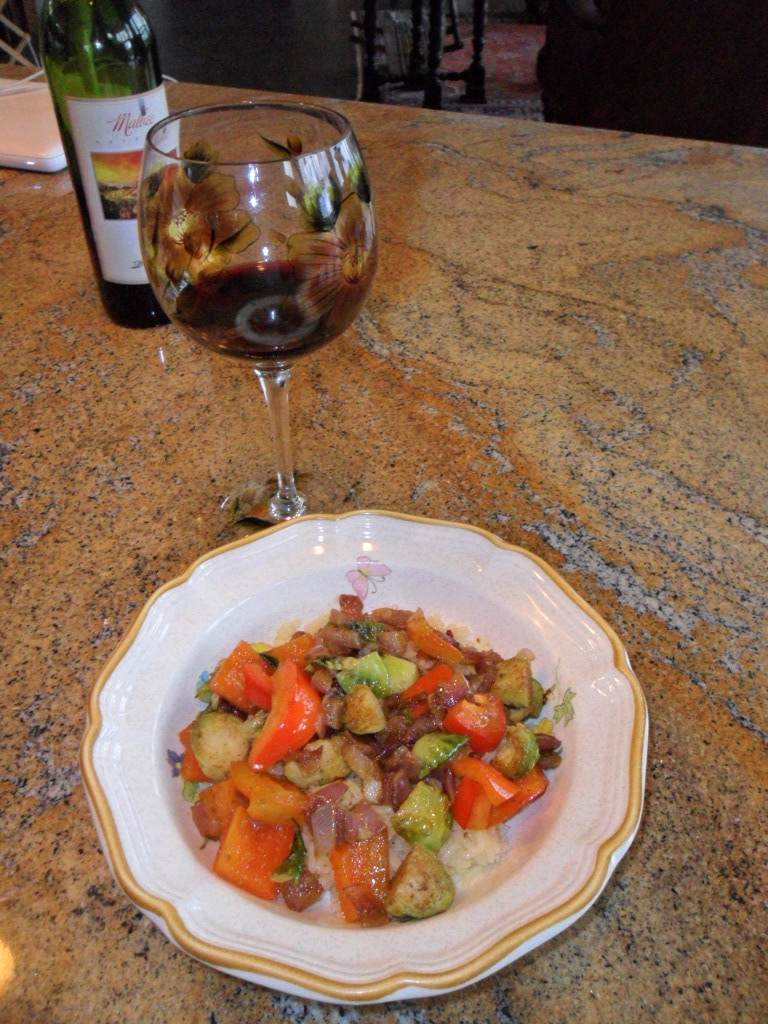
In addition to all the tales of her adventures and the ordinary people she meets, the book is filled with recipes that are specialties of the areas she visited. I’ve taken some ideas from several to experiment with new dishes like combining Swiss chard and sultanas (golden raisins) with chopped onions and garlic sautéed in olive oil and served over Basmati rice.

Book 32 for 2025: “My Name Is Emilia del Valle”, Isabel Allende


The last two books of hers that I read were set in the more recent times when Salvador Allende and later Pinochet were presidents of Chile. This one dates back to the 1800s and the Chilean Civil War. In 1866 a nun of Irish descent living in San Francisco has a passionate affair with a Chilean aristocrat and becomes pregnant. He abandons her; their daughter becomes the woman in the title of this novel. She is raised by a loving step father, an intellectual teacher from whom she learns to be independent and defy societal norms. At a young age she becomes the writer of short pulp fiction novels using a fake male name. The income from these helps her family live a reasonably good life.

Bored with writing these lucrative little books, she convinces a San Francisco newspaper to hire her as a journalist where she works along with a more seasoned journalist, Eric Whelan. Eventually, the two are sent to Chile to cover the civil war and violence occurring there. She sees this as not only an opportunity to satisfy her adventurous spirit but also an opportunity to find her biological father. She encounters dangers, almost gets killed, and sets off to find herself in the far southern reaches of the Chilean wilderness, learning from the indigenous people who live there how to survive in remote mountains.

Note: One of the places she goes was nearly impossible for non indigenous people to find during the 1800s and many never made it. Today, it is a popular area for hiking, camping, and exploring nature.

Book 21 for 2025: “A Trip of One’s Own: Hope, Heartbreak, and Why Traveling Solo Could Change Your Life”, Kate Wills


This book was not quite what I expected. It is somewhat memoir in that she talks about her career as a journalist accompanied by photographers and such which is not really on your own, about her marriage and divorce, the new guy, and actually traveling on her own. However, a large part of it, which is quite fascinating, is the history of the solo women travelers in history starting with the nun Egeria, who wrote about her own travels throughout the Middle East in the years AD 381-384. Centuries later the book, “Itinerarium Eerie”, provides the details of her journeys and her “boundless curiosity”.

The book provides details of the adventures of many women who traveled solo: Emily Hahn, Nellie Bly, Martha Gellhorn–once married to Hemingway, Annie Londenberry, Gertrude Bell–the first woman to ride by camel across the Empty Quarter in Saudi Arabia, Helena Swanwick, Ethel Smyth, Jean Baret–the first woman to circumvent the globe, Isabelle Eberhardt, Elspeth Beard. I realized in reading this I had actually read about one of these women, Sarah Hobson, who rode all over Persia (Iran) on horseback disguised as a man and have read several books about Gertrude Bell. In the 1700s, Jeanne Barat sailed around the world on a scientific expedition disguised as a man. In 1983, Elspeth Beard circumvented the globe on a motorcycle to heal the trauma she had suffered. Others rode bicycles, some used various forms of navigation, but all defied the norms of their time. Many encountered all sort of dangers and nearly died.

Yes, the book does give women advice on how to travel safely alone, what to pack, etc. And toward the end she tells the reader how to find adventures nearby in the countryside or streets where you live, how to open the eyes and ears, all the senses, and notice your surroundings in new ways.

Book 38 for 2024: “James”, Percival Everett


If you ever read “The Adventures of Huckleberry Finn” by Mark Twain, then you already know the characters in this new novel. If you have not read about Huck, then I suggest you might want to read Cliff Notes or some other synopsis of Twain’s novel. “James” takes its title from the name of one of the main characters, a slave who lives in Hannibal, Missouri. He is generally called Jim, but in reality prefers the more formal James. Basically, Everett’s novel is written from the viewpoint of James, e.g Jim. Most of the major events in Twain’s original novel are followed in this novel, but from James’ viewpoint. Huck, a poor kid, runs away to avoid his violent father and finds James hiding out on an island in the Mississippi River. Together they live off the land, float in their handmade raft down the Mississippi River, mostly at night to avoid anyone seeing them, and meet all sorts of folks, including two men, who are criminals pretending to be European royalty. It is hard to imagine how a novel about the horrors of slavery could possess any humor, but this one does. It is a quick, enlightening, and entertaining read filled with “lessons” that do not seem to be lessons because they are so intertwined with the James’ story.

Langston Hughes in Uzbekistan


It’s 1932.

Movie roles promised to 22 Black Americans.

“Black and White” in the

Uzbek Soviet Socialist Republic.

Treated like royalty, wined, dined, at

their own expense.

Hughes–ridiculous script. All went

home except Hughes. He stayed,

traveled, saw cotton grown from Aral

Sea water–now no water, desolate

desert.

In Tashkent, Uzbeks, Turkmen, Tartars

honored him, flowers, fruit.

No English.

He met a Red Army Captain from

high Pamir Mountains. Hughes

described him, Black with Oriental eyes.

Hughes called him Yeah Man.

He called Hughes Yang Zoon.

Weeks together never understanding

each other’s words.

Hughes’ poetry book

“The Weary Blues” first

American book translated to

Uzbek. Original English version

lost. He describes this new place:

“Look: here

Is a country

Where everyone shines.”

Note: You can find a version of this book translated into English from Uzbek by Muhabbat Bakeava and Kevin Young.

Baja Trip-1


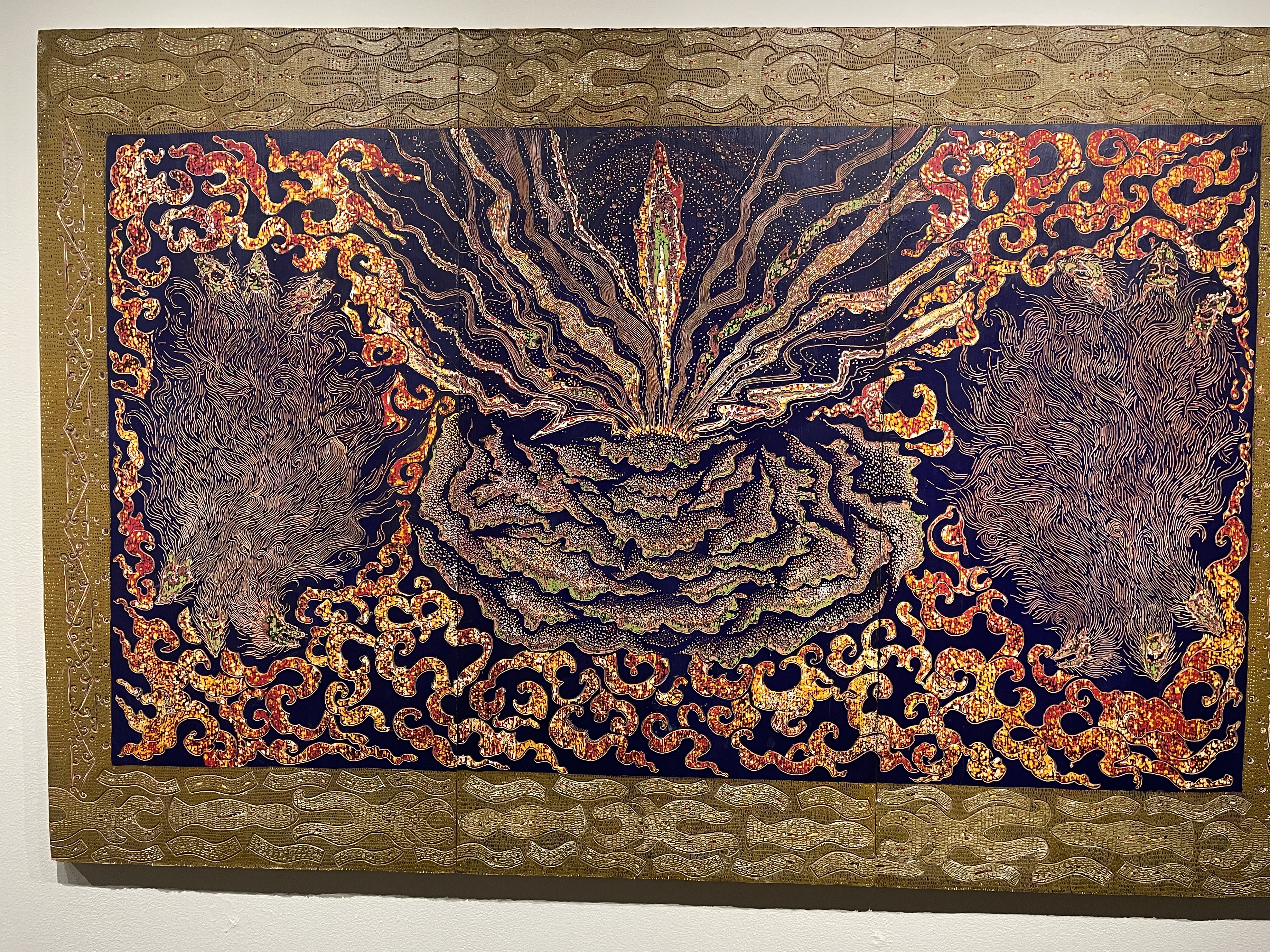
Day one we drove across border to Tijuana where we visited the incredible La Caja Art Gallery. We viewed a variety of art works, drank delicious Mexican chocolate, and had a sensory experience blind-folded.

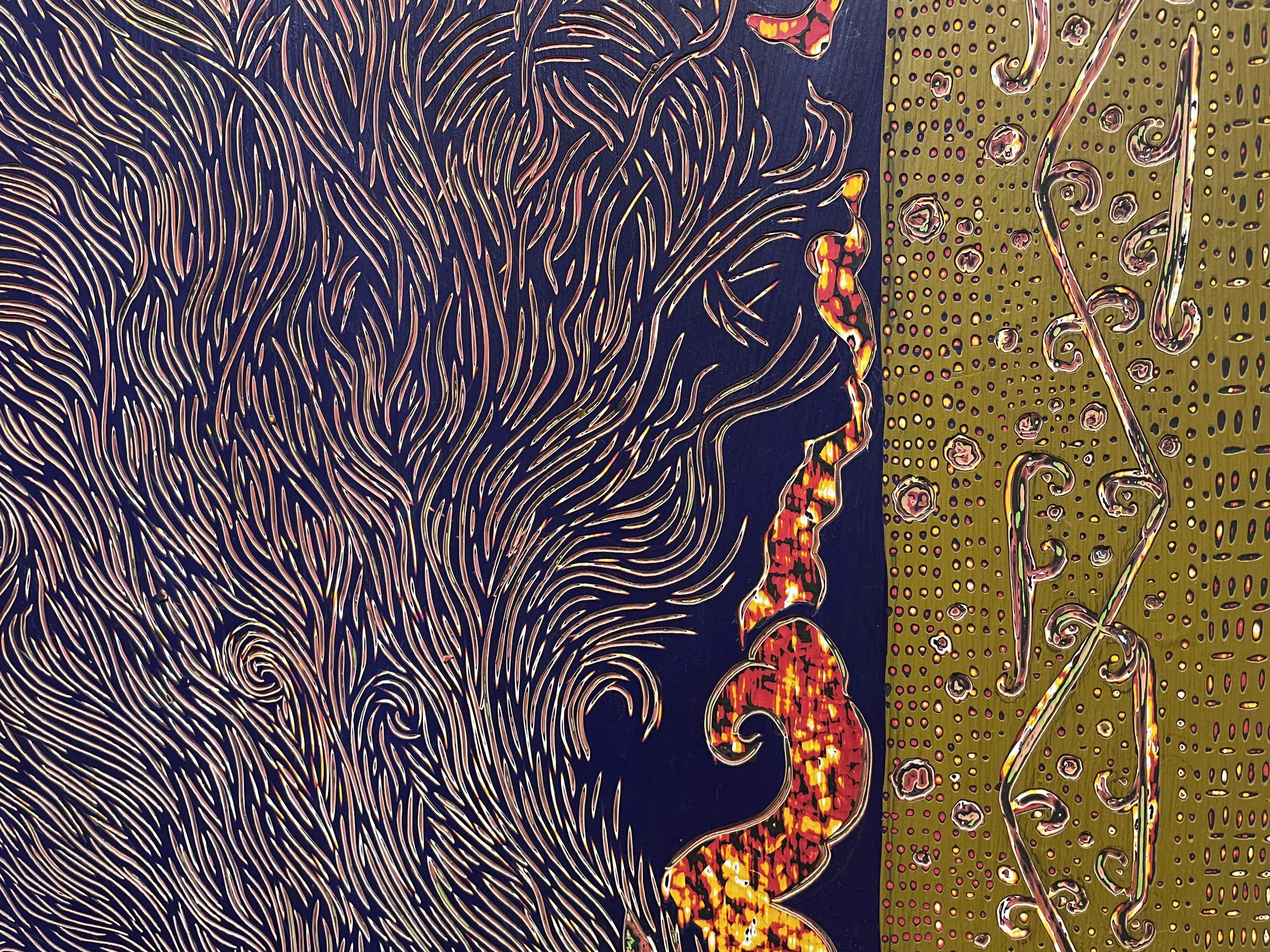
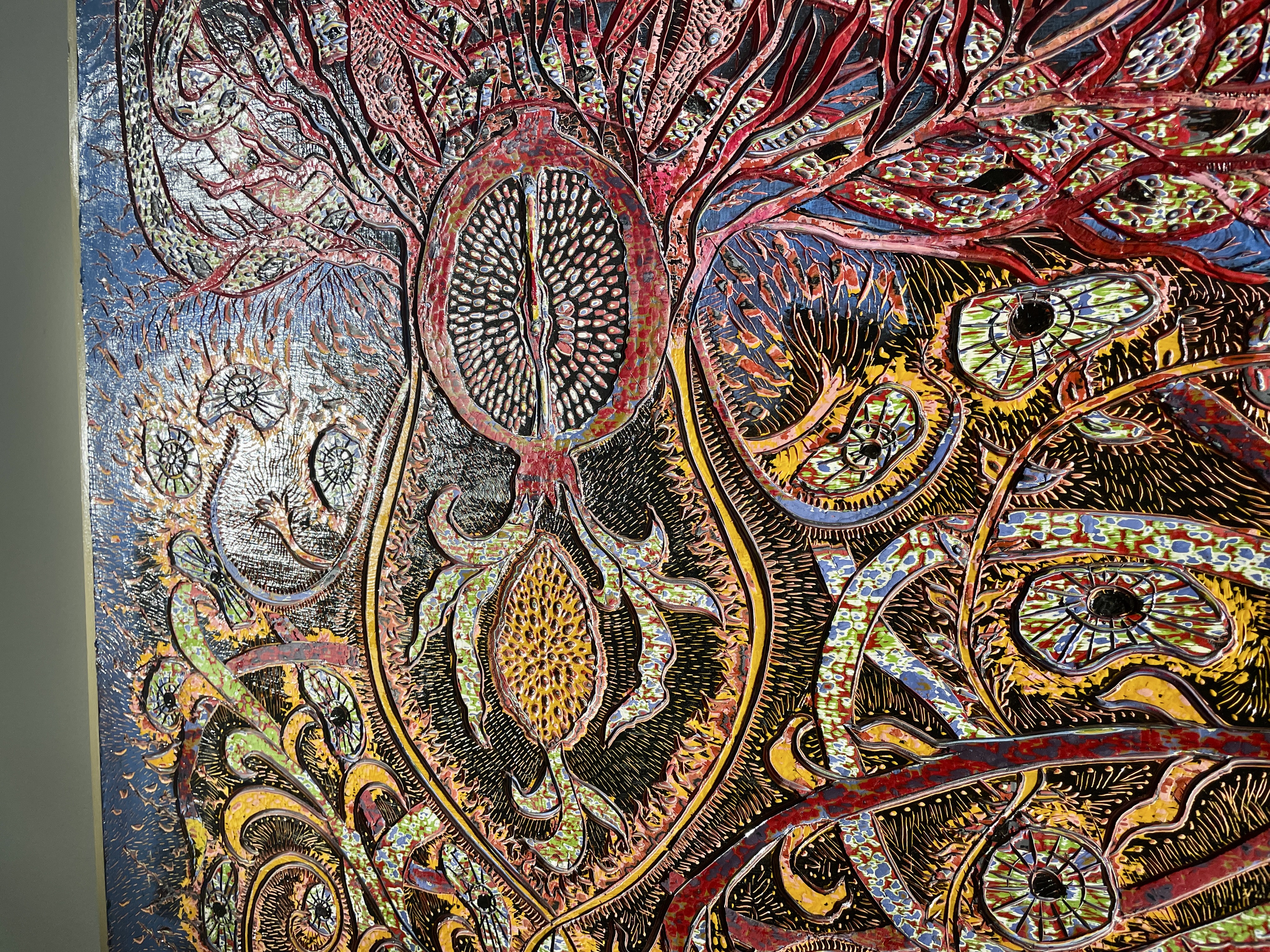
A close up of the previous painting. It consists of not only layers of paint but also carving into the surface.

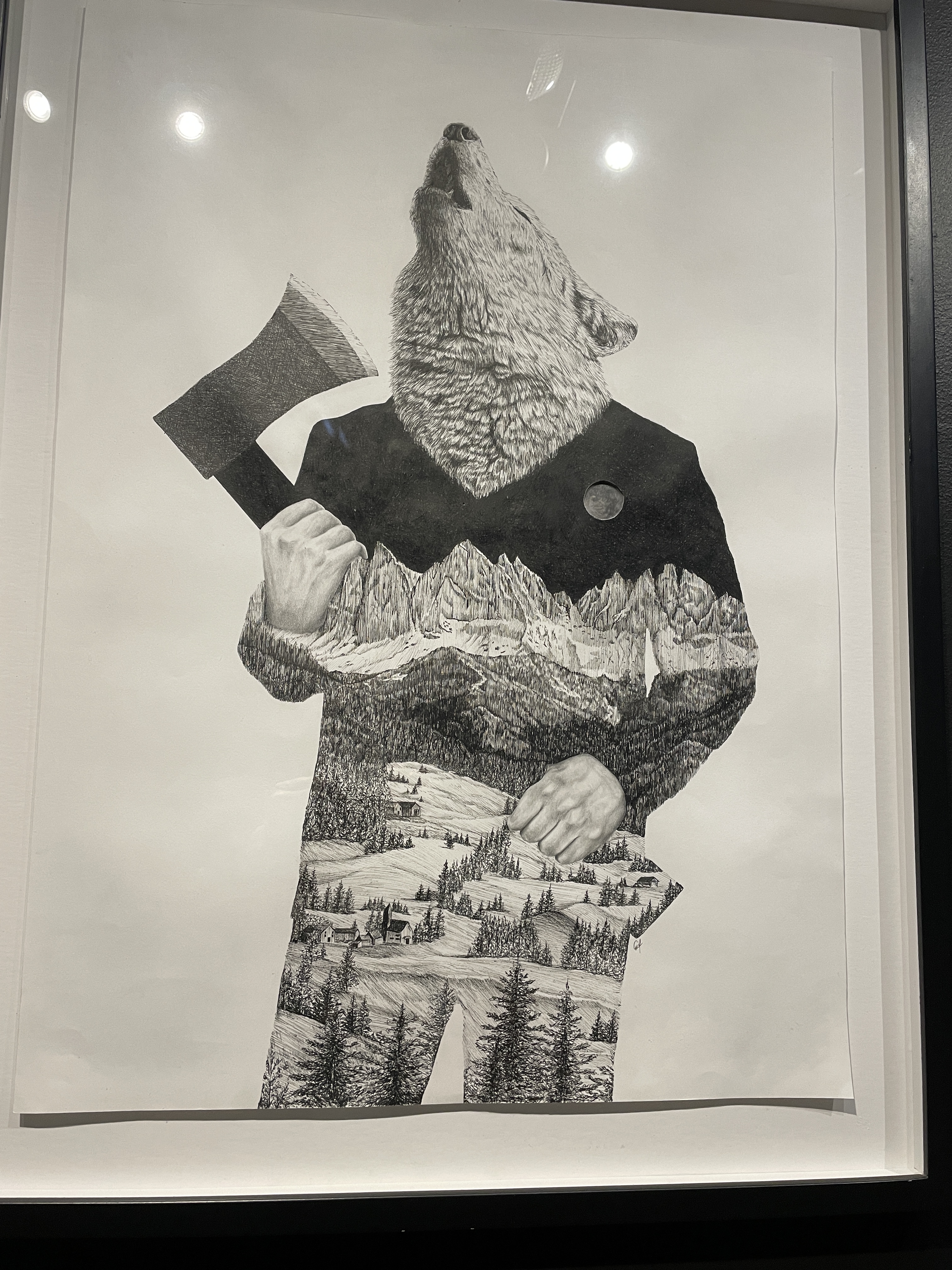
Food for thought.

A different artist for the above and the following.

This one was painted directly onto the wall.

Later we experienced lunch at Caesar’s where supposedly (this is contested by some other places in Mexico) the original Caesar Salad was created.

Italy–Rome


Where have I been?  Italy, on a trip planned for months, a trip with friends and family centered around a group of women writers with The Story Circle Network, a group focused on women telling their stories.  Yes, we had classes and wrote every day.  When we were not writing, we discovered a little part of Italy.  The first half day we strolled through ancient Rome, starting with the Coliseum.

IMG_4086

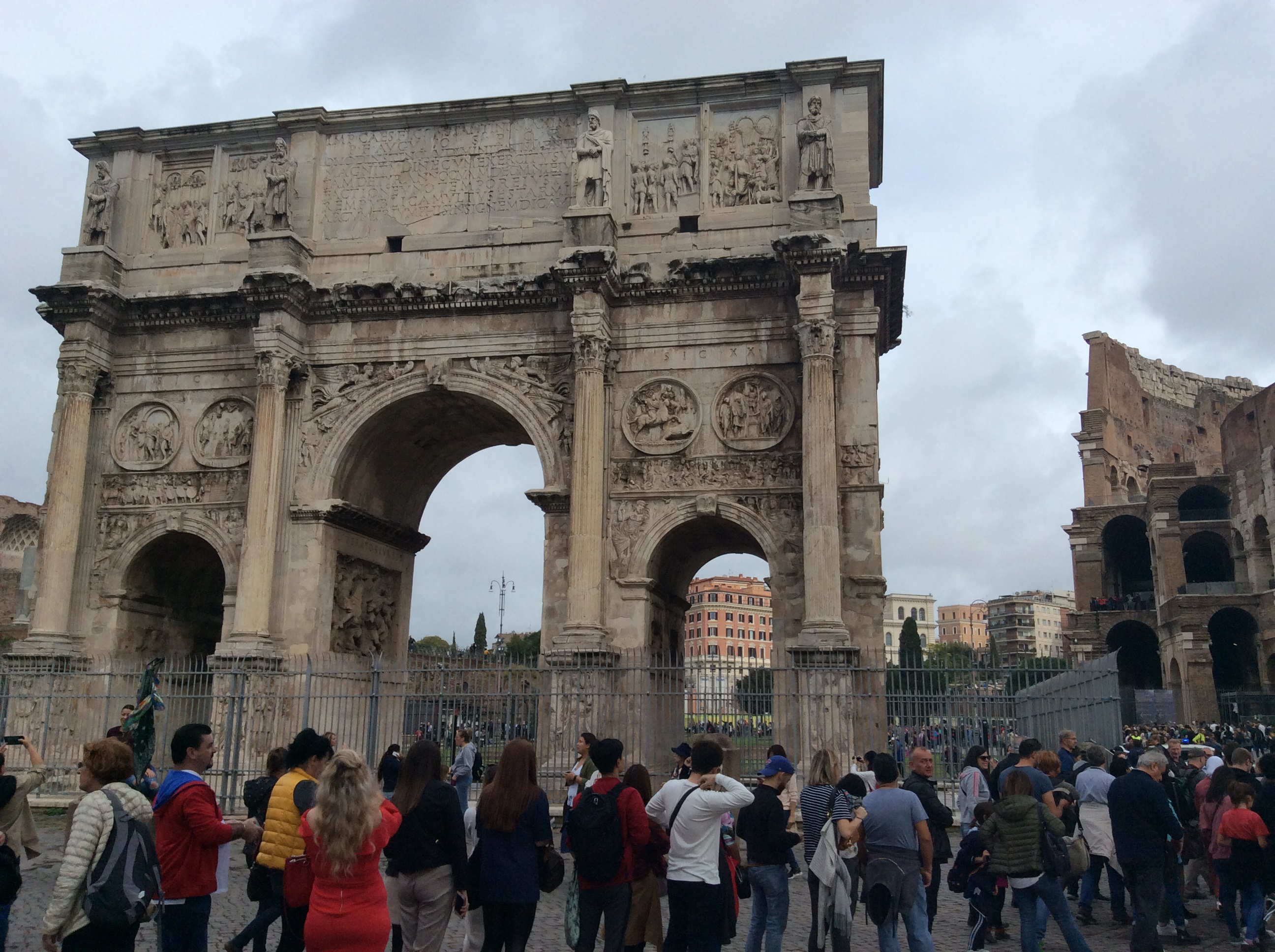
To the left of the Coliseum stands this arch–see a bit of the Coliseum on the right side of this photo.

IMG_4087

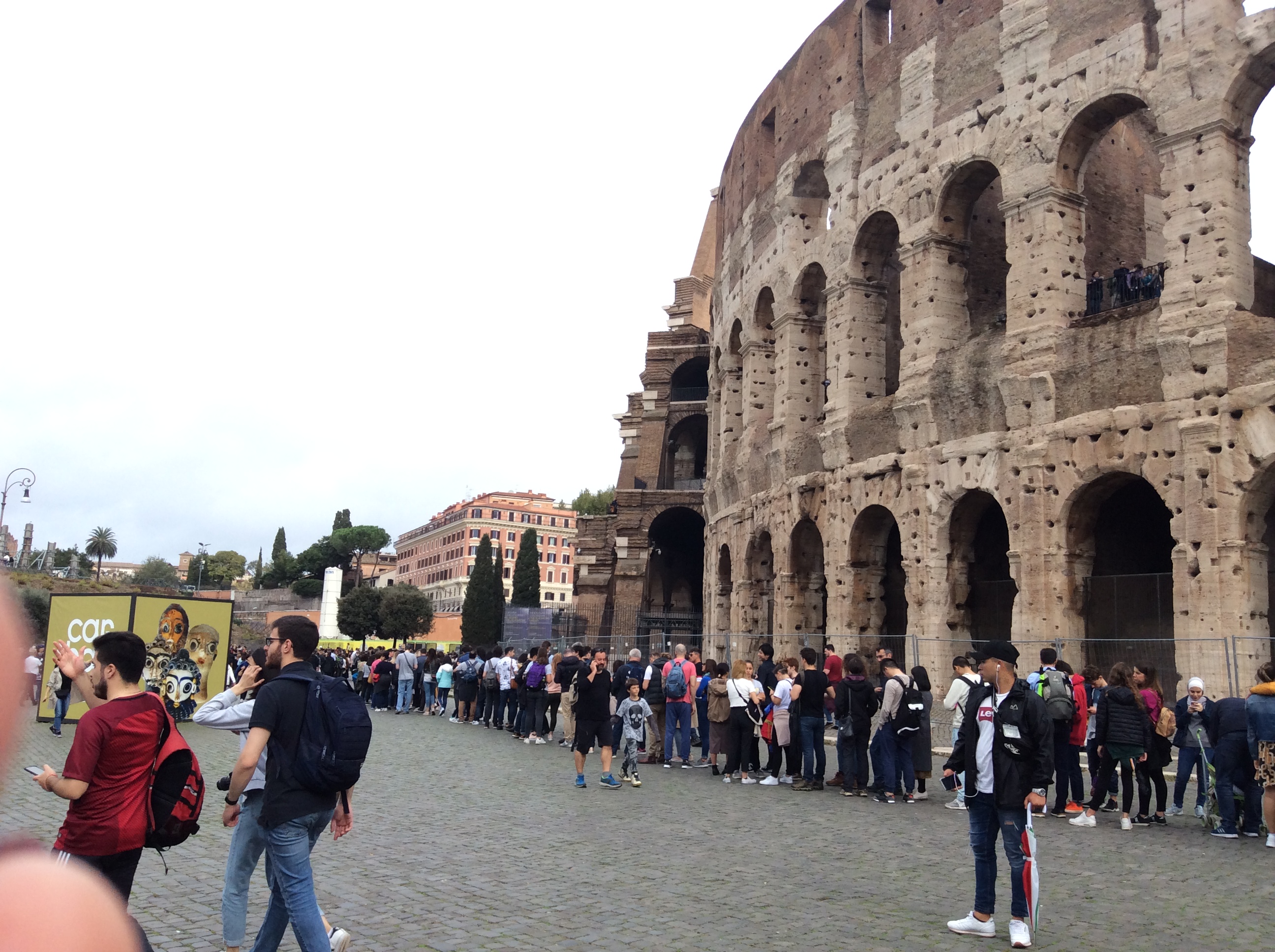
The Coliseum is so large that it is impossible to take of photo of all of it at once.  We were there on a holiday.  There was a long line of people waiting to get inside.  We did not go inside.

IMG_4088

IMG_4083

The arch in the first photo seen from the side.

IMG_4089

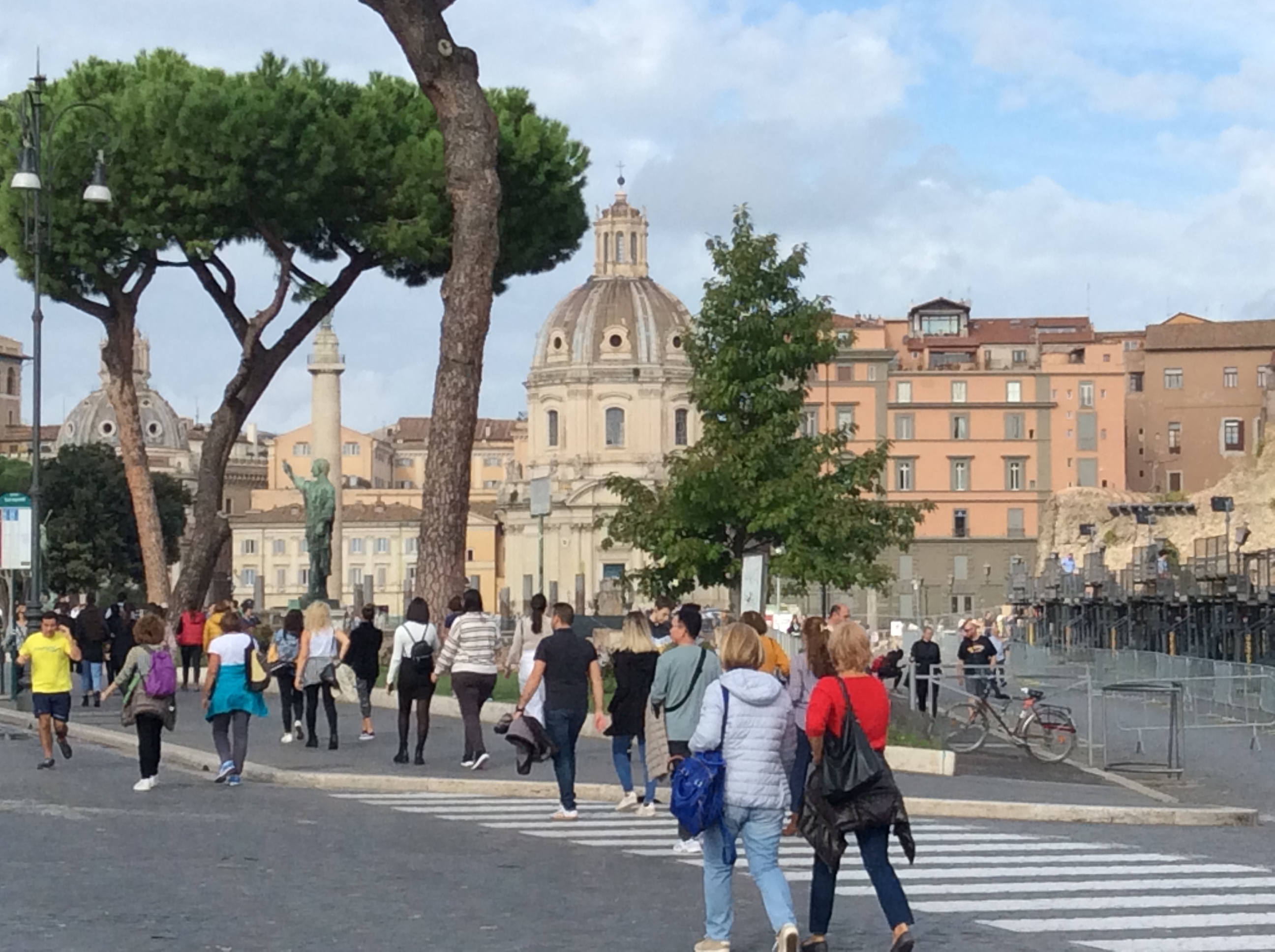
On the other side of the Coliseum facing down a wide pedestrian only boulevard.  Many of the following photos were taken along this boulevard.  The trees in these photos are umbrella pines.  They are everywhere in Rome and other parts of Italy south of Rome.

IMG_4092

IMG_4116

My daughter and grandson strolling along with friends in the background.

IMG_4094

One of the things I found most enjoyable strolling along were the street musicians:  One played classical guitar music, farther down the boulevard another was playing popular music while another man danced to it. I wanted to stop and dance along but everyone was walking fast away from me.  Getting lost in Rome did not seem to be a great idea.

IMG_4095

While sauntering along, I turned around and took a photo of the Coliseum in the distance.

IMG_4096

In one short walk in Rome, I saw so many things from thousands of years of history, it was hard to fathom.

IMG_4098

Away from the boulevard and walking toward Trevi Fountain, we saw this memorial.  It was a rainy, stormy day.  I kept thinking it is going to rain but it didn’t. In many places, the ancient, the not so ancient, and the new could all be seen in one place.

IMG_4100

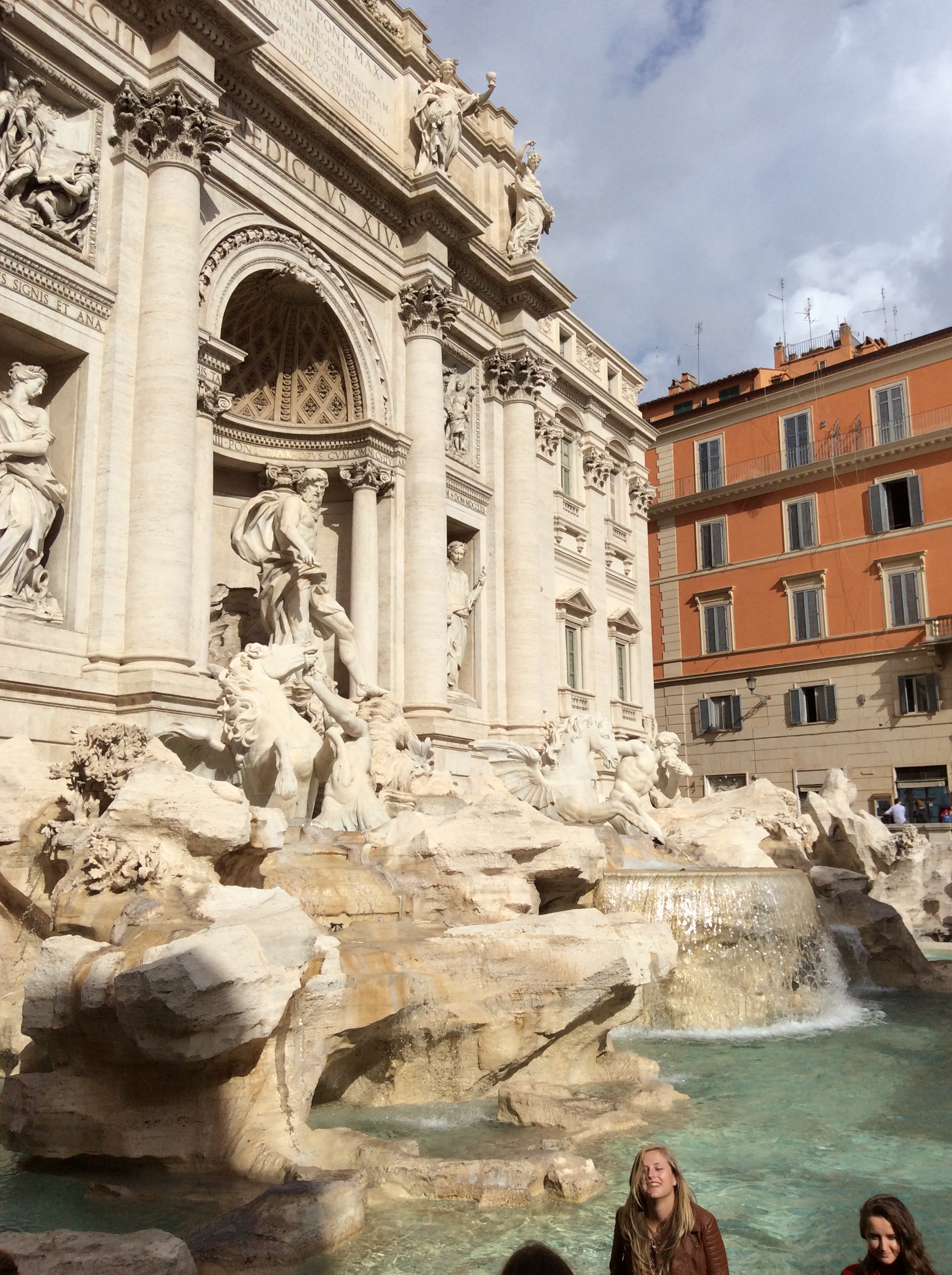
And, of course, one of the most famous places in Rome.  We found a little restaurant near here.  I had my first Italian cappuccino and a delectable desert which I tried to find everywhere else we went but did not. It was in a little cup, 2/3 was a creamy bottom, 1/3 was berries on top.


IMG_4103

Walking along another route.  I seem to have a little problem taking photos, walking, and keeping my fingers away from the iPAD mini frame while taking some of these photos.  So much seen in a mere half day in Rome.  Shortly after lunch, visiting the Trivi Fountain, and passing by the above monument, we headed on the four hour road trip to Sorrento.

I could not resist taking a video of the lush emerald Italian countryside south of Rome.


You’re Gonna Eat That?!


This is the title of my newest book which currently resides at the designers for formatting, placing the photos in the correct place and position, making sure everything is just right.  The subtitle is:  Adventures with Food, Family, and Friends.  It includes family and travel stories, adventures, poems, and recipes. Here are a couple of food photos which will be in the book with recipes.

IMG_3474

SAM_1570

IMG_3495

Every Sunday until publication, I will post an update as to progress.  My goal is to have it available for purchase for Christmas presents for those who love food adventures.


Adventures in Argentina–Flora and Fauna Near Iguazu Falls


Across the highway from the helicopter business, we visited a surprisedly large bird sanctuary, recommended by our taxi driver/guide.  We did not expect anything as lovely as what we found. Most of the birds and flowers there are native to the area.  However, a few rarer species from other parts of the world exist there as well.

IMG_3052

IMG_3084

Surprised, I recalled seeing these exact same flowers on my two trips to Costa Rica.  In fact, I found another photo on an older blog post from one of my Costa Rica trips.

IMG_3082

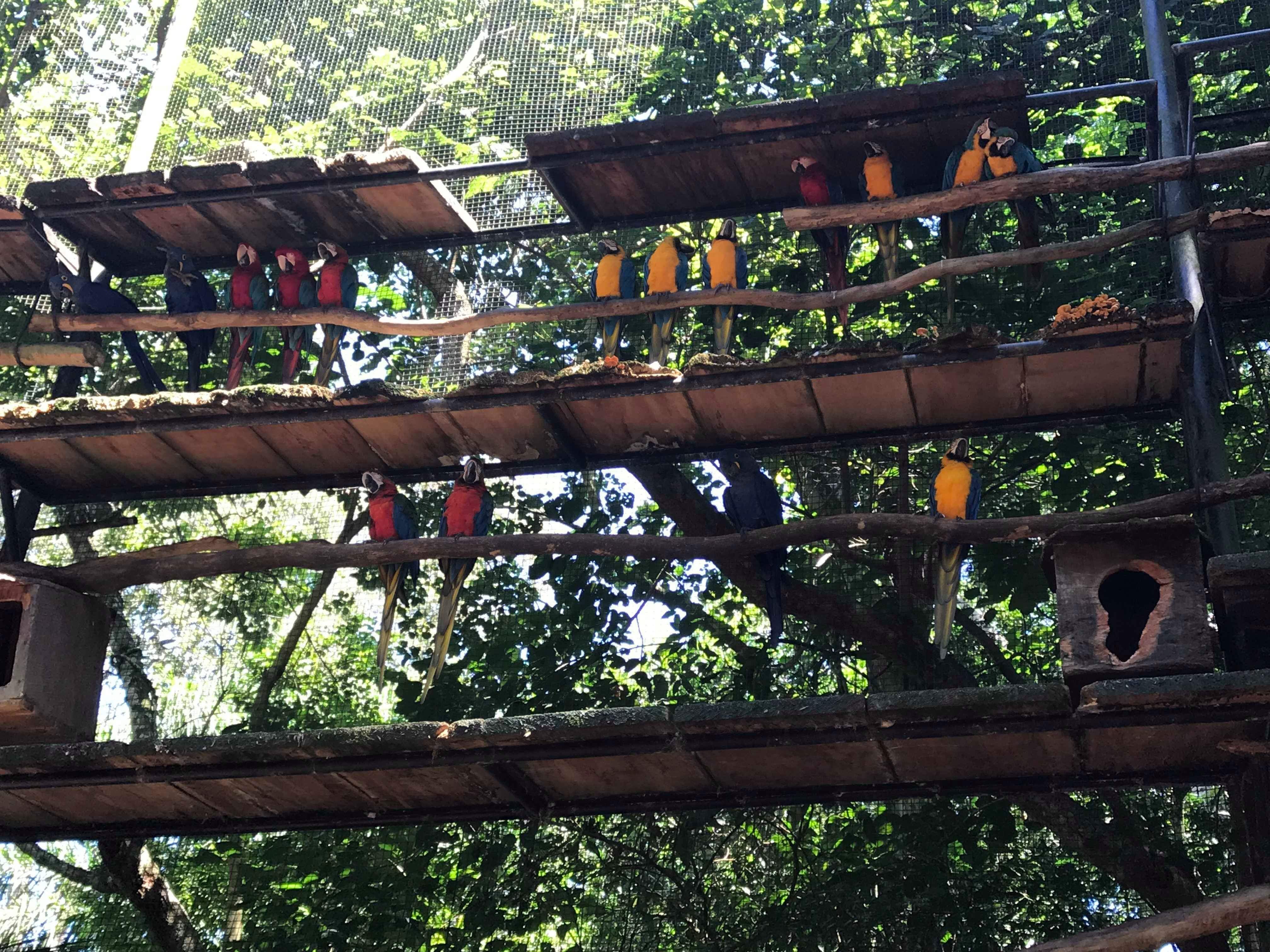
Endangered, many countries where these wonderful parrots live do everything they can to save them.  They pair for life–we found the evidence amusing and enchanting.

IMG_3081

Whenever we saw an uneven number together, we looked elsewhere and found the mate drinking or feeding.

IMG_3053

IMG_3088

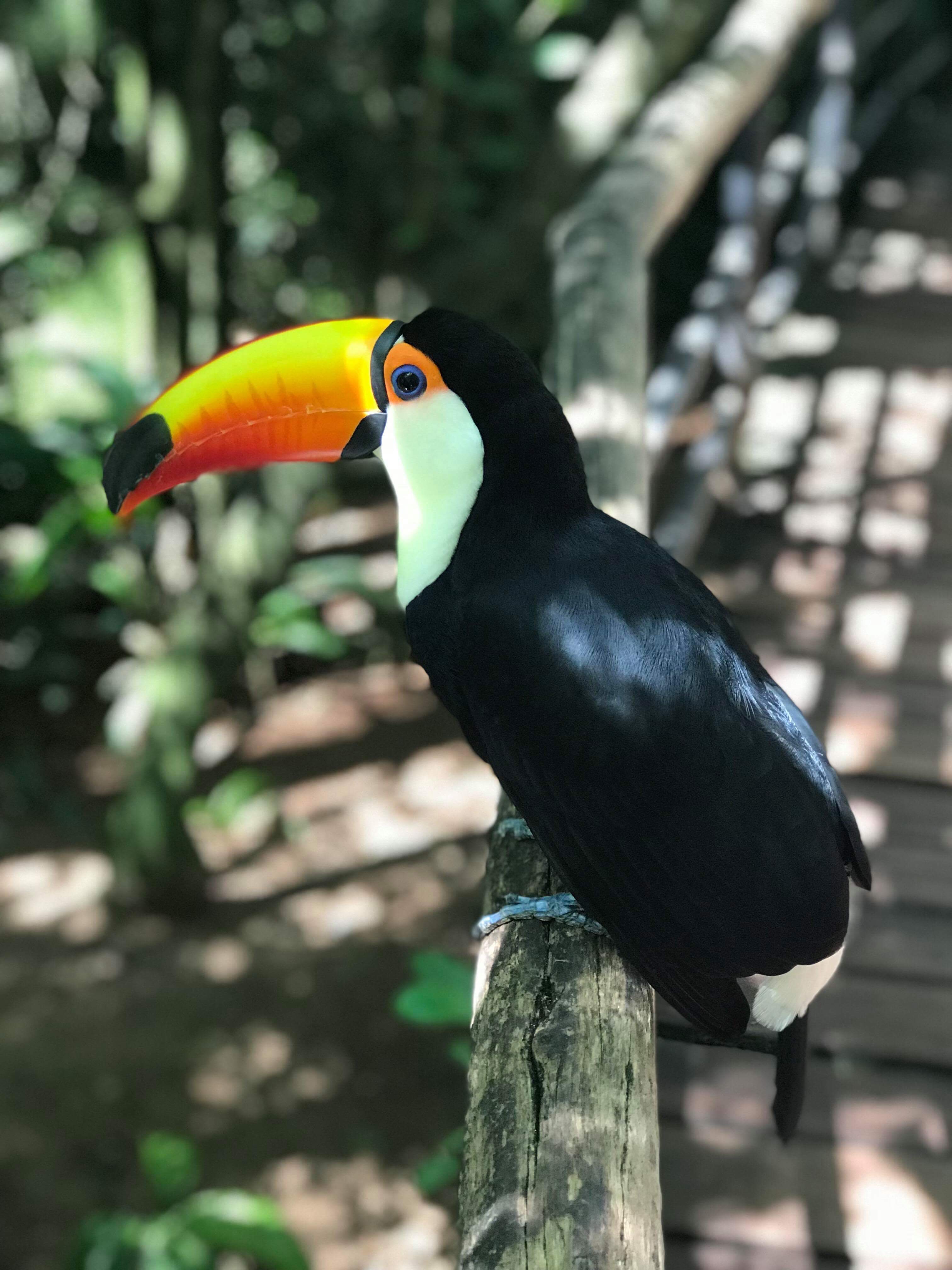
Of course, there has to be toucans.  Some even clowned for the tourists.  People clustered all around to watch their antics.

IMG_3085

IMG_3050

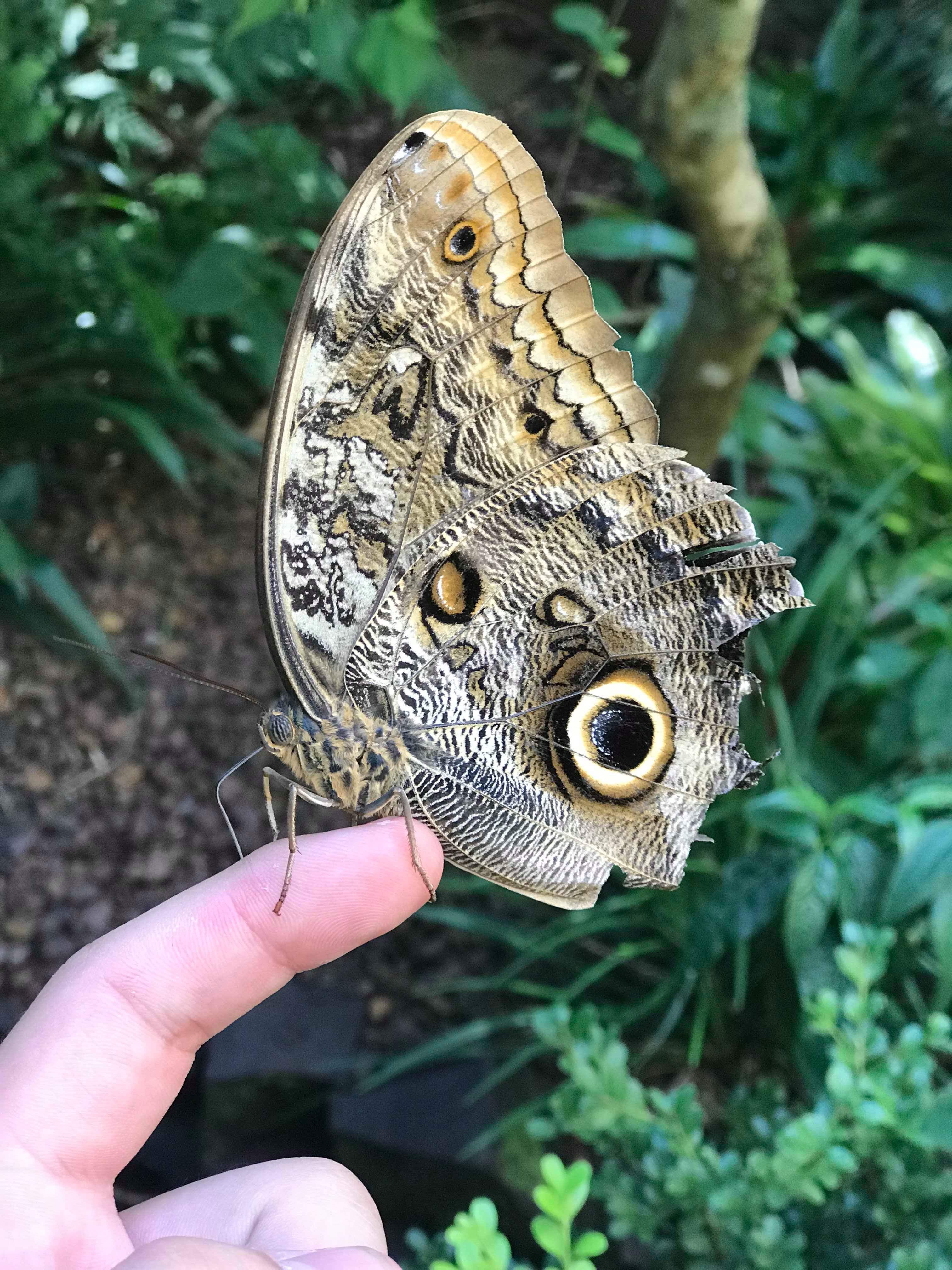
Where you have flowers you have butterflies.

IMG_3078

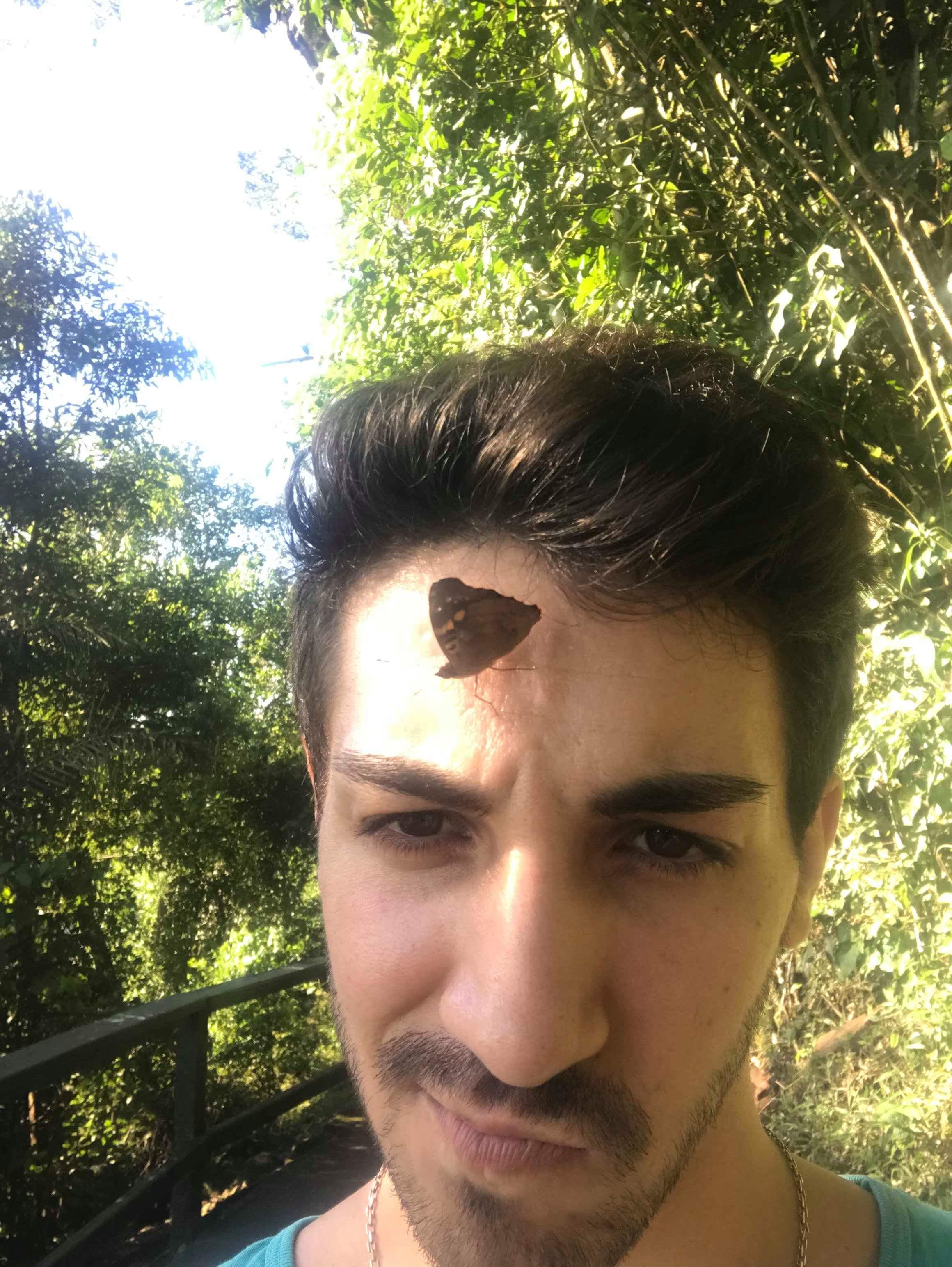
Butterflies love Gaston.

IMG_3031

They landed on him, flew to his fingers, let him pick them up without flying away.  I tried, but no luck.

IMG_3079

IMG_3048

A fabulous morning on the Brazilian side, starting with the helicopter ride and ending here with flowers, birds, and butterflies.


Adventures in Argentina-Buenos Aires Neighborhoods


Buenos Aires has many neighborhoods, areas with sometimes distinct character.  Our hotel in San Telmo made it easy to see a lot of the city by walking.  Other areas we strolled through include Centro and Recoleta. In the three days we stayed there, we walked 35 miles according to my Fitbit.

IMG_2962

This Starbucks was exactly one block from our hotel.  We went there the first morning for the typical Argentinian breakfast:  coffee and a biscuit (not like the ones here) or a small croissant with some sweet glaze on top.  Starbucks can be found throughout the city.

IMG_2967

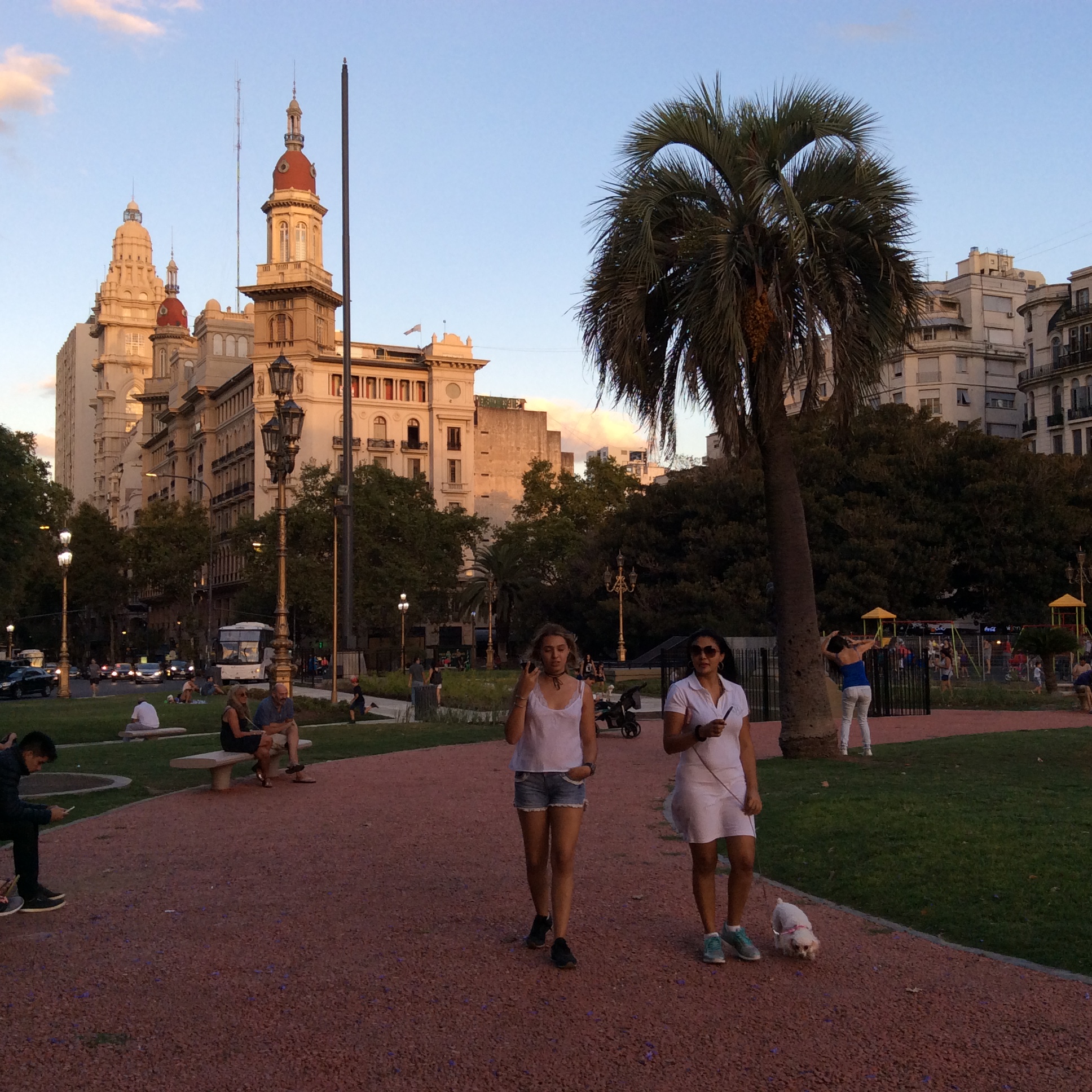
Everywhere you see beautiful parks and people use them for strolling, dog walking, jogging, relaxing, picnicking, hanging out–you name it.  Plus the trees–on all major streets, on side streets, everywhere.  Of course, it was the end of summer.  Perhaps parks receive less use in winter.

IMG_2965

Even on main thorough fares, like this one which is claimed to be the longest street in the world, trees reside on the sides, in the middle, everywhere.

IMG_2959

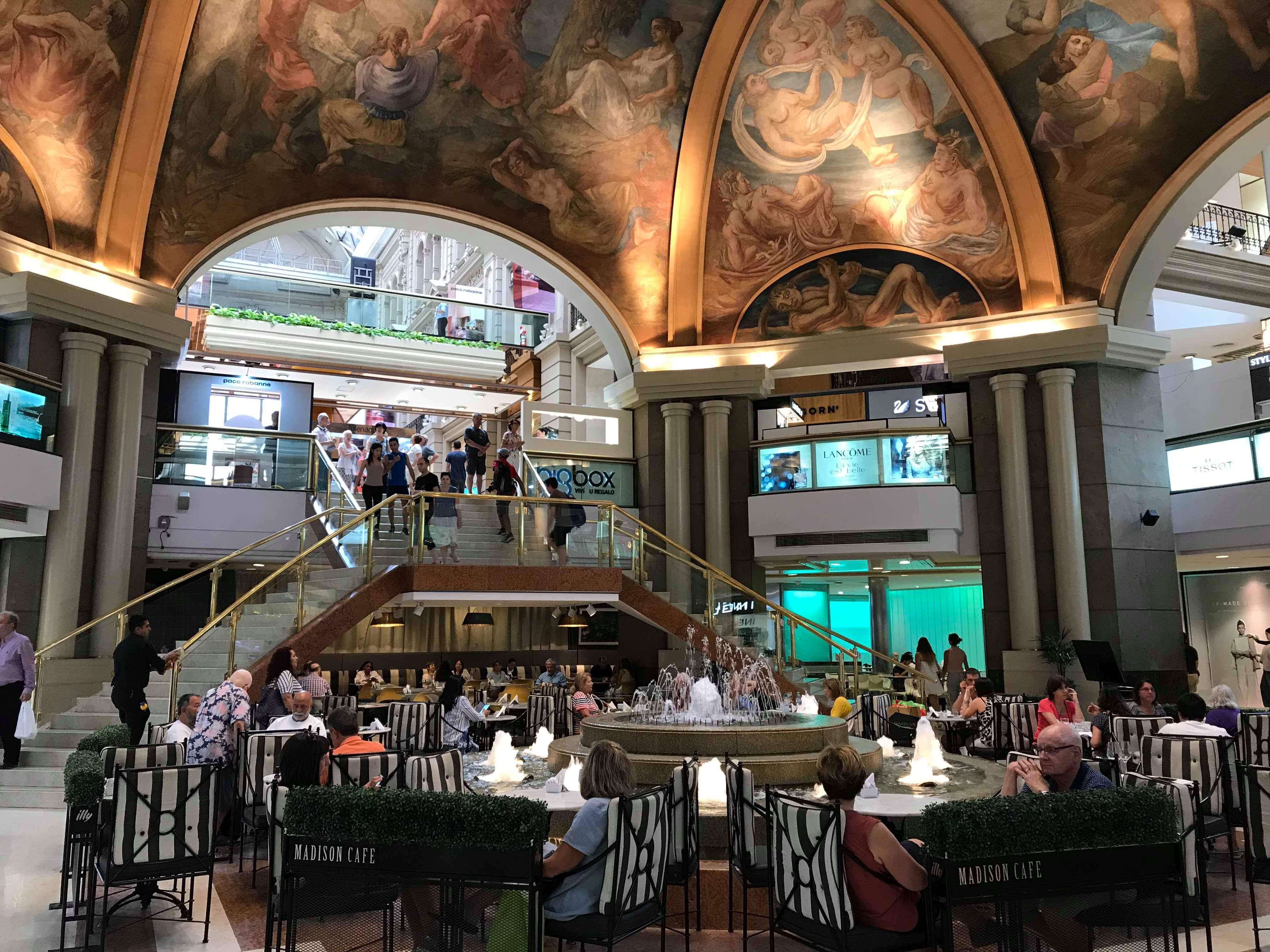
This is a mall, seriously.  We ate a delicious lunch here one day and came back the next day for a drink.  I had coffee; Gaston had a green drink with mint and ginger which was refreshing and delicious.  The ceiling is well–take a look!

IMG_2938

Hard to believe this is a mall.

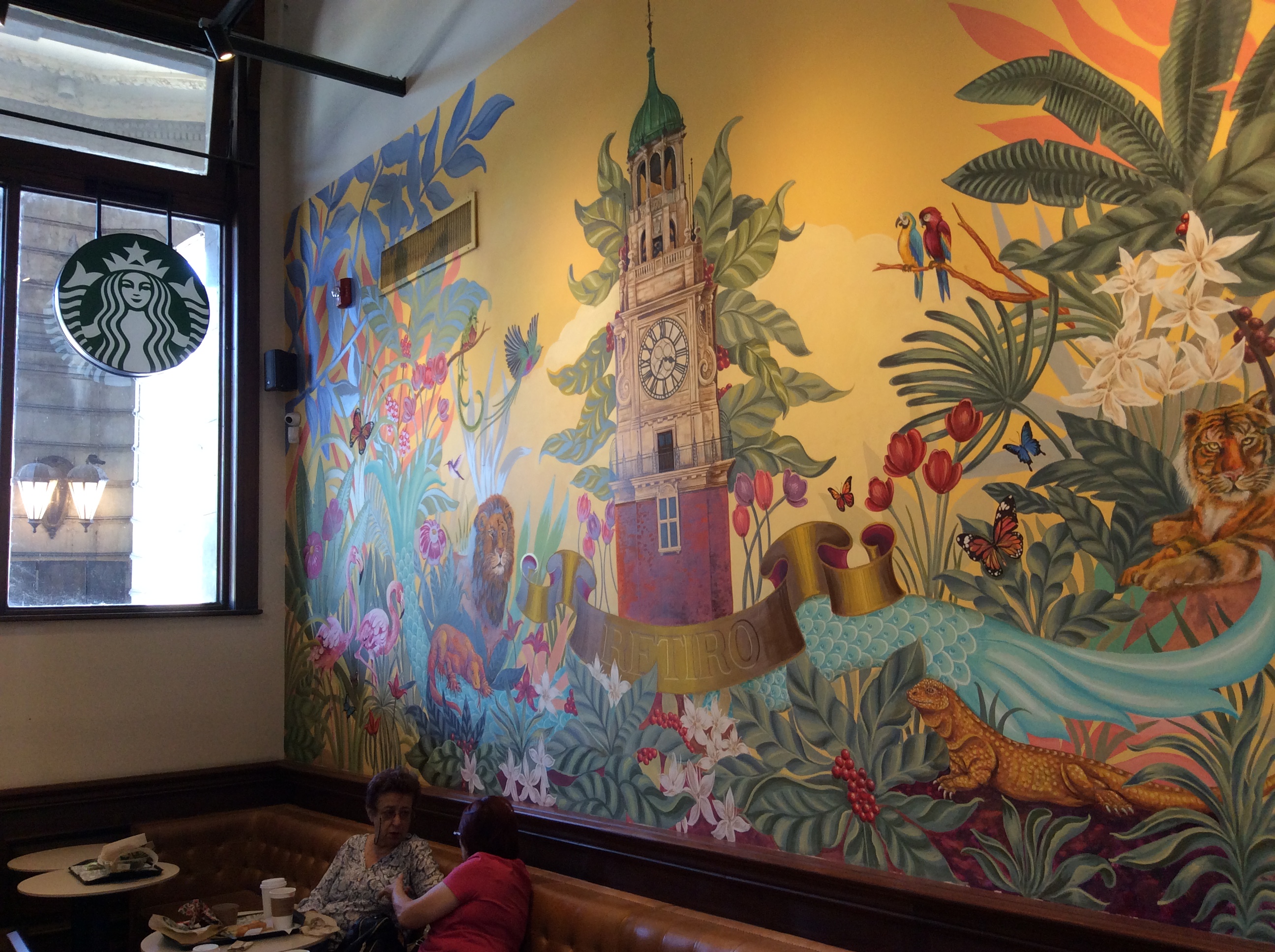
One day we took the train to its end at the train station. The recently restored train station contains the fanciest Starbucks ever with incredible murals.

IMG_2987

The ceiling is beautiful too.

IMG_2985

From this station it is possible to take a train to various parts of the city but also trains go from here way out into the suburbs.  Reminded me of the subway and train system in New York City and its suburbs where I once lived.

IMG_2978

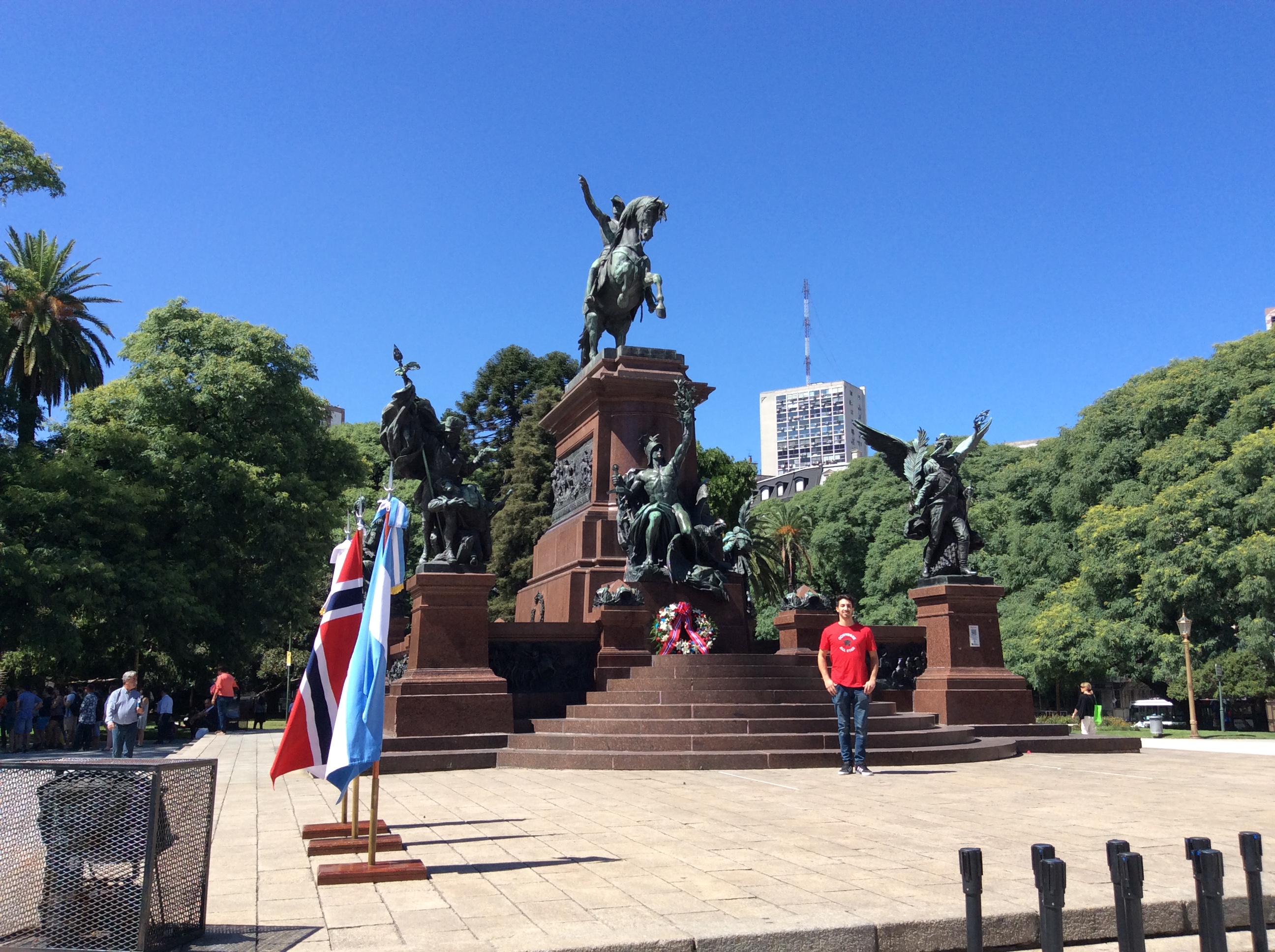
San Martin, the hero who freed southern South America from Spain, crossed the Andes with mules, not horses–Hugo, Gaston’s dad, gave me lots of history lessons.  However, when I saw this statue, I did not know all the history yet.  This park, filled with huge trees, borders several streets where, like much of Buenos Aires, modern and antique coexist.

IMG_2977

IMG_2982

Suddenly we notice men on horseback riding out of a military area next to San Martin Park.  We rushed across the park to watch, hoping they would ride around the park.  They did not; they headed down a street.

IMG_2973

We never discovered the purpose of this little parade of military personnel on horseback.

IMG_2984

The buildings around the park provide a perfect example of the traditional, the centuries old beside the modern.  The traditional building in the middle houses very exclusive apartments.

IMG_2983

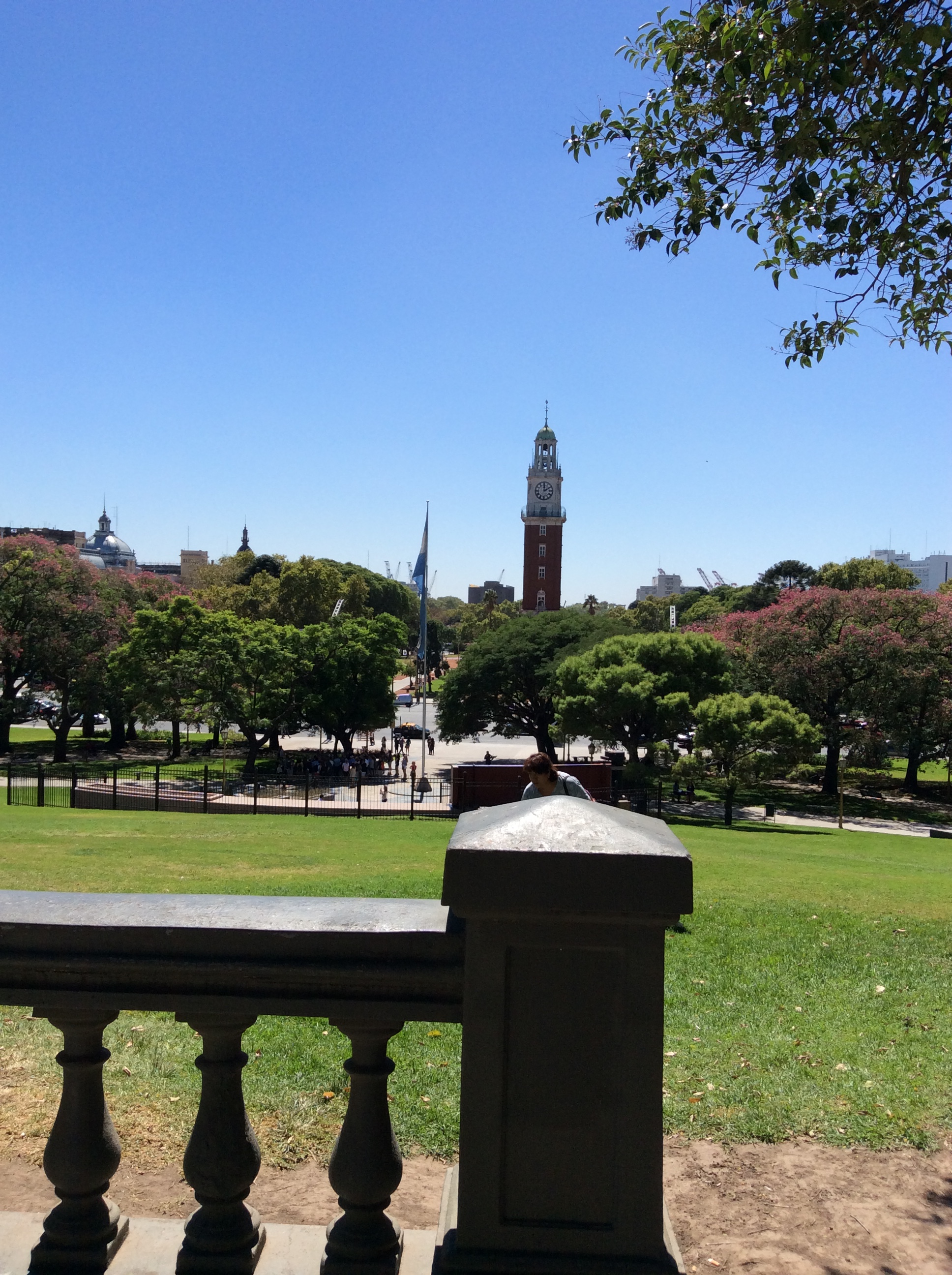
The opposite side of the park from the statue of San Martin overlooks the English Tower, given to Argentina by the English before the little war over the Falkland Islands which both countries claimed.  The English won.

A friend told me to take tea at the Alvear Palace Hotel so we headed to Recoleta area.  We strolled around, did not take tea, but we did have lunch in one of the small restaurants inside the hotel area.

IMG_2989

Next to this restaurant resides a tea store, Tealosophy,  where they sell nothing but tea.  I quit counting at fifty different blends.  In Argentina International Women’s Day was highly celebrated. This tea shop created a special blend just for that event, Mujeres Power.  I bought some; it smells heavenly but have not tried it yet.

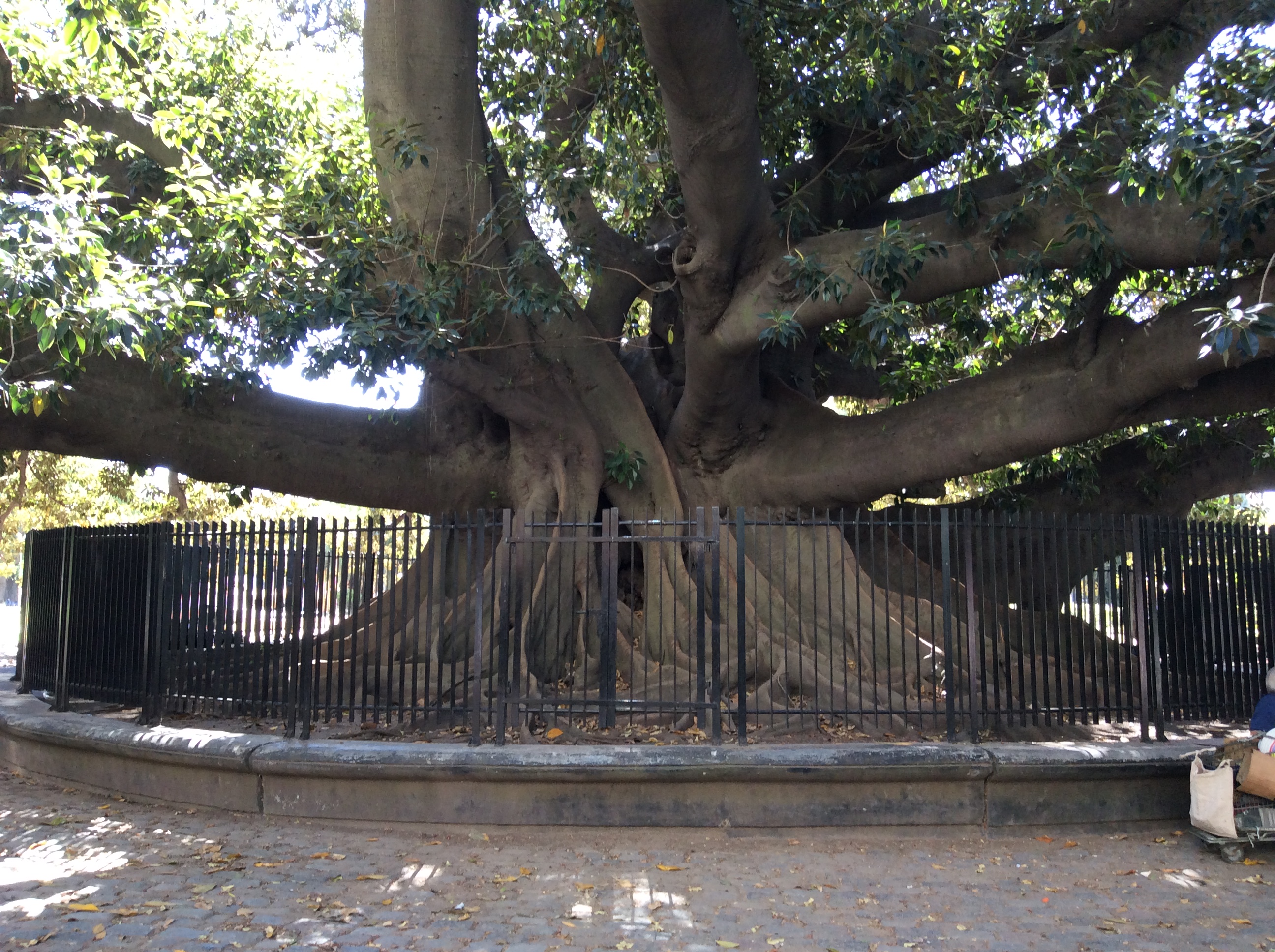
We walked down to another park near the famous cemetery where all the national heroes and important people have been buried for centuries.  Nearby we saw the largest tree I have ever seen.

IMG_2990

The branches, which were impossible to photo in one picture, extend far and are so heavy they are supported by cement or metal columns.

IMG_2993

The tree is to the left in this photo.  The walk leads to a monastery and the cemetery.

IMG_2994

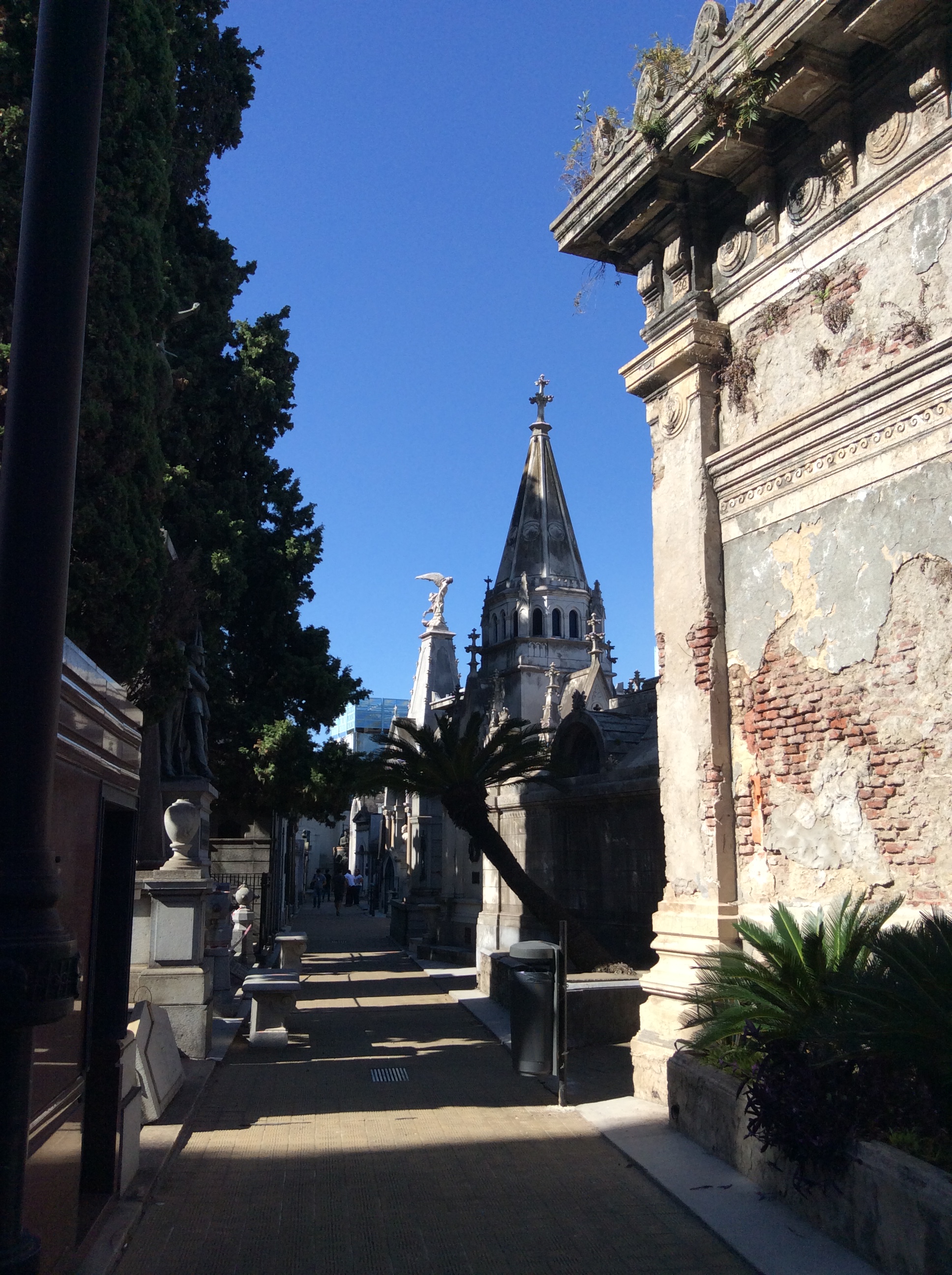
The cemetery was full of people.

IMG_2995

The artwork here speaks for itself.

IMG_2996

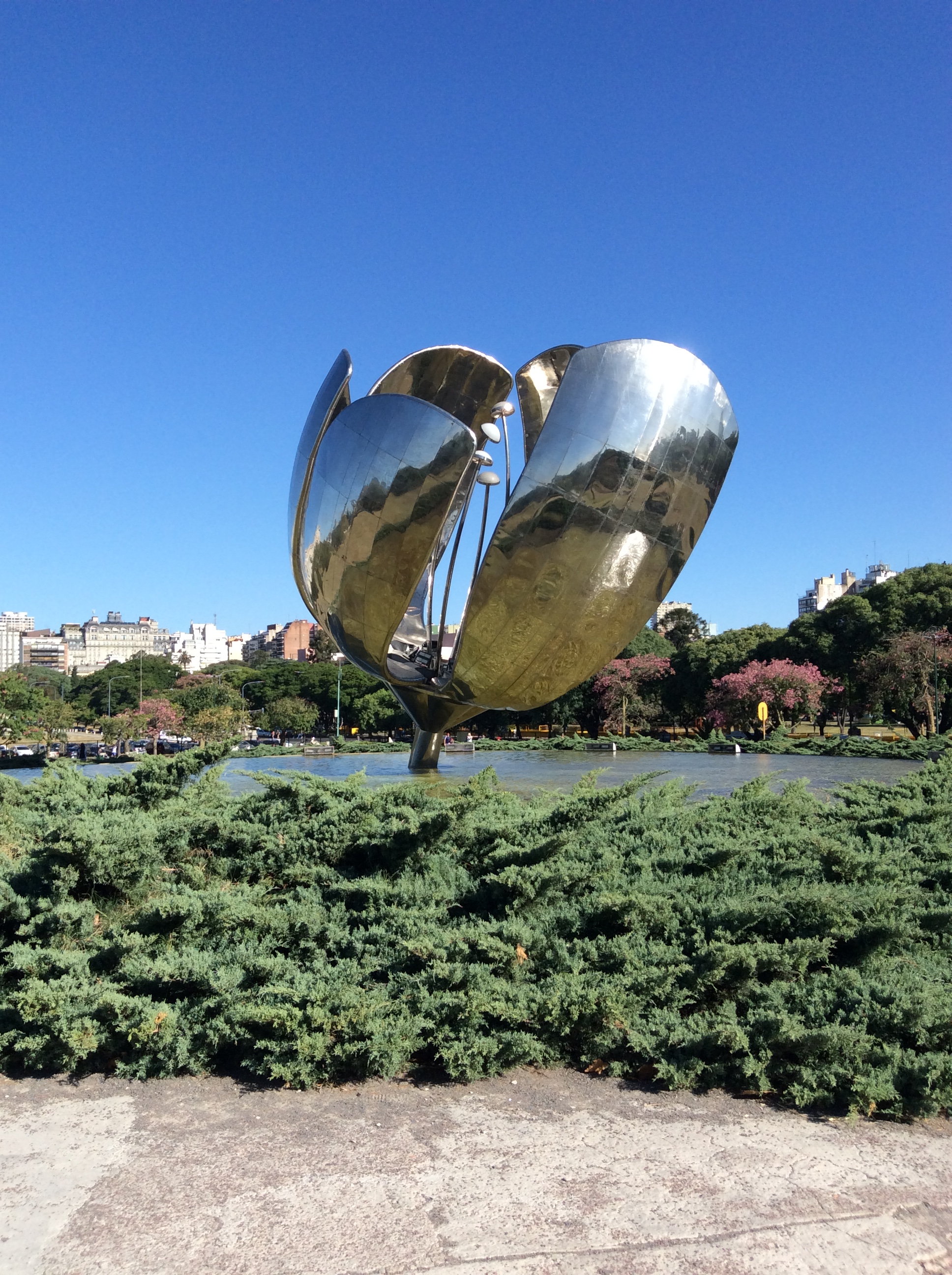
As we walked back we circled this famous piece–a tulip that opens and closes.

IMG_2998

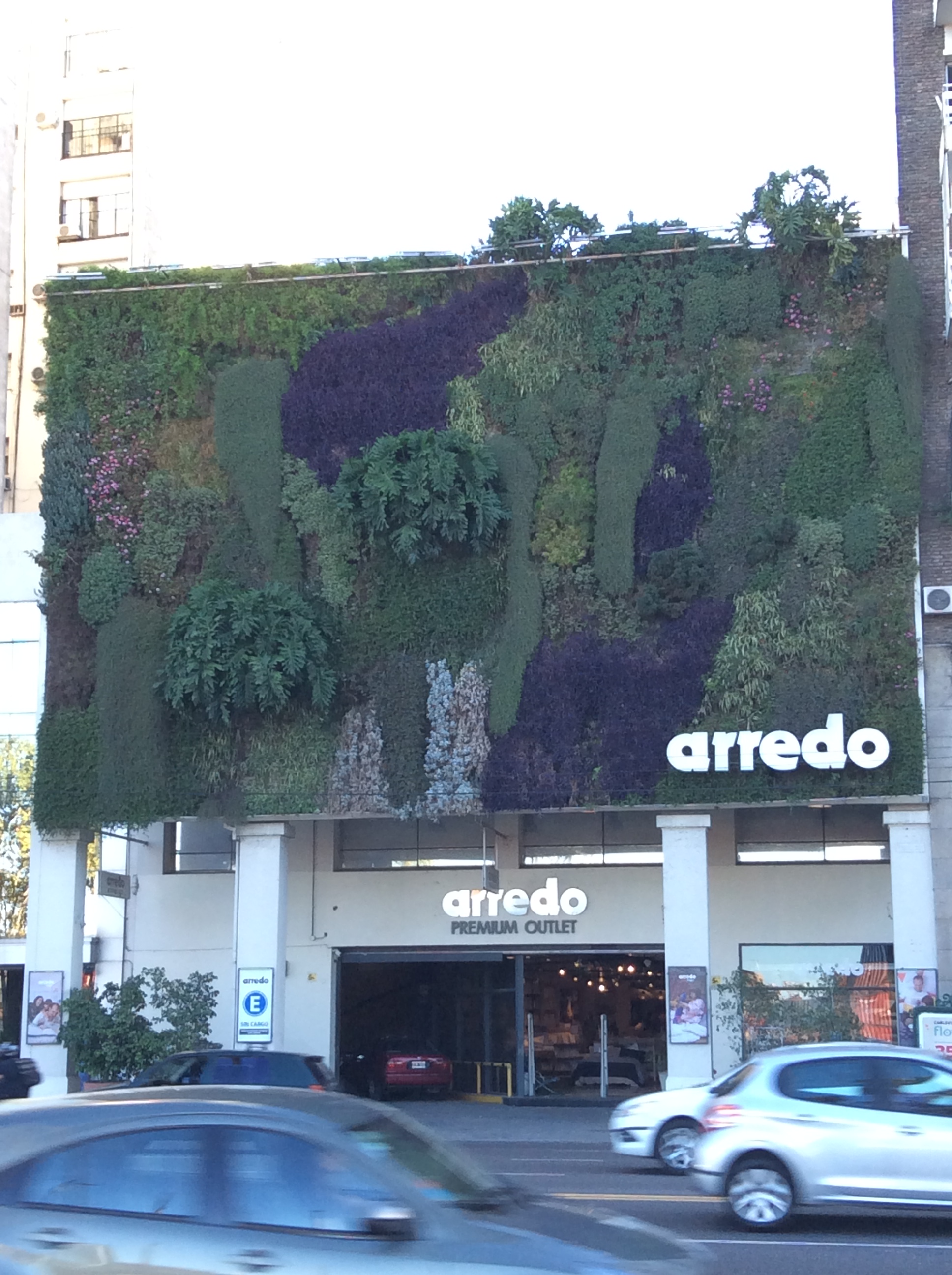
Then farther down the street which is close to the port–we could hear ship sounds, etc.–we saw this living wall.

IMG_3001

Yes, this wall is made of living plants.  I could not help but stop and stare.

IMG_E2972

The building which holds their equivalent of the US Congress.  I continue to wonder how I managed to walk past the Pink House–like US White House–several times and never take a photo.  Perhaps I was distracted by the protesters.  Argentina is used to protests which appear to be legally protected.  In the one we saw one evening, the protestors carried banners of Che Guevara.

IMG_2937

And finally some typical views, this one along a side street.

IMG_2966