As a member of the Story Circle Network, I occasionally write short pieces for their blog, One Woman’s Day.
My Ethiopian Adventure–from Addis to Kombolcha
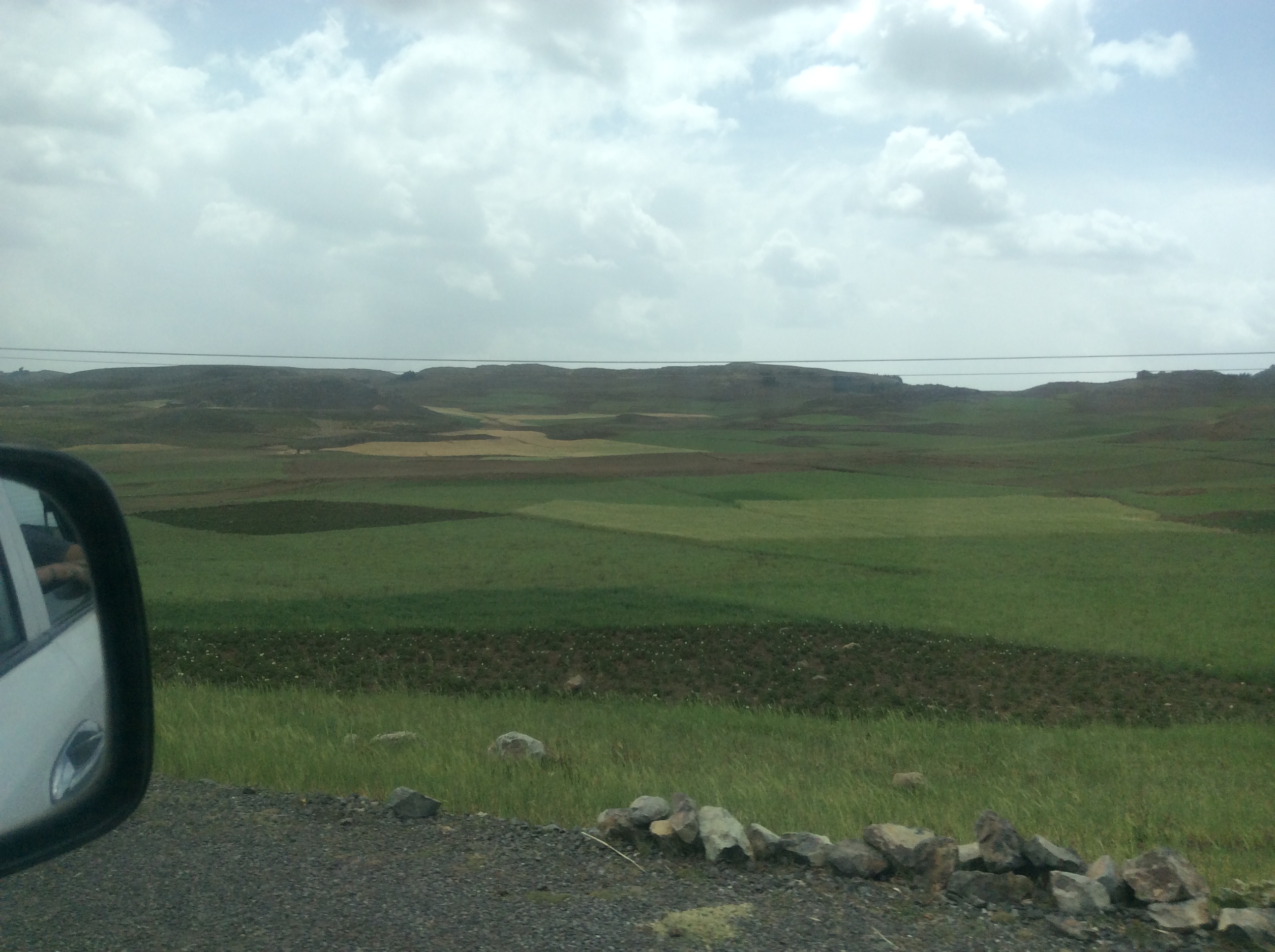
Saying goodbye to Addis at 8 in the morning, we headed northeast and later north toward Kombolcha–spelling differs, depending on whose map you view. The official Ethiopian map spells the town as Kombolch. Addis is high, the second highest capital in the world. We drove northeast all morning across rivers and through green fields.
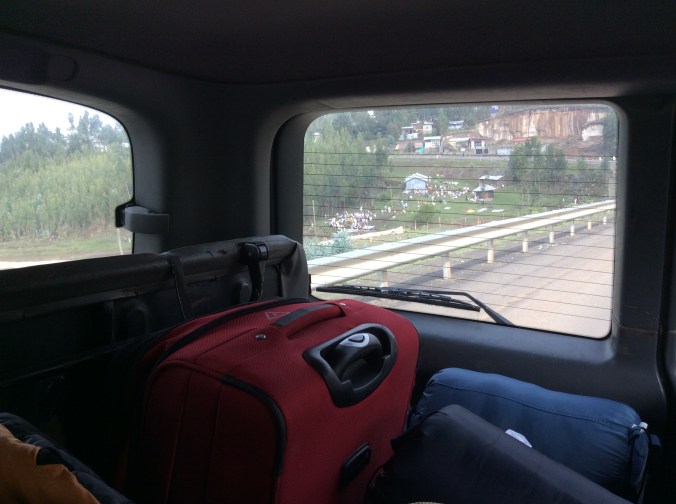
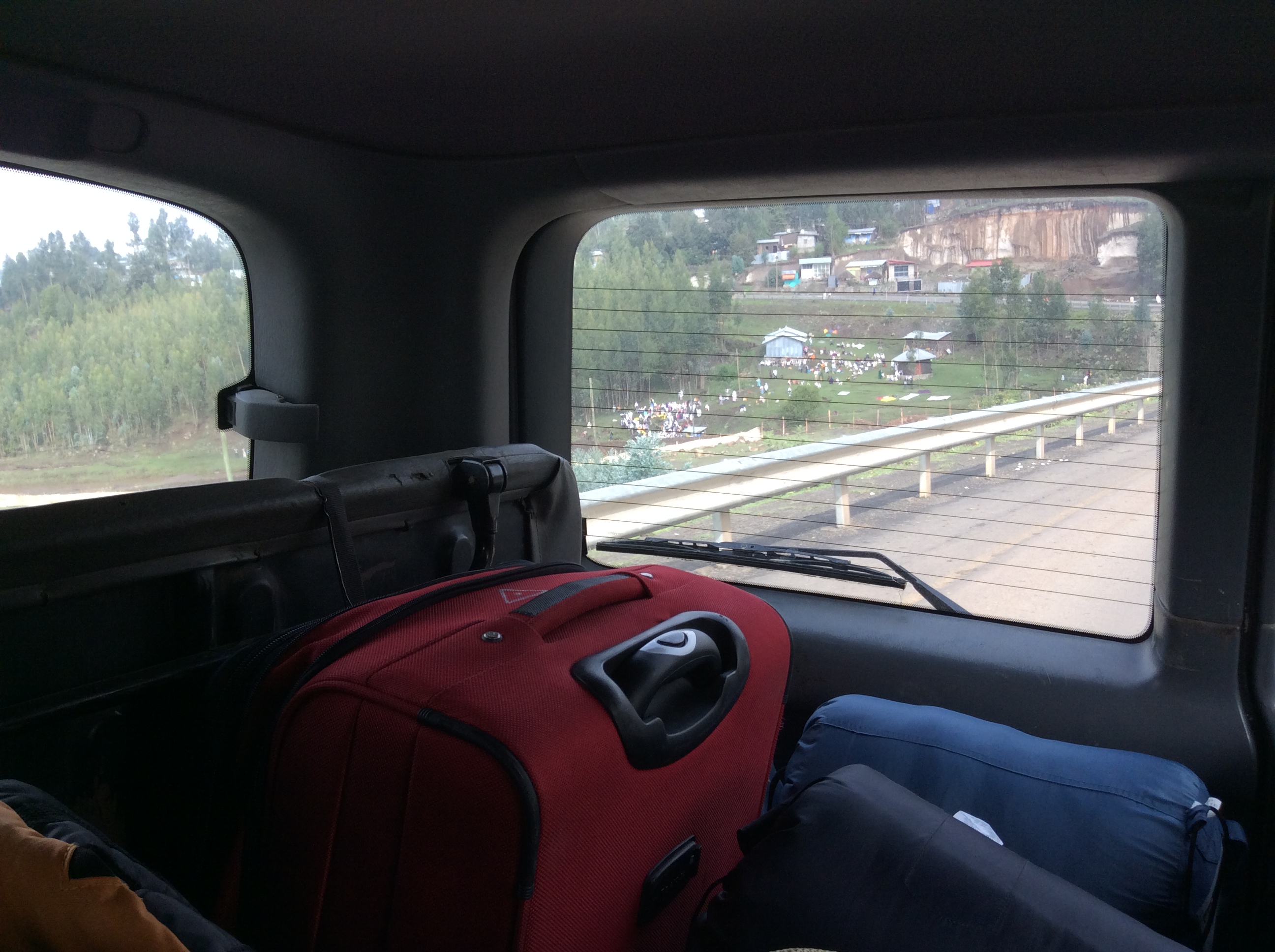
Not far outside Addis we saw this scene, a river with many people near it. Our driver, Alemu explained this river contains holy, healing water and all those people you see through the window are pilgrims coming to be blessed by the resident priest and hopefully healed by the river waters.
Who would know this is Ethiopia if no one told you? Not what I expected at all honestly.
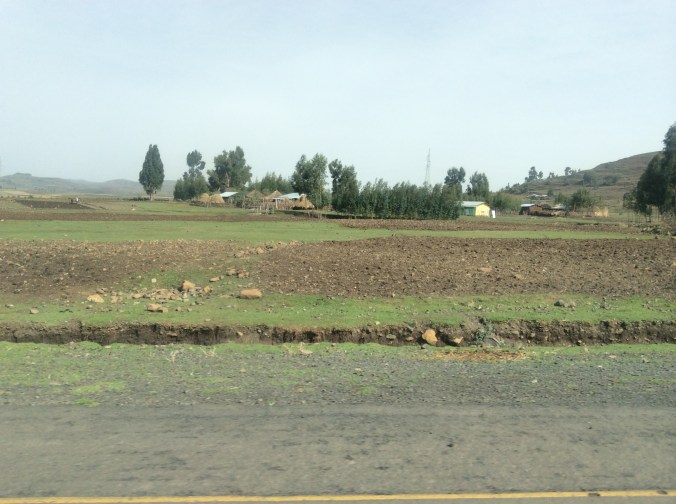
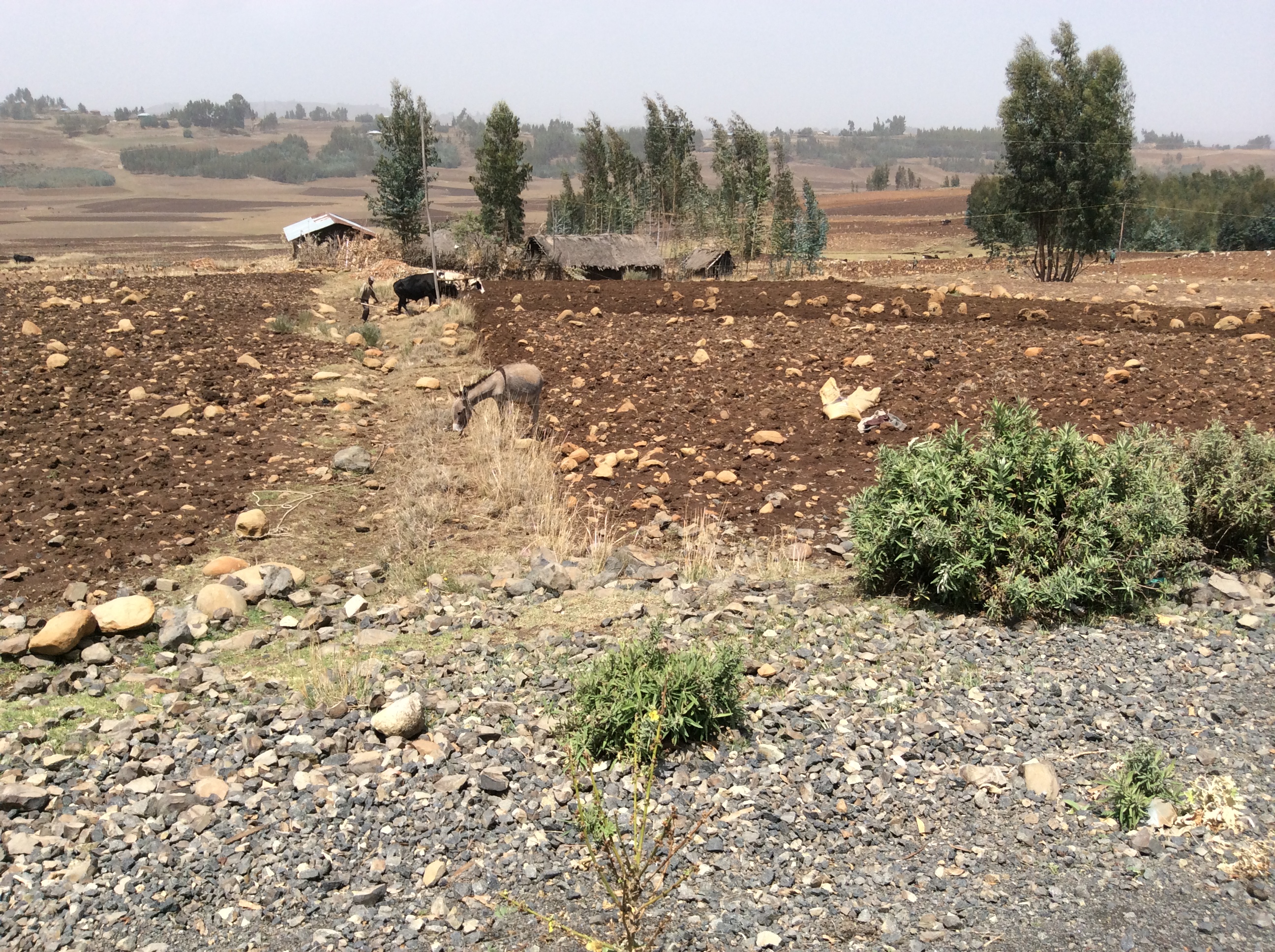
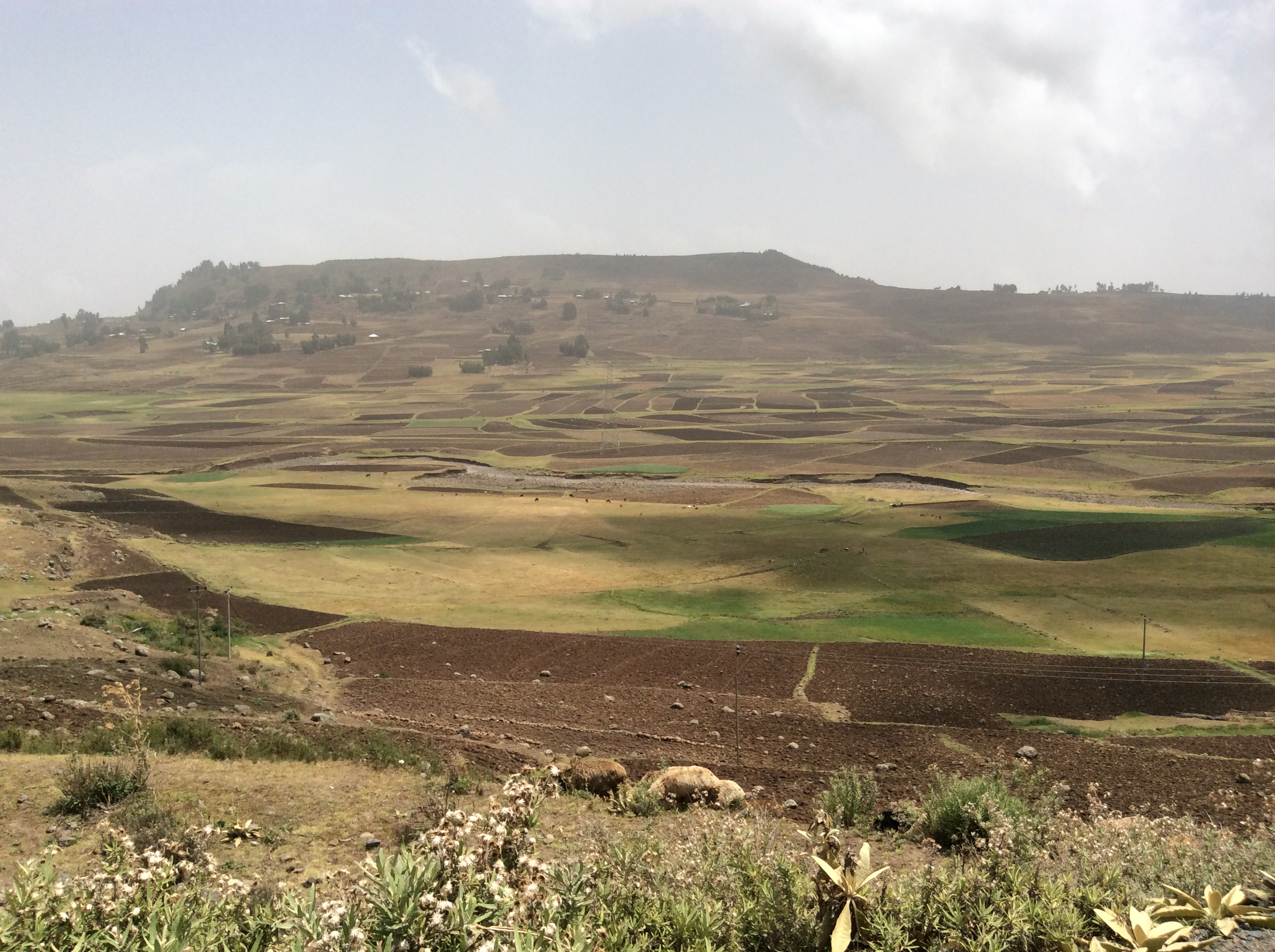
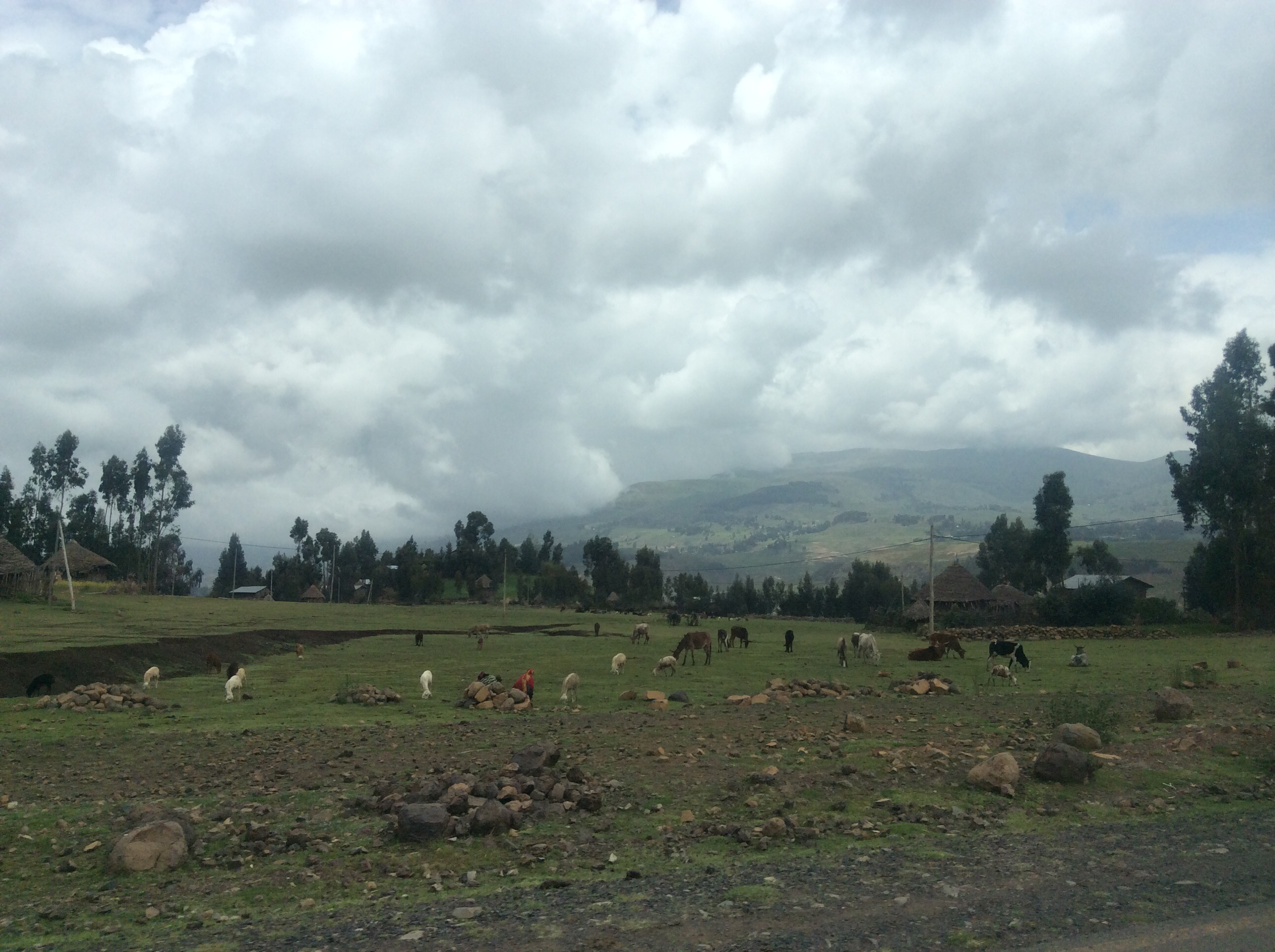
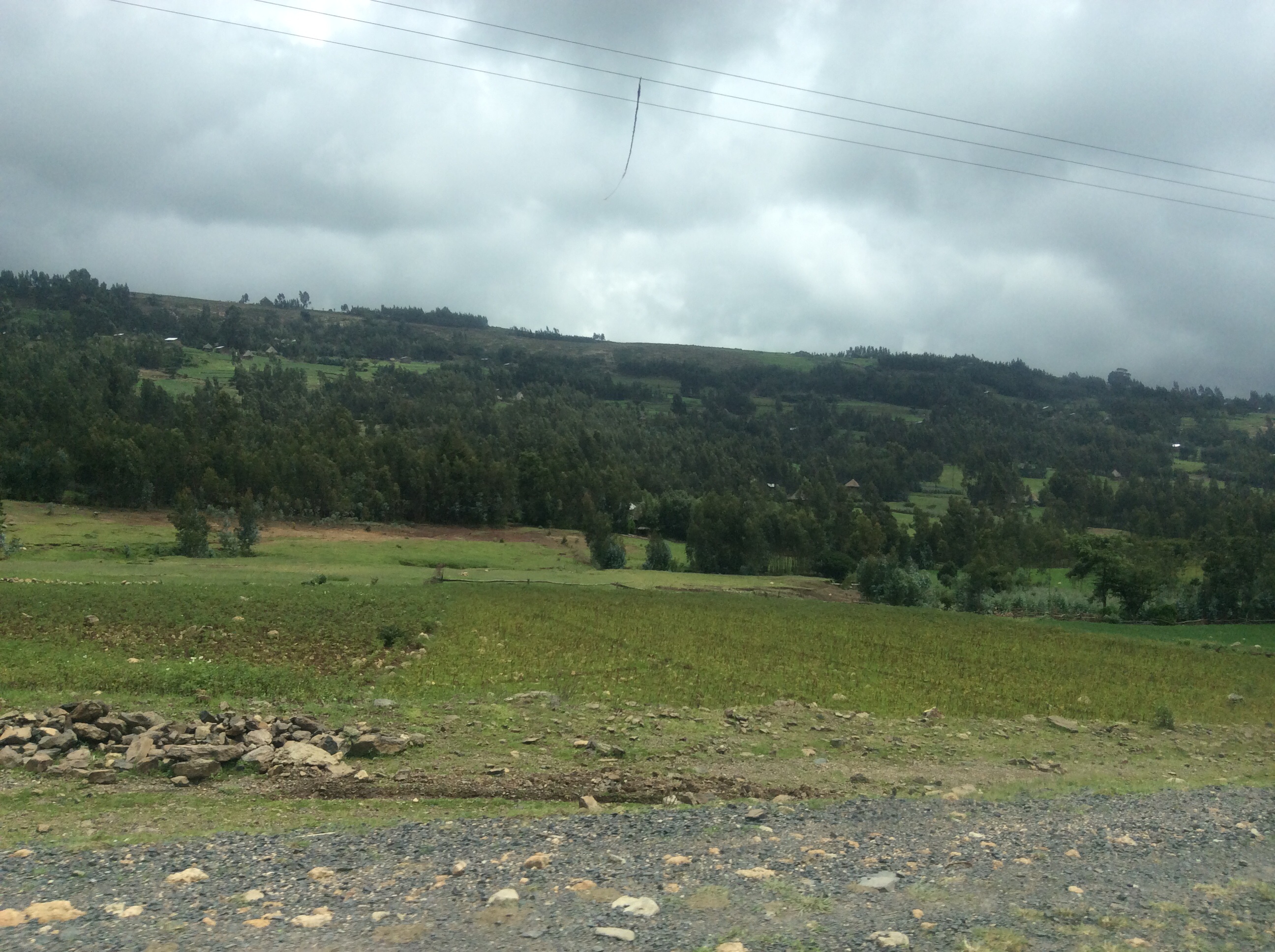
Most of the farmland is very rocky. Farmers gather rocks, in some places make fences out of them or just pile them up. Even with these efforts fields remain full of rocks.
We drove for hours through this type of farmland.
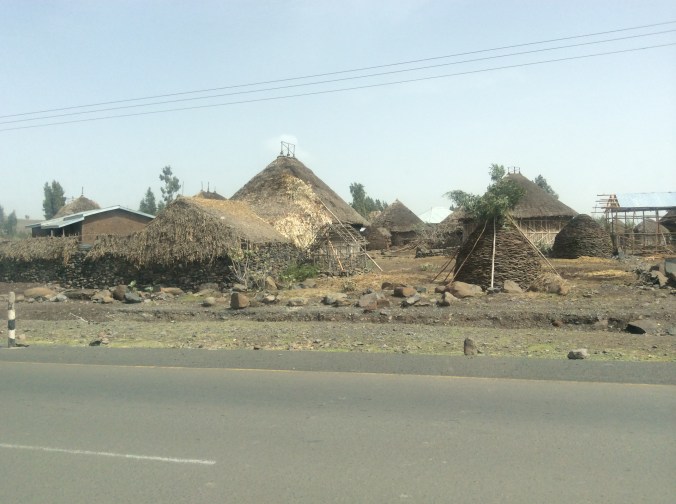
This is a typical country village which appeared off and on continuously along the highway. Traditional buildings are usually round with thatched roofs. More and more people have begun to use metal roofs which forces the building shape to rectangular rather than round. We heard a story about a thatched roof house that caught on fire. Nothing but the thatch burned because underneath the thatch was a meter of mud.
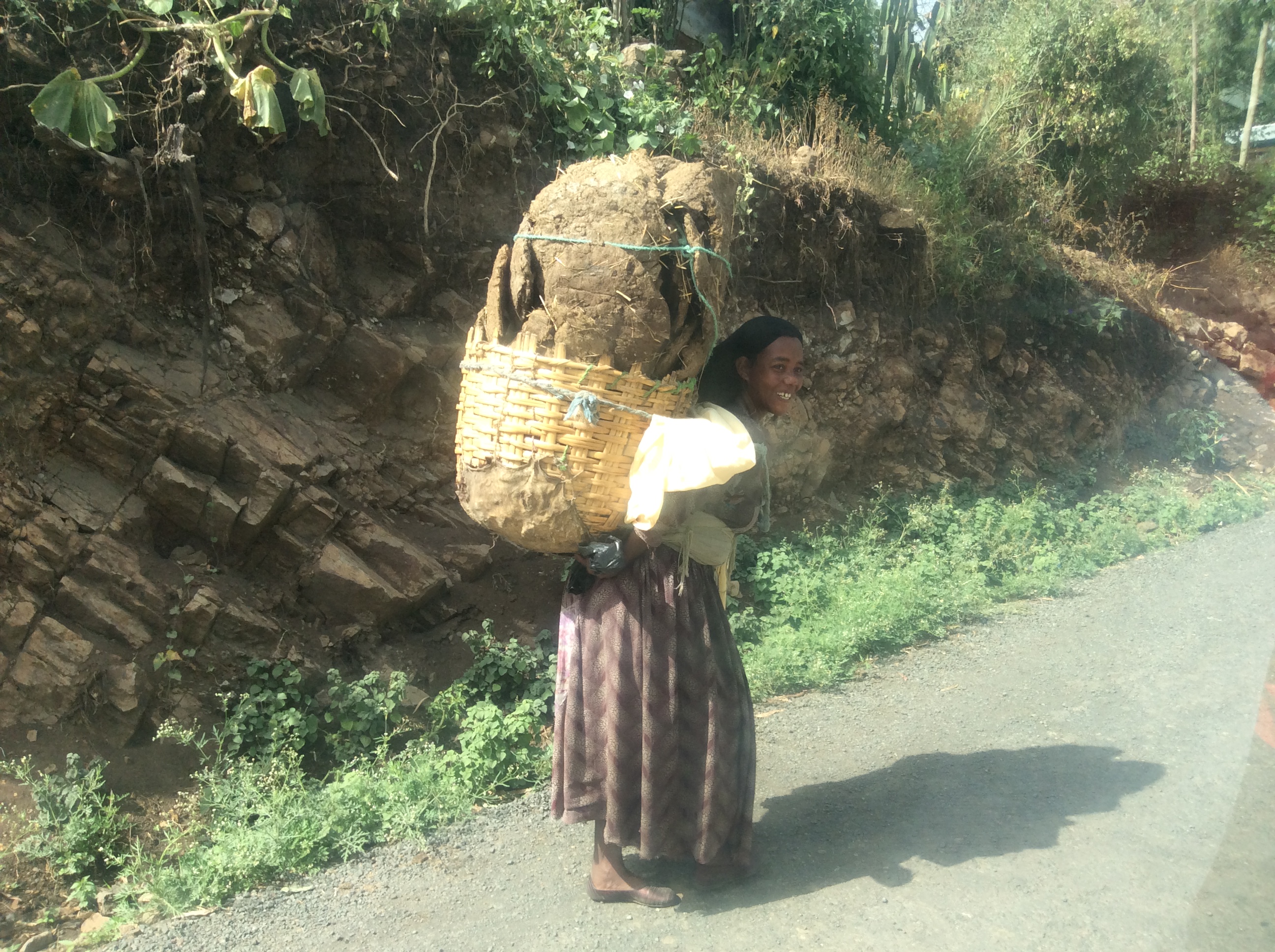
Most Ethiopian farming is done the old way: either horses or cattle pull the plow with a man guiding it usually through a lot of rocks. I commented about seeing no tractors so then every time we saw one everyone shouted, “Juliana, there’s a tractor.” I think I saw only five of them in ten days and only one was actually working in a field. It became obvious rather quickly how totally impractical a tractor and its equipment would be in much of the farmland: too many rocks and as you will soon see, too steep. The tractor would fall over.
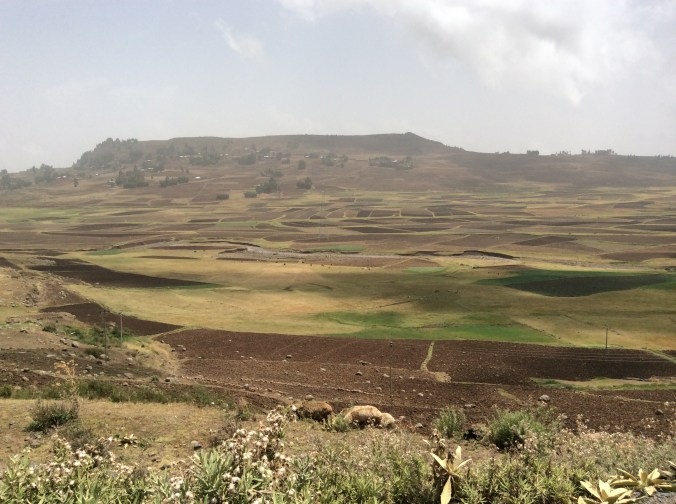
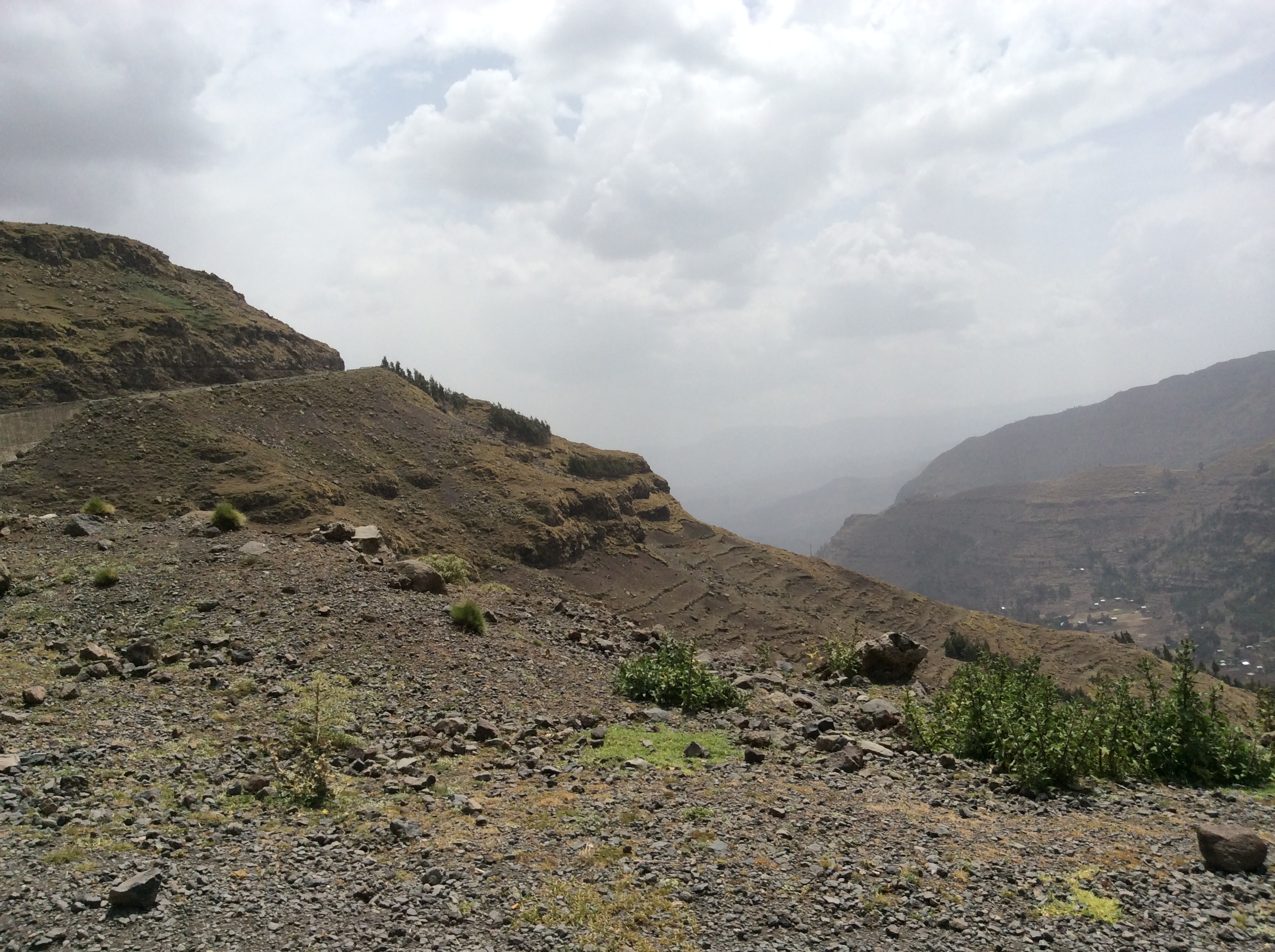
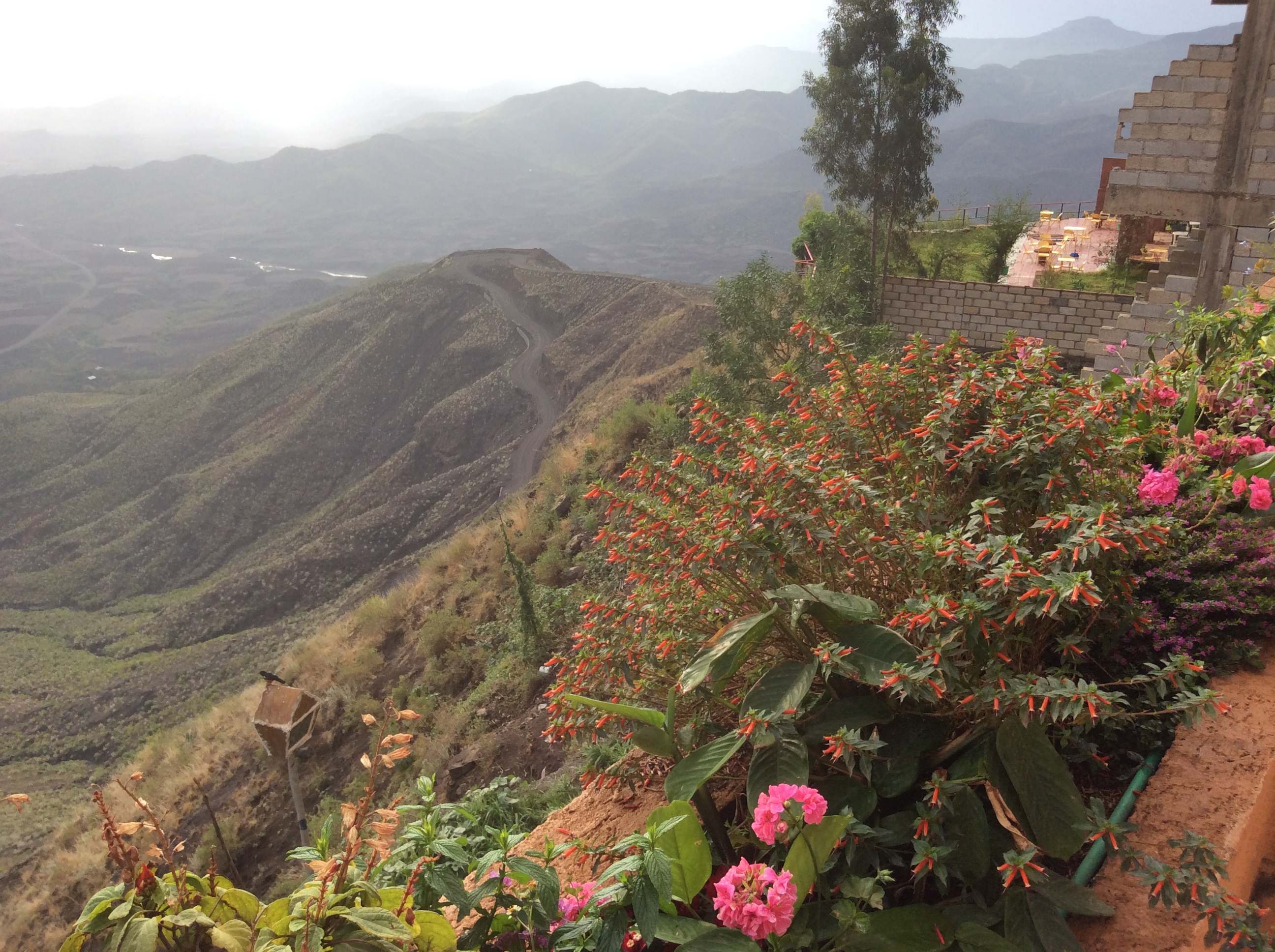
Eventually we started climbing higher and higher. To the left was one of Ethiopia’s high peaks near or over 4000 meters–13 to 14 thousand feet.
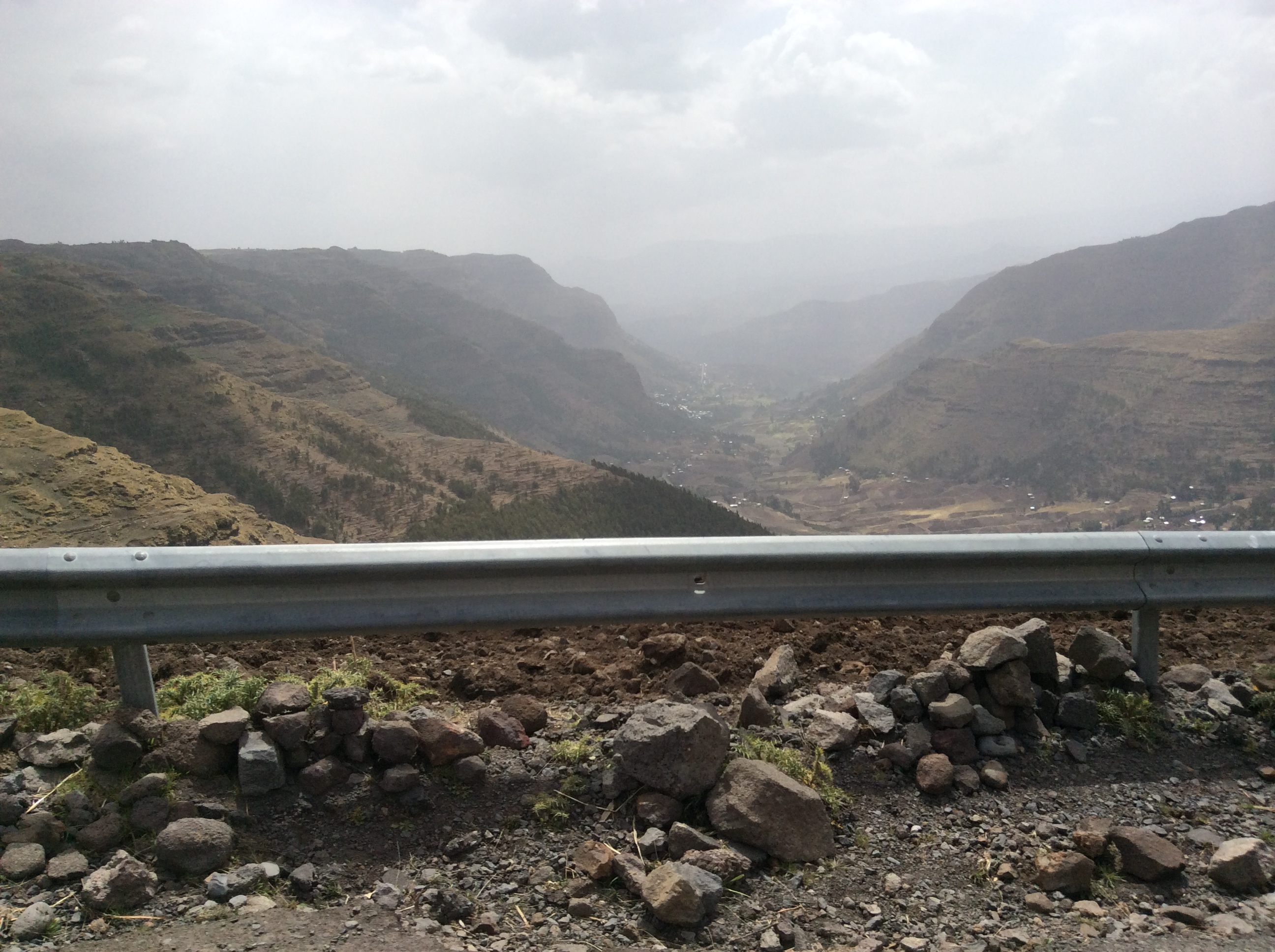
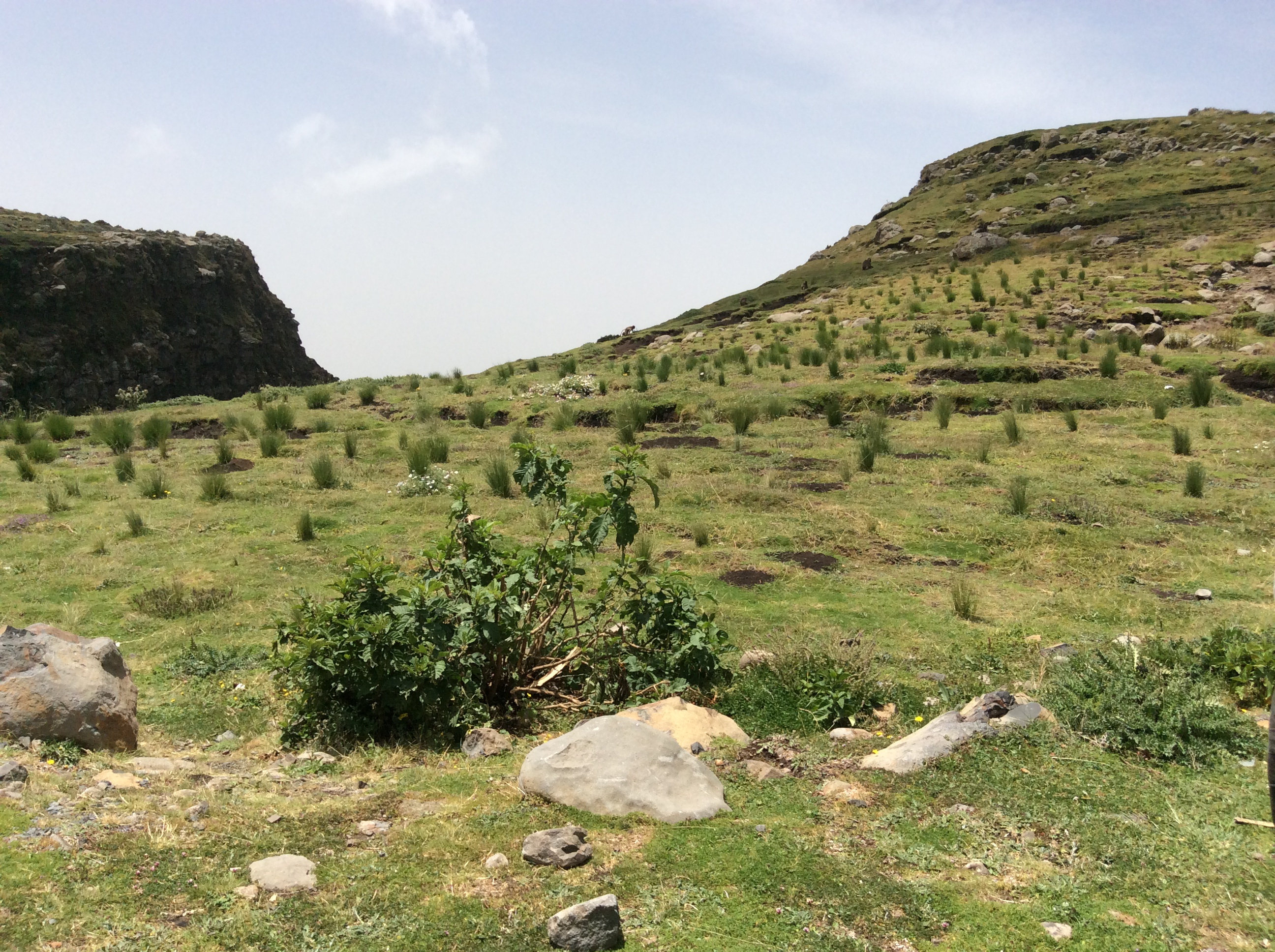
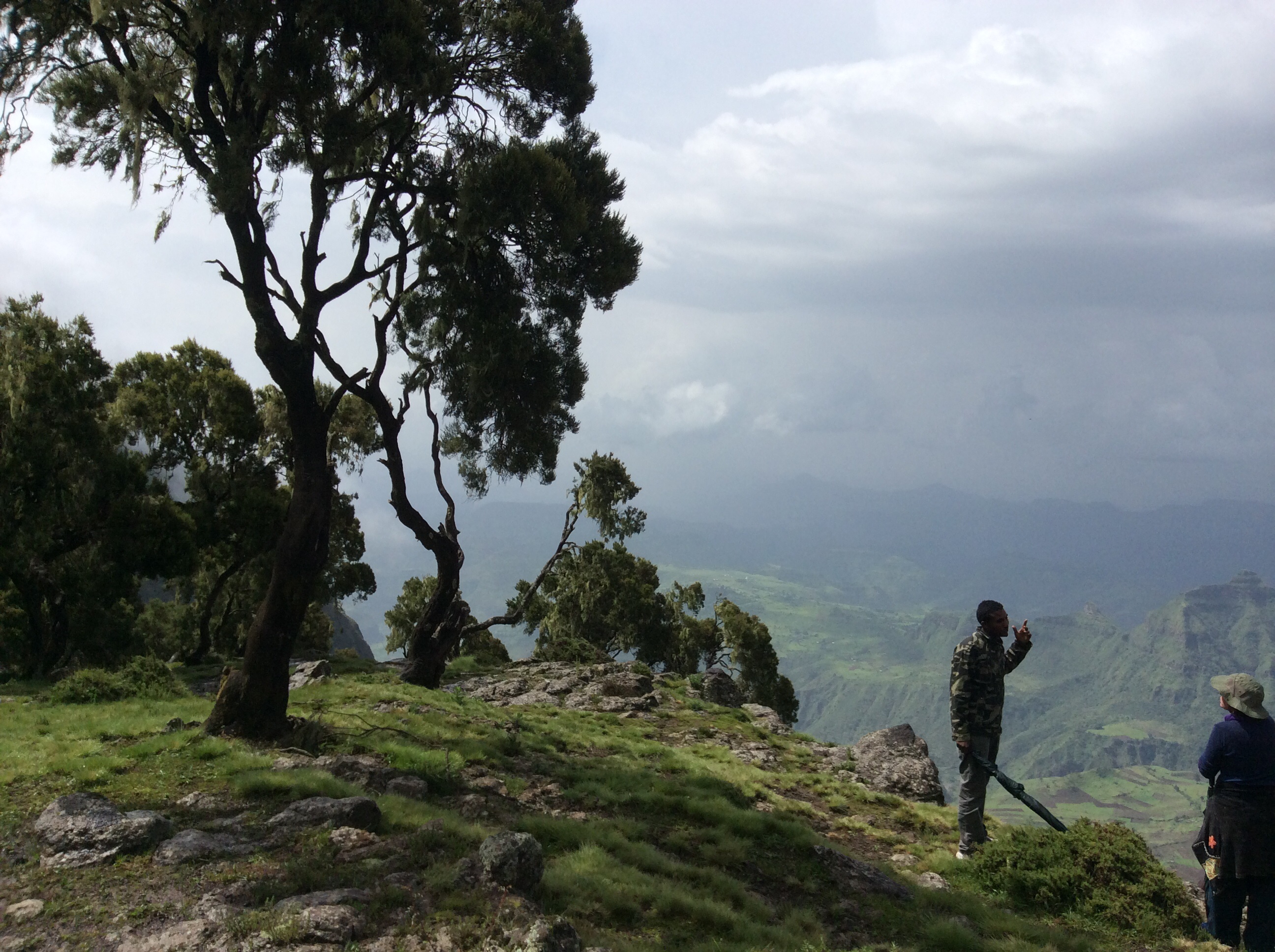
And then, there it was, Menelik’s Window. This was the first area we saw with numerous gelada baboons. However, these ran away unlike the ones later in Simien National Park.
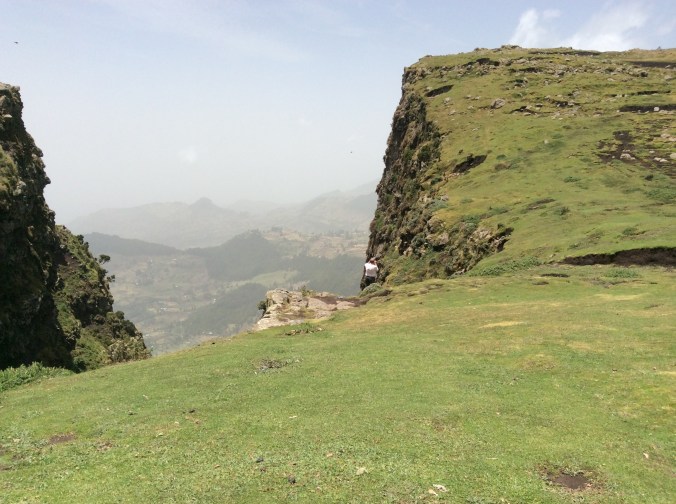
That’s Dino down on the edge. At this point in the trip, I was still quite horrified by all the steep cliffs and stayed way back. He was trying to get a good photo of the baboons. Menelik II, the last Ethiopia leader to be able to claim himself as a direct male descendant of King Solomon, found this place special, a view into the real Ethiopia across miles of mountains. He is known for defeating the Italian invaders, expanding the kingdom, and especially for modernizing Ethiopia.
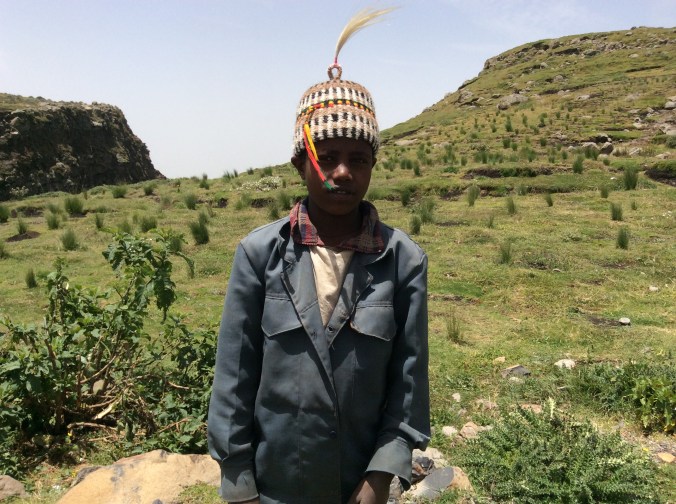
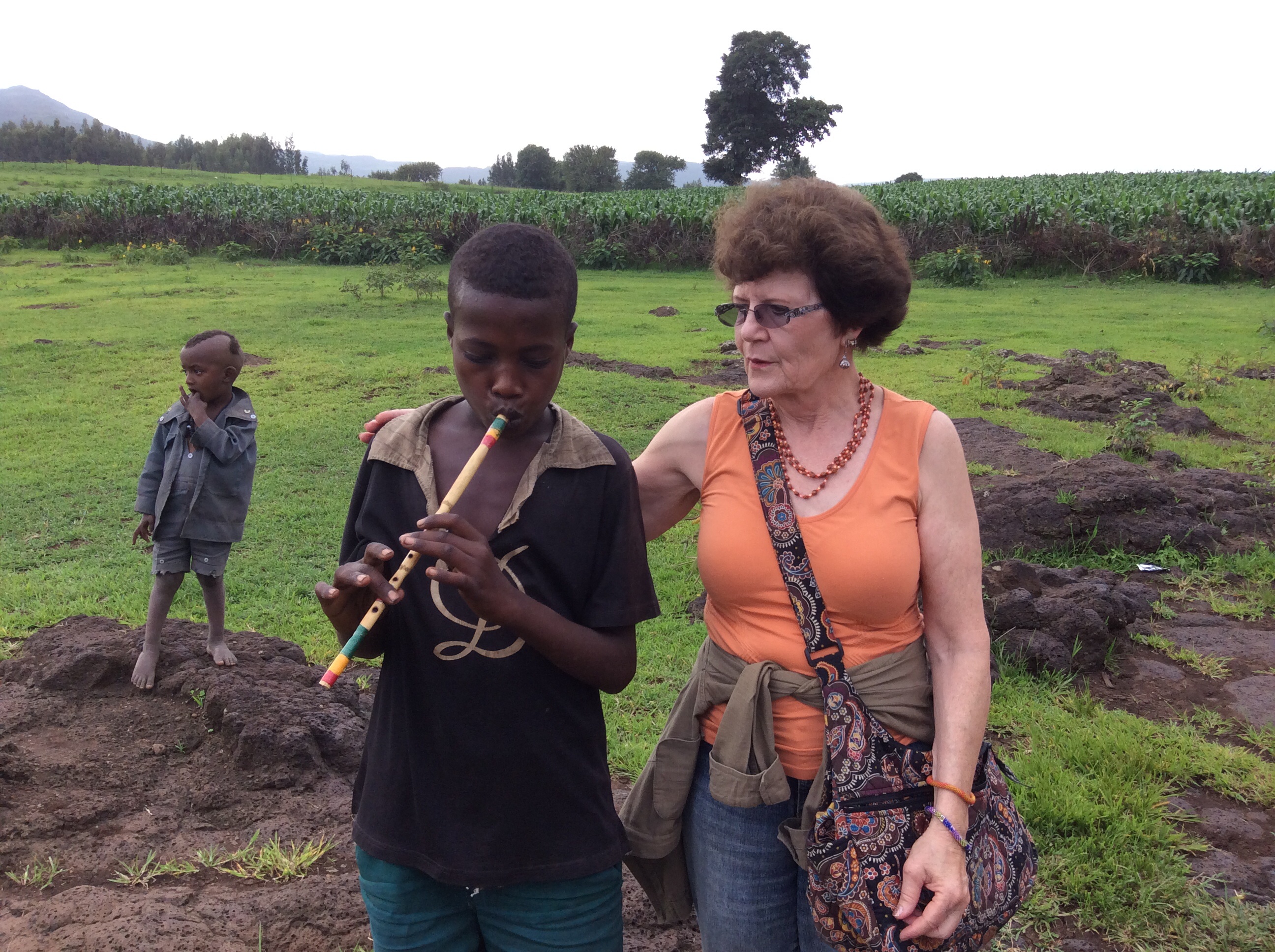
My grandson now owns this hat. This boy and his friends spend their days chasing the baboons away from the tufts of grass, which their families use to make the thatched roofs, and making hats for sale.
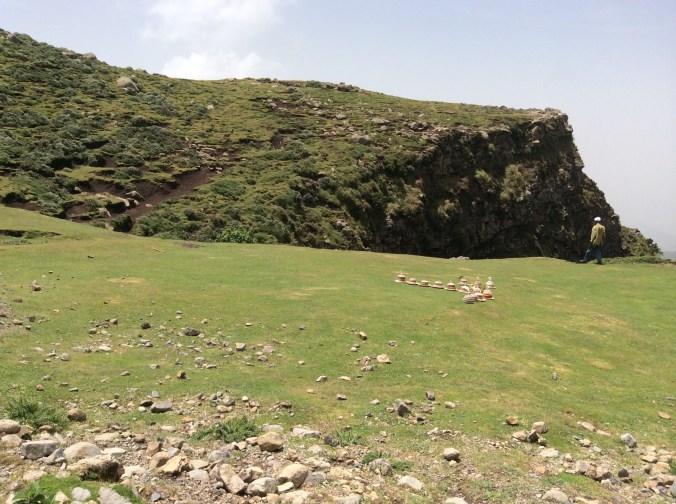
You can see the selection of different styles of hats on display on the grass. On the mountainside in the back lots of herbs grew, including thyme. The boys also sold packets of herbs they had gathered and dried.
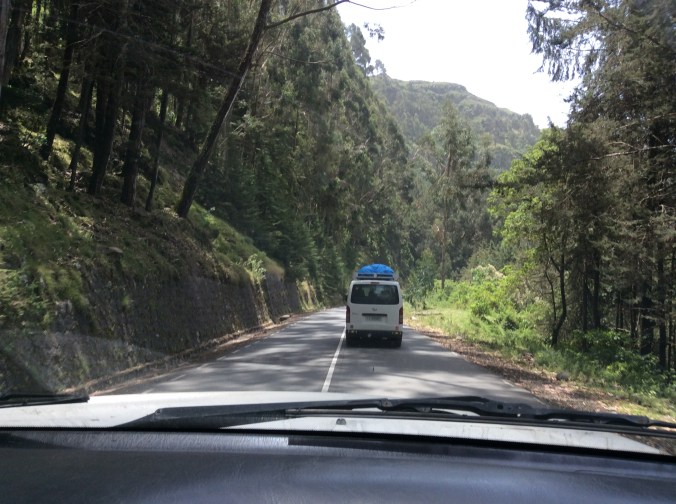
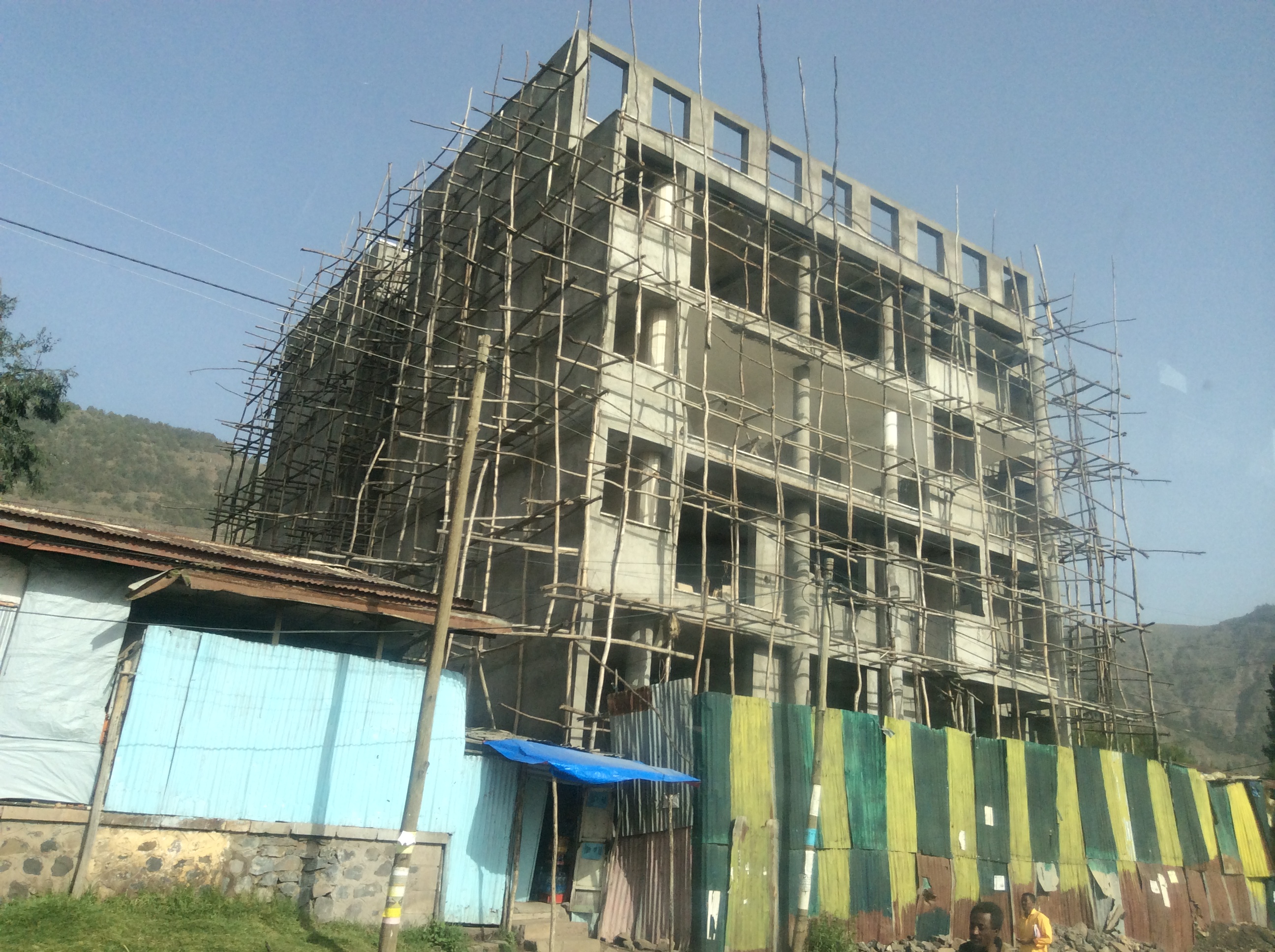
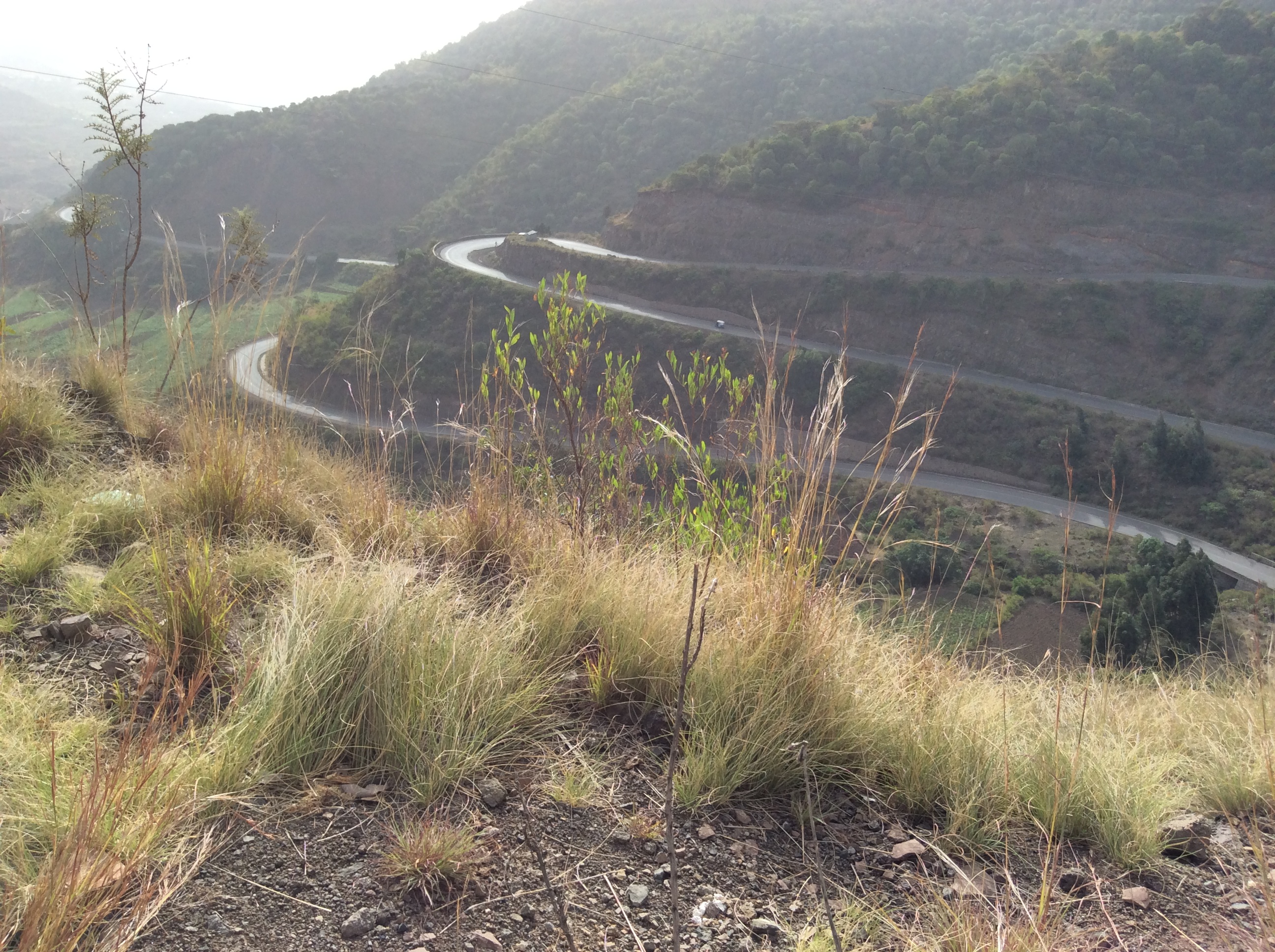
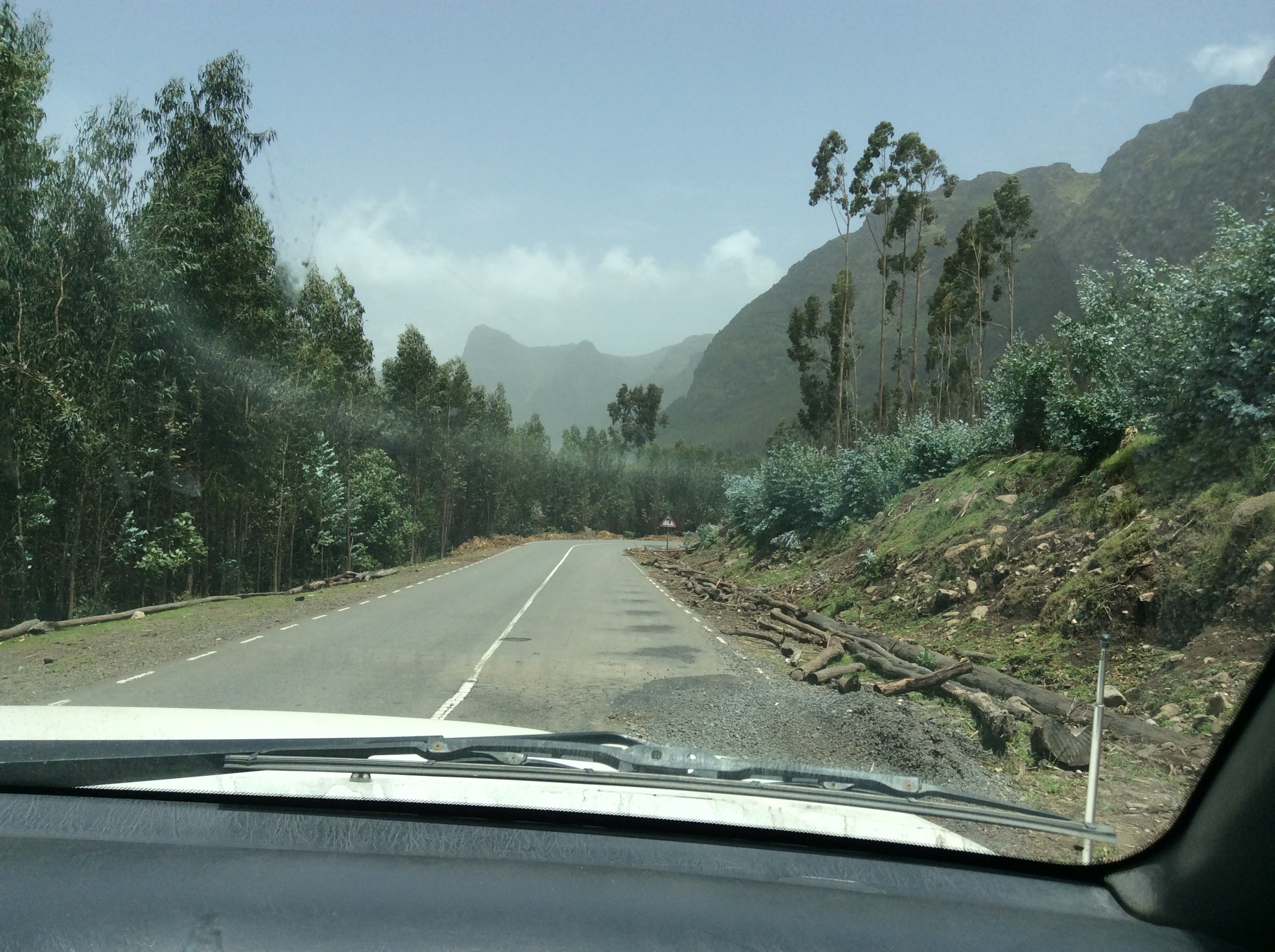
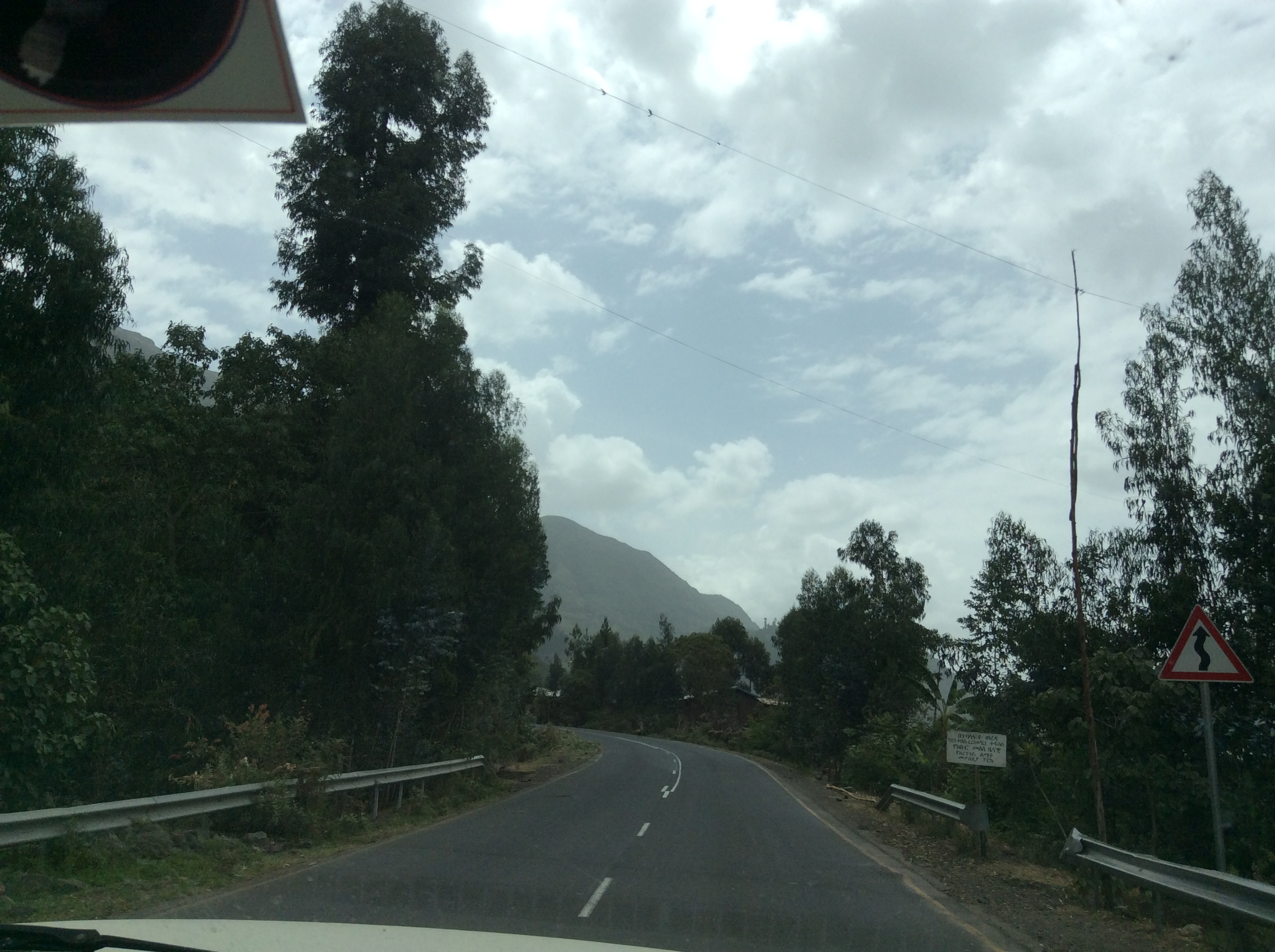
We dropped down on a winding mountain road through eucalyptus forests. Eucalyptus is not native to Ethiopia, but grows everywhere there. It is used as a basic material for building their houses, for scaffolding to build tall city buildings, for just about everything. Several different species grew along the road.
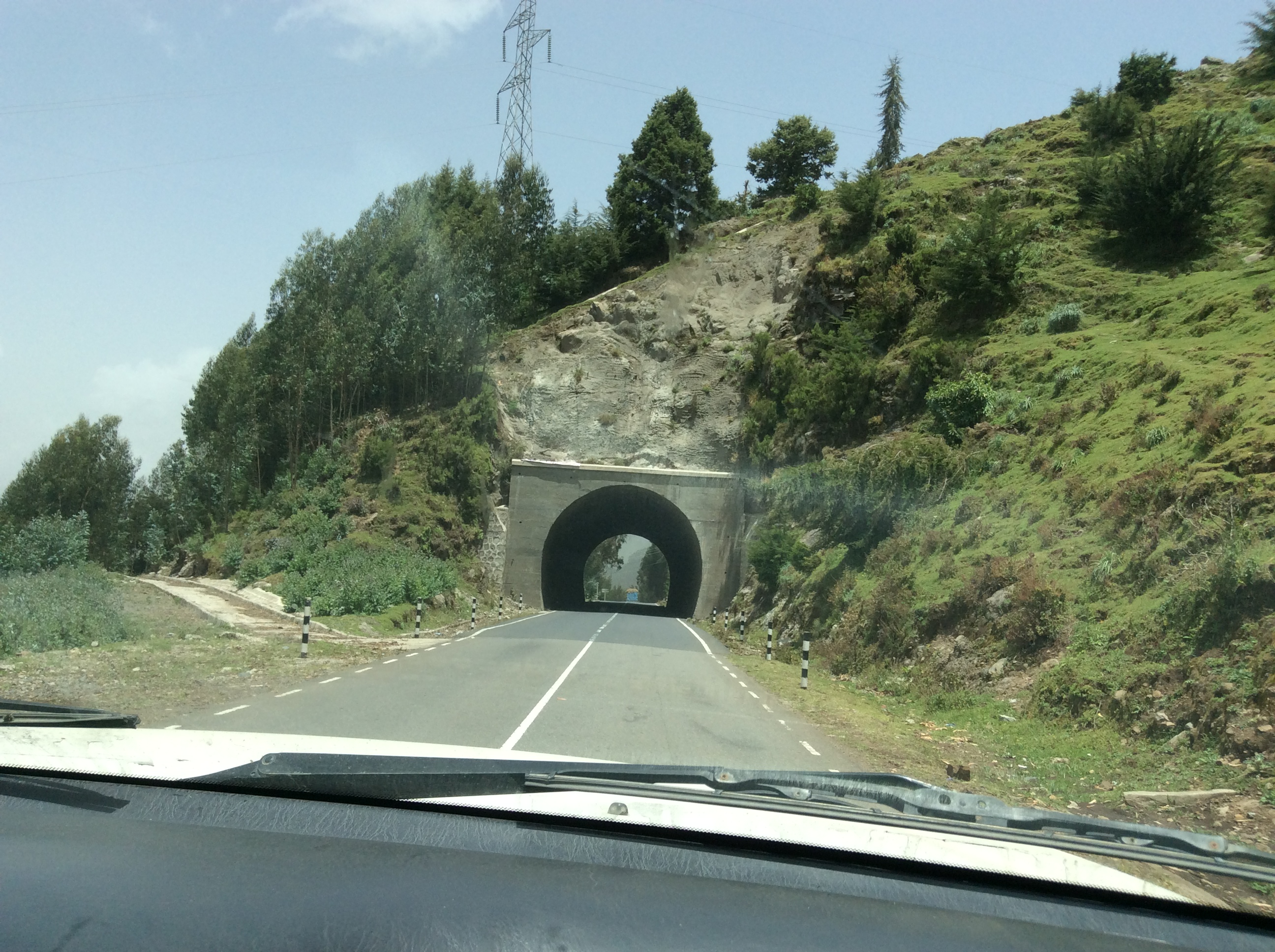
Ethiopia’s main highways are excellent. Many were built years ago by the Italians, more recent ones by the Chinese. Ethiopians make jokes about how long the Chinese roads might last.
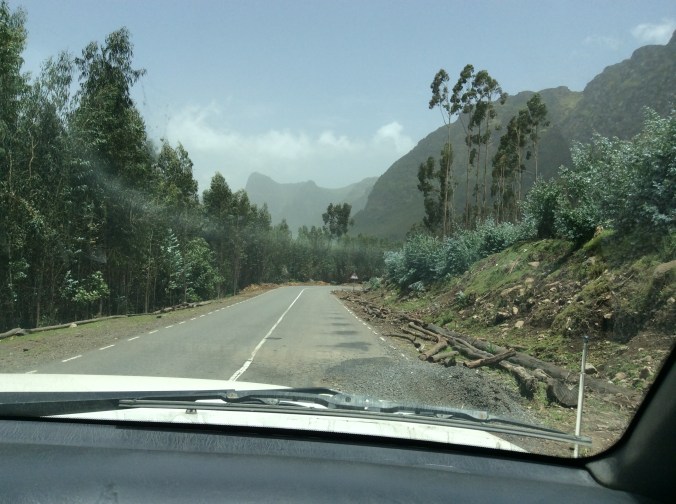
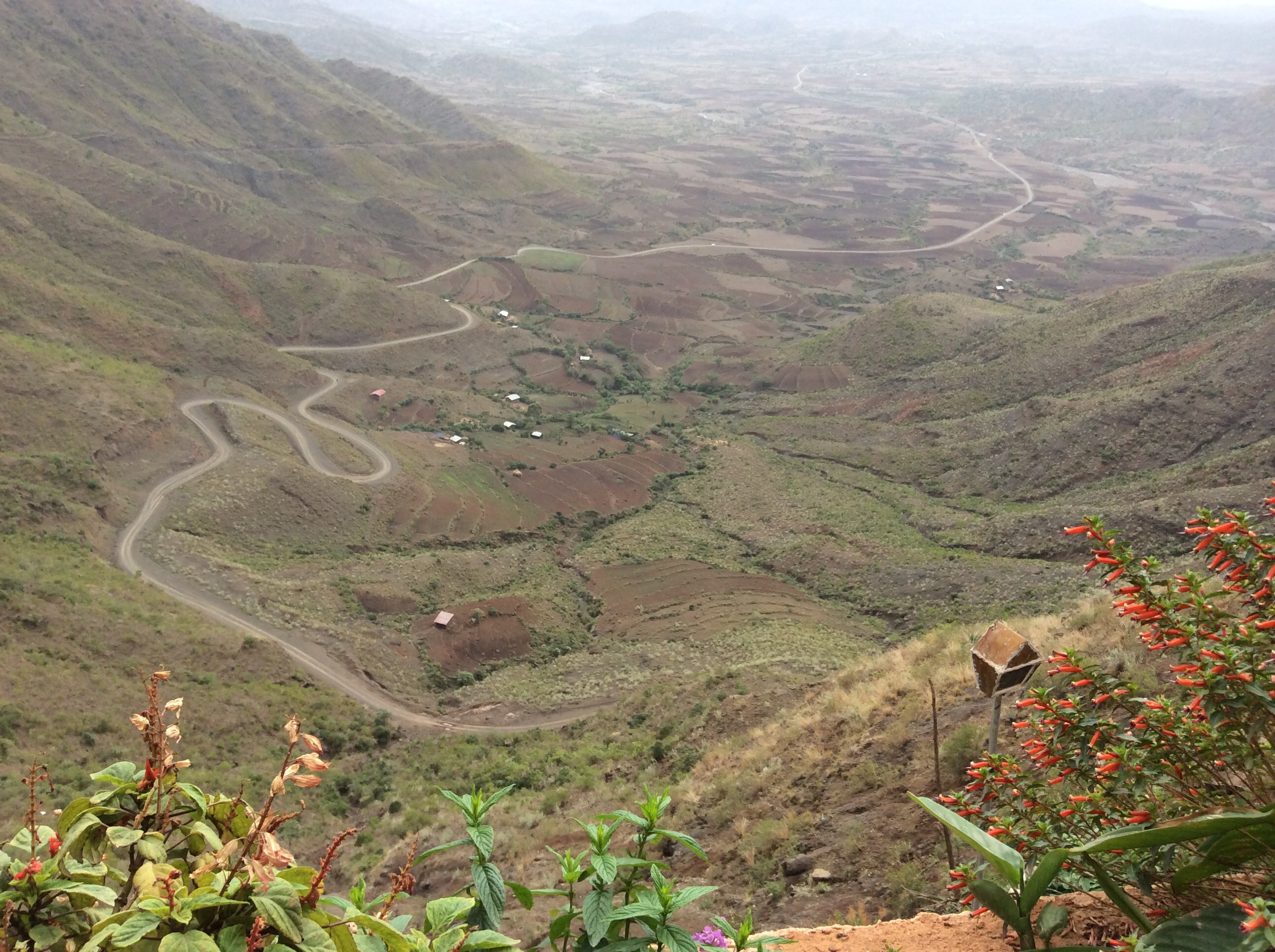
Eventually, we dropped down out of the mountains into an area that was much drier.
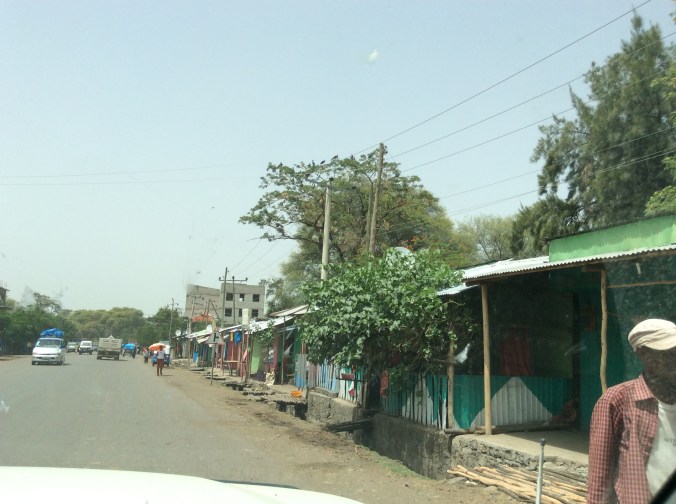
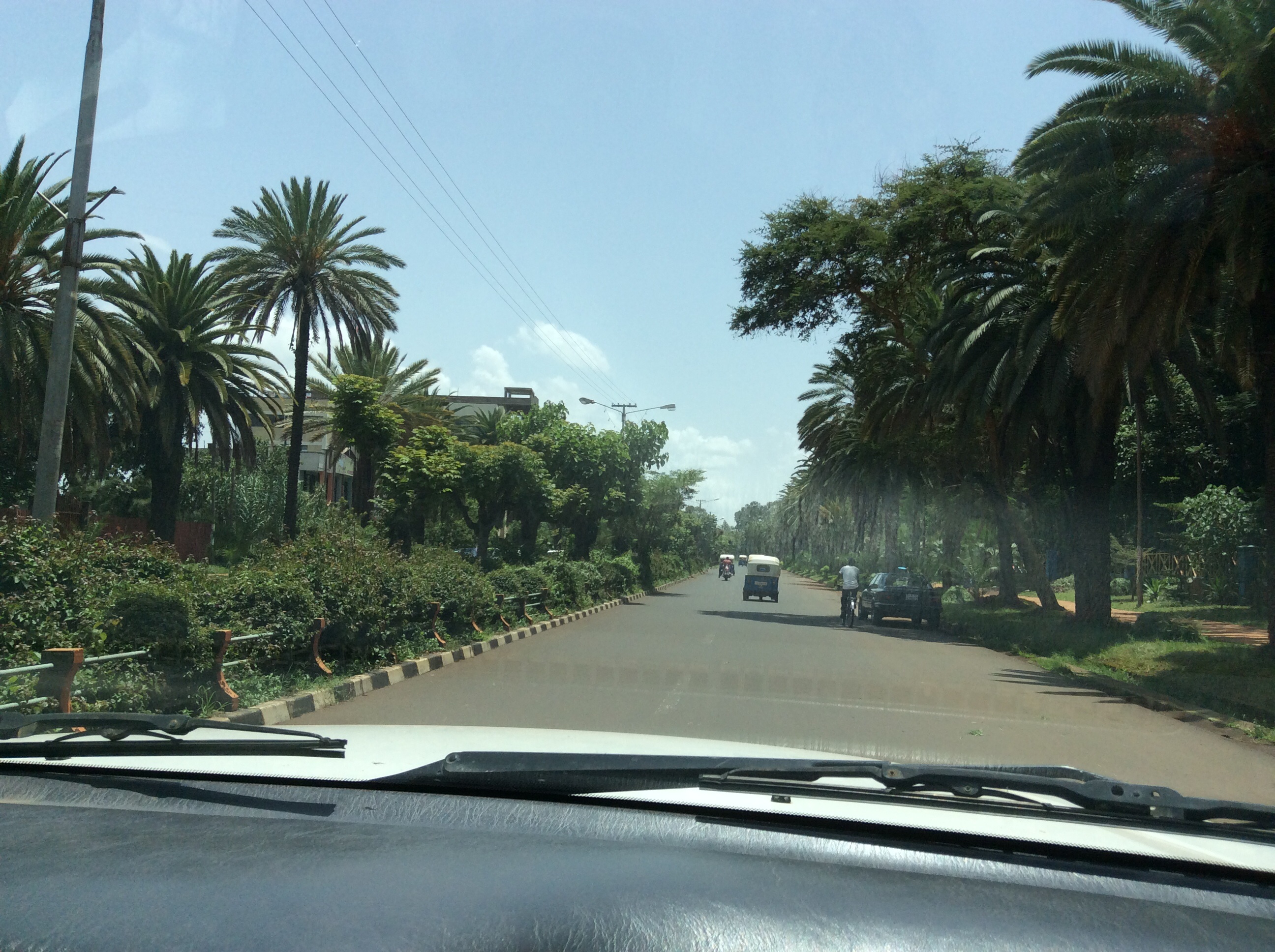
A typical town with all sorts of shops right along the road. When driving in Ethiopia, dodging people, cattle, camels, horses, burros, and goats is the norm. Everything it seems likes these good roads.
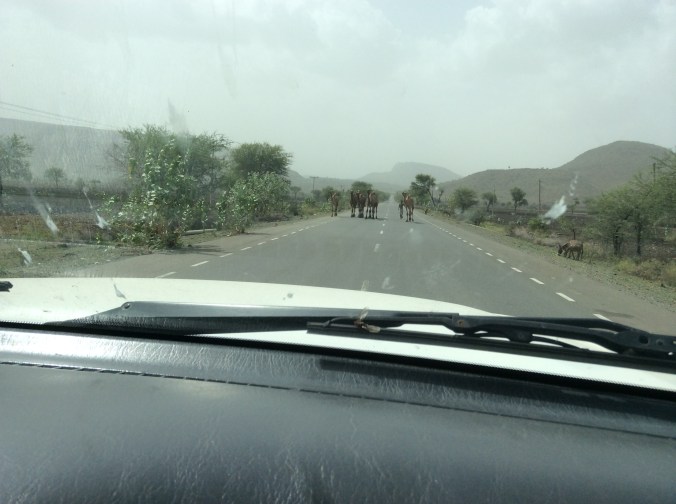
A boy driving camels down the highway. Loose animals, like the burro on the right, roam seemingly unattended. I saw few fences.
In the small towns in this semi arid area, we saw several totally veiled women, faces covered totally except for their eyes. Alemu informed us that this was a new thing, not seen until the last few years. He seemed to think it had become fashionable to copy Saudi women.
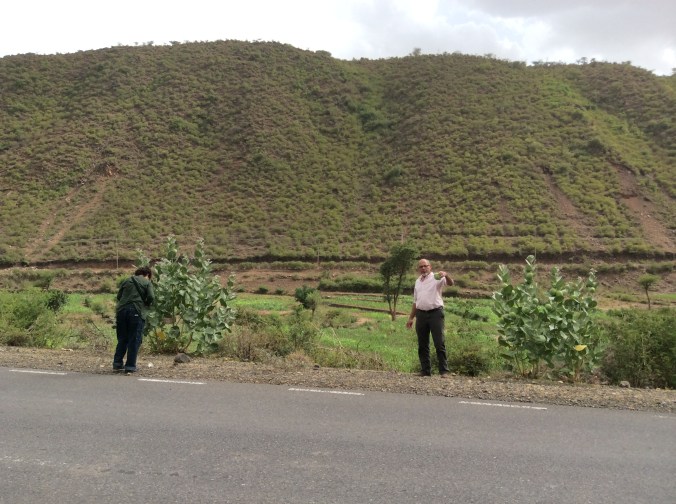
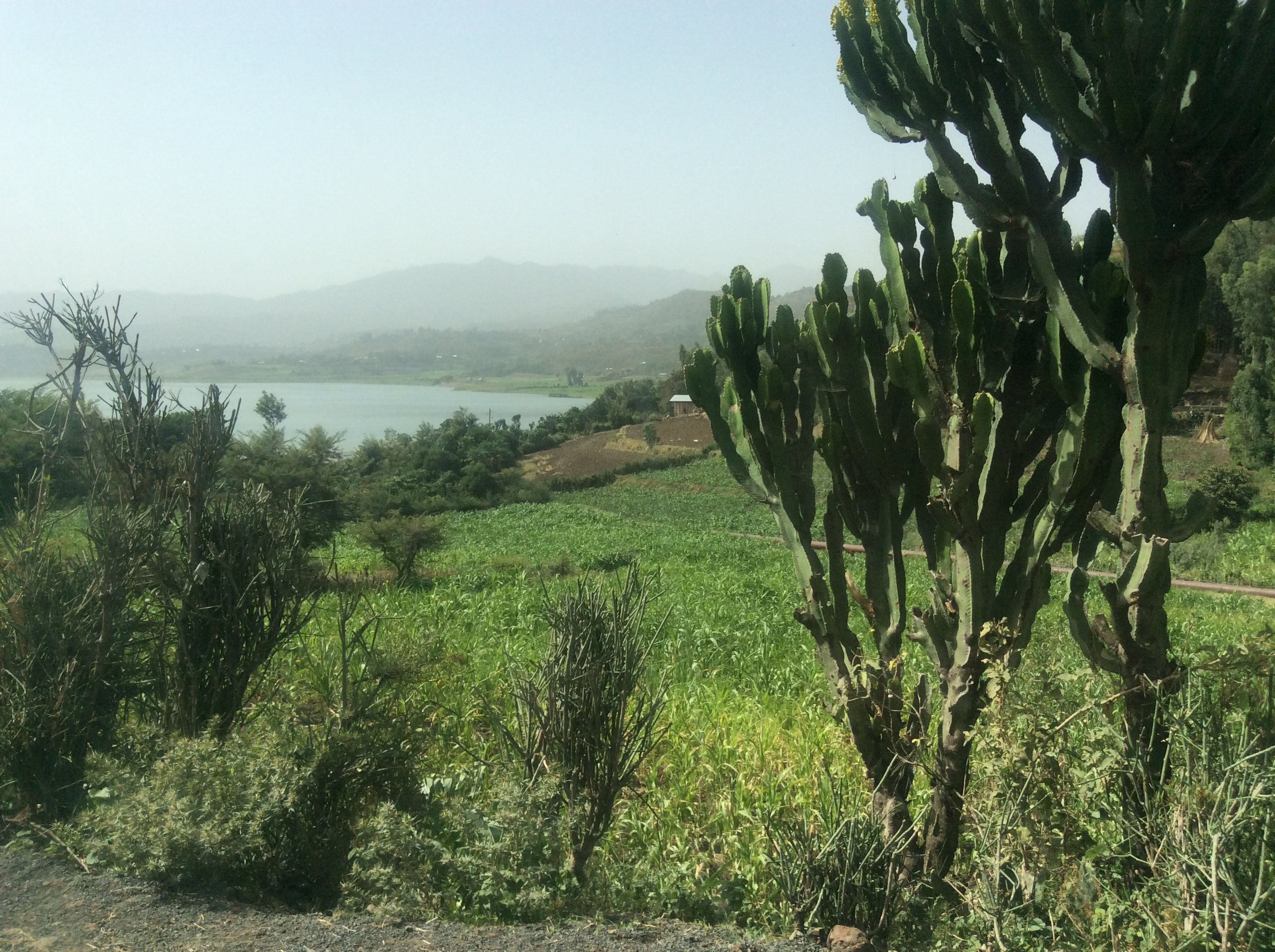
We stopped to look at certain plants beside the road.
Dino recalled playing with these pretty green balls as a child with this forewarning, “Do not eat them, do not touch your eyes or you will go blind.” They are called the Apples of Sodom.
At this juncture near the beginning of this adventure, I had not yet realized how everything in Ethiopia possesses symbolic meaning.
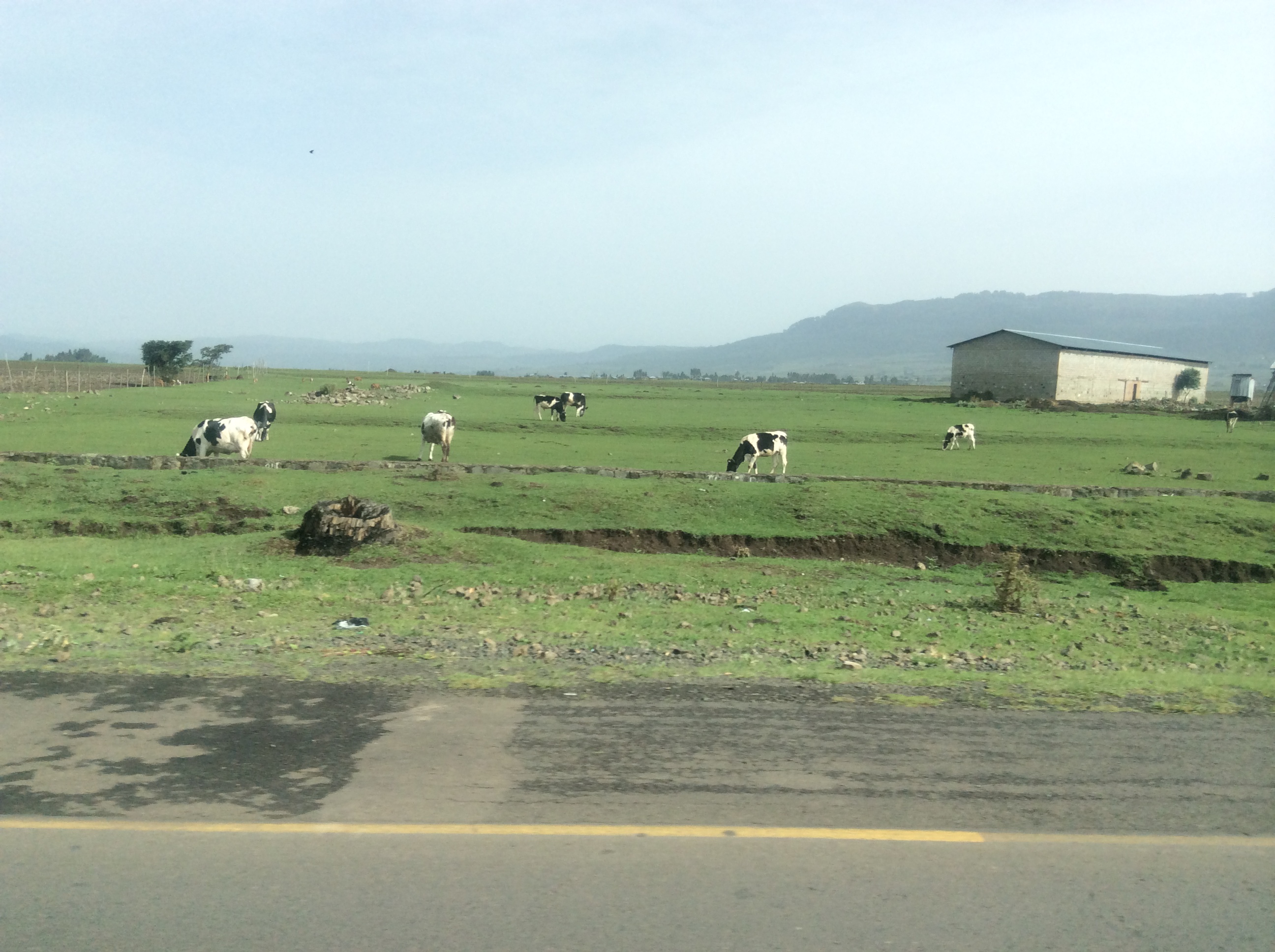
We drove along this immense, lush valley for miles. Alemu said this huge herd of cattle belonged to a semi nomadic group who brought their cattle here during the rainy season to graze and fatten. A bit farther down the road the land belonged to one of the richest men in Ethiopia, indeed the world, Al Amoudi. It was the only place where I saw a tractor actually used in a field.
Arriving in Kombolcha, we saw this new college in the process of creation. This became a common sight–new buildings, new schools, construction everywhere.
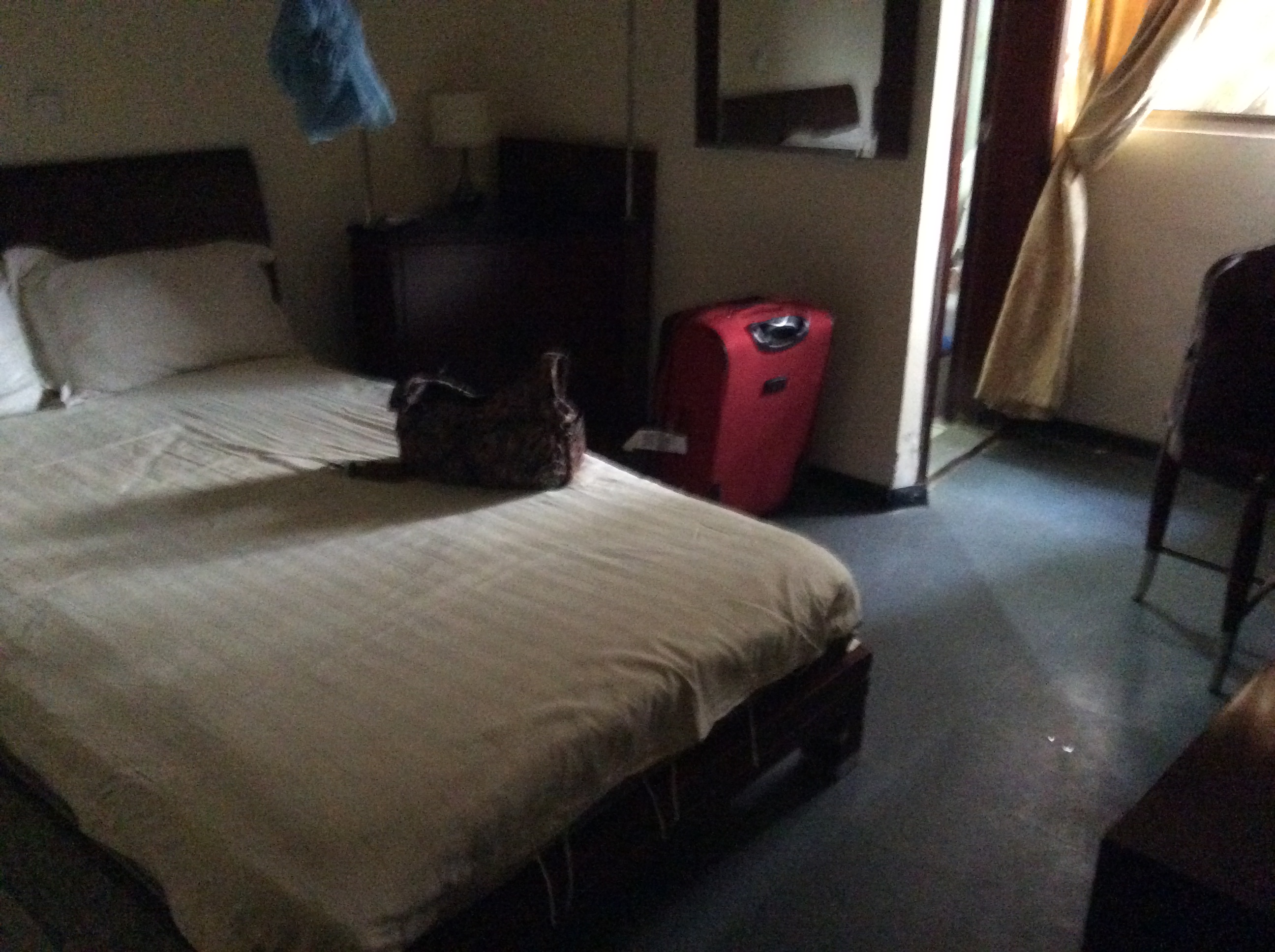
My first hotel room in Ethiopia at the Sunny Side Hotel in Kombolcha complete with mosquito netting–the blue blob above the bed. At least it had a shower and toilet. Many places use the style of accommodations one finds in a lot of Asia. Forget toilets as you know them–just a tiled area with a hole in the ground and the ever present water with which to wash. We carried our own toilet paper just in case. However, many places had both so customers could choose.
My Ethiopian Adventure–the Beginning
After leaving the US on July 2, flying 14 hours to Dubai, spending a day there, I finally made it to Addis Ababa (also spelled Abeba) on the 4th. I remained in Ethiopia until this past Monday when I left Addis late in the afternoon. Blog posting from Ethiopia was limited because wifi is available only in certain areas and places and there is no 2,3, or 4G anywhere. For those of you who saw my four posts from Ethiopia, some photos and a few details may be repeated. My plan is to post photos and detailed information now that I am back which will require a number of posts because not only did we go on a ten day road trip, we also spent time in Addis Ababa and Adama (Nasret).
I went on this trip with two friends, a couple. Dino is from Ethiopia, having grown up in Dire Dawa. His parents now live in Adama where his father owns and runs a printing press. Two of his sisters and one brother live in Addis. We spent the first few days before our road trip in Addis, staying with his sister, Anna, who owns a painting company. She imports the paint from Italy and her clients include individuals and businesses. Her company also paints cars. Of course, she painted her own house with this paint. I loved the colors and textures.
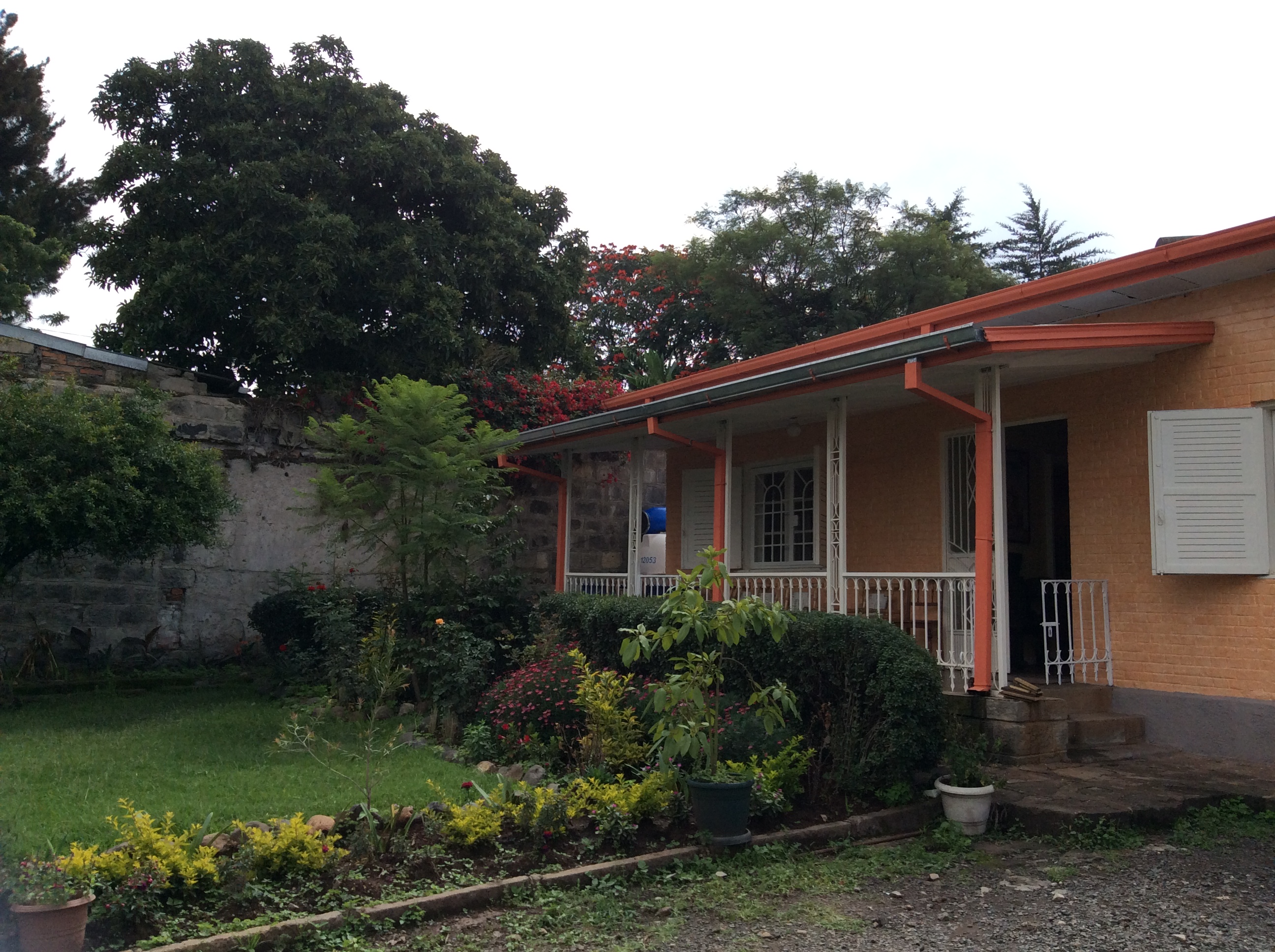
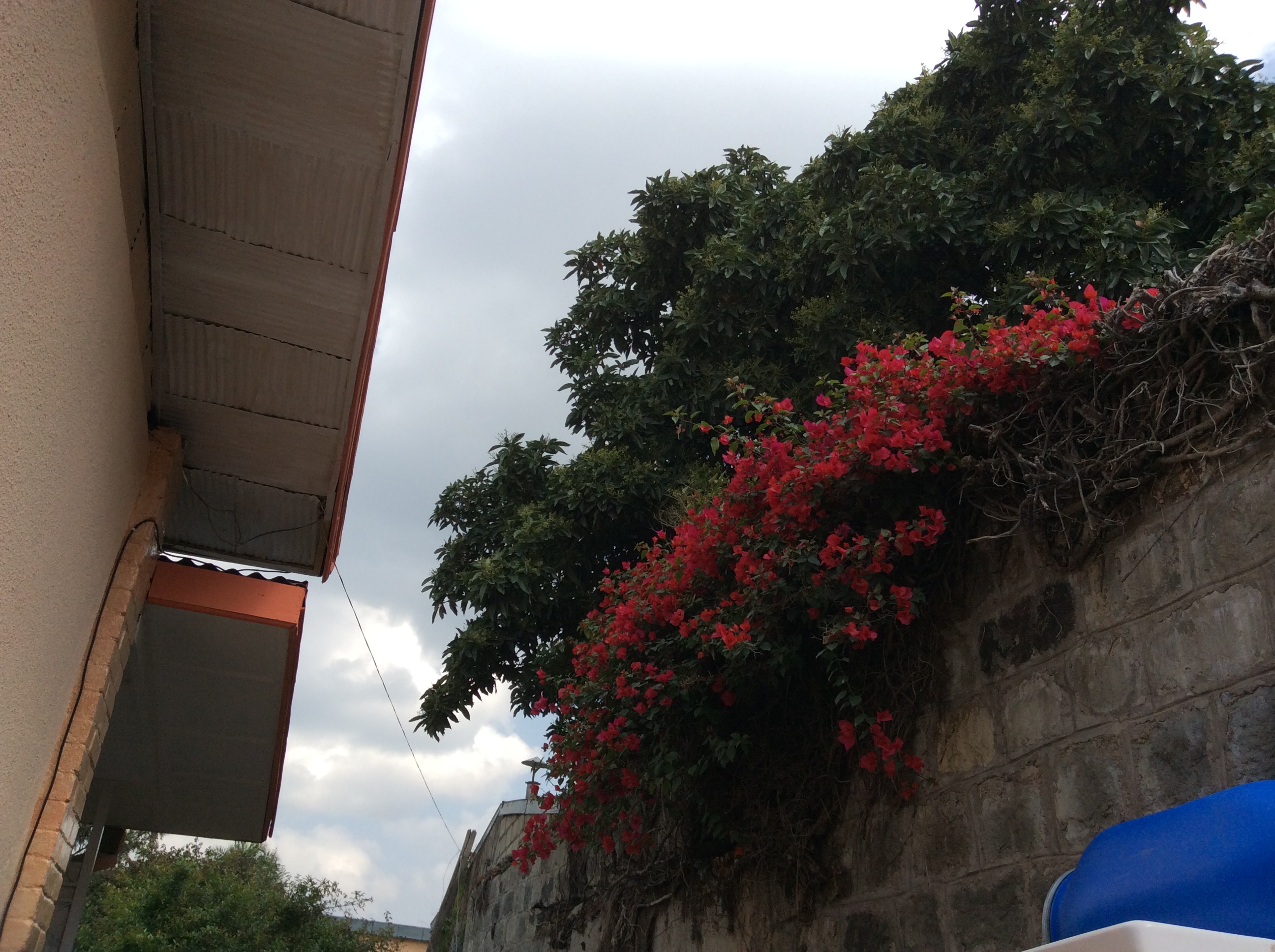
The front of Anna’s lovely house. It is the rainy season and flowers grow everywhere.
The translation for these orange flowers, which I had never seen before, is flowers of the sun.
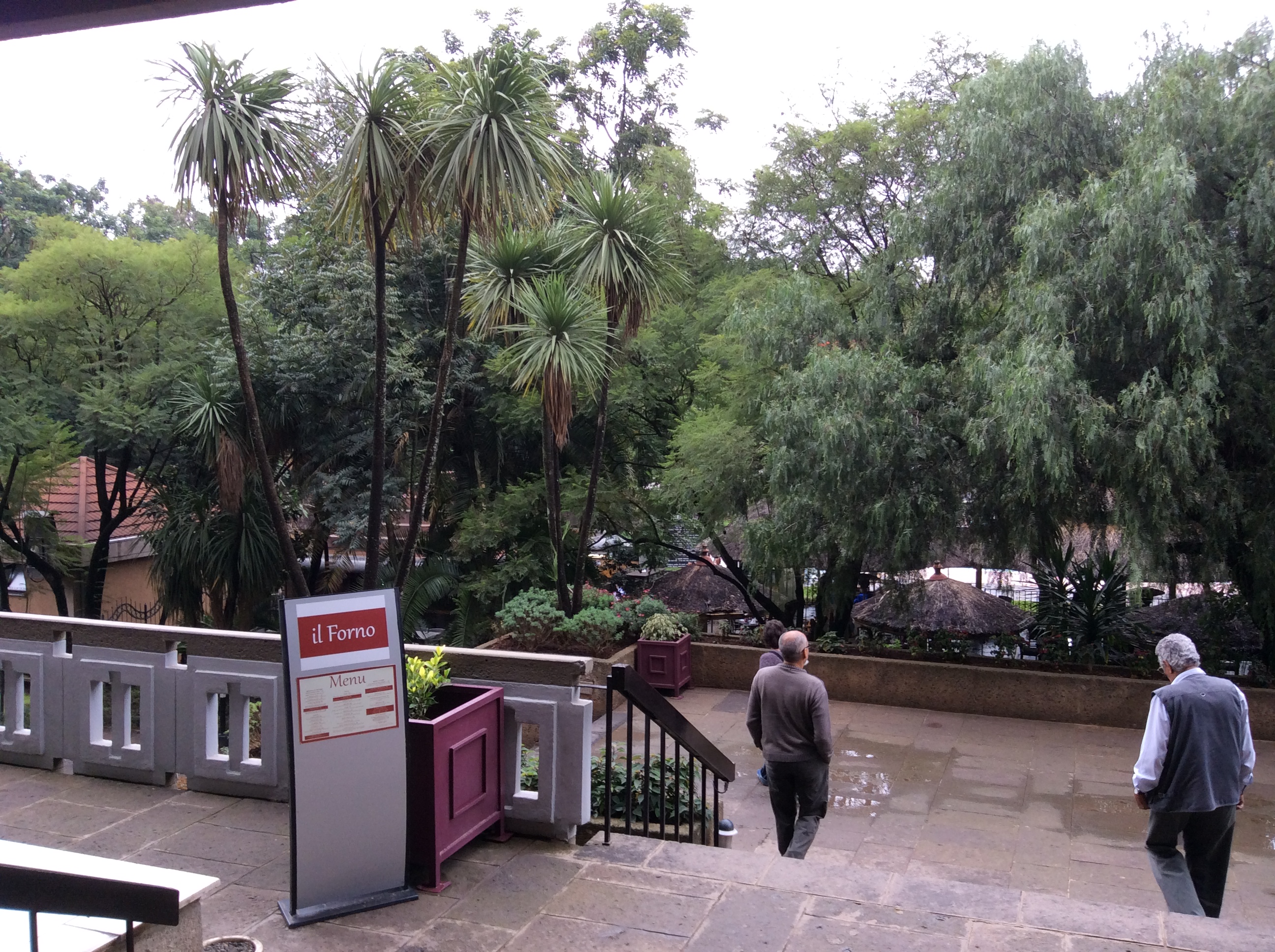
One afternoon four of us decided to take a drive around Addis to see some of the more beautiful spots which mainly included the Addis Hilton Hotel and the Sheraton, which is a five star. Carlo, Dino’s father drove. What a remarkable man, in his 80s and still getting to work at 6, driving everywhere. The Hilton is the older of the two. The grounds of both display lush greenery.
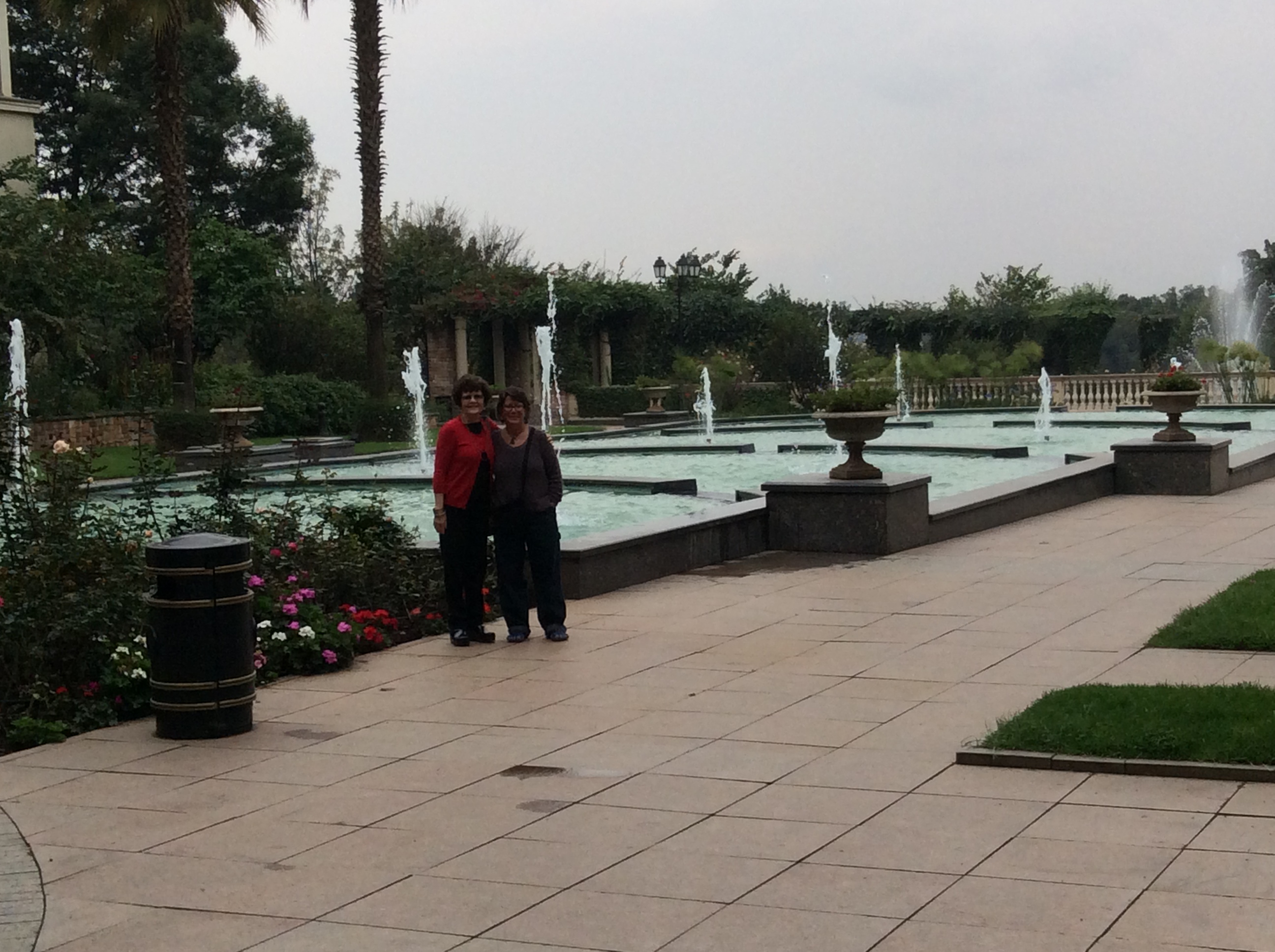
Zuriash and I enjoying the grandeur.
Papyrus by the pool at the Sheraton.
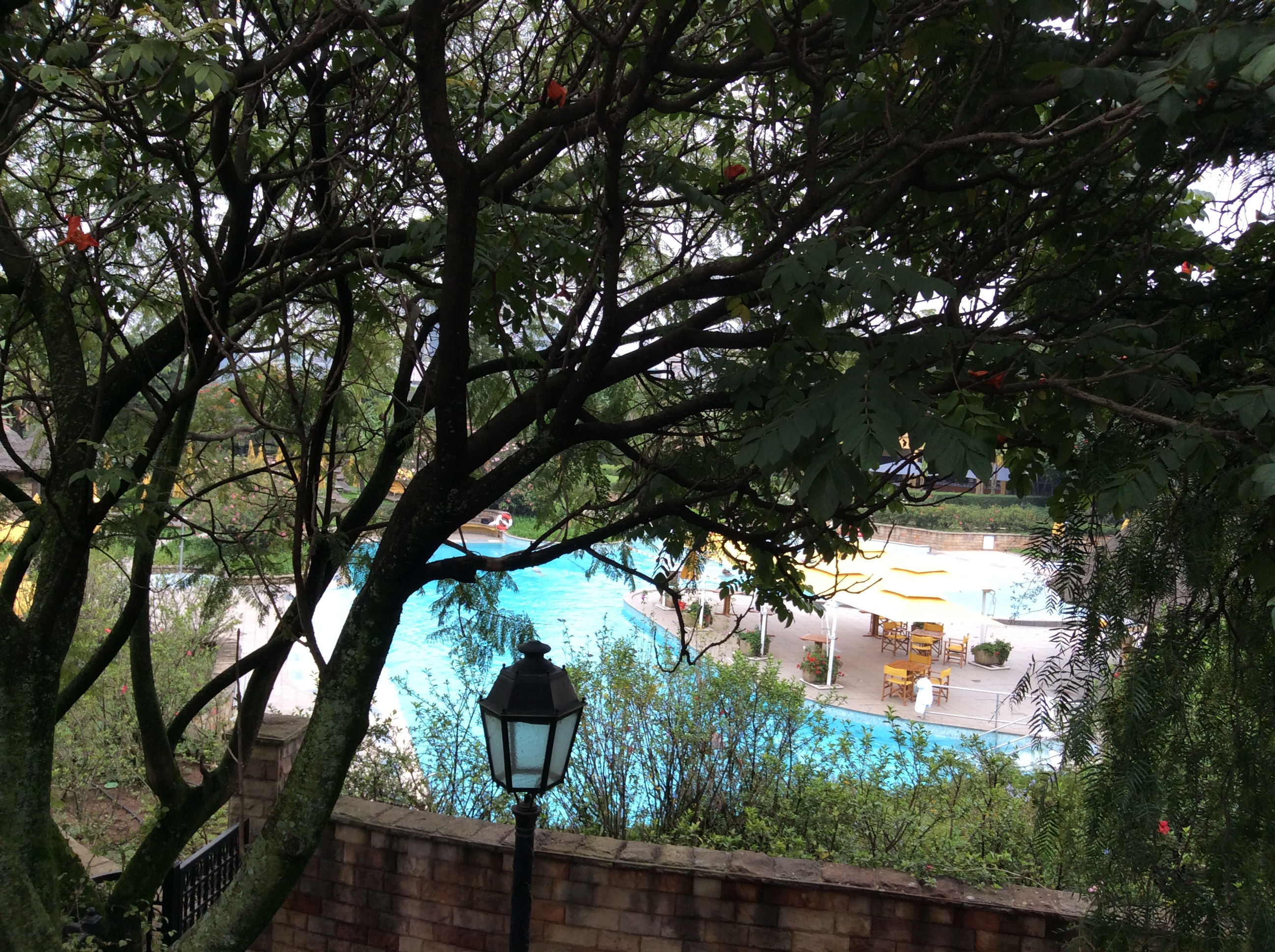
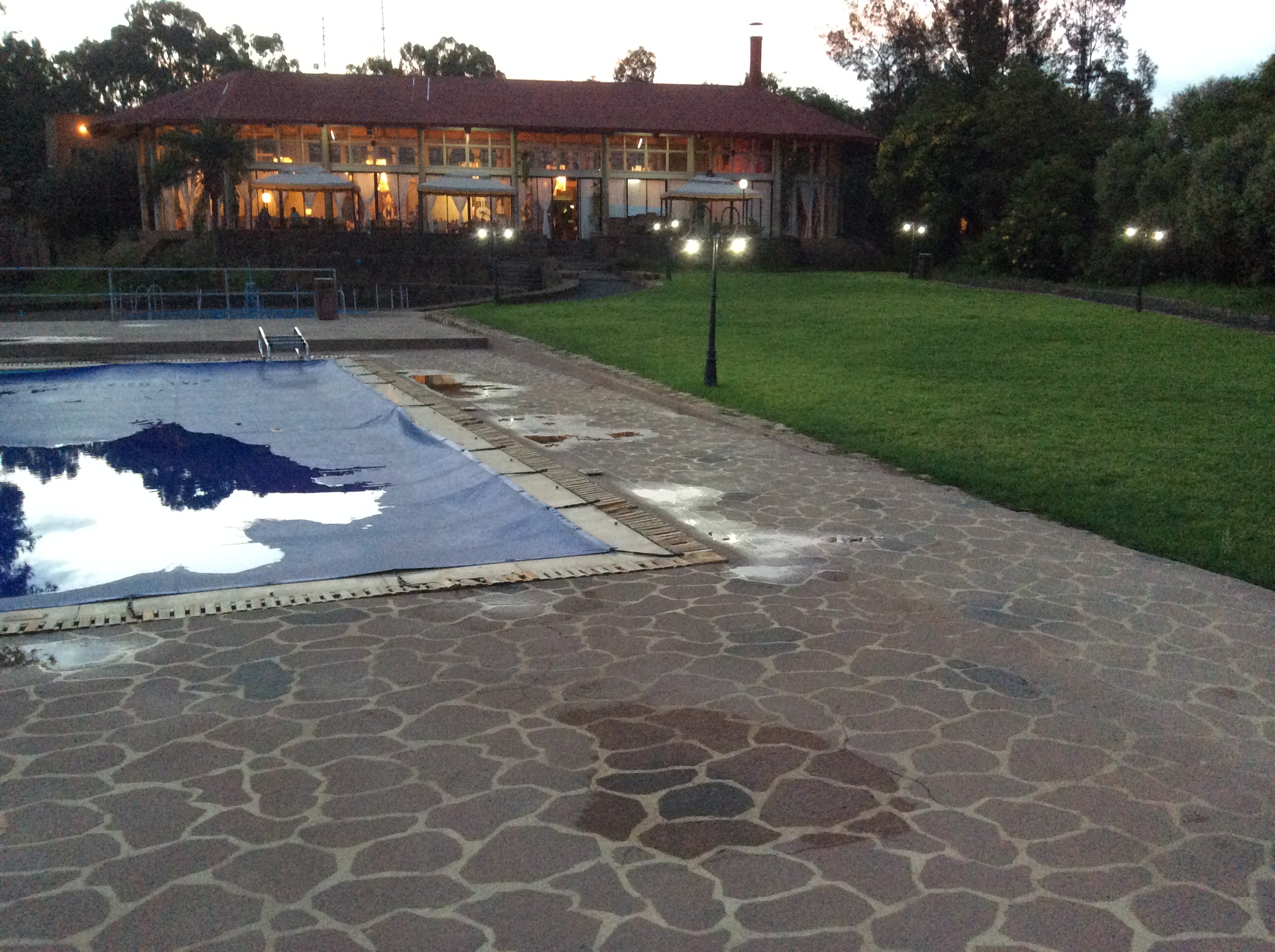
The swimming pool at the Sheraton. You cannot use it unless you are staying there. However, the pool at the Hilton is available on a membership basis–you do not have to stay there to use it.
The rooms at the Sheraton overlooking the gardens and pool. Dino and Carlo, son and father, walking down the path to the pool area. Apparently, many visiting dignitaries stay here. Inside walls are filled with excellent local art.
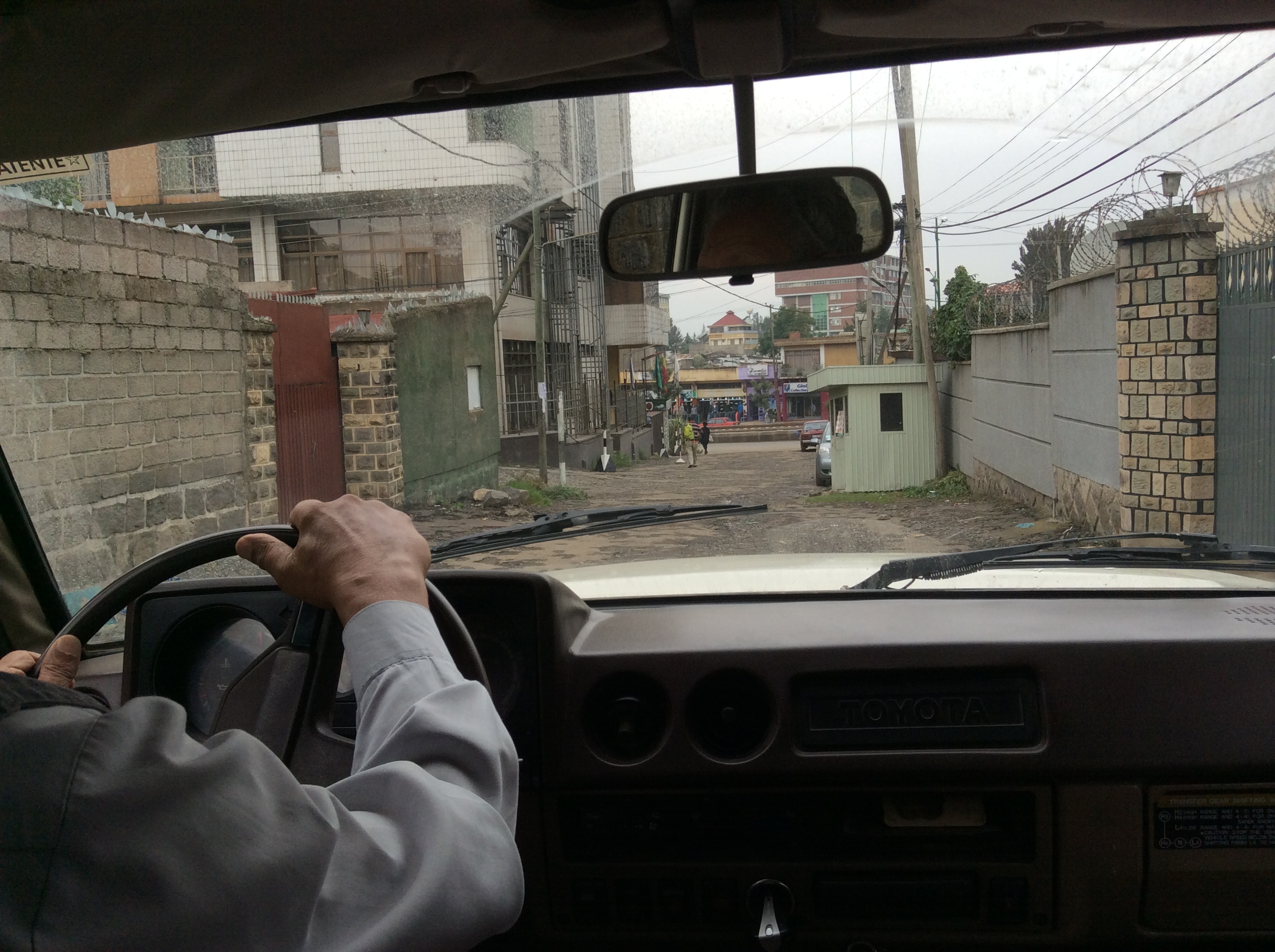
And then there is Addis traffic. Approximately six million people live there. In five or so days, riding here and there all over the city, I saw only two traffic lights, neither of which worked. Most large intersections contain a traffic circle and around and around you go trying to wiggle into a space and get across the intersection. Take a look.
Trying to drive to Guiseppe’s house, Anna driving, we were stuck here. The big trucks would not let us through. Finally, a guy in another car, got out, stopped the trucks and waved us on. It took us 1 1/2 hours to get there. A couple of days later, he came to Anna’s in twenty minutes.
In front of Guiseppe’s house. A typical residential street, sometimes like this one with gates on each end. People hire someone to watch the gates. You honk and they are opened and then closed.
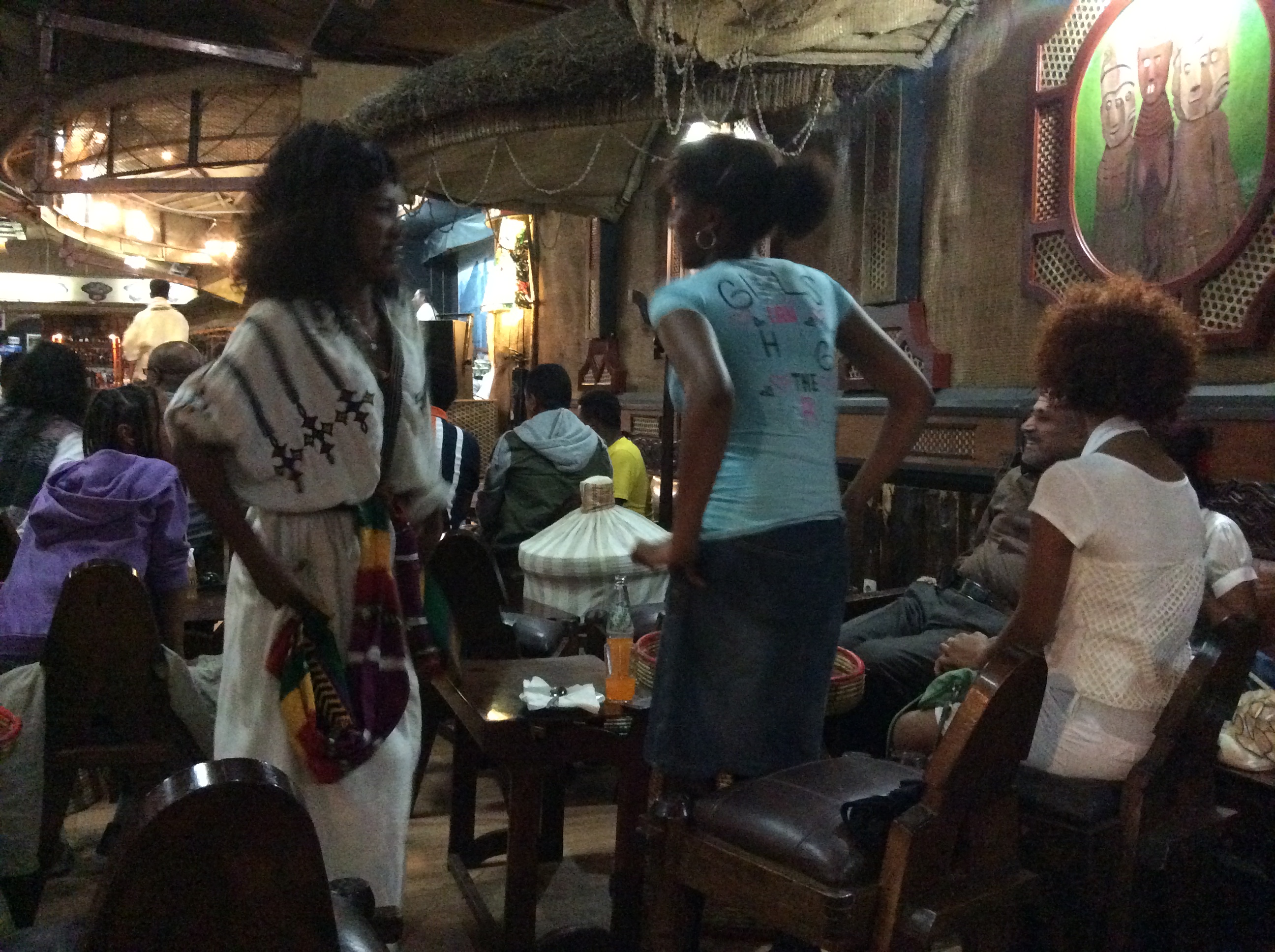
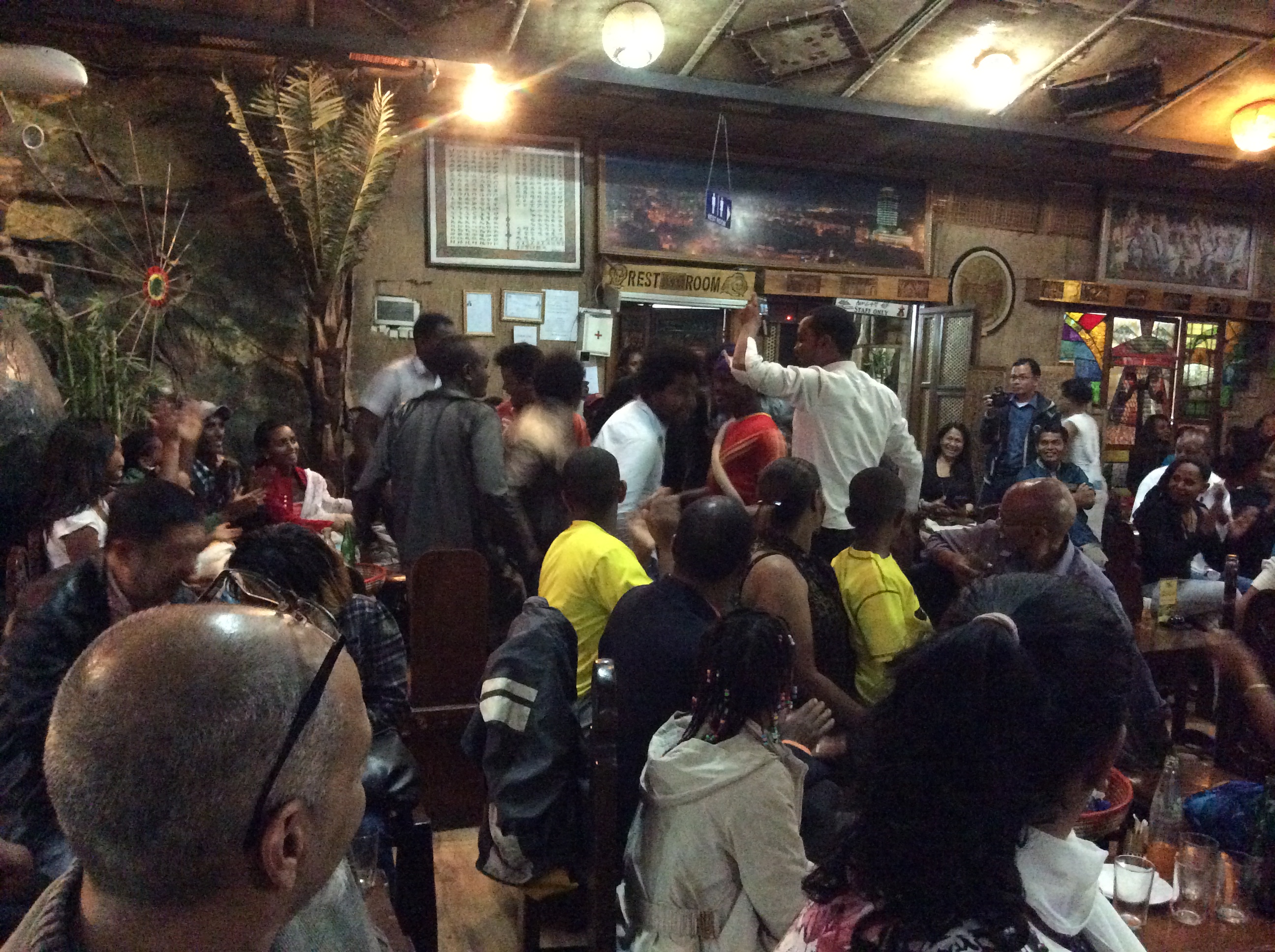
On the last evening before we began our ten day road trip, Anna took us to a cultural restaurant to eat traditional food and watch the dancing from different parts of the country. I expected it to be just a tourist spot, but no, many locals were there. During the dancing, locals competed with the professionals to see who could dance the best.
This dance requires almost no motion except a lot of shoulder action. I attempted to do it myself when the man behind the girl in white came over and asked me to dance. I tried but would have to practice forever to get this one right.
The young men in the background competing.
Anna and I in front of her house. She is wearing a traditional Ethiopia dress.
Ethiopia–Lake Tana and the Blue Nile
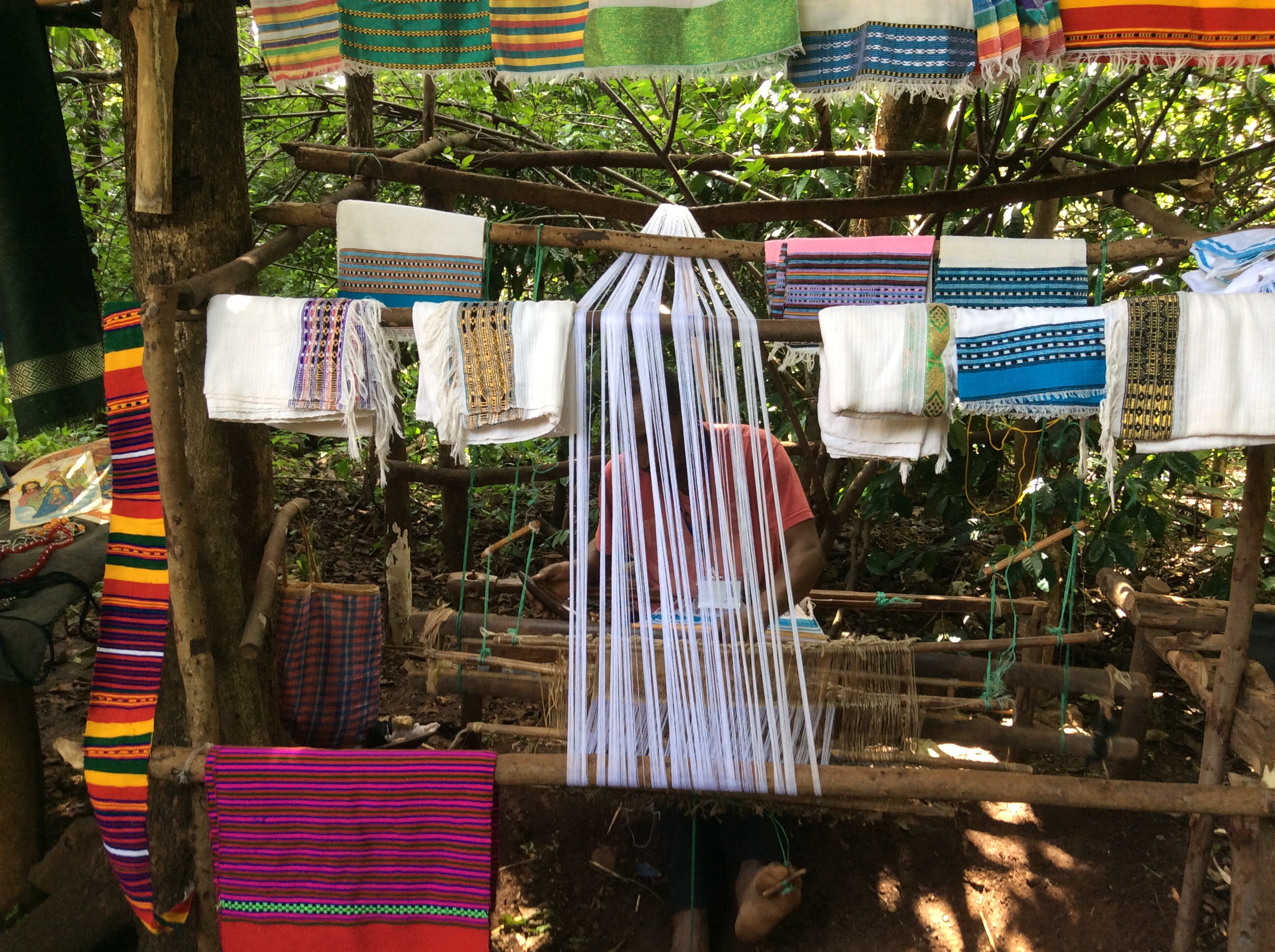
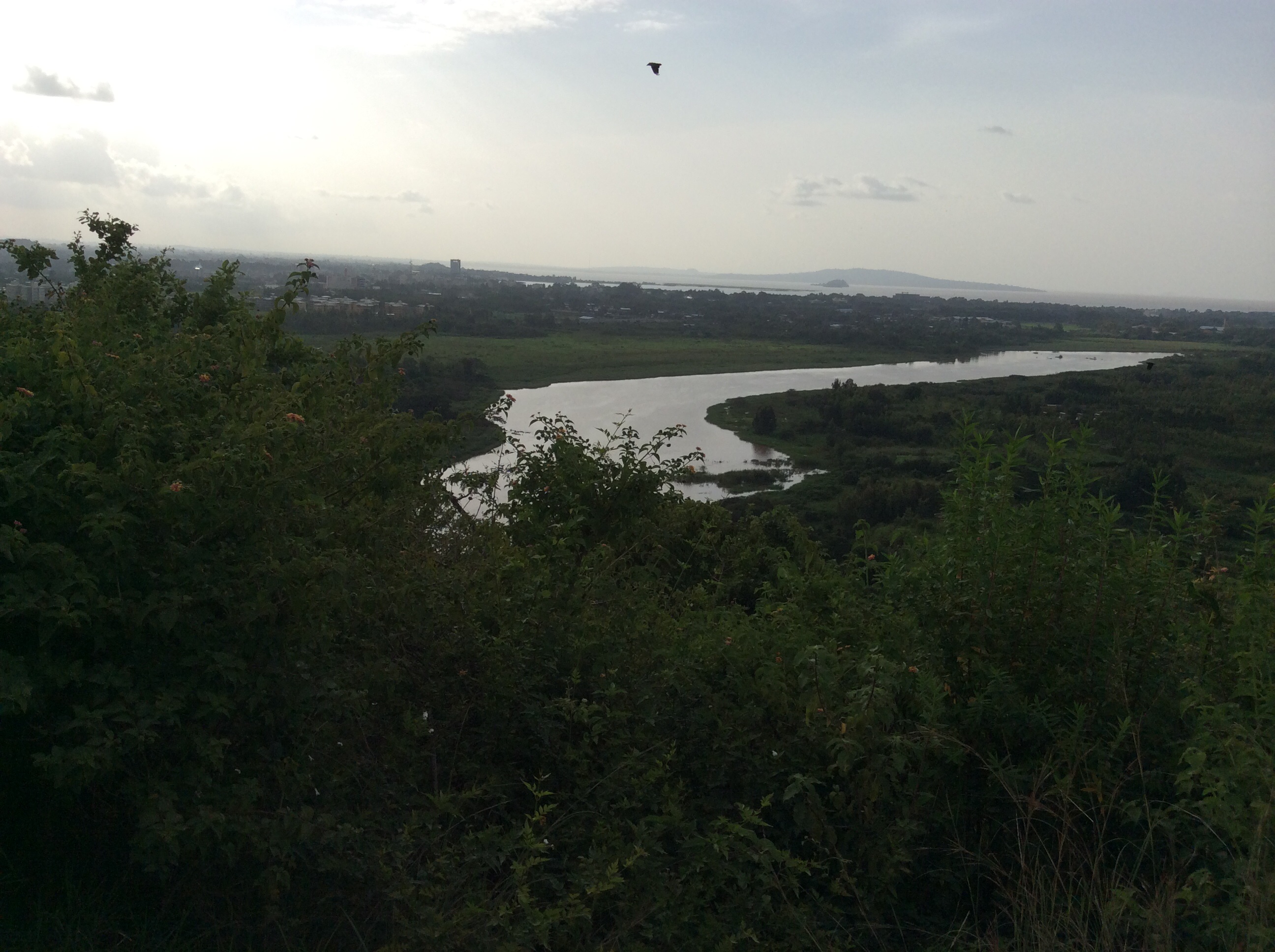
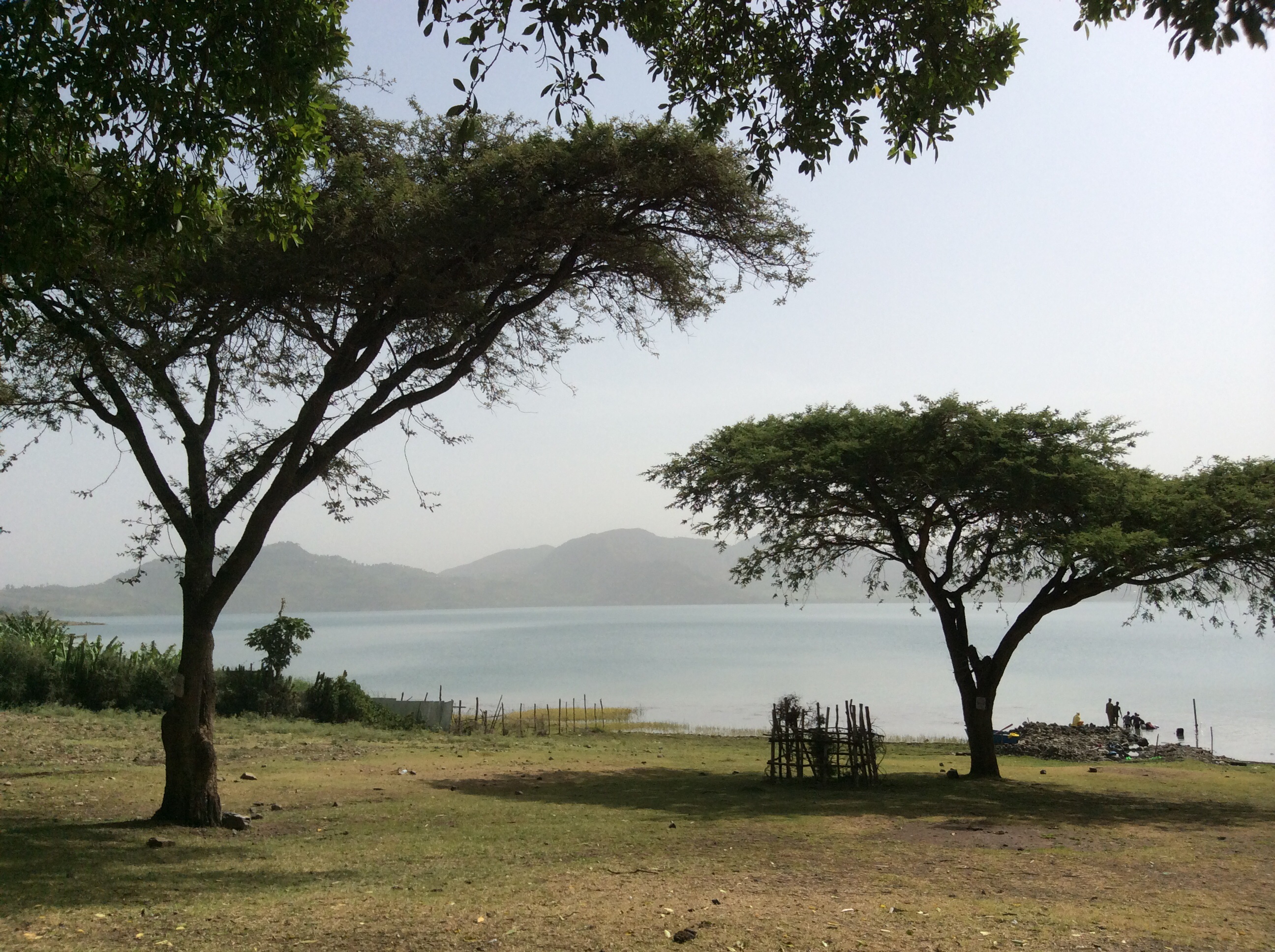
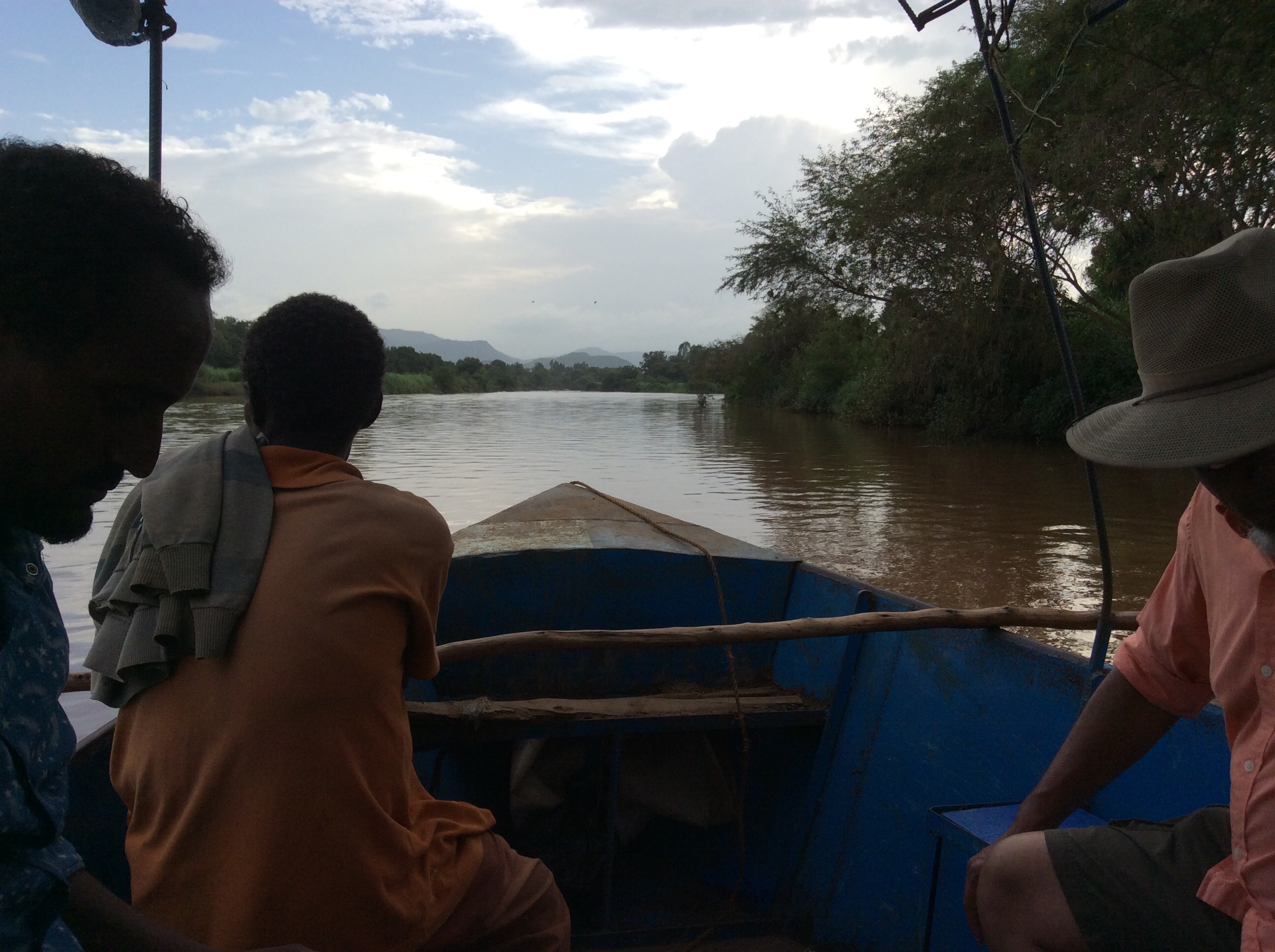
I spent yesterday evening and today here in Bahir Dar, Ethiopia, looking at, riding across or around on Lake Tana and the Blue Nile. The out flow of Lake Tana is the beginning of the Blue Nile, the world’s longest river. I crossed the Nile three times today in a relatively small motor boat. Due to a diversion of water for hydroelectric power, the Nile falls are only a fraction of what they used to be. Fishermen still fish Lake Tana in boats made from papyrus, scarves are still woven on hand looms, and corn, beans, and sugar cane are cultivated by hand, The following photos were all taken today, including the exquisite gardens at the restaurant where we ate lunch.
Ethiopia–From the Roof of Africa to the Nile


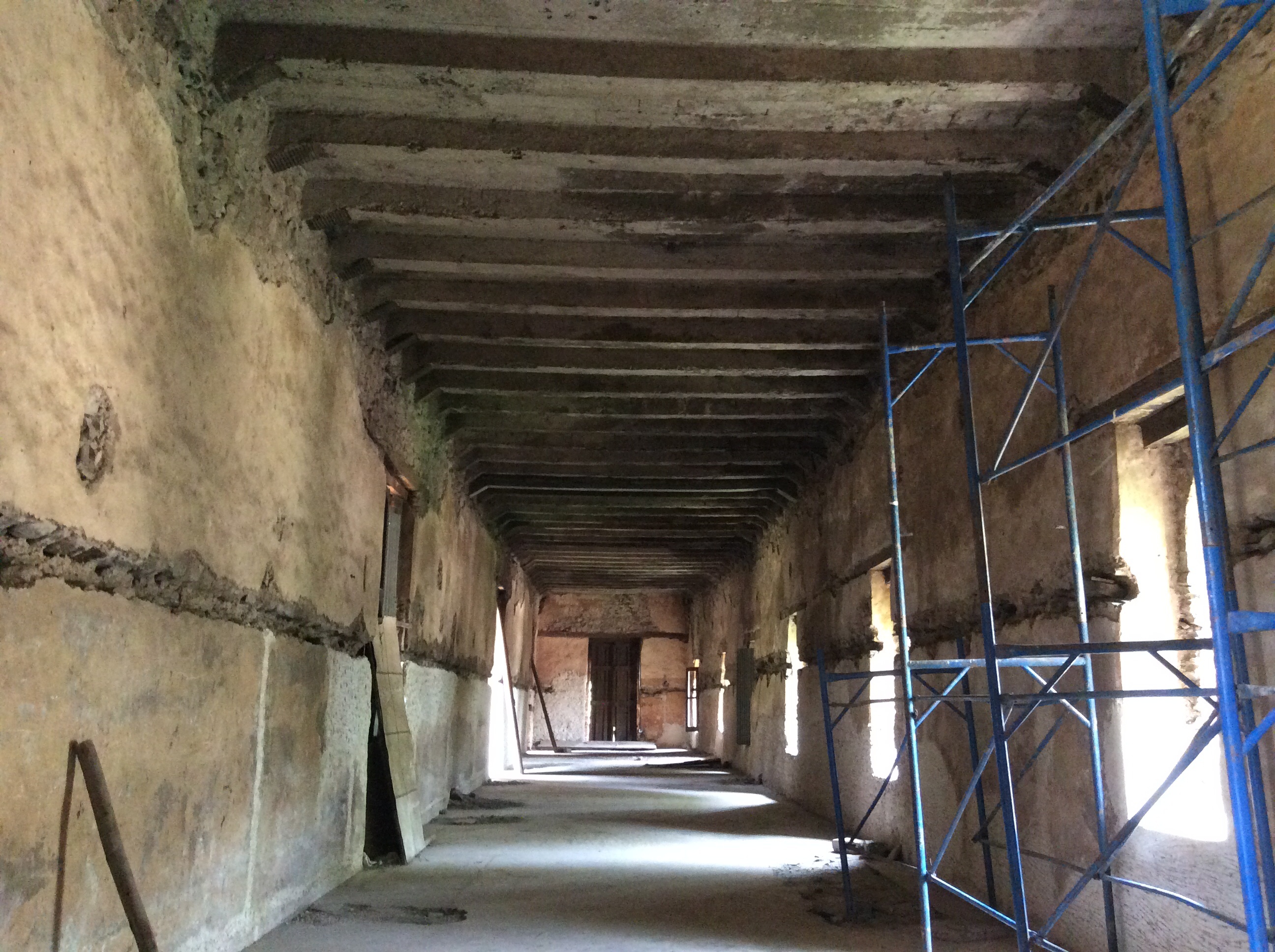
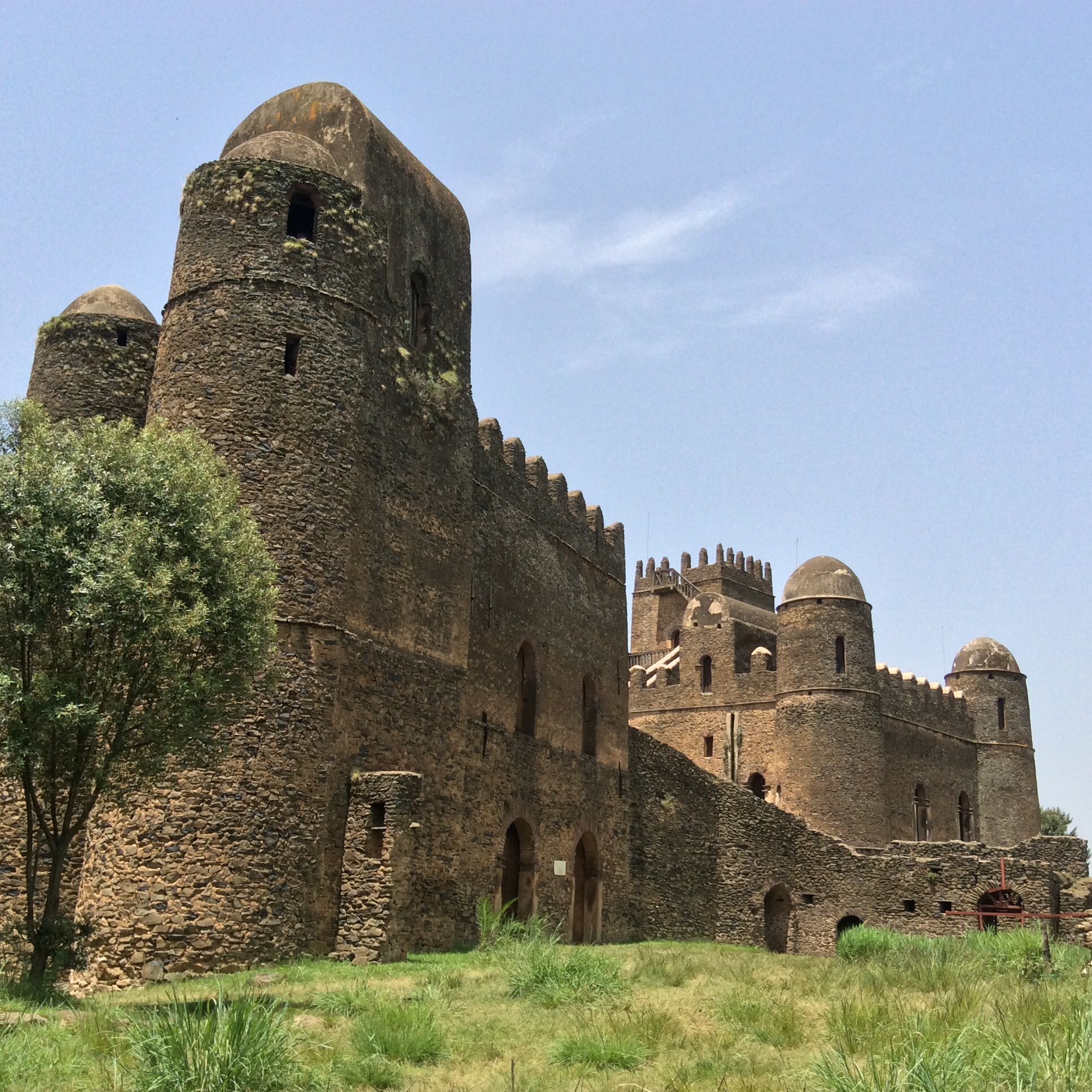
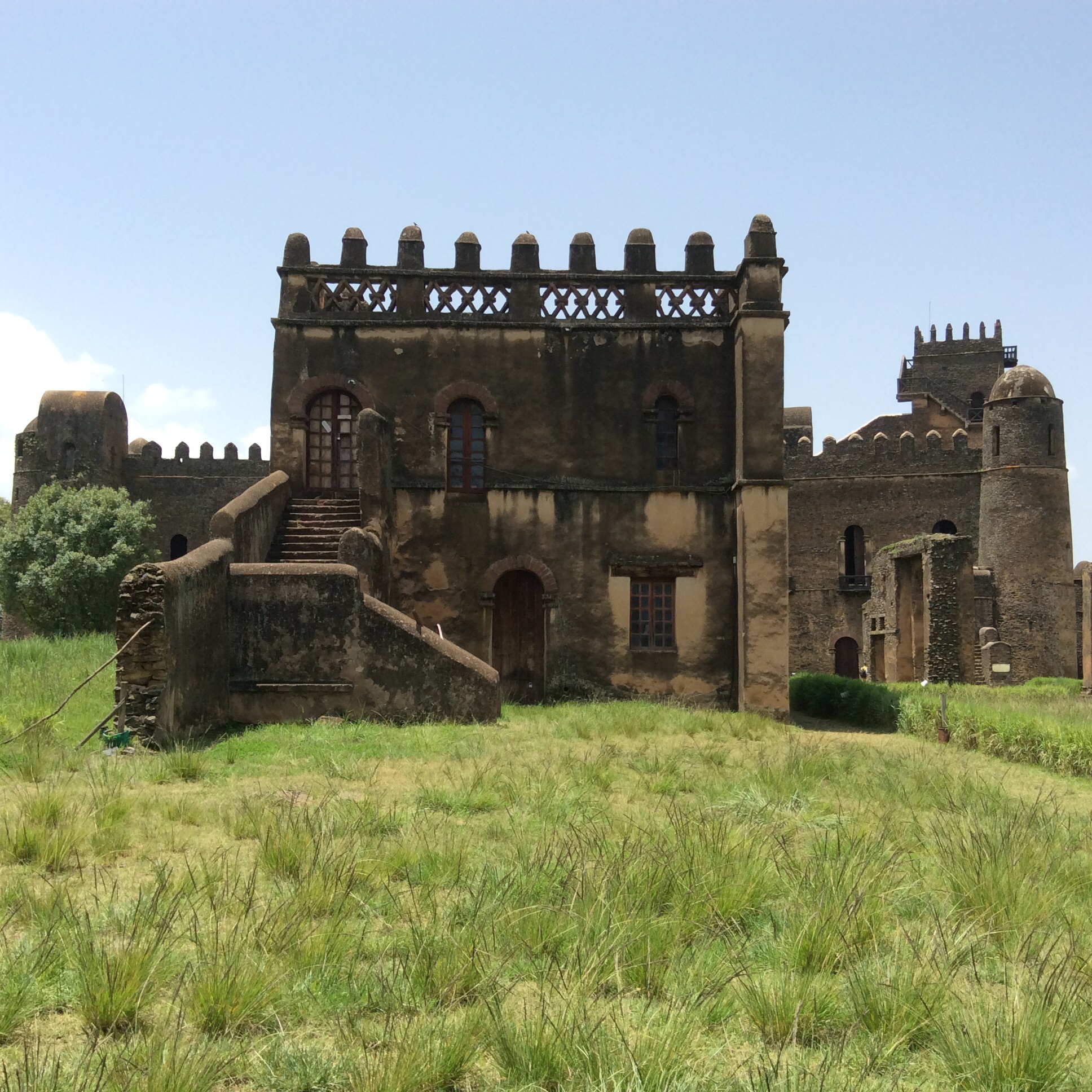
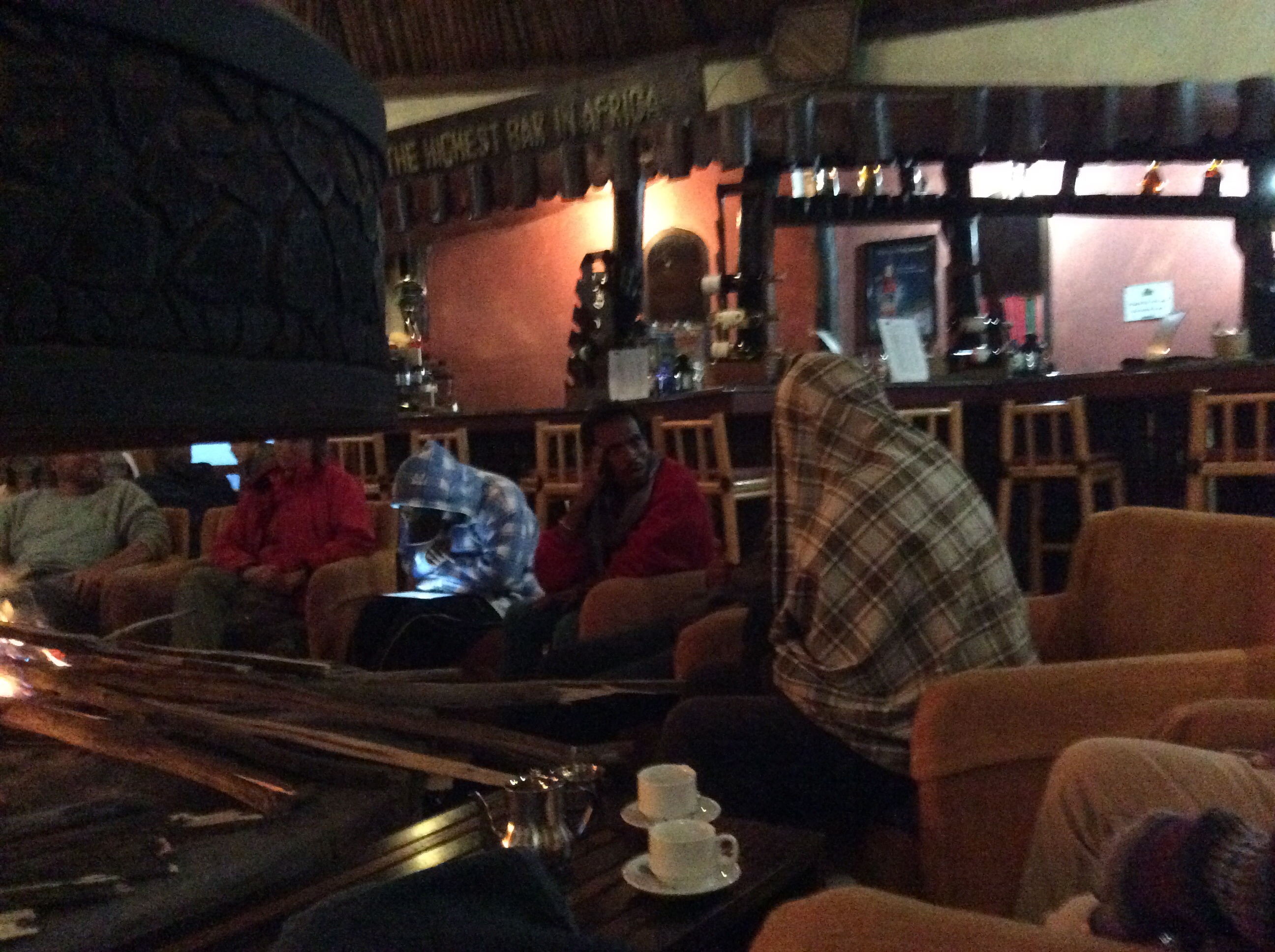
Internet is not so reliable at times here. Yesterday we saw 23 Walia ibex in the Simien Mountins above 14,000 feet. They are found only there. Photos include Simien Mountains, the highest bar in Africa, the castles in Gondar, and the Blue Nile River, the longest in the world. Staying at a hotel on Lake Tana. Saw several hippos near the Nile bridge, but the guard said no photos. For some reason, these photos loaded in reverse order. We were in the Simien Mountains first where we stayed in a hotel above 13,000 feet with no heat, took a small trek, and saw hundreds of gelada baboons. We saw the castles today and went to an overlook over the Blue Nile.
Ethiopia–2
Ethiopia–1
I landed here five days ago. What an amazing country–so ancient and so modern simultaneously. In two days we drove from Addis
Lalibela, the place where 12 churches were hewn out of solid basalt centuries ago. After climbing up and down step cliffs to enter the churches today, I feel exhausted so will post a variety of photos. My ultimate plan is to provide details of the trip when I return to the US.
A Day in Dubai
Much to my surprise our route took us over the southern tip of Greenland, over Iceland, Copenhagen, eastern
Europe, Turkey, and Iraq. We landed late here late this morning.
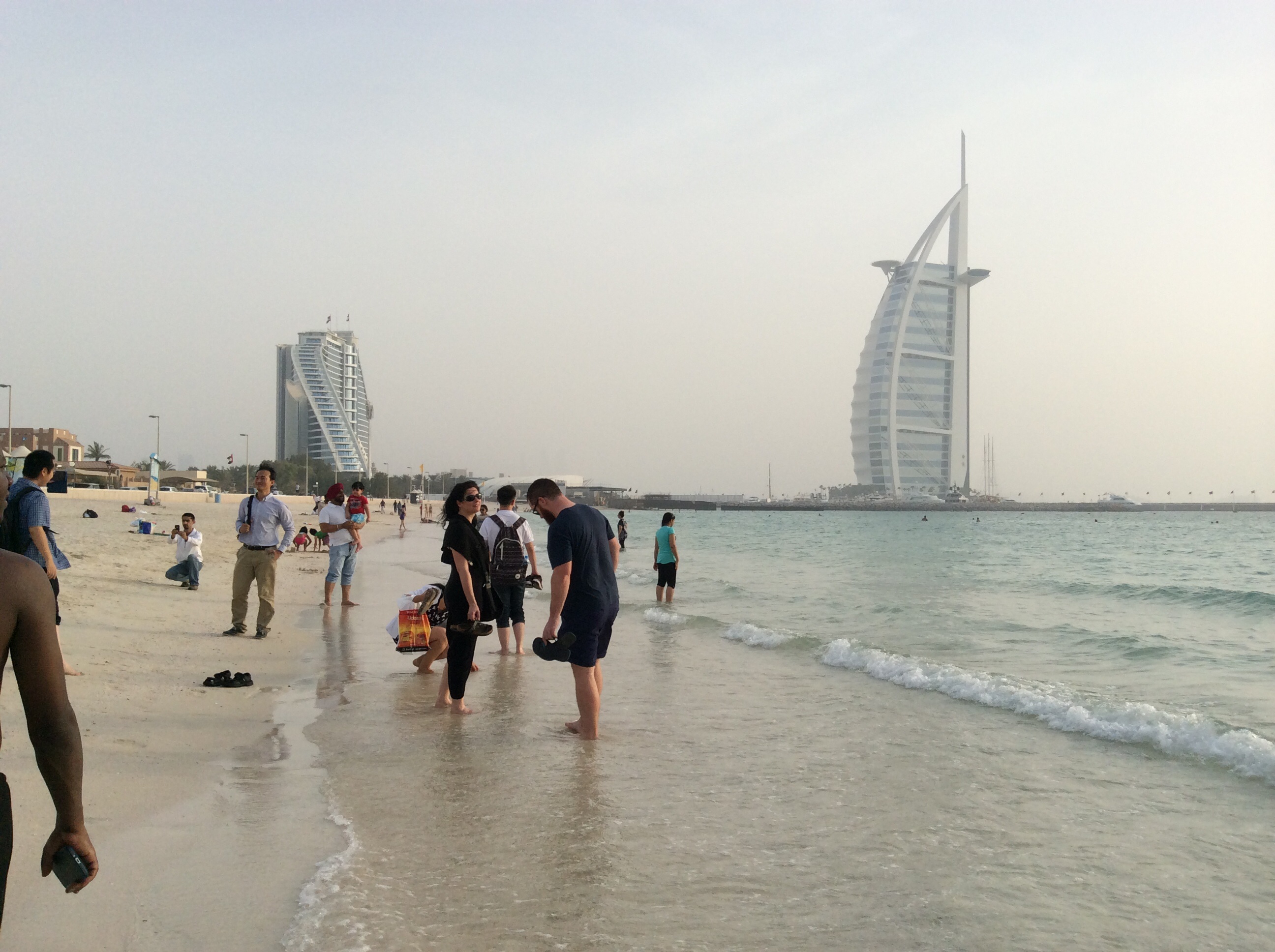
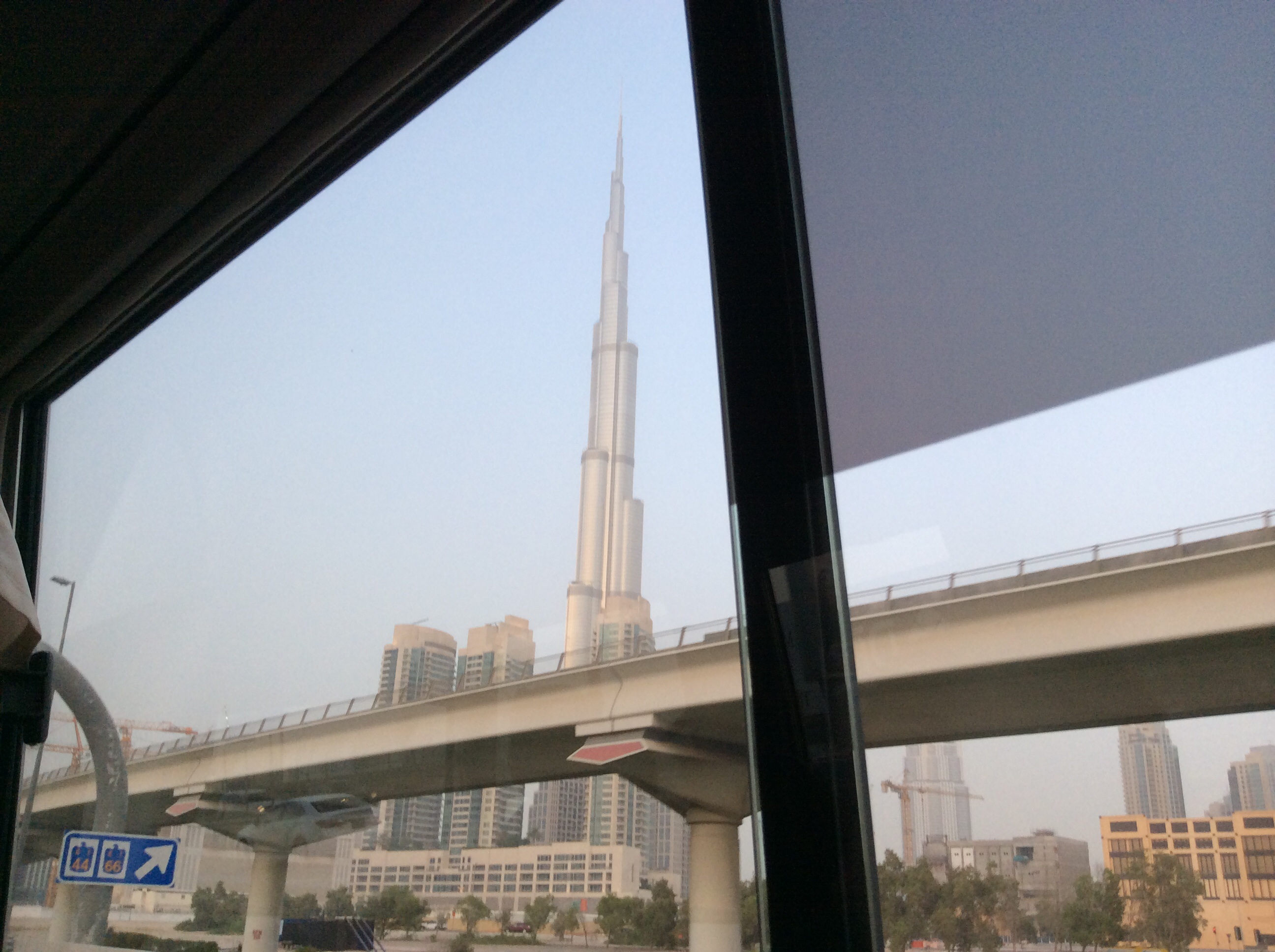
From one to five we took a tour of the major sites. Photos follow. Because I have limited wifi time, I will post photos and explain more later if I run out of time. As a person not particularly fond of cities, I did not expect to like Dubai so much. What an amazing city. One of my favorite stops, Saga, displayed amazing crafts, clothing, rugs, art work, all from this part of the world. However, we were not allowed to take photos there. Some of the photos were taken from the little tour bus. The humidity surprised me. If you have been to Houston in the heat of the summer, well, it is more or less like that with no breeze. It was also very hazy. We did have a chance to stick our feet in the Arabic part of the Persian Gulf, the visit the mosque modeled after the one in Istanbul, see the world’s fourth tallest five plus star hotel, see the Atlantis resort at the end of the island built in the shape of a palm tree, stop by the aquarium in Dubai Mall and see the fountain show in front of it. Our final destination was the Gold and Spice Souq.
Up, Up and Away
Except I won’t be in a balloon. This will be very short because I leave my house at 5 in the morning headed to the airport. Board a plane for Dallas at 6:20 or so. Then at 12:25 board Emirate Airlines to Dubai. The longest flight I previously experienced I think is from Tokyo to San Francisco. This flight to Dubai is 14 hours and 45 minutes. We will spend a day in Dubai and then head to Addis where it will be approximately 35 degrees cooler. The temperature in Dubai the last time I looked was 109. With any luck, my next blog post, assuming I get Internet to work there, will be a Day in Dubai.
Soybeans
SOYBEAN CHECKOFF
If you grow soybeans, there is this program–not sure what else to call it–named the Soybean Checkoff. Basically, when you sell soybeans, you get docked a few cents per amount sold to advertise, etc. soybeans. I received my latest issue of the Lonestar Soybeans recently. For those of you reading from afar, Lonestar refers to Texas. It is the Lonestar state and our flag has one lone star on it. Back to soybeans. First, there is a report on soybean production issues. Research is to the point in terms of soybean physiology that they are about to zero in on optimal planting time, conditions, latitude, etc. Here in this part of Texas, generally no one grows soybeans. We grow irrigated corn and wheat, milo, sorghum, and crops that do not require as much water as soybeans.
EXPORTS AND ETHANOL
I grew up on a farm where we raised both soybeans and corn–I still do. We raised some wheat also; tried milo, but it was too wet in Missouri. Never thought a lot about where my soybeans went after I sold them so I learned something new today. Compared to all other crops, we export more soybeans than anything else–to the tune of 20 billion dollars a year. We also export a lot of wheat–about the same as soybeans, but soybeans trump wheat if you include soybean meal and oil. Meanwhile corn exports have dropped steadily since 2007 or so. Why? Ethanol.
GMO
This report does not tell the reader some other notable facts. While almost all corn grown commercially in the United States is GMO, such is not the case for soybeans. The big market for soybeans is Asia and at least China will pay more for non-GMO soybeans. 60 per cent of all soybean exports go to China. For those of you out there who are adamant about GMO, perhaps the solution is demand for non-GMO. Currently, the only way I know to get non-GMO corn is to find a company that sells heirloom seeds and plant and harvest the corn yourself or find a small farmer who does this.