My Ethiopian Adventure: Bahir Dar and the Nile Falls


My Ethiopian friend with whom I travelled asked me about a week ago, “Where would you like to go back to if you go back to Ethiopia?”  With a little hesitation while various places flitted through my mind, I answered, “Bahir Dar.”  Why?  Bahir Dar’s climate suits me perfectly, tropical but not all that hot, lush flowers everywhere, Lake Tana, the Nile.  What more could one ask for?

IMG_0864

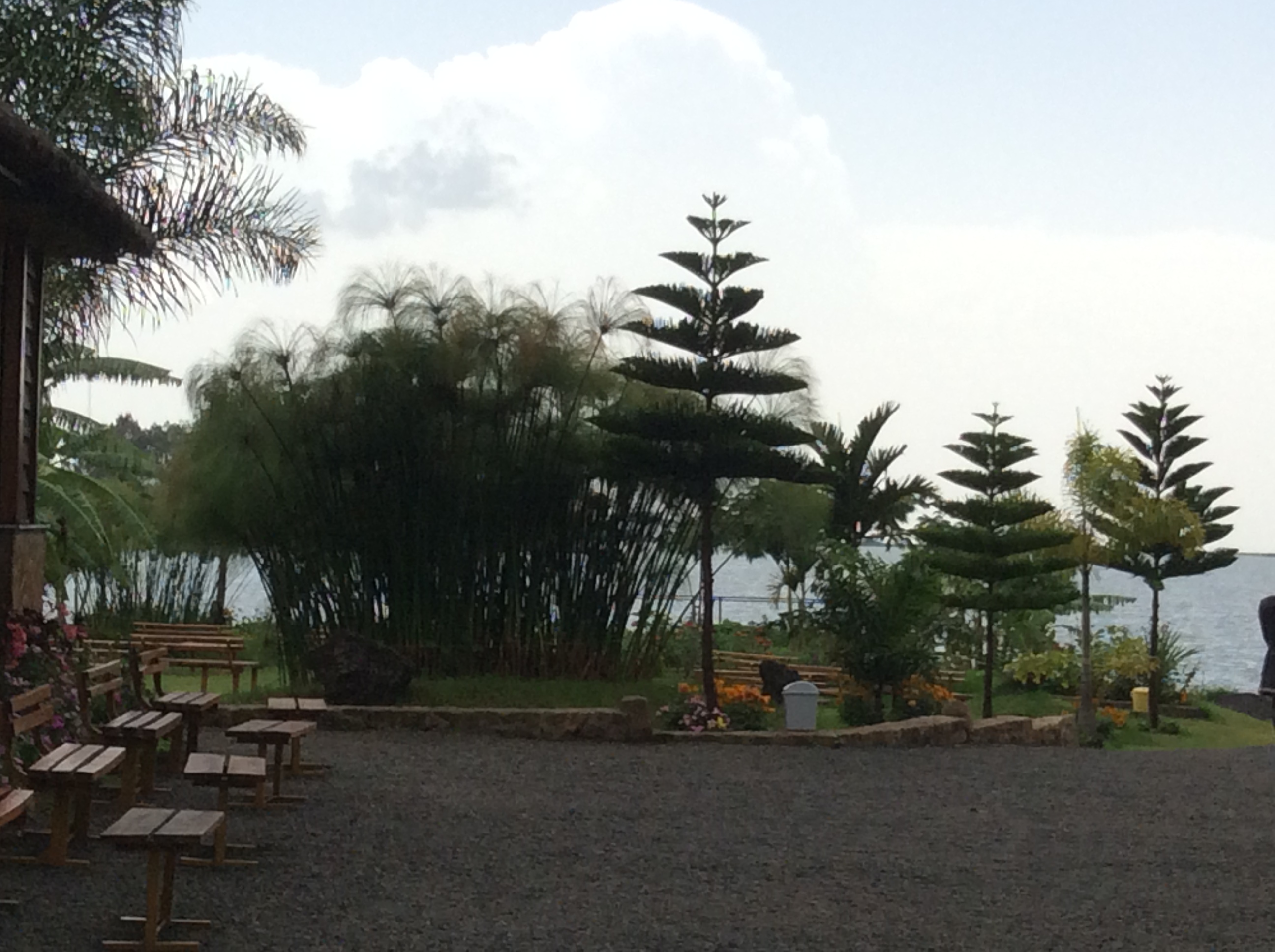
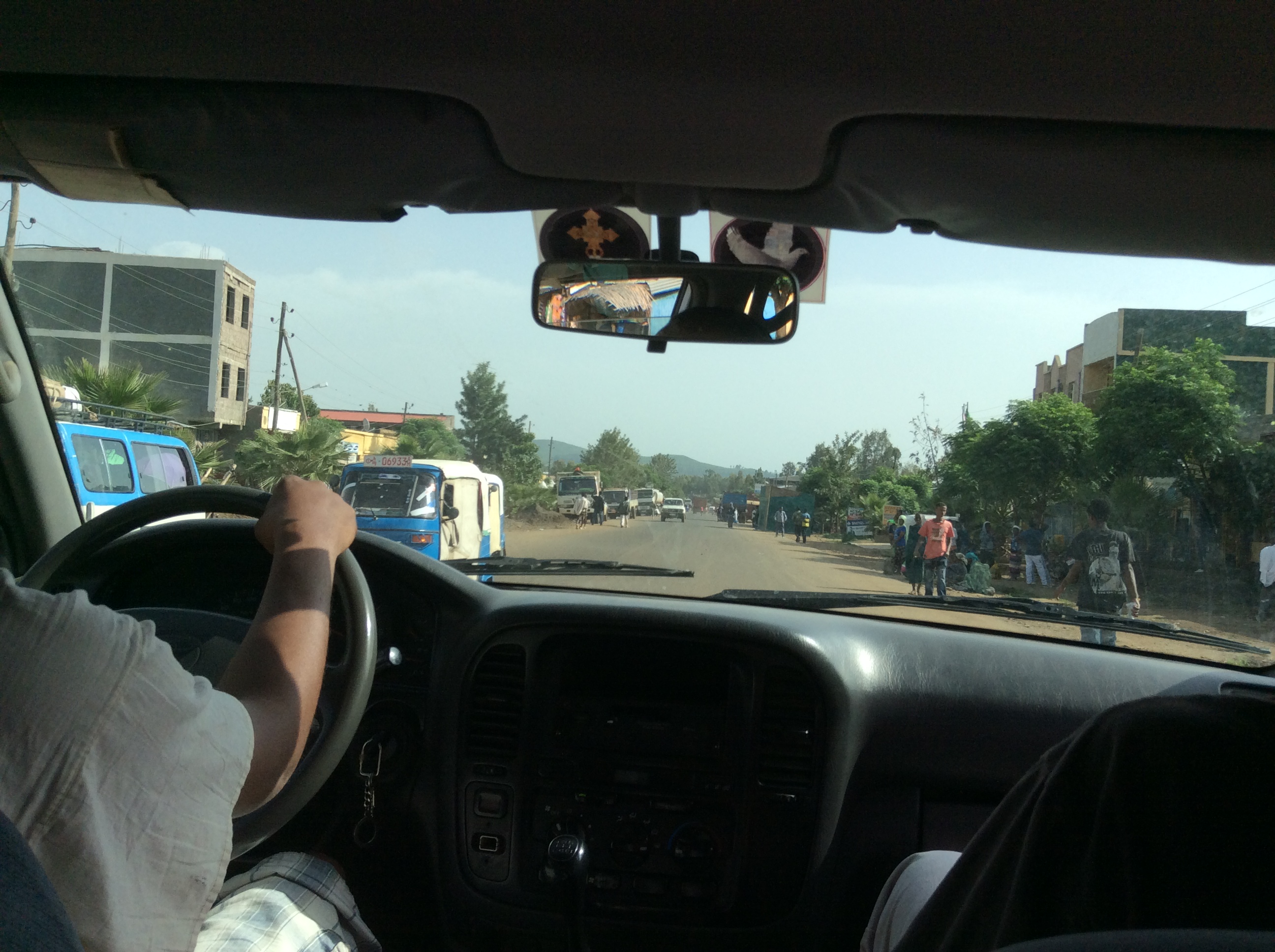
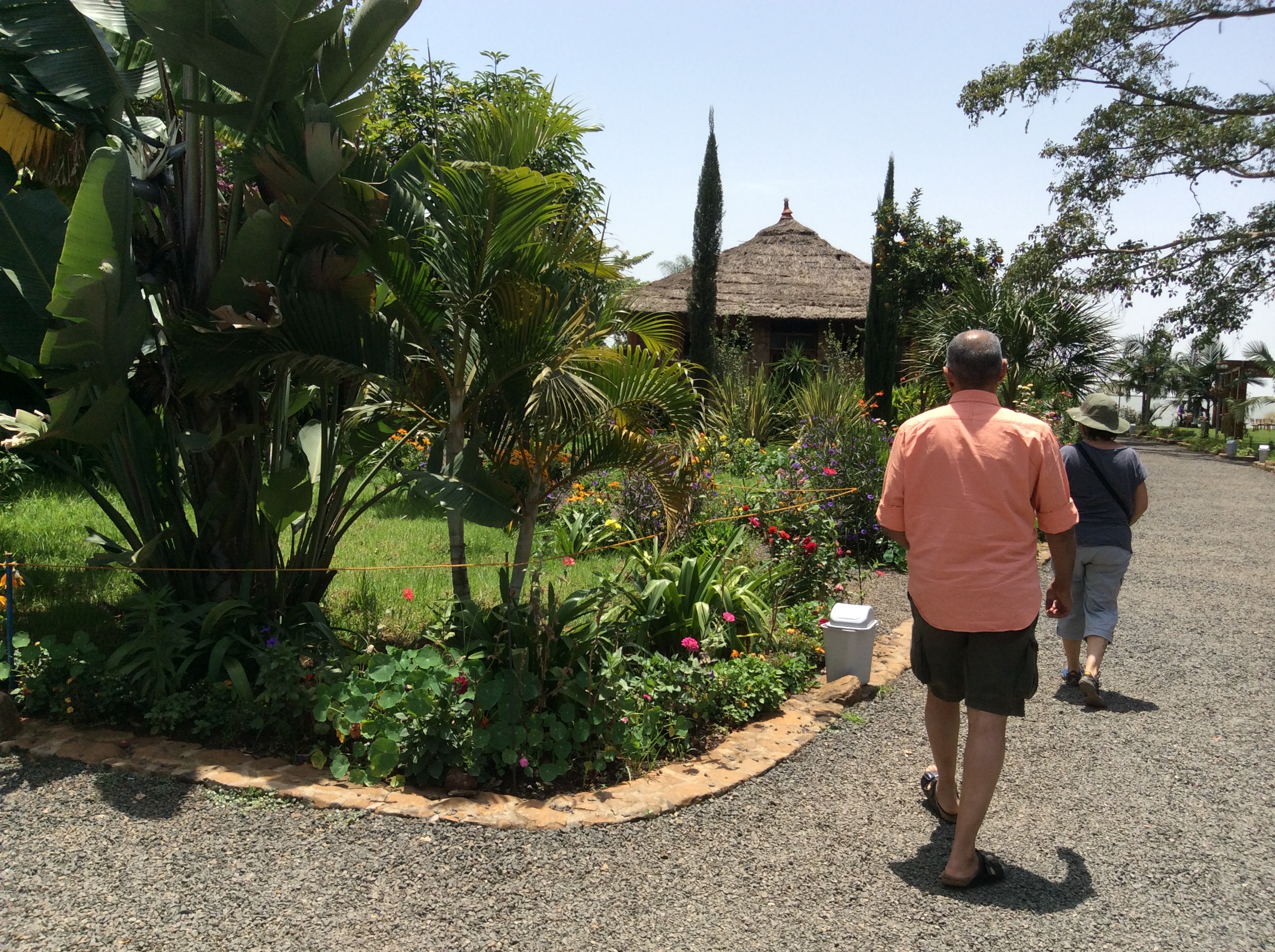
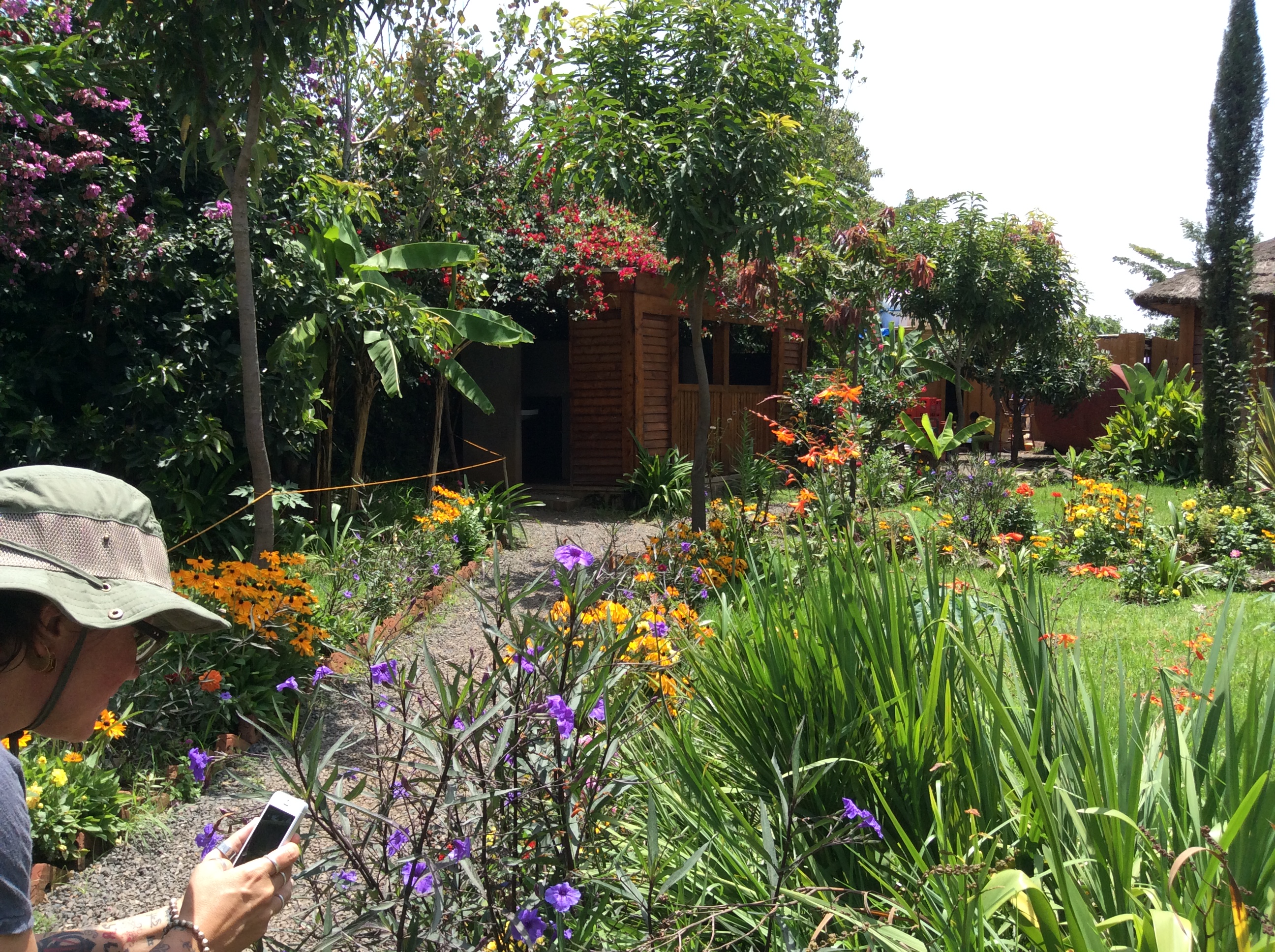
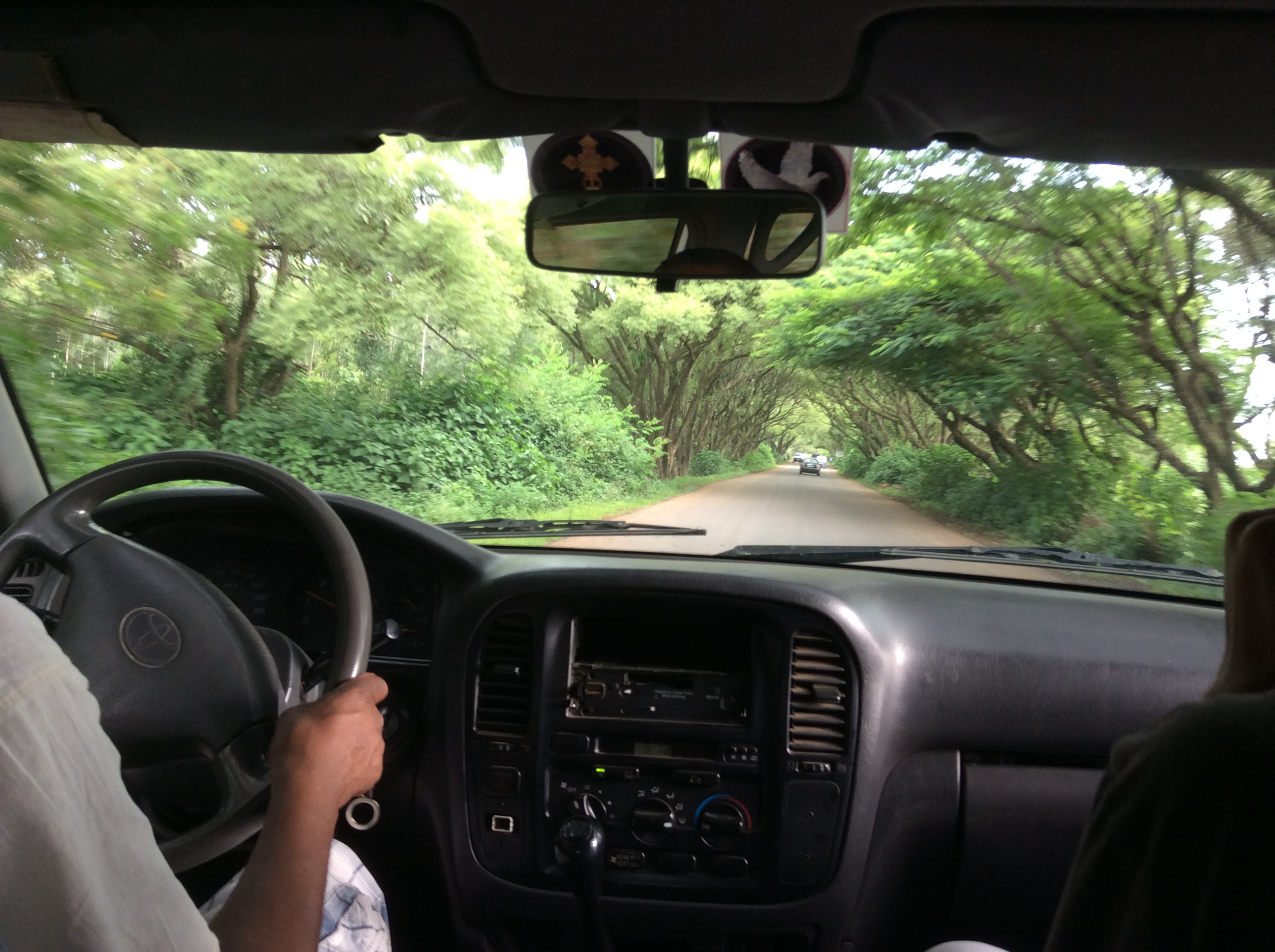
You can drive down streets that look like this and go to restaurants along Lake Tana with beautiful scenery and gardens plus a lake view.
IMG_0867

IMG_0868

IMG_0870

IMG_0872

IMG_0873

And I could drink the only beer I have ever tasted that I actually liked.

IMG_0871

Saint George Amber Beer.  Yes, Saint George is everywhere, even beer.

To get to the Nile Falls, you have to drive through the countryside on less than fabulous roads and park in probably the dirtiest, most dismal village I saw in all the places I visited in Ethiopia.  Part of the dirty appearance, I know, was due to it being the rainy season with puddles and mud everywhere.  Once I walked away from the village on the path to the falls, lush farmland lay before me.

IMG_0876

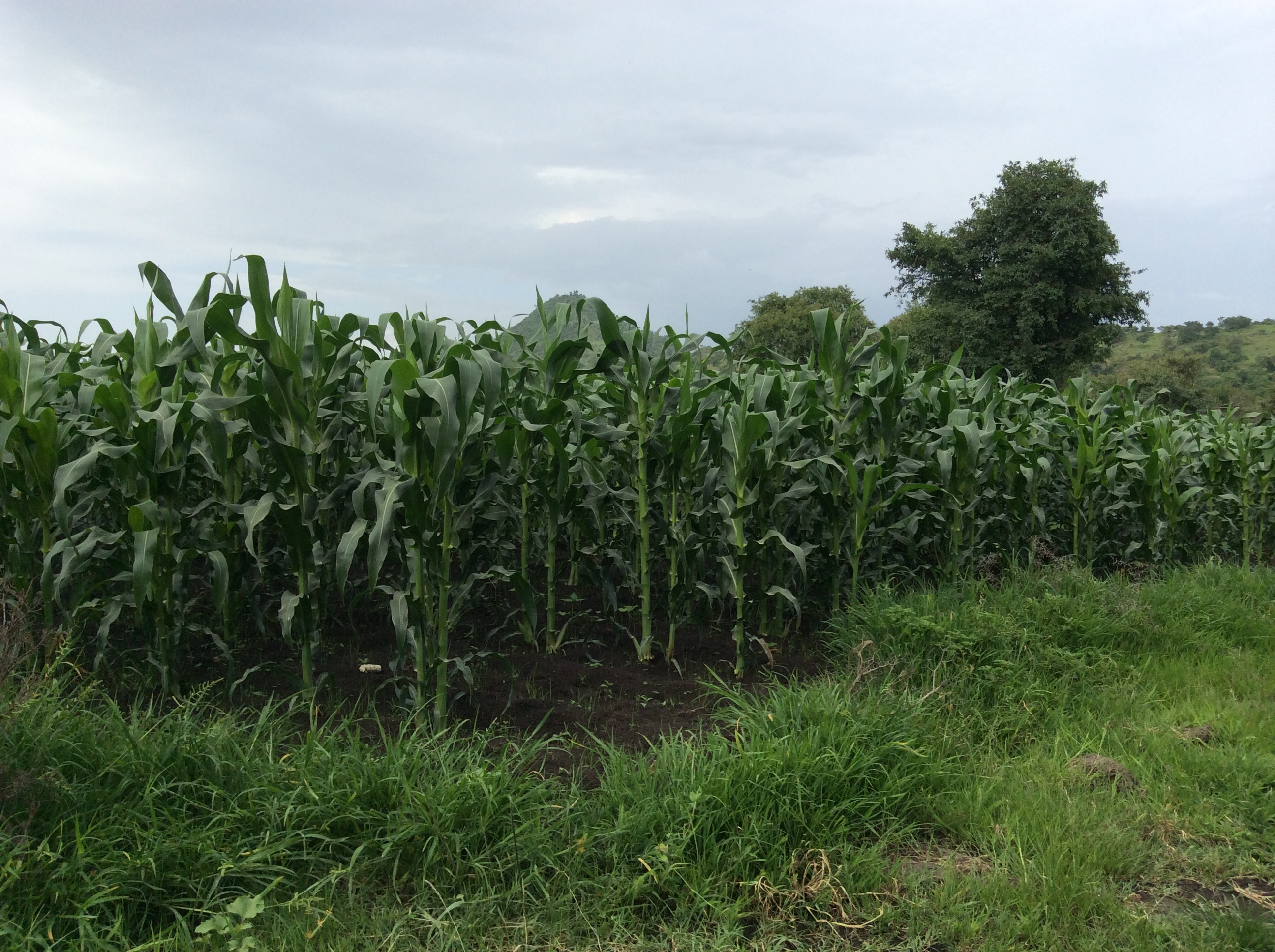
Fields of beans and corn.  Off and on all my life, I have raised corn.  This corn is as good a crop as I have seen anywhere.
IMG_0877

On the path to the Nile Falls, youngsters show up everywhere selling various items.  This young man walked all the way to the falls and back with me.  I bought this flute for my grandson.  We have all tried to play it, my daughter and grandson, and I.  We cannot make a sound.  This young man made it sing.

IMG_0890

He also spoke very good English which he learned in school.  He could explain all the crops, when they plant, everything as we strolled along.

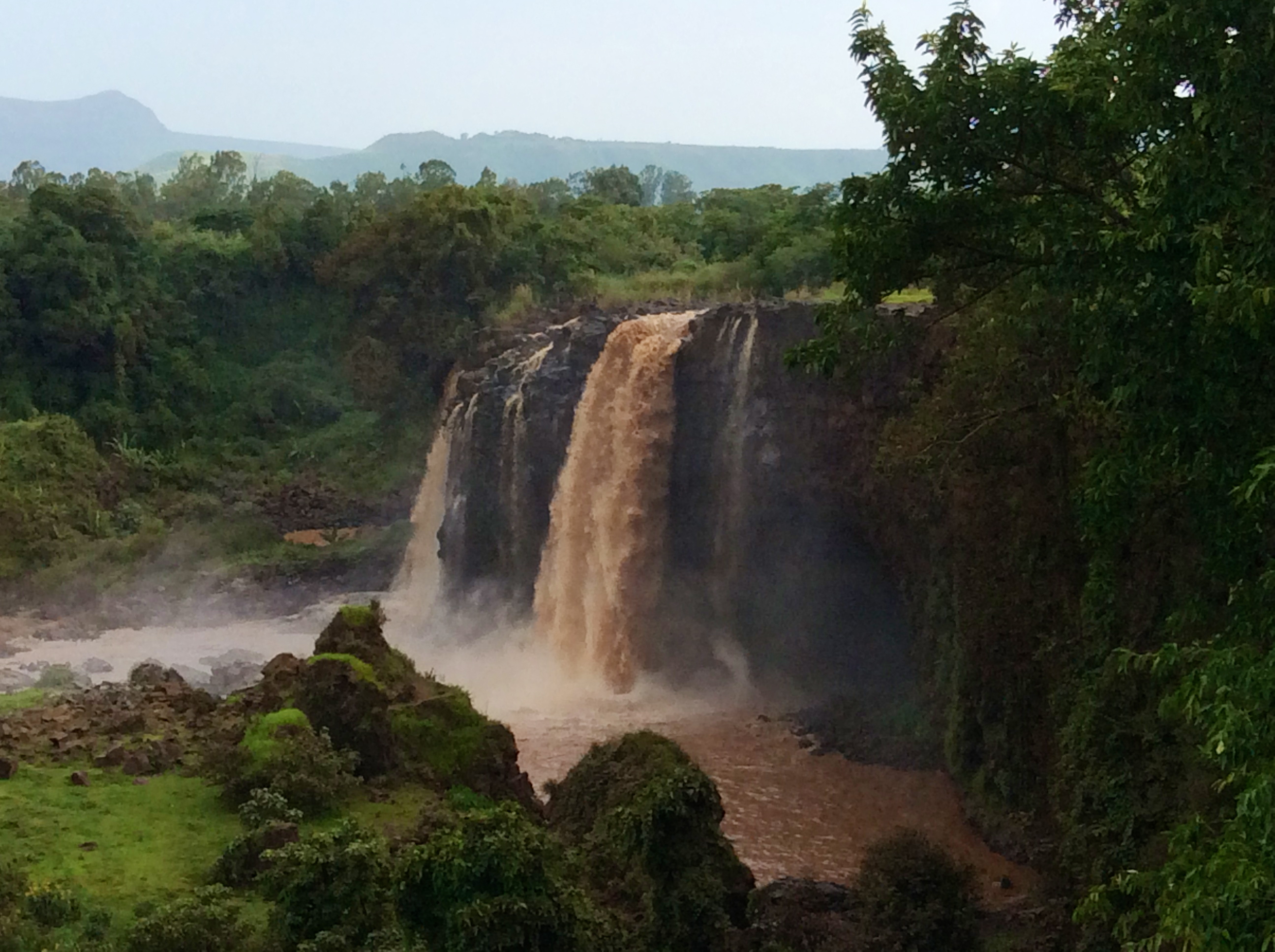
The falls, although impressive, failed to meet my expectations.  After seeing numerous photos of them, I expected something grander.  They used to be.  Now, 80 per cent of the water is diverted from the Nile before it reaches the falls.  Ethiopia produces enough hydroelectric power to export it to nearby countries.  85% of the people in Ethiopian have electricity.  As you drive by villages, you can see dishes for TVs on rooftops.
IMG_0879

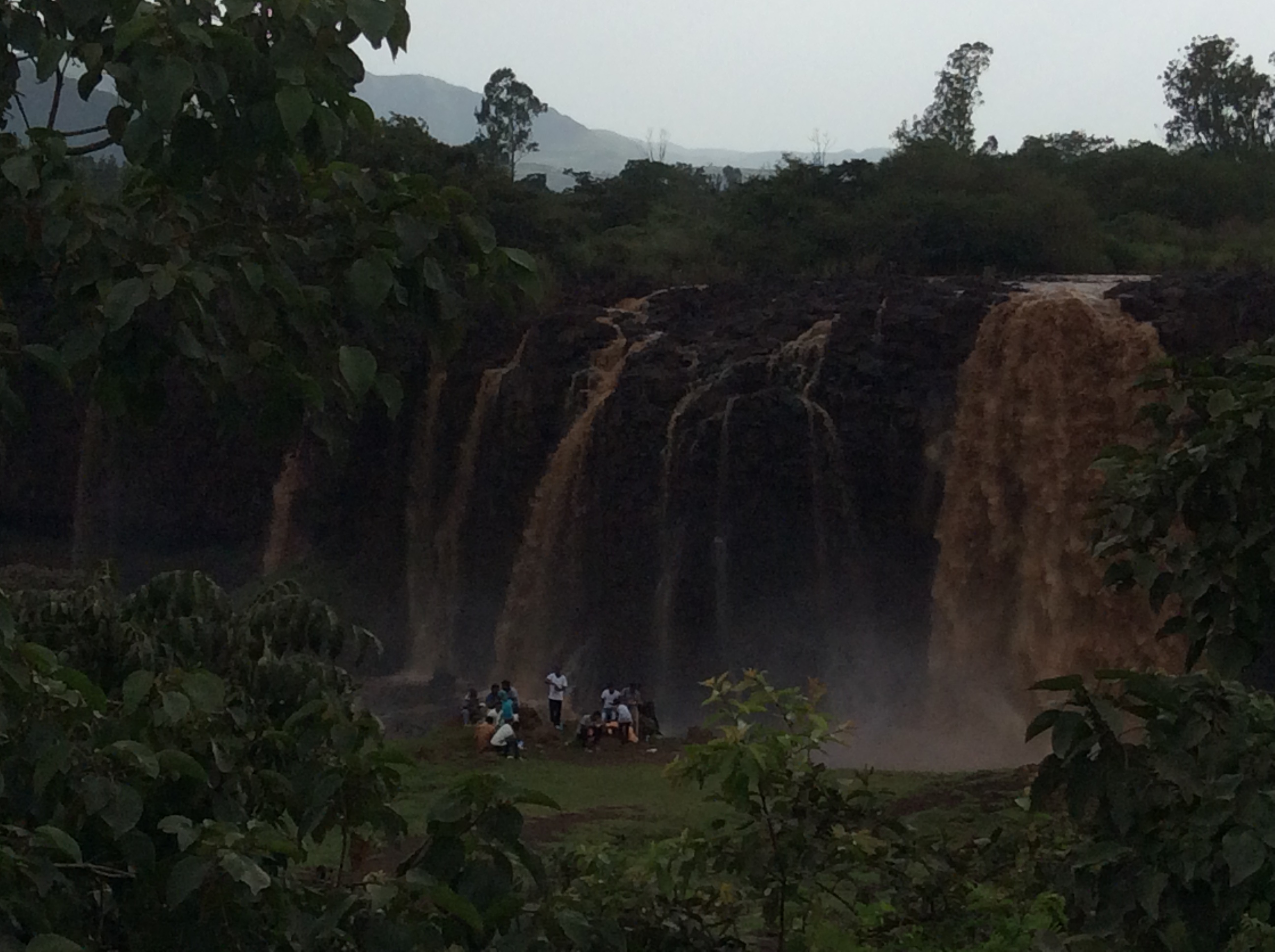
We were told that the falls used to be so large they covered everything where we stood.
IMG_0886

IMG_0882

My friends took a different route to get to the falls than I.  I crossed the Nile at another location to get there.  They hiked around some large hills and crossed this footbridge made by the Portuguese years ago.

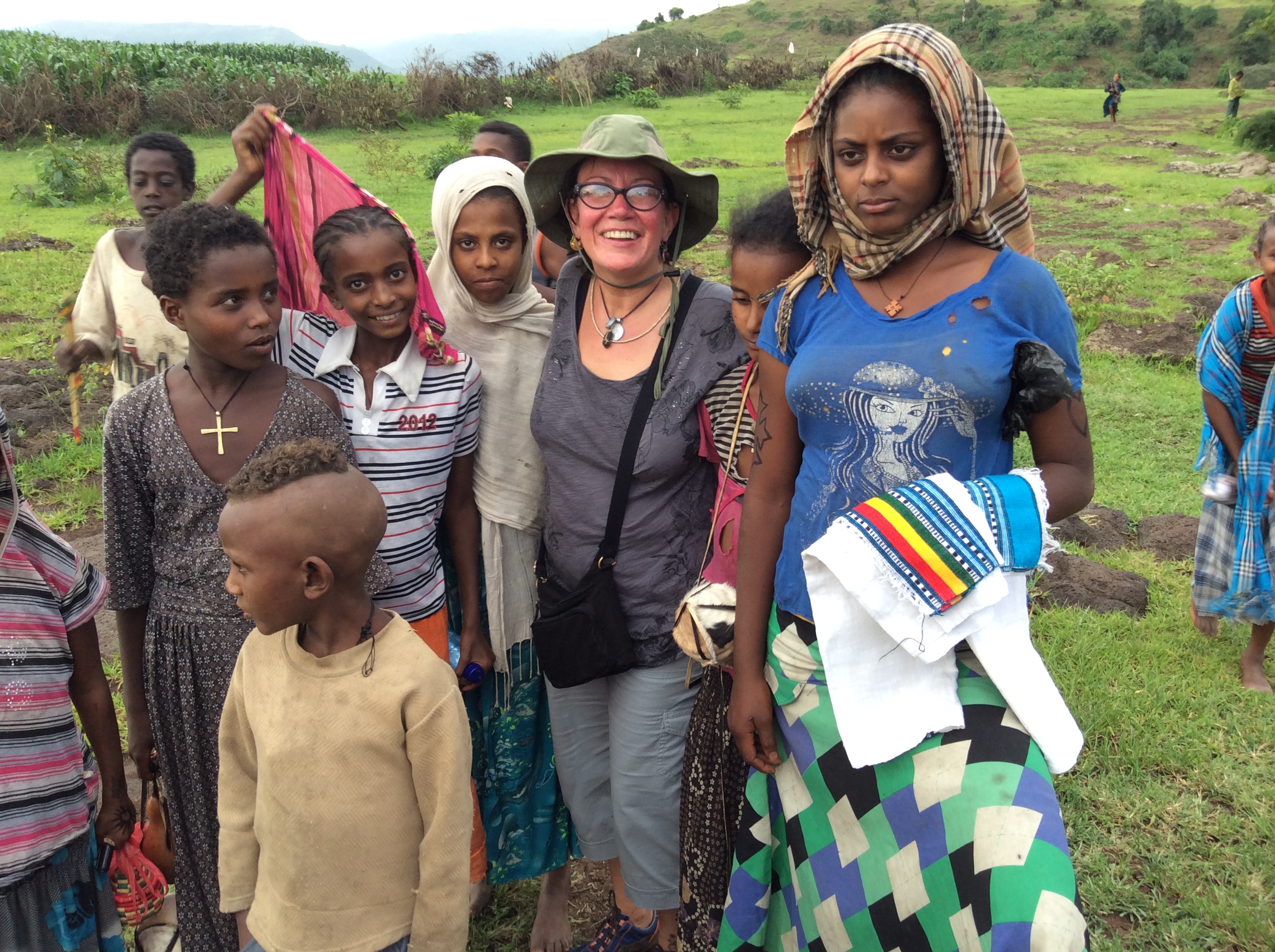
Children of varying ages crowded around us selling various types of items.  My friend, Zuriash, is in the middle with the hat.
IMG_0891

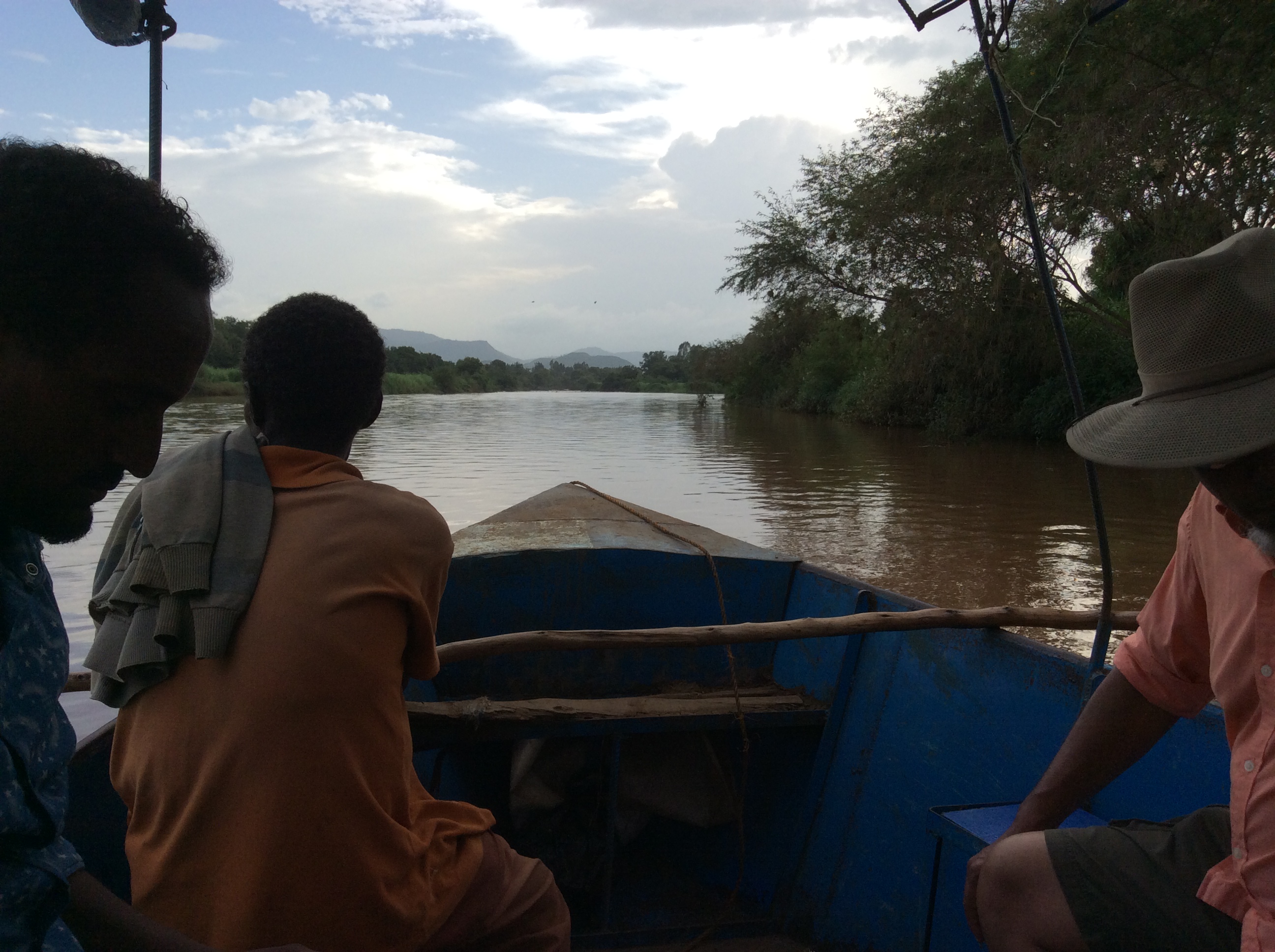
Twice that day I crossed the Nile in this boat.
IMG_0892

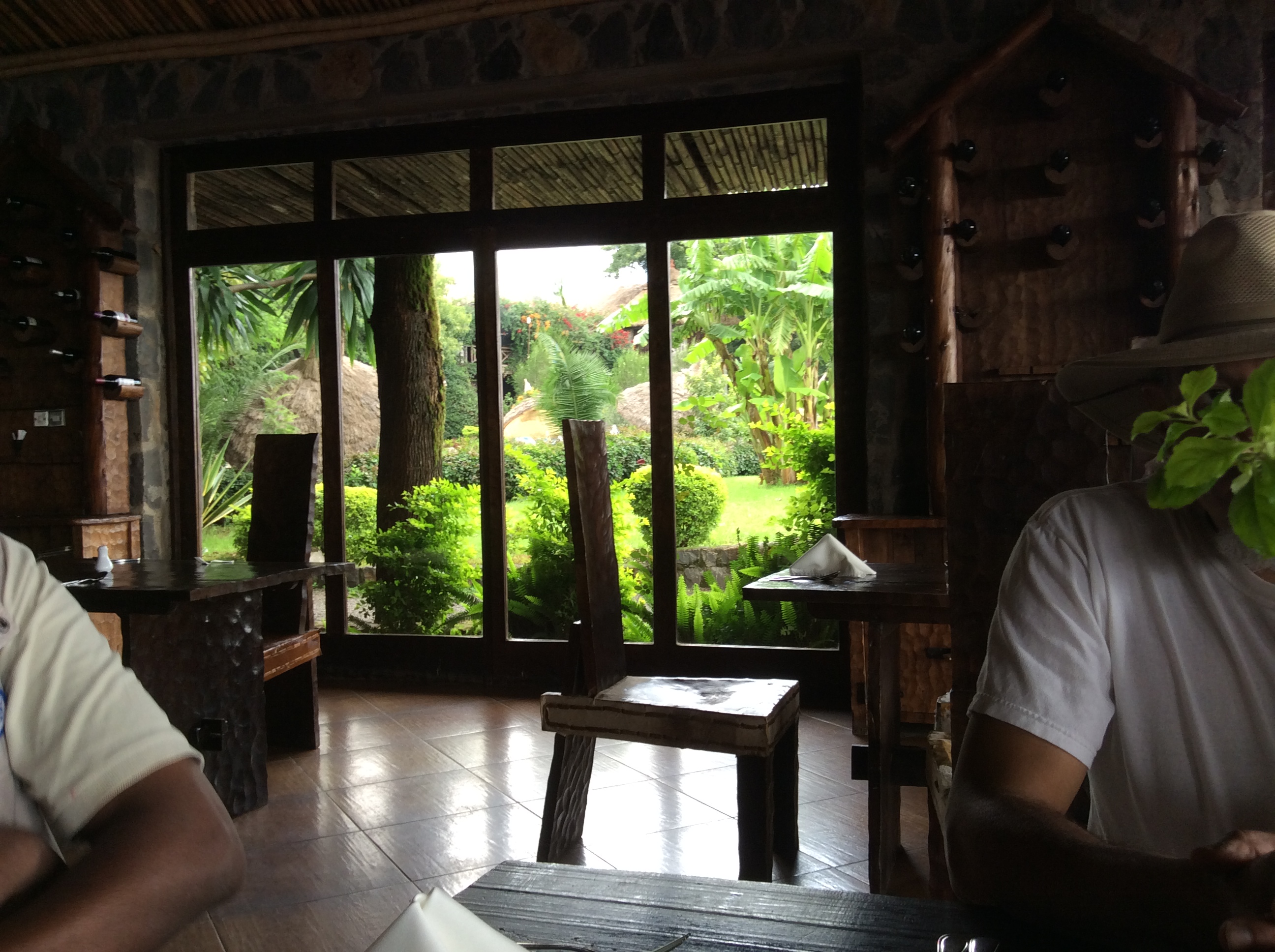
The morning we left Bahir Dar, Alemu took us to this restaurant at a fancy resort on the lake.  The owner’s story remains one of those success stories one hears off and on in Ethiopia.  He came to the US, worked for a big hotel here, learned the trade, saved his money, returned home, and built a couple of very successful luxury hotels.  This is the restaurant at the one in Bahir Dar.  All the rooms, the landscaping, everything deliberately duplicates African traditional architecture and gardening, a certain, special atmosphere.
IMG_0893

IMG_0894

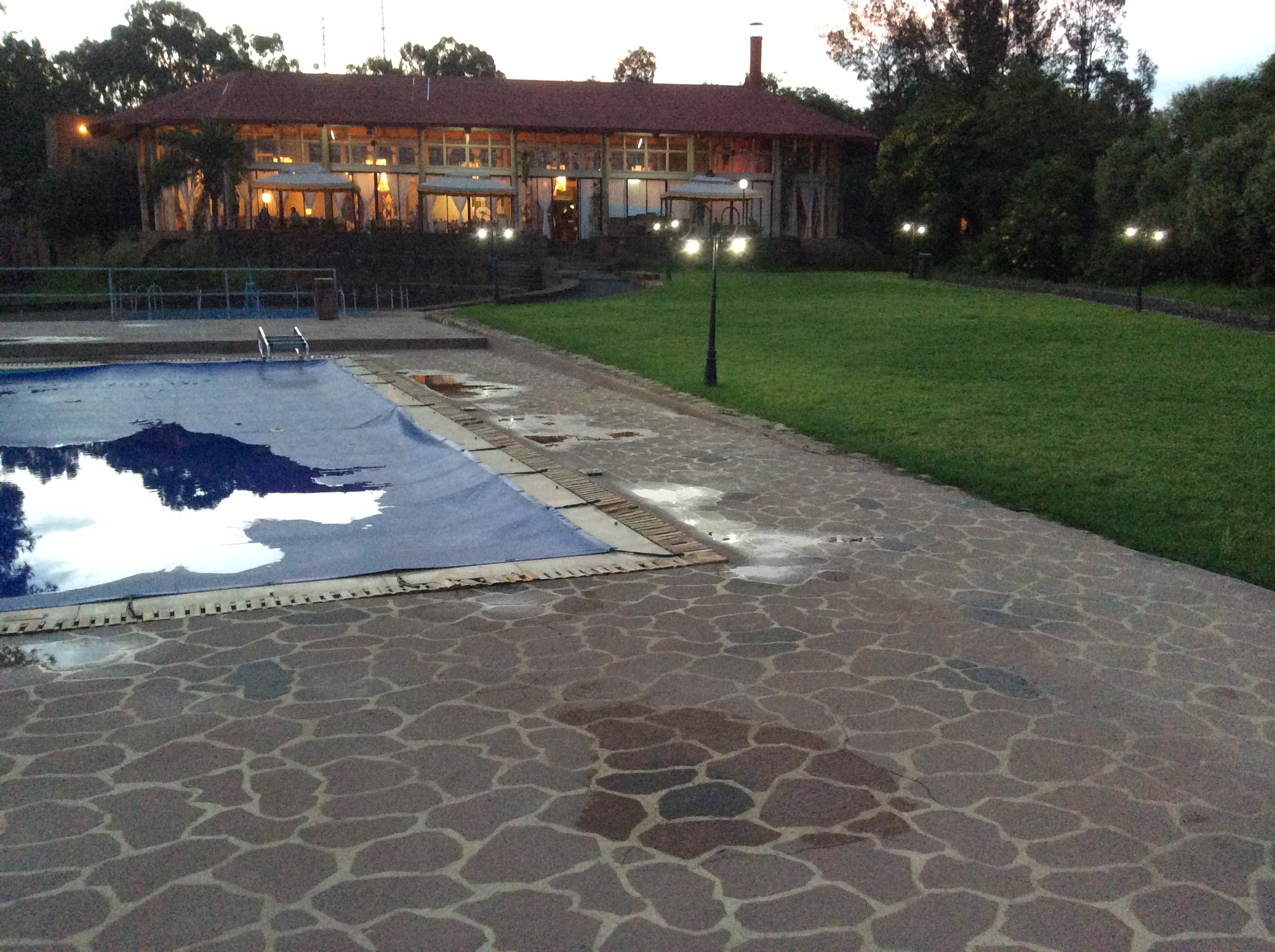
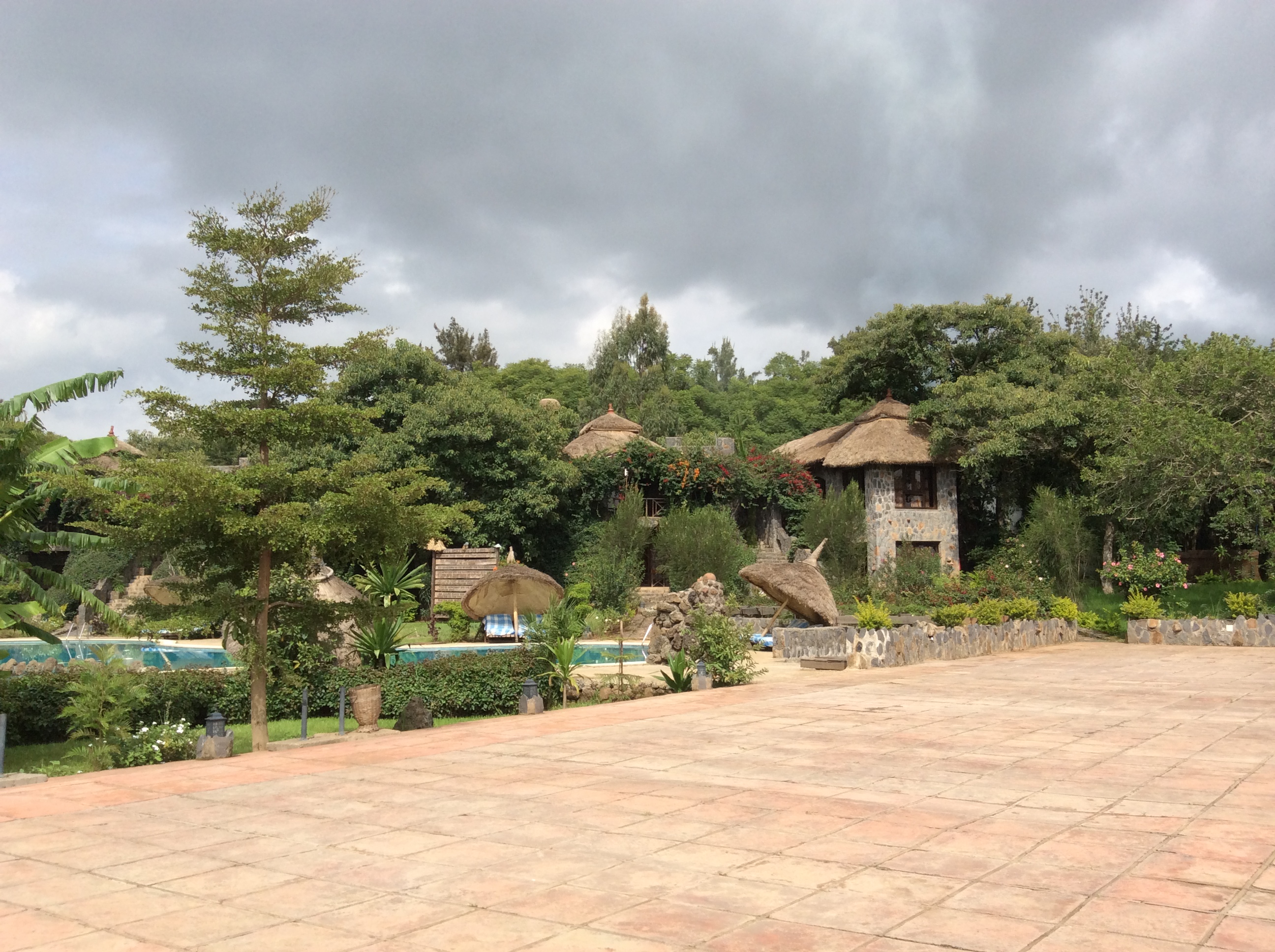
These hand carved chairs may look uncomfortable but they are not.  Somehow they fit the human body perfectly.  The following is a view of the pool and some of the rooms.
IMG_0895

IMG_0896

My Ethiopian Adventure: the Monasteries of Lake Tana


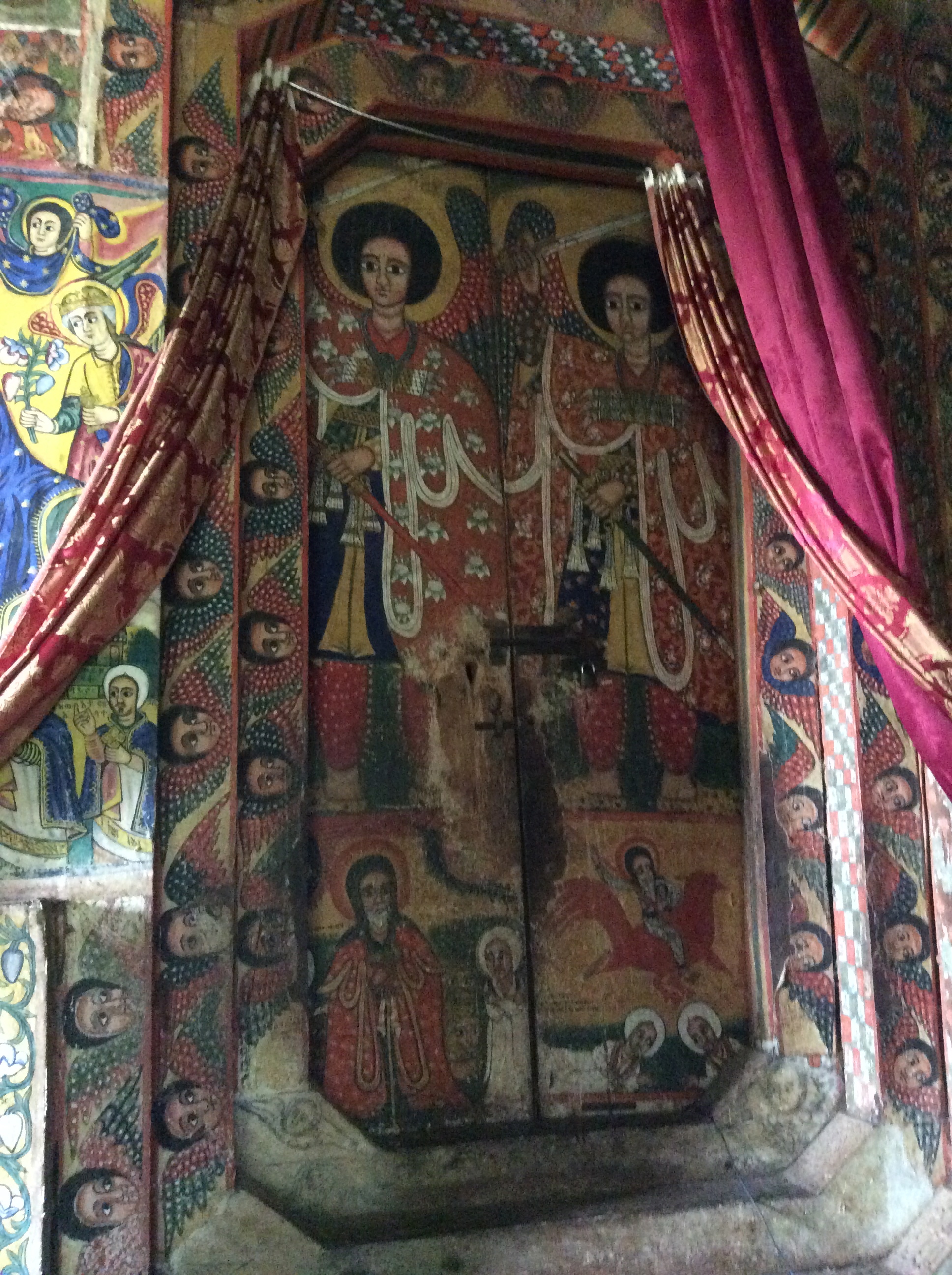
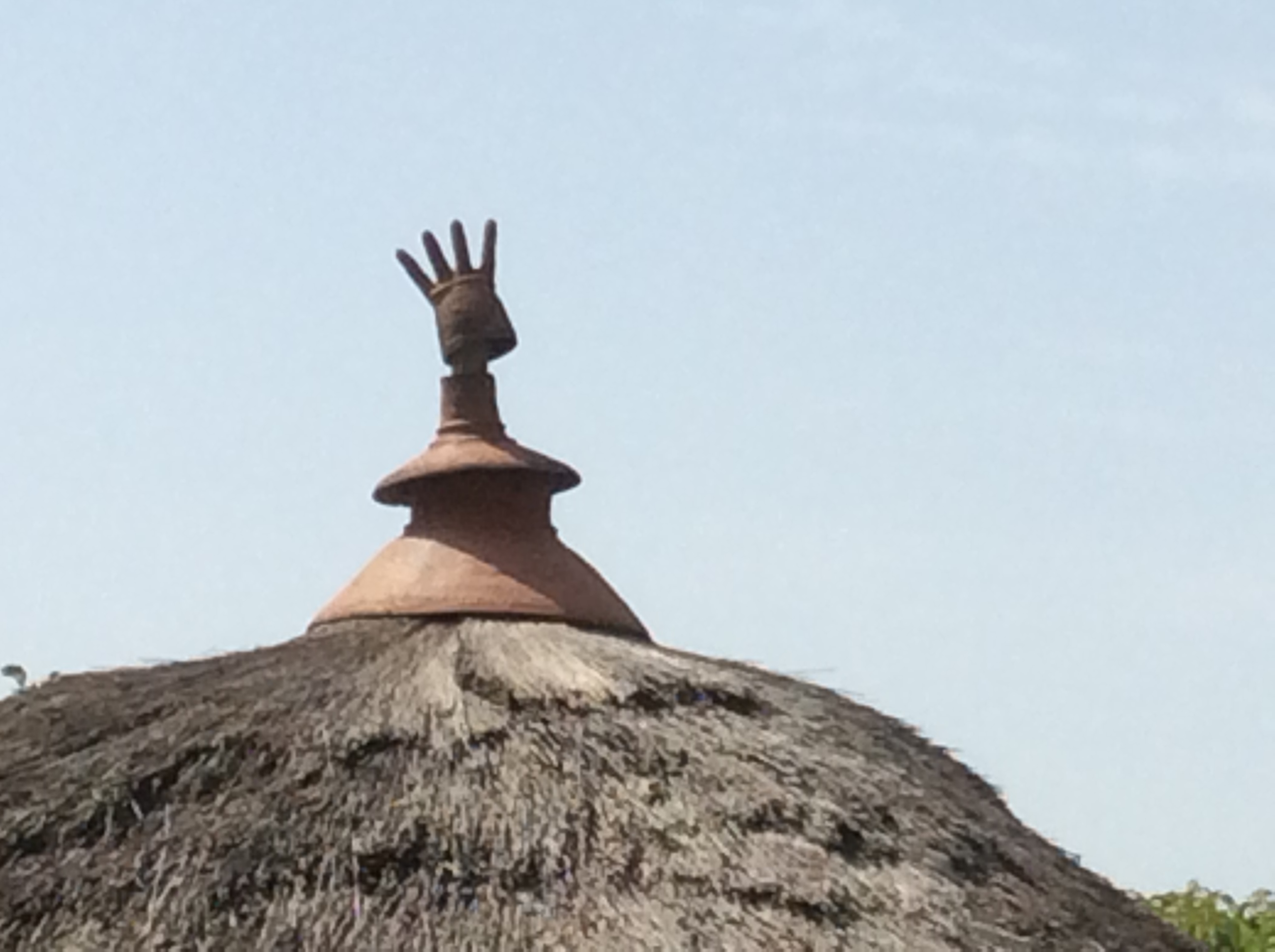
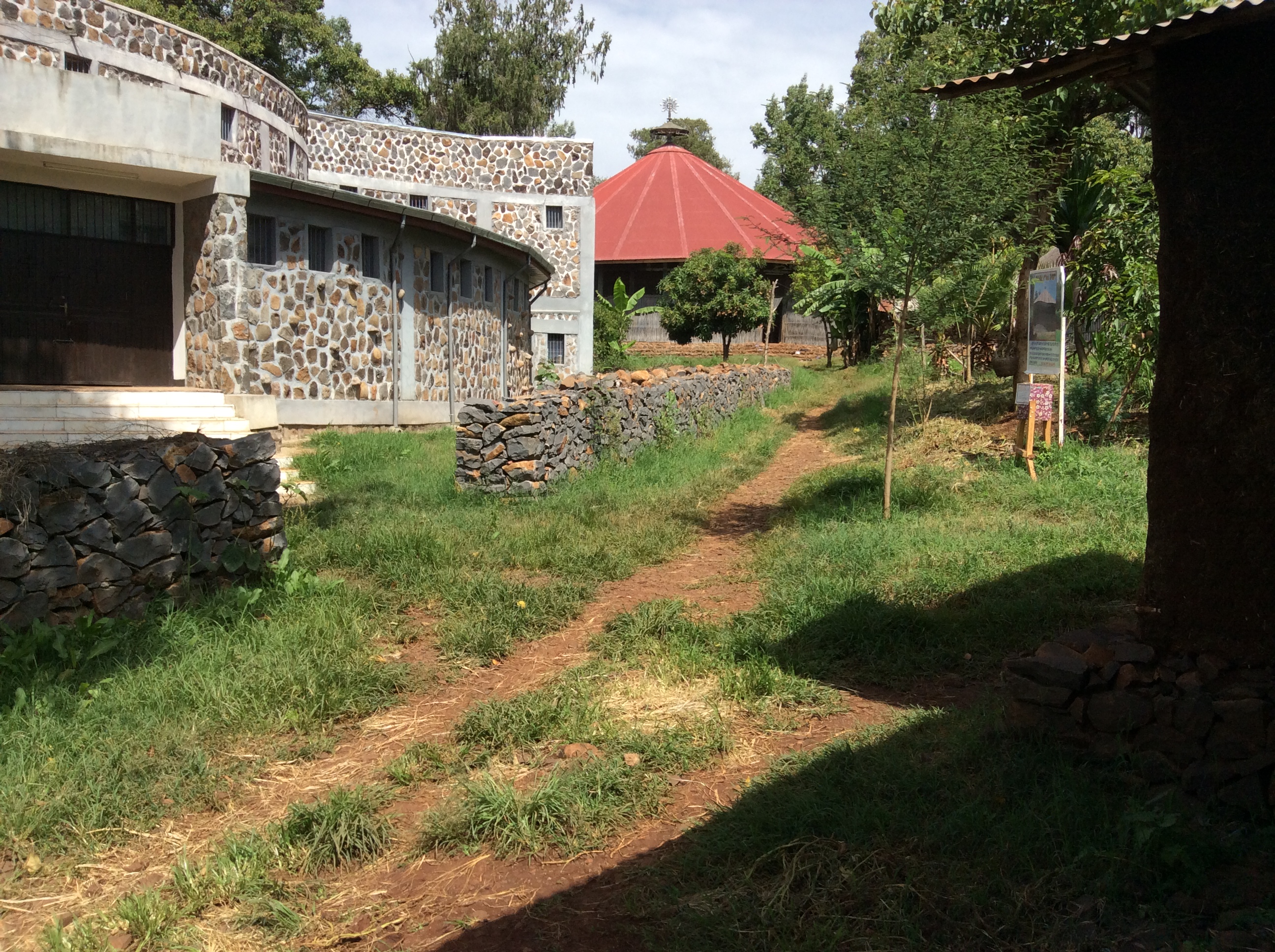
Of the 37 islands on Lake Tana, 20 shelter churches and monasteries, very old monasteries, many of which remain in use today.  While some are closed totally to women, we visited Ura Kidane Mihret with no problem.  It is part of a larger complex, the Convent of Mercy founded in the 14th century.  Various buildings date from that era to more recent times.  To reach the monastery you have to climb in a boat and ride across Lake Tana to the Zege Penisula.  We boarded our small boat at the far end of this garden at the hotel–there were four of us and the helmsman–and headed across the lake. IMG_0809 On the way we passed a number of fishermen paddling their papyrus boats. IMG_0817 We also sailed past a couple of islands like this one where one monk lives alone.  On another island lives a priest.  Women are not allowed except on one, just at the edge near the dock.  We did not go there. IMG_0818 Once you arrive at the dock you hike up a hill past various vendors selling everything from religious paintings to hand woven scarves. IMG_0820 This young man used all natural materials to paint small replicas of the paintings found in the monastery itself.  In retrospect I wish I had purchased at least one; I never saw anything quite like them again. Like most religious buildings in Ethiopia, all the buildings in this complex are round.  The only place in Ethiopia where I saw rectangular churches was in Lalibela. IMG_0821 Every piece of space on the interior walls is painted with religious scenes from the Bible and Ethiopian religious history.  The current paintings date from 100-250 years ago when, as the paint began to deteriorate, they used a special process to repaint them.   This particular monastery is noted for these incredible paintings. IMG_0822 IMG_0824 IMG_0826 IMG_0827 The tops of all the buildings are adorned with different symbols for peace.  Sometimes they also represent the disciples of Jesus as well or other religious symbolism. IMG_0829   IMG_0830 A new visitor center remains under construction; it seemed nearly complete. IMG_0831 The visitor center is the rock building on the left, the monastery the building in the rear. IMG_0832 On the path back to the boat dock vendors sell scarves and jewelry.  I bought several scarves, one of which was totally different from any I saw anywhere else.  If I had only known just how unique it would be, I would have bought the other one–she had only two.  These scarves are hand loomed and in some cases the yarn is also hand spun. IMG_0833 Finally, back near the dock we stopped for coffee, indulging ourselves in the totally Ethiopian experience of their coffee ceremony.  You have not truly sipped coffee until you participate in one of these.  There is nothing anywhere quite like it. IMG_0836

My Ethiopian Adventure: Lake Tana, Where the Nile Begins–Part Two


As the sun set and the moon rose, Lake Tana glittered.

IMG_0797

IMG_0799

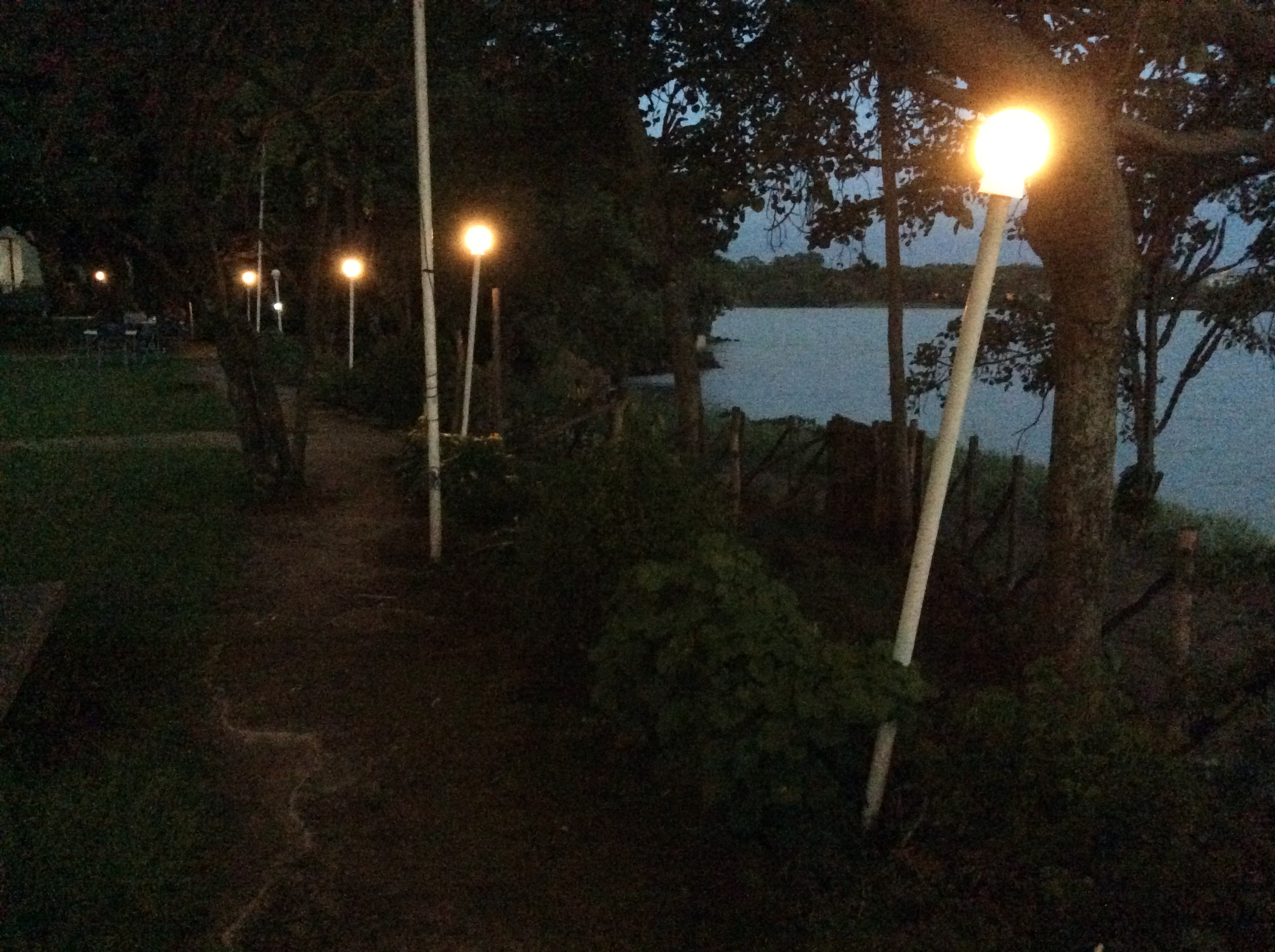
The hotel, known for its gardens, provided lighted pathways for evening walking.  The next morning as we sat on the patio for breakfast, company arrived.

IMG_0807

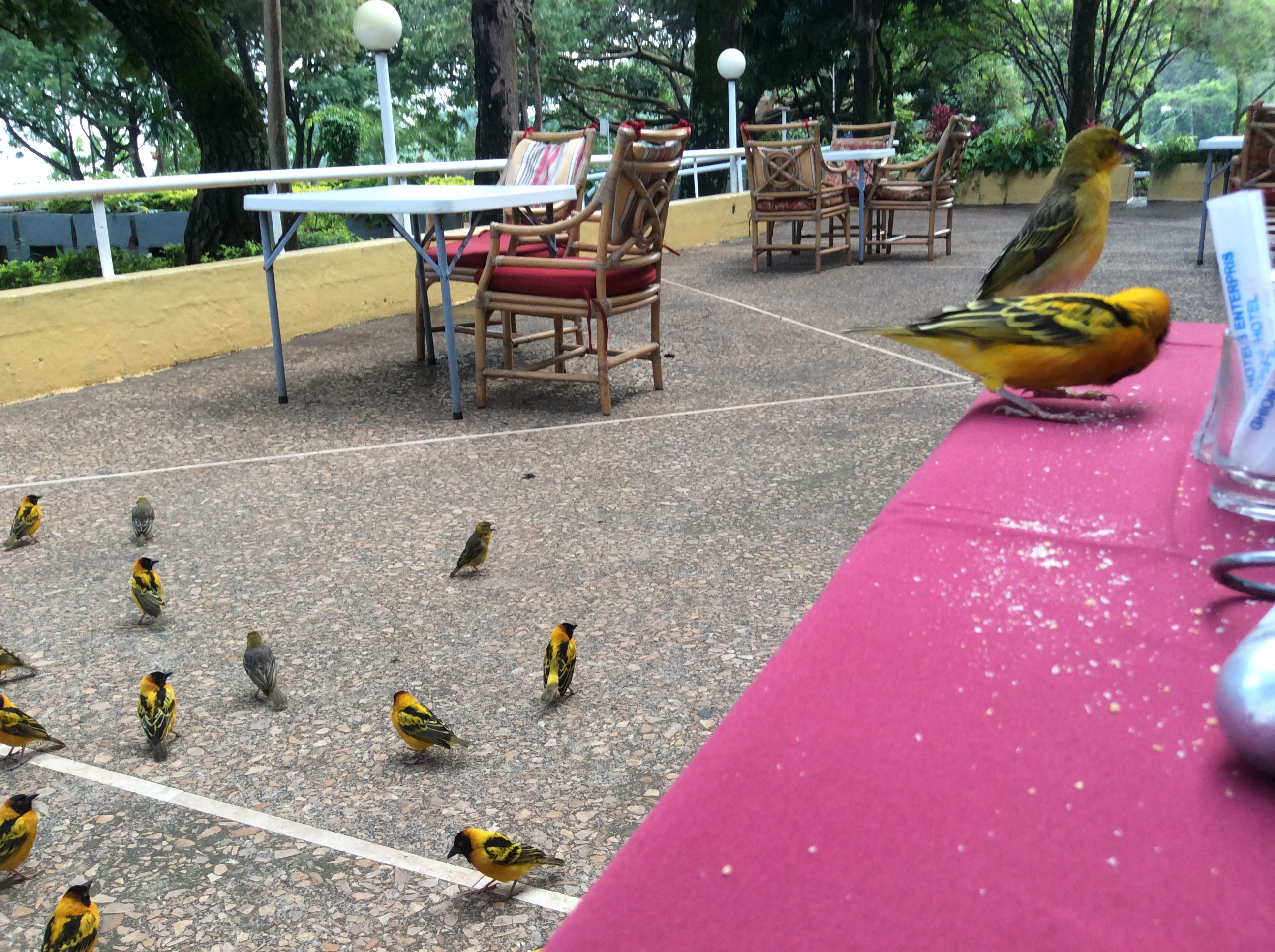
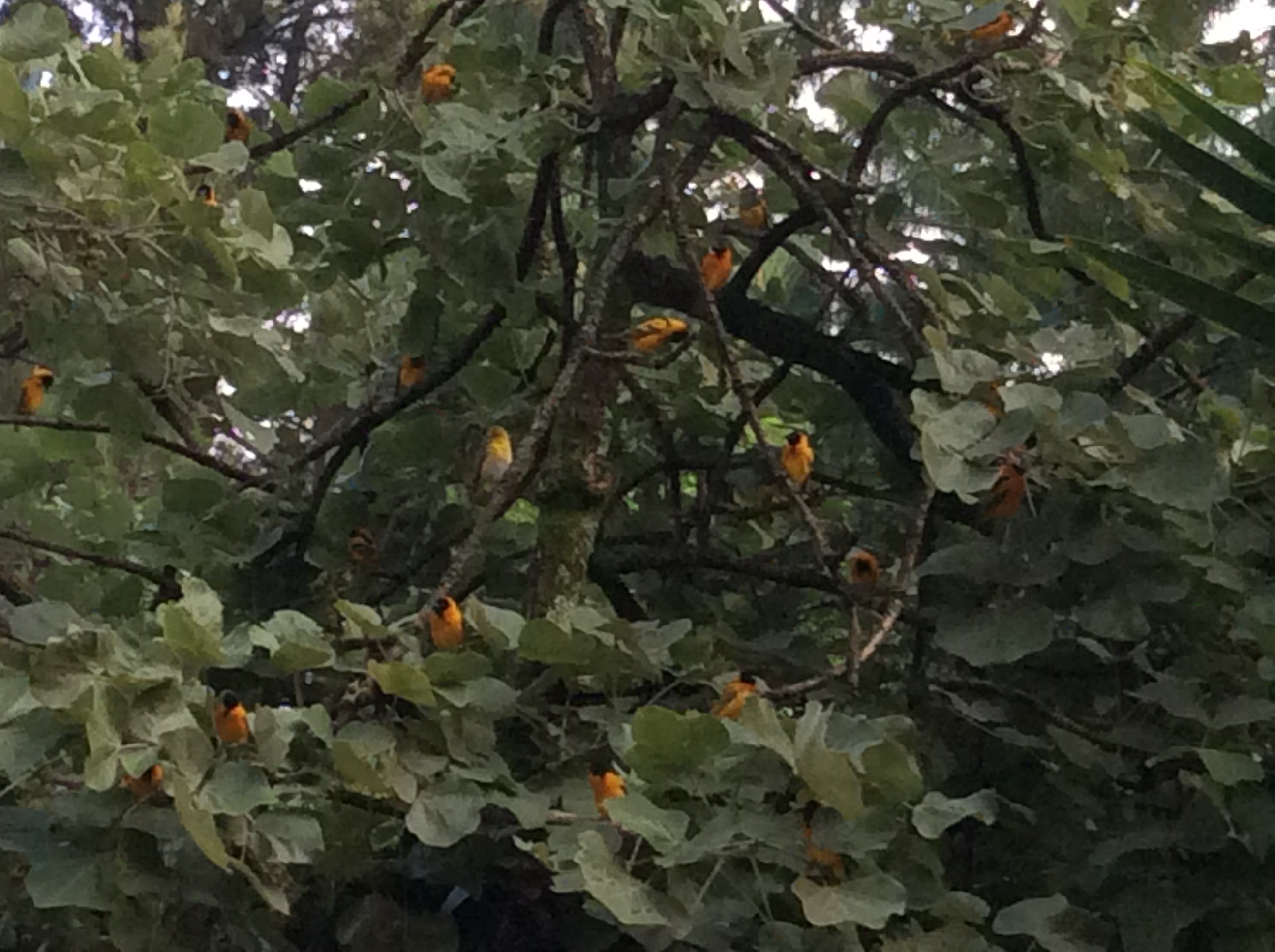
We crumbled toast to see what would occur.  These weavers loved the treat.  A hotel employee, viewing them as pests, ran out and drove them into a nearby tree.

IMG_0802

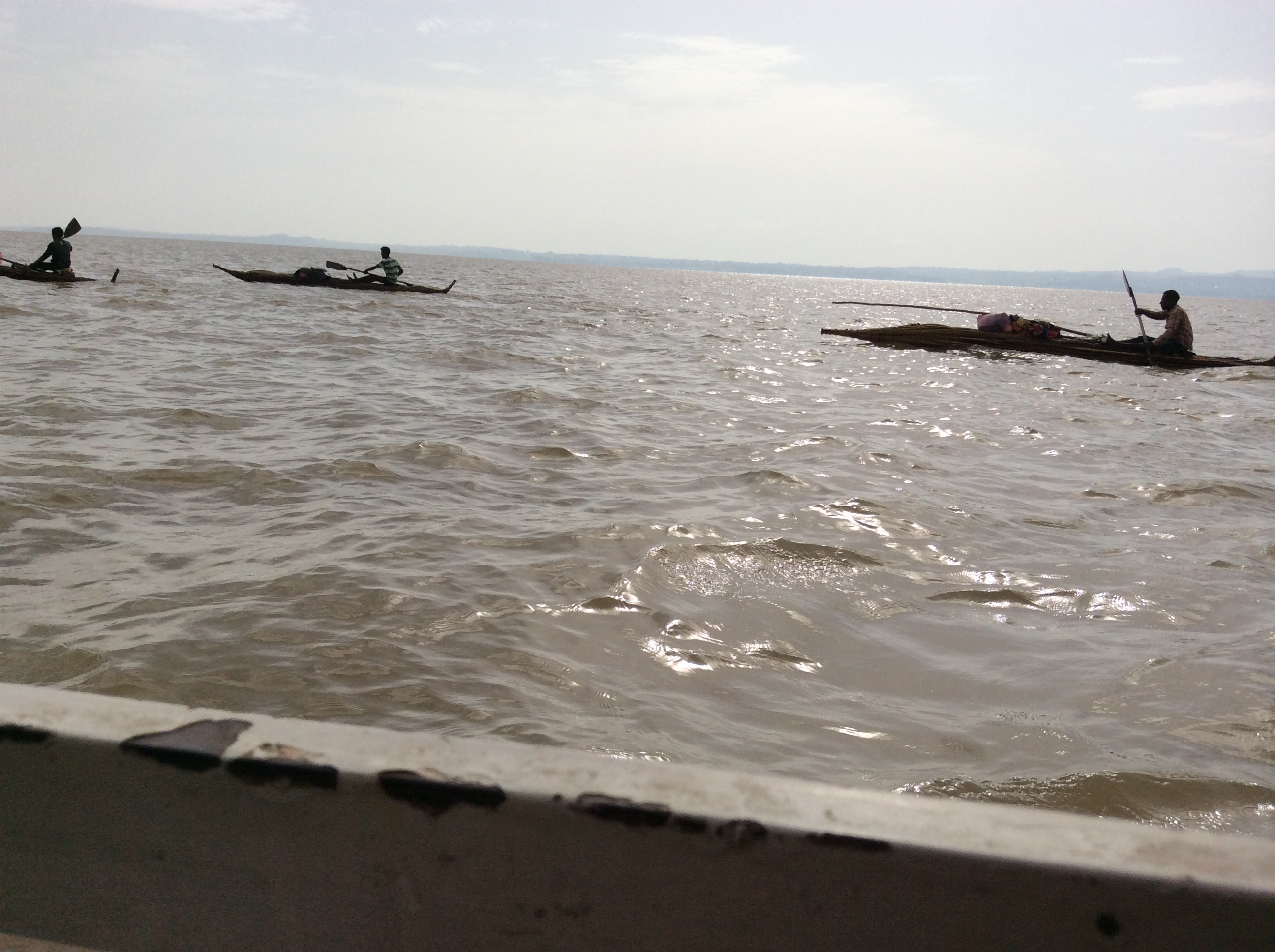
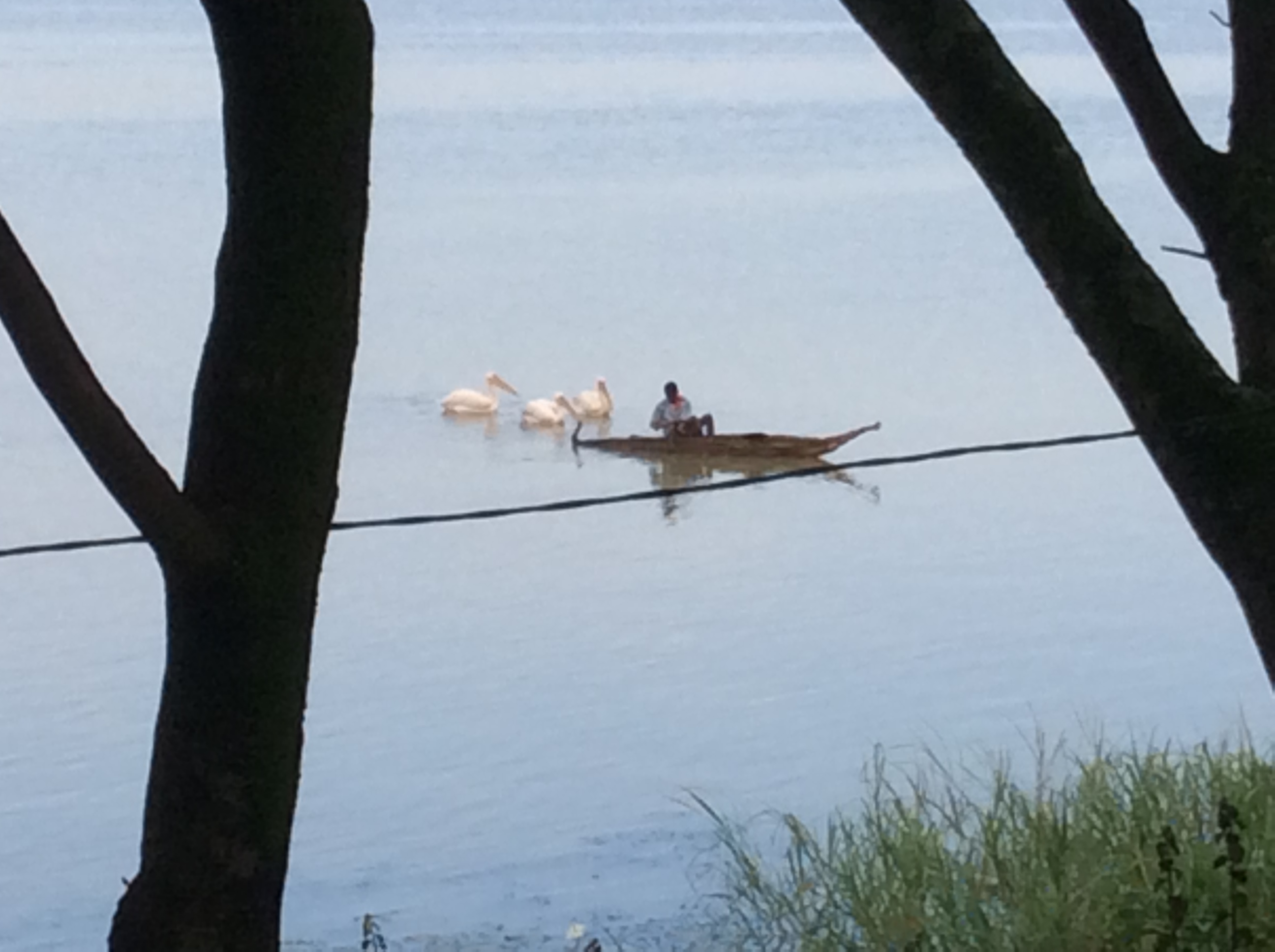
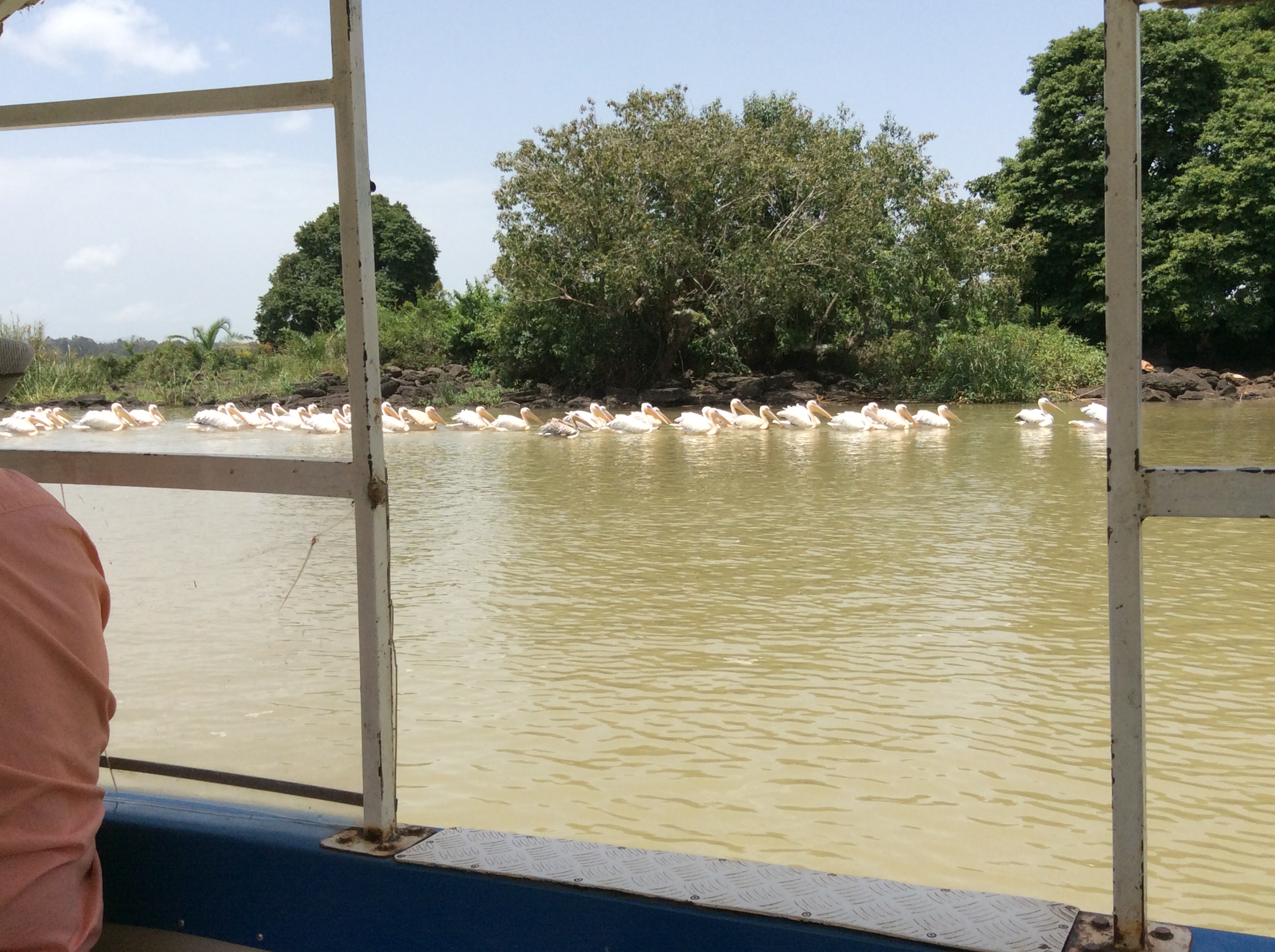
Fisherman still use the same papyrus boats used during the time of the pharaohs. The pelicans at Lake Tana display snow white plumage.

IMG_0808

IMG_0812

These fisherman customarily row two hours out into the lake to fish and when finished, two hours back.  Yes, I said row, no motors. Talapia is the primary catch.  After boarding at the hotel dock, we made our way across a tiny portion of the lake in a relatively small boat powered with a motor.

IMG_0817

Lake Tana is huge.  The ferry that crosses from Bahir Dar to Gorgora takes ten hours.  When we boarded the motor boat, it never occurred to me that we would actually go to the place where the Blue Nile begins, but suddenly here we were.  Just thinking about it as I write this makes me shiver.  I am here again, where the river of all rivers, the Nile, actually begins.

IMG_0840

IMG_0846

IMG_0849

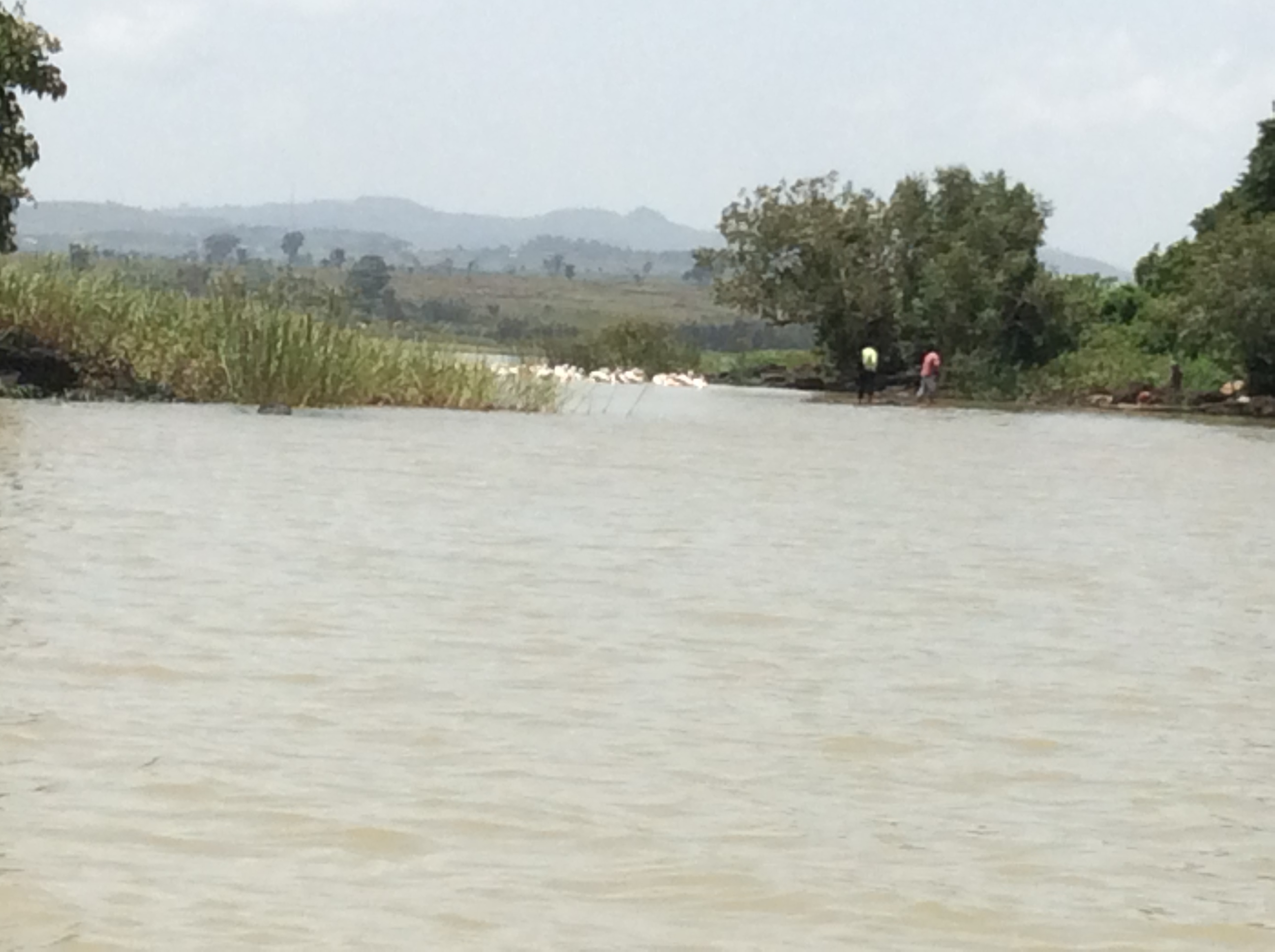
And suddenly we are on the Nile, no longer in Lake Tana.

IMG_0841

IMG_0858

The light colored objects along the river bank are papyrus boats.

IMG_0856

IMG_0851

The tall plants in the background are papyrus.  In Addis I saw them used as ornamental plants in the gardens of the Sheraton.  Here they grow wild along the Nile exactly as they have for millennia.

IMG_0862

Just past this point, we rounded a slight bend in the coastline.  A naked man bathing in the water quickly scrambled up the bank and pulled on a pair of pants.

We zoomed here and there so rapidly that at times I remained uncertain as to whether I was in Lake Tana or the Nile.  No matter, it was warm, the company was stellar,  my body smiled.  What could possibly be better than this!!!

My Ethiopian Adventure: Lake Tana, Where the Nile Begins–Part One


From Gonder to get to Lake Tana, you must retrace your route to go to Bahir Dar, the largest city on the lake.  The road around the west side of the lake is not a major highway so we traveled back past the Finger of God, past my favorite castle, through the valley with miles of rice, through Addis Zemen.  Altitude declines the closer you drive to Bahir Dar.  Although Simien Mountain National Park remains one of the most scenic places I have ever visited and Gonder is a city filled with unique history and beauty, I felt happier and happier as it became warmer, more tropical.  In keeping with the previous week, the emerald landscape continued.

IMG_0767

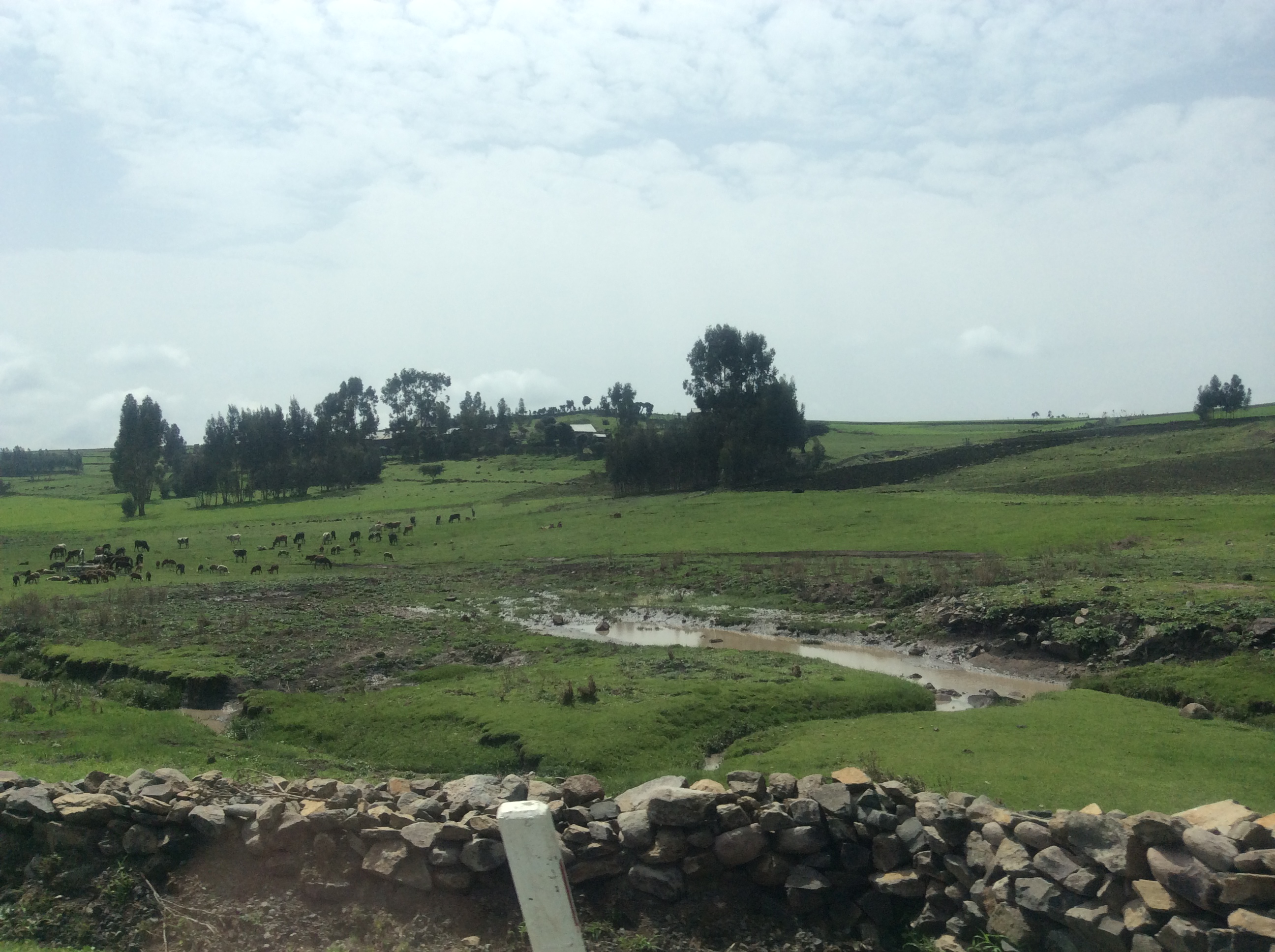
Here cattle grazed in the seemingly endless pastures.  As usual, livestock walked along the road.  The species of livestock varied with altitude and locale.

IMG_0763

When you drive through towns and even larger cities, expect to dodge people and animals.  Even in Addis, we saw goats.

IMG_0764

IMG_0774

These intensely yellow flowers in the foreground grew everywhere.  No one seemed to know their name.

IMG_0778

Dino wanted to buy the hat so we stopped to talk to this boy herding his animals along the roadside.  He told Dino he spent two days making it.  The hat along with baskets and other items bought on the trip took one and one half months to arrive in the US after being shipped from Ethiopia.

IMG_0780

In this area, these same yellow flowers appeared everywhere and in some places so close together as to make a fence.  Upon detailed inspection, I concluded they are some type of thistle. Later, we learned they are poisonous to the touch and cause massive swelling.  And to think I seriously concerned touching them. Finally, we arrived at Bahir Dar and drove onto this street.

IMG_0782

We reached a promontory overlooking the Nile.  The Nile!!!  All my life I have heard of the Nile.

IMG_0785

Here below me, flowing out of Lake Tana, the source of civilizations thousands of years old, the Nile begins its long journey to the Mediterranean  Sea.  We drove further down a dirt road to this overlook.

IMG_0791

Unlike the previous point, no one was here except two youngsters and us.  We watched cattle graze along the Nile, a couple walk on a pathway along the river, and a hippo cross from the near bank to the larger island, but too far away to capture with my iPAD.  Even now I can feel the emotion, an overwhelming, indescribable sense of amazement–the Nile, river of rivers, laying there below me.

IMG_0792

I stood spell bound for a long time, watching, feeling, thinking:  I cannot believe this, I am looking at the Nile.  Later, on the way to the hotel, we crossed a bridge over the river where hippos lounged.  We stopped, hoping to take photos, but the river guard said no.  We could look but no photos–he explained it is a strategic bridge.  We checked into our hotel on the shores of Lake Tana.

IMG_0797

IMG_0798

IMG_0799

Still, now, writing this, I feel the magic, the mystery.

My Ethiopian Adventure: The Fasilades Bath Palace and the Church of Debre Birhan Selassie


Gonder’s treasures take time to explore because there are so many of them.  Although the Fasilades Bath Palace remains empty of water most of the year, a huge crowd appears during the annual Timket (Epiphany) baptism celebrations when it is filled with water from the Gaha River.  The area around the church fills completely with water and people. I saw photos with thousands of people in the water.  Since we were there in July, the area around the church remained dry except for puddles left by recent rains.

IMG_0642

IMG_0649

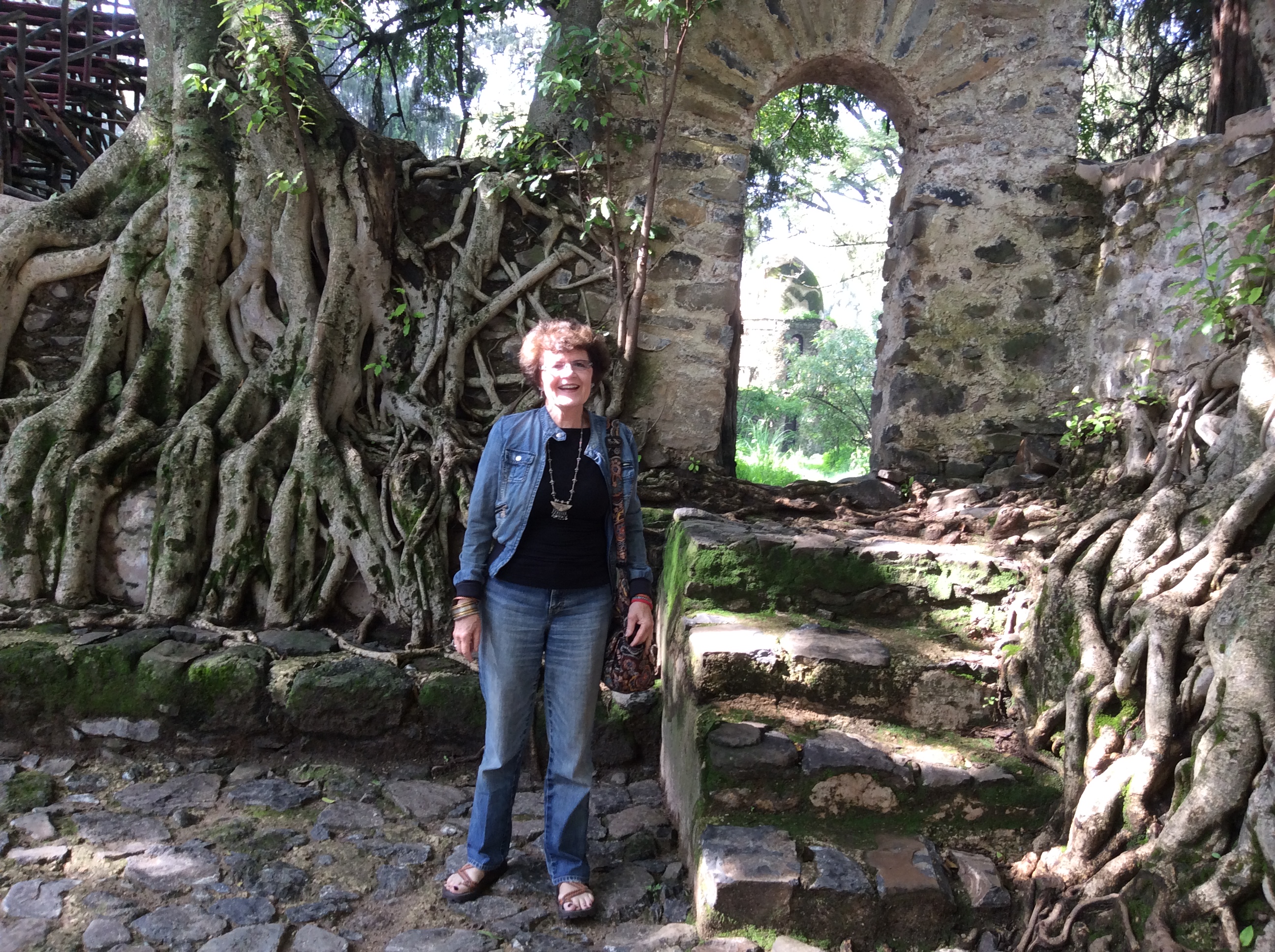
Obviously, given the manner in which it was built, the priest stands on the balcony when the bottom is full of water and people.  On the wall around, huge fig trees grow.

IMG_0648

Zuriash and I could not resist a photo with these incredible trees.

IMG_0644

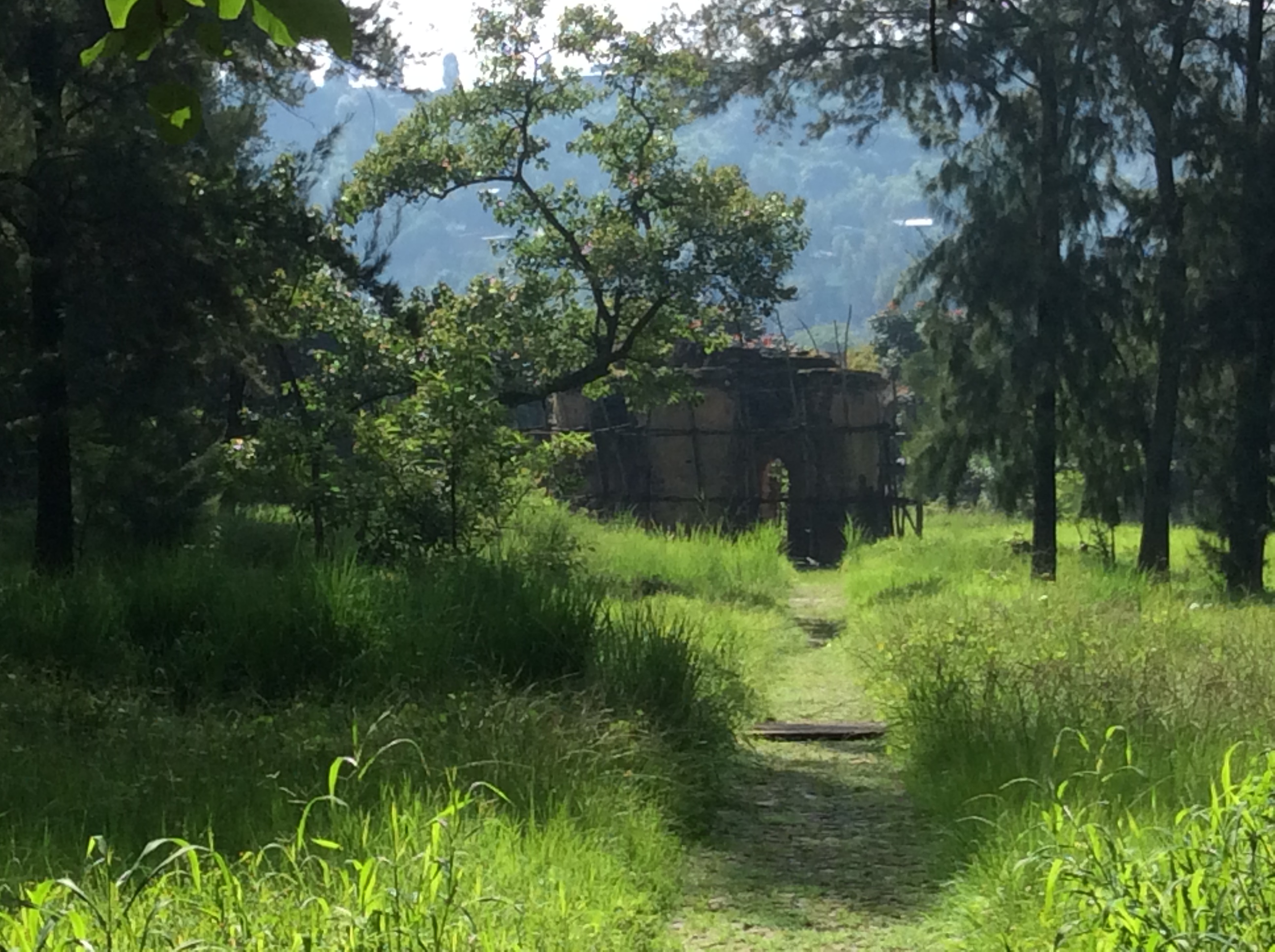
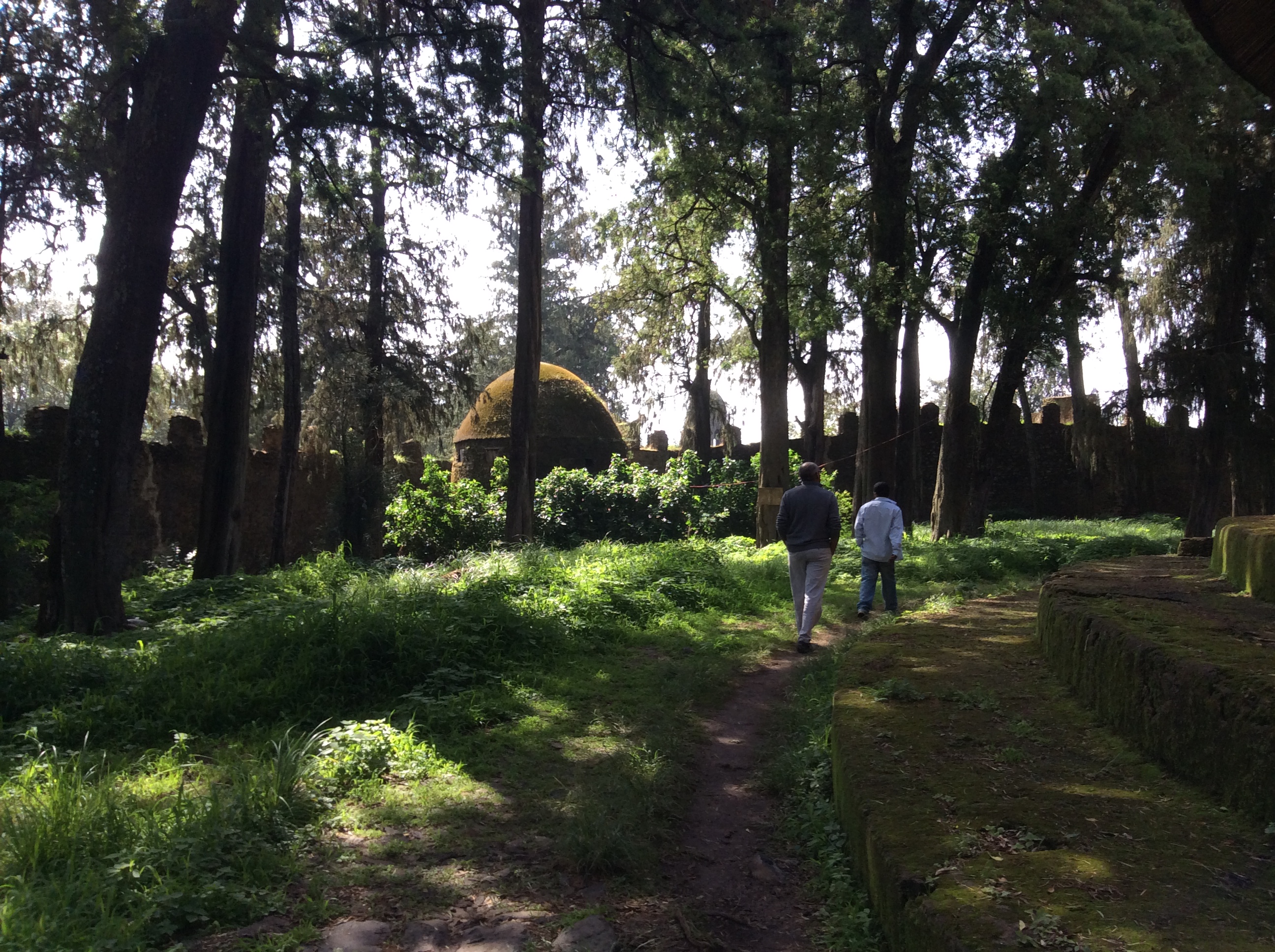
The area around the Bath Palace creates a bit of green paradise with grasses, trees, and wildlife thriving in profusion.

IMG_0650

IMG_0651

One rarely sees a horse so revered that his owner creates a special tomb just for him.  However, King Fasiledes owned just such a horse. The building in the photo below illustrates how much King Fasiledes loved his favorite horse, Zobal, who saved him in battle.  This Tomb of Zobal awaits restoration.

IMG_0652

The Ethiopian Orthodox Church thrives in this area of Ethiopia.  Young men continue to desire to learn and become priests as illustrated in the photo below showing a large group of young men training for the priesthood.

IMG_0655

IMG_0672

The grandson of King Fasiledes, Eyasu I, built this church.  The name means Trinity Mountain of Light.  Famous for its ceiling, it is the only church in Gonder remaining after the siege of Gonder in 1888, when the Mahdist Dervishes from Sudan invaded the city.  They burned down all the other churches.  Legend claims a swarm of bees descended on the church compound and the Archangel Michael stood at the gates with a flaming sword to protect the church.  Notice the spelling in the sign differs from the spelling I have used for Gonder.  Since Amharic is a totally phonetic language, it cannot be translated directly into English.  Therefore, spelling sometimes differs.  I use the spelling from the official map printed for Ethiopian tourists.

IMG_0656

The compound around the church is large, green, lush.

IMG_0657

IMG_0665

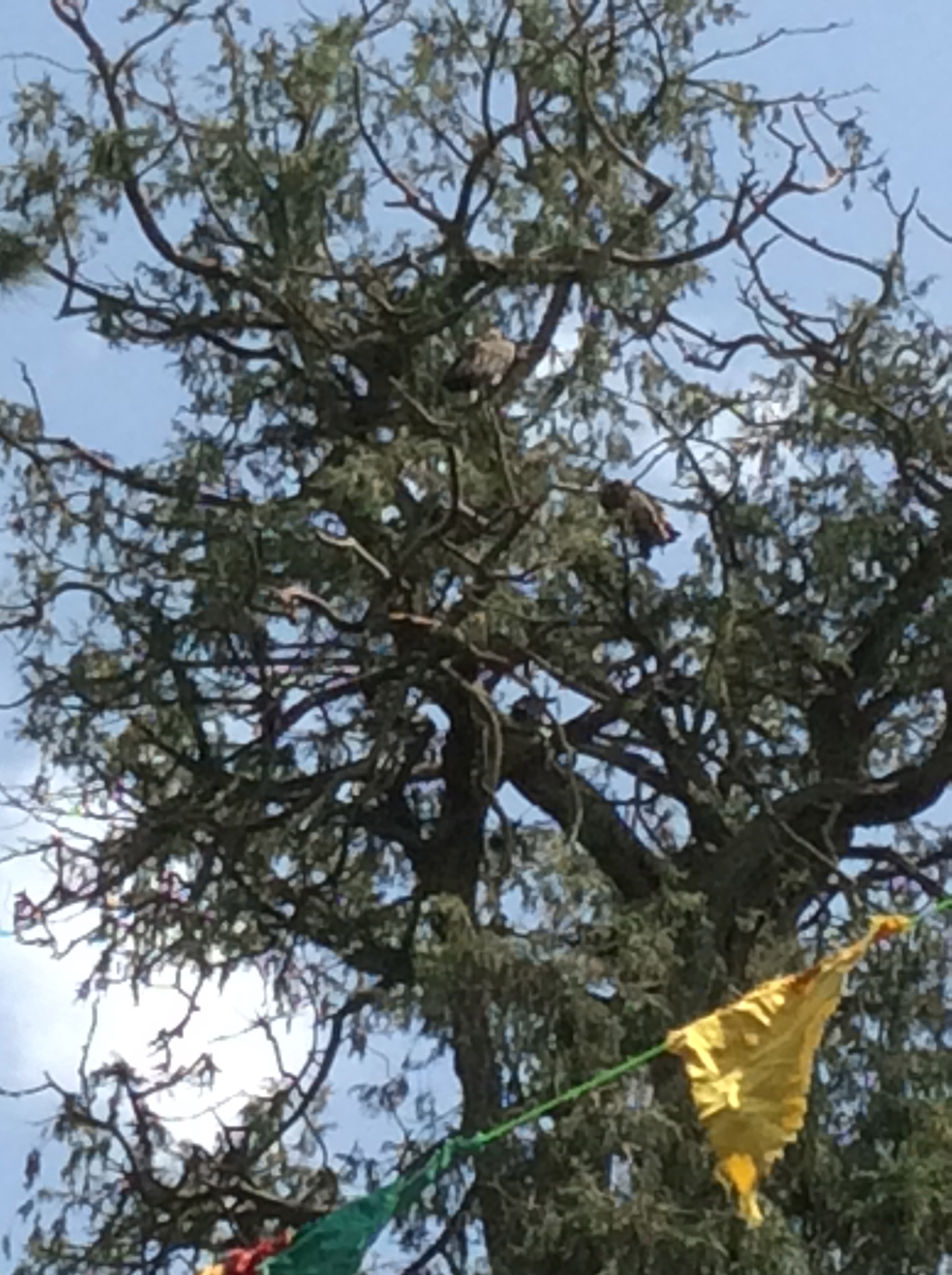
The concept/symbolism of the Lion of Judah shows up everywhere.  Here on top of the arch is the tail of the lion.  Its head is toward the front of the church.  We saw so much so quickly that sometimes by the time I grasped what I needed to photograph, we had passed it.  Other times we saw things totally unexpected, like the buzzards in the tree below.

IMG_0667

IMG_0663

The church decorations barely moved in the little wind.  The guide informed us, a special celebration would soon occur.

IMG_0664

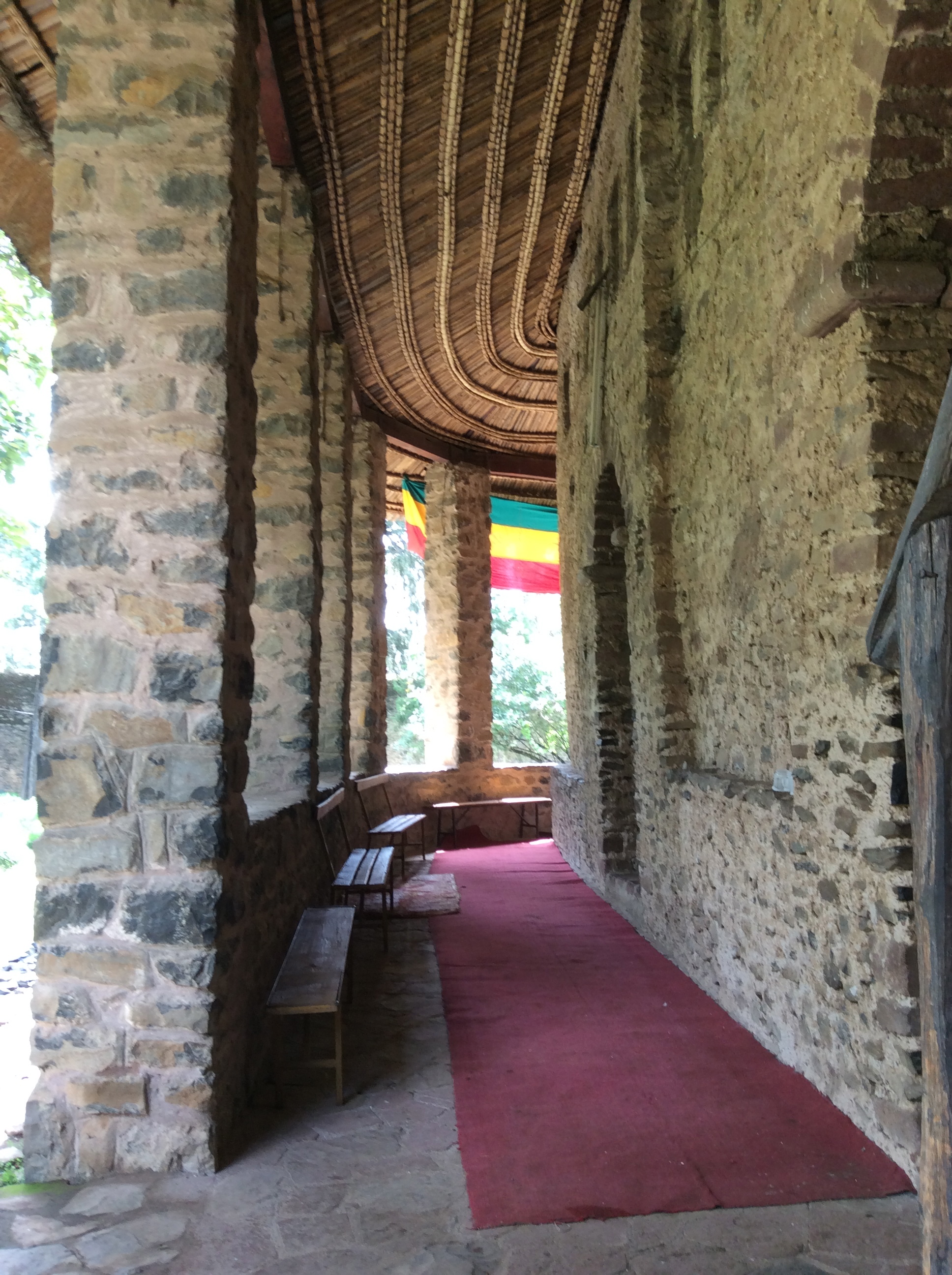
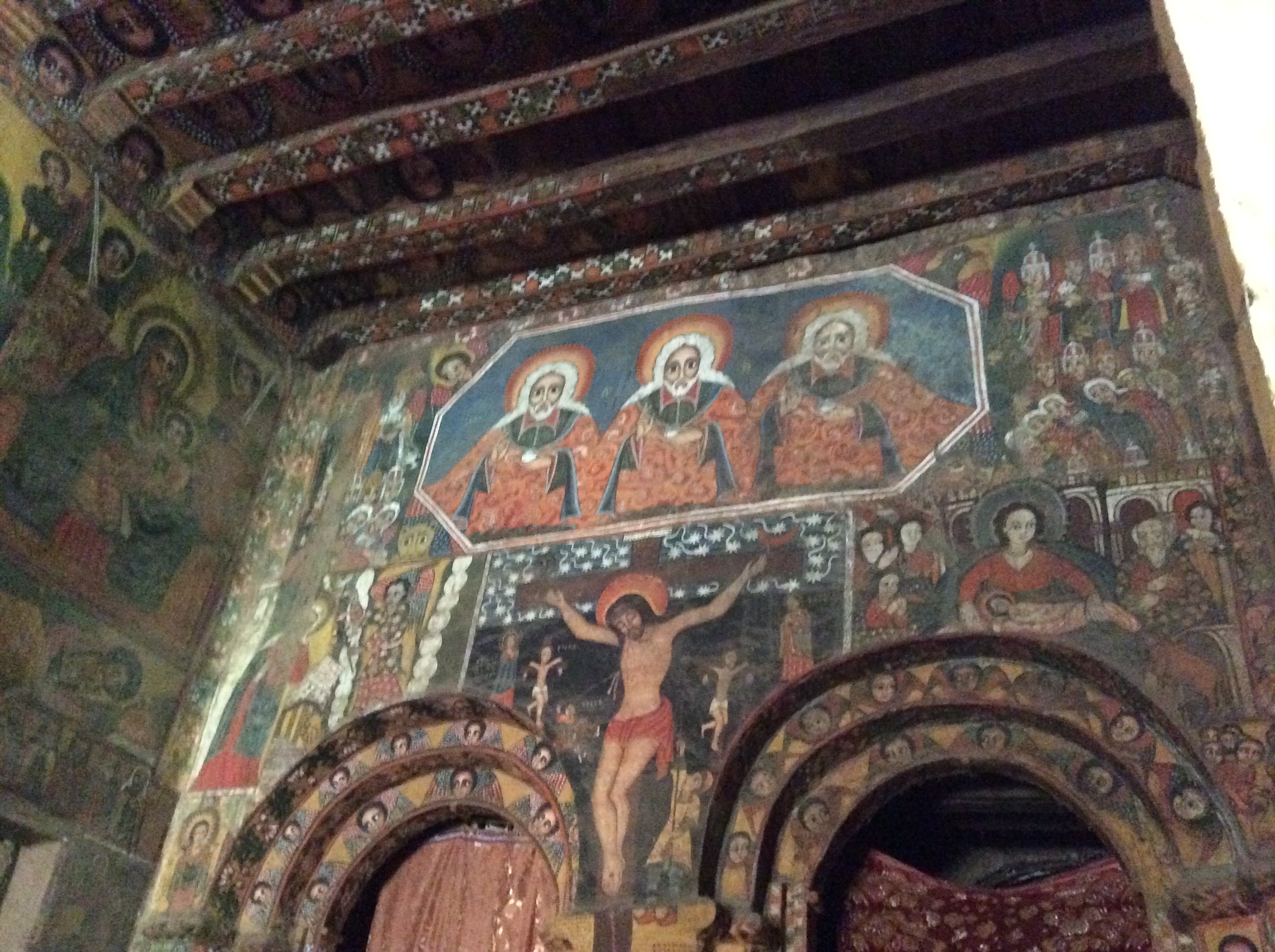
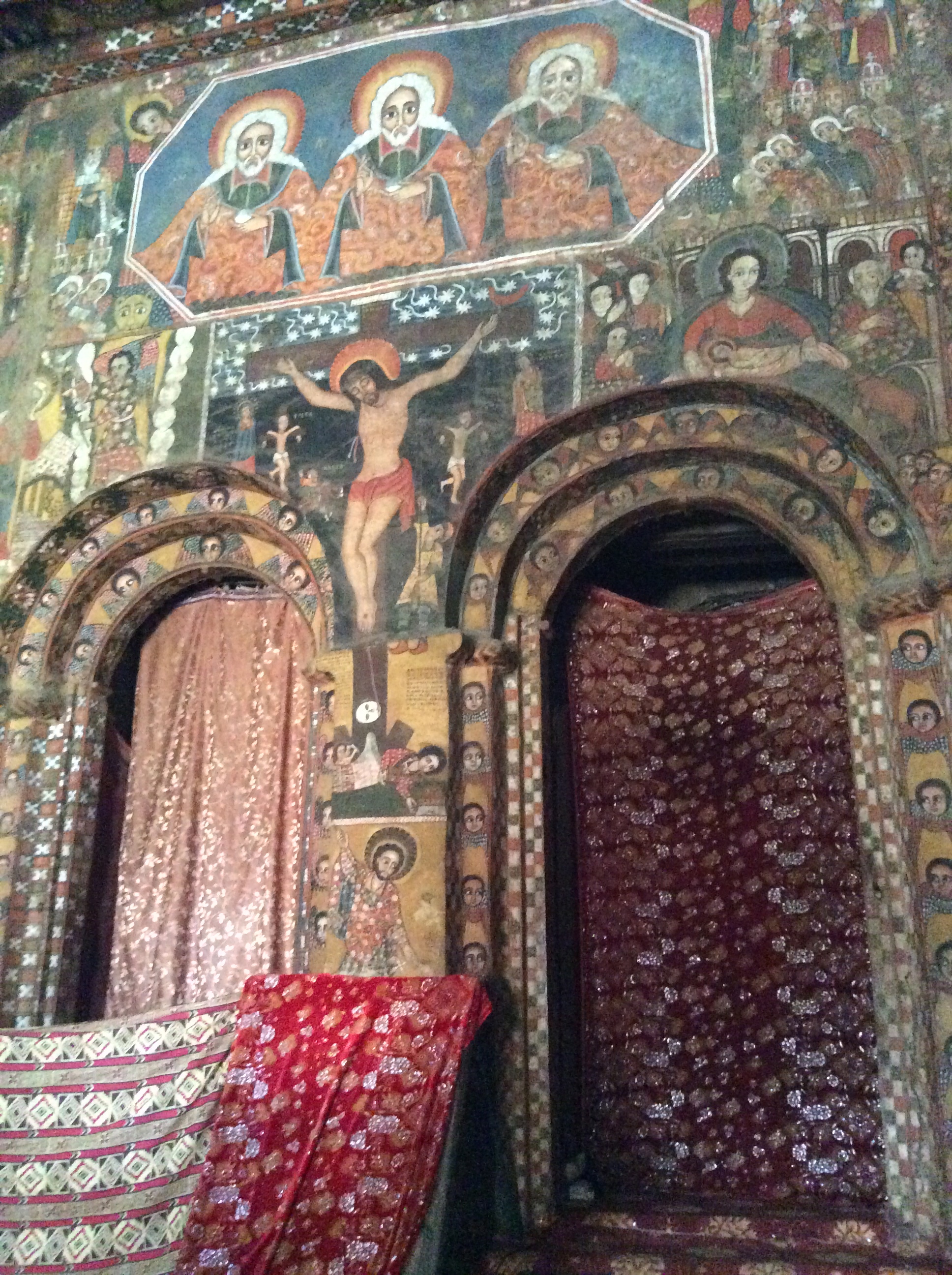
Like many Ethiopian churches, this one is somewhat circular with a hall around the entire church between the outside and inside walls.  The paintings inside left me totally awestruck.

IMG_0668

IMG_0669

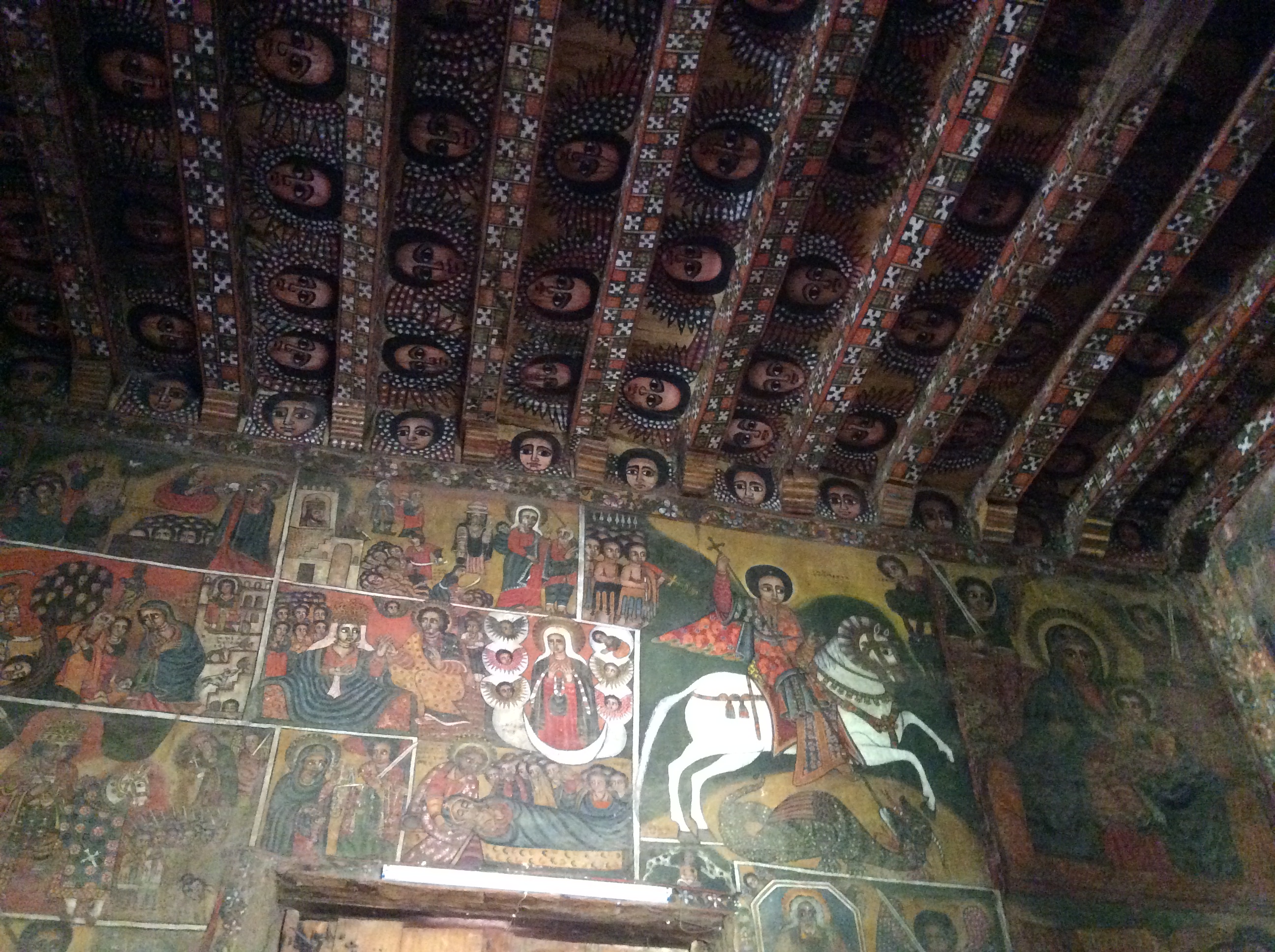
The ceiling for which this church remains especially famous is detailed, colorful.  Every picture tells a specific story from the Bible or Ethiopian Christian history.

IMG_0670

IMG_0671

As in the other churches we visited, ornate draperies cover the areas where the sacraments are kept where only to priests may enter.

IMG_0673

When you walk through the church gates, you face this scene:  one giant tree.  Yes, just one tree.

IMG_0757

When lunch time arrived, our guide on the left in the photo, took us to the Four Sisters Restaurant.  The ceiling here duplicated the ceiling in the church.  The food as well as the decor was fabulous.  The guide and Alemu ordered a plate with a little of everything on it.  By this time on the trip I had acquired a taste for a favorite food, shiro.  The rolled up tortilla like food on the plate is injera, usually made from the grain teff.

IMG_0758

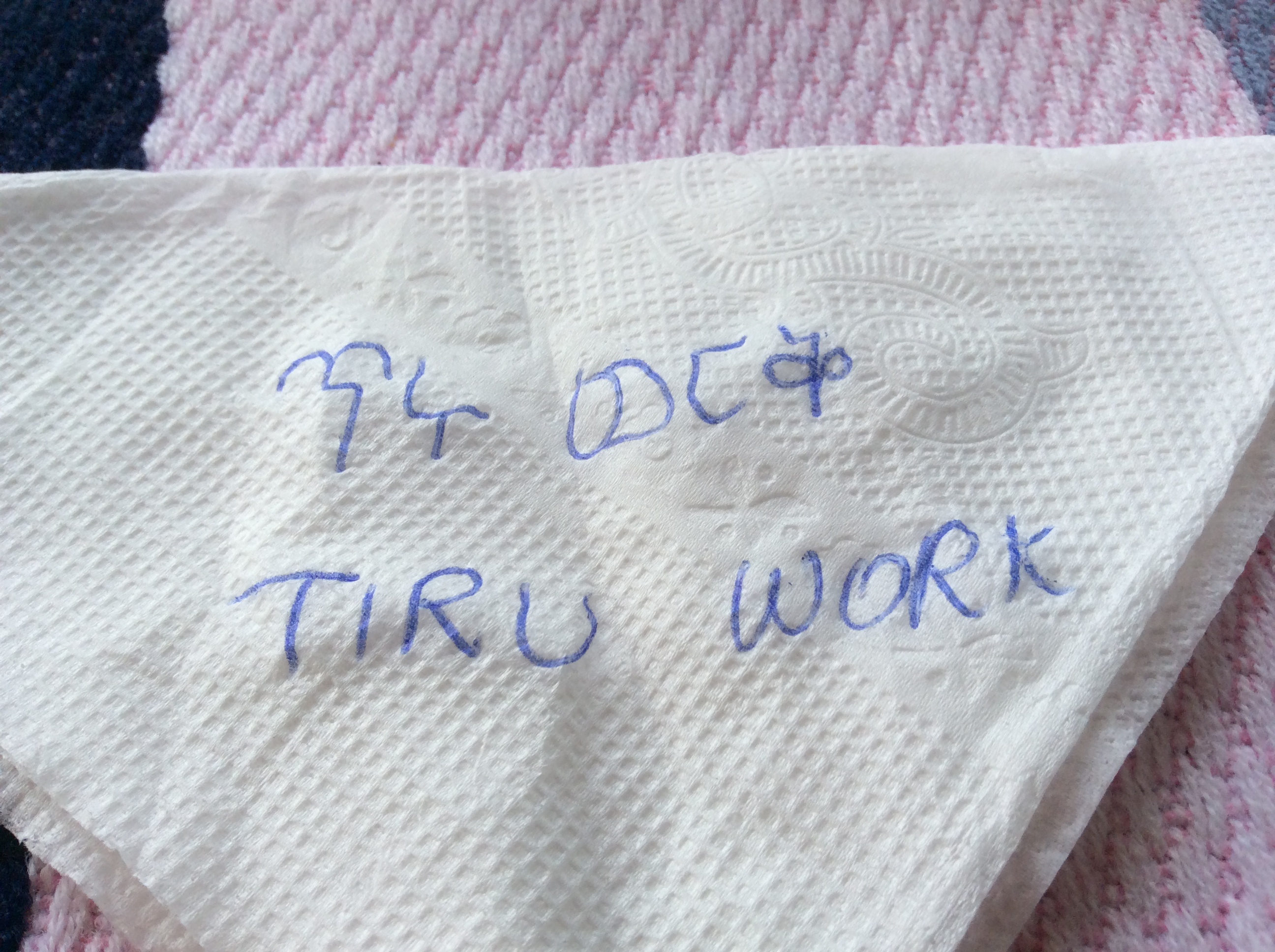
The guide decided I needed an Ethiopian name so he gave me one as illustrated above with Amharic on the top and my name phonetically written in English on the bottom.  It means Good Gold.

IMG_0759

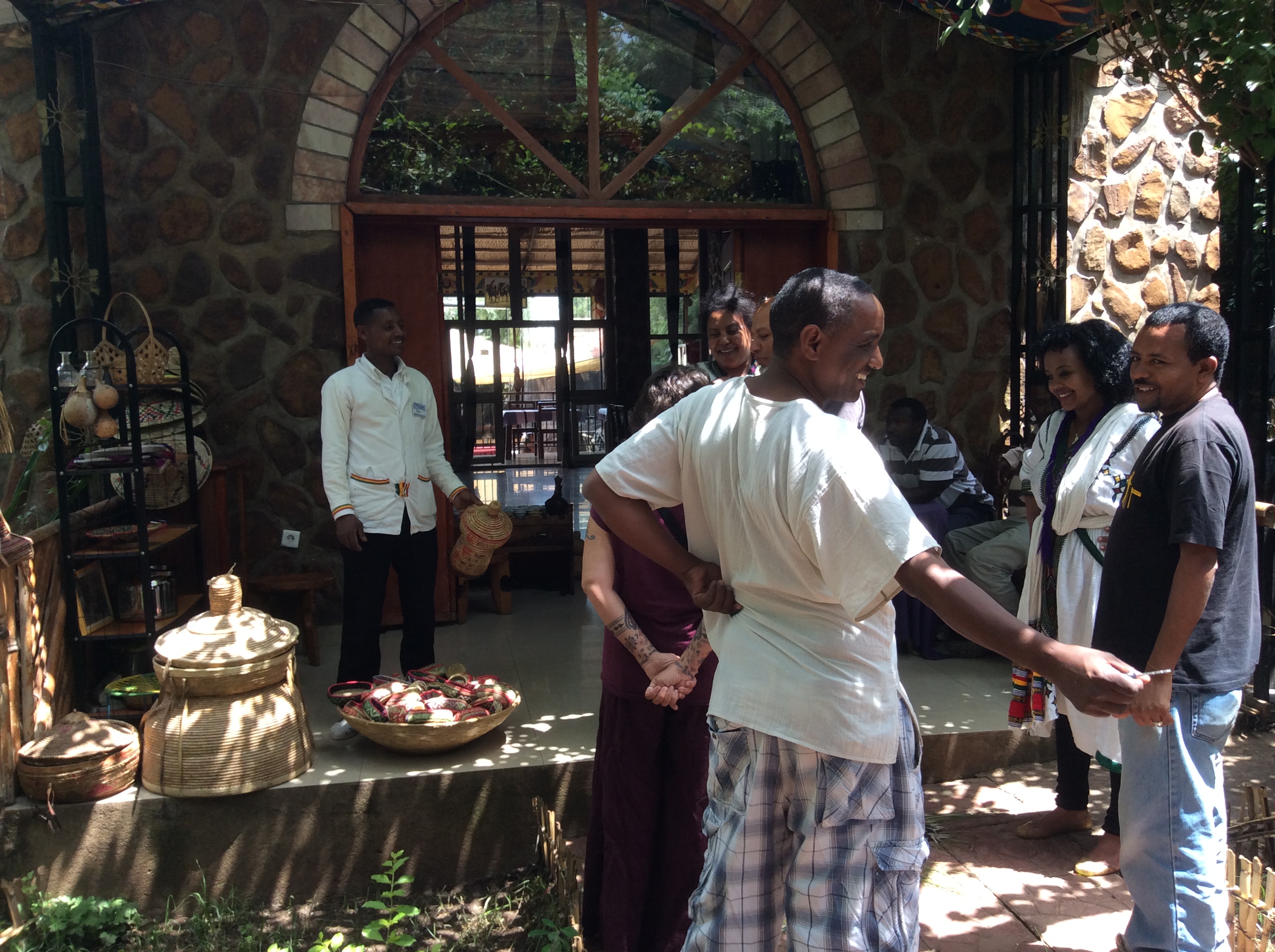
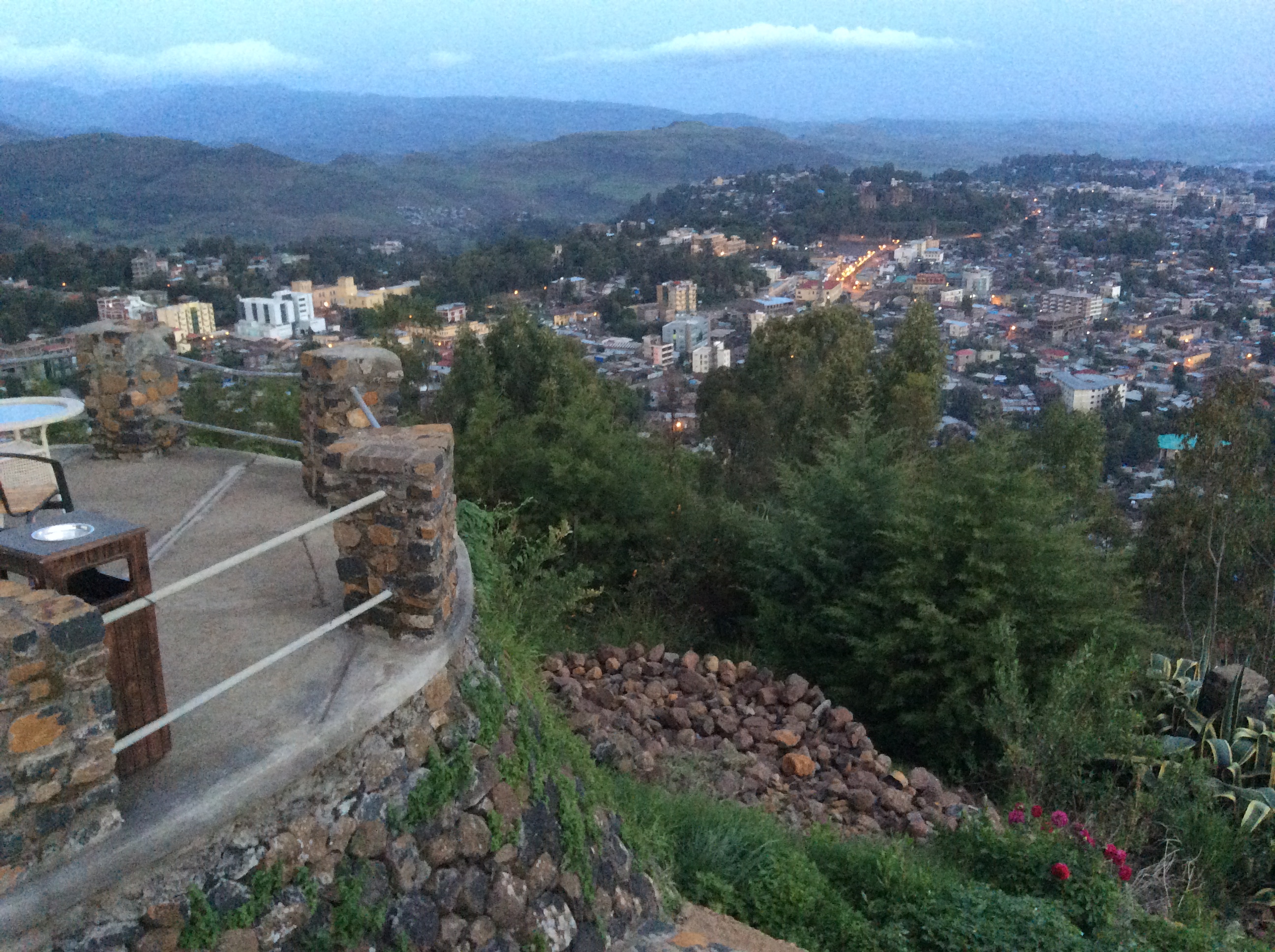
Zuriash decided she had to have one of these big baskets even if they were not for sale.  We stood around while Dino bargained.  The hotel where we stayed had a wonderful view over the city and, as I previously noted, a great shower.  The two nights we stayed there (not in succession) a nicely wrapped tooth brush and tooth paste lay beside the sink.  I brought the tooth brushes home with me rather than using them there. What a mistake!  The best tooth brush ever, no kidding.  My teeth were never so clean as they are now and to get more, I guess I will have to go back to Gonder.

IMG_0553

IMG_0555

My Ethiopian Adventure: the Castles of Gonder


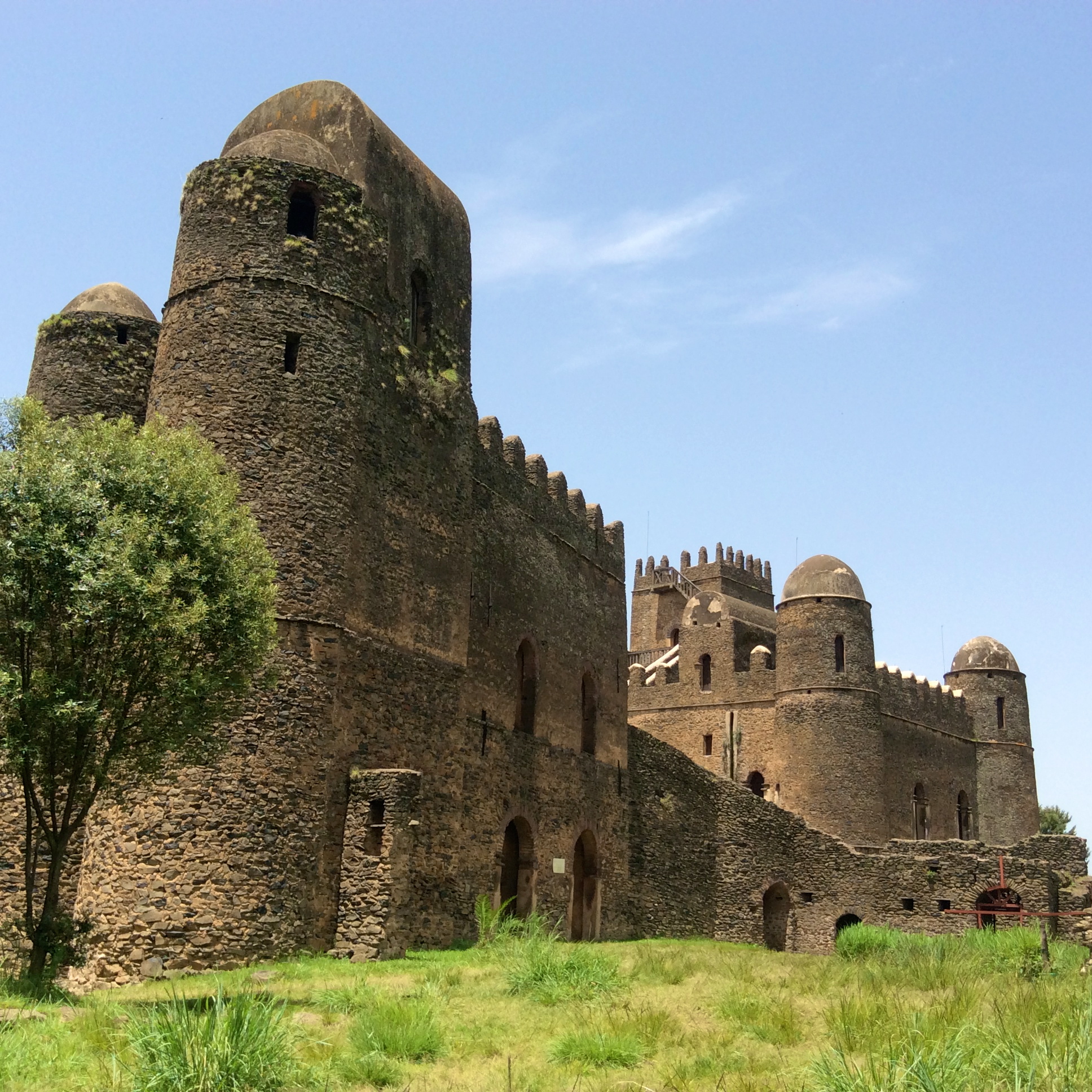
Nestled in the foothills of the Simien Mountains, Gonder, founded by King Fasiledes in 1636, remained the capital of Ethiopia for 200 years.  Its castles, built in the 1600s, housed royal family members and reflect architectural influences from Axum, Portugal, and India.

IMG_0674


IMG_0675


IMG_0677

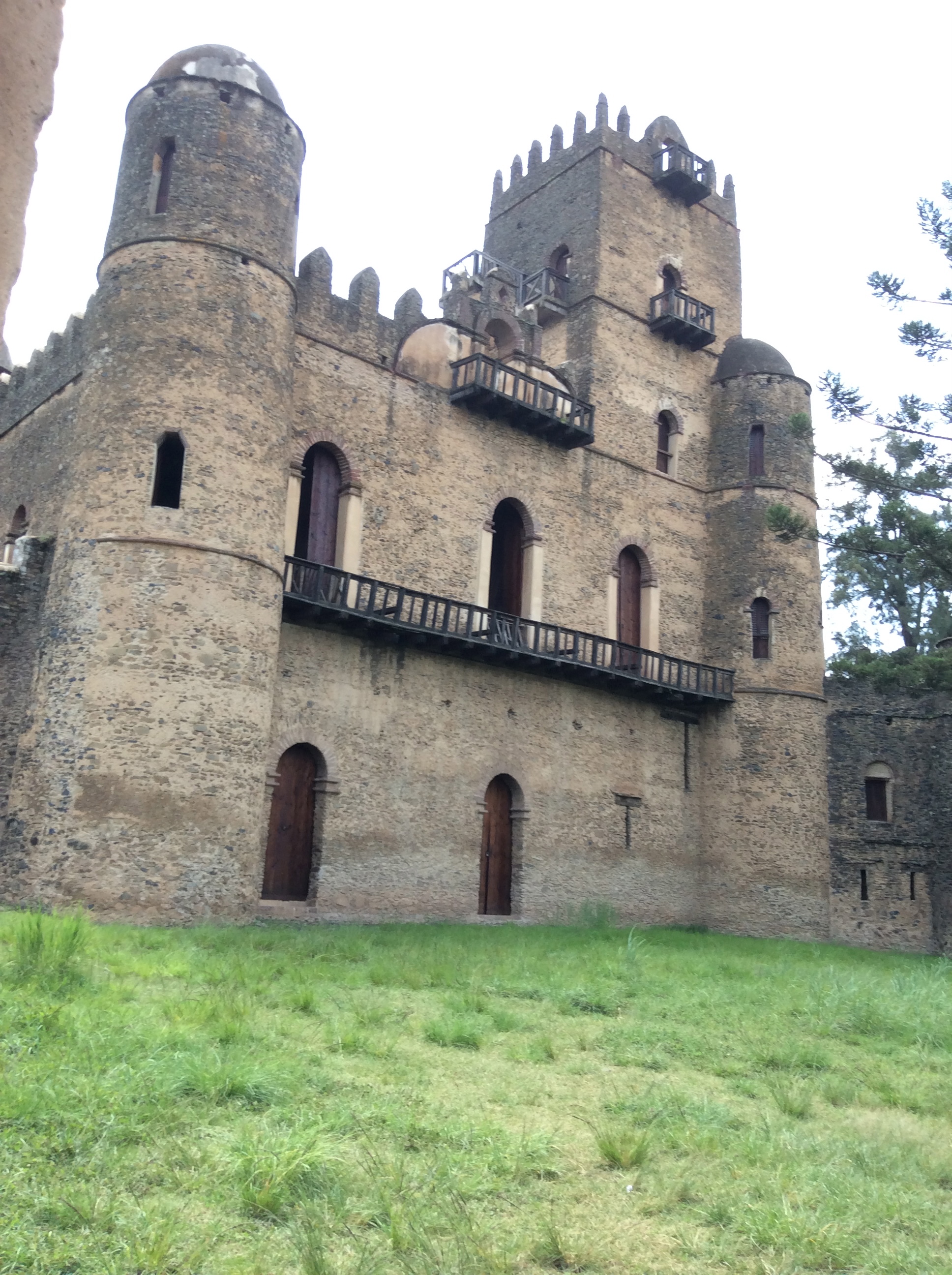
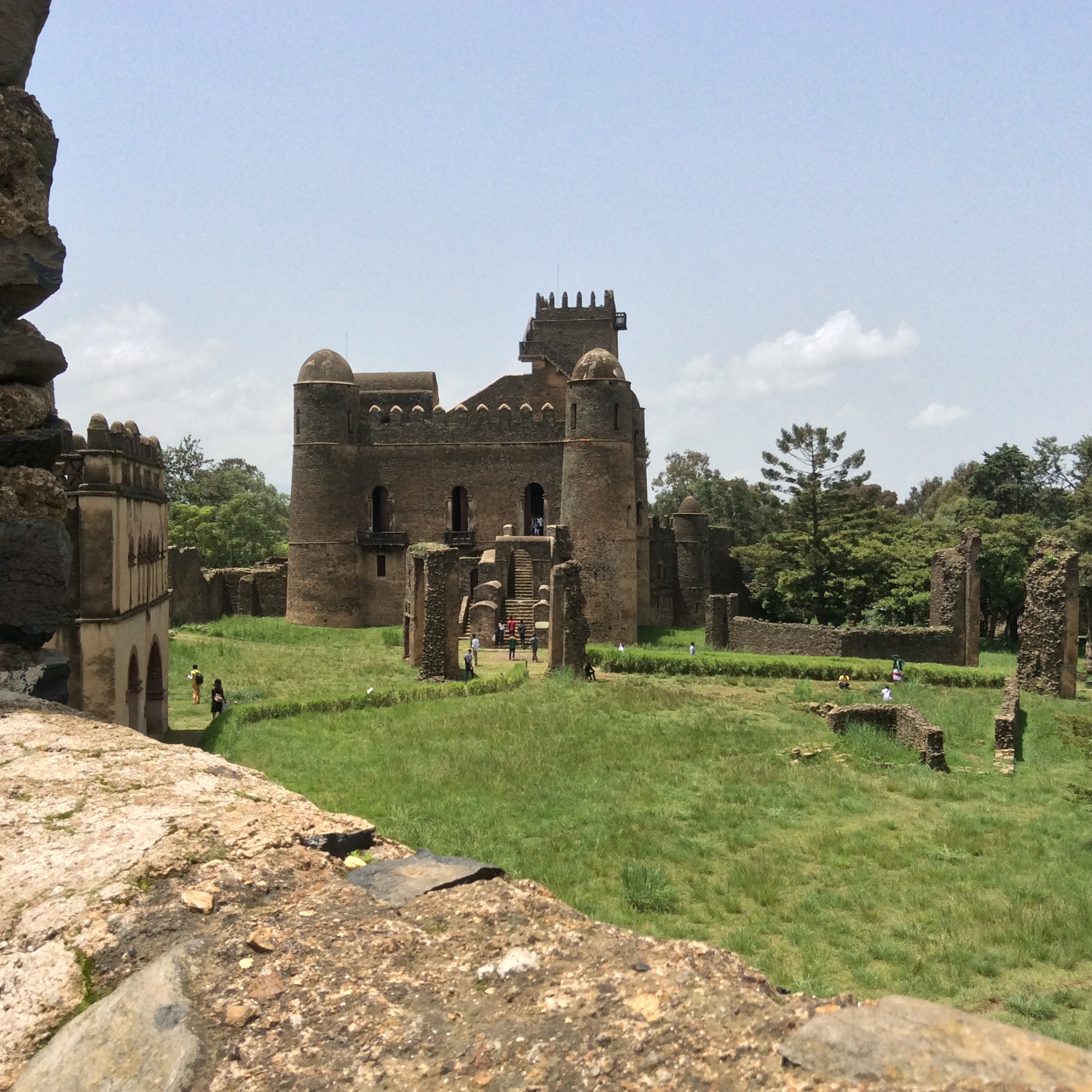
The first and largest castle housed King Fasiledes and his family.  Because of restoration, visitors can climb to the various floors and look at the different rooms. The castle compound remains popular with locals, especially for taking family photographs, weddings, etc.

IMG_0684

The arched castle windows seemed perfect for framing photographs.

IMG_0688

On the second story, the floor, now restored, gleamed in the late morning light.

IMG_0686

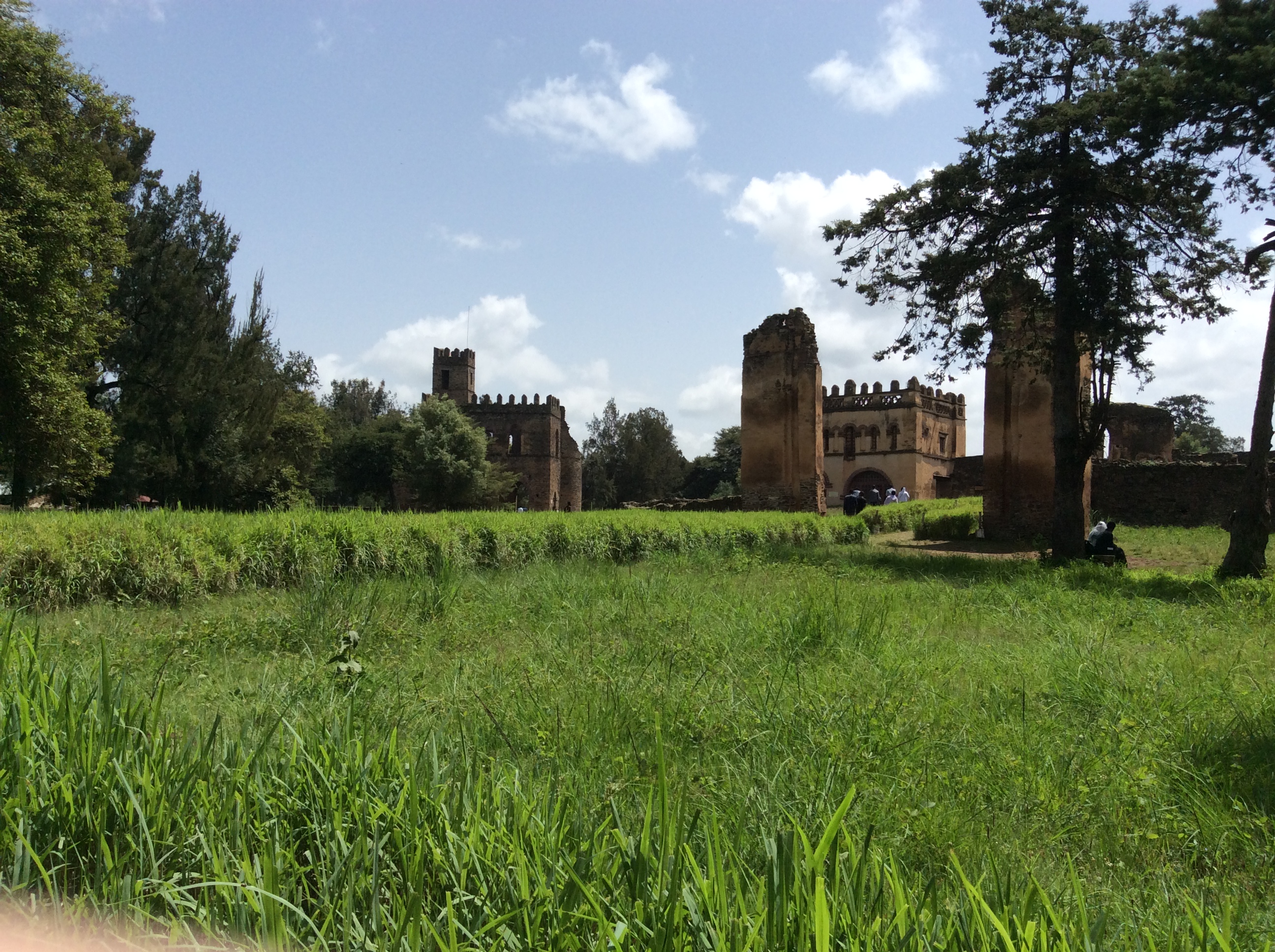
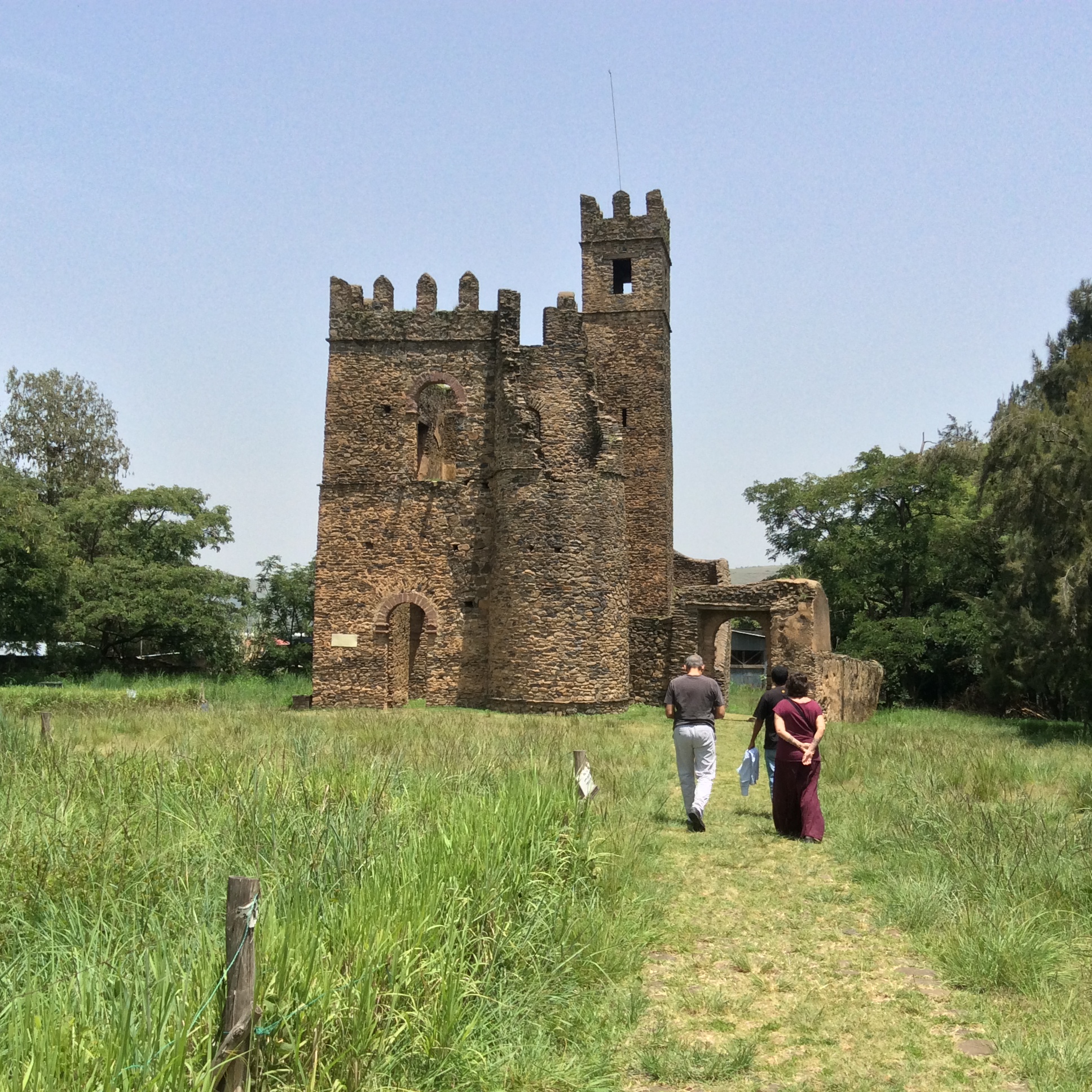
Seven castles remain inside the compound walls.  They were built my successive rulers, descendants of King Fasiledes, several of whom came to reign after having other family members, including one father, assassinated.

IMG_0692

Dino, and our guide, outside the original castle, looking down into…

IMG_0693


IMG_0696

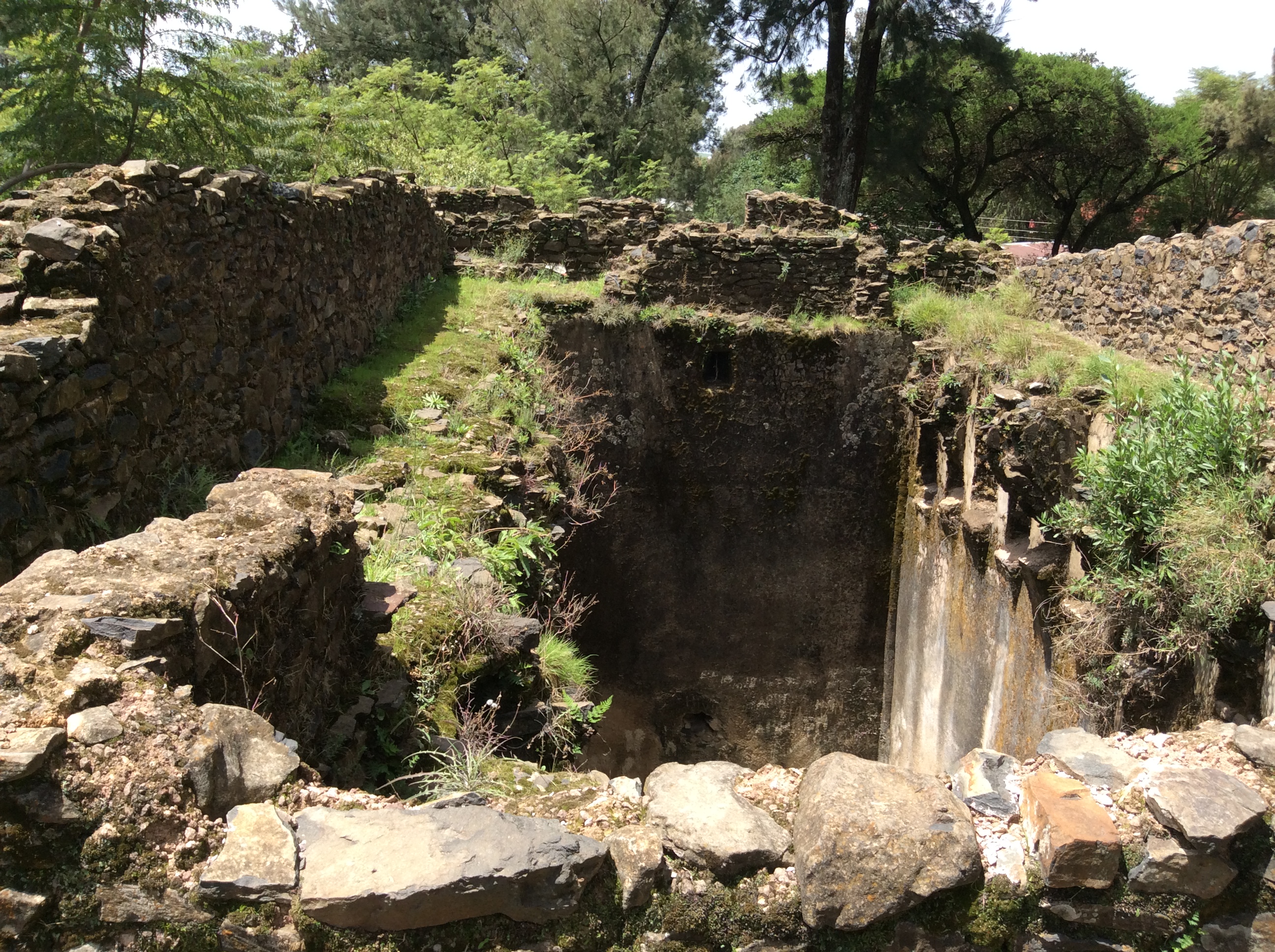
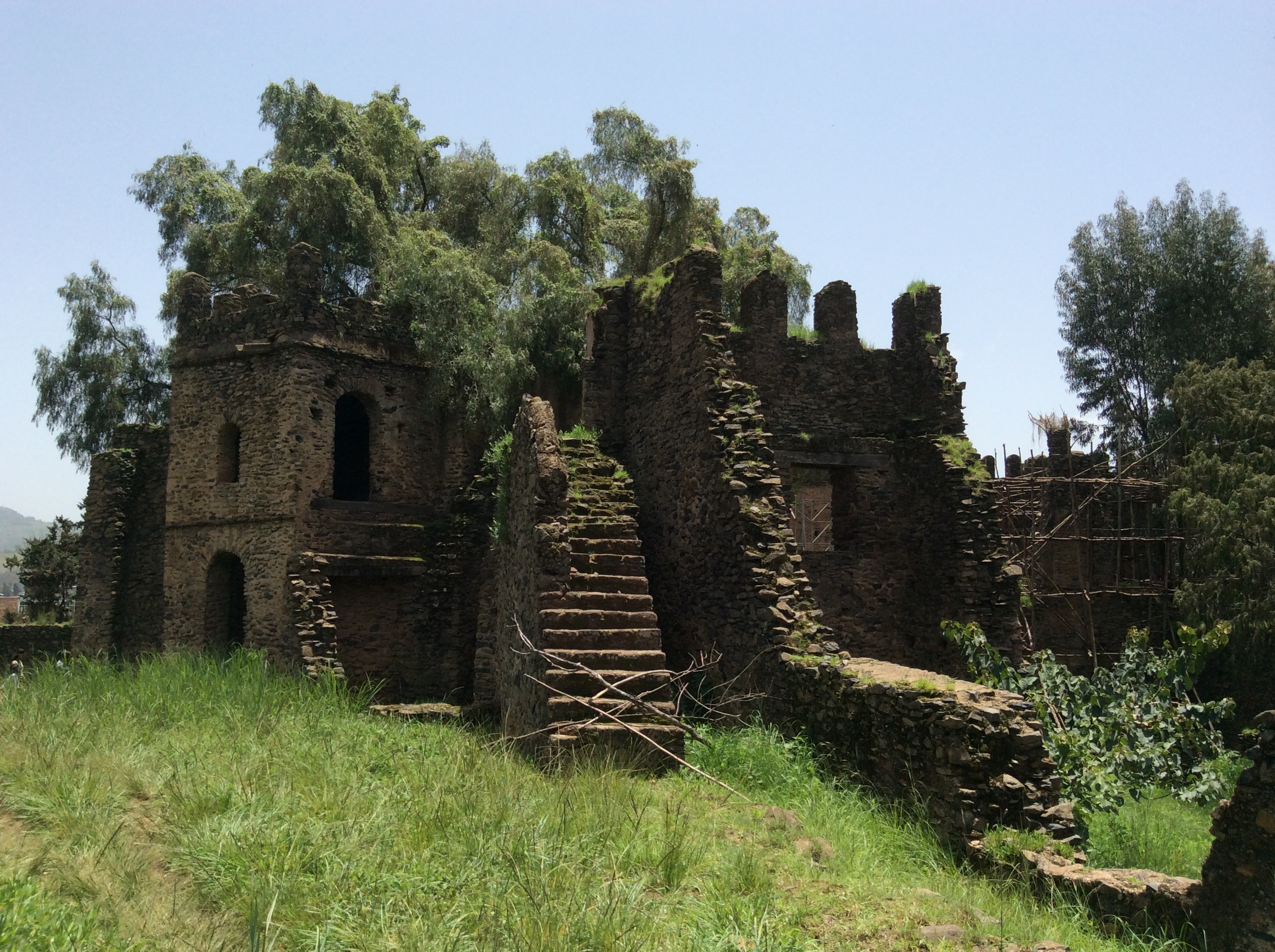
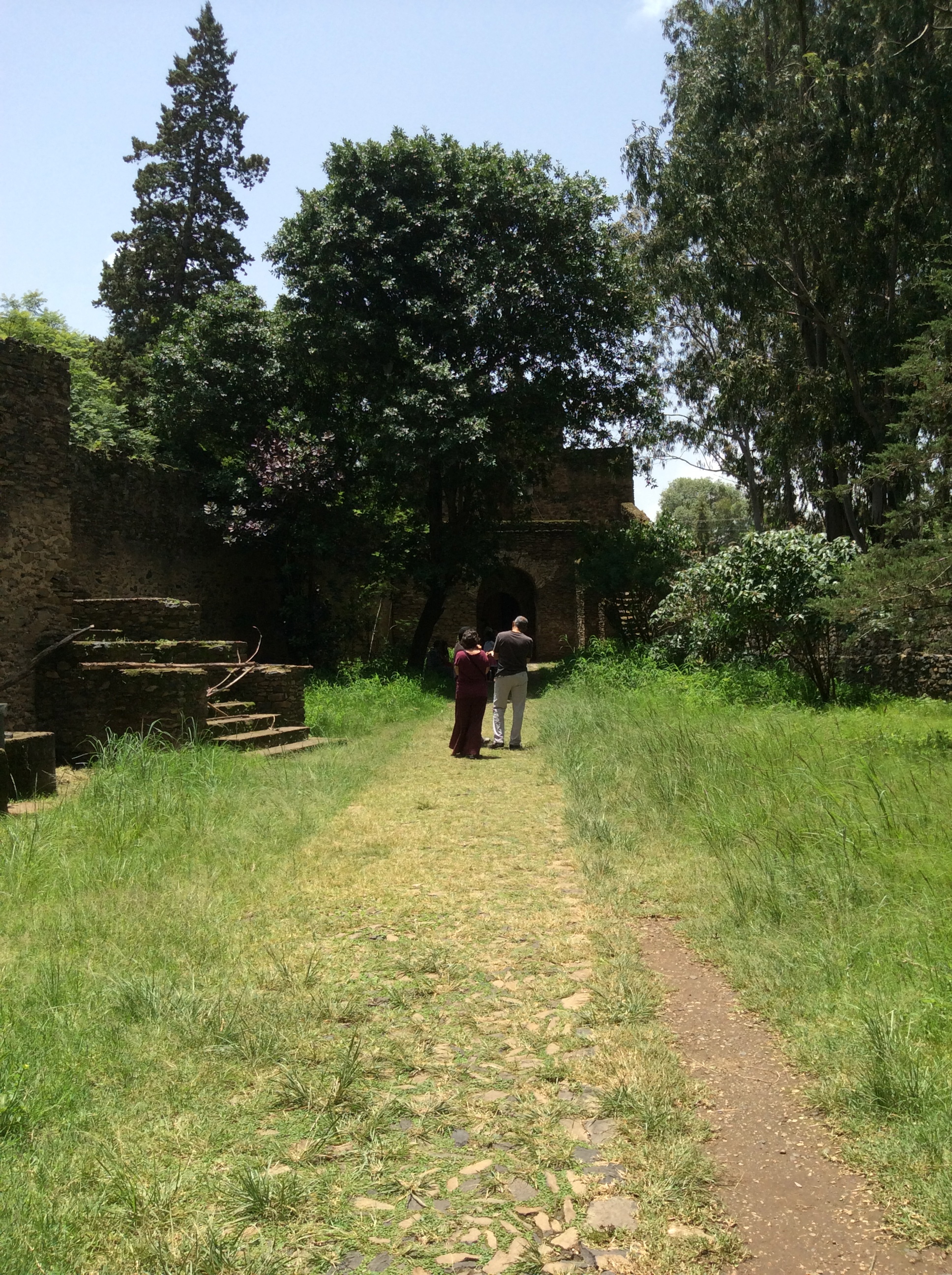
Many of the original buildings, crumbled by time and weather, still stand, surrounded by lush greenery.

IMG_0700

In the middle of the photo background stands the Hotel Goha, where we stayed, looking down over the castles.

IMG_0707

If you look closely, you can see a buzzard in the top window of the castle in the foreground. These castles stand witness to the strength and endurance of stone.

IMG_0710

IMG_0712

IMG_0715

IMG_0720

IMG_0723

The old and the new:  two young men text on the 450 year old stairwell.

IMG_0725

Frequently, for centuries, Ethiopian royalty kept tame lions.  Their cages still stand.  Ethiopian lions possess different characteristics than lions farther south in Africa; they are smaller with much darker manes, often referred to as black.

IMG_0731

The friends with whom I travelled.  Dino grew up in Dire Dawa.

IMG_0743

The royal stables remain intact complete with their wooden doors.

IMG_0747

The banquets hall’s ceiling sagged so the Italians tried to repair it with cement.  Disastrous results–it crumbles and sags.  Originally, Ethiopia architecture/construction did not use cement.  Their methods, as evidenced by many of these castles and most definitely by the still used churches in Lalibela, stand the test of centuries.

IMG_0733

IMG_0722

IMG_0739

IMG_0745

A very forward thinking woman, decades ahead of her time, the Empress Mentewab, built a school for women to learn various trades so they could support themselves. Like many other buildings in the castle complex this too remains under restoration.

IMG_0753

IMG_0755

The perfect place to stroll, contemplate, and…

My Ethiopian Adventure: The Roof of Africa, Part Two


Although wonderful paved roads exist in most of the northern half of Ethiopia, the government forbids a good paved road throughout Simien Mountains National Park.  Since we went during the rainy season, a muddy mess prevailed.  At times I thought, “This is hopeless; we will never make it through.”  I was so wrong!  Alemu persisted; we always arrived where we were headed in spite of the roads, the trucks, and the mud.

IMG_0599

We came up on one of the first obstacles on the road here.  We parked, got out, and watched.  The Al-Qaeda truck had a flat tire–the truck in the front.  The Obama truck, after unloading the passengers, tried to pass with this result.

IMG_0600

It slid into the Al-Qaeda truck.  The women passengers and we climbed up to the grass and waited.  The men surveyed the situation and decided to solve the problem.

IMG_0601

They attached a rope to the front of the Obama truck and pulled successfully.  Everyone climbed back in the truck and headed on down the road.  This allowed us to continue on our journey.  As we drove along, the guide noted the duikers along the road.

IMG_0603

See the two brown spots in the middle?  Duikers.  I admire real wildlife photographers.  With the exception of the gelada baboons, getting good wild animal photos seemed quite a task.  Either they moved too fast or they blended so well into the landscape, you could only see them when they moved.

IMG_0604

Here we stopped to hike to the highest waterfall in Ethiopia.  Once the guide explained where we would walk, I decided to hang out with Alemu and the driver of another vehicle stopped here with four people from New York, some of the few people we met from the US.  Most travelers to Ethiopia appear to be Europeans.  The other driver liked to talk and regaled me with stories, one of which was about a German woman who decided to trek (visitors can elect to go on either 3 or 10 day treks here).  It was cold, they camped in a heatless (what else is new!!) building.  She requested her guide sleep with her because she was so cold.  This continued for days.  Apparently, she became very cuddly and the guide misinterpreted, etc. etc.  Luckily for the trekkers, depending on how “primitive” they want to trek, men like those in this photo, take food and other supplies from one camp spot to another.  The other driver knew a lot about Ethiopian birds and pointed out one called a bone crusher.  A raptor, it captures its prey in its talons, flies high, drops it on a rock to kill it, waits until something else eats off the meat, and finally gets the bones, flies high again, and drops the bones on a rock to break them open.  It eats only bone marrow.

IMG_0609

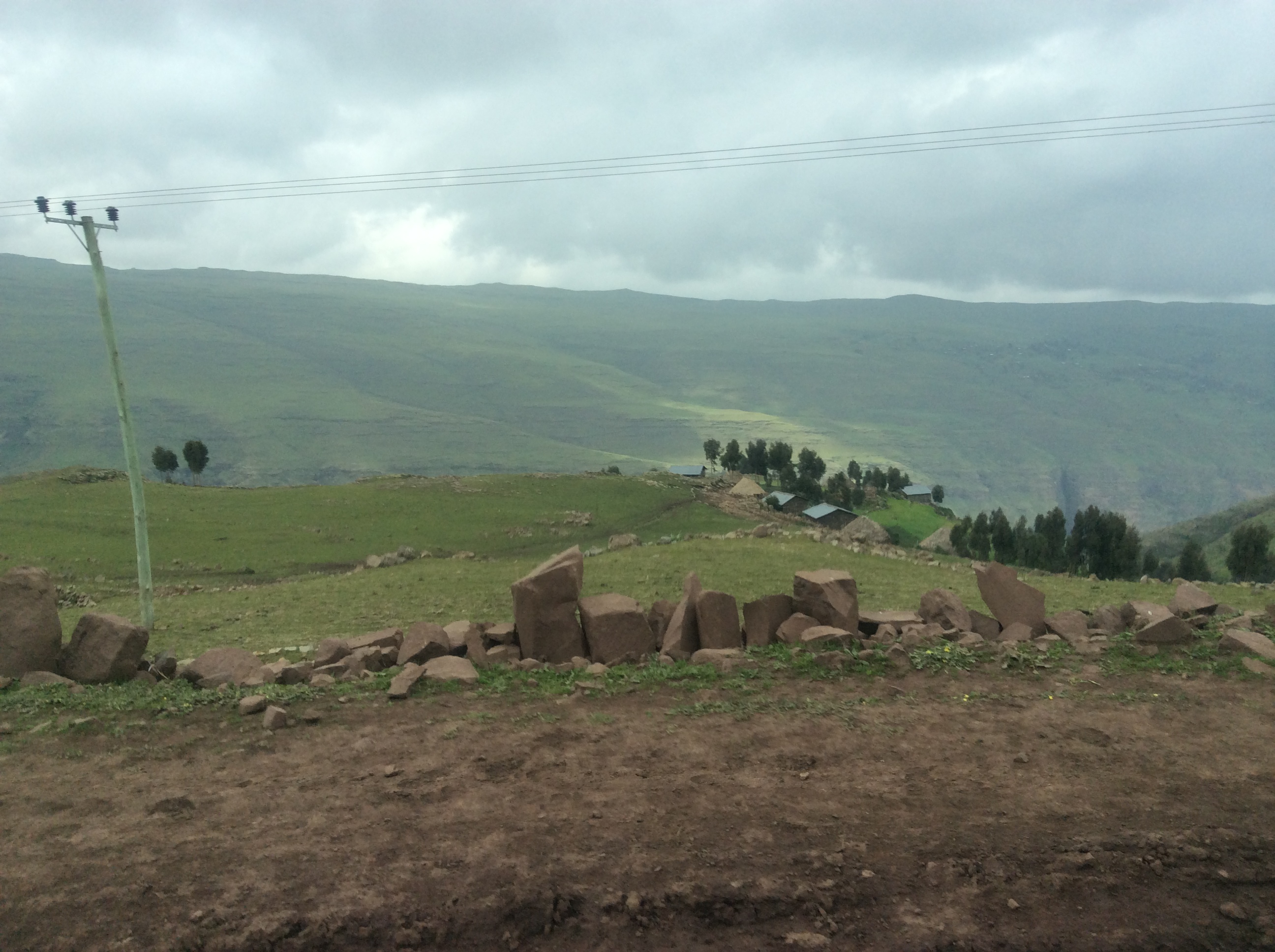
Because people lived and farmed in these mountains long before they became a park, visitors see villages and farms in various areas of the park.  We were told that the government planned to eventually move everyone out of the park.  Our guard lived in the park in an area like this one.  We dropped him off on our way out.  I also noted electric lines in areas where it looked impossible to build.  The guide informed me that a lot of Chinese died building the lines.

IMG_0610

Here and there gelada baboons appear.  This photo shows a typical view of the muddy road we traversed.

IMG_0613

Another stop waiting on Al-Qaeda and Obama trucks.  I never quite figured out why Obama trucks are called this.  They haul people from place to place but not long distances–buses do that.  I never saw an Obama truck wrecked.  Al-Qaeda trucks haul goods, supplies, anything commercial.  Like here in the US, apparently time is money so those drivers hurry.  If something is in the way on the road, drivers may drive off the road to get around it and if the load shifts, over they go.  We saw Al-Qaeda trucks wrecked everywhere–they are the terrorists of the road.

IMG_0614

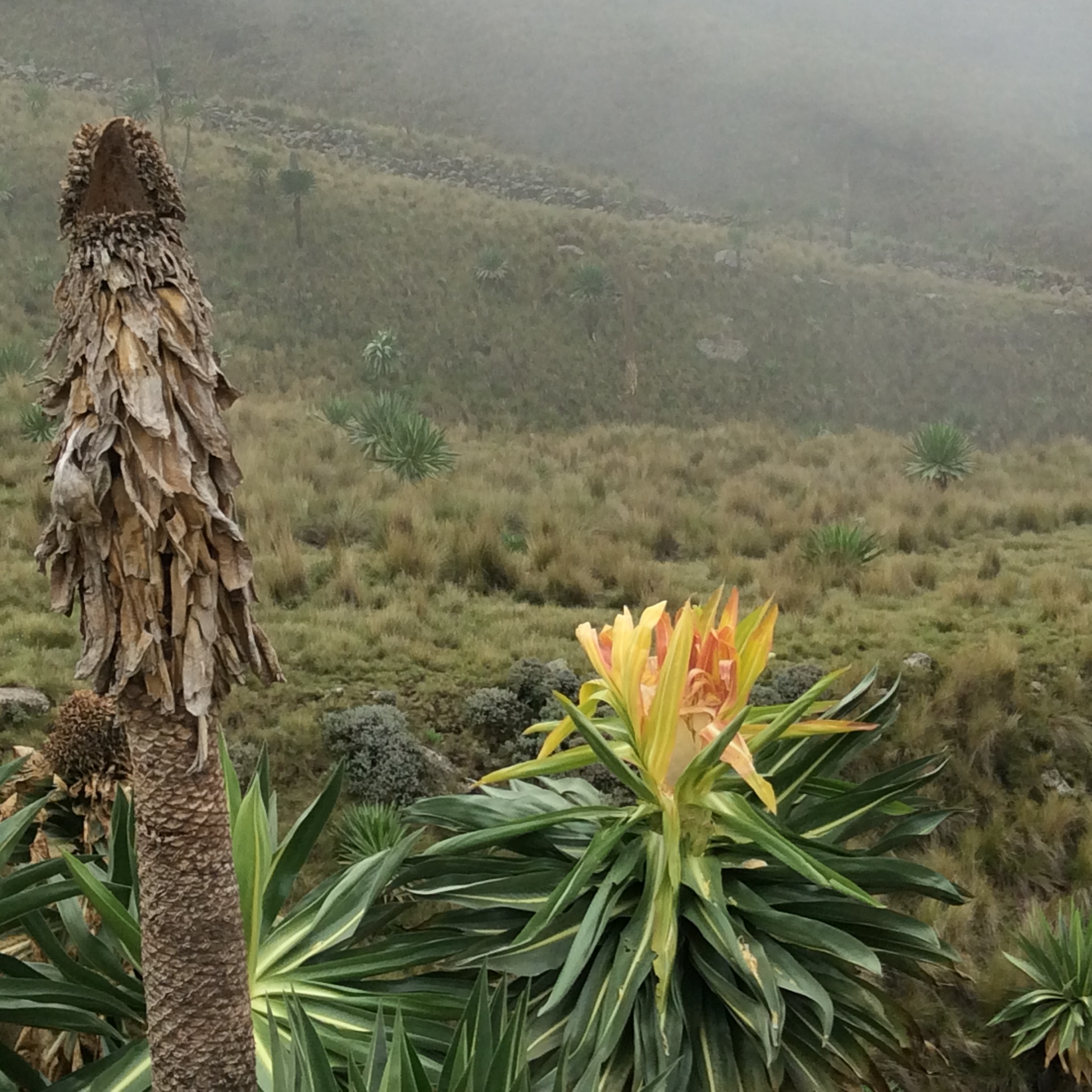
Above timberline, the landscape changes to this.  The plants in the foreground are giant lobelia.  Ethiopia contains the fourth and fifth highest peaks in Africa.  Much of the time we drove above 12,000 feet.

IMG_0617

IMG_0629

Frequently, we drove through thick fog, but truly lucked out when we reached the area immediately under the fifth highest peak in Africa where rare walia ibex reside. Alemu and the guide told us often visitors come here to see the ibex and see nothing.

IMG_0625

If you look closely, you can see several ibex in the middle of this photo.  We counted 23 on this mountainside above 14,000 feet just a few hundred feet below the fifth highest peak in Africa.  Ibex blend into the landscape so well, they are extremely difficult to see unless they move.

IMG_0633

By the mountain stream red hot pokers (see middle of photo) thrive.  I was shocked to see them growing wild here, having always thought they are desert flowers.

IMG_0632

Finally, on the way back out of the park, we stopped so I could see the highest waterfall in Ethiopia.

IMG_0635

My Ethiopian Adventure–The Roof of Africa, Part One


Initially, we had planned to go no farther north than the city of Gondar.  However, in the pretrip planning, I came across photos of Simien Mountain National Park and knew I had to go there.  I told my friend Dino to take a look; we went.

IMG_0557

The road from Gondar to Debark, the city where one gets the pass, the guide, and the guard to go into the park is typical of the Ethiopian highland country, high, wet, and green.

IMG_0560

We kept saying things like “Are you sure we aren’t in Ireland?”  Nothing seemed to fit the stereotype everyone in the US seems to have of Ethiopia.

IMG_0562

IMG_0563

IMG_0564

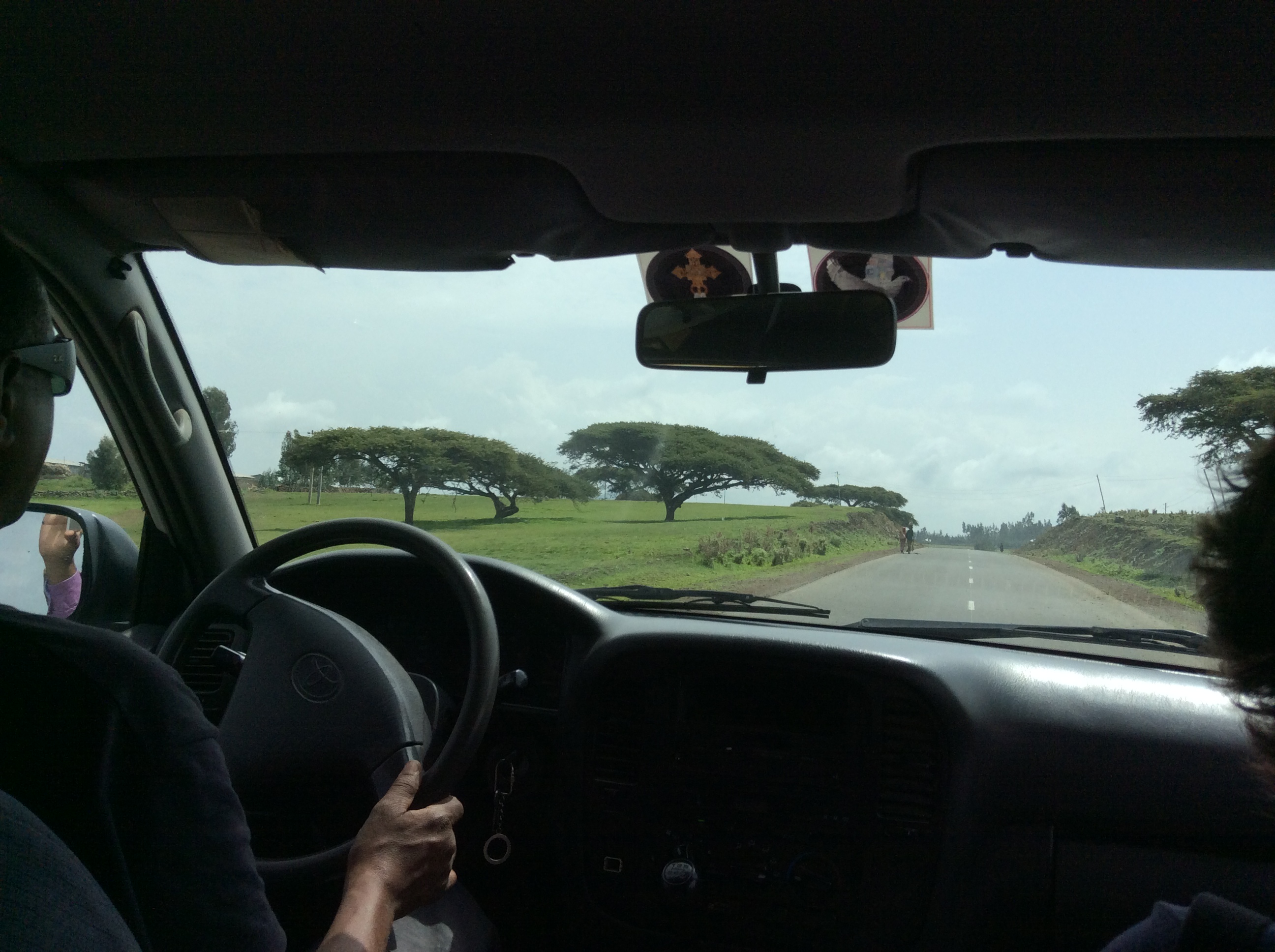
Acacia trees like these out the front window must surely be among the most picturesque trees on the planet.

IMG_0565

Fences are relatively rare in Ethiopia.  Usually, animals are herded by boys and girls rather then enclosed by fences.  To get into Simien Mountain National Park, you must stop, sign in with your name, age, address, and passport in Debark.  After you do this, your party is assigned an official guide and a guard.  Yes, a guard.  These two men stay with you everywhere you go except your room and when you eat in the dining room at the only lodging inside the park.

IMG_0568

My room at Simien Park Lodge with traditional Ethiopia textiles for curtains and bedspreads.  This lodge resides at 3260 meters (nearly 11,000 feet) above sea level. There is no heat in the rooms.  To keep warm, each guest receives a hot water bottle to put in bed to keep warm.  I piled on two blankets and crawled in, but before doing so…

IMG_0598

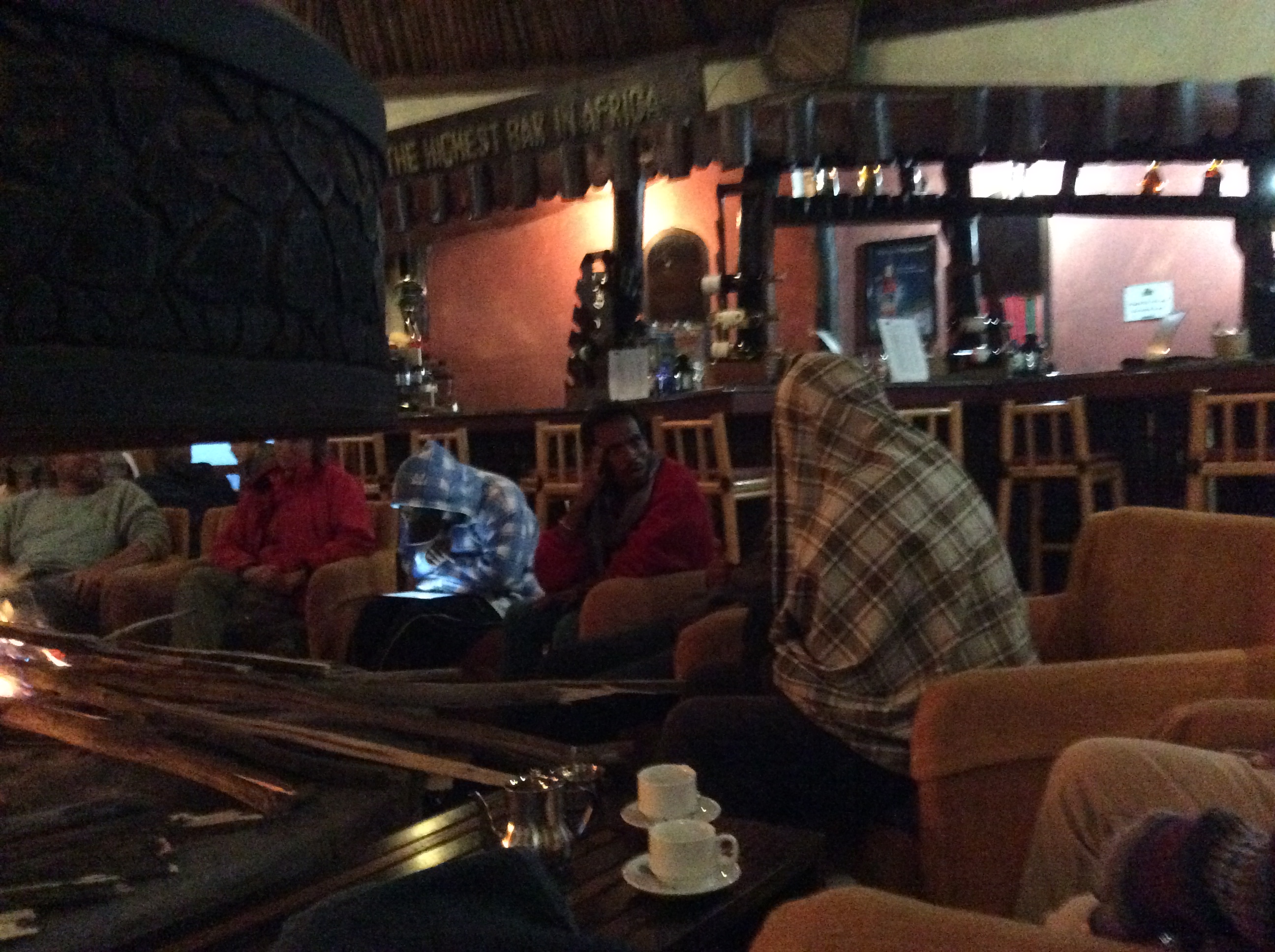
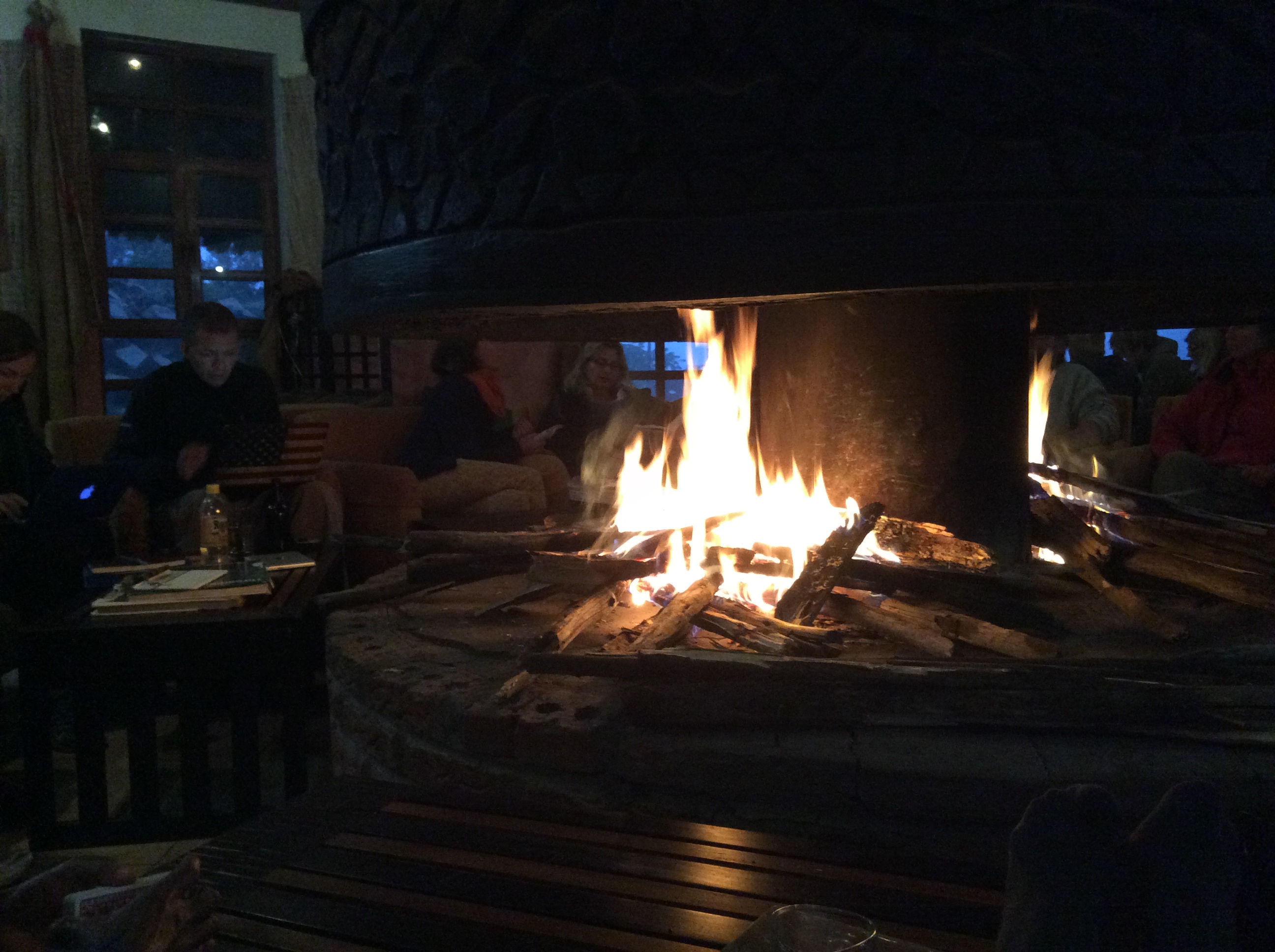
I tried a new drink, Romana Sambuca, here in the highest bar in Africa.  We were told that normally, when the British owner is here, the locals, the guides, guards, drivers, etc. are not allowed either in here or the dining room.  We were glad he was not there so everyone could hang out around the fire together.  Even with this, Alemu could not eat with us in the dining room.  Such rules made us quite unhappy.  This sort of elitism seemed totally inappropriate and insulting, especially since this is their country.

IMG_0595

Knowing all I would have to keep me warm at night would be the hot water bottle and blankets, I felt reluctant to leave this fire in the bar.

IMG_0570

After checking in, we headed out for an afternoon hike.

IMG_0572

The hiking was relatively easy, not too up and down, but in places very wet and slippery.

IMG_0573

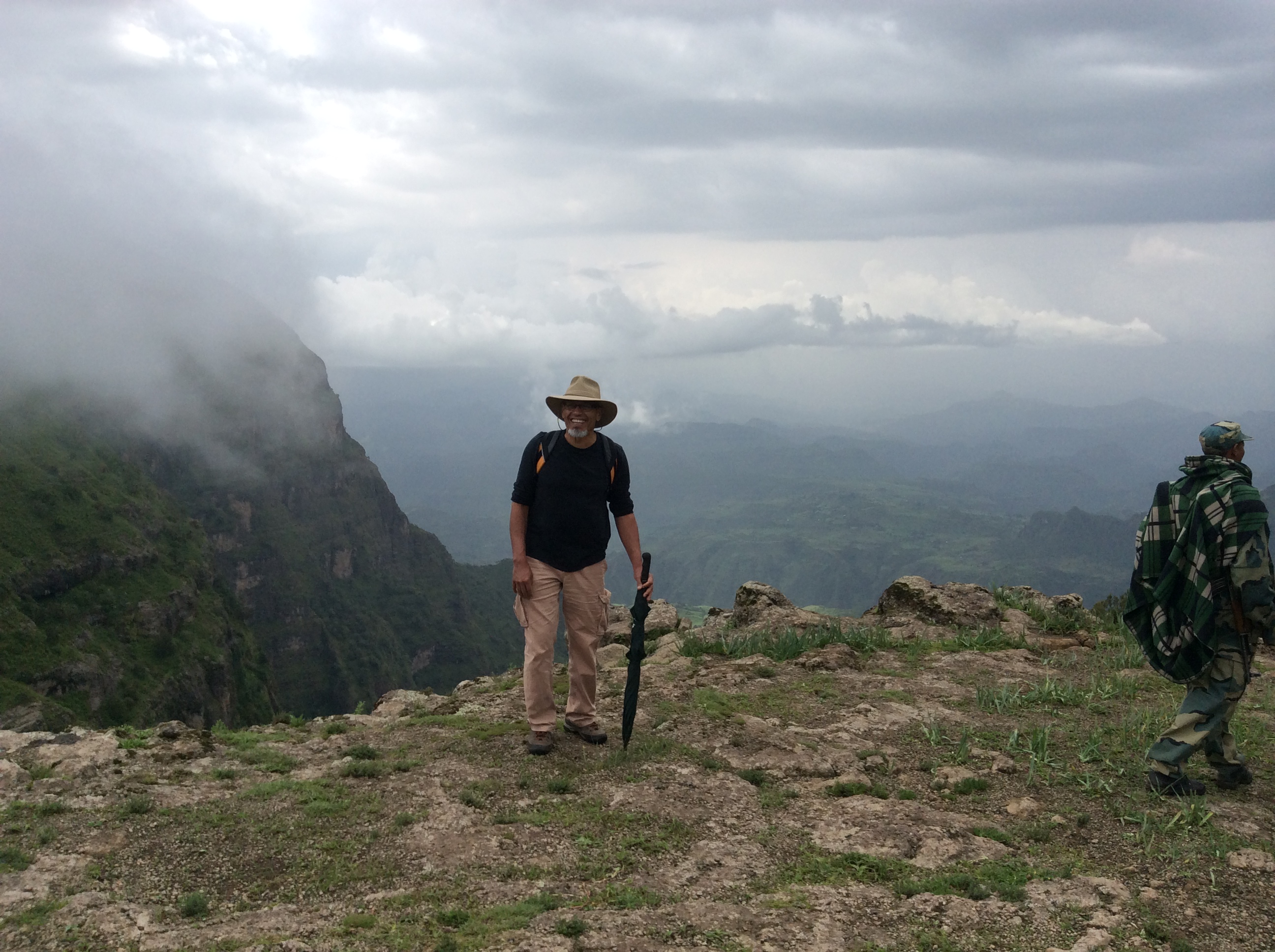
Our guard carried an umbrella (we all did and had the opportunity to use them)  and a Kalashnikov and never let us out of his sight.  He spoke no English so only Dino could actually chat with him.  He seemed very nice and helpful.  Yes, it was cold.  I wore four layers.
IMG_0574

Finding familiar plants in a different form fascinated me.  This plant, a type of thistle, bristles with thorns both on top and on the underside of its leaves.  Herbs grow everywhere.

IMG_0576

And then the cliffs and vistas overwhelm.  I have been all over the Rockies in the US and some of Canada, have driven through some mountains in Kashmir, and flown in and out of Nepal with a view of the highest mountains in the world.  Nowhere have I seen mountains like these:  endless cliffs falling thousands of feet, endless vistas, and endless emerald green.

IMG_0577

Frequently we walked or drove above various bits of clouds.  Sometimes the fog became so thick we could barely see where we were going. I am moderately brave regarding heights but it was wet and slippery.  Sometimes while the guard and my friends climbed right on the cliff edge, I chose to go higher with the guide.  In at least one instance, this strategy really paid off because we walked right through the middle of this huge group of gelada baboons.

IMG_0592

These baboons exist only in four places in Ethiopia.  I travelled in three of the four places. The males have a big red heart on their chests and heavy lionlike manes.

IMG_0588

The views never failed to astonish me.

IMG_0581

IMG_0580

IMG_0582

IMG_0578After five o’clock the baboons disappear, climbing down the cliffs into caves to protect themselves from predators–leopards and hyenas.

IMG_0593

Michael, the guide on the left, and the guard, fearless–these drop-offs are routine.

IMG_0594

The heights did not bother Dino.  He scared us with his ability to walk right up to the edge except in one case where he and Zuriash decided it was even too daunting for them.

IMG_0615