Colorful Cabbage Salad


This bright salad not only looks lovely, it also packs a lot of nutrition, is easy, and can be made in advance.

1 medium head purple cabbage, finely chopped

1 cup thinly sliced baby carrots

1 cup chopped broccoli

handful of rings from leek stalk (optional)

equal amounts of olive oil, sweet chili sauce, and mirin (Japanese sweet cooking rice wine) to fill 1/2 cup measure

Mix all the above ingredients.  Chill.

This is an easy salad to make in smaller or large quantities.  It also keeps well in the refrigerator.

IMG_2714

Today I will serve this with the following:  black beans with caramelized onions, Persian rice, and salmon topped with garlic, olive oil, and bebere.  There will be plenty for vegan and vegetarian guests without the salmon.


Star Tree – Star Goddess by Judith Shaw


See the paintings. With deforestation affecting so much of the world, the idea of trees as sacred is especially appealing and meaningful.

Judith Shaw's avatarFeminism and Religion

judith shaw photo

In a world where humans were small and nature was big, surrounded by forests of trees of immense size and stature, it’s not surprising that the ancient Celts came to hold trees as sacred. Like many others, the Celts revered the World Tree or the Tree of Life as the mythic bridge between heaven and earth. The roots reach down and ground with the Earth while the branches spread their canopy up to the heavens.

View original post 745 more words

Rita Blanca National Grassland


Today, three of us drove up into the northwest corner of the Panhandle of Texas to visit this national grassland which adjoins the Kiowa National Grassland in New Mexico.  The two grasslands together equal more than 200,000 acres.  Originally, created after the Dust Bowl in an attempt by the government to mediate the destruction caused by the giant Dust Bowl storms, the grasslands are now managed by the US Forest Service.  The US acquired much of the land when its owners gave up and left the land owing money to banks.  As a consequence these national grasslands are interspersed with privately owned grassland.  Ranchers, some of whom refer to themselves as grass farmers, can lease this land and graze it along with their adjoining property.  Moderately grazed land often supports a more diverse wildlife and plant population than overgrazed or ungrazed land.

To reach the Rita Blanca we drove past Dalhart, Texas, and turned on a Farm to Market road which led to an area with camping and picnic tables plus restrooms.  Campers and picnickers must bring their own water.  The only trees are those deliberately planted in days long past.  We saw or heard many birds there, including orioles.  Below is the entrance to the Thompson Grove camping and picnic area.

IMG_2719

After a comprehensive briefing from the park ranger, a wildlife biologist, and a range specialist, we took a hike across the grassland.

IMG_2721

While this may look like a boring green sea to some, upon close inspection, this land teams with many species of grasses and flowers.  Flowers I saw today include Fineleaf Woolly-White, which is not white but bright yellow, Prairie Zinnia, Broomweed, Sundrops, Engelmann Daisy, Mexican Hat, Winecup, Tansey Aster, all of which I have at my own place an hour and 1/2 away.  However, I saw two flowers I have never seen before, White Pricklepoppy and a native Morning Glory which has huge hot pink flowers. While the Pricklepoppy has spectacular, large white flowers with gold centers, the plant looks like a very prickly grayish thistle.

Although I knew some of the species of grasses there, I could not identify the others.  However, the park ranger knew them all.  I might remember some with the help of a book.  Many I have around my land but still cannot identify all of them.  I do know blue grama, side oats grama, buffalo grass, and a few others.

Many grassland and wildlife research projects done there produce useful information.  One current project deals with seismic activity.

If you are driving cross country anywhere near Dalhart, Texas, or Clayton, New Mexico, take a short break and head to these grasslands.

IMG_2720


Why Teachers Suck …


I was going to write a nice little poem for my blog post today but instead decided this was more important to post. As I teacher, I can verify the veracity of this post. In some ways it may be a little easier for me because I teach mostly seniors in high school who are somewhat self sufficient but many still get free or reduced lunches, some are homeless or drift from one friend to another since thrown out of their own house, some work so late they can barely stay awake in class, some self medicate because no one can afford the meds they need. Most graduate in spite of this. How? Because the school and teachers go to great lengths doing everything imaginable to help them succeed, e.g. online programs, extra time, alternative assignments. Why do I continue to teach? I love teenagers; I never have a boring day; I work hard to make a difference; I think public education is the foundation for a working republic, for this country to flourish and succeed.

Bert Fulks's avatarBert Fulks

A friend and I were grousing about ignorance run amok.

“Americans get their information from internet memes,” I laughed.  “And in the true spirit of democracy, dullards who have never cracked a book will cancel the votes of people who actually have a clue. What could go wrong?”

“You know what the problem is?” Tim challenged.  “Our country’s a mess because teachers suck.”

teacher2I bristled.

Although I’ve been out of the classroom for a number of years, once a teacher, always a teacher.  Plus, I have family and friends still slugging it out in the trenches.  I know their battles and the wounds they carry.

“Dude, do you know what teachers endure on a daily basis?” I asked Tim.  I found that, no, he didn’t.  I fear most Americans might be as clueless.

I emailed a former colleague (she’s two years from retirement) and asked one question:  “How has education…

View original post 1,411 more words

Is This How Patriarchy Began? by Carol P Christ


Is violence more likely when men spend a lot of time away from women and children?

Carol P. Christ's avatarFeminism and Religion

In my widely read blog and academic essay offering a new definition of patriarchy, I argued that patriarchy is a system of male dominance that arose at the intersection of the control of female sexuality, private property, and war. In it, bracketed the question of how patriarchy began. Today I want to share some thoughts provoked by a short paragraph in Harald Haarmann’s ground-breaking Roots of Ancient Greek Civilization. Haarmann briefly mentions (but does not discuss) the hypothesis that patriarchy arose among the steppe pastoralists as a result of conflicts over grazing lands. As these conflicts became increasingly violent, patriarchal warriors assumed clan leadership in order to protect animal herds, grazing lands, and the women and children of the clan.

View original post 808 more words

A Tribute to My Dad, Doyle Lightle


Dad lived his entire life, 90 years, on the farm which my great grandfather, Gottlieb Werth, homesteaded in the middle 1800s.  Gottlieb Werth came to the United States from Switzerland when he was 18.  Even though Dad lived in the same place all his life, he liked road trips.  The first occurred when I was three.  He drove us all the way from Northwest Missouri to Monterey, Mexico.  I still have photos of us wading in the Gulf in Texas before we crossed into Mexico.  Thereafter, we almost never missed at least one road trip a year between wheat harvest and the start of school.  Sometimes instead of a summer trip we took one around Christmas, like the year we went to Florida when I was in elementary school.  I skipped school a couple of weeks, took my work along, and came home ahead because the flu, which I missed, put everything behind.

By the time I was six, I had probably covered half the continental United States and, of course, been to Mexico.  I do not remember some of those first trips but the later ones I remember well, like the summer we spent in Crested Butte, Colorado, when it was still a mining town, and another in Placerville, Colorado, down the road from Telluride.  Then it was just a nowhere place, filled with the Victorian houses of its mining heyday.  Dad joked later that he should have bought one of those houses when it was cheap.

One year, the year between my junior and senior year in high school, we took a one month trip and drove 6,000 miles, from home to the Black Hills, where we had relatives, to Vancouver, to Vancouver Island and then to Victoria.  We visited every national park along the way,  Grand Tetons, Yellowstone, Glacier, Olympic, then drove up the Columbia and cut back across Rocky Mountain National Park and through Colorado. On an earlier trip we went to every park in Utah and Northern Arizona and Mesa Verde.

Dad’s interest in and curiosity about everything seemed endless.  He tried the latest agricultural methods in his farming, was an avid conservationist, wanted to check everything out on these trips, talked to people about what they were doing.  At home he read National Geographic and Scientific American and endless books.

Because of these trips, his sense of wonder, his propensity for intellectual activity, my friends in college were always shocked to find out he was a farmer.  They often thought, originally, that he was a college professor.

He moved into this house where I grew up when he was ten.  After Mom died, Dad and I were at her grave on Memorial Day when a man came up and starting talking with Dad.  I learned that the building in the foreground of this photo, before it was used for livestock and storage, was used for dancing during the Depression. The sheriff would send out deputies to make sure no illegal alcohol was consumed. I took this photo four years ago when I took a trip back.

12193406_10204105678156113_6043720938154804167_n

There used to be woods to the right of this photo but someone bought the land and bulldozed down all the huge oak trees.  The tall douglas fir tree in the middle was tiny when we brought it home on one of our trips out West.

I will forever be thankful to Dad for instilling in me a love of exploration, wonder, and curiosity.


Grateful


Six days ago a huge storm struck, including eight inches of hail, a rain deluge, and high winds.  While the hail denuded many plants and bushes, the deluge made my drive a mess.

IMG_2711

Although it may be hard to determine the depth of the gravel and dirt and rocks from this photo, many of the rocks are bigger than the size of the fists of both my hands together, large enough to not want car tires to drive over them.  The gravel and dirt on the far side of the photo were at least eight inches deep.  Luckily I have a small tractor with a bucket and a helpful grandson.  He picked up the larger rocks and hauled all of them to the ditch created either side of the steep incline above the cement.  The rain had created a trench a foot deep in some places and exposed a pipe to the septic system. He filled parts of these trenches with the bigger rocks.

The next morning I used the tractor bucket to scoop up dirt and rocks and haul them to washed out places in the upper drive.  It was impossible to get it all with the bucket given some of the space is not very big or where it was possible to maneuver the tractor.  Therefore, I had to scoop it up and remove it with a shovel.  It took several tractor buckets full to get rid of what I had to shovel.  Finally, this morning I finished sweeping the rest of the fine sandstone off the cement.

After all this, why am I grateful?  There was no damage to my house.  The hail broke windows in some houses not far away, the wind blew light weight buildings into neighbors’ yards, and some people nearby had roof damage. I only have some tiny damage to the barn roof.  It could have been a lot worse.  I feel grateful to have escaped with just a messed up driveway.

Why do I feel even more grateful?  It occurred to me that I was able to clean up most of this except for my grandson’s help with the rocks–which I could have done but it was helpful.  I can still shovel gravel and dirt, a lot of it, lift and carry 50 pounds of horse feed from the vehicle across the barn–about 40 ft or more–and dump it in the container. I can work for hours doing this sort of stuff and feel fine afterwards. Yes, I feel grateful that I can continue to do all these things myself and what is more, usually enjoy doing them, feeling productive and independent.

When people ask me how I do all this, I usually tell them two things, yoga (as well as lots of other exercise mandatory if you live in the country and have animals) and heathy food.  My yoga practice began decades ago; I never stopped.  I practice it at least three times a week, sometimes more.  I stand on my head in the middle of the room several times a week.  My favorite foods are mostly vegetables.  The only carb I really like is rice. One of my dad’s sayings was, “You are what you eat.”  He still ran a farm at 90.  Yes, I admit, genes probably help, but without the exercise and self discipline, it probably is not enough.  I also meditate daily which does not require lots of time unless you want to spend lots of time doing it.  Even 15-30 minutes a day matter.  Exercise, yoga, healthy eating, meditating will all make for a happier person.  I promise.


Weekend Adventure


This past weekend my family had to return to Tulsa, Oklahoma, to finish some family business.  While there, we decided to explore as well.  After completing what we needed to accomplish on Friday, we decided to check out the Tulsa Zoo located in Mohawk Park.  Tulsa Zoo contains lots of green, open spaces, and some extremely interesting architecture.  For example the Malayan tigers live in an area made to look like ancient, abandoned temples.

IMG_2682

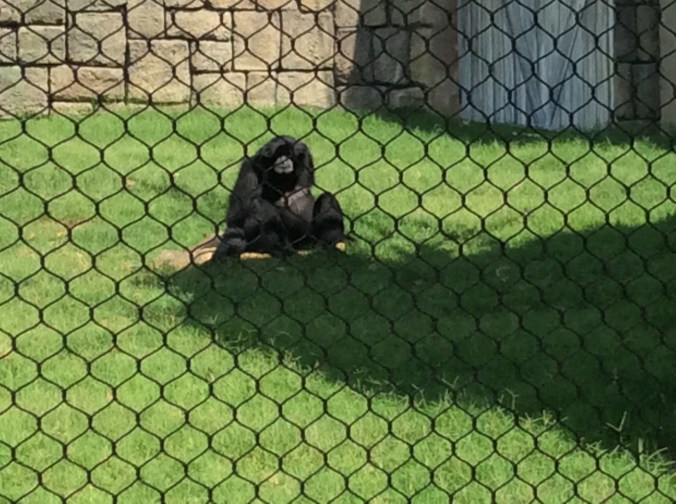
Then there are animals I have never even heard of before like the siamangs.

IMG_2686

I was surprised to see komodo dragons.

IMG_2681

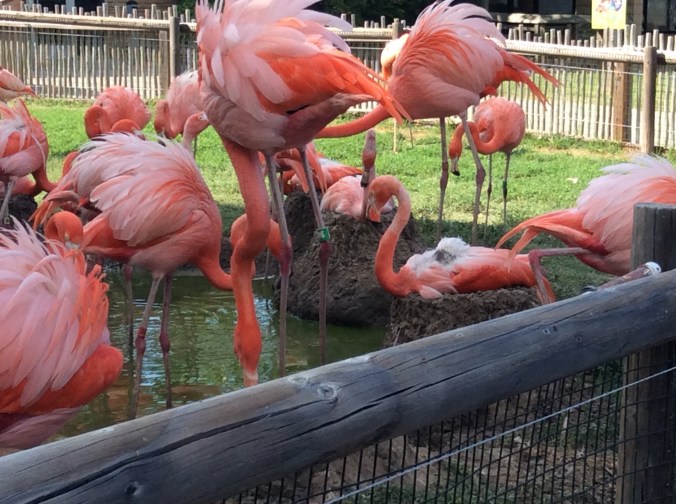
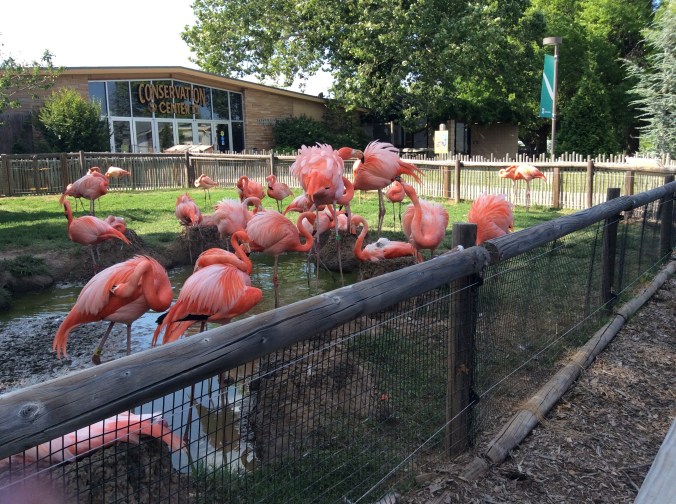
The intensity of the colors in the American flamingoes never cease to amaze.

IMG_2690

IMG_2691

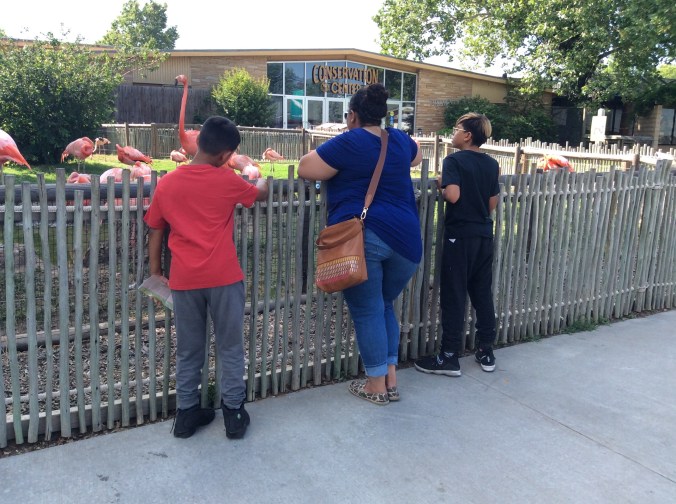
Apparently, the rest of my family liked them as well.

IMG_2689

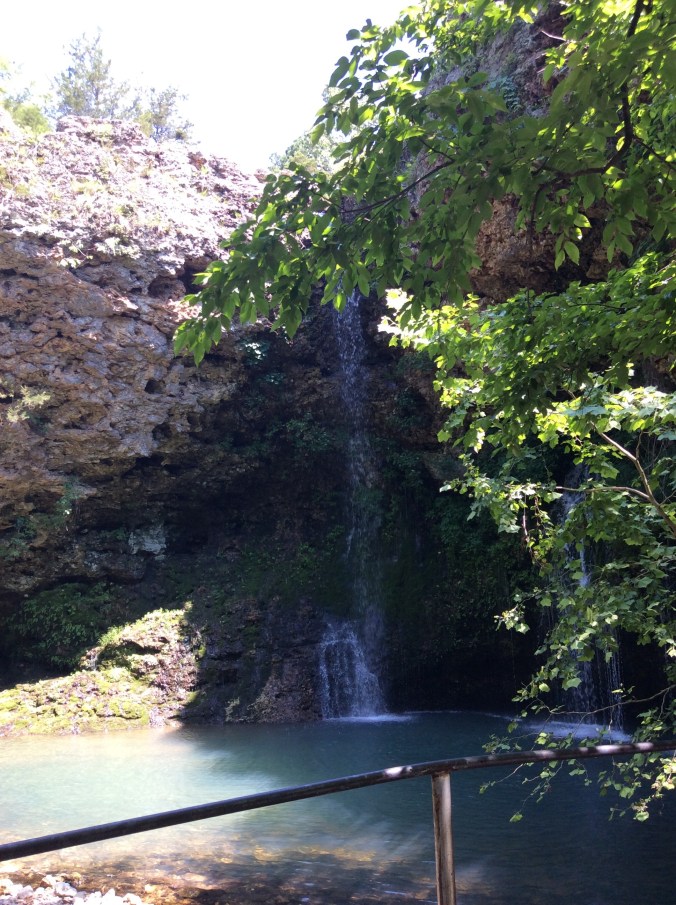
The next day, Saturday, we decided to head east through the Cheyenne Nation to visit Natural Falls State Park. If we had known what it is really like, we would have taken a picnic.

IMG_2693

The area above where the falls drop off.

IMG_2697

IMG_2698

Dripping Springs

IMG_2700

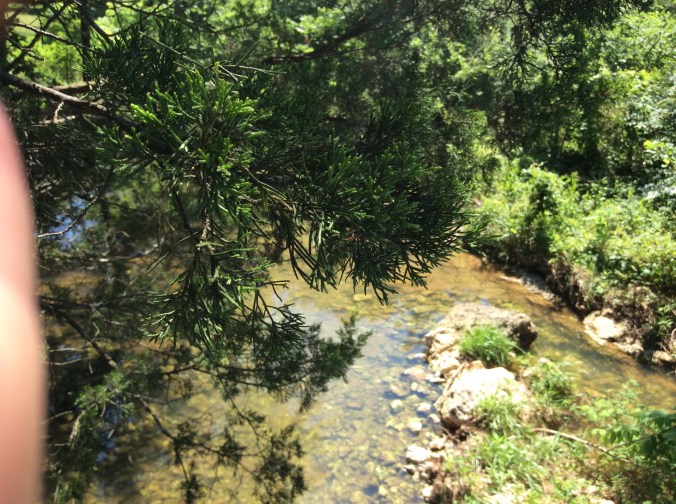
Just below the falls another stream enters and then flows down to a lake.

IMG_2709

The lake becomes larger as it flows farther.  It is a moderate to difficult hike getting to the lake.  Fishing is permitted here.  This park is also a good place to camp.

While gone, a giant thunderstorm arrived at my house with 8 inches of hail and three inches of rain in a short period.  Although the juniper trees look close to normal, most of the deciduous plants were denuded.  I have no idea whether they will recover.  A few of the small native flowers appear normal.  Luckily, my house was not damaged. However, this evening with my grandson’s help I will tackle the drive which is full of about 8 inches, in some places, of dirt, rocks, and gravel.  Luckily, after removing the larger rocks, I will get most of it with the tractor bucket and move it back to where it belongs.

Attitude


Where I teach high school, my grandson attended basketball camp the last three mornings.  While I watched and read, I heard the coach give them a little lecture.  Apparently, some of the campers were dragging along, not even jogging as they moved across the court.  They kept pulling on their shorts, looking down, not listening or paying any attention to the instructions.  Coach got fed up, stopped everything, and pointed out their self defeating behaviors.

Basically, he told them that their actions appeared defeatist.  Act tired, lag behind, ignore instructions, and you set yourself up to lose. Your actions become who you are.  It seems these are also good pointers for all aspects of life.  Ability alone will not lead to accomplishment or even happiness.  Even the most talented musician, athlete, writer attains little without practice and determination.  Being the best a person can be takes work and a positive outlook.

San Jose, Costa Rica


Two friends are headed to Costa Rica this summer.  While they will join a tour, they have a couple of days in San Jose before the tour begins.  I promised them I would suggest a few places they might enjoy, El Mercado, the downtown market,  the National Theatre, and the precolonial museum which is full of pre-Columbian gold and other ancient artifacts.  It remains my favorite but security there is tight.  To get in, you must surrender just about everything but your clothes.  You get a locker in which to place your valuables; the key to the locker is about all you can take with you.  As a consequence, no photos.  They do have a gift shop with quality items of all sorts including copies of many of the artifacts and jewelry.

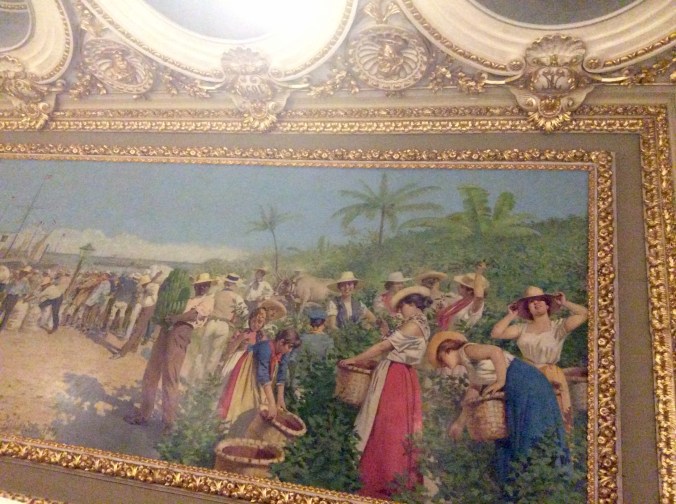
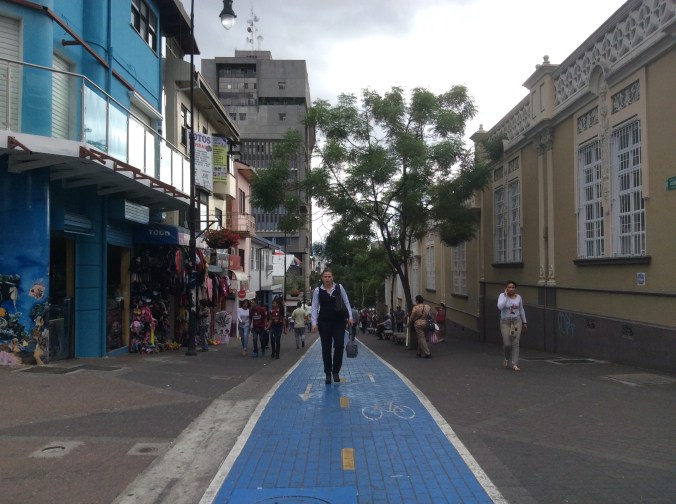
Much of the downtown area is foot traffic only.  Vendors sell various goods on the street, you can wander El Mercado, in which various stalls for goods and food are located, and tour the National Theatre.  Inside the National Theatre next to the main lobby area is a lovely little restaurant, the perfect place for lunch.  The following are photos I took  in the National Theatre about one and one-half years ago.

IMG_1915

IMG_1914

IMG_1921

IMG_1919

IMG_1911

The first photo below is the highway from the airport into San Jose and the second shows a typical downtown pedestrian only area.

IMG_1904

IMG_1912

I have been to Costa Rica in what in the US is summer and also at Christmastime.  Summer here is their rainy season so if you go then, be prepared for rain, sometimes a lot of it.  It is sort of a joke that on the east side of the main mountain chain, it is always the rainy season.  However, I have been there when it did not rain.  Take a sturdy, easy to lug around slicker with a hood because sooner or later it will rain.

The huge advantages of going this time of year are a lot fewer tourists and it is considerably cheaper.