Water, Water, Where?


Today, I drove about fifty miles to watch a play especially produced by my friend, King Hill, for the Gem Theatre in Claude.  I almost did not go because of high winds and blowing dust.  Between 8 and 10 this morning visibility was so low  it was impossible to see the horizon.  High wind and blowing dust warnings started yesterday.   Now, as I write this, these warnings have continued for more than 24 hours.  Red flag warnings flash across the TV screen. Thankfully, not quite the dust bowl extremes, not yet anyway.

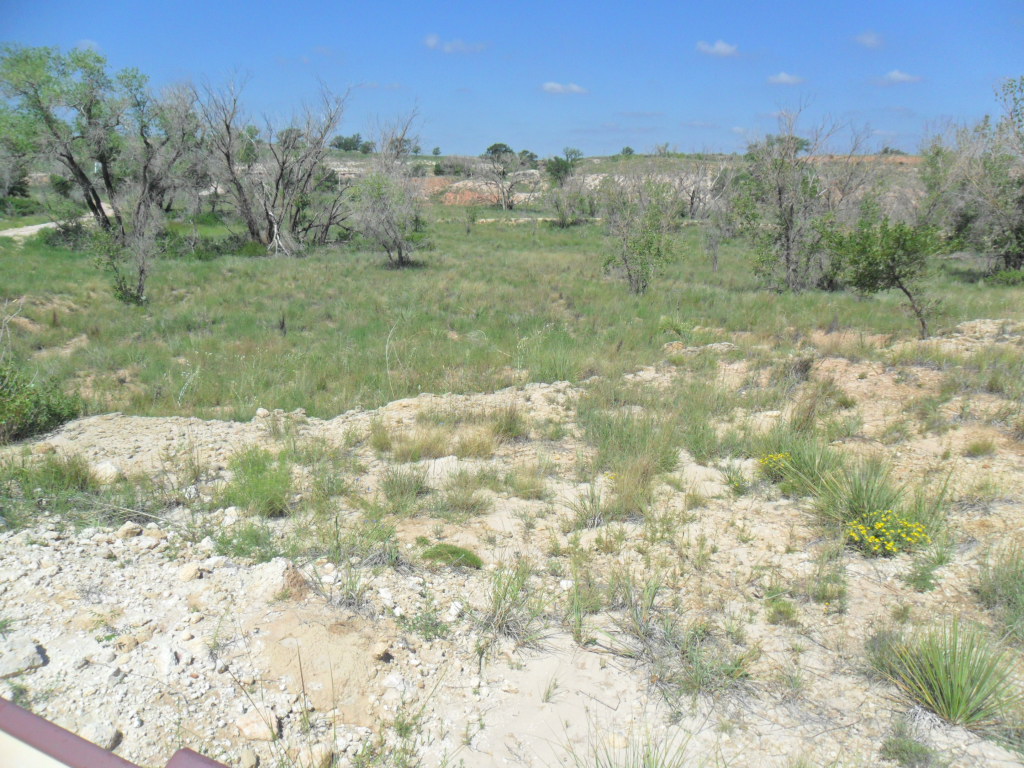
Originally, a green sea of grass covered all the land where I live in the Panhandle of Texas, the Llano Estacado. Immense herds of buffalo roamed free.  This prairie grass protected the land from erosion.  Rivers and an occasional canyon interrupted this endless sea, including the Canadian River, Palo Duro Canyon and the network of canyons running into it.  Once the Spanish brought horses, Kiowa and Comanche ruled this sea for more than a hundred years.  Under a full moon, the Comanche reigned by night raids from Nebraska to Mexico.

What happened?  Plows brought by people from the East dug up the grass.  These people planted the crops they knew, wheat, corn.  They settled in towns and homesteaded the country. They brought cattle and in some areas developed gigantic ranches.  Hunters killed all the buffalo except a few the famous rancher Charlie Goodnight and his wife managed to save.  Remnants of this southern herd now live at Caprock Canyons State Park near the tiny town of Quitaque, Texas.  Those who farmed dry land farmed.  In a normal year crops grew, the people prospered.  In dry years dust blew because there was no grass to hold the dirt.

Today, giant pumps pull water from the aquifers, the Ogallala, the Santa Rosa. My well is 400 feet deep, some are nearly 900.  More and more people move here from other parts of the United States.  They want lawns like the ones they had where it rains forty inches a year.  It does not rain much here, twenty in a good year, ten in a bad year.  These aquifers lose much more water to irrigation in a year than are replenished by rain.  Farmers grow corn,wheat, cotton, and milo, all irrigated.  In some places where  the water became to saline for crops, the pumps sit abandoned.

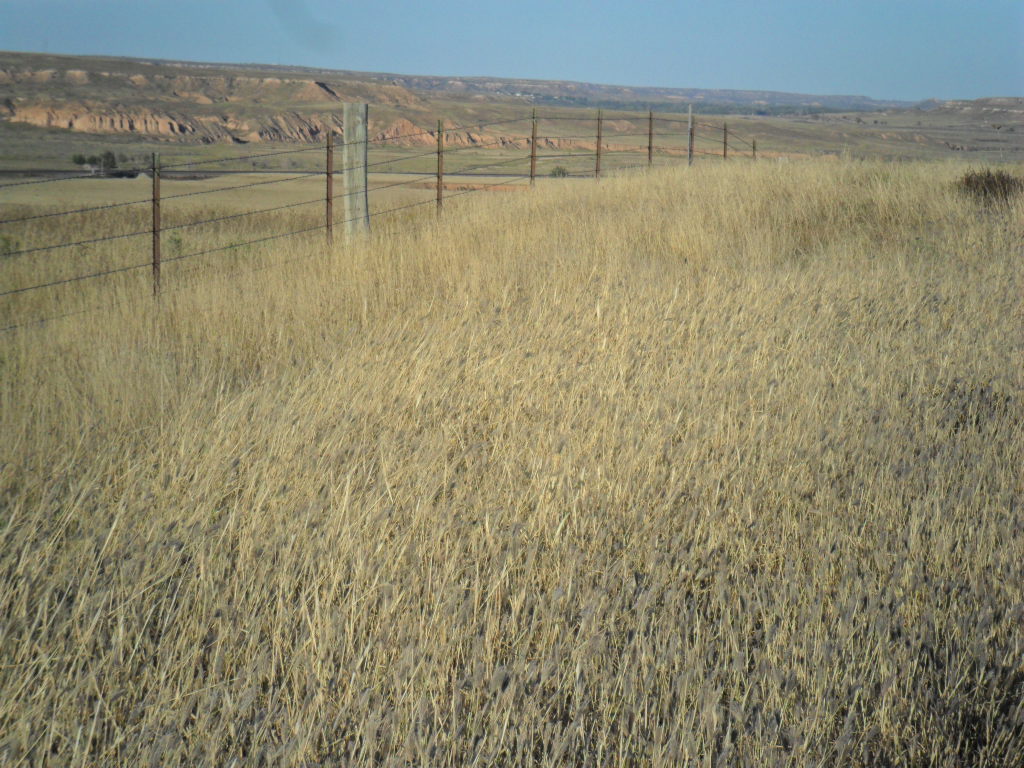
Today, I drove by miles and miles of dry, thirsty grass, perfect fuel for the wind driven wildfires which sometimes start this time of year.  In other places irrigation pivots rained water on immense emerald fields of wheat.  I could not help but wonder how much of this water evaporated in the sixty mile an hour wind.  As I finish writing this with the TV on  weather watching, I see Fire Weather Watch, High Wind Warning, Red Flag Warning flash across the screen. I hear the wind roar and heavy outdoor furniture slide across the patio.  I’ve seen wildfires, had a half mile of cedar post fence burned down.  All it takes is a tiny piece of cigarette thrown from a truck or car, a flash of dry lightning.  They predict three more days of this.

I love the space, the vermillion sunsets, the intense blue of the sky.  I watch my neighbors water, water, water their new houses in the country.  I think about those pivots irrigating in the wind, and I wonder what will happen when all the water’s gone.


SAM_1369


Myanmar Then and Now-Part One


More than twenty years ago, I went to Myanmar when it was still called Burma.  I flew there from Katmandu.  Compared to the cool, crystalline mountain air of Nepal, the hot, moist, Burmese air felt stifling, thick.  Day one, we left the Inya Lake Hotel and traveled to downtown Yangon to purchase tickets to Pagan.  We never left Yangon because the first of many revolts against the military government started.  Everyone strongly opposed going there by the night train and the last plane headed that way had been shot down.  Personally, I was willing to take the risk but could find no one else willing to go with me.  Everyone was under a 6 pm to 6 am curfew.  Unexpectedly, hundreds of hotel guests were confined to the hotel and its grounds, thankfully rather expansive.  This unusual circumstances provided unexpected opportunities.   To accommodate feeding everyone dinner, the hotel staff asked guests to share tables.  I shared a table with a man from South Korea there to build a sport shoe factory, two women from Germany headed to a medication retreat, and a gentleman with an English accent.  We shared life stories except the “Englishman”.  His sharing seemed a little “off”.  Later, when the rest of us chatted and put together what little he shared, we decided perhaps he was an arms dealer.  One evening guests experienced the privilege of watching the guests for an elaborate Burmese wedding, complete with traditional wedding clothing.

Although clean and orderly, this “one of the best hotels in Burma” looked more like photos of Russian army barracks than the hotels to which most of the guests were accustomed and absolutely nothing like anything else near Yangon.  Few cars roamed the streets.  The most common vehicles were small pickup trucks in which the bed had been transformed into an open air van complete with seats and a cloth roof.  The populace exuded an air of dejection.  Those who bothered to save money saw it devalued to nearly nothing.  The once elegant, ornate buildings showed signs of disrepair and decay.  A country which was once the world’s largest exporter of rice was rationing it as well as gasoline.

Unless you sleep twelve hours a day, curfews present challenges.  What do you do with yourself for all those evening hours after 6 pm hits besides eat a leisurely dinner.  I walked the glorious hotel gardens repeatedly and became acquainted with the hotel gardener who spoke perfect English and whose father had attended Columbia University.  His roses were as tall as I am.  He asked me repeatedly, ” How does my garden measure up to modern standards?”  When I offered tp send him horticulture magazines, he told me they would be confiscated as evil, foreign influences.  Paddle boats lined the lake’s edges.  Guests could use them free but  guests were told not to go far out because we might get shot at.  The luxurious villas of the ruling military elite lay readily visible on the distant opposite shoreline.

During the day, everyone rushed out to make the most possible out of the 12 free hours.  Mainly, I recall an overwhelming sense of gold, glitter, and glass tiles reflecting the tropical light.  At first, it induced a feeling of slight nausea, so much sensory input I felt slightly sick.  But I adjusted.  As if scattered, glittery golden temples were not enough, there rose the Shwedagon Pagoda, 99 meters covered in gold, real gold.  I spent an entire day there, wandering its environs and still missed some of it. Saffron clad monks, vendors selling “sacred” items and snacks, nearly a city within itself,  old, originally  built in 1372 and 344 feet high, repeatedly rebuilt after earthquakes and foreign raids.  Impressive is an understatement.

If Burmese history and culture interest you, I recommend three fascinating novels:

To Save Fish From Drowning by Amy Tan

The Piano Tuner by Daniel Mason

The Glass Palace by Amitov Ghosh

All three focus on one or more of the ethnic groups that inhabit Myanmar and on their relationships with each other.  The latter two are historical novels and in particular Ghosh’s book provides a fascinating history of that part of Asia.


Trivia


This marks week one of my commitment to write for at least twenty minutes every day.  A good way to “force” myself to do this is to blog daily.  In this past week I have heard from new people and received more comments than usual.  I had something already written out and then decided against posting it.  Because I am at least one hour behind on what I planned to do when I arrived home from work, this blog may be a bunch of trivia, depending on what you consider trivia.

I had not planned on cleaning my barn in preparation for fifty 100 pound bales of hay, but when they told me they would deliver Wednesday instead of Friday, it changed this evening’s plans dramatically.  I had to move the remaining hay from last November’s delivery to a different spot because I do not want “old” and “new” hay mixed.  100 pound bales do not weigh all that much less than I do so moving them is not all that easy.  Once moved, I sweep the loose hay up, lay down pallets, and sweep up everything.  I do not like hay to lay directly on the cement floor of the barn.  All that took over an hour.  Then it dawned on me that I should probably eat something.  Time mandated simplicity so I made a salad. Suddenly it reminded me of salads Gaston used to make.  Gaston lived with me for six months–a handsome exchange student from Argentina, who rode horses, played the piano while I cooked dinner, and then when I gave the word, made beautiful salads, kaleidoscopes of color, orange, red, green, yellow, purple.  Tonight, in a rush, I finally managed to make a salad as beautiful as Gaston’s.  In addition to his other assets, Gaston’s name is a song for the ears and the heart:  Gaston Luis Zulaica del Sueldo.  I love his name so much that it is the title of one of the poems in my new book of poetry, “On the Rim of Wonder”.  His counselor at school here loved it so much that she insisted on practicing it over and over and over to get it right when she announced it at graduation.

Salad eaten, once this post is complete, I must finish the baby blanket I promised today to deliver tomorrow.  More than eight years ago, I taught freshmen English.  One of my students, who has since gone to college, graduated, and now works for the school district where I work will soon be a father.  His wife, through her work as a neonatal ICU nurse, became a good friend of my daughter’s.  Their baby is due in a week or so.  I am running out of time.  I MUST finish this tonight.  Since I have to get up at 5:30 to get to work on time–I work 25 miles from where I live–it would seem that since it is now 7:49, I had better quit writing this and get to work.  Tomorrow I promise more exciting material.

Apocalyptic Planet-Part Five: Civilizations Fall


Whether it is my innate ambition, something my parents instilled in me, or something else unknown, I try to learn something new every day.  Craig Childs starts this chapter of his book by talking about a Phoenix landmark.  Back when I travelled to Phoenix regularly, I knew this place as Squaw Peak.  Now its name Is Piestewa Peak.  The name change is probably a good thing.  I never knew before reading this how dreadfully pejorative the word squaw is.  Basically, it means Indian bitch as well as other things related to the privates of women.  All languages seem to possess an accumulation of dreadful words geared to putting women down one way or another.  Slang words for the private parts of a man rarely mean anything pejorative, at least not that I know of.  The new name, a Hopi name, a blessing word, is a word that calls water to this place.  Not a bad idea in Phoenix or most of the Southwest for that matter.

The name Phoenix fits.  Underneath modern day Phoenix, an ancient city lays buried, a quite sophisticated city with ball courts, temples, irrigation canals.  This city existed at least a thousand years ago.  Its inhabitants grew corn, cotton, beans, and agave.  Farmers, hunters, carvers, all sorts of artisans and merchants apparently lived there.  Now they are called Hohokam taken from an O’odham word meaning “ancestors”, the “ones who have gone”.  We find forgotten cities all over the world, Palmyra, Machu Picchu, Angkor Wat.  What causes these sophisticated civilizations to fall?  If you read a bit, look further, you find common themes:  environmental decay, resource depletion, conflict, disease, social problems.  Angkor Wat fell because it could not maintain its complex irrigation network.  Ur in Iraq fell because a drought caused its port to dry up.  Usually, the demise of particular civilizations occur over time, e.g.Rome.

Childs notes that human patterns often follow animal patterns, or at least mammalian patterns.  For example, when over population occurs, behavior changes.  Parental care and cooperation become replaced with aggression, violence, competition for resources, dominant behaviors.  These types of behaviors are particularly detrimental to females and the young without whom the society (or animal population) cannot replace itself.  Generally, in animal populations, when this occurs, reproduction slows for several generations and the imbalance corrects itself.  For humans, it is not so simple.  Hohokam bones indicate mass starvation and malnutrition.  Other civilizations, e.g. the Anasazi, seem to have disappeared without a trace.

Today, most of the world’s largest cities have immense infrastructures that keep them going, miles of underground sewage tunnels, water mains, etc.  Here in the US in our oldest cities, much of what we take for granted is very old and deteriorating.  New York City and Chicago have water main systems that some experts claim are near collapse or at the very best badly in need of repair.  Doubtless such conditions exist in old cities throughout the world, most of which are much older and larger than the majority of cities in the US.  Yet, they continue to prosper.  Have we passed a point when civilization cannot fall?

Childs completes this discussion by describing his visit with his wife to Guatemala.  They visited all the best known Mayan sites, visited with natives.  His wife managed to get invited to a Mayan fire ceremony, a renewal ceremony.  History books tell us the Mayan civilization is dead, ended.  But it is not.  The Mayan culture still exists.   At least six million still live in the Central America.  What would have happened to Mayan cities if the Europeans had not brought epidemic diseases and better fire power?  We will never know, of course, but no matter how many civilizations rise and fall, change continues and humans continue to inhabit the earth.

The new question is this:  can this planet we live on sustain the ever increasing numbers of humans who inhabit it??

Apocalyptic Planet-Part Four: Seas Rise


As I write this title, it seems a bit counter intuitive that one of the first things I saw this morning was a newspaper discussing many small cities around the Texas Panhandle which are running out of water.  And on the TV news as I write this, the city of Amarillo announces measures being taken to curtail water use, followed by a detailed discussion, explaining how one of these smaller towns plans to address the lack of water.  Drought expands while ice melts and seas rise.

Childs explains sea behavior by comparing it to pouring water back and forth among a bunch of pans.  Ocean behavior varies from place to place.  Louisiana has been losing seacoast at the rate of twelve meters per year and large parts of the Nigerian coastline has lost as much as thirty meters per year, one of the fastest losses on earth–erosion.  The moon causes tides twice a day changing sea levels on the average of two meters each time.  Historically most sea level changes are long term changes.  A major cause of sea level change is temperature.  Half the current sea level rise can be attributed to thermal expansion.  Water warms and spreads out.  Not only does heat expand near the sea surface, but now also expands into depths not previously affected.  Findings by two oceanographers, Purkey and Johnson, indicate an increase in ocean heat 16 per cent greater than previously thought.  Oceans are the largest reservoirs of heat on earth.  Once heated, their size makes them slow to cool.

Purkey also notes that even in the depths of the seas, waves transfer heat.  However, because of the size of the Pacific, an event that occurred forty years ago in the southern Pacific will not reach the northern Pacific for approximately those forty years.  Thus, the warming and subsequent ice melt we see in the north Pacific started in the south Pacific forty years ago.  Another scientist, Carl Wunsch, notes that earth changes remarkably without human intervention.  Nevertheless, he recommends humans do something to reduce carbon dioxide emissions as a precautionary measure in addition to discouraging people from settling in low lying areas.  Unfortunately, rising seas do not bode well for much of the earth’s population who live in exactly these low lying areas:  all of Bangladesh, Venice, Shanghai, New Orleans, Bangkok, the Marshall Islands, and many US coastal cities to name just a few places.

St. Lawrence Island north of the Aleutians provides a perfect example of what is happening.  Sea ice breaks up too early, fish species they used to see are gone replaced by new ones they never saw before, and the population of seals and sea lions has altered.  Cancer rates in the villages there have risen dramatically caused in part by the toxic poisons concentrated in the meat of the seals, whales, and salmon they harvest from our polluted oceans.  In 2008, they brought a lawsuit against Exxon, Chevron, and Mobil, claiming that these companies are the world’s major contributors to global warming.  They want these companies to pay for moving their villages to higher ground.  Sea rise necessitates the move.  They lost in District Court, but the case is under appeal.  The court cited that the chain of events causing their predicament is too long to lay blame in one place.  Childs notes that we really need such places to endure, places where people know how to lead minimalist lives, places where people know how to survive.

Apocalyptic Planet-Part Two: Hadley Cells, Weather and Drought


Hadley cells, the wind systems in each hemisphere , form patterns of atmospheric circulation in which warm air rises near the equator, cools as it travels poleward at high altitudes, sinks as cold air, and then warms as it travels back to the equator.  They are named after George Hadley, an English scientific writer.  Tropical regions receive more heat from solar radiation than they radiate back to space and such areas have constant temperatures.  More simply, warm air rises (heat rises) and then flows poleward at high altitudes, cools, drops, and flows back toward the equator at lower altitudes.   Then the process repeats itself.  When the air rises and leaves these tropical areas, it loses moisture as it heads to subtropical areas.  The majority of the worlds large deserts lay in these subtropical areas.

Hadley cells are expanding.  Precipitation has declined in tropical areas since 1970.  As I mentioned in yesterday’s post, Southern Asia, the Sahel, Southern Africa, the Mediterranean, and the US Southwest are getting drier and drier.  Even wetter areas now experience long dry spells between extreme events of rain and snow.  Examples in the US include the cold and snowfalls in the Midwest and Eastern Seaboard this past winter.  Texas and New Mexico continue to experience a prolonged drought.  In the next thirty years scientists predict a 30 per cent decline in water resources.

In some places both governments and individuals create innovative and sometimes simple measures to counteract desertification.  In India near the Thar Desert, the government mandated the dispersal of grass seed to hold the ground.  Studies indicate that the grass seed grew better when planted by hand than when dispersed from airplanes.  Also in India orans, small sacred groves, have helped preserve shrubs and grasses and even trees, a genetic bank that would otherwise have been lost.  Childs describes how his friends who live on the outskirts of Tuscon have coaxed their water table fifteen feet higher, using ordinary shovels and hard work.  They built contour traps and “massaged” the ground.  Hardly worth noticing except when it rained, the rain sank into underground catches.  Their properties now look like small areas of refuge in the vast desert.  In some areas of the Sahel people have been able to plant and nurture trees in such a way that areas of green exist where they had disappeared.

Archeologists and geologists know that periods of drought occurred repeatedly for millions of years.  For humans and the animals we know, drought has never been easy.  Large areas of civilization cannot exist without water.  We can affect our future in positive ways and prepare ourselves if we choose.

Apocalyptic Planet–Part One


Usually I read only one book at a time.  Lately, I am reading several, one of which is Apocalyptic Planet:  Field Guide to the Future of the Earth by Craig Childs.  Childs is a sort of combined explorer/adventurer/scientist.  He goes to places few go to see what occurs there, the wind, the flora and fauna, the weather, the climate.  The next couple of days I intend to share some of his most pithy observations and ruminations.  We will start with the desert.  He and a friend literally wandered around the most arid and hostile portion of the Sonoran Desert in northwestern Mexico.  This desert has enlarged and become more arid due to an extended drought.

Deserts come and go.  If you live in a lovely lush green landscape, wait long enough and it, too, may become a desert.  Six thousand years ago lakes, marshes, and grassland lay where the Sahara is today.  A slight orbital change in earth’s relation to the sun caused nearby oceans to heat up, changing atmospheric conditions.  Humans living there had no choice but to move.  Forty per cent of the earth’s population lives in semiarid regions.  Even a small drought changes survival chances for the people who live there.  The Sahara, the Gobi, and the Taklimakan are growing, arable farmland decreasing.  Vulnerable areas include southern Spain, Greece, Bolivia, Australia, central Asia, and our own West.  The entire American High Plains (I live in the southern part) sits on top a giant desert.  Without pivot irrigation, only grass grows here.  In the last decade many irrigation wells have dried up or gone too saline.  The giant bulges you see in places like the sand hills of Nebraska are really a sand dune sea covered with grass.  Take away a little rain and here comes the desert.

Childs and his friend carried water with them and buried them with markers in the sand so they could find them later.  As the desert grows in parts of India, women carry water farther and farther, an average of six miles a day, four gallons at a time.  In the Sahel just south of the Sahara a difference in rainfall of just an inch or two can mean the difference between survival and starvation.  Without water, there is no civilization.

What causes these changes?  Human behavior and the increase in greenhouse gases are  part of the reason.  Humans are creating enough changes that we are moving toward more deserts, not fewer.  One climate expert, Jonathan Overpeck, thinks we are seriously underestimating the severity of drought we will face in the not so distant future.  Forget five and seven year droughts and think fifty years.  Hadley cells also affect climate change.  Tomorrow I will explain Hadley cells and how they affect our weather.

SAM_1190


Northern Arizona

SAM_1302


Eastern New Mexico


SAM_1370


Texas Panhandle

From The Guardian: Ten Rules on Writing Fiction from 14 Authors


The best list of rules for writing almost anything. If you are an English teacher these are musts to teach writing.

lenleatherwood's avatar20 Minutes a Day

Get an accountant, abstain from sex and similes, cut, rewrite, then cut and rewrite again – if all else fails, pray. Inspired by Elmore Leonard’s 10 Rules of Writing, we asked authors for their personal dos and don’ts

Elmore Leonard, Diana Athill, Margaret Atwood, Roddy Doyle, Helen Dunmore, Geoff Dyer, Anne Enright, Richard Ford, Jonathan Franzen, Esther Freud, Neil Gaiman, David Hare, PD James, AL Kennedy

Elmore Leonard: Using adverbs is a mortal sin

1 Never open a book with weather. If it’s only to create atmosphere, and not a charac­ter’s reaction to the weather, you don’t want to go on too long. The reader is apt to leaf ahead look­ing for people. There are exceptions. If you happen to be Barry Lopez, who has more ways than an Eskimo to describe ice and snow in his book Arctic Dreams, you can do all the weather reporting you want.

2…

View original post 3,420 more words

A Happy Birthday with Three Penny Opera


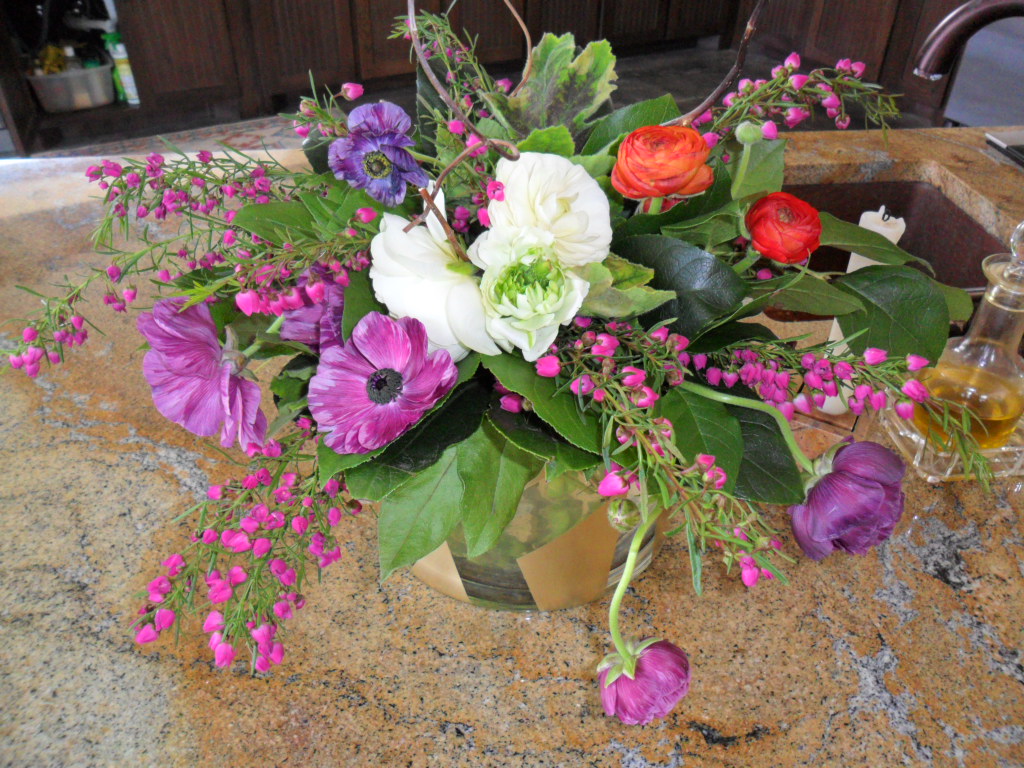
After a certain age many of us do not expect all that exciting a birthday, but mine this past week was a huge exception to anything I could have expected.  First, on the day before, these spectacular flowers arrived from my son, Erik Karlsson.   Parie Designs in Amarillo, Texas, really knows how to do flowers out of the ordinary.


SAM_1478


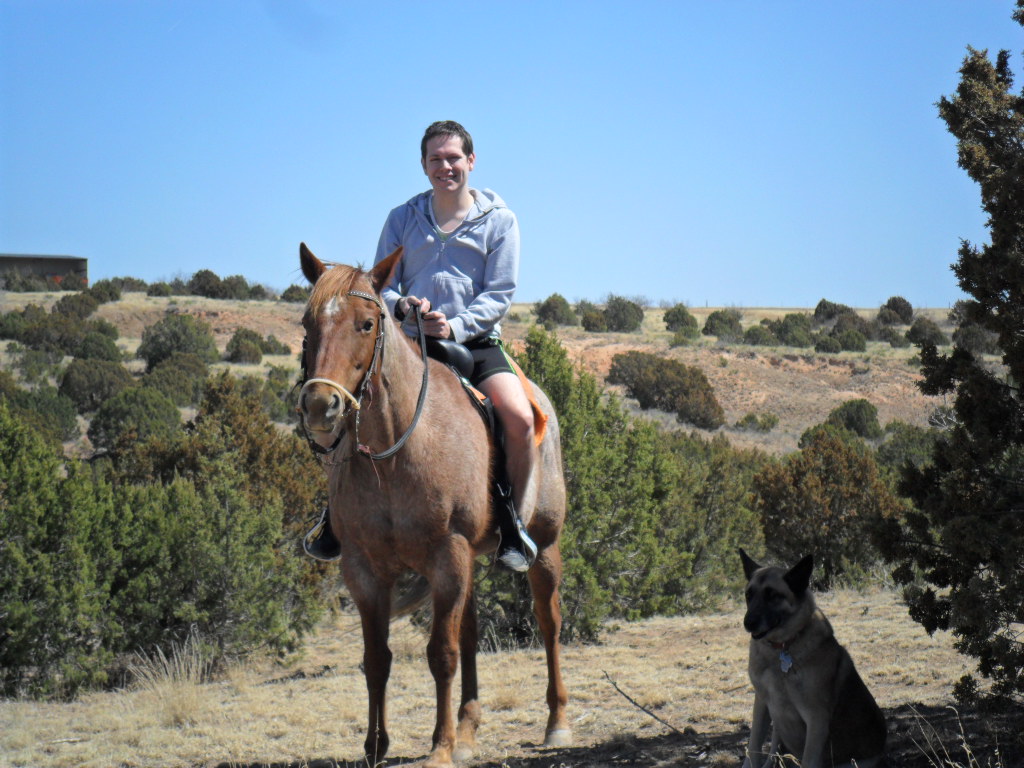
Almost two weeks ago, Walker Lewis, the Director, and Jeromy  Hunt, the Production Stage Manager, of the upcoming production of Three Penny Opera (Amarillo Opera Company) arrived to stay with me for three weeks.  Yesterday, my birthday, was an off day for them.  Chad Armstrong, one of the baritones, came over to ride my  horse, Rosie.  Romy and Walker gave me a bottle of good cab and bought me a birthday cake.  We relaxed on the rim of wonder (my patio), ate, and rode Rosie.  Then last night we all went to the annual opera gala.  Unfortunately, one of the opera performer’s husband became ill so now I will have my tiny fifteen minutes of  glory playing the madame of the brothel, pretending to smoke a cigarette, counting money, and watching “my girls” and the customers, or so they tell me.  Later today, I go for a fitting and start the one week of rehearsals remaining until the first performance on Saturday night.

I could not have ordered a better birthday.

SAM_1463

Chad Armstrong on Rosie, Walker on the left and Romy on the right.

SAM_1466

While Romy, Walker, and I hiked around, Chad rode off here and there, disappearing for a while and then showing back up.  Rough riding in canyon country.  Neither Romy nor Walker had ridden since childhood.

SAM_1471

Walker Lewis learning to ride–on Rosie.  He loved it and will ride again this coming week.  He kept smiling all over!!!

SAM_1474

Romy on Rosie with my dog, Isabella resting in the shade of a juniper tree.

Apparently, riding Rosie produced so much fun that the other singers want to come over later this week and ride.  Nothing beats fun friends, fabulous food, and pretty well broke horses for a day to remember!!!


Cool Surf


Wednesday, I topped the little rise down the

long drive to my house.

Cool’s down, lying down,

not like a happy horse,

soaking up the afternoon sun.

Down!!

Still dressed for work, I

rush, make him get up.

Instantly, I know, colic,

sadly go to the house,

change into jeans,

call the vet–he’s an

hour a way,

quirt banamine down Cool’s throat-

can’t hit his neck vein.

We walk and walk and walk,

waiting for the vet.

Cool’s hurting, distressed,

kicks my arm.

Vet and I load him in the

borrowed trailer as he

wobbles, half drugged.

Two giant bags drain into

his neck vein.

Vet listens, takes tests.

Result should read 2;

it reads 10.

In spite of hopeless odds,

the vet and staff work and

watch all night.

At 2:30 in the afternoon

a message on my cell phone:

Cool’s buried in the pasture with Miracle.

They’ve taken care of everything.

Stunned, trying not to cry at work.

Cool was fine when I left

Wednesday morning,

running the night before.

Stunned, remembering him as a baby,

the picture perfect paint.

Stunned, remembering how I

loved to watch him run,

head and tail up,

floating fast, joyous.

It’s Sunday now.

I walk out on my bedroom patio,

look up to his corral.

He always called to me, always.

Today, all I hear is the sound of silence.

SAM_1020

Cool, the other orphaned horse I raised.

579365_3069424508492_1766850092_n