Book 26 for 2024: “The Burgess Boys”, Elizabeth Strout


After winning the Pulitzer for her previous book, “Olive Kitteridge”, Strout continues her stories about people and families from a small town in Maine, the town of Shirley Falls. “The Burgess Boys” focuses on one family, the Burgesses. A freak accident which occurred when the children were under the age of ten has affected all their lives in one form or another. The boys, Jim and Bob–both lawyers, escaped to NYC as quickly as they could. Only their sister remained behind in Shirley Falls in the old family home which has become a rather dark and dismal place. Jim, a hyper successful, high powered attorney, has demeaned his younger brother Bob, a Legal Aid attorney, all their lives. The lifelong family dynamic is totally upended when the sister, Susan, calls them back for a family emergency after her teenage son commits a stupid, heinous act and gets himself in serious legal trouble.

Strout possesses a simple, straight forward, unique style of writing that seems perfect for telling family stories, illuminating human personal struggles, and illustrating the good and bad of modern life. If you have not read any of her work before, I suggest looking at the publication dates and reading them in order. The same characters keep reappearing and you learn about their lives as you go from book to book.

Book 25 for 2024: “The Spoiled Heart”, Sanjeev Shasta


The main character, Nayan Olak, is a Sikh whose parents immigrated to England. He has worked decades first on a factory floor and then later risen through the ranks of his union. Encouraged by others, he decides to run for head of the union when suddenly a young woman of the same ethnicity decides to run against him. She will do anything to beat him including using an unfortunate argument between them to accuse him of all sorts of misdeeds.

In the meantime, a woman, Helen, who left town under mysterious circumstances years ago shows up with her young adult son who is recovering from the aftermath of another unfortunate misunderstanding. Helen works for home health but refuses to take care of Nayan’s dementia ridden father. He cannot figure out why since she willingly takes care of others. He becomes obsessed with her, helps her son who becomes a sort of substitute for Nayan’s son who was killed along with Nayan’s mother in a fire many years previously. The police never determined who started the fire even though they knew it was arson.

Tragedies ensue as this story about race, misunderstandings, secrets, and relationships progresses. It also demonstrates the power, for better or worse, of misunderstood words and actions.

Book 23 for 2024: “Off With Her Head: Three Thousand Years of Demonizing Women In Power”, Eleanor Herman


Starting with ancient Egypt and later with the ancient Greeks and Romans and ending in current times, this highly researched book (there are 15 pages of Bibliography) details millennia of lies told about and attacks against women in power. Ridiculous things have been attributed to women, powers that no human has, in order to control them. Here is an example: Pliny the Elder (23-79 CE) wrote that menstruating women caused hailstorms, lightning, and whirlwinds. And worse yet, demons come from this blood (various medieval medical authorities) and it can shrivel the penis.

Then there is the whole thing about raging hormones. The word hysteria, which supposedly is an ailment of women, comes from the Greek word for uterus. During the 2020 presidential campaign, Marco Rubio, currently a possible candidate for vice president, tweeted a photo of ten missiles exploding and asked if you want a woman a heartbeat away from the presidency.

During the Middle Ages millions of women were put to death in various horrible manners after being accused of witchcraft. Even in current times various male political candidates and media announcers (a Newsmax journalist, Zinke of Montana, Ben Carson, Chris Matthews–list is almost endless) have called powerful political women witches. The victims of these pejorative rantings even include Margaret Thatcher when she held office.

Marie Antoinette never said, “Let them eat cake”. Various forms of this phrase had been around for over one hundred years. Ann Boleyn originally wanted to marry the love of her life who also wanted to marry her but the powers at the time, including Henry VIII, forbade this. Many of the ridiculous stories about Cleopatra can be easily disproven, e.g her being so rich she dissolved a giant pearl in vinegar to prove her wealth. Unless powered, pearls do not dissolve in vinegar. Catherine de Medici was attacked as some sort of sex pervert when she was 42, obese, and anything but a sexy seductress.

The documented lives of many powerful women for the last three thousand years contains endless abuse of all sorts. How is this possible? Because there is an informal Misogynist Handbook that has been used for millennia to control women. The above is only a smattering of what you will learn about this Handbook if you read this book. In the last chapter, the author does provide recommendations for overcoming this abuse of women. However, she also notes currently there is a “furious backlash against this long-delayed crawl toward justice, resulting in the increasing viciousness of sexist tweets and memes, more violent threats, more savage abuse.”

A Tribute to My Mother


Barbie Doll

Barbara Lewis Duke, pretty, petite, blue eyed and blond, my

mother, one fearless, controlling woman. Long after Mom’s

death, Dad said, “Barbara was afraid of absolutely no one

and nothing.” They married late, 34 and 38. He adored her

unconditionally. She filled my life with horses, music, love,

cornfields, hay rides, books, ambition. Whatever she felt she

had missed, my sister and I were going to possess: books,

piano lessons, a college education. Her father, who died long

before I was born, loved fancy, fast horses. So did she. During

my preschool, croupy years, she quieted my hysterical night

coughing with stories of run away horses pulling her in a wagon.

With less than one hundred pounds and lots of determination,

she stopped them, a tiny Barbie Doll flying across the Missouri

River Bottom, strong, willful, free.

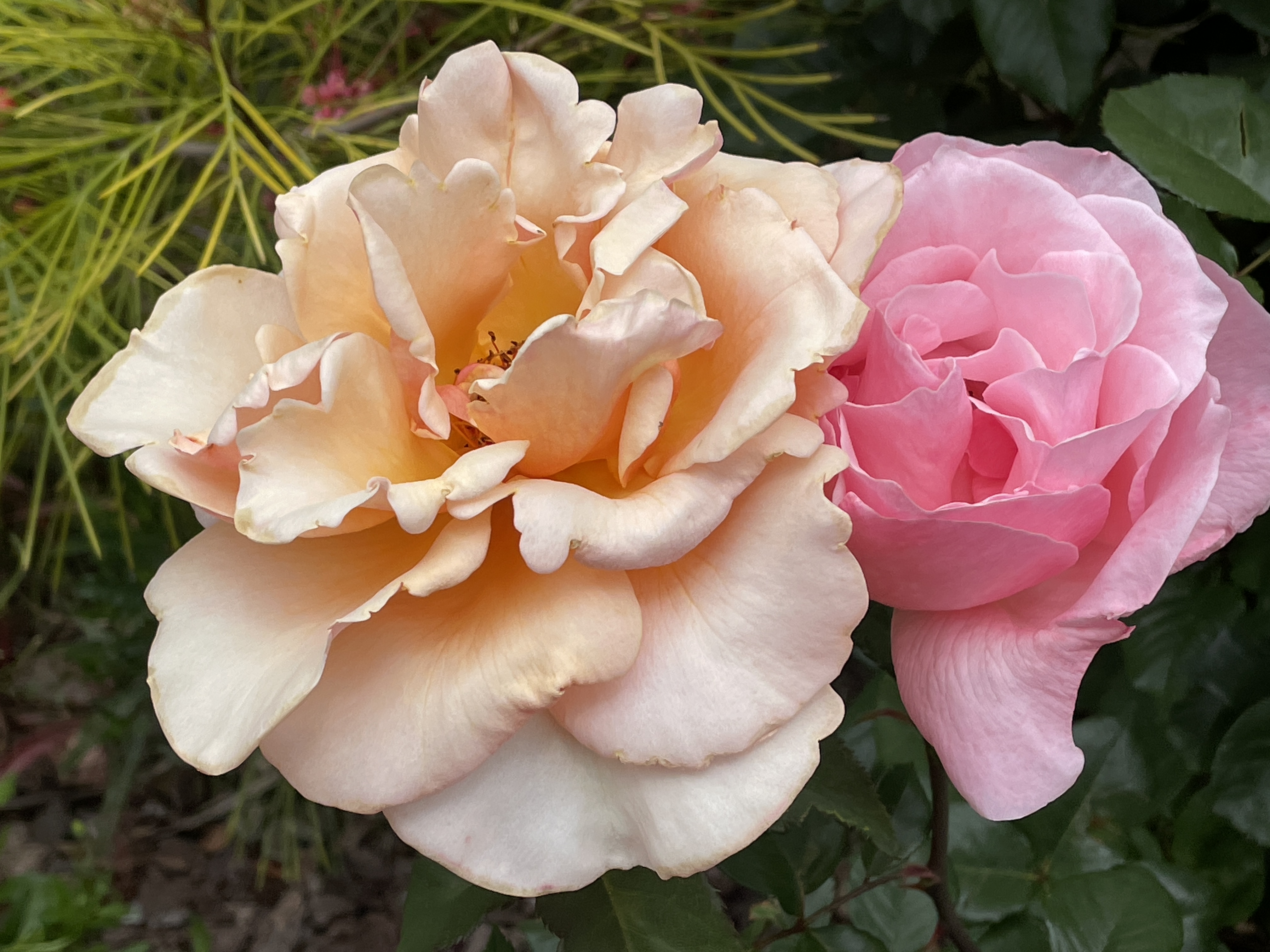
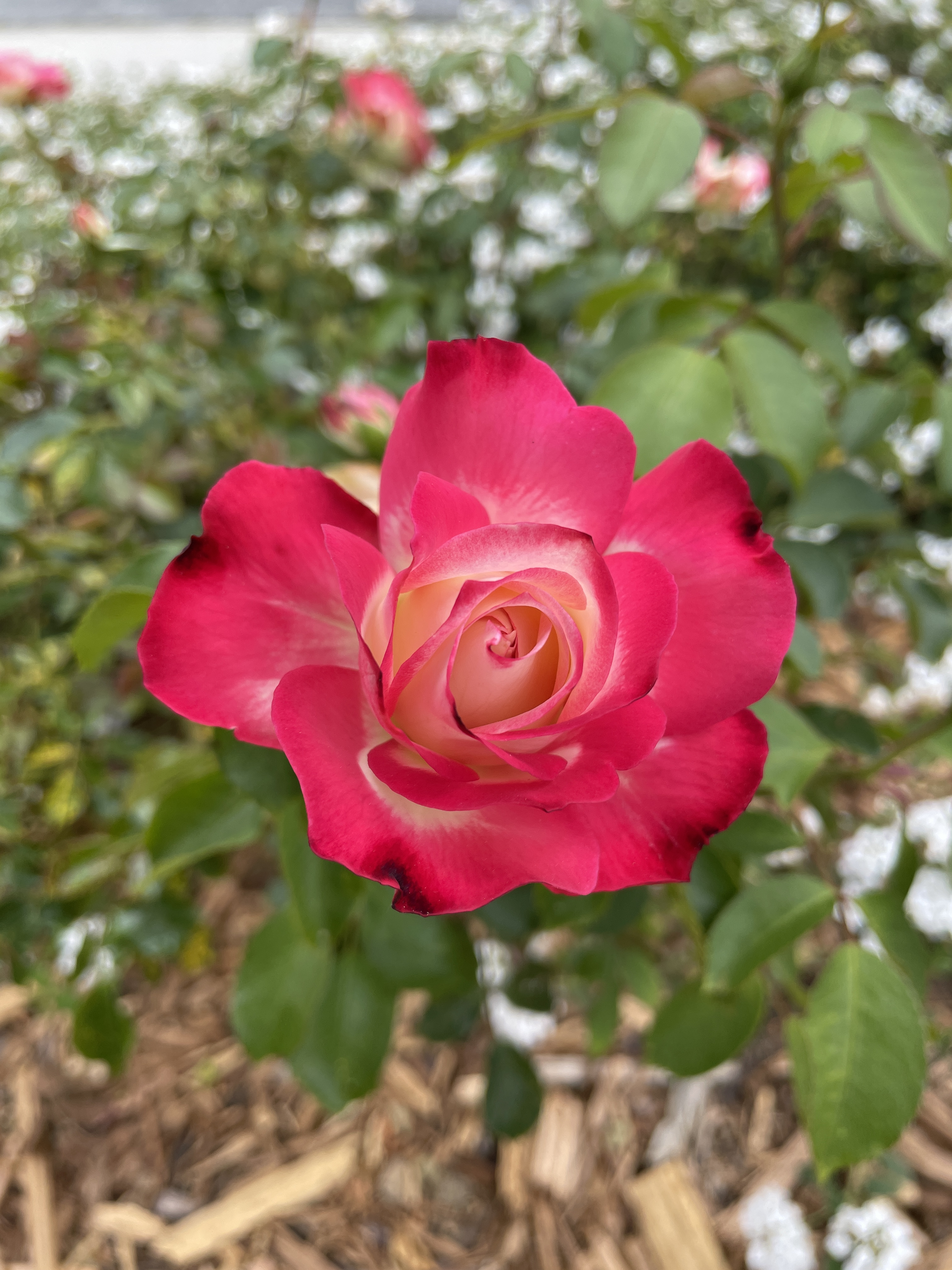
Note: This poem about my mother has been published in at least one anthology and my book of poetry. My mother loved roses, had a rose garden. I now grow roses too.

Book 20 for 2024: “The Midnight Library”, Matt Haig


Regrets and depression seem to have overwhelmed the main character, Nora. She’s lost her job, a car ran over her cat, she thinks she has failed at everything, and she says she wants to die. But does she really. Through a series of parallel universe experiences she gets to try out many different lives based on her long list of regrets. None really work because none of them exemplify her real self. She thinks she might like this new life or that new life, but none fulfill her, reflect her true self. She learns that money, fame, riches are not necessarily the answer. But what is the answer? What is the best way to live?

Poems


I started out thinking I would write a poem per day for National Poetry Month. Well, I’m a bit behind on that, but here are two of several I have written so far.

Spring

The mockingbird awakens me with his song.

A hummingbird, dressed in green with an iridescent

orange collar, flits by my head then sips nectar

from a scarlet bougainvillea blossom.

The neighborhood barn owl hoots at dawn and dusk.

A black and red/orange bird I’ve never seen before

lights on a palo verde limb.

A Western Bluebird dips its beak repeatedly in

the talavera birdbath.

Remember

In this world steeped in senseless violence remember

each day to find a piece of beauty:

-rosebuds opening

-the scent of jasmine

-a friend’s smile

-a bit of birdsong

In this world ravaged by wars remember

each day to find the jewels of joy:

-listen to a child’s laughter

-dance to a favorite song

-walk in the morning sunshine

-tell someone you love them

Book 16 for 2024: “Digging to America”, Anne Tyler


This book details the lives and relationships between two families, one native to the US and the other Iranian immigrants. When the young couple in each family adopt a Korean baby, their lives become intertwined. Every year on the anniversary of the arrival of the babies, they take turns hosting an Arrival Party. Two of the grandparents, one on each side, one male and one female, find their lives linked in unexpected ways. The book explores what it means to be an immigrant, how the native born sometimes view those from another country, and questions to what extent a person’s character is due to culture and what is simply the way that person remains regardless of culture. While a serious exploration of culture, family relationships, friendship, and cultural adaption, the book is also quite funny. I found myself sometimes laughing out loud and at other times feeling sad. I also found myself thinking more about my own personality and its development.

Perfect Spring Day


They tell writers, “Never ever use cliches.”

Sometimes I question that. When you

word a cliche, nearly everyone knows

exactly what you mean. For example:

This is a perfect spring day:

-birdsong wafting here and there,

mostly mockingbirds except for those

irredescent, orange-throated

hummingbirds at their feeder

-wind singing through the pines

-open windows for a change; it’s

75 degrees and sunny

-magenta and scarlet bougainvillea

climbing the garden wall

-white and lavender lantana

outdoing themselves with

spread and bloom

-geraniums in full flower

-mint growing so fast and tall

I already need to trim it.

I lounge on the patio reading

another novel, drinking rosewater

lassi, munching mixed nuts.

I feel gratitude for this

perfect spring day.

Nostalgia


Today is the first day of National Poetry Month. I am committing myself to write a poem a day. Here is the first one for the month.

Easter yesterday made me sad,

remembering children, grandson,

egg dying, egg hunting, family

together, laughter, joy.

Found photos of my family,

I, a child, dressed in Easter finery,

a family tradition. Dad bought us

corsages to wear every Easter,

pretty dresses in spring colors–

my favorite a pink dress trimmed

in scarlet, a unique combination

explained why I liked it so much,

felt special wearing it.

Today I wear pink and orange

together, admire the deep purple

and red bougainvillea, scarlet rosebuds,

snowy freeway daisies,

shining in the sun and wonder

will I live long enough to teach

a great grandchild to color

Easter eggs.