a conference of crows
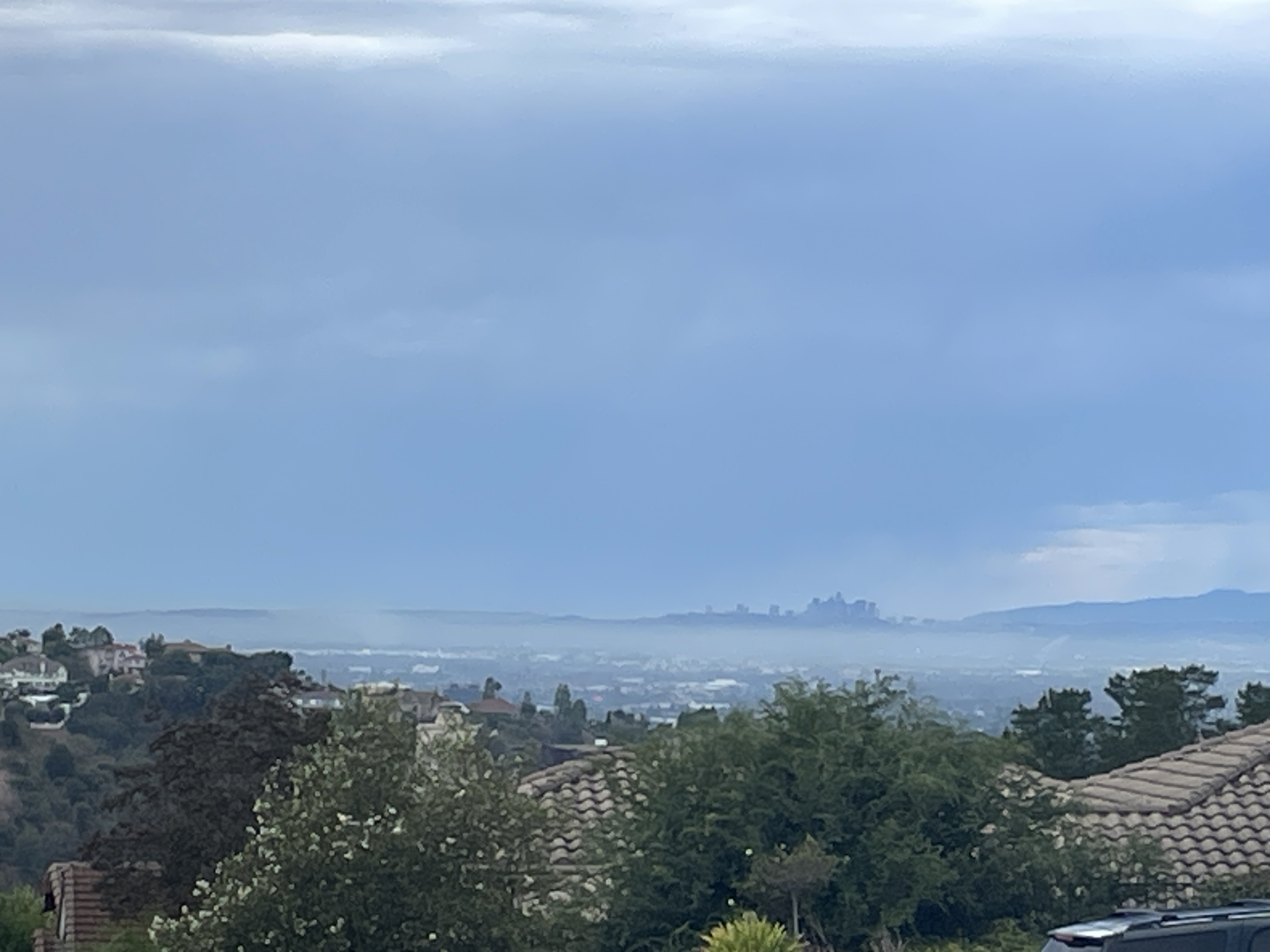
downtown LA looms above clouds
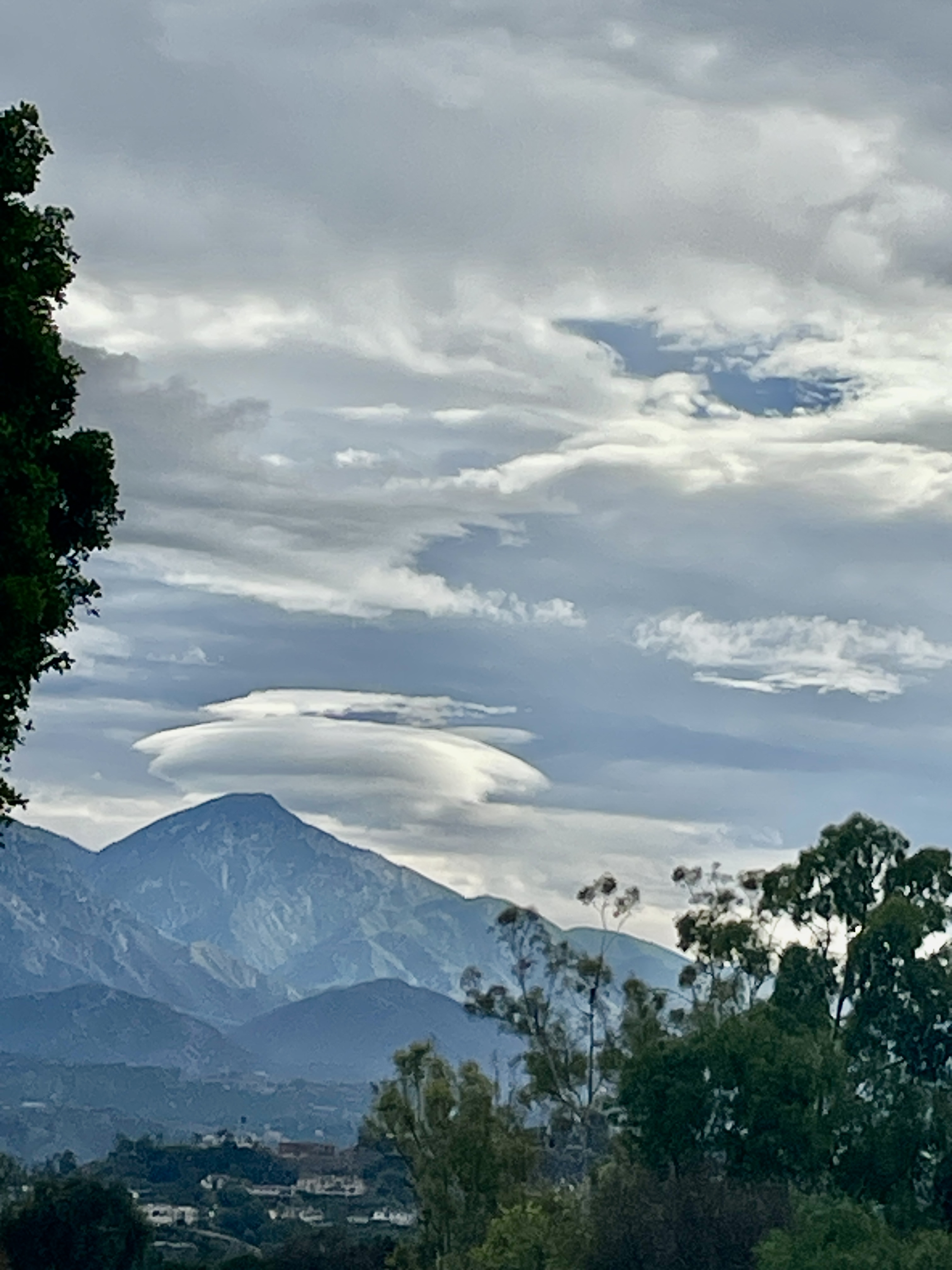
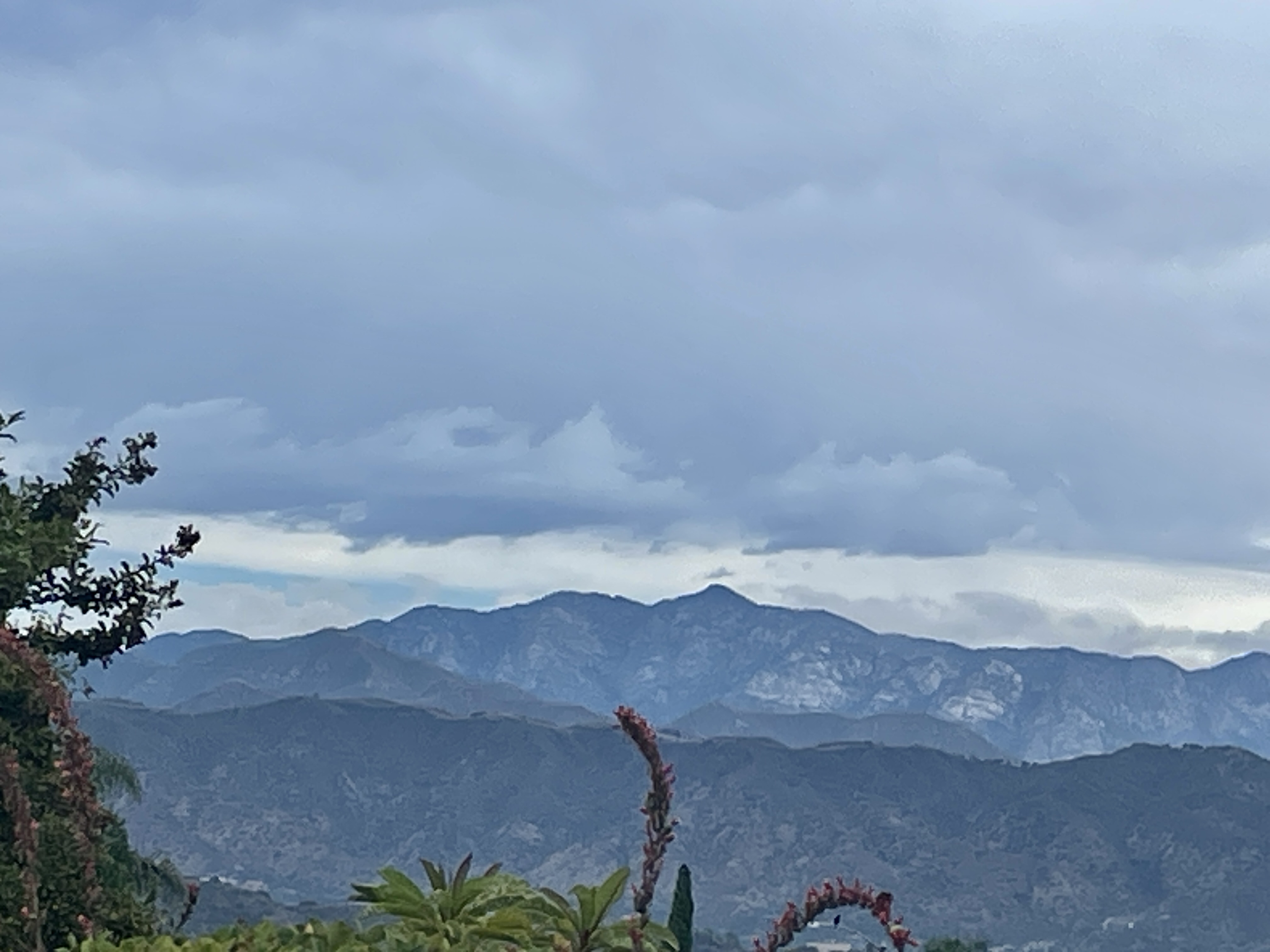
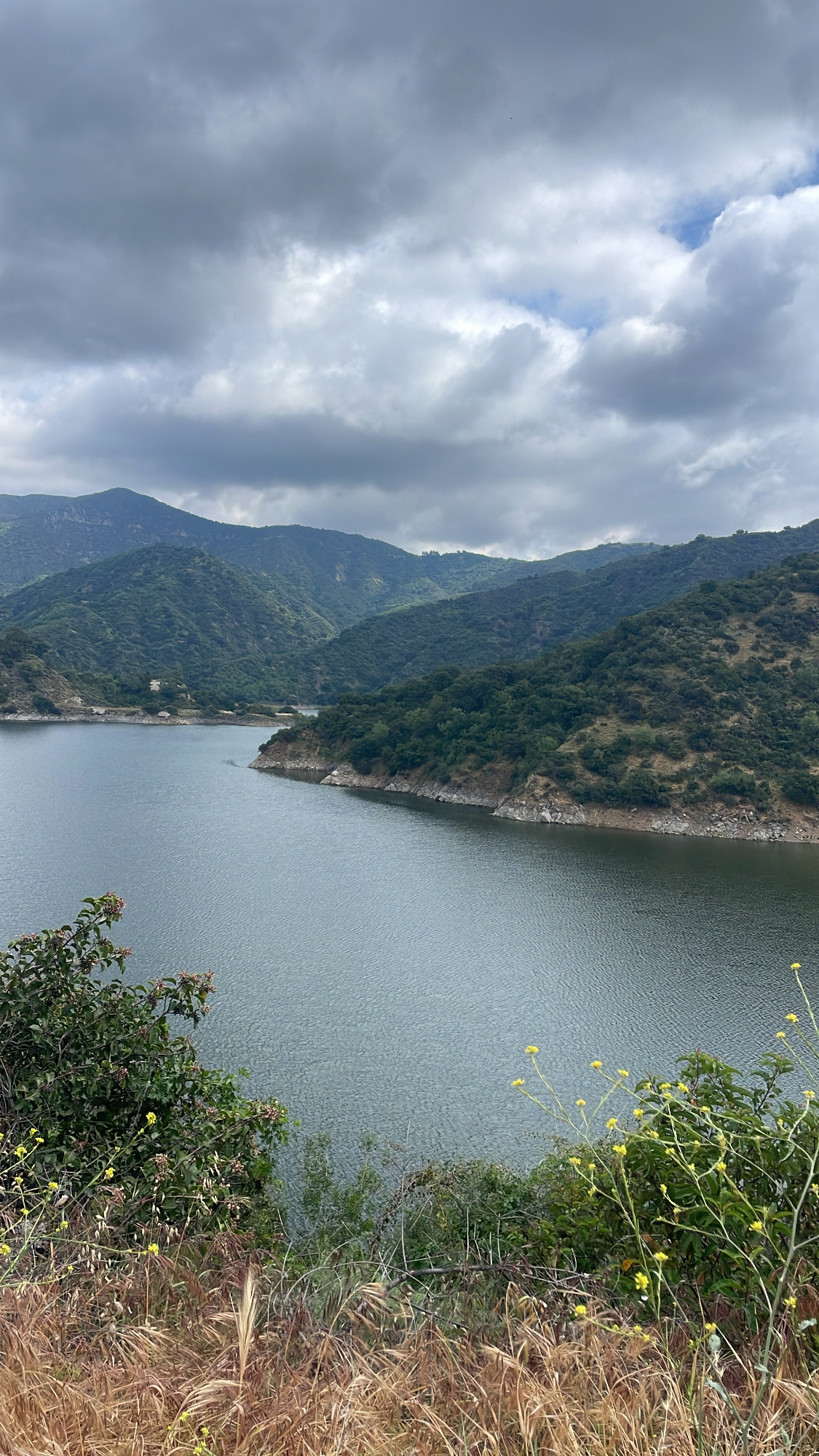
mountains in the mist
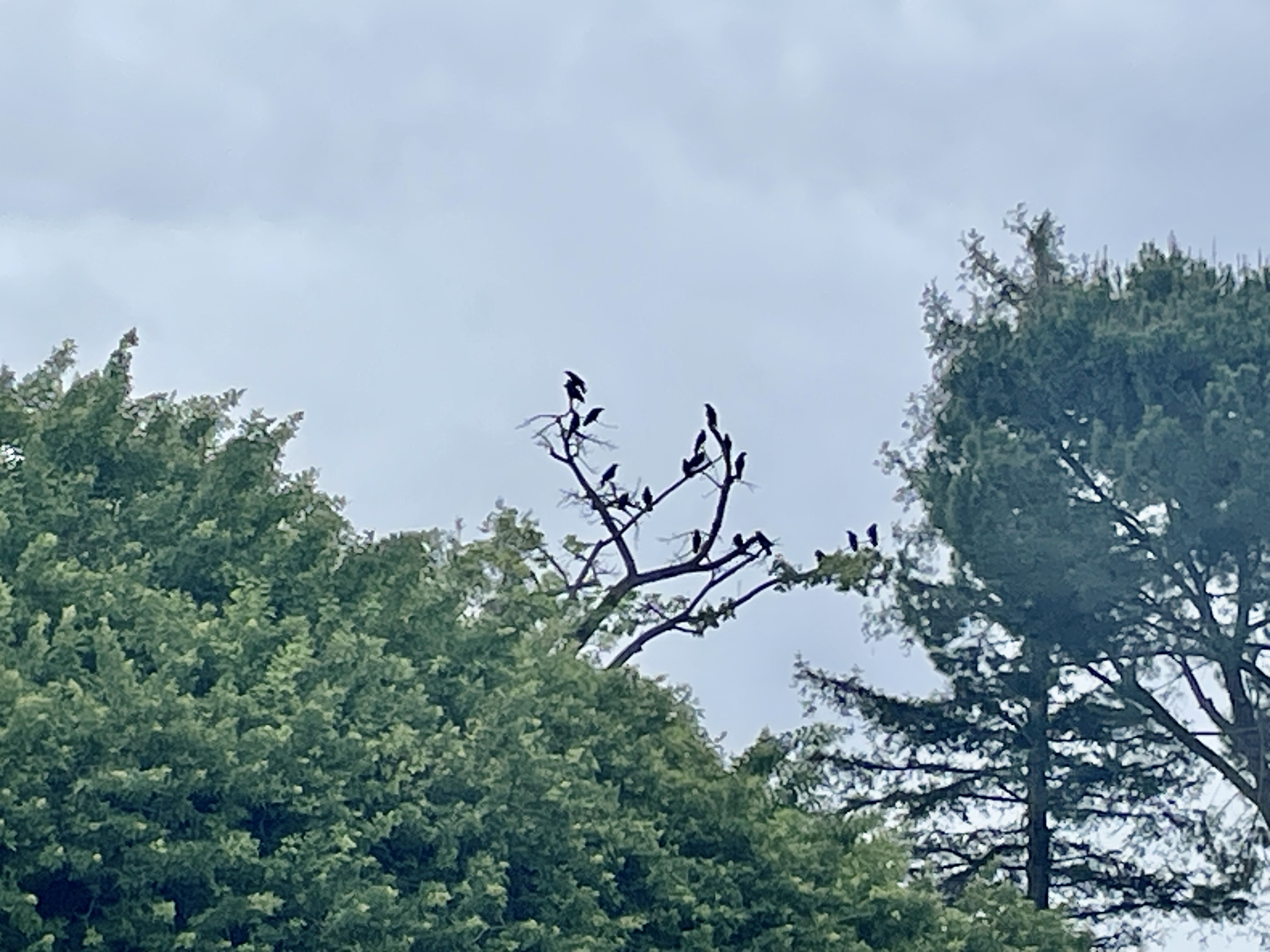
a conference of crows
downtown LA looms above clouds
mountains in the mist
The subtitle is “Searching for Palestine’s Hidden Places and Lost Memorials”. Published in 2025, the book follows the authors’ travels from their home in Ramallah in the West Bank in search of ancient buildings, churches, grave memorials, etc. For those who find it difficult to picture the location of Israel, Gaza, West Bank, etc. there is a detailed map at the beginning of the book.
The memorials they find vary from that for three Egyptian soldiers who died in the 1967 war to buried famous poets. They discover the remains of the wall that surrounded the great Bronze Age city of Tell Balata and a sophisticated water system from a Bronze and Iron Age city. In many cases these places are hidden among modern Israeli buildings or appear to be a bunch of rubble at first. Usually, they manage to find these places with the help of older locals.They find the tombs of saints, a Greek Orthodox monastery that had to be rebuilt, the remains of a deserted mosque destroyed by Israelis–all that is left is the minaret, the ruins of many ancient Palestinian villages that over time have been destroyed by the Israelis. In some cases ruins from the BC era have been built over with malls and parks, including one that is now under the Palestine Television Tower.
One thing they noted that has nothing to do with buildings or ruins is how the Dead Sea is becoming smaller and smaller due to excessive irrigation for crops farmed by kibbutzes. The Jordan River feeds into the Dead Sea and its level has gone down for the same reason. Drought and irrigation has increased the need for water for crops. The authors question the longterm sustainability of these irrigation methods. As I read this I thought of all the irrigation in the West of the US, the low water flow of the Colorado River, and how the Western US is facing some of the same issues.

Earlier today I am sitting in a coffee shop in Claremont, California, drinking horchata and eating tiny donuts, a specialty of this shop. I look around and realize I must be at least 4 times older than the average age of most of the other customers–it is a college town. Three library books form a stack in front of me as I decide which one to open first. I pick up “Supersaurio” by Meryem El Mehdati, a young author who was born in Morocco but lives in the largest of the Canary Islands which is the setting of this, her first novel.
The main character is also named Meryem, just like the author. She is twenty five, a college graduate, unable to find the job of her dreams so she is stuck in an internship at the largest super market chain in the Canary Islands. She hates her boss, finds her job dreadfully boring, and wonders if life is worth it, if she would choose to be born if she had a choice. “I’m not at all what I thought I’d grown up to be. I was convinced I would…succeed. That I’d become a financially independent adult.” She’s not. “I for one don’t know where heaven is anymore, or hell.” I’ve gleaned all this in just the first seven pages as I sit here watching all these young people getting their drinks and others on their computers or chatting. The nearby Claremont Colleges are top colleges with high tuitions. I’ve heard the news, heard young people comment, their frustrations. Yesterday, on the news I heard a young woman from a good college in the Southeast with an electrical engineering degree and good grades say she had sent out over 400 applications and nothing. She’s wondering if AI is a factor. Then they interviewed some top professor who had no advice except for her to hang in there. Really. Is this supposed to make her feel better? On another bit of news I heard that 25% of those looking for employment have been looking for at least six months.
What stuck me is this: If I did not know the setting for this novel is in the Canary Islands, I would have thought it is in the US. It sounds exactly like what I hear on the news, from individual young people. What will the future hold for them and not just in the US, globally?

They have spoken to me of Venezuelas,
Of Chilies and Paraguays;
I have no idea what they are saying
I know only the skin of the earth
and I know it is without a name.
Pablo Neruda
The previous book I read is the author’s most recent novel. This one is her first novel published in 2013. Like the Lion Women novel, this one tells the story of Iranian families. When the novel begins in 1996, an Iranian couple who have lived in NYC for decades are trying to find a man for their daughter to marry. Well, the mother is, not so much the father, who is a successful doctor. He has adapted very well to the US, is into self help books, optimistic and enthusiastic. Although she has a job she likes, she misses Iran.
Part II begins in 1978 when their children are younger–they have two older sons and a younger daughter–and the Shah’s power is crumbling but its sequence is in question. Some of their relatives suddenly become so religious that they hardly recognize them. Then the revolution occurs, their daughter’s school has become all girls with mandatory hijab. Then the Iran/Iraq war occurs and the grandmother is killed by an Iraqi bomb while out buying pomegranates. They cover their windows with aluminum foil so Iraqi pilots cannot see the lights in houses. Finally, in desperation they leave for NYC after medical colleagues the father knows in NYC help them find a place there. While studying to take the test for his US medical license the dad works in a pizza parlor making pizza.
Then back to 1996, the daughter, Mina, decides she needs to visit Iran even though her father does everything he can to dissuade her. Mother, who still misses Iran and her family there, decides it is ok if she goes too. This part of the novel relates their visit to Iran, Mina’s reconnecting to her best friend who never left, how people there manage to live double lives with parties, Western clothes, and alcohol at home, but hijab and conservative behavior in public, including avoiding the morality police.
Like her other novel, this one is a good way to learn recent Iranian history while learning about Iranian food, family, friendship, love, and every day life.

By an author whose previous novel won the Booker Prize, this novel was long listed for the most recent Booker Prize. Although 670 pages long, it did not take me as long as I expected to read this because I found I kept going because I wanted to know what was going to occur. It is the tale of two families and two young people, both of whom have studied and lived in the United States. The background city for both families is the Indian city of Allahabad. The two, retired, family patriarchs get together frequently to play chess even though their families are sometimes rivals for status and influence.. The two do not live far apart and all the older family members know each other, including those who have moved away to Delhi and other places. The youngest members do not know each other and accidentally meet on an overnight train. At that point they do not know that their two grandparents had tried to match make them in an arranged marriage. Later, this becomes an embarrassment.
Sonia wants to become a novelist and is attending college at a small liberal arts college in New England where she becomes involved with a famous but cruel artist who becomes obsessed with her and whose influence she has become unable to escape, initially literally and later psychologically. Sunny lives and wants to stay in NYC to escape the overbearing influence of his mother and the violence between her and the two brothers of her deceased husband.
Not wanting to reveal all the complexities of the lives of these two young people who come to love each other but whose lives keep tearing them apart and the challenges they face as they try to make sense of their lives, I will simply say this is a novel I recommend. The reader learns a lot of about Indian culture and its variances, about the huge differences among different parts of India, e.g. Goa and Delhi, but also how universal family and personal struggles really are.
This book is way more than the maps. It starts with Borders Throughout History going back to ancient times when borders were not clearly defined. Modern borders emerged with modern cartography. The “more detailed the map, the more accurately boundaries can be drawn.” Cultural borders based on religion, language and such rarely align with actual modern borders. Think about places you know and who lives there and the cultural and religious differences. The first maps show Borders in Six Stages delineating the changing borders before 1800 to current borders.
The next set shows Borders and Civilizations–what we often refer to as Western Civilization, Latin American, Orthodox Christian, Islamic, African, Hindu, Sinic, Buddhist, Japanese. This view started with the book The Clash of Civilizations and the Remaking of the World Order (1996). In many ways this Atlas is also a history book on how various agreements and treaties affect boundary changes. An example is the map of the results of The Sykes-Picot Agreement. It also includes the legacy of the British Empire and how this affected borders over time.
I had not thought much about how even after colonialism, Europe still has some over seas territories, mostly islands over which wars have been fought even though many have never heard of them. The book includes maps and discussion on border disputes in Latin America as well as other parts of the world. There is another section on sea borders and those disputes continue today, e.g. the Arctic which many countries try to claim. And then there is the Persian Gulf with detailed illustrations of the Strait of Hormuz and all the islands there. I had forgotten that Bahrain is an island until I read this book.
There are too many sections to detail here, but the maps of the South China Sea and the disputes involving China there are very illustrative of just how complex claims by countries can be.
When I think of walls, I think of Berlin Wall and its fall and the disputes in US over walls between US and Mexico, but there are others in the world–Morocco, the Koreas. There is a map illustrating all the places where walls exist today. There are more than 70 closed borders protected by a wall or fence. The number of barriers is rising. The book not only lists them but how high they are in meters. Then so many disputed borders still exist that the maps and lists take up two pages of lists.
There is so much interesting information in this book that I cannot recommend it enough for anyone interested in history and current affairs.
In the not too distant future the city of Kolkata in India is besieged with floods and famine. Ma, her elderly father, and two year old daughter are preparing to emigrate to the US where her husband has a good professional job. This is one of the families in the story. The other is a poor family from the Sundarban struggling to stay alive while the oldest son, Boomba, has gone to Kolkata to try to earn enough to save his family.
In the two weeks time of this novel, Boomba, driven to desperation and holding a secret about Ma, breaks into Ma’s house and steals her purse which contains the passports for her, her father, and her child. Both her actions previous to his, her current actions, and Boomba’s lead both down paths they could never have previously dreamed with dire consequences for all.
Due to the flooding and famine, everyone in the city is desperate except for the one billionaire who has stayed. Their desperation leads some to behave in undesirable ways, but the main “lesson” of this novel illustrates how just one action by one person can lead to dire consequences for two entire families and possibly others as well–actions have consequences you can never begin to imagine. Be careful.
When I was in the eighth grade, I asked my parents for two books for Christmas, “The Iliad” and “The Odyssey”. I am sure even then there was a more modern version but they chose Dryden’s translation which was basically 17th century British. It took me a while, but I read them both even though I often had to resort to using the dictionary to learn all the words I had never seen before. My favorite then and now is “The Iliad”, the story of Achilles and the Trojan War. Since then, I have read more books than I can count about Achilles and the war, including this one and three recently by Pat Barker, which I wrote about on this blog.
David Malouf focuses on two characters, Achilles and Priam and one singular event, Priam’s decision to disguise himself as an ordinary person, hire an ordinary man with an ordinary cart, and go to the Greek camp and beg Achilles for Hector’s body. The only other main character in the book is the cart driver who likes to talk and share. From him Priam sees another view of life and experiences some new simple things, like cooling your feet in a stream, eating ordinary food. Priam suddenly realizes he has missed much of life’s meaning since, as king, he has been shielded from the lives of most people. The book includes Priam’s thoughts, those of the cart driver, and Achilles’. This is not an action thriller novel. It is the story of three people and their thoughts and reactions to this one event.
Redwood tree absorbs the mist.
Jasmine fragrance fills th air.
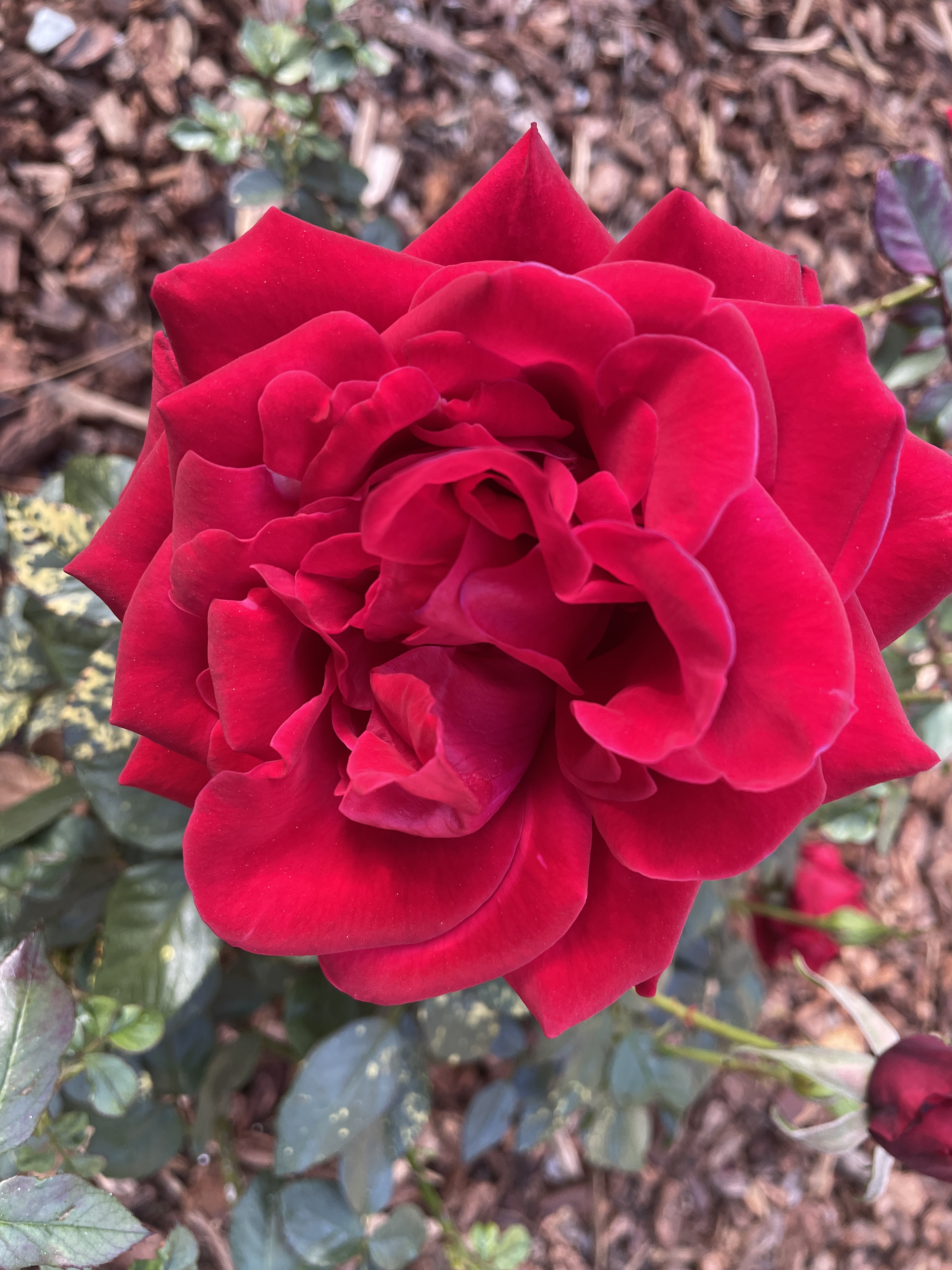
Scarlet, hot pink, peach, orange and multicolored
rose blooms grace the garden wall.
Hummingbirds drink nectar from the feeder
in the lilac bush.
Morning joy.


Travel the World 4 Less
A Glimpse into My Life & Passions
Ceto-Magoism, the Whale-guided Way of WE in S/HE
Exploring the F-word in religion at the intersection of scholarship, activism, and community.
ANCESTRAL FOOD. HERBAL WISDOM. MAGICAL COOKERY. SEASONAL CELEBRATION.
inesemjphotography
politics, engineering, parenting, relevant things over coffee.
Food is the best expression of every emotion. Explore through my reviews, recipes, events and more.
Smile! A Site for Friends Wherever You Are!
inspiring personal growth through poetry and writing
Combining atheism with whimsy. This is a Fair and Balanced blog based on opinion unencumbered by fact.
Odds and ends ~ My Life
Original poetry, commentary, and fiction. All copyrights reserved.
bripike@gmail.com
A wildlife filmmaker in Africa
A Geeky Feminist's Musings On Pop Culture
"5 minute walks"

