reading,
listening to birds
the gurgling of water,
looking up to watch
four hummingbirds challenge
each other at the feeder, and
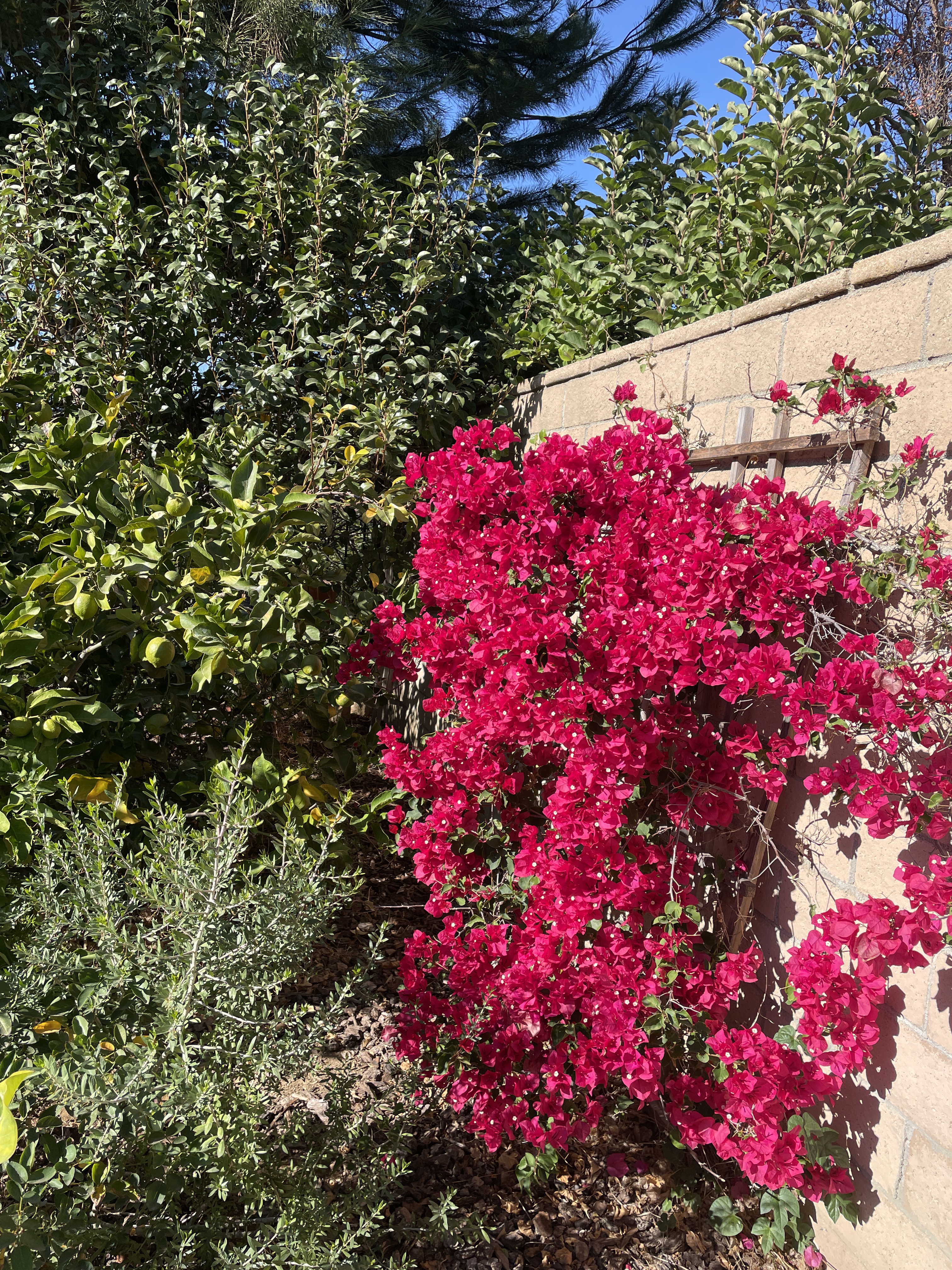
I notice I’m surrounded by flowers
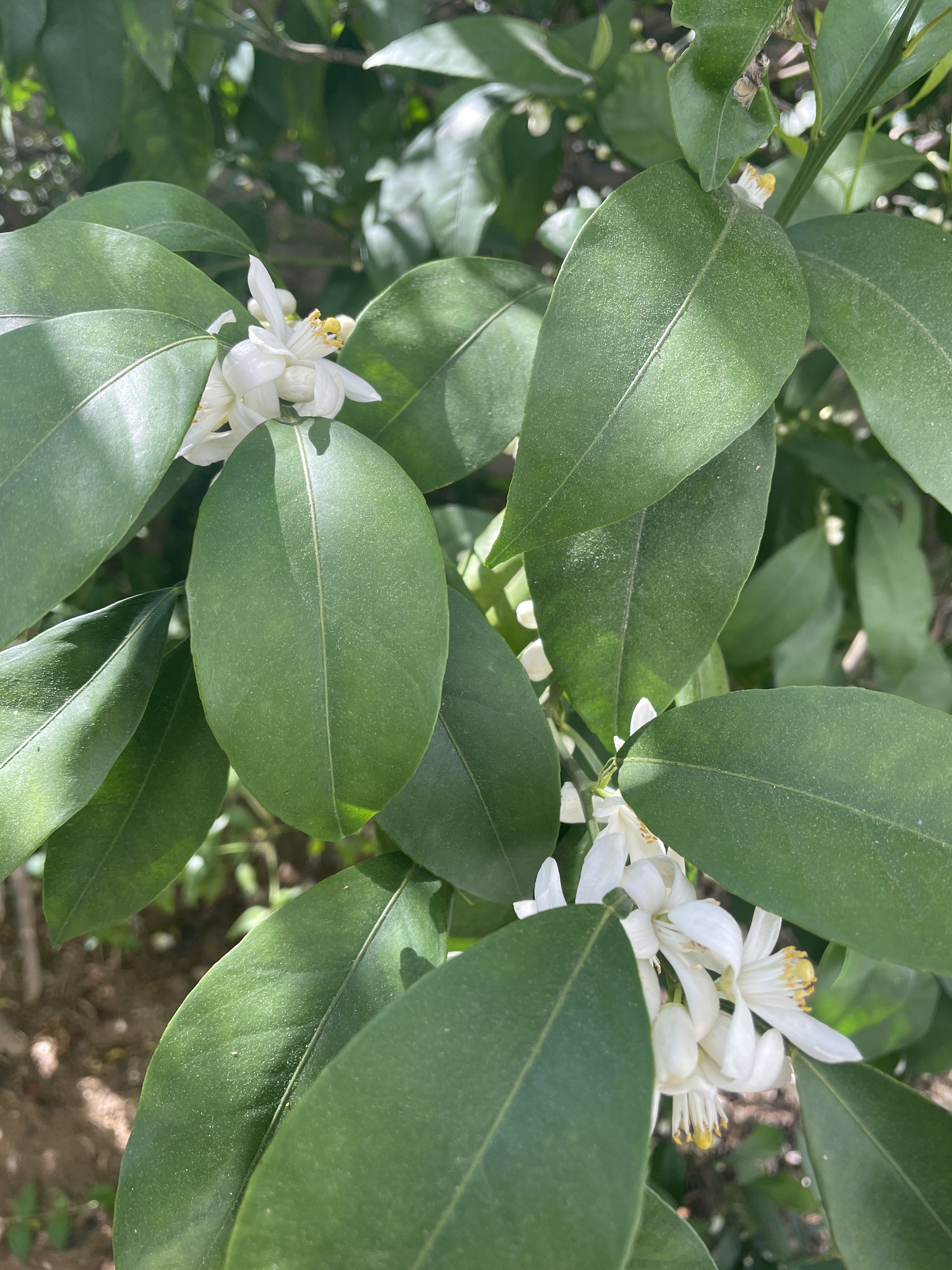
and the scent of orange blossoms.


reading,
listening to birds
the gurgling of water,
looking up to watch
four hummingbirds challenge
each other at the feeder, and
I notice I’m surrounded by flowers
and the scent of orange blossoms.
Spring
Bird songs
Bougainvillea wall climbing
Essence of orange
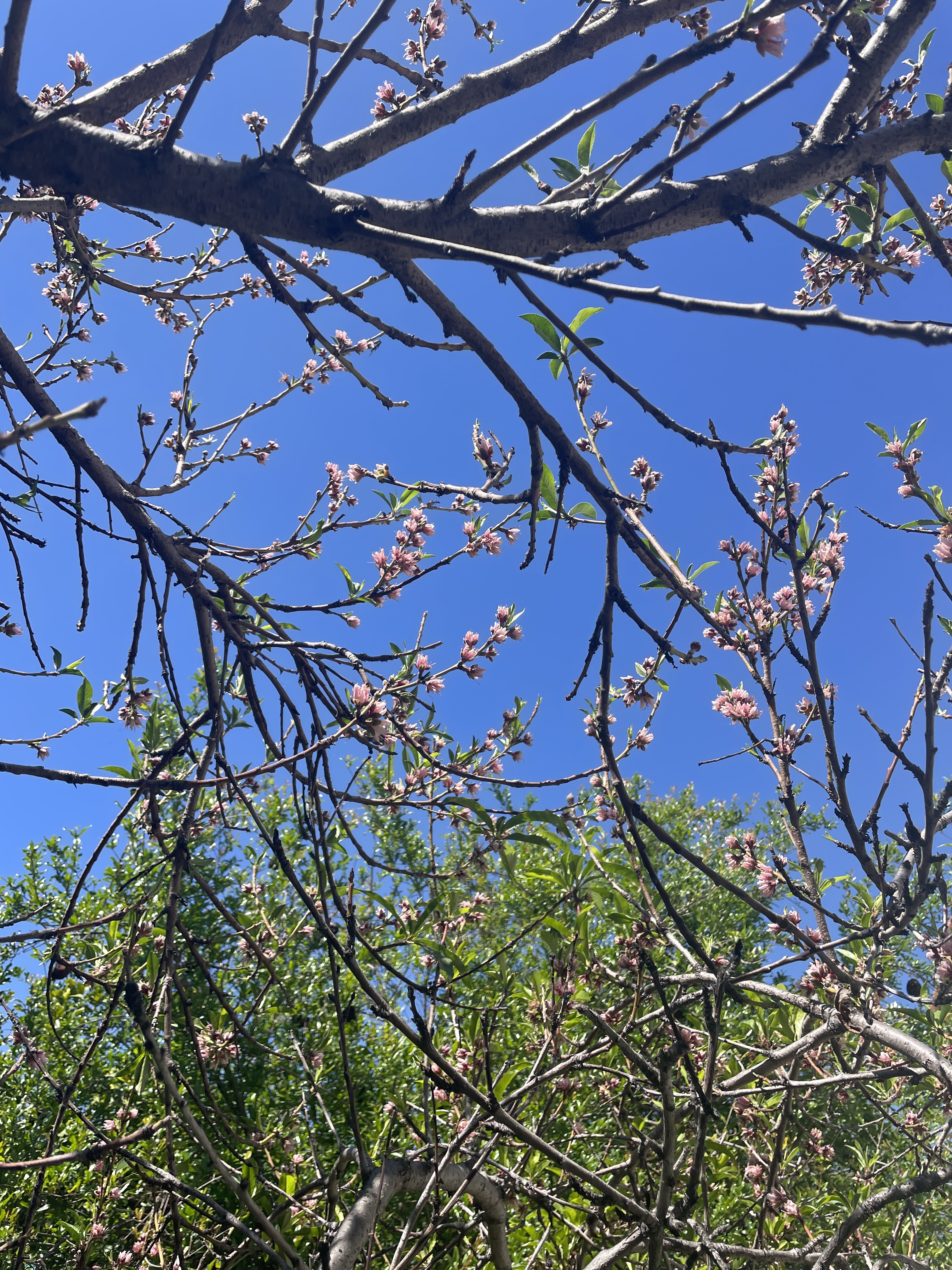
Peach blossoms
Beauty
Joy
These are the first two books of his long career as a writer. Although the cover calls them novels, they are short and what I would call novellas. The most fascinating thing in this publication of the two novels together is his introduction which he wrote in 2014 and where he explains how he unexpectedly became a writer. He begins by explaining that most people in Japanese society follow a certain path–“graduate from school, then find work, then, after sometime has passed, get married.” He did not follow that path: he married, then found work, and finally graduated. He did not want to work for a company; the idea turned him off completely so he decided to open a business, a coffee shop where people could come, hangout, drink coffee, and listen to jazz. He and his wife did not have much money but did manage to put enough together and opened a small coffee shop in 1974. He brought his old piano from his parents’ house to the coffee shop and convinced young jazz musicians to play there for small amounts of money. Some went on to become famous musicians. He and his wife came across some money lying in the street and instead of turning it in to the police used it to pay debts. He spent his twenties running this shop, listening to the music there, making sandwiches, mixing cocktails, typical small restaurant stuff.
He also liked baseball and often went to see his favorite team which he admits was usually not very good and rarely won. Just when the team had a turn of events and seemed to be winning, he suddenly had this thought rush through his mind: “I think I can write a novel.” He claims he still can recall that exact moment and sensation. After the end of the game, he took the train to a store and bought a “sheaf of writing paper and a fountain pen.” Each night after he arrived home from the coffee shop, he went to work writing. It took him six months and a lot of work to write “Hear the Wind Sing”. He admits he had no clue how to write a novel, especially since his favorite novels were 19th century Russian novels and US detective stories. He struggled and almost gave up. He decided to try a new tactic and wrote it in English then translated it into Japanese. He says his English was very simple so that is how he wrote. He decided to submit it to a literary journal, not expecting much. He was shocked when he received a call that his novel had been short-listed for a new writers’ prize. This was a year after his attendance at the baseball game and he had just turned thirty. He had almost forgotten about even submitting the novel. An incident with an injured bird suddenly caused him to think that he was going to win the prize and go on to become a novelist. He wrote “Pinball, 1973” as a sequel. Shortly after, he decided to become a full-time writer and sold the business.
Reading this introduction enlightened me about some of his other works and certain repeating themes and especially settings. In all his novels I have read, music and coffee shops play a role. His novels have characters who know a lot about music; now I know how and why.

There is nothing like meeting a goal while enjoying it to bring a sense of delight as well as accomplishment. I walk daily–today I arrived at day 707 without ever missing a day–looking at the flowers, visiting with all the other walkers. I live in a walking neighborhood with friendly walkers who at a minimum wave. Some stop to chat and some check on me if they have not seen me out walking in a while because of the different routes we take or different times we walk. One particular person who checks on me taught me how to make some of her native food–India. Another lady several blocks away prefers to walk with others, not alone, so if she sees me out, we join together in the company of her little dog, June, whom I have never seen actually walking. June rides in a baby carriage.
Now, as I write this, I’m enjoying another late afternoon of delight in my backyard. The hibiscus is full of ruby flowers. Freeway daisies, bright white and purple, pop up everywhere. Four different colors of bougainvillea sport their joy. One nasturtium–they are popping in places I never even planted–is sporting the same color of ruby as the hibiscus. The lemon tree is full of almost ripe lemons some of which I have promised to friends and neighbors. One woman cannot eat all these lemons. Meanwhile, I listen to different birds singing their varied songs and to the gurgle of the water fountain by the Nile Blue French doors and watch the hummingbird who is watching me.
I feel grateful to be surrounded in beauty and quiet joy.
As I mentioned in a previous post, his books on delights were mentioned to me by two different people in two totally different settings so I decided to stay sane in all the seriousness of my life, reading something lighter might be a good thing to do. I guess I was thinking delights like flowers, food, etc. but this is more like a series of short essays about life all written in the span of one year–his gardening, experiences strolling around his neighborhood and favorite coffee shops, food, his parents, his wife, some personal history, his experience as a college professor, children. However, he also addresses serious issues–his meeting a homeless veteran just out from a stint in a mental facility and how he was compelled to help out after first driving off, racism he has experienced, his issues with the government and social media, family death, and life in general. And above all, what it means to him to identify as a poet.
As a person who works with high school students mostly non-white, many of whom have family members who are undocumented, I worry and need to find daily delights to stay sane. I decided to make a list of some of the past week’s delights:
-afternoons 70 degrees, sunny, no wind
-hummingbirds sipping nectar from both flowers and the two feeders
-singing a song the lyrics of which come from a poem by Langston Hughes where he dreams a world with no racism
-sitting on the back patio, listening to birdsong while I read a book about delights
-learning that all the rains have eliminated drought in California
-appreciating all the colors of the flowers blooming in my yard

After reading two intense, serious books, one fiction and one non-fiction, I needed a break. Several friends and acquaintances recently told me about Ross Gay’s delight books so I went to the local library and asked them to request his latest, “The Book of (More) Delights”. I had my doubts after reading the first few entries, but kept going and then #10 “Alright Baby” made me laugh out loud as well as recall an incident in a high school class I taught years ago.
Gay’s 2.5 page entry is about testicles, yes, testicles. He tells about a couple of young guys who think they are not stuff challenging him and his friend (they are in their 40s) to basketball. The two 20 somethings were doing their best to prove what Gay calls their manhood. As Gay relates the incident, he jokes about maleness and testicles and how testicles control a lot of what men do. I had to laugh. The two old guys won by the way.
This mere 2.5 page story made me remember a class of teenagers I taught from years ago. I do not even recall what caused whatever was going on in class, but one male student suddenly shouted, “There’s too much testosterone in this room!” Everyone laughed. Thereafter every time any sort of commotion, even if piddly, occurred, everyone shouted, “There’s too much testosterone in this room!”

“What are you willing to give up to alleviate someone else’s suffering?”
This book won the National Book Award for Non-fiction in 2025. I started reading it before book four but had to take a break. It is very serious and details a lot of dreadful recent and not so recent history. The author discusses in detail the gap between Western ideals and the reality the West enacts using examples from Gaza, his stint as a journalist in Afghanistan and other war torn places. He notes the betrayals of free speech, the betrayals of indigenous people, the betrayals of people of African descent. Some parts talk about reckoning and questions whether such will occur, who will remember, and will it matter and to whom.
El Akkad was born in Egypt, but grew up in Qatar and Canada as the family followed wherever his father was able to find work. He now lives in the US and states his current home is his 17th or 18th. His family had to move so much he remains uncertain.
This is a serious read for people who want to think about what has occurred in the last 20-30 years, what is occurring presently, and how all this will affect the future.
Another intriguing novel by an author who has won both the Pulitzer and the National Book Award. Initially the four main characters do not seem to have any interactions with each other. 12 year old Evie’s life is changed forever when her father, the inventor of the first aqualung, makes her submerge in a pool to prove it works. She becomes one of the world’s most famous divers and oceanographers. Ina, an artist, grew up in US naval bases all over the South Pacific and eventually finds herself at a university in Illinois. Rafi, a genius black child, is pushed by his dad to apply to a private Jesuit high school where he meets Todd, a rich kid whose whose family provides scholarships to the school. The two become best friends in spite of different interests. Rafi loves literature and Todd loves computers. They bond over a thousands of years old Chinese game with which they become obsessed. They become roommates at the same university where Ina is a student. The three become best friends.
Decades later all these lives become intertwined on an island in the South Pacific–Makatea in French Polynesia, an island where the harvesting of giant phosphorus deposits nearly ruined it while furnishing the rest of the world with fuel to make planets grows faster and better and feed the world. Because of Evie’s obsession with the sea, I learned enormous amounts about the ocean and the varied animals that live there, some of which I had never heard of before. Because of Todd’s obsession with computers and his invention of an AI game, I learned a lot about how gaming works and how people become addicted. For Rafi, the agony and anger of often being the one left out, the one seen as the smart Black kid, and the only one in many circumstances affect how he views the world and himself and where life eventually takes him. From his character I learned new things about literature and how books and writing affect people and their relationships.
I could not stop reading this book. Years ago, when it first came out, I read the author’s novel, “The Overstay”. While the topics and characters are totally different, in some ways this novel reminded me of that story, of how our lives are often intertwined in all sorts of ways we never expected.
This recently published book is one of the latest in a bookclub to which my grandson belongs. Although an historical novel based on the reporting of an actual event in 1701, much of it applies to today’s world. In 1701, Dr. John Friend reported to the the Royal Society of England about a “rumuor spread” which discussed a report that young girls in the Oxfordshire country side had “been seized with frequent barking in the manner of dogs.”
Five sisters live with their grandfather on an affluent farm in the country. Due to the recent death of their grandmother, they go around dressed in black as was the custom. Because they stay to themselves a lot, roam freer than most girls, they are often looked upon with suspicion by the villagers. One man, who ferries everyone to and fro over the nearby river, has issues with women and loathes these girls because he thinks they are too independent and views them as defiant and thinks they ridicule him because they do not chat with him when they use the ferry. He also has a severe drinking problem and spends all of his free time in the village pub. He is about to be married to a local woman but has severe anxiety over this because he thinks his new wife might try to boss him around.
Most of the men in the village spend their evenings drinking in the pub and often resort of fights and various forms of violence when issues arise. They see this as manly behavior. They view with suspicion any man who does not behave as they do. The woman, Temperance, who serves them hates alcohol and goes so far as to wear leather gloves so the alcohol will not touch her hands. She is one of few in the village who does not believe in rumors and supports rational behavior.
Everything goes awry when during a severe drought, the river dries up, the heat overcomes everyone, and Pete, the ferryman, insists he has seen the five sisters bark and turn into dogs and incites fear in many in the village. It seems to matter little that the two young men who work for the girls’ grandfather, proclaim that the girls are perfectly normal and none of this is true.
This novel raises various issues that continue as issues hundreds of years after the above incident:
-What does it take to make a man? What characteristics define real manhood? Is manhood defined by violence or kindness and compassion?
-How much freedom is okay for women? How much independence and who determines this?
-When is drinking ok and how much? Should people stop people who become violent when drunk?
-What happens to a neighborhood, a society, when people start to believe all sorts of stuff that is not true? Can it be stopped and how?
Travel the World 4 Less
A Glimpse into My Life & Passions
Ceto-Magoism, the Whale-guided Way of WE in S/HE
Exploring the F-word in religion at the intersection of scholarship, activism, and community.
ANCESTRAL FOOD. HERBAL WISDOM. MAGICAL COOKERY. SEASONAL CELEBRATION.
inesemjphotography
politics, engineering, parenting, relevant things over coffee.
Food is the best expression of every emotion. Explore through my reviews, recipes, events and more.
Smile! A Site for Friends Wherever You Are!
inspiring personal growth through poetry and writing
Combining atheism with whimsy. This is a Fair and Balanced blog based on opinion unencumbered by fact.
Odds and ends ~ My Life
Original poetry, commentary, and fiction. All copyrights reserved.
bripike@gmail.com
A wildlife filmmaker in Africa
A Geeky Feminist's Musings On Pop Culture
"5 minute walks"
 writingontherim