Book 37 for 2025: “Black Sea: Dispatches and Recipes”, Caroline Eden


This is a sort of travelogue, memoir, and recipe book. The author begins in Odessa and travels south from there to the port of Constanza in Romania as well as various other seaside towns in Bulgaria, then to Istanbul. After spending more time there she heads east to all the ports and some inland cities near
Turkey’s Black Sea coast.

I hope to learn new information and become a little more enlightened when I read–especially when reading non-fiction. This book did not disappoint. Here are a few of the things I learned:

-Odessa is a very old and once a very international city. At one point it had the second largest Jewish population in Europe. Now only about 1/3 of the residents are Jewish. Many of the restaurants serve traditional Jewish food even if not Jewish. Once in the past, Mark Twain visited there and made it famous for its ice cream.

-In Constanza, Romania, she witnessed a huge Navy Day celebration with booming gun salutes. Once upon a time, this city was famous for its Casino which now is just a glorious ruin. Here a breakfast mainstay is polenta with a mushroom topping. The author apparently liked the food because this section contains more recipes.

-Varna is the main seaport city in Bulgaria. The author’s main quest here was to see the gold, yes, gold. Once upon a time, this city was a major Roman port. Now the Museum of Archeology houses a spectacular collection of ancient gold. “Breastplates, bracelets, burial gifts, regal-looking head pieces, figurines, and pendants–all gold–shone for attention. The silent Midas room was deafening, ringing out with finery, treasure and opulence. And the loudest, biggest treasure of all, was the smallest. Tiny pendant earrings, almost inconceivably old, dating back 6000 years….these earring are the oldest ‘worked gold’ in the world. They belonged to the first known culture to craft golden artifacts, and they lived here, on Bulgaria’s section of the Black Sea in what some archeologists consider the oldest prehistoric town. But it was not gold that made this area wealthy; it was salt which was mined nearby. The world salary comes from the Latin word ‘salarium’–a Roman soldier’s stipend to buy salt.

-She goes to Istanbul and then on to Turkey’s Black Sea towns, Amasra, several a bit inland, Sinop, Trabzon, and Rize. Sinop has a particularly good harbor. There is a saying that the Black Sea has three safe harbors, July, August, and Sinop. This is in an area often targeted by Cossacks who crossed the Black Sea to raid these more prosperous areas. The town also houses an infamous prison where Russian convicts taught Turkish cellmates how to make model ships for which the town is now famous.-More than 3/4 of the world’s hazelnuts are grown in this area of Turkey. However, that did surprise me as much as the tea, yes, tea. When I think of Turkey, I think of that thick, strong Turkish coffee. However, Turkey is the fifth largest grower and exporter of tea in the world. The tea grows in the fog and mist on steep slopes that end at the sea. Several photos in the book illustrate the lush green mountains covered in tea bushes.

-When I think of Hagia Sophia, I think of the spectacular building in Istanbul, the one that has withstood invasions and earthquakes. But there is another one. On the western edges of the city of Trabzon, there is a smaller, more tranquil Hagia Sophia, one of the Black Sea area’s most spectacular monuments. It was built as a church in the 13th century, converted to a mosque, then to a cholera hospital, then a museum and finally back to a mosque in 2013. The ceiling and walls are covered with frescoes that for a long time no one knew existed until they were restored.

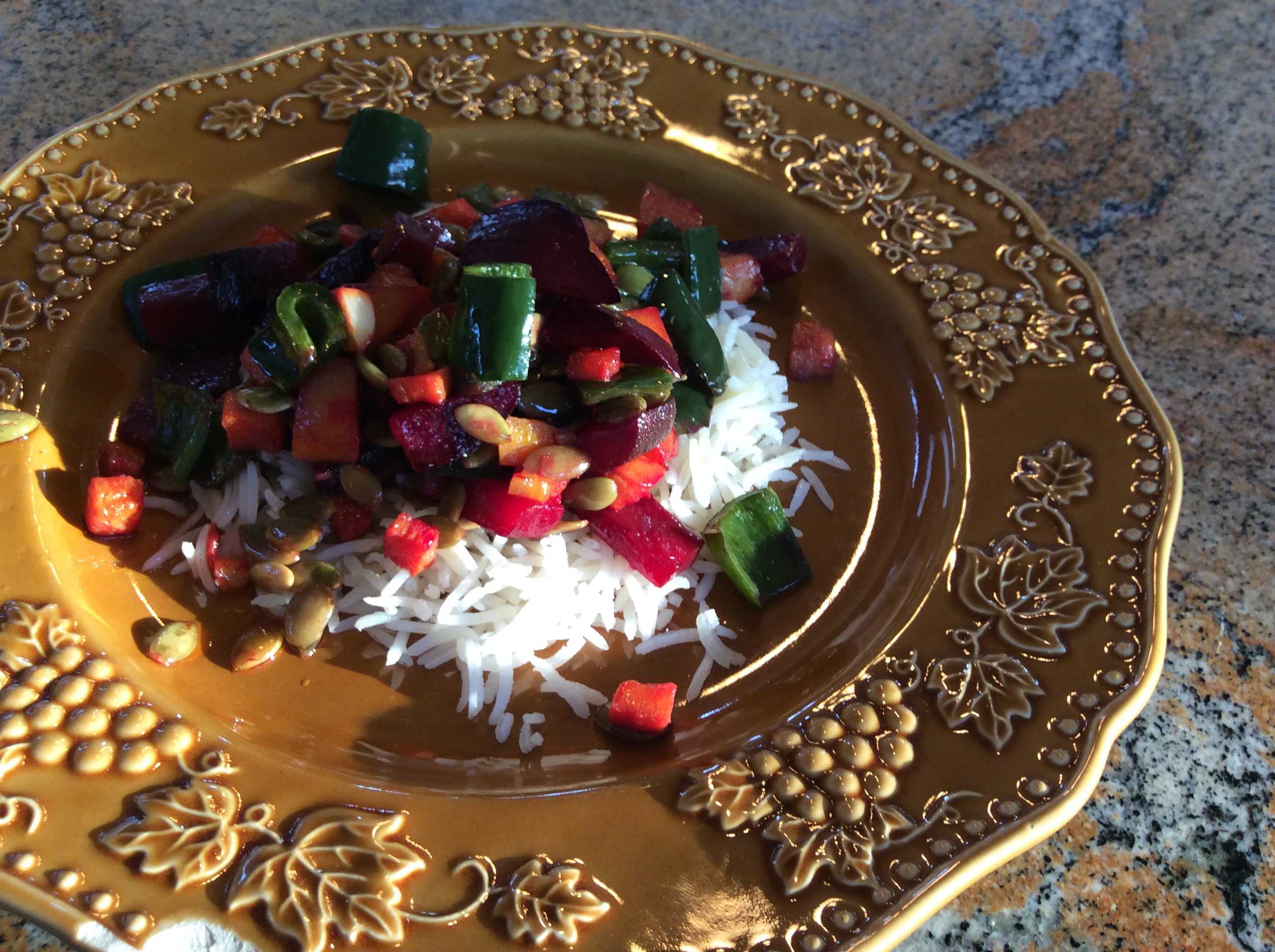
In addition to all the tales of her adventures and the ordinary people she meets, the book is filled with recipes that are specialties of the areas she visited. I’ve taken some ideas from several to experiment with new dishes like combining Swiss chard and sultanas (golden raisins) with chopped onions and garlic sautéed in olive oil and served over Basmati rice.

Book 34 for 2025: “Samarkand”, Caroline Eden and Eleanor Ford


I enjoyed the previous book by Caroline Eden so much I searched for this one. I doubt I will ever make it to Samarkand or Tashkent, places sort of on my bucket list, so what I do is read everything I find about these fabled cities on the Silk Road. The sub-title of this one is “Recipes and Stories From Central Asia and The Caucasus”. It starts with Samarkand and the story of Tamerlane, the legendary hero who conquered a lot of this area and a large portion of surrounding areas in 1370. He was a military genius who loved chess and made up his own chess game with twice the number of pieces.

What foods show up in both the stories and recipes? Beets, fruit–dried and fresh for which the area is famous, tomatoes, cucumber, pomegranates, cabbage, lentils, rice, lamb and mutton, and all sorts of kebabs and flatbreads. I learned there is a huge beach on Lake Issyk-Kul in Kyrgyzstan. It is one of the world’s largest alpine lakes and in summer people from Russia and all over Central Asia flock to its shores. People who own guest houses there make all their money for the entire year in the brief summer between mid-July and mid-August.

In the remote mountains of Azerbaijan lies the small town of Gyrmyzy Gasaba above the Qudiyaleay River, a town where all the people are Jewish. Even though Azerbaijan is a predominantly Shia Muslim country, the people in this town have peacefully lived here for hundreds of years. This town is considered the last surviving pre-Holocaust Jewish town untouched by WWII.

If you are a lover of apples, then consider this country, Kazakhstan, the place where apples originated. All apples in the world today come from the original apples here. The name of the largest city, Almaty, whose older name was Alma-Ata means fatherland of apples. In Ile-Altalan National Park on the northern slopes of the Tien Shan mountain chain thousands of acres of wild apples flourish.

Even though this book was published less than ten years ago in 2016, a lot of people must have been interested in reading the stories and recipes because the copy the library found for me is not in the best condition. Before I return it, I will copy some of the recipes to try.

Baja Trip-7: Tres Mujeres Winery


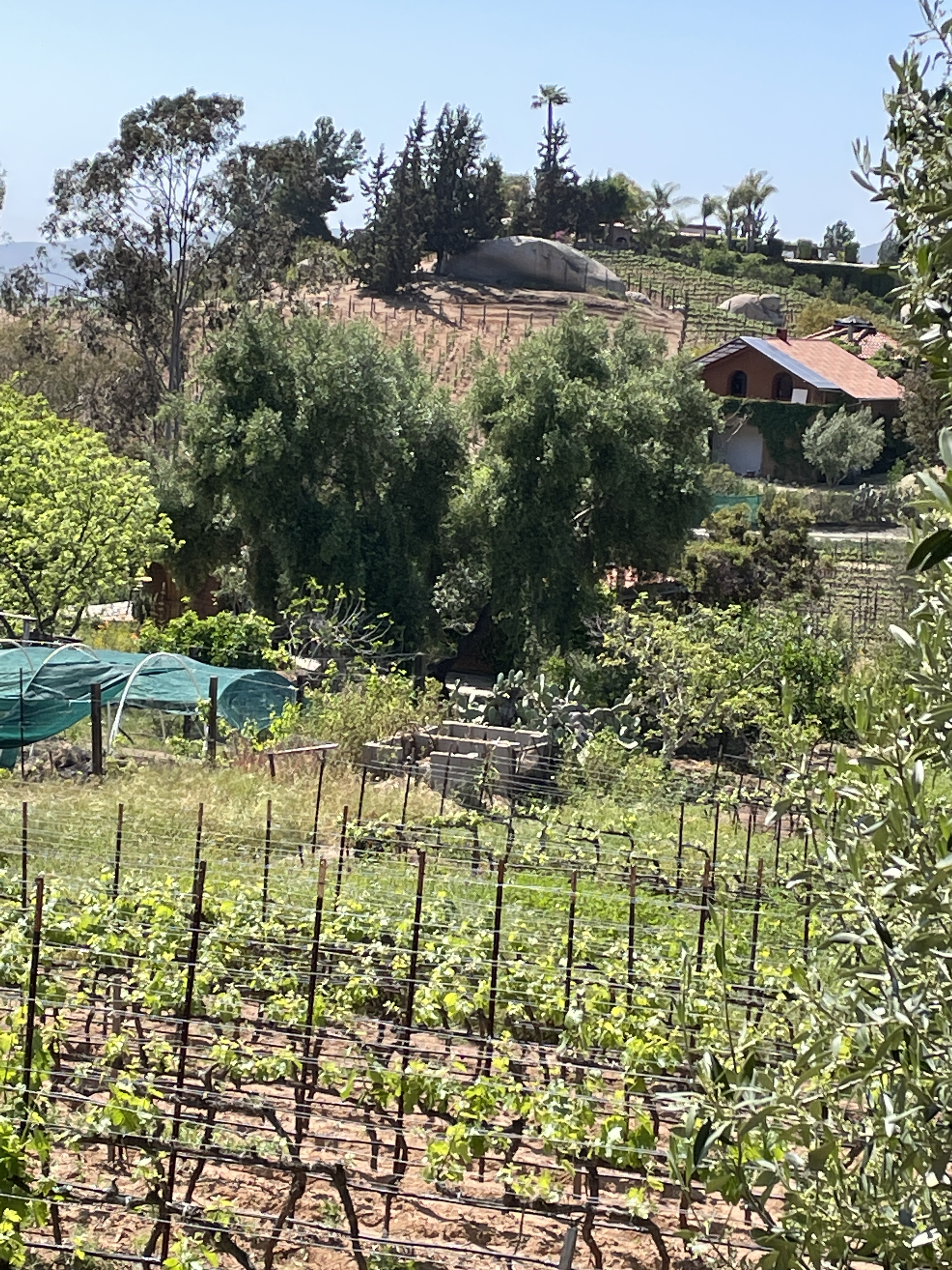
Originally started by three women–see the name, this woman is the only one of the three left as owner. She said she has been doing this for 20 years. The vineyards keep healthy without the use of toxic herbicides or pesticides. She says the breezes from the ocean help with keeping the vines healthy. She also has olive trees and gardens and a small restaurant–outside. The vegetables, flowers, etc. used in the restaurant are grown there. Below is the salad we had for lunch.

Lunch under the trees.

Wine tasting underground. What you notice when you drink all natural wines is that at the bottom of the bottle there is usually a residue.

The path in and out of the tasting room.

Buildings and fences made of local stone and flowers everywhere.

Stones, some quite large, show up everywhere in this part of Valle de Guadalupe. Some buildings, restaurants, other wineries, houses are build around the rocks with rocks as part of the architecture. I took the following photos from Tres Mujeres.

A lot of Valle de Guadalupe reminded me of parts of New Mexico and also the rocky hills around Temecula, California.

Not only are there over 100 vineyards in this valley but also endless olive groves. Locally pressed olive oil can also be purchased at many of the wineries. The other specialty is cheese. We stopped at one shop, the Cremeria Los Globos where they specialized in many cheeses filled with chipotle, black pepper, you name it. Honey is also produced locally and for sale at many wineries. For the most part, everything is all natural.

Easy Vegetarian Chili Dinner


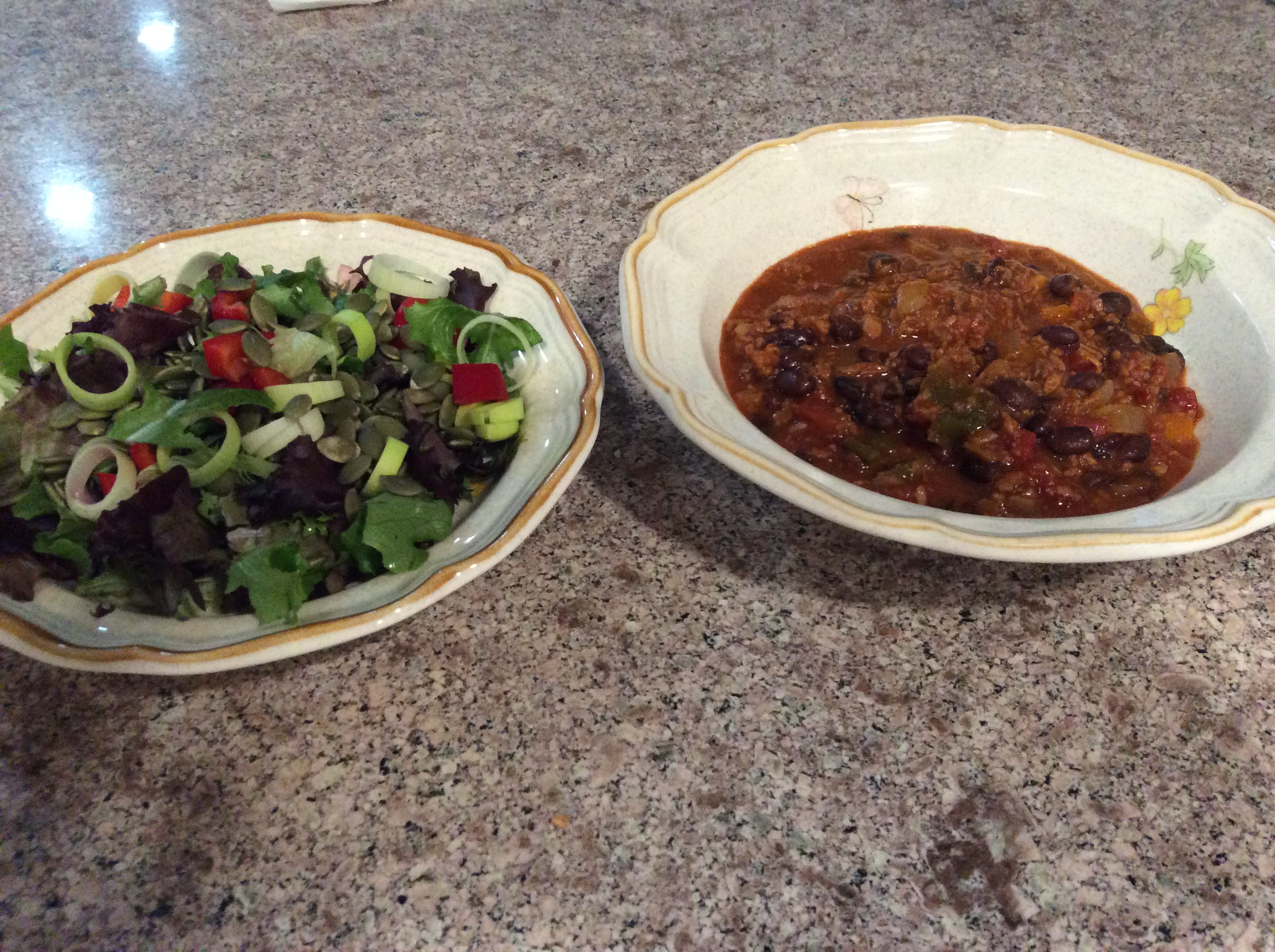
I had some Soyrizo in the refrigerator–chorizo made from soybeans–and decided to try making chili with it. I sautéed one finely chopped onion in olive oil and added the Soyrizo after removing it from the casing and breaking it up into small pieces. After the onion was translucent, I added one deseeded and chopped red bell pepper and a deseeded and chopped poblano pepper. To this mixture I added one can undrained black beans and 1 small can chopped tomatoes. I let this mixture cook on low for several hours before serving. The Soyrizo makes it a little bit spicy, but if you want more spice add berbere, chili powder, etc. to your taste. I like thick chili but if you want it more like the consistency of soup, just add some broth or water.

The salad was made with a mixture of greens, chopped red bell peppers, dried bing cherries, and sliced leeks broken up so you can see the circles. These bowls have been in my family for decades. They were the everyday dishes my mom used when I was growing up.

Note: For those out there who question, and rightfully, some of the ingredients in meat substitutes, I do get it. However, once in a while I like to jazz up the food a bit.

Wandering the World–Food


My travels have not only enlightened me personally, but also enabled me to create recipes from my food adventures around the world. Due to the recommendations of friends and family worldwide, I created a cookbook/memoir with stories and recipes. Len Leatherwood, new President of the Story Circle Network, says, “This is a cookbook after my own heart, filled with a wide range of healthy recipes from several cultures that will add flavor, color, and variety to any table.” Jennifer Archer, award winning writer and editor elaborated further, “A feast for the senses…combines colorful stories, poems, and mouth-watering recipes that inspire readers to experience new places, new tastes…from Asia, Africa, Latin America, Scandinavia, and America.”

This would make a great Christmas present for foodies and people who want worldwide food adventures. It can be ordered online from: http://www.dreamcatcherbooks.com and go to Angel Books.

Recipes for the food in the photos above are included in the book. More food photos follow:

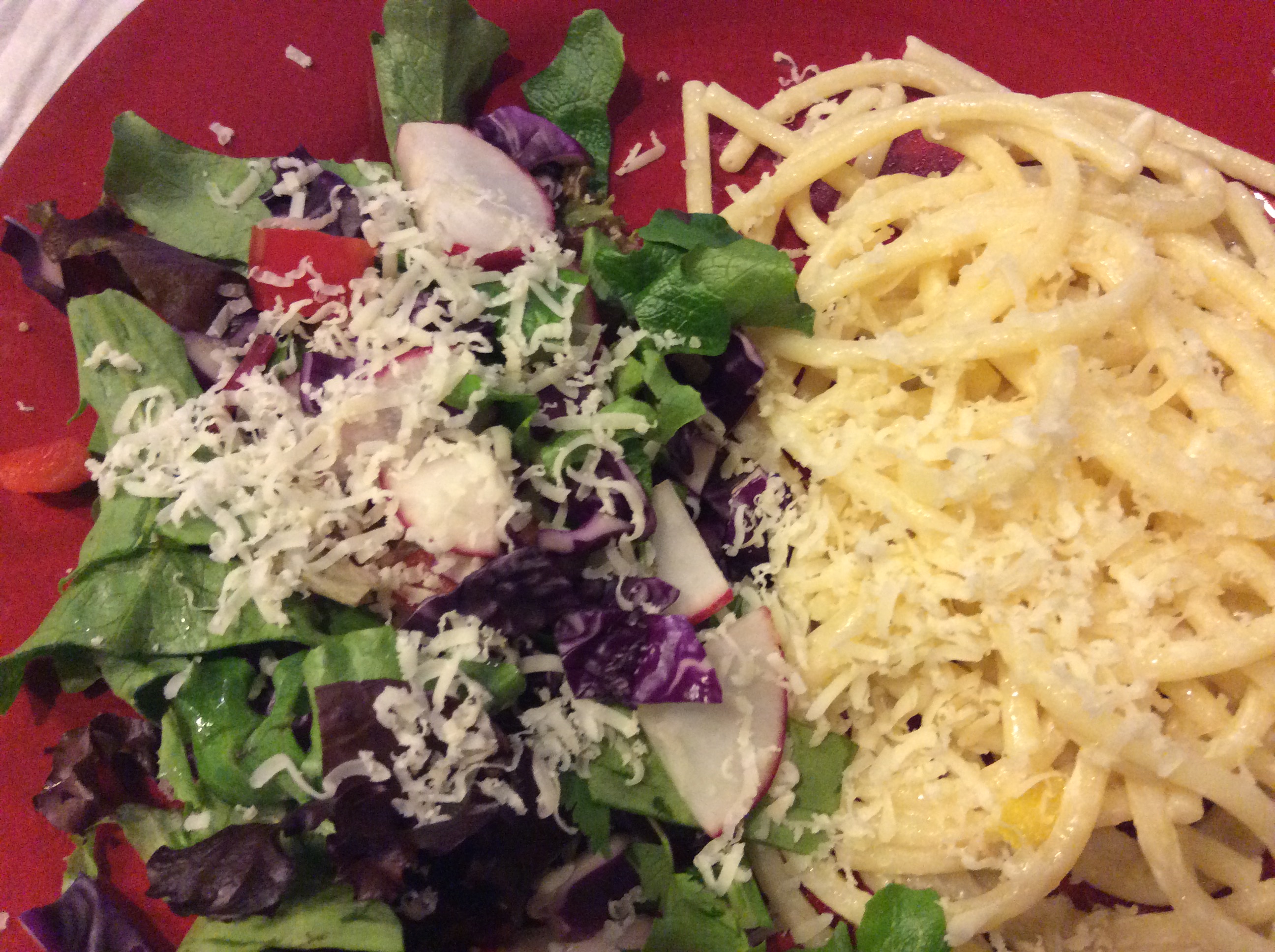
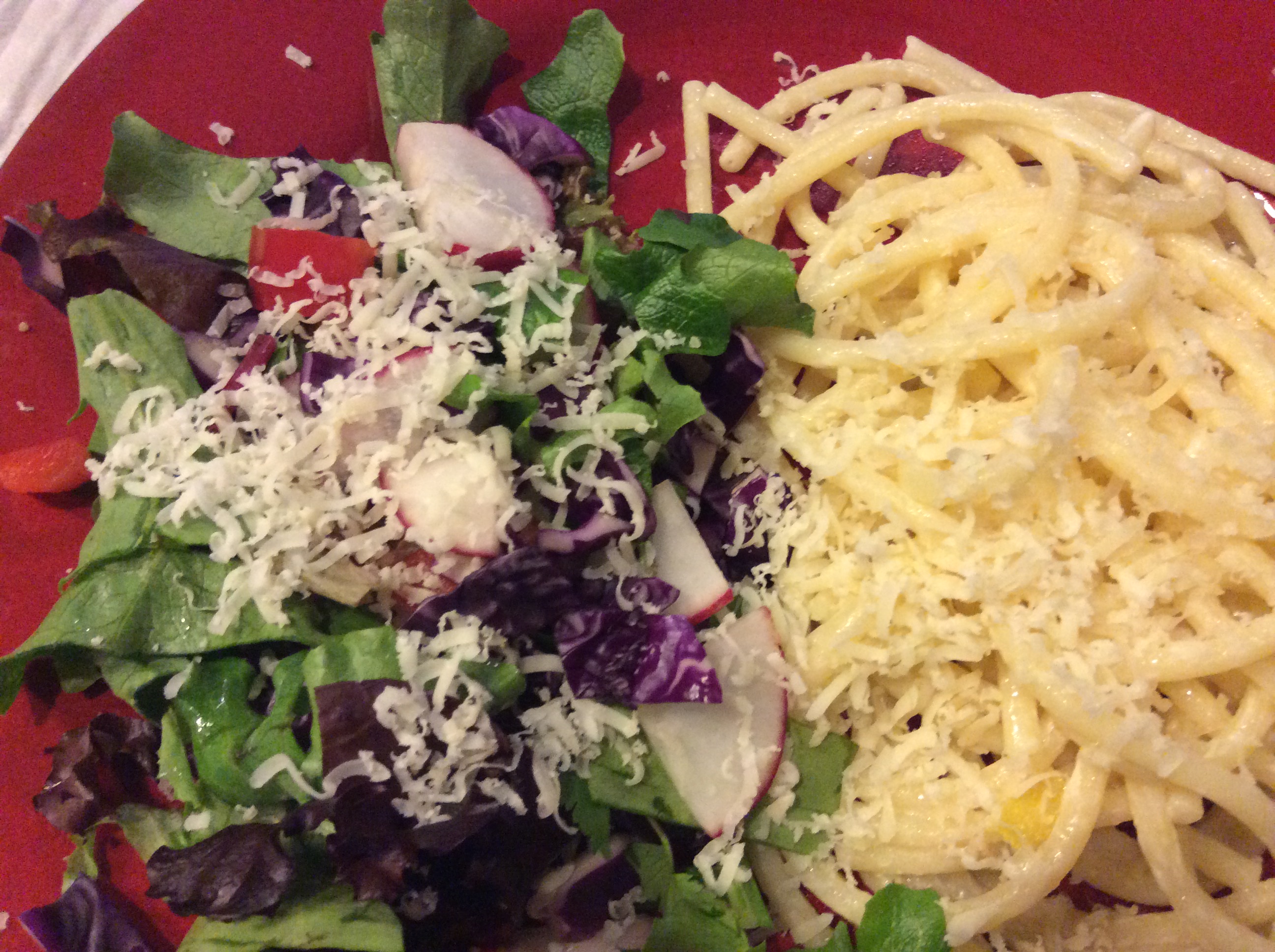
Lemon pasta with mixed salad topped with grated asiago cheese.

Many of the recipes feature berbere, a spice used in Ethiopian cooking. The book also includes four different recipes for salmon and many vegetarian and vegan recipes using spices from around the world.

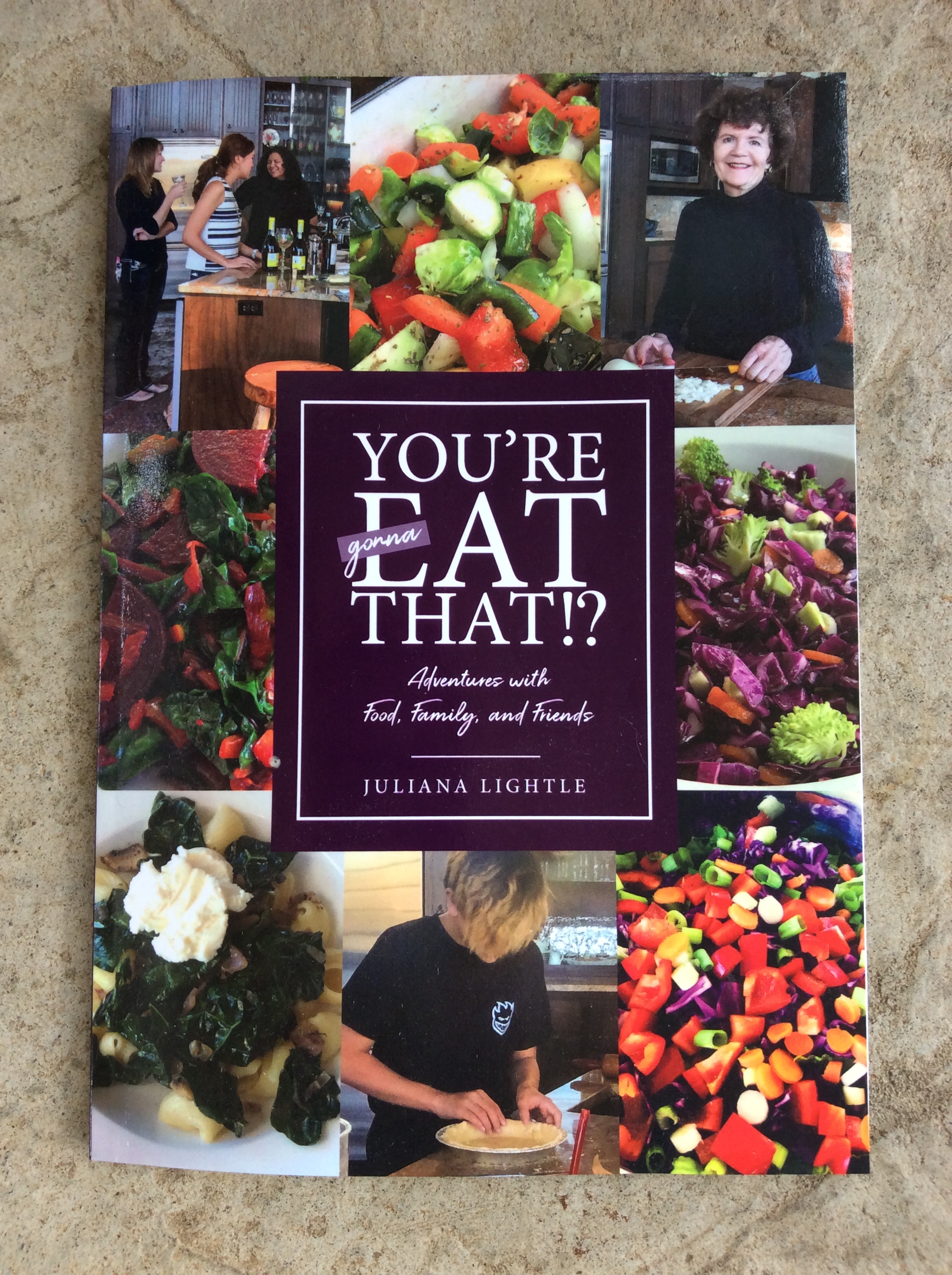
You’re Gonna Eat That!? Adventures with Food, Family, and Friends


This is my new book, published last month.  It is filled with stories, poems, and recipes–healthy food for vegans, vegetarians, pescatarians, and meat eaters with photos and detailed instructions. Currently, it can be purchased at Burrowing Owl bookstores in Canyon and Amarillo, Texas, and online at http://www.dreamcatcherbooks.com, Angel editions.

IMG_4660

Covid19–Creative Cooking


This is post number six as I continue to quarantine.  I’ve lost tract of exactly when I last went to the grocery–not for at least three weeks.  In an effort to avoid going unnecessarily, I’ve come up with all sorts of creative cooking by looking to see what I can find in the pantry and refrigerator and inventing recipes, using what I already have.  Here are three of my inventions.

IMG_4592

When I was in Italy last November, I ate pasta with lemon creme sauce in two different restaurants in two different cities.  I have managed to duplicate it using bucatini from Italy, lemons, and heavy cream.  For two servings, cook about 1/2 pound of pasta.  While pasta is cooking, use a potato peeler to peel of strips of rind from one lemon.  Chop these strips into smaller pieces.  Cut the lemon into quarters.  When pasta is al dente, drain.  Turn down the heat and melt 1/4 stick butter in the pan, add drained pasta and lemon rind.  Take the lemon quarters and squeeze the juice into the pasta, add cream to taste–do not add too much. If you do not have cream–this time I had none in the refrigerator, do not worry.  It is yummy without it.

I was out of most salad ingredients so the above salad is chopped cilantro topped with feta cheese, various kinds of olives, and olive oil.

IMG_4597

While scrounging around in the freezer compartment, I found half pound of hamburger. I defrosted that and found a can of kidney beans in the pantry. I sautéed the lean hamburger in olive oil, then added the kidney beans.  I did not have any tomatoes or tomato sauce so I dumped in a little organic ketchup.  After stirring this together, I added berbere, a complex and a little hot spice from Ethiopia.  I served this on top of basmati rice from Pakistan–I buy this in ten pound bags at an international grocery.

The salad ingredients were a gift from a friend who had to harvest all his arugula and lettuce because of freezing weather. While both of us were outside, he handed me a bagful of these goodies.  I added some red cabbage I already had.  Finally, I grated asiago cheese all over the top of everything.  Cheese is a favorite food so I always have lots on hand.

IMG_4599

The other food I always keep in the freezer is fish, usually salmon and cod loins.  For this recipe, I defrosted the salmon and marinated it in teriyaki sauce and chopped up some onions and crystallized ginger.  I sautéed the onions in olive oil, then added the salmon and crystallized ginger.  When the salmon was almost done, I added some chopped, frozen,  poblano peppers (when I knew this stay-at-home order was likely, I bought a lot of poblano peppers and froze them) and arugula.  I served the finished dish over basmati rice.

Sometime in the next month or so–no definite date yet–my memoir/cookbook will come out, “You’re Gonna Eat That!? Adventures with Food, Family, and Friends.” It is filled with recipes using ingredients and methods I have learned in travels and growing up with my mom. Many of the recipes are vegetarian and could be vegan with minor adjustments.

Italy–Spaghetti with Lemon Cream Sauce


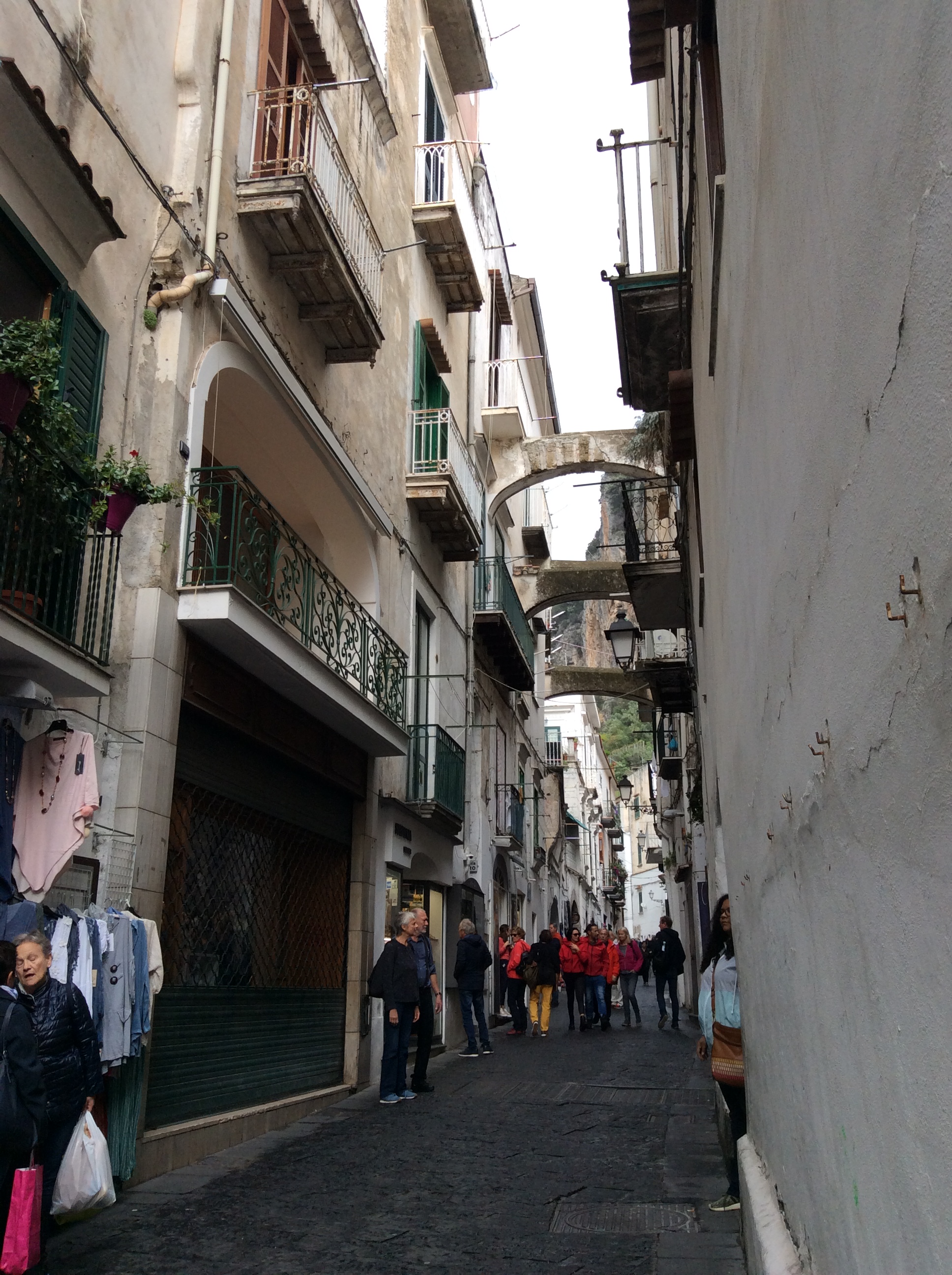
My favorite pasta dish in Italy was like none other I have eaten anywhere.  The first time–and the best dish–was in a little restaurant along the side of a narrow street in Amalfi.  The Amalfi Coast is famous for its lemons and where they create the best limoncello.  Therefore, it is not surprising that they created a pasta dish featuring lemons.  When I returned home, I experimented to recreate it.  First, the spaghetti–yes, they called it spaghetti–was considerably thicker than spaghetti in the US.  I guess it was homemade.  I did find a reasonable substitute here, bucatini from Italy.

Here is my recipe for two people:

1/2 lb. bucatini made from durum wheat semolina

1 lemon

heavy cream or half and half

lemon essential oil

butter

Cook the pasta as directed on the package.  While the pasta is cooking, using a potato peeler, peel strips from the rind of the lemon and cut into small pieces. If not using lemon essential oil, juice the lemon.  After the pasta is cooked and drained, place back in the pot with a couple tablespoons of butter and stir until butter is melted.  Add the lemon rind and lemon juice or essential oil to taste.  Add the cream carefully–just enough to make a little sauce.  Serve and grate parmesan or asiago cheese on the top.

Serve with a nice green salad.

IMG_4546

IMG_4131

Farther up this street just below the school, we found the restaurant where I ate the spaghetti with this sauce.


Vacationing in New York City-Part One


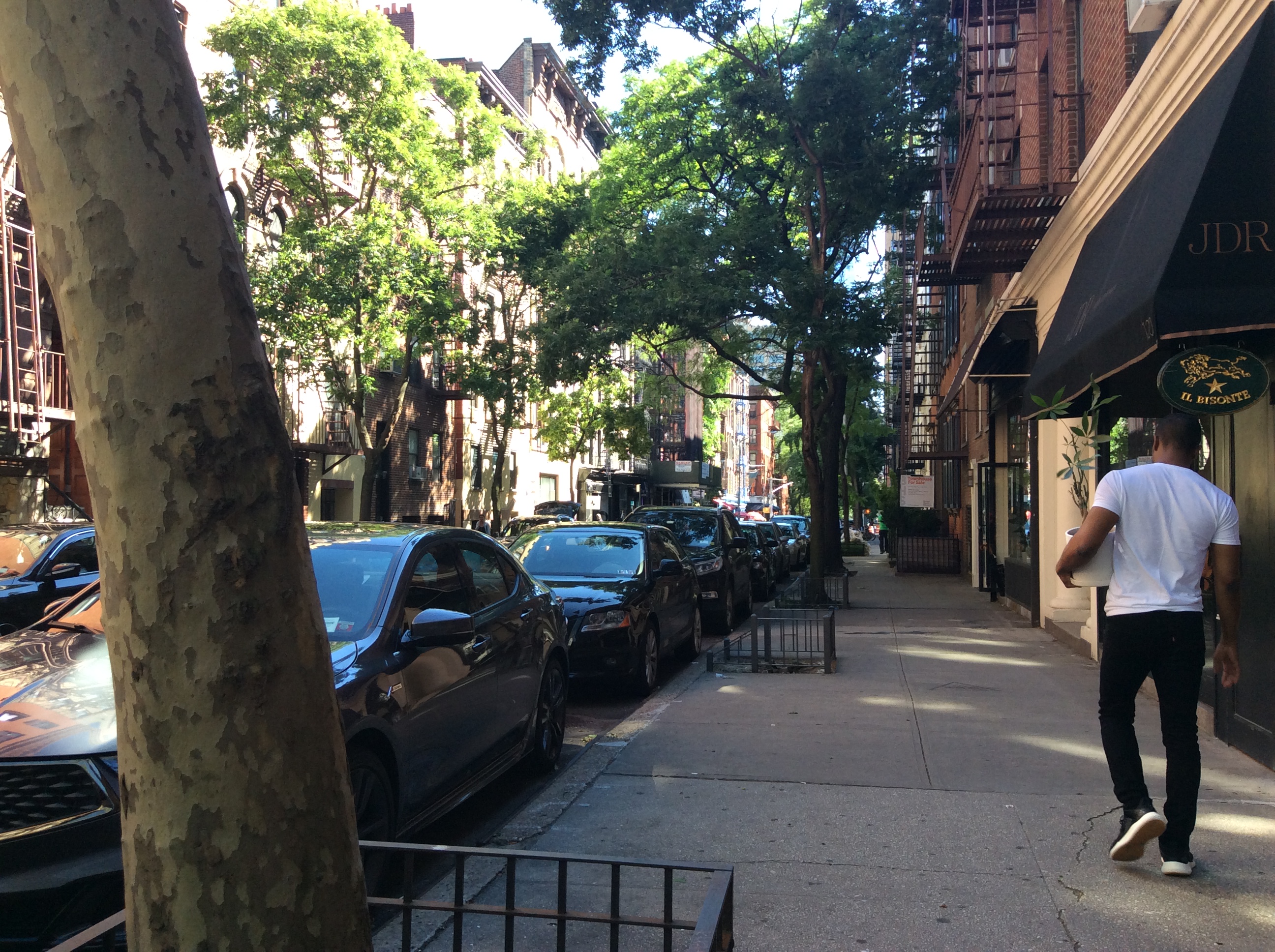
Earlier in June, my daughter, grandson, and I went to NYC for ten days.  We had no particular plans, stayed about three blocks from the East River in Midtown, conveniently only a couple of blocks from the subway so going up and down Manhattan was easy.  We did not do a lot of the usual touristy things.  Mostly we wandered around, exploring.

4B0C3212-3C63-472A-850B-7A361B010D6D

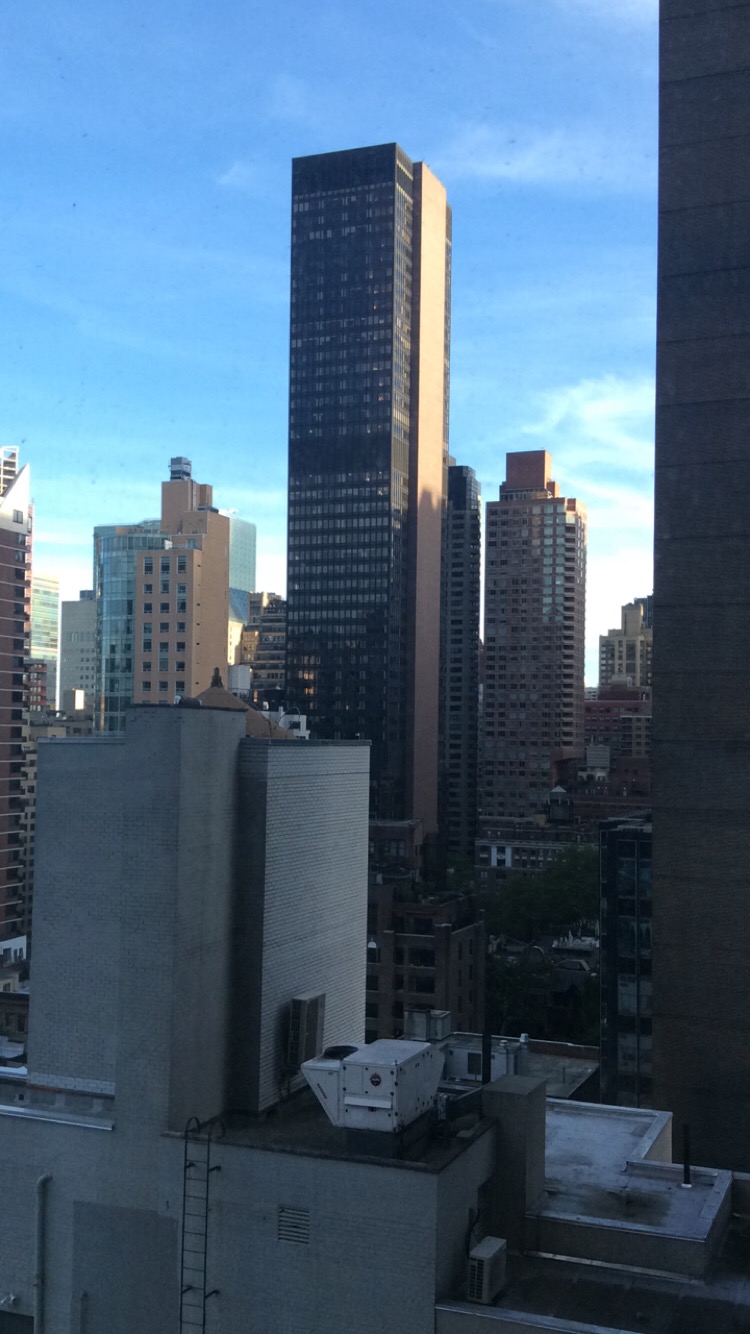
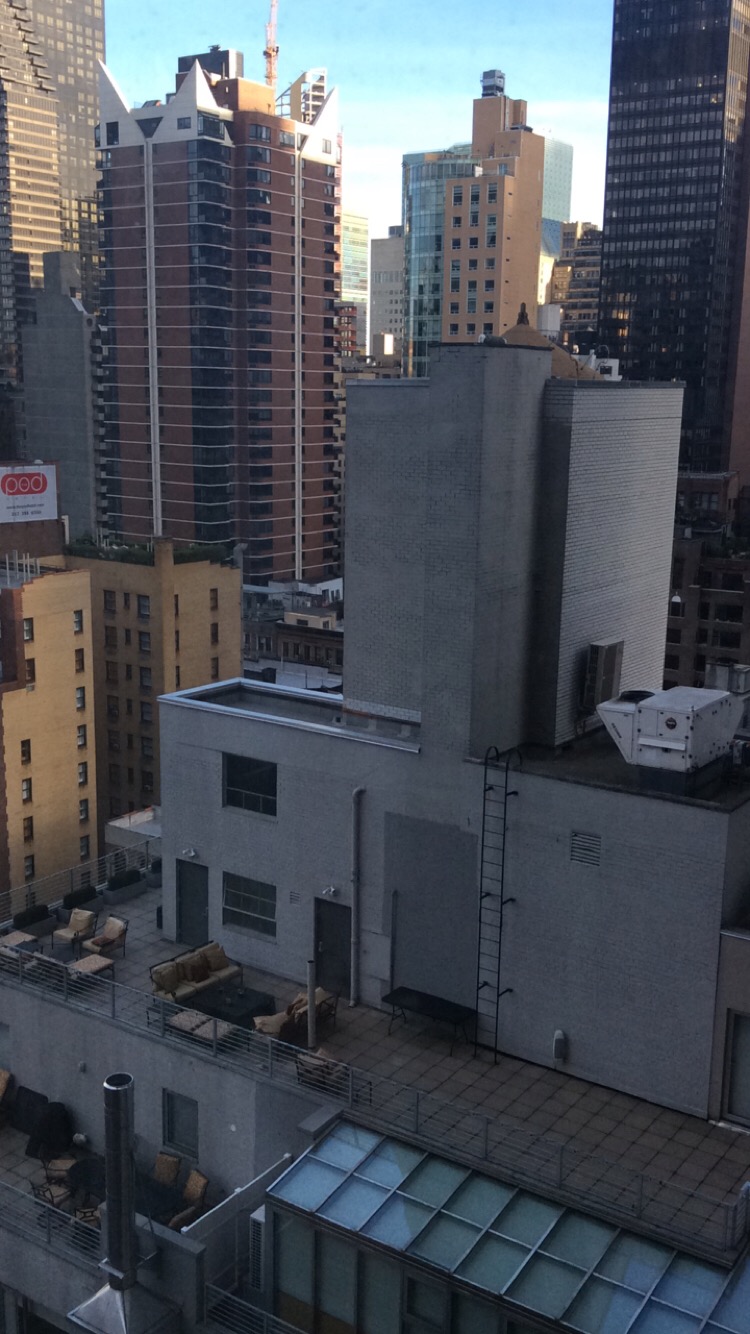
This is a view from the hotel room on the 18th floor.  Yes, there are people living in some of these buildings, complete with patios, patio furniture, and in some cases plants.

E06FC3B5-CF75-4A99-AEE4-271B80D3DB14

The first evening we traveled way downtown, got off the subway at Spring Street, and walked to a soba noodle place which had many vegetarian options–my grandson is vegetarian. We liked it so much we intended to go back but somehow never accomplished that. I would recommend this place for those who like Korean, Japanese, etc. food.  Sadly, I do not recall the name.

IMG_3725

The next day we went downtown again and did something touristy, had lunch in Little Italy.  We had no idea which restaurant to pick so picked this one:  Caffe Napoli.  My grandson liked their cheese ravioli with marinara sauce so much, he ate two entire platefuls.  I had the beet salad.  I am not a bread eater normally but liked theirs so much with the olive oil and herbs that I could not stop eating it. This place was a hit for us so we went back in the evening several days later.

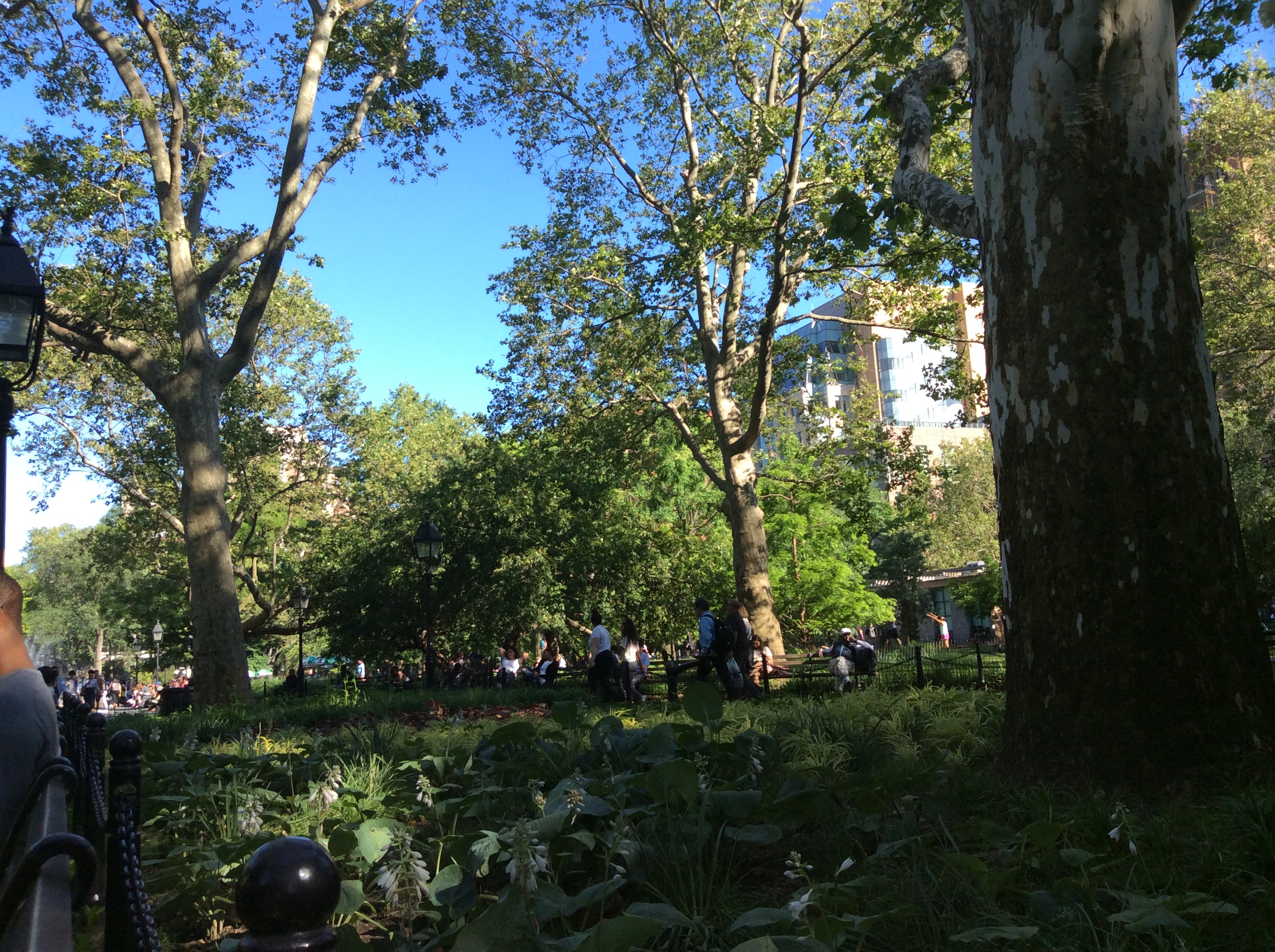
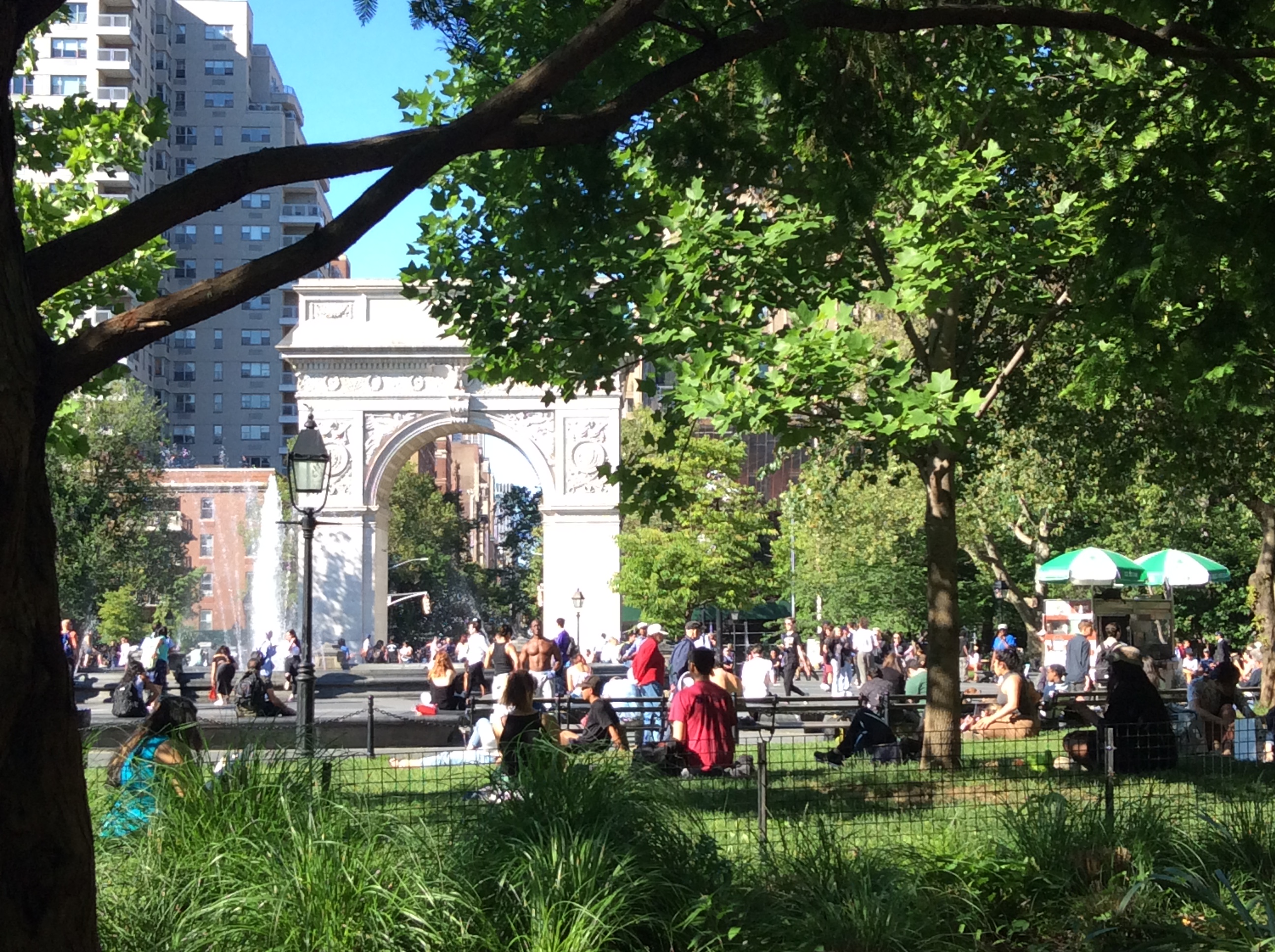
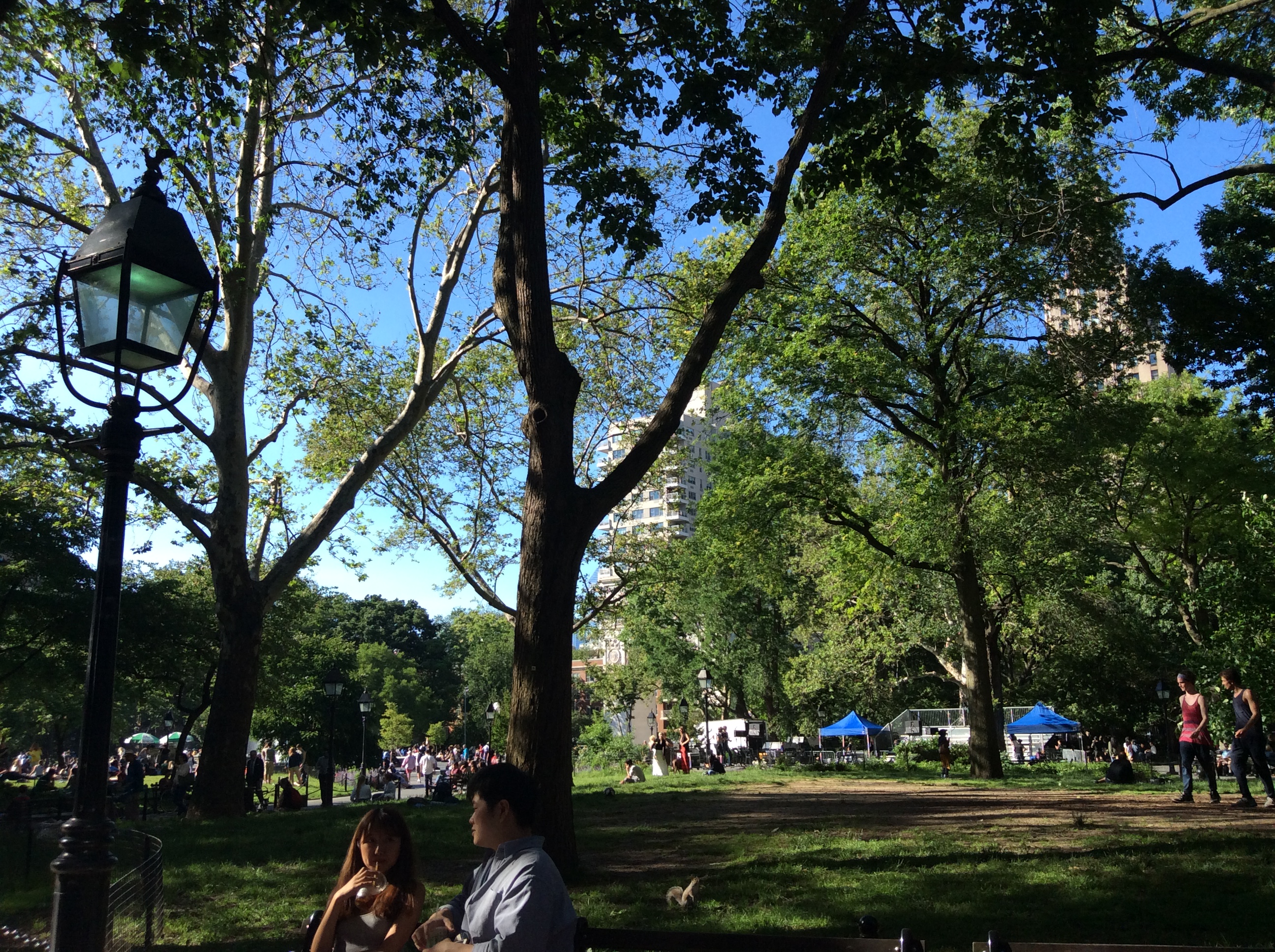
After lunch we took a very long walk through Soho over to Washington Square Park. We spent quite a lot of time there people watching.

IMG_3726

IMG_3728

IMG_3729

IMG_3731

If you have heard of the college, New York University (NYU), and have never been there, you might be surprised to discover it does not have a campus in the usual sense.  Its “campus” is comprised of buildings around and near this park.

Twice we ate at a place close to the hotel:  Clinton Hall at 230 East 51st Street.  They have good veggie burgers and a giant salad served in a huge beer stein, among a variety of options.  They also provide all sorts of games you can play while waiting on food, etc. I would not recommend this place near or on the weekend, however, unless you like loud.  It is a very popular hangout for young, professional people and was so noisy then that we could not even talk to each other without shouting.

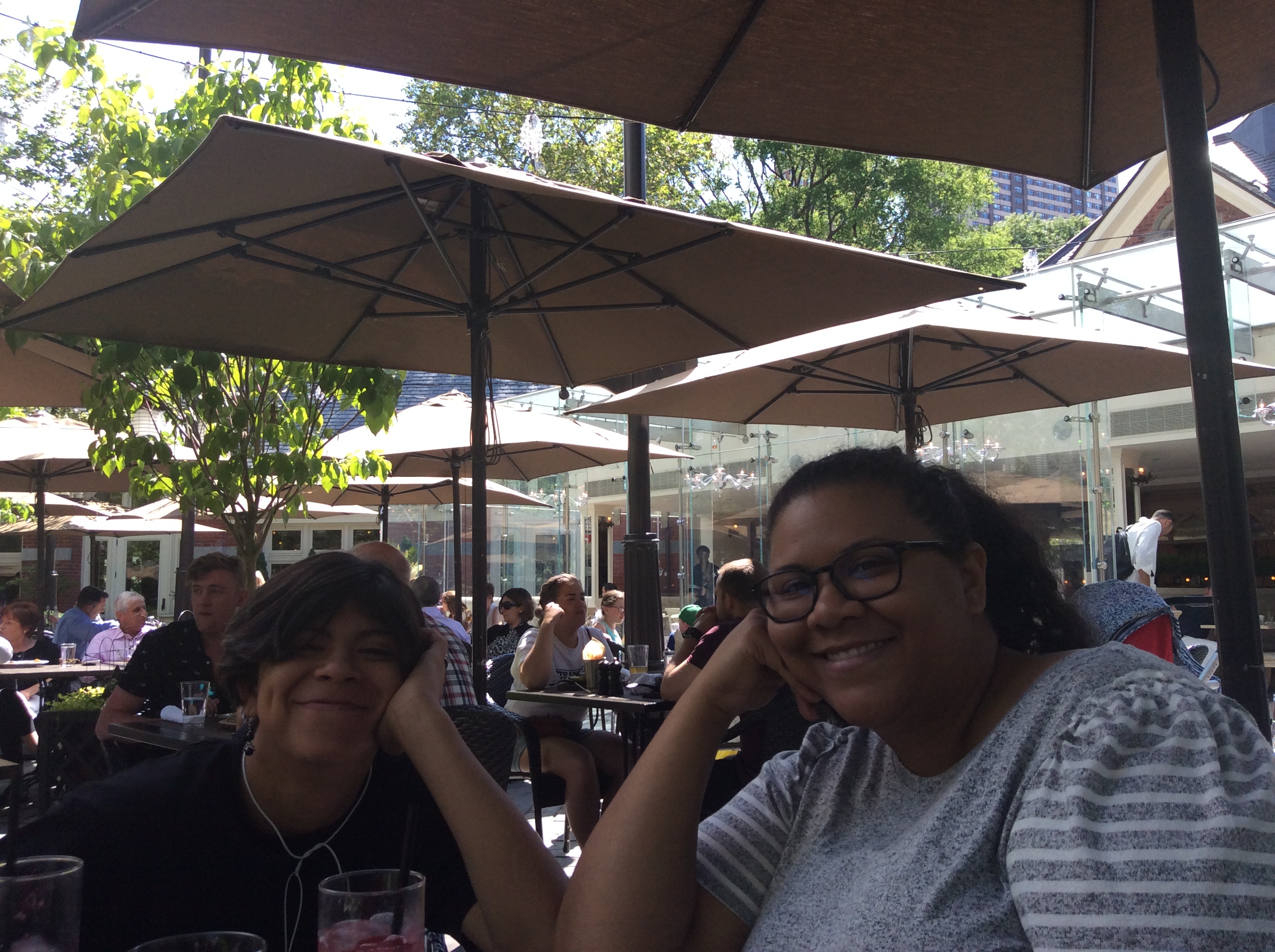
One touristy thing we did was take the subway uptown to Central Park and eat lunch at Tavern On the Green.  The salmon patty was excellent.  It was a sunny day, the guests seemed happy except for one man who demanded to be seated in a part of the restaurant that was closed.  He did not succeed. The meal was good, the atmosphere sunny and pleasant. It was relaxing and fun.

IMG_3738

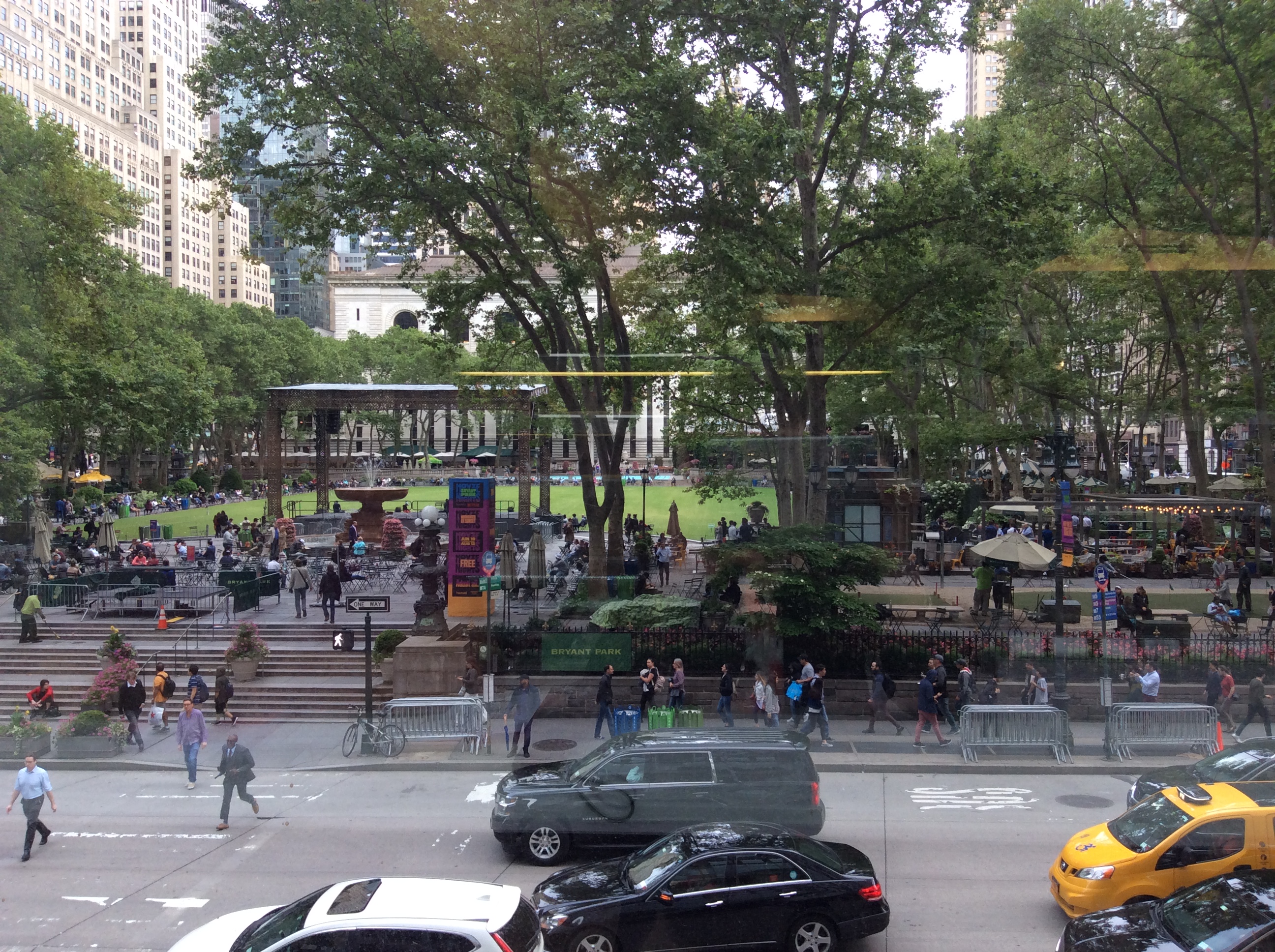
Three times we went uptown to the Barnes and Nobles on 86th Street. We also visited the one at 555 Fifth Avenue.  We are book people, and it seems we end up at book stores everywhere we travel.  My grandson had to stop buying books because of concerns about luggage being over the weight limit. The most unique bookstore we visited is Kinokuniya just across from Bryant Park.  I highly recommend this place.  Not only do they have all sorts of books both in English and Japanese, but they also sell various Japanese art items some of which are very beautiful.  I had to seriously restrain myself. My daughter and I sat in their cafe, I drank matcha latte, and we watched the activities across the street in Bryant Park while grandson explored the huge graphic novel area.

IMG_3742


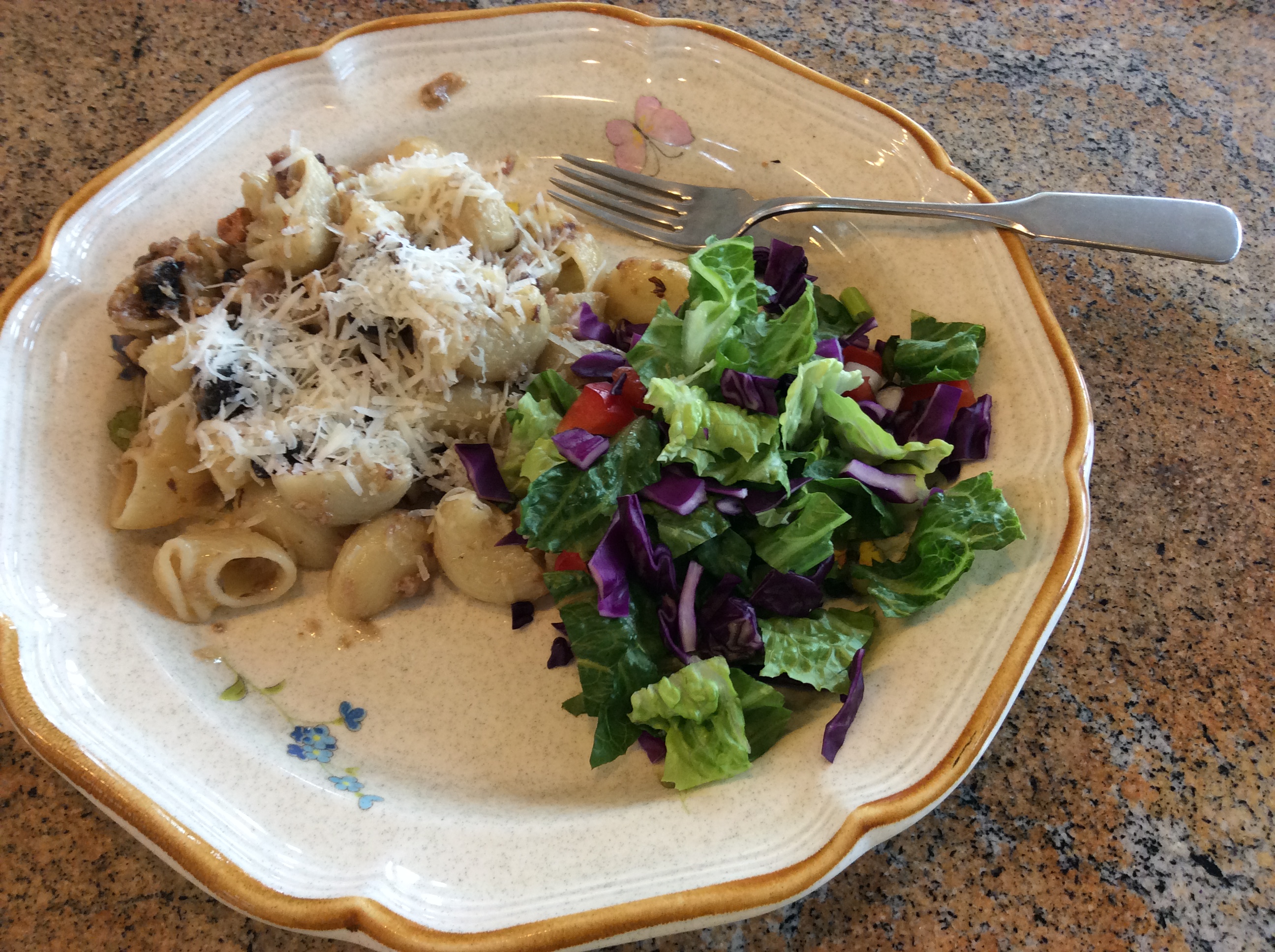
Pasta with Sardines, Walnuts, and Figs


pasta of your choice–I use conchiglie

5 dried mission figs, coarsely chopped

4 garlic cloves, thinly sliced

olive oil

1/2 cup broken walnuts–I used black walnuts tonight

1 can sardines in olive oil

1 Tbs. balsamic vinegar

Saute garlic and walnuts in just enough olive oil to cover bottom of pan until garlic is lightly browned.  Add figs and sardines.  Do not drain olive oil from the sardines. Add balsamic vinegar.  Stir and heat through.  Add to drained pasta.  Stir to combine.  Serve with grated pecorino cheese and a simple salad.  This recipe serves 2-3.


IMG_3349


Note:  Why sardines?  There are good reasons to add sardines to your food choices.  First, they are near the bottom of the food chain and have little to no chemical residue as a consequence, e.g. no mercury. Second, small amounts have lots of protein and omega oils.  One little can has 22 grams of protein.  1/2 cup walnuts has 12 grams of protein.  I use pasta from an ancient Italian monastery.