During my childhood, my father took us on regular road trips. The first one occurred when I was three. He actually drove all the way from northwestern Missouri to Monterey, Mexico, via Padre Island and back. Every year we took at least one, sometimes two. Later in life, I truly realized the value and magic of these family road trips. Although my daughter, grandson and I take short road trips to New Mexico in particular, we had never taken a really long one until two weeks ago when we left Amarillo, Texas, headed for Carmel, California.
At our first stop, Old Town, Albuquerque, for lunch, we experienced a most refreshing and delightful drink which I plan to duplicate the next time I invite friends over for dinner.

This feast for the eyes and mouth consists of water infused with pineapple and strawberries. It tastes best after letting it set to allow the fruit to meld into the water.
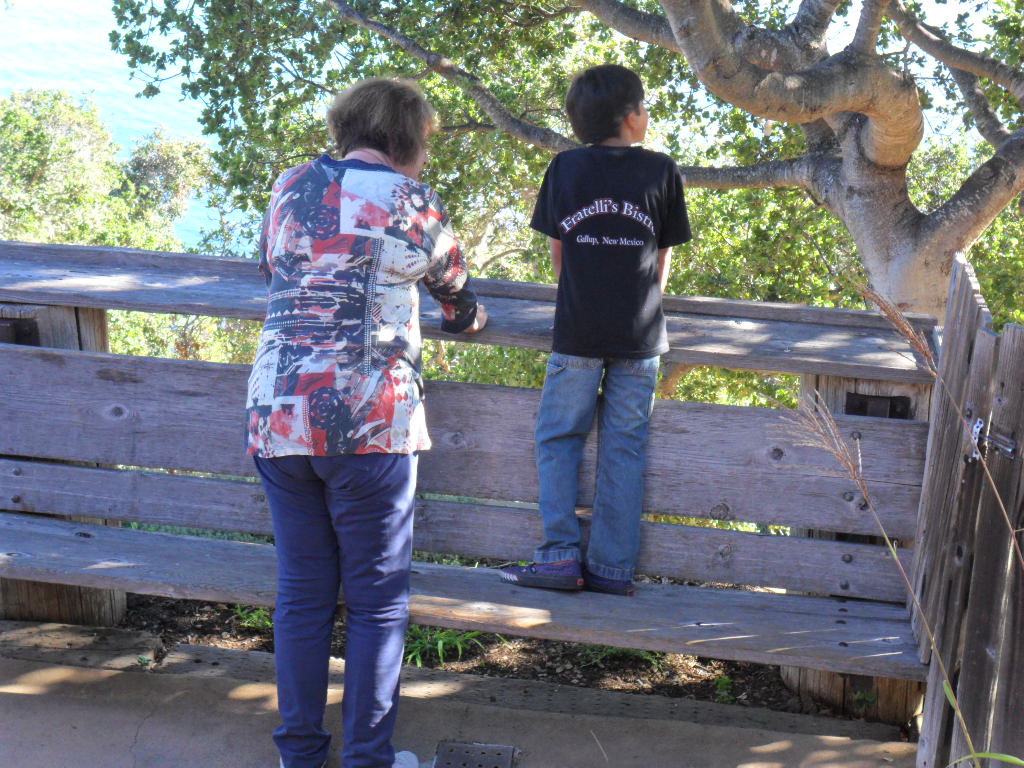
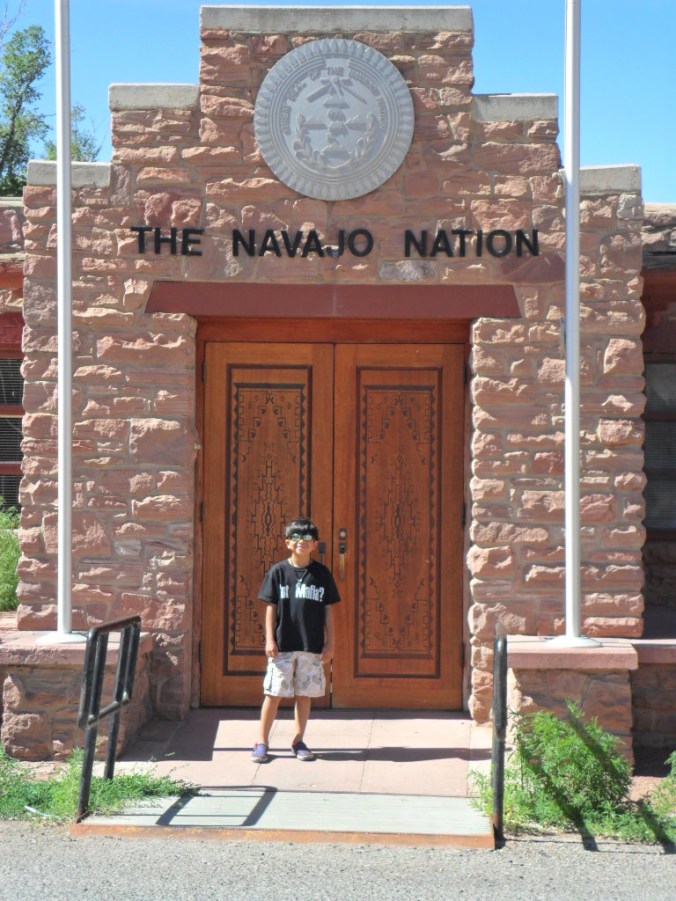
We spent the night in Gallup, but arrived too late to visit the galleries and shops so headed to a little Italian restaurant where my grandson, D’mitri, donned a black shirt which reads Got Mafia. Friday morning we headed to Window Rock, capital of the Navaho Nation. Since D’mitri’s great grandfather was Navaho, D’mitri’s interest in this stop remained high.


After strolling around the park here, we stopped to visit the ladies selling the jewelry they were making on site. As a person a bit obsessed with corn plants, I could not resist a pair of turquoise earrings that look exactly like tiny ears of corn. D’mitri had to have a necklace with a soccer ball pendant which he wore the rest of the trip.
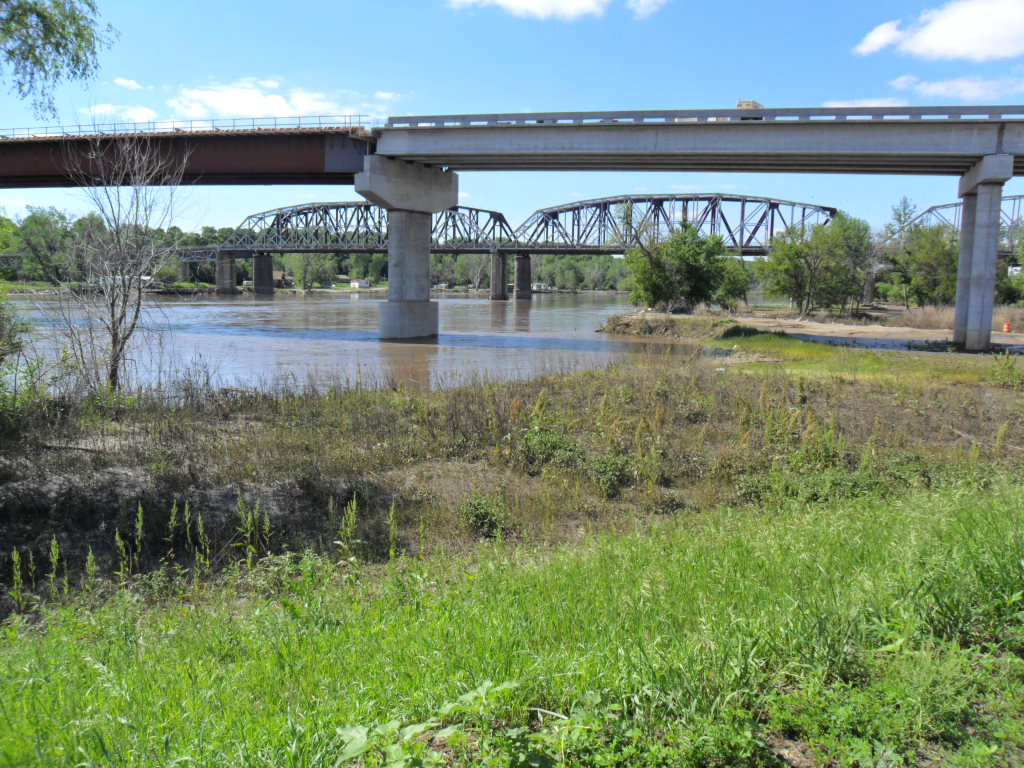
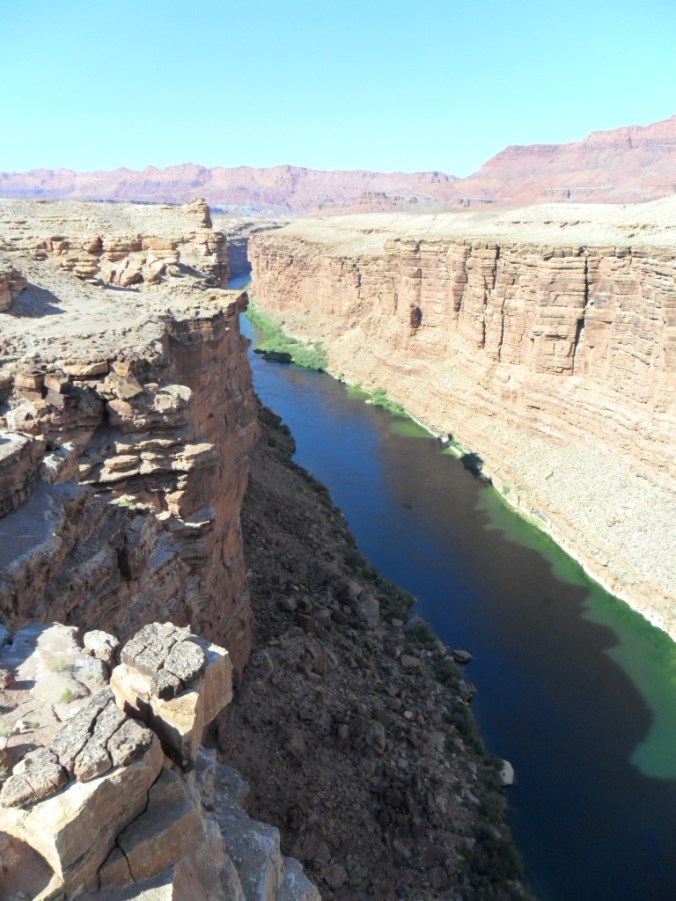
After the morning at Window Rock, we drove off across the Navaho Nation and the Hopi, headed for the North Rim. We stopped off and on to visit vendors along the side of the road. The dwellings throughout the Navaho Nation seemed scattered across the landscape with many hogans next to or close to what appeared to be a main house. Horses roamed in the semi-arid fields. The Hopi area, however, held a different view with no scattered dwellings. Everyone seemed to live in villages along the way and I never saw a horse in Hopi country. Finally, we crossed the mighty Colorado River at Navaho Bridge from which I took this photo.
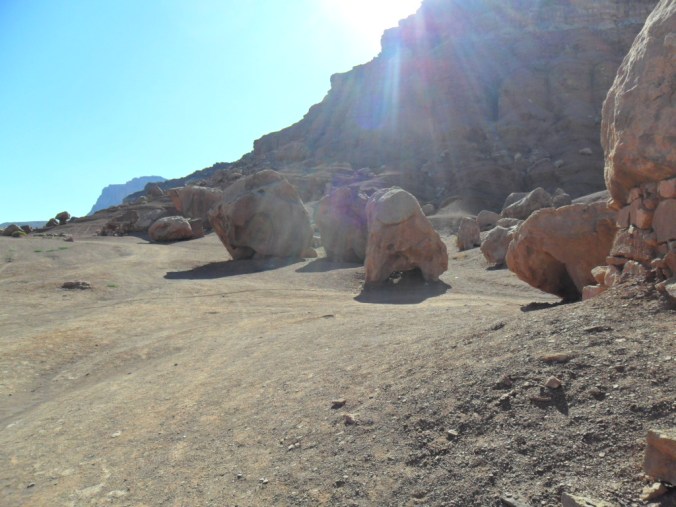
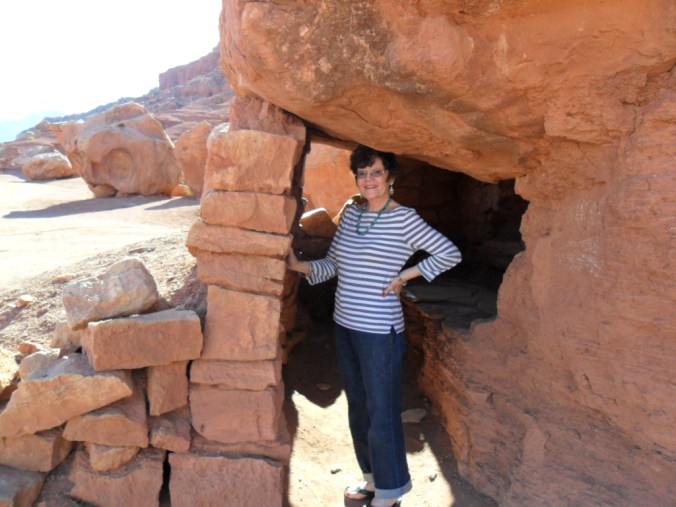
The road follows the base of the cliffs of Vermillion Cliffs National Monument. We could see them looming large long before we arrived. Huge rocks appeared to have tumbled off the cliffs and lay near the road. I kept wondering if they ever fall and hit cars.

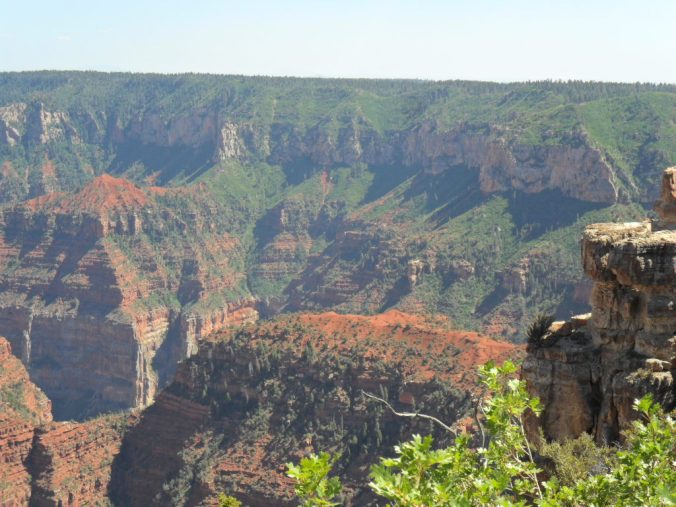
We finally made it to the Jacob Lake Inn near the North Rim of the Grand Canyon. We arrived too late to go to the Grand Canyon so took a hike through the ponderosa pines supposedly headed to a lake. Dry, hot weather apparently turned the lake into a mere puddle. We barely made it back before dark, disappointed. The next morning we drove the forty some miles through heavy woods interspersed with giant meadows to the North Rim. If you have never been to the Grand Canyon, its size and grandeur remain impossible to convey via photos. Perhaps due to the rather warm, dry conditions, a heavy haze hung over the Canyon all day. We took a few tiny hikes, only to discover just how very much out of shape we are. Additionally, the altitude affected D’mitri quite negatively, making him more tired than customary. Nevertheless, determined to not miss out too much, I took several photographs from Imperial Point.




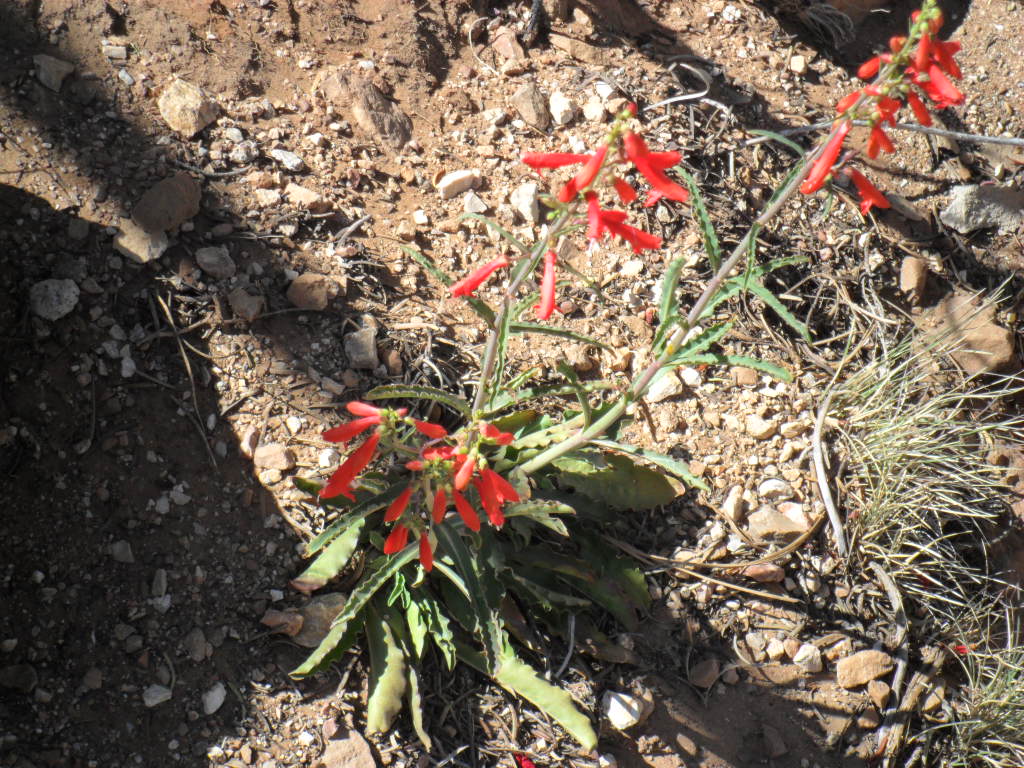
Flowers exactly the same as grow where I live on a little canyon in the Panhandle of Texas grew along the path. We spent another night at Jacob Lake and then continued toward Las Vegas. The fastest route drops off the Kaibab Plateau rather dramatically with spectacular long views, the depth and breadth of which no ordinary camera can capture. We ate a late breakfast in Hurricane, Utah, a bit after the infamous Colorado City, Arizona, where the houses appeared quite large with high walls around many of them. Then off to Las Vegas, Nevada, to meet an elementary school classmate, Craig Prater, whom I had not seen in years. He treated us to a fabulous lunch at the Mandalay Bay, took us to a shopping area down road, and he and I attempted to catch up for all those years while Ema and D’mitri shopped. We marveled how two children who attended a rural school (at first it had only one room and then later two) eighteen miles from any town of more than a couple of hundred could attain what we have attained. He produces films and travels all over the world. I have lived, worked, and traveled to many different places.

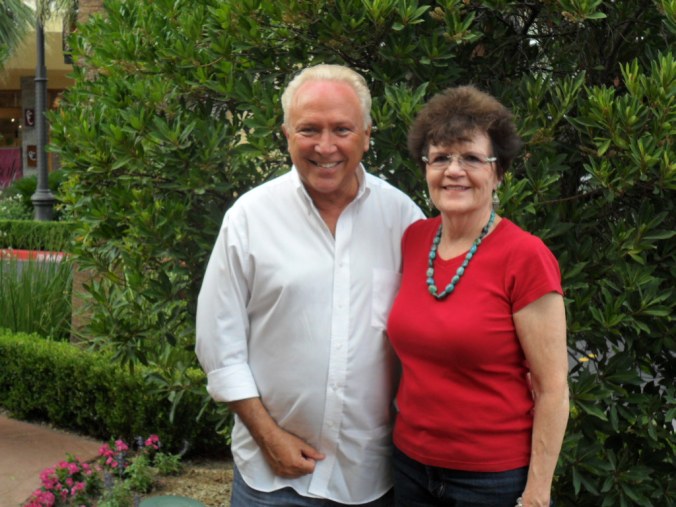
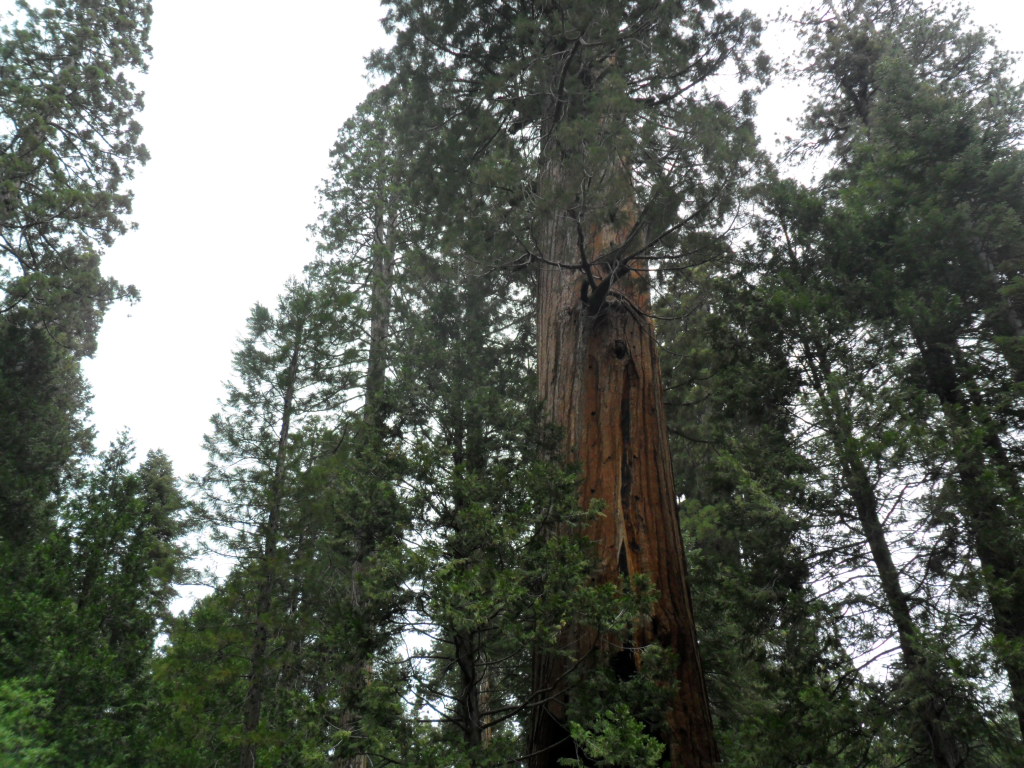
After Las Vegas, we drove to Mojave, California, for the night. The only scenery on this drive is through a canyon on the Interstate. We experienced high winds and a sand storm and arrived after dark. The next morning we solved the mystery of the hundreds of red blinking lights on the hillsides, wind turbines. From there it is a rather short drive, a couple of hours, to the Trail of 100 Giants in Sequoia National Monument. To say we experienced amazement is an understatement. What a magical forest so wet and dark and alluring after miles and miles and miles of hot desert.

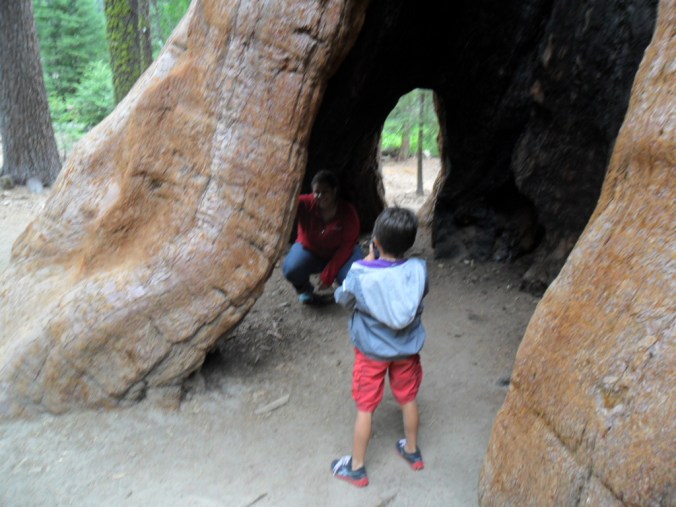
 My daughter, Ema, and her son, D’mitri really enjoy clowning around and what better place than surrounded by the largest trees in the world. The squirrels here also “talked” a lot and we tried to get close.

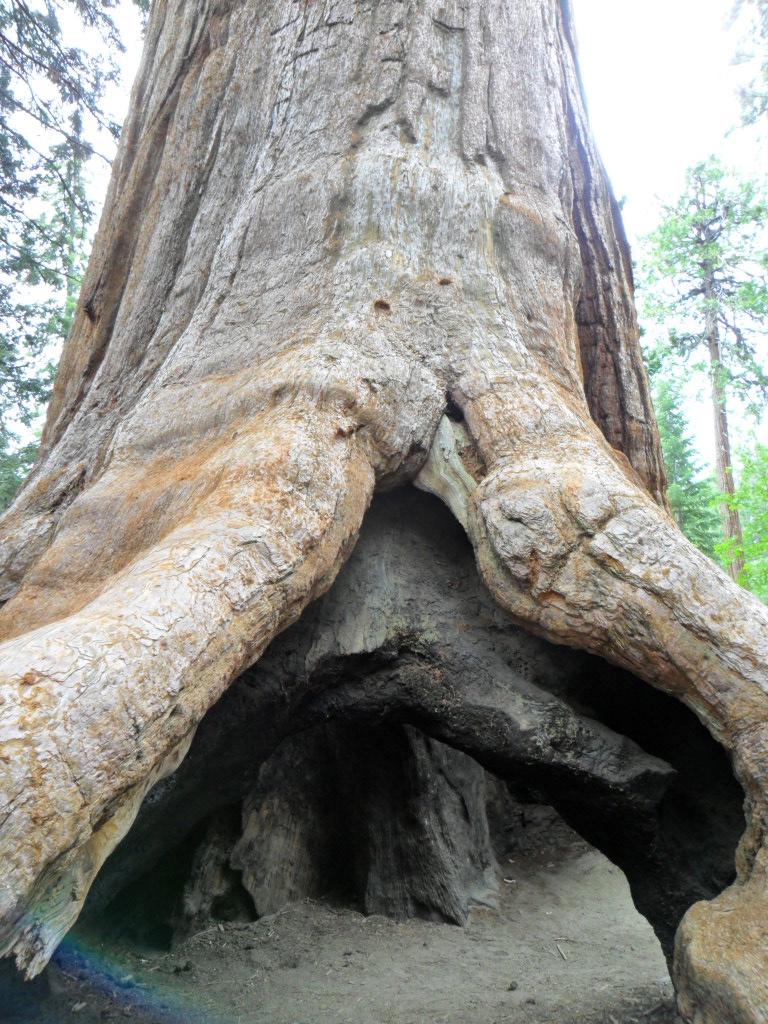
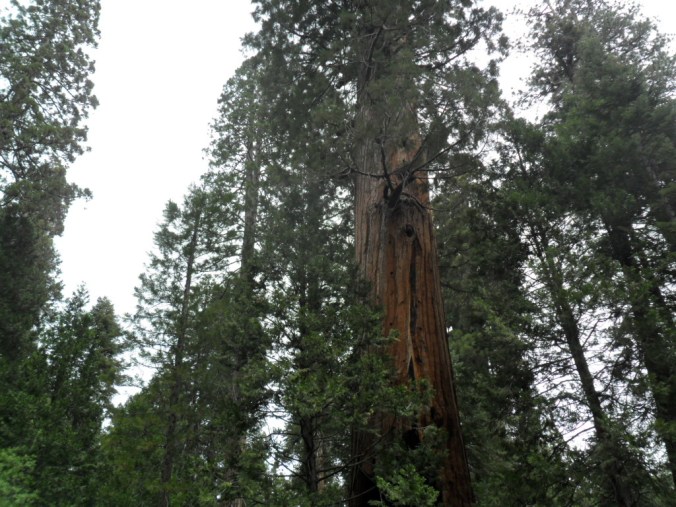
Usually, I frequently dislike photos of me, but this one is an exception. Although not large, this tree stood out as so unique I could not resist a photo shot. Even with the best camera, I doubt a photo of an entire sequoia tree is possible. You have to see them to obtain the full effect.
We wanted more time with the trees, but needed to make it to Carmel by evening so headed down the mountain toward California Hot Springs. Altitude is everything here. In ten minutes the golden hills replace giant trees.
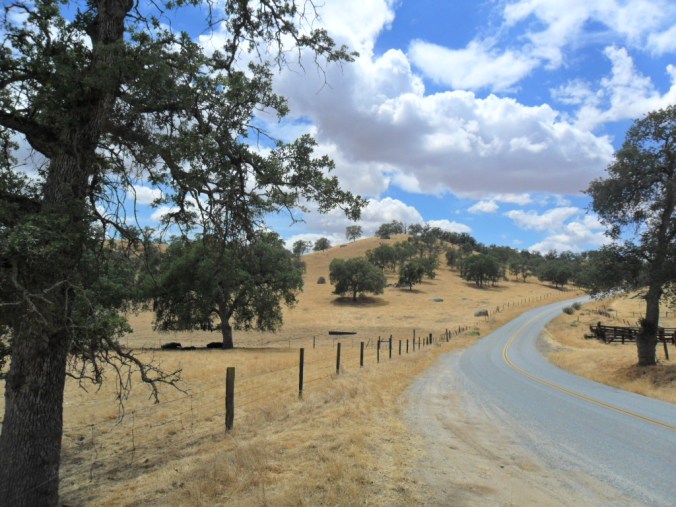
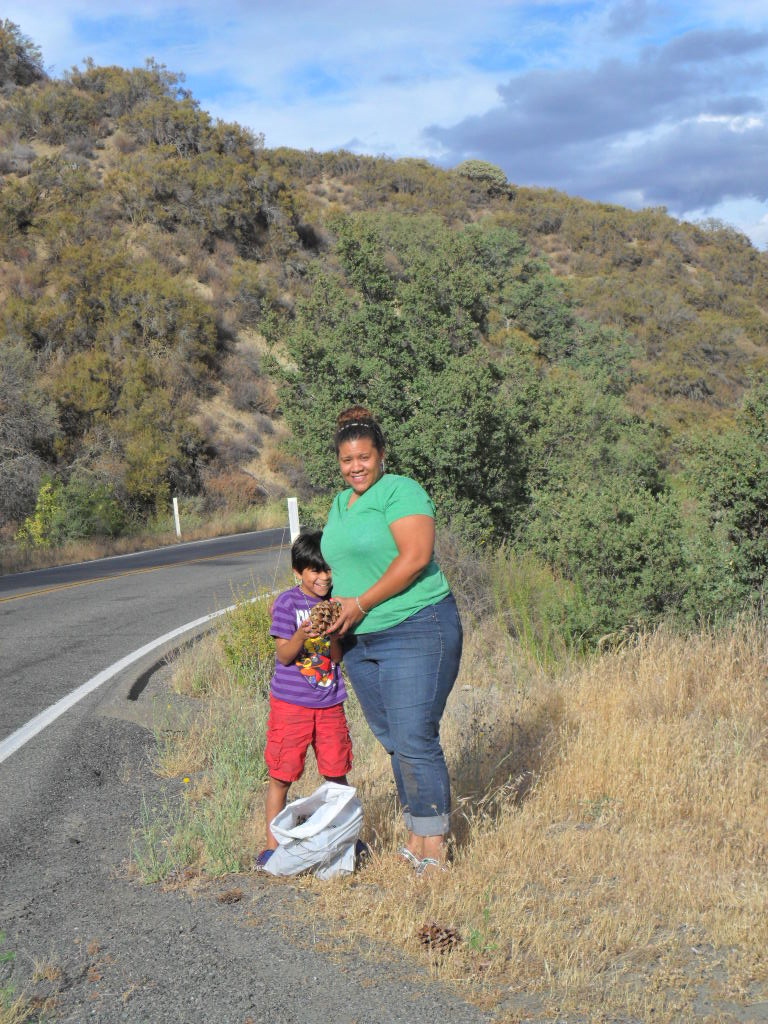
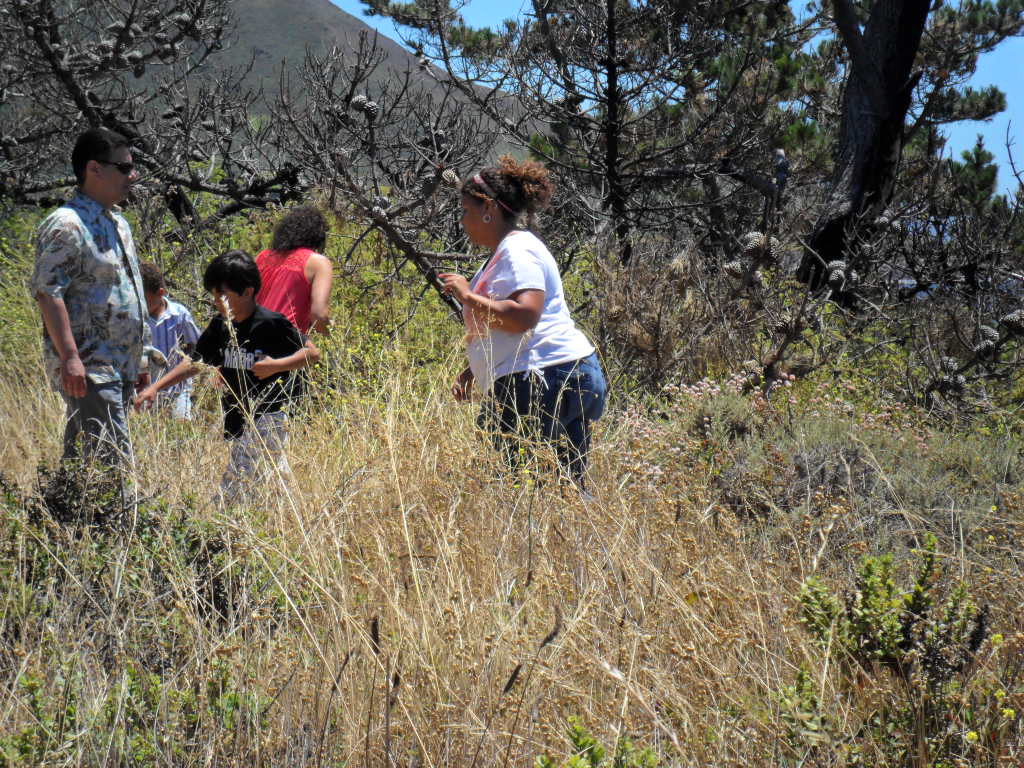
Then, in an hour or less, we were driving across the Central Valley past miles of vegetables and at least three types of trees in huge orchards or groves. The only tree species I was able to identify was almonds. I wanted to take pictures, but did not desire to arrive in Carmel at my college roommate’s house in the dark so I kept driving. No quick road exists that crosses California except way to the south. This still astonishes me. Two lanes with heavy truck traffic take a long time to get from one destination to another. We decided to cross on 198 through Coalinga to San Lucas which resulted in a fun, scenic drive with lots of twists and turns. Much to our surprise, huge pine cones lay everywhere beside the road. It seemed strange that these cones came from a tree much smaller than the Sequoia. Ema and D’mitri collected some to display at home.

Finally, just before dark we arrived at the Rinaldo’s. Suzy and I roomed together at Grinnell College at the ages of 18-19. David attended Grinnell also. We only see each other once or twice a year but can pick up conservations as if it were a few moments ago. They live in the Santa Lucia Preserve.

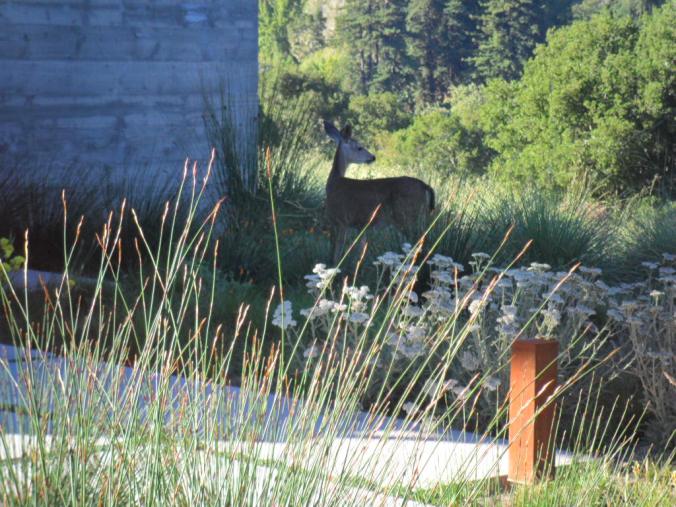
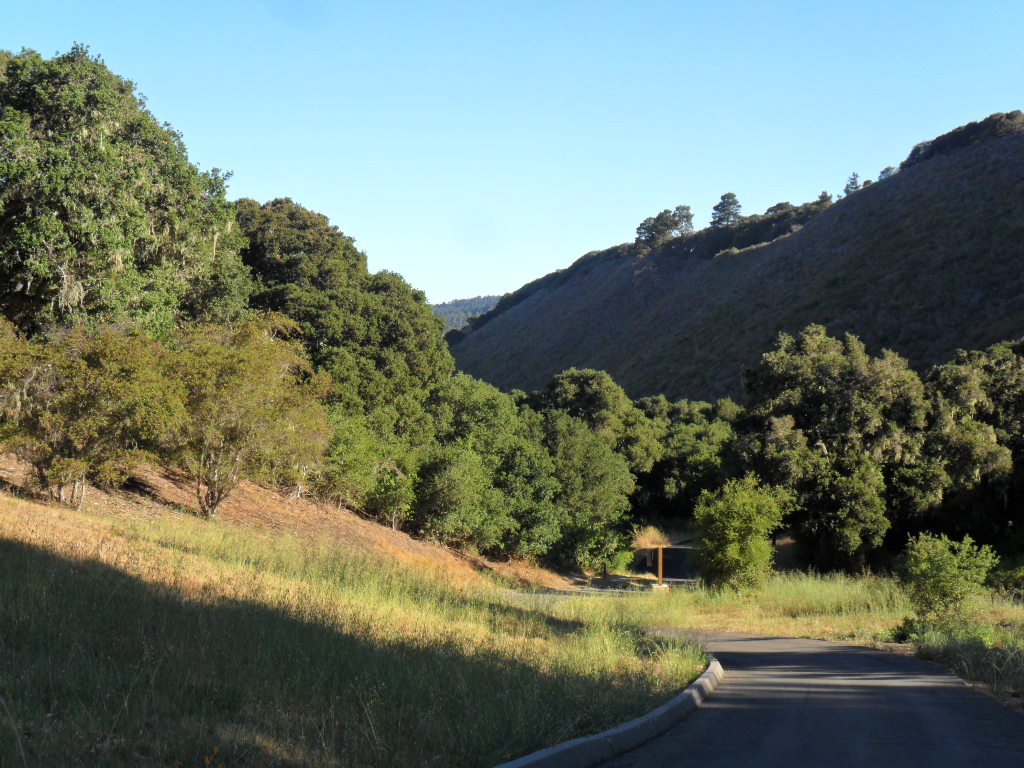
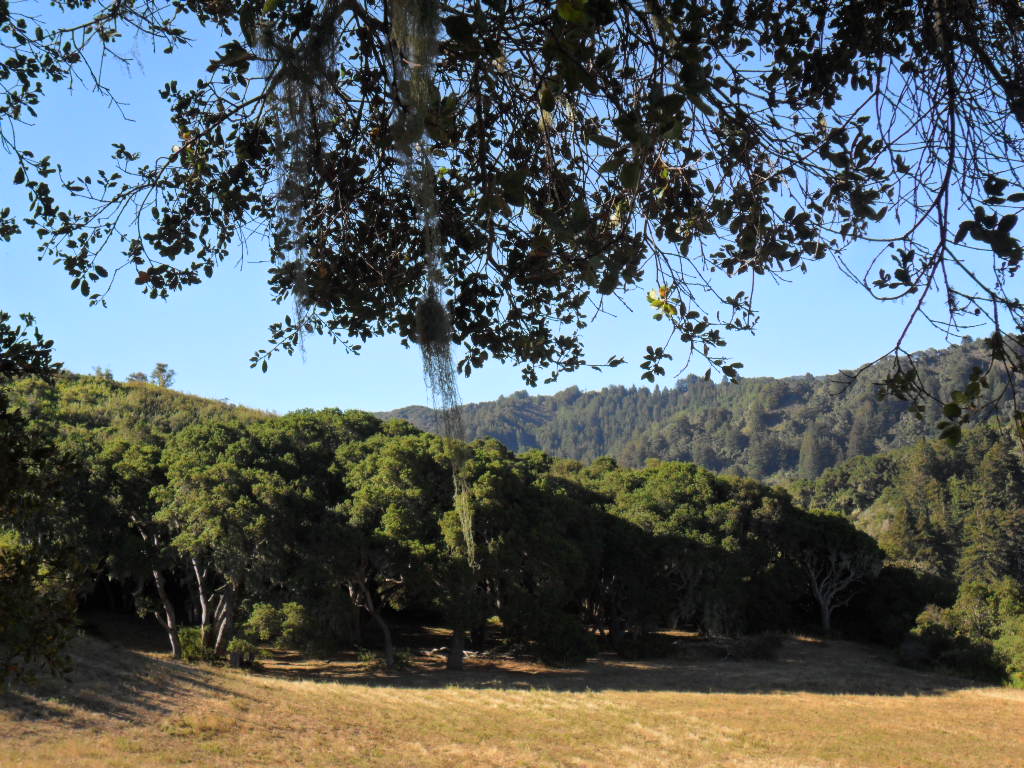
Every morning this deer casually ate California poppies and ran away only if I went outside too quickly. One morning I took a long walk up one of the few roads on the Preserve. I love the live oaks and learned they are very fire resistant so residents are allowed to let them grow close to their houses. Everything else, except for a few native grasses and plants–no trees or brush, must be cleared for 150 feet all around any house.

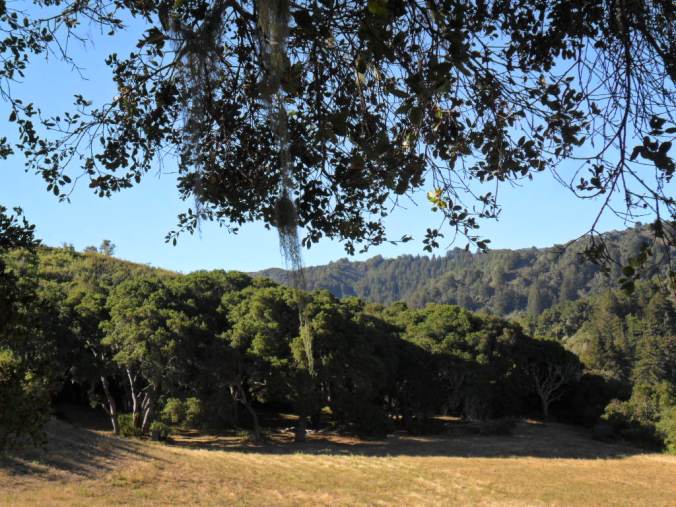


I commented on the radiant red colors I saw in the leaves of an attractive plant only to find out it is poisonous oak and if I touched it, the result would not make me very happy. It must love this particular environment because it grows everywhere.
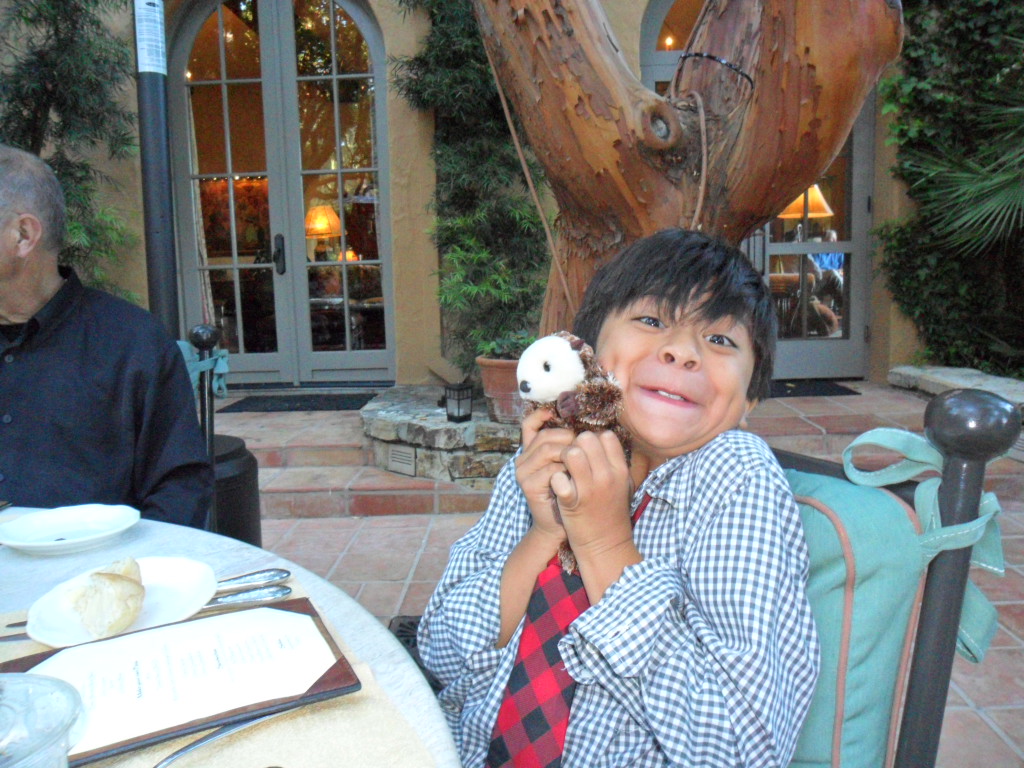
One of my favorite restaurants is at the Hacienda at Santa Lucia Preserve, not because of the food, but due to the impeccable service and enchanting atmosphere, what I imagine to have existed in old California. D’mitri says it is his favorite fancy restaurant on the trip.


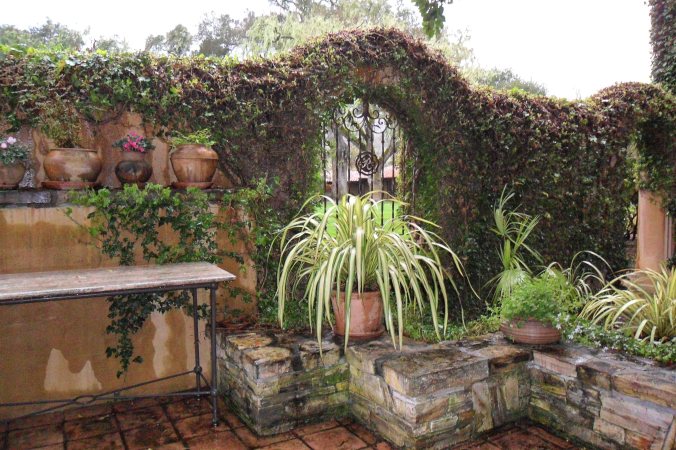
In the dark, driving back home to David and Suzy’s, we saw a bobcat, several deer, wild turkeys, a skunk, and another animal we could not identify. The next day we ladies went shopping in Carmel while David and D’mitri took a ride in the Porsche and swam. No one can go near Carmel surely and not drive the glorious drive south to Big Sur. D’mitri loves water so we stopped at two different places along the way.
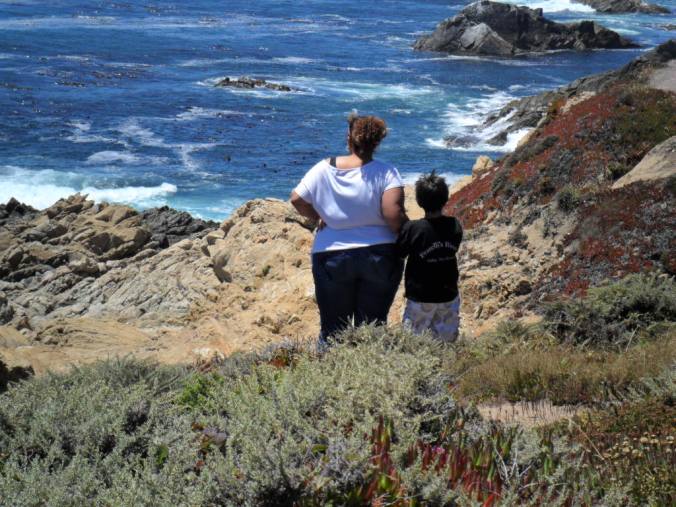
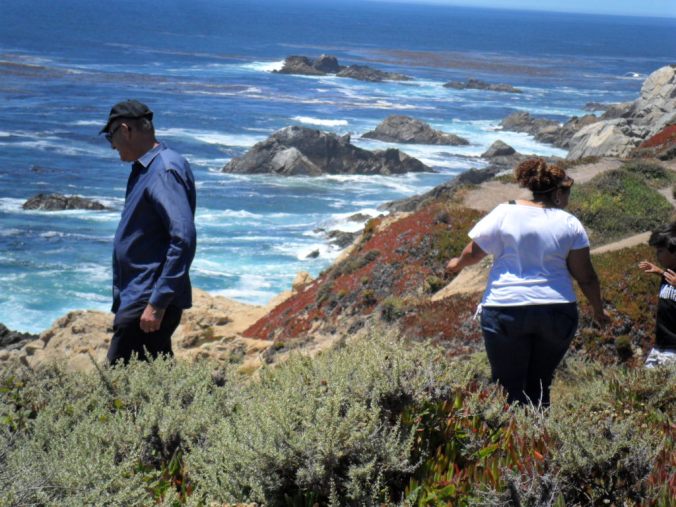

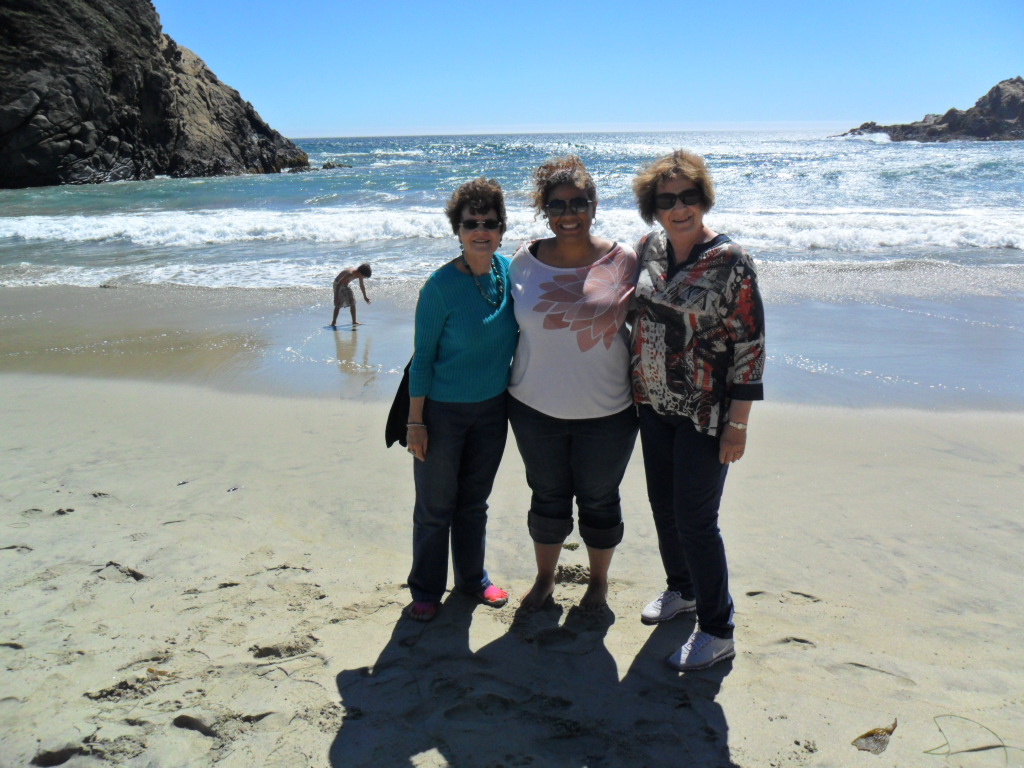
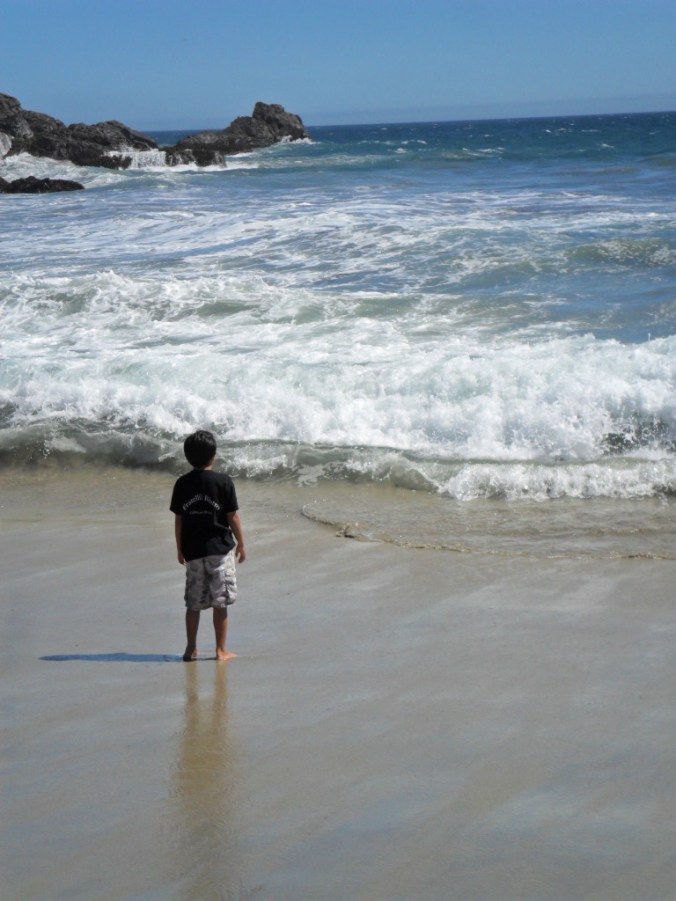
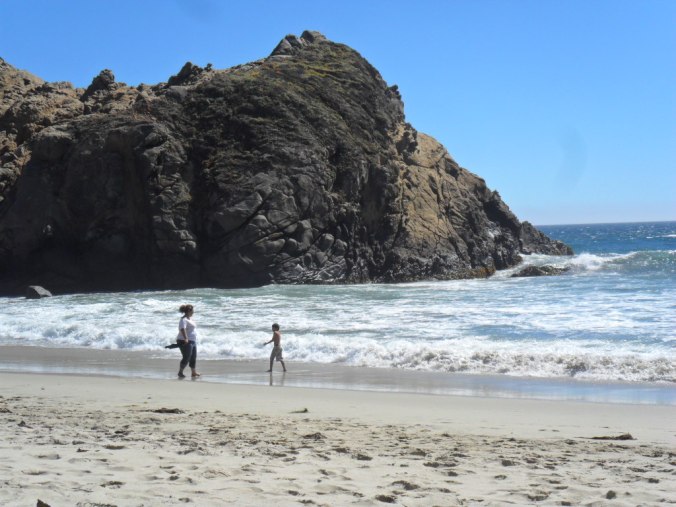
D’mitri became quite alarmed when Suzy told him many of the bushes along the path are poison oak. David informed us that a really wonderful beach existed down the road if we could get in. Off we drove to Julia Pfeiffer Burns State Park. They only allow so many cars into the park at once so we had to wait until someone left. It was worth the wait. This beach does not allow swimming; people have drowned here. Nevertheless, who cares; the drama of crashing surf, giant holes in rocks worn by water, and trees shaped by wind and erosion make it magical.
 You cannot go down highway 1 without stopping at Nepenthe. This restaurant’s views alone are worth going there, plus a gift shop full of finds from all over the world. The wine list and hamburgers finish off the list of why you must stop here if you are anywhere near Big Sur.
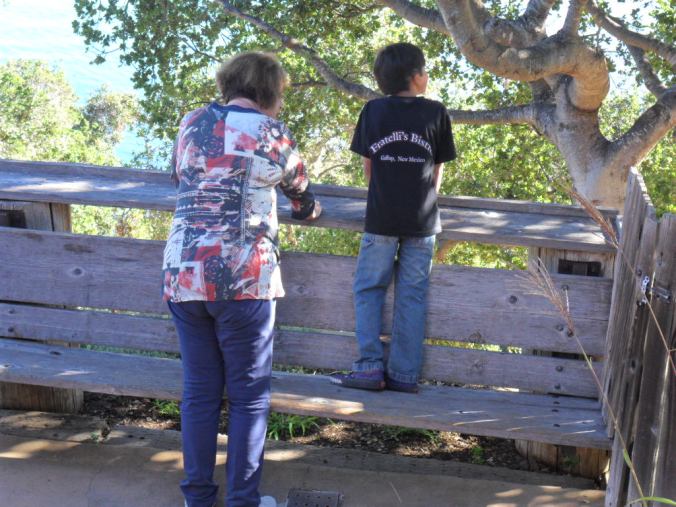
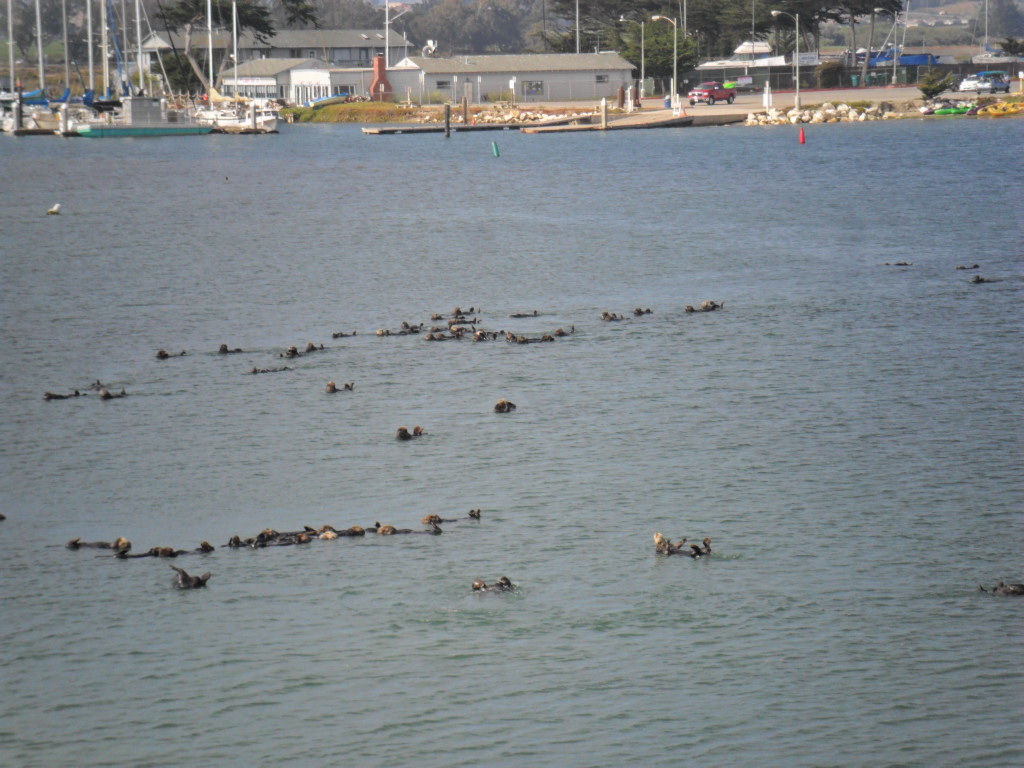
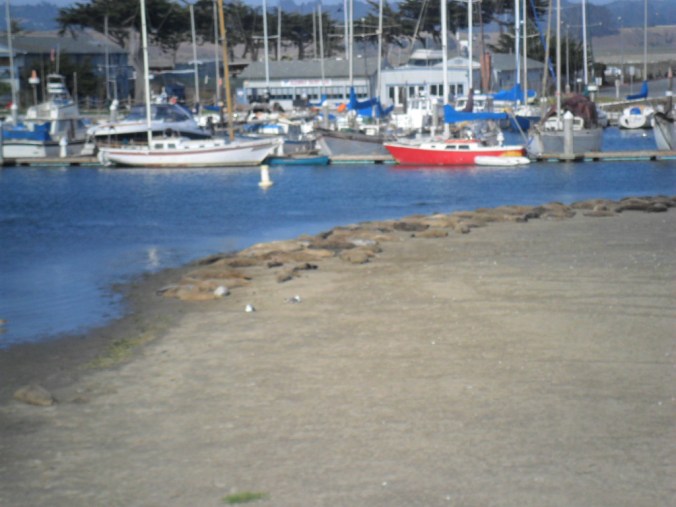
Time seemed to run rapidly; with only one day left, we decided to head to Moss Landing to see the seals. Much to David’s astonishment, not only did seals lay all along the beach, but a large number of sea otters were playing in the water, rolling over and over, splashing. David had been there many times and never seen anything like this. The sea otters delight the watcher with their playful antics.

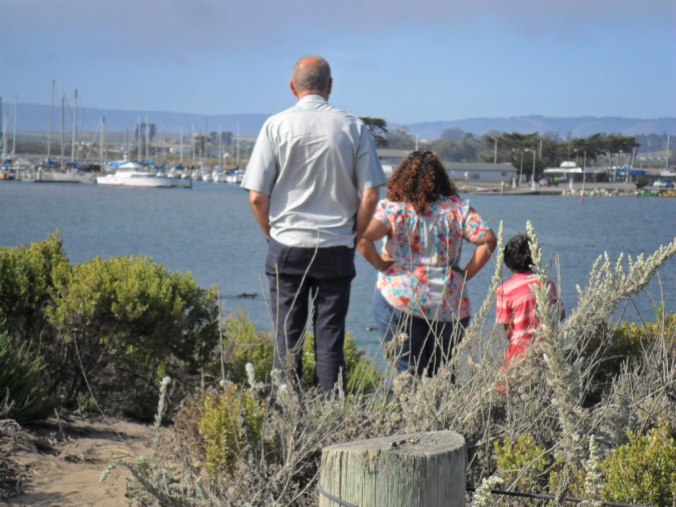
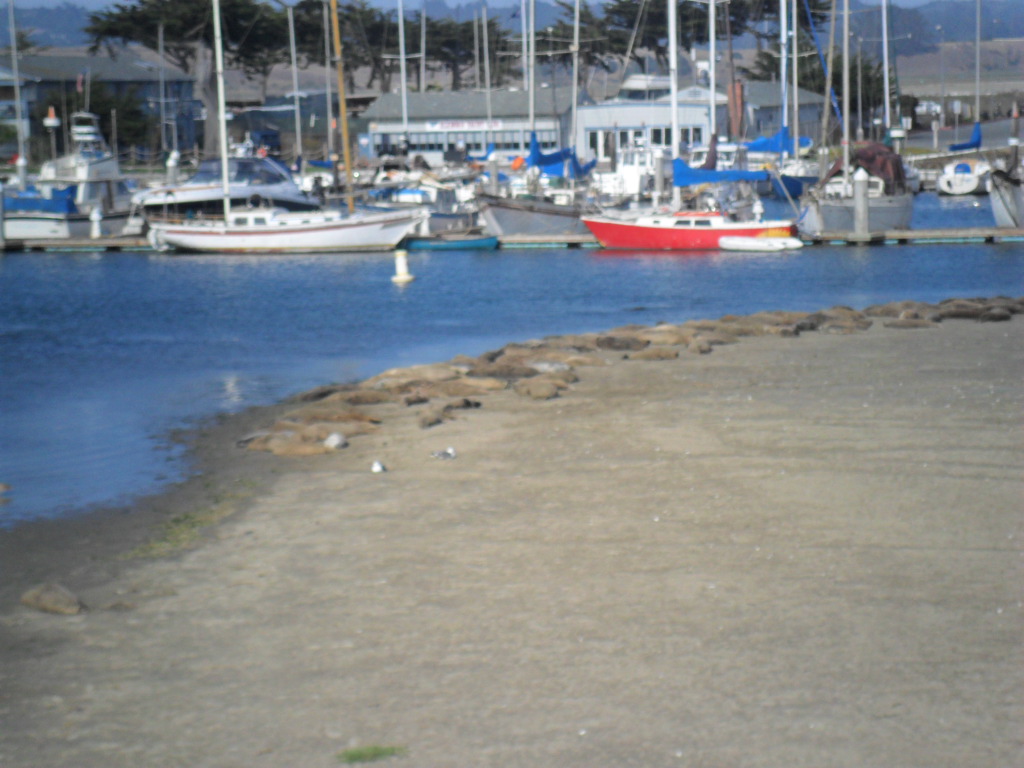
Unlike the ever playful sea otters, the seals just lay still like large rocks along the beach.
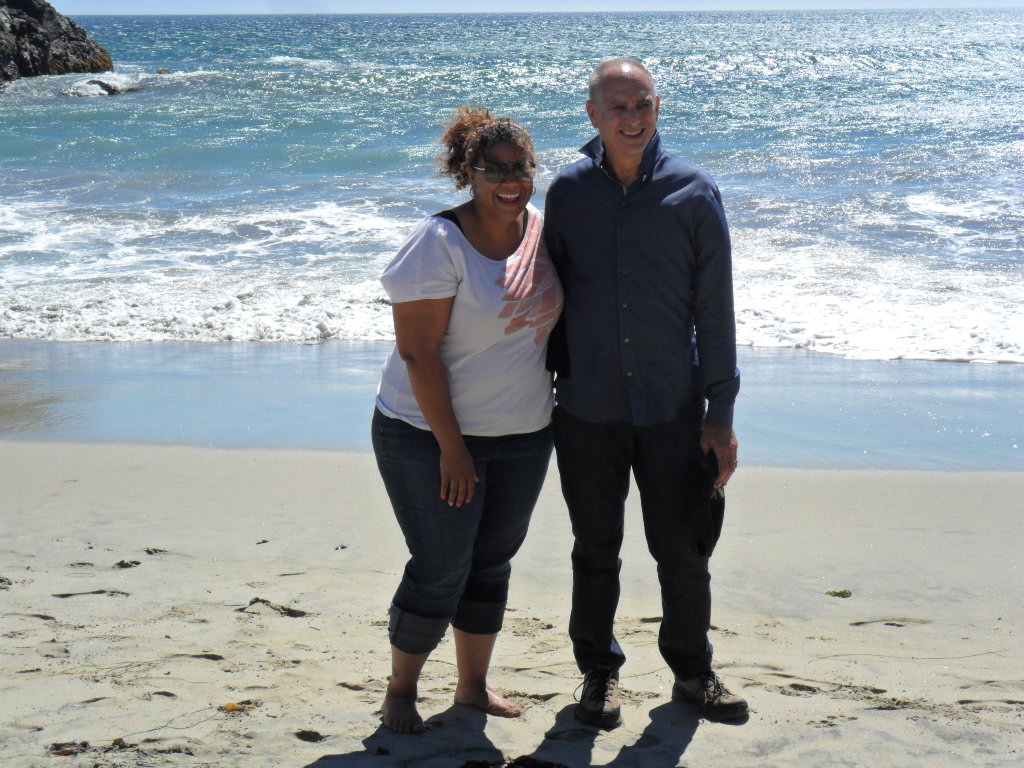
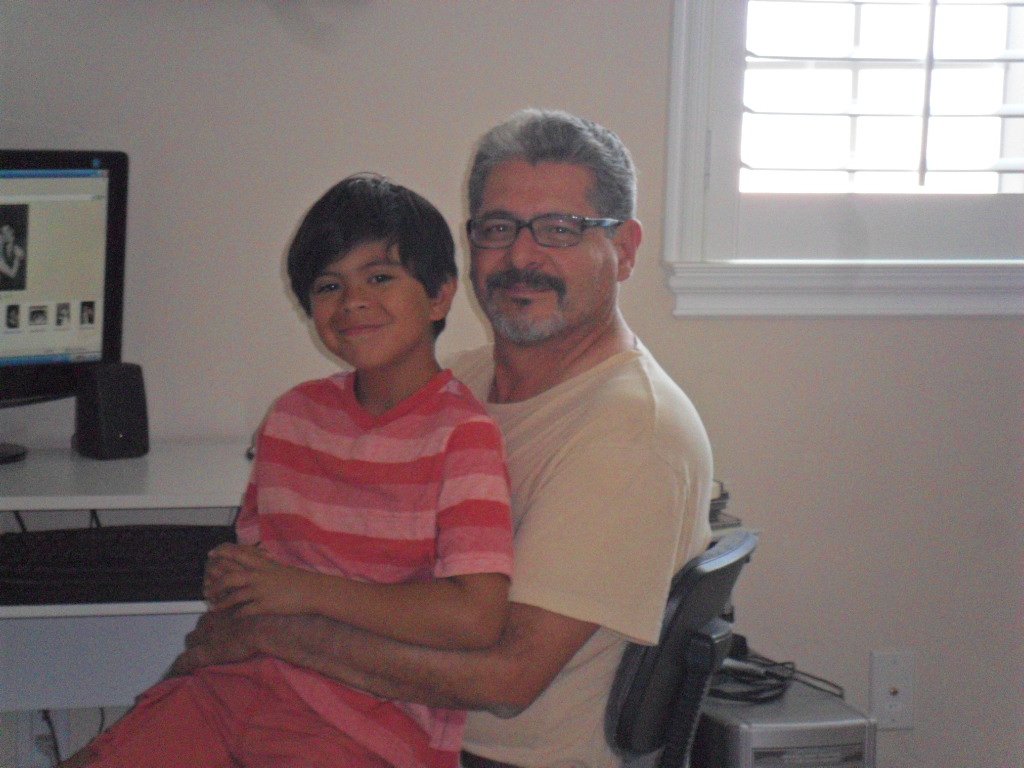
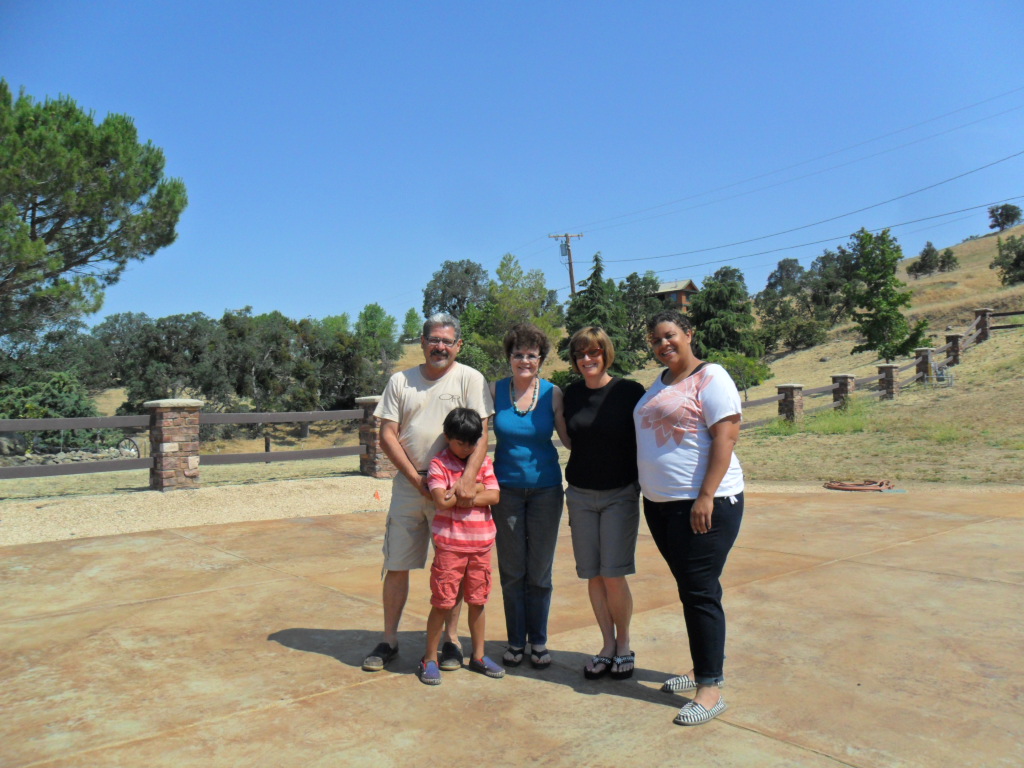
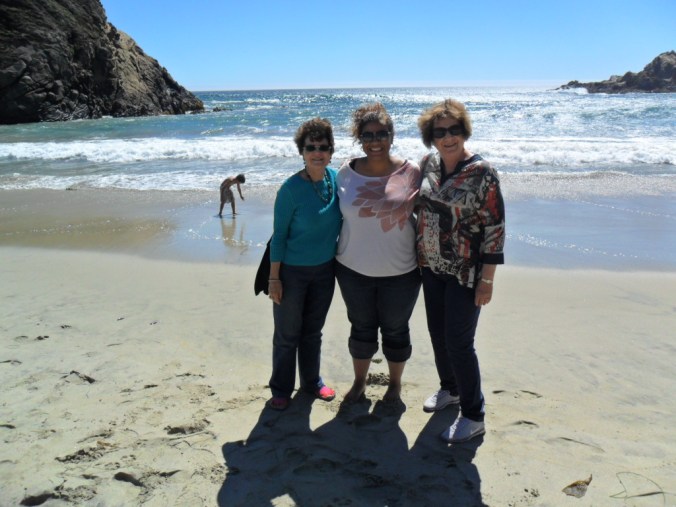
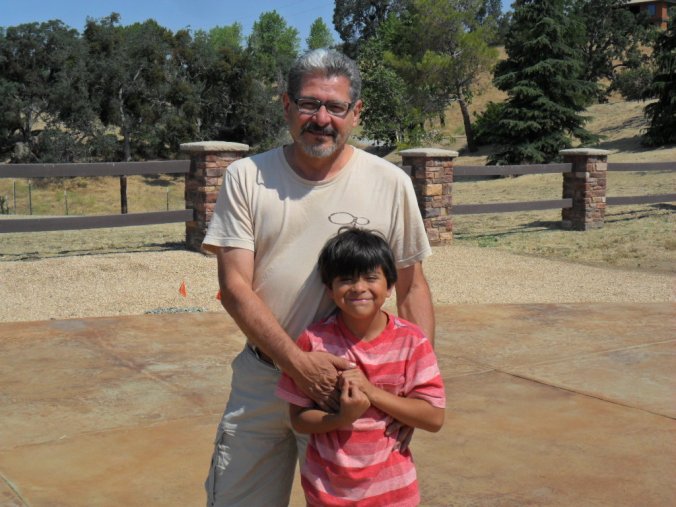
Early on a Saturday morning, Suzy and David fed us waffles to fortify us for the long drive to Flagstaff, nearly 700 miles. We crossed over to Salinas, then down 101 and finally through Bakersfield where we found a delightful, rather elegant Italian restaurant for lunch. The good looking waiter chit chatted and provided excellent service, three pluses when you go out to eat. As we cut across the middle of California, headed for I-40 eventually and neared Tehachapi, Ema decided to call D’mitri’s other grandparents who have a house there. When we went the other direction almost a week before, they had been vacationing in France. To our surprise, they answered and asked us to stop for the night. D’mitri’s excitement was contagious. He expressed special delight to have his grandfather to himself for hours instead of needing to share him with other grandchildren. The Herreros live on a hillside with a breathtaking view for miles. Unfortunately, the haze prevented proper photography so I gave up on the idea of capturing the endless panorama. However, this presented itself as the perfect opportunity for family photos.


The California desert never comes to mind when I think of California. I always fly to San Francisco or Oakland and visit friends or conduct business. Unlike the glorious red rocks and drama of southern Utah and northern Arizona or the saguaros of southern Arizona, the California desert maintains an endless pale tan color with only a few tiny plants. Thanks to air conditioned automobiles, you can drive for miles, escaping the intense heat. When we finally stopped at a Dairy Queen for a refresher, D’mitri and I stepped out of the car and were nearly knocked over by the hideously hot wind. In general, I like heat, but this seemed overwhelming. When we drove off, I asked Ema about the temperature. She looked it up on her smart phone, 118. The only truly beautiful I sight I saw (and I think nearly everywhere possesses some sort of loveliness) occurred when I drove over the mighty Colorado River, surrounded by the only green for miles. After this heat, the cool, green beauty of Flagstaff enchanted us. We settled into our hotel room, then drove off to our third Italian restaurant in two days, Oregano’s. Instead of the usual coloring books, puzzles, etc. offered to children, this place gives them pizza dough to mold.

As we drove home, I noticed how terribly dry it is once we dropped out of the mountains around Flagstaff. Off and on we crossed areas where there had been enough rain to create a pale green. Apparently, it had not rained west of Albuquerque because it still looked like brown winter just as it had eleven days before on the first day of the trip. East of Albuquerque we encountered such an intense downpour with some hail that I could not see to drive. I pulled off the road and waited. From Albuquerque to Amarillo, in the eleven days we were gone, it had rained enough to make the mountains, foothills, and high plains a lovely soft emerald. We had missed the hot, 100 plus week and came home to rain and cooler weather that lasted several days. In one week, the weather had changed from record highs to record lows, the typical extremes one learns to live with on the Llano Estacado.