#JoinThePack: Will you howl fight for a future with wolves? Ooowwwwoooooooooooooooooooooooo!!!!!!


As a fan of wolves and other predators, e.g. pumas, I want to share this.  Predators help maintain a healthy ecosystem.  Also see my other posts about wolves.

The wolf’s return to Yellowstone restored an ecological balance which had been lost. Watch the animated film, “The Fable of the Wolf.” Will you howl + fight for wolves? Ooowwwwoooooooo!

Source: #JoinThePack: Will you howl fight for a future with wolves? Ooowwwwoooooooooooooooooooooooo!!!!!!

Earth Day


Sometimes when you love nature, the environment, wildlife, wild places, it is easy to become extremely discouraged.  News about the dramatic increase in poaching in Africa condoned by some governments there does little to help.  Data illustrating how the United States is a hub for wildlife trafficking, the push to kill wolves, big oil’s persistence to explore and open fields in the Arctic and other more delicate environments, water waste, climate change denial, a seemingly endless lists of negatives, can make one think about giving up.  The Colorado River is under siege.  The drought ridden Southwest of which I am a part has too many people fighting over too little water. The EPA just approved a new pesticide known to kill bees which are already disappearing, posing a huge threat to our food supply (see a previous blog highlighting how our food supply depends on these same rapidly disappearing bees).  Another mountain top removal coal mine is being proposed in Kentucky and it is next to a school.  The US Army Corps of Engineers issued the permit.  I could probably spend this entire evening adding to this list of negatives.  I could give up, but I never do.  I keep looking for positives and for changes created by people who care.


In honor and praise for those who care and for the positives occurring, I am creating another list:

-Ralph Maughan, an Idaho native, continues to work on the saving the pristine wilderness of the River of No Return Country.  He wants to save wolves in a state where politicians have proposed a law to kill 60 per cent of the state’s wolves.  The Idaho Department of Fish and Game plans to professionally exterminate them so there will be more elk for hunters.  No, I did not make this up.  Maughan says, “the wilderness is supposed to be a place where large carnivores, like wolves, grizzly bears, and mountain lions can exist as they did before humans arrived.”  Now the agency wants to come into a proclaimed wilderness to suit their own purposes. This fight continues.

-In Hawaii many housetops and businesses now glitter with solar panels.  Isaac Moriwake’s consumer advocacy efforts support consumers who want to generate their own electricity through clean energy.  Solar panels totally cover the roof of the new parking garage at the Kapl’olani Medical Center in Oahu.  Hawaii has been able to create a clean energy framework with considerable solar success in spite of traditional utilities’ efforts against it.

-In more remote places like Nepal the WWF helped locals replace wood burning stoves with biogas burners so they would not have to cut down their forests for fuel.

-As Myanmar develops economically and joins the international stage, huge areas of prime forests and native animals are at risk.  Conservationists work with the new government to create national parks and other areas to preserve Myanmar’s rich biodiversity and to listen to local wishes as to how to preserve their valuable natural heritage.

If I wanted to stay up half the night, obviously I could add more and more to each list.  And it is easy to wonder just what can one person do.  For starters, use less water, get rid of all the junk mail that arrives–a later post will describe methods to do this–so it will not add to the landfill and the demise of trees, do not buy furniture made from slow growing tropical wood, adjust your thermostat to warmer in summer and cooler in winter, carry your own bags so you won’t have to use the plastic ones at the store, become politically vocal about conservation.  If you wonder is all this effort worth it, take a walk in the woods, along a beach, through the jungle, on a desert path; fill yourself with wonder.


Blackwater Draw–Part One


Annually, I make a pilgrimage to this ancient place where people hunted on the shores of a lake nearly 12,000 years ago.  It continues to be the oldest evidence of human habitation in the Americas.  For a large part of the twentieth century it was a gravel pit.  The gravel mining created both positive and negative consequences.  Without it, the bones of giant bison, mammoths, dire wolf, saber toothed cat and camels might never have been discovered at all.  However, because the owners of the quarry refused to stop mining, some portions of the site were destroyed by big swoops of the excavator machines.  Frequently archaeologists worked simultaneously along with mining operations, continuing within sight of each other.    Various groups, including some private individuals, attempted repeatedly to buy the site to save its precious stash of bones, artifacts, and ancient wells.  The owners refused to sell.  Finally, in 1978, Eastern New Mexico University purchased the site and continues archaeological excavation there.  They also run the nearby museum adjacent to the university football stadium.

If you expect something wondrous and grandiose, you will be severely disappointed.  A small building houses a teensy museum, restrooms, a few sweat shirts and posters and books for purchase.  An individual sits by the door to take your meager entrance fee–at most five dollars–and answer questions.  These individuals explain they are majors in disciplines related to the site, archaeology, paleontology, anthropology, that sort of thing.  A simple gravel trail traverses the site and a smaller trail goes to an ancient well–16 have been found at or near the site–and to a dig inside a building where you can observe the layers unearthed, which group of people left which type of artifacts, and actual bones of mammoths, giant bison, and other animals from the end of the last Ice Age.

People react differently to such sites.  I always remain entranced, overwhelmed, reflective, thinking to myself, “I am walking where people walked and hunted and went about their lives more than 11,000 years ago.”  The most ancient evidence of people is labeled Clovis Man–Clovis, NM, is just up the road.  They never found human bones of these people here , just their spearheads stuck in the ribs and shoulders of mammoths which stood 15 feet at the shoulders.  The people who came later made a different type of spear, called Folsom points.  These people, Folsom Man, lived later by 1-2 thousand years.  Another site, called Folsom, is near the tiny town of Folsom, NM, farther north at the edge of the mountains.  This site is on private land and tours are available only twice a year.  Although I visited the town last year, I have not visited this site.  Other people arrived later and although the collection is smaller, their spearheads remain available for viewing at the nearby Blackwater Draw Museum on the main road between Clovis and Portalis, NM.

When I look at the list of animals who lived here at the end of the last Ice Age, I feel amazed because they include both camels and horses as big as our horses now.  Both of these became extinct as did the saber toothed cat with the humongous canine teeth and the dire wolf.  Giant sloths lived until modern times but nowhere near New Mexico.  How could all these animals live here?  It was wet and green then.  Until the last couple of decades, bodies of water of varying sizes have drawn animals and people to this area.  Giant fields of irrigated corn and dairy farms lowered the water table sufficiently to eliminate any evidence of water.  At the time of Clovis Man a large lake covered the site.  Later, during a 3000 year drought, people dug the ancient wells to reach water.  Because this remained the only place for hundreds of miles with a supply of water, people came.

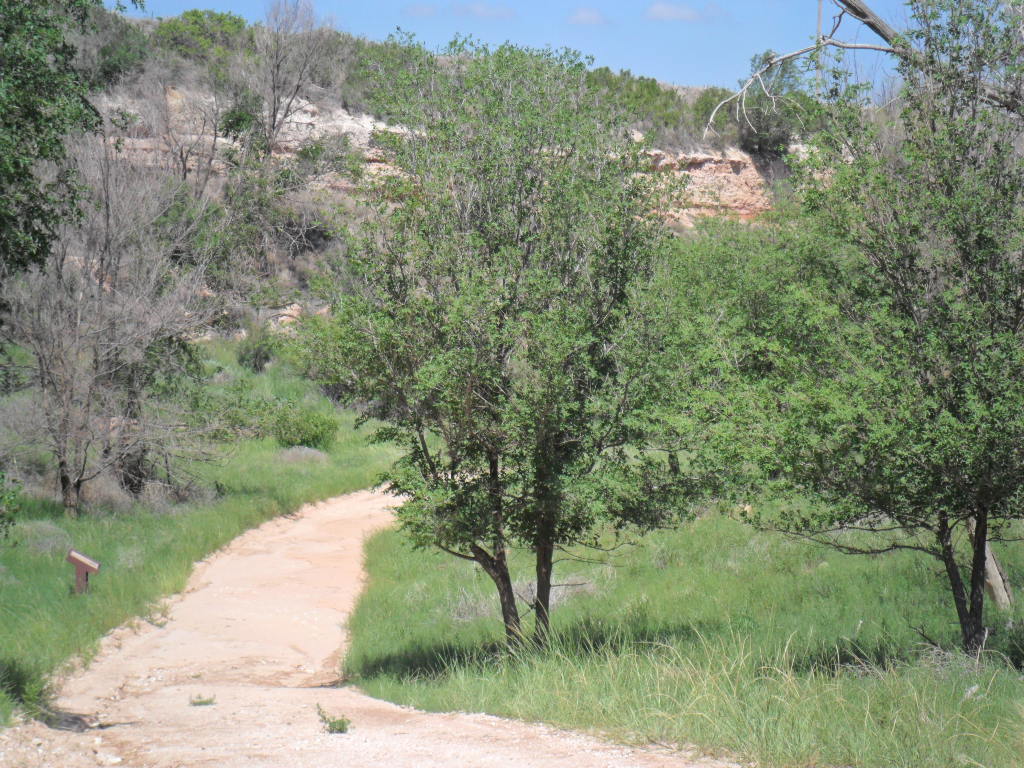
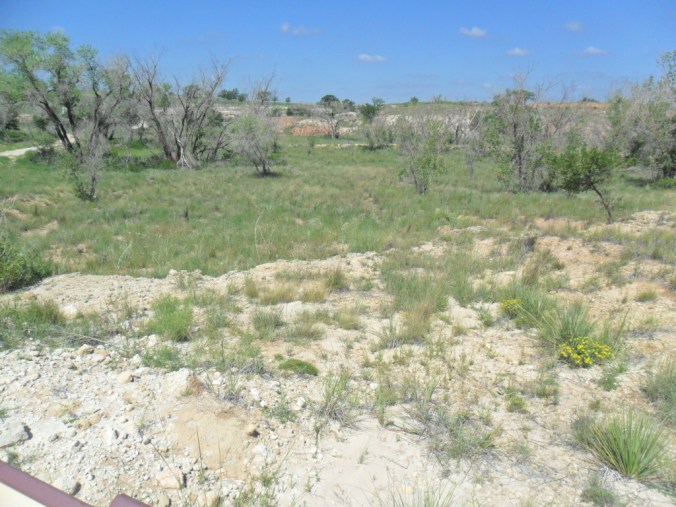
The trail begins just to the northwest of the tiny building and goes along the top for a couple of hundred feet before it drops down into the gravel pit remains.  The gravel was below all the layers containing human artifacts and ancient animal bones so the pit is wide and deep.
SAM_1302

SAM_1301

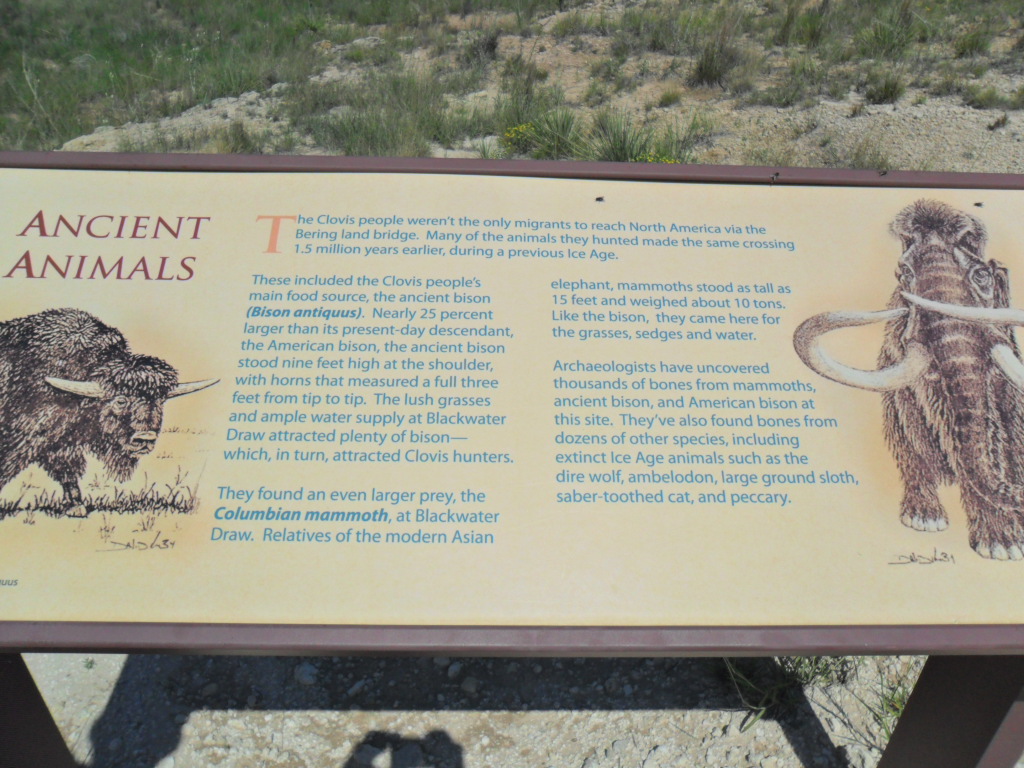
If your sight is good, you can read this.  The primary source of food for Clovis Man, giant bison and Columbian mammoths, came here for the water.  Archaeologists  theorize that hunters often killed these huge animals while they were in the water where it was more difficult for them to escape and move quickly.  In one place on the trail, evidence of a five bison kill complete with spearheads makes one think just how difficult and dangerous this hunting activity must have been.  I stand there, think about my own 5’4″ height, and wonder what it would be like to have a Columbian mammoth close to me.  Doubtless many died from injuries during such activities.
SAM_1304

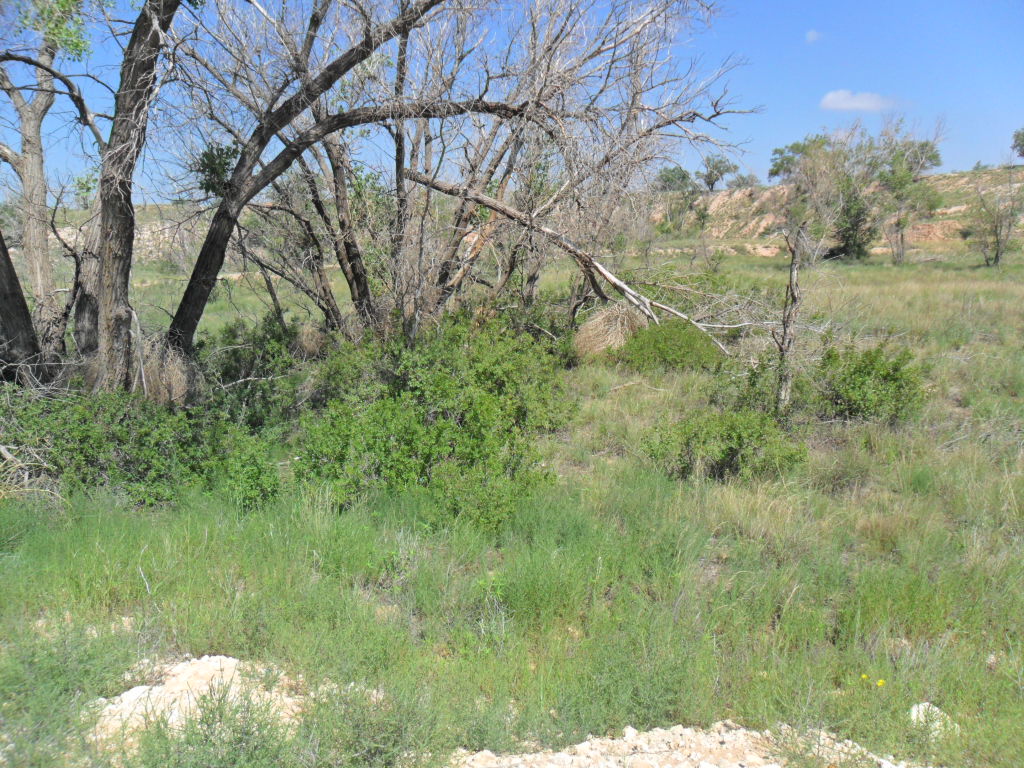
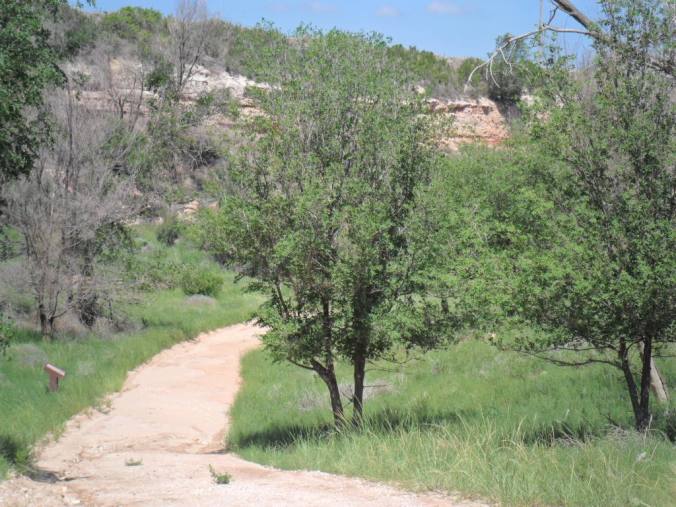
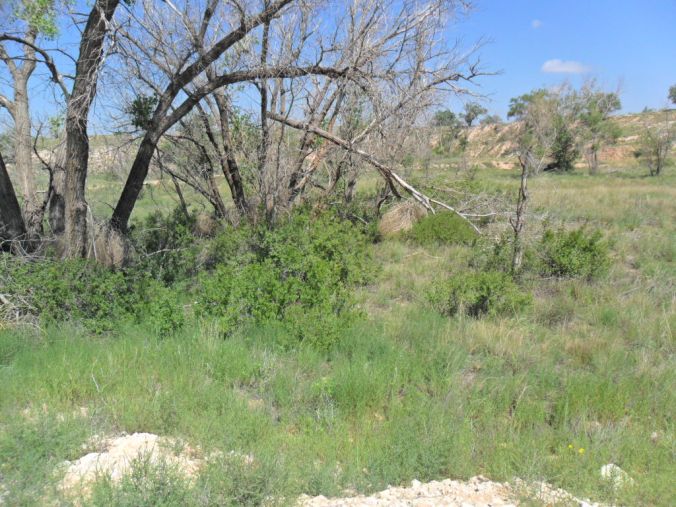
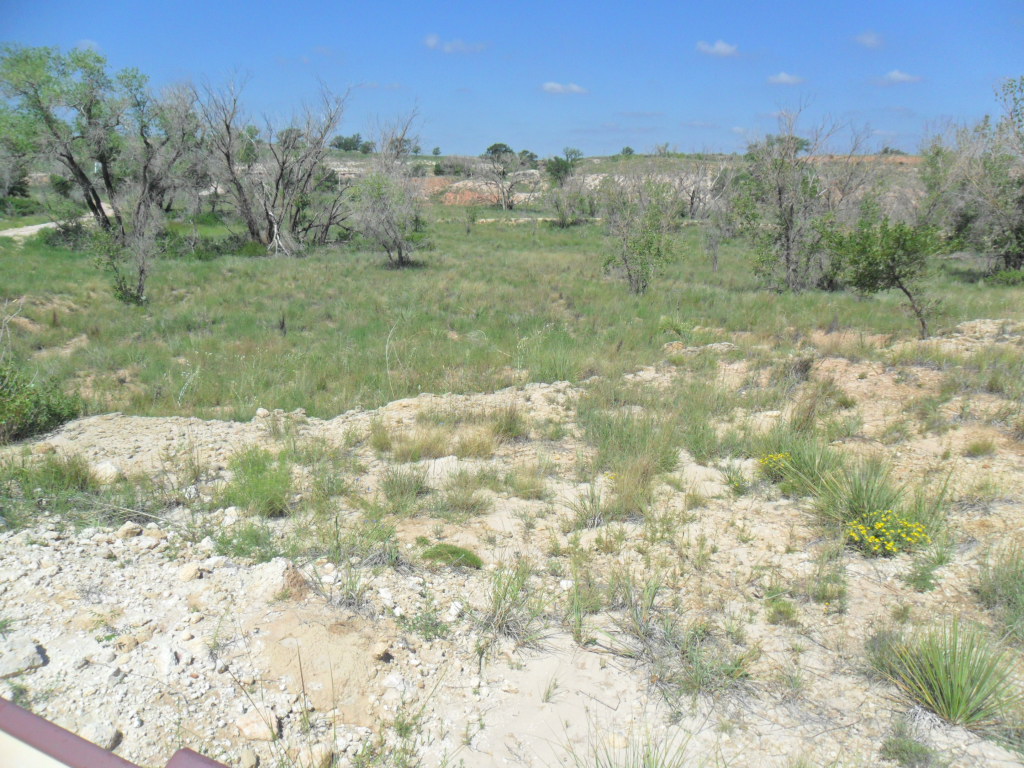
The train meanders along the bottom of the gravel pit.  This year, plentiful rain grows abundant grass.  During the last several years, little rain has fallen as evidenced by all the dead trees and bushes scattered around the site.  Normally, this area is semiarid with less than 18 inches of rain per year.
SAM_1303

If spectacular scenery appeals to you, do not go here.  Most of the bones and artifacts were found in the layers at the sides of the pit.  As you walk the trail, markers indicate the location of findings.  Few human remains are found at such sites because these were not permanent settlement places.  Ancient peoples roamed the land in search of water and food.
SAM_1305

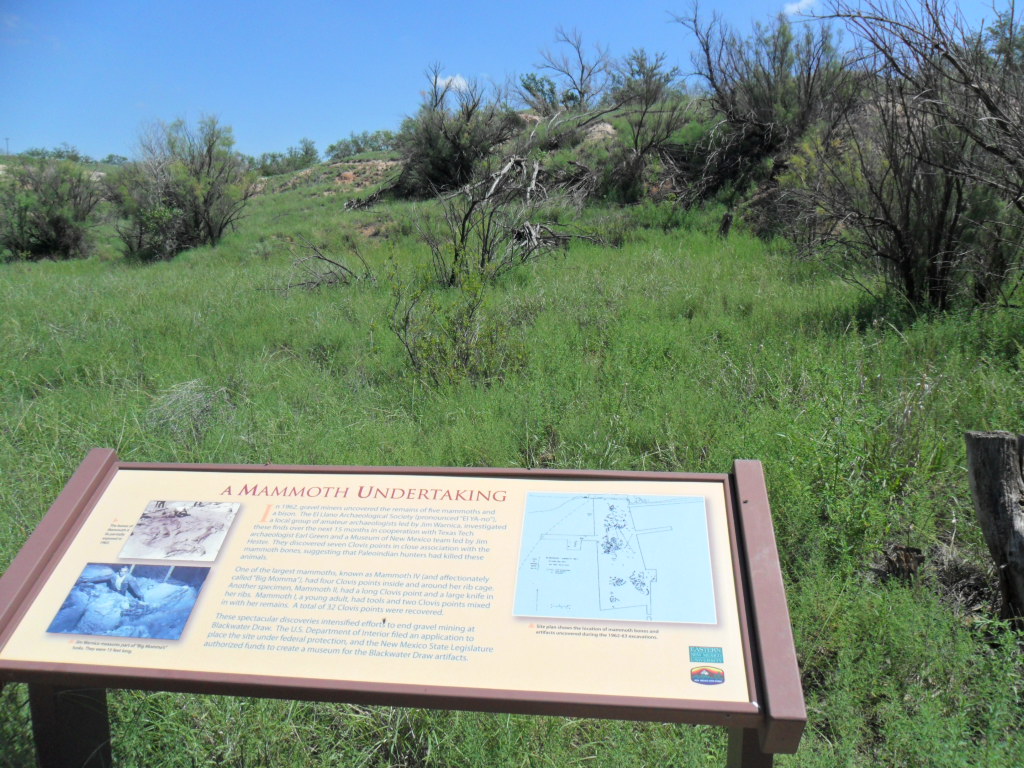
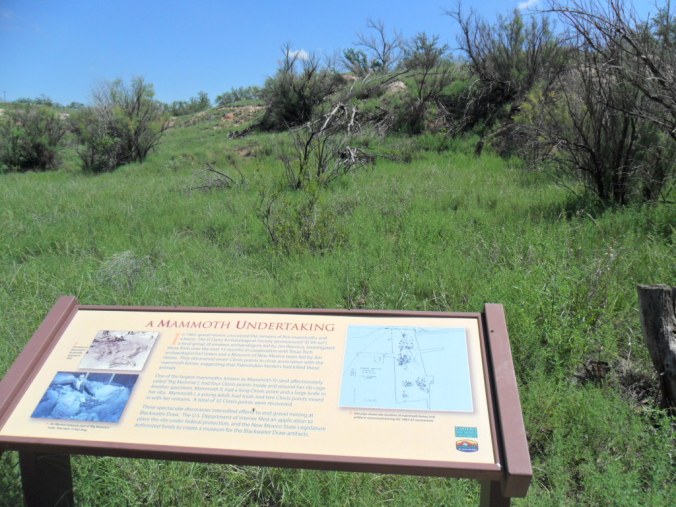
Signs, such as this along the trail, illustrate different places where specific bones and artifacts were found.  They also explain the different types of artifacts, their specific uses, and the history of the site.  Maps, like the one on this sign, help the viewer hone in on specifics in relation to where one is standing.  The photo illustrates archaeologists in action during site digs.
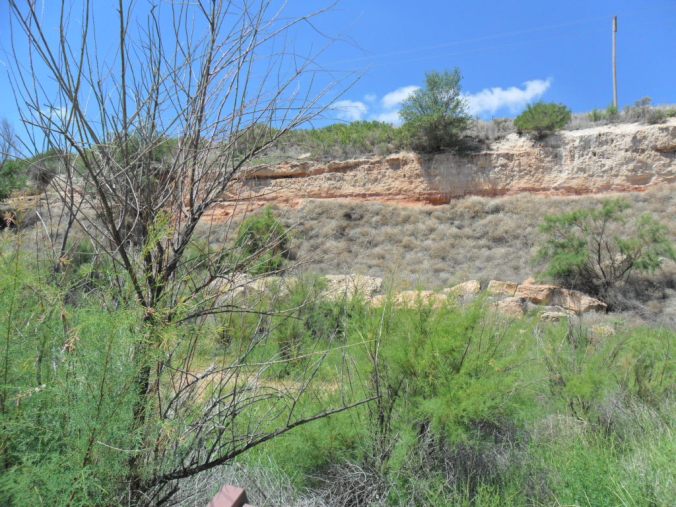
SAM_1307

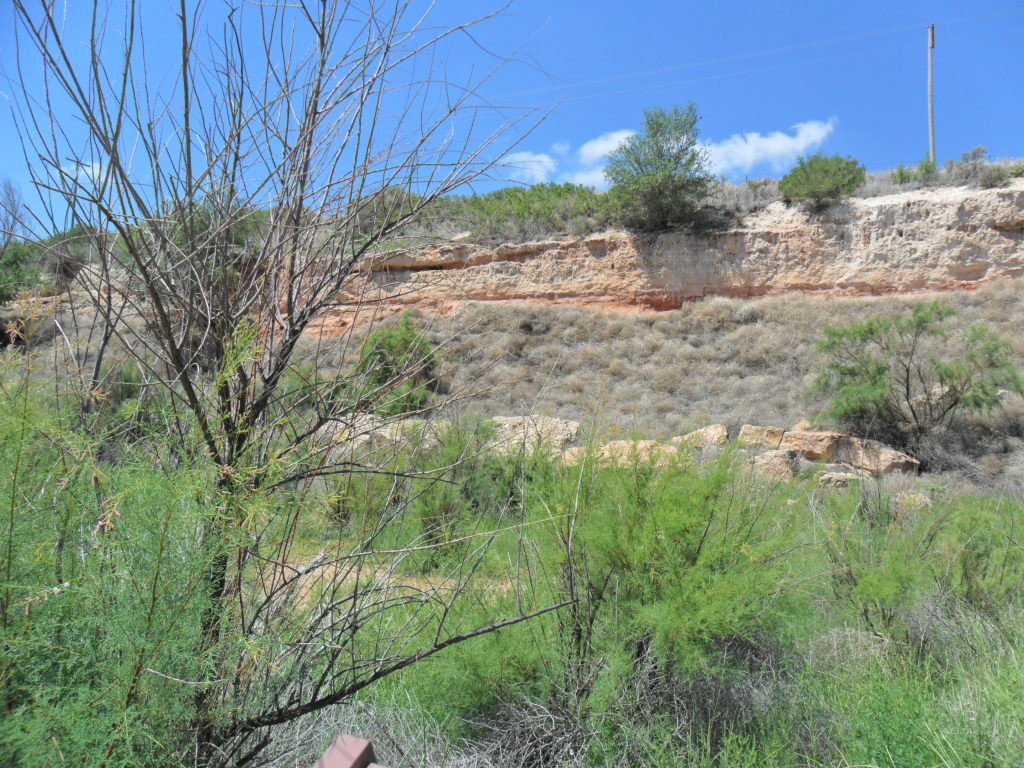
Cliffs, like the one here, surround the site.  In these small cliffs each layer indicates a different age of human activity by not only the type of sediment but also by the type of artifacts and animal bones found.  Just beyond this particular cliff at the west edge of the site, irrigation pivots run in a huge corn field.  The grey at the bottom of the cliff indicates an immense pile of dead, dried, tumble weeds.  This is dry country.
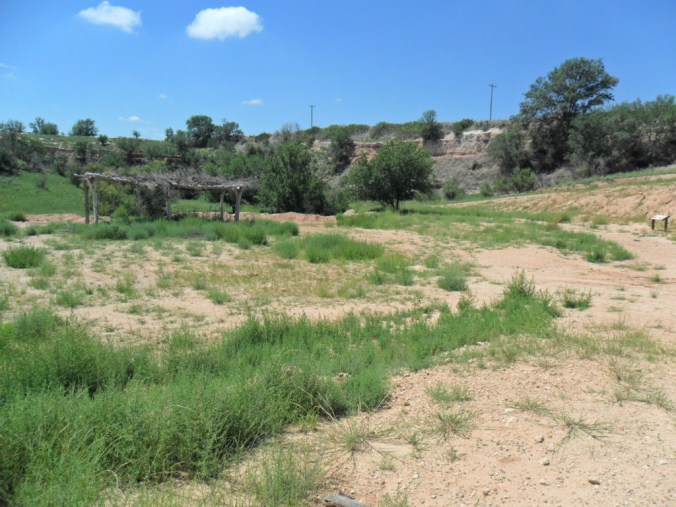
SAM_1308

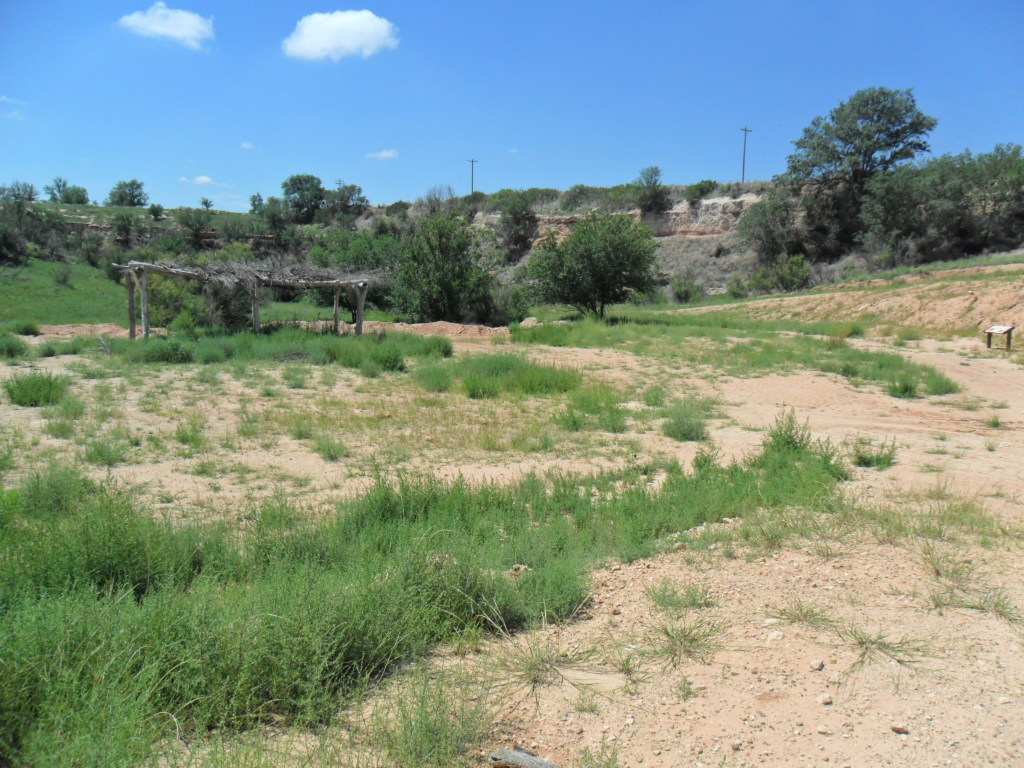
Approximately three fourths through the trail, the site mangers have erected several structures.  This one is the most primitive.  Others are modern with picnic tables and in one place I saw a giant sand box.  Guessing, I think it must be used to illustrate how one sifts through layers of soil to carefully remove spearheads, bones, pottery, etc.  This is the perfect place for a field trip, not too long, but full of geological and paleontological information.

I go here usually once a year.  If you ask me why, I may articulate something about how it has the oldest artifacts and bones found in North America.  The real reason??  I am not quite sure.  This place fascinates me, connects me with something ancient and wondrous, something undefined and mysterious.
In Silence


Today it warmed up considerably after some very cold weather.  I love the outdoors but  not the cold so really find cold winter weather confining.  While cleaning up a pile of brush, I noticed how quiet it was, no birds singing, no sounds, nothing  except an occasional soughing of the junipers during a wind gust.  Some friends stopped by and immediately commented on the quiet.  It suddenly struck me just how different this is from the rest of the year, especially spring and summer with endless birdsong and raucous insect symphonies.  At dusk when I finally went inside, I sat down and wrote this poem:

The deer meander along the canyon rim,

stop, browse bare bushes

in silence.

The bobcat climbs the canyon wall,

surveys his rugged realm

in silence.

The coyotes run above the rim,

watchful, wary,

in silence.

Now, in January, the birds stop to drink

from the blue birdbath, bobbing

in silence.

At night, the stars and moon

illuminate my sleep

in silence.

Canyon in Winter


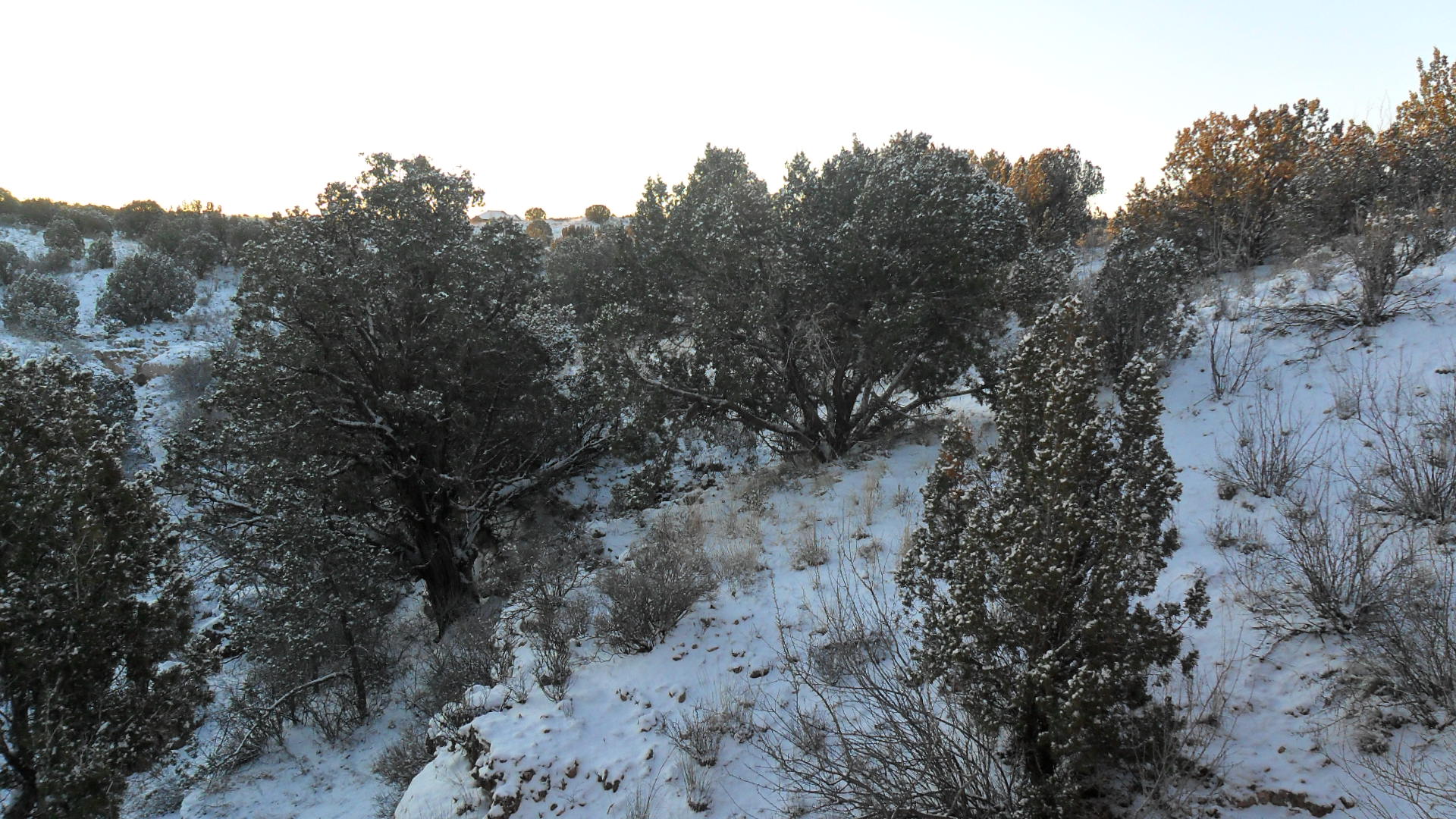
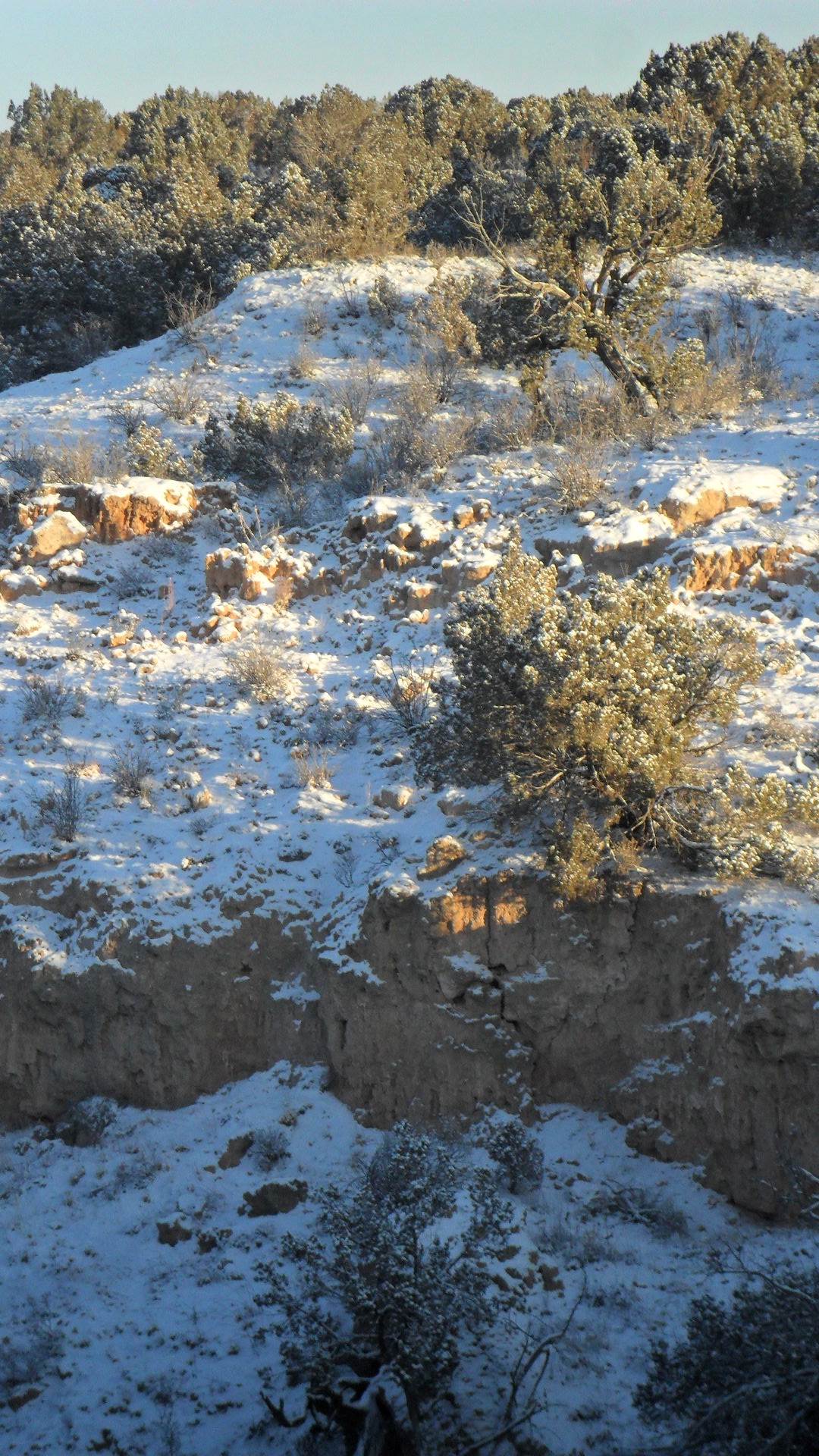
SAM_0999SAM_1007SAM_1006

Winter stillness lies over the canyon:

a blanket of white cold.

Windless, a rarity in West Texas.

Three colors:

green juniper

adobe rocks

crystalline snow.

Suddenly,

I see reddish brown rock,

cat shaped,

large,

outlined against the snow.

I wait,

I watch.

It moves,

dashes up an  arroyo,

disappears.

Bobcat?

Puma?

Pumas–III


This is the third in a series of poems entitled Pumas.  If you have not yet read the first two, I suggest you scroll down and read those first.

I want

to walk with you

in my dreams

scream your screams

feel your blood

rushing

your heart beat

mine

soft golden fur

wound in my hair

your amber eyes

glowing

through my brown

death defying

together walking

moonlit

wild

free

Pumas


I have previously mentioned that I am taking a poetry class with Lorraine Mejia-Green through the Story Circle Network.  To date we have read poetry by Mary Oliver, Lucille Clifton, Naomi Shihab Nye, and Joy Harjo.  Clifton has written a very interesting series of poems called Foxes.  Joy Harjo’s most famous poem is about horses.  My obsession seems to be pumas even though I do love horses.

Puma I

                                                   My neighbor walked out her door,

                                                    found a puma lying on the lawn.

                                                    She arose and ambled off.

                                                    At night when I open my gate

                                                     I wonder if puma lurks

                                                     behind the cedar tree.

                                                     My daughter dreams puma dreams:

                                                      A puma chases her up a tree

                                                     There are no trees here big enough to climb.

                                                     A Zuni puma fetish guards my sleep.

                                                     I run with puma

                                                     Night wild

                                                     Free.

                                                     I scream and howl

                                                     Moonstruck

                                                     Bloodborn.

                                                     I hike the canyon

                                                     Stroll around my house

                                                     Look for puma tracks.

                                                     I see none.

                                                     I would rather die by puma

                                                     than in a car wreck.

Puma II

                                        I watch for eyes, blue changing to amber and back.

                                        I put my palm, fingers stretched to measure, into the footprint.

                                        Too small, bobcat.

                                         No puma.

                                         My thin body squeezes between the rocks,

                                                           climbing quietly down the cliff.

                                         Watching, listening, searching.

                                          No puma.

                                           Pale amber rushes across my vision line.

                                           My heart quakes.

                                           I watch; I wait.

                                           It is Isabella, a golden whir chasing rabbits.

                                           No puma.

                                           At sunrise, I walk the rim.

                                                          watching.

                                          At sunset, I walk the rim,

                                                           waiting.

                                          At night, I walk the rim,

                                                           dreaming.

                                           No puma; not yet.

Costa Rica 5, Fauna


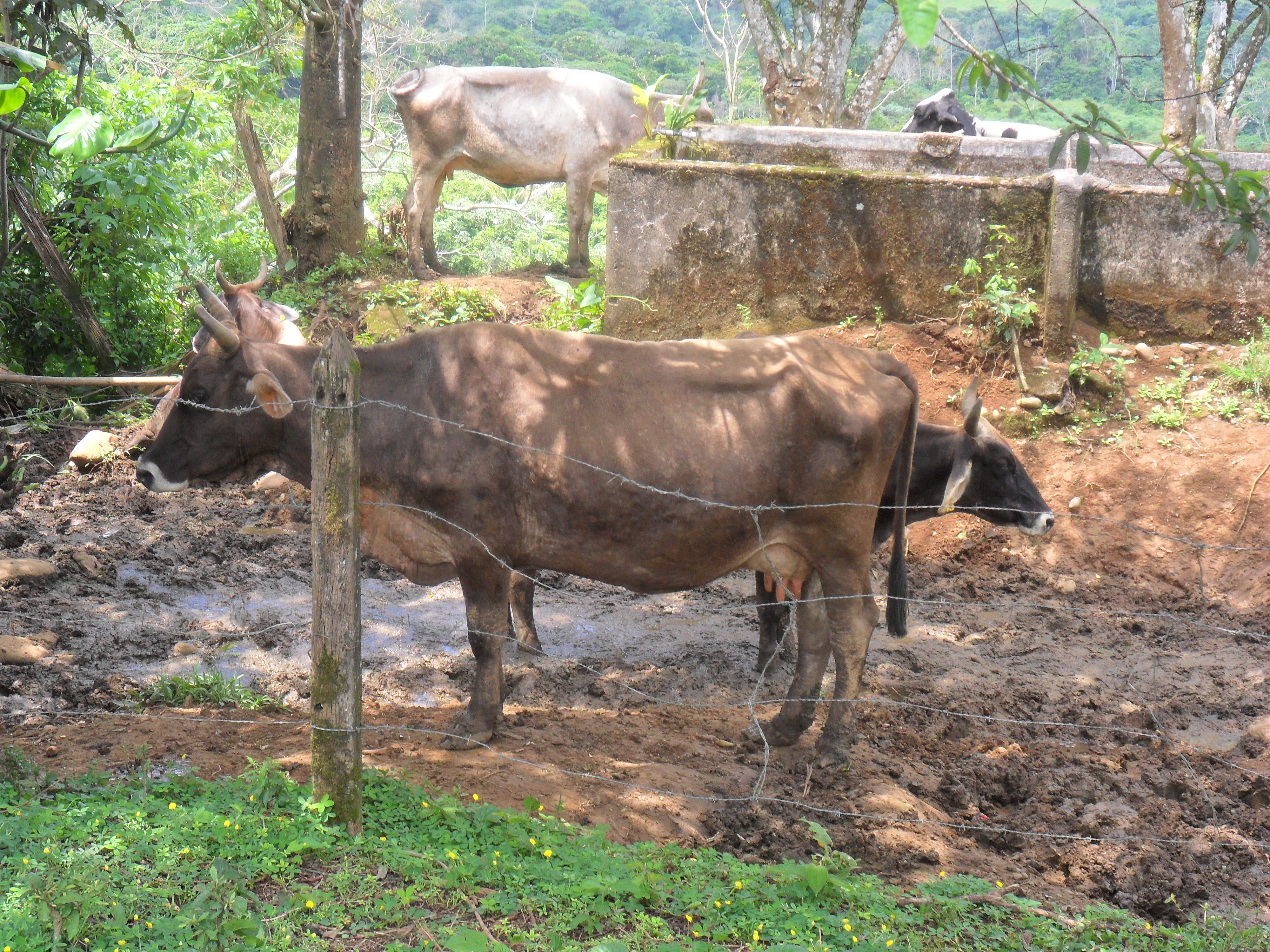
Costa Rica continued to surprise me.  I did expect some of the animals, photos of which are posted below,  but did not expect so many cattle, especially the dairy cattle, including Jerseys, Guernseys, and Holsteins,  that populated the steep mountain slopes.  They grazed everywhere up to their tummies in grass on even the steepest mountainsides.  I kept wondering how they learned to balance themselves and why they did not fall over, catapulting down the mountain.  Everyone in the group commented on the fat, happy cows.  Such abundance resulted in fabulous steaming milk for morning coffee, rich cheeses, and the creamiest ice cream imaginable.

A cow pen near the top of a mountain on the Caribbean side next to the restaurant that sold cheese and where I ate the raw turtle egg.  Most of the cows roamed free up and down the mountainsides.

In the lowlands on both the Pacific and Caribbean sides of the country, Brahma cattle relaxed or grazed in the lush grass.  It reminded me of the landscape near Veracruz, Mexico, where I lived many years ago.

The most common meat besides fish, most of which is talapia, is chicken.  Near the mountain top where the Jersey cow above was photographed, I saw a huge shed and when I asked about it, was told it was a chicken farm. However, pork is frequently served as well and occasionally beef.  I took the following photograph at a small place on a dirt road.  We stopped there to drink coconut water.  The spotted, pregnant pig was due soon.  However, the fate of the black pig remained less lovely–food.  Their girth resulted from eating coconuts; they constantly gorged themselves.

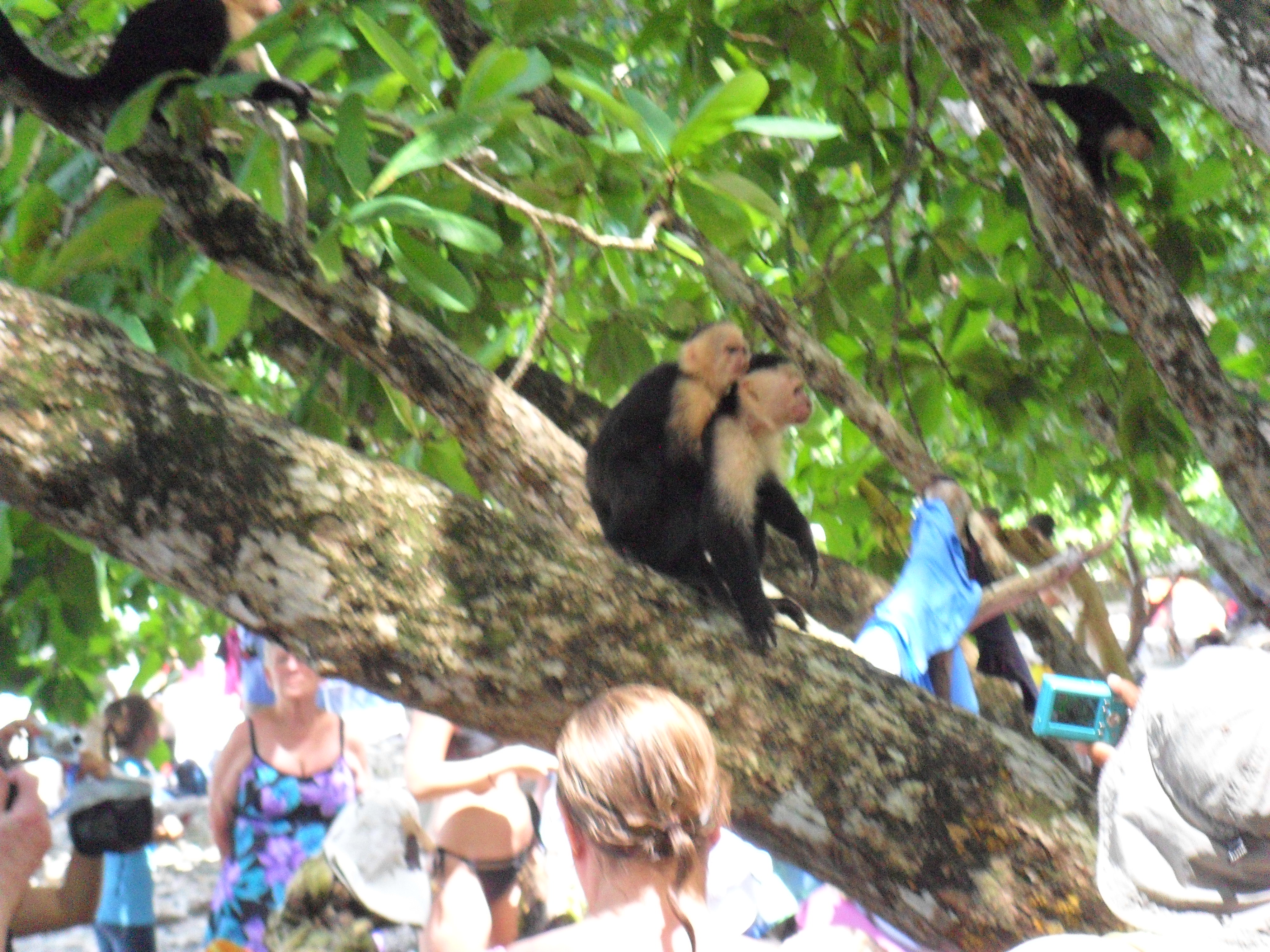
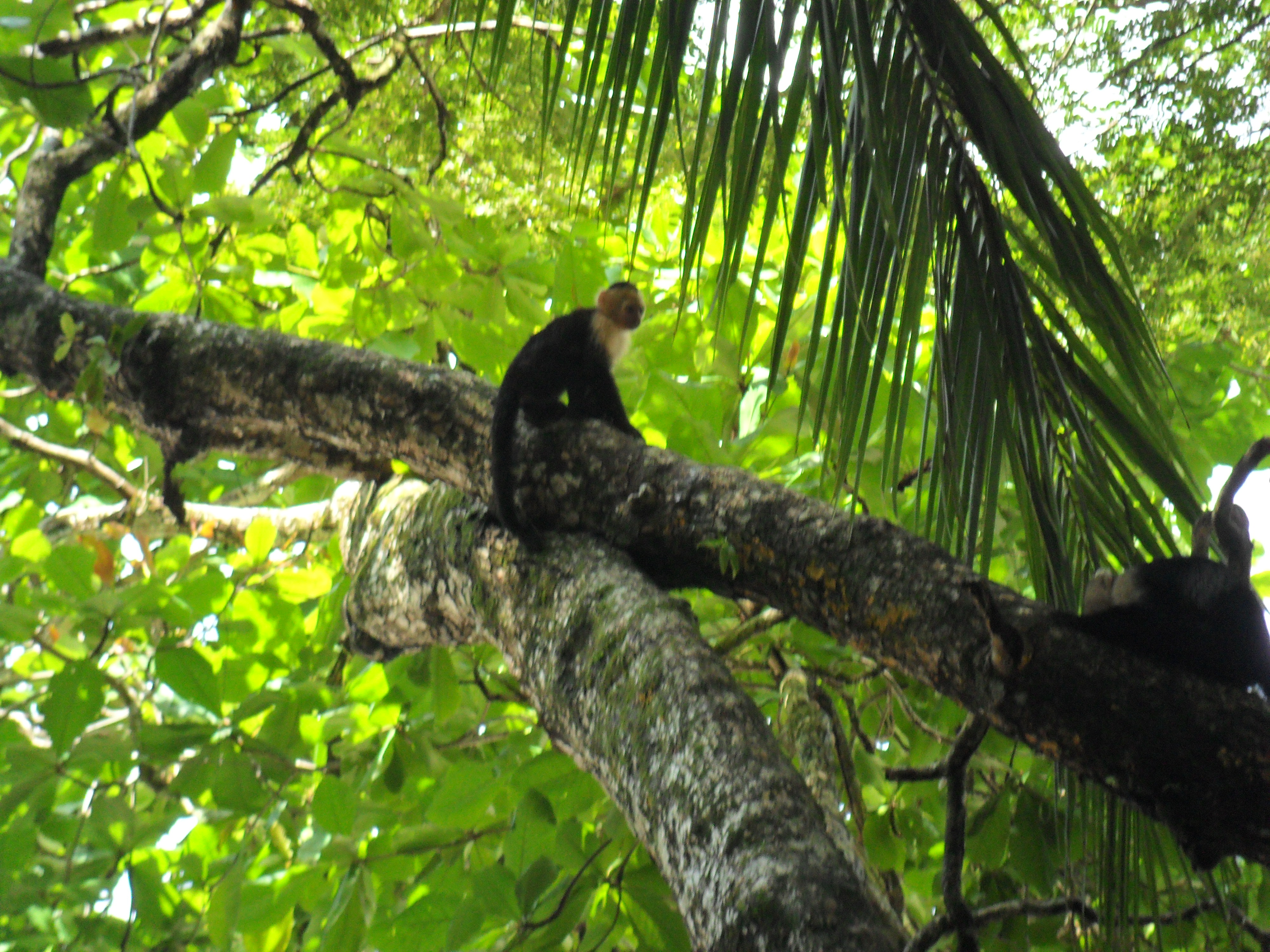
Birds abound, from the protected scarlet macaws on the Pacific Coast to tiny hummingbirds.  Hundreds of species I had never seen before and many I had seen rather often like various egrets and herons. And then there were the monkeys which I did expect to see but found difficult to photograph with my ordinary camera.

These white faced monkeys roamed everywhere near the beaches at Manual Antonio National Park, begging for food and if that did not work, actually stealing it.

While the white face monkeys remained highly visible, the howler monkeys could be heard easily but were much harder to locate because they tend to stay high in the tallest trees.  Without a good telescoping lens, this was the best I could do.

Look for the dark blob in the middle of the photo.  They also move fast so hard to locate and follow and even harder to photograph under those conditions.

Just as we arrived, walking, at the entrance to Manuel Antonio, a downpour began.  Not fond of drenchings, I stayed back, hoping it would stop, and suddenly saw a small sloth, the grey spot in the nearly leafless tree in the middle of this photo.

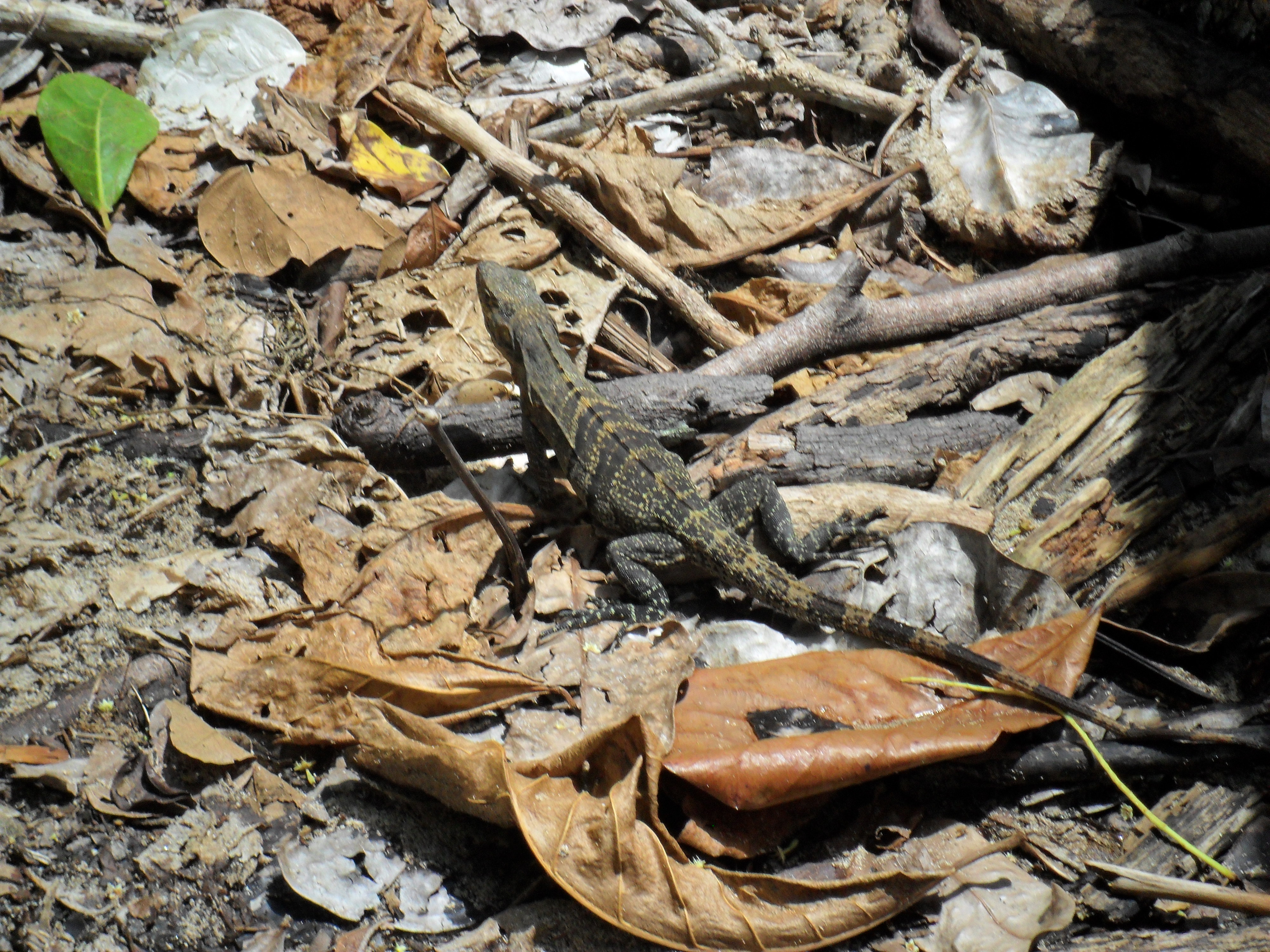
Lizards of many varieties abound.  The tree near my hotel room in Jaco contained four iguanas that appeared nearly lifeless since they never seemed to move.  Again, without a better lens I could not really photograph them.  However, at Manuel Antonio many other kinds of lizards ran here and there only slightly afraid and relatively easy to photograph.

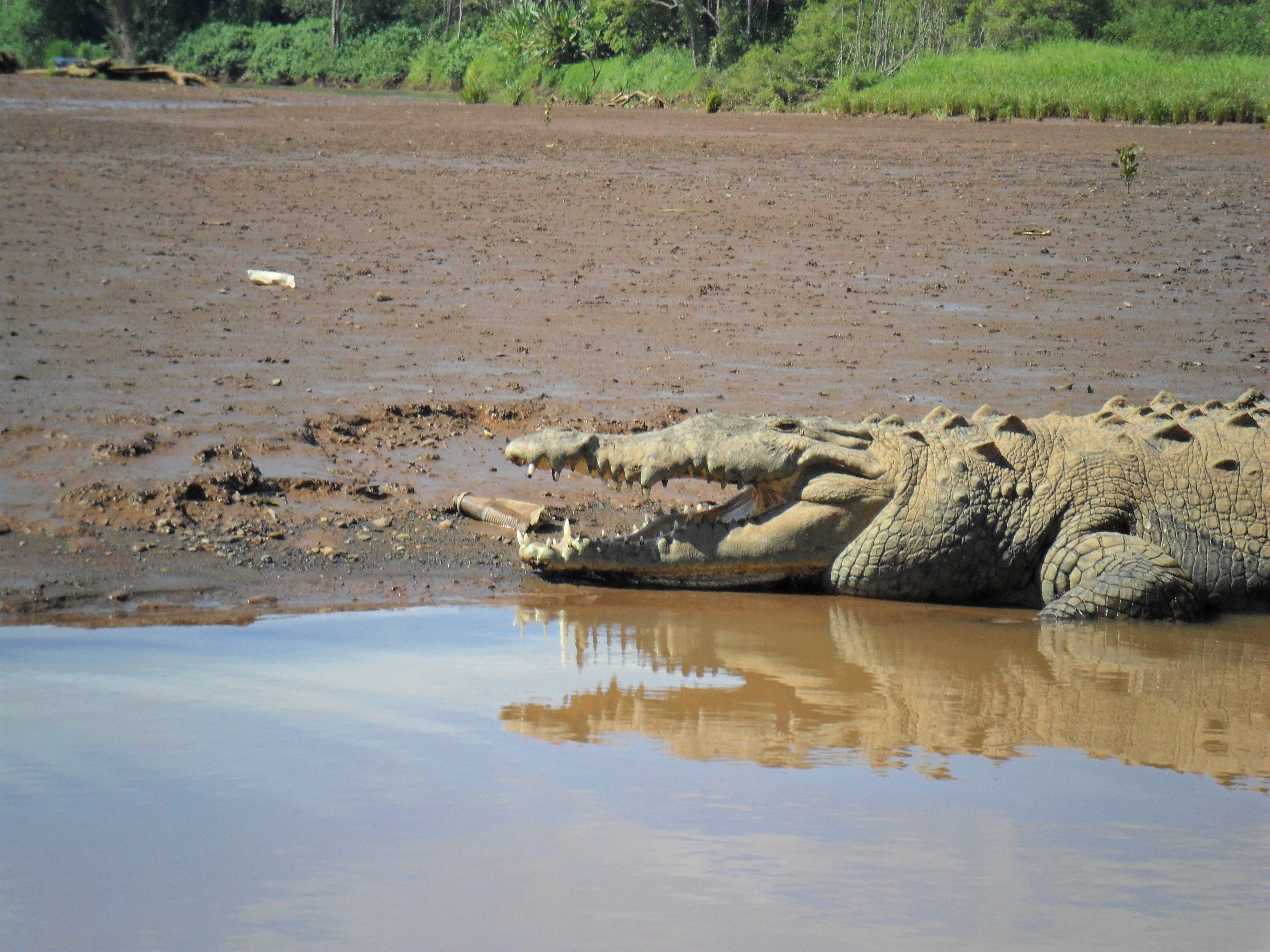
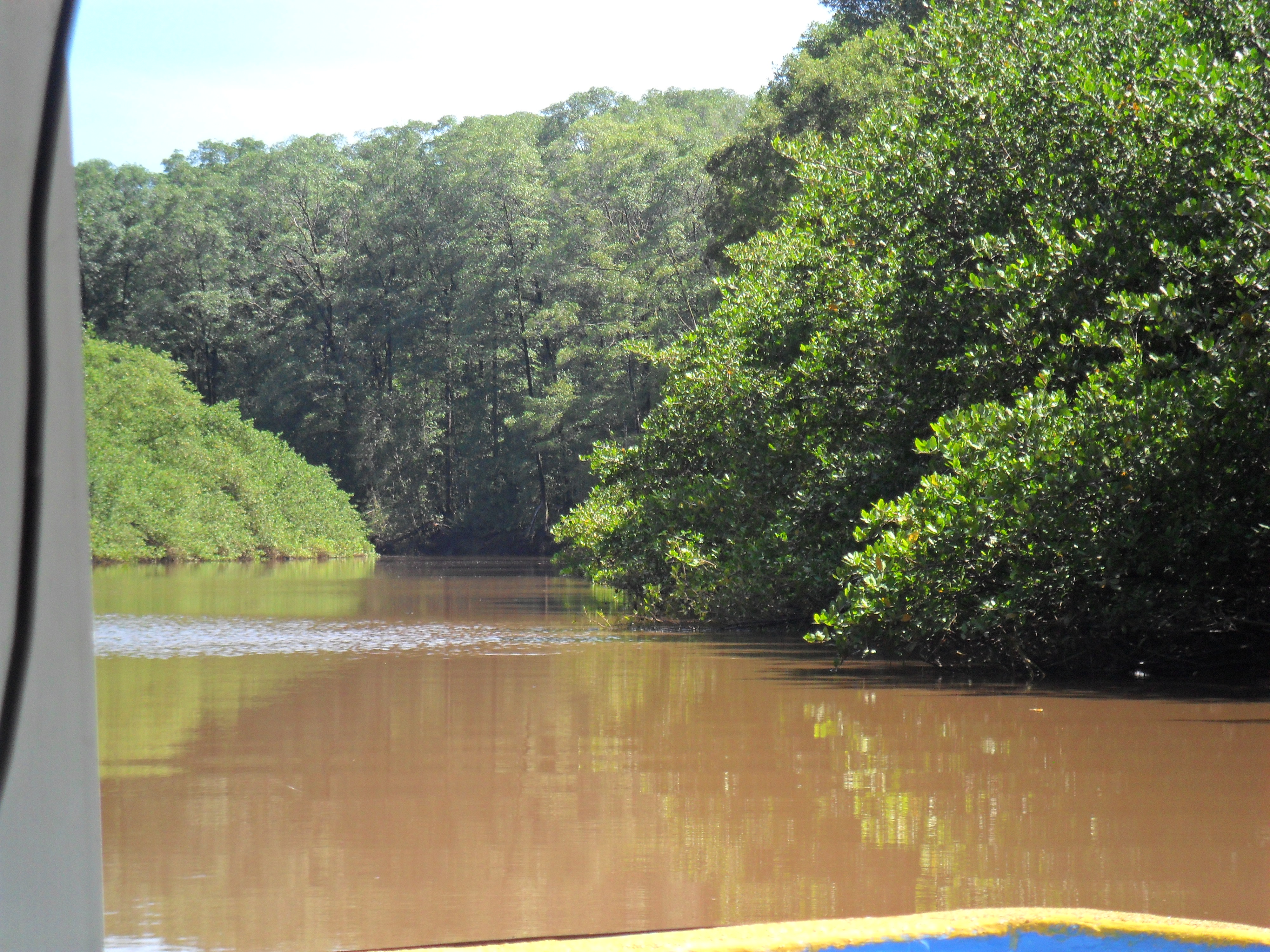
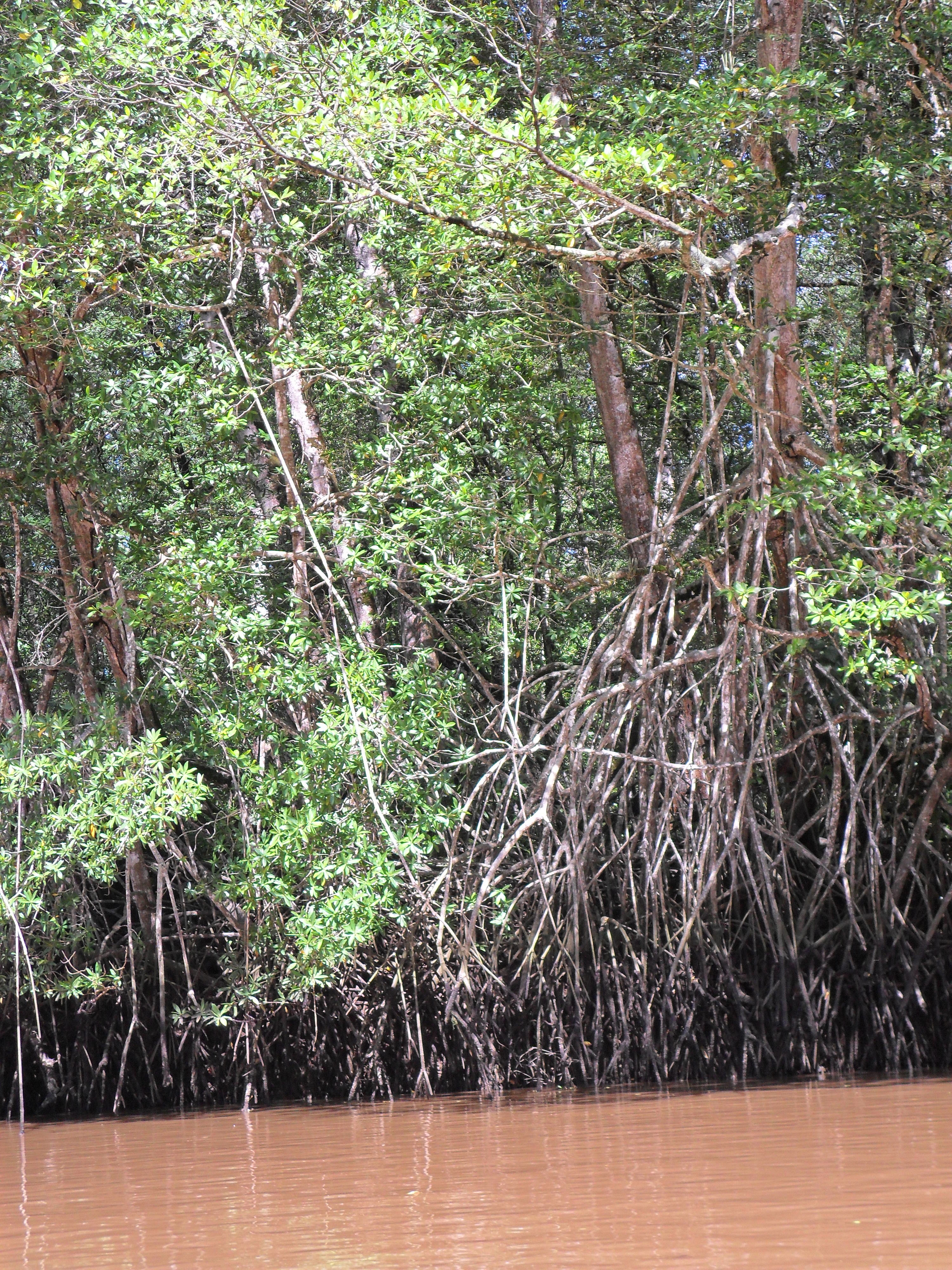
When I think back as to what I expected, it never occurred to me that huge, brackish (salt) water crocodiles existed in such abundance or even existed there at all.  Near Jaco, on the Rio Grande Tarcoles the Costa Ricans created a preserve to protect the endangered scarlet macaws and crocodiles.  We arrived early in the morning and floated around the river, into a mangrove swamp, watching birds and crocodiles.  The list of common birds included 58 species and we saw others that the guide referred to as “bonus birds”.  The following photos come from this lovely, relaxing river ride.  Truly, I loved this part of the trip.

Entering the mangrove swamp.

Two months old.

Where the Rio Grande Tarcoles enters the Pacific Ocean.

The boat captain feeding the crocodile in the mud barefoot.  I thought about touching this one he was so close until I was told they could swim as fast as 55 miles per hour.  It occurred to me that he could turn around really quickly and snap off my hand so…

Wolves


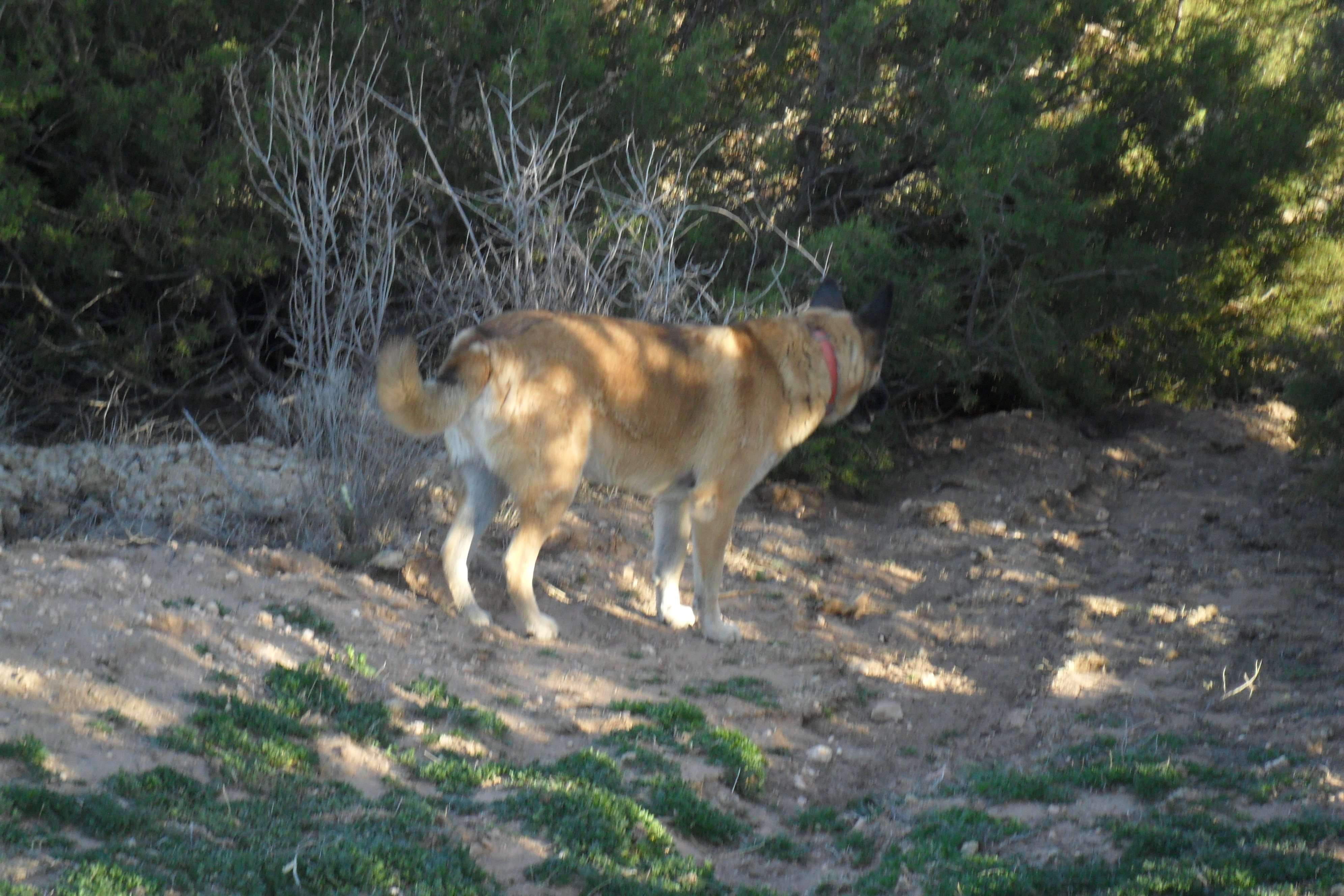
I own a wolf dog.  I did not set out to get a wolf dog.  In 2004, I went to PetSmart to buy a fish for my grandson.  The Humane Society had puppies there.  My daughter said to me, “Mom, you just have to look at these puppies.  They are gorgeous.”  I looked; I was smitten.  Isabella is ¼ wolf.  She was seven weeks old when I took her home.  She is smart, loves people, guards my 15 or so acres, and was incredibly easy to train.  She weighs 80 pounds.  Sometimes people think she is a German Shepard, but she is taller and heavier even though she is also ¼ German Shepard.  Even people who do not like dogs love her.  When I first got her, I researched wolf dogs on the Internet.  The information seemed incredibly complex and sometimes contradictory.  I trained her the way that seemed right to me.  She will not live forever and on the rare occasions I think about this, I realize I will never be able to find another Isabella or even come close.

Isabella leads me to the topic of wolves.  One of my long term goals is to research and study why so many people feel such an intense hatred of wolves.  This intensity is lacking in the way people view other big predators in the US, e.g. pumas, bears.  Why wolves??  What is it that makes ranchers and hunters in states where wolves still exist so intent on destroying them?  As a one time rancher who raised cattle and horses and a person who still owns a farm and grew up on one, I know it is not only because wolves occasionally kill a calf or two.  Something else drives this hatred.  What is it??

Recently, I had the occasion to have a discussion on this topic with a biologist friend.  He said, “People hate wolves because they are so very human.  Wolves remind them of themselves, especially the willingness to kill, the survival instinct, the wild.”  He also told me that he had read a research article on ancient hunters and the domestication of wolves, the precursor to all dogs.  Some researchers believe that ancient humans and wolves hunted together to maximize their hunting success.

Strangely, I came home, opened a book of essays, and there lay Sherry Simpson’s essay, Killing Wolves.  I read it.  I read some of it twice.  I have reread parts a third time.  She says, “The unknowable wolf hunts along the edge of our vision, never allowing a clear view of himself.  Imagination, fear, and longing fulfill what experience cannot.  And so a wolf is no longer just a wolf.  It’s a vicious, wasteful predator.  Or it’s the poster child of the charismatic mammals, the creature that stands for all that’s noble, wild, and free.  A wolf is social, family-oriented, intelligent, and communicative—like humans.  A wolf kills because it can—like humans.  It’s either-or, the sacred or the profane.  Inevitably, the wolf becomes a distorted reflection of the human psyche, a heavy burden for one species to carry.  We can hardly bear the burden of being human ourselves.”