Book 15 for 2025: “Jack”, Marilynne Robinson


Last year I read her novel “Gilead” which takes place in fictional, small, Iowa town in which the main character is the father of the main character in this novel, “Jack”. John Ames Boughton, Jack, is the wayward son of a Presbyterian minister. Previously, he has been wrongly imprisoned for a theft he did not commit. He loves literature, especially poetry. He lives off of odd jobs, drinks too much, smokes, and is somewhat of a lost soul who continuously philosophizes about live, religion, and societal rules. One day he sees a woman walking in the rain. When she drops her bundles on the sidewalk, he helps her. She thinks he is a preacher because of the way he is dressed and invites him in for tea. She is Della Miles, a teacher and the daughter of a Black Methodist minister. This is the story of interracial love when it was still illegal in the US, the lengths they go to resist and hide it, and the reactions of her family. Reading this, one realizes how it was not that long ago that most of the US was not only segregated, but sometimes even talking to someone on the sidewalk from another race could get a person into trouble with the police.

Book Ten for 2025: “Four Seasons in Rome”, Anthony Doerr


If you have ever felt enchanted by a trip to Rome, you will find this memoir delightful and informative. It made me want to return just to stay a while, wander around, visit the more obscure places Doerr describes, people watch, eat, and drink local wine.

In 2007, Anthony Doerr, the 2015 Pulitzer Price Winner, won the Rome Prize to become a fellow at the American Academy in Rome. He and his wife, Shauna, moved to Rome with their newborn twins, Owen and Henry. This memoir memorializes the four seasons they spent living there. They learn to care for babies; wander throughout Rome visiting tourist sites, local restaurants, the butcher, the baker, the toy store; learn enough Italian to acknowledge all the Italians who stop to admire the babies; and attend the vigil for the dying Pope John Paul II.

While there intending to write his later novel (the one that eventually won the Pulitzer) and failing to do so, he does manage to write a short story which I have read in one of his collections and to read everything by Pliny the Elder. His discussions about his readings makes me want to read some of Pliny the Elder myself. As in his short stories and novels, Doerr’s descriptions, language, and observations delight and enchant. This is a wondrous book about one of the world’s oldest and most fascinating cities which he calls, “a Metropolitan Museum of Art the size of Manhattan with no roof, no display cases…

Book Seven for 2025: “The Map of Salt and Stars”, Zeynab Joukhadar


Two young heroines dominate this fascinating novel which switches back and forth between the Syria of 2011 and the 12th century. The latter is a girl who disguises herself as a boy to join the quest of a famous mapmaker. Nour, the first girl, lost her father to cancer in NYC. Then her mother, a mapmaker, decides to move herself and the three daughters back to Homs, Syria. They barely settle into their new life when the civil war breaks out and a bomb destroys their house. They become refugees. This is the tale of their harrowing journey from Syria to Jordan to Egypt to Libya to Algeria, then Morocco and finally to Cuenta, the Spainish city on the north coast of Africa, where their uncle lives.

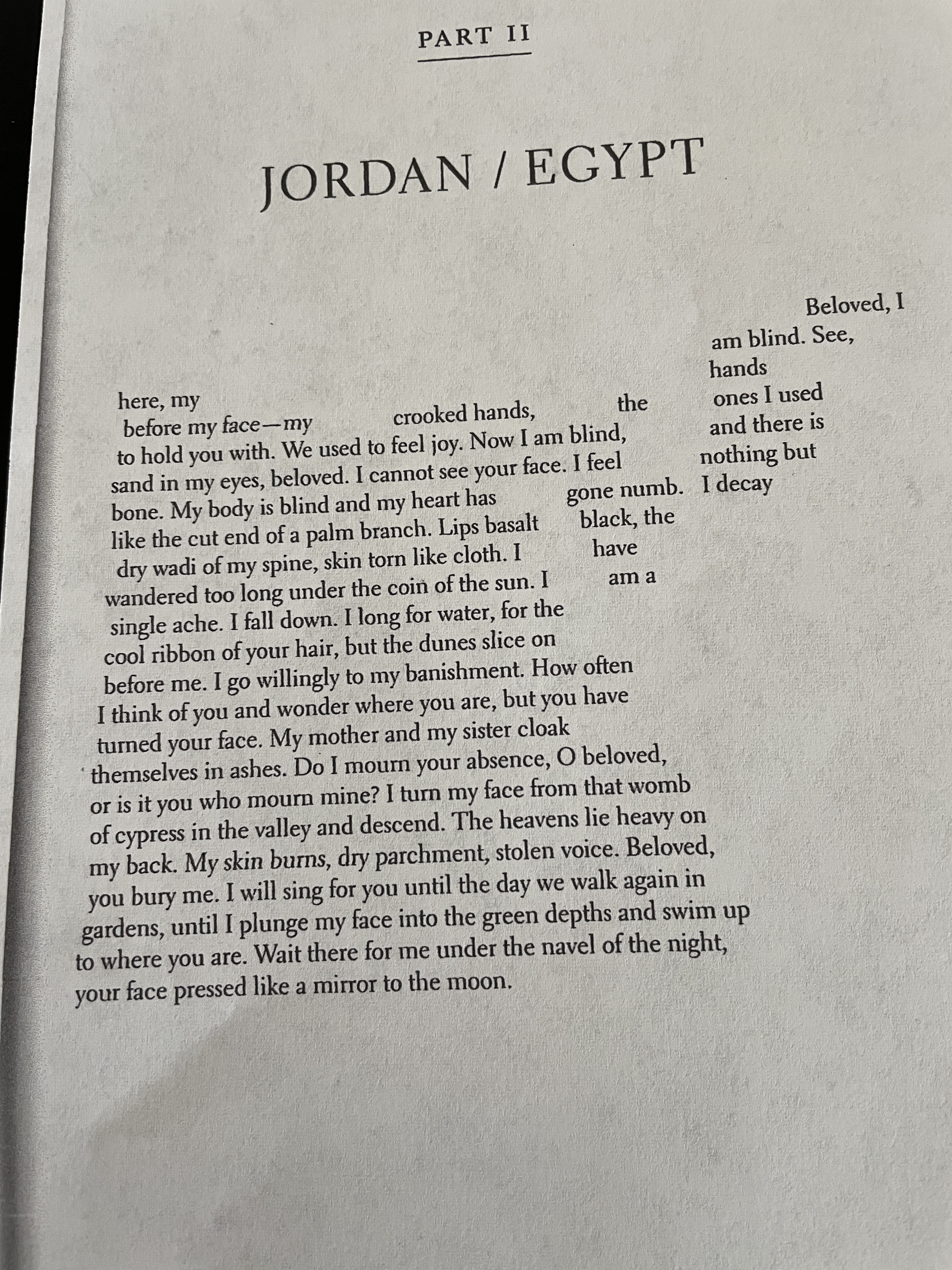
To keep sane, Nour repeatedly tells herself the story of Rawiya, the disguised girl who is an apprentice to the map maker. When he was alive, this was the favorite traditional story her father told her. The book alternates between what is really occurring to Nour and her refugee family and this ancient story. At the beginning of the section for each country through which they travel, there is a touching and beautifully written poem in the shape of the map of that country. The poem for Jordan/Egypt is printed below.

Book One of 2025: “The Heaven and Earth Grocery Store”, James McBride


This is another great novel by one of my favorite authors. The book begins with the finding of a skeleton in a well in 1972. Since it is located near the site of an old synagogue, the police start to question a local, elderly Jewish man, Malachi, but get nowhere. Before they can come back to ask him more questions, Hurricane Agnes washes away the skeleton and many houses in the lower, wealthier part of town. When they do finally get around to hunting for him again, he has disappeared.

Then the novel goes back 47 years in this nondescript Pennsylvania town where the white people live in the lower, nicer part of town, and the Jews and black people live in or near an area called Chicken Hill, a poor area with little water and no plumbing. It is the story of a Jewish couple, Chona and Moshe. She runs the grocery store in the title, and he runs a dance theatre where he hosts dances, sometimes showcasing very famous musicians, mostly Jewish or black or Latino. It is also the story of some of their black neighbors, one of whom was Chona’s best friend in school, Jewish immigrants from Europe like Malachi, and a deaf black child, Dodo. When the state comes for Dodo because his mother has died and they think he should be institutionalized, Chona’s kindness and the courage of a local black worker, Nate Timblin, bring the black and Jewish people together to save him. While all this can be sad and serious, I also found myself frequently laughing. This novel reveals the quirks of all sorts of people, how they relate to one another, the dangers of racism, and ultimately the meaning of community, courage, and friendship and how much these things matter.

Book 50 for 2024: “Teddy and Booker T”, Brian Kilmeade


I finished this book on New Year’s Eve, missing my goal of reading a book a week all this past year, but not by much. No excuses except one book I read was nearly 800 pages which took a bit longer.

This last book was full of surprising information. I had no idea that Teddy Roosevelt and Booker T. Washington were friends. This book is very detailed with loads of historical information about the lives of both of these men. Born worlds apart in terms of freedom, economics, and race, they both had a goal to further the status of Black people. In terms of his political future, Roosevelt made a big mistake when he invited Washington to the Whitehouse for a family dinner. Once this event became known, white people in the South were outraged. Jim Crow incidents, e.g. lynching, increased. Roosevelt felt he had to backtrack some to save himself and this included one his worst decisions in terms of racial equality. Meanwhile, they tried to hide their relationship more, did not visit each other as often, and Washington had to go to great lengths to appease some whites in the South to keep Tuskegee growing and flourishing. W.E.B. Du Bois viewed Washington negatively and thought he went too far to appease white people and did not do enough for his own race. Du Bois who had grown up free in the North did not understand Washington’s viewpoints and did not know what he did secretly to help Black people. If you are interested in the actual history of this period and how these three men affect the present, I highly recommend this book. There are 35 pages of references, notes, and documentation at the end of the books for those who want to read further on this topic and time period.

Book 46 for 2024: “What Happened to Ruthy Ramirez”, Claire Jiménez


The Puerto Rican Ramirez family lives on Staten Island. The book begins years after one of the three daughters, Ruthy, disappears at the age of 13 while on her way home after her school track practice. Twelve years later while watching TV, Jessica, the oldest daughter, sees someone on a reality show who looks like Ruthy. The woman on the TV has red hair like Ruthy and the same birthmark mole. Jessica tells her younger sister, Nina. They concoct a plot to go to the reality show site and bring Ruthy (if she is really Ruthy) home. They avoid telling their mother, Delores, who has never ceased struggling over Ruthy’s disappearance. Delores discovers their plot and insists on not only joining them, but also bringing her older Pentecostal friend who frequently falls into spiritual spells on the floor at church. Eventually, they all head to Boston where the show is located and all kinds of turmoil occurs.

The novel is told from the viewpoint of each sister and their mother, providing endless details about their Puerto Rican culture, their jobs, their views, and how they feel about each other, all done with dialogue. Sometimes it is loving, sometimes snarky as it deals with their experiences with racism, sexism, family secrets, and violence. As a reader, I, too, wanted to know what happened to Ruthy. Definitely worth the read.

Book 44 for 2024: “Framed: Astonishing True Stories of Wrongful Convictions,” John Grisham and Jim McCloskey


Without doubt this ranks among the most horrifying books I have ever read. Every life story (there are ten) discussed in detail illustrates failures in the US justice system:

–inept police, sheriff departments, and judges

–judicial corruption

-criminals paid to give false testimony in return for lower sentences or pay

-sheriff departments, police, and judges unwilling to admit they made a mistake when evidence clearly indicates they are in error

-racism

In one case ten years ago, an innocent person in Texas was actually put to death. The governor refused to acknowledge the evidence given to him that proved the person was innocent. The majority of the cases discussed in this book occurred in Texas although this sort of thing occurs throughout the country.

Note: One of the authors, Jim McCloskey, founded Centurion Ministries, the first organization in the world focused on freeing those wrongfully convicted. The state with the most exonerated individuals is Texas.

El Barrio Bonito


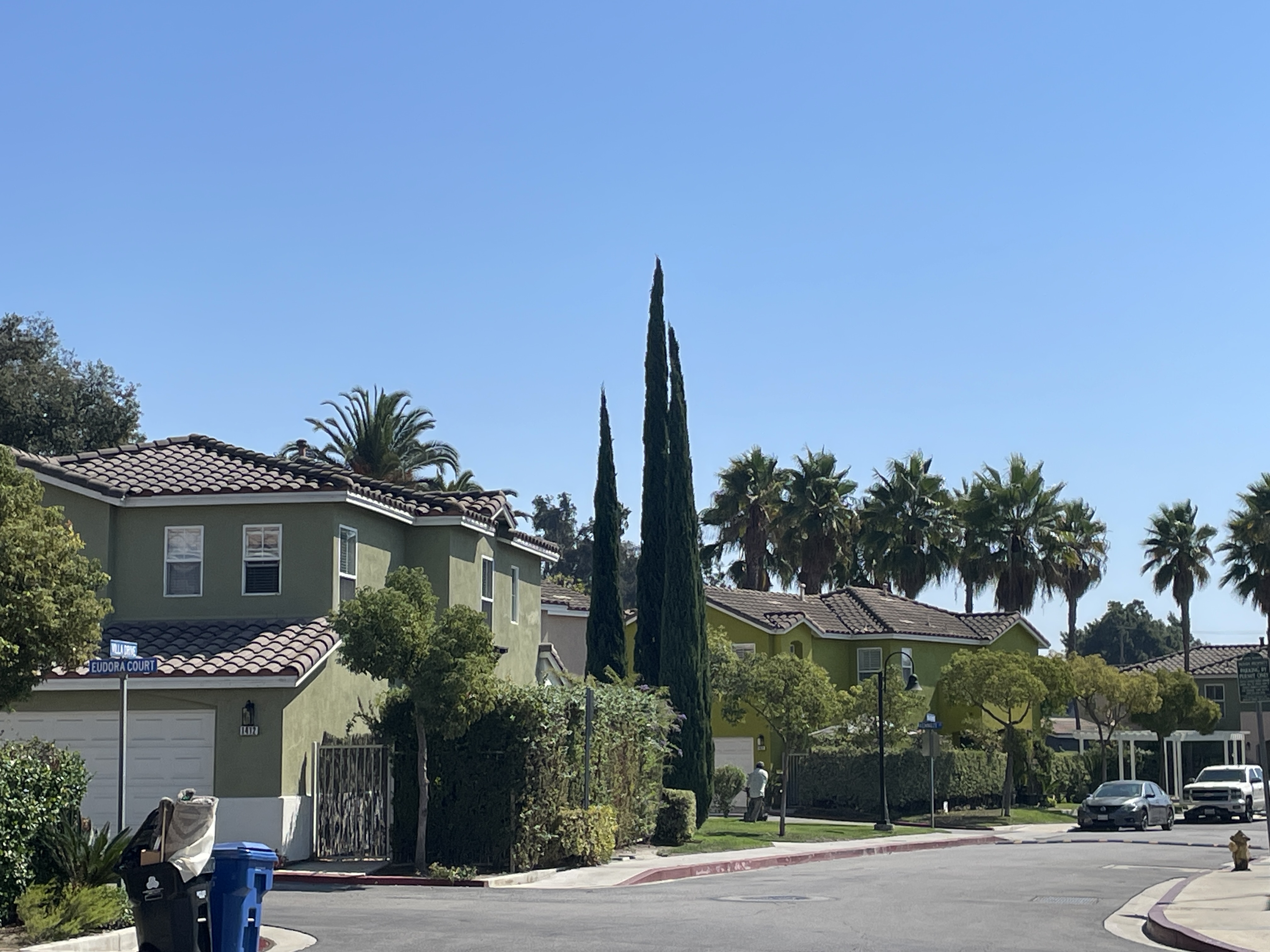
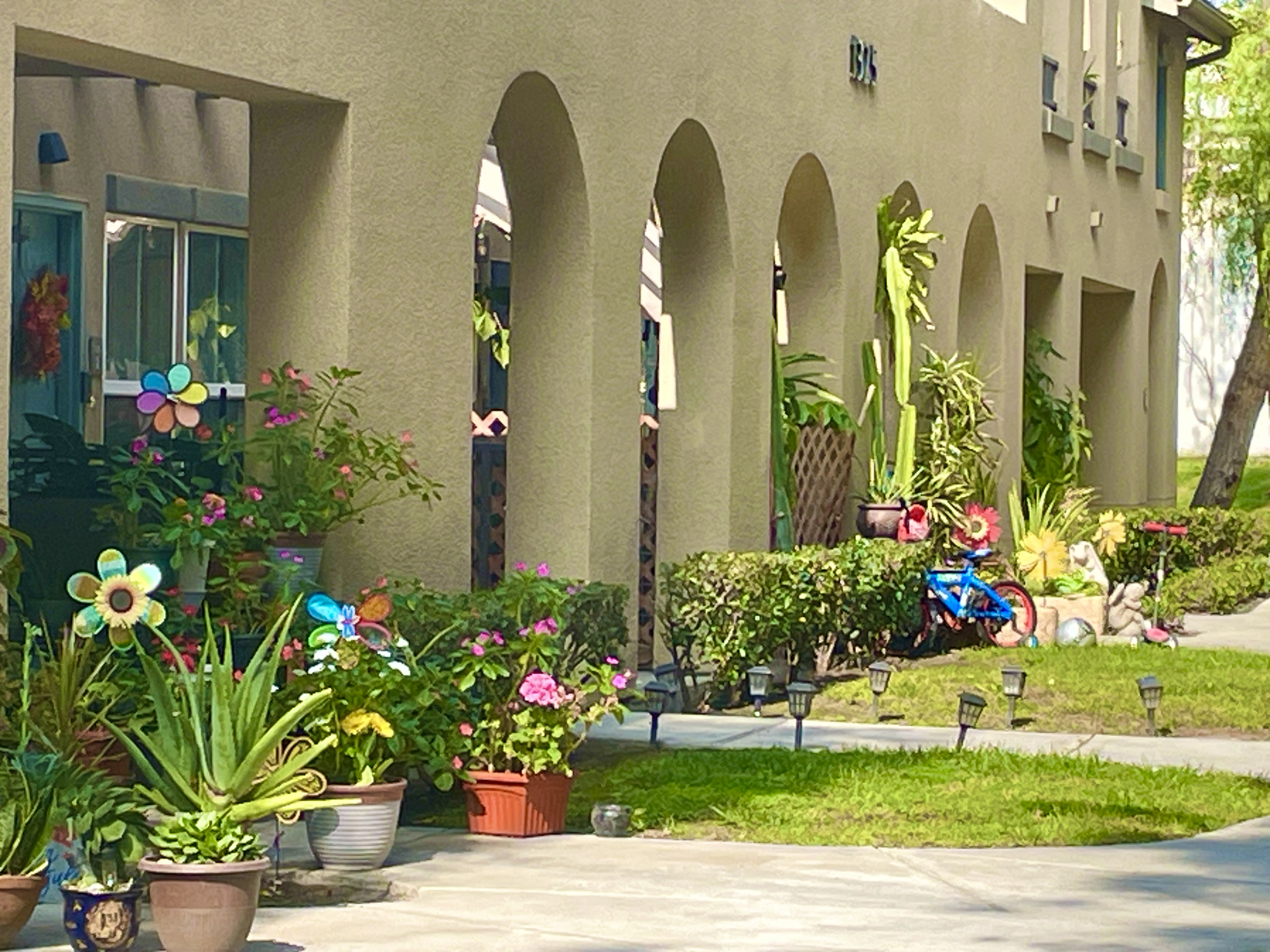
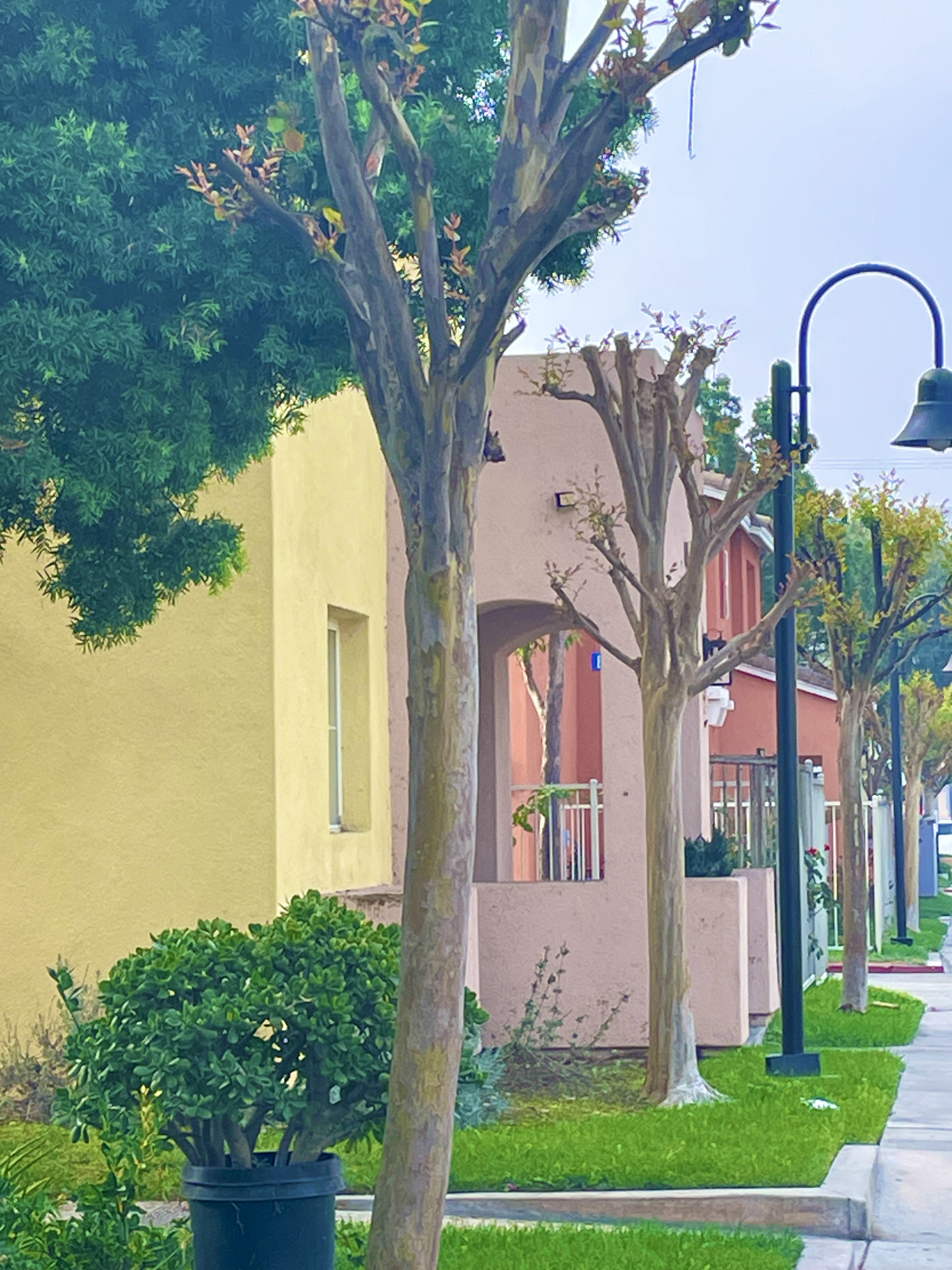
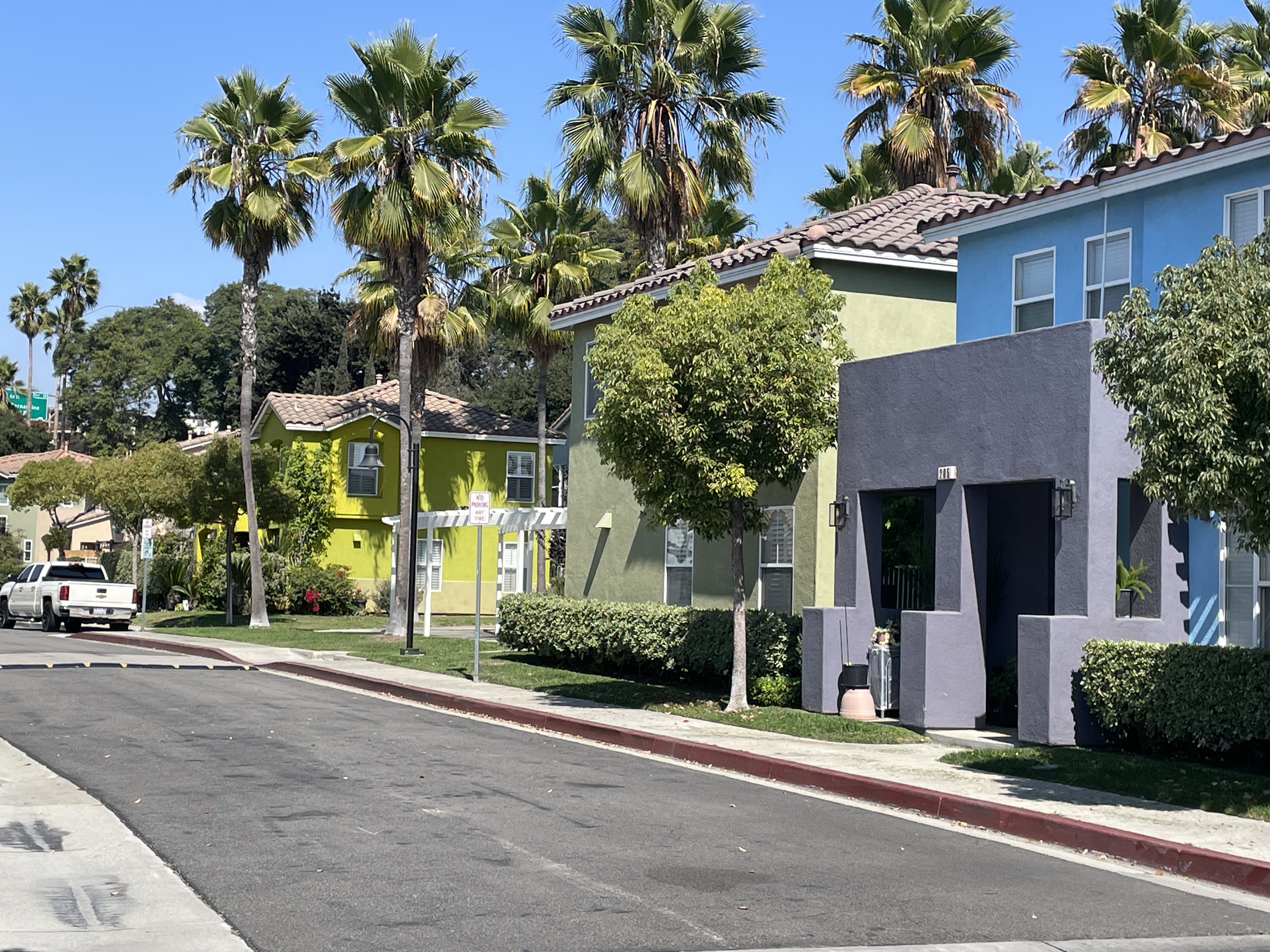
Every week I go to Mendez High School in Boyle Hts., CA. Between meetings with my students, I take a walk in one of my favorite neighborhoods. Frequently when a person mentions low income housing, a negative image comes to their minds. Wrong. The neighborhood where I walk is beautiful, lovely places full of flowers. In one area the buildings are painted in joyous colors that make me smile every time I walk there. Here are photos for you to see for yourself.

Downtown LA in the background.