Two New Poems for National Poetry Month


Rainy Day

sheets of rain against the kitchen window

heavy fog hides mountain peaks

scarlet hibiscus and bougainvillea brighten

a gloomy day

Dusk

The wind died; stillness pervades.

A distant train whistle interrupts.

Tiny brown bird chirps its chitty song.

Mountains display navy blue and purple.

The western sky becomes cantaloupe color.

Walking in Pasadena Near Rose Bowl


Fearless little bird with chocolate brown head runs beside me

on the road. At the intersection I circle to the left, following

a familiar route. The heavy tree canopy here always astonishes.

It’s almost like walking in a forest.

The architectural variety amazes: mid-century modern, Spanish,

colonial, ranch, the smallest I am guessing contains 3500 sq. ft. One

house encompasses an entire city block, fronted with heavy, high

fences and metal gates. Privacy obsessed.

I’m watching my time. I don’t want to be late for singing

practice. I take a new route, perhaps a shortcut. It’s

120 degrees of a circle. Not quite a regular street,

not quite an alley, a combination–fronts of a few houses

and the backside of others. At one place it angles more;

I come to a three story stone fortress with intricate

geometrical designs vertically running up and down

the walls. No windows. A sign says, “No trespassing.”

Realization hits me. This is the other side of a house

I saw last year through a gap in a wall on another street.

Three ladies, strangers, asked me about it, told me they’d

heard it was the creation of a famous architect. I researched,

asked others, no one knew. Back then, I tried to find the front,

failed. Now I’m looking at it, wonderstruck. It appears abandoned,

an architectural wonder belonging to another time and place.

Time to rush, a bit lost, I look at my phone map, finish the loop,

find a familiar street, walk faster. Then I see a large, white, colonial house,

weeds knee high, black shutters hanging askew. Here it is abandoned

in the midst of multi-million dollar houses. I wonder what the neighbors

think. Walking on I hear water rushing, peer through the hedges–a stream

runs downhill from the side of this huge brown house at least 100 feet

and gurgles in a pool behind the bushes. Hurrying, I stop in front of one

of my favorite houses, a one-story, tan, Spanish style, small compared

to the others nearby. I take a photo of the tree in front by the sidewalk,

its impressive girth impossible to ignore.

Finally, I’m near my destination, walking in front of The Gamble House,

a tourist destination made famous by the movie, “Back to the Future”,

a structure I see at least twice a week.

Poems


I started out thinking I would write a poem per day for National Poetry Month. Well, I’m a bit behind on that, but here are two of several I have written so far.

Spring

The mockingbird awakens me with his song.

A hummingbird, dressed in green with an iridescent

orange collar, flits by my head then sips nectar

from a scarlet bougainvillea blossom.

The neighborhood barn owl hoots at dawn and dusk.

A black and red/orange bird I’ve never seen before

lights on a palo verde limb.

A Western Bluebird dips its beak repeatedly in

the talavera birdbath.

Remember

In this world steeped in senseless violence remember

each day to find a piece of beauty:

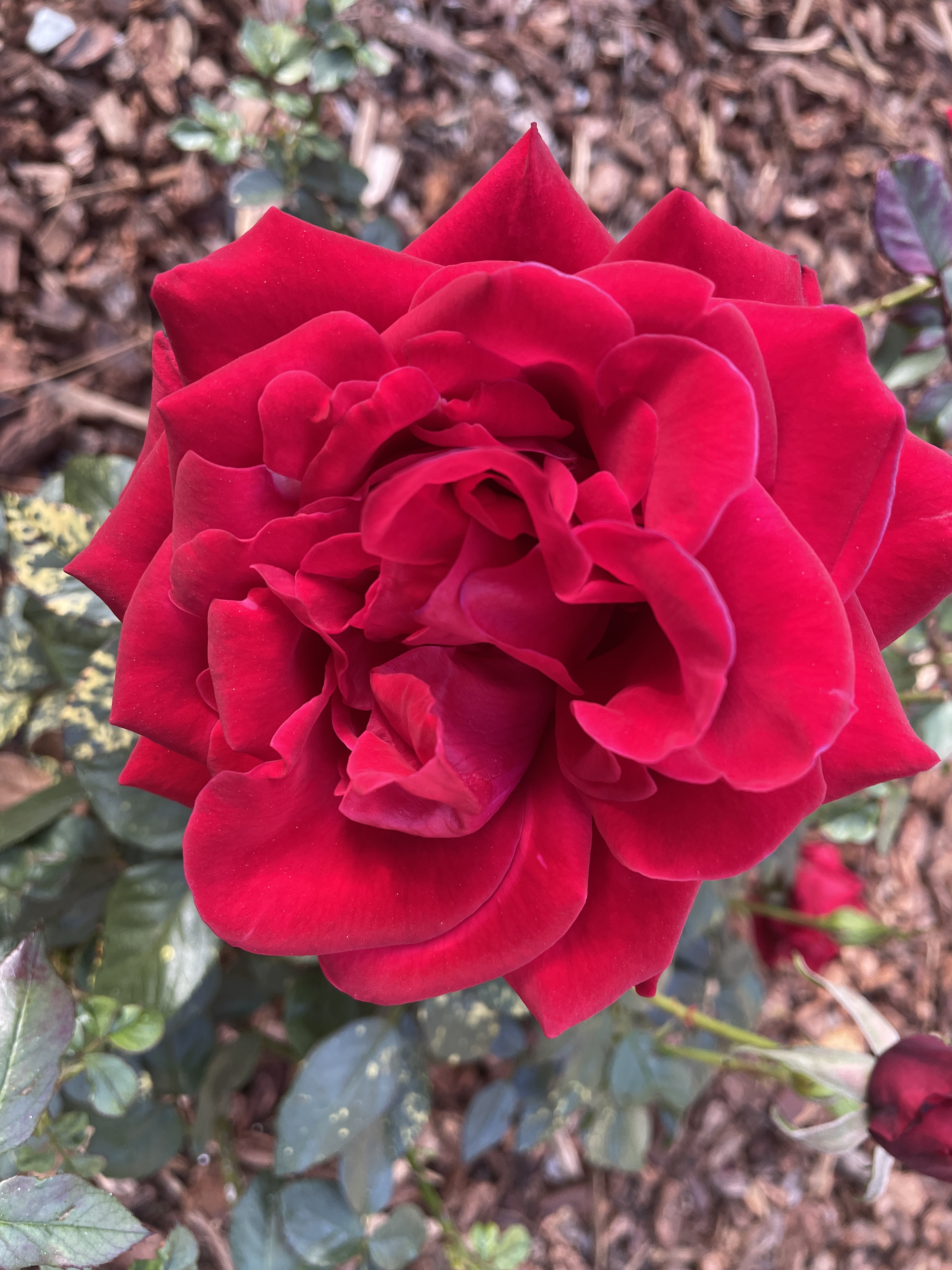
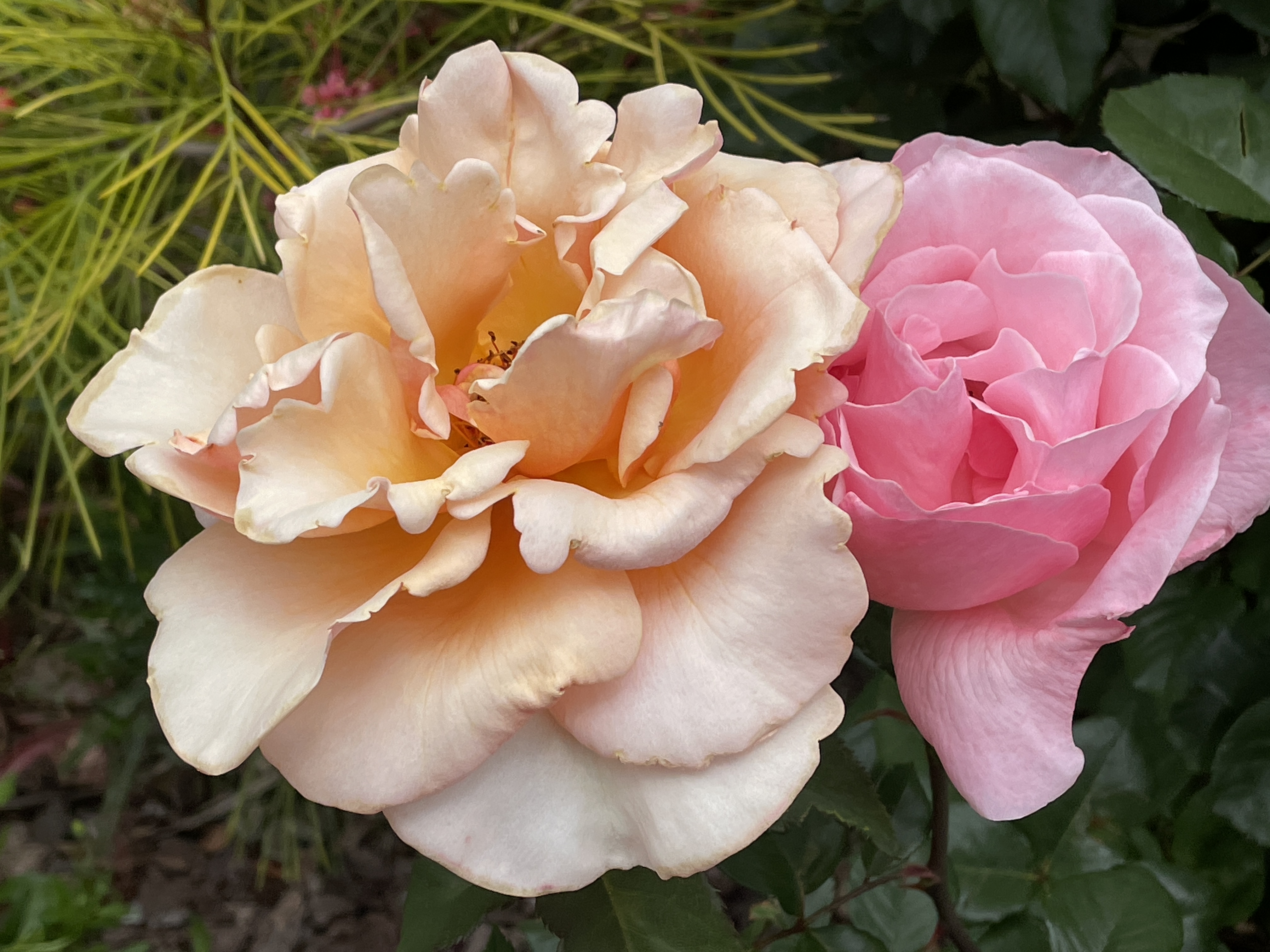
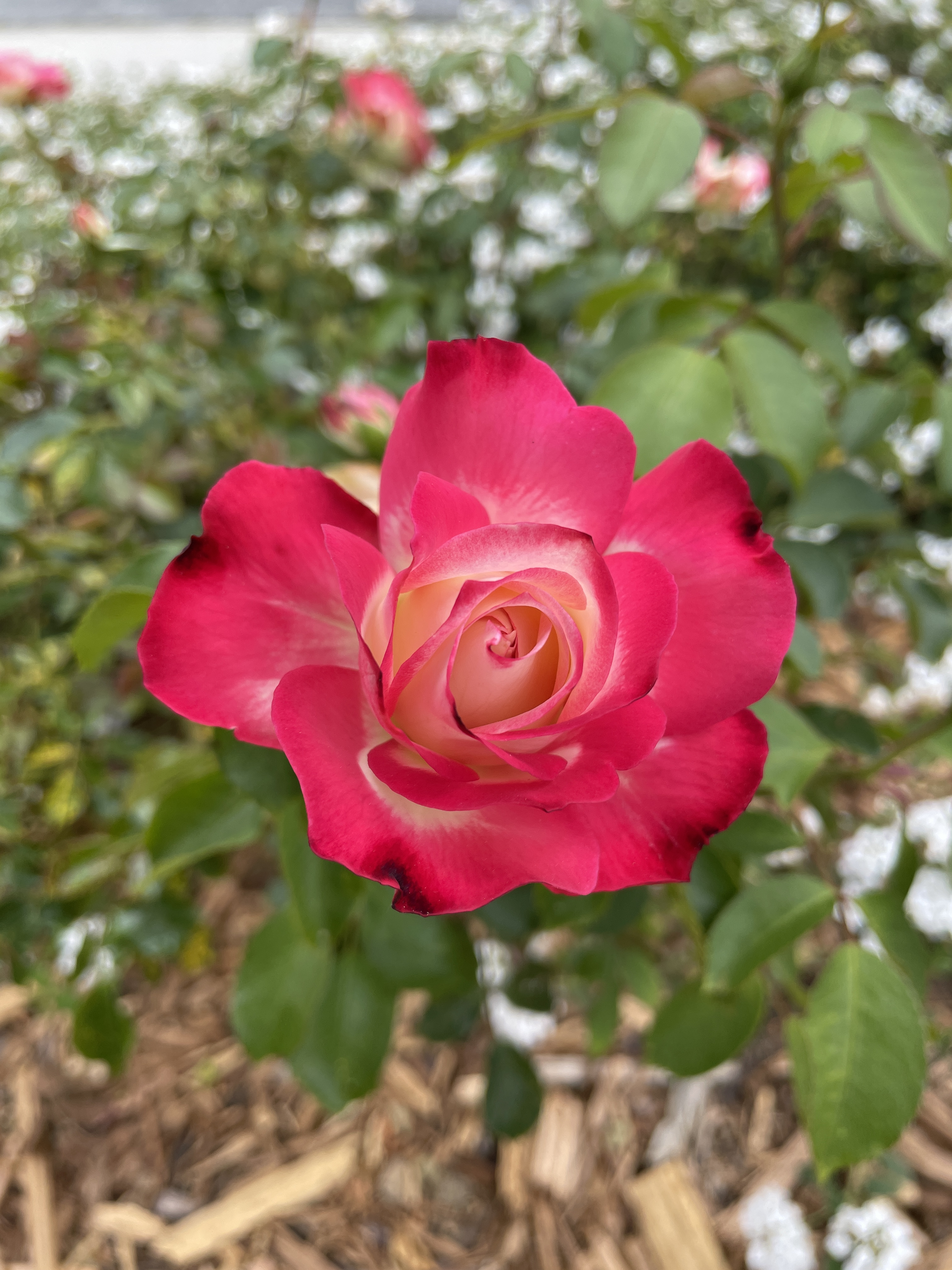
-rosebuds opening

-the scent of jasmine

-a friend’s smile

-a bit of birdsong

In this world ravaged by wars remember

each day to find the jewels of joy:

-listen to a child’s laughter

-dance to a favorite song

-walk in the morning sunshine

-tell someone you love them

Red Roses


He’s very good at wooing:

gifts–chocolate cherries,

red roses, delicate lingerie,

I love you.

He wears his mask well,

keeps calm, a handsome spider,

weaving a silken web.

She laughs, tells her friends

just how very special she’s

sure he is.

He wears this mask for months,

finds them the perfect apartment,

swimming pool, gym, marble,

granite, luxury appliances.

She’s sure he loves her:

the gifts, the perfect apartment,

fancy restaurants, luxury weekends.

She’s late, heavy traffic, an

emergency at work. He

screams, wants to know

why; no explanation matters.

He hits her for the first time, her

torso, knocks her down.

Tomorrow 24 red roses

arrive at work. He begs

forgiveness. She’s sure

he’s sorry; it won’t happen

again.

Two months later, she’s

late again. Real reasons he

does not want to hear. He

screams, he hits, he knocks

her down.

She dreads red roses.

Note: This is part of my writing a poem per day for National Poetry Month. Regarding this poem, 34% of female homicides are women who have been killed by intimate male partners. Often when women kill a man attacking them, they are convicted of murder even when trying to defend themselves.

Perfect Spring Day


They tell writers, “Never ever use cliches.”

Sometimes I question that. When you

word a cliche, nearly everyone knows

exactly what you mean. For example:

This is a perfect spring day:

-birdsong wafting here and there,

mostly mockingbirds except for those

irredescent, orange-throated

hummingbirds at their feeder

-wind singing through the pines

-open windows for a change; it’s

75 degrees and sunny

-magenta and scarlet bougainvillea

climbing the garden wall

-white and lavender lantana

outdoing themselves with

spread and bloom

-geraniums in full flower

-mint growing so fast and tall

I already need to trim it.

I lounge on the patio reading

another novel, drinking rosewater

lassi, munching mixed nuts.

I feel gratitude for this

perfect spring day.

Ovid


This is poem two for National Poetry Month. A friend wrote a poem following the prompt to write a poem about a book the writer has not read for a long time. She wrote about The Scarlet Letter. My poem is about the book, An Imaginary Life.

The Roman Emperor Augustus saw Ovid’s poetry as subversive,

a power threat. He exiled Ovid to a remote corner of the Empire,

somewhere over by the Black Sea, the Carpathian Mountains,

among the destitute, the superstitious, people who did even know

how to read or write. They believed in witches, feared ghosts, saw

evil in everything and everyone different. Different equaled

death.

Paid to host Ovid, the village leader teaches him to ride horses

bareback, hunt, become stronger. Ovid transforms from a weak

revolutionary who hates this place to one who sees the barren

beauty, wanders in the forests, plants a wildflower garden,

survives.

While hunting, they see barefoot tracks in snow, tracks

of a feral child, a boy. Ovid fears for him, finds him,

rescues him. An accident occurs. The villagers blame

the boy, want to kill him. He and Ovid escape,

wander far into the northern wilds, into

infinity.

Nostalgia


Today is the first day of National Poetry Month. I am committing myself to write a poem a day. Here is the first one for the month.

Easter yesterday made me sad,

remembering children, grandson,

egg dying, egg hunting, family

together, laughter, joy.

Found photos of my family,

I, a child, dressed in Easter finery,

a family tradition. Dad bought us

corsages to wear every Easter,

pretty dresses in spring colors–

my favorite a pink dress trimmed

in scarlet, a unique combination

explained why I liked it so much,

felt special wearing it.

Today I wear pink and orange

together, admire the deep purple

and red bougainvillea, scarlet rosebuds,

snowy freeway daisies,

shining in the sun and wonder

will I live long enough to teach

a great grandchild to color

Easter eggs.

Eye Drama


Kohl

Kajal

Sormeh

Mebari

Ancient names for eyeliner

still in use today.

Kohl-Arabic

Kajal-South Asian

Ithmid-the purest kohl

made from galena

Surma-powered kohl in Urdu, Bengali

Sormeh-loose power preferred by Persians

Tiro-Nigerian

Mebari-red eyeliner, Japanese

Nefertiti used it.

Today the Worso and Wodaabe

African men use it.

Where women must veil themselves

the eyes are everything.

Bedouins use it for protection

from the desert sun.

In defiance find Cat Eyes

in Chola culture.

In Kerala Kathakali

dancers use it.

Geishas in Kyoto use red.

Find influencers on TikTok

Instragram, they will

teach you how.

Note: The above poem was inspired by my most recent read:

“Eyeliner A Cultural History”, Zahra Hankir. Hankir is a Lebanese journalist whose history of eyeliner throughout the world informs the reader about places and people and customs many never heard of or know about.

Shootings


In Iowa

the governor says she’s praying

the senator says he’s praying

presidential candidates tell us to pray.

What?!

Oh, yes, I observe how well

that’s working.

82 school shootings last year,

39 dead, 89 wounded.

In US, death by gun is now primary

cause of demise for children and teens.

It’s not much better for the rest of us.

18,762 shot dead.

36,167 injured.

If you’re male, depressed, have a gun,

just shoot yourself.

Bang!

Thousands shot themselves.

I know some keep saying,

“People kill people, not guns.”

If you don’t have a gun,

you can’t shoot someone else

or yourself with one.

The most popular gun in the US?

An AR-15.

Think about that!

What does it tell

you about this country.