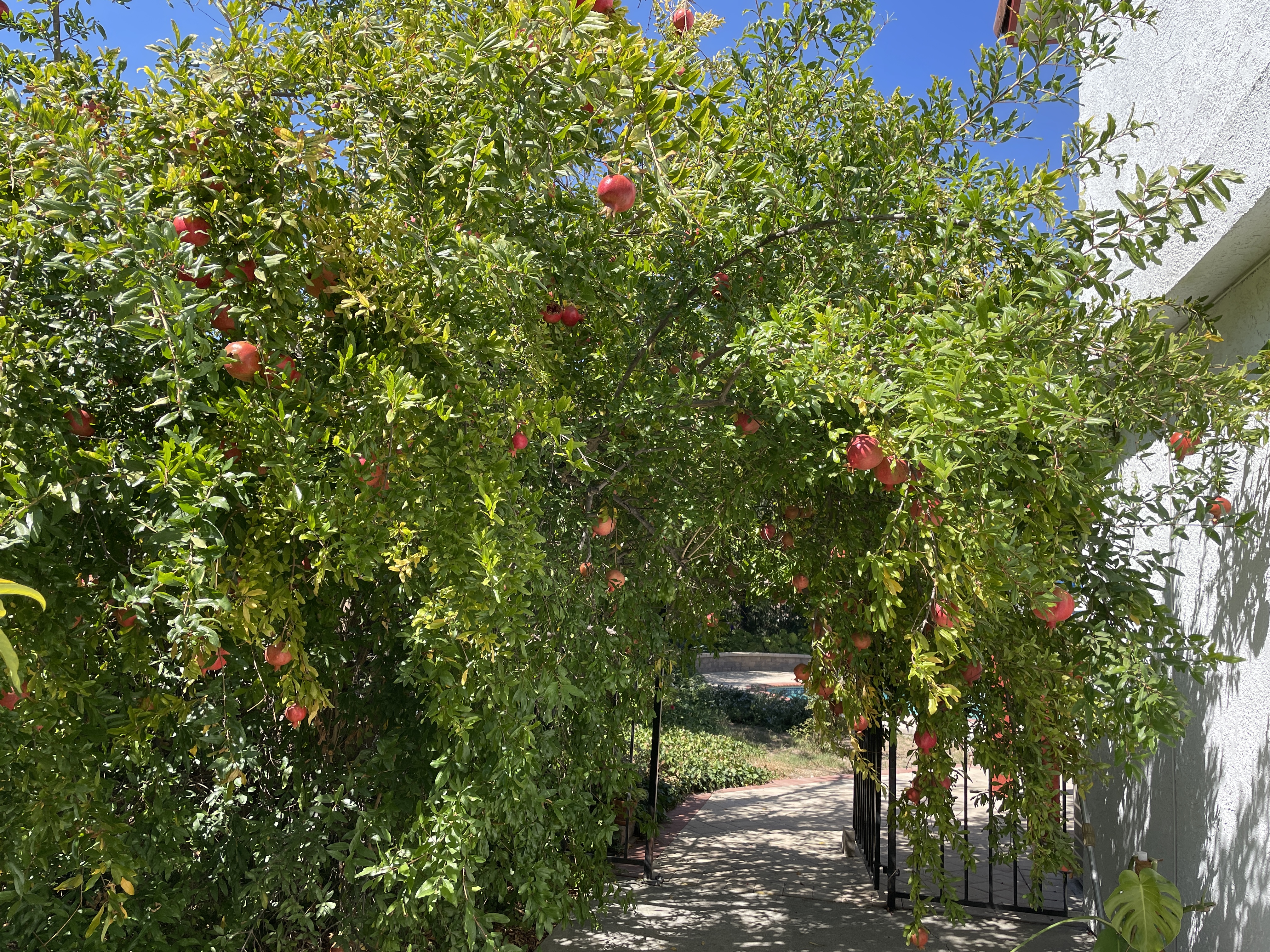
Tis The Season


Tis the season to…

Feel joy when the morning

sun caresses your face;

Laugh when you hear

children playing in the

street;

Give thanks for being alive,

having friends and family;

Walk down your street or

take a hike, touch a flower,

a tree and appreciate nature’s

simple bounties;

Remember the time your

loved one took your face

in gentle hands and smiled;

Give the gift of kindness,

peace, and compassion to everyone,

strangers, friends, family,

the unknown;

Promise yourself to live your

best self in the year to come,

to never forget that life

is a gift.

Langston Hughes in Uzbekistan


It’s 1932.

Movie roles promised to 22 Black Americans.

“Black and White” in the

Uzbek Soviet Socialist Republic.

Treated like royalty, wined, dined, at

their own expense.

Hughes–ridiculous script. All went

home except Hughes. He stayed,

traveled, saw cotton grown from Aral

Sea water–now no water, desolate

desert.

In Tashkent, Uzbeks, Turkmen, Tartars

honored him, flowers, fruit.

No English.

He met a Red Army Captain from

high Pamir Mountains. Hughes

described him, Black with Oriental eyes.

Hughes called him Yeah Man.

He called Hughes Yang Zoon.

Weeks together never understanding

each other’s words.

Hughes’ poetry book

“The Weary Blues” first

American book translated to

Uzbek. Original English version

lost. He describes this new place:

“Look: here

Is a country

Where everyone shines.”

Note: You can find a version of this book translated into English from Uzbek by Muhabbat Bakeava and Kevin Young.

Autumn


As a summer person, I’m less excited than others I know to see it end. This abecedarian poem allowed me to experiment with words without searching for profound meanings, allowed me to play.

Autumn

brings

chills

dreary

evenings

fog.

Gone

heat

intense

joy.

Kindness

lingers while I

meander

near

oceans

playing

quickly,

running in

sunshine.

Tomorrow

under a

vanishing

wind in a

xeroscape

yard, I will

Zoom my next meeting.

An Abecedarian Poem for Sudan


While a lot of the world is focused on Ukraine and Israel/Gaza, since April 2023, two groups, the Sudanese Armed Forces and the Rapid Support Forces, have been fighting for control of Sudan. 11.1 million people are displaced and more than 17,000 killed, mostly civilians including children. Currently, for the second time since 2003, famine lurks at the door of Darfur state. Although I wrote the poem thinking about Sudan, a lot of the same conditions apply to Congo.

Amidst the denuded trees along a wide

boulevard walked a tall, dark-haired girl

carrying a large basket filled with a few

deep red pomegranates, two brown

eggs and three delicate pastries

filled with pineapple, cinnamon, and

guava, her favorite. She felt lucky.

Her mother sent her to the market, her mother

ill with ague, shivering, fevered,

jaundiced, too young to be dying, her father

killed in the endless wars which had

leveled so many cities and villages.

Men filled with the desire for revenge, for power,

never thinking how forgiveness and love could

overcome the endless devastation.

People plagued by angry men, men so

quick to condemn all not their tribe, their own,

retribution driving them week after week.

Some lay dying on the streets or dead as

the girl walked around their bodies

under the relentless, tropical sun.

Void of relief, fearful but determined, she

walked on toward the remains of her home.

Xenophobia once again stalked the streets,

young men brandishing assault rifles. Animals in the

zoo seem kinder, more caring.

An Abecedarian Poem for the Fourth of July


As many celebrate this day

because they see it as a joyous

cry in praise of the

day the United States declared

emancipation from English tyranny,

free to be its own country, self

governed, no longer ruled by kings,

humans, Black, enslaved,

indigenous, find celebration difficult.

Jefferson, in The Declaration of Independence,

knowingly called Native People

lacking in worth,

“merciless Indian Savages,”

never considering the contradictions, the

overt irony when compared to his view that

people are created equal.

Qualified, white male landowners, the

rich, voted, prospered.

Slaves, counted as only 2/3 a person, were

told to obey, work til death, be Christian.

Until all, regardless of race, gender, religion, are

valued as worthy humans, are free to prosper, can

walk proud throughout the United States,

xenophobia will destroy our founding ideals.

Yearn for, work toward, equity, kindness, be

zealous in our quest for a better country.

An Abecedarian Poem for Juneteenth


All slaves did not know freedom

because the powers in Texas

could not, or more likely,

did not want them to know.

Eventually, three years after Emancipation,

freedom came to Texas, June 19,1865, in

Galveston when General Grange proclaimed

henceforth enslaved people could not be

illegally held as property so Texas

joined the nation acknowledging that

keeping slaves was illegal.

Long held in bondage in Texas

many formerly enslaved rejoiced,

now looking forward to a better future.

Opposition arose almost immediately.

People did not want non-whites to hold power,

quickly responded by making new laws

requiring the formerly enslaved to

stay quietly in their homes.

They were informed no public gatherings allowed

under threat of arrest.

Void of the choices, they were forced to

work for low wages.

Xenophobia continues to reign,

youth taught Emancipation but not this.

Zany as it seems, 159 years later, prejudice continues.

A Tribute to My Mother


Barbie Doll

Barbara Lewis Duke, pretty, petite, blue eyed and blond, my

mother, one fearless, controlling woman. Long after Mom’s

death, Dad said, “Barbara was afraid of absolutely no one

and nothing.” They married late, 34 and 38. He adored her

unconditionally. She filled my life with horses, music, love,

cornfields, hay rides, books, ambition. Whatever she felt she

had missed, my sister and I were going to possess: books,

piano lessons, a college education. Her father, who died long

before I was born, loved fancy, fast horses. So did she. During

my preschool, croupy years, she quieted my hysterical night

coughing with stories of run away horses pulling her in a wagon.

With less than one hundred pounds and lots of determination,

she stopped them, a tiny Barbie Doll flying across the Missouri

River Bottom, strong, willful, free.

Note: This poem about my mother has been published in at least one anthology and my book of poetry. My mother loved roses, had a rose garden. I now grow roses too.