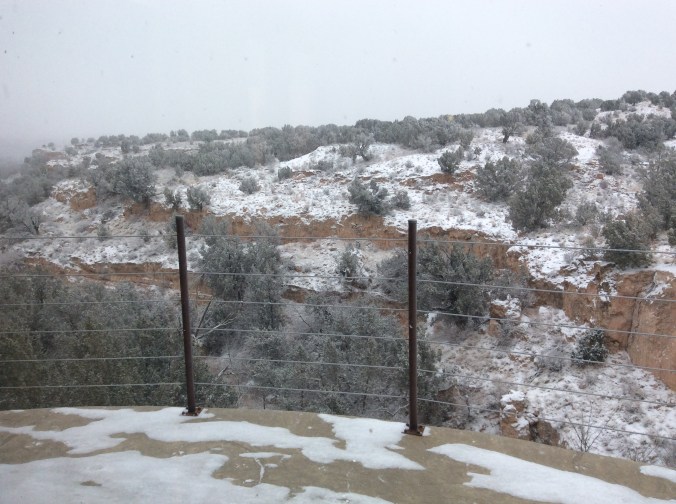
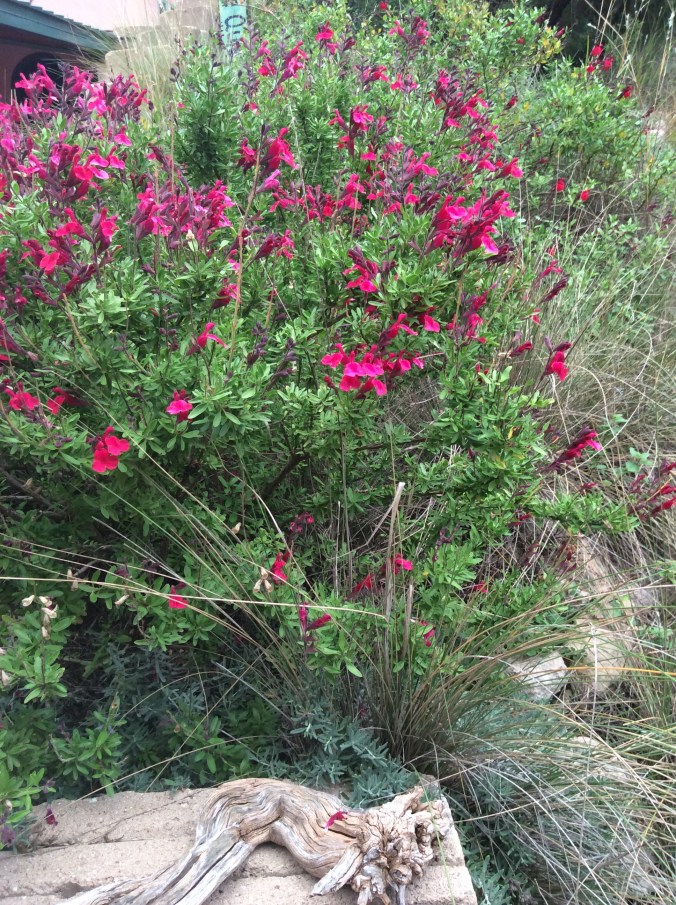
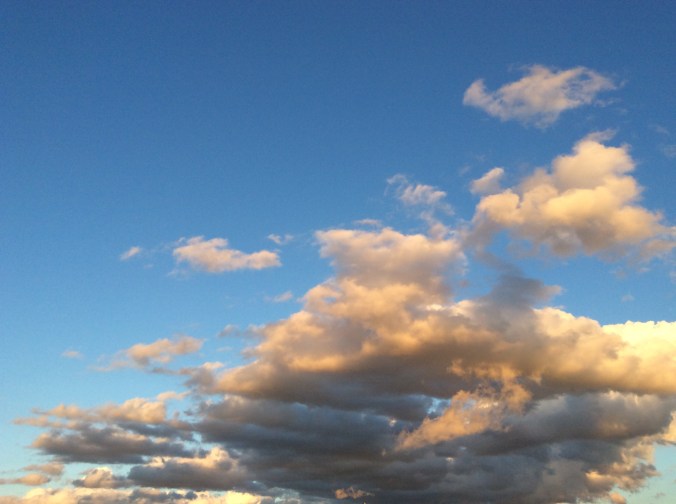
Golden glow lays over the land
Praying mantis walks up the window
Storm clouds gently glide through azure


Golden glow lays over the land
Praying mantis walks up the window
Storm clouds gently glide through azure


Mom filled the white bowl with black raspberries.
I pour Bossie’s white milk over them,
watched it form a pattern,
flowing around the raspberries–
a design in deep purple and white.
I thought it almost too beautiful to eat.
I was seven.
Now I rarely find black raspberries. Red ones won’t do. They lack intensity, the beauty. Every year we went to Hunt’s Orchard north of Amazonia, Missouri, to buy black raspberries, took them home, sorted to discard the imperfect ones, then threw them way behind the garden next to the timber–huge trees, oak and hickory. Eventually, these imperfections transformed into thriving black raspberry bushes. We had our own patch, created from the discarded, the imperfect.
Mom fed us fresh raspberries for a few days. The rest she used to create her famous pies, froze a freezer full. Baked, they transformed a winter kitchen into the warmth and sweetness of my mother’s family devotion.
I bake pies, many kinds of pies. I have never made a black raspberry pie.

Note: this will be published in an upcoming publication by the Story Circle Network. In July my daughter, grandson, and I went to Hunt’s Orchard–yes, it still exists. I asked about black raspberries. We were too late; the season was over. The timber behind the garden area was to the right in this photo. The person who bought the land years later bulldozed down all the big trees.
Yucca will take over if you let it.
Every summer after the blooms dry, I tackle them with long,
red-handled clippers and cut off long stalks.
Not bothering to put on boots, I set out in black and grey Chacos,
cutting stalks in places unreachable by tractor.
I climb down to a rough area, open these long, red-handled clippers,
chop off the dead blossoms, then look down.
She lies there, her body slightly bigger than the size of my upper arm,
fat, not long.
A snake stretched out, only 1/8 inch from the front of my Chacos.
I look again. Crap. She’s a rattlesnake, one of those short,
stout prairie rattlers, perfectly blending with the grey and brown
rocks and soil.
Slowly, I inch backward, taking care not to fall on the steep slope.
When several feet away, I run to the barn, grab two shovels off their hooks,
run back. She’s gone. I search everywhere around.
I never find her.

He’s gorgeous!
I walk into the department store,
plan to pay a bill, order a griddle for the new stove,
see a bald headed 30 something with a big, brown beard.
He is not what I get.
A younger man walks up, “Can I help you?”
Explaining what I want, I look.
Wow.
Caramel skin, five inches taller than I,
obsidian ringlets falling, not long,
cut short to a form a big ball, a glossy poof.
He’s not too thin, not too chubby.
Just right.
Straight nose, not too long, not too short.
Just right.
Arched eyebrows, oval face.
Just right.
He’s drool worthy.
It’s ridiculous. I’m old enough to be his grandmother,
maybe older.
Do we ever get too old to look, to appreciate?
months of nothing
six inches below normal
suddenly late afternoon
downpours, flooding
three waterfalls off canyon cliff
double rainbow
birds sing evensongs
and now this


Raging wind gone still
Mockingbird carols to Sunset
Dusk whispers to Night
Last evening I attended a new exhibit at Panhandle-Plains Historical Museum. The exhibit featured moccasins, paintings, and various artifacts made by different Great Plains tribes, including a headdress worn by Quanah Parker. The exhibit also contains many old photographs. A number of Comanches were present including a lady over 100 years old.
After I left the exhibit, I kept thinking about it and wondered how current Comanches might feel when they come to something like this which in many ways honors them but also displays a past that will never return. While contemplating, I wrote this poem about what I saw.
Beaded moccasins,
moons of work.
Ceremonial beauty,
now encased in glass, labelled, dated by someone’s guess,
for strangers who believe in a strange god,
desecrate the land,
waste invaluable water,
kill bears for sport.
Weep
Wait

Palo Duro Canyon, Comanche Country, where they made their last stand and were forced to go to a reservation in Oklahoma after federal troops killed over a thousand of their horses.
Tan grass stretches miles and miles as far as eyes can see.
The water in the indigo bird bath evaporates in one day.
Playa lakes, full last summer, surrounded then in emerald grass, lay waterless.
Thirty-five miles an hour winds create fog-like clouds of dust across the horizon.
Grit, wind hurled, buffets cars and trucks driving down the long, straight highways.
Dust-fed sunrises and sunsets clad skies in orange, hot pink, vermillion, violet, mauve.
Day 127 with no measurable precipitation.

Note: I wrote this ten days ago. That evening it rained .01 inches. None since then. We are approaching four months with just that .01 inches, nothing more. Every time it warms and the winds come, the weather forecast mentions high fire danger. All counties and state parks near here have burn bans. March is a windy month.
Woman, wondrous, wild
daughter of the moon,
mysterious, magnificent
fierce secret keeper
guardian of the universal key.

My grandson cuts himself into 16 equal pieces:
4/16 Urhobo from Africa
3/16 Spanish from Spain
4/16 European–two Swiss German great, great-grandfathers
(Werth and Kaiser), Irish, English and who knows what
3/16 Mexican–whatever mixtures that may be
2/16 Navaho
Who am I? What am I?
Who are you? What are you?
Do we really know?
Who sets the rules?
white men
black
Indian
Native American
Irish
English
German
from where and for whom?
He looks Navaho:
-blue black straight hair
-pale brown skin
-obsidian eyes.
One four year old girl asks him,
“Are you American Indian?”
His six year old self says nothing.
She repeats,
“Are you American Indian?”
He says, “It’s complicated.”
The Navaho won’t claim him, too little blood.
He needs 1/4, not 1/8.
Caddy and Fort Sill Apache allow 1/16, not Navahos.
1/4 blood is for
-Sioux
-Cheyenne
-Kiowa
-Navaho
1/8 works for Comanche and Pawnee.
Some Cherokees only want a Cherokee ancestor.
But he is none of those.
Is he Navaho?
Is he white?
The old South goes by the one drop rule:
one drop of Negro…
Is a person with 99/100 per cent white
and 1/100 black, black?
Who says?
Kids at school ask, “What are you?”
He tells them.
They say, “You’re lying.”
I only know specifically about two ancestors,
the Swiss Germans.
Another great grandfather disappeared during the Civil War.
I don’t even know his name.
Who am I?
Who are you?
I think I’ll get a DNA test.
Then I’ll know how many pieces I need to cut myself into.
Note: This was originally published in my book “On the Rim of Wonder”. I had a cousin send me 75 pages of ancestry information. I looked up more myself. That one great grandfather remains a mystery. I had my DNA done. It did not match what I expected from the ancestry work.
Blood quantum is the term the US government used to determine whether a person would be qualified as an Indian. Now many Indian Nations use it to decide who can be on the tribal rolls and who cannot.
Travel the World 4 Less
A Glimpse into My Life & Passions
Ceto-Magoism, the Whale-guided Way of WE in S/HE
Exploring the F-word in religion at the intersection of scholarship, activism, and community.
ANCESTRAL FOOD. HERBAL WISDOM. MAGICAL COOKERY. SEASONAL CELEBRATION.
inesemjphotography
politics, engineering, parenting, relevant things over coffee.
Food is the best expression of every emotion. Explore through my reviews, recipes, events and more.
Smile! A Site for Friends Wherever You Are!
inspiring personal growth through poetry and writing
Combining atheism with whimsy. This is a Fair and Balanced blog based on opinion unencumbered by fact.
Odds and ends ~ My Life
Original poetry, commentary, and fiction. All copyrights reserved.
bripike@gmail.com
A wildlife filmmaker in Africa
A Geeky Feminist's Musings On Pop Culture
"5 minute walks"