The Clerk


He’s gorgeous!


I walk into the department store,

plan to pay a bill, order a griddle for the new stove,

see a bald headed 30 something with a big, brown beard.

He is not what I get.


A younger man walks up, “Can I help you?”

Explaining what I want, I look.

Wow.

Caramel skin, five inches taller than I,

obsidian ringlets falling, not long,

cut short to a form a big ball, a glossy poof.


He’s not too thin, not too chubby.

Just right.

Straight nose, not too long, not too short.

Just right.

Arched eyebrows, oval face.

Just right.


He’s drool worthy.

It’s ridiculous.  I’m old enough to be his grandmother,

maybe older.


Do we ever get too old to look, to appreciate?


Plains Indian Artifacts–Beaded Moccasins


Last evening I attended a new exhibit at Panhandle-Plains Historical Museum.  The exhibit featured moccasins, paintings, and various artifacts made by different Great Plains tribes, including a headdress worn by Quanah Parker.  The exhibit also contains many old photographs.  A number of Comanches were present including a lady over 100 years old.

After I left the exhibit, I kept thinking about it and wondered how current Comanches might feel when they come to something like this which in many ways honors them but also displays a past that will never return.  While contemplating, I wrote this poem about what I saw.

Beaded moccasins,

moons of work.

Ceremonial beauty,

now encased in glass, labelled, dated by someone’s guess,

for strangers who believe in a strange god,

desecrate the land,

waste invaluable water,

kill bears for sport.

Weep

Wait


img_2432

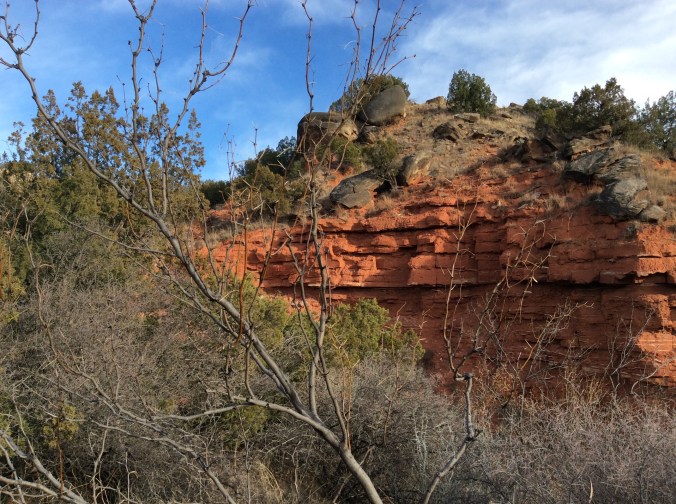
Palo Duro Canyon, Comanche Country, where they made their last stand and were forced to go to a reservation in Oklahoma after federal troops killed over a thousand of their horses.


Day 127


Tan grass stretches miles and miles as far as eyes can see.

The water in the indigo bird bath evaporates in one day.

Playa lakes, full last summer, surrounded then in emerald grass, lay waterless.

Thirty-five miles an hour winds create fog-like clouds of dust across the horizon.

Grit, wind hurled, buffets cars and trucks driving down the long, straight highways.

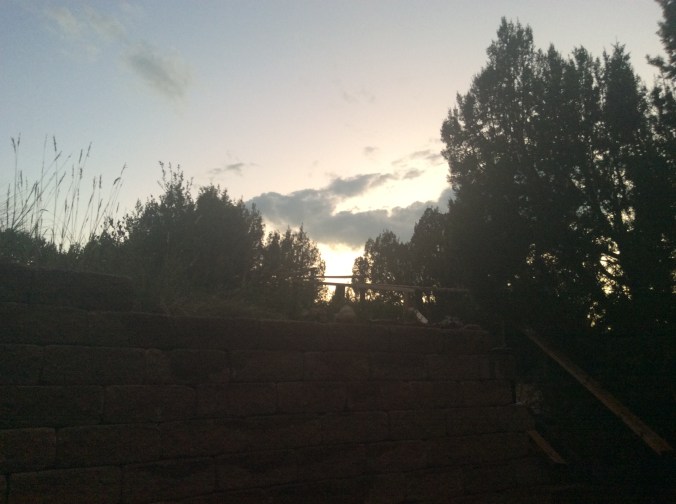
Dust-fed sunrises and sunsets clad skies in orange, hot pink, vermillion, violet, mauve.

Day 127 with no measurable precipitation.

IMG_2879

Note:  I wrote this ten days ago.  That evening it rained .01 inches.  None since then.  We are approaching four months with just that .01 inches, nothing more.  Every time it warms and the winds come, the weather forecast mentions high fire danger.  All counties and state parks near here have burn bans.  March is a windy month.

Blood Quantum: A Poem for Our Time


My grandson cuts himself into 16 equal pieces:

4/16 Urhobo from Africa

3/16 Spanish from Spain

4/16 European–two Swiss German great, great-grandfathers

(Werth and Kaiser), Irish, English and who knows what

3/16 Mexican–whatever mixtures that may be

2/16 Navaho


Who am I? What am I?

Who are you? What are you?

Do we really know?

Who sets the rules?

white men

black

Indian

Native American

Irish

English

German

from where and for whom?


He looks Navaho:

-blue black straight hair

-pale brown skin

-obsidian eyes.

One four year old girl asks him,

“Are you American Indian?”

His six year old self says nothing.

She repeats,

“Are you American Indian?”

He says, “It’s complicated.”


The Navaho won’t claim him, too little blood.

He needs 1/4, not 1/8.

Caddy and Fort Sill Apache allow 1/16, not Navahos.

1/4 blood is for

-Sioux

-Cheyenne

-Kiowa

-Navaho

1/8 works for Comanche and Pawnee.

Some Cherokees only want a Cherokee ancestor.


But he is none of those.

Is he Navaho?

Is he white?

The old South goes by the one drop rule:

one drop of Negro…

Is a person with 99/100 per cent white

and 1/100 black, black?

Who says?

Kids at school ask, “What are you?”

He tells them.

They say, “You’re lying.”


I only know specifically about two ancestors,

the Swiss Germans.

Another great grandfather disappeared during the Civil War.

I don’t even know his name.

Who am I?

Who are you?

I think I’ll get a DNA test.

Then I’ll know how many pieces I need to cut myself into.


Note:  This was originally published in my book “On the Rim of Wonder”.  I had a cousin send me 75 pages of ancestry information.  I looked up more myself.  That one great grandfather remains a mystery.  I had my DNA done.  It did not match what I expected from the ancestry work.

Blood quantum is the term the US government used to determine whether a person would be qualified as an Indian.  Now many Indian Nations use it to decide who can be on the tribal rolls and who cannot.


Sunday Poem–Last Day of 2017


IMG_2908

It’s cold outside, 14.

Horse waterers frozen.

Heat water, hike to barn.

Hope horses drink it fast before it freezes.

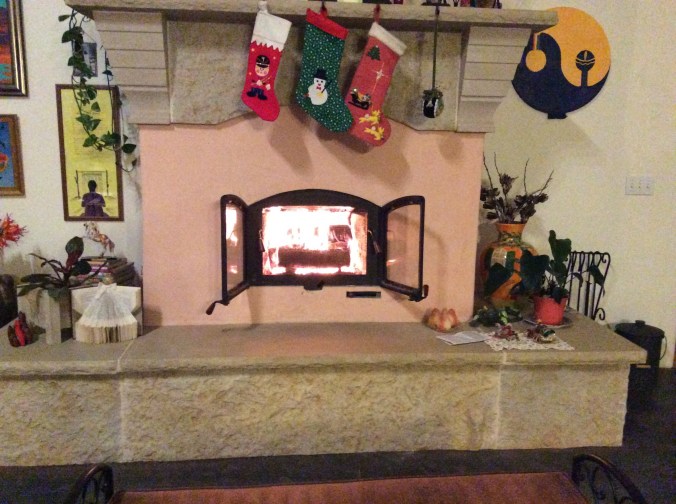
Back inside, build a fire,

write, read a novel set in Venice,

drink tea from Ceylon,

message friends in Asia, Africa, South America,

feel grateful for modern technology.

Glad I did not live in those “good ole days”.

Look forward to another year filled with joy and wonder–

my choice.

IMG_2905


Sunday Poem–Gifts


IMG_2903

For many Christmas means gifts.

What are gifts?

Material things–the new toy, new technology,

perfume, clothes.

People spend hours and money

many lack to give gifts.

Yet the most wonderful gifts remain:

joy

love

beauty

birdsong

touch

wonder

peace


Jen Payne’s New Book


Evidence of Flossing, WHAT WE LEAVE BEHIND provides an unexpected metaphor for individual life, culture, and so much more. Nearly all the poems are accompanied with a photograph, often of trash in which lays a dental flosser (yes, one of those instruments with which you floss your teeth) with date and location.  Flossing is supposed to prevent anything from being left behind.  Hence, the title brings up an unusual play on words.

The first section Damage contains more than 20 poems which are a lament about much of modern life–mass shootings, the demise of wildlife, unpleasant changes.  One poem asks the question:  “Would God floss?”  In the second section, Contact, the poems focus on the natural world, walks in the city, the woods, beaches.  The third section, Connection, emphasizes the interconnectedness of everything, especially the relationships between humans and animals and nature.  There are poems about frogs, storms, birds.  One called Evidence of Fairies makes the reader feel the magic of old growth forests with moss and ancient trees.  In the footnote to another poem she discusses the fact that wolf spiders actually create songs to lure lovers. Then, toward the end, the Alice poems appear,  Alice as in “Alice in Wonderland”.  In my favorite poem Payne relates her encounter with a stranger picking oyster mushrooms near a path in the woods.

After reading the poems and comments in this book, I will never view flossing the same way again.  Will I find dental flossers now, something I never even previously thought about?  I use those long strings of floss not flossers.  Apparently the poems and flosser photos affected enough people that some sent Payne photos of flossers they saw here and there on the ground, some of which she has included in the book.

Even if I find no flossers, now I will certainly give a lot more thought to what I and others leave behind.


IMG_2901


About the author:  Jennifer Payne is the owner of Words by Jen, a graphic design and creative services company in Connecticut. She belongs to the Arts Council of Greater New Haven as well as several other arts and poetry organizations.  Her work has been featured in various publications, including The Aurorean, Six Sentences, and the Story Circle Network.  You can read some of her writing on her blog Random Acts of Writing.