Snow falls in a
driving wind.
If the roads become
too awful, I will
celebrate Christmas
alone.
An awful experience?
No.
Beauty lies outside the windows and
in my heart.
Heat radiates from the fire.
Food fills my refrigerator.
Music bursts from CDs’.
Joy!!
Christmas always brings delight and
reflection.
You do not have to be a Christian to
feel the meaning:
Kindness
Tolerance
Empathy
Giving
Receiving
Accepting
Families
Friends
Love
Joy!!
personal identity
The Encounter Poems–Poem Two
Earlier this week I mentioned I would post a group of poems that describe various “encounters” I have experienced with individuals at different times in my life, some recent, some many years ago. This is the second of that series of poems.
At the Mandala Center in New Mexico
A lady walks up to me,
“You look like you belong here.”
I sit writing,
listening to the wind,
the eternal driving wind.
It makes you stand firm,
rooted, strong.
This is no place for fragile people.
The Encounter Poems
Throughout my life, I seem to experience what I call encounters: meeting people I never saw before and having some type of connection with them. Various things occur under these circumstances. Sometimes I keep in contact for at least a while with these people and sometimes not. This week I am going to post several of these poems. Here is the first one.
In Line at a Fast Food Restaurant
Caramel eyes
glowing in a brown face
Panama hat
Intricately carved silver cross
Crisp, snowy linen shirt
No collar
Slacks loose.
He’s lost weight.
I think,
“Gorgeous brown man.”
He says,
“In case no one has told you lately,
you’re gorgeous!”
He walks off to meet
the pregnant woman in the corner.
Stones
"Each hurt swallowed is a stone." Rita Dove
By the end of last year
I had vomited up all the
stones
and piled them on the garden wall.
Except one.
Rim Rider
I ride the rim on Rosie,
writing stories in my mind.
The neighbor’s husky howls.
Rosie listens, watches,
moves away from the canyon rim.
I write of long lost lovers,
names forgotten,
smiling brown faces,
drifting through my dreams.
I ride the rim on Rosie,
writing stories in my mind.
The bobcat climbs the canyon wall.
Rosie’s ears move,
her body tenses.
I write of childhood memories,
places loved and lost,
of family joys and sorrows,
Mom’s singing while she worked,
Dad’s napping on the blue linoleum floor.
I ride the rim on Rosie,
writing stories in my mind.
Isabella runs past, bunny hunting, barking.
Rosie wants to run, to race, is held.
I write of fragrant fields of saffron,
endless Thai seas of blue and green,
of lands I’ve loved , the Navaho Nation, the Llano Estacado.
I ride the rim on Rosie,
writing stories in my mind.

Grandmother

We sit on the wooden swing suspended by silver chains
hanging from the bungalow front porch ceiling.
She, elderly beyond her years, grey hair piled atop her head,
thin and wrinkled.
She stays with us sometimes when Aunt Julia goes off
on one of her adventures.
Cattle graze across the road in front of the house.
It is summer.
A bull mounts a cow.
Suddenly, out of the silence, Grandmother speaks,
“Men and bulls are just alike;
they are only interested in one thing.
A bunch of good for nothings!”
Her voice is vitriolic.
And I, a child, maybe twelve, innocent and ignorant,
sit there shocked,
amazed,
embarrassed,
astonished
to hear my grandmother talk that way.
Now, nearly fifty years later,
I wonder about her life,
what in it caused this secret bitterness
she spilled just once on that idyllic summer day.
I look at her wedding photo.
She has a steady, unsmiling, pretty face,
marrying a handsome man twenty two years her senior.
Were they happy, sad, or probably a bit of both?
I remember what my mother, her youngest daughter, told me
snippets here and there.
A hard life, endless guests
never a break from gardening, cooking, canning, cleaning.
I look at other photos of my grandmother
taken before I was born,
older, nearly as wide as she is tall, never smiling.
I remember her in an old lady’s flowery, lavender dress,
thin from years of undulate fever.
I remember her feeding me bread, butter, and sugar sandwiches,
Easter egg hunts at her house,
and later, at another house, walking with her to the corner store.
I never remember her smiling.
Meeting on the Internet
Who are you?
Are you
who you
say you are?
Is your profile
a lie to
attract the gullible
or your heart’s
outpourings,
your soul
open
for all
to see?
Will you tell me
truths or
lies copied
off a website
designed for predators
cleverly disguised?
Will we dream of
touching,
mouth to mouth
passion,
bodies hungry
or perhaps
a relapse
into despair,
malaise?
Will we grow
to love
happiness
or to cynicism,
disillusionment,
a lie?
Hot Pink Toenails
The day I met Tom my toenails were hot pink.
A big mistake!
He called me the lady with the hot pink toenails.
I am not a hot pink person.
They should have been red or orange.
I am an orange person
mixed with lots of red.
It took me two weeks of looking
at those hot pink toenails
to paint them red.
Am I happier now?
Not really
but I know
it is the real me,
my own toes when I look down.
When she painted them pink
the woman said,
“Old ladies want red toenails.”
Will I be able to look at my red toenails
even though I like them and
not think “old lady”?
Will I have to find a new color?
Probably.
Maybe orange marmelade or cinnamon spice or burnt sienna.
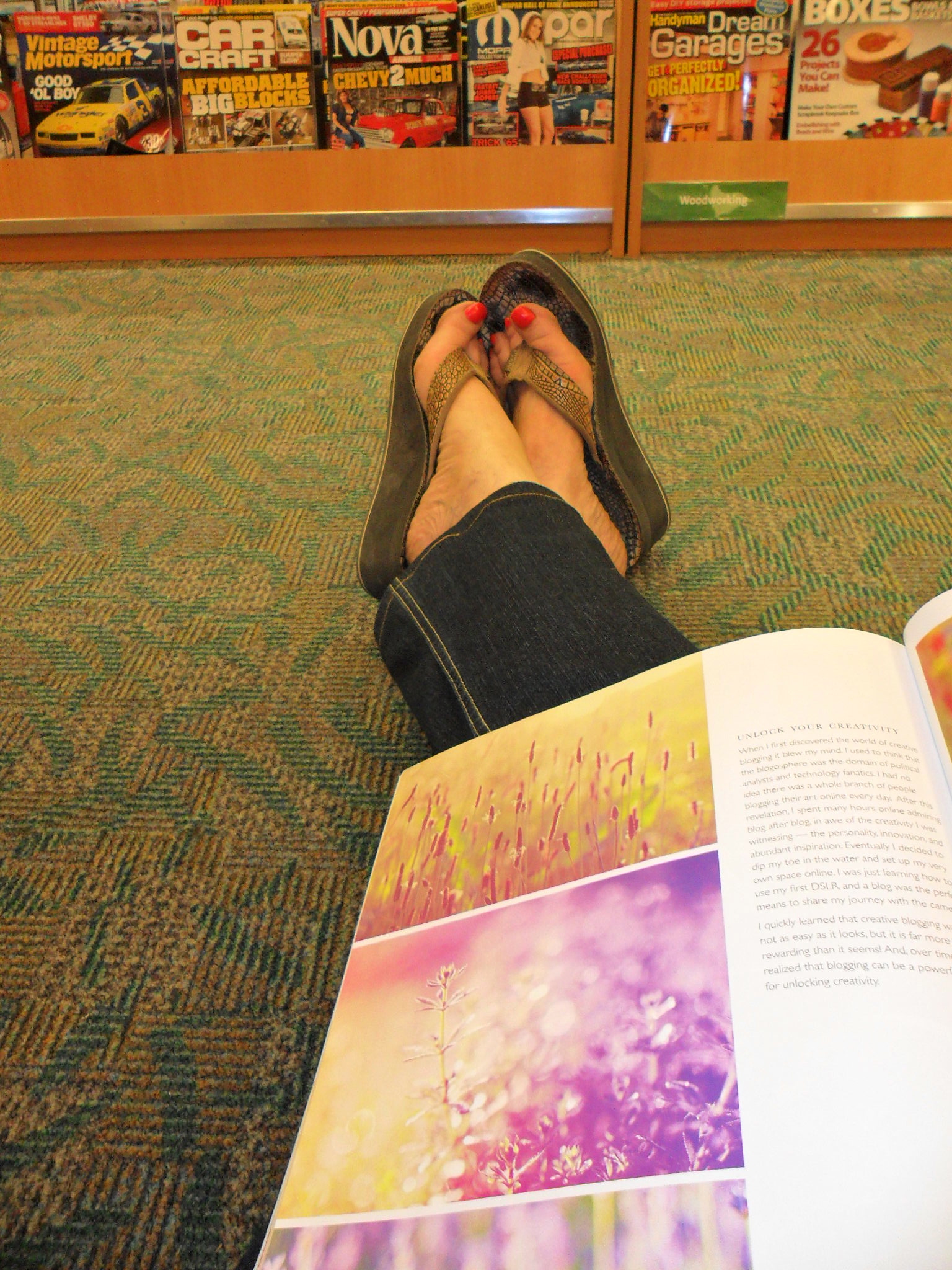
These toenails are painted Cajun Shrimp.
Women
Women: wondrous, wild,
daughters of the moon,
mysterious, magnificent, molten,
fierce secret keepers,
possessors of the universal key.

Lahib Jaddo painted this; it hangs in my house. This poem was inspired by the poet, Lucille Clifton, who is the featured poet this week in my poetry class.
July 27 – Summer
July 27 – Summer.This was published yesterday by the Story Circle Network on One Woman’s Day.

