Do you like to eat? Bees and the Food Supply


SAM_1074Do you like to eat?  Do you eat almonds, apples, cherries, watermelon, blueberries, or cantaloupe?  In fact, the biggest factor limiting the world’s food supply is not war, drought, or any of the factors you commonly hear about.  The world’s food supply is limited by the amount of bees available for pollination.  In the last five years in the United States alone, approximately one million honey bee colonies died each year, about one third of our national bee herd.  Bees are in danger of extinction.  Native to Southeast Asia, honey bees were domesticated long before written history, before the building of the Egyptian pyramids.  Thousands of species of bees exist, but honey bees carry the main load of pollination for cultivated crops.

More than 740,000 acres of almonds, California’s leading agricultural export,  remain in cultivation in the Central Valley of California.  Pollination depends on bumble bees, honey bees, and wild bees.  Sadly, the wild bees are mostly extinct, killed by pesticides and habitat loss.  Now pollination depends on traveling bee keepers and their honey bees.  Today, commercial bee keepers number one fourth of what they did in 1980.  To get enough bees the almond (and cherry and apple, etc.) growers hire these bee keepers to install approximately 2 million bee hives to work the pollination.  Almonds alone require at least 1.5 million hives.  Each almond tree’s blossoms number 25,000 and at 135 or so trees per acre, that adds up to 3.5 million flowers to pollinate.  The difference between a poor harvest and a great one depends on bees.  After the bees finish their work in the Central Valley and other warmer climates, the commercial keepers take them to places like Idaho and North Dakota for the summer where they sip alfalfa, buckwheat, goldenrod, and sweet clover blossoms and produce the honey sold in groceries.

Where have all the bees gone?  What leads them toward extinction?  In 2006-2008, beehives across the world from Europe to here to Indian and Brazil nearly collapsed.  Causes vary:  foulbrood–a bacterial fungus, wasps, ants, mice, a host of viruses, nosema–bee diarrhea, and certain pesticides.  What can we do?  First, we can ban certain pesticides that are known to harm bees.  Second, we need to grow more flowers and blooming weeds (yes, I said weeds) to encourage a broader spectrum of healthy bees for pollination.  Honey bees cannot do it all alone.  The lack of sufficient flowers is the result of not only pesticides, but also the increase in lawns.  If you personally want to make a difference for bees and ultimately our food supply, let the wild flowers grow, plant more flowers and less lawn, limit pesticide use.

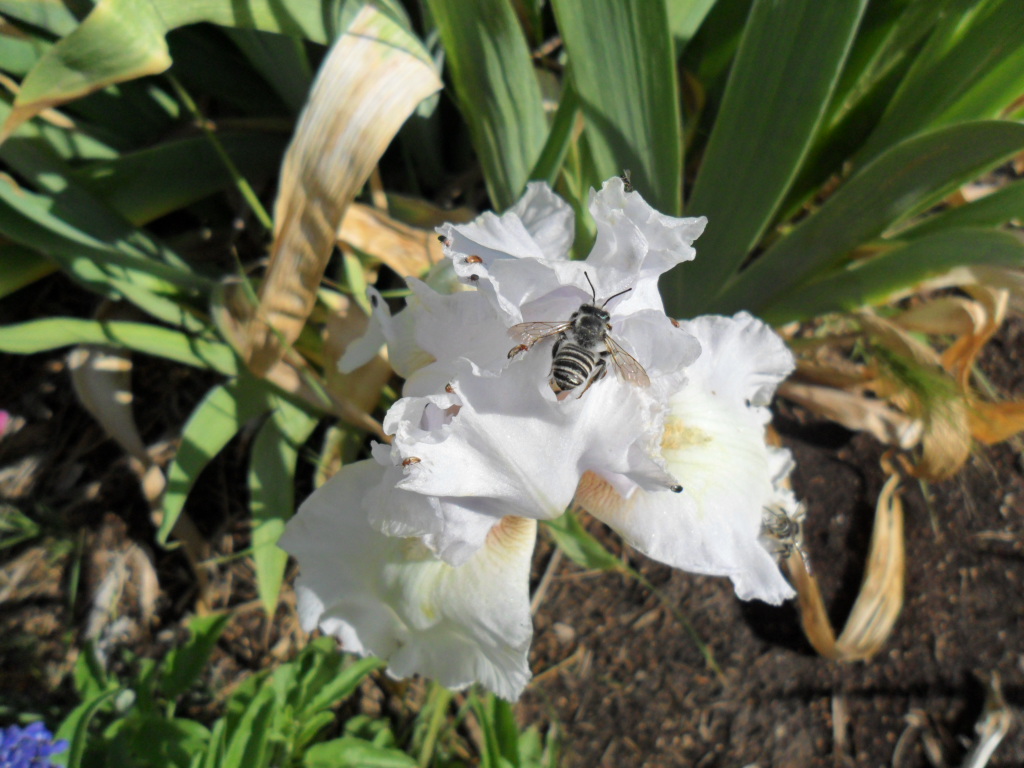
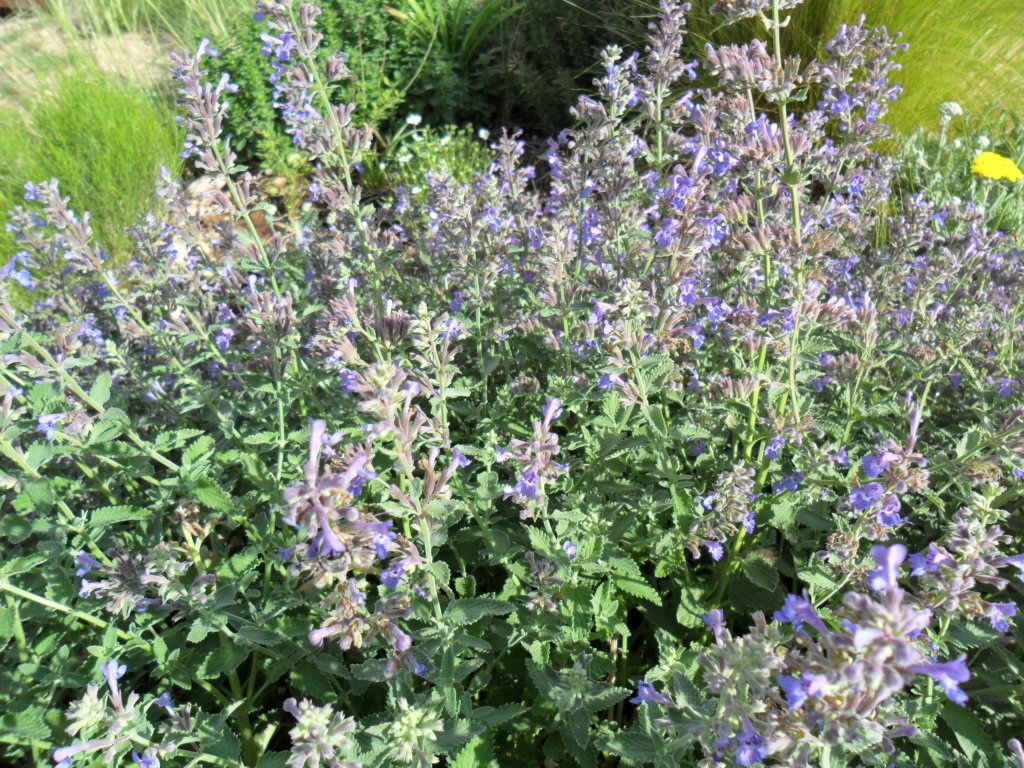
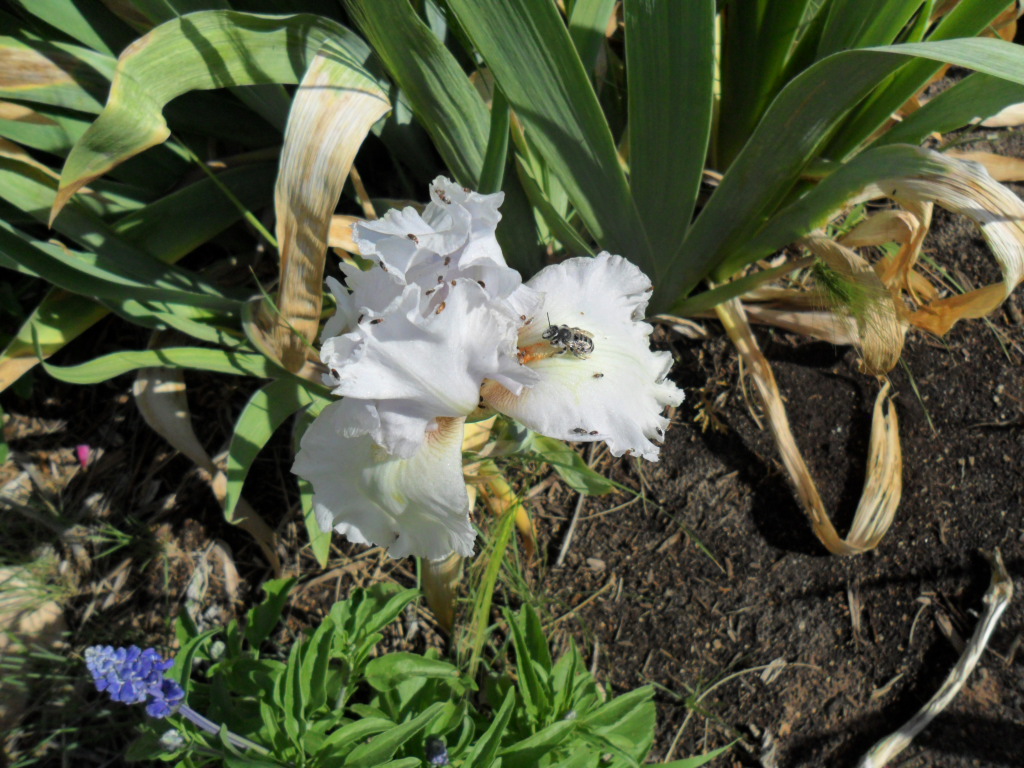
This morning I went out to my xeroscape garden–I have no lawn–and photographed bees.  At one catmint plant, so many busy bees made a clearly audible buzzing sound.  I witnessed at least four different kinds–species–of bees.  These SAM_1076
SAM_1081

SAM_1077

SAM_1078photographs illustrate at least several different types of flowers bees love.

Star


The phone rings.

“Star’s dead.  There’s blood everywhere.

He’s hanging from the gate.

Blood is all over Rosie’s face.

It’s dreadful.”

A tear choked voice.

“You can’t bring D’mitri home.”

D’mitri’s nine.  Star belongs to him.

Shock, tears, disbelief.

Last night he ran, bucked, reared,

chased around, playing.

How?

The pen’s all pipe, no sharp edges,

nothing harmful, consistently inspected.

D’mitri goes home with me.  He says,

“Nana, I have to see him;

I have to know what happened.”

Slowly, in dread, we walk behind the barn.

Star’s hanging by one hoof in the three inch

space between the gate and fence,

ankle broken.

The blood covered fence, gate, and ground

stare at me.

It’s hot, his body’s stiff.

He must be moved.

The coyotes will come in the night,

drawn by the smell of blood, of death.

The neighbor brings his big, red tractor;

a wench pulls Star’s young body free,

and gently lays him on the cold, grey, barn floor.

His shining copper coat no longer shines.

D’mitri and I remember bottle feeding him

after Miracle died, teaching him to lead.

We stare at Star’s body in disbelief.

Kindly, the neighbor says,

“He died quick, femoral artery cut by bone,

bled out.”

For hours Rosie and Cool stand at the spot

where Star died.

They do not even leave to eat alfalfa.

It takes me hours to wash away the blood.

It took D’mitri ten months to go back to the barn,

to ride Rosie again.

Miracle and Star as a newborn


Note:  This is a photo of Star and Miracle in July 2010 shortly after Star’s birth.  Miracle died of colic three days later.  Star died last May.

Evening


SAM_1040

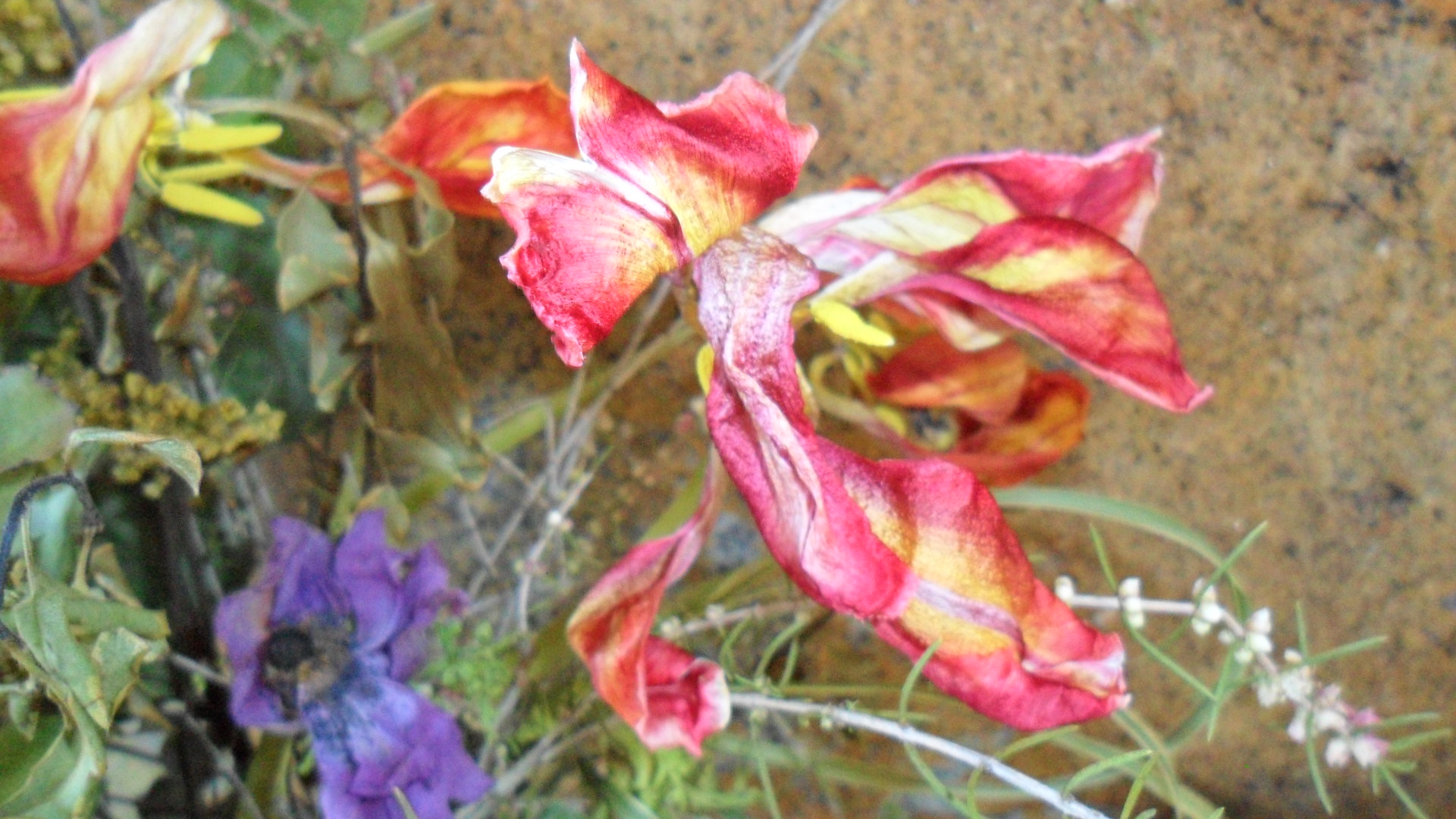
Tulip remnants float in my palm,

the color

of fresh blood,

of sunsets

cerise, burnt orange, gold.

A pale blue dragon

thunders

across a salmon sky.

Slowly indigo night

descends.

Only the night hawks call.

Puma IV


SAM_0912In the poetry class this week we read Louise Erdrich.  I’ve read most of her novels but did not realize she also wrote poetry.  In particular I liked “Captivity” which made me think of Quanah Parker and his mother.  We are supposed to be inspired by whatever author’s poems we are reading on any given week.  Sometimes that occurs; sometimes not.  The following poem follows the previous three puma poems I published on this blog last September.  This one is different; it comes from an actual dream last week.  Its unique beginnings contradict the fact that I rarely recall dreams and care nothing about dream interpretation.

Stars shining through sleep

Dreaming dark.

A white, luminescent lion

comes nuzzling arms, legs.

Should fear engulf or

a quiet peace dominate?

Tawny lions encircle:

affectionate

smiling lion smiles.

Fear slides in slightly,

logically.

These lions bring love,

a natural peace.

Fear dissipates,

the lions and I locked

in an eternal, primal dance.

In Silence


Today it warmed up considerably after some very cold weather.  I love the outdoors but  not the cold so really find cold winter weather confining.  While cleaning up a pile of brush, I noticed how quiet it was, no birds singing, no sounds, nothing  except an occasional soughing of the junipers during a wind gust.  Some friends stopped by and immediately commented on the quiet.  It suddenly struck me just how different this is from the rest of the year, especially spring and summer with endless birdsong and raucous insect symphonies.  At dusk when I finally went inside, I sat down and wrote this poem:

The deer meander along the canyon rim,

stop, browse bare bushes

in silence.

The bobcat climbs the canyon wall,

surveys his rugged realm

in silence.

The coyotes run above the rim,

watchful, wary,

in silence.

Now, in January, the birds stop to drink

from the blue birdbath, bobbing

in silence.

At night, the stars and moon

illuminate my sleep

in silence.

Canyon in Winter


SAM_0999SAM_1007SAM_1006

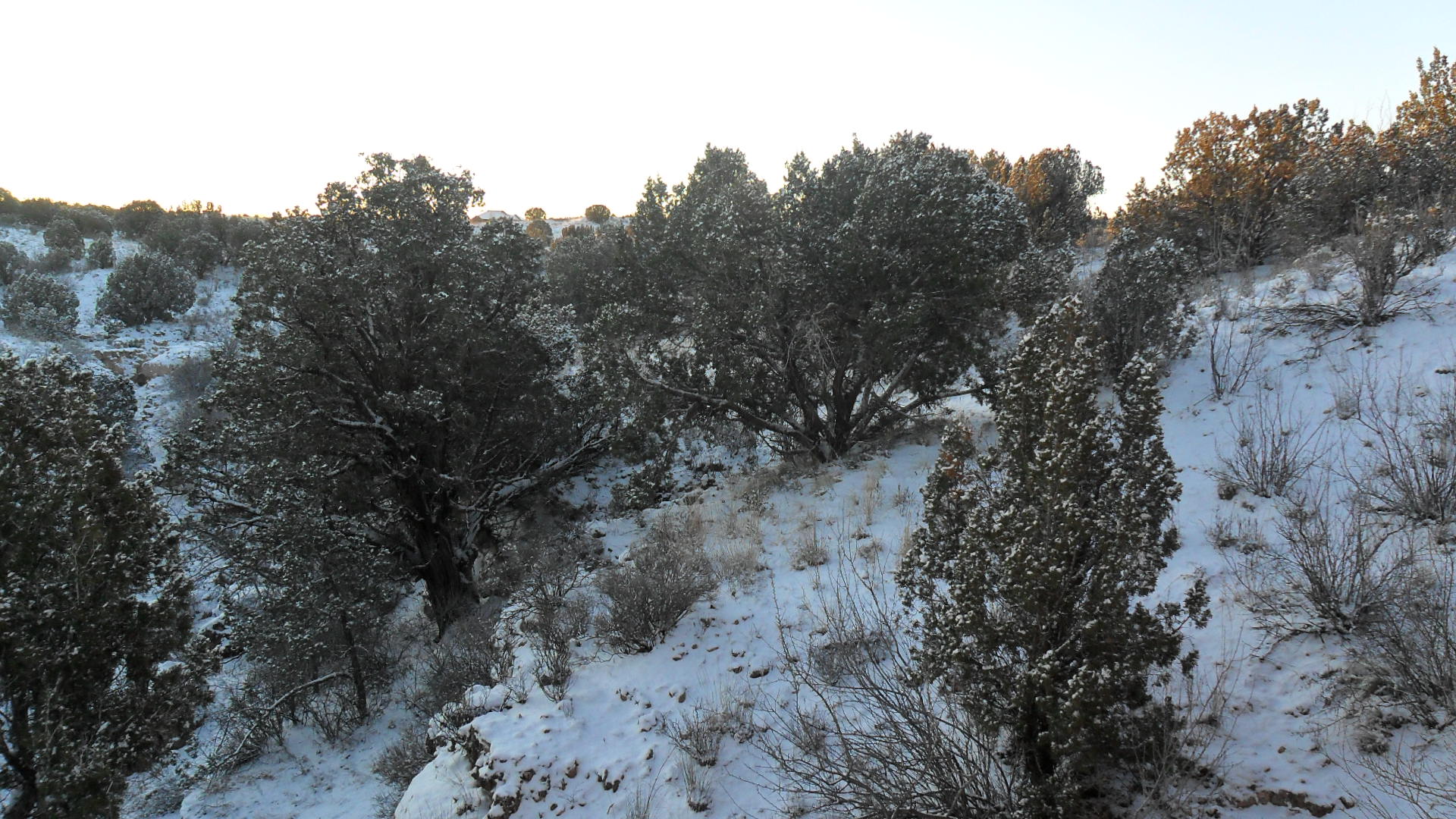
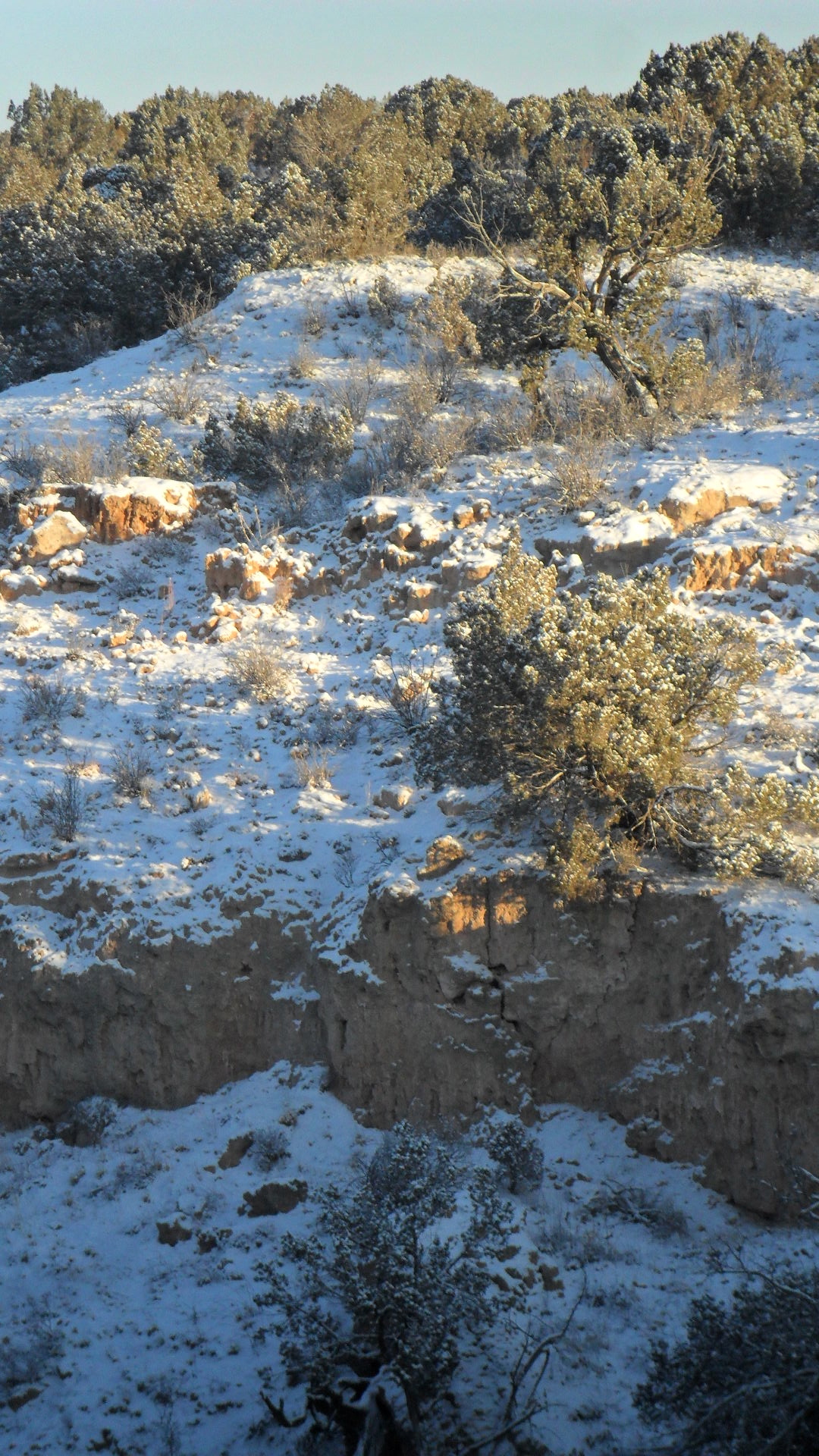
Winter stillness lies over the canyon:

a blanket of white cold.

Windless, a rarity in West Texas.

Three colors:

green juniper

adobe rocks

crystalline snow.

Suddenly,

I see reddish brown rock,

cat shaped,

large,

outlined against the snow.

I wait,

I watch.

It moves,

dashes up an  arroyo,

disappears.

Bobcat?

Puma?

2012 in review


The WordPress.com stats helper monkeys prepared a 2012 annual report for this blog.

Here’s an excerpt:

600 people reached the top of Mt. Everest in 2012. This blog got about 2,800 views in 2012. If every person who reached the top of Mt. Everest viewed this blog, it would have taken 5 years to get that many views.

Click here to see the complete report.

I started this blog 11 months ago.  I want to thank all my followers, commenters, and friends who follow me via WordPress, Facebook, etc.  for making this a success.  Thank you and Happy New Year.  May this new year bring joy and prosperity to all of you.

The Encounter Poems–Poem Two


Earlier this week I mentioned I would post a group of poems that describe various “encounters” I have experienced with individuals at different times in my life, some recent, some many years ago.  This is the second of that series of poems.

At the Mandala Center in New Mexico

A lady walks up to me,

“You look like you belong here.”

I sit writing,

listening to the wind,

the eternal driving wind.

It makes you stand firm,

rooted, strong.

This is no place for fragile people.

Rim Rider


I ride the rim on Rosie,

writing stories in my mind.

The neighbor’s husky howls.

Rosie listens, watches,

moves away from the canyon rim.

I write of long lost lovers,

names forgotten,

smiling brown faces,

drifting through my dreams.

I ride the rim on Rosie,

writing stories in my mind.

The bobcat climbs the canyon wall.

Rosie’s ears move,

her body tenses.

I write of childhood memories,

places loved and lost,

of family joys and sorrows,

Mom’s singing while she worked,

Dad’s napping on the blue linoleum  floor.

I ride the rim on Rosie,

writing stories in my mind.

Isabella runs past, bunny hunting, barking.

Rosie wants to run, to race, is held.

I write of fragrant fields of saffron,

endless Thai seas of blue and green,

of lands I’ve loved , the Navaho Nation, the Llano Estacado.

I ride the rim on Rosie,

writing stories in my mind.

Aging


“Rage, Rage, against the dying of the light.”  Dylan Thomas

Custom says, “Age gracefully.”

Are they crazy, dumb!

Who wants to look

old

wrinkled

grey?

They lie!

All of them.

Who wants a broken mind

confused

unfocused

lost?

Shoot me!

Burn my bones.

Scatter them

in the desert sands

to feed

desert willow where

rattlesnakes lie

searching for shade.